Lacosamide Tablets
ecb8b33e-7cbd-4f5e-9fe9-e72dff9bcb86
34391-3
HUMAN PRESCRIPTION DRUG LABEL
Drug Facts
Composition & Product
Identifiers & Packaging
Indications and Usage
Lacosamide is indicated for: Treatment of partial-onset seizures in patients 1 month of age and older ( 1.1 ) Adjunctive therapy in the treatment of primary generalized tonic-clonic seizures in patients 4 years of age and older ( 1.2 )
Dosage and Administration
Adults (17 years and older): Initial dosage for monotherapy for the treatment of partial-onset seizures is 100 mg twice daily ( 2.1 ) Initial dosage for adjunctive therapy for the treatment of partial-onset seizures or primary generalized tonic-clonic seizures is 50 mg twice daily ( 2.1 ) Maximum recommended dosage for monotherapy and adjunctive therapy is 200 mg twice daily ( 2.1 ) Pediatric Patients 1 month to less than 17 years: The recommended dosage is based on body weight and is administered orally twice daily ( 2.1 ) Increase dosage based on clinical response and tolerability, no more frequently than once per week ( 2.1 ) Dose adjustment is recommended for severe renal impairment ( 2.4 , 12.3 ) Dose adjustment is recommended for mild or moderate hepatic impairment; use in patients with severe hepatic impairment is not recommended ( 2.5 , 12.3 )
Contraindications
None.
Warnings and Precautions
Monitor patients for suicidal behavior and ideation ( 5.1 ) Lacosamide may cause dizziness and ataxia ( 5.2 ) Cardiac Rhythm and Conduction Abnormalities: Obtaining ECG before beginning and after titration to steady-state maintenance is recommended in patients with underlying proarrhythmic conditions or on concomitant medications that affect cardiac conduction; closely monitor these patients ( 5.3 , 7.2 ) Lacosamide may cause syncope ( 5.4 ) Lacosamide should be gradually withdrawn to minimize the potential of increased seizure frequency ( 5.5 ) Drug Reaction with Eosinophilia and Systemic Symptoms (DRESS)/ Multi-Organ Hypersensitivity: Discontinue if no alternate etiology ( 5.6 )
Adverse Reactions
The following serious adverse reactions are described below and elsewhere in the labeling: Suicidal Behavior and Ideation [see Warnings and Precautions (5.1) ] Dizziness and Ataxia [see Warnings and Precautions (5.2) ] Cardiac Rhythm and Conduction Abnormalities [see Warnings and Precautions (5.3) ] Syncope [see Warnings and Precautions (5.4) ] Drug Reaction with Eosinophilia and Systemic Symptoms (DRESS)/Multiorgan Hypersensitivity Reactions [see Warnings and Precautions (5.6) ]
Storage and Handling
Store at 20°C to 25°C (68°F to 77°F); excursions permitted between 15°C to 30°C (59°F to 86°F). [See USP Controlled Room Temperature]
Description
Dosage and Administration ( 2.1 ) 4/2023 Dosage and Administration ( 2.2 ) 10/2023
Medication Information
Warnings and Precautions
Monitor patients for suicidal behavior and ideation ( 5.1 ) Lacosamide may cause dizziness and ataxia ( 5.2 ) Cardiac Rhythm and Conduction Abnormalities: Obtaining ECG before beginning and after titration to steady-state maintenance is recommended in patients with underlying proarrhythmic conditions or on concomitant medications that affect cardiac conduction; closely monitor these patients ( 5.3 , 7.2 ) Lacosamide may cause syncope ( 5.4 ) Lacosamide should be gradually withdrawn to minimize the potential of increased seizure frequency ( 5.5 ) Drug Reaction with Eosinophilia and Systemic Symptoms (DRESS)/ Multi-Organ Hypersensitivity: Discontinue if no alternate etiology ( 5.6 )
Indications and Usage
Lacosamide is indicated for: Treatment of partial-onset seizures in patients 1 month of age and older ( 1.1 ) Adjunctive therapy in the treatment of primary generalized tonic-clonic seizures in patients 4 years of age and older ( 1.2 )
Dosage and Administration
Adults (17 years and older): Initial dosage for monotherapy for the treatment of partial-onset seizures is 100 mg twice daily ( 2.1 ) Initial dosage for adjunctive therapy for the treatment of partial-onset seizures or primary generalized tonic-clonic seizures is 50 mg twice daily ( 2.1 ) Maximum recommended dosage for monotherapy and adjunctive therapy is 200 mg twice daily ( 2.1 ) Pediatric Patients 1 month to less than 17 years: The recommended dosage is based on body weight and is administered orally twice daily ( 2.1 ) Increase dosage based on clinical response and tolerability, no more frequently than once per week ( 2.1 ) Dose adjustment is recommended for severe renal impairment ( 2.4 , 12.3 ) Dose adjustment is recommended for mild or moderate hepatic impairment; use in patients with severe hepatic impairment is not recommended ( 2.5 , 12.3 )
Contraindications
None.
Adverse Reactions
The following serious adverse reactions are described below and elsewhere in the labeling: Suicidal Behavior and Ideation [see Warnings and Precautions (5.1) ] Dizziness and Ataxia [see Warnings and Precautions (5.2) ] Cardiac Rhythm and Conduction Abnormalities [see Warnings and Precautions (5.3) ] Syncope [see Warnings and Precautions (5.4) ] Drug Reaction with Eosinophilia and Systemic Symptoms (DRESS)/Multiorgan Hypersensitivity Reactions [see Warnings and Precautions (5.6) ]
Storage and Handling
Store at 20°C to 25°C (68°F to 77°F); excursions permitted between 15°C to 30°C (59°F to 86°F). [See USP Controlled Room Temperature]
Description
Dosage and Administration ( 2.1 ) 4/2023 Dosage and Administration ( 2.2 ) 10/2023
Section 42229-5
Hemodialysis
Lacosamide is effectively removed from plasma by hemodialysis. Following a 4-hour hemodialysis treatment, dosage supplementation of up to 50% should be considered.
9.2 Abuse
Abuse is the intentional, non-therapeutic use of a drug, even once, for its desirable psychological or physiological effects. In a human abuse potential study, single doses of 200 mg (equal to the maximum single dosage) and 800 mg lacosamide (equal to twice the recommended daily maintenance dosage) produced euphoria-type subjective responses that differentiated statistically from placebo; at 800 mg, these euphoria-type responses were statistically indistinguishable from those produced by alprazolam, a Schedule IV drug. The duration of the euphoria-type responses following lacosamide was less than that following alprazolam. A high rate of euphoria was also reported as an adverse event in the human abuse potential study following single doses of 800 mg lacosamide (15% [5/34]) compared to placebo (0%) and in two pharmacokinetic studies following single and multiple doses of 300 mg to 800 mg lacosamide (ranging from 6% [2/33] to 25% [3/12]) compared to placebo (0%). However, the rate of euphoria reported as an adverse event in the lacosamide development program at therapeutic doses was less than 1%.
5.4 Syncope
In the short-term controlled trials of lacosamide in adult patients with partial-onset seizures with no significant system illnesses, there was no increase in syncope compared to placebo. In the short-term controlled trials in adult patients with diabetic neuropathy, for which Lacosamide is not indicated, 1.2% of patients who were treated with lacosamide reported an adverse reaction of syncope or loss of consciousness, compared with 0% of placebo-treated patients with diabetic neuropathy. Most of the cases of syncope were observed in patients receiving doses above 400 mg/day. The cause of syncope was not determined in most cases. However, several were associated with either changes in orthostatic blood pressure, atrial flutter/fibrillation (and associated tachycardia), or bradycardia. Cases of syncope have also been observed in open-label clinical partial-onset seizure studies in adult and pediatric patients. These cases were associated with a history of risk factors for cardiac disease and the use of drugs that slow AV conduction.
10 Overdosage
Events reported after an intake of more than 800 mg (twice the maximum recommended daily dosage) of lacosamide include dizziness, nausea, and seizures (generalized tonic-clonic seizures, status epilepticus). Cardiac conduction disorders, confusion, decreased level of consciousness, cardiogenic shock, cardiac arrest, and coma have also been observed. Fatalities have occurred following lacosamide overdoses of several grams.
There is no specific antidote for overdose with lacosamide. Standard decontamination procedures should be followed. General supportive care of the patient is indicated including monitoring of vital signs and observation of the clinical status of patient. A Certified Poison Control Center should be contacted for up to date information on the management of overdose with lacosamide.
Standard hemodialysis procedures result in significant clearance of lacosamide (reduction of systemic exposure by 50% in 4 hours). Hemodialysis may be indicated based on the patient's clinical state or in patients with significant renal impairment.
11 Description
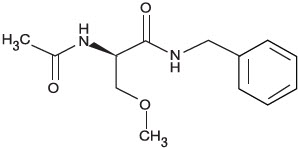
The chemical name of lacosamide, the single (R)-enantiomer, is (R)-2-acetamido-N-benzyl-3-methoxypropionamide (IUPAC). Lacosamide is a functionalized amino acid. Its molecular formula is C13H18N2O3 and its molecular weight is 250.30. The chemical structure is:
Lacosamide, USP is a white to light yellow powder. It is sparingly soluble in water and slightly soluble in acetonitrile, soluble in dichloromethane and methanol.
9.3 Dependence
Physical dependence is a state that develops as a result of physiological adaptation in response to repeated drug use, manifested by withdrawal signs and symptoms after abrupt discontinuation or a significant dose reduction of a drug. Abrupt termination of lacosamide in clinical trials with diabetic neuropathic pain patients produced no signs or symptoms that are associated with a withdrawal syndrome indicative of physical dependence. However, psychological dependence cannot be excluded due to the ability of lacosamide to produce euphoria-type adverse events in humans.
Medication Guide
Read this Medication Guide before you start taking lacosamide tablets and each time you get a refill. There may be new information. This Medication Guide describes important safety information about lacosamide tablets. This information does not take the place of talking to your healthcare provider about your medical condition or treatment.
What is the most important information I should know about lacosamide tablets?
Do not stop taking lacosamide tablets without first talking to your healthcare provider.
Stopping lacosamide tablets suddenly can cause serious problems. Stopping seizure medicine suddenly in a patient who has epilepsy can cause seizures that will not stop (status epilepticus).
Lacosamide tablets can cause serious side effects, including:
1. Like other antiepileptic drugs, lacosamide tablets may cause suicidal thoughts or actions in a very small number of people, about 1 in 500.
Call a healthcare provider right away if you have any of these symptoms, especially if they are new, worse, or worry you:
|
|
How can I watch for early symptoms of suicidal thoughts and actions?
- Pay attention to any changes, especially sudden changes, in mood, behaviors, thoughts, or feelings.
- Keep all follow-up visits with your healthcare provider as scheduled.
- Call your healthcare provider between visits as needed, especially if you are worried about symptoms.
- Suicidal thoughts or actions can be caused by things other than medicines.If you have suicidal thoughts or actions, your healthcare provider may check for other causes.
2. Lacosamide tablets may cause you to feel dizzy, have double vision, feel sleepy, or have problems with coordination and walking. Do not drive, operate heavy machinery, or do other dangerous activities until you know how lacosamide tablets affects you.
3. Lacosamide tablets may cause you to have an irregular heartbeat or may cause you to faint. In rare cases, cardiac arrest has been reported. Call your healthcare provider right away if you:
|
|
If you have fainted or feel like you are going to faint you should lay down with your legs raised.
4. Lacosamide tablet is a federally controlled substance (CV) because it can be abused or lead to drug dependence. Keep your lacosamide tablets in a safe place, to protect it from theft. Never give your lacosamide tablets to anyone else, because it may harm them. Selling or giving away this medicine is against the law.
What are Lacosamide Tablets?
Lacosamide tablet is a prescription medicine used:
- to treat partial-onset seizures in people 1 month of age and older.
- with other medicines to treat primary generalized tonic-clonic seizures in people 4 years of age and older.
It is not known if lacosamide tablet is safe and effective for partial-onset seizures in children under 1 month of age or for primary generalized tonicclonic seizures in children under 4 years of age.
What should I tell my healthcare provider before taking lacosamide tablets?
Before you take lacosamide tablets, tell your healthcare provider about all of your medical conditions, including if you:
- have or have had depression, mood problems or suicidal thoughts or behavior.
- have heart problems.
- have kidney problems.
- have liver problems.
- have abused prescription medicines, street drugs or alcohol in the past.
- are pregnant or plan to become pregnant. It is not known if lacosamide tablets can harm your unborn baby. Tell your healthcare provider right away
- if you become pregnant while taking lacosamide tablets. You and your healthcare provider will decide if you should take lacosamide tablets while
- you are pregnant.
- If you become pregnant while taking lacosamide tablets, talk to your healthcare provider about registering with the North American Antiepileptic Drug Pregnancy Registry. You can enroll in this registry by calling 1-888-233-2334. The purpose of this registry is to collect information about the safety of antiepileptic medicine during pregnancy.
- are breastfeeding or plan to breastfeed. Lacosamide tablets passes into breast milk.
- Breastfeeding during treatment with lacosamide tablets may cause your baby to have more sleepiness than normal. If this happens, contact your baby's healthcare provider.
- Talk to your healthcare provider about the best way to feed your baby if you take lacosamide tablets.
Tell your healthcare provider about all the medicines you take, including prescription and over-the-counter medicines, vitamins, and herbal supplements.
Taking lacosamide tablets with certain other medicines may cause side effects or affect how well they work. Do not start or stop other medicines without talking to your healthcare provider. Know the medicines you take. Keep a list of them and show it to your healthcare provider and pharmacist each time you get a new medicine.
How should I take lacosamide tablets?
- Take lacosamide tablets exactly as your healthcare provider tells you.
- Your healthcare provider will tell you how much lacosamide tablets to take and when to take it.
- Your healthcare provider may change your dose if needed.
- Do not stop lacosamide tablets without first talking to a healthcare provider. Stopping lacosamide tablets suddenly in a patient who has epilepsy
- can cause seizures that will not stop (status epilepticus).
- Lacosamide tablets may be taken with or without food.
- Swallow lacosamide tablets whole with liquid. Do not cut lacosamide tablets.
- If you take too much lacosamide tablets, call your healthcare provider or local Poison Control Center right away.
What should I avoid while taking lacosamide tablets?
Do not drive, operate heavy machinery, or do other dangerous activities until you know how lacosamide tablets affects you. Lacosamide tablets may cause you to feel dizzy, have double vision, feel sleepy, or have problems with coordination and walking.
What are the possible side effects of lacosamide tablets?
Lacosamide tablets may cause other serious side effects including:
- A serious allergic reaction that may affect your skin or other parts of your body such as your liver or blood cells. Call your healthcare provider right away if you have:
|
|
The most common side effects of lacosamide tablets include:
|
|
These are not all of the possible side effects of lacosamide tablets. For more information ask your healthcare provider or pharmacist. Tell your healthcare provider about any side effect that bothers you or that does not go away. Call your doctor for medical advice about side effects. You may report side effects to FDA at 1-800-FDA-1088.
How should I store lacosamide tablets?
- Store lacosamide tablets at room temperature between 68°F to 77°F (20°C to 25°C).
Keep lacosamide tablets and all medicines out of the reach of children.
General Information about the safe and effective use of lacosamide tablets.
Medicines are sometimes prescribed for purposes other than those listed in a Medication Guide. Do not use lacosamide tablets for a condition for which it was not prescribed. Do not give lacosamide tablets to other people, even if they have the same symptoms that you have. It may harm them.
This Medication Guide summarizes the most important information about lacosamide tablets. If you would like more information, talk with your healthcare provider. You can ask your pharmacist or healthcare provider for information about lacosamide tablets that is written for health professionals.
What are the ingredients in lacosamide tablets, USP?
Active ingredient: lacosamide
Tablet inactive ingredients: colloidal silicon dioxide, crospovidone, hydroxypropyl cellulose, magnesium stearate, microcrystalline cellulose and additional ingredients listed below:
- 50 mg tablets: opadry pink 03F140000 contains hypromellose 6cp, titanium dioxide, polyethylene glycol, FD&C Red #40/allura Red AC aluminum lake, FD&C Blue #2/indigo carmine aluminum lake.
- 100 mg tablets: opadry yellow 03F82606 contains hypromellose 6cp, titanium dioxide, polyethylene glycol, iron oxide yellow, iron oxide red.
- 150 mg tablets: opadry beige 03F130001 contains hypromellose 6cp, titanium dioxide, polyethylene glycol, FD&C Yellow #6/sunset yellow FCF aluminum lake, FD&C Red #40/Allura Red AC aluminum lake, FD&C Blue #2/indigo carmine aluminum lake.
- 200 mg tablets: opadry blue 03F105002 contains hypromellose 6cp, titanium dioxide, polyethylene glycol, FD&C Blue #2/indigo carmine aluminum lake.
Manufactured By:
ScieGen Pharmaceuticals, Inc.
Hauppauge, New York 11788, USA
Manufactured for:
Westminster Pharmaceuticals, LLC.
Nashville, TN 37217
For more information, call 1-844-221-7294
Rev: 8/2025
This Medication Guide has been approved by the U.S. Food and Drug Administration.
8.5 Geriatric Use
There were insufficient numbers of elderly patients enrolled in partial-onset seizure trials (n=18) to adequately determine whether they respond differently from younger patients.
No lacosamide dose adjustment based on age is necessary. In elderly patients, dose titration should be performed with caution, usually starting at the lower end of the dosing range, reflecting the greater frequency of decreased hepatic function, decreased renal function, increased cardiac conduction abnormalities, and polypharmacy [see Dosage and Administration (2.1, 2.4, 2.5) and Clinical Pharmacology (12.3)].
4 Contraindications
None.
6 Adverse Reactions
The following serious adverse reactions are described below and elsewhere in the labeling:
- Suicidal Behavior and Ideation [see Warnings and Precautions (5.1)]
- Dizziness and Ataxia [see Warnings and Precautions (5.2)]
- Cardiac Rhythm and Conduction Abnormalities [see Warnings and Precautions (5.3)]
- Syncope [see Warnings and Precautions (5.4)]
- Drug Reaction with Eosinophilia and Systemic Symptoms (DRESS)/Multiorgan Hypersensitivity Reactions [see Warnings and Precautions (5.6)]
8.6 Renal Impairment
No dose adjustment is necessary in patients with mild to moderate renal impairment (CLCR ≥30 mL/min). In patients with severe renal impairment (CLCR <30 mL/min as estimated by the Cockcroft-Gault equation for adults; CLCR less than 30 mL/min/1.73m2 as estimated by the Schwartz equation for pediatric patients) and in those with end-stage renal disease, a reduction of 25% of the maximum dosage is recommended [see Dosage and Administration (2.4) and Clinical Pharmacology (12.3)].
In all patients with renal impairment, dose initiation and titration should be based on clinical response and tolerability.
Lacosamide is effectively removed from plasma by hemodialysis. Dosage supplementation of up to 50% following hemodialysis should be considered.
12.2 Pharmacodynamics
A pharmacokinetic-pharmacodynamic (efficacy) analysis was performed based on the pooled data from the 3 efficacy trials for partial-onset seizures. Lacosamide exposure is correlated with the reduction in seizure frequency. However, doses above 400 mg/day do not appear to confer additional benefit in group analyses.
12.3 Pharmacokinetics
The pharmacokinetics of lacosamide have been studied in healthy adult subjects (age range 18 to 87), adults with partial-onset seizures, adults with diabetic neuropathy, and subjects with renal and hepatic impairment. The pharmacokinetics of lacosamide are similar in healthy subjects, patients with partial-onset seizures, and patients with primary generalized tonic-clonic seizures.
Lacosamide is completely absorbed after oral administration with negligible first-pass effect with a high absolute bioavailability of approximately 100%. The maximum lacosamide plasma concentrations occur approximately 1-to-4-hour post-dose after oral dosing, and elimination half-life is approximately 13 hours. Steady state plasma concentrations are achieved after 3 days of twice daily repeated administration. Pharmacokinetics of lacosamide are dose proportional (100 mg to 800 mg) and time invariant, with low inter- and intra-subject variability. Compared to lacosamide the major metabolite, O-desmethyl metabolite, has a longer Tmax (0.5 to 12 hours) and elimination half-life (15 to 23 hours).
2.1 Dosage Information
The recommended dosage for monotherapy and adjunctive therapy for partial-onset seizures in patients 1 Month of age and older and for adjunctive therapy for primary generalized tonic-clonic seizures in patients 4 years of age and older is included in Table 1. In pediatric patients, the recommended dosing regimen is dependent upon body weight. Dosage should be increased based on clinical response and tolerability, no more frequently than once per week. Titration increments should not exceed those shown in Table 1.
| Age and Body Weight | Initial Dosage | Titration Regimen | Maintenance Dosage |
|---|---|---|---|
| Adults (17 years and older) |
Monotherapy Monotherapy for partial-onset seizures only :
100 mg twice daily (200 mg per day) Adjunctive Therapy: 50 mg twice daily (100 mg per day) |
Increase by 50 mg twice daily (100 mg per day) every week |
Monotherapy:
150 mg to 200 mg twice daily (300 mg to 400 mg per day) Adjunctive Therapy: 100 mg to 200 mg twice daily (200 mg to 400 mg per day) |
| Pediatric patients weighing at least 50 kg | 50 mg twice daily (100 mg per day) |
Increase by 50 mg twice daily (100 mg per day) every week |
Monotherapy:
150 mg to 200 mg twice daily (300 mg to 400 mg per day) Adjunctive Therapy: 100 mg to 200 mg twice daily (200 mg to 400 mg per day) |
| Pediatric patients weighing 30 kg to less than 50 kg | 1 mg/kg twice daily (2 mg/kg/day) |
Increase by 1 mg/kg twice daily (2 mg/kg/day) every week | 2 mg/kg to 4 mg/kg twice daily (4 mg/kg/day to 8 mg/kg/day) |
| Pediatric patients weighing 11 kg to less than 30 kg | 1 mg/kg twice daily (2 mg/kg/day) |
Increase by 1 mg/kg twice daily (2 mg/kg/day) every week | 3 mg/kg to 6 mg/kg twice daily (6 mg/kg/day to 12 mg/kg/day) |
| Pediatric patients weighing 6 kg to less than 11 kg indicated only for partial-onset seizures
|
|||
| Pediatric patients weighing less than 6 kg |
Oral:
1 mg/kg twice daily (2 mg/kg/day) |
Oral:
Increase by 1 mg/kg twice daily (2 mg/kg/day) every week |
Oral:
3.75 mg/kg to 7.5 mg/kg twice daily (7.5 mg/kg/day to 15 mg/kg/day) |
In adjunctive clinical trials in adult patients with partial-onset seizures, a dosage higher than 200 mg twice daily (400 mg per day) was not more effective and was associated with a substantially higher rate of adverse reactions [see Adverse Reactions (6.1) and Clinical Studies (14.2) ].
8.7 Hepatic Impairment
For adult and pediatric patients with mild to moderate hepatic impairment, a reduction of 25% of the maximum dosage is recommended. Patients with mild to moderate hepatic impairment should be observed closely for adverse reactions, and dose initiation and titration should be based on clinical response and tolerability [see Dosage and Administration (2.5), Clinical Pharmacology (12.3)].
The pharmacokinetics of lacosamide has not been evaluated in severe hepatic impairment. Lacosamide use is not recommended in patients with severe hepatic impairment.
1 Indications and Usage
11.1 Lacosamide Tablets
Lacosamide tablets, USP for oral administration contain lacosamide and the following inactive ingredients: colloidal silicon dioxide, crospovidone, hydroxypropyl cellulose, magnesium stearate and microcrystalline cellulose.
Lacosamide tablets, USP are supplied as debossed tablets and contain the following coating agents:
50 mg tablets: opadry pink 03F140000 contains hypromellose 6cp, titanium dioxide, polyethylene glycol, FD&C Red #40/allura Red AC aluminum lake, FD&C Blue #2/indigo carmine aluminum lake.
100 mg tablets: opadry yellow 03F82606 contains hypromellose 6cp, titanium dioxide, polyethylene glycol, iron oxide yellow, iron oxide red.
150 mg tablets: opadry beige 03F130001 contains hypromellose 6cp, titanium dioxide, polyethylene glycol, FD&C Yellow #6/sunset yellow FCF aluminum lake, FD&C Red #40/Allura Red AC aluminum lake, FD&C Blue #2/indigo carmine aluminum lake.
200 mg tablets: opadry blue 03F105002 contains hypromellose 6cp, titanium dioxide, polyethylene glycol, FD&C Blue #2/indigo carmine aluminum lake.
12.1 Mechanism of Action
The precise mechanism by which lacosamide exerts its antiepileptic effects in humans remains to be fully elucidated. In vitro electrophysiological studies have shown that lacosamide selectively enhances slow inactivation of voltage-gated sodium channels, resulting in stabilization of hyperexcitable neuronal membranes and inhibition of repetitive neuronal firing.
5.2 Dizziness and Ataxia
Lacosamide may cause dizziness and ataxia in adult and pediatric patients. In adult patients with partial-onset seizures taking 1 to 3 concomitant AEDs, dizziness was experienced by 25% of patients randomized to the recommended doses (200 mg/day to 400 mg/day) of lacosamide tablets (compared with 8% of placebo patients) and was the adverse reaction most frequently leading to discontinuation (3%). Ataxia was experienced by 6% of patients randomized to the recommended doses (200 mg/day to 400 mg/day) of lacosamide (compared to 2% of placebo patients). The onset of dizziness and ataxia was most commonly observed during titration. There was a substantial increase in these adverse reactions at doses higher than 400 mg/day [see Adverse Reactions (6.1) ]. If a loading dose is clinically indicated, administer with medical supervision because of the possibility of increased incidence of adverse reactions, including CNS adverse reactions such as dizziness and ataxia.
9.1 Controlled Substance
Lacosamide tablets contains lacosamide, a Schedule V controlled substance.
16.2 Storage and Handling
Store at 20°C to 25°C (68°F to 77°F); excursions permitted between 15°C to 30°C (59°F to 86°F). [See USP Controlled Room Temperature]
1.1 Partial Onset Seizures
Lacosamide is indicated for the treatment of partial-onset seizures in patients 1 month of age and older.
5 Warnings and Precautions
- Monitor patients for suicidal behavior and ideation (5.1)
- Lacosamide may cause dizziness and ataxia (5.2)
- Cardiac Rhythm and Conduction Abnormalities: Obtaining ECG before beginning and after titration to steady-state maintenance is recommended in patients with underlying proarrhythmic conditions or on concomitant medications that affect cardiac conduction; closely monitor these patients (5.3, 7.2)
- Lacosamide may cause syncope (5.4)
- Lacosamide should be gradually withdrawn to minimize the potential of increased seizure frequency (5.5)
- Drug Reaction with Eosinophilia and Systemic Symptoms (DRESS)/ Multi-Organ Hypersensitivity: Discontinue if no alternate etiology (5.6)
2 Dosage and Administration
-
Adults (17 years and older):
- Initial dosage for monotherapy for the treatment of partial-onset seizures is 100 mg twice daily (2.1)
- Initial dosage for adjunctive therapy for the treatment of partial-onset seizures or primary generalized tonic-clonic seizures is 50 mg twice daily (2.1)
- Maximum recommended dosage for monotherapy and adjunctive therapy is 200 mg twice daily (2.1)
- Pediatric Patients 1 month to less than 17 years: The recommended dosage is based on body weight and is administered orally twice daily (2.1)
- Increase dosage based on clinical response and tolerability, no more frequently than once per week (2.1)
- Dose adjustment is recommended for severe renal impairment (2.4, 12.3)
- Dose adjustment is recommended for mild or moderate hepatic impairment; use in patients with severe hepatic impairment is not recommended (2.5, 12.3)
3 Dosage Forms and Strengths
- 50 mg (pink), 100 mg (yellow), 150 mg (beige), 200 mg (blue) film-coated tablets (3)
6.2 Postmarketing Experience
The following adverse reactions have been identified during post-approval use of lacosamide. Because these reactions are reported voluntarily from a population of uncertain size, it is not always possible to reliably estimate their frequency or establish a causal relationship to drug exposure.
Blood and lymphatic system disorders: Agranulocytosis
Psychiatric disorders: Aggression, agitation, hallucination, insomnia, psychotic disorder
Skin and subcutaneous tissue disorders: Angioedema, rash, urticaria, Stevens-Johnson syndrome, toxic epidermal necrolysis.
Neurologic disorders: Dyskinesia, new or worsening seizures
8 Use in Specific Populations
- Pregnancy: Based on animal data, may cause fetal harm (8.1)
6.1 Clinical Trials Experience
Because clinical trials are conducted under widely varying conditions, adverse reaction rates observed in the clinical trials of a drug cannot be directly compared to rates in the clinical trials of another drug and may not reflect the rates observed in practice.
17 Patient Counseling Information
Advise the patient or caregiver to read the FDA-approved patient labeling (Medication Guide).
2.8 Discontinuation of Lacosamide
When discontinuing lacosamide, a gradual withdrawal over at least 1 week is recommended [see Warnings and Precautions (5.5) ].
5.1 Suicidal Behavior and Ideation
Antiepileptic drugs (AEDs), including lacosamide, increase the risk of suicidal thoughts or behavior in patients taking these drugs for any indication. Patients treated with any AED for any indication should be monitored for the emergence or worsening of depression, suicidal thoughts or behavior, and/or any unusual changes in mood or behavior.
Pooled analyses of 199 placebo-controlled clinical trials (mono- and adjunctive therapy) of 11 different AEDs showed that patients randomized to one of the AEDs had approximately twice the risk (adjusted Relative Risk 1.8, 95% CI:1.2, 2.7) of suicidal thinking or behavior compared to patients randomized to placebo. In these trials, which had a median treatment duration of 12 weeks, the estimated incidence of suicidal behavior or ideation among 27,863 AED-treated patients was 0.43%, compared to 0.24% among 16,029 placebo-treated patients, representing an increase of approximately one case of suicidal thinking or behavior for every 530 patients treated. There were four suicides in drug-treated patients in the trials and none in placebo-treated patients, but the number of events is too small to allow any conclusion about drug effect on suicide.
The increased risk of suicidal thoughts or behavior with AEDs was observed as early as one week after starting treatment with AEDs and persisted for the duration of treatment assessed. Because most trials included in the analysis did not extend beyond 24 weeks, the risk of suicidal thoughts or behavior beyond 24 weeks could not be assessed.
The risk of suicidal thoughts or behavior was generally consistent among drugs in the data analyzed. The finding of increased risk with AEDs of varying mechanisms of action and across a range of indications suggests that the risk applies to all AEDs used for any indication. The risk did not vary substantially by age (5 to 100 years) in the clinical trials analyzed.
Table 3 shows absolute and relative risk by indication for all evaluated AEDs.
| Indication | Placebo Patients with Events Per 1,000 Patients | Drug Patients with Events Per 1,000 Patients | Relative Risk: Incidence of Events in Drug Patients/ Incidence in Placebo Patients |
Risk Difference: Additional Drug Patients with Events Per 1,000 Patients |
|---|---|---|---|---|
| Epilepsy | 1.0 | 3.4 | 3.5 | 2.4 |
| Psychiatric | 5.7 | 8.5 | 1.5 | 2.9 |
| Other | 1.0 | 1.8 | 1.9 | 0.9 |
| Total | 2.4 | 4.3 | 1.8 | 1.9 |
The relative risk for suicidal thoughts or behavior was higher in clinical trials for epilepsy than in clinical trials for psychiatric or other conditions, but the absolute risk differences were similar.
Anyone considering prescribing lacosamide or any other AED must balance this risk with the risk of untreated illness. Epilepsy and many other illnesses for which antiepileptics are prescribed are themselves associated with morbidity and mortality and an increased risk of suicidal thoughts and behavior. Should suicidal thoughts and behavior emerge during treatment, the prescriber needs to consider whether the emergence of these symptoms in any given patient may be related to the illness being treated.
7.1 Strong Cyp3a4 Or Cyp2c9 Inhibitors
Patients with renal or hepatic impairment who are taking strong inhibitors of CYP3A4 and CYP2C9 may have a significant increase in exposure to lacosamide. Dose reduction may be necessary in these patients.
5.5 Withdrawal of Antiepileptic Drugs (aeds)
As with all AEDs, lacosamide should be withdrawn gradually (over a minimum of 1 week) to minimize the potential of increased seizure frequency in patients with seizure disorders.
1.2 Primary Generalized Tonic Clonic Seizures
Lacosamide is indicated as adjunctive therapy in the treatment of primary generalized tonic-clonic seizures in patients 4 years of age and older.
Principal Display Panel 50 Mg Tablet Bottle Label
NDC 69367-348-60
Rx Only
Lacosamide
Tablets, USP CV
50 mg
PHARMACIST: Dispense the Medication
Guide provided separately to each patient.
60 Tablets
Westminster
Pharmaceuticals
Principal Display Panel 100 Mg Tablet Bottle Label
NDC 69367-349-60
Rx Only
Lacosamide
Tablets, USP CV
100 mg
PHARMACIST: Dispense the Medication
Guide provided separately to each patient.
60 Tablets
Westminster
Pharmaceuticals
Principal Display Panel 150 Mg Tablet Bottle Label
NDC 69367-350-60
Rx Only
Lacosamide
Tablets, USP CV
150 mg
PHARMACIST: Dispense the Medication
Guide provided separately to each patient.
60 Tablets
Westminster
Pharmaceuticals
Principal Display Panel 200 Mg Tablet Bottle Label
NDC 69367-351-60
Rx Only
Lacosamide
Tablets, USP CV
200 mg
PHARMACIST: Dispense the Medication
Guide provided separately to each patient.
60 Tablets
Westminster
Pharmaceuticals
2.6 Administration Instructions for Lacosamide Tablets
Lacosamide tablets may be taken with or without food.
Lacosamide tablets should be swallowed whole with liquid. Do not divide lacosamide tablets.
14.1 Monotherapy in Patients With Partial Onset Seizures
The efficacy of lacosamide in monotherapy was established in a historical-control, multicenter, randomized trial that included 425 patients, age 16 to 70 years, with partial-onset seizures (Study 1). To be included in Study 1, patients were required to be taking stable doses of 1 or 2 marketed antiepileptic drugs. This treatment continued into the 8 week baseline period. To remain in the study, patients were required to have at least 2 partial-onset seizures per 28 days during the 8 week baseline period. The baseline period was followed by a 3 week titration period, during which lacosamide was added to the ongoing antiepileptic regimen. This was followed by a 16-week maintenance period (i.e., a 6-week withdrawal period for background antiepileptic drugs, followed by a 10-week monotherapy period). Patients were randomized 3 to 1 to receive lacosamide 400 mg/day or lacosamide 300 mg/day. Treatment assignments were blinded. Response to treatment was based upon a comparison of the number of patients who met exit criteria during the maintenance phase, compared to historical controls. The historical control consisted of a pooled analysis of the control groups from 8 studies of similar design, which utilized a sub-therapeutic dose of an antiepileptic drug. Statistical superiority to the historical control was considered to be demonstrated if the upper limit from a 2-sided 95% confidence interval for the percentage of patients meeting exit criteria in patients receiving lacosamide remained below the lower 95% prediction limit of 65% derived from the historical control data.
The exit criteria were one or more of the following: (1) doubling of average monthly seizure frequency during any 28 consecutive days, (2) doubling of highest consecutive 2-day seizure frequency, (3) occurrence of a single generalized tonic-clonic seizure, (4) clinically significant prolongation or worsening of overall seizure duration, frequency, type or pattern considered by the investigator to require trial discontinuation, (5) status epilepticus or new onset of serial/cluster seizures. The study population profile appeared comparable to that of the historical control population.
For the lacosamide 400 mg/day group, the estimate of the percentage of patients meeting at least 1 exit criterion was 30% (95% CI: 25%, 36%). The upper limit of the 2-sided 95% CI (36%) was below the threshold of 65% derived from the historical control data, meeting the pre-specified criteria for efficacy. Lacosamide 300 mg/day also met the pre-specified criteria for efficacy.
2.4 Dosage Information for Patients With Renal Impairment
For patients with mild to moderate renal impairment, no dosage adjustment is necessary.
For patients with severe renal impairment [creatinine clearance (CLCR) less than 30 mL/min as estimated by the Cockcroft-Gault equation for adults; CLCR less than 30 mL/min/1.73m2 as estimated by the Schwartz equation for pediatric patients] or end-stage renal disease, a reduction of 25% of the maximum dosage is recommended.
In all patients with renal impairment, dose initiation and titration should be based on clinical response and tolerability.
7.2 Concomitant Medications That Affect Cardiac Conduction
Lacosamide should be used with caution in patients on concomitant medications that affect cardiac conduction (sodium channel blockers, beta-blockers, calcium channel blockers, potassium channel blockers) including those that prolong PR interval (including sodium channel blocking AEDs), because of a risk of AV block, bradycardia, or ventricular tachyarrhythmia. In such patients, obtaining an ECG before beginning lacosamide, and after lacosamide is titrated to steady-state, is recommended. In addition, these patients should be closely monitored if they are administered lacosamide through the intravenous route [see Warnings and Precautions (5.3) ].
2.5 Dosage Information for Patients With Hepatic Impairment
For patients with mild or moderate hepatic impairment, a reduction of 25% of the maximum dosage is recommended. The dose initiation and titration should be based on clinical response and tolerability in patients with hepatic impairment.
Lacosamide use is not recommended in patients with severe hepatic impairment.
14.2 Adjunctive Therapy in Patients With Partial Onset Seizures
The efficacy of lacosamide as adjunctive therapy in partial-onset seizures was established in three 12-week, randomized, double-blind, placebo-controlled, multicenter trials in adult patients (Study 2, Study 3, and Study 4). Enrolled patients had partial-onset seizures with or without secondary generalization, and were not adequately controlled with 1 to 3 concomitant AEDs. During an 8-week baseline period, patients were required to have an average of ≥4 partial-onset seizures per 28 days with no seizure-free period exceeding 21 days. In these 3 trials, patients had a mean duration of epilepsy of 24 years and a median baseline seizure frequency ranging from 10 to 17 per 28 days. 84% of patients were taking 2 to 3 concomitant AEDs with or without concurrent vagal nerve stimulation.
Study 2 compared doses of lacosamide 200 mg/day, 400 mg/day, and 600 mg/day with placebo. Study 3 compared doses of lacosamide 400 mg/day and 600 mg/day with placebo. Study 4 compared doses of lacosamide 200 mg/day and 400 mg/day with placebo. In all three trials, following an 8-week baseline phase to establish baseline seizure frequency prior to randomization, patients were randomized and titrated to the randomized dose (a 1-step back-titration of lacosamide 100 mg/day or placebo was allowed in the case of intolerable adverse reactions at the end of the titration phase). During the titration phase, in all 3 adjunctive therapy trials, treatment was initiated at 100 mg/day (50 mg twice daily) and increased in weekly increments of 100 mg/day to the target dose. The titration phase lasted 6 weeks in Study 2 and Study 3, and 4 weeks in Study 4. In all three trials, the titration phase was followed by a maintenance phase that lasted 12 weeks, during which patients were to remain on a stable dose of lacosamide.
A reduction in 28-day seizure frequency (baseline to maintenance phase), as compared to the placebo group, was the primary variable in all three adjunctive therapy trials. A statistically significant effect was observed with lacosamide treatment (Figure 1) at doses of 200 mg/day (Study 4), 400 mg/day (Studies 2, 3, and 4), and 600 mg/day (Studies 2 and 3).
Subset evaluations of lacosamide demonstrate no important differences in seizure control as a function of gender or race, although data on race was limited (about 10% of patients were non-Caucasian).
Figure 2 presents the percentage of patients (X-axis) with a percent reduction in partial seizure frequency (responder rate) from baseline to the maintenance phase at least as great as that represented on the Y-axis. A positive value on the Y-axis indicates an improvement from baseline (i.e., a decrease in seizure frequency), while a negative value indicates a worsening from baseline (i.e., an increase in seizure frequency). Thus, in a display of this type, a curve for an effective treatment is shifted to the left of the curve for placebo. The proportion of patients achieving any particular level of reduction in seizure frequency was consistently higher for the lacosamide groups, compared to the placebo group. For example, 40% of patients randomized to lacosamide (400 mg/day) experienced a 50% or greater reduction in seizure frequency, compared to 23% of patients randomized to placebo. Patients with an increase in seizure frequency >100% are represented on the Y-axis as equal to or greater than -100%.
14.3 Adjunctive Therapy in Patients With Primary Generalized Tonic Clonic Seizures
The efficacy of lacosamide as adjunctive therapy in patients 4 years of age and older with idiopathic generalized epilepsy experiencing primary generalized tonic-clonic (PGTC) seizures was established in a 24-week double blind, randomized, placebo-controlled, parallel-group, multi-center study (Study 5). The study consisted of a 12-week historical baseline period, a 4-week prospective baseline period, and a 24-week treatment period (which included a 6-week titration period and an 18-week maintenance period). Eligible patients on a stable dose of 1 to 3 antiepileptic drugs experiencing at least 3 documented PGTC seizures during the 16-week combined baseline period were randomized 1:1 to receive lacosamide (n=121) or placebo (n=121).
Patients were dosed on a fixed-dose regimen. Dosing was initiated at a dose of 2 mg/kg/day in patients weighing less than 50 kg or 100 mg/day in patients weighing 50 kg or more in 2 divided doses. During the titration period, lacosamide doses were adjusted in 2 mg/kg/day increments in patients weighing less than 50 kg or 100 mg/day in patients weighing 50 kg or more at weekly intervals to achieve the target maintenance period dose of 12 mg/kg/day in patients weighing less than 30 kg, 8 mg/kg/day in patients weighing from 30 to less than 50 kg, or 400 mg/day in patients weighing 50 kg or more.
The primary efficacy endpoint (patients in the modified full analysis set: lacosamide n=118, placebo n=121) was the time to second PGTC seizure during the 24-week treatment period (Figure 3). The risk of developing a second PGTC seizure was statistically significantly lower in lacosamide group than in the placebo group during the 24-week treatment period (hazard ratio=0.548, 95% CI of hazard ratio: 0.381, 0.788, p-value = 0.001), with the corresponding risk reduction being 45.2%.
The key secondary efficacy endpoint was the percentage of patients not experiencing a PGTC seizure during the 24-week treatment period. The adjusted Kaplan-Meier estimates of 24-week freedom from PGTC seizures were 31.3% in lacosamide group and 17.2% in placebo group. The adjusted difference between treatment groups was 14.1% (95% CI: 3.2, 25.1, p-value=0.011).
The numbers at the bottom of the figure are for patients still at risk in the study at a given time point (i.e., the continuing patients in the study without an event or censoring prior to the time point).
5.6 Drug Reaction With Eosinophilia and Systemic Symptoms (dress)/multi Organ Hypersensitivity
Drug Reaction with Eosinophilia and Systemic Symptoms (DRESS), also known as multi-organ hypersensitivity, has been reported in patients taking antiepileptic drugs, including lacosamide. Some of these events have been fatal or life-threatening. DRESS typically, although not exclusively, presents with fever, rash, lymphadenopathy and/or facial swelling, in association with other organ system involvement, such as hepatitis, nephritis, hematologic abnormalities, myocarditis, or myositis, sometimes resembling an acute viral infection. Eosinophilia is often present. This disorder is variable in its expression, and other organ systems not noted here may be involved. It is important to note that early manifestations of hypersensitivity (e.g., fever, lymphadenopathy) may be present even though rash is not evident. If such signs or symptoms are present, the patient should be evaluated immediately. Lacosamide should be discontinued if an alternative etiology for the signs or symptoms cannot be established.
2.2 Alternate Initial Dosage Information to Achieve the Maintenance Dosage in A Shorter Timeframe
For monotherapy and adjunctive therapy for partial-onset seizures in patients 17 years of age and older, and for adjunctive therapy for primary generalized tonic-clonic seizures in patients 17 years of age and older, an alternate initial dosing regimen for week 1 (e.g., including a loading dose and/or a higher initial dosage) may be administered in patients for whom achieving the recommended maintenance dosage in a shorter timeframe is clinically indicated (see Table 2). The alternate initial dosage regimen should be continued for one week. Lacosamide may then be titrated based on clinical response and tolerability, no more frequently than once per week, if needed. The loading dose should be administered with medical supervision because of the possibility of increased incidence of adverse reactions, including central nervous system (CNS) and cardiovascular adverse reactions [see Warnings and Precautions (5.2, 5.3), Adverse Reactions (6.1), and Clinical Pharmacology (12.3)]. Titration increments should not exceed those shown in Table 2.
| Age and Body Weight | Alternate Initial Dosage | Titration Regimen | Maintenance Dosage |
|---|---|---|---|
| Adults (17 years and older) |
Single loading dose:
200 mg 12 hours later initiate: 100 mg twice daily (200 mg per day) |
Increase by 50 mg twice daily (100 mg per day) at weekly intervals, if needed |
Monotherapy Monotherapy for partial-onset seizures only :
150 mg to 200 mg twice daily (300 mg to 400 mg per day) Adjunctive Therapy: 100 mg to 200 mg twice daily (200 mg to 400 mg per day) |
Additional pediatric use information is approved for UCB, Inc.'s VIMPAT® (lacosamide) tablets. However, due to UCB, Inc.'s marketing exclusivity rights, this drug product is not labeled with that information.
2.3 Converting From A Single Antiepileptic (aed) to Lacosamide Monotherapy for the Treatment of Partial Onset Seizures
For patients who are already on a single AED and will convert to Lacosamide monotherapy, withdrawal of the concomitant AED should not occur until the therapeutic dosage of lacosamide is achieved and has been administered for at least 3 days. A gradual withdrawal of the concomitant AED over at least 6 weeks is recommended.
Structured Label Content
Section 42229-5 (42229-5)
Hemodialysis
Lacosamide is effectively removed from plasma by hemodialysis. Following a 4-hour hemodialysis treatment, dosage supplementation of up to 50% should be considered.
Section 43683-2 (43683-2)
9.2 Abuse
Abuse is the intentional, non-therapeutic use of a drug, even once, for its desirable psychological or physiological effects. In a human abuse potential study, single doses of 200 mg (equal to the maximum single dosage) and 800 mg lacosamide (equal to twice the recommended daily maintenance dosage) produced euphoria-type subjective responses that differentiated statistically from placebo; at 800 mg, these euphoria-type responses were statistically indistinguishable from those produced by alprazolam, a Schedule IV drug. The duration of the euphoria-type responses following lacosamide was less than that following alprazolam. A high rate of euphoria was also reported as an adverse event in the human abuse potential study following single doses of 800 mg lacosamide (15% [5/34]) compared to placebo (0%) and in two pharmacokinetic studies following single and multiple doses of 300 mg to 800 mg lacosamide (ranging from 6% [2/33] to 25% [3/12]) compared to placebo (0%). However, the rate of euphoria reported as an adverse event in the lacosamide development program at therapeutic doses was less than 1%.
5.4 Syncope
In the short-term controlled trials of lacosamide in adult patients with partial-onset seizures with no significant system illnesses, there was no increase in syncope compared to placebo. In the short-term controlled trials in adult patients with diabetic neuropathy, for which Lacosamide is not indicated, 1.2% of patients who were treated with lacosamide reported an adverse reaction of syncope or loss of consciousness, compared with 0% of placebo-treated patients with diabetic neuropathy. Most of the cases of syncope were observed in patients receiving doses above 400 mg/day. The cause of syncope was not determined in most cases. However, several were associated with either changes in orthostatic blood pressure, atrial flutter/fibrillation (and associated tachycardia), or bradycardia. Cases of syncope have also been observed in open-label clinical partial-onset seizure studies in adult and pediatric patients. These cases were associated with a history of risk factors for cardiac disease and the use of drugs that slow AV conduction.
10 Overdosage (10 OVERDOSAGE)
Events reported after an intake of more than 800 mg (twice the maximum recommended daily dosage) of lacosamide include dizziness, nausea, and seizures (generalized tonic-clonic seizures, status epilepticus). Cardiac conduction disorders, confusion, decreased level of consciousness, cardiogenic shock, cardiac arrest, and coma have also been observed. Fatalities have occurred following lacosamide overdoses of several grams.
There is no specific antidote for overdose with lacosamide. Standard decontamination procedures should be followed. General supportive care of the patient is indicated including monitoring of vital signs and observation of the clinical status of patient. A Certified Poison Control Center should be contacted for up to date information on the management of overdose with lacosamide.
Standard hemodialysis procedures result in significant clearance of lacosamide (reduction of systemic exposure by 50% in 4 hours). Hemodialysis may be indicated based on the patient's clinical state or in patients with significant renal impairment.
11 Description (11 DESCRIPTION)
The chemical name of lacosamide, the single (R)-enantiomer, is (R)-2-acetamido-N-benzyl-3-methoxypropionamide (IUPAC). Lacosamide is a functionalized amino acid. Its molecular formula is C13H18N2O3 and its molecular weight is 250.30. The chemical structure is:
Lacosamide, USP is a white to light yellow powder. It is sparingly soluble in water and slightly soluble in acetonitrile, soluble in dichloromethane and methanol.
9.3 Dependence
Physical dependence is a state that develops as a result of physiological adaptation in response to repeated drug use, manifested by withdrawal signs and symptoms after abrupt discontinuation or a significant dose reduction of a drug. Abrupt termination of lacosamide in clinical trials with diabetic neuropathic pain patients produced no signs or symptoms that are associated with a withdrawal syndrome indicative of physical dependence. However, psychological dependence cannot be excluded due to the ability of lacosamide to produce euphoria-type adverse events in humans.
Medication Guide (MEDICATION GUIDE)
Read this Medication Guide before you start taking lacosamide tablets and each time you get a refill. There may be new information. This Medication Guide describes important safety information about lacosamide tablets. This information does not take the place of talking to your healthcare provider about your medical condition or treatment.
What is the most important information I should know about lacosamide tablets?
Do not stop taking lacosamide tablets without first talking to your healthcare provider.
Stopping lacosamide tablets suddenly can cause serious problems. Stopping seizure medicine suddenly in a patient who has epilepsy can cause seizures that will not stop (status epilepticus).
Lacosamide tablets can cause serious side effects, including:
1. Like other antiepileptic drugs, lacosamide tablets may cause suicidal thoughts or actions in a very small number of people, about 1 in 500.
Call a healthcare provider right away if you have any of these symptoms, especially if they are new, worse, or worry you:
|
|
How can I watch for early symptoms of suicidal thoughts and actions?
- Pay attention to any changes, especially sudden changes, in mood, behaviors, thoughts, or feelings.
- Keep all follow-up visits with your healthcare provider as scheduled.
- Call your healthcare provider between visits as needed, especially if you are worried about symptoms.
- Suicidal thoughts or actions can be caused by things other than medicines.If you have suicidal thoughts or actions, your healthcare provider may check for other causes.
2. Lacosamide tablets may cause you to feel dizzy, have double vision, feel sleepy, or have problems with coordination and walking. Do not drive, operate heavy machinery, or do other dangerous activities until you know how lacosamide tablets affects you.
3. Lacosamide tablets may cause you to have an irregular heartbeat or may cause you to faint. In rare cases, cardiac arrest has been reported. Call your healthcare provider right away if you:
|
|
If you have fainted or feel like you are going to faint you should lay down with your legs raised.
4. Lacosamide tablet is a federally controlled substance (CV) because it can be abused or lead to drug dependence. Keep your lacosamide tablets in a safe place, to protect it from theft. Never give your lacosamide tablets to anyone else, because it may harm them. Selling or giving away this medicine is against the law.
What are Lacosamide Tablets?
Lacosamide tablet is a prescription medicine used:
- to treat partial-onset seizures in people 1 month of age and older.
- with other medicines to treat primary generalized tonic-clonic seizures in people 4 years of age and older.
It is not known if lacosamide tablet is safe and effective for partial-onset seizures in children under 1 month of age or for primary generalized tonicclonic seizures in children under 4 years of age.
What should I tell my healthcare provider before taking lacosamide tablets?
Before you take lacosamide tablets, tell your healthcare provider about all of your medical conditions, including if you:
- have or have had depression, mood problems or suicidal thoughts or behavior.
- have heart problems.
- have kidney problems.
- have liver problems.
- have abused prescription medicines, street drugs or alcohol in the past.
- are pregnant or plan to become pregnant. It is not known if lacosamide tablets can harm your unborn baby. Tell your healthcare provider right away
- if you become pregnant while taking lacosamide tablets. You and your healthcare provider will decide if you should take lacosamide tablets while
- you are pregnant.
- If you become pregnant while taking lacosamide tablets, talk to your healthcare provider about registering with the North American Antiepileptic Drug Pregnancy Registry. You can enroll in this registry by calling 1-888-233-2334. The purpose of this registry is to collect information about the safety of antiepileptic medicine during pregnancy.
- are breastfeeding or plan to breastfeed. Lacosamide tablets passes into breast milk.
- Breastfeeding during treatment with lacosamide tablets may cause your baby to have more sleepiness than normal. If this happens, contact your baby's healthcare provider.
- Talk to your healthcare provider about the best way to feed your baby if you take lacosamide tablets.
Tell your healthcare provider about all the medicines you take, including prescription and over-the-counter medicines, vitamins, and herbal supplements.
Taking lacosamide tablets with certain other medicines may cause side effects or affect how well they work. Do not start or stop other medicines without talking to your healthcare provider. Know the medicines you take. Keep a list of them and show it to your healthcare provider and pharmacist each time you get a new medicine.
How should I take lacosamide tablets?
- Take lacosamide tablets exactly as your healthcare provider tells you.
- Your healthcare provider will tell you how much lacosamide tablets to take and when to take it.
- Your healthcare provider may change your dose if needed.
- Do not stop lacosamide tablets without first talking to a healthcare provider. Stopping lacosamide tablets suddenly in a patient who has epilepsy
- can cause seizures that will not stop (status epilepticus).
- Lacosamide tablets may be taken with or without food.
- Swallow lacosamide tablets whole with liquid. Do not cut lacosamide tablets.
- If you take too much lacosamide tablets, call your healthcare provider or local Poison Control Center right away.
What should I avoid while taking lacosamide tablets?
Do not drive, operate heavy machinery, or do other dangerous activities until you know how lacosamide tablets affects you. Lacosamide tablets may cause you to feel dizzy, have double vision, feel sleepy, or have problems with coordination and walking.
What are the possible side effects of lacosamide tablets?
Lacosamide tablets may cause other serious side effects including:
- A serious allergic reaction that may affect your skin or other parts of your body such as your liver or blood cells. Call your healthcare provider right away if you have:
|
|
The most common side effects of lacosamide tablets include:
|
|
These are not all of the possible side effects of lacosamide tablets. For more information ask your healthcare provider or pharmacist. Tell your healthcare provider about any side effect that bothers you or that does not go away. Call your doctor for medical advice about side effects. You may report side effects to FDA at 1-800-FDA-1088.
How should I store lacosamide tablets?
- Store lacosamide tablets at room temperature between 68°F to 77°F (20°C to 25°C).
Keep lacosamide tablets and all medicines out of the reach of children.
General Information about the safe and effective use of lacosamide tablets.
Medicines are sometimes prescribed for purposes other than those listed in a Medication Guide. Do not use lacosamide tablets for a condition for which it was not prescribed. Do not give lacosamide tablets to other people, even if they have the same symptoms that you have. It may harm them.
This Medication Guide summarizes the most important information about lacosamide tablets. If you would like more information, talk with your healthcare provider. You can ask your pharmacist or healthcare provider for information about lacosamide tablets that is written for health professionals.
What are the ingredients in lacosamide tablets, USP?
Active ingredient: lacosamide
Tablet inactive ingredients: colloidal silicon dioxide, crospovidone, hydroxypropyl cellulose, magnesium stearate, microcrystalline cellulose and additional ingredients listed below:
- 50 mg tablets: opadry pink 03F140000 contains hypromellose 6cp, titanium dioxide, polyethylene glycol, FD&C Red #40/allura Red AC aluminum lake, FD&C Blue #2/indigo carmine aluminum lake.
- 100 mg tablets: opadry yellow 03F82606 contains hypromellose 6cp, titanium dioxide, polyethylene glycol, iron oxide yellow, iron oxide red.
- 150 mg tablets: opadry beige 03F130001 contains hypromellose 6cp, titanium dioxide, polyethylene glycol, FD&C Yellow #6/sunset yellow FCF aluminum lake, FD&C Red #40/Allura Red AC aluminum lake, FD&C Blue #2/indigo carmine aluminum lake.
- 200 mg tablets: opadry blue 03F105002 contains hypromellose 6cp, titanium dioxide, polyethylene glycol, FD&C Blue #2/indigo carmine aluminum lake.
Manufactured By:
ScieGen Pharmaceuticals, Inc.
Hauppauge, New York 11788, USA
Manufactured for:
Westminster Pharmaceuticals, LLC.
Nashville, TN 37217
For more information, call 1-844-221-7294
Rev: 8/2025
This Medication Guide has been approved by the U.S. Food and Drug Administration.
8.5 Geriatric Use
There were insufficient numbers of elderly patients enrolled in partial-onset seizure trials (n=18) to adequately determine whether they respond differently from younger patients.
No lacosamide dose adjustment based on age is necessary. In elderly patients, dose titration should be performed with caution, usually starting at the lower end of the dosing range, reflecting the greater frequency of decreased hepatic function, decreased renal function, increased cardiac conduction abnormalities, and polypharmacy [see Dosage and Administration (2.1, 2.4, 2.5) and Clinical Pharmacology (12.3)].
4 Contraindications (4 CONTRAINDICATIONS)
None.
6 Adverse Reactions (6 ADVERSE REACTIONS)
The following serious adverse reactions are described below and elsewhere in the labeling:
- Suicidal Behavior and Ideation [see Warnings and Precautions (5.1)]
- Dizziness and Ataxia [see Warnings and Precautions (5.2)]
- Cardiac Rhythm and Conduction Abnormalities [see Warnings and Precautions (5.3)]
- Syncope [see Warnings and Precautions (5.4)]
- Drug Reaction with Eosinophilia and Systemic Symptoms (DRESS)/Multiorgan Hypersensitivity Reactions [see Warnings and Precautions (5.6)]
8.6 Renal Impairment
No dose adjustment is necessary in patients with mild to moderate renal impairment (CLCR ≥30 mL/min). In patients with severe renal impairment (CLCR <30 mL/min as estimated by the Cockcroft-Gault equation for adults; CLCR less than 30 mL/min/1.73m2 as estimated by the Schwartz equation for pediatric patients) and in those with end-stage renal disease, a reduction of 25% of the maximum dosage is recommended [see Dosage and Administration (2.4) and Clinical Pharmacology (12.3)].
In all patients with renal impairment, dose initiation and titration should be based on clinical response and tolerability.
Lacosamide is effectively removed from plasma by hemodialysis. Dosage supplementation of up to 50% following hemodialysis should be considered.
12.2 Pharmacodynamics
A pharmacokinetic-pharmacodynamic (efficacy) analysis was performed based on the pooled data from the 3 efficacy trials for partial-onset seizures. Lacosamide exposure is correlated with the reduction in seizure frequency. However, doses above 400 mg/day do not appear to confer additional benefit in group analyses.
12.3 Pharmacokinetics
The pharmacokinetics of lacosamide have been studied in healthy adult subjects (age range 18 to 87), adults with partial-onset seizures, adults with diabetic neuropathy, and subjects with renal and hepatic impairment. The pharmacokinetics of lacosamide are similar in healthy subjects, patients with partial-onset seizures, and patients with primary generalized tonic-clonic seizures.
Lacosamide is completely absorbed after oral administration with negligible first-pass effect with a high absolute bioavailability of approximately 100%. The maximum lacosamide plasma concentrations occur approximately 1-to-4-hour post-dose after oral dosing, and elimination half-life is approximately 13 hours. Steady state plasma concentrations are achieved after 3 days of twice daily repeated administration. Pharmacokinetics of lacosamide are dose proportional (100 mg to 800 mg) and time invariant, with low inter- and intra-subject variability. Compared to lacosamide the major metabolite, O-desmethyl metabolite, has a longer Tmax (0.5 to 12 hours) and elimination half-life (15 to 23 hours).
2.1 Dosage Information
The recommended dosage for monotherapy and adjunctive therapy for partial-onset seizures in patients 1 Month of age and older and for adjunctive therapy for primary generalized tonic-clonic seizures in patients 4 years of age and older is included in Table 1. In pediatric patients, the recommended dosing regimen is dependent upon body weight. Dosage should be increased based on clinical response and tolerability, no more frequently than once per week. Titration increments should not exceed those shown in Table 1.
| Age and Body Weight | Initial Dosage | Titration Regimen | Maintenance Dosage |
|---|---|---|---|
| Adults (17 years and older) |
Monotherapy Monotherapy for partial-onset seizures only :
100 mg twice daily (200 mg per day) Adjunctive Therapy: 50 mg twice daily (100 mg per day) |
Increase by 50 mg twice daily (100 mg per day) every week |
Monotherapy:
150 mg to 200 mg twice daily (300 mg to 400 mg per day) Adjunctive Therapy: 100 mg to 200 mg twice daily (200 mg to 400 mg per day) |
| Pediatric patients weighing at least 50 kg | 50 mg twice daily (100 mg per day) |
Increase by 50 mg twice daily (100 mg per day) every week |
Monotherapy:
150 mg to 200 mg twice daily (300 mg to 400 mg per day) Adjunctive Therapy: 100 mg to 200 mg twice daily (200 mg to 400 mg per day) |
| Pediatric patients weighing 30 kg to less than 50 kg | 1 mg/kg twice daily (2 mg/kg/day) |
Increase by 1 mg/kg twice daily (2 mg/kg/day) every week | 2 mg/kg to 4 mg/kg twice daily (4 mg/kg/day to 8 mg/kg/day) |
| Pediatric patients weighing 11 kg to less than 30 kg | 1 mg/kg twice daily (2 mg/kg/day) |
Increase by 1 mg/kg twice daily (2 mg/kg/day) every week | 3 mg/kg to 6 mg/kg twice daily (6 mg/kg/day to 12 mg/kg/day) |
| Pediatric patients weighing 6 kg to less than 11 kg indicated only for partial-onset seizures
|
|||
| Pediatric patients weighing less than 6 kg |
Oral:
1 mg/kg twice daily (2 mg/kg/day) |
Oral:
Increase by 1 mg/kg twice daily (2 mg/kg/day) every week |
Oral:
3.75 mg/kg to 7.5 mg/kg twice daily (7.5 mg/kg/day to 15 mg/kg/day) |
In adjunctive clinical trials in adult patients with partial-onset seizures, a dosage higher than 200 mg twice daily (400 mg per day) was not more effective and was associated with a substantially higher rate of adverse reactions [see Adverse Reactions (6.1) and Clinical Studies (14.2) ].
8.7 Hepatic Impairment
For adult and pediatric patients with mild to moderate hepatic impairment, a reduction of 25% of the maximum dosage is recommended. Patients with mild to moderate hepatic impairment should be observed closely for adverse reactions, and dose initiation and titration should be based on clinical response and tolerability [see Dosage and Administration (2.5), Clinical Pharmacology (12.3)].
The pharmacokinetics of lacosamide has not been evaluated in severe hepatic impairment. Lacosamide use is not recommended in patients with severe hepatic impairment.
1 Indications and Usage (1 INDICATIONS AND USAGE)
11.1 Lacosamide Tablets
Lacosamide tablets, USP for oral administration contain lacosamide and the following inactive ingredients: colloidal silicon dioxide, crospovidone, hydroxypropyl cellulose, magnesium stearate and microcrystalline cellulose.
Lacosamide tablets, USP are supplied as debossed tablets and contain the following coating agents:
50 mg tablets: opadry pink 03F140000 contains hypromellose 6cp, titanium dioxide, polyethylene glycol, FD&C Red #40/allura Red AC aluminum lake, FD&C Blue #2/indigo carmine aluminum lake.
100 mg tablets: opadry yellow 03F82606 contains hypromellose 6cp, titanium dioxide, polyethylene glycol, iron oxide yellow, iron oxide red.
150 mg tablets: opadry beige 03F130001 contains hypromellose 6cp, titanium dioxide, polyethylene glycol, FD&C Yellow #6/sunset yellow FCF aluminum lake, FD&C Red #40/Allura Red AC aluminum lake, FD&C Blue #2/indigo carmine aluminum lake.
200 mg tablets: opadry blue 03F105002 contains hypromellose 6cp, titanium dioxide, polyethylene glycol, FD&C Blue #2/indigo carmine aluminum lake.
12.1 Mechanism of Action
The precise mechanism by which lacosamide exerts its antiepileptic effects in humans remains to be fully elucidated. In vitro electrophysiological studies have shown that lacosamide selectively enhances slow inactivation of voltage-gated sodium channels, resulting in stabilization of hyperexcitable neuronal membranes and inhibition of repetitive neuronal firing.
5.2 Dizziness and Ataxia
Lacosamide may cause dizziness and ataxia in adult and pediatric patients. In adult patients with partial-onset seizures taking 1 to 3 concomitant AEDs, dizziness was experienced by 25% of patients randomized to the recommended doses (200 mg/day to 400 mg/day) of lacosamide tablets (compared with 8% of placebo patients) and was the adverse reaction most frequently leading to discontinuation (3%). Ataxia was experienced by 6% of patients randomized to the recommended doses (200 mg/day to 400 mg/day) of lacosamide (compared to 2% of placebo patients). The onset of dizziness and ataxia was most commonly observed during titration. There was a substantial increase in these adverse reactions at doses higher than 400 mg/day [see Adverse Reactions (6.1) ]. If a loading dose is clinically indicated, administer with medical supervision because of the possibility of increased incidence of adverse reactions, including CNS adverse reactions such as dizziness and ataxia.
9.1 Controlled Substance
Lacosamide tablets contains lacosamide, a Schedule V controlled substance.
16.2 Storage and Handling
Store at 20°C to 25°C (68°F to 77°F); excursions permitted between 15°C to 30°C (59°F to 86°F). [See USP Controlled Room Temperature]
1.1 Partial Onset Seizures (1.1 Partial-Onset Seizures)
Lacosamide is indicated for the treatment of partial-onset seizures in patients 1 month of age and older.
5 Warnings and Precautions (5 WARNINGS AND PRECAUTIONS)
- Monitor patients for suicidal behavior and ideation (5.1)
- Lacosamide may cause dizziness and ataxia (5.2)
- Cardiac Rhythm and Conduction Abnormalities: Obtaining ECG before beginning and after titration to steady-state maintenance is recommended in patients with underlying proarrhythmic conditions or on concomitant medications that affect cardiac conduction; closely monitor these patients (5.3, 7.2)
- Lacosamide may cause syncope (5.4)
- Lacosamide should be gradually withdrawn to minimize the potential of increased seizure frequency (5.5)
- Drug Reaction with Eosinophilia and Systemic Symptoms (DRESS)/ Multi-Organ Hypersensitivity: Discontinue if no alternate etiology (5.6)
2 Dosage and Administration (2 DOSAGE AND ADMINISTRATION)
-
Adults (17 years and older):
- Initial dosage for monotherapy for the treatment of partial-onset seizures is 100 mg twice daily (2.1)
- Initial dosage for adjunctive therapy for the treatment of partial-onset seizures or primary generalized tonic-clonic seizures is 50 mg twice daily (2.1)
- Maximum recommended dosage for monotherapy and adjunctive therapy is 200 mg twice daily (2.1)
- Pediatric Patients 1 month to less than 17 years: The recommended dosage is based on body weight and is administered orally twice daily (2.1)
- Increase dosage based on clinical response and tolerability, no more frequently than once per week (2.1)
- Dose adjustment is recommended for severe renal impairment (2.4, 12.3)
- Dose adjustment is recommended for mild or moderate hepatic impairment; use in patients with severe hepatic impairment is not recommended (2.5, 12.3)
3 Dosage Forms and Strengths (3 DOSAGE FORMS AND STRENGTHS)
- 50 mg (pink), 100 mg (yellow), 150 mg (beige), 200 mg (blue) film-coated tablets (3)
6.2 Postmarketing Experience
The following adverse reactions have been identified during post-approval use of lacosamide. Because these reactions are reported voluntarily from a population of uncertain size, it is not always possible to reliably estimate their frequency or establish a causal relationship to drug exposure.
Blood and lymphatic system disorders: Agranulocytosis
Psychiatric disorders: Aggression, agitation, hallucination, insomnia, psychotic disorder
Skin and subcutaneous tissue disorders: Angioedema, rash, urticaria, Stevens-Johnson syndrome, toxic epidermal necrolysis.
Neurologic disorders: Dyskinesia, new or worsening seizures
8 Use in Specific Populations (8 USE IN SPECIFIC POPULATIONS)
- Pregnancy: Based on animal data, may cause fetal harm (8.1)
6.1 Clinical Trials Experience
Because clinical trials are conducted under widely varying conditions, adverse reaction rates observed in the clinical trials of a drug cannot be directly compared to rates in the clinical trials of another drug and may not reflect the rates observed in practice.
17 Patient Counseling Information (17 PATIENT COUNSELING INFORMATION)
Advise the patient or caregiver to read the FDA-approved patient labeling (Medication Guide).
2.8 Discontinuation of Lacosamide
When discontinuing lacosamide, a gradual withdrawal over at least 1 week is recommended [see Warnings and Precautions (5.5) ].
5.1 Suicidal Behavior and Ideation
Antiepileptic drugs (AEDs), including lacosamide, increase the risk of suicidal thoughts or behavior in patients taking these drugs for any indication. Patients treated with any AED for any indication should be monitored for the emergence or worsening of depression, suicidal thoughts or behavior, and/or any unusual changes in mood or behavior.
Pooled analyses of 199 placebo-controlled clinical trials (mono- and adjunctive therapy) of 11 different AEDs showed that patients randomized to one of the AEDs had approximately twice the risk (adjusted Relative Risk 1.8, 95% CI:1.2, 2.7) of suicidal thinking or behavior compared to patients randomized to placebo. In these trials, which had a median treatment duration of 12 weeks, the estimated incidence of suicidal behavior or ideation among 27,863 AED-treated patients was 0.43%, compared to 0.24% among 16,029 placebo-treated patients, representing an increase of approximately one case of suicidal thinking or behavior for every 530 patients treated. There were four suicides in drug-treated patients in the trials and none in placebo-treated patients, but the number of events is too small to allow any conclusion about drug effect on suicide.
The increased risk of suicidal thoughts or behavior with AEDs was observed as early as one week after starting treatment with AEDs and persisted for the duration of treatment assessed. Because most trials included in the analysis did not extend beyond 24 weeks, the risk of suicidal thoughts or behavior beyond 24 weeks could not be assessed.
The risk of suicidal thoughts or behavior was generally consistent among drugs in the data analyzed. The finding of increased risk with AEDs of varying mechanisms of action and across a range of indications suggests that the risk applies to all AEDs used for any indication. The risk did not vary substantially by age (5 to 100 years) in the clinical trials analyzed.
Table 3 shows absolute and relative risk by indication for all evaluated AEDs.
| Indication | Placebo Patients with Events Per 1,000 Patients | Drug Patients with Events Per 1,000 Patients | Relative Risk: Incidence of Events in Drug Patients/ Incidence in Placebo Patients |
Risk Difference: Additional Drug Patients with Events Per 1,000 Patients |
|---|---|---|---|---|
| Epilepsy | 1.0 | 3.4 | 3.5 | 2.4 |
| Psychiatric | 5.7 | 8.5 | 1.5 | 2.9 |
| Other | 1.0 | 1.8 | 1.9 | 0.9 |
| Total | 2.4 | 4.3 | 1.8 | 1.9 |
The relative risk for suicidal thoughts or behavior was higher in clinical trials for epilepsy than in clinical trials for psychiatric or other conditions, but the absolute risk differences were similar.
Anyone considering prescribing lacosamide or any other AED must balance this risk with the risk of untreated illness. Epilepsy and many other illnesses for which antiepileptics are prescribed are themselves associated with morbidity and mortality and an increased risk of suicidal thoughts and behavior. Should suicidal thoughts and behavior emerge during treatment, the prescriber needs to consider whether the emergence of these symptoms in any given patient may be related to the illness being treated.
7.1 Strong Cyp3a4 Or Cyp2c9 Inhibitors (7.1 Strong CYP3A4 or CYP2C9 Inhibitors)
Patients with renal or hepatic impairment who are taking strong inhibitors of CYP3A4 and CYP2C9 may have a significant increase in exposure to lacosamide. Dose reduction may be necessary in these patients.
5.5 Withdrawal of Antiepileptic Drugs (aeds) (5.5 Withdrawal of Antiepileptic Drugs (AEDs))
As with all AEDs, lacosamide should be withdrawn gradually (over a minimum of 1 week) to minimize the potential of increased seizure frequency in patients with seizure disorders.
1.2 Primary Generalized Tonic Clonic Seizures (1.2 Primary Generalized Tonic-Clonic Seizures)
Lacosamide is indicated as adjunctive therapy in the treatment of primary generalized tonic-clonic seizures in patients 4 years of age and older.
Principal Display Panel 50 Mg Tablet Bottle Label (PRINCIPAL DISPLAY PANEL - 50 mg Tablet Bottle Label)
NDC 69367-348-60
Rx Only
Lacosamide
Tablets, USP CV
50 mg
PHARMACIST: Dispense the Medication
Guide provided separately to each patient.
60 Tablets
Westminster
Pharmaceuticals
Principal Display Panel 100 Mg Tablet Bottle Label (PRINCIPAL DISPLAY PANEL - 100 mg Tablet Bottle Label)
NDC 69367-349-60
Rx Only
Lacosamide
Tablets, USP CV
100 mg
PHARMACIST: Dispense the Medication
Guide provided separately to each patient.
60 Tablets
Westminster
Pharmaceuticals
Principal Display Panel 150 Mg Tablet Bottle Label (PRINCIPAL DISPLAY PANEL - 150 mg Tablet Bottle Label)
NDC 69367-350-60
Rx Only
Lacosamide
Tablets, USP CV
150 mg
PHARMACIST: Dispense the Medication
Guide provided separately to each patient.
60 Tablets
Westminster
Pharmaceuticals
Principal Display Panel 200 Mg Tablet Bottle Label (PRINCIPAL DISPLAY PANEL - 200 mg Tablet Bottle Label)
NDC 69367-351-60
Rx Only
Lacosamide
Tablets, USP CV
200 mg
PHARMACIST: Dispense the Medication
Guide provided separately to each patient.
60 Tablets
Westminster
Pharmaceuticals
2.6 Administration Instructions for Lacosamide Tablets
Lacosamide tablets may be taken with or without food.
Lacosamide tablets should be swallowed whole with liquid. Do not divide lacosamide tablets.
14.1 Monotherapy in Patients With Partial Onset Seizures (14.1 Monotherapy in Patients with Partial-Onset Seizures)
The efficacy of lacosamide in monotherapy was established in a historical-control, multicenter, randomized trial that included 425 patients, age 16 to 70 years, with partial-onset seizures (Study 1). To be included in Study 1, patients were required to be taking stable doses of 1 or 2 marketed antiepileptic drugs. This treatment continued into the 8 week baseline period. To remain in the study, patients were required to have at least 2 partial-onset seizures per 28 days during the 8 week baseline period. The baseline period was followed by a 3 week titration period, during which lacosamide was added to the ongoing antiepileptic regimen. This was followed by a 16-week maintenance period (i.e., a 6-week withdrawal period for background antiepileptic drugs, followed by a 10-week monotherapy period). Patients were randomized 3 to 1 to receive lacosamide 400 mg/day or lacosamide 300 mg/day. Treatment assignments were blinded. Response to treatment was based upon a comparison of the number of patients who met exit criteria during the maintenance phase, compared to historical controls. The historical control consisted of a pooled analysis of the control groups from 8 studies of similar design, which utilized a sub-therapeutic dose of an antiepileptic drug. Statistical superiority to the historical control was considered to be demonstrated if the upper limit from a 2-sided 95% confidence interval for the percentage of patients meeting exit criteria in patients receiving lacosamide remained below the lower 95% prediction limit of 65% derived from the historical control data.
The exit criteria were one or more of the following: (1) doubling of average monthly seizure frequency during any 28 consecutive days, (2) doubling of highest consecutive 2-day seizure frequency, (3) occurrence of a single generalized tonic-clonic seizure, (4) clinically significant prolongation or worsening of overall seizure duration, frequency, type or pattern considered by the investigator to require trial discontinuation, (5) status epilepticus or new onset of serial/cluster seizures. The study population profile appeared comparable to that of the historical control population.
For the lacosamide 400 mg/day group, the estimate of the percentage of patients meeting at least 1 exit criterion was 30% (95% CI: 25%, 36%). The upper limit of the 2-sided 95% CI (36%) was below the threshold of 65% derived from the historical control data, meeting the pre-specified criteria for efficacy. Lacosamide 300 mg/day also met the pre-specified criteria for efficacy.
2.4 Dosage Information for Patients With Renal Impairment (2.4 Dosage Information for Patients with Renal Impairment)
For patients with mild to moderate renal impairment, no dosage adjustment is necessary.
For patients with severe renal impairment [creatinine clearance (CLCR) less than 30 mL/min as estimated by the Cockcroft-Gault equation for adults; CLCR less than 30 mL/min/1.73m2 as estimated by the Schwartz equation for pediatric patients] or end-stage renal disease, a reduction of 25% of the maximum dosage is recommended.
In all patients with renal impairment, dose initiation and titration should be based on clinical response and tolerability.
7.2 Concomitant Medications That Affect Cardiac Conduction (7.2 Concomitant Medications that Affect Cardiac Conduction)
Lacosamide should be used with caution in patients on concomitant medications that affect cardiac conduction (sodium channel blockers, beta-blockers, calcium channel blockers, potassium channel blockers) including those that prolong PR interval (including sodium channel blocking AEDs), because of a risk of AV block, bradycardia, or ventricular tachyarrhythmia. In such patients, obtaining an ECG before beginning lacosamide, and after lacosamide is titrated to steady-state, is recommended. In addition, these patients should be closely monitored if they are administered lacosamide through the intravenous route [see Warnings and Precautions (5.3) ].
2.5 Dosage Information for Patients With Hepatic Impairment (2.5 Dosage Information for Patients with Hepatic Impairment)
For patients with mild or moderate hepatic impairment, a reduction of 25% of the maximum dosage is recommended. The dose initiation and titration should be based on clinical response and tolerability in patients with hepatic impairment.
Lacosamide use is not recommended in patients with severe hepatic impairment.
14.2 Adjunctive Therapy in Patients With Partial Onset Seizures (14.2 Adjunctive Therapy in Patients with Partial-Onset Seizures)
The efficacy of lacosamide as adjunctive therapy in partial-onset seizures was established in three 12-week, randomized, double-blind, placebo-controlled, multicenter trials in adult patients (Study 2, Study 3, and Study 4). Enrolled patients had partial-onset seizures with or without secondary generalization, and were not adequately controlled with 1 to 3 concomitant AEDs. During an 8-week baseline period, patients were required to have an average of ≥4 partial-onset seizures per 28 days with no seizure-free period exceeding 21 days. In these 3 trials, patients had a mean duration of epilepsy of 24 years and a median baseline seizure frequency ranging from 10 to 17 per 28 days. 84% of patients were taking 2 to 3 concomitant AEDs with or without concurrent vagal nerve stimulation.
Study 2 compared doses of lacosamide 200 mg/day, 400 mg/day, and 600 mg/day with placebo. Study 3 compared doses of lacosamide 400 mg/day and 600 mg/day with placebo. Study 4 compared doses of lacosamide 200 mg/day and 400 mg/day with placebo. In all three trials, following an 8-week baseline phase to establish baseline seizure frequency prior to randomization, patients were randomized and titrated to the randomized dose (a 1-step back-titration of lacosamide 100 mg/day or placebo was allowed in the case of intolerable adverse reactions at the end of the titration phase). During the titration phase, in all 3 adjunctive therapy trials, treatment was initiated at 100 mg/day (50 mg twice daily) and increased in weekly increments of 100 mg/day to the target dose. The titration phase lasted 6 weeks in Study 2 and Study 3, and 4 weeks in Study 4. In all three trials, the titration phase was followed by a maintenance phase that lasted 12 weeks, during which patients were to remain on a stable dose of lacosamide.
A reduction in 28-day seizure frequency (baseline to maintenance phase), as compared to the placebo group, was the primary variable in all three adjunctive therapy trials. A statistically significant effect was observed with lacosamide treatment (Figure 1) at doses of 200 mg/day (Study 4), 400 mg/day (Studies 2, 3, and 4), and 600 mg/day (Studies 2 and 3).
Subset evaluations of lacosamide demonstrate no important differences in seizure control as a function of gender or race, although data on race was limited (about 10% of patients were non-Caucasian).
Figure 2 presents the percentage of patients (X-axis) with a percent reduction in partial seizure frequency (responder rate) from baseline to the maintenance phase at least as great as that represented on the Y-axis. A positive value on the Y-axis indicates an improvement from baseline (i.e., a decrease in seizure frequency), while a negative value indicates a worsening from baseline (i.e., an increase in seizure frequency). Thus, in a display of this type, a curve for an effective treatment is shifted to the left of the curve for placebo. The proportion of patients achieving any particular level of reduction in seizure frequency was consistently higher for the lacosamide groups, compared to the placebo group. For example, 40% of patients randomized to lacosamide (400 mg/day) experienced a 50% or greater reduction in seizure frequency, compared to 23% of patients randomized to placebo. Patients with an increase in seizure frequency >100% are represented on the Y-axis as equal to or greater than -100%.
14.3 Adjunctive Therapy in Patients With Primary Generalized Tonic Clonic Seizures (14.3 Adjunctive Therapy in Patients with Primary Generalized Tonic-Clonic Seizures)
The efficacy of lacosamide as adjunctive therapy in patients 4 years of age and older with idiopathic generalized epilepsy experiencing primary generalized tonic-clonic (PGTC) seizures was established in a 24-week double blind, randomized, placebo-controlled, parallel-group, multi-center study (Study 5). The study consisted of a 12-week historical baseline period, a 4-week prospective baseline period, and a 24-week treatment period (which included a 6-week titration period and an 18-week maintenance period). Eligible patients on a stable dose of 1 to 3 antiepileptic drugs experiencing at least 3 documented PGTC seizures during the 16-week combined baseline period were randomized 1:1 to receive lacosamide (n=121) or placebo (n=121).
Patients were dosed on a fixed-dose regimen. Dosing was initiated at a dose of 2 mg/kg/day in patients weighing less than 50 kg or 100 mg/day in patients weighing 50 kg or more in 2 divided doses. During the titration period, lacosamide doses were adjusted in 2 mg/kg/day increments in patients weighing less than 50 kg or 100 mg/day in patients weighing 50 kg or more at weekly intervals to achieve the target maintenance period dose of 12 mg/kg/day in patients weighing less than 30 kg, 8 mg/kg/day in patients weighing from 30 to less than 50 kg, or 400 mg/day in patients weighing 50 kg or more.
The primary efficacy endpoint (patients in the modified full analysis set: lacosamide n=118, placebo n=121) was the time to second PGTC seizure during the 24-week treatment period (Figure 3). The risk of developing a second PGTC seizure was statistically significantly lower in lacosamide group than in the placebo group during the 24-week treatment period (hazard ratio=0.548, 95% CI of hazard ratio: 0.381, 0.788, p-value = 0.001), with the corresponding risk reduction being 45.2%.
The key secondary efficacy endpoint was the percentage of patients not experiencing a PGTC seizure during the 24-week treatment period. The adjusted Kaplan-Meier estimates of 24-week freedom from PGTC seizures were 31.3% in lacosamide group and 17.2% in placebo group. The adjusted difference between treatment groups was 14.1% (95% CI: 3.2, 25.1, p-value=0.011).
The numbers at the bottom of the figure are for patients still at risk in the study at a given time point (i.e., the continuing patients in the study without an event or censoring prior to the time point).
5.6 Drug Reaction With Eosinophilia and Systemic Symptoms (dress)/multi Organ Hypersensitivity (5.6 Drug Reaction with Eosinophilia and Systemic Symptoms (DRESS)/Multi-Organ Hypersensitivity)
Drug Reaction with Eosinophilia and Systemic Symptoms (DRESS), also known as multi-organ hypersensitivity, has been reported in patients taking antiepileptic drugs, including lacosamide. Some of these events have been fatal or life-threatening. DRESS typically, although not exclusively, presents with fever, rash, lymphadenopathy and/or facial swelling, in association with other organ system involvement, such as hepatitis, nephritis, hematologic abnormalities, myocarditis, or myositis, sometimes resembling an acute viral infection. Eosinophilia is often present. This disorder is variable in its expression, and other organ systems not noted here may be involved. It is important to note that early manifestations of hypersensitivity (e.g., fever, lymphadenopathy) may be present even though rash is not evident. If such signs or symptoms are present, the patient should be evaluated immediately. Lacosamide should be discontinued if an alternative etiology for the signs or symptoms cannot be established.
2.2 Alternate Initial Dosage Information to Achieve the Maintenance Dosage in A Shorter Timeframe (2.2 Alternate Initial Dosage Information to Achieve the Maintenance Dosage in a Shorter Timeframe)
For monotherapy and adjunctive therapy for partial-onset seizures in patients 17 years of age and older, and for adjunctive therapy for primary generalized tonic-clonic seizures in patients 17 years of age and older, an alternate initial dosing regimen for week 1 (e.g., including a loading dose and/or a higher initial dosage) may be administered in patients for whom achieving the recommended maintenance dosage in a shorter timeframe is clinically indicated (see Table 2). The alternate initial dosage regimen should be continued for one week. Lacosamide may then be titrated based on clinical response and tolerability, no more frequently than once per week, if needed. The loading dose should be administered with medical supervision because of the possibility of increased incidence of adverse reactions, including central nervous system (CNS) and cardiovascular adverse reactions [see Warnings and Precautions (5.2, 5.3), Adverse Reactions (6.1), and Clinical Pharmacology (12.3)]. Titration increments should not exceed those shown in Table 2.
| Age and Body Weight | Alternate Initial Dosage | Titration Regimen | Maintenance Dosage |
|---|---|---|---|
| Adults (17 years and older) |
Single loading dose:
200 mg 12 hours later initiate: 100 mg twice daily (200 mg per day) |
Increase by 50 mg twice daily (100 mg per day) at weekly intervals, if needed |
Monotherapy Monotherapy for partial-onset seizures only :
150 mg to 200 mg twice daily (300 mg to 400 mg per day) Adjunctive Therapy: 100 mg to 200 mg twice daily (200 mg to 400 mg per day) |
Additional pediatric use information is approved for UCB, Inc.'s VIMPAT® (lacosamide) tablets. However, due to UCB, Inc.'s marketing exclusivity rights, this drug product is not labeled with that information.
2.3 Converting From A Single Antiepileptic (aed) to Lacosamide Monotherapy for the Treatment of Partial Onset Seizures (2.3 Converting From a Single Antiepileptic (AED) to Lacosamide Monotherapy for the Treatment of Partial-Onset Seizures)
For patients who are already on a single AED and will convert to Lacosamide monotherapy, withdrawal of the concomitant AED should not occur until the therapeutic dosage of lacosamide is achieved and has been administered for at least 3 days. A gradual withdrawal of the concomitant AED over at least 6 weeks is recommended.
Advanced Ingredient Data
Raw Label Data
All Sections (JSON)
Additional Information
Back to search View SPL set listing Open on DailyMed ↗
Source: dailymed · Ingested: 2026-02-15T11:49:55.586870 · Updated: 2026-03-14T22:50:34.462981