Hernexeos
d3fabf12-354e-4e5c-b5de-20fdb579b783
34391-3
HUMAN PRESCRIPTION DRUG LABEL
Drug Facts
Composition & Product
Identifiers & Packaging
Indications and Usage
HERNEXEOS is indicated for the treatment of adult patients with unresectable or metastatic non-squamous non-small cell lung cancer (NSCLC) whose tumors have HER2 (ERBB2) tyrosine kinase domain activating mutations, as detected by an FDA-authorized test [see Dosage and Administration (2.1) ] . This indication is approved under accelerated approval based on objective response rate and duration of response [see Clinical Studies (14) ] . Continued approval for this indication may be contingent upon verification and description of clinical benefit in a confirmatory trial.
Dosage and Administration
Select patients for treatment with HERNEXEOS based on the presence of HER2 (ERBB2) tyrosine kinase domain activating mutations. ( 2.1 ) The recommended dosage of HERNEXEOS is based on body weight: ( 2.2 ) Patients weighing less than 90 kg: 120 mg ( 2.2 ) Patients weighing 90 kg or greater: 180 mg ( 2.2 ) Take HERNEXEOS orally once daily with or without food until disease progression or unacceptable toxicity. ( 2.2 )
Contraindications
None.
Warnings and Precautions
Hepatotoxicity : Monitor liver function tests including ALT, AST, and total bilirubin at baseline prior to administration, every 2 weeks during the first 12 weeks, and then monthly thereafter as clinically indicated, with more frequent testing in patients who develop transaminase elevations. Interrupt, reduce the dose, or permanently discontinue HERNEXEOS based on severity. ( 5.1 ) Left Ventricular Dysfunction : Monitor LVEF at baseline prior to administration and at regular intervals during treatment and as clinically indicated. Interrupt, reduce the dose, or permanently discontinue HERNEXEOS based on severity. ( 5.2 ) Interstitial Lung Disease/Pneumonitis : Monitor for new or worsening symptoms indicative of ILD/pneumonitis (e.g., dyspnea, cough, fever). Interrupt, reduce the dose, or permanently discontinue HERNEXEOS based on severity. ( 5.3 ) Embryo-Fetal Toxicity : Can cause fetal harm. Advise patients of the potential risk to a fetus and to use effective contraception. ( 5.4 )
Adverse Reactions
The recommended dose reductions for adverse reactions are presented in Table 1. Table 1 Recommended HERNEXEOS Dose Reductions for Adverse Reactions Current HERNEXEOS Dose First Reduction Second Reduction 180 mg 120 mg 60 mg 120 mg 60 mg Permanently discontinue Permanently discontinue HERNEXEOS in patients who are unable to tolerate 60 mg once daily. The recommended dosage modifications for adverse reactions are presented in Table 2. Table 2 Recommended HERNEXEOS Dosage Modifications for Adverse Reactions Adverse Reaction Severity* Dosage Modification ALT = alanine aminotransferase; AST = aspartate aminotransferase; ULN = upper limit of normal *Based on Common Terminology Criteria for Adverse Events (CTCAE) version 5.0 Hepatotoxicity [see Warnings and Precautions (5.1) ] Grade 3 or 4 ALT and/or AST without increased total bilirubin Interrupt HERNEXEOS until recovered to ≤ Grade 1 or baseline. Resume HERNEXEOS at reduced dose level. Grade 3 total bilirubin Interrupt HERNEXEOS until recovered to ≤ Grade 1 or baseline. Resume HERNEXEOS at reduced dose level. Grade 4 total bilirubin Permanently discontinue HERNEXEOS. ALT or AST ≥ 3× ULN with total bilirubin ≥ 2× ULN Permanently discontinue HERNEXEOS. Left Ventricular Dysfunction [see Warnings and Precautions (5.2) ] LVEF 40 to 50% and decrease from baseline of 10 to 19% Interrupt HERNEXEOS until recovered to ≤ Grade 1 or within 10% from baseline. If recovered to ≤ Grade 1 in ≤ 4 weeks, resume HERNEXEOS at the same dose level. If not recovered to ≤ Grade 1 within 4 weeks, permanently discontinue HERNEXEOS. LVEF 20 to 39% or ≥ 20% decrease from baseline Interrupt HERNEXEOS until recovered to ≤ Grade 1 or within 10% from baseline. If recovered to ≤ Grade 1 in ≤ 4 weeks, resume HERNEXEOS at the reduced dose level. If not recovered to ≤ Grade 1 within 4 weeks, permanently discontinue HERNEXEOS. Symptomatic Congestive Heart Failure Permanently discontinue HERNEXEOS. Interstitial Lung Disease/Pneumonitis [see Warnings and Precautions (5.3) ] Grade 2 Withhold HERNEXEOS until resolution. Resume HERNEXEOS at reduced dose level. Permanently discontinue HERNEXEOS for recurrent ILD/pneumonitis. Grade 3 or Grade 4 Permanently discontinue HERNEXEOS. Diarrhea [see Adverse Reactions (6.1) ] Grade 2 Maintain HERNEXEOS dose. Initiate anti-diarrheal treatment. Grade 2 lasting ≥ 2 days despite anti-diarrheal treatment Interrupt HERNEXEOS until recovered to ≤ Grade 1. Resume HERNEXEOS at reduced dose level. Grade 3 or Grade 4 Interrupt HERNEXEOS until recovered to ≤ Grade 1. Resume HERNEXEOS at reduced dose level. Permanently discontinue HERNEXEOS if diarrhea does not resolve to ≤ Grade 1 within 14 days, despite optimal supportive care (including anti-diarrheal treatment) and treatment interruption. Other Adverse Reactions [see Adverse Reactions (6.1) ] Grade 3 Interrupt HERNEXEOS until recovered to ≤ Grade 1 or baseline. Resume HERNEXEOS at reduced dose level. Grade 4 Permanently discontinue HERNEXEOS.
Drug Interactions
Strong CYP3A Inducers : Avoid concomitant use with strong CYP3A inducers. If concomitant use cannot be avoided, increase HERNEXEOS dose. ( 7.1 ) BCRP Substrates : Avoid concomitant use with certain BCRP substrates where minimal concentration increase may lead to serious adverse reactions and consider alternative therapies. If concomitant use cannot be avoided, monitor patients closely for adverse reactions and follow recommendations provided in the BCRP substrate approved product labeling. For other BCRP substrates, monitor for increased adverse reactions and adjust the dosages of those substrates as clinically appropriate. ( 7.2 )
How Supplied
60 mg tablets: yellow, oval, biconvex, film-coated, debossed with "L6" on one side and the Boehringer Ingelheim company symbol on the other side. They are packaged in a bottle containing two silica gel desiccants and with a child-resistant closure, available as follows: Carton containing one bottle of 30 tablets each NDC: 0597-9257-59 Carton containing one bottle of 60 tablets each NDC: 0597-9257-86
Storage and Handling
60 mg tablets: yellow, oval, biconvex, film-coated, debossed with "L6" on one side and the Boehringer Ingelheim company symbol on the other side. They are packaged in a bottle containing two silica gel desiccants and with a child-resistant closure, available as follows: Carton containing one bottle of 30 tablets each NDC: 0597-9257-59 Carton containing one bottle of 60 tablets each NDC: 0597-9257-86
Description
Indications and Usage ( 1 ) 2/2026
Medication Information
Warnings and Precautions
Hepatotoxicity : Monitor liver function tests including ALT, AST, and total bilirubin at baseline prior to administration, every 2 weeks during the first 12 weeks, and then monthly thereafter as clinically indicated, with more frequent testing in patients who develop transaminase elevations. Interrupt, reduce the dose, or permanently discontinue HERNEXEOS based on severity. ( 5.1 ) Left Ventricular Dysfunction : Monitor LVEF at baseline prior to administration and at regular intervals during treatment and as clinically indicated. Interrupt, reduce the dose, or permanently discontinue HERNEXEOS based on severity. ( 5.2 ) Interstitial Lung Disease/Pneumonitis : Monitor for new or worsening symptoms indicative of ILD/pneumonitis (e.g., dyspnea, cough, fever). Interrupt, reduce the dose, or permanently discontinue HERNEXEOS based on severity. ( 5.3 ) Embryo-Fetal Toxicity : Can cause fetal harm. Advise patients of the potential risk to a fetus and to use effective contraception. ( 5.4 )
Indications and Usage
HERNEXEOS is indicated for the treatment of adult patients with unresectable or metastatic non-squamous non-small cell lung cancer (NSCLC) whose tumors have HER2 (ERBB2) tyrosine kinase domain activating mutations, as detected by an FDA-authorized test [see Dosage and Administration (2.1) ] . This indication is approved under accelerated approval based on objective response rate and duration of response [see Clinical Studies (14) ] . Continued approval for this indication may be contingent upon verification and description of clinical benefit in a confirmatory trial.
Dosage and Administration
Select patients for treatment with HERNEXEOS based on the presence of HER2 (ERBB2) tyrosine kinase domain activating mutations. ( 2.1 ) The recommended dosage of HERNEXEOS is based on body weight: ( 2.2 ) Patients weighing less than 90 kg: 120 mg ( 2.2 ) Patients weighing 90 kg or greater: 180 mg ( 2.2 ) Take HERNEXEOS orally once daily with or without food until disease progression or unacceptable toxicity. ( 2.2 )
Contraindications
None.
Adverse Reactions
The recommended dose reductions for adverse reactions are presented in Table 1. Table 1 Recommended HERNEXEOS Dose Reductions for Adverse Reactions Current HERNEXEOS Dose First Reduction Second Reduction 180 mg 120 mg 60 mg 120 mg 60 mg Permanently discontinue Permanently discontinue HERNEXEOS in patients who are unable to tolerate 60 mg once daily. The recommended dosage modifications for adverse reactions are presented in Table 2. Table 2 Recommended HERNEXEOS Dosage Modifications for Adverse Reactions Adverse Reaction Severity* Dosage Modification ALT = alanine aminotransferase; AST = aspartate aminotransferase; ULN = upper limit of normal *Based on Common Terminology Criteria for Adverse Events (CTCAE) version 5.0 Hepatotoxicity [see Warnings and Precautions (5.1) ] Grade 3 or 4 ALT and/or AST without increased total bilirubin Interrupt HERNEXEOS until recovered to ≤ Grade 1 or baseline. Resume HERNEXEOS at reduced dose level. Grade 3 total bilirubin Interrupt HERNEXEOS until recovered to ≤ Grade 1 or baseline. Resume HERNEXEOS at reduced dose level. Grade 4 total bilirubin Permanently discontinue HERNEXEOS. ALT or AST ≥ 3× ULN with total bilirubin ≥ 2× ULN Permanently discontinue HERNEXEOS. Left Ventricular Dysfunction [see Warnings and Precautions (5.2) ] LVEF 40 to 50% and decrease from baseline of 10 to 19% Interrupt HERNEXEOS until recovered to ≤ Grade 1 or within 10% from baseline. If recovered to ≤ Grade 1 in ≤ 4 weeks, resume HERNEXEOS at the same dose level. If not recovered to ≤ Grade 1 within 4 weeks, permanently discontinue HERNEXEOS. LVEF 20 to 39% or ≥ 20% decrease from baseline Interrupt HERNEXEOS until recovered to ≤ Grade 1 or within 10% from baseline. If recovered to ≤ Grade 1 in ≤ 4 weeks, resume HERNEXEOS at the reduced dose level. If not recovered to ≤ Grade 1 within 4 weeks, permanently discontinue HERNEXEOS. Symptomatic Congestive Heart Failure Permanently discontinue HERNEXEOS. Interstitial Lung Disease/Pneumonitis [see Warnings and Precautions (5.3) ] Grade 2 Withhold HERNEXEOS until resolution. Resume HERNEXEOS at reduced dose level. Permanently discontinue HERNEXEOS for recurrent ILD/pneumonitis. Grade 3 or Grade 4 Permanently discontinue HERNEXEOS. Diarrhea [see Adverse Reactions (6.1) ] Grade 2 Maintain HERNEXEOS dose. Initiate anti-diarrheal treatment. Grade 2 lasting ≥ 2 days despite anti-diarrheal treatment Interrupt HERNEXEOS until recovered to ≤ Grade 1. Resume HERNEXEOS at reduced dose level. Grade 3 or Grade 4 Interrupt HERNEXEOS until recovered to ≤ Grade 1. Resume HERNEXEOS at reduced dose level. Permanently discontinue HERNEXEOS if diarrhea does not resolve to ≤ Grade 1 within 14 days, despite optimal supportive care (including anti-diarrheal treatment) and treatment interruption. Other Adverse Reactions [see Adverse Reactions (6.1) ] Grade 3 Interrupt HERNEXEOS until recovered to ≤ Grade 1 or baseline. Resume HERNEXEOS at reduced dose level. Grade 4 Permanently discontinue HERNEXEOS.
Drug Interactions
Strong CYP3A Inducers : Avoid concomitant use with strong CYP3A inducers. If concomitant use cannot be avoided, increase HERNEXEOS dose. ( 7.1 ) BCRP Substrates : Avoid concomitant use with certain BCRP substrates where minimal concentration increase may lead to serious adverse reactions and consider alternative therapies. If concomitant use cannot be avoided, monitor patients closely for adverse reactions and follow recommendations provided in the BCRP substrate approved product labeling. For other BCRP substrates, monitor for increased adverse reactions and adjust the dosages of those substrates as clinically appropriate. ( 7.2 )
Storage and Handling
60 mg tablets: yellow, oval, biconvex, film-coated, debossed with "L6" on one side and the Boehringer Ingelheim company symbol on the other side. They are packaged in a bottle containing two silica gel desiccants and with a child-resistant closure, available as follows: Carton containing one bottle of 30 tablets each NDC: 0597-9257-59 Carton containing one bottle of 60 tablets each NDC: 0597-9257-86
How Supplied
60 mg tablets: yellow, oval, biconvex, film-coated, debossed with "L6" on one side and the Boehringer Ingelheim company symbol on the other side. They are packaged in a bottle containing two silica gel desiccants and with a child-resistant closure, available as follows: Carton containing one bottle of 30 tablets each NDC: 0597-9257-59 Carton containing one bottle of 60 tablets each NDC: 0597-9257-86
Description
Indications and Usage ( 1 ) 2/2026
Section 42229-5
Missed Dose
If a dose is missed within 12 hours, take the dose. If a dose is missed by more than 12 hours, skip the missed dose and take the next scheduled dose.
Section 42230-3
| Patient Information HERNEXEOS® (her-nex-ee-ose) (zongertinib tablets) |
||
|---|---|---|
| This Patient Information has been approved by the U.S. Food and Drug Administration. | Revised: FEB 2026 | |
|
What is HERNEXEOS?
HERNEXEOS is a prescription medicine used to treat adults with a type of lung cancer called non-squamous non-small cell lung cancer (NSCLC) that:
It is not known if HERNEXEOS is safe and effective in children. |
||
Before taking HERNEXEOS, tell your healthcare provider about all of your medical conditions, including if you:
Know the medicines you take. Keep a list of them to show your healthcare provider or pharmacist when you get a new medicine. |
||
How should I take HERNEXEOS?
|
||
|
What are the possible side effects of HERNEXEOS? HERNEXEOS may cause serious side effects, including:
|
||
|
|
|
|
||
|
|
|
|
||
The most common side effects of HERNEXEOS include:
HERNEXEOS may cause fertility problems in females and males, which may affect your ability to have children. Talk to your healthcare provider if this is a concern for you. These are not all of the possible side effects of HERNEXEOS. Call your doctor for medical advice about side effects. You may report side effects to FDA at 1-800-FDA-1088. |
||
How should I store HERNEXEOS?
|
||
|
General information about the safe and effective use of HERNEXEOS.
Medicines are sometimes prescribed for purposes other than those listed in a Patient Information leaflet. Do not use HERNEXEOS for any condition for which it was not prescribed. Do not give HERNEXEOS to other people, even if they have the same symptoms you have. It may harm them. You can ask your pharmacist or healthcare provider for information about HERNEXEOS that is written for health professionals. |
||
|
What are the ingredients in HERNEXEOS?
Active ingredient: zongertinib Inactive ingredients: colloidal silicon dioxide, croscarmellose sodium, hypromellose acetate succinate, mannitol, microcrystalline cellulose, and sodium stearyl fumarate. The film-coating contains ferric oxide (yellow), glycerol mono and dicaprylocaprate, polyvinyl alcohol, sodium lauryl sulfate, talc, and titanium dioxide. |
||
| Distributed by: Boehringer Ingelheim Pharmaceuticals, Inc., Ridgefield, CT 06877 USA Licensed from: Boehringer Ingelheim International GmbH, Ingelheim, Germany HERNEXEOS® is a registered trademark of and used under license from Boehringer Ingelheim International GmbH. Copyright © 2026 Boehringer Ingelheim International GmbH ALL RIGHTS RESERVED COL13134EB242026 For more information about HERNEXEOS, including the current prescribing information and Patient Information, go to www.hernexeos.com, scan the code, or call Boehringer Ingelheim Pharmaceuticals, Inc. at 1-800-542-6257. |
Section 43683-2
| Indications and Usage (1) | 2/2026 |
Section 44425-7
Storage and Handling
Store at 20°C to 25°C (68°F to 77°F), excursions permitted to 15°C to 30°C (59°F to 86°F) [see USP Controlled Room Temperature].
Store in the original container to protect from moisture. Keep the bottle tightly closed. Do not remove the desiccants. Once opened, use within 3 months. Discard any unused tablets 3 months after opening the bottle.
10 Overdosage
Overdose in one patient who ingested 600 mg of HERNEXEOS resulted in nausea and vomiting.
11 Description
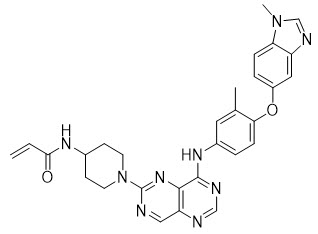
HERNEXEOS tablets for oral administration contain zongertinib, a kinase inhibitor. The chemical name of zongertinib is 2-Propenamide, N-[1-[8-[[3-methyl-4-[(1-methyl-1H-benzimidazol-5-yl)oxy]phenyl] amino]pyrimido[5,4-d]pyrimidin-2-yl]-4-piperidinyl]-. Its molecular formula is C29H29N9O2 and the molecular weight is 535.6. The structural formula is:
Zongertinib is a yellow to dark yellow or orange solid. Zongertinib is slightly soluble at pH 1.2, and practically insoluble at pHs 3.6, 4.5, 5.4 and 6.8.
Each film-coated tablet of HERNEXEOS contains 60 mg of zongertinib and the following inactive ingredients: colloidal silicon dioxide, croscarmellose sodium, hypromellose acetate succinate, mannitol, microcrystalline cellulose, and sodium stearyl fumarate. In addition, the film-coating contains the following inactive ingredients: ferric oxide (yellow), glycerol mono and dicaprylocaprate, polyvinyl alcohol, sodium lauryl sulfate, talc, and titanium dioxide.
8.4 Pediatric Use
The safety and effectiveness of HERNEXEOS have not been established in pediatric patients.
8.5 Geriatric Use
Of the 292 patients with non-squamous NSCLC with HER2 (ERBB2) mutations who received HERNEXEOS in clinical studies, 47% were 65 years of age and older and 13% were 75 years and older. No overall differences in safety or effectiveness of HERNEXEOS were observed between older and younger adult patients.
5.1 Hepatotoxicity
HERNEXEOS can cause severe and life-threatening hepatotoxicity, including drug induced liver injury. In the pooled safety population [see Adverse Reactions (6.1)], based on adverse reaction data, hepatotoxicity occurred in 27% of patients treated with HERNEXEOS. Grade 3 drug induced liver injury occurred in 1.4% and Grade 4 in 0.3% of patients treated with HERNEXEOS. Grade 3 hepatic failure occurred in 0.3% of patients treated with HERNEXEOS.
Based on laboratory data, 37% of patients treated with HERNEXEOS experienced increased alanine aminotransferase (ALT), including 4.9% Grade 3 and 1% Grade 4. Increased aspartate aminotransferase (AST) occurred in 31% of patients treated with HERNEXEOS, including 3.8% Grade 3 and 0.7% Grade 4. Increased bilirubin occurred in 20% of patients treated with HERNEXEOS, including 1% Grade 3 and 0.3% Grade 4.
HERNEXEOS was interrupted for an adverse reaction of hepatotoxicity in 8% of patients, the dose was reduced in 3.8% and permanently discontinued in 1%.
Monitor liver function tests including ALT, AST, and total bilirubin at baseline prior to administration of HERNEXEOS, every 2 weeks during the first 12 weeks, and then monthly thereafter as clinically indicated, with more frequent testing in patients who develop transaminase elevations. Interrupt, reduce the dose, or permanently discontinue HERNEXEOS based on the severity of the adverse reaction [see Dosage and Administration (2.3)].
14 Clinical Studies
HERNEXEOS was evaluated in Beamion LUNG-1 (NCT04886804), a single arm, open-label, multi-center, multi-cohort trial. Eligible patients were required to have unresectable or metastatic NSCLC with HER2 (ERBB2) mutations. Patients with stable brain metastases were eligible to enroll. The study excluded patients who had a history of non-infectious interstitial lung disease/pneumonitis.
Patients received HERNEXEOS 120 mg orally once daily until disease progression or unacceptable toxicity. The major efficacy outcome measures were objective response rate (ORR) and duration of response (DOR) by Response Evaluation Criteria in Solid Tumors (RECIST) version 1.1 as assessed by blinded independent central review (BICR).
4 Contraindications
None.
6 Adverse Reactions
The following adverse reactions are discussed in greater detail in other sections of the labeling:
- Hepatotoxicity [see Warnings and Precautions (5.1)]
- Left Ventricular Dysfunction [see Warnings and Precautions (5.2)]
- Interstitial Lung Disease/Pneumonitis [see Warnings and Precautions (5.3)]
7 Drug Interactions
- Strong CYP3A Inducers: Avoid concomitant use with strong CYP3A inducers. If concomitant use cannot be avoided, increase HERNEXEOS dose. (7.1)
- BCRP Substrates: Avoid concomitant use with certain BCRP substrates where minimal concentration increase may lead to serious adverse reactions and consider alternative therapies. If concomitant use cannot be avoided, monitor patients closely for adverse reactions and follow recommendations provided in the BCRP substrate approved product labeling. For other BCRP substrates, monitor for increased adverse reactions and adjust the dosages of those substrates as clinically appropriate. (7.2)
12.2 Pharmacodynamics
The exposure-response relationship and time-course of pharmacodynamic response of zongertinib have not been fully characterized.
12.3 Pharmacokinetics
Zongertinib pharmacokinetics were observed at steady state in patients with advanced or metastatic solid tumors with HER2 aberrations at the approved recommended dosage and are presented as geometric mean (CV%), unless otherwise specified.
Zongertinib maximum concentration (Cmax,ss) is 3.0 (37%) µmol/L and the total systemic exposure (AUC) is 34 (34%) µmol*h/L following HERNEXEOS 120 mg orally daily. Zongertinib Cmax and AUC increase in an approximately dose proportional manner across the dose range of 60 mg (0.5 times the approved recommended dosage) to 360 mg (3 times the approved recommended dosage). Zongertinib accumulation is approximately 1.5-fold for AUC and 1.3-fold for Cmax at the approved recommended dosage. Steady state is achieved within 2.5 days.
2.1 Patient Selection
Select patients for treatment of unresectable or metastatic NSCLC based on the presence of HER2 (ERBB2) tyrosine kinase domain activating mutations in tumor specimens [see Clinical Studies (14)]. Information on FDA-authorized tests for HER2 (ERBB2) tyrosine kinase domain activating mutations is available at: http://www.fda.gov/CompanionDiagnostics.
1 Indications and Usage
HERNEXEOS is indicated for the treatment of adult patients with unresectable or metastatic non-squamous non-small cell lung cancer (NSCLC) whose tumors have HER2 (ERBB2) tyrosine kinase domain activating mutations, as detected by an FDA-authorized test [see Dosage and Administration (2.1)].
This indication is approved under accelerated approval based on objective response rate and duration of response [see Clinical Studies (14)]. Continued approval for this indication may be contingent upon verification and description of clinical benefit in a confirmatory trial.
12.1 Mechanism of Action
Zongertinib is a kinase inhibitor of human epidermal growth factor receptor 2 (HER2). In vitro, zongertinib inhibited phosphorylation of HER2, downstream signaling of HER2 (phosphorylation of ERK), and proliferation of lung cancer cells harboring HER2 tyrosine kinase domain activating mutations. In vivo, zongertinib demonstrated anti-tumor activity in mouse xenograft models of NSCLC harboring HER2 tyrosine kinase domain activating mutations.
5.4 Embryo Fetal Toxicity
Based on findings from animal studies and its mechanism of action, HERNEXEOS can cause fetal harm when administered to a pregnant woman. In an animal reproduction study, oral administration of zongertinib to pregnant rats during the period of organogenesis caused structural abnormalities and alterations to growth at maternal exposures ≥ 19 times the human exposure based on AUC at the recommended dose.
Advise pregnant women and females of reproductive potential of the potential risk to a fetus. Advise females of reproductive potential to use effective contraception during treatment with HERNEXEOS and for 2 weeks after the last dose [see Use in Specific Populations (8.1, 8.3)].
5 Warnings and Precautions
2 Dosage and Administration
- Select patients for treatment with HERNEXEOS based on the presence of HER2 (ERBB2) tyrosine kinase domain activating mutations. (2.1)
- The recommended dosage of HERNEXEOS is based on body weight: (2.2)
- Take HERNEXEOS orally once daily with or without food until disease progression or unacceptable toxicity. (2.2)
3 Dosage Forms and Strengths
60 mg tablets: yellow, oval, biconvex, film-coated tablets, debossed with "L6" on one side and the Boehringer Ingelheim company symbol on the other side. Each tablet contains 60 mg of zongertinib.
8 Use in Specific Populations
6.1 Clinical Trials Experience
Because clinical trials are conducted under widely varying conditions, adverse reaction rates observed in the clinical trials of a drug cannot be directly compared to rates in the clinical trials of another drug and may not reflect the rates observed in clinical practice.
The pooled safety population described in WARNINGS AND PRECAUTIONS reflects exposure to HERNEXEOS in 292 patients with unresectable or metastatic non-squamous NSCLC with HER2 (ERBB2) mutations who received HERNEXEOS as a single agent at 120 mg orally once daily until disease progression or unacceptable toxicity in Beamion LUNG-1 [see Clinical Studies (14)]. Among 292 patients who received HERNEXEOS, 59% of patients were exposed for 6 months or longer and 28% were exposed for greater than one year. In this pooled safety population, the most common (> 20%) adverse reactions were diarrhea (54%), rash (28%), hepatotoxicity (27%), fatigue (25%), nausea (23%), musculoskeletal pain (21%), and upper respiratory tract infection (20%). The most common (≥ 2%) Grade 3 or 4 laboratory abnormalities were decreased lymphocytes (10%), increased alanine aminotransferase (6%), increased aspartate aminotransferase (4.5%), increased gamma glutamyl transferase (2.8%), decreased potassium (2.4%), and decreased neutrophils (2.4%).
5.2 Left Ventricular Dysfunction
HERNEXEOS can cause severe left ventricular dysfunction. Left ventricular ejection fractions (LVEF) decrease occurred with anti-HER2 therapies, including HERNEXEOS. Treatment with HERNEXEOS has not been studied in patients with a history of clinically significant cardiac disease or LVEF less than 50% prior to initiation of treatment.
In the pooled safety population [see Adverse Reactions (6.1)], LVEF decrease occurred in 6% of patients treated with HERNEXEOS, including 1.7% Grade 3. Two patients with Grade 3 LVEF decrease required permanent discontinuation of HERNEXEOS. The median time to onset of decreased LVEF was 12 weeks (range: 2.9 to 63 weeks).
Before initiating HERNEXEOS, evaluate LVEF and monitor at regular intervals during treatment and as clinically indicated. Interrupt, reduce the dose, or permanently discontinue HERNEXEOS based on the severity of the adverse reaction [see Dosage and Administration (2.3)].
17 Patient Counseling Information
Advise the patient to read the FDA-approved patient labeling (Patient Information).
16 How Supplied/storage and Handling
60 mg tablets: yellow, oval, biconvex, film-coated, debossed with "L6" on one side and the Boehringer Ingelheim company symbol on the other side. They are packaged in a bottle containing two silica gel desiccants and with a child-resistant closure, available as follows:
| Carton containing one bottle of 30 tablets each | NDC: 0597-9257-59 |
| Carton containing one bottle of 60 tablets each | NDC: 0597-9257-86 |
7.1 Effects of Other Drugs On Hernexeos
Avoid concomitant use of HERNEXEOS with strong CYP3A inducers. If concomitant use cannot be avoided, increase HERNEXEOS dose as recommended [see Dosage and Administration (2.4)].
Zongertinib is a CYP3A substrate. Strong CYP3A4 inducers decrease zongertinib exposure [see Clinical Pharmacology (12.3)], which may reduce effectiveness of HERNEXEOS.
2.2 Recommended Dosage and Administration
The recommended dosage of HERNEXEOS is based on body weight:
- Patients weighing less than 90 kg: 120 mg
- Patients weighing 90 kg or greater: 180 mg
Take HERNEXEOS orally once daily with or without food until disease progression or unacceptable toxicity. Swallow HERNEXEOS tablets whole with water. Do not split, crush, or chew tablets.
5.3 Interstitial Lung Disease/pneumonitis
HERNEXEOS can cause severe and life-threatening interstitial lung disease (ILD)/pneumonitis.
In the pooled safety population [see Adverse Reactions (6.1)], ILD/pneumonitis occurred in 2.1% of patients treated with HERNEXEOS. The median time to first onset of ILD/pneumonitis was 13 weeks (range: 1.4 to 65 weeks). One patient was able to resume therapy after resolution of pneumonitis. Two patients required permanent discontinuation and one patient died with unresolved pneumonitis > 30 days after discontinuing HERNEXEOS.
Monitor patients for new or worsening symptoms indicative of ILD/pneumonitis (e.g., dyspnea, cough, fever). Interrupt, reduce the dose or permanently discontinue HERNEXEOS based on severity of confirmed ILD/pneumonitis [see Dosage and Administration (2.3)].
13.2 Animal Toxicology And/or Pharmacology
In a 4-week repeat-dose toxicology study in dogs, oral administration of zongertinib induced lesions of the oral mucosa (hard palate, buccal mucosa, tongue, lips) at doses ≥ 10 mg/kg/day (≥ 0.3 times the human exposure based on AUC at the recommended dose), which correlated with histologic erosion/ulcer and impaired food consumption. These findings were not present following a 4-week recovery period.
2.3 Dosage Modifications for Adverse Reactions
The recommended dose reductions for adverse reactions are presented in Table 1.
| Current HERNEXEOS Dose | First Reduction | Second Reduction |
|---|---|---|
| 180 mg | 120 mg | 60 mg |
| 120 mg | 60 mg | Permanently discontinue |
| Permanently discontinue HERNEXEOS in patients who are unable to tolerate 60 mg once daily. |
The recommended dosage modifications for adverse reactions are presented in Table 2.
| Adverse Reaction | Severity* | Dosage Modification |
|---|---|---|
| ALT = alanine aminotransferase; AST = aspartate aminotransferase; ULN = upper limit of normal | ||
| *Based on Common Terminology Criteria for Adverse Events (CTCAE) version 5.0 | ||
| Hepatotoxicity [see Warnings and Precautions (5.1)] | Grade 3 or 4 ALT and/or AST without increased total bilirubin |
|
| Grade 3 total bilirubin |
|
|
| Grade 4 total bilirubin |
|
|
| ALT or AST ≥ 3× ULN with total bilirubin ≥ 2× ULN |
|
|
| Left Ventricular Dysfunction [see Warnings and Precautions (5.2)] |
LVEF 40 to 50% and decrease from baseline of 10 to 19% |
|
| LVEF 20 to 39% or ≥ 20% decrease from baseline |
|
|
| Symptomatic Congestive Heart Failure |
|
|
| Interstitial Lung Disease/Pneumonitis [see Warnings and Precautions (5.3)] |
Grade 2 |
|
| Grade 3 or Grade 4 |
|
|
| Diarrhea [see Adverse Reactions (6.1)] | Grade 2 |
|
| Grade 2 lasting ≥ 2 days despite anti-diarrheal treatment |
|
|
| Grade 3 or Grade 4 |
|
|
| Other Adverse Reactions [see Adverse Reactions (6.1)] |
Grade 3 |
|
| Grade 4 |
|
8.3 Females and Males of Reproductive Potential
Based on findings from animal studies and its mechanism of action, HERNEXEOS can cause embryo-fetal harm when administered to a pregnant woman [see Use in Specific Populations (8.1)].
Principal Display Panel 60 Mg Tablet Bottle Carton Ndc 0597 9257 59
NDC 0597-9257-59
HERNEXEOS®
(zongertinib tablets)
60 mg
Pharmacist: Store and dispense in the
original container to protect from moisture.
30 tablets
Rx only
Boehringer
Ingelheim
Principal Display Panel 60 Mg Tablet Bottle Carton Ndc 0597 9257 86
NDC 0597-9257-86
HERNEXEOS®
(zongertinib tablets)
60 mg
Pharmacist: Store and dispense in the
original container to protect from moisture.
60 tablets
Rx only
Boehringer
Ingelheim
Structured Label Content
Section 42229-5 (42229-5)
Missed Dose
If a dose is missed within 12 hours, take the dose. If a dose is missed by more than 12 hours, skip the missed dose and take the next scheduled dose.
Section 42230-3 (42230-3)
| Patient Information HERNEXEOS® (her-nex-ee-ose) (zongertinib tablets) |
||
|---|---|---|
| This Patient Information has been approved by the U.S. Food and Drug Administration. | Revised: FEB 2026 | |
|
What is HERNEXEOS?
HERNEXEOS is a prescription medicine used to treat adults with a type of lung cancer called non-squamous non-small cell lung cancer (NSCLC) that:
It is not known if HERNEXEOS is safe and effective in children. |
||
Before taking HERNEXEOS, tell your healthcare provider about all of your medical conditions, including if you:
Know the medicines you take. Keep a list of them to show your healthcare provider or pharmacist when you get a new medicine. |
||
How should I take HERNEXEOS?
|
||
|
What are the possible side effects of HERNEXEOS? HERNEXEOS may cause serious side effects, including:
|
||
|
|
|
|
||
|
|
|
|
||
The most common side effects of HERNEXEOS include:
HERNEXEOS may cause fertility problems in females and males, which may affect your ability to have children. Talk to your healthcare provider if this is a concern for you. These are not all of the possible side effects of HERNEXEOS. Call your doctor for medical advice about side effects. You may report side effects to FDA at 1-800-FDA-1088. |
||
How should I store HERNEXEOS?
|
||
|
General information about the safe and effective use of HERNEXEOS.
Medicines are sometimes prescribed for purposes other than those listed in a Patient Information leaflet. Do not use HERNEXEOS for any condition for which it was not prescribed. Do not give HERNEXEOS to other people, even if they have the same symptoms you have. It may harm them. You can ask your pharmacist or healthcare provider for information about HERNEXEOS that is written for health professionals. |
||
|
What are the ingredients in HERNEXEOS?
Active ingredient: zongertinib Inactive ingredients: colloidal silicon dioxide, croscarmellose sodium, hypromellose acetate succinate, mannitol, microcrystalline cellulose, and sodium stearyl fumarate. The film-coating contains ferric oxide (yellow), glycerol mono and dicaprylocaprate, polyvinyl alcohol, sodium lauryl sulfate, talc, and titanium dioxide. |
||
| Distributed by: Boehringer Ingelheim Pharmaceuticals, Inc., Ridgefield, CT 06877 USA Licensed from: Boehringer Ingelheim International GmbH, Ingelheim, Germany HERNEXEOS® is a registered trademark of and used under license from Boehringer Ingelheim International GmbH. Copyright © 2026 Boehringer Ingelheim International GmbH ALL RIGHTS RESERVED COL13134EB242026 For more information about HERNEXEOS, including the current prescribing information and Patient Information, go to www.hernexeos.com, scan the code, or call Boehringer Ingelheim Pharmaceuticals, Inc. at 1-800-542-6257. |
Section 43683-2 (43683-2)
| Indications and Usage (1) | 2/2026 |
Section 44425-7 (44425-7)
Storage and Handling
Store at 20°C to 25°C (68°F to 77°F), excursions permitted to 15°C to 30°C (59°F to 86°F) [see USP Controlled Room Temperature].
Store in the original container to protect from moisture. Keep the bottle tightly closed. Do not remove the desiccants. Once opened, use within 3 months. Discard any unused tablets 3 months after opening the bottle.
10 Overdosage (10 OVERDOSAGE)
Overdose in one patient who ingested 600 mg of HERNEXEOS resulted in nausea and vomiting.
11 Description (11 DESCRIPTION)
HERNEXEOS tablets for oral administration contain zongertinib, a kinase inhibitor. The chemical name of zongertinib is 2-Propenamide, N-[1-[8-[[3-methyl-4-[(1-methyl-1H-benzimidazol-5-yl)oxy]phenyl] amino]pyrimido[5,4-d]pyrimidin-2-yl]-4-piperidinyl]-. Its molecular formula is C29H29N9O2 and the molecular weight is 535.6. The structural formula is:
Zongertinib is a yellow to dark yellow or orange solid. Zongertinib is slightly soluble at pH 1.2, and practically insoluble at pHs 3.6, 4.5, 5.4 and 6.8.
Each film-coated tablet of HERNEXEOS contains 60 mg of zongertinib and the following inactive ingredients: colloidal silicon dioxide, croscarmellose sodium, hypromellose acetate succinate, mannitol, microcrystalline cellulose, and sodium stearyl fumarate. In addition, the film-coating contains the following inactive ingredients: ferric oxide (yellow), glycerol mono and dicaprylocaprate, polyvinyl alcohol, sodium lauryl sulfate, talc, and titanium dioxide.
8.4 Pediatric Use
The safety and effectiveness of HERNEXEOS have not been established in pediatric patients.
8.5 Geriatric Use
Of the 292 patients with non-squamous NSCLC with HER2 (ERBB2) mutations who received HERNEXEOS in clinical studies, 47% were 65 years of age and older and 13% were 75 years and older. No overall differences in safety or effectiveness of HERNEXEOS were observed between older and younger adult patients.
5.1 Hepatotoxicity
HERNEXEOS can cause severe and life-threatening hepatotoxicity, including drug induced liver injury. In the pooled safety population [see Adverse Reactions (6.1)], based on adverse reaction data, hepatotoxicity occurred in 27% of patients treated with HERNEXEOS. Grade 3 drug induced liver injury occurred in 1.4% and Grade 4 in 0.3% of patients treated with HERNEXEOS. Grade 3 hepatic failure occurred in 0.3% of patients treated with HERNEXEOS.
Based on laboratory data, 37% of patients treated with HERNEXEOS experienced increased alanine aminotransferase (ALT), including 4.9% Grade 3 and 1% Grade 4. Increased aspartate aminotransferase (AST) occurred in 31% of patients treated with HERNEXEOS, including 3.8% Grade 3 and 0.7% Grade 4. Increased bilirubin occurred in 20% of patients treated with HERNEXEOS, including 1% Grade 3 and 0.3% Grade 4.
HERNEXEOS was interrupted for an adverse reaction of hepatotoxicity in 8% of patients, the dose was reduced in 3.8% and permanently discontinued in 1%.
Monitor liver function tests including ALT, AST, and total bilirubin at baseline prior to administration of HERNEXEOS, every 2 weeks during the first 12 weeks, and then monthly thereafter as clinically indicated, with more frequent testing in patients who develop transaminase elevations. Interrupt, reduce the dose, or permanently discontinue HERNEXEOS based on the severity of the adverse reaction [see Dosage and Administration (2.3)].
14 Clinical Studies (14 CLINICAL STUDIES)
HERNEXEOS was evaluated in Beamion LUNG-1 (NCT04886804), a single arm, open-label, multi-center, multi-cohort trial. Eligible patients were required to have unresectable or metastatic NSCLC with HER2 (ERBB2) mutations. Patients with stable brain metastases were eligible to enroll. The study excluded patients who had a history of non-infectious interstitial lung disease/pneumonitis.
Patients received HERNEXEOS 120 mg orally once daily until disease progression or unacceptable toxicity. The major efficacy outcome measures were objective response rate (ORR) and duration of response (DOR) by Response Evaluation Criteria in Solid Tumors (RECIST) version 1.1 as assessed by blinded independent central review (BICR).
4 Contraindications (4 CONTRAINDICATIONS)
None.
6 Adverse Reactions (6 ADVERSE REACTIONS)
The following adverse reactions are discussed in greater detail in other sections of the labeling:
- Hepatotoxicity [see Warnings and Precautions (5.1)]
- Left Ventricular Dysfunction [see Warnings and Precautions (5.2)]
- Interstitial Lung Disease/Pneumonitis [see Warnings and Precautions (5.3)]
7 Drug Interactions (7 DRUG INTERACTIONS)
- Strong CYP3A Inducers: Avoid concomitant use with strong CYP3A inducers. If concomitant use cannot be avoided, increase HERNEXEOS dose. (7.1)
- BCRP Substrates: Avoid concomitant use with certain BCRP substrates where minimal concentration increase may lead to serious adverse reactions and consider alternative therapies. If concomitant use cannot be avoided, monitor patients closely for adverse reactions and follow recommendations provided in the BCRP substrate approved product labeling. For other BCRP substrates, monitor for increased adverse reactions and adjust the dosages of those substrates as clinically appropriate. (7.2)
12.2 Pharmacodynamics
The exposure-response relationship and time-course of pharmacodynamic response of zongertinib have not been fully characterized.
12.3 Pharmacokinetics
Zongertinib pharmacokinetics were observed at steady state in patients with advanced or metastatic solid tumors with HER2 aberrations at the approved recommended dosage and are presented as geometric mean (CV%), unless otherwise specified.
Zongertinib maximum concentration (Cmax,ss) is 3.0 (37%) µmol/L and the total systemic exposure (AUC) is 34 (34%) µmol*h/L following HERNEXEOS 120 mg orally daily. Zongertinib Cmax and AUC increase in an approximately dose proportional manner across the dose range of 60 mg (0.5 times the approved recommended dosage) to 360 mg (3 times the approved recommended dosage). Zongertinib accumulation is approximately 1.5-fold for AUC and 1.3-fold for Cmax at the approved recommended dosage. Steady state is achieved within 2.5 days.
2.1 Patient Selection
Select patients for treatment of unresectable or metastatic NSCLC based on the presence of HER2 (ERBB2) tyrosine kinase domain activating mutations in tumor specimens [see Clinical Studies (14)]. Information on FDA-authorized tests for HER2 (ERBB2) tyrosine kinase domain activating mutations is available at: http://www.fda.gov/CompanionDiagnostics.
1 Indications and Usage (1 INDICATIONS AND USAGE)
HERNEXEOS is indicated for the treatment of adult patients with unresectable or metastatic non-squamous non-small cell lung cancer (NSCLC) whose tumors have HER2 (ERBB2) tyrosine kinase domain activating mutations, as detected by an FDA-authorized test [see Dosage and Administration (2.1)].
This indication is approved under accelerated approval based on objective response rate and duration of response [see Clinical Studies (14)]. Continued approval for this indication may be contingent upon verification and description of clinical benefit in a confirmatory trial.
12.1 Mechanism of Action
Zongertinib is a kinase inhibitor of human epidermal growth factor receptor 2 (HER2). In vitro, zongertinib inhibited phosphorylation of HER2, downstream signaling of HER2 (phosphorylation of ERK), and proliferation of lung cancer cells harboring HER2 tyrosine kinase domain activating mutations. In vivo, zongertinib demonstrated anti-tumor activity in mouse xenograft models of NSCLC harboring HER2 tyrosine kinase domain activating mutations.
5.4 Embryo Fetal Toxicity (5.4 Embryo-Fetal Toxicity)
Based on findings from animal studies and its mechanism of action, HERNEXEOS can cause fetal harm when administered to a pregnant woman. In an animal reproduction study, oral administration of zongertinib to pregnant rats during the period of organogenesis caused structural abnormalities and alterations to growth at maternal exposures ≥ 19 times the human exposure based on AUC at the recommended dose.
Advise pregnant women and females of reproductive potential of the potential risk to a fetus. Advise females of reproductive potential to use effective contraception during treatment with HERNEXEOS and for 2 weeks after the last dose [see Use in Specific Populations (8.1, 8.3)].
5 Warnings and Precautions (5 WARNINGS AND PRECAUTIONS)
2 Dosage and Administration (2 DOSAGE AND ADMINISTRATION)
- Select patients for treatment with HERNEXEOS based on the presence of HER2 (ERBB2) tyrosine kinase domain activating mutations. (2.1)
- The recommended dosage of HERNEXEOS is based on body weight: (2.2)
- Take HERNEXEOS orally once daily with or without food until disease progression or unacceptable toxicity. (2.2)
3 Dosage Forms and Strengths (3 DOSAGE FORMS AND STRENGTHS)
60 mg tablets: yellow, oval, biconvex, film-coated tablets, debossed with "L6" on one side and the Boehringer Ingelheim company symbol on the other side. Each tablet contains 60 mg of zongertinib.
8 Use in Specific Populations (8 USE IN SPECIFIC POPULATIONS)
6.1 Clinical Trials Experience
Because clinical trials are conducted under widely varying conditions, adverse reaction rates observed in the clinical trials of a drug cannot be directly compared to rates in the clinical trials of another drug and may not reflect the rates observed in clinical practice.
The pooled safety population described in WARNINGS AND PRECAUTIONS reflects exposure to HERNEXEOS in 292 patients with unresectable or metastatic non-squamous NSCLC with HER2 (ERBB2) mutations who received HERNEXEOS as a single agent at 120 mg orally once daily until disease progression or unacceptable toxicity in Beamion LUNG-1 [see Clinical Studies (14)]. Among 292 patients who received HERNEXEOS, 59% of patients were exposed for 6 months or longer and 28% were exposed for greater than one year. In this pooled safety population, the most common (> 20%) adverse reactions were diarrhea (54%), rash (28%), hepatotoxicity (27%), fatigue (25%), nausea (23%), musculoskeletal pain (21%), and upper respiratory tract infection (20%). The most common (≥ 2%) Grade 3 or 4 laboratory abnormalities were decreased lymphocytes (10%), increased alanine aminotransferase (6%), increased aspartate aminotransferase (4.5%), increased gamma glutamyl transferase (2.8%), decreased potassium (2.4%), and decreased neutrophils (2.4%).
5.2 Left Ventricular Dysfunction
HERNEXEOS can cause severe left ventricular dysfunction. Left ventricular ejection fractions (LVEF) decrease occurred with anti-HER2 therapies, including HERNEXEOS. Treatment with HERNEXEOS has not been studied in patients with a history of clinically significant cardiac disease or LVEF less than 50% prior to initiation of treatment.
In the pooled safety population [see Adverse Reactions (6.1)], LVEF decrease occurred in 6% of patients treated with HERNEXEOS, including 1.7% Grade 3. Two patients with Grade 3 LVEF decrease required permanent discontinuation of HERNEXEOS. The median time to onset of decreased LVEF was 12 weeks (range: 2.9 to 63 weeks).
Before initiating HERNEXEOS, evaluate LVEF and monitor at regular intervals during treatment and as clinically indicated. Interrupt, reduce the dose, or permanently discontinue HERNEXEOS based on the severity of the adverse reaction [see Dosage and Administration (2.3)].
17 Patient Counseling Information (17 PATIENT COUNSELING INFORMATION)
Advise the patient to read the FDA-approved patient labeling (Patient Information).
16 How Supplied/storage and Handling (16 HOW SUPPLIED/STORAGE AND HANDLING)
60 mg tablets: yellow, oval, biconvex, film-coated, debossed with "L6" on one side and the Boehringer Ingelheim company symbol on the other side. They are packaged in a bottle containing two silica gel desiccants and with a child-resistant closure, available as follows:
| Carton containing one bottle of 30 tablets each | NDC: 0597-9257-59 |
| Carton containing one bottle of 60 tablets each | NDC: 0597-9257-86 |
7.1 Effects of Other Drugs On Hernexeos (7.1 Effects of Other Drugs on HERNEXEOS)
Avoid concomitant use of HERNEXEOS with strong CYP3A inducers. If concomitant use cannot be avoided, increase HERNEXEOS dose as recommended [see Dosage and Administration (2.4)].
Zongertinib is a CYP3A substrate. Strong CYP3A4 inducers decrease zongertinib exposure [see Clinical Pharmacology (12.3)], which may reduce effectiveness of HERNEXEOS.
2.2 Recommended Dosage and Administration
The recommended dosage of HERNEXEOS is based on body weight:
- Patients weighing less than 90 kg: 120 mg
- Patients weighing 90 kg or greater: 180 mg
Take HERNEXEOS orally once daily with or without food until disease progression or unacceptable toxicity. Swallow HERNEXEOS tablets whole with water. Do not split, crush, or chew tablets.
5.3 Interstitial Lung Disease/pneumonitis (5.3 Interstitial Lung Disease/Pneumonitis)
HERNEXEOS can cause severe and life-threatening interstitial lung disease (ILD)/pneumonitis.
In the pooled safety population [see Adverse Reactions (6.1)], ILD/pneumonitis occurred in 2.1% of patients treated with HERNEXEOS. The median time to first onset of ILD/pneumonitis was 13 weeks (range: 1.4 to 65 weeks). One patient was able to resume therapy after resolution of pneumonitis. Two patients required permanent discontinuation and one patient died with unresolved pneumonitis > 30 days after discontinuing HERNEXEOS.
Monitor patients for new or worsening symptoms indicative of ILD/pneumonitis (e.g., dyspnea, cough, fever). Interrupt, reduce the dose or permanently discontinue HERNEXEOS based on severity of confirmed ILD/pneumonitis [see Dosage and Administration (2.3)].
13.2 Animal Toxicology And/or Pharmacology (13.2 Animal Toxicology and/or Pharmacology)
In a 4-week repeat-dose toxicology study in dogs, oral administration of zongertinib induced lesions of the oral mucosa (hard palate, buccal mucosa, tongue, lips) at doses ≥ 10 mg/kg/day (≥ 0.3 times the human exposure based on AUC at the recommended dose), which correlated with histologic erosion/ulcer and impaired food consumption. These findings were not present following a 4-week recovery period.
2.3 Dosage Modifications for Adverse Reactions
The recommended dose reductions for adverse reactions are presented in Table 1.
| Current HERNEXEOS Dose | First Reduction | Second Reduction |
|---|---|---|
| 180 mg | 120 mg | 60 mg |
| 120 mg | 60 mg | Permanently discontinue |
| Permanently discontinue HERNEXEOS in patients who are unable to tolerate 60 mg once daily. |
The recommended dosage modifications for adverse reactions are presented in Table 2.
| Adverse Reaction | Severity* | Dosage Modification |
|---|---|---|
| ALT = alanine aminotransferase; AST = aspartate aminotransferase; ULN = upper limit of normal | ||
| *Based on Common Terminology Criteria for Adverse Events (CTCAE) version 5.0 | ||
| Hepatotoxicity [see Warnings and Precautions (5.1)] | Grade 3 or 4 ALT and/or AST without increased total bilirubin |
|
| Grade 3 total bilirubin |
|
|
| Grade 4 total bilirubin |
|
|
| ALT or AST ≥ 3× ULN with total bilirubin ≥ 2× ULN |
|
|
| Left Ventricular Dysfunction [see Warnings and Precautions (5.2)] |
LVEF 40 to 50% and decrease from baseline of 10 to 19% |
|
| LVEF 20 to 39% or ≥ 20% decrease from baseline |
|
|
| Symptomatic Congestive Heart Failure |
|
|
| Interstitial Lung Disease/Pneumonitis [see Warnings and Precautions (5.3)] |
Grade 2 |
|
| Grade 3 or Grade 4 |
|
|
| Diarrhea [see Adverse Reactions (6.1)] | Grade 2 |
|
| Grade 2 lasting ≥ 2 days despite anti-diarrheal treatment |
|
|
| Grade 3 or Grade 4 |
|
|
| Other Adverse Reactions [see Adverse Reactions (6.1)] |
Grade 3 |
|
| Grade 4 |
|
8.3 Females and Males of Reproductive Potential
Based on findings from animal studies and its mechanism of action, HERNEXEOS can cause embryo-fetal harm when administered to a pregnant woman [see Use in Specific Populations (8.1)].
Principal Display Panel 60 Mg Tablet Bottle Carton Ndc 0597 9257 59 (PRINCIPAL DISPLAY PANEL - 60 mg Tablet Bottle Carton - NDC 0597-9257-59)
NDC 0597-9257-59
HERNEXEOS®
(zongertinib tablets)
60 mg
Pharmacist: Store and dispense in the
original container to protect from moisture.
30 tablets
Rx only
Boehringer
Ingelheim
Principal Display Panel 60 Mg Tablet Bottle Carton Ndc 0597 9257 86 (PRINCIPAL DISPLAY PANEL - 60 mg Tablet Bottle Carton - NDC 0597-9257-86)
NDC 0597-9257-86
HERNEXEOS®
(zongertinib tablets)
60 mg
Pharmacist: Store and dispense in the
original container to protect from moisture.
60 tablets
Rx only
Boehringer
Ingelheim
Advanced Ingredient Data
Raw Label Data
All Sections (JSON)
Additional Information
Back to search View SPL set listing Open on DailyMed ↗
Source: dailymed · Ingested: 2026-02-15T11:51:49.327457 · Updated: 2026-03-14T22:52:05.339754