These Highlights Do Not Include All The Information Needed To Use Quzyttir®
f33e859d-ebc9-4d4f-a57d-204c48760d20
34391-3
HUMAN PRESCRIPTION DRUG LABEL
Drug Facts
Composition & Product
Identifiers & Packaging
Indications and Usage
QUZYTTIR ® is indicated for the treatment of acute urticaria in adults and children 6 months of age and older.
Dosage and Administration
QUZYTTIR is a single use injectable product for intravenous administration only. The recommended dosage regimen is once every 24 hours as needed for treatment of acute urticaria. Administer QUZYTTIR as an intravenous push over a period of 1 to 2 minutes. QUZYTTIR is not recommended in pediatric patients less than 6 years of age with impaired renal or hepatic function [see Pediatric Use ( 8.4 )]. If using as an antihistamine prior to infusion product administration, refer to infusion product prescribing information for instructions.
Contraindications
The use of QUZYTTIR is contraindicated in patients with a known hypersensitivity to cetirizine hydrochloride or any of its ingredients, levocetirizine, or hydroxyzine.
Warnings and Precautions
Somnolence/Sedation: Exercise caution when driving a car or operating potentially dangerous machinery ( 5.1 )
Adverse Reactions
The following clinically significant adverse reaction is described elsewhere in the labeling: Somnolence/Sedation [see Warnings and Precautions ( 5.1 )]
Drug Interactions
No clinically significant drug interactions with oral cetirizine hydrochloride, the active ingredient in QUZYTTIR, have been found with theophylline at a low dose, azithromycin, pseudoephedrine, ketoconazole, or erythromycin. There was a small decrease in the clearance of oral cetirizine hydrochloride caused by a 400-mg dose of theophylline; it is possible that larger theophylline doses could have a greater effect [see Clinical Pharmacology ( 12.3 )].
How Supplied
QUZYTTIR (cetirizine hydrochloride injection), 10 mg/mL, pH between 4.5 to 6.5, is supplied as a sterile, clear, colorless, non-pyrogenic isotonic aqueous solution in single-use 2 mL amber glass vials. The following packaging configuration is available: NDC 70720-100-01: 10 mg/mL cetirizine hydrochloride single-use vial NDC 70720-100-10: Carton containing 1 single-use vial (10 mg/mL cetirizine hydrochloride) NDC 70720-100-25: Carton containing 25 single-use vials (10 mg/mL cetirizine hydrochloride)
Storage and Handling
QUZYTTIR (cetirizine hydrochloride injection), 10 mg/mL, pH between 4.5 to 6.5, is supplied as a sterile, clear, colorless, non-pyrogenic isotonic aqueous solution in single-use 2 mL amber glass vials. The following packaging configuration is available: NDC 70720-100-01: 10 mg/mL cetirizine hydrochloride single-use vial NDC 70720-100-10: Carton containing 1 single-use vial (10 mg/mL cetirizine hydrochloride) NDC 70720-100-25: Carton containing 25 single-use vials (10 mg/mL cetirizine hydrochloride)
Description
QUZYTTIR ® is indicated for the treatment of acute urticaria in adults and children 6 months of age and older.
Medication Information
Warnings and Precautions
Somnolence/Sedation: Exercise caution when driving a car or operating potentially dangerous machinery ( 5.1 )
Indications and Usage
QUZYTTIR ® is indicated for the treatment of acute urticaria in adults and children 6 months of age and older.
Dosage and Administration
QUZYTTIR is a single use injectable product for intravenous administration only. The recommended dosage regimen is once every 24 hours as needed for treatment of acute urticaria. Administer QUZYTTIR as an intravenous push over a period of 1 to 2 minutes. QUZYTTIR is not recommended in pediatric patients less than 6 years of age with impaired renal or hepatic function [see Pediatric Use ( 8.4 )]. If using as an antihistamine prior to infusion product administration, refer to infusion product prescribing information for instructions.
Contraindications
The use of QUZYTTIR is contraindicated in patients with a known hypersensitivity to cetirizine hydrochloride or any of its ingredients, levocetirizine, or hydroxyzine.
Adverse Reactions
The following clinically significant adverse reaction is described elsewhere in the labeling: Somnolence/Sedation [see Warnings and Precautions ( 5.1 )]
Drug Interactions
No clinically significant drug interactions with oral cetirizine hydrochloride, the active ingredient in QUZYTTIR, have been found with theophylline at a low dose, azithromycin, pseudoephedrine, ketoconazole, or erythromycin. There was a small decrease in the clearance of oral cetirizine hydrochloride caused by a 400-mg dose of theophylline; it is possible that larger theophylline doses could have a greater effect [see Clinical Pharmacology ( 12.3 )].
Storage and Handling
QUZYTTIR (cetirizine hydrochloride injection), 10 mg/mL, pH between 4.5 to 6.5, is supplied as a sterile, clear, colorless, non-pyrogenic isotonic aqueous solution in single-use 2 mL amber glass vials. The following packaging configuration is available: NDC 70720-100-01: 10 mg/mL cetirizine hydrochloride single-use vial NDC 70720-100-10: Carton containing 1 single-use vial (10 mg/mL cetirizine hydrochloride) NDC 70720-100-25: Carton containing 25 single-use vials (10 mg/mL cetirizine hydrochloride)
How Supplied
QUZYTTIR (cetirizine hydrochloride injection), 10 mg/mL, pH between 4.5 to 6.5, is supplied as a sterile, clear, colorless, non-pyrogenic isotonic aqueous solution in single-use 2 mL amber glass vials. The following packaging configuration is available: NDC 70720-100-01: 10 mg/mL cetirizine hydrochloride single-use vial NDC 70720-100-10: Carton containing 1 single-use vial (10 mg/mL cetirizine hydrochloride) NDC 70720-100-25: Carton containing 25 single-use vials (10 mg/mL cetirizine hydrochloride)
Description
QUZYTTIR ® is indicated for the treatment of acute urticaria in adults and children 6 months of age and older.
Section 42229-5
Limitations of use:
QUZYTTIR® is not recommended in pediatric patients less than 6 years of age with impaired renal or hepatic function.
Section 44425-7
Storage and Handling:
QUZYTTIR (cetirizine hydrochloride injection) should be stored at 20°C to 25°C (68°F to 77°F), excursions permitted to 15° - 30°C (59° - 86°F) [see USP Controlled Room Temperature].
Discard unused portion.
Section 51945-4
Principal Display Panel – Carton Label
NDC 70720-100-25
Quzyttir®
Cetirizine HCl Injection
10 mg/mL
For Intravenous Use Only
Each 1 mL vial contains Cetirizine Hydrochloride 10 mg (equivalent to
8.42 mg of Cetirizine) and sodium chloride for tonicity adjustment
Single-Dose Vial - Discard Unused Portion
Carton of 25
1 mL Single-dose vials
Rx only
10 Overdosage
Cases of adult and pediatric patients with overdoses of only oral cetirizine hydrochloride have been reported, some of which resulted in adverse reactions. Adult overdose cases involved patients 18 to 81 years of age receiving oral cetirizine hydrochloride doses of 70 mg to 800 mg (7 to 80 times the maximum recommended dosage of 10 mg/day in adults). The most commonly reported adverse reactions were somnolence and fatigue. Other reported adverse reactions included tachycardia, abdominal pain, nausea, and vomiting. Pediatric overdose cases involved patients 18 months to 15 years of age receiving oral cetirizine hydrochloride doses of 90 mg to 300 mg (9 to 72 times the maximum age recommended dose). The adverse reactions reported included: somnolence, difficulty walking, agitation/irritability, hard to swallow/articulate clearly, tachycardia, vomiting, mydriasis, and elevated creatinine phosphokinase.
If overdose with QUZYTTIR occurs, treatment should be symptomatic or supportive, taking into account any concomitantly ingested medications. There is no known specific antidote to cetirizine hydrochloride. Cetirizine hydrochloride is not effectively removed by dialysis, and dialysis will be ineffective unless a dialyzable agent has been concomitantly ingested.
11 Description
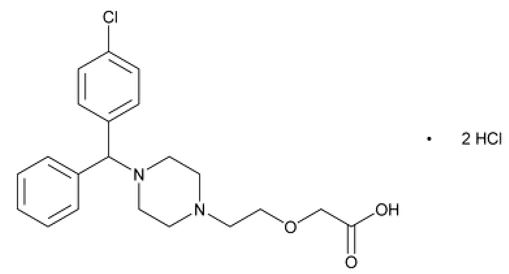
Cetirizine hydrochloride, the active component of QUZYTTIR, is a selective histamine-1 (H1) receptor antagonist. The chemical name is (±) –[2-[4-[(4-chlorophenyl)phenylmethyl]-1- piperzinyl] ethoxy]acetic acid, dihydrochloride. Cetirizine hydrochloride is a racemic compound with an empirical formula of C21H25ClN2O3•2HCl. The molecular weight is 461.82 and the chemical structure is shown below:
Cetirizine hydrochloride is a white, crystalline powder and is water soluble. QUZYTTIR is a sterile, clear, colorless, non-pyrogenic, isotonic solution for intravenous injection. Each mL of QUZYTTIR injection contains 10 mg cetirizine hydrochloride (equivalent to cetirizine 8.42 mg) and 6.5 mg sodium chloride, USP to adjust solution tonicity, in water for injection, USP. QUZYTTIR is supplied in 2 mL size amber glass vials for single use. Each 2 mL size amber glass vial contains 1 mL drug solution with 10 mg cetirizine hydrochloride (10 mg/mL). QUZYTTIR's pH is maintained between 4.5 to 6.5 with sodium hydroxide and/or hydrochloric acid as needed. The osmolality of QUZYTTIR injection is between 255 to 340 mOsmol.
8.4 Pediatric Use
The safety and efficacy of QUZYTTIR have been established in patients 6 months to 17 years of age. The efficacy of QUZYTTIR for the treatment of acute urticaria down to 6 months of age is based on extrapolation of the efficacy of QUZYTTIR in adults with acute urticaria [see Clinical Studies (14)] and supported by pharmacokinetic data with oral cetirizine hydrochloride (the active ingredient in QUZYTTIR) in patients 6 months to 17 years of age. Based upon the known PK profile of oral cetirizine hydrochloride, the exposure of IV cetirizine hydrochloride in pediatric patients (6 months to 17 years of age) is expected to be similar to the exposure of IV cetirizine hydrochloride in adults at the labeled doses. Extrapolation of efficacy is based on the likelihood that the disease course, pathophysiology and the drug's effect are similar between these two populations.
The safety of QUZYTTIR in children 6 months to 17 years of age is supported by safety information from placebo-controlled clinical trials with oral cetirizine hydrochloride in patients 6 months of age and older [see Adverse Reactions (6)]. QUZYTTIR demonstrates a higher Cmax compared to oral cetirizine hydrochloride in adults [see Clinical Pharmacology (12.3)]. As QUZYTTIR is indicated for an acute condition administered in a medically supervised setting, the safety for higher Cmax in children 6 months to less than 18 years of age is supported by the safety data from the clinical trial with IV cetirizine hydrochloride in adults [see Adverse Reactions (6)] and available safety information from pediatric overdose cases.
Because of the absence of pharmacokinetic and safety information for cetirizine hydrochloride in children below 6 years of age with impaired renal or hepatic function, the use of QUZYTTIR in this impaired patient population is not recommended [see Dosage And Administration (2)].
The safety and efficacy of QUZYTTIR in patients less than 6 months of age has not been established.
8.5 Geriatric Use
In clinical trials with QUZYTTIR, 18 patients were 65 years and older, and 6 patients were 75 years and older. No overall differences in safety were observed between these patients and younger patients, but greater sensitivity of some older individuals cannot be ruled out. In clinical trials with cetirizine hydrochloride oral tablets, 186 patients were 65 years and older, and 39 patients were 75 years and older. No overall differences in safety were observed between these patients and younger patients.
With regard to efficacy, the clinical trials with cetirizine hydrochloride oral tablets and QUZYTTIR did not include sufficient numbers of patients aged 65 years and older to determine whether they respond differently than younger patients.
14 Clinical Studies
The safety and efficacy of QUZYTTIR for the treatment of acute urticaria was demonstrated in a randomized, active-controlled, double-blind, single dose, multicenter (US and Canada), parallel group trial in 262 patients 18 years of age and older presenting to Emergency Departments or Urgent care Centers (NCT02935699). Subjects were treated with 10 mg of QUZYTTIR or 50 mg diphenhydramine injection. Patients with acute urticaria with or without other diseases were enrolled, including patients with concomitant angioedema. The majority of the patients were Caucasian (48%) and female (63%) with a mean age of 39 years.
The primary efficacy endpoint was the change from baseline in patient-rated pruritus score assessed 2 hrs post treatment for the intent-to-treat (ITT) population. Pruritus was graded on a severity score of 0 to 3 with 0 = no pruritus, 1 = mild, 2 =moderate, and 3 = severe. The trial was non-inferiority design with the pre-specified non-inferiority margin of 0.50 for the difference between treatment groups. Two key secondary efficacy outcome measures: (i) the need to return to any ED or clinic after patient discharge, and (ii) time spent at the treatment center (time from treatment administration to readiness for discharge) were adjusted for multiplicity.
Result for the change from baseline in the pruritus scores are shown in Table 1. The difference between treatment groups excluded the pre-specified non-inferiority margin, i.e. the lower bound of the 95% confidence interval for the difference of diphenhydramine minus QUZYTTIR did not include – 0.50. The primary efficacy data are presented in Table 1.
|
LOCF: last observation carried forward; ITT: intent-to-treat |
|||
|
*Since the lower bound of the 95% CI for the treatment difference was > -0.50, effectiveness of QUZYTTIR injection was demonstrated to be non-inferior to the effectiveness of diphenhydramine injection. The treatment difference and 95% CI were obtained from a generalized linear mixed-effects model. The model consisted of the change from baseline at 2 hours as the dependent variable and site, treatment and site-by-treatment interaction as the fixed effect. |
|||
|
Diphenhydramine injection 50 mg
(N = 135) |
QUZYTTIR injection 10 mg
(N = 127) |
Adjusted Difference between treatment (95% CI) | |
| Baseline: mean (SD) | 2.19 (0.748) | 2.20 (0.727) | |
| Change from Baseline: mean (SD) | -1.50 (0.984) | -1.61 (0.944) | 0.06 (-0.28, 0.40)* |
Additionally, in this trial the proportion of patients returning to any emergency department or clinic was lower in the QUZYTTIR treatment group (6%) compared to the diphenhydramine treatment group (14%), and the time spent in the treatment center (hours spent reported as mean (SD) was shorter in the QUZYTTIR treatment group (1.7 (0.9)) compared to the diphenhydramine treatment group (2.1 (1.1)).
4 Contraindications
The use of QUZYTTIR is contraindicated in patients with a known hypersensitivity to cetirizine hydrochloride or any of its ingredients, levocetirizine, or hydroxyzine.
6 Adverse Reactions
The following clinically significant adverse reaction is described elsewhere in the labeling:
- Somnolence/Sedation [see Warnings and Precautions (5.1)]
7 Drug Interactions
No clinically significant drug interactions with oral cetirizine hydrochloride, the active ingredient in QUZYTTIR, have been found with theophylline at a low dose, azithromycin, pseudoephedrine, ketoconazole, or erythromycin. There was a small decrease in the clearance of oral cetirizine hydrochloride caused by a 400-mg dose of theophylline; it is possible that larger theophylline doses could have a greater effect [see Clinical Pharmacology (12.3)].
8.7 Renal Impairment
No dosage adjustment is required in patients with moderate and severe renal impairment and in patients on dialysis. Monitor for antihistaminic side effects in this patient population [see Clinical Pharmacology (12.3)].
12.2 Pharmacodynamics
Studies in 69 adult normal volunteers (aged 20 to 61 years) showed that cetirizine hydrochloride oral tablets at doses of 5 and 10 mg strongly inhibited the skin wheal and flare caused by the intradermal injection of histamine. The onset of this activity after a single 10-mg oral dose occurred within 20 minutes in 50% of subjects and within one hour in 95% of subjects; this activity persisted for at least 24 hours. Cetirizine hydrochloride tablets at doses of 5 and 10 mg also strongly inhibited the wheal and flare caused by intradermal injection of histamine in 19 pediatric volunteers (aged 5 to 12 years) and the activity persisted for at least 24 hours. In a 35-day study in children aged 5 to 12, no tolerance to the antihistaminic (suppression of wheal and flare response) effects of cetirizine hydrochloride oral tablets was found. In 10 infants 7 to 25 months of age who received 4 to 9 days of cetirizine hydrochloride in an oral solution (0.25 mg/kg bid), there was a 90% inhibition of histamine-induced (10 mg/mL) cutaneous wheal and 87% inhibition of the flare 12 hours after administration of the last dose. The clinical relevance of this suppression of histamine-induced wheal and flare response on skin testing is unknown.
The effects of intradermal injection of various other mediators or histamine releasers were also inhibited by oral cetirizine hydrochloride, as was response to a cold challenge in patients with cold-induced urticaria. In mildly asthmatic subjects, cetirizine hydrochloride oral tablets at 5 to 20 mg blocked bronchoconstriction due to nebulized histamine, with virtually total blockade after a 20-mg dose. In studies conducted for up to 12 hours following cutaneous antigen challenge, the late phase recruitment of eosinophils, neutrophils and basophils, components of the allergic inflammatory response, was inhibited by cetirizine hydrochloride oral tablets at a dose of 20 mg.
12.3 Pharmacokinetics
In a single dose crossover study in healthy volunteers under fasting conditions, cetirizine reached a mean Cmax of 495 ng/mL and 1344 ng/mL following single dose intravenous (IV) administration of 5 mg and 10 mg, respectively, injected over a period of 1 to 1.5 minutes. Peak concentrations were reached at 0.06 hour (range 0.03 to 0.07 hour) and 0.03 hour (range 0.03 to 2.00 hour) for cetirizine hydrochloride 5 mg and 10 mg IV injection, respectively. The mean systemic exposure (AUC0-inf) for cetirizine hydrochloride 5 mg and 10 mg IV injection was 1318 ng·hr/mL and 2746 ng·hr/mL, respectively. The AUC0-inf for cetirizine hydrochloride 10 mg oral tablet in the study was 2651 ng·hr/mL.
8.6 Hepatic Impairment
No dosage adjustment is required in patients with hepatic impairment. Monitor for antihistaminic side effects in this patient population [see Clinical Pharmacology (12.3)].
1 Indications and Usage
QUZYTTIR® is indicated for the treatment of acute urticaria in adults and children 6 months of age and older.
5.1 Somnolence/sedation
In clinical trials with QUZYTTIR and cetirizine hydrochloride tablets, the occurrence of somnolence/sedation has been reported in some patients. Exercise due caution when driving a car or operating potentially dangerous machinery. Avoid concurrent use of QUZYTTIR with alcohol or other CNS depressants because additional reduction in alertness and additional impairment of CNS performance may occur.
12.1 Mechanism of Action
Cetirizine hydrochloride, a human metabolite of hydroxyzine, is an antihistamine; its principal effects are mediated via selective inhibition of peripheral H1-receptors. The antihistaminic activity of cetirizine hydrochloride has been clearly documented in a variety of animal and human models. In vivo and ex vivo animal models have shown negligible anticholinergic and antiserotonergic activity. In clinical studies however, dry mouth was more common with cetirizine hydrochloride than with placebo. In vitro receptor binding studies have shown no measurable affinity for receptors other than H1 receptors.
5 Warnings and Precautions
Somnolence/Sedation: Exercise caution when driving a car or operating potentially dangerous machinery (5.1)
2 Dosage and Administration
QUZYTTIR is a single use injectable product for intravenous administration only. The recommended dosage regimen is once every 24 hours as needed for treatment of acute urticaria. Administer QUZYTTIR as an intravenous push over a period of 1 to 2 minutes. QUZYTTIR is not recommended in pediatric patients less than 6 years of age with impaired renal or hepatic function [see Pediatric Use (8.4)].
If using as an antihistamine prior to infusion product administration, refer to infusion product prescribing information for instructions.
3 Dosage Forms and Strengths
QUZYTTIR is a sterile, clear, colorless, non-pyrogenic, isotonic aqueous solution of cetirizine hydrochloride for intravenous injection; supplied in 2 mL size amber glass vials for single use. Each 2 mL size amber glass vial contains 1 mL drug solution with 10 mg cetirizine hydrochloride (equivalent to 8.42 mg of cetirizine).
6.1 Clinical Trials Experience
Because clinical trials are conducted under widely varying conditions, adverse reaction rates observed in the clinical trials of a drug cannot be directly compared to rates in the clinical trials of another drug and may not reflect the rates observed in practice.
2.2 Children 6 to 11 Years of Age
The recommended dosage is 5 mg or 10 mg depending on symptom severity administered by intravenous injection.
16 How Supplied/storage and Handling
QUZYTTIR (cetirizine hydrochloride injection), 10 mg/mL, pH between 4.5 to 6.5, is supplied as a sterile, clear, colorless, non-pyrogenic isotonic aqueous solution in single-use 2 mL amber glass vials. The following packaging configuration is available:
- NDC 70720-100-01: 10 mg/mL cetirizine hydrochloride single-use vial
- NDC 70720-100-10: Carton containing 1 single-use vial (10 mg/mL cetirizine hydrochloride)
- NDC 70720-100-25: Carton containing 25 single-use vials (10 mg/mL cetirizine hydrochloride)
2.3 Children 6 Months to 5 Years of Age
The recommended dosage is 2.5 mg administered by intravenous injection.
2.1 Adults and Adolescents 12 Years of Age and Older
The recommended dosage is 10 mg administered by intravenous injection.
Structured Label Content
Section 42229-5 (42229-5)
Limitations of use:
QUZYTTIR® is not recommended in pediatric patients less than 6 years of age with impaired renal or hepatic function.
Section 44425-7 (44425-7)
Storage and Handling:
QUZYTTIR (cetirizine hydrochloride injection) should be stored at 20°C to 25°C (68°F to 77°F), excursions permitted to 15° - 30°C (59° - 86°F) [see USP Controlled Room Temperature].
Discard unused portion.
Section 51945-4 (51945-4)
Principal Display Panel – Carton Label
NDC 70720-100-25
Quzyttir®
Cetirizine HCl Injection
10 mg/mL
For Intravenous Use Only
Each 1 mL vial contains Cetirizine Hydrochloride 10 mg (equivalent to
8.42 mg of Cetirizine) and sodium chloride for tonicity adjustment
Single-Dose Vial - Discard Unused Portion
Carton of 25
1 mL Single-dose vials
Rx only
10 Overdosage (10 OVERDOSAGE)
Cases of adult and pediatric patients with overdoses of only oral cetirizine hydrochloride have been reported, some of which resulted in adverse reactions. Adult overdose cases involved patients 18 to 81 years of age receiving oral cetirizine hydrochloride doses of 70 mg to 800 mg (7 to 80 times the maximum recommended dosage of 10 mg/day in adults). The most commonly reported adverse reactions were somnolence and fatigue. Other reported adverse reactions included tachycardia, abdominal pain, nausea, and vomiting. Pediatric overdose cases involved patients 18 months to 15 years of age receiving oral cetirizine hydrochloride doses of 90 mg to 300 mg (9 to 72 times the maximum age recommended dose). The adverse reactions reported included: somnolence, difficulty walking, agitation/irritability, hard to swallow/articulate clearly, tachycardia, vomiting, mydriasis, and elevated creatinine phosphokinase.
If overdose with QUZYTTIR occurs, treatment should be symptomatic or supportive, taking into account any concomitantly ingested medications. There is no known specific antidote to cetirizine hydrochloride. Cetirizine hydrochloride is not effectively removed by dialysis, and dialysis will be ineffective unless a dialyzable agent has been concomitantly ingested.
11 Description (11 DESCRIPTION)
Cetirizine hydrochloride, the active component of QUZYTTIR, is a selective histamine-1 (H1) receptor antagonist. The chemical name is (±) –[2-[4-[(4-chlorophenyl)phenylmethyl]-1- piperzinyl] ethoxy]acetic acid, dihydrochloride. Cetirizine hydrochloride is a racemic compound with an empirical formula of C21H25ClN2O3•2HCl. The molecular weight is 461.82 and the chemical structure is shown below:
Cetirizine hydrochloride is a white, crystalline powder and is water soluble. QUZYTTIR is a sterile, clear, colorless, non-pyrogenic, isotonic solution for intravenous injection. Each mL of QUZYTTIR injection contains 10 mg cetirizine hydrochloride (equivalent to cetirizine 8.42 mg) and 6.5 mg sodium chloride, USP to adjust solution tonicity, in water for injection, USP. QUZYTTIR is supplied in 2 mL size amber glass vials for single use. Each 2 mL size amber glass vial contains 1 mL drug solution with 10 mg cetirizine hydrochloride (10 mg/mL). QUZYTTIR's pH is maintained between 4.5 to 6.5 with sodium hydroxide and/or hydrochloric acid as needed. The osmolality of QUZYTTIR injection is between 255 to 340 mOsmol.
8.4 Pediatric Use
The safety and efficacy of QUZYTTIR have been established in patients 6 months to 17 years of age. The efficacy of QUZYTTIR for the treatment of acute urticaria down to 6 months of age is based on extrapolation of the efficacy of QUZYTTIR in adults with acute urticaria [see Clinical Studies (14)] and supported by pharmacokinetic data with oral cetirizine hydrochloride (the active ingredient in QUZYTTIR) in patients 6 months to 17 years of age. Based upon the known PK profile of oral cetirizine hydrochloride, the exposure of IV cetirizine hydrochloride in pediatric patients (6 months to 17 years of age) is expected to be similar to the exposure of IV cetirizine hydrochloride in adults at the labeled doses. Extrapolation of efficacy is based on the likelihood that the disease course, pathophysiology and the drug's effect are similar between these two populations.
The safety of QUZYTTIR in children 6 months to 17 years of age is supported by safety information from placebo-controlled clinical trials with oral cetirizine hydrochloride in patients 6 months of age and older [see Adverse Reactions (6)]. QUZYTTIR demonstrates a higher Cmax compared to oral cetirizine hydrochloride in adults [see Clinical Pharmacology (12.3)]. As QUZYTTIR is indicated for an acute condition administered in a medically supervised setting, the safety for higher Cmax in children 6 months to less than 18 years of age is supported by the safety data from the clinical trial with IV cetirizine hydrochloride in adults [see Adverse Reactions (6)] and available safety information from pediatric overdose cases.
Because of the absence of pharmacokinetic and safety information for cetirizine hydrochloride in children below 6 years of age with impaired renal or hepatic function, the use of QUZYTTIR in this impaired patient population is not recommended [see Dosage And Administration (2)].
The safety and efficacy of QUZYTTIR in patients less than 6 months of age has not been established.
8.5 Geriatric Use
In clinical trials with QUZYTTIR, 18 patients were 65 years and older, and 6 patients were 75 years and older. No overall differences in safety were observed between these patients and younger patients, but greater sensitivity of some older individuals cannot be ruled out. In clinical trials with cetirizine hydrochloride oral tablets, 186 patients were 65 years and older, and 39 patients were 75 years and older. No overall differences in safety were observed between these patients and younger patients.
With regard to efficacy, the clinical trials with cetirizine hydrochloride oral tablets and QUZYTTIR did not include sufficient numbers of patients aged 65 years and older to determine whether they respond differently than younger patients.
14 Clinical Studies (14 CLINICAL STUDIES)
The safety and efficacy of QUZYTTIR for the treatment of acute urticaria was demonstrated in a randomized, active-controlled, double-blind, single dose, multicenter (US and Canada), parallel group trial in 262 patients 18 years of age and older presenting to Emergency Departments or Urgent care Centers (NCT02935699). Subjects were treated with 10 mg of QUZYTTIR or 50 mg diphenhydramine injection. Patients with acute urticaria with or without other diseases were enrolled, including patients with concomitant angioedema. The majority of the patients were Caucasian (48%) and female (63%) with a mean age of 39 years.
The primary efficacy endpoint was the change from baseline in patient-rated pruritus score assessed 2 hrs post treatment for the intent-to-treat (ITT) population. Pruritus was graded on a severity score of 0 to 3 with 0 = no pruritus, 1 = mild, 2 =moderate, and 3 = severe. The trial was non-inferiority design with the pre-specified non-inferiority margin of 0.50 for the difference between treatment groups. Two key secondary efficacy outcome measures: (i) the need to return to any ED or clinic after patient discharge, and (ii) time spent at the treatment center (time from treatment administration to readiness for discharge) were adjusted for multiplicity.
Result for the change from baseline in the pruritus scores are shown in Table 1. The difference between treatment groups excluded the pre-specified non-inferiority margin, i.e. the lower bound of the 95% confidence interval for the difference of diphenhydramine minus QUZYTTIR did not include – 0.50. The primary efficacy data are presented in Table 1.
|
LOCF: last observation carried forward; ITT: intent-to-treat |
|||
|
*Since the lower bound of the 95% CI for the treatment difference was > -0.50, effectiveness of QUZYTTIR injection was demonstrated to be non-inferior to the effectiveness of diphenhydramine injection. The treatment difference and 95% CI were obtained from a generalized linear mixed-effects model. The model consisted of the change from baseline at 2 hours as the dependent variable and site, treatment and site-by-treatment interaction as the fixed effect. |
|||
|
Diphenhydramine injection 50 mg
(N = 135) |
QUZYTTIR injection 10 mg
(N = 127) |
Adjusted Difference between treatment (95% CI) | |
| Baseline: mean (SD) | 2.19 (0.748) | 2.20 (0.727) | |
| Change from Baseline: mean (SD) | -1.50 (0.984) | -1.61 (0.944) | 0.06 (-0.28, 0.40)* |
Additionally, in this trial the proportion of patients returning to any emergency department or clinic was lower in the QUZYTTIR treatment group (6%) compared to the diphenhydramine treatment group (14%), and the time spent in the treatment center (hours spent reported as mean (SD) was shorter in the QUZYTTIR treatment group (1.7 (0.9)) compared to the diphenhydramine treatment group (2.1 (1.1)).
4 Contraindications (4 CONTRAINDICATIONS)
The use of QUZYTTIR is contraindicated in patients with a known hypersensitivity to cetirizine hydrochloride or any of its ingredients, levocetirizine, or hydroxyzine.
6 Adverse Reactions (6 ADVERSE REACTIONS)
The following clinically significant adverse reaction is described elsewhere in the labeling:
- Somnolence/Sedation [see Warnings and Precautions (5.1)]
7 Drug Interactions (7 DRUG INTERACTIONS)
No clinically significant drug interactions with oral cetirizine hydrochloride, the active ingredient in QUZYTTIR, have been found with theophylline at a low dose, azithromycin, pseudoephedrine, ketoconazole, or erythromycin. There was a small decrease in the clearance of oral cetirizine hydrochloride caused by a 400-mg dose of theophylline; it is possible that larger theophylline doses could have a greater effect [see Clinical Pharmacology (12.3)].
8.7 Renal Impairment
No dosage adjustment is required in patients with moderate and severe renal impairment and in patients on dialysis. Monitor for antihistaminic side effects in this patient population [see Clinical Pharmacology (12.3)].
12.2 Pharmacodynamics
Studies in 69 adult normal volunteers (aged 20 to 61 years) showed that cetirizine hydrochloride oral tablets at doses of 5 and 10 mg strongly inhibited the skin wheal and flare caused by the intradermal injection of histamine. The onset of this activity after a single 10-mg oral dose occurred within 20 minutes in 50% of subjects and within one hour in 95% of subjects; this activity persisted for at least 24 hours. Cetirizine hydrochloride tablets at doses of 5 and 10 mg also strongly inhibited the wheal and flare caused by intradermal injection of histamine in 19 pediatric volunteers (aged 5 to 12 years) and the activity persisted for at least 24 hours. In a 35-day study in children aged 5 to 12, no tolerance to the antihistaminic (suppression of wheal and flare response) effects of cetirizine hydrochloride oral tablets was found. In 10 infants 7 to 25 months of age who received 4 to 9 days of cetirizine hydrochloride in an oral solution (0.25 mg/kg bid), there was a 90% inhibition of histamine-induced (10 mg/mL) cutaneous wheal and 87% inhibition of the flare 12 hours after administration of the last dose. The clinical relevance of this suppression of histamine-induced wheal and flare response on skin testing is unknown.
The effects of intradermal injection of various other mediators or histamine releasers were also inhibited by oral cetirizine hydrochloride, as was response to a cold challenge in patients with cold-induced urticaria. In mildly asthmatic subjects, cetirizine hydrochloride oral tablets at 5 to 20 mg blocked bronchoconstriction due to nebulized histamine, with virtually total blockade after a 20-mg dose. In studies conducted for up to 12 hours following cutaneous antigen challenge, the late phase recruitment of eosinophils, neutrophils and basophils, components of the allergic inflammatory response, was inhibited by cetirizine hydrochloride oral tablets at a dose of 20 mg.
12.3 Pharmacokinetics
In a single dose crossover study in healthy volunteers under fasting conditions, cetirizine reached a mean Cmax of 495 ng/mL and 1344 ng/mL following single dose intravenous (IV) administration of 5 mg and 10 mg, respectively, injected over a period of 1 to 1.5 minutes. Peak concentrations were reached at 0.06 hour (range 0.03 to 0.07 hour) and 0.03 hour (range 0.03 to 2.00 hour) for cetirizine hydrochloride 5 mg and 10 mg IV injection, respectively. The mean systemic exposure (AUC0-inf) for cetirizine hydrochloride 5 mg and 10 mg IV injection was 1318 ng·hr/mL and 2746 ng·hr/mL, respectively. The AUC0-inf for cetirizine hydrochloride 10 mg oral tablet in the study was 2651 ng·hr/mL.
8.6 Hepatic Impairment
No dosage adjustment is required in patients with hepatic impairment. Monitor for antihistaminic side effects in this patient population [see Clinical Pharmacology (12.3)].
1 Indications and Usage (1 INDICATIONS AND USAGE)
QUZYTTIR® is indicated for the treatment of acute urticaria in adults and children 6 months of age and older.
5.1 Somnolence/sedation (5.1 Somnolence/Sedation)
In clinical trials with QUZYTTIR and cetirizine hydrochloride tablets, the occurrence of somnolence/sedation has been reported in some patients. Exercise due caution when driving a car or operating potentially dangerous machinery. Avoid concurrent use of QUZYTTIR with alcohol or other CNS depressants because additional reduction in alertness and additional impairment of CNS performance may occur.
12.1 Mechanism of Action
Cetirizine hydrochloride, a human metabolite of hydroxyzine, is an antihistamine; its principal effects are mediated via selective inhibition of peripheral H1-receptors. The antihistaminic activity of cetirizine hydrochloride has been clearly documented in a variety of animal and human models. In vivo and ex vivo animal models have shown negligible anticholinergic and antiserotonergic activity. In clinical studies however, dry mouth was more common with cetirizine hydrochloride than with placebo. In vitro receptor binding studies have shown no measurable affinity for receptors other than H1 receptors.
5 Warnings and Precautions (5 WARNINGS AND PRECAUTIONS)
Somnolence/Sedation: Exercise caution when driving a car or operating potentially dangerous machinery (5.1)
2 Dosage and Administration (2 DOSAGE AND ADMINISTRATION)
QUZYTTIR is a single use injectable product for intravenous administration only. The recommended dosage regimen is once every 24 hours as needed for treatment of acute urticaria. Administer QUZYTTIR as an intravenous push over a period of 1 to 2 minutes. QUZYTTIR is not recommended in pediatric patients less than 6 years of age with impaired renal or hepatic function [see Pediatric Use (8.4)].
If using as an antihistamine prior to infusion product administration, refer to infusion product prescribing information for instructions.
3 Dosage Forms and Strengths (3 DOSAGE FORMS AND STRENGTHS)
QUZYTTIR is a sterile, clear, colorless, non-pyrogenic, isotonic aqueous solution of cetirizine hydrochloride for intravenous injection; supplied in 2 mL size amber glass vials for single use. Each 2 mL size amber glass vial contains 1 mL drug solution with 10 mg cetirizine hydrochloride (equivalent to 8.42 mg of cetirizine).
6.1 Clinical Trials Experience
Because clinical trials are conducted under widely varying conditions, adverse reaction rates observed in the clinical trials of a drug cannot be directly compared to rates in the clinical trials of another drug and may not reflect the rates observed in practice.
2.2 Children 6 to 11 Years of Age (2.2 Children 6 to 11 years of age)
The recommended dosage is 5 mg or 10 mg depending on symptom severity administered by intravenous injection.
16 How Supplied/storage and Handling (16 HOW SUPPLIED/STORAGE AND HANDLING)
QUZYTTIR (cetirizine hydrochloride injection), 10 mg/mL, pH between 4.5 to 6.5, is supplied as a sterile, clear, colorless, non-pyrogenic isotonic aqueous solution in single-use 2 mL amber glass vials. The following packaging configuration is available:
- NDC 70720-100-01: 10 mg/mL cetirizine hydrochloride single-use vial
- NDC 70720-100-10: Carton containing 1 single-use vial (10 mg/mL cetirizine hydrochloride)
- NDC 70720-100-25: Carton containing 25 single-use vials (10 mg/mL cetirizine hydrochloride)
2.3 Children 6 Months to 5 Years of Age (2.3 Children 6 months to 5 years of age)
The recommended dosage is 2.5 mg administered by intravenous injection.
2.1 Adults and Adolescents 12 Years of Age and Older (2.1 Adults and adolescents 12 years of age and older)
The recommended dosage is 10 mg administered by intravenous injection.
Advanced Ingredient Data
Raw Label Data
All Sections (JSON)
Additional Information
Back to search View SPL set listing Open on DailyMed ↗
Source: dailymed · Ingested: 2026-02-15T11:50:29.949987 · Updated: 2026-03-14T22:51:58.103963