benazepril hydrochloride tablets, usp, film coated for oral use
ebdf5144-752d-456f-b46d-19cbba0bc3d7
34391-3
HUMAN PRESCRIPTION DRUG LABEL
Drug Facts
Composition & Product
Identifiers & Packaging
Indications and Usage
Benazepril hydrochloride tablets, USP are indicated for the treatment of hypertension. It may be used alone or in combination with thiazide diuretics.
Contraindications
Benazepril hydrochloride tablets are contraindicated in patients who are hypersensitive to benazepril or to any other ACE inhibitor. Benazepril hydrochloride tablets are also contraindicated in patients with a history of angioedema with or without previous ACE inhibitor treatment. Do not co-administer aliskiren with angiotensin receptor blockers, ACE inhibitors, including benazepril hydrochloride in patients with diabetes.
Adverse Reactions
Benazepril hydrochloride tablets have been evaluated for safety in over 6000 patients with hypertension; over 700 of these patients were treated for at least one year. The overall incidence of reported adverse events was comparable in benazepril hydrochloride tablets and placebo patients. The reported side effects were generally mild and transient, and there was no relation between side effects and age, duration of therapy, or total dosage within the range of 2 to 80 mg. Discontinuation of therapy because of a side effect was required in approximately 5% of U.S. patients treated with benazepril hydrochloride tablets and in 3% of patients treated with placebo. The most common reasons for discontinuation were headache (0.6%) and cough (0.5%) (see PRECAUTIONS , Cough ). The side effects considered possibly or probably related to study drug that occurred in U.S. placebo-controlled trials in more than 1% of patients treated with benazepril hydrochloride tablets are shown below. Patients in U.S. Placebo-Controlled Studies Benazepril Hydrochloride Tablets (N=964) Placebo (N=496) N % N % Headache 60 6.2 21 4.2 Dizziness 35 3.6 12 2.4 Somnolence 15 1.6 2 0.4 Postural Dizziness 14 1.5 1 0.2 Other adverse experiences reported in controlled clinical trials (in less than 1% of benazepril patients or with less than 1% difference in incidence between benazepril or placebo treatment), and rarer events seen in post-marketing experience, include the following (in some, a causal relationship to drug use is uncertain):
How Supplied
Benazepril hydrochloride tablets, USP, 5 mg, are round, white, film-coated tablets, debossed “S” on one side and “341” on the other side, packaged as follows: NDC 63187-500-30 bottle of 30 tablets (with desiccant) NDC 63187-500-60 bottle of 60 tablets (with desiccant) NDC 63187-500-90 bottle of 90 tablets (with desiccant) Benazepril hydrochloride tablets, USP, 10 mg, are round, red, film-coated tablets, debossed “S” on one side and “342” on the other side, packaged as follows: NDC 63187-499-30 bottle of 30 tablets (with desiccant) NDC 63187-499-60 bottle of 60 tablets (with desiccant) NDC 63187-499-90 bottle of 90 tablets (with desiccant) Store at 20-25°C (68-77°F) [See USP Controlled Room Temperature]. Protect from moisture. Dispense in a tight container (USP). You may report side effects to Solco Healthcare US, LLC at 1-866-257-2597 or FDA at 1-800-FDA-1088 Distributed by: Solco Healthcare US, LLC Cranbury, NJ 08512 Manufactured by: Zhejiang Huahai Pharmaceutical Co., Ltd. Xunqiao, Linhai, Zhejiang 317024, China Repackaged by: Proficient Rx LP Thousand Oaks, CA 91320 Version: 01/2014 07713-01
Description
Rx only Prescribing Information
Medication Information
Indications and Usage
Benazepril hydrochloride tablets, USP are indicated for the treatment of hypertension. It may be used alone or in combination with thiazide diuretics.
Contraindications
Benazepril hydrochloride tablets are contraindicated in patients who are hypersensitive to benazepril or to any other ACE inhibitor.
Benazepril hydrochloride tablets are also contraindicated in patients with a history of angioedema with or without previous ACE inhibitor treatment.
Do not co-administer aliskiren with angiotensin receptor blockers, ACE inhibitors, including benazepril hydrochloride in patients with diabetes.
Adverse Reactions
Benazepril hydrochloride tablets have been evaluated for safety in over 6000 patients with hypertension; over 700 of these patients were treated for at least one year. The overall incidence of reported adverse events was comparable in benazepril hydrochloride tablets and placebo patients.
The reported side effects were generally mild and transient, and there was no relation between side effects and age, duration of therapy, or total dosage within the range of 2 to 80 mg. Discontinuation of therapy because of a side effect was required in approximately 5% of U.S. patients treated with benazepril hydrochloride tablets and in 3% of patients treated with placebo.
The most common reasons for discontinuation were headache (0.6%) and cough (0.5%) (see PRECAUTIONS , Cough ).
The side effects considered possibly or probably related to study drug that occurred in U.S. placebo-controlled trials in more than 1% of patients treated with benazepril hydrochloride tablets are shown below.
|
Benazepril Hydrochloride Tablets
|
Placebo
|
|||
|
N |
% |
N |
% |
|
|
Headache |
60 |
6.2 |
21 |
4.2 |
|
Dizziness |
35 |
3.6 |
12 |
2.4 |
|
Somnolence |
15 |
1.6 |
2 |
0.4 |
|
Postural Dizziness |
14 |
1.5 |
1 |
0.2 |
Other adverse experiences reported in controlled clinical trials (in less than 1% of benazepril patients or with less than 1% difference in incidence between benazepril or placebo treatment), and rarer events seen in post-marketing experience, include the following (in some, a causal relationship to drug use is uncertain):
How Supplied
Benazepril hydrochloride tablets, USP, 5 mg, are round, white, film-coated tablets, debossed “S” on one side and “341” on the other side, packaged as follows:
NDC 63187-500-30 bottle of 30 tablets (with desiccant)
NDC 63187-500-60 bottle of 60 tablets (with desiccant)
NDC 63187-500-90 bottle of 90 tablets (with desiccant)
Benazepril hydrochloride tablets, USP, 10 mg, are round, red, film-coated tablets, debossed “S” on one side and “342” on the other side, packaged as follows:
NDC 63187-499-30 bottle of 30 tablets (with desiccant)
NDC 63187-499-60 bottle of 60 tablets (with desiccant)
NDC 63187-499-90 bottle of 90 tablets (with desiccant)
Store at 20-25°C (68-77°F) [See USP Controlled Room Temperature]. Protect from moisture.
Dispense in a tight container (USP).
You may report side effects to Solco Healthcare US, LLC at 1-866-257-2597 or FDA at 1-800-FDA-1088
Distributed by:
Solco Healthcare US, LLC
Cranbury, NJ 08512
Manufactured by:
Zhejiang Huahai Pharmaceutical Co., Ltd.
Xunqiao, Linhai, Zhejiang 317024, China
Repackaged by:
Proficient Rx LP
Thousand Oaks, CA 91320
Version: 01/2014
07713-01
Description
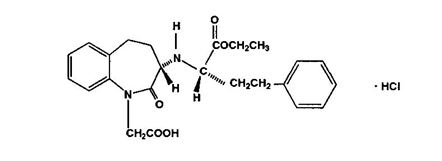
Benazepril hydrochloride is a white to off-white crystalline powder, soluble (>100 mg/mL) in water, in ethanol, and in methanol. Its chemical name is 3-[[1-(ethoxy-carbonyl)-3-phenyl-(1S)-propyl]amino]-2,3,4,5-tetrahydro-2-oxo-1H-1-(3S)-benzazepine-1-acetic acid monohydrochloride; its structural formula is
Its empirical formula is C24H28N2O5•HCl and its molecular weight is 460.96
Benazeprilat, the active metabolite of benazepril, is a non-sulfhydryl angiotensin-converting enzyme inhibitor. Benazepril is converted to benazeprilat by hepatic cleavage of the ester group.
Benazepril hydrochloride, USP is supplied as film-coated tablets containing 5 mg, 10 mg, 20 mg, and 40 mg of benazepril hydrochloride for oral administration. The inactive ingredients are carnauba wax, colloidal silicon dioxide, crospovidone, hypromellose, lactose monohydrate, magnesium stearate, microcrystalline cellulose, polydextrose, polyethylene glycol, pregelatinized starch, titanium dioxide, and triacetin. The 10 mg tablet also contains FD&C Red No. 40 aluminum lake. The 20 mg tablet also contains black iron oxide and yellow iron oxide. The 40 mg tablet also contains FD&C Blue No. 2 aluminum lake. Benazepril hydrochloride tablets USP, 5 mg, 10 mg, 20 mg and 40 mg meet USP Dissolution Test 2.
Adult
In single-dose studies, benazepril hydrochloride lowered blood pressure within 1 hour, with peak reductions achieved 2-4 hours after dosing. The antihypertensive effect of a single dose persisted for 24 hours. In multiple-dose studies, once-daily doses of 20-80 mg decreased seated pressure (systolic/diastolic) 24 hours after dosing by about 6-12/4-7 mmHg. The trough values represent reductions of about 50% of that seen at peak.
Four dose-response studies using once-daily dosing were conducted in 470 mild-to-moderate hypertensive patients not using diuretics. The minimal effective once-daily dose of benazepril hydrochloride tablets was 10 mg; but further falls in blood pressure, especially at morning trough, were seen with higher doses in the studied dosing range (10-80 mg). In studies comparing the same daily dose of benazepril hydrochloride tablets given as a single morning dose or as a twice-daily dose, blood pressure reductions at the time of morning trough blood levels were greater with the divided regimen.
The antihypertensive effects of benazepril hydrochloride tablets were not appreciably different in patients receiving high- or low-sodium diets.
In normal human volunteers, single doses of benazepril caused an increase in renal blood flow but had no effect on glomerular filtration rate.
Use of benazepril hydrochloride tablets in combination with thiazide diuretics gives a blood-pressure-lowering effect greater than that seen with either agent alone. By blocking the renin-angiotensin-aldosterone axis, administration of benazepril hydrochloride tablets tends to reduce the potassium loss associated with the diuretic.
Adults
The recommended initial dose for patients not receiving a diuretic is 10 mg once a day. The usual maintenance dosage range is 20-40 mg per day administered as a single dose or in two equally divided doses. A dose of 80 mg gives an increased response, but experience with this dose is limited. The divided regimen was more effective in controlling trough (pre-dosing) blood pressure than the same dose given as a once-daily regimen. Dosage adjustment should be based on measurement of peak (2-6 hours after dosing) and trough responses. If a once-daily regimen does not give adequate trough response, an increase in dosage or divided administration should be considered. If blood pressure is not controlled with benazepril hydrochloride tablets alone, a diuretic can be added.
Total daily doses above 80 mg have not been evaluated.
Concomitant administration of benazepril hydrochloride tablets with potassium supplements, potassium salt substitutes, or potassium-sparing diuretics can lead to increases of serum potassium (see PRECAUTIONS ).
In patients who are currently being treated with a diuretic, symptomatic hypotension occasionally can occur following the initial dose of benazepril hydrochloride tablets. To reduce the likelihood of hypotension, the diuretic should, if possible, be discontinued two to three days prior to beginning therapy with benazepril hydrochloride tablets (see WARNINGS ). Then, if blood pressure is not controlled with benazepril hydrochloride tablets alone, diuretic therapy should be resumed.
If the diuretic cannot be discontinued, an initial dose of 5 mg benazepril should be used to avoid excessive hypotension.
Section 42229-5
Rx only
Prescribing Information
Pediatric
In a clinical study of 107 pediatric patients, 7 to 16 years of age, with either systolic or diastolic pressure above the 95th percentile, patients were given 0.1 or 0.2 mg/kg then titrated up to 0.3 or 0.6 mg/kg with a maximum dose of 40 mg once daily. After four weeks of treatment, the 85 patients whose blood pressure was reduced on therapy were then randomized to either placebo or benazepril and were followed up for an additional two weeks. At the end of two weeks, blood pressure (both systolic and diastolic) in children withdrawn to placebo rose by 4 to 6 mmHg more than in children on benazepril. No dose-response was observed for the three doses.
Overdosage
Single oral doses of 3 g/kg benazepril were associated with significant lethality in mice. Rats, however, tolerated single oral doses of up to 6 g/kg. Reduced activity was seen at 1 g/kg in mice and at 5 g/kg in rats. Human overdoses of benazepril have not been reported, but the most common manifestation of human benazepril overdosage is likely to be hypotension, which can be associated with electrolyte disturbances and renal failure.
Laboratory determinations of serum levels of benazepril and its metabolites are not widely available, and such determinations have, in any event, no established role in the management of benazepril overdose.
No data are available to suggest physiological maneuvers (e.g., maneuvers to change the pH of the urine) that might accelerate elimination of benazepril and its metabolites. Benazepril is only slightly dialyzable, but dialysis might be considered in overdosed patients with severely impaired renal function (see WARNINGS ).
Angiotensin II could presumably serve as a specific antagonist-antidote in the setting of benazepril overdose, but angiotensin II is essentially unavailable outside of scattered research facilities. Because the hypotensive effect of benazepril is achieved through vasodilation and effective hypovolemia, it is reasonable to treat benazepril overdose by infusion of normal saline solution.
If ingestion is recent, activated charcoal should be considered. Gastric decontamination (e.g., vomiting, gastric lavage) may be considered in individual cases, in the early period after ingestion.
Patients should be closely monitored for blood pressure and clinical symptoms. Supportive management should be employed to ensure adequate hydration and to maintain systemic blood pressure.
In the case of marked hypotension, physiological saline solution should be administered intravenously; depending on the clinical situation the use of vasopressors (e.g., catecholamines i.v.) may be considered.
Pediatrics
In children, doses of benazepril hydrochloride between 0.1 and 0.6 mg/kg once daily have been studied, and doses greater than 0.1 mg/kg were shown to reduce blood pressure (see Pharmacodynamics ). Based on this, the recommended starting dose of benazepril hydrochloride is 0.2 mg/kg once per day as monotherapy. Doses above 0.6 mg/kg (or in excess of 40 mg daily) have not been studied in pediatric patients.
For pediatric patients who cannot swallow tablets, or for whom the calculated dosage (mg/kg) does not correspond to the available tablet strengths for benazepril hydrochloride tablets, follow the suspension preparation instructions below to administer benazepril hydrochloride tablets as a suspension.
Treatment with benazepril hydrochloride tablets is not advised for children below the age of 6 years (see PRECAUTIONS , Pediatric Use ) and in pediatric patients with glomerular filtration rate <30 mL, as there are insufficient data available to support a dosing recommendation in these groups.
Hypotension
Benazepril hydrochloride can cause symptomatic hypotension. Like other ACE inhibitors, benazepril has been only rarely associated with hypotension in uncomplicated hypertensive patients. Symptomatic hypotension is most likely to occur in patients who have been volume- and/or salt-depleted as a result of prolonged diuretic therapy, dietary salt restriction, dialysis, diarrhea, or vomiting. Volume-and/or salt-depletion should be corrected before initiating therapy with benazepril hydrochloride tablets.
In patients with congestive heart failure, with or without associated renal insufficiency, ACE inhibitor therapy may cause excessive hypotension, which may be associated with oliguria or azotemia and, rarely, with acute renal failure and death. In such patients, benazepril therapy should be started under close medical supervision; they should be followed closely for the first 2 weeks of treatment and whenever the dose of benazepril or diuretic is increased.
If hypotension occurs, the patient should be placed in a supine position, and, if necessary, treated with intravenous infusion of physiological saline. Benazepril treatment usually can be continued following restoration of blood pressure and volume.
Geriatric Use
Of the total number of patients who received benazepril in U.S. clinical studies of benazepril hydrochloride tablets, 18% were 65 or older while 2% were 75 or older. No overall differences in effectiveness or safety were observed between these patients and younger patients, and other reported clinical experience has not identified differences in responses between the elderly and younger patients, but greater sensitivity of some older individuals cannot be ruled out.
Benazepril and benazeprilat are substantially excreted by the kidney. Because elderly patients are more likely to have decreased renal function, care should be taken in dose selection, and it may be useful to monitor renal function.
Hepatic Failure
Rarely, ACE inhibitors have been associated with a syndrome that starts with cholestatic jaundice and progresses to fulminant hepatic necrosis and (sometimes) death. The mechanism of this syndrome is not understood. Patients receiving ACE inhibitors who develop jaundice or marked elevations of hepatic enzymes should discontinue the ACE inhibitor and receive appropriate medical follow-up.
Nursing Mothers
Minimal amounts of unchanged benazepril and of benazeprilat are excreted into the breast milk of lactating women treated with benazepril. A newborn child ingesting entirely breast milk would receive less than 0.1% of the mg/kg maternal dose of benazepril and benazeprilat.
Pharmacodynamics
Single and multiple doses of 10 mg or more of benazepril hydrochloride cause inhibition of plasma ACE activity by at least 80%-90% for at least 24 hours after dosing. Pressor responses to exogenous angiotensin I were inhibited by 60%-90% (up to 4 hours post-dose) at the 10-mg dose.
Mechanism of Action
Benazepril and benazeprilat inhibit angiotensin-converting enzyme (ACE) in human subjects and animals. ACE is a peptidyl dipeptidase that catalyzes the conversion of angiotensin I to the vasoconstrictor substance, angiotensin II. Angiotensin II also stimulates aldosterone secretion by the adrenal cortex.
Inhibition of ACE results in decreased plasma angiotensin II, which leads to decreased vasopressor activity and to decreased aldosterone secretion. The latter decrease may result in a small increase of serum potassium. Hypertensive patients treated with benazepril hydrochloride alone for up to 52 weeks had elevations of serum potassium of up to 0.2 mEq/L. Similar patients treated with benazepril hydrochloride and hydrochlorothiazide for up to 24 weeks had no consistent changes in their serum potassium (see PRECAUTIONS ).
Removal of angiotensin II negative feedback on renin secretion leads to increased plasma renin activity. In animal studies, benazepril had no inhibitory effect on the vasopressor response to angiotensin II and did not interfere with the hemodynamic effects of the autonomic neurotransmitters acetylcholine, epinephrine, and norepinephrine.
ACE is identical to kininase, an enzyme that degrades bradykinin. Whether increased levels of bradykinin, a potent vasodepressor peptide, play a role in the therapeutic effects of benazepril hydrochloride remains to be elucidated.
While the mechanism through which benazepril lowers blood pressure is believed to be primarily suppression of the renin-angiotensin-aldosterone system, benazepril has an antihypertensive effect even in patients with low-renin hypertension (see INDICATIONS AND USAGE ).
Pregnancy Category D
Use of drugs that act on the renin-angiotensin system during the second and third trimesters of pregnancy reduces fetal renal function and increases fetal and neonatal morbidity and death. Resulting oligohydramnios can be associated with fetal lung hypoplasia and skeletal deformations. Potential neonatal adverse effects include skull hypoplasia, anuria, hypotension, renal failure, and death. When pregnancy is detected, discontinue benazepril hydrochloride as soon as possible. These adverse outcomes are usually associated with use of these drugs in the second and third trimester of pregnancy. Most epidemiologic studies examining fetal abnormalities after exposure to antihypertensive use in the first trimester have not distinguished drugs affecting the renin-angiotensin system from other antihypertensive agents. Appropriate management of maternal hypertension during pregnancy is important to optimize outcomes for both mother and fetus.
-
In the unusual case that there is no appropriate alternative to therapy with drugs affecting the renin-angiotensin system for a particular patient, apprise the mother of the potential risk to the fetus. Perform serial ultrasound examinations to assess the intra-amniotic environment. If oligohydramnios is observed, discontinue benazepril hydrochloride, unless it is considered lifesaving for the mother. Fetal testing may be appropriate, based on the week of pregnancy. Patients and physicians should be aware, however, that oligohydramnios may not appear until after the fetus has sustained irreversible injury. Closely observe infants with histories of in utero exposure to benazepril hydrochloride for hypotension, oliguria, and hyperkalemia. [see Precautions, Pediatric Use ].
No teratogenic effects of benazepril hydrochloride were seen in studies of pregnant rats, mice, and rabbits. On a mg/m2 basis, the doses used in these studies were 60 times (in rats), 9 times (in mice), and more than 0.8 times (in rabbits) the maximum recommended human dose (assuming a 50-kg woman). On a mg/kg basis these multiples are 300 times (in rats), 90 times (in mice), and more than 3 times (in rabbits) the maximum recommended human dose.
Warning: Fetal Toxicity
When pregnancy is detected, discontinue Benazepril Hydrochloride Tablets as soon as possible.
Drugs that act directly on the renin-angiotensin system can cause injury and death to the developing fetus. See Warnings: Fetal Toxicity
Principal Display Panel 5 Mg
NDC 63187-500-30 Rx only
Benazepril
Hydrochloride
Tablets USP
5 mg
30 Tablets
Principal Display Panel 10 Mg
NDC 63187-499-90 Rx only
Benazepril
Hydrochloride
Tablets USP
10 mg
90 Tablets
Pharmacokinetics and Metabolism
Following oral administration of benazepril hydrochloride, peak plasma concentrations of benazepril are reached within 0.5-1.0 hours. The extent of absorption is at least 37% as determined by urinary recovery and is not significantly influenced by the presence of food in the GI tract.
Cleavage of the ester group (primarily in the liver) converts benazepril to its active metabolite, benazeprilat. Peak plasma concentrations of benazeprilat are reached 1-2 hours after drug intake in the fasting state and 2-4 hours after drug intake in the nonfasting state. The serum protein binding of benazepril is about 96.7% and that of benazeprilat about 95.3%, as measured by equilibrium dialysis; on the basis of in vitro studies, the degree of protein binding should be unaffected by age, hepatic dysfunction, or concentration (over the concentration range of 0.24-23.6 μmol/L).
Benazepril is almost completely metabolized to benazeprilat, which has much greater ACE inhibitory activity than benazepril, and to the glucuronide conjugates of benazepril and benazeprilat. Only trace amounts of an administered dose of benazepril hydrochloride can be recovered in the urine as unchanged benazepril, while about 20% of the dose is excreted as benazeprilat, 4% as benazepril glucuronide, and 8% as benazeprilat glucuronide.
The kinetics of benazepril are approximately dose-proportional within the dosage range of 10-80 mg.
In adults, the effective half-life of accumulation of benazeprilat following multiple dosing of benazepril hydrochloride is 10-11 hours. Thus, steady-state concentrations of benazeprilat should be reached after 2 or 3 doses of benazepril hydrochloride given once daily.
The kinetics did not change, and there was no significant accumulation during chronic administration (28 days) of once-daily doses between 5 mg and 20 mg. Accumulation ratios based on AUC and urinary recovery of benazeprilat were 1.19 and 1.27, respectively.
Benazepril and benazeprilat are cleared predominantly by renal excretion in healthy subjects with normal renal function. Nonrenal (i.e., biliary) excretion accounts for approximately 11%-12% of benazeprilat excretion in healthy subjects. In patients with renal failure, biliary clearance may compensate to an extent for deficient renal clearance.
In patients with renal insufficiency, the disposition of benazepril and benazeprilat in patients with mild-to-moderate renal insufficiency (creatinine clearance >30 mL/min) is similar to that in patients with normal renal function. In patients with creatinine clearance ≤30 mL/min, peak benazeprilat levels and the initial (alpha phase) half-life increase, and time to steady state may be delayed (see DOSAGE AND ADMINISTRATION ).
When dialysis was started 2 hours after ingestion of 10 mg of benazepril, approximately 6% of benazeprilat was removed in 4 hours of dialysis. The parent compound, benazepril, was not detected in the dialysate.
In patients with hepatic insufficiency (due to cirrhosis), the pharmacokinetics of benazeprilat are essentially unaltered. The pharmacokinetics of benazepril and benazeprilat do not appear to be influenced by age.
In pediatric patients, (N=45) hypertensive, age 6 to 16 years, given multiple daily doses of benazepril hydrochloride (0.1 to 0.5 mg/kg), the clearance of benazeprilat for children 6 to 12 years old was 0.35 L/hr/kg, more than twice that of healthy adults receiving a single dose of 10 mg (0.13 L/hr/kg). In adolescents, it was 0.17 L/hr/kg, 27% higher than that of healthy adults. The terminal elimination half-life of benazeprilat in pediatric patients was around 5 hours, one-third that observed in adults.
Anaphylactoid and Possibly Related Reactions
Presumably because angiotensin-converting enzyme inhibitors affect the metabolism of eicosanoids and polypeptides, including endogenous bradykinin, patients receiving ACE inhibitors (including benazepril) may be subject to a variety of adverse reactions, some of them serious.
For Hypertensive Patients With Renal Impairment
For patients with a creatinine clearance <30 mL/min/1.73 m2 (serum creatinine >3 mg/dL), the recommended initial dose is 5 mg benazepril hydrochloride tablet once daily. Dosage may be titrated upward until blood pressure is controlled or to a maximum total daily dose of 40 mg (see WARNINGS ).
Carcinogenesis, Mutagenesis, Impairment of Fertility
No evidence of carcinogenicity was found when benazepril was administered to rats and mice for up to two years at doses of up to 150 mg/kg/day. When compared on the basis of body weights, this dose is 110 times the maximum recommended human dose. When compared on the basis of body surface areas, this dose is 18 and 9 times (rats and mice, respectively) the maximum recommended human dose (calculations assume a patient weight of 60 kg). No mutagenic activity was detected in the Ames test in bacteria (with or without metabolic activation), in an in vitro test for forward mutations in cultured mammalian cells, or in a nucleus anomaly test. In doses of 50-500 mg/kg/day (6-60 times the maximum recommended human dose based on mg/m2 comparison and 37-375 times the maximum recommended human dose based on a mg/kg comparison), benazepril had no adverse effect on the reproductive performance of male and female rats.
Preparation of Suspension (for 150 Ml of A 2 Mg/ml Suspension)
Add 75 mL of Ora-Plus®* oral suspending vehicle to an amber polyethylene terephthalate (PET) bottle containing fifteen benazepril hydrochloride 20 mg tablets, and shake for at least 2 minutes. Allow the suspension to stand for a minimum of 1 hour. After the standing time, shake the suspension for a minimum of 1 additional minute. Add 75 mL of Ora-Sweet®* oral syrup vehicle to the bottle and shake the suspension to disperse the ingredients. The suspension should be refrigerated at 2-8°C (36-46°F) and can be stored for up to 30 days in the PET bottle with a child-resistant screw-cap closure. Shake the suspension before each use.
*Ora-Plus® and Ora-Sweet® are registered trademarks of Paddock Laboratories, Inc. Ora-Plus® contains carrageenan, citric acid, methylparaben, microcrystalline cellulose, carboxymethylcellulose sodium, potassium sorbate, simethicone, sodium phosphate monobasic, xanthan gum, and water. Ora-Sweet® contains citric acid, berry citrus flavorant, glycerin, methylparaben, potassium sorbate, sodium phosphate monobasic, sorbitol, sucrose, and water.
Neonates With A History of in Utero Exposure to Benazepril Hydrochloride:
If oliguria or hypotension occurs, direct attention toward support of blood pressure and renal perfusion. Exchange transfusions or dialysis may be required as a means of reversing hypotension and/or substituting for disordered renal function. Benazepril, which crosses the placenta, can theoretically be removed from the neonatal circulation by these means; there are occasional reports of benefit from these maneuvers with another ACE inhibitor, but experience is limited.
-
The antihypertensive effects of benazepril hydrochloride tablets have been evaluated in a double-blind study in pediatric patients 7 to 16 years of age (see CLINICAL PHARMACOLOGY : Pharmacodynamics, Error! Hyperlink reference not valid.). The pharmacokinetics of benazepril hydrochloride tablets have been evaluated in pediatric patients 6 to 16 years of age (see CLINICAL PHARMACOLOGY : Pharmacokinetics and Metabolism ). Benazepril hydrochloride tablets were generally well tolerated and adverse effects were similar to those described in adults. (See ADVERSE REACTIONS : Error! Hyperlink reference not valid. ). The long-term effects of benazepril on growth and development have not been studied. Infants below the age of 1 year should not be given benazepril hydrochloride tablets because of the risk of effects on kidney development.
Treatment with benazepril hydrochloride tablets is not recommended in pediatric patients less than 6 years of age (see ADVERSE REACTIONS ), and in children with glomerular filtration rate <30 mL/min as there are insufficient data available to support a dosing recommendation in these groups. (See CLINICAL PHARMACOLOGY : Pharmacokinetics and Metabolism , Error! Hyperlink reference not valid. and DOSAGE AND ADMINISTRATION .)
Structured Label Content
Indications and Usage (INDICATIONS AND USAGE)
Benazepril hydrochloride tablets, USP are indicated for the treatment of hypertension. It may be used alone or in combination with thiazide diuretics.
Contraindications (CONTRAINDICATIONS)
Benazepril hydrochloride tablets are contraindicated in patients who are hypersensitive to benazepril or to any other ACE inhibitor.
Benazepril hydrochloride tablets are also contraindicated in patients with a history of angioedema with or without previous ACE inhibitor treatment.
Do not co-administer aliskiren with angiotensin receptor blockers, ACE inhibitors, including benazepril hydrochloride in patients with diabetes.
Adverse Reactions (ADVERSE REACTIONS)
Benazepril hydrochloride tablets have been evaluated for safety in over 6000 patients with hypertension; over 700 of these patients were treated for at least one year. The overall incidence of reported adverse events was comparable in benazepril hydrochloride tablets and placebo patients.
The reported side effects were generally mild and transient, and there was no relation between side effects and age, duration of therapy, or total dosage within the range of 2 to 80 mg. Discontinuation of therapy because of a side effect was required in approximately 5% of U.S. patients treated with benazepril hydrochloride tablets and in 3% of patients treated with placebo.
The most common reasons for discontinuation were headache (0.6%) and cough (0.5%) (see PRECAUTIONS , Cough ).
The side effects considered possibly or probably related to study drug that occurred in U.S. placebo-controlled trials in more than 1% of patients treated with benazepril hydrochloride tablets are shown below.
|
Benazepril Hydrochloride Tablets
|
Placebo
|
|||
|
N |
% |
N |
% |
|
|
Headache |
60 |
6.2 |
21 |
4.2 |
|
Dizziness |
35 |
3.6 |
12 |
2.4 |
|
Somnolence |
15 |
1.6 |
2 |
0.4 |
|
Postural Dizziness |
14 |
1.5 |
1 |
0.2 |
Other adverse experiences reported in controlled clinical trials (in less than 1% of benazepril patients or with less than 1% difference in incidence between benazepril or placebo treatment), and rarer events seen in post-marketing experience, include the following (in some, a causal relationship to drug use is uncertain):
How Supplied (HOW SUPPLIED)
Benazepril hydrochloride tablets, USP, 5 mg, are round, white, film-coated tablets, debossed “S” on one side and “341” on the other side, packaged as follows:
NDC 63187-500-30 bottle of 30 tablets (with desiccant)
NDC 63187-500-60 bottle of 60 tablets (with desiccant)
NDC 63187-500-90 bottle of 90 tablets (with desiccant)
Benazepril hydrochloride tablets, USP, 10 mg, are round, red, film-coated tablets, debossed “S” on one side and “342” on the other side, packaged as follows:
NDC 63187-499-30 bottle of 30 tablets (with desiccant)
NDC 63187-499-60 bottle of 60 tablets (with desiccant)
NDC 63187-499-90 bottle of 90 tablets (with desiccant)
Store at 20-25°C (68-77°F) [See USP Controlled Room Temperature]. Protect from moisture.
Dispense in a tight container (USP).
You may report side effects to Solco Healthcare US, LLC at 1-866-257-2597 or FDA at 1-800-FDA-1088
Distributed by:
Solco Healthcare US, LLC
Cranbury, NJ 08512
Manufactured by:
Zhejiang Huahai Pharmaceutical Co., Ltd.
Xunqiao, Linhai, Zhejiang 317024, China
Repackaged by:
Proficient Rx LP
Thousand Oaks, CA 91320
Version: 01/2014
07713-01
Description (DESCRIPTION)
Benazepril hydrochloride is a white to off-white crystalline powder, soluble (>100 mg/mL) in water, in ethanol, and in methanol. Its chemical name is 3-[[1-(ethoxy-carbonyl)-3-phenyl-(1S)-propyl]amino]-2,3,4,5-tetrahydro-2-oxo-1H-1-(3S)-benzazepine-1-acetic acid monohydrochloride; its structural formula is
Its empirical formula is C24H28N2O5•HCl and its molecular weight is 460.96
Benazeprilat, the active metabolite of benazepril, is a non-sulfhydryl angiotensin-converting enzyme inhibitor. Benazepril is converted to benazeprilat by hepatic cleavage of the ester group.
Benazepril hydrochloride, USP is supplied as film-coated tablets containing 5 mg, 10 mg, 20 mg, and 40 mg of benazepril hydrochloride for oral administration. The inactive ingredients are carnauba wax, colloidal silicon dioxide, crospovidone, hypromellose, lactose monohydrate, magnesium stearate, microcrystalline cellulose, polydextrose, polyethylene glycol, pregelatinized starch, titanium dioxide, and triacetin. The 10 mg tablet also contains FD&C Red No. 40 aluminum lake. The 20 mg tablet also contains black iron oxide and yellow iron oxide. The 40 mg tablet also contains FD&C Blue No. 2 aluminum lake. Benazepril hydrochloride tablets USP, 5 mg, 10 mg, 20 mg and 40 mg meet USP Dissolution Test 2.
Adult
In single-dose studies, benazepril hydrochloride lowered blood pressure within 1 hour, with peak reductions achieved 2-4 hours after dosing. The antihypertensive effect of a single dose persisted for 24 hours. In multiple-dose studies, once-daily doses of 20-80 mg decreased seated pressure (systolic/diastolic) 24 hours after dosing by about 6-12/4-7 mmHg. The trough values represent reductions of about 50% of that seen at peak.
Four dose-response studies using once-daily dosing were conducted in 470 mild-to-moderate hypertensive patients not using diuretics. The minimal effective once-daily dose of benazepril hydrochloride tablets was 10 mg; but further falls in blood pressure, especially at morning trough, were seen with higher doses in the studied dosing range (10-80 mg). In studies comparing the same daily dose of benazepril hydrochloride tablets given as a single morning dose or as a twice-daily dose, blood pressure reductions at the time of morning trough blood levels were greater with the divided regimen.
The antihypertensive effects of benazepril hydrochloride tablets were not appreciably different in patients receiving high- or low-sodium diets.
In normal human volunteers, single doses of benazepril caused an increase in renal blood flow but had no effect on glomerular filtration rate.
Use of benazepril hydrochloride tablets in combination with thiazide diuretics gives a blood-pressure-lowering effect greater than that seen with either agent alone. By blocking the renin-angiotensin-aldosterone axis, administration of benazepril hydrochloride tablets tends to reduce the potassium loss associated with the diuretic.
Adults
The recommended initial dose for patients not receiving a diuretic is 10 mg once a day. The usual maintenance dosage range is 20-40 mg per day administered as a single dose or in two equally divided doses. A dose of 80 mg gives an increased response, but experience with this dose is limited. The divided regimen was more effective in controlling trough (pre-dosing) blood pressure than the same dose given as a once-daily regimen. Dosage adjustment should be based on measurement of peak (2-6 hours after dosing) and trough responses. If a once-daily regimen does not give adequate trough response, an increase in dosage or divided administration should be considered. If blood pressure is not controlled with benazepril hydrochloride tablets alone, a diuretic can be added.
Total daily doses above 80 mg have not been evaluated.
Concomitant administration of benazepril hydrochloride tablets with potassium supplements, potassium salt substitutes, or potassium-sparing diuretics can lead to increases of serum potassium (see PRECAUTIONS ).
In patients who are currently being treated with a diuretic, symptomatic hypotension occasionally can occur following the initial dose of benazepril hydrochloride tablets. To reduce the likelihood of hypotension, the diuretic should, if possible, be discontinued two to three days prior to beginning therapy with benazepril hydrochloride tablets (see WARNINGS ). Then, if blood pressure is not controlled with benazepril hydrochloride tablets alone, diuretic therapy should be resumed.
If the diuretic cannot be discontinued, an initial dose of 5 mg benazepril should be used to avoid excessive hypotension.
Section 42229-5 (42229-5)
Rx only
Prescribing Information
Pediatric
In a clinical study of 107 pediatric patients, 7 to 16 years of age, with either systolic or diastolic pressure above the 95th percentile, patients were given 0.1 or 0.2 mg/kg then titrated up to 0.3 or 0.6 mg/kg with a maximum dose of 40 mg once daily. After four weeks of treatment, the 85 patients whose blood pressure was reduced on therapy were then randomized to either placebo or benazepril and were followed up for an additional two weeks. At the end of two weeks, blood pressure (both systolic and diastolic) in children withdrawn to placebo rose by 4 to 6 mmHg more than in children on benazepril. No dose-response was observed for the three doses.
Overdosage (OVERDOSAGE)
Single oral doses of 3 g/kg benazepril were associated with significant lethality in mice. Rats, however, tolerated single oral doses of up to 6 g/kg. Reduced activity was seen at 1 g/kg in mice and at 5 g/kg in rats. Human overdoses of benazepril have not been reported, but the most common manifestation of human benazepril overdosage is likely to be hypotension, which can be associated with electrolyte disturbances and renal failure.
Laboratory determinations of serum levels of benazepril and its metabolites are not widely available, and such determinations have, in any event, no established role in the management of benazepril overdose.
No data are available to suggest physiological maneuvers (e.g., maneuvers to change the pH of the urine) that might accelerate elimination of benazepril and its metabolites. Benazepril is only slightly dialyzable, but dialysis might be considered in overdosed patients with severely impaired renal function (see WARNINGS ).
Angiotensin II could presumably serve as a specific antagonist-antidote in the setting of benazepril overdose, but angiotensin II is essentially unavailable outside of scattered research facilities. Because the hypotensive effect of benazepril is achieved through vasodilation and effective hypovolemia, it is reasonable to treat benazepril overdose by infusion of normal saline solution.
If ingestion is recent, activated charcoal should be considered. Gastric decontamination (e.g., vomiting, gastric lavage) may be considered in individual cases, in the early period after ingestion.
Patients should be closely monitored for blood pressure and clinical symptoms. Supportive management should be employed to ensure adequate hydration and to maintain systemic blood pressure.
In the case of marked hypotension, physiological saline solution should be administered intravenously; depending on the clinical situation the use of vasopressors (e.g., catecholamines i.v.) may be considered.
Pediatrics
In children, doses of benazepril hydrochloride between 0.1 and 0.6 mg/kg once daily have been studied, and doses greater than 0.1 mg/kg were shown to reduce blood pressure (see Pharmacodynamics ). Based on this, the recommended starting dose of benazepril hydrochloride is 0.2 mg/kg once per day as monotherapy. Doses above 0.6 mg/kg (or in excess of 40 mg daily) have not been studied in pediatric patients.
For pediatric patients who cannot swallow tablets, or for whom the calculated dosage (mg/kg) does not correspond to the available tablet strengths for benazepril hydrochloride tablets, follow the suspension preparation instructions below to administer benazepril hydrochloride tablets as a suspension.
Treatment with benazepril hydrochloride tablets is not advised for children below the age of 6 years (see PRECAUTIONS , Pediatric Use ) and in pediatric patients with glomerular filtration rate <30 mL, as there are insufficient data available to support a dosing recommendation in these groups.
Hypotension
Benazepril hydrochloride can cause symptomatic hypotension. Like other ACE inhibitors, benazepril has been only rarely associated with hypotension in uncomplicated hypertensive patients. Symptomatic hypotension is most likely to occur in patients who have been volume- and/or salt-depleted as a result of prolonged diuretic therapy, dietary salt restriction, dialysis, diarrhea, or vomiting. Volume-and/or salt-depletion should be corrected before initiating therapy with benazepril hydrochloride tablets.
In patients with congestive heart failure, with or without associated renal insufficiency, ACE inhibitor therapy may cause excessive hypotension, which may be associated with oliguria or azotemia and, rarely, with acute renal failure and death. In such patients, benazepril therapy should be started under close medical supervision; they should be followed closely for the first 2 weeks of treatment and whenever the dose of benazepril or diuretic is increased.
If hypotension occurs, the patient should be placed in a supine position, and, if necessary, treated with intravenous infusion of physiological saline. Benazepril treatment usually can be continued following restoration of blood pressure and volume.
Geriatric Use
Of the total number of patients who received benazepril in U.S. clinical studies of benazepril hydrochloride tablets, 18% were 65 or older while 2% were 75 or older. No overall differences in effectiveness or safety were observed between these patients and younger patients, and other reported clinical experience has not identified differences in responses between the elderly and younger patients, but greater sensitivity of some older individuals cannot be ruled out.
Benazepril and benazeprilat are substantially excreted by the kidney. Because elderly patients are more likely to have decreased renal function, care should be taken in dose selection, and it may be useful to monitor renal function.
Hepatic Failure
Rarely, ACE inhibitors have been associated with a syndrome that starts with cholestatic jaundice and progresses to fulminant hepatic necrosis and (sometimes) death. The mechanism of this syndrome is not understood. Patients receiving ACE inhibitors who develop jaundice or marked elevations of hepatic enzymes should discontinue the ACE inhibitor and receive appropriate medical follow-up.
Nursing Mothers
Minimal amounts of unchanged benazepril and of benazeprilat are excreted into the breast milk of lactating women treated with benazepril. A newborn child ingesting entirely breast milk would receive less than 0.1% of the mg/kg maternal dose of benazepril and benazeprilat.
Pharmacodynamics
Single and multiple doses of 10 mg or more of benazepril hydrochloride cause inhibition of plasma ACE activity by at least 80%-90% for at least 24 hours after dosing. Pressor responses to exogenous angiotensin I were inhibited by 60%-90% (up to 4 hours post-dose) at the 10-mg dose.
Mechanism of Action
Benazepril and benazeprilat inhibit angiotensin-converting enzyme (ACE) in human subjects and animals. ACE is a peptidyl dipeptidase that catalyzes the conversion of angiotensin I to the vasoconstrictor substance, angiotensin II. Angiotensin II also stimulates aldosterone secretion by the adrenal cortex.
Inhibition of ACE results in decreased plasma angiotensin II, which leads to decreased vasopressor activity and to decreased aldosterone secretion. The latter decrease may result in a small increase of serum potassium. Hypertensive patients treated with benazepril hydrochloride alone for up to 52 weeks had elevations of serum potassium of up to 0.2 mEq/L. Similar patients treated with benazepril hydrochloride and hydrochlorothiazide for up to 24 weeks had no consistent changes in their serum potassium (see PRECAUTIONS ).
Removal of angiotensin II negative feedback on renin secretion leads to increased plasma renin activity. In animal studies, benazepril had no inhibitory effect on the vasopressor response to angiotensin II and did not interfere with the hemodynamic effects of the autonomic neurotransmitters acetylcholine, epinephrine, and norepinephrine.
ACE is identical to kininase, an enzyme that degrades bradykinin. Whether increased levels of bradykinin, a potent vasodepressor peptide, play a role in the therapeutic effects of benazepril hydrochloride remains to be elucidated.
While the mechanism through which benazepril lowers blood pressure is believed to be primarily suppression of the renin-angiotensin-aldosterone system, benazepril has an antihypertensive effect even in patients with low-renin hypertension (see INDICATIONS AND USAGE ).
Pregnancy Category D (Pregnancy category D)
Use of drugs that act on the renin-angiotensin system during the second and third trimesters of pregnancy reduces fetal renal function and increases fetal and neonatal morbidity and death. Resulting oligohydramnios can be associated with fetal lung hypoplasia and skeletal deformations. Potential neonatal adverse effects include skull hypoplasia, anuria, hypotension, renal failure, and death. When pregnancy is detected, discontinue benazepril hydrochloride as soon as possible. These adverse outcomes are usually associated with use of these drugs in the second and third trimester of pregnancy. Most epidemiologic studies examining fetal abnormalities after exposure to antihypertensive use in the first trimester have not distinguished drugs affecting the renin-angiotensin system from other antihypertensive agents. Appropriate management of maternal hypertension during pregnancy is important to optimize outcomes for both mother and fetus.
-
In the unusual case that there is no appropriate alternative to therapy with drugs affecting the renin-angiotensin system for a particular patient, apprise the mother of the potential risk to the fetus. Perform serial ultrasound examinations to assess the intra-amniotic environment. If oligohydramnios is observed, discontinue benazepril hydrochloride, unless it is considered lifesaving for the mother. Fetal testing may be appropriate, based on the week of pregnancy. Patients and physicians should be aware, however, that oligohydramnios may not appear until after the fetus has sustained irreversible injury. Closely observe infants with histories of in utero exposure to benazepril hydrochloride for hypotension, oliguria, and hyperkalemia. [see Precautions, Pediatric Use ].
No teratogenic effects of benazepril hydrochloride were seen in studies of pregnant rats, mice, and rabbits. On a mg/m2 basis, the doses used in these studies were 60 times (in rats), 9 times (in mice), and more than 0.8 times (in rabbits) the maximum recommended human dose (assuming a 50-kg woman). On a mg/kg basis these multiples are 300 times (in rats), 90 times (in mice), and more than 3 times (in rabbits) the maximum recommended human dose.
Warning: Fetal Toxicity (WARNING: FETAL TOXICITY)
When pregnancy is detected, discontinue Benazepril Hydrochloride Tablets as soon as possible.
Drugs that act directly on the renin-angiotensin system can cause injury and death to the developing fetus. See Warnings: Fetal Toxicity
Principal Display Panel 5 Mg (PRINCIPAL DISPLAY PANEL - 5 mg)
NDC 63187-500-30 Rx only
Benazepril
Hydrochloride
Tablets USP
5 mg
30 Tablets
Principal Display Panel 10 Mg (PRINCIPAL DISPLAY PANEL - 10 mg)
NDC 63187-499-90 Rx only
Benazepril
Hydrochloride
Tablets USP
10 mg
90 Tablets
Pharmacokinetics and Metabolism
Following oral administration of benazepril hydrochloride, peak plasma concentrations of benazepril are reached within 0.5-1.0 hours. The extent of absorption is at least 37% as determined by urinary recovery and is not significantly influenced by the presence of food in the GI tract.
Cleavage of the ester group (primarily in the liver) converts benazepril to its active metabolite, benazeprilat. Peak plasma concentrations of benazeprilat are reached 1-2 hours after drug intake in the fasting state and 2-4 hours after drug intake in the nonfasting state. The serum protein binding of benazepril is about 96.7% and that of benazeprilat about 95.3%, as measured by equilibrium dialysis; on the basis of in vitro studies, the degree of protein binding should be unaffected by age, hepatic dysfunction, or concentration (over the concentration range of 0.24-23.6 μmol/L).
Benazepril is almost completely metabolized to benazeprilat, which has much greater ACE inhibitory activity than benazepril, and to the glucuronide conjugates of benazepril and benazeprilat. Only trace amounts of an administered dose of benazepril hydrochloride can be recovered in the urine as unchanged benazepril, while about 20% of the dose is excreted as benazeprilat, 4% as benazepril glucuronide, and 8% as benazeprilat glucuronide.
The kinetics of benazepril are approximately dose-proportional within the dosage range of 10-80 mg.
In adults, the effective half-life of accumulation of benazeprilat following multiple dosing of benazepril hydrochloride is 10-11 hours. Thus, steady-state concentrations of benazeprilat should be reached after 2 or 3 doses of benazepril hydrochloride given once daily.
The kinetics did not change, and there was no significant accumulation during chronic administration (28 days) of once-daily doses between 5 mg and 20 mg. Accumulation ratios based on AUC and urinary recovery of benazeprilat were 1.19 and 1.27, respectively.
Benazepril and benazeprilat are cleared predominantly by renal excretion in healthy subjects with normal renal function. Nonrenal (i.e., biliary) excretion accounts for approximately 11%-12% of benazeprilat excretion in healthy subjects. In patients with renal failure, biliary clearance may compensate to an extent for deficient renal clearance.
In patients with renal insufficiency, the disposition of benazepril and benazeprilat in patients with mild-to-moderate renal insufficiency (creatinine clearance >30 mL/min) is similar to that in patients with normal renal function. In patients with creatinine clearance ≤30 mL/min, peak benazeprilat levels and the initial (alpha phase) half-life increase, and time to steady state may be delayed (see DOSAGE AND ADMINISTRATION ).
When dialysis was started 2 hours after ingestion of 10 mg of benazepril, approximately 6% of benazeprilat was removed in 4 hours of dialysis. The parent compound, benazepril, was not detected in the dialysate.
In patients with hepatic insufficiency (due to cirrhosis), the pharmacokinetics of benazeprilat are essentially unaltered. The pharmacokinetics of benazepril and benazeprilat do not appear to be influenced by age.
In pediatric patients, (N=45) hypertensive, age 6 to 16 years, given multiple daily doses of benazepril hydrochloride (0.1 to 0.5 mg/kg), the clearance of benazeprilat for children 6 to 12 years old was 0.35 L/hr/kg, more than twice that of healthy adults receiving a single dose of 10 mg (0.13 L/hr/kg). In adolescents, it was 0.17 L/hr/kg, 27% higher than that of healthy adults. The terminal elimination half-life of benazeprilat in pediatric patients was around 5 hours, one-third that observed in adults.
Anaphylactoid and Possibly Related Reactions
Presumably because angiotensin-converting enzyme inhibitors affect the metabolism of eicosanoids and polypeptides, including endogenous bradykinin, patients receiving ACE inhibitors (including benazepril) may be subject to a variety of adverse reactions, some of them serious.
For Hypertensive Patients With Renal Impairment (For Hypertensive Patients with Renal Impairment)
For patients with a creatinine clearance <30 mL/min/1.73 m2 (serum creatinine >3 mg/dL), the recommended initial dose is 5 mg benazepril hydrochloride tablet once daily. Dosage may be titrated upward until blood pressure is controlled or to a maximum total daily dose of 40 mg (see WARNINGS ).
Carcinogenesis, Mutagenesis, Impairment of Fertility
No evidence of carcinogenicity was found when benazepril was administered to rats and mice for up to two years at doses of up to 150 mg/kg/day. When compared on the basis of body weights, this dose is 110 times the maximum recommended human dose. When compared on the basis of body surface areas, this dose is 18 and 9 times (rats and mice, respectively) the maximum recommended human dose (calculations assume a patient weight of 60 kg). No mutagenic activity was detected in the Ames test in bacteria (with or without metabolic activation), in an in vitro test for forward mutations in cultured mammalian cells, or in a nucleus anomaly test. In doses of 50-500 mg/kg/day (6-60 times the maximum recommended human dose based on mg/m2 comparison and 37-375 times the maximum recommended human dose based on a mg/kg comparison), benazepril had no adverse effect on the reproductive performance of male and female rats.
Preparation of Suspension (for 150 Ml of A 2 Mg/ml Suspension) (Preparation of Suspension (for 150 mL of a 2 mg/mL suspension))
Add 75 mL of Ora-Plus®* oral suspending vehicle to an amber polyethylene terephthalate (PET) bottle containing fifteen benazepril hydrochloride 20 mg tablets, and shake for at least 2 minutes. Allow the suspension to stand for a minimum of 1 hour. After the standing time, shake the suspension for a minimum of 1 additional minute. Add 75 mL of Ora-Sweet®* oral syrup vehicle to the bottle and shake the suspension to disperse the ingredients. The suspension should be refrigerated at 2-8°C (36-46°F) and can be stored for up to 30 days in the PET bottle with a child-resistant screw-cap closure. Shake the suspension before each use.
*Ora-Plus® and Ora-Sweet® are registered trademarks of Paddock Laboratories, Inc. Ora-Plus® contains carrageenan, citric acid, methylparaben, microcrystalline cellulose, carboxymethylcellulose sodium, potassium sorbate, simethicone, sodium phosphate monobasic, xanthan gum, and water. Ora-Sweet® contains citric acid, berry citrus flavorant, glycerin, methylparaben, potassium sorbate, sodium phosphate monobasic, sorbitol, sucrose, and water.
Neonates With A History of in Utero Exposure to Benazepril Hydrochloride: (Neonates with a history of in utero exposure to benazepril hydrochloride:)
If oliguria or hypotension occurs, direct attention toward support of blood pressure and renal perfusion. Exchange transfusions or dialysis may be required as a means of reversing hypotension and/or substituting for disordered renal function. Benazepril, which crosses the placenta, can theoretically be removed from the neonatal circulation by these means; there are occasional reports of benefit from these maneuvers with another ACE inhibitor, but experience is limited.
-
The antihypertensive effects of benazepril hydrochloride tablets have been evaluated in a double-blind study in pediatric patients 7 to 16 years of age (see CLINICAL PHARMACOLOGY : Pharmacodynamics, Error! Hyperlink reference not valid.). The pharmacokinetics of benazepril hydrochloride tablets have been evaluated in pediatric patients 6 to 16 years of age (see CLINICAL PHARMACOLOGY : Pharmacokinetics and Metabolism ). Benazepril hydrochloride tablets were generally well tolerated and adverse effects were similar to those described in adults. (See ADVERSE REACTIONS : Error! Hyperlink reference not valid. ). The long-term effects of benazepril on growth and development have not been studied. Infants below the age of 1 year should not be given benazepril hydrochloride tablets because of the risk of effects on kidney development.
Treatment with benazepril hydrochloride tablets is not recommended in pediatric patients less than 6 years of age (see ADVERSE REACTIONS ), and in children with glomerular filtration rate <30 mL/min as there are insufficient data available to support a dosing recommendation in these groups. (See CLINICAL PHARMACOLOGY : Pharmacokinetics and Metabolism , Error! Hyperlink reference not valid. and DOSAGE AND ADMINISTRATION .)
Advanced Ingredient Data
Raw Label Data
All Sections (JSON)
Additional Information
Back to search View SPL set listing Open on DailyMed ↗
Source: dailymed · Ingested: 2026-02-15T11:39:47.798319 · Updated: 2026-03-14T21:59:34.483101