Erivedge
eb368bb6-80e3-4df9-8a85-91df0a2ada6a
34391-3
HUMAN PRESCRIPTION DRUG LABEL
Drug Facts
Composition & Product
Identifiers & Packaging
Indications and Usage
ERIVEDGE is indicated for the treatment of adults with metastatic basal cell carcinoma, or with locally advanced basal cell carcinoma that has recurred following surgery or who are not candidates for surgery and who are not candidates for radiation.
Dosage and Administration
The recommended dosage is 150 mg orally once daily. ( 2 )
Contraindications
None.
Warnings and Precautions
Embryo-Fetal Toxicity: Advise patients not to donate blood or blood products while receiving ERIVEDGE and for 24 months after the final dose of ERIVEDGE ( 5.1 ) Advise males not to donate semen during and for 3 months after therapy ( 5.1 , 8.3 ) Severe Cutaneous Adverse Reactions: Permanently discontinue ERIVEDGE in patients with these reactions ( 5.2 ) Musculoskeletal Adverse Reactions: Temporary dose interruption or discontinuation may be required for these reactions ( 5.3 ) Premature fusion of the epiphyses ( 5.4 , 8.4 )
Adverse Reactions
Severe cutaneous adverse reactions (SCARs), including Stevens-Johnson syndrome (SJS), toxic epidermal necrolysis (TEN) and drug reaction with eosinophilia and systemic symptoms (DRESS), which can be life-threatening or fatal, have been reported during treatment with ERIVEDGE [see Adverse Reactions (6.2) ]. Permanently discontinue ERIVEDGE in patients with these reactions [see Dosage and Administration (2.3) ].
How Supplied
ERIVEDGE capsules have a pink opaque body and a grey opaque cap with "150 mg" printed on the capsule body and "VISMO" printed on the capsule cap in black ink. ERIVEDGE capsules are available in bottles of 28 capsules (NDC 50242-140-01).
Storage and Handling
ERIVEDGE capsules have a pink opaque body and a grey opaque cap with "150 mg" printed on the capsule body and "VISMO" printed on the capsule cap in black ink. ERIVEDGE capsules are available in bottles of 28 capsules (NDC 50242-140-01).
Description
ERIVEDGE can cause embryo-fetal death or severe birth defects when administered to a pregnant woman. ERIVEDGE is embryotoxic, fetotoxic, and teratogenic in animals. Teratogenic effects included severe midline defects, missing digits, and other irreversible malformations [see Warnings and Precautions (5.1) , Use in Specific Populations (8.1) ] . Verify the pregnancy status of females of reproductive potential within 7 days prior to initiating ERIVEDGE. Advise pregnant women of the potential risks to a fetus. Advise females of reproductive potential to use effective contraception during and after ERIVEDGE [ see Dosage and Administration (2.1) , Warnings and Precautions (5.1) , Use in Specific Populations (8.1 , 8.3) ] . Advise males of the potential risk of ERIVEDGE exposure through semen and to use condoms with a pregnant partner or a female partner of reproductive potential [see Warnings and Precautions (5.1) , Use in Specific Populations (8.3) ] .
Medication Information
Warnings and Precautions
Embryo-Fetal Toxicity: Advise patients not to donate blood or blood products while receiving ERIVEDGE and for 24 months after the final dose of ERIVEDGE ( 5.1 ) Advise males not to donate semen during and for 3 months after therapy ( 5.1 , 8.3 ) Severe Cutaneous Adverse Reactions: Permanently discontinue ERIVEDGE in patients with these reactions ( 5.2 ) Musculoskeletal Adverse Reactions: Temporary dose interruption or discontinuation may be required for these reactions ( 5.3 ) Premature fusion of the epiphyses ( 5.4 , 8.4 )
Indications and Usage
ERIVEDGE is indicated for the treatment of adults with metastatic basal cell carcinoma, or with locally advanced basal cell carcinoma that has recurred following surgery or who are not candidates for surgery and who are not candidates for radiation.
Dosage and Administration
The recommended dosage is 150 mg orally once daily. ( 2 )
Contraindications
None.
Adverse Reactions
Severe cutaneous adverse reactions (SCARs), including Stevens-Johnson syndrome (SJS), toxic epidermal necrolysis (TEN) and drug reaction with eosinophilia and systemic symptoms (DRESS), which can be life-threatening or fatal, have been reported during treatment with ERIVEDGE [see Adverse Reactions (6.2) ]. Permanently discontinue ERIVEDGE in patients with these reactions [see Dosage and Administration (2.3) ].
Storage and Handling
ERIVEDGE capsules have a pink opaque body and a grey opaque cap with "150 mg" printed on the capsule body and "VISMO" printed on the capsule cap in black ink. ERIVEDGE capsules are available in bottles of 28 capsules (NDC 50242-140-01).
How Supplied
ERIVEDGE capsules have a pink opaque body and a grey opaque cap with "150 mg" printed on the capsule body and "VISMO" printed on the capsule cap in black ink. ERIVEDGE capsules are available in bottles of 28 capsules (NDC 50242-140-01).
Description
ERIVEDGE can cause embryo-fetal death or severe birth defects when administered to a pregnant woman. ERIVEDGE is embryotoxic, fetotoxic, and teratogenic in animals. Teratogenic effects included severe midline defects, missing digits, and other irreversible malformations [see Warnings and Precautions (5.1) , Use in Specific Populations (8.1) ] . Verify the pregnancy status of females of reproductive potential within 7 days prior to initiating ERIVEDGE. Advise pregnant women of the potential risks to a fetus. Advise females of reproductive potential to use effective contraception during and after ERIVEDGE [ see Dosage and Administration (2.1) , Warnings and Precautions (5.1) , Use in Specific Populations (8.1 , 8.3) ] . Advise males of the potential risk of ERIVEDGE exposure through semen and to use condoms with a pregnant partner or a female partner of reproductive potential [see Warnings and Precautions (5.1) , Use in Specific Populations (8.3) ] .
Section 42229-5
Females of Reproductive Potential
Verify the pregnancy status of females of reproductive potential within 7 days prior to initiating ERIVEDGE. Advise pregnant women of the potential risk to a fetus. Advise females of reproductive potential to use effective contraception during therapy with ERIVEDGE and for 24 months after the final dose [see Use in Specific Populations (8.1, 8.3)].
Section 42231-1
| This Medication Guide has been approved by the U.S. Food and Drug Administration. | Revised: March 2023 | |
|
MEDICATION GUIDE ERIVEDGE® (EH-rih-vej) (vismodegib) Capsule |
||
|
What is the most important information I should know about ERIVEDGE? ERIVEDGE can cause your baby to die before it is born (be stillborn) or cause your baby to have severe birth defects. For females who can become pregnant:
There is a Pregnancy Exposure Registry for females taking ERIVEDGE who become pregnant. The purpose of this registry is to monitor the health of you and your unborn baby. If you think that you or your female partner may have been exposed to ERIVEDGE during pregnancy, talk to your healthcare provider right away. If you become pregnant during treatment with ERIVEDGE, you or your healthcare provider should report your pregnancy to Genentech at 1-888-835-2555. |
||
|
What is ERIVEDGE?
ERIVEDGE is a prescription medicine used to treat adults with a type of skin cancer, called basal cell carcinoma, that has spread to other parts of the body, or that has come back after surgery or that your healthcare provider decides cannot be treated with surgery or radiation. It is not known if ERIVEDGE is safe and effective in children. |
||
Before taking ERIVEDGE, tell your healthcare provider about all of your medical conditions, including if you:
|
||
How should I take ERIVEDGE?
|
||
What should I avoid while taking ERIVEDGE?
|
||
|
What are the possible side effects of ERIVEDGE? ERIVEDGE can cause serious side effects, including:
|
||
|
|
|
|
||
|
||
|
||
|
|
|
| ERIVEDGE can cause absence of menstrual periods (amenorrhea) in females who are able to become pregnant. It is not known if amenorrhea is permanent. Talk to your healthcare provider if you have concerns about fertility. These are not all the possible side effects of ERIVEDGE. Call your doctor for medical advice about side effects. You may report side effects to FDA at 1-800-FDA-1088. You may also report side effects to Genentech, Inc. at 1-888-835-2555. |
||
How should I store ERIVEDGE?
|
||
|
General information about the safe and effective use of ERIVEDGE.
Medicines are sometimes prescribed for purposes other than those listed in a Medication Guide. Do not use ERIVEDGE for a condition for which it was not prescribed. Do not give ERIVEDGE to other people, even if they have the same symptoms that you have. It may harm them. You can ask your pharmacist or healthcare provider for information about ERIVEDGE that is written for health professionals. |
||
|
What are the ingredients in ERIVEDGE? Active ingredient: vismodegib Inactive ingredients: microcrystalline cellulose, lactose monohydrate, sodium lauryl sulfate, povidone, sodium starch glycolate, talc, and magnesium stearate (non-bovine). The capsule shell contains gelatin, titanium dioxide, red iron oxide, and black iron oxide. The black printing ink contains shellac and black iron oxide. Manufactured by: Patheon, Inc. Mississauga, Canada Distributed by: Genentech USA, Inc. A Member of the Roche Group 1 DNA Way South San Francisco, CA 94080-4990 ERIVEDGE is a registered trademark of Genentech, Inc. ©2023 Genentech, Inc. For more information, call 1-855-737-4833 or go to www.erivedge.com |
Section 44425-7
Store at room temperature 20°C to 25°C (68°F to 77°F); excursions permitted between 15°C to 30°C (59°F to 86°F) [see USP Controlled Room Temperature].
Keep the bottle tightly closed to protect from moisture.
8.2 Lactation
No data are available regarding the presence of vismodegib in human milk, the effects of the drug on the breastfed child, or the effects of the drug on milk production. Because of the potential for serious adverse reactions in breastfed infants from ERIVEDGE, advise women that breastfeeding is not recommended during therapy with ERIVEDGE and for 24 months after the final dose.
11 Description
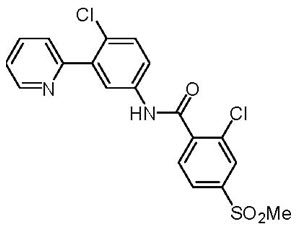
Vismodegib is a hedgehog (Hh) pathway inhibitor, which is described chemically as 2-Chloro-N-(4-chloro-3-(pyridin-2-yl)phenyl)-4-(methylsulfonyl)benzamide. The molecular formula is C19H14Cl2N2O3S. The molecular weight is 421.3 g/mol and the structural formula is:
Vismodegib is a crystalline free base with a pKa (pyridinium cation) of 3.8, appearing as a white to tan powder. The solubility of vismodegib is pH dependent with 0.1 µg/mL at pH 7 and 0.99 mg/mL at pH 1. The partition coefficient (log P) is 2.7.
ERIVEDGE (vismodegib) for oral administration is supplied in capsules containing 150 mg vismodegib and the following inactive ingredients: microcrystalline cellulose, lactose monohydrate, sodium lauryl sulfate, povidone, sodium starch glycolate, talc, and magnesium stearate (non-bovine). The capsule shell contains gelatin, titanium dioxide, red iron oxide, and black iron oxide. The black printing ink contains shellac and black iron oxide.
8.4 Pediatric Use
The safety and effectiveness of ERIVEDGE have not been established in pediatric patients.
Premature fusion of the epiphyses [see Warnings and Precautions (5.3)] and precocious puberty have been reported in pediatric patients exposed to ERIVEDGE. In some cases, epiphyseal fusion progressed after drug discontinuation.
8.5 Geriatric Use
Clinical studies of ERIVEDGE did not include sufficient numbers of patients aged 65 and over to determine whether they respond differently from younger patients.
14 Clinical Studies
A single, international, single-arm, multi-center, open-label, 2-cohort trial [SHH4476g (NCT00833417)] was conducted in 104 patients with either metastatic basal cell carcinoma (mBCC) (n = 33) or locally advanced BCC (laBCC) (n = 71). Patients with laBCC were required to have lesions that had recurred after radiotherapy, unless radiotherapy was contraindicated or inappropriate (e.g. Gorlin syndrome; limitations because of location of tumor or cumulative prior radiotherapy dose), and where the lesions were either unresectable or surgical resection would result in substantial deformity. Patients were to receive ERIVEDGE 150 mg orally once daily until disease progression or unacceptable toxicity.
The major efficacy outcome measure was objective response rate (ORR) as assessed by an independent review facility (IRF). In the mBCC cohort, tumor response was assessed according to the Response Evaluation Criteria in Solid Tumors (RECIST) version 1.0. In the laBCC cohort, tumor response evaluation included measurement of externally assessable tumor (including scar) and assessment for ulceration in photographs, radiographic assessment of target lesions (if appropriate), and tumor biopsy. An objective response in laBCC required at least one of the following criteria and absence of any criterion for disease progression: (1) ≥ 30% reduction in lesion size [sum of the longest diameter (SLD)] from baseline in target lesions by radiographic assessment; (2) ≥ 30% reduction in SLD from baseline in externally visible dimension of target lesions; (3) complete resolution of ulceration in all target lesions. Complete response was defined as objective response (as defined above) with no residual BCC on sampling tumor biopsy. Disease progression was defined as any of the following: (1) ≥ 20% increase in the SLD from nadir in target lesions (either by radiography or by externally visible dimension); (2) new ulceration of target lesions persisting without evidence of healing for at least 2 weeks; (3) new lesions by radiographic assessment or physical examination; (4) progression of non-target lesions by RECIST.
Of the 104 patients enrolled, 96 patients were evaluable for ORR. Twenty-one percent of patients carried a diagnosis of Gorlin syndrome. The median age of the efficacy evaluable population was 62 years (46% were at least 65 years old), 61% male and 100% White. For the mBCC cohort (n = 33), 97% of patients had prior therapy including surgery (97%), radiotherapy (58%), and systemic therapies (30%). For the laBCC cohort (n = 63), 94% of patients had prior therapies including surgery (89%), radiotherapy (27%), and systemic/topical therapies (11%). The median duration of treatment was 10.2 months (range 0.7 to 18.7 months).
The efficacy results are presented in Table 2.
| mBCC (n = 33) |
laBCC (n = 63) |
|
|---|---|---|
|
IRF IRF = Independent Review Facility -Confirmed ORR, n (%)
|
10 (30.3) | 27 (42.9) |
| (95% CI) | (15.6, 48.2) | (30.5, 56.0) |
| Complete response For laBCC, complete response was defined as objective response with no residual BCC on sampling tumor biopsy.
|
0 (0.0) | 13 (20.6) |
| Partial response | 10 (30.3) | 14 (22.2) |
| Median Response Duration (months) | 7.6 | 7.6 |
| (95% CI CI = Confidence Interval )
|
(5.6, NE NE = Not estimable ) |
(5.7, 9.7) |
4 Contraindications
None.
6 Adverse Reactions
The following clinically significant adverse reactions are described elsewhere in the labeling:
- Embryo-Fetal Toxicity [see Warnings and Precautions (5.1)]
- Severe Cutaneous Adverse Reactions [see Warnings and Precautions (5.2)]
- Musculoskeletal Adverse Reactions [see Warnings and Precautions (5.3)]
- Premature Fusion of the Epiphyses [see Warnings and Precautions (5.4)]
8.7 Renal Impairment
No dose adjustment is required in patients with renal impairment [see Clinical Pharmacology (12.3)].
12.3 Pharmacokinetics
The pharmacokinetics of vismodegib were studied in healthy subjects and patients. Following daily oral dosing, the pharmacokinetics of vismodegib appear to be nonlinear with steady state achieved within 7 days. Increasing the dose from 150 mg to 540 mg (1 to 3.6 times the recommended dose) does not result in higher steady state plasma concentrations. Average plasma concentration of vismodegib at steady state (Css,avg) is ~23 µM following 150 mg once daily dose.
2.2 Recommended Dosage
The recommended dosage of ERIVEDGE is 150 mg taken orally once daily, with or without food, until disease progression or until unacceptable toxicity.
Swallow capsules whole. Do not open or crush capsules.
If a dose of ERIVEDGE is missed, resume dosing with the next scheduled dose.
8.6 Hepatic Impairment
No dose adjustment is required in patients with hepatic impairment [see Clinical Pharmacology (12.3)].
1 Indications and Usage
ERIVEDGE is indicated for the treatment of adults with metastatic basal cell carcinoma, or with locally advanced basal cell carcinoma that has recurred following surgery or who are not candidates for surgery and who are not candidates for radiation.
12.1 Mechanism of Action
Vismodegib is an inhibitor of the Hedgehog pathway. Vismodegib binds to and inhibits Smoothened, a transmembrane protein involved in Hedgehog signal transduction.
5.1 Embryo Fetal Toxicity
Based on its mechanism of action, ERIVEDGE can cause embryo-fetal death or severe birth defects when administered to a pregnant woman. In animal reproduction studies, vismodegib was embryotoxic, fetotoxic, and teratogenic at maternal exposures lower than the human exposures at the recommended dose of 150 mg once daily [see Use in Specific Populations (8.1)].
5 Warnings and Precautions
2 Dosage and Administration
The recommended dosage is 150 mg orally once daily. (2)
3 Dosage Forms and Strengths
Capsules: 150 mg with "150 mg" printed on pink opaque body and "VISMO" printed on grey opaque cap in black ink.
6.2 Postmarketing Experience
The following adverse reactions have been identified during post-approval use of ERIVEDGE. Because these reactions are reported voluntarily from a population of uncertain size, it is not always possible to reliably estimate their frequency or establish a causal relationship to drug exposure.
Hepatobiliary disorders: Drug-induced liver injury
Skin and subcutaneous tissue disorders: Stevens-Johnson syndrome/toxic epidermal necrolysis, drug reaction with eosinophilia and systemic symptoms [see Warnings and Precautions (5.2)].
8 Use in Specific Populations
6.1 Clinical Trials Experience
Because clinical trials are conducted under widely varying conditions, adverse reaction rates observed in the clinical trials of a drug cannot be directly compared to rates in the clinical trials of another drug and may not reflect the rates observed in clinical practice.
The safety data described below reflect exposure to ERIVEDGE in 138 patients with advanced basal cell carcinoma (BCC) who received ERIVEDGE at doses ≥ 150 mg orally daily in four open-label, uncontrolled, dose-ranging or fixed single dose clinical trials [Study SHH3925g, SHH4437g, SHH4476g and SHH4610g]. The median age of these patients was 61 years (range 21 to 101 years), 100% were White (including Hispanics), and 64% were male. The median duration of treatment was approximately 10 months (range 21 days to 36 months); 111 patients received ERIVEDGE for 6 months or longer.
The most common adverse reactions (≥ 10%) were muscle spasms, alopecia, dysgeusia, weight loss, fatigue, nausea, diarrhea, decreased appetite, constipation, arthralgias, vomiting, and ageusia (Table 1).
| Adverse Reaction | ERIVEDGE (N = 138) |
||
|---|---|---|---|
| All Grades Grading according to National Cancer Institute-Common Terminology Criteria for Adverse Events version 3.0. (%) |
Grade 3 (%) | Grade 4 (%) | |
| Gastrointestinal | |||
| Nausea | 30% | 0.7% | - |
| Diarrhea | 29% | 0.7% | - |
| Constipation | 21% | - | - |
| Vomiting | 14% | - | - |
| General | |||
| Fatigue | 40% | 5% | 0.7% |
| Investigations | |||
| Weight loss | 45% | 7% | - |
| Metabolism and nutrition | |||
| Decreased appetite | 25% | 2.2% | - |
| Musculoskeletal and connective tissue | |||
| Muscle spasms | 72% | 3.6% | - |
| Arthralgias | 16% | 0.7% | |
| Nervous system | |||
| Dysgeusia | 55% | - | - |
| Ageusia | 11% | - | - |
| Skin and subcutaneous tissue | |||
| Alopecia | 64% | - | - |
Warning: Embryo Fetal Toxicity
- ERIVEDGE can cause embryo-fetal death or severe birth defects when administered to a pregnant woman. ERIVEDGE is embryotoxic, fetotoxic, and teratogenic in animals. Teratogenic effects included severe midline defects, missing digits, and other irreversible malformations [see Warnings and Precautions (5.1), Use in Specific Populations (8.1)].
- Verify the pregnancy status of females of reproductive potential within 7 days prior to initiating ERIVEDGE. Advise pregnant women of the potential risks to a fetus. Advise females of reproductive potential to use effective contraception during and after ERIVEDGE [see Dosage and Administration (2.1), Warnings and Precautions (5.1), Use in Specific Populations (8.1, 8.3)].
- Advise males of the potential risk of ERIVEDGE exposure through semen and to use condoms with a pregnant partner or a female partner of reproductive potential [see Warnings and Precautions (5.1), Use in Specific Populations (8.3)].
2.1 Important Safety Information
Verify pregnancy status of females of reproductive potential within 7 days prior to initiating ERIVEDGE [see Use in Specific Populations (8.1, 8.3)].
17 Patient Counseling Information
Advise the patient to read the FDA-approved patient labeling (Medication Guide).
16 How Supplied/storage and Handling
ERIVEDGE capsules have a pink opaque body and a grey opaque cap with "150 mg" printed on the capsule body and "VISMO" printed on the capsule cap in black ink.
ERIVEDGE capsules are available in bottles of 28 capsules (NDC 50242-140-01).
5.3 Musculoskeletal Adverse Reactions
Musculoskeletal adverse reactions, which may be accompanied by serum creatine phosphokinase (CPK) elevations, have occurred with ERIVEDGE and other drugs which inhibit the hedgehog (Hh) pathway. In the pooled safety population in clinical trials of ERIVEDGE, musculoskeletal and connective tissue adverse reactions occurred in 78% of patients treated, with 7% (9/138) reported as Grade 3. The most frequent manifestations of musculoskeletal and connective tissue adverse reactions (all grades) reported were muscle spasms (72%) and arthralgias (16%). In a post-approval clinical trial of 1232 patients, Grade 3 or 4 elevations in serum CPK laboratory values occurred in 2.4% of the 453 patients who had any CPK measurement [see Adverse Reactions (6.1)] .
Obtain baseline serum creatine phosphokinase (CPK) and creatinine levels and as clinically indicated (e.g., if muscle symptoms are reported). Depending on the severity of symptoms, temporary dose interruption or discontinuation may be required for musculoskeletal adverse reactions or serum CPK elevation [see Dosage and Administration (2.3)].
5.4 Premature Fusion of the Epiphyses
Premature fusion of the epiphyses has been reported in pediatric patients exposed to ERIVEDGE. In some cases, fusion progressed after drug discontinuation [see Use in Specific Populations (8.4)]. ERIVEDGE is not indicated for pediatric patients.
5.2 Severe Cutaneous Adverse Reactions
Severe cutaneous adverse reactions (SCARs), including Stevens-Johnson syndrome (SJS), toxic epidermal necrolysis (TEN) and drug reaction with eosinophilia and systemic symptoms (DRESS), which can be life-threatening or fatal, have been reported during treatment with ERIVEDGE [see Adverse Reactions (6.2)].
Permanently discontinue ERIVEDGE in patients with these reactions [see Dosage and Administration (2.3)].
13.2 Animal Toxicology And/or Pharmacology
Neurologic effects characterized as limb or body tremors or twitching were observed in rats administered oral vismodegib for 4 weeks or longer at ≥ 50 mg/kg/day (approximately ≥ 0.4 times the human exposure (AUC) at the 150 mg clinical dose). These observations resolved upon discontinuation of dosing and were not associated with microscopic findings.
2.3 Dosage Modifications for Adverse Reactions
Withhold ERIVEDGE for up to 8 weeks for intolerable adverse reactions until improvement or resolution. Treatment durations shorter than 8 weeks prior to interruptions have not been studied.
Permanently discontinue ERIVEDGE if patients experience severe cutaneous adverse reactions (SCARs) including Stevens-Johnson syndrome (SJS), toxic epidermal necrolysis (TEN), or drug reaction with eosinophilia and systemic symptoms (DRESS) [see Warnings and Precautions (5.2)].
Interrupt ERIVEDGE for severe or intolerable musculoskeletal adverse reactions. Permanently discontinue ERIVEDGE for recurrent, severe or intolerable musculoskeletal adverse reactions [see Warnings and Precautions (5.3)].
Principal Display Panel 150 Mg Capsule Bottle Carton
NDC 50242-140-01
Erivedge®
(vismodegib)
capsules
150 mg
Each capsule contains 150 mg
of vismodegib
Attention Pharmacist:
Dispense the accompanying
Medication Guide to each
patient.
28 capsules
Rx only
Genentech
10181780
13.1 Carcinogenesis, Mutagenesis, Impairment of Fertility
Carcinogenicity studies were performed in mice and rats. No carcinogenic potential was identified in either species. Vismodegib was not mutagenic in the in vitro bacterial reverse mutation (Ames) assay and was not clastogenic in the in vitro human chromosomal aberration assay in human peripheral blood lymphocytes or in the in vivo rat bone marrow micronucleus assay.
In a dedicated 26-week rat fertility study, no effects on male reproductive organs or fertility endpoints were observed at vismodegib doses of 100 mg/kg/day [approximately 1.3 times the human exposure (steady state AUC0-24hr) at the 150 mg clinical dose] either at the end of dosing or following a 16-week recovery phase. While there were increased numbers of degenerating germ cells and hypospermia in sexually immature dogs observed at ≥ 50 mg/kg/day in the 4-week general toxicity study, there were no effects on male reproductive organs in sexually mature rats and dogs, in the vismodegib general toxicity studies of up to 26-weeks.
In a female fertility study, treatment of rats with vismodegib at 100 mg/kg/day [approximately 1.2-times the human exposure (steady state AUC0-24hr) at the 150 mg clinical dose] for 26-weeks prior to mating resulted in decreased implantations, increased percent preimplantation loss, and decreased numbers of dams with viable embryos. No vismodegib-related changes in fertility were observed following a 16-week recovery period. In a 26-week general toxicity study in rats, decreased numbers of corpora lutea were observed at 100 mg/kg/day; the effect was not reversed by the end of an 8-week recovery period.
Structured Label Content
Section 42229-5 (42229-5)
Females of Reproductive Potential
Verify the pregnancy status of females of reproductive potential within 7 days prior to initiating ERIVEDGE. Advise pregnant women of the potential risk to a fetus. Advise females of reproductive potential to use effective contraception during therapy with ERIVEDGE and for 24 months after the final dose [see Use in Specific Populations (8.1, 8.3)].
Section 42231-1 (42231-1)
| This Medication Guide has been approved by the U.S. Food and Drug Administration. | Revised: March 2023 | |
|
MEDICATION GUIDE ERIVEDGE® (EH-rih-vej) (vismodegib) Capsule |
||
|
What is the most important information I should know about ERIVEDGE? ERIVEDGE can cause your baby to die before it is born (be stillborn) or cause your baby to have severe birth defects. For females who can become pregnant:
There is a Pregnancy Exposure Registry for females taking ERIVEDGE who become pregnant. The purpose of this registry is to monitor the health of you and your unborn baby. If you think that you or your female partner may have been exposed to ERIVEDGE during pregnancy, talk to your healthcare provider right away. If you become pregnant during treatment with ERIVEDGE, you or your healthcare provider should report your pregnancy to Genentech at 1-888-835-2555. |
||
|
What is ERIVEDGE?
ERIVEDGE is a prescription medicine used to treat adults with a type of skin cancer, called basal cell carcinoma, that has spread to other parts of the body, or that has come back after surgery or that your healthcare provider decides cannot be treated with surgery or radiation. It is not known if ERIVEDGE is safe and effective in children. |
||
Before taking ERIVEDGE, tell your healthcare provider about all of your medical conditions, including if you:
|
||
How should I take ERIVEDGE?
|
||
What should I avoid while taking ERIVEDGE?
|
||
|
What are the possible side effects of ERIVEDGE? ERIVEDGE can cause serious side effects, including:
|
||
|
|
|
|
||
|
||
|
||
|
|
|
| ERIVEDGE can cause absence of menstrual periods (amenorrhea) in females who are able to become pregnant. It is not known if amenorrhea is permanent. Talk to your healthcare provider if you have concerns about fertility. These are not all the possible side effects of ERIVEDGE. Call your doctor for medical advice about side effects. You may report side effects to FDA at 1-800-FDA-1088. You may also report side effects to Genentech, Inc. at 1-888-835-2555. |
||
How should I store ERIVEDGE?
|
||
|
General information about the safe and effective use of ERIVEDGE.
Medicines are sometimes prescribed for purposes other than those listed in a Medication Guide. Do not use ERIVEDGE for a condition for which it was not prescribed. Do not give ERIVEDGE to other people, even if they have the same symptoms that you have. It may harm them. You can ask your pharmacist or healthcare provider for information about ERIVEDGE that is written for health professionals. |
||
|
What are the ingredients in ERIVEDGE? Active ingredient: vismodegib Inactive ingredients: microcrystalline cellulose, lactose monohydrate, sodium lauryl sulfate, povidone, sodium starch glycolate, talc, and magnesium stearate (non-bovine). The capsule shell contains gelatin, titanium dioxide, red iron oxide, and black iron oxide. The black printing ink contains shellac and black iron oxide. Manufactured by: Patheon, Inc. Mississauga, Canada Distributed by: Genentech USA, Inc. A Member of the Roche Group 1 DNA Way South San Francisco, CA 94080-4990 ERIVEDGE is a registered trademark of Genentech, Inc. ©2023 Genentech, Inc. For more information, call 1-855-737-4833 or go to www.erivedge.com |
Section 43683-2 (43683-2)
Section 44425-7 (44425-7)
Store at room temperature 20°C to 25°C (68°F to 77°F); excursions permitted between 15°C to 30°C (59°F to 86°F) [see USP Controlled Room Temperature].
Keep the bottle tightly closed to protect from moisture.
8.2 Lactation
No data are available regarding the presence of vismodegib in human milk, the effects of the drug on the breastfed child, or the effects of the drug on milk production. Because of the potential for serious adverse reactions in breastfed infants from ERIVEDGE, advise women that breastfeeding is not recommended during therapy with ERIVEDGE and for 24 months after the final dose.
11 Description (11 DESCRIPTION)
Vismodegib is a hedgehog (Hh) pathway inhibitor, which is described chemically as 2-Chloro-N-(4-chloro-3-(pyridin-2-yl)phenyl)-4-(methylsulfonyl)benzamide. The molecular formula is C19H14Cl2N2O3S. The molecular weight is 421.3 g/mol and the structural formula is:
Vismodegib is a crystalline free base with a pKa (pyridinium cation) of 3.8, appearing as a white to tan powder. The solubility of vismodegib is pH dependent with 0.1 µg/mL at pH 7 and 0.99 mg/mL at pH 1. The partition coefficient (log P) is 2.7.
ERIVEDGE (vismodegib) for oral administration is supplied in capsules containing 150 mg vismodegib and the following inactive ingredients: microcrystalline cellulose, lactose monohydrate, sodium lauryl sulfate, povidone, sodium starch glycolate, talc, and magnesium stearate (non-bovine). The capsule shell contains gelatin, titanium dioxide, red iron oxide, and black iron oxide. The black printing ink contains shellac and black iron oxide.
8.4 Pediatric Use
The safety and effectiveness of ERIVEDGE have not been established in pediatric patients.
Premature fusion of the epiphyses [see Warnings and Precautions (5.3)] and precocious puberty have been reported in pediatric patients exposed to ERIVEDGE. In some cases, epiphyseal fusion progressed after drug discontinuation.
8.5 Geriatric Use
Clinical studies of ERIVEDGE did not include sufficient numbers of patients aged 65 and over to determine whether they respond differently from younger patients.
14 Clinical Studies (14 CLINICAL STUDIES)
A single, international, single-arm, multi-center, open-label, 2-cohort trial [SHH4476g (NCT00833417)] was conducted in 104 patients with either metastatic basal cell carcinoma (mBCC) (n = 33) or locally advanced BCC (laBCC) (n = 71). Patients with laBCC were required to have lesions that had recurred after radiotherapy, unless radiotherapy was contraindicated or inappropriate (e.g. Gorlin syndrome; limitations because of location of tumor or cumulative prior radiotherapy dose), and where the lesions were either unresectable or surgical resection would result in substantial deformity. Patients were to receive ERIVEDGE 150 mg orally once daily until disease progression or unacceptable toxicity.
The major efficacy outcome measure was objective response rate (ORR) as assessed by an independent review facility (IRF). In the mBCC cohort, tumor response was assessed according to the Response Evaluation Criteria in Solid Tumors (RECIST) version 1.0. In the laBCC cohort, tumor response evaluation included measurement of externally assessable tumor (including scar) and assessment for ulceration in photographs, radiographic assessment of target lesions (if appropriate), and tumor biopsy. An objective response in laBCC required at least one of the following criteria and absence of any criterion for disease progression: (1) ≥ 30% reduction in lesion size [sum of the longest diameter (SLD)] from baseline in target lesions by radiographic assessment; (2) ≥ 30% reduction in SLD from baseline in externally visible dimension of target lesions; (3) complete resolution of ulceration in all target lesions. Complete response was defined as objective response (as defined above) with no residual BCC on sampling tumor biopsy. Disease progression was defined as any of the following: (1) ≥ 20% increase in the SLD from nadir in target lesions (either by radiography or by externally visible dimension); (2) new ulceration of target lesions persisting without evidence of healing for at least 2 weeks; (3) new lesions by radiographic assessment or physical examination; (4) progression of non-target lesions by RECIST.
Of the 104 patients enrolled, 96 patients were evaluable for ORR. Twenty-one percent of patients carried a diagnosis of Gorlin syndrome. The median age of the efficacy evaluable population was 62 years (46% were at least 65 years old), 61% male and 100% White. For the mBCC cohort (n = 33), 97% of patients had prior therapy including surgery (97%), radiotherapy (58%), and systemic therapies (30%). For the laBCC cohort (n = 63), 94% of patients had prior therapies including surgery (89%), radiotherapy (27%), and systemic/topical therapies (11%). The median duration of treatment was 10.2 months (range 0.7 to 18.7 months).
The efficacy results are presented in Table 2.
| mBCC (n = 33) |
laBCC (n = 63) |
|
|---|---|---|
|
IRF IRF = Independent Review Facility -Confirmed ORR, n (%)
|
10 (30.3) | 27 (42.9) |
| (95% CI) | (15.6, 48.2) | (30.5, 56.0) |
| Complete response For laBCC, complete response was defined as objective response with no residual BCC on sampling tumor biopsy.
|
0 (0.0) | 13 (20.6) |
| Partial response | 10 (30.3) | 14 (22.2) |
| Median Response Duration (months) | 7.6 | 7.6 |
| (95% CI CI = Confidence Interval )
|
(5.6, NE NE = Not estimable ) |
(5.7, 9.7) |
4 Contraindications (4 CONTRAINDICATIONS)
None.
6 Adverse Reactions (6 ADVERSE REACTIONS)
The following clinically significant adverse reactions are described elsewhere in the labeling:
- Embryo-Fetal Toxicity [see Warnings and Precautions (5.1)]
- Severe Cutaneous Adverse Reactions [see Warnings and Precautions (5.2)]
- Musculoskeletal Adverse Reactions [see Warnings and Precautions (5.3)]
- Premature Fusion of the Epiphyses [see Warnings and Precautions (5.4)]
8.7 Renal Impairment
No dose adjustment is required in patients with renal impairment [see Clinical Pharmacology (12.3)].
12.3 Pharmacokinetics
The pharmacokinetics of vismodegib were studied in healthy subjects and patients. Following daily oral dosing, the pharmacokinetics of vismodegib appear to be nonlinear with steady state achieved within 7 days. Increasing the dose from 150 mg to 540 mg (1 to 3.6 times the recommended dose) does not result in higher steady state plasma concentrations. Average plasma concentration of vismodegib at steady state (Css,avg) is ~23 µM following 150 mg once daily dose.
2.2 Recommended Dosage
The recommended dosage of ERIVEDGE is 150 mg taken orally once daily, with or without food, until disease progression or until unacceptable toxicity.
Swallow capsules whole. Do not open or crush capsules.
If a dose of ERIVEDGE is missed, resume dosing with the next scheduled dose.
8.6 Hepatic Impairment
No dose adjustment is required in patients with hepatic impairment [see Clinical Pharmacology (12.3)].
1 Indications and Usage (1 INDICATIONS AND USAGE)
ERIVEDGE is indicated for the treatment of adults with metastatic basal cell carcinoma, or with locally advanced basal cell carcinoma that has recurred following surgery or who are not candidates for surgery and who are not candidates for radiation.
12.1 Mechanism of Action
Vismodegib is an inhibitor of the Hedgehog pathway. Vismodegib binds to and inhibits Smoothened, a transmembrane protein involved in Hedgehog signal transduction.
5.1 Embryo Fetal Toxicity (5.1 Embryo-Fetal Toxicity)
Based on its mechanism of action, ERIVEDGE can cause embryo-fetal death or severe birth defects when administered to a pregnant woman. In animal reproduction studies, vismodegib was embryotoxic, fetotoxic, and teratogenic at maternal exposures lower than the human exposures at the recommended dose of 150 mg once daily [see Use in Specific Populations (8.1)].
5 Warnings and Precautions (5 WARNINGS AND PRECAUTIONS)
2 Dosage and Administration (2 DOSAGE AND ADMINISTRATION)
The recommended dosage is 150 mg orally once daily. (2)
3 Dosage Forms and Strengths (3 DOSAGE FORMS AND STRENGTHS)
Capsules: 150 mg with "150 mg" printed on pink opaque body and "VISMO" printed on grey opaque cap in black ink.
6.2 Postmarketing Experience
The following adverse reactions have been identified during post-approval use of ERIVEDGE. Because these reactions are reported voluntarily from a population of uncertain size, it is not always possible to reliably estimate their frequency or establish a causal relationship to drug exposure.
Hepatobiliary disorders: Drug-induced liver injury
Skin and subcutaneous tissue disorders: Stevens-Johnson syndrome/toxic epidermal necrolysis, drug reaction with eosinophilia and systemic symptoms [see Warnings and Precautions (5.2)].
8 Use in Specific Populations (8 USE IN SPECIFIC POPULATIONS)
6.1 Clinical Trials Experience
Because clinical trials are conducted under widely varying conditions, adverse reaction rates observed in the clinical trials of a drug cannot be directly compared to rates in the clinical trials of another drug and may not reflect the rates observed in clinical practice.
The safety data described below reflect exposure to ERIVEDGE in 138 patients with advanced basal cell carcinoma (BCC) who received ERIVEDGE at doses ≥ 150 mg orally daily in four open-label, uncontrolled, dose-ranging or fixed single dose clinical trials [Study SHH3925g, SHH4437g, SHH4476g and SHH4610g]. The median age of these patients was 61 years (range 21 to 101 years), 100% were White (including Hispanics), and 64% were male. The median duration of treatment was approximately 10 months (range 21 days to 36 months); 111 patients received ERIVEDGE for 6 months or longer.
The most common adverse reactions (≥ 10%) were muscle spasms, alopecia, dysgeusia, weight loss, fatigue, nausea, diarrhea, decreased appetite, constipation, arthralgias, vomiting, and ageusia (Table 1).
| Adverse Reaction | ERIVEDGE (N = 138) |
||
|---|---|---|---|
| All Grades Grading according to National Cancer Institute-Common Terminology Criteria for Adverse Events version 3.0. (%) |
Grade 3 (%) | Grade 4 (%) | |
| Gastrointestinal | |||
| Nausea | 30% | 0.7% | - |
| Diarrhea | 29% | 0.7% | - |
| Constipation | 21% | - | - |
| Vomiting | 14% | - | - |
| General | |||
| Fatigue | 40% | 5% | 0.7% |
| Investigations | |||
| Weight loss | 45% | 7% | - |
| Metabolism and nutrition | |||
| Decreased appetite | 25% | 2.2% | - |
| Musculoskeletal and connective tissue | |||
| Muscle spasms | 72% | 3.6% | - |
| Arthralgias | 16% | 0.7% | |
| Nervous system | |||
| Dysgeusia | 55% | - | - |
| Ageusia | 11% | - | - |
| Skin and subcutaneous tissue | |||
| Alopecia | 64% | - | - |
Warning: Embryo Fetal Toxicity (WARNING: EMBRYO-FETAL TOXICITY)
- ERIVEDGE can cause embryo-fetal death or severe birth defects when administered to a pregnant woman. ERIVEDGE is embryotoxic, fetotoxic, and teratogenic in animals. Teratogenic effects included severe midline defects, missing digits, and other irreversible malformations [see Warnings and Precautions (5.1), Use in Specific Populations (8.1)].
- Verify the pregnancy status of females of reproductive potential within 7 days prior to initiating ERIVEDGE. Advise pregnant women of the potential risks to a fetus. Advise females of reproductive potential to use effective contraception during and after ERIVEDGE [see Dosage and Administration (2.1), Warnings and Precautions (5.1), Use in Specific Populations (8.1, 8.3)].
- Advise males of the potential risk of ERIVEDGE exposure through semen and to use condoms with a pregnant partner or a female partner of reproductive potential [see Warnings and Precautions (5.1), Use in Specific Populations (8.3)].
2.1 Important Safety Information
Verify pregnancy status of females of reproductive potential within 7 days prior to initiating ERIVEDGE [see Use in Specific Populations (8.1, 8.3)].
17 Patient Counseling Information (17 PATIENT COUNSELING INFORMATION)
Advise the patient to read the FDA-approved patient labeling (Medication Guide).
16 How Supplied/storage and Handling (16 HOW SUPPLIED/STORAGE AND HANDLING)
ERIVEDGE capsules have a pink opaque body and a grey opaque cap with "150 mg" printed on the capsule body and "VISMO" printed on the capsule cap in black ink.
ERIVEDGE capsules are available in bottles of 28 capsules (NDC 50242-140-01).
5.3 Musculoskeletal Adverse Reactions
Musculoskeletal adverse reactions, which may be accompanied by serum creatine phosphokinase (CPK) elevations, have occurred with ERIVEDGE and other drugs which inhibit the hedgehog (Hh) pathway. In the pooled safety population in clinical trials of ERIVEDGE, musculoskeletal and connective tissue adverse reactions occurred in 78% of patients treated, with 7% (9/138) reported as Grade 3. The most frequent manifestations of musculoskeletal and connective tissue adverse reactions (all grades) reported were muscle spasms (72%) and arthralgias (16%). In a post-approval clinical trial of 1232 patients, Grade 3 or 4 elevations in serum CPK laboratory values occurred in 2.4% of the 453 patients who had any CPK measurement [see Adverse Reactions (6.1)] .
Obtain baseline serum creatine phosphokinase (CPK) and creatinine levels and as clinically indicated (e.g., if muscle symptoms are reported). Depending on the severity of symptoms, temporary dose interruption or discontinuation may be required for musculoskeletal adverse reactions or serum CPK elevation [see Dosage and Administration (2.3)].
5.4 Premature Fusion of the Epiphyses
Premature fusion of the epiphyses has been reported in pediatric patients exposed to ERIVEDGE. In some cases, fusion progressed after drug discontinuation [see Use in Specific Populations (8.4)]. ERIVEDGE is not indicated for pediatric patients.
5.2 Severe Cutaneous Adverse Reactions
Severe cutaneous adverse reactions (SCARs), including Stevens-Johnson syndrome (SJS), toxic epidermal necrolysis (TEN) and drug reaction with eosinophilia and systemic symptoms (DRESS), which can be life-threatening or fatal, have been reported during treatment with ERIVEDGE [see Adverse Reactions (6.2)].
Permanently discontinue ERIVEDGE in patients with these reactions [see Dosage and Administration (2.3)].
13.2 Animal Toxicology And/or Pharmacology (13.2 Animal Toxicology and/or Pharmacology)
Neurologic effects characterized as limb or body tremors or twitching were observed in rats administered oral vismodegib for 4 weeks or longer at ≥ 50 mg/kg/day (approximately ≥ 0.4 times the human exposure (AUC) at the 150 mg clinical dose). These observations resolved upon discontinuation of dosing and were not associated with microscopic findings.
2.3 Dosage Modifications for Adverse Reactions
Withhold ERIVEDGE for up to 8 weeks for intolerable adverse reactions until improvement or resolution. Treatment durations shorter than 8 weeks prior to interruptions have not been studied.
Permanently discontinue ERIVEDGE if patients experience severe cutaneous adverse reactions (SCARs) including Stevens-Johnson syndrome (SJS), toxic epidermal necrolysis (TEN), or drug reaction with eosinophilia and systemic symptoms (DRESS) [see Warnings and Precautions (5.2)].
Interrupt ERIVEDGE for severe or intolerable musculoskeletal adverse reactions. Permanently discontinue ERIVEDGE for recurrent, severe or intolerable musculoskeletal adverse reactions [see Warnings and Precautions (5.3)].
Principal Display Panel 150 Mg Capsule Bottle Carton (PRINCIPAL DISPLAY PANEL - 150 mg Capsule Bottle Carton)
NDC 50242-140-01
Erivedge®
(vismodegib)
capsules
150 mg
Each capsule contains 150 mg
of vismodegib
Attention Pharmacist:
Dispense the accompanying
Medication Guide to each
patient.
28 capsules
Rx only
Genentech
10181780
13.1 Carcinogenesis, Mutagenesis, Impairment of Fertility
Carcinogenicity studies were performed in mice and rats. No carcinogenic potential was identified in either species. Vismodegib was not mutagenic in the in vitro bacterial reverse mutation (Ames) assay and was not clastogenic in the in vitro human chromosomal aberration assay in human peripheral blood lymphocytes or in the in vivo rat bone marrow micronucleus assay.
In a dedicated 26-week rat fertility study, no effects on male reproductive organs or fertility endpoints were observed at vismodegib doses of 100 mg/kg/day [approximately 1.3 times the human exposure (steady state AUC0-24hr) at the 150 mg clinical dose] either at the end of dosing or following a 16-week recovery phase. While there were increased numbers of degenerating germ cells and hypospermia in sexually immature dogs observed at ≥ 50 mg/kg/day in the 4-week general toxicity study, there were no effects on male reproductive organs in sexually mature rats and dogs, in the vismodegib general toxicity studies of up to 26-weeks.
In a female fertility study, treatment of rats with vismodegib at 100 mg/kg/day [approximately 1.2-times the human exposure (steady state AUC0-24hr) at the 150 mg clinical dose] for 26-weeks prior to mating resulted in decreased implantations, increased percent preimplantation loss, and decreased numbers of dams with viable embryos. No vismodegib-related changes in fertility were observed following a 16-week recovery period. In a 26-week general toxicity study in rats, decreased numbers of corpora lutea were observed at 100 mg/kg/day; the effect was not reversed by the end of an 8-week recovery period.
Advanced Ingredient Data
Raw Label Data
All Sections (JSON)
Additional Information
Back to search View SPL set listing Open on DailyMed ↗
Source: dailymed · Ingested: 2026-02-15T11:44:06.560971 · Updated: 2026-03-14T22:18:42.758225