Lynozyfic
e9fd0739-1b3f-4b8b-824a-1f0a902384d3
34391-3
HUMAN PRESCRIPTION DRUG LABEL
Drug Facts
Composition & Product
Identifiers & Packaging
Indications and Usage
LYNOZYFIC is indicated for the treatment of adult patients with relapsed or refractory multiple myeloma who have received at least four prior lines of therapy, including a proteasome inhibitor, an immunomodulatory agent, and an anti-CD38 monoclonal antibody. This indication is approved under accelerated approval based on response rate and durability of response [see Clinical Studies (14) ] . Continued approval for this indication may be contingent upon verification and description of clinical benefit in confirmatory trial(s).
Dosage and Administration
Premedicate to reduce the risk of CRS and infusion-related reactions (IRR). ( 2.1 , 2.3 ) Administer only as an intravenous infusion. ( 2.1 , 2.6 ) Recommended Dosage ( 2.2 ): Dosing Schedule Day Dose of LYNOZYFIC Step-Up Dosing Schedule Day 1 Step-up dose 1 5 mg Day 8 Step-up dose 2 25 mg Day 15 First treatment dose 200 mg Weekly Dosing Schedule One week after Day 15 treatment dose and once weekly from Week 4 to Week 13 for 10 treatment doses Second and subsequent treatment doses 200 mg Biweekly (Every 2 Weeks) Dosing Schedule Week 14 and every 2 weeks thereafter Subsequent treatment doses 200 mg Patients who have achieved and maintained VGPR or better at or after Week 24 and received at least 17 doses of 200 mg Every 4 Weeks Dosing Schedule At Week 24 or after and every 4 weeks thereafter Subsequent treatment doses 200 mg Patients should be hospitalized for 24 hours after administration of the first step-up dose and for 24 hours after administration of the second step-up dose. ( 2.1 ) See Full Prescribing Information for instructions on preparation and administration. ( 2.6 )
Contraindications
None.
Warnings and Precautions
Infections : Can cause serious or fatal infections. Monitor patients for signs or symptoms of infection and treat accordingly. ( 5.4 ) Neutropenia : Monitor complete blood cell counts at baseline and periodically during treatment. ( 5.5 ) Hepatotoxicity: Can cause hepatotoxicity. Monitor liver enzymes and bilirubin at baseline and during treatment as clinically indicated. ( 5.6 ) Embryo-Fetal Toxicity: May cause fetal harm. Advise females of reproductive potential of the potential risk to the fetus and to use effective contraception. ( 5.7 , 8.1 , 8.3 )
Adverse Reactions
The following clinically significant adverse reactions are described elsewhere in the labeling: Cytokine Release Syndrome [see Warnings and Precautions (5.1) ] Neurologic Toxicity, including Immune Effector Cell-Associated Neurotoxicity Syndrome [see Warnings and Precautions (5.2) ] Infections [see Warnings and Precautions (5.4) ] Neutropenia [see Warnings and Precautions (5.5) ] Hepatotoxicity [see Warnings and Precautions (5.6) ]
How Supplied
LYNOZYFIC (linvoseltamab-gcpt) injection is a clear to slightly opalescent, colorless to pale yellow solution in a single-dose vial. It is supplied as provided in Table 11. Table 11: Packaging Configurations Carton contents NDC One 5 mg/2.5 mL (2 mg/mL) single-dose vial 61755-054-01 One 200 mg/10 mL (20 mg/mL) single-dose vial 61755-056-01
Storage and Handling
LYNOZYFIC (linvoseltamab-gcpt) injection is a clear to slightly opalescent, colorless to pale yellow solution in a single-dose vial. It is supplied as provided in Table 11. Table 11: Packaging Configurations Carton contents NDC One 5 mg/2.5 mL (2 mg/mL) single-dose vial 61755-054-01 One 200 mg/10 mL (20 mg/mL) single-dose vial 61755-056-01
Description
Cytokine release syndrome (CRS), including serious or life-threatening reactions, can occur in patients receiving LYNOZYFIC. Initiate treatment with LYNOZYFIC step-up dosing to reduce the risk of CRS. Manage CRS, withhold LYNOZYFIC until CRS resolves, and modify the next dose or permanently discontinue based on severity [see Dosage and Administration (2.2 , 2.4 , 2.5) and Warnings and Precautions (5.1) ]. Neurologic toxicity, including immune effector cell-associated neurotoxicity syndrome (ICANS), including serious or life-threatening reactions, can occur in patients receiving LYNOZYFIC. Monitor patients for signs or symptoms of neurologic toxicity, including ICANS during treatment. Manage neurologic toxicity, including ICANS, withhold LYNOZYFIC until neurologic toxicity, including ICANS resolves, and modify the next dose or permanently discontinue based on severity [see Dosage and Administration (2.2 , 2.4 , 2.5) and Warnings and Precautions (5.2) ]. Because of the risk of CRS and neurologic toxicity, including ICANS, LYNOZYFIC is available only through a restricted program under a Risk Evaluation and Mitigation Strategy (REMS) called the LYNOZYFIC REMS [see Warnings and Precautions (5.3) ].
Medication Information
Warnings and Precautions
Infections : Can cause serious or fatal infections. Monitor patients for signs or symptoms of infection and treat accordingly. ( 5.4 ) Neutropenia : Monitor complete blood cell counts at baseline and periodically during treatment. ( 5.5 ) Hepatotoxicity: Can cause hepatotoxicity. Monitor liver enzymes and bilirubin at baseline and during treatment as clinically indicated. ( 5.6 ) Embryo-Fetal Toxicity: May cause fetal harm. Advise females of reproductive potential of the potential risk to the fetus and to use effective contraception. ( 5.7 , 8.1 , 8.3 )
Indications and Usage
LYNOZYFIC is indicated for the treatment of adult patients with relapsed or refractory multiple myeloma who have received at least four prior lines of therapy, including a proteasome inhibitor, an immunomodulatory agent, and an anti-CD38 monoclonal antibody. This indication is approved under accelerated approval based on response rate and durability of response [see Clinical Studies (14) ] . Continued approval for this indication may be contingent upon verification and description of clinical benefit in confirmatory trial(s).
Dosage and Administration
Premedicate to reduce the risk of CRS and infusion-related reactions (IRR). ( 2.1 , 2.3 ) Administer only as an intravenous infusion. ( 2.1 , 2.6 ) Recommended Dosage ( 2.2 ): Dosing Schedule Day Dose of LYNOZYFIC Step-Up Dosing Schedule Day 1 Step-up dose 1 5 mg Day 8 Step-up dose 2 25 mg Day 15 First treatment dose 200 mg Weekly Dosing Schedule One week after Day 15 treatment dose and once weekly from Week 4 to Week 13 for 10 treatment doses Second and subsequent treatment doses 200 mg Biweekly (Every 2 Weeks) Dosing Schedule Week 14 and every 2 weeks thereafter Subsequent treatment doses 200 mg Patients who have achieved and maintained VGPR or better at or after Week 24 and received at least 17 doses of 200 mg Every 4 Weeks Dosing Schedule At Week 24 or after and every 4 weeks thereafter Subsequent treatment doses 200 mg Patients should be hospitalized for 24 hours after administration of the first step-up dose and for 24 hours after administration of the second step-up dose. ( 2.1 ) See Full Prescribing Information for instructions on preparation and administration. ( 2.6 )
Contraindications
None.
Adverse Reactions
The following clinically significant adverse reactions are described elsewhere in the labeling: Cytokine Release Syndrome [see Warnings and Precautions (5.1) ] Neurologic Toxicity, including Immune Effector Cell-Associated Neurotoxicity Syndrome [see Warnings and Precautions (5.2) ] Infections [see Warnings and Precautions (5.4) ] Neutropenia [see Warnings and Precautions (5.5) ] Hepatotoxicity [see Warnings and Precautions (5.6) ]
Storage and Handling
LYNOZYFIC (linvoseltamab-gcpt) injection is a clear to slightly opalescent, colorless to pale yellow solution in a single-dose vial. It is supplied as provided in Table 11. Table 11: Packaging Configurations Carton contents NDC One 5 mg/2.5 mL (2 mg/mL) single-dose vial 61755-054-01 One 200 mg/10 mL (20 mg/mL) single-dose vial 61755-056-01
How Supplied
LYNOZYFIC (linvoseltamab-gcpt) injection is a clear to slightly opalescent, colorless to pale yellow solution in a single-dose vial. It is supplied as provided in Table 11. Table 11: Packaging Configurations Carton contents NDC One 5 mg/2.5 mL (2 mg/mL) single-dose vial 61755-054-01 One 200 mg/10 mL (20 mg/mL) single-dose vial 61755-056-01
Description
Cytokine release syndrome (CRS), including serious or life-threatening reactions, can occur in patients receiving LYNOZYFIC. Initiate treatment with LYNOZYFIC step-up dosing to reduce the risk of CRS. Manage CRS, withhold LYNOZYFIC until CRS resolves, and modify the next dose or permanently discontinue based on severity [see Dosage and Administration (2.2 , 2.4 , 2.5) and Warnings and Precautions (5.1) ]. Neurologic toxicity, including immune effector cell-associated neurotoxicity syndrome (ICANS), including serious or life-threatening reactions, can occur in patients receiving LYNOZYFIC. Monitor patients for signs or symptoms of neurologic toxicity, including ICANS during treatment. Manage neurologic toxicity, including ICANS, withhold LYNOZYFIC until neurologic toxicity, including ICANS resolves, and modify the next dose or permanently discontinue based on severity [see Dosage and Administration (2.2 , 2.4 , 2.5) and Warnings and Precautions (5.2) ]. Because of the risk of CRS and neurologic toxicity, including ICANS, LYNOZYFIC is available only through a restricted program under a Risk Evaluation and Mitigation Strategy (REMS) called the LYNOZYFIC REMS [see Warnings and Precautions (5.3) ].
Section 42229-5
Cytokine Release Syndrome
Identify CRS based on clinical presentation [see Warnings and Precautions (5.1)]. Evaluate and treat other causes of fever, hypoxia, and hypotension. If CRS is suspected, withhold LYNOZYFIC until CRS resolves. CRS should be managed according to the recommendations in Table 3 and per current practice guidelines. Supportive therapy for CRS should be administered, which may include intensive care for severe or life-threatening CRS.
| Grade Based on American Society for Transplantation and Cellular Therapy (ASTCT) criteria for grading CRS (2019).
|
Presenting Symptoms | Recommendations |
|---|---|---|
| Grade 1 | Fever ≥100.4ºF (38ºC) Attributed to CRS. Fever may not always be present concurrently with hypotension or hypoxia as it may be masked by interventions such as steroids, antipyretics, or anticytokine therapy.
|
|
| Grade 2 | Fever ≥100.4°F (38°C) with: Hypotension responsive to fluids and not requiring vasopressors and/or hypoxia requiring low-flow oxygen Low-flow oxygen defined as oxygen delivered at less than 6 L/minute: high-flow oxygen defined as oxygen delivered at greater than or equal to 6 L/minute. by nasal cannula or blow-by |
|
| Grade 3 | Fever ≥100.4°F (38°C) with: Hypotension requiring a vasopressor (with or without vasopressin) and/or hypoxia requiring high-flow oxygen by nasal cannula, face mask, non-rebreather mask, or Venturi mask. |
|
| Grade 4 | Fever ≥100.4°F (38°C) with: Hypotension requiring multiple vasopressors (excluding vasopressin) and/or hypoxia requiring oxygen by positive pressure (e.g., continuous positive airway pressure (CPAP), bilevel positive airway pressure (BiPAP), intubation, and mechanical ventilation). |
|
| Other | AST/ALT greater than 5 times ULN associated with CRS Grade 3 or less |
|
Section 42231-1
| MEDICATION GUIDE LYNOZYFIC™ (lin-oh-ZI-fik) (linvoseltamab-gcpt) injection, for intravenous use |
||
|---|---|---|
| This Medication Guide has been approved by the U.S. Food and Drug Administration. | Issued: July 2025 | |
|
What is the most important information I should know about LYNOZYFIC?
LYNOZYFIC may cause serious or life-threatening side effects, including:
|
||
|
|
|
|
||
|
|
|
| Due to the risk of CRS and neurologic problems, you will receive LYNOZYFIC on a "step-up dosing schedule" and should be hospitalized for 24 hours after the first and second "step-up" doses. | ||
|
||
If you have any questions about LYNOZYFIC, ask your healthcare provider. See "What are the possible side effects of LYNOZYFIC?" below for more information about side effects. |
||
|
What is LYNOZYFIC?
LYNOZYFIC is a prescription medicine used to treat adults with multiple myeloma who:
|
||
Before receiving LYNOZYFIC, tell your healthcare provider about all of your medical conditions, including if you:
|
||
|
How will I receive LYNOZYFIC? |
||
|
||
|
What should I avoid while receiving LYNOZYFIC?
Do not drive, or operate heavy or potentially dangerous machinery, or do other dangerous activities for 48 hours after completing each of your "step-up" doses or at any time during treatment with LYNOZYFIC if you develop new neurologic symptoms, until the symptoms go away. See "What is the most important information I should know about LYNOZYFIC?" for more information about signs and symptoms of neurologic problems. |
||
|
What are the possible side effects of LYNOZYFIC?
LYNOZYFIC may cause serious side effects, including:
|
||
|
|
|
|
||
|
|
|
| The most common side effects of LYNOZYFIC include: | ||
|
|
|
|
The most common severe abnormal blood test results with LYNOZYFIC include: low white blood cell counts and low red blood cell counts. These are not all of the possible side effects of LYNOZYFIC. Call your doctor for medical advice about side effects. You may report side effects to FDA at 1-800-FDA-1088. |
||
|
General information about safe and effective use of LYNOZYFIC
Medicines are sometimes prescribed for purposes other than those listed in a Medication Guide. You can ask your pharmacist or healthcare provider for information about LYNOZYFIC that is written for health professionals. |
||
|
What are the ingredients in LYNOZYFIC?
Active ingredient: linvoseltamab-gcpt Inactive ingredients: histidine, L-histidine hydrochloride monohydrate, polysorbate 80, sucrose, and Water for Injection. |
||
| Manufactured by: Regeneron Pharmaceuticals, Inc., Tarrytown, NY 10591 U.S. License No. 1760 For more information about LYNOZYFIC, go to www.LYNOZYFIC.com or call 1-844-746-4363. LYNOZYFIC is a trademark of Regeneron Pharmaceuticals, Inc. © 2025 Regeneron Pharmaceuticals, Inc. All rights reserved. |
Section 44425-7
Store unopened vial in a refrigerator at 2°C to 8°C (36°F to 46°F) in the original carton to protect from light. Do not freeze or shake.
11 Description
Linvoseltamab-gcpt, a bispecific B-cell maturation antigen (BCMA)-directed CD3 T-cell engager, is a recombinant human immunoglobulin (Ig)G4 antibody. Linvoseltamab-gcpt is produced by recombinant DNA technology in Chinese hamster ovary (CHO) cell suspension culture. The molecular weight of linvoseltamab-gcpt is approximately 146 kDa.
LYNOZYFIC (linvoseltamab-gcpt) injection for intravenous use is a sterile, preservative-free, clear to slightly opalescent, colorless to pale yellow solution with a pH 6.0.
Each LYNOZYFIC 5 mg/2.5 mL vial contains 5 mg of linvoseltamab-gcpt. Each mL contains 2 mg of linvoseltamab-gcpt, histidine (0.7 mg), L-histidine hydrochloride monohydrate (1.1 mg), polysorbate 80 (1 mg), sucrose (100 mg), and Water for Injection, USP.
Each LYNOZYFIC 200 mg/10 mL vial contains 200 mg of linvoseltamab-gcpt. Each mL contains 20 mg of linvoseltamab-gcpt, histidine (0.7 mg), L-histidine hydrochloride monohydrate (1.1 mg), polysorbate 80 (1 mg), sucrose (100 mg), and Water for Injection, USP.
5.4 Infections
LYNOZYFIC can cause serious, life-threatening, or fatal infections.
In patients who received LYNOZYFIC at the recommended dose in LINKER-MM1, serious infections, including opportunistic infections, occurred in 42% of patients, with Grade 3 or 4 infections in 38% and fatal infections in 4% [see Adverse Reactions (6.1)]. The most common serious infection reported (≥10%) were pneumonia and sepsis. Two cases of progressive multifocal leukoencephalopathy (PML) occurred in patients receiving LYNOZYFIC.
Monitor patients for signs and symptoms of infection and immunoglobulin levels prior to and during treatment with LYNOZYFIC and treat appropriately. Administer prophylactic antimicrobials, antibiotics, antifungals, antivirals, vaccines, and subcutaneous or intravenous immunoglobulin (IVIG) according to guidelines, including prophylaxis for PJP and herpesviruses [see Dosage and Administration (2.3)].
Withhold LYNOZYFIC or consider permanent discontinuation of LYNOZYFIC based on severity of the infection [see Dosage and Administration (2.5)].
5.5 Neutropenia
LYNOZYFIC can cause neutropenia and febrile neutropenia.
In patients who received LYNOZYFIC at the recommended dose in LINKER-MM1, decreased neutrophil count occurred in 62% of patients with Grade 3 or 4 decreased neutrophil count in 47%. Febrile neutropenia occurred in 8% of patients [see Adverse Reactions (6.1)].
Monitor complete blood cell counts at baseline and periodically during treatment and provide supportive care per local guidelines. Monitor patients with neutropenia for signs of infection. Withhold LYNOZYFIC based on severity [see Dosage and Administration (2.5)].
8.4 Pediatric Use
The safety and effectiveness of LYNOZYFIC have not been established in pediatric patients.
8.5 Geriatric Use
Of the 117 patients with relapsed or refractory multiple myeloma who received LYNOZYFIC, 42 (36%) of patients were 65 to 74 years of age and 31 (26%) were 75 years of age and older [see Clinical Studies (14)]. No overall differences in safety or effectiveness were observed in patients 65 years of age and older, including patients 75 years of age and older, when compared with younger patients.
5.3 Lynozyfic Rems
LYNOZYFIC is available only through a restricted program under a REMS called the LYNOZYFIC REMS because of the risks of CRS and neurologic toxicity, including ICANS [see Warnings and Precautions (5.1, 5.2)].
Notable requirements of the LYNOZYFIC REMS include the following:
- Prescribers must be certified with the program by enrolling and completing training.
- Prescribers must counsel patients receiving LYNOZYFIC about the risk of CRS and neurologic toxicity, including ICANS, and provide patients with LYNOZYFIC Patient Wallet Card.
- Pharmacies and healthcare settings that dispense LYNOZYFIC must be certified with the LYNOZYFIC REMS program and must verify prescribers are certified through the LYNOZYFIC REMS program.
- Wholesalers and distributors must only distribute LYNOZYFIC to certified pharmacies or healthcare settings.
Further information about the LYNOZYFIC REMS program is available at lynozyficREMS.com or by telephone at 1-855-212-6391.
5.6 Hepatotoxicity
LYNOZYFIC can cause hepatotoxicity.
In LINKER-MM1, elevated ALT occurred in 46% of patients, with Grade 3 or 4 ALT elevation occurring in 6%; elevated AST occurred in 61% of patients, with Grade 3 or 4 AST elevation occurring in 10% of patients who received the recommended dose. Grade 3 or 4 total bilirubin elevations occurred in 1.7% of patients [see Adverse Reactions (6.1)]. Liver enzyme elevation can occur with or without concurrent CRS.
Monitor liver enzymes and bilirubin at baseline and during treatment as clinically indicated. Withhold LYNOZYFIC or consider permanent discontinuation of LYNOZYFIC based on severity [see Dosage and Administration (2.5)].
12.6 Immunogenicity
The observed incidence of anti-drug antibodies is highly dependent on the sensitivity and specificity of the assay. Differences in assay methods preclude meaningful comparisons of the incidence of anti-drug antibodies in the study described below with the incidence of anti-drug antibodies in other studies, including those of linvoseltamab-gcpt.
During treatment in LINKER-MM1 (evaluated through 30 months) [see Clinical Studies (14)], 1% (2/192) of LYNOZYFIC-treated patients developed anti-linvoseltamab-gcpt antibodies. Because of the low occurrence of anti-drug antibodies, the effect of these antibodies on the pharmacokinetics, pharmacodynamics, safety, and/or effectiveness of linvoseltamab products is unknown.
4 Contraindications
None.
6 Adverse Reactions
The following clinically significant adverse reactions are described elsewhere in the labeling:
- Cytokine Release Syndrome [see Warnings and Precautions (5.1)]
- Neurologic Toxicity, including Immune Effector Cell-Associated Neurotoxicity Syndrome [see Warnings and Precautions (5.2)]
- Infections [see Warnings and Precautions (5.4)]
- Neutropenia [see Warnings and Precautions (5.5)]
- Hepatotoxicity [see Warnings and Precautions (5.6)]
12.2 Pharmacodynamics
The 200 mg once weekly dosing regimen was associated with better objective response rate and complete response rate when compared to the 50 mg once weekly (0.25 times the recommended dosage) dosing regimen in patients with relapsed or refractory multiple myeloma.
Linvoseltamab-gcpt exposure-response relationships have not been fully characterized.
12.3 Pharmacokinetics
Pharmacokinetic (PK) parameters were evaluated at the recommended dosage in patients with relapsed or refractory multiple myeloma and are presented as geometric mean (CV%) unless otherwise specified.
Linvoseltamab-gcpt PK exposures following use of the recommended dosing schedule are presented in Table 9. Linvoseltamab-gcpt Ctrough increased more than proportionally over a dose range of 96 mg to 800 mg (0.48 to 4 times the recommended full dose). Linvoseltamab-gcpt maximum concentration (127 mg/L [51%]) is achieved after the first dose of the every-2-weeks dosing regimen (i.e., the 12th dose of 200 mg).
| Dosing Period | Cmax (mg/L) | Ctrough (mg/L) | Cavg (mg /L) |
|---|---|---|---|
| First 200 mg weekly dose | 52.7 (37.2) | 15.5 (64.8) | 27.4 (34.2) |
| End of 200 mg weekly dosing (11th dose of 200 mg) | 124 (50.4) | 61.8 (123) | 84.6 (74.6) |
| End of 200 mg every 2 weeks dosing (16th dose of 200 mg) | 97.9 (52.7) | 30.2 (213) | 51.9 (95.3) |
| Steady state Steady state values are approximated at Week 28. with 200 mg every 4 weeks dosing |
64.8 (45.1) | 6.3 (362) | 20.5 (84.6) |
2.2 Recommended Dosage
The recommended dosage for LYNOZYFIC is presented in Table 1. In patients who experience CRS, ICANS, or neurologic adverse reactions, refer to Tables 3, 4, and 5, respectively, for recommendations regarding administration of the next LYNOZYFIC dose. Continue treatment until disease progression or unacceptable toxicity. The recommended dosing schedule for LYNOZYFIC is provided in Table 1. The recommended dosage of LYNOZYFIC is step-up doses of 5 mg, 25 mg, and 200 mg, followed by 200 mg weekly for 10 doses, followed by 200 mg biweekly (every 2 weeks). In patients who have achieved and maintained VGPR or better at or after Week 24 and received at least 17 doses of 200 mg, decrease the dosing frequency to 200 mg every 4 weeks.
| Dosing Schedule | Day Weekly doses should be at least 5 days apart. Biweekly doses should be at least 10 days apart. Every 4-week doses should be at least 24 days apart.
|
LYNOZYFIC Dose | Duration of Infusion | |
|---|---|---|---|---|
| Step-up Dosing Schedule | Day 1 | Step-up dose 1 | 5 mg | 4 hours |
| Day 8 | Step-up dose 2 | 25 mg | ||
| Day 15 | First treatment dose | 200 mg | ||
| Weekly Dosing Schedule | One week after Day 15 treatment dose and once weekly from Week 4 to Week 13 for 10 treatment doses | Second and subsequent treatment doses | 200 mg | 1 hour for the second treatment dose, and 30 minutes for subsequent doses For patients who experienced CRS with the previous dose of LYNOZYFIC, the duration of infusion should be maintained at the duration of the previous infusion; reduce the duration of infusion sequentially in subsequent doses in patients who do not experience CRS (e.g., 4 hours, 1 hour, then 30 minutes).
|
| Biweekly (Every 2 Weeks) Dosing Schedule | Week 14 and every 2 weeks thereafter | Subsequent treatment doses | 200 mg | 30 minutes |
| Patients who have achieved and maintained VGPR or better at or after Week 24 and received at least 17 doses of 200 mg | ||||
| Every 4 Weeks Dosing Schedule | At Week 24 or after and every 4 weeks thereafter | 200 mg | 30 minutes |
1 Indications and Usage
LYNOZYFIC is indicated for the treatment of adult patients with relapsed or refractory multiple myeloma who have received at least four prior lines of therapy, including a proteasome inhibitor, an immunomodulatory agent, and an anti-CD38 monoclonal antibody.
This indication is approved under accelerated approval based on response rate and durability of response [see Clinical Studies (14)]. Continued approval for this indication may be contingent upon verification and description of clinical benefit in confirmatory trial(s).
12.1 Mechanism of Action
Linvoseltamab-gcpt is a bispecific T-cell engaging antibody that binds to the CD3 receptor expressed on the surface of T-cells and B-cell maturation antigen (BCMA) expressed on the surface of multiple myeloma cells and some healthy B-lineage cells.
In vitro, linvoseltamab-gcpt activated T-cells, caused the release of various proinflammatory cytokines, and resulted in the lysis of multiple myeloma cells. Linvoseltamab-gcpt had anti-tumor activity in mouse models of multiple myeloma.
5.7 Embryo Fetal Toxicity
Based on its mechanism of action, LYNOZYFIC may cause fetal harm when administered to a pregnant woman. Advise pregnant women of the potential risk to the fetus. Advise females of reproductive potential to use effective contraception during treatment with LYNOZYFIC and for 3 months after the last dose [see Use in Specific Populations (8.1, 8.3)].
5 Warnings and Precautions
- Infections: Can cause serious or fatal infections. Monitor patients for signs or symptoms of infection and treat accordingly. (5.4)
- Neutropenia: Monitor complete blood cell counts at baseline and periodically during treatment. (5.5)
- Hepatotoxicity: Can cause hepatotoxicity. Monitor liver enzymes and bilirubin at baseline and during treatment as clinically indicated. (5.6)
- Embryo-Fetal Toxicity: May cause fetal harm. Advise females of reproductive potential of the potential risk to the fetus and to use effective contraception. (5.7, 8.1, 8.3)
2 Dosage and Administration
- Premedicate to reduce the risk of CRS and infusion-related reactions (IRR). (2.1, 2.3)
- Administer only as an intravenous infusion. (2.1, 2.6)
- Recommended Dosage (2.2):
| Dosing Schedule | Day | Dose of LYNOZYFIC | |
|---|---|---|---|
| Step-Up Dosing Schedule | Day 1 | Step-up dose 1 | 5 mg |
| Day 8 | Step-up dose 2 | 25 mg | |
| Day 15 | First treatment dose | 200 mg | |
| Weekly Dosing Schedule | One week after Day 15 treatment dose and once weekly from Week 4 to Week 13 for 10 treatment doses | Second and subsequent treatment doses | 200 mg |
| Biweekly (Every 2 Weeks) Dosing Schedule | Week 14 and every 2 weeks thereafter | Subsequent treatment doses | 200 mg |
| Patients who have achieved and maintained VGPR or better at or after Week 24 and received at least 17 doses of 200 mg | |||
| Every 4 Weeks Dosing Schedule | At Week 24 or after and every 4 weeks thereafter | Subsequent treatment doses | 200 mg |
3 Dosage Forms and Strengths
LYNOZYFIC is a clear to slightly opalescent, colorless to pale yellow solution, available as:
- Injection: 5 mg/2.5 mL (2 mg/mL) single-dose vial
- Injection: 200 mg/10 mL (20 mg/mL) single-dose vial
8 Use in Specific Populations
Lactation: Advise not to breastfeed. (8.2)
6.1 Clinical Trials Experience
Because clinical trials are conducted under widely varying conditions, adverse reaction rates observed in the clinical trials of a drug cannot be directly compared to rates in the clinical trials of another drug and may not reflect the rates observed in practice.
17 Patient Counseling Information
Advise the patient to read the FDA-approved patient labeling (Medication Guide).
2.5 Management of Adverse Reactions
Table 3 describes the management of CRS. Table 4 describes the management of ICANS. Table 5 describes the management of other adverse reactions.
5.1 Cytokine Release Syndrome (crs)
LYNOZYFIC can cause cytokine release syndrome (CRS), which can be serious or life-threatening.
In LINKER-MM1, CRS occurred in 46% (54/117) of patients who received LYNOZYFIC at the recommended dose, with Grade 1 CRS occurring in 35% (41/117) of patients, Grade 2 in 10% (12/117), and Grade 3 in 0.9% (1/117) [see Adverse Reactions (6.1)]. Thirty-eight percent (45/117) of patients had CRS following step-up dose 1, including 1 patient who experienced Grade 3 CRS; 8% (9/117) had an initial CRS event following a subsequent dose. Seventeen percent (19/113) of patients developed CRS after step-up dose 2, 10% (11/111) developed CRS after the first full 200 mg dose of LYNOZYFIC, and 3.6% (4/110) developed CRS after the second full dose. Recurrent CRS occurred in 20% (23/117) of patients. The median time to onset of CRS from the end of infusion was 11 (range: -1 to 184) hours after the most recent dose with a median duration of 15 (range: 1 to 76) hours.
Clinical signs and symptoms of CRS included, but were not limited to pyrexia, chills, hypoxia, tachycardia, and hypotension.
Administer pretreatment medications and initiate therapy according to LYNOZYFIC step-up dosing to reduce the incidence and severity of CRS [see Dosage and Administration (2.2) and Dosage and Administration (2.3)].
Monitor patients for signs and symptoms of CRS after infusion. Counsel patients to seek immediate medical attention should signs or symptoms of CRS occur.
At the first sign of CRS, immediately evaluate patients for hospitalization, manage per current practice guidelines, and administer supportive care; withhold LYNOZYFIC until CRS resolves and modify the next dose or permanently discontinue LYNOZYFIC based on severity [see Dosage and Administration (2.5)].
16 How Supplied/storage and Handling
LYNOZYFIC (linvoseltamab-gcpt) injection is a clear to slightly opalescent, colorless to pale yellow solution in a single-dose vial. It is supplied as provided in Table 11.
| Carton contents | NDC |
|---|---|
| One 5 mg/2.5 mL (2 mg/mL) single-dose vial | 61755-054-01 |
| One 200 mg/10 mL (20 mg/mL) single-dose vial | 61755-056-01 |
2.3 Recommended Pretreatment Medications
Administer the following pre-treatment medications before each dose of the LYNOZYFIC step-up dosing schedule, which includes step-up dose 1, step-up dose 2, and the first treatment dose, the second treatment dose, and if indicated, subsequent treatment doses (see Tables 1, 2, and 3), to reduce the risk of CRS and/or IRR [see Warnings and Precautions (5.1)]:
- acetaminophen (or equivalent) 650 mg to 1,000 mg orally 30 to 60 minutes prior to infusion
- diphenhydramine (or equivalent) 25 mg orally or intravenously 30 to 60 minutes prior to infusion
- dexamethasone (or equivalent) intravenously 1 to 3 hours prior to infusion
- 40 mg dexamethasone (or equivalent) before step-up dose 1, step-up dose 2, and the first full treatment dose
- Once a treatment dose of LYNOZYFIC is tolerated without CRS and/or IRR with 40 mg dexamethasone (or equivalent), administer 10 mg dexamethasone (or equivalent) prior to the subsequent LYNOZYFIC treatment dose
Pre-treatment medications may be discontinued once a treatment dose of LYNOZYFIC is tolerated without CRS and/or IRR following pre-treatment with 10 mg dexamethasone (or equivalent), acetaminophen (or equivalent), and diphenhydramine (or equivalent) as described.
2.1 Important Administration Instructions
- Administer LYNOZYFIC intravenously according to the step-up schedule to reduce the incidence and severity of cytokine release syndrome (CRS) [see Dosage and Administration (2.2)].
- Administer only as an intravenous infusion after dilution in 0.9% Sodium Chloride Injection [see Dosage and Administration (2.6)].
- Administer pretreatment medications [see Dosage and Administration (2.3)].
- LYNOZYFIC should be administered by a healthcare provider with immediate access to emergency equipment and appropriate medical support to manage severe reactions such as cytokine release syndrome (CRS), infusion-related reactions (IRR), and neurologic toxicity, including ICANS [see Warnings and Precautions (5.1 and 5.2)].
- Due to the risk of CRS and neurologic toxicity, including ICANS, patients should be hospitalized for 24 hours after administration of the first step-up dose, and for 24 hours after administration of the second step-up dose.
2.4 Restarting Lynozyfic After Dosage Delay
Table 2 provides recommendations for restarting therapy after a dose delay. Refer to Table 3, Table 4, and Table 5 for recommendations about management of CRS, ICANS, or other adverse reactions.
| Last Dose Administered | Time since the last dose administered Consider benefit-risk of restarting LYNOZYFIC in patients who require a dose delay of more than 30 days.
|
Action for next dose. (For CRS/IRR or ICANS, refer to the dose modifications in Table 3, Table 4, and Table 5.) |
|---|---|---|
| NOTE: Administer pre-treatment medications prior to step-up dose 1, step-up dose 2, the first treatment dose, the second treatment dose, and if indicated, subsequent treatment doses [see Dosage and Administration (2.3)]. | ||
| 5 mg | 14 days or less | Administer 25 mg |
| Greater than 14 days | Restart step-up dosing from 5 mg | |
| 25 mg | 14 days or less | Administer 200 mg |
| Greater than 14 days and less than or equal to 28 days | Restart step-up dosing from 25 mg | |
| Greater than 28 days | Restart step-up dosing from 5 mg | |
| 200 mg | 49 days or less | Administer 200 mg |
| Greater than 49 days | Restart step-up dosing from 5 mg |
14.1 Relapsed Or Refractory Multiple Myeloma
The efficacy of LYNOZYFIC was evaluated in patients with relapsed or refractory multiple myeloma in an open-label, multi-center, multi-cohort study: LINKER-MM1 (NCT03761108). The study included patients who had previously received at least 3 prior therapies, including a proteasome inhibitor (PI), an immunomodulatory agent (IMiD), and an anti-CD38 antibody. The study included patients with Eastern Cooperative Oncology Group (ECOG) score of 0 or 1 and adequate baseline hematologic (absolute neutrophil count > 1 × 10⁹/L, platelet count > 50 × 109/L, hemoglobin level >8 g/dL), renal (CrCL > 30 mL/min), and hepatic (AST and ALT ≤ 2.5 × ULN, total bilirubin ≤ 1.5 × ULN, alkaline phosphatase ≤ 2.5 × ULN) function.
The study excluded patients with known multiple myeloma brain lesions or meningeal involvement, history of a neurodegenerative condition, history of seizure within 12 months prior to study enrollment, active infection, a history of an allogeneic or autologous stem cell transplantation within 12 weeks, prior BCMA-directed bispecific antibody therapy, prior bispecific T-cell engaging therapy, or prior BCMA CAR-T cell therapy.
Patients received a step-up dose of 5 mg on Day 1, 25 mg on Day 8, and the first treatment dose of 200 mg on Day 15 of LYNOZYFIC by intravenous infusion. Then, patients received 200 mg of LYNOZYFIC weekly from Week 4 to Week 13, followed by 200 mg every other week thereafter. After at least 24 weeks, the Phase 2 patients who achieved a very good partial response (VGPR) or greater received 200 mg of LYNOZYFIC every 4 weeks. Patients were treated until disease progression or unacceptable toxicity.
The efficacy population included 80 patients who had received at least four prior lines of therapy. The median age was 71 (range: 37 to 83) years with 30% of patients 75 years or older; 64% were male and 36% were female; 69% were White, 14% were Black or African American, 13% were Asian, and 2.5% were Hispanic/Latino.
The International Staging System (ISS) at study entry was Stage I in 39%, Stage II in 36%, and Stage III in 19%. High-risk cytogenetics (presence of del(17p), t(4;14) and t(14;16)) were present in 40% of patients. Eighteen percent of patients had extramedullary disease at baseline.
The median number of prior lines of therapy was 5 (range: 4 to 13); 83% of patients were refractory to the last line of therapy. Sixty-five percent of patients received prior stem cell transplantation. Seventy-nine percent of patients were triple-class refractory (refractory to a proteasome inhibitor, an immunomodulatory agent, and an anti-CD38 monoclonal antibody). Thirteen percent of patients were previously treated with a BCMA antibody-drug conjugate.
Efficacy was established based on objective response rate (ORR) as determined by blinded independent review committee (IRC), as measured using the International Myeloma Working Group (IMWG) criteria (see Table 10). The median time to first response was 0.95 months (range: 0.5 to 6 months). With a median follow-up of 11.3 months among responders, the estimated duration of response (DOR) rate was 89% (95% CI: 77, 95) at 9 months and 72% (95% CI: 54, 84) at 12 months.
| Efficacy Endpoints | LYNOZYFIC N=80 |
|---|---|
| CI=confidence interval; NE=not estimable | |
| Objective Response Rate (ORR) % (n) | 70% (56) |
| (95% CI) | (59,80) |
| Complete response (CR) or better, % (n) | 45% (36) |
| (95% CI) | (34,57) |
| Stringent complete response (sCR), % (n) | 39% (31) |
| Complete response (CR), % (n) | 6% (5) |
| Very good partial response (VGPR) % (n) | 19% (15) |
| Partial response (PR), % (n) | 6% (5) |
|
Duration of Response (DOR)
Based on Kaplan-Meier estimation.
|
|
| Median, months (95% CI) | NR (12, NE) |
8.3 Females and Males of Reproductive Potential
LYNOZYFIC may cause fetal harm when administered to a pregnant woman [see Use in Specific Populations (8.1)].
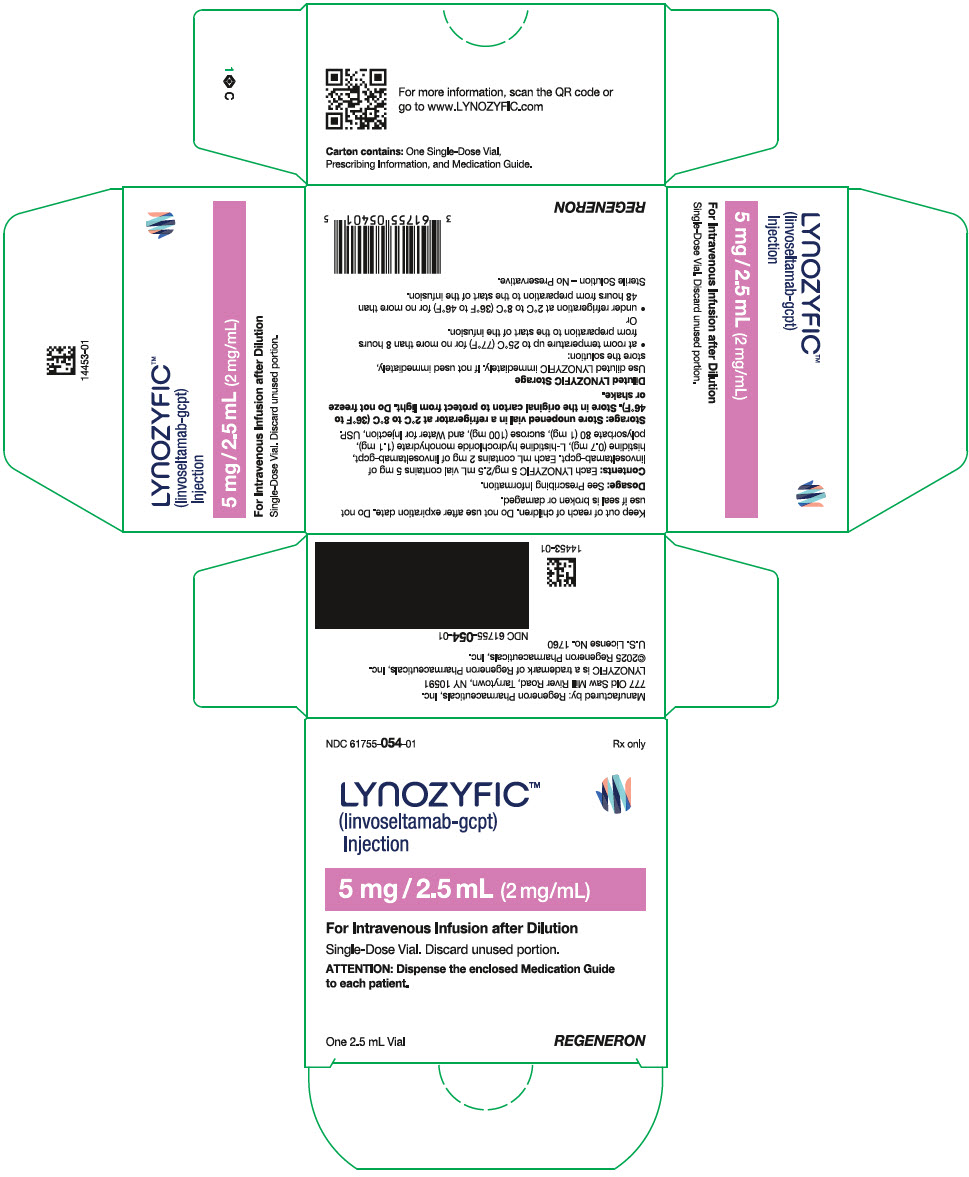
Principal Display Panel 5 Mg / 2.5 Ml Vial Carton
NDC 61755-054-01
Rx only
LYNOZYFIC™
(linvoseltamab-gcpt)
Injection
5 mg / 2.5 mL (2 mg/mL)
For Intravenous Infusion after Dilution
Single-Dose Vial. Discard unused portion.
ATTENTION: Dispense the enclosed Medication Guide
to each patient.
One 2.5 mL Vial
REGENERON
Principal Display Panel 200 Mg / 10 Ml Vial Carton
NDC 61755-056-01
Rx only
LYNOZYFIC™
(linvoseltamab-gcpt)
Injection
200 mg / 10 mL (20 mg/mL)
For Intravenous Infusion after Dilution
Single-Dose Vial. Discard unused portion.
ATTENTION: Dispense the enclosed Medication Guide
to each patient.
One 10 mL Vial
REGENERON
13.1 Carcinogenesis, Mutagenesis, Impairment of Fertility
No carcinogenicity or genotoxicity studies have been conducted with linvoseltamab-gcpt.
No animal studies have been performed to evaluate the effects of linvoseltamab-gcpt on fertility.
5.2 Neurologic Toxicity, Including Immune Effector Cell Associated Neurotoxicity Syndrome
LYNOZYFIC can cause serious or life-threatening neurologic toxicity, including immune effector cell-associated neurotoxicity syndrome (ICANS) [see Adverse Reactions (6.1)].
In LINKER-MM1, neurologic toxicity occurred in 54% of patients, with Grade 3 or 4 neurologic toxicity occurring in 8%, at the recommended dose [see Adverse Reactions (6.1)]. Neurologic toxicities included ICANS, depressed level of consciousness, encephalopathy, and toxic encephalopathy.
ICANS occurred in 8% of patients who received LYNOZYFIC with the recommended dosing regimen, including Grade 3 events in 2.6%. Most patients experienced ICANS following step-up dose 1 (5%). Two patients (1.8%) experienced initial ICANS following step-up dose 2 and one patient developed the first occurrence of ICANS following a subsequent full dose of LYNOZYFIC. Recurrent ICANS occurred in one patient. The median time to onset of ICANS was 1 (range: 1 to 4) day after the most recent dose with a median duration of 2 (range: 1 to 11) days. The onset of ICANS can be concurrent with CRS, following resolution of CRS, or in the absence of CRS.
The most common clinical signs and symptoms of ICANS are confusion, depressed level of consciousness, and lethargy. Monitor patients for signs and symptoms of neurologic toxicity during treatment. At the first sign of neurologic toxicity, including ICANS, immediately evaluate the patient; provide supportive therapy and consider further management per current practice guidelines. Withhold LYNOZYFIC until ICANS resolves and modify the next dose or permanently discontinue LYNOZYFIC based on severity [see Dosage and Administration (2.5)]. Counsel patients to seek immediate medical attention should signs or symptoms of neurologic toxicity occur at any time.
Due to the potential for neurologic toxicity, including ICANS, patients receiving LYNOZYFIC are at risk of confusion and depressed consciousness. Advise patients to refrain from driving, or operating heavy or potentially dangerous machinery, for 48 hours after completion of each of the step-up doses [see Dosage and Administration (2.2)] and in the event of new onset of any neurological symptoms, until symptoms resolve.
LYNOZYFIC is available only through a restricted program under a REMS [see Warnings and Precautions (5.3)].
Warning: Cytokine Release Syndrome and Neurologic Toxicity, Including Immune Effector Cell Associated Neurotoxicity Syndrome
- Cytokine release syndrome (CRS), including serious or life-threatening reactions, can occur in patients receiving LYNOZYFIC. Initiate treatment with LYNOZYFIC step-up dosing to reduce the risk of CRS. Manage CRS, withhold LYNOZYFIC until CRS resolves, and modify the next dose or permanently discontinue based on severity [see Dosage and Administration (2.2, 2.4, 2.5) and Warnings and Precautions (5.1)].
- Neurologic toxicity, including immune effector cell-associated neurotoxicity syndrome (ICANS), including serious or life-threatening reactions, can occur in patients receiving LYNOZYFIC. Monitor patients for signs or symptoms of neurologic toxicity, including ICANS during treatment. Manage neurologic toxicity, including ICANS, withhold LYNOZYFIC until neurologic toxicity, including ICANS resolves, and modify the next dose or permanently discontinue based on severity [see Dosage and Administration (2.2, 2.4, 2.5) and Warnings and Precautions (5.2)].
- Because of the risk of CRS and neurologic toxicity, including ICANS, LYNOZYFIC is available only through a restricted program under a Risk Evaluation and Mitigation Strategy (REMS) called the LYNOZYFIC REMS [see Warnings and Precautions (5.3)].
Structured Label Content
Section 42229-5 (42229-5)
Cytokine Release Syndrome
Identify CRS based on clinical presentation [see Warnings and Precautions (5.1)]. Evaluate and treat other causes of fever, hypoxia, and hypotension. If CRS is suspected, withhold LYNOZYFIC until CRS resolves. CRS should be managed according to the recommendations in Table 3 and per current practice guidelines. Supportive therapy for CRS should be administered, which may include intensive care for severe or life-threatening CRS.
| Grade Based on American Society for Transplantation and Cellular Therapy (ASTCT) criteria for grading CRS (2019).
|
Presenting Symptoms | Recommendations |
|---|---|---|
| Grade 1 | Fever ≥100.4ºF (38ºC) Attributed to CRS. Fever may not always be present concurrently with hypotension or hypoxia as it may be masked by interventions such as steroids, antipyretics, or anticytokine therapy.
|
|
| Grade 2 | Fever ≥100.4°F (38°C) with: Hypotension responsive to fluids and not requiring vasopressors and/or hypoxia requiring low-flow oxygen Low-flow oxygen defined as oxygen delivered at less than 6 L/minute: high-flow oxygen defined as oxygen delivered at greater than or equal to 6 L/minute. by nasal cannula or blow-by |
|
| Grade 3 | Fever ≥100.4°F (38°C) with: Hypotension requiring a vasopressor (with or without vasopressin) and/or hypoxia requiring high-flow oxygen by nasal cannula, face mask, non-rebreather mask, or Venturi mask. |
|
| Grade 4 | Fever ≥100.4°F (38°C) with: Hypotension requiring multiple vasopressors (excluding vasopressin) and/or hypoxia requiring oxygen by positive pressure (e.g., continuous positive airway pressure (CPAP), bilevel positive airway pressure (BiPAP), intubation, and mechanical ventilation). |
|
| Other | AST/ALT greater than 5 times ULN associated with CRS Grade 3 or less |
|
Section 42231-1 (42231-1)
| MEDICATION GUIDE LYNOZYFIC™ (lin-oh-ZI-fik) (linvoseltamab-gcpt) injection, for intravenous use |
||
|---|---|---|
| This Medication Guide has been approved by the U.S. Food and Drug Administration. | Issued: July 2025 | |
|
What is the most important information I should know about LYNOZYFIC?
LYNOZYFIC may cause serious or life-threatening side effects, including:
|
||
|
|
|
|
||
|
|
|
| Due to the risk of CRS and neurologic problems, you will receive LYNOZYFIC on a "step-up dosing schedule" and should be hospitalized for 24 hours after the first and second "step-up" doses. | ||
|
||
If you have any questions about LYNOZYFIC, ask your healthcare provider. See "What are the possible side effects of LYNOZYFIC?" below for more information about side effects. |
||
|
What is LYNOZYFIC?
LYNOZYFIC is a prescription medicine used to treat adults with multiple myeloma who:
|
||
Before receiving LYNOZYFIC, tell your healthcare provider about all of your medical conditions, including if you:
|
||
|
How will I receive LYNOZYFIC? |
||
|
||
|
What should I avoid while receiving LYNOZYFIC?
Do not drive, or operate heavy or potentially dangerous machinery, or do other dangerous activities for 48 hours after completing each of your "step-up" doses or at any time during treatment with LYNOZYFIC if you develop new neurologic symptoms, until the symptoms go away. See "What is the most important information I should know about LYNOZYFIC?" for more information about signs and symptoms of neurologic problems. |
||
|
What are the possible side effects of LYNOZYFIC?
LYNOZYFIC may cause serious side effects, including:
|
||
|
|
|
|
||
|
|
|
| The most common side effects of LYNOZYFIC include: | ||
|
|
|
|
The most common severe abnormal blood test results with LYNOZYFIC include: low white blood cell counts and low red blood cell counts. These are not all of the possible side effects of LYNOZYFIC. Call your doctor for medical advice about side effects. You may report side effects to FDA at 1-800-FDA-1088. |
||
|
General information about safe and effective use of LYNOZYFIC
Medicines are sometimes prescribed for purposes other than those listed in a Medication Guide. You can ask your pharmacist or healthcare provider for information about LYNOZYFIC that is written for health professionals. |
||
|
What are the ingredients in LYNOZYFIC?
Active ingredient: linvoseltamab-gcpt Inactive ingredients: histidine, L-histidine hydrochloride monohydrate, polysorbate 80, sucrose, and Water for Injection. |
||
| Manufactured by: Regeneron Pharmaceuticals, Inc., Tarrytown, NY 10591 U.S. License No. 1760 For more information about LYNOZYFIC, go to www.LYNOZYFIC.com or call 1-844-746-4363. LYNOZYFIC is a trademark of Regeneron Pharmaceuticals, Inc. © 2025 Regeneron Pharmaceuticals, Inc. All rights reserved. |
Section 44425-7 (44425-7)
Store unopened vial in a refrigerator at 2°C to 8°C (36°F to 46°F) in the original carton to protect from light. Do not freeze or shake.
11 Description (11 DESCRIPTION)
Linvoseltamab-gcpt, a bispecific B-cell maturation antigen (BCMA)-directed CD3 T-cell engager, is a recombinant human immunoglobulin (Ig)G4 antibody. Linvoseltamab-gcpt is produced by recombinant DNA technology in Chinese hamster ovary (CHO) cell suspension culture. The molecular weight of linvoseltamab-gcpt is approximately 146 kDa.
LYNOZYFIC (linvoseltamab-gcpt) injection for intravenous use is a sterile, preservative-free, clear to slightly opalescent, colorless to pale yellow solution with a pH 6.0.
Each LYNOZYFIC 5 mg/2.5 mL vial contains 5 mg of linvoseltamab-gcpt. Each mL contains 2 mg of linvoseltamab-gcpt, histidine (0.7 mg), L-histidine hydrochloride monohydrate (1.1 mg), polysorbate 80 (1 mg), sucrose (100 mg), and Water for Injection, USP.
Each LYNOZYFIC 200 mg/10 mL vial contains 200 mg of linvoseltamab-gcpt. Each mL contains 20 mg of linvoseltamab-gcpt, histidine (0.7 mg), L-histidine hydrochloride monohydrate (1.1 mg), polysorbate 80 (1 mg), sucrose (100 mg), and Water for Injection, USP.
5.4 Infections
LYNOZYFIC can cause serious, life-threatening, or fatal infections.
In patients who received LYNOZYFIC at the recommended dose in LINKER-MM1, serious infections, including opportunistic infections, occurred in 42% of patients, with Grade 3 or 4 infections in 38% and fatal infections in 4% [see Adverse Reactions (6.1)]. The most common serious infection reported (≥10%) were pneumonia and sepsis. Two cases of progressive multifocal leukoencephalopathy (PML) occurred in patients receiving LYNOZYFIC.
Monitor patients for signs and symptoms of infection and immunoglobulin levels prior to and during treatment with LYNOZYFIC and treat appropriately. Administer prophylactic antimicrobials, antibiotics, antifungals, antivirals, vaccines, and subcutaneous or intravenous immunoglobulin (IVIG) according to guidelines, including prophylaxis for PJP and herpesviruses [see Dosage and Administration (2.3)].
Withhold LYNOZYFIC or consider permanent discontinuation of LYNOZYFIC based on severity of the infection [see Dosage and Administration (2.5)].
5.5 Neutropenia
LYNOZYFIC can cause neutropenia and febrile neutropenia.
In patients who received LYNOZYFIC at the recommended dose in LINKER-MM1, decreased neutrophil count occurred in 62% of patients with Grade 3 or 4 decreased neutrophil count in 47%. Febrile neutropenia occurred in 8% of patients [see Adverse Reactions (6.1)].
Monitor complete blood cell counts at baseline and periodically during treatment and provide supportive care per local guidelines. Monitor patients with neutropenia for signs of infection. Withhold LYNOZYFIC based on severity [see Dosage and Administration (2.5)].
8.4 Pediatric Use
The safety and effectiveness of LYNOZYFIC have not been established in pediatric patients.
8.5 Geriatric Use
Of the 117 patients with relapsed or refractory multiple myeloma who received LYNOZYFIC, 42 (36%) of patients were 65 to 74 years of age and 31 (26%) were 75 years of age and older [see Clinical Studies (14)]. No overall differences in safety or effectiveness were observed in patients 65 years of age and older, including patients 75 years of age and older, when compared with younger patients.
5.3 Lynozyfic Rems (5.3 LYNOZYFIC REMS)
LYNOZYFIC is available only through a restricted program under a REMS called the LYNOZYFIC REMS because of the risks of CRS and neurologic toxicity, including ICANS [see Warnings and Precautions (5.1, 5.2)].
Notable requirements of the LYNOZYFIC REMS include the following:
- Prescribers must be certified with the program by enrolling and completing training.
- Prescribers must counsel patients receiving LYNOZYFIC about the risk of CRS and neurologic toxicity, including ICANS, and provide patients with LYNOZYFIC Patient Wallet Card.
- Pharmacies and healthcare settings that dispense LYNOZYFIC must be certified with the LYNOZYFIC REMS program and must verify prescribers are certified through the LYNOZYFIC REMS program.
- Wholesalers and distributors must only distribute LYNOZYFIC to certified pharmacies or healthcare settings.
Further information about the LYNOZYFIC REMS program is available at lynozyficREMS.com or by telephone at 1-855-212-6391.
5.6 Hepatotoxicity
LYNOZYFIC can cause hepatotoxicity.
In LINKER-MM1, elevated ALT occurred in 46% of patients, with Grade 3 or 4 ALT elevation occurring in 6%; elevated AST occurred in 61% of patients, with Grade 3 or 4 AST elevation occurring in 10% of patients who received the recommended dose. Grade 3 or 4 total bilirubin elevations occurred in 1.7% of patients [see Adverse Reactions (6.1)]. Liver enzyme elevation can occur with or without concurrent CRS.
Monitor liver enzymes and bilirubin at baseline and during treatment as clinically indicated. Withhold LYNOZYFIC or consider permanent discontinuation of LYNOZYFIC based on severity [see Dosage and Administration (2.5)].
12.6 Immunogenicity
The observed incidence of anti-drug antibodies is highly dependent on the sensitivity and specificity of the assay. Differences in assay methods preclude meaningful comparisons of the incidence of anti-drug antibodies in the study described below with the incidence of anti-drug antibodies in other studies, including those of linvoseltamab-gcpt.
During treatment in LINKER-MM1 (evaluated through 30 months) [see Clinical Studies (14)], 1% (2/192) of LYNOZYFIC-treated patients developed anti-linvoseltamab-gcpt antibodies. Because of the low occurrence of anti-drug antibodies, the effect of these antibodies on the pharmacokinetics, pharmacodynamics, safety, and/or effectiveness of linvoseltamab products is unknown.
4 Contraindications (4 CONTRAINDICATIONS)
None.
6 Adverse Reactions (6 ADVERSE REACTIONS)
The following clinically significant adverse reactions are described elsewhere in the labeling:
- Cytokine Release Syndrome [see Warnings and Precautions (5.1)]
- Neurologic Toxicity, including Immune Effector Cell-Associated Neurotoxicity Syndrome [see Warnings and Precautions (5.2)]
- Infections [see Warnings and Precautions (5.4)]
- Neutropenia [see Warnings and Precautions (5.5)]
- Hepatotoxicity [see Warnings and Precautions (5.6)]
12.2 Pharmacodynamics
The 200 mg once weekly dosing regimen was associated with better objective response rate and complete response rate when compared to the 50 mg once weekly (0.25 times the recommended dosage) dosing regimen in patients with relapsed or refractory multiple myeloma.
Linvoseltamab-gcpt exposure-response relationships have not been fully characterized.
12.3 Pharmacokinetics
Pharmacokinetic (PK) parameters were evaluated at the recommended dosage in patients with relapsed or refractory multiple myeloma and are presented as geometric mean (CV%) unless otherwise specified.
Linvoseltamab-gcpt PK exposures following use of the recommended dosing schedule are presented in Table 9. Linvoseltamab-gcpt Ctrough increased more than proportionally over a dose range of 96 mg to 800 mg (0.48 to 4 times the recommended full dose). Linvoseltamab-gcpt maximum concentration (127 mg/L [51%]) is achieved after the first dose of the every-2-weeks dosing regimen (i.e., the 12th dose of 200 mg).
| Dosing Period | Cmax (mg/L) | Ctrough (mg/L) | Cavg (mg /L) |
|---|---|---|---|
| First 200 mg weekly dose | 52.7 (37.2) | 15.5 (64.8) | 27.4 (34.2) |
| End of 200 mg weekly dosing (11th dose of 200 mg) | 124 (50.4) | 61.8 (123) | 84.6 (74.6) |
| End of 200 mg every 2 weeks dosing (16th dose of 200 mg) | 97.9 (52.7) | 30.2 (213) | 51.9 (95.3) |
| Steady state Steady state values are approximated at Week 28. with 200 mg every 4 weeks dosing |
64.8 (45.1) | 6.3 (362) | 20.5 (84.6) |
2.2 Recommended Dosage
The recommended dosage for LYNOZYFIC is presented in Table 1. In patients who experience CRS, ICANS, or neurologic adverse reactions, refer to Tables 3, 4, and 5, respectively, for recommendations regarding administration of the next LYNOZYFIC dose. Continue treatment until disease progression or unacceptable toxicity. The recommended dosing schedule for LYNOZYFIC is provided in Table 1. The recommended dosage of LYNOZYFIC is step-up doses of 5 mg, 25 mg, and 200 mg, followed by 200 mg weekly for 10 doses, followed by 200 mg biweekly (every 2 weeks). In patients who have achieved and maintained VGPR or better at or after Week 24 and received at least 17 doses of 200 mg, decrease the dosing frequency to 200 mg every 4 weeks.
| Dosing Schedule | Day Weekly doses should be at least 5 days apart. Biweekly doses should be at least 10 days apart. Every 4-week doses should be at least 24 days apart.
|
LYNOZYFIC Dose | Duration of Infusion | |
|---|---|---|---|---|
| Step-up Dosing Schedule | Day 1 | Step-up dose 1 | 5 mg | 4 hours |
| Day 8 | Step-up dose 2 | 25 mg | ||
| Day 15 | First treatment dose | 200 mg | ||
| Weekly Dosing Schedule | One week after Day 15 treatment dose and once weekly from Week 4 to Week 13 for 10 treatment doses | Second and subsequent treatment doses | 200 mg | 1 hour for the second treatment dose, and 30 minutes for subsequent doses For patients who experienced CRS with the previous dose of LYNOZYFIC, the duration of infusion should be maintained at the duration of the previous infusion; reduce the duration of infusion sequentially in subsequent doses in patients who do not experience CRS (e.g., 4 hours, 1 hour, then 30 minutes).
|
| Biweekly (Every 2 Weeks) Dosing Schedule | Week 14 and every 2 weeks thereafter | Subsequent treatment doses | 200 mg | 30 minutes |
| Patients who have achieved and maintained VGPR or better at or after Week 24 and received at least 17 doses of 200 mg | ||||
| Every 4 Weeks Dosing Schedule | At Week 24 or after and every 4 weeks thereafter | 200 mg | 30 minutes |
1 Indications and Usage (1 INDICATIONS AND USAGE)
LYNOZYFIC is indicated for the treatment of adult patients with relapsed or refractory multiple myeloma who have received at least four prior lines of therapy, including a proteasome inhibitor, an immunomodulatory agent, and an anti-CD38 monoclonal antibody.
This indication is approved under accelerated approval based on response rate and durability of response [see Clinical Studies (14)]. Continued approval for this indication may be contingent upon verification and description of clinical benefit in confirmatory trial(s).
12.1 Mechanism of Action
Linvoseltamab-gcpt is a bispecific T-cell engaging antibody that binds to the CD3 receptor expressed on the surface of T-cells and B-cell maturation antigen (BCMA) expressed on the surface of multiple myeloma cells and some healthy B-lineage cells.
In vitro, linvoseltamab-gcpt activated T-cells, caused the release of various proinflammatory cytokines, and resulted in the lysis of multiple myeloma cells. Linvoseltamab-gcpt had anti-tumor activity in mouse models of multiple myeloma.
5.7 Embryo Fetal Toxicity (5.7 Embryo-Fetal Toxicity)
Based on its mechanism of action, LYNOZYFIC may cause fetal harm when administered to a pregnant woman. Advise pregnant women of the potential risk to the fetus. Advise females of reproductive potential to use effective contraception during treatment with LYNOZYFIC and for 3 months after the last dose [see Use in Specific Populations (8.1, 8.3)].
5 Warnings and Precautions (5 WARNINGS AND PRECAUTIONS)
- Infections: Can cause serious or fatal infections. Monitor patients for signs or symptoms of infection and treat accordingly. (5.4)
- Neutropenia: Monitor complete blood cell counts at baseline and periodically during treatment. (5.5)
- Hepatotoxicity: Can cause hepatotoxicity. Monitor liver enzymes and bilirubin at baseline and during treatment as clinically indicated. (5.6)
- Embryo-Fetal Toxicity: May cause fetal harm. Advise females of reproductive potential of the potential risk to the fetus and to use effective contraception. (5.7, 8.1, 8.3)
2 Dosage and Administration (2 DOSAGE AND ADMINISTRATION)
- Premedicate to reduce the risk of CRS and infusion-related reactions (IRR). (2.1, 2.3)
- Administer only as an intravenous infusion. (2.1, 2.6)
- Recommended Dosage (2.2):
| Dosing Schedule | Day | Dose of LYNOZYFIC | |
|---|---|---|---|
| Step-Up Dosing Schedule | Day 1 | Step-up dose 1 | 5 mg |
| Day 8 | Step-up dose 2 | 25 mg | |
| Day 15 | First treatment dose | 200 mg | |
| Weekly Dosing Schedule | One week after Day 15 treatment dose and once weekly from Week 4 to Week 13 for 10 treatment doses | Second and subsequent treatment doses | 200 mg |
| Biweekly (Every 2 Weeks) Dosing Schedule | Week 14 and every 2 weeks thereafter | Subsequent treatment doses | 200 mg |
| Patients who have achieved and maintained VGPR or better at or after Week 24 and received at least 17 doses of 200 mg | |||
| Every 4 Weeks Dosing Schedule | At Week 24 or after and every 4 weeks thereafter | Subsequent treatment doses | 200 mg |
3 Dosage Forms and Strengths (3 DOSAGE FORMS AND STRENGTHS)
LYNOZYFIC is a clear to slightly opalescent, colorless to pale yellow solution, available as:
- Injection: 5 mg/2.5 mL (2 mg/mL) single-dose vial
- Injection: 200 mg/10 mL (20 mg/mL) single-dose vial
8 Use in Specific Populations (8 USE IN SPECIFIC POPULATIONS)
Lactation: Advise not to breastfeed. (8.2)
6.1 Clinical Trials Experience
Because clinical trials are conducted under widely varying conditions, adverse reaction rates observed in the clinical trials of a drug cannot be directly compared to rates in the clinical trials of another drug and may not reflect the rates observed in practice.
17 Patient Counseling Information (17 PATIENT COUNSELING INFORMATION)
Advise the patient to read the FDA-approved patient labeling (Medication Guide).
2.5 Management of Adverse Reactions
Table 3 describes the management of CRS. Table 4 describes the management of ICANS. Table 5 describes the management of other adverse reactions.
5.1 Cytokine Release Syndrome (crs) (5.1 Cytokine Release Syndrome (CRS))
LYNOZYFIC can cause cytokine release syndrome (CRS), which can be serious or life-threatening.
In LINKER-MM1, CRS occurred in 46% (54/117) of patients who received LYNOZYFIC at the recommended dose, with Grade 1 CRS occurring in 35% (41/117) of patients, Grade 2 in 10% (12/117), and Grade 3 in 0.9% (1/117) [see Adverse Reactions (6.1)]. Thirty-eight percent (45/117) of patients had CRS following step-up dose 1, including 1 patient who experienced Grade 3 CRS; 8% (9/117) had an initial CRS event following a subsequent dose. Seventeen percent (19/113) of patients developed CRS after step-up dose 2, 10% (11/111) developed CRS after the first full 200 mg dose of LYNOZYFIC, and 3.6% (4/110) developed CRS after the second full dose. Recurrent CRS occurred in 20% (23/117) of patients. The median time to onset of CRS from the end of infusion was 11 (range: -1 to 184) hours after the most recent dose with a median duration of 15 (range: 1 to 76) hours.
Clinical signs and symptoms of CRS included, but were not limited to pyrexia, chills, hypoxia, tachycardia, and hypotension.
Administer pretreatment medications and initiate therapy according to LYNOZYFIC step-up dosing to reduce the incidence and severity of CRS [see Dosage and Administration (2.2) and Dosage and Administration (2.3)].
Monitor patients for signs and symptoms of CRS after infusion. Counsel patients to seek immediate medical attention should signs or symptoms of CRS occur.
At the first sign of CRS, immediately evaluate patients for hospitalization, manage per current practice guidelines, and administer supportive care; withhold LYNOZYFIC until CRS resolves and modify the next dose or permanently discontinue LYNOZYFIC based on severity [see Dosage and Administration (2.5)].
16 How Supplied/storage and Handling (16 HOW SUPPLIED/STORAGE AND HANDLING)
LYNOZYFIC (linvoseltamab-gcpt) injection is a clear to slightly opalescent, colorless to pale yellow solution in a single-dose vial. It is supplied as provided in Table 11.
| Carton contents | NDC |
|---|---|
| One 5 mg/2.5 mL (2 mg/mL) single-dose vial | 61755-054-01 |
| One 200 mg/10 mL (20 mg/mL) single-dose vial | 61755-056-01 |
2.3 Recommended Pretreatment Medications
Administer the following pre-treatment medications before each dose of the LYNOZYFIC step-up dosing schedule, which includes step-up dose 1, step-up dose 2, and the first treatment dose, the second treatment dose, and if indicated, subsequent treatment doses (see Tables 1, 2, and 3), to reduce the risk of CRS and/or IRR [see Warnings and Precautions (5.1)]:
- acetaminophen (or equivalent) 650 mg to 1,000 mg orally 30 to 60 minutes prior to infusion
- diphenhydramine (or equivalent) 25 mg orally or intravenously 30 to 60 minutes prior to infusion
- dexamethasone (or equivalent) intravenously 1 to 3 hours prior to infusion
- 40 mg dexamethasone (or equivalent) before step-up dose 1, step-up dose 2, and the first full treatment dose
- Once a treatment dose of LYNOZYFIC is tolerated without CRS and/or IRR with 40 mg dexamethasone (or equivalent), administer 10 mg dexamethasone (or equivalent) prior to the subsequent LYNOZYFIC treatment dose
Pre-treatment medications may be discontinued once a treatment dose of LYNOZYFIC is tolerated without CRS and/or IRR following pre-treatment with 10 mg dexamethasone (or equivalent), acetaminophen (or equivalent), and diphenhydramine (or equivalent) as described.
2.1 Important Administration Instructions
- Administer LYNOZYFIC intravenously according to the step-up schedule to reduce the incidence and severity of cytokine release syndrome (CRS) [see Dosage and Administration (2.2)].
- Administer only as an intravenous infusion after dilution in 0.9% Sodium Chloride Injection [see Dosage and Administration (2.6)].
- Administer pretreatment medications [see Dosage and Administration (2.3)].
- LYNOZYFIC should be administered by a healthcare provider with immediate access to emergency equipment and appropriate medical support to manage severe reactions such as cytokine release syndrome (CRS), infusion-related reactions (IRR), and neurologic toxicity, including ICANS [see Warnings and Precautions (5.1 and 5.2)].
- Due to the risk of CRS and neurologic toxicity, including ICANS, patients should be hospitalized for 24 hours after administration of the first step-up dose, and for 24 hours after administration of the second step-up dose.
2.4 Restarting Lynozyfic After Dosage Delay (2.4 Restarting LYNOZYFIC After Dosage Delay)
Table 2 provides recommendations for restarting therapy after a dose delay. Refer to Table 3, Table 4, and Table 5 for recommendations about management of CRS, ICANS, or other adverse reactions.
| Last Dose Administered | Time since the last dose administered Consider benefit-risk of restarting LYNOZYFIC in patients who require a dose delay of more than 30 days.
|
Action for next dose. (For CRS/IRR or ICANS, refer to the dose modifications in Table 3, Table 4, and Table 5.) |
|---|---|---|
| NOTE: Administer pre-treatment medications prior to step-up dose 1, step-up dose 2, the first treatment dose, the second treatment dose, and if indicated, subsequent treatment doses [see Dosage and Administration (2.3)]. | ||
| 5 mg | 14 days or less | Administer 25 mg |
| Greater than 14 days | Restart step-up dosing from 5 mg | |
| 25 mg | 14 days or less | Administer 200 mg |
| Greater than 14 days and less than or equal to 28 days | Restart step-up dosing from 25 mg | |
| Greater than 28 days | Restart step-up dosing from 5 mg | |
| 200 mg | 49 days or less | Administer 200 mg |
| Greater than 49 days | Restart step-up dosing from 5 mg |
14.1 Relapsed Or Refractory Multiple Myeloma (14.1 Relapsed or Refractory Multiple Myeloma)
The efficacy of LYNOZYFIC was evaluated in patients with relapsed or refractory multiple myeloma in an open-label, multi-center, multi-cohort study: LINKER-MM1 (NCT03761108). The study included patients who had previously received at least 3 prior therapies, including a proteasome inhibitor (PI), an immunomodulatory agent (IMiD), and an anti-CD38 antibody. The study included patients with Eastern Cooperative Oncology Group (ECOG) score of 0 or 1 and adequate baseline hematologic (absolute neutrophil count > 1 × 10⁹/L, platelet count > 50 × 109/L, hemoglobin level >8 g/dL), renal (CrCL > 30 mL/min), and hepatic (AST and ALT ≤ 2.5 × ULN, total bilirubin ≤ 1.5 × ULN, alkaline phosphatase ≤ 2.5 × ULN) function.
The study excluded patients with known multiple myeloma brain lesions or meningeal involvement, history of a neurodegenerative condition, history of seizure within 12 months prior to study enrollment, active infection, a history of an allogeneic or autologous stem cell transplantation within 12 weeks, prior BCMA-directed bispecific antibody therapy, prior bispecific T-cell engaging therapy, or prior BCMA CAR-T cell therapy.
Patients received a step-up dose of 5 mg on Day 1, 25 mg on Day 8, and the first treatment dose of 200 mg on Day 15 of LYNOZYFIC by intravenous infusion. Then, patients received 200 mg of LYNOZYFIC weekly from Week 4 to Week 13, followed by 200 mg every other week thereafter. After at least 24 weeks, the Phase 2 patients who achieved a very good partial response (VGPR) or greater received 200 mg of LYNOZYFIC every 4 weeks. Patients were treated until disease progression or unacceptable toxicity.
The efficacy population included 80 patients who had received at least four prior lines of therapy. The median age was 71 (range: 37 to 83) years with 30% of patients 75 years or older; 64% were male and 36% were female; 69% were White, 14% were Black or African American, 13% were Asian, and 2.5% were Hispanic/Latino.
The International Staging System (ISS) at study entry was Stage I in 39%, Stage II in 36%, and Stage III in 19%. High-risk cytogenetics (presence of del(17p), t(4;14) and t(14;16)) were present in 40% of patients. Eighteen percent of patients had extramedullary disease at baseline.
The median number of prior lines of therapy was 5 (range: 4 to 13); 83% of patients were refractory to the last line of therapy. Sixty-five percent of patients received prior stem cell transplantation. Seventy-nine percent of patients were triple-class refractory (refractory to a proteasome inhibitor, an immunomodulatory agent, and an anti-CD38 monoclonal antibody). Thirteen percent of patients were previously treated with a BCMA antibody-drug conjugate.
Efficacy was established based on objective response rate (ORR) as determined by blinded independent review committee (IRC), as measured using the International Myeloma Working Group (IMWG) criteria (see Table 10). The median time to first response was 0.95 months (range: 0.5 to 6 months). With a median follow-up of 11.3 months among responders, the estimated duration of response (DOR) rate was 89% (95% CI: 77, 95) at 9 months and 72% (95% CI: 54, 84) at 12 months.
| Efficacy Endpoints | LYNOZYFIC N=80 |
|---|---|
| CI=confidence interval; NE=not estimable | |
| Objective Response Rate (ORR) % (n) | 70% (56) |
| (95% CI) | (59,80) |
| Complete response (CR) or better, % (n) | 45% (36) |
| (95% CI) | (34,57) |
| Stringent complete response (sCR), % (n) | 39% (31) |
| Complete response (CR), % (n) | 6% (5) |
| Very good partial response (VGPR) % (n) | 19% (15) |
| Partial response (PR), % (n) | 6% (5) |
|
Duration of Response (DOR)
Based on Kaplan-Meier estimation.
|
|
| Median, months (95% CI) | NR (12, NE) |
8.3 Females and Males of Reproductive Potential
LYNOZYFIC may cause fetal harm when administered to a pregnant woman [see Use in Specific Populations (8.1)].
Principal Display Panel 5 Mg / 2.5 Ml Vial Carton (PRINCIPAL DISPLAY PANEL - 5 mg / 2.5 mL Vial Carton)
NDC 61755-054-01
Rx only
LYNOZYFIC™
(linvoseltamab-gcpt)
Injection
5 mg / 2.5 mL (2 mg/mL)
For Intravenous Infusion after Dilution
Single-Dose Vial. Discard unused portion.
ATTENTION: Dispense the enclosed Medication Guide
to each patient.
One 2.5 mL Vial
REGENERON
Principal Display Panel 200 Mg / 10 Ml Vial Carton (PRINCIPAL DISPLAY PANEL - 200 mg / 10 mL Vial Carton)
NDC 61755-056-01
Rx only
LYNOZYFIC™
(linvoseltamab-gcpt)
Injection
200 mg / 10 mL (20 mg/mL)
For Intravenous Infusion after Dilution
Single-Dose Vial. Discard unused portion.
ATTENTION: Dispense the enclosed Medication Guide
to each patient.
One 10 mL Vial
REGENERON
13.1 Carcinogenesis, Mutagenesis, Impairment of Fertility
No carcinogenicity or genotoxicity studies have been conducted with linvoseltamab-gcpt.
No animal studies have been performed to evaluate the effects of linvoseltamab-gcpt on fertility.
5.2 Neurologic Toxicity, Including Immune Effector Cell Associated Neurotoxicity Syndrome (5.2 Neurologic Toxicity, including Immune Effector Cell-Associated Neurotoxicity Syndrome)
LYNOZYFIC can cause serious or life-threatening neurologic toxicity, including immune effector cell-associated neurotoxicity syndrome (ICANS) [see Adverse Reactions (6.1)].
In LINKER-MM1, neurologic toxicity occurred in 54% of patients, with Grade 3 or 4 neurologic toxicity occurring in 8%, at the recommended dose [see Adverse Reactions (6.1)]. Neurologic toxicities included ICANS, depressed level of consciousness, encephalopathy, and toxic encephalopathy.
ICANS occurred in 8% of patients who received LYNOZYFIC with the recommended dosing regimen, including Grade 3 events in 2.6%. Most patients experienced ICANS following step-up dose 1 (5%). Two patients (1.8%) experienced initial ICANS following step-up dose 2 and one patient developed the first occurrence of ICANS following a subsequent full dose of LYNOZYFIC. Recurrent ICANS occurred in one patient. The median time to onset of ICANS was 1 (range: 1 to 4) day after the most recent dose with a median duration of 2 (range: 1 to 11) days. The onset of ICANS can be concurrent with CRS, following resolution of CRS, or in the absence of CRS.
The most common clinical signs and symptoms of ICANS are confusion, depressed level of consciousness, and lethargy. Monitor patients for signs and symptoms of neurologic toxicity during treatment. At the first sign of neurologic toxicity, including ICANS, immediately evaluate the patient; provide supportive therapy and consider further management per current practice guidelines. Withhold LYNOZYFIC until ICANS resolves and modify the next dose or permanently discontinue LYNOZYFIC based on severity [see Dosage and Administration (2.5)]. Counsel patients to seek immediate medical attention should signs or symptoms of neurologic toxicity occur at any time.
Due to the potential for neurologic toxicity, including ICANS, patients receiving LYNOZYFIC are at risk of confusion and depressed consciousness. Advise patients to refrain from driving, or operating heavy or potentially dangerous machinery, for 48 hours after completion of each of the step-up doses [see Dosage and Administration (2.2)] and in the event of new onset of any neurological symptoms, until symptoms resolve.
LYNOZYFIC is available only through a restricted program under a REMS [see Warnings and Precautions (5.3)].
Warning: Cytokine Release Syndrome and Neurologic Toxicity, Including Immune Effector Cell Associated Neurotoxicity Syndrome (WARNING: CYTOKINE RELEASE SYNDROME AND NEUROLOGIC TOXICITY, INCLUDING IMMUNE EFFECTOR CELL-ASSOCIATED NEUROTOXICITY SYNDROME)
- Cytokine release syndrome (CRS), including serious or life-threatening reactions, can occur in patients receiving LYNOZYFIC. Initiate treatment with LYNOZYFIC step-up dosing to reduce the risk of CRS. Manage CRS, withhold LYNOZYFIC until CRS resolves, and modify the next dose or permanently discontinue based on severity [see Dosage and Administration (2.2, 2.4, 2.5) and Warnings and Precautions (5.1)].
- Neurologic toxicity, including immune effector cell-associated neurotoxicity syndrome (ICANS), including serious or life-threatening reactions, can occur in patients receiving LYNOZYFIC. Monitor patients for signs or symptoms of neurologic toxicity, including ICANS during treatment. Manage neurologic toxicity, including ICANS, withhold LYNOZYFIC until neurologic toxicity, including ICANS resolves, and modify the next dose or permanently discontinue based on severity [see Dosage and Administration (2.2, 2.4, 2.5) and Warnings and Precautions (5.2)].
- Because of the risk of CRS and neurologic toxicity, including ICANS, LYNOZYFIC is available only through a restricted program under a Risk Evaluation and Mitigation Strategy (REMS) called the LYNOZYFIC REMS [see Warnings and Precautions (5.3)].
Advanced Ingredient Data
Raw Label Data
All Sections (JSON)
Additional Information
Back to search View SPL set listing Open on DailyMed ↗
Source: dailymed · Ingested: 2026-02-15T11:48:13.836615 · Updated: 2026-03-14T22:29:20.618844