drug facts
e49a93a8-158a-4184-b4bc-cac3031ad8b6
34390-5
HUMAN OTC DRUG LABEL
Drug Facts
Composition & Product
Identifiers & Packaging
Dosage and Administration
Oral. The content of a packet is dissolved in 1 glass of boiling hot water. Consumed in hot form. Sugar can be added to taste. A repeated dose may be taken every 4 hours (no more than 3 doses in 24 hours). TheraFlu® can be used at any time of day, but taking the preparation before going to sleep, for the night, has the best effect. If there is no relief of symptoms within 3 days after the preparation is first taken, a physician must be consulted
Contraindications
Increased sensitivity to individual ingredients of the preparation, simultaneous use of tricyclic antidepressants, monoamine oxidase (MAO) inhibitors, beta-adrenergic blockers; portal hypertension; alcoholism; diabetes mellitus, pregnancy, breast-feeding, children under 12 years of age. With caution: in marked coronary artery atherosclerosis, in arterial hypertension, narrow-angle glaucoma, severe liver or kidney diseases, prostatic hyperplasia, blood diseases, glucose-6-phosphate dehydrogenase deficiency, congenital hyperbilirubinemia (Gilbert, Dubin-Johnson, and Rotor syndromes), hyperthyroidism, pheochromocytoma, bronchial asthma.
Description
Pharmaceutical form: Powder for preparing a solution for internal use (forest berries).
Medication Information
Dosage and Administration
Oral. The content of a packet is dissolved in 1 glass of boiling hot water. Consumed in hot form. Sugar can be added to taste. A repeated dose may be taken every 4 hours (no more than 3 doses in 24 hours). TheraFlu® can be used at any time of day, but taking the preparation before going to sleep, for the night, has the best effect. If there is no relief of symptoms within 3 days after the preparation is first taken, a physician must be consulted
Contraindications
Increased sensitivity to individual ingredients of the preparation, simultaneous use of tricyclic antidepressants, monoamine oxidase (MAO) inhibitors, beta-adrenergic blockers; portal hypertension; alcoholism; diabetes mellitus, pregnancy, breast-feeding, children under 12 years of age. With caution: in marked coronary artery atherosclerosis, in arterial hypertension, narrow-angle glaucoma, severe liver or kidney diseases, prostatic hyperplasia, blood diseases, glucose-6-phosphate dehydrogenase deficiency, congenital hyperbilirubinemia (Gilbert, Dubin-Johnson, and Rotor syndromes), hyperthyroidism, pheochromocytoma, bronchial asthma.
Description
Pharmaceutical form: Powder for preparing a solution for internal use (forest berries).
Overdosage:
Nausea, vomiting, epigastric pain, hepatotoxic and nephrotoxic action, in severe cases - hepatic insufficiency, hepatic necrosis, increase in "liver" transaminase activity, increase in prothrombin time, encephalopathy, and comatose state.
Treatment: gastric lavage, administration of activated charcoal, symptomatic therapy. Administration of methionine 8-9 hours after the overdosage and N-acetylcysteine - after 12 hours. Medical attention should be sought.
Shelf Life:
2 years. Do not use after the expiration date printed on the package.
Composition:
One packet contains:
Active ingredients: paracetamol 325 mg, pheniramine maleate 20 mg, phenylephrine hydrochloride 10 mg.
Description:
Loose white powder containing white, yellow, and gray-violet granules. May contain soft clumps.
When one packet is dissolved in hot water, a cloudy solution forms which is pink-violet in color with a berry aroma.
Indications:
Infectious/inflammatory illnesses - influenza, ARVI (“common cold”), accompanied by a high temperature, chills, and fever, headache, rhinitis and nasal congestion, sneezing, and muscle pain
Side Effects:
possible allergic reactions (skin rash, pruritus, hives, angioedema), hyperexcitability, sleep disorder, reduction in the speed of psychomotor reactions, drowsiness, dizziness, nausea, vomiting, stomach pain, palpitations, blood pressure increase, dry mouth, accommodative palsy, increase in intraocular pressure, urinary retention. During prolonged use in high doses - hepatotoxic action, changes in blood count; nephrotoxicity.
Special Warnings:
To avoid toxic liver damage, the preparation should not be combined with the use of alcoholic beverages. Care should be taken when the preparation is used by individuals over 70 years of age with cardiovascular disease because of the possible vasoconstricting action of phenylephrine.
If regardless of the use of the preparation, the illness is accompanied by continuing fever or repeated temperature elevations, a physician must be consulted.
Do not exceed the recommended dose.
Do not use the preparation from damaged packets.
Contraindications:
Increased sensitivity to individual ingredients of the preparation, simultaneous use of tricyclic antidepressants, monoamine oxidase (MAO) inhibitors, beta-adrenergic blockers; portal hypertension; alcoholism; diabetes mellitus, pregnancy, breast-feeding, children under 12 years of age.
With caution: in marked coronary artery atherosclerosis, in arterial hypertension, narrow-angle glaucoma, severe liver or kidney diseases, prostatic hyperplasia, blood diseases, glucose-6-phosphate dehydrogenase deficiency, congenital hyperbilirubinemia (Gilbert, Dubin-Johnson, and Rotor syndromes), hyperthyroidism, pheochromocytoma, bronchial asthma.
Storage Conditions:
At a temperature below 25°C.
Auxiliary Ingredients:
sucrose, acesulfame potassium, red dye Е129, blue dye Е133, maltodextrin, silicon dioxide, flavoring agent natural raspberry, flavoring agent natural cranberry, anhydrous citric acid, sodium citrate dihydrate, tribasic calcium phosphate, magnesium stearate.
Dosage and Administration:
Oral. The content of a packet is dissolved in 1 glass of boiling hot water. Consumed in hot form. Sugar can be added to taste. A repeated dose may be taken every 4 hours (no more than 3 doses in 24 hours).
TheraFlu® can be used at any time of day, but taking the preparation before going to sleep, for the night, has the best effect. If there is no relief of symptoms within 3 days after the preparation is first taken, a physician must be consulted
Pharmacotherapeutic Group:
analgesics and antipyretics, paracetamol in combination with other preparations (excluding psycholeptics).
ATC code:NO2BE51
Pharmacological properties:Combination preparation, has an antipyretic, anti-inflammatory, anti-edematous, analgesic, and anti-allergic action.
Interaction With Other Drugs:
Intensifies the effect of MAO inhibitors, sedative preparations, ethanol. The risk of the hepatotoxic action of paracetamol increases during concurrent use of barbiturates, diphenine, carbamazepine, rifampicin, zidovudine, and other hepatic microsomal enzyme inducers. Antidepressants, antiparkinsonian agents, antipsychotic agents, and phenothiazine derivatives - increase the risk of developing urinary retention, dry mouth, and constipation. Glucocorticosteroids increase the risk of developing elevated intraocular pressure.
Package/label Principal Display Panel
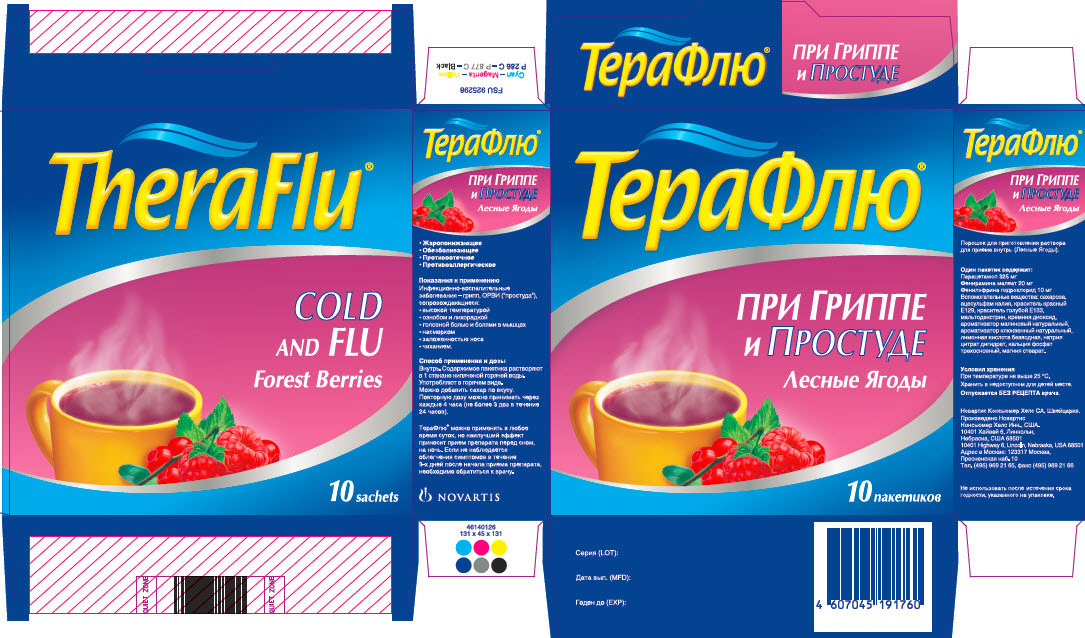
Theraflu® Cold and Flu Forest Berries
Pharmaceutical form:Powder for preparing a solution for internal use (forest berries).
Effect On the Ability to Drive An Automobile and to Operate Machinery.
During treatment, care must be taken when operating an automobile or other machinery, requiring mental alertness and quick psychomotor reactions.
Structured Label Content
Overdosage:
Nausea, vomiting, epigastric pain, hepatotoxic and nephrotoxic action, in severe cases - hepatic insufficiency, hepatic necrosis, increase in "liver" transaminase activity, increase in prothrombin time, encephalopathy, and comatose state.
Treatment: gastric lavage, administration of activated charcoal, symptomatic therapy. Administration of methionine 8-9 hours after the overdosage and N-acetylcysteine - after 12 hours. Medical attention should be sought.
Shelf Life: (Shelf life:)
2 years. Do not use after the expiration date printed on the package.
Composition:
One packet contains:
Active ingredients: paracetamol 325 mg, pheniramine maleate 20 mg, phenylephrine hydrochloride 10 mg.
Description:
Loose white powder containing white, yellow, and gray-violet granules. May contain soft clumps.
When one packet is dissolved in hot water, a cloudy solution forms which is pink-violet in color with a berry aroma.
Indications:
Infectious/inflammatory illnesses - influenza, ARVI (“common cold”), accompanied by a high temperature, chills, and fever, headache, rhinitis and nasal congestion, sneezing, and muscle pain
Side Effects: (Side effects:)
possible allergic reactions (skin rash, pruritus, hives, angioedema), hyperexcitability, sleep disorder, reduction in the speed of psychomotor reactions, drowsiness, dizziness, nausea, vomiting, stomach pain, palpitations, blood pressure increase, dry mouth, accommodative palsy, increase in intraocular pressure, urinary retention. During prolonged use in high doses - hepatotoxic action, changes in blood count; nephrotoxicity.
Special Warnings: (Special warnings:)
To avoid toxic liver damage, the preparation should not be combined with the use of alcoholic beverages. Care should be taken when the preparation is used by individuals over 70 years of age with cardiovascular disease because of the possible vasoconstricting action of phenylephrine.
If regardless of the use of the preparation, the illness is accompanied by continuing fever or repeated temperature elevations, a physician must be consulted.
Do not exceed the recommended dose.
Do not use the preparation from damaged packets.
Contraindications:
Increased sensitivity to individual ingredients of the preparation, simultaneous use of tricyclic antidepressants, monoamine oxidase (MAO) inhibitors, beta-adrenergic blockers; portal hypertension; alcoholism; diabetes mellitus, pregnancy, breast-feeding, children under 12 years of age.
With caution: in marked coronary artery atherosclerosis, in arterial hypertension, narrow-angle glaucoma, severe liver or kidney diseases, prostatic hyperplasia, blood diseases, glucose-6-phosphate dehydrogenase deficiency, congenital hyperbilirubinemia (Gilbert, Dubin-Johnson, and Rotor syndromes), hyperthyroidism, pheochromocytoma, bronchial asthma.
Storage Conditions: (Storage conditions:)
At a temperature below 25°C.
Auxiliary Ingredients: (Auxiliary ingredients:)
sucrose, acesulfame potassium, red dye Е129, blue dye Е133, maltodextrin, silicon dioxide, flavoring agent natural raspberry, flavoring agent natural cranberry, anhydrous citric acid, sodium citrate dihydrate, tribasic calcium phosphate, magnesium stearate.
Dosage and Administration: (Dosage and administration:)
Oral. The content of a packet is dissolved in 1 glass of boiling hot water. Consumed in hot form. Sugar can be added to taste. A repeated dose may be taken every 4 hours (no more than 3 doses in 24 hours).
TheraFlu® can be used at any time of day, but taking the preparation before going to sleep, for the night, has the best effect. If there is no relief of symptoms within 3 days after the preparation is first taken, a physician must be consulted
Pharmacotherapeutic Group: (Pharmacotherapeutic group:)
analgesics and antipyretics, paracetamol in combination with other preparations (excluding psycholeptics).
ATC code:NO2BE51
Pharmacological properties:Combination preparation, has an antipyretic, anti-inflammatory, anti-edematous, analgesic, and anti-allergic action.
Interaction With Other Drugs: (Interaction with other drugs:)
Intensifies the effect of MAO inhibitors, sedative preparations, ethanol. The risk of the hepatotoxic action of paracetamol increases during concurrent use of barbiturates, diphenine, carbamazepine, rifampicin, zidovudine, and other hepatic microsomal enzyme inducers. Antidepressants, antiparkinsonian agents, antipsychotic agents, and phenothiazine derivatives - increase the risk of developing urinary retention, dry mouth, and constipation. Glucocorticosteroids increase the risk of developing elevated intraocular pressure.
Package/label Principal Display Panel (Package/Label Principal Display Panel)
Theraflu® Cold and Flu Forest Berries (TheraFlu® Cold and Flu Forest Berries)
Pharmaceutical form:Powder for preparing a solution for internal use (forest berries).
Effect On the Ability to Drive An Automobile and to Operate Machinery. (Effect on the ability to drive an automobile and to operate machinery.)
During treatment, care must be taken when operating an automobile or other machinery, requiring mental alertness and quick psychomotor reactions.
Advanced Ingredient Data
Raw Label Data
All Sections (JSON)
Additional Information
Back to search View SPL set listing Open on DailyMed ↗
Source: dailymed · Ingested: 2026-02-15T12:03:00.795637 · Updated: 2026-03-14T23:02:50.389879