Dexlansoprazole Delayed-release Capsules
dcfe880a-b96d-4a3c-aa21-3998d0bcfe9e
34391-3
HUMAN PRESCRIPTION DRUG LABEL
Drug Facts
Composition & Product
Identifiers & Packaging
Indications and Usage
Dexlansoprazole delayed-release capsules are proton pump inhibitor (PPI) indicated in patients 12 years of age and older for: Healing of all grades of erosive esophagitis (EE). ( 1.1 ) Maintenance of healed EE and relief of heartburn. ( 1.2 ) Treatment of symptomatic non-erosive gastroesophageal reflux disease (GERD). ( 1.3 )
Dosage and Administration
Recommended dosage in patients 12 years of age and older : See full prescribing information for complete dosing information for dexlansoprazole delayed-release capsules by indication and age group and dosage adjustment in patients with hepatic impairment. ( 2.1 , 2.2 ) Administration Instructions ( 2.3 ) : Take without regard to food. Swallow whole; do not chew. See full prescribing information for alternative administration options.
Contraindications
Dexlansoprazole delayed-release capsules are contraindicated in patients with known hypersensitivity to any component of the formulation [see Description (11) ] . Hypersensitivity reactions may include anaphylaxis, anaphylactic shock, angioedema, bronchospasm, acute tubulointerstitial nephritis and urticaria [see Warnings and Precautions (5.2) , Adverse Reactions (6) ] . PPIs, including dexlansoprazole delayed-release capsules, are contraindicated with rilpivirine-containing products [see Drug Interactions (7) ] .
Warnings and Precautions
Gastric Malignancy : In adults, symptomatic response with dexlansoprazole delayed-release capsules does not preclude the presence of gastric malignancy. Consider additional follow-up and diagnostic testing. ( 5.1 ) Acute Tubulointerstitial Nephritis : Discontinue treatment and evaluate patients. ( 5.2 ) Clostridium difficile -Associated Diarrhea : PPI therapy may be associated with increased risk. ( 5.3 ) Bone Fracture : Long-term and multiple daily dose PPI therapy may be associated with an increased risk for osteoporosis-related fractures of the hip, wrist or spine. ( 5.4 ) Severe Cutaneous Adverse Reactions : Discontinue at the first signs or symptoms of severe cutaneous adverse reactions or other signs of hypersensitivity and consider further evaluation. ( 5.5 ) Cutaneous and Systemic Lupus Erythematosus : Mostly cutaneous; new onset or exacerbation of existing disease; discontinue dexlansoprazole delayed-release capsules and refer to specialist for evaluation. ( 5.6 ) Cyanocobalamin (Vitamin B12) Deficiency : Daily long-term use (e.g., longer than 3 years) may lead to malabsorption or a deficiency of cyanocobalamin. ( 5.7 ) Hypomagnesemia and Mineral Metabolism : Reported rarely with prolonged treatment with PPIs. ( 5.8 ) Interactions with Investigations for Neuroendocrine Tumors : Increases in intragastric pH may result in hypergastrinemia and enterochromaffin-like cell hyperplasia and increased chromogranin A levels which may interfere with diagnostic investigations for neuroendocrine tumors. ( 5.9 , 7 ) Interaction with Methotrexate : Concomitant use with PPIs may elevate and/or prolong serum concentrations of methotrexate and/or its metabolite, possibly leading to toxicity. With high-dose methotrexate administration, consider a temporary withdrawal of dexlansoprazole delayed-release capsules. ( 5.10 , 7 ) Fundic Gland Polyps : Risk increases with long-term use, especially beyond 1 year. Use the shortest duration of therapy. ( 5.11 ) Risk of Heart Valve Thickening in Pediatric Patients Less than Two Years of Age : Dexlansoprazole delayed-release capsules are not recommended in pediatric patients less than 2 years of age. ( 5.12 , 8.4 )
Adverse Reactions
Severe cutaneous adverse reactions, including Stevens-Johnson syndrome (SJS) and toxic epidermal necrolysis (TEN), drug reaction with eosinophilia and systemic symptoms (DRESS), and acute generalized exanthematous pustulosis (AGEP) have been reported in association with the use of PPIs [see Adverse Reactions (6.2) ] . Discontinue dexlansoprazole delayed-release capsules at the first signs or symptoms of severe cutaneous adverse reactions or other signs of hypersensitivity and consider further evaluation.
Drug Interactions
Tables 3 and 4 include drugs with clinically important drug interactions and interaction with diagnostics when administered concomitantly with dexlansoprazole delayed-release capsules and instructions for preventing or managing them. Consult the labeling of concomitantly used drugs to obtain further information about interactions with PPIs. Table 3. Clinically Relevant Interactions Affecting Drugs Co-Administered with Dexlansoprazole Delayed-Release Capsules and Interactions with Diagnostics Antiretrovirals Clinical Impact: The effect of PPIs on antiretroviral drugs is variable. The clinical importance and the mechanisms behind these interactions are not always known. Decreased exposure of some antiretroviral drugs (e.g., rilpivirine, atazanavir, and nelfinavir) when used concomitantly with dexlansoprazole may reduce antiviral effect and promote the development of drug resistance . Increased exposure of other antiretroviral drugs (e.g., saquinavir) when used concomitantly with dexlansoprazole may increase toxicity of the antiretroviral drugs. There are other antiretroviral drugs which do not result in clinically relevant interactions with dexlansoprazole. Intervention: Rilpivirine-containing products : Concomitant use with dexlansoprazole delayed-release capsules is contraindicated [see Contraindications (4) ] . See prescribing information. Atazanavir : See prescribing information for atazanavir for dosing information. Nelfinavir : Avoid concomitant use with dexlansoprazole delayed-release capsules. See prescribing information for nelfinavir. Saquinavir : See the prescribing information for saquinavir and monitor for potential saquinavir toxicities. Other antiretrovirals : See prescribing information. Warfarin Clinical Impact: Increased INR and prothrombin time in patients receiving PPIs and warfarin concomitantly. Increases in INR and prothrombin time may lead to abnormal bleeding and even death. Intervention: Monitor INR and prothrombin time. Dose adjustment of warfarin may be needed to maintain target INR range. See prescribing information for warfarin. Methotrexate Clinical Impact: Concomitant use of PPIs with methotrexate (primarily at high dose) may elevate and prolong serum concentrations of methotrexate and/or its metabolite hydroxymethotrexate, possibly leading to methotrexate toxicities. No formal drug interaction studies of high-dose methotrexate with PPIs have been conducted [see Warnings and Precautions (5.10) ] . Intervention: A temporary withdrawal of dexlansoprazole delayed-release capsules may be considered in some patients receiving high-dose methotrexate. Digoxin Clinical Impact: Potential for increased exposure of digoxin. Intervention: Monitor digoxin concentrations. Dose adjustment of digoxin may be needed to maintain therapeutic drug concentrations. See prescribing information for digoxin. Drugs Dependent on Gastric pH for Absorption (e.g., iron salts, erlotinib, dasatinib, nilotinib, mycophenolate mofetil, ketoconazole/itraconazole) Clinical Impact: Dexlansoprazole can reduce the absorption of other drugs due to its effect on reducing intragastric acidity. Intervention: Mycophenolate mofetil (MMF): Coadministration of PPIs in healthy subjects and in transplant patients receiving MMF has been reported to reduce the exposure to the active metabolite, mycophenolic acid (MPA), possibly due to a decrease in MMF solubility at an increased gastric pH. The clinical relevance of reduced MPA exposure on organ rejection has not been established in transplant patients receiving dexlansoprazole delayed-release capsules and MMF. Use dexlansoprazole delayed-release capsules with caution in transplant patients receiving MMF. See the prescribing information for other drugs dependent on gastric pH for absorption. Tacrolimus Clinical Impact: Potentially increased exposure of tacrolimus, especially in transplant patients who are intermediate or poor metabolizers of CYP2C19 . Intervention: Monitor tacrolimus whole blood trough concentrations. Dose adjustment of tacrolimus may be needed to maintain therapeutic drug concentrations. See prescribing information for tacrolimus. Interactions with Investigations of Neuroendocrine Tumors Clinical Impact: CgA levels increase secondary to PPI-induced decreases in gastric acidity. The increased CgA level may cause false positive results in diagnostic investigations for neuroendocrine tumors [see Warnings and Precautions (5.9) , Clinical Pharmacology (12.2) ] . Intervention: Temporarily stop dexlansoprazole delayed-release capsules treatment at least 14 days before assessing CgA levels and consider repeating the test if initial CgA levels are high. If serial tests are performed (e.g., for monitoring), the same commercial laboratory should be used for testing, as reference ranges between tests may vary. Interaction with Secretin Stimulation Test Clinical Impact: Hyper-response in gastrin secretion in response to secretin stimulation test, falsely suggesting gastrinoma. Intervention: Temporarily stop dexlansoprazole delayed-release capsules treatment at least 30 days before assessing to allow gastrin levels to return to baseline [see Clinical Pharmacology (12.2) ] . False Positive Urine Tests for THC Clinical Impact: There have been reports of false positive urine screening tests for tetrahydrocannabinol (THC) in patients receiving PPIs. Intervention: An alternative confirmatory method should be considered to verify positive results. Table 4. Clinically Relevant Interactions Affecting Dexlansoprazole Delayed-Release Capsules When Co-Administered with Other Drugs and Substances CYP2C19 or CYP3A4 Inducers Clinical Impact: Decreased exposure of dexlansoprazole when used concomitantly with strong inducers [see Clinical Pharmacology (12.3) ] . Intervention: St. John's Wort, rifampin : Avoid concomitant use with dexlansoprazole delayed-release capsules. Ritonavir-containing products : See prescribing information. CYP2C19 or CYP3A4 Inhibitors Clinical Impact: Increased exposure of dexlansoprazole is expected when used concomitantly with strong inhibitors [see Clinical Pharmacology (12.3) ] . Intervention: Voriconazole : See prescribing information.
How Supplied
Dexlansoprazole delayed-release capsules, 60 mg, are opaque, blue cap with blue body, imprinted with "T002" in black ink, the capsule contains white to off white film-coated pellets. And supplied as: NDC: 72162-2239-3: 30 Capsules in a BOTTLE NDC: 72162-2239-9: 90 Capsules in a BOTTLE Store at 20 to 25°C (68 to 77°F); excursions permitted to 15 to 30°C (59 to 86°F) [see USP Controlled Room Temperature]. Repackaged/Relabeled by: Bryant Ranch Prepack, Inc. Burbank, CA 91504
Storage and Handling
Dexlansoprazole delayed-release capsules, 60 mg, are opaque, blue cap with blue body, imprinted with "T002" in black ink, the capsule contains white to off white film-coated pellets. And supplied as: NDC: 72162-2239-3: 30 Capsules in a BOTTLE NDC: 72162-2239-9: 90 Capsules in a BOTTLE Store at 20 to 25°C (68 to 77°F); excursions permitted to 15 to 30°C (59 to 86°F) [see USP Controlled Room Temperature]. Repackaged/Relabeled by: Bryant Ranch Prepack, Inc. Burbank, CA 91504
Description
Dexlansoprazole delayed-release capsules are proton pump inhibitor (PPI) indicated in patients 12 years of age and older for: Healing of all grades of erosive esophagitis (EE). ( 1.1 ) Maintenance of healed EE and relief of heartburn. ( 1.2 ) Treatment of symptomatic non-erosive gastroesophageal reflux disease (GERD). ( 1.3 )
Medication Information
Warnings and Precautions
Gastric Malignancy : In adults, symptomatic response with dexlansoprazole delayed-release capsules does not preclude the presence of gastric malignancy. Consider additional follow-up and diagnostic testing. ( 5.1 ) Acute Tubulointerstitial Nephritis : Discontinue treatment and evaluate patients. ( 5.2 ) Clostridium difficile -Associated Diarrhea : PPI therapy may be associated with increased risk. ( 5.3 ) Bone Fracture : Long-term and multiple daily dose PPI therapy may be associated with an increased risk for osteoporosis-related fractures of the hip, wrist or spine. ( 5.4 ) Severe Cutaneous Adverse Reactions : Discontinue at the first signs or symptoms of severe cutaneous adverse reactions or other signs of hypersensitivity and consider further evaluation. ( 5.5 ) Cutaneous and Systemic Lupus Erythematosus : Mostly cutaneous; new onset or exacerbation of existing disease; discontinue dexlansoprazole delayed-release capsules and refer to specialist for evaluation. ( 5.6 ) Cyanocobalamin (Vitamin B12) Deficiency : Daily long-term use (e.g., longer than 3 years) may lead to malabsorption or a deficiency of cyanocobalamin. ( 5.7 ) Hypomagnesemia and Mineral Metabolism : Reported rarely with prolonged treatment with PPIs. ( 5.8 ) Interactions with Investigations for Neuroendocrine Tumors : Increases in intragastric pH may result in hypergastrinemia and enterochromaffin-like cell hyperplasia and increased chromogranin A levels which may interfere with diagnostic investigations for neuroendocrine tumors. ( 5.9 , 7 ) Interaction with Methotrexate : Concomitant use with PPIs may elevate and/or prolong serum concentrations of methotrexate and/or its metabolite, possibly leading to toxicity. With high-dose methotrexate administration, consider a temporary withdrawal of dexlansoprazole delayed-release capsules. ( 5.10 , 7 ) Fundic Gland Polyps : Risk increases with long-term use, especially beyond 1 year. Use the shortest duration of therapy. ( 5.11 ) Risk of Heart Valve Thickening in Pediatric Patients Less than Two Years of Age : Dexlansoprazole delayed-release capsules are not recommended in pediatric patients less than 2 years of age. ( 5.12 , 8.4 )
Indications and Usage
Dexlansoprazole delayed-release capsules are proton pump inhibitor (PPI) indicated in patients 12 years of age and older for: Healing of all grades of erosive esophagitis (EE). ( 1.1 ) Maintenance of healed EE and relief of heartburn. ( 1.2 ) Treatment of symptomatic non-erosive gastroesophageal reflux disease (GERD). ( 1.3 )
Dosage and Administration
Recommended dosage in patients 12 years of age and older : See full prescribing information for complete dosing information for dexlansoprazole delayed-release capsules by indication and age group and dosage adjustment in patients with hepatic impairment. ( 2.1 , 2.2 ) Administration Instructions ( 2.3 ) : Take without regard to food. Swallow whole; do not chew. See full prescribing information for alternative administration options.
Contraindications
Dexlansoprazole delayed-release capsules are contraindicated in patients with known hypersensitivity to any component of the formulation [see Description (11) ] . Hypersensitivity reactions may include anaphylaxis, anaphylactic shock, angioedema, bronchospasm, acute tubulointerstitial nephritis and urticaria [see Warnings and Precautions (5.2) , Adverse Reactions (6) ] . PPIs, including dexlansoprazole delayed-release capsules, are contraindicated with rilpivirine-containing products [see Drug Interactions (7) ] .
Adverse Reactions
Severe cutaneous adverse reactions, including Stevens-Johnson syndrome (SJS) and toxic epidermal necrolysis (TEN), drug reaction with eosinophilia and systemic symptoms (DRESS), and acute generalized exanthematous pustulosis (AGEP) have been reported in association with the use of PPIs [see Adverse Reactions (6.2) ] . Discontinue dexlansoprazole delayed-release capsules at the first signs or symptoms of severe cutaneous adverse reactions or other signs of hypersensitivity and consider further evaluation.
Drug Interactions
Tables 3 and 4 include drugs with clinically important drug interactions and interaction with diagnostics when administered concomitantly with dexlansoprazole delayed-release capsules and instructions for preventing or managing them. Consult the labeling of concomitantly used drugs to obtain further information about interactions with PPIs. Table 3. Clinically Relevant Interactions Affecting Drugs Co-Administered with Dexlansoprazole Delayed-Release Capsules and Interactions with Diagnostics Antiretrovirals Clinical Impact: The effect of PPIs on antiretroviral drugs is variable. The clinical importance and the mechanisms behind these interactions are not always known. Decreased exposure of some antiretroviral drugs (e.g., rilpivirine, atazanavir, and nelfinavir) when used concomitantly with dexlansoprazole may reduce antiviral effect and promote the development of drug resistance . Increased exposure of other antiretroviral drugs (e.g., saquinavir) when used concomitantly with dexlansoprazole may increase toxicity of the antiretroviral drugs. There are other antiretroviral drugs which do not result in clinically relevant interactions with dexlansoprazole. Intervention: Rilpivirine-containing products : Concomitant use with dexlansoprazole delayed-release capsules is contraindicated [see Contraindications (4) ] . See prescribing information. Atazanavir : See prescribing information for atazanavir for dosing information. Nelfinavir : Avoid concomitant use with dexlansoprazole delayed-release capsules. See prescribing information for nelfinavir. Saquinavir : See the prescribing information for saquinavir and monitor for potential saquinavir toxicities. Other antiretrovirals : See prescribing information. Warfarin Clinical Impact: Increased INR and prothrombin time in patients receiving PPIs and warfarin concomitantly. Increases in INR and prothrombin time may lead to abnormal bleeding and even death. Intervention: Monitor INR and prothrombin time. Dose adjustment of warfarin may be needed to maintain target INR range. See prescribing information for warfarin. Methotrexate Clinical Impact: Concomitant use of PPIs with methotrexate (primarily at high dose) may elevate and prolong serum concentrations of methotrexate and/or its metabolite hydroxymethotrexate, possibly leading to methotrexate toxicities. No formal drug interaction studies of high-dose methotrexate with PPIs have been conducted [see Warnings and Precautions (5.10) ] . Intervention: A temporary withdrawal of dexlansoprazole delayed-release capsules may be considered in some patients receiving high-dose methotrexate. Digoxin Clinical Impact: Potential for increased exposure of digoxin. Intervention: Monitor digoxin concentrations. Dose adjustment of digoxin may be needed to maintain therapeutic drug concentrations. See prescribing information for digoxin. Drugs Dependent on Gastric pH for Absorption (e.g., iron salts, erlotinib, dasatinib, nilotinib, mycophenolate mofetil, ketoconazole/itraconazole) Clinical Impact: Dexlansoprazole can reduce the absorption of other drugs due to its effect on reducing intragastric acidity. Intervention: Mycophenolate mofetil (MMF): Coadministration of PPIs in healthy subjects and in transplant patients receiving MMF has been reported to reduce the exposure to the active metabolite, mycophenolic acid (MPA), possibly due to a decrease in MMF solubility at an increased gastric pH. The clinical relevance of reduced MPA exposure on organ rejection has not been established in transplant patients receiving dexlansoprazole delayed-release capsules and MMF. Use dexlansoprazole delayed-release capsules with caution in transplant patients receiving MMF. See the prescribing information for other drugs dependent on gastric pH for absorption. Tacrolimus Clinical Impact: Potentially increased exposure of tacrolimus, especially in transplant patients who are intermediate or poor metabolizers of CYP2C19 . Intervention: Monitor tacrolimus whole blood trough concentrations. Dose adjustment of tacrolimus may be needed to maintain therapeutic drug concentrations. See prescribing information for tacrolimus. Interactions with Investigations of Neuroendocrine Tumors Clinical Impact: CgA levels increase secondary to PPI-induced decreases in gastric acidity. The increased CgA level may cause false positive results in diagnostic investigations for neuroendocrine tumors [see Warnings and Precautions (5.9) , Clinical Pharmacology (12.2) ] . Intervention: Temporarily stop dexlansoprazole delayed-release capsules treatment at least 14 days before assessing CgA levels and consider repeating the test if initial CgA levels are high. If serial tests are performed (e.g., for monitoring), the same commercial laboratory should be used for testing, as reference ranges between tests may vary. Interaction with Secretin Stimulation Test Clinical Impact: Hyper-response in gastrin secretion in response to secretin stimulation test, falsely suggesting gastrinoma. Intervention: Temporarily stop dexlansoprazole delayed-release capsules treatment at least 30 days before assessing to allow gastrin levels to return to baseline [see Clinical Pharmacology (12.2) ] . False Positive Urine Tests for THC Clinical Impact: There have been reports of false positive urine screening tests for tetrahydrocannabinol (THC) in patients receiving PPIs. Intervention: An alternative confirmatory method should be considered to verify positive results. Table 4. Clinically Relevant Interactions Affecting Dexlansoprazole Delayed-Release Capsules When Co-Administered with Other Drugs and Substances CYP2C19 or CYP3A4 Inducers Clinical Impact: Decreased exposure of dexlansoprazole when used concomitantly with strong inducers [see Clinical Pharmacology (12.3) ] . Intervention: St. John's Wort, rifampin : Avoid concomitant use with dexlansoprazole delayed-release capsules. Ritonavir-containing products : See prescribing information. CYP2C19 or CYP3A4 Inhibitors Clinical Impact: Increased exposure of dexlansoprazole is expected when used concomitantly with strong inhibitors [see Clinical Pharmacology (12.3) ] . Intervention: Voriconazole : See prescribing information.
Storage and Handling
Dexlansoprazole delayed-release capsules, 60 mg, are opaque, blue cap with blue body, imprinted with "T002" in black ink, the capsule contains white to off white film-coated pellets. And supplied as: NDC: 72162-2239-3: 30 Capsules in a BOTTLE NDC: 72162-2239-9: 90 Capsules in a BOTTLE Store at 20 to 25°C (68 to 77°F); excursions permitted to 15 to 30°C (59 to 86°F) [see USP Controlled Room Temperature]. Repackaged/Relabeled by: Bryant Ranch Prepack, Inc. Burbank, CA 91504
How Supplied
Dexlansoprazole delayed-release capsules, 60 mg, are opaque, blue cap with blue body, imprinted with "T002" in black ink, the capsule contains white to off white film-coated pellets. And supplied as: NDC: 72162-2239-3: 30 Capsules in a BOTTLE NDC: 72162-2239-9: 90 Capsules in a BOTTLE Store at 20 to 25°C (68 to 77°F); excursions permitted to 15 to 30°C (59 to 86°F) [see USP Controlled Room Temperature]. Repackaged/Relabeled by: Bryant Ranch Prepack, Inc. Burbank, CA 91504
Description
Dexlansoprazole delayed-release capsules are proton pump inhibitor (PPI) indicated in patients 12 years of age and older for: Healing of all grades of erosive esophagitis (EE). ( 1.1 ) Maintenance of healed EE and relief of heartburn. ( 1.2 ) Treatment of symptomatic non-erosive gastroesophageal reflux disease (GERD). ( 1.3 )
Section 42229-5
Adults
The safety of dexlansoprazole delayed-release capsules was evaluated in 4548 adult patients in controlled and single-arm clinical trials, including 863 patients treated for at least six months and 203 patients treated for one year. Patients ranged in age from 18 to 90 years (median age 48 years), with 54% female, 85% Caucasian, 8% Black, 4% Asian, and 3% Other races. Six randomized controlled clinical trials were conducted for the treatment of EE, maintenance of healed EE, and symptomatic GERD, which included 896 patients on placebo, 455 patients on dexlansoprazole delayed-release capsules 30 mg, 2218 patients on dexlansoprazole delayed-release capsules 60 mg, and 1363 patients on lansoprazole 30 mg once daily.
Section 42231-1
| MEDICATION GUIDE Dexlansoprazole (DEX lan SOE pra zol) delayed-release capsules, for oral use |
|
|---|---|
| This Medication Guide has been approved by the U.S. Food and Drug Administration. | Revised: 07/2023 |
| Read this Medication Guide before you start taking dexlansoprazole delayed-release capsules and each time you get a refill. There may be new information. This information does not take the place of talking to your doctor about your medical condition or your treatment. | |
|
What is the most important information that I should know about dexlansoprazole delayed-release capsules? Dexlansoprazole delayed-release capsules may help your acid-related symptoms, but you could still have serious stomach problems. Talk with your doctor. Dexlansoprazole delayed-release capsules can cause serious side effects, including:
|
|
|
What are dexlansoprazole delayed-release capsules?
Dexlansoprazole delayed-release capsules are prescription medicine called a proton pump inhibitor (PPI). Dexlansoprazole delayed-release capsules reduce the amount of acid in your stomach. Dexlansoprazole delayed-release capsules are used in people 12 years of age and older:
It is not known if dexlansoprazole delayed-release capsules are safe and effective in children under 12 years of age. Dexlansoprazole delayed-release capsules are not recommended in children under 2 years of age and may harm them. Dexlansoprazole delayed-release capsules are not effective for symptoms of GERD in children under 1 year of age. |
|
Who should not take dexlansoprazole delayed-release capsules? Do not take dexlansoprazole delayed-release capsules if you:
|
|
|
What should I tell my doctor before taking dexlansoprazole delayed-release capsules? Before you take dexlansoprazole delayed-release capsules, tell your doctor about all of your medical conditions, including if you:
Dexlansoprazole delayed-release capsules may affect how other medicines work, and other medicines may affect how dexlansoprazole delayed-release capsules work. Especially tell your doctor if you take methotrexate (Otrexup, Rasuvo, Trexall, Reditrex, Xatmep) or digoxin. Know the medicines that you take. |
|
How should I take dexlansoprazole delayed-release capsules?
|
|
|
What are the possible side effects of dexlansoprazole delayed-release capsules? Dexlansoprazole may cause serious side effects, including:
|
|
The most common side effects of dexlansoprazole delayed-release capsules in adults include:
Serious allergic reactions.Tell your doctor if you get any of the following symptoms with dexlansoprazole delayed-release capsules:
Tell your doctor if you have any side effect that bothers you or that does not go away. These are not all the possible side effects of dexlansoprazole delayed-release capsules. For more information, ask your doctor or pharmacist. Call your doctor for medical advice about side effects. You may report side effects to FDA at 1-800-FDA-1088. |
|
How should I store dexlansoprazole delayed-release capsules?
|
|
|
General information about the safe and effective use of dexlansoprazole delayed-release capsules.
Medicines are sometimes prescribed for purposes other than those listed in a Medication Guide. Do not use dexlansoprazole delayed-release capsules for a condition for which it was not prescribed. Do not give dexlansoprazole delayed-release capsules to other people, even if they have the same symptoms you have. It may harm them. This Medication Guide summarizes the most important information about dexlansoprazole delayed-release capsules. If you would like more information, talk with your doctor. You can ask your doctor or pharmacist for information about dexlansoprazole delayed-release capsules that is written for health professionals. For more information, go to [email protected] or call 1-877-825-3327. |
|
|
What are the ingredients in dexlansoprazole delayed-release capsules?
Active ingredient: dexlansoprazole. Inactive ingredients: sugar spheres, hypromellose, sucrose, sodium hydroxide, magnesium carbonate, titanium dioxide, methacrylic acid and ethyl acrylate copolymer dispersion, triethyl citrate, polyethylene glycol, polysorbate 80 and talc. The components of the capsule shell include the following inactive ingredients: FDA/E172 Black iron oxide, titanium dioxide, hypromellose, and colorants FD&C Blue #1. The black imprinting ink contains: shellac, black iron oxide, FD&C Blue #2, FD&C Red #40, FD&C Blue #1, and D&C Yellow #10. |
Section 51945-4
Dexlansoprazole Delayed-Release Capsules 60 mg
10 Overdosage
There have been no reports of significant overdose with dexlansoprazole delayed-release capsules. Multiple doses of dexlansoprazole delayed-release capsules 120 mg and a single dose of dexlansoprazole delayed-release capsules 300 mg did not result in death or other severe adverse events. However, serious adverse events of hypertension have been reported in association with twice daily doses of dexlansoprazole delayed-release capsules 60 mg. Nonserious adverse reactions observed with twice daily doses of dexlansoprazole delayed-release capsules 60 mg include hot flashes, contusion, oropharyngeal pain, and weight loss. Dexlansoprazole is not expected to be removed from the circulation by hemodialysis.
In the event of over-exposure, treatment should be symptomatic and supportive.
If over-exposure occurs, call your poison control center at 1-800-222-1222 for current information on the management of poisoning or over-exposure.
11 Description
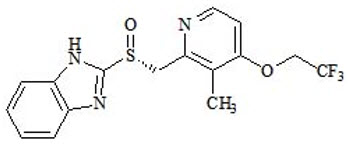
The active ingredient in dexlansoprazole delayed-release capsules, a proton pump inhibitor, is (+)-2-[(R)-{[3-methyl-4-(2,2,2-trifluoroethoxy)pyridin-2-yl] methyl} sulfinyl]-1H-benzimidazole, a compound that inhibits gastric acid secretion. Dexlansoprazole is the R-enantiomer of lansoprazole (a racemic mixture of the R- and S-enantiomers). Its empirical formula is: C16H14F3N3O2S, with a molecular weight of 369.36.
Dexlansoprazole has the following chemical structure:
Dexlansoprazole is a white to nearly white crystalline powder which melts with decomposition at 140°C. Dexlansoprazole is freely soluble in dimethylformamide, methanol, dichloromethane, ethanol, and ethyl acetate; and soluble in acetonitrile; slightly soluble in ether; and very slightly soluble in water; and practically insoluble in hexane.
Dexlansoprazole is stable when exposed to light. Dexlansoprazole is more stable in neutral and alkaline conditions than acidic conditions.
Dexlansoprazole is supplied for oral administration as a dual delayed-release formulation in capsules. The capsules contain dexlansoprazole in a mixture of two types of enteric-coated granules with different pH-dependent dissolution profiles [see Clinical Pharmacology (12.3)].
Dexlansoprazole delayed-release capsules are available in two dosage strengths: 30 and 60 mg, per capsule. Each capsule contains enteric-coated granules consisting of dexlansoprazole (active ingredient) and the following inactive ingredients: sugar spheres, hypromellose, sucrose, sodium hydroxide, magnesium carbonate, titanium dioxide, methacrylic acid and ethyl acrylate copolymer dispersion, triethyl citrate, polyethylene glycol, polysorbate 80 and talc. The components of the capsule shell include the following inactive ingredients: FDA/E172 Black iron oxide, titanium dioxide, hypromellose, and FD&C Blue #1. The black imprinting ink contains: shellac, black iron oxide, FD&C Blue #2, FD&C Red #40, FD&C Blue #1, and D&C Yellow #10.
5.4 Bone Fracture
Several published observational studies suggest that PPI therapy may be associated with an increased risk for osteoporosis-related fractures of the hip, wrist or spine. The risk of fracture was increased in patients who received high-dose, defined as multiple daily doses, and long-term PPI therapy (a year or longer). Patients should use the lowest dose and shortest duration of PPI therapy appropriate to the conditions being treated. Patients at risk for osteoporosis-related fractures should be managed according to established treatment guidelines [see Dosage and Administration (2), Adverse Reactions (6.2)].
8.4 Pediatric Use
The safety and effectiveness of dexlansoprazole delayed-release capsules have been established in pediatric patients 12 years to 17 years of age for the healing of all grades of EE, the maintenance of healed EE and relief of heartburn, and treatment of heartburn associated with symptomatic non-erosive GERD. Use of dexlansoprazole delayed-release capsules in this age group is supported by evidence from adequate and well-controlled studies of dexlansoprazole delayed-release capsules in adults with additional safety, efficacy and pharmacokinetic data in pediatric patients 12 to 17 years of age. The adverse reaction profile in patients 12 to 17 years of age was similar to adults [see Dosage and Administration (2.1), Adverse Reactions (6.1), Clinical Pharmacology (12.3), Clinical Studies (14)].
The safety and effectiveness of dexlansoprazole delayed-release capsules has not been established in pediatric patients less than 12 years of age.
Dexlansoprazole delayed-release capsules are not recommended in pediatric patients less than two years of age [see Warnings and Precautions (5.12)]. Nonclinical studies in juvenile rats treated with lansoprazole (the racemic mixture) have demonstrated adverse effects of heart valve thickening and bone changes at dexlansoprazole exposures which are expected to be similar to or higher than the dexlansoprazole exposure in pediatric patients one year to two years of age, as described below in Juvenile Animal Toxicity Data.
The use of dexlansoprazole delayed-release capsules is not recommended for the treatment of symptomatic GERD in pediatric patients one month to less than one year of age because lansoprazole was not shown to be effective in a multicenter, double-blind controlled trial.
8.5 Geriatric Use
Of the total number of patients (n=4548) in clinical studies of dexlansoprazole delayed-release capsules, 11% of patients were aged 65 years and over, while 2% were 75 years and over. No overall differences in safety or effectiveness were observed between these patients and younger patients and other reported clinical experience has not identified significant differences in responses between geriatric and younger patients, but greater sensitivity of some older individuals cannot be ruled out [see Clinical Pharmacology (12.3)].
14.4 Pediatric Gerd
Use of dexlansoprazole delayed-release capsules in patients 12 to 17 years of age is supported by evidence from adequate and well-controlled studies of dexlansoprazole delayed-release capsules in adults, with additional safety, efficacy, and pharmacokinetic data from studies performed in pediatric patients.
4 Contraindications
- Dexlansoprazole delayed-release capsules are contraindicated in patients with known hypersensitivity to any component of the formulation [see Description (11)]. Hypersensitivity reactions may include anaphylaxis, anaphylactic shock, angioedema, bronchospasm, acute tubulointerstitial nephritis and urticaria [see Warnings and Precautions (5.2), Adverse Reactions (6)].
- PPIs, including dexlansoprazole delayed-release capsules, are contraindicated with rilpivirine-containing products [see Drug Interactions (7)].
6 Adverse Reactions
The following serious adverse reactions are described below and elsewhere in labeling:
- Acute Tubulointerstitial Nephritis [see Warnings and Precautions (5.2)]
- Clostridium difficile-Associated Diarrhea [see Warnings and Precautions (5.3)]
- Bone Fracture [see Warnings and Precautions (5.4)]
- Severe Cutaneous Adverse Reactions [see Warnings and Precautions (5.5)]
- Cutaneous and Systemic Lupus Erythematosus [see Warnings and Precautions (5.6)]
- Cyanocobalamin (Vitamin B12) Deficiency [see Warnings and Precautions (5.7)]
- Hypomagnesemia and Mineral Metabolism [see Warnings and Precautions (5.8)]
- Fundic Gland Polyps [see Warnings and Precautions (5.11)]
- Risk of Heart Valve Thickening in Pediatric Patients Less than Two Years of Age [see Warnings and Precautions (5.12)]
7 Drug Interactions
Tables 3 and 4 include drugs with clinically important drug interactions and interaction with diagnostics when administered concomitantly with dexlansoprazole delayed-release capsules and instructions for preventing or managing them.
Consult the labeling of concomitantly used drugs to obtain further information about interactions with PPIs.
| Antiretrovirals | |
| Clinical Impact: | The effect of PPIs on antiretroviral drugs is variable. The clinical importance and the mechanisms behind these interactions are not always known.
|
| Intervention: |
Rilpivirine-containing products: Concomitant use with dexlansoprazole delayed-release capsules is contraindicated [see Contraindications (4)]. See prescribing information. Atazanavir: See prescribing information for atazanavir for dosing information. Nelfinavir: Avoid concomitant use with dexlansoprazole delayed-release capsules. See prescribing information for nelfinavir. Saquinavir: See the prescribing information for saquinavir and monitor for potential saquinavir toxicities. Other antiretrovirals: See prescribing information. |
| Warfarin | |
| Clinical Impact: | Increased INR and prothrombin time in patients receiving PPIs and warfarin concomitantly. Increases in INR and prothrombin time may lead to abnormal bleeding and even death. |
| Intervention: | Monitor INR and prothrombin time. Dose adjustment of warfarin may be needed to maintain target INR range. See prescribing information for warfarin. |
| Methotrexate | |
| Clinical Impact: | Concomitant use of PPIs with methotrexate (primarily at high dose) may elevate and prolong serum concentrations of methotrexate and/or its metabolite hydroxymethotrexate, possibly leading to methotrexate toxicities. No formal drug interaction studies of high-dose methotrexate with PPIs have been conducted [see Warnings and Precautions (5.10)]. |
| Intervention: | A temporary withdrawal of dexlansoprazole delayed-release capsules may be considered in some patients receiving high-dose methotrexate. |
| Digoxin | |
| Clinical Impact: | Potential for increased exposure of digoxin. |
| Intervention: | Monitor digoxin concentrations. Dose adjustment of digoxin may be needed to maintain therapeutic drug concentrations. See prescribing information for digoxin. |
| Drugs Dependent on Gastric pH for Absorption (e.g., iron salts, erlotinib, dasatinib, nilotinib, mycophenolate mofetil, ketoconazole/itraconazole) | |
| Clinical Impact: | Dexlansoprazole can reduce the absorption of other drugs due to its effect on reducing intragastric acidity. |
| Intervention: | Mycophenolate mofetil (MMF): Coadministration of PPIs in healthy subjects and in transplant patients receiving MMF has been reported to reduce the exposure to the active metabolite, mycophenolic acid (MPA), possibly due to a decrease in MMF solubility at an increased gastric pH. The clinical relevance of reduced MPA exposure on organ rejection has not been established in transplant patients receiving dexlansoprazole delayed-release capsules and MMF. Use dexlansoprazole delayed-release capsules with caution in transplant patients receiving MMF. See the prescribing information for other drugs dependent on gastric pH for absorption. |
| Tacrolimus | |
| Clinical Impact: | Potentially increased exposure of tacrolimus, especially in transplant patients who are intermediate or poor metabolizers of CYP2C19. |
| Intervention: | Monitor tacrolimus whole blood trough concentrations. Dose adjustment of tacrolimus may be needed to maintain therapeutic drug concentrations. See prescribing information for tacrolimus. |
| Interactions with Investigations of Neuroendocrine Tumors | |
| Clinical Impact: | CgA levels increase secondary to PPI-induced decreases in gastric acidity. The increased CgA level may cause false positive results in diagnostic investigations for neuroendocrine tumors [see Warnings and Precautions (5.9), Clinical Pharmacology (12.2)]. |
| Intervention: | Temporarily stop dexlansoprazole delayed-release capsules treatment at least 14 days before assessing CgA levels and consider repeating the test if initial CgA levels are high. If serial tests are performed (e.g., for monitoring), the same commercial laboratory should be used for testing, as reference ranges between tests may vary. |
| Interaction with Secretin Stimulation Test | |
| Clinical Impact: | Hyper-response in gastrin secretion in response to secretin stimulation test, falsely suggesting gastrinoma. |
| Intervention: | Temporarily stop dexlansoprazole delayed-release capsules treatment at least 30 days before assessing to allow gastrin levels to return to baseline [see Clinical Pharmacology (12.2)]. |
| False Positive Urine Tests for THC | |
| Clinical Impact: | There have been reports of false positive urine screening tests for tetrahydrocannabinol (THC) in patients receiving PPIs. |
| Intervention: | An alternative confirmatory method should be considered to verify positive results. |
| CYP2C19 or CYP3A4 Inducers | |
| Clinical Impact: | Decreased exposure of dexlansoprazole when used concomitantly with strong inducers [see Clinical Pharmacology (12.3)]. |
| Intervention: | St. John's Wort, rifampin: Avoid concomitant use with dexlansoprazole delayed-release capsules. Ritonavir-containing products: See prescribing information. |
| CYP2C19 or CYP3A4 Inhibitors | |
| Clinical Impact: | Increased exposure of dexlansoprazole is expected when used concomitantly with strong inhibitors [see Clinical Pharmacology (12.3)]. |
| Intervention: | Voriconazole: See prescribing information. |
Instructions for Use
Taking dexlansoprazole delayed-release capsules with applesauce:
- Place 1 tablespoon of applesauce into a clean container.
- Carefully open the capsule and sprinkle the granules onto the applesauce.
- Swallow the applesauce and granules right away. Do not chew the granules. Do not save the applesauce and granules for later use.
Giving dexlansoprazole delayed-release capsules with water using an oral syringe:
- Place 20 mL of water into a clean container.
- Carefully open the capsule and empty the granules into the container of water.
- Use an oral syringe to draw up the water and granule mixture.
- Gently swirl the oral syringe to keep the granules from settling.
- Place the tip of the oral syringe in your mouth. Give the medicine right away. Do not save the water and granule mixture for later use.
- Refill the syringe with 10 mL of water and swirl gently. Place the tip of the oral syringe in your mouth and give the medicine that is left in the syringe.
- Repeat step 6.
Giving dexlansoprazole delayed-release capsules with water through a nasogastric tube (NG tube):
For people who have an NG tube that is size 16 French or larger, dexlansoprazole delayed-release capsules may be given as follows:
- Place 20 mL of water into a clean container.
- Carefully open the capsule and empty the granules into the container of water.
- Use a 60 mL catheter-tip syringe to draw up the water and granule mixture.
- Gently swirl the catheter-tip syringe to keep the granules from settling.
- Connect the catheter-tip syringe to the NG tube.
- Give the mixture right away through the NG tube that goes into the stomach. Do not save the water and granule mixture for later use.
- Refill the catheter-tip syringe with 10 mL of water and swirl gently. Flush the NG tube with the water.
- Repeat step 7.
How should I store dexlansoprazole delayed-release capsules?
- Store dexlansoprazole delayed-release capsules at room temperature between 68°F to 77°F (20°C to 25°C).
Keep dexlansoprazole delayed-release capsules and all medicines out of the reach of children.
Manufactured for:
TWi Pharmaceuticals USA, Inc.
Paramus, NJ 07652
This Instructions for Use have been approved by the U.S. Food and Drug Administration.
Manufactured by:
TWi Pharmaceuticals, Inc.
Taoyuan City, 320023, Taiwan
Revised: 07/2023
All trademark names are the property of their respective owners.
12.3 Pharmacokinetics
The dual delayed-release formulation of dexlansoprazole capsules results in a dexlansoprazole plasma concentration-time profile with two distinct peaks; the first peak occurs one to two hours after administration, followed by a second peak within four to five hours (see Figure 1). Dexlansoprazole is eliminated with a half-life of approximately one to two hours in healthy subjects and in patients with symptomatic GERD. No accumulation of dexlansoprazole occurs after multiple, once daily doses of dexlansoprazole delayed-release capsules 30 or 60 mg although mean AUCt and Cmax values of dexlansoprazole were slightly higher (less than 10%) on Day 5 than on Day 1.
| Figure 1: Mean Plasma Dexlansoprazole Concentration – Time Profile Following Oral Administration of 30 or 60 mg Dexlansoprazole Delayed-Release Capsules Once Daily for 5 Days in Healthy Adult Subjects | ||
|---|---|---|
The pharmacokinetics of dexlansoprazole are highly variable, with percent coefficient of variation (%CV) values for Cmax, AUC, and CL/F of greater than 30% (see Table 6).
| Dose (mg) |
Cmax
(ng/mL) |
AUC24
(ng∙h/mL) |
CL/F (L/h) |
|---|---|---|---|
| 30 | 658 (40%) (N=44) |
3275 (47%) (N=43) |
11.4 (48%) (N=43) |
| 60 | 1397 (51%) (N=79) |
6529 (60%) (N=73) |
11.6 (46%) (N=41) |
8.6 Hepatic Impairment
No dosage adjustment for dexlansoprazole delayed-release capsules is necessary for patients with mild hepatic impairment (Child-Pugh Class A).
In a study of adult patients with moderate hepatic impairment (Child-Pugh Class B) who received a single dose of 60 mg dexlansoprazole delayed-release capsules, there was a significant increase in systemic exposure of dexlansoprazole compared to healthy subjects with normal hepatic function [see Clinical Pharmacology (12.3)]. Therefore, for patients with moderate hepatic impairment (Child-Pugh Class B), dosage reduction is recommended for the healing of EE [see Dosage and Administration (2.2)].
No studies have been conducted in patients with severe hepatic impairment (Child-Pugh Class C); the use of dexlansoprazole delayed-release capsules is not recommended for these patients [see Dosage and Administration (2.2)].
1 Indications and Usage
Dexlansoprazole delayed-release capsules are proton pump inhibitor (PPI) indicated in patients 12 years of age and older for:
12.1 Mechanism of Action
Dexlansoprazole belongs to a class of antisecretory compounds, the substituted benzimidazoles, that suppress gastric acid secretion by specific inhibition of the (H+, K+)-ATPase at the secretory surface of the gastric parietal cell. Because this enzyme is regarded as the acid (proton) pump within the parietal cell, dexlansoprazole has been characterized as a gastric proton-pump inhibitor, in that it blocks the final step of acid production.
5.11 Fundic Gland Polyps
PPI use is associated with an increased risk of fundic gland polyps that increases with long-term use, especially beyond one year. Most PPI users who developed fundic gland polyps were asymptomatic and fundic gland polyps were identified incidentally on endoscopy. Use the shortest duration of PPI therapy appropriate to the condition being treated.
5 Warnings and Precautions
- Gastric Malignancy: In adults, symptomatic response with dexlansoprazole delayed-release capsules does not preclude the presence of gastric malignancy. Consider additional follow-up and diagnostic testing. (5.1)
- Acute Tubulointerstitial Nephritis: Discontinue treatment and evaluate patients. (5.2)
- Clostridium difficile -Associated Diarrhea: PPI therapy may be associated with increased risk. (5.3)
- Bone Fracture: Long-term and multiple daily dose PPI therapy may be associated with an increased risk for osteoporosis-related fractures of the hip, wrist or spine. (5.4)
- Severe Cutaneous Adverse Reactions: Discontinue at the first signs or symptoms of severe cutaneous adverse reactions or other signs of hypersensitivity and consider further evaluation. (5.5)
- Cutaneous and Systemic Lupus Erythematosus: Mostly cutaneous; new onset or exacerbation of existing disease; discontinue dexlansoprazole delayed-release capsules and refer to specialist for evaluation. (5.6)
- Cyanocobalamin (Vitamin B12) Deficiency: Daily long-term use (e.g., longer than 3 years) may lead to malabsorption or a deficiency of cyanocobalamin. (5.7)
- Hypomagnesemia and Mineral Metabolism: Reported rarely with prolonged treatment with PPIs. (5.8)
- Interactions with Investigations for Neuroendocrine Tumors: Increases in intragastric pH may result in hypergastrinemia and enterochromaffin-like cell hyperplasia and increased chromogranin A levels which may interfere with diagnostic investigations for neuroendocrine tumors. (5.9, 7)
- Interaction with Methotrexate: Concomitant use with PPIs may elevate and/or prolong serum concentrations of methotrexate and/or its metabolite, possibly leading to toxicity. With high-dose methotrexate administration, consider a temporary withdrawal of dexlansoprazole delayed-release capsules. (5.10, 7)
- Fundic Gland Polyps: Risk increases with long-term use, especially beyond 1 year. Use the shortest duration of therapy. (5.11)
- Risk of Heart Valve Thickening in Pediatric Patients Less than Two Years of Age: Dexlansoprazole delayed-release capsules are not recommended in pediatric patients less than 2 years of age. (5.12, 8.4)
5.3 Clostridium Difficile
Published observational studies suggest that PPI therapy like dexlansoprazole delayed-release capsules may be associated with an increased risk of Clostridium difficile-associated diarrhea, especially in hospitalized patients. This diagnosis should be considered for diarrhea that does not improve [see Adverse Reactions (6.2)].
Patients should use the lowest dose and shortest duration of PPI therapy appropriate to the condition being treated.
2 Dosage and Administration
Recommended dosage in patients 12 years of age and older:
- See full prescribing information for complete dosing information for dexlansoprazole delayed-release capsules by indication and age group and dosage adjustment in patients with hepatic impairment. (2.1, 2.2)
Administration Instructions (2.3):
- Take without regard to food.
- Swallow whole; do not chew.
- See full prescribing information for alternative administration options.
3 Dosage Forms and Strengths
Dexlansoprazole delayed-release capsules
- 30 mg: strength is an opaque, blue cap with light grey body, imprinted with "T001" in black ink, the capsule contains white to off white film-coated pellets.
- 60 mg: strength is an opaque, blue cap with blue body, imprinted with "T002" in black ink, the capsule contains white to off white film-coated pellets.
6.2 Postmarketing Experience
The following adverse reactions have been identified during post-approval use of dexlansoprazole delayed-release capsules. Because these reactions are reported voluntarily from a population of uncertain size, it is not always possible to reliably estimate their frequency or establish a causal relationship to drug exposure.
Blood and Lymphatic System Disorders: autoimmune hemolytic anemia, idiopathic thrombocytopenic purpura
Ear and Labyrinth Disorders: deafness
Eye Disorders: blurred vision
Gastrointestinal Disorders: oral edema, pancreatitis, fundic gland polyps
General Disorders and Administration Site Conditions: facial edema
Hepatobiliary Disorders: drug-induced hepatitis
Immune System Disorders: anaphylactic shock (requiring emergency intervention), exfoliative dermatitis, SJS/TEN (some fatal), DRESS, AGEP, erythema multiforme
Infections and Infestations: Clostridium difficile-associated diarrhea Metabolism and Nutrition Disorders: hypomagnesemia, hypocalcemia, hypokalemia, hyponatremia
Musculoskeletal System Disorders: bone fracture
Nervous System Disorders: cerebrovascular accident, transient ischemic attack
Renal and Genitourinary Disorders: acute renal failure, erectile dysfunction
Respiratory, Thoracic and Mediastinal Disorders: pharyngeal edema, throat tightness
Skin and Subcutaneous Tissue Disorders: generalized rash, leukocytoclastic vasculitis
8 Use in Specific Populations
- Pregnancy: Based on animal data, may cause adverse effects on fetal bone growth and development. (8.1)
- Pediatrics: Based on data with lansoprazole, dexlansoprazole delayed-release capsules are not effective in patients with symptomatic GERD 1 month to less than 1 year of age and nonclinical studies have demonstrated adverse effects in juvenile rats. (8.4)
6.1 Clinical Trials Experience
Because clinical trials are conducted under widely varying conditions, adverse reaction rates observed in the clinical trials of a drug cannot be directly compared to rates in the clinical trials of another drug and may not reflect the rates observed in practice.
17 Patient Counseling Information
Advise the patient to read the FDA-approved patient labeling (Medication Guide and Instructions for Use).
1.1 Healing of Erosive Esophagitis
Dexlansoprazole delayed-release capsules are indicated in patients 12 years of age and older for healing of all grades of erosive esophagitis (EE) for up to eight weeks.
5.1 Presence of Gastric Malignancy
In adults, symptomatic response to therapy with dexlansoprazole delayed-release capsules does not preclude the presence of gastric malignancy. Consider additional follow-up and diagnostic testing in adult patients who have a suboptimal response or an early symptomatic relapse after completing treatment with a PPI. In older patients, also consider an endoscopy.
5.10 Interaction With Methotrexate
Literature suggests that concomitant use of PPIs with methotrexate (primarily at high dose) may elevate and prolong serum levels of methotrexate and/or its metabolite, possibly leading to methotrexate toxicities. In high- dose methotrexate administration, a temporary withdrawal of the PPI may be considered in some patients [see Drug Interactions (7)].
16 How Supplied/storage and Handling
Dexlansoprazole delayed-release capsules, 60 mg, are opaque, blue cap with blue body, imprinted with "T002" in black ink, the capsule contains white to off white film-coated pellets. And supplied as:
- NDC: 72162-2239-3: 30 Capsules in a BOTTLE
- NDC: 72162-2239-9: 90 Capsules in a BOTTLE
Store at 20 to 25°C (68 to 77°F); excursions permitted to 15 to 30°C (59 to 86°F) [see USP Controlled Room Temperature].
Repackaged/Relabeled by:
Bryant Ranch Prepack, Inc.
Burbank, CA 91504
5.2 Acute Tubulointerstitial Nephritis
Acute tubulointerstitial nephritis (TIN) has been observed in patients taking PPIs and may occur at any point during PPI therapy. Patients may present with varying signs and symptoms from symptomatic hypersensitivity reactions to non-specific symptoms of decreased renal function (e.g., malaise, nausea, anorexia). In reported case series, some patients were diagnosed on biopsy and in the absence of extra-renal manifestations (e.g., fever, rash or arthralgia).
Discontinue dexlansoprazole delayed-release capsules and evaluate patients with suspected acute TIN [see Contraindications (4)].
5.5 Severe Cutaneous Adverse Reactions
Severe cutaneous adverse reactions, including Stevens-Johnson syndrome (SJS) and toxic epidermal necrolysis (TEN), drug reaction with eosinophilia and systemic symptoms (DRESS), and acute generalized exanthematous pustulosis (AGEP) have been reported in association with the use of PPIs [see Adverse Reactions (6.2)]. Discontinue dexlansoprazole delayed-release capsules at the first signs or symptoms of severe cutaneous adverse reactions or other signs of hypersensitivity and consider further evaluation.
2.3 Important Administration Information
- Take without regard to food.
- Missed doses: If a dose is missed, administer as soon as possible. However, if the next scheduled dose is due, do not take the missed dose, and take the next dose on time. Do not take two doses at one time to make up for a missed dose.
- Swallow whole; do not chew.
- For patients who have trouble swallowing capsules, dexlansoprazole delayed-release capsules can be opened and administered with applesauce as follows:
- Place one tablespoonful of applesauce into a clean container.
- Open capsule.
- Sprinkle intact granules on applesauce.
- Swallow applesauce and granules immediately. Do not chew granules. Do not save the applesauce and granules for later use.
- Alternatively, the capsule can be administered with water via oral syringe or nasogastric (NG) tube.
Administration with Water in an Oral Syringe- Open the capsule and empty the granules into a clean container with 20 mL of water.
- Withdraw the entire mixture into a syringe.
- Gently swirl the syringe in order to keep granules from settling.
- Administer the mixture immediately into the mouth. Do not save the water and granule mixture for later use.
- Refill the syringe with 10 mL of water, swirl gently, and administer.
- Refill the syringe again with 10 mL of water, swirl gently, and administer.
- Open the capsule and empty the granules into a clean container with 20 mL of water.
- Withdraw the entire mixture into a catheter-tip syringe.
- Swirl the catheter-tip syringe gently in order to keep the granules from settling, and immediately inject the mixture through the NG tube into the stomach. Do not save the water and granule mixture for later use.
- Refill the catheter-tip syringe with 10 mL of water, swirl gently, and flush the tube.
- Refill the catheter-tip syringe again with 10 mL of water, swirl gently, and administer.
5.8 Hypomagnesemia and Mineral Metabolism
Hypomagnesemia, symptomatic and asymptomatic, has been reported rarely in patients treated with PPIs for at least three months, in most cases after a year of therapy. Serious adverse events include tetany, arrhythmias, and seizures. Hypomagnesemia may lead to hypocalcemia and/or hypokalemia and may exacerbate underlying hypocalcemia in at-risk patients. In most patients, treatment of hypomagnesemia required magnesium replacement and discontinuation of the PPI.
For patients expected to be on prolonged treatment or who take PPIs with medications such as digoxin or drugs that may cause hypomagnesemia (e.g., diuretics), health care professionals may consider monitoring magnesium levels prior to initiation of PPI treatment and periodically [see Adverse Reactions (6.2)].
Consider monitoring magnesium and calcium levels prior to initiation of dexlansoprazole delayed-release capsules and periodically while on treatment in patients with a preexisting risk of hypocalcemia (e.g., hypoparathyroidism). Supplement with magnesium and/or calcium as necessary. If hypocalcemia is refractory to treatment, consider discontinuing the PPI.
5.7 Cyanocobalamin (vitamin B12) Deficiency
Daily treatment with any acid-suppressing medications over a long period of time (e.g., longer than three years) may lead to malabsorption of cyanocobalamin (Vitamin B12) caused by hypo- or achlorhydria. Rare reports of cyanocobalamin deficiency occurring with acid-suppressing therapy have been reported in the literature. This diagnosis should be considered if clinical symptoms consistent with cyanocobalamin deficiency are observed in patients treated with dexlansoprazole delayed-release capsules.
14.1 Healing of Erosive Esophagitis in Adults
Two multicenter, double-blind, active-controlled, randomized, eight week studies were conducted in patients with endoscopically confirmed EE. Severity of the disease was classified based on the Los Angeles Classification Grading System (Grades A-D). Patients were randomized to one of the following three treatment groups: dexlansoprazole delayed-release capsules 60 mg once daily, dexlansoprazole delayed-release capsules 90 mg once daily or lansoprazole 30 mg once daily. Patients who were H. pylori positive or who had Barrett's Esophagus and/or definite dysplastic changes at baseline were excluded from these studies. A total of 4092 patients were enrolled and ranged in age from 18 to 90 years (median age 48 years) with 54% male. Race was distributed as follows: 87% Caucasian, 5% Black and 8% Other. Based on the Los Angeles Classification, 71% of patients had mild EE (Grades A and B) and 29% of patients had moderate to severe EE (Grades C and D) before treatment.
The studies were designed to test noninferiority. If noninferiority was demonstrated then superiority would be tested. Although noninferiority was demonstrated in both studies, the finding of superiority in one study was not replicated in the other.
The proportion of patients with healed EE at Week 4 or 8 is presented below in Table 8.
| Study | Number of Patients (N)† |
Treatment Group (daily) |
Week 4 % Healed |
Week 8‡ % Healed |
(95% CI) for the Treatment Difference (Dexlansoprazole Delayed-Release Capsules–Lansoprazole) by Week 8 |
|---|---|---|---|---|---|
| CI = Confidence interval | |||||
| 1 | 657 | Dexlansoprazole Delayed-Release Capsules 60 mg |
70 | 87 | (-1.5, 6.1) |
| 648 | Lansoprazole 30 mg | 65 | 85 | ||
| 2 | 639 | Dexlansoprazole Delayed-Release Capsules 60 mg |
66 | 85 | (2.2, 10.5)§ |
| 656 | Lansoprazole 30 mg | 65 | 79 |
*Based on crude rate estimates, patients who did not have endoscopically documented healed EE and prematurely discontinued were considered not healed.
† Patients with at least one postbaseline endoscopy.
‡ Primary efficacy endpoint.
§Demonstrated noninferiority to lansoprazole.
Dexlansoprazole delayed-release capsules 90 mg once daily was studied and did not provide additional clinical benefit over dexlansoprazole delayed-release capsules 60 mg once daily.
5.6 Cutaneous and Systemic Lupus Erythematosus
Cutaneous lupus erythematosus (CLE) and systemic lupus erythematosus (SLE) have been reported in patients taking PPIs. These events have occurred as both new onset and an exacerbation of existing autoimmune disease. The majority of PPI-induced lupus erythematosus cases were CLE.
The most common form of CLE reported in patients treated with PPIs was subacute CLE (SCLE) and occurred within weeks to years after continuous drug therapy in patients ranging from infants to the elderly. Generally, histological findings were observed without organ involvement.
Systemic lupus erythematosus (SLE) is less commonly reported than CLE in patients receiving PPIs. PPI-associated SLE is usually milder than nondrug induced SLE. Onset of SLE typically occurred within days to years after initiating treatment primarily in patients ranging from young adults to the elderly. The majority of patients presented with rash; however, arthralgia and cytopenia were also reported.
Avoid administration of PPIs for longer than medically indicated. If signs or symptoms consistent with CLE or SLE are noted in patients receiving dexlansoprazole delayed-release capsules, discontinue the drug and refer the patient to the appropriate specialist for evaluation. Most patients improve with discontinuation of the PPI alone in four to 12 weeks.
Serological testing (e.g., ANA) may be positive and elevated serological test results may take longer to resolve than clinical manifestations.
14.3 Treatment of Symptomatic Non Erosive Gerd in Adults
A multicenter, double-blind, placebo-controlled, randomized, four week study was conducted in patients with a diagnosis of symptomatic non-erosive GERD made primarily by presentation of symptoms. These patients who identified heartburn as their primary symptom, had a history of heartburn for six months or longer, had heartburn on at least four of seven days immediately prior to randomization and had no esophageal erosions as confirmed by endoscopy. However, patients with symptoms which were not acid-related may not have been excluded using these inclusion criteria. Patients were randomized to one of the following treatment groups: dexlansoprazole delayed-release capsules 30 mg daily, 60 mg daily, or placebo. A total of 947 patients were enrolled and ranged in age from 18 to 86 years (median age 48 years) with 71% female. Race was distributed as follows: 82% Caucasian, 14% Black and 4% Other.
Dexlansoprazole delayed-release capsules 30 mg provided statistically significantly greater percent of days with heartburn-free 24 hour periods over placebo as assessed by daily diary over four weeks (see Table 11). Dexlansoprazole delayed-release capsules 60 mg once daily was studied and provided no additional clinical benefit over dexlansoprazole delayed-release capsules 30 mg once daily.
| N | Treatment Group (daily) |
Heartburn-Free 24 hour Periods (%) |
|---|---|---|
| 312 | Dexlansoprazole Delayed-Release Capsules 30 mg | 54.9* |
| 310 | Placebo | 18.5 |
* Statistically significant vs placebo
A higher percentage of patients on dexlansoprazole delayed-release capsules 30 mg had heartburn-free 24 hour periods compared to placebo as early as the first three days of treatment and this was sustained throughout the treatment period (percentage of patients on Day 3: dexlansoprazole delayed-release capsules 38% vs placebo 15%; on Day 28: dexlansoprazole delayed-release capsules 63% vs placebo 40%).
13.1 Carcinogenesis, Mutagenesis, Impairment of Fertility
The carcinogenic potential of dexlansoprazole was assessed using lansoprazole studies. In two, 24 month carcinogenicity studies, Sprague-Dawley rats were treated orally with lansoprazole at doses of 5 to 150 mg/kg/day, about one to 40 times the exposure on a body surface (mg/m2) basis of a 50 kg person of average height [1.46 m2 body surface area (BSA)] given the recommended human dose of lansoprazole 30 mg/day.
Lansoprazole produced dose-related gastric ECL cell hyperplasia and ECL cell carcinoids in both male and female rats [see Clinical Pharmacology (12.2)].
In rats, lansoprazole also increased the incidence of intestinal metaplasia of the gastric epithelium in both sexes. In male rats, lansoprazole produced a dose-related increase of testicular interstitial cell adenomas. The incidence of these adenomas in rats receiving doses of 15 to 150 mg/kg/day (four to 40 times the recommended human lansoprazole dose based on BSA) exceeded the low background incidence (range = 1.4 to 10%) for this strain of rat.
In a 24 month carcinogenicity study, CD-1 mice were treated orally with lansoprazole doses of 15 to 600 mg/kg/day, two to 80 times the recommended human lansoprazole dose based on BSA. Lansoprazole produced a dose-related increased incidence of gastric ECL cell hyperplasia. It also produced an increased incidence of liver tumors (hepatocellular adenoma plus carcinoma). The tumor incidences in male mice treated with 300 and 600 mg lansoprazole/kg/day (40 to 80 times the recommended human lansoprazole dose based on BSA) and female mice treated with 150 to 600 mg lansoprazole/kg/day (20 to 80 times the recommended human lansoprazole dose based on BSA) exceeded the ranges of background incidences in historical controls for this strain of mice. Lansoprazole treatment produced adenoma of rete testis in male mice receiving 75 to 600 mg/kg/day (10 to 80 times the recommended human lansoprazole dose based on BSA).
A 26 week p53 (+/-) transgenic mouse carcinogenicity study of lansoprazole was not positive.
Lansoprazole was positive in the Ames test and the in vitro human lymphocyte chromosomal aberration assay. Lansoprazole was not genotoxic in the ex vivo rat hepatocyte unscheduled DNA synthesis (UDS) test, the in vivo mouse micronucleus test or the rat bone marrow cell chromosomal aberration test.
Dexlansoprazole was positive in the Ames test and in the in vitro chromosome aberration test using Chinese hamster lung cells. Dexlansoprazole was negative in the in vivo mouse micronucleus test.
The potential effects of dexlansoprazole on fertility and reproductive performance were assessed using lansoprazole studies. Lansoprazole at oral doses up to 150 mg/kg/day (40 times the recommended human lansoprazole dose based on BSA) was found to have no effect on fertility and reproductive performance of male and female rats.
2.1 Recommended Dosage in Patients 12 Years of Age and Older
| Indication | Dosage of Dexlansoprazole Delayed-Release Capsules | Duration |
|---|---|---|
| Healing of EE | One 60 mg capsule once daily. | Up to 8 weeks. |
| Maintenance of Healed EE and Relief of Heartburn | One 30 mg capsule once daily. | Controlled studies did not extend beyond 6 months in adults and 16 weeks in patients 12 to 17 years of age. |
| Symptomatic Non-Erosive GERD | One 30 mg capsule once daily. | 4 weeks. |
5.9 Interactions With Investigations for Neuroendocrine Tumors
Serum chromogranin A (CgA) levels increase secondary to drug-induced decreases in gastric acidity. The increased CgA level may cause false positive results in diagnostic investigations for neuroendocrine tumors. Healthcare providers should temporarily stop dexlansoprazole treatment at least 14 days before assessing CgA levels and consider repeating the test if initial CgA levels are high. If serial tests are performed (e.g., for monitoring), the same commercial laboratory should be used for testing, as reference ranges between tests may vary [see Drug Interactions (7), Clinical Pharmacology (12.2)].
1.2 Maintenance of Healed Erosive Esophagitis and Relief of Heartburn
Dexlansoprazole delayed-release capsules are indicated in patients 12 years of age and older to maintain healing of EE and relief of heartburn for up to six months in adults and 16 weeks in patients 12 to 17 years of age.
1.3 Treatment of Symptomatic Non Erosive Gastroesophageal Reflux Disease
Dexlansoprazole delayed-release capsules are indicated in patients 12 years of age and older for the treatment of heartburn associated with symptomatic non-erosive gastroesophageal reflux disease (GERD) for four weeks.
14.2 Maintenance of Healed Erosive Esophagitis and Relief of Heartburn in Adults
A multicenter, double-blind, placebo-controlled, randomized study was conducted in patients who successfully completed an EE study and showed endoscopically confirmed healed EE. Maintenance of healing and symptom resolution over a six month period was evaluated with dexlansoprazole delayed-release capsules 30 or 60 mg once daily compared to placebo. A total of 445 patients were enrolled and ranged in age from 18 to 85 years (median age 49 years), with 52% female. Race was distributed as follows: 90% Caucasian, 5% Black and 5% Other.
Sixty-six percent of patients treated with 30 mg of dexlansoprazole delayed-release capsules remained healed over the six month time period as confirmed by endoscopy (see Table 9).
| Number of Patients (N)† |
Treatment Group (daily) |
Maintenance Rate (%) |
|---|---|---|
| 125 | Dexlansoprazole Delayed-Release Capsules 30 mg | 66.4‡ |
| 119 | Placebo | 14.3 |
* Based on crude rate estimates, patients who did not have endoscopically documented relapse and prematurely
discontinued were considered to have relapsed.
† Patients with at least one postbaseline endoscopy
‡ Statistically significant vs placebo
Dexlansoprazole delayed-release capsules 60 mg once daily was studied and did not provide additional clinical benefit over dexlansoprazole delayed-release capsules 30 mg once daily.
The effect of dexlansoprazole delayed-release capsules 30 mg on maintenance of relief of heartburn was also evaluated. Upon entry into the maintenance study, a majority of patients' baseline heartburn severity was rated as none. Dexlansoprazole delayed-release capsules 30 mg demonstrated a statistically significantly higher percent of 24 hour heartburn-free periods compared to placebo over the six month treatment period (see Table 10). The majority of patients treated with placebo discontinued due to relapse of EE between Month 2 and Month 6.
| Overall Treatment* | Month 1 | Month 6 | ||||
|---|---|---|---|---|---|---|
| Treatment Group (daily) |
N | Heartburn-Free 24 hour Periods (%) |
N | Heartburn-Free 24 hour Periods (%) |
N | Heartburn-Free 24 hour Periods (%) |
| Dexlansoprazole Delayed-Release Capsules 30 mg |
132 | 96.1† | 126 | 96.7 | 80 | 98.3 |
| Placebo | 141 | 28.6 | 117 | 28.6 | 23 | 73.3 |
* Secondary efficacy endpoint
† Statistically significant vs placebo
5.12 Risk of Heart Valve Thickening in Pediatric Patients Less Than Two Years of Age
Dexlansoprazole delayed-release capsules are not recommended in pediatric patients less than two years of age. Nonclinical studies in juvenile rats with lansoprazole have demonstrated an adverse effect of heart valve thickening. Dexlansoprazole is the R-enantiomer of lansoprazole [see Use in Specific Populations (8.4)].
2.2 Dosage Adjustment in Patients With Hepatic Impairment for the Healing of Erosive Esophagitis
For patients with moderate hepatic impairment (Child-Pugh Class B), the recommended dosage is 30 mg dexlansoprazole delayed-release capsules once daily for up to eight weeks. Dexlansoprazole delayed-release capsules are not recommended in patients with severe hepatic impairment (Child-Pugh Class C) [see Use in Specific Populations (8.6)].
Structured Label Content
Section 42229-5 (42229-5)
Adults
The safety of dexlansoprazole delayed-release capsules was evaluated in 4548 adult patients in controlled and single-arm clinical trials, including 863 patients treated for at least six months and 203 patients treated for one year. Patients ranged in age from 18 to 90 years (median age 48 years), with 54% female, 85% Caucasian, 8% Black, 4% Asian, and 3% Other races. Six randomized controlled clinical trials were conducted for the treatment of EE, maintenance of healed EE, and symptomatic GERD, which included 896 patients on placebo, 455 patients on dexlansoprazole delayed-release capsules 30 mg, 2218 patients on dexlansoprazole delayed-release capsules 60 mg, and 1363 patients on lansoprazole 30 mg once daily.
Section 42231-1 (42231-1)
| MEDICATION GUIDE Dexlansoprazole (DEX lan SOE pra zol) delayed-release capsules, for oral use |
|
|---|---|
| This Medication Guide has been approved by the U.S. Food and Drug Administration. | Revised: 07/2023 |
| Read this Medication Guide before you start taking dexlansoprazole delayed-release capsules and each time you get a refill. There may be new information. This information does not take the place of talking to your doctor about your medical condition or your treatment. | |
|
What is the most important information that I should know about dexlansoprazole delayed-release capsules? Dexlansoprazole delayed-release capsules may help your acid-related symptoms, but you could still have serious stomach problems. Talk with your doctor. Dexlansoprazole delayed-release capsules can cause serious side effects, including:
|
|
|
What are dexlansoprazole delayed-release capsules?
Dexlansoprazole delayed-release capsules are prescription medicine called a proton pump inhibitor (PPI). Dexlansoprazole delayed-release capsules reduce the amount of acid in your stomach. Dexlansoprazole delayed-release capsules are used in people 12 years of age and older:
It is not known if dexlansoprazole delayed-release capsules are safe and effective in children under 12 years of age. Dexlansoprazole delayed-release capsules are not recommended in children under 2 years of age and may harm them. Dexlansoprazole delayed-release capsules are not effective for symptoms of GERD in children under 1 year of age. |
|
Who should not take dexlansoprazole delayed-release capsules? Do not take dexlansoprazole delayed-release capsules if you:
|
|
|
What should I tell my doctor before taking dexlansoprazole delayed-release capsules? Before you take dexlansoprazole delayed-release capsules, tell your doctor about all of your medical conditions, including if you:
Dexlansoprazole delayed-release capsules may affect how other medicines work, and other medicines may affect how dexlansoprazole delayed-release capsules work. Especially tell your doctor if you take methotrexate (Otrexup, Rasuvo, Trexall, Reditrex, Xatmep) or digoxin. Know the medicines that you take. |
|
How should I take dexlansoprazole delayed-release capsules?
|
|
|
What are the possible side effects of dexlansoprazole delayed-release capsules? Dexlansoprazole may cause serious side effects, including:
|
|
The most common side effects of dexlansoprazole delayed-release capsules in adults include:
Serious allergic reactions.Tell your doctor if you get any of the following symptoms with dexlansoprazole delayed-release capsules:
Tell your doctor if you have any side effect that bothers you or that does not go away. These are not all the possible side effects of dexlansoprazole delayed-release capsules. For more information, ask your doctor or pharmacist. Call your doctor for medical advice about side effects. You may report side effects to FDA at 1-800-FDA-1088. |
|
How should I store dexlansoprazole delayed-release capsules?
|
|
|
General information about the safe and effective use of dexlansoprazole delayed-release capsules.
Medicines are sometimes prescribed for purposes other than those listed in a Medication Guide. Do not use dexlansoprazole delayed-release capsules for a condition for which it was not prescribed. Do not give dexlansoprazole delayed-release capsules to other people, even if they have the same symptoms you have. It may harm them. This Medication Guide summarizes the most important information about dexlansoprazole delayed-release capsules. If you would like more information, talk with your doctor. You can ask your doctor or pharmacist for information about dexlansoprazole delayed-release capsules that is written for health professionals. For more information, go to [email protected] or call 1-877-825-3327. |
|
|
What are the ingredients in dexlansoprazole delayed-release capsules?
Active ingredient: dexlansoprazole. Inactive ingredients: sugar spheres, hypromellose, sucrose, sodium hydroxide, magnesium carbonate, titanium dioxide, methacrylic acid and ethyl acrylate copolymer dispersion, triethyl citrate, polyethylene glycol, polysorbate 80 and talc. The components of the capsule shell include the following inactive ingredients: FDA/E172 Black iron oxide, titanium dioxide, hypromellose, and colorants FD&C Blue #1. The black imprinting ink contains: shellac, black iron oxide, FD&C Blue #2, FD&C Red #40, FD&C Blue #1, and D&C Yellow #10. |
Section 51945-4 (51945-4)
Dexlansoprazole Delayed-Release Capsules 60 mg
10 Overdosage (10 OVERDOSAGE)
There have been no reports of significant overdose with dexlansoprazole delayed-release capsules. Multiple doses of dexlansoprazole delayed-release capsules 120 mg and a single dose of dexlansoprazole delayed-release capsules 300 mg did not result in death or other severe adverse events. However, serious adverse events of hypertension have been reported in association with twice daily doses of dexlansoprazole delayed-release capsules 60 mg. Nonserious adverse reactions observed with twice daily doses of dexlansoprazole delayed-release capsules 60 mg include hot flashes, contusion, oropharyngeal pain, and weight loss. Dexlansoprazole is not expected to be removed from the circulation by hemodialysis.
In the event of over-exposure, treatment should be symptomatic and supportive.
If over-exposure occurs, call your poison control center at 1-800-222-1222 for current information on the management of poisoning or over-exposure.
11 Description (11 DESCRIPTION)
The active ingredient in dexlansoprazole delayed-release capsules, a proton pump inhibitor, is (+)-2-[(R)-{[3-methyl-4-(2,2,2-trifluoroethoxy)pyridin-2-yl] methyl} sulfinyl]-1H-benzimidazole, a compound that inhibits gastric acid secretion. Dexlansoprazole is the R-enantiomer of lansoprazole (a racemic mixture of the R- and S-enantiomers). Its empirical formula is: C16H14F3N3O2S, with a molecular weight of 369.36.
Dexlansoprazole has the following chemical structure:
Dexlansoprazole is a white to nearly white crystalline powder which melts with decomposition at 140°C. Dexlansoprazole is freely soluble in dimethylformamide, methanol, dichloromethane, ethanol, and ethyl acetate; and soluble in acetonitrile; slightly soluble in ether; and very slightly soluble in water; and practically insoluble in hexane.
Dexlansoprazole is stable when exposed to light. Dexlansoprazole is more stable in neutral and alkaline conditions than acidic conditions.
Dexlansoprazole is supplied for oral administration as a dual delayed-release formulation in capsules. The capsules contain dexlansoprazole in a mixture of two types of enteric-coated granules with different pH-dependent dissolution profiles [see Clinical Pharmacology (12.3)].
Dexlansoprazole delayed-release capsules are available in two dosage strengths: 30 and 60 mg, per capsule. Each capsule contains enteric-coated granules consisting of dexlansoprazole (active ingredient) and the following inactive ingredients: sugar spheres, hypromellose, sucrose, sodium hydroxide, magnesium carbonate, titanium dioxide, methacrylic acid and ethyl acrylate copolymer dispersion, triethyl citrate, polyethylene glycol, polysorbate 80 and talc. The components of the capsule shell include the following inactive ingredients: FDA/E172 Black iron oxide, titanium dioxide, hypromellose, and FD&C Blue #1. The black imprinting ink contains: shellac, black iron oxide, FD&C Blue #2, FD&C Red #40, FD&C Blue #1, and D&C Yellow #10.
5.4 Bone Fracture
Several published observational studies suggest that PPI therapy may be associated with an increased risk for osteoporosis-related fractures of the hip, wrist or spine. The risk of fracture was increased in patients who received high-dose, defined as multiple daily doses, and long-term PPI therapy (a year or longer). Patients should use the lowest dose and shortest duration of PPI therapy appropriate to the conditions being treated. Patients at risk for osteoporosis-related fractures should be managed according to established treatment guidelines [see Dosage and Administration (2), Adverse Reactions (6.2)].
8.4 Pediatric Use
The safety and effectiveness of dexlansoprazole delayed-release capsules have been established in pediatric patients 12 years to 17 years of age for the healing of all grades of EE, the maintenance of healed EE and relief of heartburn, and treatment of heartburn associated with symptomatic non-erosive GERD. Use of dexlansoprazole delayed-release capsules in this age group is supported by evidence from adequate and well-controlled studies of dexlansoprazole delayed-release capsules in adults with additional safety, efficacy and pharmacokinetic data in pediatric patients 12 to 17 years of age. The adverse reaction profile in patients 12 to 17 years of age was similar to adults [see Dosage and Administration (2.1), Adverse Reactions (6.1), Clinical Pharmacology (12.3), Clinical Studies (14)].
The safety and effectiveness of dexlansoprazole delayed-release capsules has not been established in pediatric patients less than 12 years of age.
Dexlansoprazole delayed-release capsules are not recommended in pediatric patients less than two years of age [see Warnings and Precautions (5.12)]. Nonclinical studies in juvenile rats treated with lansoprazole (the racemic mixture) have demonstrated adverse effects of heart valve thickening and bone changes at dexlansoprazole exposures which are expected to be similar to or higher than the dexlansoprazole exposure in pediatric patients one year to two years of age, as described below in Juvenile Animal Toxicity Data.
The use of dexlansoprazole delayed-release capsules is not recommended for the treatment of symptomatic GERD in pediatric patients one month to less than one year of age because lansoprazole was not shown to be effective in a multicenter, double-blind controlled trial.
8.5 Geriatric Use
Of the total number of patients (n=4548) in clinical studies of dexlansoprazole delayed-release capsules, 11% of patients were aged 65 years and over, while 2% were 75 years and over. No overall differences in safety or effectiveness were observed between these patients and younger patients and other reported clinical experience has not identified significant differences in responses between geriatric and younger patients, but greater sensitivity of some older individuals cannot be ruled out [see Clinical Pharmacology (12.3)].
14.4 Pediatric Gerd (14.4 Pediatric GERD)
Use of dexlansoprazole delayed-release capsules in patients 12 to 17 years of age is supported by evidence from adequate and well-controlled studies of dexlansoprazole delayed-release capsules in adults, with additional safety, efficacy, and pharmacokinetic data from studies performed in pediatric patients.
4 Contraindications (4 CONTRAINDICATIONS)
- Dexlansoprazole delayed-release capsules are contraindicated in patients with known hypersensitivity to any component of the formulation [see Description (11)]. Hypersensitivity reactions may include anaphylaxis, anaphylactic shock, angioedema, bronchospasm, acute tubulointerstitial nephritis and urticaria [see Warnings and Precautions (5.2), Adverse Reactions (6)].
- PPIs, including dexlansoprazole delayed-release capsules, are contraindicated with rilpivirine-containing products [see Drug Interactions (7)].
6 Adverse Reactions (6 ADVERSE REACTIONS)
The following serious adverse reactions are described below and elsewhere in labeling:
- Acute Tubulointerstitial Nephritis [see Warnings and Precautions (5.2)]
- Clostridium difficile-Associated Diarrhea [see Warnings and Precautions (5.3)]
- Bone Fracture [see Warnings and Precautions (5.4)]
- Severe Cutaneous Adverse Reactions [see Warnings and Precautions (5.5)]
- Cutaneous and Systemic Lupus Erythematosus [see Warnings and Precautions (5.6)]
- Cyanocobalamin (Vitamin B12) Deficiency [see Warnings and Precautions (5.7)]
- Hypomagnesemia and Mineral Metabolism [see Warnings and Precautions (5.8)]
- Fundic Gland Polyps [see Warnings and Precautions (5.11)]
- Risk of Heart Valve Thickening in Pediatric Patients Less than Two Years of Age [see Warnings and Precautions (5.12)]
7 Drug Interactions (7 DRUG INTERACTIONS)
Tables 3 and 4 include drugs with clinically important drug interactions and interaction with diagnostics when administered concomitantly with dexlansoprazole delayed-release capsules and instructions for preventing or managing them.
Consult the labeling of concomitantly used drugs to obtain further information about interactions with PPIs.
| Antiretrovirals | |
| Clinical Impact: | The effect of PPIs on antiretroviral drugs is variable. The clinical importance and the mechanisms behind these interactions are not always known.
|
| Intervention: |
Rilpivirine-containing products: Concomitant use with dexlansoprazole delayed-release capsules is contraindicated [see Contraindications (4)]. See prescribing information. Atazanavir: See prescribing information for atazanavir for dosing information. Nelfinavir: Avoid concomitant use with dexlansoprazole delayed-release capsules. See prescribing information for nelfinavir. Saquinavir: See the prescribing information for saquinavir and monitor for potential saquinavir toxicities. Other antiretrovirals: See prescribing information. |
| Warfarin | |
| Clinical Impact: | Increased INR and prothrombin time in patients receiving PPIs and warfarin concomitantly. Increases in INR and prothrombin time may lead to abnormal bleeding and even death. |
| Intervention: | Monitor INR and prothrombin time. Dose adjustment of warfarin may be needed to maintain target INR range. See prescribing information for warfarin. |
| Methotrexate | |
| Clinical Impact: | Concomitant use of PPIs with methotrexate (primarily at high dose) may elevate and prolong serum concentrations of methotrexate and/or its metabolite hydroxymethotrexate, possibly leading to methotrexate toxicities. No formal drug interaction studies of high-dose methotrexate with PPIs have been conducted [see Warnings and Precautions (5.10)]. |
| Intervention: | A temporary withdrawal of dexlansoprazole delayed-release capsules may be considered in some patients receiving high-dose methotrexate. |
| Digoxin | |
| Clinical Impact: | Potential for increased exposure of digoxin. |
| Intervention: | Monitor digoxin concentrations. Dose adjustment of digoxin may be needed to maintain therapeutic drug concentrations. See prescribing information for digoxin. |
| Drugs Dependent on Gastric pH for Absorption (e.g., iron salts, erlotinib, dasatinib, nilotinib, mycophenolate mofetil, ketoconazole/itraconazole) | |
| Clinical Impact: | Dexlansoprazole can reduce the absorption of other drugs due to its effect on reducing intragastric acidity. |
| Intervention: | Mycophenolate mofetil (MMF): Coadministration of PPIs in healthy subjects and in transplant patients receiving MMF has been reported to reduce the exposure to the active metabolite, mycophenolic acid (MPA), possibly due to a decrease in MMF solubility at an increased gastric pH. The clinical relevance of reduced MPA exposure on organ rejection has not been established in transplant patients receiving dexlansoprazole delayed-release capsules and MMF. Use dexlansoprazole delayed-release capsules with caution in transplant patients receiving MMF. See the prescribing information for other drugs dependent on gastric pH for absorption. |
| Tacrolimus | |
| Clinical Impact: | Potentially increased exposure of tacrolimus, especially in transplant patients who are intermediate or poor metabolizers of CYP2C19. |
| Intervention: | Monitor tacrolimus whole blood trough concentrations. Dose adjustment of tacrolimus may be needed to maintain therapeutic drug concentrations. See prescribing information for tacrolimus. |
| Interactions with Investigations of Neuroendocrine Tumors | |
| Clinical Impact: | CgA levels increase secondary to PPI-induced decreases in gastric acidity. The increased CgA level may cause false positive results in diagnostic investigations for neuroendocrine tumors [see Warnings and Precautions (5.9), Clinical Pharmacology (12.2)]. |
| Intervention: | Temporarily stop dexlansoprazole delayed-release capsules treatment at least 14 days before assessing CgA levels and consider repeating the test if initial CgA levels are high. If serial tests are performed (e.g., for monitoring), the same commercial laboratory should be used for testing, as reference ranges between tests may vary. |
| Interaction with Secretin Stimulation Test | |
| Clinical Impact: | Hyper-response in gastrin secretion in response to secretin stimulation test, falsely suggesting gastrinoma. |
| Intervention: | Temporarily stop dexlansoprazole delayed-release capsules treatment at least 30 days before assessing to allow gastrin levels to return to baseline [see Clinical Pharmacology (12.2)]. |
| False Positive Urine Tests for THC | |
| Clinical Impact: | There have been reports of false positive urine screening tests for tetrahydrocannabinol (THC) in patients receiving PPIs. |
| Intervention: | An alternative confirmatory method should be considered to verify positive results. |
| CYP2C19 or CYP3A4 Inducers | |
| Clinical Impact: | Decreased exposure of dexlansoprazole when used concomitantly with strong inducers [see Clinical Pharmacology (12.3)]. |
| Intervention: | St. John's Wort, rifampin: Avoid concomitant use with dexlansoprazole delayed-release capsules. Ritonavir-containing products: See prescribing information. |
| CYP2C19 or CYP3A4 Inhibitors | |
| Clinical Impact: | Increased exposure of dexlansoprazole is expected when used concomitantly with strong inhibitors [see Clinical Pharmacology (12.3)]. |
| Intervention: | Voriconazole: See prescribing information. |
Instructions for Use (INSTRUCTIONS FOR USE)
Taking dexlansoprazole delayed-release capsules with applesauce:
- Place 1 tablespoon of applesauce into a clean container.
- Carefully open the capsule and sprinkle the granules onto the applesauce.
- Swallow the applesauce and granules right away. Do not chew the granules. Do not save the applesauce and granules for later use.
Giving dexlansoprazole delayed-release capsules with water using an oral syringe:
- Place 20 mL of water into a clean container.
- Carefully open the capsule and empty the granules into the container of water.
- Use an oral syringe to draw up the water and granule mixture.
- Gently swirl the oral syringe to keep the granules from settling.
- Place the tip of the oral syringe in your mouth. Give the medicine right away. Do not save the water and granule mixture for later use.
- Refill the syringe with 10 mL of water and swirl gently. Place the tip of the oral syringe in your mouth and give the medicine that is left in the syringe.
- Repeat step 6.
Giving dexlansoprazole delayed-release capsules with water through a nasogastric tube (NG tube):
For people who have an NG tube that is size 16 French or larger, dexlansoprazole delayed-release capsules may be given as follows:
- Place 20 mL of water into a clean container.
- Carefully open the capsule and empty the granules into the container of water.
- Use a 60 mL catheter-tip syringe to draw up the water and granule mixture.
- Gently swirl the catheter-tip syringe to keep the granules from settling.
- Connect the catheter-tip syringe to the NG tube.
- Give the mixture right away through the NG tube that goes into the stomach. Do not save the water and granule mixture for later use.
- Refill the catheter-tip syringe with 10 mL of water and swirl gently. Flush the NG tube with the water.
- Repeat step 7.
How should I store dexlansoprazole delayed-release capsules?
- Store dexlansoprazole delayed-release capsules at room temperature between 68°F to 77°F (20°C to 25°C).
Keep dexlansoprazole delayed-release capsules and all medicines out of the reach of children.
Manufactured for:
TWi Pharmaceuticals USA, Inc.
Paramus, NJ 07652
This Instructions for Use have been approved by the U.S. Food and Drug Administration.
Manufactured by:
TWi Pharmaceuticals, Inc.
Taoyuan City, 320023, Taiwan
Revised: 07/2023
All trademark names are the property of their respective owners.
12.3 Pharmacokinetics
The dual delayed-release formulation of dexlansoprazole capsules results in a dexlansoprazole plasma concentration-time profile with two distinct peaks; the first peak occurs one to two hours after administration, followed by a second peak within four to five hours (see Figure 1). Dexlansoprazole is eliminated with a half-life of approximately one to two hours in healthy subjects and in patients with symptomatic GERD. No accumulation of dexlansoprazole occurs after multiple, once daily doses of dexlansoprazole delayed-release capsules 30 or 60 mg although mean AUCt and Cmax values of dexlansoprazole were slightly higher (less than 10%) on Day 5 than on Day 1.
| Figure 1: Mean Plasma Dexlansoprazole Concentration – Time Profile Following Oral Administration of 30 or 60 mg Dexlansoprazole Delayed-Release Capsules Once Daily for 5 Days in Healthy Adult Subjects | ||
|---|---|---|
The pharmacokinetics of dexlansoprazole are highly variable, with percent coefficient of variation (%CV) values for Cmax, AUC, and CL/F of greater than 30% (see Table 6).
| Dose (mg) |
Cmax
(ng/mL) |
AUC24
(ng∙h/mL) |
CL/F (L/h) |
|---|---|---|---|
| 30 | 658 (40%) (N=44) |
3275 (47%) (N=43) |
11.4 (48%) (N=43) |
| 60 | 1397 (51%) (N=79) |
6529 (60%) (N=73) |
11.6 (46%) (N=41) |
8.6 Hepatic Impairment
No dosage adjustment for dexlansoprazole delayed-release capsules is necessary for patients with mild hepatic impairment (Child-Pugh Class A).
In a study of adult patients with moderate hepatic impairment (Child-Pugh Class B) who received a single dose of 60 mg dexlansoprazole delayed-release capsules, there was a significant increase in systemic exposure of dexlansoprazole compared to healthy subjects with normal hepatic function [see Clinical Pharmacology (12.3)]. Therefore, for patients with moderate hepatic impairment (Child-Pugh Class B), dosage reduction is recommended for the healing of EE [see Dosage and Administration (2.2)].
No studies have been conducted in patients with severe hepatic impairment (Child-Pugh Class C); the use of dexlansoprazole delayed-release capsules is not recommended for these patients [see Dosage and Administration (2.2)].
1 Indications and Usage (1 INDICATIONS AND USAGE)
Dexlansoprazole delayed-release capsules are proton pump inhibitor (PPI) indicated in patients 12 years of age and older for:
12.1 Mechanism of Action
Dexlansoprazole belongs to a class of antisecretory compounds, the substituted benzimidazoles, that suppress gastric acid secretion by specific inhibition of the (H+, K+)-ATPase at the secretory surface of the gastric parietal cell. Because this enzyme is regarded as the acid (proton) pump within the parietal cell, dexlansoprazole has been characterized as a gastric proton-pump inhibitor, in that it blocks the final step of acid production.
5.11 Fundic Gland Polyps
PPI use is associated with an increased risk of fundic gland polyps that increases with long-term use, especially beyond one year. Most PPI users who developed fundic gland polyps were asymptomatic and fundic gland polyps were identified incidentally on endoscopy. Use the shortest duration of PPI therapy appropriate to the condition being treated.
5 Warnings and Precautions (5 WARNINGS AND PRECAUTIONS)
- Gastric Malignancy: In adults, symptomatic response with dexlansoprazole delayed-release capsules does not preclude the presence of gastric malignancy. Consider additional follow-up and diagnostic testing. (5.1)
- Acute Tubulointerstitial Nephritis: Discontinue treatment and evaluate patients. (5.2)
- Clostridium difficile -Associated Diarrhea: PPI therapy may be associated with increased risk. (5.3)
- Bone Fracture: Long-term and multiple daily dose PPI therapy may be associated with an increased risk for osteoporosis-related fractures of the hip, wrist or spine. (5.4)
- Severe Cutaneous Adverse Reactions: Discontinue at the first signs or symptoms of severe cutaneous adverse reactions or other signs of hypersensitivity and consider further evaluation. (5.5)
- Cutaneous and Systemic Lupus Erythematosus: Mostly cutaneous; new onset or exacerbation of existing disease; discontinue dexlansoprazole delayed-release capsules and refer to specialist for evaluation. (5.6)
- Cyanocobalamin (Vitamin B12) Deficiency: Daily long-term use (e.g., longer than 3 years) may lead to malabsorption or a deficiency of cyanocobalamin. (5.7)
- Hypomagnesemia and Mineral Metabolism: Reported rarely with prolonged treatment with PPIs. (5.8)
- Interactions with Investigations for Neuroendocrine Tumors: Increases in intragastric pH may result in hypergastrinemia and enterochromaffin-like cell hyperplasia and increased chromogranin A levels which may interfere with diagnostic investigations for neuroendocrine tumors. (5.9, 7)
- Interaction with Methotrexate: Concomitant use with PPIs may elevate and/or prolong serum concentrations of methotrexate and/or its metabolite, possibly leading to toxicity. With high-dose methotrexate administration, consider a temporary withdrawal of dexlansoprazole delayed-release capsules. (5.10, 7)
- Fundic Gland Polyps: Risk increases with long-term use, especially beyond 1 year. Use the shortest duration of therapy. (5.11)
- Risk of Heart Valve Thickening in Pediatric Patients Less than Two Years of Age: Dexlansoprazole delayed-release capsules are not recommended in pediatric patients less than 2 years of age. (5.12, 8.4)
5.3 Clostridium Difficile (5.3 Clostridium difficile-)
Published observational studies suggest that PPI therapy like dexlansoprazole delayed-release capsules may be associated with an increased risk of Clostridium difficile-associated diarrhea, especially in hospitalized patients. This diagnosis should be considered for diarrhea that does not improve [see Adverse Reactions (6.2)].
Patients should use the lowest dose and shortest duration of PPI therapy appropriate to the condition being treated.
2 Dosage and Administration (2 DOSAGE AND ADMINISTRATION)
Recommended dosage in patients 12 years of age and older:
- See full prescribing information for complete dosing information for dexlansoprazole delayed-release capsules by indication and age group and dosage adjustment in patients with hepatic impairment. (2.1, 2.2)
Administration Instructions (2.3):
- Take without regard to food.
- Swallow whole; do not chew.
- See full prescribing information for alternative administration options.
3 Dosage Forms and Strengths (3 DOSAGE FORMS AND STRENGTHS)
Dexlansoprazole delayed-release capsules
- 30 mg: strength is an opaque, blue cap with light grey body, imprinted with "T001" in black ink, the capsule contains white to off white film-coated pellets.
- 60 mg: strength is an opaque, blue cap with blue body, imprinted with "T002" in black ink, the capsule contains white to off white film-coated pellets.
6.2 Postmarketing Experience
The following adverse reactions have been identified during post-approval use of dexlansoprazole delayed-release capsules. Because these reactions are reported voluntarily from a population of uncertain size, it is not always possible to reliably estimate their frequency or establish a causal relationship to drug exposure.
Blood and Lymphatic System Disorders: autoimmune hemolytic anemia, idiopathic thrombocytopenic purpura
Ear and Labyrinth Disorders: deafness
Eye Disorders: blurred vision
Gastrointestinal Disorders: oral edema, pancreatitis, fundic gland polyps
General Disorders and Administration Site Conditions: facial edema
Hepatobiliary Disorders: drug-induced hepatitis
Immune System Disorders: anaphylactic shock (requiring emergency intervention), exfoliative dermatitis, SJS/TEN (some fatal), DRESS, AGEP, erythema multiforme
Infections and Infestations: Clostridium difficile-associated diarrhea Metabolism and Nutrition Disorders: hypomagnesemia, hypocalcemia, hypokalemia, hyponatremia
Musculoskeletal System Disorders: bone fracture
Nervous System Disorders: cerebrovascular accident, transient ischemic attack
Renal and Genitourinary Disorders: acute renal failure, erectile dysfunction
Respiratory, Thoracic and Mediastinal Disorders: pharyngeal edema, throat tightness
Skin and Subcutaneous Tissue Disorders: generalized rash, leukocytoclastic vasculitis
8 Use in Specific Populations (8 USE IN SPECIFIC POPULATIONS)
- Pregnancy: Based on animal data, may cause adverse effects on fetal bone growth and development. (8.1)
- Pediatrics: Based on data with lansoprazole, dexlansoprazole delayed-release capsules are not effective in patients with symptomatic GERD 1 month to less than 1 year of age and nonclinical studies have demonstrated adverse effects in juvenile rats. (8.4)
6.1 Clinical Trials Experience
Because clinical trials are conducted under widely varying conditions, adverse reaction rates observed in the clinical trials of a drug cannot be directly compared to rates in the clinical trials of another drug and may not reflect the rates observed in practice.
17 Patient Counseling Information (17 PATIENT COUNSELING INFORMATION)
Advise the patient to read the FDA-approved patient labeling (Medication Guide and Instructions for Use).
1.1 Healing of Erosive Esophagitis
Dexlansoprazole delayed-release capsules are indicated in patients 12 years of age and older for healing of all grades of erosive esophagitis (EE) for up to eight weeks.
5.1 Presence of Gastric Malignancy
In adults, symptomatic response to therapy with dexlansoprazole delayed-release capsules does not preclude the presence of gastric malignancy. Consider additional follow-up and diagnostic testing in adult patients who have a suboptimal response or an early symptomatic relapse after completing treatment with a PPI. In older patients, also consider an endoscopy.
5.10 Interaction With Methotrexate (5.10 Interaction with Methotrexate)
Literature suggests that concomitant use of PPIs with methotrexate (primarily at high dose) may elevate and prolong serum levels of methotrexate and/or its metabolite, possibly leading to methotrexate toxicities. In high- dose methotrexate administration, a temporary withdrawal of the PPI may be considered in some patients [see Drug Interactions (7)].
16 How Supplied/storage and Handling (16 HOW SUPPLIED/STORAGE AND HANDLING)
Dexlansoprazole delayed-release capsules, 60 mg, are opaque, blue cap with blue body, imprinted with "T002" in black ink, the capsule contains white to off white film-coated pellets. And supplied as:
- NDC: 72162-2239-3: 30 Capsules in a BOTTLE
- NDC: 72162-2239-9: 90 Capsules in a BOTTLE
Store at 20 to 25°C (68 to 77°F); excursions permitted to 15 to 30°C (59 to 86°F) [see USP Controlled Room Temperature].
Repackaged/Relabeled by:
Bryant Ranch Prepack, Inc.
Burbank, CA 91504
5.2 Acute Tubulointerstitial Nephritis
Acute tubulointerstitial nephritis (TIN) has been observed in patients taking PPIs and may occur at any point during PPI therapy. Patients may present with varying signs and symptoms from symptomatic hypersensitivity reactions to non-specific symptoms of decreased renal function (e.g., malaise, nausea, anorexia). In reported case series, some patients were diagnosed on biopsy and in the absence of extra-renal manifestations (e.g., fever, rash or arthralgia).
Discontinue dexlansoprazole delayed-release capsules and evaluate patients with suspected acute TIN [see Contraindications (4)].
5.5 Severe Cutaneous Adverse Reactions
Severe cutaneous adverse reactions, including Stevens-Johnson syndrome (SJS) and toxic epidermal necrolysis (TEN), drug reaction with eosinophilia and systemic symptoms (DRESS), and acute generalized exanthematous pustulosis (AGEP) have been reported in association with the use of PPIs [see Adverse Reactions (6.2)]. Discontinue dexlansoprazole delayed-release capsules at the first signs or symptoms of severe cutaneous adverse reactions or other signs of hypersensitivity and consider further evaluation.
2.3 Important Administration Information
- Take without regard to food.
- Missed doses: If a dose is missed, administer as soon as possible. However, if the next scheduled dose is due, do not take the missed dose, and take the next dose on time. Do not take two doses at one time to make up for a missed dose.
- Swallow whole; do not chew.
- For patients who have trouble swallowing capsules, dexlansoprazole delayed-release capsules can be opened and administered with applesauce as follows:
- Place one tablespoonful of applesauce into a clean container.
- Open capsule.
- Sprinkle intact granules on applesauce.
- Swallow applesauce and granules immediately. Do not chew granules. Do not save the applesauce and granules for later use.
- Alternatively, the capsule can be administered with water via oral syringe or nasogastric (NG) tube.
Administration with Water in an Oral Syringe- Open the capsule and empty the granules into a clean container with 20 mL of water.
- Withdraw the entire mixture into a syringe.
- Gently swirl the syringe in order to keep granules from settling.
- Administer the mixture immediately into the mouth. Do not save the water and granule mixture for later use.
- Refill the syringe with 10 mL of water, swirl gently, and administer.
- Refill the syringe again with 10 mL of water, swirl gently, and administer.
- Open the capsule and empty the granules into a clean container with 20 mL of water.
- Withdraw the entire mixture into a catheter-tip syringe.
- Swirl the catheter-tip syringe gently in order to keep the granules from settling, and immediately inject the mixture through the NG tube into the stomach. Do not save the water and granule mixture for later use.
- Refill the catheter-tip syringe with 10 mL of water, swirl gently, and flush the tube.
- Refill the catheter-tip syringe again with 10 mL of water, swirl gently, and administer.
5.8 Hypomagnesemia and Mineral Metabolism
Hypomagnesemia, symptomatic and asymptomatic, has been reported rarely in patients treated with PPIs for at least three months, in most cases after a year of therapy. Serious adverse events include tetany, arrhythmias, and seizures. Hypomagnesemia may lead to hypocalcemia and/or hypokalemia and may exacerbate underlying hypocalcemia in at-risk patients. In most patients, treatment of hypomagnesemia required magnesium replacement and discontinuation of the PPI.
For patients expected to be on prolonged treatment or who take PPIs with medications such as digoxin or drugs that may cause hypomagnesemia (e.g., diuretics), health care professionals may consider monitoring magnesium levels prior to initiation of PPI treatment and periodically [see Adverse Reactions (6.2)].
Consider monitoring magnesium and calcium levels prior to initiation of dexlansoprazole delayed-release capsules and periodically while on treatment in patients with a preexisting risk of hypocalcemia (e.g., hypoparathyroidism). Supplement with magnesium and/or calcium as necessary. If hypocalcemia is refractory to treatment, consider discontinuing the PPI.
5.7 Cyanocobalamin (vitamin B12) Deficiency (5.7 Cyanocobalamin (Vitamin B12) Deficiency)
Daily treatment with any acid-suppressing medications over a long period of time (e.g., longer than three years) may lead to malabsorption of cyanocobalamin (Vitamin B12) caused by hypo- or achlorhydria. Rare reports of cyanocobalamin deficiency occurring with acid-suppressing therapy have been reported in the literature. This diagnosis should be considered if clinical symptoms consistent with cyanocobalamin deficiency are observed in patients treated with dexlansoprazole delayed-release capsules.
14.1 Healing of Erosive Esophagitis in Adults
Two multicenter, double-blind, active-controlled, randomized, eight week studies were conducted in patients with endoscopically confirmed EE. Severity of the disease was classified based on the Los Angeles Classification Grading System (Grades A-D). Patients were randomized to one of the following three treatment groups: dexlansoprazole delayed-release capsules 60 mg once daily, dexlansoprazole delayed-release capsules 90 mg once daily or lansoprazole 30 mg once daily. Patients who were H. pylori positive or who had Barrett's Esophagus and/or definite dysplastic changes at baseline were excluded from these studies. A total of 4092 patients were enrolled and ranged in age from 18 to 90 years (median age 48 years) with 54% male. Race was distributed as follows: 87% Caucasian, 5% Black and 8% Other. Based on the Los Angeles Classification, 71% of patients had mild EE (Grades A and B) and 29% of patients had moderate to severe EE (Grades C and D) before treatment.
The studies were designed to test noninferiority. If noninferiority was demonstrated then superiority would be tested. Although noninferiority was demonstrated in both studies, the finding of superiority in one study was not replicated in the other.
The proportion of patients with healed EE at Week 4 or 8 is presented below in Table 8.
| Study | Number of Patients (N)† |
Treatment Group (daily) |
Week 4 % Healed |
Week 8‡ % Healed |
(95% CI) for the Treatment Difference (Dexlansoprazole Delayed-Release Capsules–Lansoprazole) by Week 8 |
|---|---|---|---|---|---|
| CI = Confidence interval | |||||
| 1 | 657 | Dexlansoprazole Delayed-Release Capsules 60 mg |
70 | 87 | (-1.5, 6.1) |
| 648 | Lansoprazole 30 mg | 65 | 85 | ||
| 2 | 639 | Dexlansoprazole Delayed-Release Capsules 60 mg |
66 | 85 | (2.2, 10.5)§ |
| 656 | Lansoprazole 30 mg | 65 | 79 |
*Based on crude rate estimates, patients who did not have endoscopically documented healed EE and prematurely discontinued were considered not healed.
† Patients with at least one postbaseline endoscopy.
‡ Primary efficacy endpoint.
§Demonstrated noninferiority to lansoprazole.
Dexlansoprazole delayed-release capsules 90 mg once daily was studied and did not provide additional clinical benefit over dexlansoprazole delayed-release capsules 60 mg once daily.
5.6 Cutaneous and Systemic Lupus Erythematosus
Cutaneous lupus erythematosus (CLE) and systemic lupus erythematosus (SLE) have been reported in patients taking PPIs. These events have occurred as both new onset and an exacerbation of existing autoimmune disease. The majority of PPI-induced lupus erythematosus cases were CLE.
The most common form of CLE reported in patients treated with PPIs was subacute CLE (SCLE) and occurred within weeks to years after continuous drug therapy in patients ranging from infants to the elderly. Generally, histological findings were observed without organ involvement.
Systemic lupus erythematosus (SLE) is less commonly reported than CLE in patients receiving PPIs. PPI-associated SLE is usually milder than nondrug induced SLE. Onset of SLE typically occurred within days to years after initiating treatment primarily in patients ranging from young adults to the elderly. The majority of patients presented with rash; however, arthralgia and cytopenia were also reported.
Avoid administration of PPIs for longer than medically indicated. If signs or symptoms consistent with CLE or SLE are noted in patients receiving dexlansoprazole delayed-release capsules, discontinue the drug and refer the patient to the appropriate specialist for evaluation. Most patients improve with discontinuation of the PPI alone in four to 12 weeks.
Serological testing (e.g., ANA) may be positive and elevated serological test results may take longer to resolve than clinical manifestations.
14.3 Treatment of Symptomatic Non Erosive Gerd in Adults (14.3 Treatment of Symptomatic Non-Erosive GERD in Adults)
A multicenter, double-blind, placebo-controlled, randomized, four week study was conducted in patients with a diagnosis of symptomatic non-erosive GERD made primarily by presentation of symptoms. These patients who identified heartburn as their primary symptom, had a history of heartburn for six months or longer, had heartburn on at least four of seven days immediately prior to randomization and had no esophageal erosions as confirmed by endoscopy. However, patients with symptoms which were not acid-related may not have been excluded using these inclusion criteria. Patients were randomized to one of the following treatment groups: dexlansoprazole delayed-release capsules 30 mg daily, 60 mg daily, or placebo. A total of 947 patients were enrolled and ranged in age from 18 to 86 years (median age 48 years) with 71% female. Race was distributed as follows: 82% Caucasian, 14% Black and 4% Other.
Dexlansoprazole delayed-release capsules 30 mg provided statistically significantly greater percent of days with heartburn-free 24 hour periods over placebo as assessed by daily diary over four weeks (see Table 11). Dexlansoprazole delayed-release capsules 60 mg once daily was studied and provided no additional clinical benefit over dexlansoprazole delayed-release capsules 30 mg once daily.
| N | Treatment Group (daily) |
Heartburn-Free 24 hour Periods (%) |
|---|---|---|
| 312 | Dexlansoprazole Delayed-Release Capsules 30 mg | 54.9* |
| 310 | Placebo | 18.5 |
* Statistically significant vs placebo
A higher percentage of patients on dexlansoprazole delayed-release capsules 30 mg had heartburn-free 24 hour periods compared to placebo as early as the first three days of treatment and this was sustained throughout the treatment period (percentage of patients on Day 3: dexlansoprazole delayed-release capsules 38% vs placebo 15%; on Day 28: dexlansoprazole delayed-release capsules 63% vs placebo 40%).
13.1 Carcinogenesis, Mutagenesis, Impairment of Fertility
The carcinogenic potential of dexlansoprazole was assessed using lansoprazole studies. In two, 24 month carcinogenicity studies, Sprague-Dawley rats were treated orally with lansoprazole at doses of 5 to 150 mg/kg/day, about one to 40 times the exposure on a body surface (mg/m2) basis of a 50 kg person of average height [1.46 m2 body surface area (BSA)] given the recommended human dose of lansoprazole 30 mg/day.
Lansoprazole produced dose-related gastric ECL cell hyperplasia and ECL cell carcinoids in both male and female rats [see Clinical Pharmacology (12.2)].
In rats, lansoprazole also increased the incidence of intestinal metaplasia of the gastric epithelium in both sexes. In male rats, lansoprazole produced a dose-related increase of testicular interstitial cell adenomas. The incidence of these adenomas in rats receiving doses of 15 to 150 mg/kg/day (four to 40 times the recommended human lansoprazole dose based on BSA) exceeded the low background incidence (range = 1.4 to 10%) for this strain of rat.
In a 24 month carcinogenicity study, CD-1 mice were treated orally with lansoprazole doses of 15 to 600 mg/kg/day, two to 80 times the recommended human lansoprazole dose based on BSA. Lansoprazole produced a dose-related increased incidence of gastric ECL cell hyperplasia. It also produced an increased incidence of liver tumors (hepatocellular adenoma plus carcinoma). The tumor incidences in male mice treated with 300 and 600 mg lansoprazole/kg/day (40 to 80 times the recommended human lansoprazole dose based on BSA) and female mice treated with 150 to 600 mg lansoprazole/kg/day (20 to 80 times the recommended human lansoprazole dose based on BSA) exceeded the ranges of background incidences in historical controls for this strain of mice. Lansoprazole treatment produced adenoma of rete testis in male mice receiving 75 to 600 mg/kg/day (10 to 80 times the recommended human lansoprazole dose based on BSA).
A 26 week p53 (+/-) transgenic mouse carcinogenicity study of lansoprazole was not positive.
Lansoprazole was positive in the Ames test and the in vitro human lymphocyte chromosomal aberration assay. Lansoprazole was not genotoxic in the ex vivo rat hepatocyte unscheduled DNA synthesis (UDS) test, the in vivo mouse micronucleus test or the rat bone marrow cell chromosomal aberration test.
Dexlansoprazole was positive in the Ames test and in the in vitro chromosome aberration test using Chinese hamster lung cells. Dexlansoprazole was negative in the in vivo mouse micronucleus test.
The potential effects of dexlansoprazole on fertility and reproductive performance were assessed using lansoprazole studies. Lansoprazole at oral doses up to 150 mg/kg/day (40 times the recommended human lansoprazole dose based on BSA) was found to have no effect on fertility and reproductive performance of male and female rats.
2.1 Recommended Dosage in Patients 12 Years of Age and Older
| Indication | Dosage of Dexlansoprazole Delayed-Release Capsules | Duration |
|---|---|---|
| Healing of EE | One 60 mg capsule once daily. | Up to 8 weeks. |
| Maintenance of Healed EE and Relief of Heartburn | One 30 mg capsule once daily. | Controlled studies did not extend beyond 6 months in adults and 16 weeks in patients 12 to 17 years of age. |
| Symptomatic Non-Erosive GERD | One 30 mg capsule once daily. | 4 weeks. |
5.9 Interactions With Investigations for Neuroendocrine Tumors (5.9 Interactions with Investigations for Neuroendocrine Tumors)
Serum chromogranin A (CgA) levels increase secondary to drug-induced decreases in gastric acidity. The increased CgA level may cause false positive results in diagnostic investigations for neuroendocrine tumors. Healthcare providers should temporarily stop dexlansoprazole treatment at least 14 days before assessing CgA levels and consider repeating the test if initial CgA levels are high. If serial tests are performed (e.g., for monitoring), the same commercial laboratory should be used for testing, as reference ranges between tests may vary [see Drug Interactions (7), Clinical Pharmacology (12.2)].
1.2 Maintenance of Healed Erosive Esophagitis and Relief of Heartburn
Dexlansoprazole delayed-release capsules are indicated in patients 12 years of age and older to maintain healing of EE and relief of heartburn for up to six months in adults and 16 weeks in patients 12 to 17 years of age.
1.3 Treatment of Symptomatic Non Erosive Gastroesophageal Reflux Disease (1.3 Treatment of Symptomatic Non-Erosive Gastroesophageal Reflux Disease)
Dexlansoprazole delayed-release capsules are indicated in patients 12 years of age and older for the treatment of heartburn associated with symptomatic non-erosive gastroesophageal reflux disease (GERD) for four weeks.
14.2 Maintenance of Healed Erosive Esophagitis and Relief of Heartburn in Adults
A multicenter, double-blind, placebo-controlled, randomized study was conducted in patients who successfully completed an EE study and showed endoscopically confirmed healed EE. Maintenance of healing and symptom resolution over a six month period was evaluated with dexlansoprazole delayed-release capsules 30 or 60 mg once daily compared to placebo. A total of 445 patients were enrolled and ranged in age from 18 to 85 years (median age 49 years), with 52% female. Race was distributed as follows: 90% Caucasian, 5% Black and 5% Other.
Sixty-six percent of patients treated with 30 mg of dexlansoprazole delayed-release capsules remained healed over the six month time period as confirmed by endoscopy (see Table 9).
| Number of Patients (N)† |
Treatment Group (daily) |
Maintenance Rate (%) |
|---|---|---|
| 125 | Dexlansoprazole Delayed-Release Capsules 30 mg | 66.4‡ |
| 119 | Placebo | 14.3 |
* Based on crude rate estimates, patients who did not have endoscopically documented relapse and prematurely
discontinued were considered to have relapsed.
† Patients with at least one postbaseline endoscopy
‡ Statistically significant vs placebo
Dexlansoprazole delayed-release capsules 60 mg once daily was studied and did not provide additional clinical benefit over dexlansoprazole delayed-release capsules 30 mg once daily.
The effect of dexlansoprazole delayed-release capsules 30 mg on maintenance of relief of heartburn was also evaluated. Upon entry into the maintenance study, a majority of patients' baseline heartburn severity was rated as none. Dexlansoprazole delayed-release capsules 30 mg demonstrated a statistically significantly higher percent of 24 hour heartburn-free periods compared to placebo over the six month treatment period (see Table 10). The majority of patients treated with placebo discontinued due to relapse of EE between Month 2 and Month 6.
| Overall Treatment* | Month 1 | Month 6 | ||||
|---|---|---|---|---|---|---|
| Treatment Group (daily) |
N | Heartburn-Free 24 hour Periods (%) |
N | Heartburn-Free 24 hour Periods (%) |
N | Heartburn-Free 24 hour Periods (%) |
| Dexlansoprazole Delayed-Release Capsules 30 mg |
132 | 96.1† | 126 | 96.7 | 80 | 98.3 |
| Placebo | 141 | 28.6 | 117 | 28.6 | 23 | 73.3 |
* Secondary efficacy endpoint
† Statistically significant vs placebo
5.12 Risk of Heart Valve Thickening in Pediatric Patients Less Than Two Years of Age
Dexlansoprazole delayed-release capsules are not recommended in pediatric patients less than two years of age. Nonclinical studies in juvenile rats with lansoprazole have demonstrated an adverse effect of heart valve thickening. Dexlansoprazole is the R-enantiomer of lansoprazole [see Use in Specific Populations (8.4)].
2.2 Dosage Adjustment in Patients With Hepatic Impairment for the Healing of Erosive Esophagitis (2.2 Dosage Adjustment in Patients with Hepatic Impairment for the Healing of Erosive Esophagitis)
For patients with moderate hepatic impairment (Child-Pugh Class B), the recommended dosage is 30 mg dexlansoprazole delayed-release capsules once daily for up to eight weeks. Dexlansoprazole delayed-release capsules are not recommended in patients with severe hepatic impairment (Child-Pugh Class C) [see Use in Specific Populations (8.6)].
Advanced Ingredient Data
Raw Label Data
All Sections (JSON)
Additional Information
Back to search View SPL set listing Open on DailyMed ↗
Source: dailymed · Ingested: 2026-02-15T11:43:55.662310 · Updated: 2026-03-14T22:18:01.967589