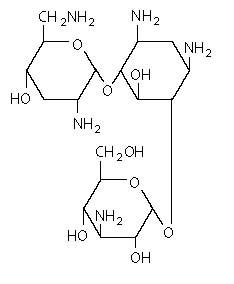
tobramycin
d8235017-cb52-44d4-a6e6-6ee3f00c47d2
34391-3
HUMAN PRESCRIPTION DRUG LABEL
Drug Facts
Composition & Product
Identifiers & Packaging
Indications and Usage
Tobramycin Ophthalmic Solution is a topical antibiotic indicated in the treatment of external infections of the eye and its adnexa caused by susceptible bacteria. Appropriate monitoring of bacterial response to topical antibiotic therapy should accompany the use of Tobramycin Ophthalmic Solution. Clinical studies have shown tobramycin to be safe and effective for use in children.
Dosage and Administration
In mild to moderate disease, instill one or two drops into the affected eye(s) every four hours. In severe infections, instill two drops into the eye(s) hourly until improvement, following which treatment should be reduced prior to discontinuation. DO NOT USE IF IMPRINTED NECKBAND IS NOT INTACT. FOR OPHTHALMIC USE ONLY
Contraindications
Tobramycin Ophthalmic Solution is contraindicated in patients with known hypersensitivity to any of its components.
Adverse Reactions
The most frequent adverse reactions to tobramycin ophthalmic solution is localized ocular toxicity and hypersensitivity, including lid itching and swelling, and conjunctival erythema. These reactions occur in less than three of 100 patients treated with tobramycin. Similar reactions may occur with the topical use of other aminoglycoside antibiotics. Other adverse reactions have not been reported from tobramycin therapy; however, if topical ocular tobramycin is administered concomitantly with systemic aminoglycoside antibiotics, care should be taken to monitor the total serum concentration.
How Supplied
Tobramycin Ophthalmic Solution USP, 0.3% is supplied in a plastic bottle with a controlled drop tip in the following size: 5 mL bottle – NDC 63187-024-05
Description
Rx only
Medication Information
Indications and Usage
Tobramycin Ophthalmic Solution is a topical antibiotic indicated in the treatment of external infections of the eye and its adnexa caused by susceptible bacteria. Appropriate monitoring of bacterial response to topical antibiotic therapy should accompany the use of Tobramycin Ophthalmic Solution. Clinical studies have shown tobramycin to be safe and effective for use in children.
Dosage and Administration
In mild to moderate disease, instill one or two drops into the affected eye(s) every four hours. In severe infections, instill two drops into the eye(s) hourly until improvement, following which treatment should be reduced prior to discontinuation. DO NOT USE IF IMPRINTED NECKBAND IS NOT INTACT. FOR OPHTHALMIC USE ONLY
Contraindications
Tobramycin Ophthalmic Solution is contraindicated in patients with known hypersensitivity to any of its components.
Adverse Reactions
The most frequent adverse reactions to tobramycin ophthalmic solution is localized ocular toxicity and hypersensitivity, including lid itching and swelling, and conjunctival erythema. These reactions occur in less than three of 100 patients treated with tobramycin. Similar reactions may occur with the topical use of other aminoglycoside antibiotics. Other adverse reactions have not been reported from tobramycin therapy; however, if topical ocular tobramycin is administered concomitantly with systemic aminoglycoside antibiotics, care should be taken to monitor the total serum concentration.
How Supplied
Tobramycin Ophthalmic Solution USP, 0.3% is supplied in a plastic bottle with a controlled drop tip in the following size: 5 mL bottle – NDC 63187-024-05
Description
Rx only
Principal Display Panel
Section 42229-5
Rx only
General:
As with other antibiotic preparations, prolonged use may result in overgrowth of nonsusceptible organisms, including fungi. If superinfection occurs, appropriate therapy should be initiated.
Storage:
Store at 2°-25°C (36°-77°F). Avoid excessive heat.
KEEP OUT OF REACH OF CHILDREN.
Revised August 2007
Bausch & Lomb Incorporated
Tampa, FL 33637
©Bausch & Lomb Incorporated
9116801 (Folded)
9116901 (Flat)
Repackaged by:
Proficient Rx LP
Thousand Oaks, CA 91320
Warnings:
NOT FOR INJECTION INTO THE EYE. Sensitivity to topically applied aminoglycosides may occur in some patients. If a sensitivity reaction to Tobramycin Ophthalmic Solution occurs, discontinue use.
Overdosage:
Clinically apparent signs and symptoms of an overdose of tobramycin ophthalmic solution (punctate keratitis, erythema, increased lacrimation, edema and lid itching) may be similar to adverse reaction effects seen in some patients.
Description:
Tobramycin ophthalmic solution is a sterile topical ophthalmic antibiotic formulation prepared specifically for topical therapy of external infections.
EACH mL CONTAINS:
ACTIVE: Tobramycin 3 mg (0.3%). INACTIVES: Boric Acid, Sodium Sulfate, Sodium Chloride, Tyloxapol and Purified Water. Sodium Hydroxide and/or Sulfuric Acid may be added to adjust pH (7.0 - 8.0).
PRESERVATIVE ADDED: Benzalkonium Chloride 0.1 mg (0.01%).
The structural formula of tobramycin is
Molecular formula: C18H37N5O9
Molecular weight: 467.52
Chemical name:
O-[3-amino-3-deoxy—α-D-gluco-pyranosyl-(1 → 4)]-O-[2,6-diamino-2,3,6-trideoxy-α-D-ribohexo-pyranosyl- (1 → 6)]-2-deoxystreptamine.
Tobramycin is a water-soluble aminoglycoside antibiotic active against a wide variety of gram-negative and gram-positive ophthalmic pathogens.
How Supplied:
Tobramycin Ophthalmic Solution USP, 0.3% is supplied in a plastic bottle with a controlled drop tip in the following size:
5 mL bottle – NDC 63187-024-05
Nursing Mothers:
Because of the potential for adverse reactions in nursing infants from Tobramycin Ophthalmic Solution, a decision should be made whether to discontinue nursing the infant or discontinue the drug, taking into account the importance of the drug to the mother.
Adverse Reactions:
The most frequent adverse reactions to tobramycin ophthalmic solution is localized ocular toxicity and hypersensitivity, including lid itching and swelling, and conjunctival erythema. These reactions occur in less than three of 100 patients treated with tobramycin. Similar reactions may occur with the topical use of other aminoglycoside antibiotics. Other adverse reactions have not been reported from tobramycin therapy; however, if topical ocular tobramycin is administered concomitantly with systemic aminoglycoside antibiotics, care should be taken to monitor the total serum concentration.
Contraindications:
Tobramycin Ophthalmic Solution is contraindicated in patients with known hypersensitivity to any of its components.
Pregnancy Category B.
Reproduction studies in three types of animals at doses up to thirty-three times the normal human systemic dose have revealed no evidence of impaired fertility or harm to the fetus due to tobramycin. There are, however, no adequate and well-controlled studies in pregnant women. Because animal studies are not always predictive of human response, this drug should be used during pregnancy only if clearly needed.
Clinical Pharmacology:
In Vitro Data: In vitro studies have demonstrated tobramycin is active against susceptible strains of the following microorganisms:
Staphylococci, including S. aureus and S. epidermidis (coagulase-positive and coagulase-negative), including penicillin-resistant strains.
Streptococci, including some of the Group A-betahemolytic species, some nonhemolytic species, and some Streptococcus pneumoniae.
Pseudomonas aeruginosa, Escherichia coli, Klebsiella pneumoniae, Enterobacter aerogenes, Proteus mirabilis, Morganella morganii, most Proteus vulgaris strains, Haemophilus influenzae and H. aegyptius, Moraxella lacunata, and Acinetobacter calcoaceticus and some Neisseria species. Bacterial susceptibility studies demonstrate that in some cases, microorganisms resistant to gentamicin retain susceptibility to tobramycin. A significant bacterial population resistant to tobramycin has not yet emerged; however, bacterial resistance may develop upon prolonged use.
Indications and Usage:
Tobramycin Ophthalmic Solution is a topical antibiotic indicated in the treatment of external infections of the eye and its adnexa caused by susceptible bacteria. Appropriate monitoring of bacterial response to topical antibiotic therapy should accompany the use of Tobramycin Ophthalmic Solution. Clinical studies have shown tobramycin to be safe and effective for use in children.
Information for Patients:
Do not touch dropper tip to any surface, as this may contaminate the contents.
Dosage and Administration:
In mild to moderate disease, instill one or two drops into the affected eye(s) every four hours. In severe infections, instill two drops into the eye(s) hourly until improvement, following which treatment should be reduced prior to discontinuation.
DO NOT USE IF IMPRINTED NECKBAND IS NOT INTACT.
FOR OPHTHALMIC USE ONLY
Structured Label Content
Principal Display Panel
Section 42229-5 (42229-5)
Rx only
General:
As with other antibiotic preparations, prolonged use may result in overgrowth of nonsusceptible organisms, including fungi. If superinfection occurs, appropriate therapy should be initiated.
Storage:
Store at 2°-25°C (36°-77°F). Avoid excessive heat.
KEEP OUT OF REACH OF CHILDREN.
Revised August 2007
Bausch & Lomb Incorporated
Tampa, FL 33637
©Bausch & Lomb Incorporated
9116801 (Folded)
9116901 (Flat)
Repackaged by:
Proficient Rx LP
Thousand Oaks, CA 91320
Warnings: (WARNINGS:)
NOT FOR INJECTION INTO THE EYE. Sensitivity to topically applied aminoglycosides may occur in some patients. If a sensitivity reaction to Tobramycin Ophthalmic Solution occurs, discontinue use.
Overdosage: (OVERDOSAGE:)
Clinically apparent signs and symptoms of an overdose of tobramycin ophthalmic solution (punctate keratitis, erythema, increased lacrimation, edema and lid itching) may be similar to adverse reaction effects seen in some patients.
Description: (DESCRIPTION:)
Tobramycin ophthalmic solution is a sterile topical ophthalmic antibiotic formulation prepared specifically for topical therapy of external infections.
EACH mL CONTAINS:
ACTIVE: Tobramycin 3 mg (0.3%). INACTIVES: Boric Acid, Sodium Sulfate, Sodium Chloride, Tyloxapol and Purified Water. Sodium Hydroxide and/or Sulfuric Acid may be added to adjust pH (7.0 - 8.0).
PRESERVATIVE ADDED: Benzalkonium Chloride 0.1 mg (0.01%).
The structural formula of tobramycin is
Molecular formula: C18H37N5O9
Molecular weight: 467.52
Chemical name:
O-[3-amino-3-deoxy—α-D-gluco-pyranosyl-(1 → 4)]-O-[2,6-diamino-2,3,6-trideoxy-α-D-ribohexo-pyranosyl- (1 → 6)]-2-deoxystreptamine.
Tobramycin is a water-soluble aminoglycoside antibiotic active against a wide variety of gram-negative and gram-positive ophthalmic pathogens.
How Supplied: (HOW SUPPLIED:)
Tobramycin Ophthalmic Solution USP, 0.3% is supplied in a plastic bottle with a controlled drop tip in the following size:
5 mL bottle – NDC 63187-024-05
Nursing Mothers:
Because of the potential for adverse reactions in nursing infants from Tobramycin Ophthalmic Solution, a decision should be made whether to discontinue nursing the infant or discontinue the drug, taking into account the importance of the drug to the mother.
Adverse Reactions: (ADVERSE REACTIONS:)
The most frequent adverse reactions to tobramycin ophthalmic solution is localized ocular toxicity and hypersensitivity, including lid itching and swelling, and conjunctival erythema. These reactions occur in less than three of 100 patients treated with tobramycin. Similar reactions may occur with the topical use of other aminoglycoside antibiotics. Other adverse reactions have not been reported from tobramycin therapy; however, if topical ocular tobramycin is administered concomitantly with systemic aminoglycoside antibiotics, care should be taken to monitor the total serum concentration.
Contraindications: (CONTRAINDICATIONS:)
Tobramycin Ophthalmic Solution is contraindicated in patients with known hypersensitivity to any of its components.
Pregnancy Category B.
Reproduction studies in three types of animals at doses up to thirty-three times the normal human systemic dose have revealed no evidence of impaired fertility or harm to the fetus due to tobramycin. There are, however, no adequate and well-controlled studies in pregnant women. Because animal studies are not always predictive of human response, this drug should be used during pregnancy only if clearly needed.
Clinical Pharmacology: (CLINICAL PHARMACOLOGY:)
In Vitro Data: In vitro studies have demonstrated tobramycin is active against susceptible strains of the following microorganisms:
Staphylococci, including S. aureus and S. epidermidis (coagulase-positive and coagulase-negative), including penicillin-resistant strains.
Streptococci, including some of the Group A-betahemolytic species, some nonhemolytic species, and some Streptococcus pneumoniae.
Pseudomonas aeruginosa, Escherichia coli, Klebsiella pneumoniae, Enterobacter aerogenes, Proteus mirabilis, Morganella morganii, most Proteus vulgaris strains, Haemophilus influenzae and H. aegyptius, Moraxella lacunata, and Acinetobacter calcoaceticus and some Neisseria species. Bacterial susceptibility studies demonstrate that in some cases, microorganisms resistant to gentamicin retain susceptibility to tobramycin. A significant bacterial population resistant to tobramycin has not yet emerged; however, bacterial resistance may develop upon prolonged use.
Indications and Usage: (INDICATIONS AND USAGE:)
Tobramycin Ophthalmic Solution is a topical antibiotic indicated in the treatment of external infections of the eye and its adnexa caused by susceptible bacteria. Appropriate monitoring of bacterial response to topical antibiotic therapy should accompany the use of Tobramycin Ophthalmic Solution. Clinical studies have shown tobramycin to be safe and effective for use in children.
Information for Patients: (Information for patients:)
Do not touch dropper tip to any surface, as this may contaminate the contents.
Dosage and Administration: (DOSAGE AND ADMINISTRATION:)
In mild to moderate disease, instill one or two drops into the affected eye(s) every four hours. In severe infections, instill two drops into the eye(s) hourly until improvement, following which treatment should be reduced prior to discontinuation.
DO NOT USE IF IMPRINTED NECKBAND IS NOT INTACT.
FOR OPHTHALMIC USE ONLY
Advanced Ingredient Data
Raw Label Data
All Sections (JSON)
Additional Information
Back to search View SPL set listing Open on DailyMed ↗
Source: dailymed · Ingested: 2026-02-15T11:37:05.685441 · Updated: 2026-03-14T21:48:45.665631