Adbry
d8020b69-3001-44e2-9b5d-5f93d9aaf6e1
34391-3
HUMAN PRESCRIPTION DRUG LABEL
Drug Facts
Composition & Product
Identifiers & Packaging
Indications and Usage
ADBRY is indicated for the treatment of moderate-to-severe atopic dermatitis in adults and pediatric patients 12 years of age and older whose disease is not adequately controlled with topical prescription therapies or when those therapies are not advisable. ADBRY can be used with or without topical corticosteroids.
Dosage and Administration
Prior to ADBRY initiation, complete all age appropriate vaccinations as recommended by current immunization guidelines ( 2.1 ) Administer ADBRY by subcutaneous injection. ( 2.2 ) In pediatric patients 12 years of age and older, it is recommended that ADBRY be given by or under supervision of an adult. ( 2.2 ) The recommended dosage of ADBRY ( 2.3 ) Dosage in Adults Initial Loading Dose Subsequent Dosage Prefilled syringe 600 mg (four 150 mg injections) 300 mg (two 150 mg injections) every other week Autoinjector 600 mg (two 300 mg injections) 300 mg (one 300 mg injection) every other week Dosage in Pediatric Patients 12 Years of Age and Older Initial Loading Dose Subsequent Dosage Prefilled syringe 300 mg (two 150 mg injections) 150 mg (one 150 mg injection) every other week A dosage of 300 mg every 4 weeks may be considered for adult patients below 100 kg who achieve clear or almost clear skin after 16 weeks of treatment. ( 2.3 )
Contraindications
ADBRY is contraindicated in patients who have known hypersensitivity to tralokinumab-ldrm or any excipients in ADBRY [see Warnings and Precautions (5.1) ] .
Warnings and Precautions
Hypersensitivity: Hypersensitivity reactions, including anaphylaxis, and angioedema have occurred after administration of ADBRY. Discontinue ADBRY in the event of a hypersensitivity reaction. ( 5.1 ) Conjunctivitis and Keratitis: Patients should report new onset or worsening eye symptoms to their healthcare provider. ( 5.2 ) Parasitic (Helminth) Infections: Treat patients with pre-existing helminth infections before initiating treatment with ADBRY. If patients become infected while receiving ADBRY and do not respond to anti-helminth treatment, discontinue treatment with ADBRY until the infection resolves. ( 5.3 ) Risk of Infection with Live Vaccines: Avoid use of live vaccines. ( 5.4 )
Adverse Reactions
The following adverse reactions are discussed in greater detail elsewhere in the labeling: Hypersensitivity [see Warnings and Precautions (5.1) ] Conjunctivitis and Keratitis [see Warnings and Precautions (5.2) ]
Description
ADBRY is indicated for the treatment of moderate-to-severe atopic dermatitis in adults and pediatric patients 12 years of age and older whose disease is not adequately controlled with topical prescription therapies or when those therapies are not advisable. ADBRY can be used with or without topical corticosteroids.
Medication Information
Warnings and Precautions
Hypersensitivity: Hypersensitivity reactions, including anaphylaxis, and angioedema have occurred after administration of ADBRY. Discontinue ADBRY in the event of a hypersensitivity reaction. ( 5.1 ) Conjunctivitis and Keratitis: Patients should report new onset or worsening eye symptoms to their healthcare provider. ( 5.2 ) Parasitic (Helminth) Infections: Treat patients with pre-existing helminth infections before initiating treatment with ADBRY. If patients become infected while receiving ADBRY and do not respond to anti-helminth treatment, discontinue treatment with ADBRY until the infection resolves. ( 5.3 ) Risk of Infection with Live Vaccines: Avoid use of live vaccines. ( 5.4 )
Indications and Usage
ADBRY is indicated for the treatment of moderate-to-severe atopic dermatitis in adults and pediatric patients 12 years of age and older whose disease is not adequately controlled with topical prescription therapies or when those therapies are not advisable. ADBRY can be used with or without topical corticosteroids.
Dosage and Administration
Prior to ADBRY initiation, complete all age appropriate vaccinations as recommended by current immunization guidelines ( 2.1 ) Administer ADBRY by subcutaneous injection. ( 2.2 ) In pediatric patients 12 years of age and older, it is recommended that ADBRY be given by or under supervision of an adult. ( 2.2 ) The recommended dosage of ADBRY ( 2.3 ) Dosage in Adults Initial Loading Dose Subsequent Dosage Prefilled syringe 600 mg (four 150 mg injections) 300 mg (two 150 mg injections) every other week Autoinjector 600 mg (two 300 mg injections) 300 mg (one 300 mg injection) every other week Dosage in Pediatric Patients 12 Years of Age and Older Initial Loading Dose Subsequent Dosage Prefilled syringe 300 mg (two 150 mg injections) 150 mg (one 150 mg injection) every other week A dosage of 300 mg every 4 weeks may be considered for adult patients below 100 kg who achieve clear or almost clear skin after 16 weeks of treatment. ( 2.3 )
Contraindications
ADBRY is contraindicated in patients who have known hypersensitivity to tralokinumab-ldrm or any excipients in ADBRY [see Warnings and Precautions (5.1) ] .
Adverse Reactions
The following adverse reactions are discussed in greater detail elsewhere in the labeling: Hypersensitivity [see Warnings and Precautions (5.1) ] Conjunctivitis and Keratitis [see Warnings and Precautions (5.2) ]
Description
ADBRY is indicated for the treatment of moderate-to-severe atopic dermatitis in adults and pediatric patients 12 years of age and older whose disease is not adequately controlled with topical prescription therapies or when those therapies are not advisable. ADBRY can be used with or without topical corticosteroids.
Section 42229-5
Use of the Autoinjector
- The ADBRY autoinjector is for use in adults only.
- A caregiver or adult patient may inject ADBRY using the autoinjector.
Section 42230-3
| This Patient Information has been approved by the U.S. Food and Drug Administration. | Issued: 12/2025 | |
|
PATIENT INFORMATION ADBRY® [ad'-bree] (tralokinumab-ldrm) injection, for subcutaneous use |
||
What is ADBRY?
|
||
| Do not use ADBRY if you are allergic to tralokinumab or to any of the ingredients in ADBRY. See the end of this leaflet for a complete list of ingredients in ADBRY. | ||
Before using ADBRY, tell your healthcare provider about all your medical conditions, including if you:
|
||
How should I use ADBRY?
|
||
|
What are the possible side effects of ADBRY? ADBRY can cause serious side effects, including:
|
||
|
|
|
Call your doctor for medical advice about side effects. You may report side effects to FDA at 1-800-FDA-1088. |
||
How should I store ADBRY?
|
||
|
General information about the safe and effective use of ADBRY.
Medicines are sometimes prescribed for purposes other than those listed in a Patient Information leaflet. Do not use ADBRY for a condition for which it was not prescribed. Do not give ADBRY to other people, even if they have the same symptoms you have. It may harm them. You can ask your pharmacist or healthcare provider for information about ADBRY that is written for health professionals. |
||
|
What are the ingredients in ADBRY?
Active ingredient: tralokinumab-ldrm Inactive ingredients: acetic acid, polysorbate 80, sodium acetate trihydrate, sodium chloride, and water for injection. Manufactured by: LEO Pharma A/S Industriparken 55, DK-2750 Ballerup, Denmark Distributed by: LEO Pharma Inc., Madison, NJ 07940, USA U.S. License No. 2169 ADBRY® is a registered trademark of LEO Pharma A/S. © 2025 LEO Pharma Inc. All rights reserved. For more information about ADBRY, go to www.ADBRY.com or call 1-844-MY-ADBRY (1-844-692-3279). |
Section 44425-7
Storage and Handling
ADBRY does not contain preservatives. Discard any unused portion.
Store refrigerated at 2°C to 8°C (36°F to 46°F) in the original carton to protect from light.
If necessary, ADBRY may be kept at room temperature up to 30°C (86°F) for a maximum of 14 days in the original carton. Do not store above 30°C (86°F). Do not put ADBRY back in the refrigerator after reaching room temperature. If the carton needs to be removed permanently from refrigerator, the date of removal may be recorded on the outer carton in the space provided. After removal from the refrigerator, ADBRY must be used within 14 days or discarded.
Do not expose ADBRY to heat or direct sunlight.
Do not freeze. Do not shake.
10 Overdosage
There is no specific treatment for ADBRY overdose. In the event of overdosage, contact Poison Control (1-800-222-1222) for latest recommendations and monitor the patient for any signs or symptoms of adverse reactions and institute appropriate symptomatic treatment immediately.
11 Description
Tralokinumab-ldrm, an interleukin-13 antagonist, is a human IgG4 monoclonal antibody. Tralokinumab-ldrm is produced in mouse myeloma cells by recombinant DNA technology, consists of 1326 amino acids, and has a molecular weight of approximately 147 kilodaltons.
ADBRY (tralokinumab-ldrm) injection is a sterile, preservative-free, clear to opalescent, colorless to pale yellow solution for subcutaneous use supplied as either a single-dose prefilled syringe with needle guard in a siliconized Type-1 clear glass syringe or a single-dose autoinjector with a siliconized Type-1 clear glass syringe inside. None of the components of the prefilled syringe, autoinjector or the needle guard are made with natural rubber latex.
Each prefilled syringe delivers 150 mg tralokinumab-ldrm in 1 mL and the inactive ingredients: acetic acid (0.3 mg), polysorbate 80 (0.1 mg), sodium acetate trihydrate (6 mg), sodium chloride (5 mg), and Water for Injection, at an approximate pH of 5.5.
Each autoinjector delivers 300 mg tralokinumab-ldrm in 2 mL and the inactive ingredients: acetic acid (0.6 mg), polysorbate 80 (0.2 mg), sodium acetate trihydrate (12 mg), sodium chloride (10 mg), and Water for Injection, at an approximate pH of 5.5.
2.5 Missed Doses
If a dose is missed, administer the dose as soon as possible. Thereafter, resume dosing at the regular scheduled time.
8.4 Pediatric Use
The safety and effectiveness of ADBRY have been established for the treatment of moderate-to-severe atopic dermatitis in pediatric patients 12 years of age and older whose disease is not adequately controlled with topical prescription therapies or when those therapies are not advisable.
Use of ADBRY in this age group is supported by a multicenter, randomized, double-blind, placebo-controlled trial (ECZTRA 6) in 289 subjects 12 to 17 years of age with moderate-to-severe atopic dermatitis. Of the 289 subjects, 195 were treated with ADBRY and 94 were treated with matching placebo. The safety and effectiveness were consistent between subjects 12 to 17 years of age and adult subjects [see Adverse Reactions (6.1) and Clinical Studies (14)].
Safety and effectiveness of ADBRY have not been established in pediatric patients younger than 12 years of age.
8.5 Geriatric Use
Of the 1605 subjects exposed to ADBRY in 5 atopic dermatitis trials in the initial treatment period of up to 16 weeks, 77 subjects were 65 years or older. Clinical studies did not include sufficient numbers of subjects aged 65 and over to determine whether they respond differently from younger subjects [see Clinical Pharmacology (12.3)].
12.6 Immunogenicity
The observed incidence of anti-drug antibodies is highly dependent on the sensitivity and specificity of the assay. Differences in assay methods preclude meaningful comparisons of the incidence of anti-drug antibodies in the trials described below with the incidence of anti-drug antibodies in other trials, including those of ADBRY or of other tralokinumab products.
In ECZTRA 1, ECZTRA 2, and ECZTRA 3, and the vaccine-response trial, the incidence of anti-drug antibodies (ADA) during the initial 16-week treatment period was 1.4% for subjects treated with ADBRY 300 mg every other week and in 1.3% for subjects treated with placebo; neutralizing antibodies were seen in 0.1% of subjects treated with ADBRY and 0.2% of subjects treated with placebo.
Across all trial periods, the ADA incidence for subjects who received ADBRY was 4.6%; 0.9% had persistent ADA and 1.0% had neutralizing antibodies.
No clinically significant differences in the pharmacokinetics, safety, or efficacy of tralokinumab-ldrm were observed in patients who tested positive for anti-tralokinumab-ldrm antibody (including neutralizing antibodies).
In the open-label long-term extension trial (ECZTEND), anti-drug-antibody (ADA) responses were assessed up to 248 weeks and were not associated with any impact on tralokinumab exposure or safety.
4 Contraindications
ADBRY is contraindicated in patients who have known hypersensitivity to tralokinumab-ldrm or any excipients in ADBRY [see Warnings and Precautions (5.1)].
6 Adverse Reactions
The following adverse reactions are discussed in greater detail elsewhere in the labeling:
- Hypersensitivity [see Warnings and Precautions (5.1)]
- Conjunctivitis and Keratitis [see Warnings and Precautions (5.2)]
5.1 Hypersensitivity
Hypersensitivity reactions including anaphylaxis and angioedema have been reported with use of ADBRY.
If a serious hypersensitivity reaction occurs, discontinue ADBRY immediately and initiate appropriate therapy.
Instructions for Use
ADBRY® [ad'-bree]
(tralokinumab-ldrm)
injection, for subcutaneous use
This Instructions for Use contains information on how to inject ADBRY.
Read this Instructions for Use before you start using the ADBRY prefilled syringe and each time you get a refill. There may be new information. This information does not take the place of talking to your healthcare provider about your medical condition or your treatment.
Keep this Instructions for Use and refer to it as needed.
Each single-dose prefilled syringe contains 150 mg of ADBRY. The ADBRY prefilled syringes are for one time use only.
Important Information You Need to Know Before Injecting ADBRY:
- Your healthcare provider should show you or your caregiver how to prepare and inject a dose of ADBRY using the prefilled syringe before you inject ADBRY for the first time. Talk to your healthcare provider if you have any questions about how to inject ADBRY the right way.
- ADBRY is given as an injection under the skin (subcutaneous injection).
- Do not inject yourself or someone else until you have been shown how to inject ADBRY the right way.
- In children 12 years of age and older, it is recommended that ADBRY be given by or under supervision of an adult.
- Talk to your healthcare provider about your prescribed dose before injecting ADBRY.
- Rotate the injection site each time you give an injection.
- The ADBRY prefilled syringe has a needle guard that will be activated to cover the needle after the injection is finished.
- Do not remove the needle cover until just before you give the injection.
- Do not share or reuse your ADBRY prefilled syringe.
- Do not inject through clothes.
| Storing ADBRY | |
|---|---|
|
|
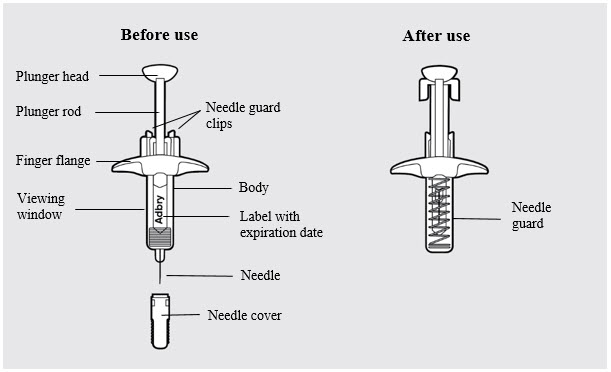
ADBRY prefilled syringe parts (see Figure A):
Figure A
Step 1: Setting up ADBRY injection
Figure B
1a: Gather the supplies needed for your injection. For each ADBRY dose you will need (see Figure B):
- A clean, flat, well-lit work surface, like a table
- Prescribed number of ADBRY prefilled syringe(s)
- An alcohol swab (not included in the carton)
- Clean cotton balls or gauze pads (not included in the carton)
- A puncture-resistant sharps disposal container (not included in the carton). See Step 5 "Disposing of ADBRY"
at the end of this Instructions for Use.
Figure C
1b: Take the ADBRY prefilled syringe carton out of the refrigerator
- Check the expiration date (EXP) on the carton (see Figure C). Do not use if the expiration date on the carton has passed.
- When using the first prefilled syringe, check to make sure the seal on the ADBRY carton is intact.
- Do not use the ADBRY prefilled syringes if the seal on the carton is broken.
Figure D
1c: Determine how many ADBRY prefilled syringes you need for your dose
If you have been prescribed a 300 mg dose, you will need 2 syringes.
If you have been prescribed a 150 mg dose, you will only need 1 syringe and the remaining syringe should be returned to the refrigerator in its carton.
- Remove the ADBRY prefilled syringe(s) by grasping the body (not the plunger rod) of the ADBRY prefilled syringe (see Figure D ).
- Do not touch the needle guard clips to keep from activating the safety device (needle guard) too soon.
- Do not remove the needle cover on the prefilled syringe until you have reached Step 3 and are ready to inject.
Figure E
1d: Let the ADBRY prefilled syringe(s) warm up to room temperature (see Figure E)
Place the ADBRY prefilled syringe(s) on the flat surface and wait 30 minutes before you inject ADBRY to let the prefilled syringe(s) warm up to room temperature 68°F to 86°F (20°C to 30°C). This will help to reduce discomfort.
- Do not microwave the prefilled syringes, run hot water over them, or leave them in direct sunlight.
- Do not shake the syringes.
- Do not remove the needle cover on the prefilled syringes until you have reached Step 3 and are ready to inject.
- Do not put the syringes back in the refrigerator after they have reached room temperature.
Figure F
1e: Inspect the ADBRY prefilled syringe(s) (see Figure F)
- Make sure ADBRY appears on the label.
- Check the expiration date printed on the syringe.
- Check the medicine through the viewing window. The medicine inside should be clear to slightly pearly and colorless to pale yellow.
-
Do not use the ADBRY prefilled syringe, throw away and get a new one if:
- the expiration date printed on the syringe has passed
- the medicine is cloudy, discolored, or has particles in it
- looks damaged or has been dropped
- You may see small air bubbles in the liquid. This is normal. You do not need to do anything about it.
Step 2: Choosing and preparing injection area
Figure G
2a: Choose the area for your injection (see Figure G)
- You may inject into your thighs or your stomach area (abdomen), but not within 2 inches (5 cm) of your belly button (navel).
- The upper arm can also be used if a caregiver gives the injection.
- Inject your dose into a different body area each time you inject ADBRY.
- If you need more than 1 injection for your dose, inject into the same body area, but at least 1 inch (3 cm) apart from each other.
- Do not inject where the skin is tender, damaged, bruised or scarred.
Figure H
2b: Wash your hands and prepare your skin
- Wash your hands with soap and water.
- Clean the injection area with an alcohol swab using a circular motion (see Figure H
).
- Let the area dry completely.
- Do not blow or touch the cleaned area before injecting.
Step 3: Injecting ADBRY
Figure I
3a: Pull off the ADBRY needle cover
Hold the ADBRY prefilled syringe body with one hand, pull the needle cover straight off with your other hand (see Figure I ) and throw it away in the sharps container.
- Do not try to recap the ADBRY prefilled syringe.
- Do not hold the plunger rod or plunger head while removing the needle cover.
- You may see a drop of liquid at the end of the needle. This is normal.
- Do not touch the needle, or let it touch any surface. If either of these occur, throw away the syringe and get a new one.
Figure J
3b: Insert the needle
With one hand, gently pinch and hold a fold of skin where you cleaned the injection area. With the other hand, insert the needle completely at about a 45-degree angle into your skin (see Figure J ).
Figure K
3c: Inject the medicine
Use your thumb to firmly push down the plunger head all the way down (see Figure K ). All the medicine is injected when you cannot push the plunger head any further.
Figure L
3d: Release and remove
Lift your thumb off the plunger head. The needle will automatically move back inside the syringe body and lock into place (see Figure L ).
- Place a dry cotton ball or gauze pad over the injection site for a few seconds. Do not rub the injection site. If needed, cover the injection site with a small bandage.
- There may be a small amount of blood or liquid where you injected. This is normal.
Throw away the used ADBRY prefilled syringe in the sharps disposal container. See Step 5 "Disposing of ADBRY".
Step 4: Repeating for multiple injections
Figure M
If you need to give multiple injections for your prescribed dose, repeat step 3. The other injection(s) should be given into the same body area, but at least 1 inch (3 cm) away from each other.
Step 5: Disposing of ADBRY syringe(s)
Figure N
- Put the used ADBRY prefilled syringe(s) in an FDA-cleared sharps disposal container right away after use (see Figure N ). Do not throw away the ADBRY prefilled syringe(s) in your household trash.
- If you do not have an FDA-cleared sharps disposal container, you may use a household container that is:
- made of heavy-duty plastic,
- can be closed with a tight-fitting, puncture-resistant lid, without sharps being able to come out,
- upright and stable during use,
- leak-resistant, and
- properly labeled to warn of hazardous waste inside the container.
- When your sharps disposal container is almost full, you will need to follow your community guidelines for the right way to dispose of your sharps disposal container. There may be state or local laws about how you should throw away used needles and syringes. For more information about safe sharps disposal, and for specific information about sharps disposal in the state that you live in, go to the FDA's website at: http://www.fda.gov/safesharpsdisposal.
- Do not recycle your used sharps disposal container.
For more information go to www.ADBRY.com or call 1-844-692-3279. If you still have questions, call your healthcare provider.
Manufactured by: LEO Pharma A/S Industriparken 55, DK-2750 Ballerup, Denmark
Distributed by: LEO Pharma Inc., Madison, NJ 07940, USA
U.S. License No. 2169
ADBRY® is a registered trademark of LEO Pharma A/S.
© 2023 LEO Pharma Inc. All rights reserved.
This Instructions for Use has been approved by the U.S. Food and Drug Administration.
Revised 12/2023
12.2 Pharmacodynamics
ADBRY was associated with decreased concentrations of Th2 and Th22 immunity biomarkers in the blood, such as thymus and activation-regulated chemokine (TARC/CCL17), periostin, IL-22, lactate dehydrogenase (LDH) and serum IgE. ADBRY decreased expression of keratin 16 and Ki-67 in AD skin, and upregulated protein expression of loricrin. ADBRY suppressed expression of genes in the Th2 pathway, including CCL17, CCL18 and CCL26 as well as markers of Th17- and Th22-regulated genes in lesional skin. The clinical relevance of these is not fully understood.
12.3 Pharmacokinetics
In adults, the mean (SD) steady-state trough concentration of tralokinumab-ldrm ranged from 98.0 (41.1) mcg/mL to 101.4 (42.7) mcg/mL following administration of ADBRY at 300 mg every other week. Tralokinumab-ldrm exposure increased proportionally over a dosage range up to 2100 mg for a 70 kg subject (30 mg/kg IV) (3.5 times the maximum approved recommended dosage). Steady-state tralokinumab-ldrm concentrations were achieved by week 16 following a 600 mg starting dose and 300 mg every other week.
1 Indications and Usage
ADBRY is indicated for the treatment of moderate-to-severe atopic dermatitis in adults and pediatric patients 12 years of age and older whose disease is not adequately controlled with topical prescription therapies or when those therapies are not advisable. ADBRY can be used with or without topical corticosteroids.
2.6 Preparation for Use
- Before injection, remove ADBRY prefilled syringes or autoinjectors from the refrigerator and allow to reach room temperature (at least 30 minutes for the prefilled syringes and at least 45 minutes for the autoinjectors) without removing the needle cover or cap, respectively.
- After removal from the refrigerator, ADBRY may be kept at room temperature up to 30°C (86°F) and must be used within 14 days or discarded.
- Inspect ADBRY visually for particulate matter and discoloration prior to administration. ADBRY injection is a clear to opalescent, colorless to pale yellow solution. Do not use if the liquid contains visible particulate matter, is discolored or cloudy (other than clear to opalescent, colorless to pale yellow).
- ADBRY does not contain preservatives; therefore, discard any unused product.
12.1 Mechanism of Action
Tralokinumab-ldrm is a human IgG4 monoclonal antibody that specifically binds to human interleukin-13 (IL-13) and inhibits its interaction with the IL-13 receptor α1 and α2 subunits (IL-13Rα1 and IL-13Rα2). IL-13 is a naturally occurring cytokine of the Type 2 immune response. Tralokinumab-ldrm inhibits the bioactivity of IL-13 by blocking IL-13 interaction with IL-13Rα1/IL-4Rα receptor complex. Tralokinumab-ldrm inhibits IL-13-induced responses including the release of proinflammatory cytokines, chemokines and IgE.
5 Warnings and Precautions
- Hypersensitivity: Hypersensitivity reactions, including anaphylaxis, and angioedema have occurred after administration of ADBRY. Discontinue ADBRY in the event of a hypersensitivity reaction. (5.1)
- Conjunctivitis and Keratitis: Patients should report new onset or worsening eye symptoms to their healthcare provider. (5.2)
- Parasitic (Helminth) Infections: Treat patients with pre-existing helminth infections before initiating treatment with ADBRY. If patients become infected while receiving ADBRY and do not respond to anti-helminth treatment, discontinue treatment with ADBRY until the infection resolves. (5.3)
- Risk of Infection with Live Vaccines: Avoid use of live vaccines. (5.4)
2 Dosage and Administration
- Prior to ADBRY initiation, complete all age appropriate vaccinations as recommended by current immunization guidelines (2.1)
- Administer ADBRY by subcutaneous injection. (2.2)
- In pediatric patients 12 years of age and older, it is recommended that ADBRY be given by or under supervision of an adult. (2.2)
- The recommended dosage of ADBRY (2.3)
Dosage in Adults
| Initial Loading Dose | Subsequent Dosage | |
|---|---|---|
| Prefilled syringe | 600 mg (four 150 mg injections) | 300 mg (two 150 mg injections) every other week |
| Autoinjector | 600 mg (two 300 mg injections) | 300 mg (one 300 mg injection) every other week |
Dosage in Pediatric Patients 12 Years of Age and Older
| Initial Loading Dose | Subsequent Dosage | |
|---|---|---|
| Prefilled syringe | 300 mg (two 150 mg injections) | 150 mg (one 150 mg injection) every other week |
- A dosage of 300 mg every 4 weeks may be considered for adult patients below 100 kg who achieve clear or almost clear skin after 16 weeks of treatment. (2.3)
3 Dosage Forms and Strengths
ADBRY is a clear to opalescent, colorless to pale yellow solution available as:
- Injection: 150 mg/mL solution in a single-dose prefilled syringe with needle guard
- Injection: 300 mg/2 mL solution in a single-dose autoinjector
6.1 Clinical Trials Experience
Because clinical trials are conducted under widely varying conditions, adverse reaction rates observed in the clinical trials of a drug cannot be directly compared to rates in the clinical trials of another drug and may not reflect the rates observed in practice.
5.2 Conjunctivitis and Keratitis
Conjunctivitis and keratitis occurred more frequently in atopic dermatitis subjects who received ADBRY. Conjunctivitis was the most frequently reported eye disorder. Most subjects with conjunctivitis or keratitis recovered or were recovering during the treatment period [see Adverse Reactions (6.1)].
Advise patients to report new onset or worsening eye symptoms to their healthcare provider.
17 Patient Counseling Information
Advise the patients to read the FDA-approved patient labeling (Patient Information and Instructions for Use).
2.4 Concomitant Topical Therapies
ADBRY can be used with or without topical corticosteroids. Topical calcineurin inhibitors may be used, but should be reserved for problem areas only, such as the face, neck, intertriginous and genital areas.
2.1 Vaccination Prior to Treatment
Complete all age-appropriate vaccinations as recommended by current immunization guidelines prior to initiating treatment with ADBRY [see Warnings and Precautions (5.4)].
5.3 Parasitic (helminth) Infections
Patients with known helminth infections were excluded from participation in clinical studies. It is unknown if ADBRY will influence the immune response against helminth infections by inhibiting IL-13 signaling.
Treat patients with pre-existing helminth infections before initiating treatment with ADBRY. If patients become infected while receiving ADBRY and do not respond to antihelminth treatment, discontinue treatment with ADBRY until the infection resolves.
5.4 Risk of Infection With Live Vaccines
ADBRY may alter a patient's immunity and increase the risk of infection following administration of live vaccines. Prior to initiating therapy with ADBRY, complete all age-appropriate vaccinations according to current immunization guidelines. Avoid use of live vaccines during treatment with ADBRY. Limited data are available regarding coadministration of ADBRY with non-live vaccines [see Clinical Pharmacology (12.2)].
2.2 Important Administration Instructions
- ADBRY is administered by subcutaneous injection.
- ADBRY is intended for use under the guidance of a healthcare provider. Provide proper training to patients and/or caregivers on the preparation and administration of ADBRY prior to use according to the "Instructions for Use" [see Instructions for Use].
13.1 Carcinogenesis, Mutagenesis, Impairment of Fertility
Animal studies have not been conducted to evaluate the carcinogenic or mutagenic potential for tralokinumab-ldrm.
No effects on fertility parameters such as reproductive organs, menstrual cycle and sperm analysis were observed in male or female sexually mature cynomolgus monkeys that were subcutaneously administered tralokinumab-ldrm at doses up to 350 mg/animal (10 times the MRHD on a mg/kg basis of 10 mg/kg/week) in females once a week for three consecutive menstrual cycles (maximum of 15 doses) or 600 mg/animal (10 times the MRHD on a mg/kg basis of 10 mg/kg/week) in males once a week for 13 weeks. The monkeys were not mated to evaluate fertility.
Principal Display Panel 150 Mg/ml Syringe Carton Ndc 50222 346 02
Adbry®
(tralokinumab-ldrm)
Injection
150 mg/mL per syringe
NDC 50222-346-02
Rx only
x 2
For Subcutaneous Use Only
One 1-mL single-dose prefilled syringe equals 150 mg
Two 1-mL single-dose prefilled syringes equal 300 mg
Carton contains:
- Two 1-mL single-dose prefilled syringes with needle guard
- Prescribing Information
- Instructions for Use and Patient Information
Store refrigerated at 36°F to 46°F (2°C to 8°C) in
the original carton to protect from light.
LEO®
Principal Display Panel 150 Mg/ml Syringe Carton Ndc 50222 346 04
Adbry®
(tralokinumab-ldrm)
Injection
150 mg/mL per syringe
NDC 50222-346-04
Rx only
x 4
For Subcutaneous Use Only
One 1-mL single-dose prefilled syringe equals 150 mg
Two 1-mL single-dose prefilled syringes equal 300 mg
Four 1-mL single-dose prefilled syringes equal 600 mg
Multipack contains:
- Two cartons
- Each carton contains two 1-mL single-dose prefilled syringes
with needle guard which equal 300 mg
Store refrigerated at 36°F to 46°F (2°C to 8°C) in
the original carton to protect from light.
LEO®
Principal Display Panel 300 Mg/2 Ml Autoinjector Carton Ndc 50222 350 01
Adbry®
(tralokinumab-ldrm)
Injection
300 mg/2 mL Single-dose Autoinjector
NDC 50222-350-01
Rx only
For Subcutaneous Use Only
One 2 mL Single-dose Autoinjector equals one dose of 300 mg
Carton contains:
- One Single-dose Autoinjector
- Prescribing Information
- Instructions for Use and Patient Information
Store refrigerated at 36°F to 46°F (2°C to 8°C) in
the original carton to protect from light.
LEO®
Principal Display Panel 300 Mg/2 Ml Autoinjector Carton Ndc 50222 350 02
Adbry®
(tralokinumab-ldrm)
Injection
300 mg/2 mL Single-dose Autoinjector
NDC 50222-350-02
Rx only
x 2
For Subcutaneous Use Only
One 2 mL Single-dose Autoinjector equals one dose of 300 mg
Carton contains:
- Two Single-dose Autoinjectors
- Prescribing Information
- Instructions for Use and Patient Information
Store refrigerated at 36°F to 46°F (2°C to 8°C) in
the original carton to protect from light.
Dispense in this sealed carton.
LEO®
Structured Label Content
Section 42229-5 (42229-5)
Use of the Autoinjector
- The ADBRY autoinjector is for use in adults only.
- A caregiver or adult patient may inject ADBRY using the autoinjector.
Section 42230-3 (42230-3)
| This Patient Information has been approved by the U.S. Food and Drug Administration. | Issued: 12/2025 | |
|
PATIENT INFORMATION ADBRY® [ad'-bree] (tralokinumab-ldrm) injection, for subcutaneous use |
||
What is ADBRY?
|
||
| Do not use ADBRY if you are allergic to tralokinumab or to any of the ingredients in ADBRY. See the end of this leaflet for a complete list of ingredients in ADBRY. | ||
Before using ADBRY, tell your healthcare provider about all your medical conditions, including if you:
|
||
How should I use ADBRY?
|
||
|
What are the possible side effects of ADBRY? ADBRY can cause serious side effects, including:
|
||
|
|
|
Call your doctor for medical advice about side effects. You may report side effects to FDA at 1-800-FDA-1088. |
||
How should I store ADBRY?
|
||
|
General information about the safe and effective use of ADBRY.
Medicines are sometimes prescribed for purposes other than those listed in a Patient Information leaflet. Do not use ADBRY for a condition for which it was not prescribed. Do not give ADBRY to other people, even if they have the same symptoms you have. It may harm them. You can ask your pharmacist or healthcare provider for information about ADBRY that is written for health professionals. |
||
|
What are the ingredients in ADBRY?
Active ingredient: tralokinumab-ldrm Inactive ingredients: acetic acid, polysorbate 80, sodium acetate trihydrate, sodium chloride, and water for injection. Manufactured by: LEO Pharma A/S Industriparken 55, DK-2750 Ballerup, Denmark Distributed by: LEO Pharma Inc., Madison, NJ 07940, USA U.S. License No. 2169 ADBRY® is a registered trademark of LEO Pharma A/S. © 2025 LEO Pharma Inc. All rights reserved. For more information about ADBRY, go to www.ADBRY.com or call 1-844-MY-ADBRY (1-844-692-3279). |
Section 44425-7 (44425-7)
Storage and Handling
ADBRY does not contain preservatives. Discard any unused portion.
Store refrigerated at 2°C to 8°C (36°F to 46°F) in the original carton to protect from light.
If necessary, ADBRY may be kept at room temperature up to 30°C (86°F) for a maximum of 14 days in the original carton. Do not store above 30°C (86°F). Do not put ADBRY back in the refrigerator after reaching room temperature. If the carton needs to be removed permanently from refrigerator, the date of removal may be recorded on the outer carton in the space provided. After removal from the refrigerator, ADBRY must be used within 14 days or discarded.
Do not expose ADBRY to heat or direct sunlight.
Do not freeze. Do not shake.
10 Overdosage (10 OVERDOSAGE)
There is no specific treatment for ADBRY overdose. In the event of overdosage, contact Poison Control (1-800-222-1222) for latest recommendations and monitor the patient for any signs or symptoms of adverse reactions and institute appropriate symptomatic treatment immediately.
11 Description (11 DESCRIPTION)
Tralokinumab-ldrm, an interleukin-13 antagonist, is a human IgG4 monoclonal antibody. Tralokinumab-ldrm is produced in mouse myeloma cells by recombinant DNA technology, consists of 1326 amino acids, and has a molecular weight of approximately 147 kilodaltons.
ADBRY (tralokinumab-ldrm) injection is a sterile, preservative-free, clear to opalescent, colorless to pale yellow solution for subcutaneous use supplied as either a single-dose prefilled syringe with needle guard in a siliconized Type-1 clear glass syringe or a single-dose autoinjector with a siliconized Type-1 clear glass syringe inside. None of the components of the prefilled syringe, autoinjector or the needle guard are made with natural rubber latex.
Each prefilled syringe delivers 150 mg tralokinumab-ldrm in 1 mL and the inactive ingredients: acetic acid (0.3 mg), polysorbate 80 (0.1 mg), sodium acetate trihydrate (6 mg), sodium chloride (5 mg), and Water for Injection, at an approximate pH of 5.5.
Each autoinjector delivers 300 mg tralokinumab-ldrm in 2 mL and the inactive ingredients: acetic acid (0.6 mg), polysorbate 80 (0.2 mg), sodium acetate trihydrate (12 mg), sodium chloride (10 mg), and Water for Injection, at an approximate pH of 5.5.
2.5 Missed Doses
If a dose is missed, administer the dose as soon as possible. Thereafter, resume dosing at the regular scheduled time.
8.4 Pediatric Use
The safety and effectiveness of ADBRY have been established for the treatment of moderate-to-severe atopic dermatitis in pediatric patients 12 years of age and older whose disease is not adequately controlled with topical prescription therapies or when those therapies are not advisable.
Use of ADBRY in this age group is supported by a multicenter, randomized, double-blind, placebo-controlled trial (ECZTRA 6) in 289 subjects 12 to 17 years of age with moderate-to-severe atopic dermatitis. Of the 289 subjects, 195 were treated with ADBRY and 94 were treated with matching placebo. The safety and effectiveness were consistent between subjects 12 to 17 years of age and adult subjects [see Adverse Reactions (6.1) and Clinical Studies (14)].
Safety and effectiveness of ADBRY have not been established in pediatric patients younger than 12 years of age.
8.5 Geriatric Use
Of the 1605 subjects exposed to ADBRY in 5 atopic dermatitis trials in the initial treatment period of up to 16 weeks, 77 subjects were 65 years or older. Clinical studies did not include sufficient numbers of subjects aged 65 and over to determine whether they respond differently from younger subjects [see Clinical Pharmacology (12.3)].
12.6 Immunogenicity
The observed incidence of anti-drug antibodies is highly dependent on the sensitivity and specificity of the assay. Differences in assay methods preclude meaningful comparisons of the incidence of anti-drug antibodies in the trials described below with the incidence of anti-drug antibodies in other trials, including those of ADBRY or of other tralokinumab products.
In ECZTRA 1, ECZTRA 2, and ECZTRA 3, and the vaccine-response trial, the incidence of anti-drug antibodies (ADA) during the initial 16-week treatment period was 1.4% for subjects treated with ADBRY 300 mg every other week and in 1.3% for subjects treated with placebo; neutralizing antibodies were seen in 0.1% of subjects treated with ADBRY and 0.2% of subjects treated with placebo.
Across all trial periods, the ADA incidence for subjects who received ADBRY was 4.6%; 0.9% had persistent ADA and 1.0% had neutralizing antibodies.
No clinically significant differences in the pharmacokinetics, safety, or efficacy of tralokinumab-ldrm were observed in patients who tested positive for anti-tralokinumab-ldrm antibody (including neutralizing antibodies).
In the open-label long-term extension trial (ECZTEND), anti-drug-antibody (ADA) responses were assessed up to 248 weeks and were not associated with any impact on tralokinumab exposure or safety.
4 Contraindications (4 CONTRAINDICATIONS)
ADBRY is contraindicated in patients who have known hypersensitivity to tralokinumab-ldrm or any excipients in ADBRY [see Warnings and Precautions (5.1)].
6 Adverse Reactions (6 ADVERSE REACTIONS)
The following adverse reactions are discussed in greater detail elsewhere in the labeling:
- Hypersensitivity [see Warnings and Precautions (5.1)]
- Conjunctivitis and Keratitis [see Warnings and Precautions (5.2)]
5.1 Hypersensitivity
Hypersensitivity reactions including anaphylaxis and angioedema have been reported with use of ADBRY.
If a serious hypersensitivity reaction occurs, discontinue ADBRY immediately and initiate appropriate therapy.
Instructions for Use (INSTRUCTIONS FOR USE)
ADBRY® [ad'-bree]
(tralokinumab-ldrm)
injection, for subcutaneous use
This Instructions for Use contains information on how to inject ADBRY.
Read this Instructions for Use before you start using the ADBRY prefilled syringe and each time you get a refill. There may be new information. This information does not take the place of talking to your healthcare provider about your medical condition or your treatment.
Keep this Instructions for Use and refer to it as needed.
Each single-dose prefilled syringe contains 150 mg of ADBRY. The ADBRY prefilled syringes are for one time use only.
Important Information You Need to Know Before Injecting ADBRY:
- Your healthcare provider should show you or your caregiver how to prepare and inject a dose of ADBRY using the prefilled syringe before you inject ADBRY for the first time. Talk to your healthcare provider if you have any questions about how to inject ADBRY the right way.
- ADBRY is given as an injection under the skin (subcutaneous injection).
- Do not inject yourself or someone else until you have been shown how to inject ADBRY the right way.
- In children 12 years of age and older, it is recommended that ADBRY be given by or under supervision of an adult.
- Talk to your healthcare provider about your prescribed dose before injecting ADBRY.
- Rotate the injection site each time you give an injection.
- The ADBRY prefilled syringe has a needle guard that will be activated to cover the needle after the injection is finished.
- Do not remove the needle cover until just before you give the injection.
- Do not share or reuse your ADBRY prefilled syringe.
- Do not inject through clothes.
| Storing ADBRY | |
|---|---|
|
|
ADBRY prefilled syringe parts (see Figure A):
Figure A
Step 1: Setting up ADBRY injection
Figure B
1a: Gather the supplies needed for your injection. For each ADBRY dose you will need (see Figure B):
- A clean, flat, well-lit work surface, like a table
- Prescribed number of ADBRY prefilled syringe(s)
- An alcohol swab (not included in the carton)
- Clean cotton balls or gauze pads (not included in the carton)
- A puncture-resistant sharps disposal container (not included in the carton). See Step 5 "Disposing of ADBRY"
at the end of this Instructions for Use.
Figure C
1b: Take the ADBRY prefilled syringe carton out of the refrigerator
- Check the expiration date (EXP) on the carton (see Figure C). Do not use if the expiration date on the carton has passed.
- When using the first prefilled syringe, check to make sure the seal on the ADBRY carton is intact.
- Do not use the ADBRY prefilled syringes if the seal on the carton is broken.
Figure D
1c: Determine how many ADBRY prefilled syringes you need for your dose
If you have been prescribed a 300 mg dose, you will need 2 syringes.
If you have been prescribed a 150 mg dose, you will only need 1 syringe and the remaining syringe should be returned to the refrigerator in its carton.
- Remove the ADBRY prefilled syringe(s) by grasping the body (not the plunger rod) of the ADBRY prefilled syringe (see Figure D ).
- Do not touch the needle guard clips to keep from activating the safety device (needle guard) too soon.
- Do not remove the needle cover on the prefilled syringe until you have reached Step 3 and are ready to inject.
Figure E
1d: Let the ADBRY prefilled syringe(s) warm up to room temperature (see Figure E)
Place the ADBRY prefilled syringe(s) on the flat surface and wait 30 minutes before you inject ADBRY to let the prefilled syringe(s) warm up to room temperature 68°F to 86°F (20°C to 30°C). This will help to reduce discomfort.
- Do not microwave the prefilled syringes, run hot water over them, or leave them in direct sunlight.
- Do not shake the syringes.
- Do not remove the needle cover on the prefilled syringes until you have reached Step 3 and are ready to inject.
- Do not put the syringes back in the refrigerator after they have reached room temperature.
Figure F
1e: Inspect the ADBRY prefilled syringe(s) (see Figure F)
- Make sure ADBRY appears on the label.
- Check the expiration date printed on the syringe.
- Check the medicine through the viewing window. The medicine inside should be clear to slightly pearly and colorless to pale yellow.
-
Do not use the ADBRY prefilled syringe, throw away and get a new one if:
- the expiration date printed on the syringe has passed
- the medicine is cloudy, discolored, or has particles in it
- looks damaged or has been dropped
- You may see small air bubbles in the liquid. This is normal. You do not need to do anything about it.
Step 2: Choosing and preparing injection area
Figure G
2a: Choose the area for your injection (see Figure G)
- You may inject into your thighs or your stomach area (abdomen), but not within 2 inches (5 cm) of your belly button (navel).
- The upper arm can also be used if a caregiver gives the injection.
- Inject your dose into a different body area each time you inject ADBRY.
- If you need more than 1 injection for your dose, inject into the same body area, but at least 1 inch (3 cm) apart from each other.
- Do not inject where the skin is tender, damaged, bruised or scarred.
Figure H
2b: Wash your hands and prepare your skin
- Wash your hands with soap and water.
- Clean the injection area with an alcohol swab using a circular motion (see Figure H
).
- Let the area dry completely.
- Do not blow or touch the cleaned area before injecting.
Step 3: Injecting ADBRY
Figure I
3a: Pull off the ADBRY needle cover
Hold the ADBRY prefilled syringe body with one hand, pull the needle cover straight off with your other hand (see Figure I ) and throw it away in the sharps container.
- Do not try to recap the ADBRY prefilled syringe.
- Do not hold the plunger rod or plunger head while removing the needle cover.
- You may see a drop of liquid at the end of the needle. This is normal.
- Do not touch the needle, or let it touch any surface. If either of these occur, throw away the syringe and get a new one.
Figure J
3b: Insert the needle
With one hand, gently pinch and hold a fold of skin where you cleaned the injection area. With the other hand, insert the needle completely at about a 45-degree angle into your skin (see Figure J ).
Figure K
3c: Inject the medicine
Use your thumb to firmly push down the plunger head all the way down (see Figure K ). All the medicine is injected when you cannot push the plunger head any further.
Figure L
3d: Release and remove
Lift your thumb off the plunger head. The needle will automatically move back inside the syringe body and lock into place (see Figure L ).
- Place a dry cotton ball or gauze pad over the injection site for a few seconds. Do not rub the injection site. If needed, cover the injection site with a small bandage.
- There may be a small amount of blood or liquid where you injected. This is normal.
Throw away the used ADBRY prefilled syringe in the sharps disposal container. See Step 5 "Disposing of ADBRY".
Step 4: Repeating for multiple injections
Figure M
If you need to give multiple injections for your prescribed dose, repeat step 3. The other injection(s) should be given into the same body area, but at least 1 inch (3 cm) away from each other.
Step 5: Disposing of ADBRY syringe(s)
Figure N
- Put the used ADBRY prefilled syringe(s) in an FDA-cleared sharps disposal container right away after use (see Figure N ). Do not throw away the ADBRY prefilled syringe(s) in your household trash.
- If you do not have an FDA-cleared sharps disposal container, you may use a household container that is:
- made of heavy-duty plastic,
- can be closed with a tight-fitting, puncture-resistant lid, without sharps being able to come out,
- upright and stable during use,
- leak-resistant, and
- properly labeled to warn of hazardous waste inside the container.
- When your sharps disposal container is almost full, you will need to follow your community guidelines for the right way to dispose of your sharps disposal container. There may be state or local laws about how you should throw away used needles and syringes. For more information about safe sharps disposal, and for specific information about sharps disposal in the state that you live in, go to the FDA's website at: http://www.fda.gov/safesharpsdisposal.
- Do not recycle your used sharps disposal container.
For more information go to www.ADBRY.com or call 1-844-692-3279. If you still have questions, call your healthcare provider.
Manufactured by: LEO Pharma A/S Industriparken 55, DK-2750 Ballerup, Denmark
Distributed by: LEO Pharma Inc., Madison, NJ 07940, USA
U.S. License No. 2169
ADBRY® is a registered trademark of LEO Pharma A/S.
© 2023 LEO Pharma Inc. All rights reserved.
This Instructions for Use has been approved by the U.S. Food and Drug Administration.
Revised 12/2023
12.2 Pharmacodynamics
ADBRY was associated with decreased concentrations of Th2 and Th22 immunity biomarkers in the blood, such as thymus and activation-regulated chemokine (TARC/CCL17), periostin, IL-22, lactate dehydrogenase (LDH) and serum IgE. ADBRY decreased expression of keratin 16 and Ki-67 in AD skin, and upregulated protein expression of loricrin. ADBRY suppressed expression of genes in the Th2 pathway, including CCL17, CCL18 and CCL26 as well as markers of Th17- and Th22-regulated genes in lesional skin. The clinical relevance of these is not fully understood.
12.3 Pharmacokinetics
In adults, the mean (SD) steady-state trough concentration of tralokinumab-ldrm ranged from 98.0 (41.1) mcg/mL to 101.4 (42.7) mcg/mL following administration of ADBRY at 300 mg every other week. Tralokinumab-ldrm exposure increased proportionally over a dosage range up to 2100 mg for a 70 kg subject (30 mg/kg IV) (3.5 times the maximum approved recommended dosage). Steady-state tralokinumab-ldrm concentrations were achieved by week 16 following a 600 mg starting dose and 300 mg every other week.
1 Indications and Usage (1 INDICATIONS AND USAGE)
ADBRY is indicated for the treatment of moderate-to-severe atopic dermatitis in adults and pediatric patients 12 years of age and older whose disease is not adequately controlled with topical prescription therapies or when those therapies are not advisable. ADBRY can be used with or without topical corticosteroids.
2.6 Preparation for Use
- Before injection, remove ADBRY prefilled syringes or autoinjectors from the refrigerator and allow to reach room temperature (at least 30 minutes for the prefilled syringes and at least 45 minutes for the autoinjectors) without removing the needle cover or cap, respectively.
- After removal from the refrigerator, ADBRY may be kept at room temperature up to 30°C (86°F) and must be used within 14 days or discarded.
- Inspect ADBRY visually for particulate matter and discoloration prior to administration. ADBRY injection is a clear to opalescent, colorless to pale yellow solution. Do not use if the liquid contains visible particulate matter, is discolored or cloudy (other than clear to opalescent, colorless to pale yellow).
- ADBRY does not contain preservatives; therefore, discard any unused product.
12.1 Mechanism of Action
Tralokinumab-ldrm is a human IgG4 monoclonal antibody that specifically binds to human interleukin-13 (IL-13) and inhibits its interaction with the IL-13 receptor α1 and α2 subunits (IL-13Rα1 and IL-13Rα2). IL-13 is a naturally occurring cytokine of the Type 2 immune response. Tralokinumab-ldrm inhibits the bioactivity of IL-13 by blocking IL-13 interaction with IL-13Rα1/IL-4Rα receptor complex. Tralokinumab-ldrm inhibits IL-13-induced responses including the release of proinflammatory cytokines, chemokines and IgE.
5 Warnings and Precautions (5 WARNINGS AND PRECAUTIONS)
- Hypersensitivity: Hypersensitivity reactions, including anaphylaxis, and angioedema have occurred after administration of ADBRY. Discontinue ADBRY in the event of a hypersensitivity reaction. (5.1)
- Conjunctivitis and Keratitis: Patients should report new onset or worsening eye symptoms to their healthcare provider. (5.2)
- Parasitic (Helminth) Infections: Treat patients with pre-existing helminth infections before initiating treatment with ADBRY. If patients become infected while receiving ADBRY and do not respond to anti-helminth treatment, discontinue treatment with ADBRY until the infection resolves. (5.3)
- Risk of Infection with Live Vaccines: Avoid use of live vaccines. (5.4)
2 Dosage and Administration (2 DOSAGE AND ADMINISTRATION)
- Prior to ADBRY initiation, complete all age appropriate vaccinations as recommended by current immunization guidelines (2.1)
- Administer ADBRY by subcutaneous injection. (2.2)
- In pediatric patients 12 years of age and older, it is recommended that ADBRY be given by or under supervision of an adult. (2.2)
- The recommended dosage of ADBRY (2.3)
Dosage in Adults
| Initial Loading Dose | Subsequent Dosage | |
|---|---|---|
| Prefilled syringe | 600 mg (four 150 mg injections) | 300 mg (two 150 mg injections) every other week |
| Autoinjector | 600 mg (two 300 mg injections) | 300 mg (one 300 mg injection) every other week |
Dosage in Pediatric Patients 12 Years of Age and Older
| Initial Loading Dose | Subsequent Dosage | |
|---|---|---|
| Prefilled syringe | 300 mg (two 150 mg injections) | 150 mg (one 150 mg injection) every other week |
- A dosage of 300 mg every 4 weeks may be considered for adult patients below 100 kg who achieve clear or almost clear skin after 16 weeks of treatment. (2.3)
3 Dosage Forms and Strengths (3 DOSAGE FORMS AND STRENGTHS)
ADBRY is a clear to opalescent, colorless to pale yellow solution available as:
- Injection: 150 mg/mL solution in a single-dose prefilled syringe with needle guard
- Injection: 300 mg/2 mL solution in a single-dose autoinjector
6.1 Clinical Trials Experience
Because clinical trials are conducted under widely varying conditions, adverse reaction rates observed in the clinical trials of a drug cannot be directly compared to rates in the clinical trials of another drug and may not reflect the rates observed in practice.
5.2 Conjunctivitis and Keratitis
Conjunctivitis and keratitis occurred more frequently in atopic dermatitis subjects who received ADBRY. Conjunctivitis was the most frequently reported eye disorder. Most subjects with conjunctivitis or keratitis recovered or were recovering during the treatment period [see Adverse Reactions (6.1)].
Advise patients to report new onset or worsening eye symptoms to their healthcare provider.
17 Patient Counseling Information (17 PATIENT COUNSELING INFORMATION)
Advise the patients to read the FDA-approved patient labeling (Patient Information and Instructions for Use).
2.4 Concomitant Topical Therapies
ADBRY can be used with or without topical corticosteroids. Topical calcineurin inhibitors may be used, but should be reserved for problem areas only, such as the face, neck, intertriginous and genital areas.
2.1 Vaccination Prior to Treatment
Complete all age-appropriate vaccinations as recommended by current immunization guidelines prior to initiating treatment with ADBRY [see Warnings and Precautions (5.4)].
5.3 Parasitic (helminth) Infections (5.3 Parasitic (Helminth) Infections)
Patients with known helminth infections were excluded from participation in clinical studies. It is unknown if ADBRY will influence the immune response against helminth infections by inhibiting IL-13 signaling.
Treat patients with pre-existing helminth infections before initiating treatment with ADBRY. If patients become infected while receiving ADBRY and do not respond to antihelminth treatment, discontinue treatment with ADBRY until the infection resolves.
5.4 Risk of Infection With Live Vaccines (5.4 Risk of Infection with Live Vaccines)
ADBRY may alter a patient's immunity and increase the risk of infection following administration of live vaccines. Prior to initiating therapy with ADBRY, complete all age-appropriate vaccinations according to current immunization guidelines. Avoid use of live vaccines during treatment with ADBRY. Limited data are available regarding coadministration of ADBRY with non-live vaccines [see Clinical Pharmacology (12.2)].
2.2 Important Administration Instructions
- ADBRY is administered by subcutaneous injection.
- ADBRY is intended for use under the guidance of a healthcare provider. Provide proper training to patients and/or caregivers on the preparation and administration of ADBRY prior to use according to the "Instructions for Use" [see Instructions for Use].
13.1 Carcinogenesis, Mutagenesis, Impairment of Fertility
Animal studies have not been conducted to evaluate the carcinogenic or mutagenic potential for tralokinumab-ldrm.
No effects on fertility parameters such as reproductive organs, menstrual cycle and sperm analysis were observed in male or female sexually mature cynomolgus monkeys that were subcutaneously administered tralokinumab-ldrm at doses up to 350 mg/animal (10 times the MRHD on a mg/kg basis of 10 mg/kg/week) in females once a week for three consecutive menstrual cycles (maximum of 15 doses) or 600 mg/animal (10 times the MRHD on a mg/kg basis of 10 mg/kg/week) in males once a week for 13 weeks. The monkeys were not mated to evaluate fertility.
Principal Display Panel 150 Mg/ml Syringe Carton Ndc 50222 346 02 (PRINCIPAL DISPLAY PANEL - 150 mg/mL Syringe Carton - NDC 50222-346-02)
Adbry®
(tralokinumab-ldrm)
Injection
150 mg/mL per syringe
NDC 50222-346-02
Rx only
x 2
For Subcutaneous Use Only
One 1-mL single-dose prefilled syringe equals 150 mg
Two 1-mL single-dose prefilled syringes equal 300 mg
Carton contains:
- Two 1-mL single-dose prefilled syringes with needle guard
- Prescribing Information
- Instructions for Use and Patient Information
Store refrigerated at 36°F to 46°F (2°C to 8°C) in
the original carton to protect from light.
LEO®
Principal Display Panel 150 Mg/ml Syringe Carton Ndc 50222 346 04 (PRINCIPAL DISPLAY PANEL - 150 mg/mL Syringe Carton - NDC 50222-346-04)
Adbry®
(tralokinumab-ldrm)
Injection
150 mg/mL per syringe
NDC 50222-346-04
Rx only
x 4
For Subcutaneous Use Only
One 1-mL single-dose prefilled syringe equals 150 mg
Two 1-mL single-dose prefilled syringes equal 300 mg
Four 1-mL single-dose prefilled syringes equal 600 mg
Multipack contains:
- Two cartons
- Each carton contains two 1-mL single-dose prefilled syringes
with needle guard which equal 300 mg
Store refrigerated at 36°F to 46°F (2°C to 8°C) in
the original carton to protect from light.
LEO®
Principal Display Panel 300 Mg/2 Ml Autoinjector Carton Ndc 50222 350 01 (PRINCIPAL DISPLAY PANEL - 300 mg/2 mL Autoinjector Carton - NDC 50222-350-01)
Adbry®
(tralokinumab-ldrm)
Injection
300 mg/2 mL Single-dose Autoinjector
NDC 50222-350-01
Rx only
For Subcutaneous Use Only
One 2 mL Single-dose Autoinjector equals one dose of 300 mg
Carton contains:
- One Single-dose Autoinjector
- Prescribing Information
- Instructions for Use and Patient Information
Store refrigerated at 36°F to 46°F (2°C to 8°C) in
the original carton to protect from light.
LEO®
Principal Display Panel 300 Mg/2 Ml Autoinjector Carton Ndc 50222 350 02 (PRINCIPAL DISPLAY PANEL - 300 mg/2 mL Autoinjector Carton - NDC 50222-350-02)
Adbry®
(tralokinumab-ldrm)
Injection
300 mg/2 mL Single-dose Autoinjector
NDC 50222-350-02
Rx only
x 2
For Subcutaneous Use Only
One 2 mL Single-dose Autoinjector equals one dose of 300 mg
Carton contains:
- Two Single-dose Autoinjectors
- Prescribing Information
- Instructions for Use and Patient Information
Store refrigerated at 36°F to 46°F (2°C to 8°C) in
the original carton to protect from light.
Dispense in this sealed carton.
LEO®
Advanced Ingredient Data
Raw Label Data
All Sections (JSON)
Additional Information
Back to search View SPL set listing Open on DailyMed ↗
Source: dailymed · Ingested: 2026-02-15T11:51:23.564426 · Updated: 2026-03-14T22:40:12.922880