These Highlights Do Not Include All The Information Needed To Use Teriparatide Injection
d77d40db-7f38-88eb-fd5d-4282f0642028
34391-3
HUMAN PRESCRIPTION DRUG LABEL
Drug Facts
Composition & Product
Identifiers & Packaging
Indications and Usage
Teriparatide injection is indicated. For the treatment of postmenopausal women with osteoporosis at high risk for fracture (defined herein as having a history of osteoporotic fracture or multiple risk factors for fracture) or who have failed or are intolerant to other available osteoporosis therapy. In postmenopausal women with osteoporosis, teriparatide injection reduces the risk of vertebral and nonvertebral fractures. To increase bone mass in men with primary or hypogonadal osteoporosis at high risk for fracture or who have failed or are intolerant to other available osteoporosis therapy. For the treatment of men and women with osteoporosis associated with sustained systemic glucocorticoid therapy (daily dosage equivalent to 5 mg or greater of prednisone) at high risk for fracture or who have failed or are intolerant to other available osteoporosis therapy.
Dosage and Administration
Recommended dosage is 20 mcg subcutaneously once a day ( 2.1 ) Consider supplemental calcium and Vitamin D based on individual patient needs (2.1) Administer as a subcutaneous injection into the thigh or abdominal region (2.2) Administer initially under circumstances in which the patient can sit or lie down if symptoms of orthostatic hypotension occur (2.2) Use of teriparatide for more than 2 years during a patient’s lifetime should only be considered if a patient remains at or has returned to having a high risk for fracture (2.3)
Contraindications
Teriparatide injection is contraindicated in patients with hypersensitivity to teriparatide or to any of its excipients. Hypersensitivity reactions have included angioedema and anaphylaxis [see Adverse Reactions (6.3)].
Warnings and Precautions
Osteosarcoma: Avoid use in patients with increased risk of osteosarcoma including patients with open epiphyses, metabolic bone diseases including Paget’s disease, bone metastases or history of skeletal malignancies, prior external beam or implant radiation therapy involving the skeleton, and hereditary disorders predisposing to osteosarcoma. (5.1) Hypercalcemia and Cutaneous Calcification: Avoid in patients known to have an underlying hypercalcemic disorder. Discontinue in patients developing worsening of previously stable cutaneous calcification. (5.2) Risk of Urolithiasis: Consider the risk/benefit in patients with active or recent urolithiasis because of risk of exacerbation (5.3) Orthostatic Hypotension: Transient orthostatic hypotension may occur with initial doses of teriparatide injection ( 5.4 )
Adverse Reactions
Most common adverse reactions (>10%) include: arthralgia, pain, and nausea ( 6.1 ) To report SUSPECTED ADVERSE REACTIONS, contact Apotex Inc. at 1-800-706-5575 or FDA at 1-800-FDA-1088 or www.fda.gov/medwatch .
Drug Interactions
Digoxin: Transient hypercalcemia may predispose patients to digitalis toxicity (5.5, 7.1 )
How Supplied
Teriparatide Injection is a clear and colorless solution, available as single-patient-use prefilled delivery device (pen) in the following package size: 560 mcg/2.24 mL (250 mcg/mL) [intended to deliver 28 daily doses of 20 mcg] NDC 60505-6188-0.
Storage and Handling
Store teriparatide injection, USP under refrigeration at 2°C to 8°C (36°F to 46°F) at all times except when administering the product. Recap the delivery device (pen) when not in use to protect the cartridge from physical damage and light. When using teriparatide injection, minimize the time out of the refrigerator; deliver the dose immediately following removal from the refrigerator. Do not freeze. Do not use teriparatide injection, USP if it has been frozen. Throw away the device 28 days after first use.
Description
Teriparatide injection is indicated. For the treatment of postmenopausal women with osteoporosis at high risk for fracture (defined herein as having a history of osteoporotic fracture or multiple risk factors for fracture) or who have failed or are intolerant to other available osteoporosis therapy. In postmenopausal women with osteoporosis, teriparatide injection reduces the risk of vertebral and nonvertebral fractures. To increase bone mass in men with primary or hypogonadal osteoporosis at high risk for fracture or who have failed or are intolerant to other available osteoporosis therapy. For the treatment of men and women with osteoporosis associated with sustained systemic glucocorticoid therapy (daily dosage equivalent to 5 mg or greater of prednisone) at high risk for fracture or who have failed or are intolerant to other available osteoporosis therapy.
Medication Information
Warnings and Precautions
Osteosarcoma: Avoid use in patients with increased risk of osteosarcoma including patients with open epiphyses, metabolic bone diseases including Paget’s disease, bone metastases or history of skeletal malignancies, prior external beam or implant radiation therapy involving the skeleton, and hereditary disorders predisposing to osteosarcoma. (5.1) Hypercalcemia and Cutaneous Calcification: Avoid in patients known to have an underlying hypercalcemic disorder. Discontinue in patients developing worsening of previously stable cutaneous calcification. (5.2) Risk of Urolithiasis: Consider the risk/benefit in patients with active or recent urolithiasis because of risk of exacerbation (5.3) Orthostatic Hypotension: Transient orthostatic hypotension may occur with initial doses of teriparatide injection ( 5.4 )
Indications and Usage
Teriparatide injection is indicated. For the treatment of postmenopausal women with osteoporosis at high risk for fracture (defined herein as having a history of osteoporotic fracture or multiple risk factors for fracture) or who have failed or are intolerant to other available osteoporosis therapy. In postmenopausal women with osteoporosis, teriparatide injection reduces the risk of vertebral and nonvertebral fractures. To increase bone mass in men with primary or hypogonadal osteoporosis at high risk for fracture or who have failed or are intolerant to other available osteoporosis therapy. For the treatment of men and women with osteoporosis associated with sustained systemic glucocorticoid therapy (daily dosage equivalent to 5 mg or greater of prednisone) at high risk for fracture or who have failed or are intolerant to other available osteoporosis therapy.
Dosage and Administration
Recommended dosage is 20 mcg subcutaneously once a day ( 2.1 ) Consider supplemental calcium and Vitamin D based on individual patient needs (2.1) Administer as a subcutaneous injection into the thigh or abdominal region (2.2) Administer initially under circumstances in which the patient can sit or lie down if symptoms of orthostatic hypotension occur (2.2) Use of teriparatide for more than 2 years during a patient’s lifetime should only be considered if a patient remains at or has returned to having a high risk for fracture (2.3)
Contraindications
Teriparatide injection is contraindicated in patients with hypersensitivity to teriparatide or to any of its excipients. Hypersensitivity reactions have included angioedema and anaphylaxis [see Adverse Reactions (6.3)].
Adverse Reactions
Most common adverse reactions (>10%) include: arthralgia, pain, and nausea ( 6.1 ) To report SUSPECTED ADVERSE REACTIONS, contact Apotex Inc. at 1-800-706-5575 or FDA at 1-800-FDA-1088 or www.fda.gov/medwatch .
Drug Interactions
Digoxin: Transient hypercalcemia may predispose patients to digitalis toxicity (5.5, 7.1 )
Storage and Handling
Store teriparatide injection, USP under refrigeration at 2°C to 8°C (36°F to 46°F) at all times except when administering the product. Recap the delivery device (pen) when not in use to protect the cartridge from physical damage and light. When using teriparatide injection, minimize the time out of the refrigerator; deliver the dose immediately following removal from the refrigerator. Do not freeze. Do not use teriparatide injection, USP if it has been frozen. Throw away the device 28 days after first use.
How Supplied
Teriparatide Injection is a clear and colorless solution, available as single-patient-use prefilled delivery device (pen) in the following package size: 560 mcg/2.24 mL (250 mcg/mL) [intended to deliver 28 daily doses of 20 mcg] NDC 60505-6188-0.
Description
Teriparatide injection is indicated. For the treatment of postmenopausal women with osteoporosis at high risk for fracture (defined herein as having a history of osteoporotic fracture or multiple risk factors for fracture) or who have failed or are intolerant to other available osteoporosis therapy. In postmenopausal women with osteoporosis, teriparatide injection reduces the risk of vertebral and nonvertebral fractures. To increase bone mass in men with primary or hypogonadal osteoporosis at high risk for fracture or who have failed or are intolerant to other available osteoporosis therapy. For the treatment of men and women with osteoporosis associated with sustained systemic glucocorticoid therapy (daily dosage equivalent to 5 mg or greater of prednisone) at high risk for fracture or who have failed or are intolerant to other available osteoporosis therapy.
Section 42229-5
Men with Primary or Hypogonadal Osteoporosis and Postmenopausal Women with Osteoporosis
The safety of teriparatide injection in the treatment of osteoporosis in men and postmenopausal women was assessed in two randomized, double-blind, placebo-controlled trials of 1382 patients (21% men, 79% women) aged 28 to 86 years (mean 67 years) [see Clinical Studies (14.1, 14.2)]. The median durations of the trials were 11 months for men and 19 months for women, with 691 patients exposed to teriparatide injection and 691 patients to placebo. All patients received 1,000 mg of calcium plus at least 400 IU of vitamin D supplementation per day.
The incidence of all-cause mortality was 1% in the teriparatide injection group and 1% in the placebo group. The incidence of serious adverse events was 16% in the teriparatide injection group and 19% in the placebo group. Early discontinuation due to adverse events occurred in 7% in the teriparatide injection group and 6% in the placebo group.
Table 1 lists adverse events from these two trials that occurred in ≥2% of teriparatide-treated and more frequently than placebo-treated patients.
|
Teriparatide Injection
N=691 |
Placebo
N=691 |
|
| Event Classification | (%) | (%) |
| Body as a Whole | ||
| Pain | 21.3 | 20.5 |
| Headache | 7.5 | 7.4 |
| Asthenia | 8.7 | 6.8 |
| Neck pain | 3.0 | 2.7 |
| Cardiovascular | ||
| Hypertension | 7.1 | 6.8 |
| Angina pectoris | 2.5 | 1.6 |
| Syncope | 2.6 | 1.4 |
| Digestive System | ||
| Nausea | 8.5 | 6.7 |
| Constipation | 5.4 | 4.5 |
| Diarrhea | 5.1 | 4.6 |
| Dyspepsia | 5.2 | 4.1 |
| Vomiting | 3.0 | 2.3 |
| Gastrointestinal disorder | 2.3 | 2.0 |
| Tooth disorder | 2.0 | 1.3 |
| Musculoskeletal | ||
| Arthralgia | 10.1 | 8.4 |
| Leg cramps | 2.6 | 1.3 |
| Nervous System | ||
| Dizziness | 8.0 | 5.4 |
| Depression | 4.1 | 2.7 |
| Insomnia | 4.3 | 3.6 |
| Vertigo | 3.8 | 2.7 |
| Respiratory System | ||
| Rhinitis | 9.6 | 8.8 |
| Cough increased | 6.4 | 5.5 |
| Pharyngitis | 5.5 | 4.8 |
| Dyspnea | 3.6 | 2.6 |
| Pneumonia | 3.9 | 3.3 |
| Skin and Appendages | ||
| Rash | 4.9 | 4.5 |
| Sweating | 2.2 | 1.7 |
Section 42231-1
Medication Guide
Teriparatide Injection , USP
(ter” i par’ a tide)
for subcutaneous use
Read this Medication Guide before you start using teriparatide injection and each time you get a refill. There may be new information. Also, read the User Manual that comes with the teriparatide injection delivery device (pen) for information on how to use the device to inject your medicine the right way. This Medication Guide does not take the place of talking with your healthcare provider about your medical condition or your treatment.
What is the most important information I should know about teriparatide injection?
Possible bone cancer. During drug testing, the medicine in teriparatide injection caused some rats to develop a bone cancer called osteosarcoma. Studies in people have not shown that teriparatide injection increases your chance of getting osteosarcoma. There is little information about the chance of getting osteosarcoma in patients using teriparatide injection beyond 2 years.
What is teriparatide injection?
Teriparatide injection is a prescription medicine used to:
- treat postmenopausal women who have osteoporosis who are at high risk for having broken bones (fractures) or who cannot use other osteoporosis treatments. Teriparatide injection can lessen the chance of broken bones (fractures) in the spine and other bones in postmenopausal women with osteoporosis.
- increase the bone mass in men with primary or hypogonadal osteoporosis who are at high risk for having broken bones (fractures) or who cannot use other osteoporosis treatments.
- treat both men and women with osteoporosis due to use of glucocorticoid medicines, such as prednisone, for several months, who are at high risk for having broken bones (fractures) or who cannot use other osteoporosis treatments.
It is not known if teriparatide injection is safe and effective in children.
Teriparatide injection should not be used in children and young adults whose bones are still growing.
Who should not use teriparatide injection?
Do not use teriparatide injection if you:
- are allergic to any of the ingredients in teriparatide injection. See the end of this Medication Guide for a complete list of the ingredients in teriparatide injection.
Symptoms of a serious allergic reaction of teriparatide injection may include swelling of the face, lips, tongue or throat that may cause difficulty in breathing or swallowing. Call your healthcare provider right away or get emergency medical help if you get any of these symptoms.
What should I tell my healthcare provider before using teriparatide injection?
Before you use teriparatide injection, tell your healthcare provider about all of your medical conditions, including if you:
- have a certain bone disease called Paget’s disease or other bone disease.
- have bone cancer or have had a history of bone cancer.
- are a young adult whose bones are still growing.
- have had radiation therapy.
- are affected with a condition that runs in your family that can increase your chance of getting cancer in your bones.
- have or have had too much calcium in your blood (hypercalcemia).
- have or have had a skin condition with painful sores or wounds caused by too much calcium.
- have or have had kidney stones.
- take medicines that contain digoxin.
- are pregnant or plan to become pregnant. It is not known if teriparatide injection will harm your unborn baby.
- are breastfeeding or plan to breastfeed. It is not known if teriparatide injection passes into your breastmilk. You should not breastfeed while taking teriparatide injection.
Tell your healthcare provider about all the medicines you take including prescription and over-the-counter medicines, vitamins, and herbal supplements.
Know the medicines you take. Keep a list of them to show your healthcare provider and pharmacist when you get a new medicine.
How should I use teriparatide injection?
- Read the detailed Instructions for Use (User Manual) included with your teriparatide injection delivery device.
- Use teriparatide injection exactly as your healthcare provider tells you to. Your healthcare provider will tell you how much teriparatide injection to use and when to use it.
- Before you try to inject teriparatide injection yourself, a healthcare provider should teach you how to use the teriparatide injection delivery device to give your injection the right way.
- Inject teriparatide injection 1 time each day in your thigh or abdomen (lower stomach area). Do not inject into a vein or a muscle. Talk to a healthcare provider about how to rotate injection sites.
- The teriparatide injection delivery device has enough medicine for 28 days. It is set to give a 20-microgram dose of medicine each day. Do not inject all the medicine in the teriparatide injection delivery device at any one time.
- Do not transfer the medicine from the teriparatide injection delivery device to a syringe. This can result in taking the wrong dose of teriparatide injection. If you do not have pen needles to use with your teriparatide injection delivery device, talk with your healthcare provider.
- Teriparatide injection should look clear and colorless. Do not use teriparatide injection if it has particles in it, or if it is cloudy or colored.
- Inject teriparatide injection right away after you take the delivery device out of the refrigerator.
- After each use, safely remove the needle, recap the delivery device, and put it back in the refrigerator right away.
- When you inject the first few doses of teriparatide injection, make sure you are in a place where you can sit or lie down right away in case you feel dizzy or have an abnormal heartbeat after the injection.
- Do not take more than 1 injection in the same day.
- Do not share your teriparatide injection delivery device with other people.
- If you take more teriparatide injection than prescribed, call your healthcare provider.
- If you take too much teriparatide injection, you may have nausea, vomiting, weakness, or dizziness.
- You should not use teriparatide injection for more than 2 years over your lifetime unless your healthcare provider finds that you need longer treatment because you have a high chance of breaking your bones.
If your healthcare provider recommends calcium and vitamin D supplements, you can take them at the same time you take teriparatide injection.
What are the possible side effects of teriparatide injection?
Teriparatide injection may cause serious side effects including:
- See “What is the most important information I should know about teriparatide injection?”
- Bone cancer (osteosarcoma): Tell your healthcare provider right away if you have pain in your bones, pain in any areas of your body that does not go away, or any new or unusual lumps or swelling under your skin that is tender to touch.
- Increased calcium in your blood. Tell your healthcare provider if you have nausea, vomiting, constipation, low energy, or muscle weakness. These may be signs there is too much calcium in your blood.
- Worsening of your kidney stones. If you have or have had kidney stones your healthcare provider may check the calcium levels in your urine while you use teriparatide injection to see if there is worsening of this condition.
- Decrease in blood pressure when you change positions. Some people may feel dizzy, get a fast heartbeat, or feel light-headed right after the first few doses of teriparatide injection. This usually happens within 4 hours of taking teriparatide injection and goes away within a few hours. For the first few doses, give your injections of teriparatide injection in a place where you can sit or lie down right away if you get these symptoms. If your symptoms get worse or do not go away, contact your healthcare provider before you continue using teriparatide injection.
The most common side effects of teriparatide injection include:
- pain
- nausea
- joint aches
These are not all the possible side effects of teriparatide injection. For more information, ask your healthcare provider or pharmacist.
Call your doctor for medical advice about side effects. You may report side effects to FDA at 1-800-FDA-1088.
How should I store teriparatide injection?
- Store teriparatide injection in the refrigerator between 36°F to 46°F (2°C to 8°C) until ready to use. Use teriparatide injection right away after you remove it from the refrigerator.
- Do not freeze the teriparatide injection delivery device. Do not use teriparatide injection if it has been frozen.
- Throw away the teriparatide injection delivery device after 28 days even if it has medicine in it (see the User Manual).
- Do not use teriparatide injection after the expiration date printed on the delivery device and packaging.
- Recap teriparatide injection when not in use to protect it from physical damage and light.
Keep teriparatide injection and all medicines out of the reach of children.
General information about the safe and effective use of teriparatide injection.
Medicines are sometimes prescribed for purposes other than those listed in a Medication Guide. Do not use teriparatide injection for a condition for which it was not prescribed. Do not give teriparatide injection to other people, even if they have the same symptoms that you have. It may harm them.
You can ask your pharmacist or healthcare provider for information about teriparatide injection that is written for health professionals.
What are the ingredients in teriparatide injection?
Active ingredient: teriparatide
Inactive ingredients: glacial acetic acid, sodium acetate (anhydrous), mannitol, metacresol, and water for injection. In addition, hydrochloric acid solution 10% and/or sodium hydroxide solution 10% may have been added to adjust the product to pH 4.
This Medication Guide has been approved by the U.S. Food and Drug Administration.
* All registered trademarks in this document are the property of their respective owners.
Revised: October 2024
Marketed by: Apotex Corp. 2400 N. Commerce Parkway, Weston, FL 33326 U.S.A.
Section 59845-8
Teriparatide Injection, USP
User Manual
Important: First read the Medication Guide that comes inside your teriparatide injection carton.
Before you use your new teriparatide injection delivery device, please read the entire front and back of this User Manual completely. Follow the directions carefully when using the teriparatide injection delivery device.
Do not share your delivery device or needles because infection or disease can be spread from one person to another.
The teriparatide injection delivery device contains 28 days of medicine. Throw away the teriparatide injection delivery device 28 days after first use, even if it is not completely empty. Do not inject more than one dose of teriparatide injection in the same day.
Do not transfer teriparatide injection to a syringe.
Wash your hands before every injection. Prepare the injection site as your healthcare provider instructed.
|
1
Pull off white cap |
Check the teriparatide injection delivery device label to make sure you have the right medicine and that it has not expired. Do not use if the teriparatide injection delivery device looks damaged, if the medicine in the cartridge is not clear and colorless, or if it has particles in it. |
|
2
Attach new needle |
||||
| Pull off paper tab. |
Push needle straight
onto the medicine cartridge |
Screw on needle clockwise until firmly attached. |
Pull off the large needle cover and save it. |
|
3
Set dose |
|||
|
Pull out black injection button until it stops . If you cannot pull out the black injection button see Troubleshooting, Problem E on back page. |
Check to make sure red stripe shows. | Pull off small needle protector and throw away. |
|
4
Inject dose |
||
| Gently hold a fold of skin on your thigh or abdomen and insert the needle straight into your skin. |
Push in black injection button until it stops. Hold it in and count to 5 slowly. You must wait until the count of 5 to make sure you receive the correct dose. Then pull the needle from the skin. |
| IMPORTANT | ||||
|
5
Confirm dose |
After completing the injection:
Once the needle is removed from the skin, take your thumb off the black injection button. Check to make sure the black injection button is all the way in. If the yellow shaft does not show, you have finished the injection steps the right way. |
You should NOT see any of the yellow shaft. If you do and have already injected the medicine, do not inject yourself a second time on the same day. Instead, you MUST reset the teriparatide injection delivery device (see Troubleshooting, Problem A, on back page). |
||
|
6
Remove needle |
||||
| Put large needle cover on needle. Do not try to put the needle cover back on with your hands. |
Unscrew the covered needle all the way by giving the large needle cover 3 to 5 counter-clockwise turns. |
Pull off needle and throw away in a puncture-resistant container. |
Push white cap back on. Right after use, place teriparatide delivery device in the refrigerator. |
For more information, or if you have any questions, turn to the back of this page.
| Troubleshooting | ||
| Problem | Solution | |
|
A. The yellow shaft is still showing after I push in the black injection button. How do I reset my teriparatide injection delivery device? |
|
To reset the teriparatide injection delivery device, follow the steps below.
|
| You can prevent this problem by always using a NEW needle for each injection, and by pushing the black injection button all the way in and slowly counting to five.
|
||
| B. How can I tell if my teriparatide injection delivery device works? |
|
The black injection button should be all the way in to show that the full dose of medicine has been injected from the teriparatide injection delivery device. Use a new needle every time you inject to be sure your teriparatide delivery device will work properly. |
| C. I see an air bubble in my teriparatide delivery device. |
|
A small air bubble will not affect your dose and it will not harm you. You can continue to take your dose as usual. |
|
D. I cannot get the needle off. |
|
|
|
E. What should I do if I have difficulty pulling out the black injection button? |
|
Change to a new teriparatide injection delivery device to take your dose as instructed by your healthcare provider.
When the black injection button becomes hard to pull out, this means there is not enough medicine in your teriparatide injection delivery device for another dose. You may still see some medicine left in the cartridge. |
| Cleaning and Storage |
Cleaning Your Teriparatide Delivery Device
Storing Your Teriparatide Delivery Device
|
| Other Important Notes |
|
| Disposal of Pen Needles and Delivery Device | |
Disposal of Pen Needles and the Teriparatide Delivery Device
|
|
| Dispose of the Teriparatide Delivery Device 28 days after first use. | 1st use date ______ / ______ / ______ Throw away after ______ / ______ / ______ |
|
Contact Information |
|
If you have questions or need help with your Teriparatide Delivery Device, contact Apotex at 1-800-706-5575 or your healthcare provider. For more information about Teriparatide Delivery Device, go to www.apotex.com. Marketed by: Apotex Corp. Weston, Florida 33326, USA Revised: October 2024 |
7.1 Digoxin
Sporadic case reports have suggested that hypercalcemia may predispose patients to digitalis toxicity. Teriparatide injection may transiently increase serum calcium. Consider the potential onset of signs and symptoms of digitalis toxicity when teriparatide injection is used in patients receiving digoxin [see Warnings and Precaution (5.5) and Clinical Pharmacology (12.3)].
8.1 Pregnancy
Risk Summary
There are no available data on teriparatide injection use in pregnant women to evaluate for drug-associated risk of major birth defects, miscarriage, or adverse maternal or fetal outcomes. Consider discontinuing teriparatide injection when pregnancy is recognized.
In animal reproduction studies, teriparatide increased skeletal deviations and variations in mouse offspring at subcutaneous doses equivalent to more than 60 times the recommended 20 mcg human daily dose (based on body surface area, mcg/m2), and produced mild growth retardation and reduced motor activity in rat offspring at subcutaneous doses equivalent to more than 120 times the human dose (see Data).
The background risk of major birth defects and miscarriage for the indicated population is unknown. The background risk in the US general population of major birth defects is 2% to 4% and of miscarriage is 15% to 20% of clinically recognized pregnancies.
Data
Animal Data
In animal reproduction studies, pregnant mice received teriparatide during organogenesis at subcutaneous doses equivalent to 8 to 267 times the human dose (based on body surface area, mcg/m2). At subcutaneous doses ≥60 times the human dose, the fetuses showed an increased incidence of skeletal deviations or variations (interrupted rib, extra vertebra or rib). When pregnant rats received teriparatide during organogenesis at subcutaneous doses 16 to 540 times the human dose, the fetuses showed no abnormal findings.
In a perinatal/postnatal study in pregnant rats dosed subcutaneously from organogenesis through lactation, mild growth retardation was observed in female offspring at doses ≥120 times the human dose. Mild growth retardation in male offspring and reduced motor activity in both male and female offspring were observed at maternal doses of 540 times the human dose. There were no developmental or reproductive effects in mice or rats at doses 8 or 16 times the human dose, respectively.
8.2 Lactation
Risk Summary
It is not known whether teriparatide is excreted in human milk, affects human milk production, or has effects on the breastfed infant. Avoid teriparatide use in women who are breastfeeding.
11 Description
Teriparatide injection, USP contains chemically synthesized human parathyroid hormone (1-34), and is also called hPTH (1-34). It has an identical sequence to the 34 N-terminal amino acids (the biologically active region) of the 84-amino acid human parathyroid hormone.
The molecular formula of teriparatide is C181H291N55O51S2 and a molecular weight of 4117.8 daltons and its amino acid sequence is shown below:
Teriparatide is manufactured chemical synthesis. Teriparatide injection, USP is supplied as a sterile, colorless, clear, isotonic solution in a glass cartridge which is pre-assembled into a disposable delivery device (pen) for subcutaneous injection. Each prefilled delivery device is filled with volume to allow delivery of 2.24 mL. Each mL contains 250 mcg teriparatide (corrected for acetate, chloride, and water content), 0.41 mg glacial acetic acid, 0.1 mg sodium acetate (anhydrous), 45.4 mg mannitol, 3 mg metacresol, and water for injection. In addition, hydrochloric acid solution 10% and/or sodium hydroxide solution 10% may have been added to adjust the product to pH 4.
Each prefilled delivery device (pen) delivers 20 mcg of teriparatide per dose for up to 28 days. Each device contains additional volume to allow troubleshooting of the device 2 times.
5.1 Osteosarcoma
An increase in the incidence of osteosarcoma (a malignant bone tumor) was observed in male and female rats treated with teriparatide. Osteosarcoma has been reported in patients treated with teriparatide in the post marketing setting; however, an increased risk of osteosarcoma has not been observed in observational studies in humans. There are limited data assessing the risk of osteosarcoma beyond 2 years of teriparatide use [see Dosage and Administration (2.3), Adverse Reactions (6.3), and Nonclinical Toxicology (13.1)].
Avoid teriparatide use in patients with (these patients are at increased baseline risk of osteosarcoma):
- Open epiphyses (pediatric and young adult patients) (teriparatide is not approved in pediatric patients) [see Use in Specific Populations (8.4)].
- Metabolic bone diseases other than osteoporosis, including Paget’s disease of the bone.
- Bone metastases or a history of skeletal malignancies.
- Prior external beam or implant radiation therapy involving the skeleton.
- Hereditary disorders predisposing to osteosarcoma.
16.1 How Supplied
Teriparatide Injection is a clear and colorless solution, available as single-patient-use prefilled delivery device (pen) in the following package size:
- 560 mcg/2.24 mL (250 mcg/mL) [intended to deliver 28 daily doses of 20 mcg] NDC 60505-6188-0.
8.4 Pediatric Use
The safety and effectiveness of teriparatide injection have not been established in pediatric patients. Pediatric patients are at higher baseline risk of osteosarcoma because of open epiphyses [see Warnings and Precautions (5.1)].
8.5 Geriatric Use
Of the patients who received teriparatide injection in the osteoporosis trial of 1637 postmenopausal women, 75% were 65 years of age and older and 23% were 75 years of age and older. Of the patients who received teriparatide injection in the trial of 437 men with primary or hypogonadal osteoporosis, 39% were 65 years of age and over and 13% were 75 years of age and over. Of the 214 patients who received teriparatide injection in the glucocorticoid induced osteoporosis trial, 28% were 65 years of age and older and 9% were 75 years of age and older. No overall differences in safety or effectiveness of teriparatide injection have been observed between patients 65 years of age and older and younger adult patients.
6.2 Immunogenicity
As with all peptides, there is potential for immunogenicity. The detection of antibody formation is highly dependent on the sensitivity and specificity of the assay. Additionally, the observed incidence of antibody (including neutralizing antibody) positivity in an assay may be influenced by several factors, including assay methodology, sample handling, timing of sample collection, concomitant medications, and underlying disease. For these reasons, comparison of the incidence of antibodies in the studies described below with the incidence of antibodies in other studies or to other teriparatide products may be misleading.
In the clinical trial of postmenopausal women with osteoporosis [see Clinical Studies (14.1)], antibodies that cross reacted with teriparatide were detected in 3% of women (15/541) who received teriparatide. Generally, antibodies were first detected following 12 months of treatment and diminished after withdrawal of therapy. There was no evidence of hypersensitivity reactions among these patients. Antibody formation did not appear to have effects on serum calcium, or on bone mineral density (BMD) response.
4 Contraindications
Teriparatide injection is contraindicated in patients with hypersensitivity to teriparatide or to any of its excipients. Hypersensitivity reactions have included angioedema and anaphylaxis [see Adverse Reactions (6.3)].
6 Adverse Reactions
Most common adverse reactions (>10%) include: arthralgia, pain, and nausea (6.1)
To report SUSPECTED ADVERSE REACTIONS, contact Apotex Inc. at 1-800-706-5575 or FDA at 1-800-FDA-1088 or www.fda.gov/medwatch.
7 Drug Interactions
Digoxin: Transient hypercalcemia may predispose patients to digitalis toxicity (5.5, 7.1)
8.7 Renal Impairment
In 5 patients with severe renal impairment (CrCl<30 mL/minute), the AUC and T1/2 of teriparatide were increased by 73% and 77%, respectively. Maximum serum concentration of teriparatide was not increased. It is unknown whether teriparatide injection alters the underlying metabolic bone disease seen in chronic renal impairment [see Clinical Pharmacology (12.3)].
13.2 Animal Toxicology
In single-dose rodent studies using subcutaneous injection of teriparatide, no mortality was seen in rats given doses of 1,000 mcg/kg (540 times the human dose based on surface area, mcg/m2) or in mice given 10,000 mcg/kg (2,700 times the human dose based on surface area, mcg/m2).
In a long-term study, skeletally mature ovariectomized female monkeys (N=30 per treatment group) were given either daily subcutaneous teriparatide injections of 5 mcg/kg or vehicle. Following the 18-month treatment period, the monkeys were removed from teriparatide treatment and were observed for an additional 3 years. The 5 mcg/kg dose resulted in systemic exposures that were approximately 6 times higher than the systemic exposure observed in humans following a subcutaneous dose of 20 mcg (based on AUC comparison). Bone tumors were not detected by radiographic or histologic evaluation in any monkey in the study.
2.1 Recommended Dosage
The recommended dosage is 20 mcg per dose given subcutaneously once a day. Instruct patients to take supplemental calcium and vitamin D if daily dietary intake is inadequate.
8.6 Hepatic Impairment
No studies have been performed in patients with hepatic impairment [see Clinical Pharmacology (12.3)].
1 Indications and Usage
Teriparatide injection is indicated.
- For the treatment of postmenopausal women with osteoporosis at high risk for fracture (defined herein as having a history of osteoporotic fracture or multiple risk factors for fracture) or who have failed or are intolerant to other available osteoporosis therapy. In postmenopausal women with osteoporosis, teriparatide injection reduces the risk of vertebral and nonvertebral fractures.
- To increase bone mass in men with primary or hypogonadal osteoporosis at high risk for fracture or who have failed or are intolerant to other available osteoporosis therapy.
- For the treatment of men and women with osteoporosis associated with sustained systemic glucocorticoid therapy (daily dosage equivalent to 5 mg or greater of prednisone) at high risk for fracture or who have failed or are intolerant to other available osteoporosis therapy.
12.1 Mechanism of Action
Endogenous 84-amino acid parathyroid hormone (PTH) is the primary regulator of calcium and phosphate metabolism in bone and kidney. Physiological actions of PTH include regulation of bone metabolism, renal tubular reabsorption of calcium and phosphate, and intestinal calcium absorption. The biological actions of PTH and teriparatide are mediated through binding to specific high-affinity cell-surface receptors. Teriparatide and the 34 N-terminal amino acids of PTH bind to these receptors with the same affinity and have the same physiological actions on bone and kidney. Teriparatide is not expected to accumulate in bone or other tissues.
The skeletal effects of teriparatide depend upon the pattern of systemic exposure. Once-daily administration of teriparatide stimulates new bone formation on trabecular and cortical (periosteal and/or endosteal) bone surfaces by preferential stimulation of osteoblastic activity over osteoclastic activity. In monkey studies, teriparatide improved trabecular microarchitecture and increased bone mass and strength by stimulating new bone formation in both cancellous and cortical bone. In humans, the anabolic effects of teriparatide manifest as an increase in skeletal mass, an increase in markers of bone formation and resorption, and an increase in bone strength. By contrast, continuous excess of endogenous PTH, as occurs in hyperparathyroidism, may be detrimental to the skeleton because bone resorption may be stimulated more than bone formation.
5.3 Risk of Urolithiasis
In clinical trials, the frequency of urolithiasis was similar in patients treated with teriparatide injection and patients treated with placebo. However, teriparatide injection has not been studied in patients with active urolithiasis. If teriparatide-treated patients have pre-existing hypercalciuria or suspected/known active urolithiasis, consider measuring urinary calcium excretion. Consider the risks and benefits of use in patients with active or recent urolithiasis because of the potential to exacerbate this condition.
16.2 Storage and Handling
- Store teriparatide injection, USP under refrigeration at 2°C to 8°C (36°F to 46°F) at all times except when administering the product.
- Recap the delivery device (pen) when not in use to protect the cartridge from physical damage and light.
- When using teriparatide injection, minimize the time out of the refrigerator; deliver the dose immediately following removal from the refrigerator.
- Do not freeze. Do not use teriparatide injection, USP if it has been frozen.
- Throw away the device 28 days after first use.
5 Warnings and Precautions
- Osteosarcoma: Avoid use in patients with increased risk of osteosarcoma including patients with open epiphyses, metabolic bone diseases including Paget’s disease, bone metastases or history of skeletal malignancies, prior external beam or implant radiation therapy involving the skeleton, and hereditary disorders predisposing to osteosarcoma. (5.1)
- Hypercalcemia and Cutaneous Calcification: Avoid in patients known to have an underlying hypercalcemic disorder. Discontinue in patients developing worsening of previously stable cutaneous calcification. (5.2)
- Risk of Urolithiasis: Consider the risk/benefit in patients with active or recent urolithiasis because of risk of exacerbation (5.3)
- Orthostatic Hypotension: Transient orthostatic hypotension may occur with initial doses of teriparatide injection (5.4)
2 Dosage and Administration
- Recommended dosage is 20 mcg subcutaneously once a day (2.1)
- Consider supplemental calcium and Vitamin D based on individual patient needs (2.1)
- Administer as a subcutaneous injection into the thigh or abdominal region (2.2)
- Administer initially under circumstances in which the patient can sit or lie down if symptoms of orthostatic hypotension occur (2.2)
- Use of teriparatide for more than 2 years during a patient’s lifetime should only be considered if a patient remains at or has returned to having a high risk for fracture (2.3)
5.4 Orthostatic Hypotension
Teriparatide injection should be administered initially under circumstances in which the patient can sit or lie down if symptoms of orthostatic hypotension occur. In short-term clinical pharmacology studies of teriparatide in healthy volunteers, transient episodes of symptomatic orthostatic hypotension were observed in 5% of volunteers. Typically, these events began within 4 hours of dosing and resolved (without treatment) within a few minutes to a few hours. When transient orthostatic hypotension occurred, it happened within the first several doses, it was relieved by placing the person in a reclining position, and it did not preclude continued treatment.
3 Dosage Forms and Strengths
Injection: 560 mcg/2.24 mL (250 mcg/mL) clear, colorless solution in a single-patient-use prefilled delivery device (pen) intended to deliver 28 daily doses of 20 mcg.
5.5 Risk of Digoxin Toxicity
Hypercalcemia may predispose patients to digitalis toxicity because teriparatide injection transiently increases serum calcium. Consider the potential onset of signs and symptoms of digitalis toxicity when teriparatide is used in patients receiving digoxin [see Drug Interactions (7.1) and Clinical Pharmacology (12.3)].
6.3 Postmarketing Experience
Adverse Reactions from Postmarketing Spontaneous Reports The following adverse reactions have been identified during postapproval use of teriparatide injection. Because these reactions are reported voluntarily from a population of uncertain size, it is not always possible to reliably estimate their frequency or establish a causal relationship to drug exposure.
- Cases of bone tumor and osteosarcoma have been reported rarely in the postmarketing period [see Warnings and Precautions (5.2)].
- Hypercalcemia greater than 13 mg/dL has been reported with teriparatide injection use.
Adverse events reported since market introduction that were temporally related to teriparatide injection therapy include the following:
- Allergic Reactions: Anaphylactic reactions, drug hypersensitivity, angioedema, urticaria
- Investigations: Hyperuricemia
- Respiratory System: Acute dyspnea, chest pain
- Musculoskeletal: Muscle spasms of the leg or back
- Other: Injection site reactions including injection site pain, swelling and bruising; oro-facial edema
Adverse Reactions from Observational Studies to Assess Incidence of Osteosarcoma
Two osteosarcoma surveillance safety studies (U.S. claims-based database studies) were designed to obtain data on the incidence rate of osteosarcoma among teriparatide-treated patients. In these two studies, three and zero osteosarcoma cases were identified among 379,283 and 153,316 teriparatide users, respectively. The study results suggest a similar risk for osteosarcoma between teriparatide users and their comparators. However, the interpretation of the study results calls for caution owing to the limitations of the data sources which do not allow for complete measurement and control for confounders.
8 Use in Specific Populations
6.1 Clinical Trials Experience
Because clinical studies are conducted under widely varying conditions, adverse reaction rates observed in the clinical studies of a drug cannot be directly compared to rates in the clinical studies of another drug and may not reflect the rates observed in practice.
2.2 Administration Instructions
- Administer teriparatide as a subcutaneous injection into the thigh or abdominal region. Teriparatide is not approved for intravenous or intramuscular use.
- Teriparatide injection should be administered initially under circumstances in which the patient can sit or lie down if symptoms of orthostatic hypotension occur [see Warnings and Precautions (5.4)].
- Parenteral drug products should be inspected visually for particulate matter and discoloration prior to administration. (Teriparatide injection is a clear and colorless liquid). Do not use if solid particles appear or if the solution is cloudy or colored.
- Patients and/or caregivers who administer teriparatide injection should receive appropriate training and instruction on the proper use of the teriparatide injection prefilled delivery device (pen) from a qualified health professional.
- Discard the delivery device 28 days after first use.
17 Patient Counseling Information
Advise the patient to read the FDA-approved patient labeling (Medication Guide and the User Manual) before starting teriparatide and each time the prescription is renewed. Failure to follow the instructions may result in inaccurate dosing.
Osteosarcoma
Patients should be made aware that in rats, teriparatide caused an increase in the incidence of osteosarcoma (a malignant bone tumor). Although cases of osteosarcoma have been reported in patients using teriparatide injection no increased risk of osteosarcoma was observed in adult humans treated with teriparatide injection [see Warnings and Precautions (5.1)].
Hypercalcemia
Instruct patients taking teriparatide injection to contact a health care provider if they develop persistent symptoms of hypercalcemia (e.g., nausea, vomiting, constipation, lethargy, muscle weakness) [see Warnings and Precautions (5.2)].
Orthostatic Hypotension
When initiating teriparatide injection treatment, instruct patients to be prepared to immediately sit or lie down during or after administration in case they feel lightheaded or have palpitations after the injection. Instruct patients to sit or lie down until the symptoms resolve. If symptoms persist or worsen, instruct patients to consult a healthcare provider before continuing treatment [see Warnings and Precautions (5.4)].
Other Osteoporosis Treatment Modalities
Patients should be informed regarding the roles of supplemental calcium and/or vitamin D.
Use of the Prefilled Delivery Device (Pen)
Instruct patients and caregivers who administer teriparatide injection on how to properly use the delivery device (refer to User Manual), to properly dispose of needles, and not to share their prefilled delivery device with other patients. Instruct patients and caregivers who administer teriparatide injection that the contents of the delivery device should not be transferred to a syringe.
Inform patients that each teriparatide injection delivery device can be used up to 28 days after first use. After the 28-day use period, instruct patients to discard the teriparatide injection delivery device, even if it still contains some unused solution. Instruct patients not to use teriparatide injection after the expiration date printed on the delivery device and packaging.
Marketed by: Apotex Corp. 2400 N. Commerce Parkway, Weston, FL 33326 U.S.A.
2.3 Recommended Treatment duration
Use of teriparatide injection for more than 2 years during a patient’s lifetime should only be considered if a patient remains at or has returned to having a high risk for fracture [see Warnings and Precautions (5.1)].
Principal Display Panel Carton Label
Representative sample of labeling (see HOW SUPPLIED section for complete listing):
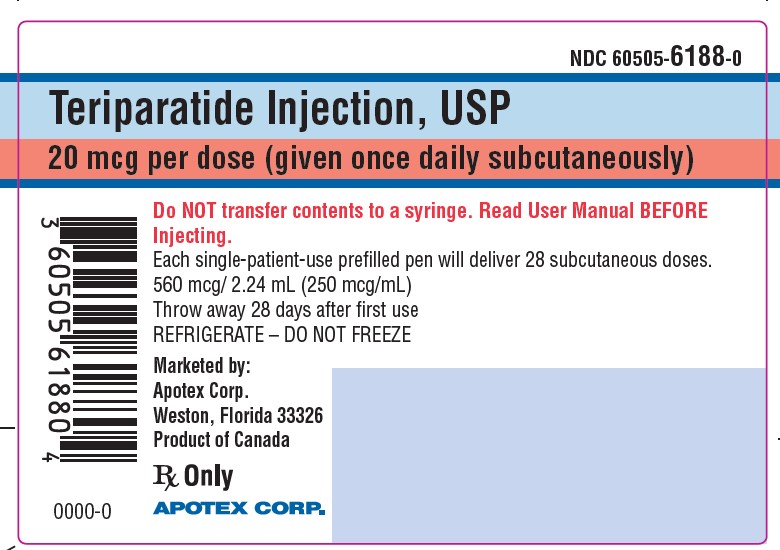
PRINCIPAL DISPLAY PANEL - 560 mcg/2.24 mL
APOTEX CORP.
Teriparatide Injection, USP
NDC 60505-6188-0
20 mcg per dose
Rx
5.2 Hypercalcemia and Cutaneous Calcification
Hypercalcemia
Teriparatide has not been studied in patients with pre-existing hypercalcemia. Teriparatide may cause hypercalcemia and may exacerbate hypercalcemia in patients with pre-existing hypercalcemia [see Adverse Reactions (6.1, 6.3)]. Avoid teriparatide in patients known to have an underlying hypercalcemic disorder, such as primary hyperparathyroidism.
Risk of Cutaneous Calcification Including Calciphylaxis
Serious reports of calciphylaxis and worsening of previously stable cutaneous calcification have been reported in the postmarketing setting in patients taking teriparatide. Risk factors for development of calciphylaxis include underlying auto-immune disease, kidney failure, and concomitant warfarin or systemic corticosteroid use. Discontinue teriparatide in patients who develop calciphylaxis or worsening of previously stable cutaneous calcification.
14.1 Treatment of Osteoporosis in Postmenopausal Women
The safety and efficacy of once-daily teriparatide injection, median exposure of 19 months, were examined in a double-blind, multicenter, placebo-controlled clinical study of 1,637 postmenopausal women with osteoporosis. In this study 541 postmenopausal women were treated with 20 mcg teriparatide injection subcutaneously once daily.
All women received 1,000 mg of calcium and at least 400 IU of vitamin D per day. Baseline and endpoint spinal radiographs were evaluated using the semiquantitative scoring. Ninety percent of the women in the study had 1 or more radiographically diagnosed vertebral fractures at baseline. The primary efficacy endpoint was the occurrence of new radiographically diagnosed vertebral fractures defined as changes in the height of previously undeformed vertebrae. Such fractures are not necessarily symptomatic.
Principal Display Panel Injection Delivery Device Label
Representative sample of labeling (see HOW SUPPLIED section for complete listing):
PRINCIPAL DISPLAY PANEL - 560 mcg/2.24 mL
APOTEX CORP.
Teriparatide Injection, USP
NDC 60505-6188-0
20 mcg per dose
Rx
14.3 Treatment of Men and Women With Glucocorticoid Induced Osteoporosis
The efficacy of teriparatide injection for treating glucocorticoid-induced osteoporosis was assessed in a randomized, double-blind, active-controlled trial of 428 patients (19% men, 81% women) aged 22 to 89 years (mean 57 years) treated with ≥5 mg/day prednisone or equivalent for a minimum of 3 months. The duration of the trial was 18 months. In the trial 214 patients were treated with teriparatide injection 20 mcg given subcutaneously once daily. In the teriparatide injection group, the baseline median glucocorticoid dose was 7.5 mg/day and the baseline median duration of glucocorticoid use was 1.5 years. The mean (SD) baseline lumbar spine BMD was 0.85 ± 0.13 g/cm2 and lumbar spine BMD T-score was –2.5 ± 1 (number of standard deviations below the mean BMD value for healthy adults). A total of 30% of patients had prevalent vertebral fracture(s) and 43% had prior non-vertebral fracture(s). The patients had chronic rheumatologic, respiratory or other diseases that required sustained glucocorticoid therapy. All patients received 1,000 mg of calcium plus 800 IU of vitamin D supplementation per day.
Because of differences in mechanism of action (anabolic vs. anti-resorptive) and lack of clarity regarding differences in BMD as an adequate predictor of fracture efficacy, data on the active comparator are not presented.
14.2 Treatment to Increase Bone Mass in Men With Primary Or Hypogonadal Osteoporosis
The safety and efficacy of once-daily teriparatide injection, median exposure of 10 months, were examined in a double-blind, multicenter, placebo-controlled clinical study of 437 men with either primary (idiopathic) or hypogonadal osteoporosis. In this study, 151 men received 20 mcg of teriparatide given subcutaneously once daily. All men received 1,000 mg of calcium and at least 400 IU of vitamin D per day. The primary efficacy endpoint was change in lumbar spine BMD.
Teriparatide injection increased lumbar spine BMD in men with primary or hypogonadal osteoporosis. Statistically significant increases were seen at 3 months and continued throughout the treatment period. Teriparatide injection was effective in increasing lumbar spine BMD regardless of age, baseline rate of bone turnover, and baseline BMD. The effects of teriparatide injection at additional skeletal sites are shown in Table 4.
Teriparatide injection treatment for a median of 10 months increased lumbar spine BMD from baseline in 94% of men treated. Fifty-three percent of patients treated with teriparatide injection achieved at least a 5% increase in spine BMD, and 14% gained 10% or more.
|
a Intent-to-treat analysis, last observation carried forward. |
||
|
b p<0.001 compared with placebo. |
||
|
c p<0.05 compared with placebo. |
||
|
Teriparatide Injection N=151 |
Placebo N=147 |
|
| Lumbar spine BMD | 5.9b | 0.5 |
| Femoral neck BMD | 1.5c | 0.3 |
| Total hip BMD | 1.2 | 0.5 |
| Trochanter BMD | 1.3 | 1.1 |
| Intertrochanter BMD | 1.2 | 0.6 |
| Ward's triangle BMD | 2.8 | 1.1 |
| Total body BMD | 0.4 | -0.4 |
| Distal 1/3 radius BMD | -0.5 | -0.2 |
| Ultradistal radius BMD | -0.5 | -0.3 |
Structured Label Content
Section 42229-5 (42229-5)
Men with Primary or Hypogonadal Osteoporosis and Postmenopausal Women with Osteoporosis
The safety of teriparatide injection in the treatment of osteoporosis in men and postmenopausal women was assessed in two randomized, double-blind, placebo-controlled trials of 1382 patients (21% men, 79% women) aged 28 to 86 years (mean 67 years) [see Clinical Studies (14.1, 14.2)]. The median durations of the trials were 11 months for men and 19 months for women, with 691 patients exposed to teriparatide injection and 691 patients to placebo. All patients received 1,000 mg of calcium plus at least 400 IU of vitamin D supplementation per day.
The incidence of all-cause mortality was 1% in the teriparatide injection group and 1% in the placebo group. The incidence of serious adverse events was 16% in the teriparatide injection group and 19% in the placebo group. Early discontinuation due to adverse events occurred in 7% in the teriparatide injection group and 6% in the placebo group.
Table 1 lists adverse events from these two trials that occurred in ≥2% of teriparatide-treated and more frequently than placebo-treated patients.
|
Teriparatide Injection
N=691 |
Placebo
N=691 |
|
| Event Classification | (%) | (%) |
| Body as a Whole | ||
| Pain | 21.3 | 20.5 |
| Headache | 7.5 | 7.4 |
| Asthenia | 8.7 | 6.8 |
| Neck pain | 3.0 | 2.7 |
| Cardiovascular | ||
| Hypertension | 7.1 | 6.8 |
| Angina pectoris | 2.5 | 1.6 |
| Syncope | 2.6 | 1.4 |
| Digestive System | ||
| Nausea | 8.5 | 6.7 |
| Constipation | 5.4 | 4.5 |
| Diarrhea | 5.1 | 4.6 |
| Dyspepsia | 5.2 | 4.1 |
| Vomiting | 3.0 | 2.3 |
| Gastrointestinal disorder | 2.3 | 2.0 |
| Tooth disorder | 2.0 | 1.3 |
| Musculoskeletal | ||
| Arthralgia | 10.1 | 8.4 |
| Leg cramps | 2.6 | 1.3 |
| Nervous System | ||
| Dizziness | 8.0 | 5.4 |
| Depression | 4.1 | 2.7 |
| Insomnia | 4.3 | 3.6 |
| Vertigo | 3.8 | 2.7 |
| Respiratory System | ||
| Rhinitis | 9.6 | 8.8 |
| Cough increased | 6.4 | 5.5 |
| Pharyngitis | 5.5 | 4.8 |
| Dyspnea | 3.6 | 2.6 |
| Pneumonia | 3.9 | 3.3 |
| Skin and Appendages | ||
| Rash | 4.9 | 4.5 |
| Sweating | 2.2 | 1.7 |
Section 42231-1 (42231-1)
Medication Guide
Teriparatide Injection , USP
(ter” i par’ a tide)
for subcutaneous use
Read this Medication Guide before you start using teriparatide injection and each time you get a refill. There may be new information. Also, read the User Manual that comes with the teriparatide injection delivery device (pen) for information on how to use the device to inject your medicine the right way. This Medication Guide does not take the place of talking with your healthcare provider about your medical condition or your treatment.
What is the most important information I should know about teriparatide injection?
Possible bone cancer. During drug testing, the medicine in teriparatide injection caused some rats to develop a bone cancer called osteosarcoma. Studies in people have not shown that teriparatide injection increases your chance of getting osteosarcoma. There is little information about the chance of getting osteosarcoma in patients using teriparatide injection beyond 2 years.
What is teriparatide injection?
Teriparatide injection is a prescription medicine used to:
- treat postmenopausal women who have osteoporosis who are at high risk for having broken bones (fractures) or who cannot use other osteoporosis treatments. Teriparatide injection can lessen the chance of broken bones (fractures) in the spine and other bones in postmenopausal women with osteoporosis.
- increase the bone mass in men with primary or hypogonadal osteoporosis who are at high risk for having broken bones (fractures) or who cannot use other osteoporosis treatments.
- treat both men and women with osteoporosis due to use of glucocorticoid medicines, such as prednisone, for several months, who are at high risk for having broken bones (fractures) or who cannot use other osteoporosis treatments.
It is not known if teriparatide injection is safe and effective in children.
Teriparatide injection should not be used in children and young adults whose bones are still growing.
Who should not use teriparatide injection?
Do not use teriparatide injection if you:
- are allergic to any of the ingredients in teriparatide injection. See the end of this Medication Guide for a complete list of the ingredients in teriparatide injection.
Symptoms of a serious allergic reaction of teriparatide injection may include swelling of the face, lips, tongue or throat that may cause difficulty in breathing or swallowing. Call your healthcare provider right away or get emergency medical help if you get any of these symptoms.
What should I tell my healthcare provider before using teriparatide injection?
Before you use teriparatide injection, tell your healthcare provider about all of your medical conditions, including if you:
- have a certain bone disease called Paget’s disease or other bone disease.
- have bone cancer or have had a history of bone cancer.
- are a young adult whose bones are still growing.
- have had radiation therapy.
- are affected with a condition that runs in your family that can increase your chance of getting cancer in your bones.
- have or have had too much calcium in your blood (hypercalcemia).
- have or have had a skin condition with painful sores or wounds caused by too much calcium.
- have or have had kidney stones.
- take medicines that contain digoxin.
- are pregnant or plan to become pregnant. It is not known if teriparatide injection will harm your unborn baby.
- are breastfeeding or plan to breastfeed. It is not known if teriparatide injection passes into your breastmilk. You should not breastfeed while taking teriparatide injection.
Tell your healthcare provider about all the medicines you take including prescription and over-the-counter medicines, vitamins, and herbal supplements.
Know the medicines you take. Keep a list of them to show your healthcare provider and pharmacist when you get a new medicine.
How should I use teriparatide injection?
- Read the detailed Instructions for Use (User Manual) included with your teriparatide injection delivery device.
- Use teriparatide injection exactly as your healthcare provider tells you to. Your healthcare provider will tell you how much teriparatide injection to use and when to use it.
- Before you try to inject teriparatide injection yourself, a healthcare provider should teach you how to use the teriparatide injection delivery device to give your injection the right way.
- Inject teriparatide injection 1 time each day in your thigh or abdomen (lower stomach area). Do not inject into a vein or a muscle. Talk to a healthcare provider about how to rotate injection sites.
- The teriparatide injection delivery device has enough medicine for 28 days. It is set to give a 20-microgram dose of medicine each day. Do not inject all the medicine in the teriparatide injection delivery device at any one time.
- Do not transfer the medicine from the teriparatide injection delivery device to a syringe. This can result in taking the wrong dose of teriparatide injection. If you do not have pen needles to use with your teriparatide injection delivery device, talk with your healthcare provider.
- Teriparatide injection should look clear and colorless. Do not use teriparatide injection if it has particles in it, or if it is cloudy or colored.
- Inject teriparatide injection right away after you take the delivery device out of the refrigerator.
- After each use, safely remove the needle, recap the delivery device, and put it back in the refrigerator right away.
- When you inject the first few doses of teriparatide injection, make sure you are in a place where you can sit or lie down right away in case you feel dizzy or have an abnormal heartbeat after the injection.
- Do not take more than 1 injection in the same day.
- Do not share your teriparatide injection delivery device with other people.
- If you take more teriparatide injection than prescribed, call your healthcare provider.
- If you take too much teriparatide injection, you may have nausea, vomiting, weakness, or dizziness.
- You should not use teriparatide injection for more than 2 years over your lifetime unless your healthcare provider finds that you need longer treatment because you have a high chance of breaking your bones.
If your healthcare provider recommends calcium and vitamin D supplements, you can take them at the same time you take teriparatide injection.
What are the possible side effects of teriparatide injection?
Teriparatide injection may cause serious side effects including:
- See “What is the most important information I should know about teriparatide injection?”
- Bone cancer (osteosarcoma): Tell your healthcare provider right away if you have pain in your bones, pain in any areas of your body that does not go away, or any new or unusual lumps or swelling under your skin that is tender to touch.
- Increased calcium in your blood. Tell your healthcare provider if you have nausea, vomiting, constipation, low energy, or muscle weakness. These may be signs there is too much calcium in your blood.
- Worsening of your kidney stones. If you have or have had kidney stones your healthcare provider may check the calcium levels in your urine while you use teriparatide injection to see if there is worsening of this condition.
- Decrease in blood pressure when you change positions. Some people may feel dizzy, get a fast heartbeat, or feel light-headed right after the first few doses of teriparatide injection. This usually happens within 4 hours of taking teriparatide injection and goes away within a few hours. For the first few doses, give your injections of teriparatide injection in a place where you can sit or lie down right away if you get these symptoms. If your symptoms get worse or do not go away, contact your healthcare provider before you continue using teriparatide injection.
The most common side effects of teriparatide injection include:
- pain
- nausea
- joint aches
These are not all the possible side effects of teriparatide injection. For more information, ask your healthcare provider or pharmacist.
Call your doctor for medical advice about side effects. You may report side effects to FDA at 1-800-FDA-1088.
How should I store teriparatide injection?
- Store teriparatide injection in the refrigerator between 36°F to 46°F (2°C to 8°C) until ready to use. Use teriparatide injection right away after you remove it from the refrigerator.
- Do not freeze the teriparatide injection delivery device. Do not use teriparatide injection if it has been frozen.
- Throw away the teriparatide injection delivery device after 28 days even if it has medicine in it (see the User Manual).
- Do not use teriparatide injection after the expiration date printed on the delivery device and packaging.
- Recap teriparatide injection when not in use to protect it from physical damage and light.
Keep teriparatide injection and all medicines out of the reach of children.
General information about the safe and effective use of teriparatide injection.
Medicines are sometimes prescribed for purposes other than those listed in a Medication Guide. Do not use teriparatide injection for a condition for which it was not prescribed. Do not give teriparatide injection to other people, even if they have the same symptoms that you have. It may harm them.
You can ask your pharmacist or healthcare provider for information about teriparatide injection that is written for health professionals.
What are the ingredients in teriparatide injection?
Active ingredient: teriparatide
Inactive ingredients: glacial acetic acid, sodium acetate (anhydrous), mannitol, metacresol, and water for injection. In addition, hydrochloric acid solution 10% and/or sodium hydroxide solution 10% may have been added to adjust the product to pH 4.
This Medication Guide has been approved by the U.S. Food and Drug Administration.
* All registered trademarks in this document are the property of their respective owners.
Revised: October 2024
Marketed by: Apotex Corp. 2400 N. Commerce Parkway, Weston, FL 33326 U.S.A.
Section 59845-8 (59845-8)
Teriparatide Injection, USP
User Manual
Important: First read the Medication Guide that comes inside your teriparatide injection carton.
Before you use your new teriparatide injection delivery device, please read the entire front and back of this User Manual completely. Follow the directions carefully when using the teriparatide injection delivery device.
Do not share your delivery device or needles because infection or disease can be spread from one person to another.
The teriparatide injection delivery device contains 28 days of medicine. Throw away the teriparatide injection delivery device 28 days after first use, even if it is not completely empty. Do not inject more than one dose of teriparatide injection in the same day.
Do not transfer teriparatide injection to a syringe.
Wash your hands before every injection. Prepare the injection site as your healthcare provider instructed.
|
1
Pull off white cap |
Check the teriparatide injection delivery device label to make sure you have the right medicine and that it has not expired. Do not use if the teriparatide injection delivery device looks damaged, if the medicine in the cartridge is not clear and colorless, or if it has particles in it. |
|
2
Attach new needle |
||||
| Pull off paper tab. |
Push needle straight
onto the medicine cartridge |
Screw on needle clockwise until firmly attached. |
Pull off the large needle cover and save it. |
|
3
Set dose |
|||
|
Pull out black injection button until it stops . If you cannot pull out the black injection button see Troubleshooting, Problem E on back page. |
Check to make sure red stripe shows. | Pull off small needle protector and throw away. |
|
4
Inject dose |
||
| Gently hold a fold of skin on your thigh or abdomen and insert the needle straight into your skin. |
Push in black injection button until it stops. Hold it in and count to 5 slowly. You must wait until the count of 5 to make sure you receive the correct dose. Then pull the needle from the skin. |
| IMPORTANT | ||||
|
5
Confirm dose |
After completing the injection:
Once the needle is removed from the skin, take your thumb off the black injection button. Check to make sure the black injection button is all the way in. If the yellow shaft does not show, you have finished the injection steps the right way. |
You should NOT see any of the yellow shaft. If you do and have already injected the medicine, do not inject yourself a second time on the same day. Instead, you MUST reset the teriparatide injection delivery device (see Troubleshooting, Problem A, on back page). |
||
|
6
Remove needle |
||||
| Put large needle cover on needle. Do not try to put the needle cover back on with your hands. |
Unscrew the covered needle all the way by giving the large needle cover 3 to 5 counter-clockwise turns. |
Pull off needle and throw away in a puncture-resistant container. |
Push white cap back on. Right after use, place teriparatide delivery device in the refrigerator. |
For more information, or if you have any questions, turn to the back of this page.
| Troubleshooting | ||
| Problem | Solution | |
|
A. The yellow shaft is still showing after I push in the black injection button. How do I reset my teriparatide injection delivery device? |
|
To reset the teriparatide injection delivery device, follow the steps below.
|
| You can prevent this problem by always using a NEW needle for each injection, and by pushing the black injection button all the way in and slowly counting to five.
|
||
| B. How can I tell if my teriparatide injection delivery device works? |
|
The black injection button should be all the way in to show that the full dose of medicine has been injected from the teriparatide injection delivery device. Use a new needle every time you inject to be sure your teriparatide delivery device will work properly. |
| C. I see an air bubble in my teriparatide delivery device. |
|
A small air bubble will not affect your dose and it will not harm you. You can continue to take your dose as usual. |
|
D. I cannot get the needle off. |
|
|
|
E. What should I do if I have difficulty pulling out the black injection button? |
|
Change to a new teriparatide injection delivery device to take your dose as instructed by your healthcare provider.
When the black injection button becomes hard to pull out, this means there is not enough medicine in your teriparatide injection delivery device for another dose. You may still see some medicine left in the cartridge. |
| Cleaning and Storage |
Cleaning Your Teriparatide Delivery Device
Storing Your Teriparatide Delivery Device
|
| Other Important Notes |
|
| Disposal of Pen Needles and Delivery Device | |
Disposal of Pen Needles and the Teriparatide Delivery Device
|
|
| Dispose of the Teriparatide Delivery Device 28 days after first use. | 1st use date ______ / ______ / ______ Throw away after ______ / ______ / ______ |
|
Contact Information |
|
If you have questions or need help with your Teriparatide Delivery Device, contact Apotex at 1-800-706-5575 or your healthcare provider. For more information about Teriparatide Delivery Device, go to www.apotex.com. Marketed by: Apotex Corp. Weston, Florida 33326, USA Revised: October 2024 |
7.1 Digoxin
Sporadic case reports have suggested that hypercalcemia may predispose patients to digitalis toxicity. Teriparatide injection may transiently increase serum calcium. Consider the potential onset of signs and symptoms of digitalis toxicity when teriparatide injection is used in patients receiving digoxin [see Warnings and Precaution (5.5) and Clinical Pharmacology (12.3)].
8.1 Pregnancy
Risk Summary
There are no available data on teriparatide injection use in pregnant women to evaluate for drug-associated risk of major birth defects, miscarriage, or adverse maternal or fetal outcomes. Consider discontinuing teriparatide injection when pregnancy is recognized.
In animal reproduction studies, teriparatide increased skeletal deviations and variations in mouse offspring at subcutaneous doses equivalent to more than 60 times the recommended 20 mcg human daily dose (based on body surface area, mcg/m2), and produced mild growth retardation and reduced motor activity in rat offspring at subcutaneous doses equivalent to more than 120 times the human dose (see Data).
The background risk of major birth defects and miscarriage for the indicated population is unknown. The background risk in the US general population of major birth defects is 2% to 4% and of miscarriage is 15% to 20% of clinically recognized pregnancies.
Data
Animal Data
In animal reproduction studies, pregnant mice received teriparatide during organogenesis at subcutaneous doses equivalent to 8 to 267 times the human dose (based on body surface area, mcg/m2). At subcutaneous doses ≥60 times the human dose, the fetuses showed an increased incidence of skeletal deviations or variations (interrupted rib, extra vertebra or rib). When pregnant rats received teriparatide during organogenesis at subcutaneous doses 16 to 540 times the human dose, the fetuses showed no abnormal findings.
In a perinatal/postnatal study in pregnant rats dosed subcutaneously from organogenesis through lactation, mild growth retardation was observed in female offspring at doses ≥120 times the human dose. Mild growth retardation in male offspring and reduced motor activity in both male and female offspring were observed at maternal doses of 540 times the human dose. There were no developmental or reproductive effects in mice or rats at doses 8 or 16 times the human dose, respectively.
8.2 Lactation
Risk Summary
It is not known whether teriparatide is excreted in human milk, affects human milk production, or has effects on the breastfed infant. Avoid teriparatide use in women who are breastfeeding.
11 Description (11 DESCRIPTION)
Teriparatide injection, USP contains chemically synthesized human parathyroid hormone (1-34), and is also called hPTH (1-34). It has an identical sequence to the 34 N-terminal amino acids (the biologically active region) of the 84-amino acid human parathyroid hormone.
The molecular formula of teriparatide is C181H291N55O51S2 and a molecular weight of 4117.8 daltons and its amino acid sequence is shown below:
Teriparatide is manufactured chemical synthesis. Teriparatide injection, USP is supplied as a sterile, colorless, clear, isotonic solution in a glass cartridge which is pre-assembled into a disposable delivery device (pen) for subcutaneous injection. Each prefilled delivery device is filled with volume to allow delivery of 2.24 mL. Each mL contains 250 mcg teriparatide (corrected for acetate, chloride, and water content), 0.41 mg glacial acetic acid, 0.1 mg sodium acetate (anhydrous), 45.4 mg mannitol, 3 mg metacresol, and water for injection. In addition, hydrochloric acid solution 10% and/or sodium hydroxide solution 10% may have been added to adjust the product to pH 4.
Each prefilled delivery device (pen) delivers 20 mcg of teriparatide per dose for up to 28 days. Each device contains additional volume to allow troubleshooting of the device 2 times.
5.1 Osteosarcoma
An increase in the incidence of osteosarcoma (a malignant bone tumor) was observed in male and female rats treated with teriparatide. Osteosarcoma has been reported in patients treated with teriparatide in the post marketing setting; however, an increased risk of osteosarcoma has not been observed in observational studies in humans. There are limited data assessing the risk of osteosarcoma beyond 2 years of teriparatide use [see Dosage and Administration (2.3), Adverse Reactions (6.3), and Nonclinical Toxicology (13.1)].
Avoid teriparatide use in patients with (these patients are at increased baseline risk of osteosarcoma):
- Open epiphyses (pediatric and young adult patients) (teriparatide is not approved in pediatric patients) [see Use in Specific Populations (8.4)].
- Metabolic bone diseases other than osteoporosis, including Paget’s disease of the bone.
- Bone metastases or a history of skeletal malignancies.
- Prior external beam or implant radiation therapy involving the skeleton.
- Hereditary disorders predisposing to osteosarcoma.
16.1 How Supplied
Teriparatide Injection is a clear and colorless solution, available as single-patient-use prefilled delivery device (pen) in the following package size:
- 560 mcg/2.24 mL (250 mcg/mL) [intended to deliver 28 daily doses of 20 mcg] NDC 60505-6188-0.
8.4 Pediatric Use
The safety and effectiveness of teriparatide injection have not been established in pediatric patients. Pediatric patients are at higher baseline risk of osteosarcoma because of open epiphyses [see Warnings and Precautions (5.1)].
8.5 Geriatric Use
Of the patients who received teriparatide injection in the osteoporosis trial of 1637 postmenopausal women, 75% were 65 years of age and older and 23% were 75 years of age and older. Of the patients who received teriparatide injection in the trial of 437 men with primary or hypogonadal osteoporosis, 39% were 65 years of age and over and 13% were 75 years of age and over. Of the 214 patients who received teriparatide injection in the glucocorticoid induced osteoporosis trial, 28% were 65 years of age and older and 9% were 75 years of age and older. No overall differences in safety or effectiveness of teriparatide injection have been observed between patients 65 years of age and older and younger adult patients.
6.2 Immunogenicity
As with all peptides, there is potential for immunogenicity. The detection of antibody formation is highly dependent on the sensitivity and specificity of the assay. Additionally, the observed incidence of antibody (including neutralizing antibody) positivity in an assay may be influenced by several factors, including assay methodology, sample handling, timing of sample collection, concomitant medications, and underlying disease. For these reasons, comparison of the incidence of antibodies in the studies described below with the incidence of antibodies in other studies or to other teriparatide products may be misleading.
In the clinical trial of postmenopausal women with osteoporosis [see Clinical Studies (14.1)], antibodies that cross reacted with teriparatide were detected in 3% of women (15/541) who received teriparatide. Generally, antibodies were first detected following 12 months of treatment and diminished after withdrawal of therapy. There was no evidence of hypersensitivity reactions among these patients. Antibody formation did not appear to have effects on serum calcium, or on bone mineral density (BMD) response.
4 Contraindications (4 CONTRAINDICATIONS)
Teriparatide injection is contraindicated in patients with hypersensitivity to teriparatide or to any of its excipients. Hypersensitivity reactions have included angioedema and anaphylaxis [see Adverse Reactions (6.3)].
6 Adverse Reactions (6 ADVERSE REACTIONS)
Most common adverse reactions (>10%) include: arthralgia, pain, and nausea (6.1)
To report SUSPECTED ADVERSE REACTIONS, contact Apotex Inc. at 1-800-706-5575 or FDA at 1-800-FDA-1088 or www.fda.gov/medwatch.
7 Drug Interactions (7 DRUG INTERACTIONS)
Digoxin: Transient hypercalcemia may predispose patients to digitalis toxicity (5.5, 7.1)
8.7 Renal Impairment
In 5 patients with severe renal impairment (CrCl<30 mL/minute), the AUC and T1/2 of teriparatide were increased by 73% and 77%, respectively. Maximum serum concentration of teriparatide was not increased. It is unknown whether teriparatide injection alters the underlying metabolic bone disease seen in chronic renal impairment [see Clinical Pharmacology (12.3)].
13.2 Animal Toxicology
In single-dose rodent studies using subcutaneous injection of teriparatide, no mortality was seen in rats given doses of 1,000 mcg/kg (540 times the human dose based on surface area, mcg/m2) or in mice given 10,000 mcg/kg (2,700 times the human dose based on surface area, mcg/m2).
In a long-term study, skeletally mature ovariectomized female monkeys (N=30 per treatment group) were given either daily subcutaneous teriparatide injections of 5 mcg/kg or vehicle. Following the 18-month treatment period, the monkeys were removed from teriparatide treatment and were observed for an additional 3 years. The 5 mcg/kg dose resulted in systemic exposures that were approximately 6 times higher than the systemic exposure observed in humans following a subcutaneous dose of 20 mcg (based on AUC comparison). Bone tumors were not detected by radiographic or histologic evaluation in any monkey in the study.
2.1 Recommended Dosage
The recommended dosage is 20 mcg per dose given subcutaneously once a day. Instruct patients to take supplemental calcium and vitamin D if daily dietary intake is inadequate.
8.6 Hepatic Impairment
No studies have been performed in patients with hepatic impairment [see Clinical Pharmacology (12.3)].
1 Indications and Usage (1 INDICATIONS AND USAGE)
Teriparatide injection is indicated.
- For the treatment of postmenopausal women with osteoporosis at high risk for fracture (defined herein as having a history of osteoporotic fracture or multiple risk factors for fracture) or who have failed or are intolerant to other available osteoporosis therapy. In postmenopausal women with osteoporosis, teriparatide injection reduces the risk of vertebral and nonvertebral fractures.
- To increase bone mass in men with primary or hypogonadal osteoporosis at high risk for fracture or who have failed or are intolerant to other available osteoporosis therapy.
- For the treatment of men and women with osteoporosis associated with sustained systemic glucocorticoid therapy (daily dosage equivalent to 5 mg or greater of prednisone) at high risk for fracture or who have failed or are intolerant to other available osteoporosis therapy.
12.1 Mechanism of Action
Endogenous 84-amino acid parathyroid hormone (PTH) is the primary regulator of calcium and phosphate metabolism in bone and kidney. Physiological actions of PTH include regulation of bone metabolism, renal tubular reabsorption of calcium and phosphate, and intestinal calcium absorption. The biological actions of PTH and teriparatide are mediated through binding to specific high-affinity cell-surface receptors. Teriparatide and the 34 N-terminal amino acids of PTH bind to these receptors with the same affinity and have the same physiological actions on bone and kidney. Teriparatide is not expected to accumulate in bone or other tissues.
The skeletal effects of teriparatide depend upon the pattern of systemic exposure. Once-daily administration of teriparatide stimulates new bone formation on trabecular and cortical (periosteal and/or endosteal) bone surfaces by preferential stimulation of osteoblastic activity over osteoclastic activity. In monkey studies, teriparatide improved trabecular microarchitecture and increased bone mass and strength by stimulating new bone formation in both cancellous and cortical bone. In humans, the anabolic effects of teriparatide manifest as an increase in skeletal mass, an increase in markers of bone formation and resorption, and an increase in bone strength. By contrast, continuous excess of endogenous PTH, as occurs in hyperparathyroidism, may be detrimental to the skeleton because bone resorption may be stimulated more than bone formation.
5.3 Risk of Urolithiasis
In clinical trials, the frequency of urolithiasis was similar in patients treated with teriparatide injection and patients treated with placebo. However, teriparatide injection has not been studied in patients with active urolithiasis. If teriparatide-treated patients have pre-existing hypercalciuria or suspected/known active urolithiasis, consider measuring urinary calcium excretion. Consider the risks and benefits of use in patients with active or recent urolithiasis because of the potential to exacerbate this condition.
16.2 Storage and Handling
- Store teriparatide injection, USP under refrigeration at 2°C to 8°C (36°F to 46°F) at all times except when administering the product.
- Recap the delivery device (pen) when not in use to protect the cartridge from physical damage and light.
- When using teriparatide injection, minimize the time out of the refrigerator; deliver the dose immediately following removal from the refrigerator.
- Do not freeze. Do not use teriparatide injection, USP if it has been frozen.
- Throw away the device 28 days after first use.
5 Warnings and Precautions (5 WARNINGS AND PRECAUTIONS)
- Osteosarcoma: Avoid use in patients with increased risk of osteosarcoma including patients with open epiphyses, metabolic bone diseases including Paget’s disease, bone metastases or history of skeletal malignancies, prior external beam or implant radiation therapy involving the skeleton, and hereditary disorders predisposing to osteosarcoma. (5.1)
- Hypercalcemia and Cutaneous Calcification: Avoid in patients known to have an underlying hypercalcemic disorder. Discontinue in patients developing worsening of previously stable cutaneous calcification. (5.2)
- Risk of Urolithiasis: Consider the risk/benefit in patients with active or recent urolithiasis because of risk of exacerbation (5.3)
- Orthostatic Hypotension: Transient orthostatic hypotension may occur with initial doses of teriparatide injection (5.4)
2 Dosage and Administration (2 DOSAGE AND ADMINISTRATION)
- Recommended dosage is 20 mcg subcutaneously once a day (2.1)
- Consider supplemental calcium and Vitamin D based on individual patient needs (2.1)
- Administer as a subcutaneous injection into the thigh or abdominal region (2.2)
- Administer initially under circumstances in which the patient can sit or lie down if symptoms of orthostatic hypotension occur (2.2)
- Use of teriparatide for more than 2 years during a patient’s lifetime should only be considered if a patient remains at or has returned to having a high risk for fracture (2.3)
5.4 Orthostatic Hypotension
Teriparatide injection should be administered initially under circumstances in which the patient can sit or lie down if symptoms of orthostatic hypotension occur. In short-term clinical pharmacology studies of teriparatide in healthy volunteers, transient episodes of symptomatic orthostatic hypotension were observed in 5% of volunteers. Typically, these events began within 4 hours of dosing and resolved (without treatment) within a few minutes to a few hours. When transient orthostatic hypotension occurred, it happened within the first several doses, it was relieved by placing the person in a reclining position, and it did not preclude continued treatment.
3 Dosage Forms and Strengths (3 DOSAGE FORMS AND STRENGTHS)
Injection: 560 mcg/2.24 mL (250 mcg/mL) clear, colorless solution in a single-patient-use prefilled delivery device (pen) intended to deliver 28 daily doses of 20 mcg.
5.5 Risk of Digoxin Toxicity
Hypercalcemia may predispose patients to digitalis toxicity because teriparatide injection transiently increases serum calcium. Consider the potential onset of signs and symptoms of digitalis toxicity when teriparatide is used in patients receiving digoxin [see Drug Interactions (7.1) and Clinical Pharmacology (12.3)].
6.3 Postmarketing Experience
Adverse Reactions from Postmarketing Spontaneous Reports The following adverse reactions have been identified during postapproval use of teriparatide injection. Because these reactions are reported voluntarily from a population of uncertain size, it is not always possible to reliably estimate their frequency or establish a causal relationship to drug exposure.
- Cases of bone tumor and osteosarcoma have been reported rarely in the postmarketing period [see Warnings and Precautions (5.2)].
- Hypercalcemia greater than 13 mg/dL has been reported with teriparatide injection use.
Adverse events reported since market introduction that were temporally related to teriparatide injection therapy include the following:
- Allergic Reactions: Anaphylactic reactions, drug hypersensitivity, angioedema, urticaria
- Investigations: Hyperuricemia
- Respiratory System: Acute dyspnea, chest pain
- Musculoskeletal: Muscle spasms of the leg or back
- Other: Injection site reactions including injection site pain, swelling and bruising; oro-facial edema
Adverse Reactions from Observational Studies to Assess Incidence of Osteosarcoma
Two osteosarcoma surveillance safety studies (U.S. claims-based database studies) were designed to obtain data on the incidence rate of osteosarcoma among teriparatide-treated patients. In these two studies, three and zero osteosarcoma cases were identified among 379,283 and 153,316 teriparatide users, respectively. The study results suggest a similar risk for osteosarcoma between teriparatide users and their comparators. However, the interpretation of the study results calls for caution owing to the limitations of the data sources which do not allow for complete measurement and control for confounders.
8 Use in Specific Populations (8 USE IN SPECIFIC POPULATIONS)
6.1 Clinical Trials Experience
Because clinical studies are conducted under widely varying conditions, adverse reaction rates observed in the clinical studies of a drug cannot be directly compared to rates in the clinical studies of another drug and may not reflect the rates observed in practice.
2.2 Administration Instructions
- Administer teriparatide as a subcutaneous injection into the thigh or abdominal region. Teriparatide is not approved for intravenous or intramuscular use.
- Teriparatide injection should be administered initially under circumstances in which the patient can sit or lie down if symptoms of orthostatic hypotension occur [see Warnings and Precautions (5.4)].
- Parenteral drug products should be inspected visually for particulate matter and discoloration prior to administration. (Teriparatide injection is a clear and colorless liquid). Do not use if solid particles appear or if the solution is cloudy or colored.
- Patients and/or caregivers who administer teriparatide injection should receive appropriate training and instruction on the proper use of the teriparatide injection prefilled delivery device (pen) from a qualified health professional.
- Discard the delivery device 28 days after first use.
17 Patient Counseling Information (17 PATIENT COUNSELING INFORMATION)
Advise the patient to read the FDA-approved patient labeling (Medication Guide and the User Manual) before starting teriparatide and each time the prescription is renewed. Failure to follow the instructions may result in inaccurate dosing.
Osteosarcoma
Patients should be made aware that in rats, teriparatide caused an increase in the incidence of osteosarcoma (a malignant bone tumor). Although cases of osteosarcoma have been reported in patients using teriparatide injection no increased risk of osteosarcoma was observed in adult humans treated with teriparatide injection [see Warnings and Precautions (5.1)].
Hypercalcemia
Instruct patients taking teriparatide injection to contact a health care provider if they develop persistent symptoms of hypercalcemia (e.g., nausea, vomiting, constipation, lethargy, muscle weakness) [see Warnings and Precautions (5.2)].
Orthostatic Hypotension
When initiating teriparatide injection treatment, instruct patients to be prepared to immediately sit or lie down during or after administration in case they feel lightheaded or have palpitations after the injection. Instruct patients to sit or lie down until the symptoms resolve. If symptoms persist or worsen, instruct patients to consult a healthcare provider before continuing treatment [see Warnings and Precautions (5.4)].
Other Osteoporosis Treatment Modalities
Patients should be informed regarding the roles of supplemental calcium and/or vitamin D.
Use of the Prefilled Delivery Device (Pen)
Instruct patients and caregivers who administer teriparatide injection on how to properly use the delivery device (refer to User Manual), to properly dispose of needles, and not to share their prefilled delivery device with other patients. Instruct patients and caregivers who administer teriparatide injection that the contents of the delivery device should not be transferred to a syringe.
Inform patients that each teriparatide injection delivery device can be used up to 28 days after first use. After the 28-day use period, instruct patients to discard the teriparatide injection delivery device, even if it still contains some unused solution. Instruct patients not to use teriparatide injection after the expiration date printed on the delivery device and packaging.
Marketed by: Apotex Corp. 2400 N. Commerce Parkway, Weston, FL 33326 U.S.A.
2.3 Recommended Treatment duration (2.3 Recommended Treatment Duration)
Use of teriparatide injection for more than 2 years during a patient’s lifetime should only be considered if a patient remains at or has returned to having a high risk for fracture [see Warnings and Precautions (5.1)].
Principal Display Panel Carton Label (PRINCIPAL DISPLAY PANEL - Carton label)
Representative sample of labeling (see HOW SUPPLIED section for complete listing):
PRINCIPAL DISPLAY PANEL - 560 mcg/2.24 mL
APOTEX CORP.
Teriparatide Injection, USP
NDC 60505-6188-0
20 mcg per dose
Rx
5.2 Hypercalcemia and Cutaneous Calcification
Hypercalcemia
Teriparatide has not been studied in patients with pre-existing hypercalcemia. Teriparatide may cause hypercalcemia and may exacerbate hypercalcemia in patients with pre-existing hypercalcemia [see Adverse Reactions (6.1, 6.3)]. Avoid teriparatide in patients known to have an underlying hypercalcemic disorder, such as primary hyperparathyroidism.
Risk of Cutaneous Calcification Including Calciphylaxis
Serious reports of calciphylaxis and worsening of previously stable cutaneous calcification have been reported in the postmarketing setting in patients taking teriparatide. Risk factors for development of calciphylaxis include underlying auto-immune disease, kidney failure, and concomitant warfarin or systemic corticosteroid use. Discontinue teriparatide in patients who develop calciphylaxis or worsening of previously stable cutaneous calcification.
14.1 Treatment of Osteoporosis in Postmenopausal Women
The safety and efficacy of once-daily teriparatide injection, median exposure of 19 months, were examined in a double-blind, multicenter, placebo-controlled clinical study of 1,637 postmenopausal women with osteoporosis. In this study 541 postmenopausal women were treated with 20 mcg teriparatide injection subcutaneously once daily.
All women received 1,000 mg of calcium and at least 400 IU of vitamin D per day. Baseline and endpoint spinal radiographs were evaluated using the semiquantitative scoring. Ninety percent of the women in the study had 1 or more radiographically diagnosed vertebral fractures at baseline. The primary efficacy endpoint was the occurrence of new radiographically diagnosed vertebral fractures defined as changes in the height of previously undeformed vertebrae. Such fractures are not necessarily symptomatic.
Principal Display Panel Injection Delivery Device Label (PRINCIPAL DISPLAY PANEL - Injection delivery device label)
Representative sample of labeling (see HOW SUPPLIED section for complete listing):
PRINCIPAL DISPLAY PANEL - 560 mcg/2.24 mL
APOTEX CORP.
Teriparatide Injection, USP
NDC 60505-6188-0
20 mcg per dose
Rx
14.3 Treatment of Men and Women With Glucocorticoid Induced Osteoporosis (14.3 Treatment of Men and Women with Glucocorticoid-Induced Osteoporosis)
The efficacy of teriparatide injection for treating glucocorticoid-induced osteoporosis was assessed in a randomized, double-blind, active-controlled trial of 428 patients (19% men, 81% women) aged 22 to 89 years (mean 57 years) treated with ≥5 mg/day prednisone or equivalent for a minimum of 3 months. The duration of the trial was 18 months. In the trial 214 patients were treated with teriparatide injection 20 mcg given subcutaneously once daily. In the teriparatide injection group, the baseline median glucocorticoid dose was 7.5 mg/day and the baseline median duration of glucocorticoid use was 1.5 years. The mean (SD) baseline lumbar spine BMD was 0.85 ± 0.13 g/cm2 and lumbar spine BMD T-score was –2.5 ± 1 (number of standard deviations below the mean BMD value for healthy adults). A total of 30% of patients had prevalent vertebral fracture(s) and 43% had prior non-vertebral fracture(s). The patients had chronic rheumatologic, respiratory or other diseases that required sustained glucocorticoid therapy. All patients received 1,000 mg of calcium plus 800 IU of vitamin D supplementation per day.
Because of differences in mechanism of action (anabolic vs. anti-resorptive) and lack of clarity regarding differences in BMD as an adequate predictor of fracture efficacy, data on the active comparator are not presented.
14.2 Treatment to Increase Bone Mass in Men With Primary Or Hypogonadal Osteoporosis (14.2 Treatment to Increase Bone Mass in Men with Primary or Hypogonadal Osteoporosis)
The safety and efficacy of once-daily teriparatide injection, median exposure of 10 months, were examined in a double-blind, multicenter, placebo-controlled clinical study of 437 men with either primary (idiopathic) or hypogonadal osteoporosis. In this study, 151 men received 20 mcg of teriparatide given subcutaneously once daily. All men received 1,000 mg of calcium and at least 400 IU of vitamin D per day. The primary efficacy endpoint was change in lumbar spine BMD.
Teriparatide injection increased lumbar spine BMD in men with primary or hypogonadal osteoporosis. Statistically significant increases were seen at 3 months and continued throughout the treatment period. Teriparatide injection was effective in increasing lumbar spine BMD regardless of age, baseline rate of bone turnover, and baseline BMD. The effects of teriparatide injection at additional skeletal sites are shown in Table 4.
Teriparatide injection treatment for a median of 10 months increased lumbar spine BMD from baseline in 94% of men treated. Fifty-three percent of patients treated with teriparatide injection achieved at least a 5% increase in spine BMD, and 14% gained 10% or more.
|
a Intent-to-treat analysis, last observation carried forward. |
||
|
b p<0.001 compared with placebo. |
||
|
c p<0.05 compared with placebo. |
||
|
Teriparatide Injection N=151 |
Placebo N=147 |
|
| Lumbar spine BMD | 5.9b | 0.5 |
| Femoral neck BMD | 1.5c | 0.3 |
| Total hip BMD | 1.2 | 0.5 |
| Trochanter BMD | 1.3 | 1.1 |
| Intertrochanter BMD | 1.2 | 0.6 |
| Ward's triangle BMD | 2.8 | 1.1 |
| Total body BMD | 0.4 | -0.4 |
| Distal 1/3 radius BMD | -0.5 | -0.2 |
| Ultradistal radius BMD | -0.5 | -0.3 |
Advanced Ingredient Data
Raw Label Data
All Sections (JSON)
Additional Information
Back to search View SPL set listing Open on DailyMed ↗
Source: dailymed · Ingested: 2026-02-15T11:48:13.418069 · Updated: 2026-03-14T22:29:20.618844