Vfend
ce3ef5cf-3087-4d92-9d94-9eb8287228db
34391-3
HUMAN PRESCRIPTION DRUG LABEL
Drug Facts
Composition & Product
Identifiers & Packaging
Indications and Usage
VFEND is an azole antifungal indicated for the treatment of adults and pediatric patients 2 years of age and older with: • Invasive aspergillosis ( 1.1 ) • Candidemia in non-neutropenics and other deep tissue Candida infections ( 1.2 ) • Esophageal candidiasis ( 1.3 ) • Serious fungal infections caused by Scedosporium apiospermum and Fusarium species including Fusarium solani , in patients intolerant of, or refractory to, other therapy ( 1.4 )
Dosage and Administration
• Dosage in Adults ( 2.3 ) Infection Loading dose Maintenance Dose Intravenous infusion Intravenous infusion Oral tablets Oral suspension Invasive Aspergillosis 6 mg/kg every 12 hours for the first 24 hours 4 mg/kg every 12 hours 200 mg every 12 hours 5 mL every 12 hours Candidemia in nonneutropenics and other deep tissue Candida infections 3–4 mg/kg every 12 hours 200 mg every 12 hours 5 mL every 12 hours Scedosporiosis and Fusariosis 4 mg/kg every 12 hours 200 mg every 12 hours 5 mL every 12 hours Esophageal Candidiasis Not Evaluated Not Evaluated 200 mg every 12 hours 5 mL every 12 hours o Adult patients weighing less than 40 kg: oral maintenance dose 100 mg or 150 mg every 12 hours o Hepatic Impairment : Use half the maintenance dose in adult patients with mild to moderate hepatic impairment (Child-Pugh Class A and B) ( 2.5 ) o Renal Impairment : Avoid intravenous administration in adult patients with moderate to severe renal impairment (creatinine clearance <50 mL/min) ( 2.6 ) • Dosage in Pediatric Patients 2 years of age and older ( 2.4 ) o For pediatric patients 2 to less than 12 years of age and 12 to 14 years of age weighing less than 50 kg see Table below. Infection Loading Dose Maintenance Dose Intravenous infusion Intravenous infusion Oral tablets Oral suspension Invasive Aspergillosis 9 mg/kg every 12 hours for the first 24 hours 8 mg/kg every 12 hours after the first 24 hours 9 mg/kg every 12 hours (maximum dose of 350 mg every 12 hours) 0.225 mL/kg every 12 hours [maximum dose of 8.75 mL (350 mg) every 12 hours] Candidemia in nonneutropenics and other deep tissue Candida infections Scedosporiosis and Fusariosis Esophageal Candidiasis Not Evaluated 4 mg/kg every 12 hours 9 mg/kg every 12 hours (maximum dose of 350 mg every 12 hours) 0.225 mL/kg every 12 hours [maximum dose of 8.75 mL (350 mg) every 12 hours] o For pediatric patients aged 12 to 14 years weighing greater than or equal to 50 kg and those aged 15 years and older regardless of body weight use adult dosage. ( 2.4 ) o Dosage adjustment of VFEND in pediatric patients with renal or hepatic impairment has not been established ( 2.5 , 2.6 ) • See full prescribing information for instructions on reconstitution of VFEND lyophilized powder for intravenous use and reconstitution of VFEND oral suspension and important administration instructions ( 2.1 , 2.6 , 2.7 )
Contraindications
• VFEND is contraindicated in patients with known hypersensitivity to voriconazole or its excipients [see Warnings and Precautions (5.5) and Adverse Reactions (6.1, 6.2) ] . There is no information regarding cross-sensitivity between VFEND and other azole antifungal agents. Refer to the prescribing information for other azole antifungal agents. • Concomittant use of VFEND with the interacting drugs described and listed below in this section are a guide and not considered a comprehensive list of all possible drugs that may be contraindicated with VFEND. 1. Concomitant use of VFEND is contraindicated with drugs that are highly dependent on CYP3A4 for metabolism, and for which elevated plasma concentrations are associated with serious and/or life-threatening reactions [see Drug Interactions (7) ]: • Eplerenone • Ergot alkaloids (e.g., ergotamine, dihydroergotamine) • Finerenone • Ivabradine • Lurasidone • Naloxegol • Pimozide • Quinidine • Rifabutin [see Clinical Pharmacology (12.3) ] • Sirolimus [see Clinical Pharmacology (12.3) ] • Tolvaptan • Venetoclax: Coadministration at initiation and during the ramp-up phase is contraindicated in patients with chronic lymphocytic leukemia (CLL) or small lymphocytic lymphoma (SLL) due to the potential for increased risk of tumor lysis syndrome [see Drug Interactions (7) ] . • Voclosporin 2. Concomitant use of VFEND is contraindicated with drugs and herbal products that induce CYP2C19, CYP2C9, and/or CYP3A4 and for which significantly reduced voriconazole plasma concentrations may be associated with loss of efficacy [see Drug Interactions (7) ]: • Carbamazepine • Efavirenz Concomitant use with efavirenz dosages of 400 mg every 24 hours or higher is contraindicated [see Clinical Pharmacology (12.3) ] . • Long-acting barbiturates • Rifabutin • Rifampin • Ritonavir Concomitant use with high-dose ritonavir (400 mg every 12 hours) is contraindicated. Concomitant use with low-dose ritonavir (100 mg every 12 hours) should be avoided, unless an assessment of the benefit/risk to the patient justifies the use of VFEND [see Clinical Pharmacology (12.3) ]. • St. John’s Wort [see Clinical Pharmacology (12.3) ]
Warnings and Precautions
Adverse Reactions
The following serious adverse reactions are described elsewhere in the labeling: Hepatic Toxicity [see Warnings and Precautions (5.1) ] Arrhythmias and QT Prolongation [see Warnings and Precautions (5.2) ] Infusion Related Reactions [see Warnings and Precautions (5.3) ] Visual Disturbances [see Warnings and Precautions (5.4) ] Severe Cutaneous Adverse Reactions [see Warnings and Precautions (5.5) ] Photosensitivity [see Warnings and Precautions (5.6) ] Renal Toxicity [see Warnings and Precautions (5.7) ]
Drug Interactions
See Table 10 for a listing of drugs that may significantly alter voriconazole concentrations. Also, see Table 11 for a listing of drugs that may interact with voriconazole resulting in altered pharmacokinetics or pharmacodynamics of the other drug [see Contraindications (4) and Drug Interactions (7) ] .
Description
Contraindications ( 4 ) 1/2026
Medication Information
Warnings and Precautions
Indications and Usage
VFEND is an azole antifungal indicated for the treatment of adults and pediatric patients 2 years of age and older with: • Invasive aspergillosis ( 1.1 ) • Candidemia in non-neutropenics and other deep tissue Candida infections ( 1.2 ) • Esophageal candidiasis ( 1.3 ) • Serious fungal infections caused by Scedosporium apiospermum and Fusarium species including Fusarium solani , in patients intolerant of, or refractory to, other therapy ( 1.4 )
Dosage and Administration
• Dosage in Adults ( 2.3 ) Infection Loading dose Maintenance Dose Intravenous infusion Intravenous infusion Oral tablets Oral suspension Invasive Aspergillosis 6 mg/kg every 12 hours for the first 24 hours 4 mg/kg every 12 hours 200 mg every 12 hours 5 mL every 12 hours Candidemia in nonneutropenics and other deep tissue Candida infections 3–4 mg/kg every 12 hours 200 mg every 12 hours 5 mL every 12 hours Scedosporiosis and Fusariosis 4 mg/kg every 12 hours 200 mg every 12 hours 5 mL every 12 hours Esophageal Candidiasis Not Evaluated Not Evaluated 200 mg every 12 hours 5 mL every 12 hours o Adult patients weighing less than 40 kg: oral maintenance dose 100 mg or 150 mg every 12 hours o Hepatic Impairment : Use half the maintenance dose in adult patients with mild to moderate hepatic impairment (Child-Pugh Class A and B) ( 2.5 ) o Renal Impairment : Avoid intravenous administration in adult patients with moderate to severe renal impairment (creatinine clearance <50 mL/min) ( 2.6 ) • Dosage in Pediatric Patients 2 years of age and older ( 2.4 ) o For pediatric patients 2 to less than 12 years of age and 12 to 14 years of age weighing less than 50 kg see Table below. Infection Loading Dose Maintenance Dose Intravenous infusion Intravenous infusion Oral tablets Oral suspension Invasive Aspergillosis 9 mg/kg every 12 hours for the first 24 hours 8 mg/kg every 12 hours after the first 24 hours 9 mg/kg every 12 hours (maximum dose of 350 mg every 12 hours) 0.225 mL/kg every 12 hours [maximum dose of 8.75 mL (350 mg) every 12 hours] Candidemia in nonneutropenics and other deep tissue Candida infections Scedosporiosis and Fusariosis Esophageal Candidiasis Not Evaluated 4 mg/kg every 12 hours 9 mg/kg every 12 hours (maximum dose of 350 mg every 12 hours) 0.225 mL/kg every 12 hours [maximum dose of 8.75 mL (350 mg) every 12 hours] o For pediatric patients aged 12 to 14 years weighing greater than or equal to 50 kg and those aged 15 years and older regardless of body weight use adult dosage. ( 2.4 ) o Dosage adjustment of VFEND in pediatric patients with renal or hepatic impairment has not been established ( 2.5 , 2.6 ) • See full prescribing information for instructions on reconstitution of VFEND lyophilized powder for intravenous use and reconstitution of VFEND oral suspension and important administration instructions ( 2.1 , 2.6 , 2.7 )
Contraindications
• VFEND is contraindicated in patients with known hypersensitivity to voriconazole or its excipients [see Warnings and Precautions (5.5) and Adverse Reactions (6.1, 6.2) ] . There is no information regarding cross-sensitivity between VFEND and other azole antifungal agents. Refer to the prescribing information for other azole antifungal agents. • Concomittant use of VFEND with the interacting drugs described and listed below in this section are a guide and not considered a comprehensive list of all possible drugs that may be contraindicated with VFEND. 1. Concomitant use of VFEND is contraindicated with drugs that are highly dependent on CYP3A4 for metabolism, and for which elevated plasma concentrations are associated with serious and/or life-threatening reactions [see Drug Interactions (7) ]: • Eplerenone • Ergot alkaloids (e.g., ergotamine, dihydroergotamine) • Finerenone • Ivabradine • Lurasidone • Naloxegol • Pimozide • Quinidine • Rifabutin [see Clinical Pharmacology (12.3) ] • Sirolimus [see Clinical Pharmacology (12.3) ] • Tolvaptan • Venetoclax: Coadministration at initiation and during the ramp-up phase is contraindicated in patients with chronic lymphocytic leukemia (CLL) or small lymphocytic lymphoma (SLL) due to the potential for increased risk of tumor lysis syndrome [see Drug Interactions (7) ] . • Voclosporin 2. Concomitant use of VFEND is contraindicated with drugs and herbal products that induce CYP2C19, CYP2C9, and/or CYP3A4 and for which significantly reduced voriconazole plasma concentrations may be associated with loss of efficacy [see Drug Interactions (7) ]: • Carbamazepine • Efavirenz Concomitant use with efavirenz dosages of 400 mg every 24 hours or higher is contraindicated [see Clinical Pharmacology (12.3) ] . • Long-acting barbiturates • Rifabutin • Rifampin • Ritonavir Concomitant use with high-dose ritonavir (400 mg every 12 hours) is contraindicated. Concomitant use with low-dose ritonavir (100 mg every 12 hours) should be avoided, unless an assessment of the benefit/risk to the patient justifies the use of VFEND [see Clinical Pharmacology (12.3) ]. • St. John’s Wort [see Clinical Pharmacology (12.3) ]
Adverse Reactions
The following serious adverse reactions are described elsewhere in the labeling: Hepatic Toxicity [see Warnings and Precautions (5.1) ] Arrhythmias and QT Prolongation [see Warnings and Precautions (5.2) ] Infusion Related Reactions [see Warnings and Precautions (5.3) ] Visual Disturbances [see Warnings and Precautions (5.4) ] Severe Cutaneous Adverse Reactions [see Warnings and Precautions (5.5) ] Photosensitivity [see Warnings and Precautions (5.6) ] Renal Toxicity [see Warnings and Precautions (5.7) ]
Drug Interactions
See Table 10 for a listing of drugs that may significantly alter voriconazole concentrations. Also, see Table 11 for a listing of drugs that may interact with voriconazole resulting in altered pharmacokinetics or pharmacodynamics of the other drug [see Contraindications (4) and Drug Interactions (7) ] .
Description
Contraindications ( 4 ) 1/2026
Section 42229-5
Blood products and concentrated electrolytes
VFEND I.V. must not be infused concomitantly with any blood product or short-term infusion of concentrated electrolytes, even if the two infusions are running in separate intravenous lines (or cannulas). Electrolyte disturbances such as hypokalemia, hypomagnesemia and hypocalcemia should be corrected prior to initiation of and during VFEND therapy [see Warnings and Precautions (5.10)].
Section 42230-3
| This Patient Information has been approved by the U.S. Food and Drug Administration. Revised: 1/2026 | |||
|
PATIENT INFORMATION |
|||
|
Read the Patient Information that comes with VFEND before you start taking it and each time you get a refill. There may be new information. This information does not take the place of talking with your healthcare provider about your condition or treatment. |
|||
|
What is VFEND?
|
|||
|
Do not take VFEND if you:
|
|||
|
|
|
|
|
Ask your healthcare provider or pharmacist if you are not sure if you are taking any of the medicines listed above. |
|||
|
Before you take VFEND, tell your healthcare provider about all of your medical conditions, including if you:
Tell your healthcare provider about all the medicines you take, including prescription and over-the-counter medicines, vitamins and herbal supplements. |
|||
|
How should I take VFEND?
|
|||
|
What should I avoid while taking VFEND?
|
|||
|
What are the possible side effects of VFEND? VFEND may cause serious side effects including:
|
|||
|
|
|
|
|
|||
|
|
|
|
Call your healthcare provider right away if you get a new skin rash or your skin rash gets worse.
|
|||
|
|
|
|
|
Symptoms of Cushing's syndrome include: |
|||
|
|
|
|
Call your healthcare provider or go to the nearest hospital emergency room right away if you have any of the symptoms listed above. The most common side effects of VFEND in adults include: |
|||
|
|
|
|
|
The most common side effects of VFEND in children include: |
|||
|
|
|
|
|
Tell your healthcare provider if you have any side effect that bothers you or that does not go away. |
|||
|
How should I store VFEND?
|
|||
|
General information about the safe and effective use of VFEND.
|
|||
|
What are the ingredients in VFEND?
|
|||
|
|
LAB-0311-23.0
Section 43683-2
|
Contraindications (4) |
1/2026 |
1.5 Usage
Specimens for fungal culture and other relevant laboratory studies (including histopathology) should be obtained prior to therapy to isolate and identify causative organism(s). Therapy may be instituted before the results of the cultures and other laboratory studies are known. However, once these results become available, antifungal therapy should be adjusted accordingly.
16.2 Storage
VFEND I.V. for Injection unreconstituted vials should be stored at 15°C to 30°C (59°F to 86°F) [see USP Controlled Room Temperature]. VFEND is a single dose unpreserved sterile lyophile. From a microbiological point of view, following reconstitution of the lyophile with Water for Injection, the reconstituted solution should be used immediately. If not used immediately, in-use storage times and conditions prior to use are the responsibility of the user and should not be longer than 24 hours at 2°C to 8°C (36°F to 46°F). Chemical and physical in-use stability has been demonstrated for 24 hours at 2°C to 8°C (36°F to 46°F). This medicinal product is for single use only and any unused solution should be discarded. Only clear solutions without particles should be used [see Dosage and Administration (2.1)].
VFEND Tablets should be stored at 15°C to 30°C (59°F to 86°F) [see USP Controlled Room Temperature].
VFEND Powder for Oral Suspension should be stored at 2°C to 8°C (36°F to 46° F) (in a refrigerator) before reconstitution. The shelf-life of the powder for oral suspension is 24 months.
The reconstituted suspension should be stored at 15°C to 30°C (59°F to 86°F) [see USP Controlled Room Temperature]. Do not refrigerate or freeze. Keep the container tightly closed. The shelf-life of the reconstituted suspension is 14 days. Any remaining suspension should be discarded 14 days after reconstitution.
10 Overdosage
In clinical trials, there were three cases of accidental overdose. All occurred in pediatric patients who received up to five times the recommended intravenous dose of voriconazole. A single adverse reaction of photophobia of 10 minutes duration was reported.
There is no known antidote to voriconazole.
Voriconazole is hemodialyzed with clearance of 121 mL/min. The intravenous vehicle, SBECD, is hemodialyzed with clearance of 55 mL/min. In an overdose, hemodialysis may assist in the removal of voriconazole and SBECD from the body.
11 Description
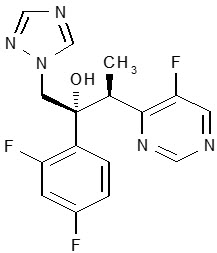
VFEND (voriconazole), an azole antifungal agent is available as a lyophilized powder for solution for intravenous infusion, film-coated tablets for oral administration, and as a powder for oral suspension. The structural formula is:
Voriconazole is designated chemically as (2R,3S)-2-(2, 4-difluorophenyl)-3-(5-fluoro-4-pyrimidinyl)-1-(1H-1,2,4-triazol-1-yl)-2-butanol with an empirical formula of C16H14F3N5O and a molecular weight of 349.3.
Voriconazole drug substance is a white to light-colored powder.
VFEND I.V. is a white lyophilized powder containing nominally 200 mg voriconazole and 3200 mg sulfobutyl ether beta-cyclodextrin sodium in a 30 mL Type I clear glass vial.
VFEND I.V. is intended for administration by intravenous infusion. It is a single-dose, unpreserved product. Vials containing 200 mg lyophilized voriconazole are intended for reconstitution with Water for Injection to produce a solution containing 10 mg/mL VFEND and 160 mg/mL of sulfobutyl ether beta-cyclodextrin sodium. The resultant solution is further diluted prior to administration as an intravenous infusion [see Dosage and Administration (2)].
VFEND Tablets contain 50 mg or 200 mg of voriconazole. The inactive ingredients include croscarmellose sodium, lactose monohydrate, magnesium stearate, povidone, pregelatinized starch, and a coating containing hypromellose, lactose monohydrate, titanium dioxide, and triacetin.
VFEND for Oral Suspension is a white to off-white powder providing a white to off-white orange-flavored suspension when reconstituted. Bottles containing 45 grams powder for oral suspension, which contain 3 g of voriconazole, are intended for reconstitution with water to produce a suspension containing 40 mg/mL voriconazole. The inactive ingredients include anhydrous citric acid, colloidal silicon dioxide, natural orange flavor, sodium benzoate, sodium citrate dihydrate, sucrose, titanium dioxide, and xanthan gum.
5.11 Pancreatitis
Pancreatitis has been observed in patients undergoing treatment with VFEND [see Adverse Reactions (6.1, 6.2)] Patients with risk factors for acute pancreatitis (e.g., recent chemotherapy, hematopoietic stem cell transplantation [HSCT]) should be monitored for the development of pancreatitis during VFEND treatment.
8.4 Pediatric Use
The safety and effectiveness of VFEND have been established in pediatric patients 2 years of age and older based on evidence from adequate and well-controlled studies in adult and pediatric patients and additional pediatric pharmacokinetic and safety data. A total of 105 pediatric patients aged 2 to less than 12 [N=26] and aged 12 to less than 18 [N=79] from two, non-comparative Phase 3 pediatric studies and eight adult therapeutic trials provided safety information for VFEND use in the pediatric population [see Adverse Reactions (6.1), Clinical Pharmacology (12.3), and Clinical Studies (14)].
Safety and effectiveness in pediatric patients below the age of 2 years has not been established. Therefore, VFEND is not recommended for pediatric patients less than 2 years of age.
A higher frequency of liver enzyme elevations was observed in the pediatric patients [see Dosage and Administration (2.5), Warnings and Precautions (5.1), and Adverse Reactions (6.1)].
The frequency of phototoxicity reactions is higher in the pediatric population. Squamous cell carcinoma has been reported in patients who experience photosensitivity reactions. Stringent measures for photoprotection are warranted. Sun avoidance and dermatologic follow-up are recommended in pediatric patients experiencing photoaging injuries, such as lentigines or ephelides, even after treatment discontinuation [see Warnings and Precautions (5.6)].
VFEND has not been studied in pediatric patients with hepatic or renal impairment [see Dosage and Administration (2.5, 2.6)]. Hepatic function and serum creatinine levels should be closely monitored in pediatric patients [see Dosage and Administration (2.6) and Warnings and Precautions (5.1, 5.10)].
8.5 Geriatric Use
In multiple dose therapeutic trials of voriconazole, 9.2% of patients were ≥65 years of age and 1.8% of patients were ≥75 years of age. In a study in healthy subjects, the systemic exposure (AUC) and peak plasma concentrations (Cmax) were increased in elderly males compared to young males. Pharmacokinetic data obtained from 552 patients from 10 voriconazole therapeutic trials showed that voriconazole plasma concentrations in the elderly patients were approximately 80% to 90% higher than those in younger patients after either IV or oral administration. However, the overall safety profile of the elderly patients was similar to that of the young so no dosage adjustment is recommended [see Clinical Pharmacology (12.3)].
5.7 Renal Toxicity
Acute renal failure has been observed in patients undergoing treatment with VFEND. Patients being treated with voriconazole are likely to be treated concomitantly with nephrotoxic medications and may have concurrent conditions that may result in decreased renal function.
Patients should be monitored for the development of abnormal renal function. This should include laboratory evaluation of serum creatinine [see Clinical Pharmacology (12.3) and Dosage and Administration (2.6)].
14 Clinical Studies
Voriconazole, administered orally or parenterally, has been evaluated as primary or salvage therapy in 520 patients aged 12 years and older with infections caused by Aspergillus spp., Fusarium spp., and Scedosporium spp.
4 Contraindications
-
•VFEND is contraindicated in patients with known hypersensitivity to voriconazole or its excipients [see Warnings and Precautions (5.5) and Adverse Reactions (6.1, 6.2)]. There is no information regarding cross-sensitivity between VFEND and other azole antifungal agents. Refer to the prescribing information for other azole antifungal agents.
-
•Concomittant use of VFEND with the interacting drugs described and listed below in this section are a guide and not considered a comprehensive list of all possible drugs that may be contraindicated with VFEND.
-
1.Concomitant use of VFEND is contraindicated with drugs that are highly dependent on CYP3A4 for metabolism, and for which elevated plasma concentrations are associated with serious and/or life-threatening reactions [see Drug Interactions (7)]:
-
•Eplerenone
-
•Ergot alkaloids (e.g., ergotamine, dihydroergotamine)
-
•Finerenone
-
•Ivabradine
-
•Lurasidone
-
•Naloxegol
-
•Pimozide
-
•Quinidine
-
•Rifabutin [see Clinical Pharmacology (12.3)]
-
•Sirolimus [see Clinical Pharmacology (12.3)]
-
•Tolvaptan
-
•Venetoclax: Coadministration at initiation and during the ramp-up phase is contraindicated in patients with chronic lymphocytic leukemia (CLL) or small lymphocytic lymphoma (SLL) due to the potential for increased risk of tumor lysis syndrome [see Drug Interactions (7)].
-
•Voclosporin
-
-
2.Concomitant use of VFEND is contraindicated with drugs and herbal products that induce CYP2C19, CYP2C9, and/or CYP3A4 and for which significantly reduced voriconazole plasma concentrations may be associated with loss of efficacy [see Drug Interactions (7)]:
-
•Carbamazepine
-
•Efavirenz
Concomitant use with efavirenz dosages of 400 mg every 24 hours or higher is contraindicated [see Clinical Pharmacology (12.3)]. -
•Long-acting barbiturates
-
•Rifabutin
-
•Rifampin
-
•Ritonavir
Concomitant use with high-dose ritonavir (400 mg every 12 hours) is contraindicated. Concomitant use with low-dose ritonavir (100 mg every 12 hours) should be avoided, unless an assessment of the benefit/risk to the patient justifies the use of VFEND [see Clinical Pharmacology (12.3)]. -
•St. John’s Wort [see Clinical Pharmacology (12.3)]
-
-
6 Adverse Reactions
The following serious adverse reactions are described elsewhere in the labeling:
Hepatic Toxicity [see Warnings and Precautions (5.1)]
Arrhythmias and QT Prolongation [see Warnings and Precautions (5.2)]
Infusion Related Reactions [see Warnings and Precautions (5.3)]
Visual Disturbances [see Warnings and Precautions (5.4)]
Severe Cutaneous Adverse Reactions [see Warnings and Precautions (5.5)]
Photosensitivity [see Warnings and Precautions (5.6)]
Renal Toxicity [see Warnings and Precautions (5.7)]
7 Drug Interactions
Voriconazole is metabolized by cytochrome P450 isoenzymes, CYP2C19, CYP2C9, and CYP3A4. Therefore, inhibitors or inducers of these isoenzymes may increase or decrease voriconazole plasma concentrations, respectively. Voriconazole is a strong inhibitor of CYP3A4, and also inhibits CYP2C19 and CYP2C9. Therefore, voriconazole may increase the plasma concentrations of substances metabolized by these CYP450 isoenzymes.
Table 10 and Table 11 provide listings of clinically significant drug interactions, including contraindicated drugs [see Contraindications (4)]. Drugs listed in Table 10 and Table 11 are a guide and not considered a comprehensive list of all possible drugs and herbal products that are contraindicated or may interact with VFEND.
Table 10: Effect of Other Drugs on Voriconazole Pharmacokinetics [see Clinical Pharmacology (12.3)]
|
Drug/Drug Class
(Mechanism of Interaction by the Drug) |
Voriconazole Plasma Exposure
(Cmax and AUCτ after 200 mg every 12 hours) |
Prevention or Management Recommendations |
|---|---|---|
|
Rifampin Results based on in vivo clinical studies generally following repeat oral dosing with 200 mg every 12 hours voriconazole to healthy subjects and Rifabutin
(CYP450 Induction) |
Significantly Reduced |
Contraindicated |
|
Efavirenz (400 mg every 24 hours) Results based on in vivo clinical study following repeat oral dosing with 400 mg every 12 hours for 1 day, then 200 mg every 12 hours for at least 2 days voriconazole to healthy subjects
(CYP450 Induction) |
Significantly Reduced |
Contraindicated |
|
Efavirenz (300 mg every 24 hours) (CYP450 Induction) |
Slight Decrease in AUC τ |
When voriconazole is concomitantly administered with efavirenz, voriconazole oral maintenance dose should be increased to 400 mg every 12 hours and efavirenz should be decreased to 300 mg every 24 hours. |
|
High-dose Ritonavir (400 mg every 12 hours) (CYP450 Induction) |
Significantly Reduced |
Contraindicated |
|
Low-dose Ritonavir (100 mg every 12 hours) (CYP450 Induction) |
Reduced |
Concomitant administration of voriconazole and low-dose ritonavir (100 mg every 12 hours) should be avoided, unless an assessment of the benefit/risk to the patient justifies the use of voriconazole. |
|
Carbamazepine |
Not Studied In Vivo or In Vitro, but Likely to Result in Significant Reduction |
Contraindicated |
|
Long Acting Barbiturates (e.g., phenobarbital, mephobarbital) |
Not Studied In Vivo or In Vitro, but Likely to Result in Significant Reduction |
Contraindicated |
|
Phenytoin (CYP450 Induction) |
Significantly Reduced |
Increase voriconazole maintenance dose from 4 mg/kg to 5 mg/kg IV every 12 hours or from 200 mg to 400 mg orally every 12 hours (100 mg to 200 mg orally every 12 hours in patients weighing less than 40 kg). |
|
Letermovir |
Reduced |
If concomitant administration of voriconazole with letermovir cannot be avoided, monitor for reduced effectiveness of voriconazole. |
|
St. John's Wort |
Significantly Reduced |
Contraindicated |
|
Oral Contraceptives containing ethinyl estradiol and norethindrone (CYP2C19 Inhibition) |
Increased |
Monitoring for adverse reactions and toxicity related to voriconazole is recommended for concomitant administration with oral contraceptives. |
|
Fluconazole (CYP2C9, CYP2C19 and CYP3A4 Inhibition) |
Significantly Increased |
Avoid concomitant administration of voriconazole and fluconazole. Monitoring for adverse reactions and toxicity related to voriconazole is started within 24 hours after the last dose of fluconazole. |
|
Other HIV Protease Inhibitors |
In Vivo Studies Showed No Significant Effects of Indinavir on Voriconazole Exposure |
No dosage adjustment in the voriconazole dosage needed for concomitant administration with indinavir. |
|
In Vitro Studies Demonstrated Potential for Inhibition of Voriconazole Metabolism (Increased Plasma Exposure) |
Frequent monitoring for adverse reactions and toxicity related to voriconazole for concomitant administration with other HIV protease inhibitors. |
|
|
Other NNRTIs Non-Nucleoside Reverse Transcriptase Inhibitors
(CYP3A4 Inhibition or CYP450 Induction) |
In Vitro Studies Demonstrated Potential for Inhibition of Voriconazole Metabolism by Delavirdine and Other NNRTIs (Increased Plasma Exposure) |
Frequent monitoring for adverse reactions and toxicity related to voriconazole. |
|
A Voriconazole-Efavirenz Drug Interaction Study Demonstrated the Potential for the Metabolism of Voriconazole to be Induced by Efavirenz and Other NNRTIs |
Careful assessment of voriconazole effectiveness. |
Table 11: Effect of Voriconazole on Pharmacokinetics of Other Drugs [see Clinical Pharmacology (12.3)]
|
Drug/Drug Class
(Mechanism of Interaction by Voriconazole) |
Drug Plasma Exposure
(Cmax and AUCτ) |
Prevention or Management Recommendations |
|---|---|---|
|
Sirolimus Results based on in vivo clinical studies generally following repeat oral dosing with 200 mg BID voriconazole to healthy subjects
(CYP3A4 Inhibition) |
Significantly Increased |
Contraindicated |
|
Rifabutin (CYP3A4 Inhibition) |
Significantly Increased |
Contraindicated |
|
Efavirenz (400 mg every 24 hours) Results based on in vivo clinical study following repeat oral dosing with 400 mg every 12 hours for 1 day, then 200 mg every 12 hours for at least 2 days voriconazole to healthy subjects
(CYP3A4 Inhibition) |
Significantly Increased |
Contraindicated |
|
Efavirenz (300 mg every 24 hours) (CYP3A4 Inhibition) |
Slight Increase in AUCτ |
When voriconazole is concomitantly administered with efavirenz, voriconazole oral maintenance dose should be increased to 400 mg every 12 hours and efavirenz should be decreased to 300 mg every 24 hours. |
|
High-dose Ritonavir (400 mg every 12 hours) (CYP3A4 Inhibition) |
No Significant Effect of Voriconazole on Ritonavir Cmax or AUCτ |
Contraindicated because of significant reduction of voriconazole Cmax and AUCτ. |
|
Low-dose Ritonavir (100 mg every 12 hours) |
Slight Decrease in Ritonavir Cmax and AUCτ |
Concomitant administration of voriconazole and low-dose ritonavir (100 mg every 12 hours) should be avoided (due to the reduction in voriconazole Cmax and AUCτ) unless an assessment of the benefit/risk to the patient justifies the use of voriconazole. |
|
Pimozide, Quinidine, Ivabradine |
Not Studied In Vivo or In Vitro, but Drug Plasma Exposure Likely to be Increased |
Contraindicated because of potential for QT prolongation and rare occurrence of torsade de pointes. |
|
Ergot Alkaloids |
Not Studied In Vivo or In Vitro, but Drug Plasma Exposure Likely to be Increased |
Contraindicated |
|
Naloxegol |
Not Studied In Vivo or In Vitro, but Drug Plasma Exposure Likely to be Increased which may Increase the Risk of Adverse Reactions |
Contraindicated |
|
Tolvaptan |
Although Not Studied Clinically, Voriconazole is Likely to Significantly Increase the Plasma Concentrations of Tolvaptan |
Contraindicated |
|
Lurasidone (CYP3A4 Inhibition) |
Not Studied In Vivo or In Vitro, but Voriconazole is Likely to Significantly Increase the Plasma Concentrations of Lurasidone |
Contraindicated |
|
Finerenone (CYP3A4 Inhibition) |
Not Studied In Vivo or In Vitro, but Voriconazole is Likely to Significantly Increase the Plasma Concentrations of Finerenone |
Contraindicated |
|
Eplerenone (CYP3A4 Inhibition) |
Not Studied In Vivo or In Vitro, but Voriconazole is Likely to Significantly Increase the Plasma Concentrations of Eplerenone |
Contraindicated |
|
Voclosporin (CYP3A4 Inhibition) |
Not Studied In Vivo or In Vitro, but Voriconazole is Likely to Significantly Increase the Plasma Concentrations of Voclosporin |
Contraindicated |
|
Venetoclax |
Not Studied In Vivo or In Vitro, but Venetoclax Plasma Exposure Likely to be Significantly Increased |
Concomitant administration of voriconazole is contraindicated at initiation and during the ramp-up phase in patients with chronic lymphocytic leukemia (CLL) or small lymphocytic lymphoma (SLL). Refer to the venetoclax labeling for safety monitoring and dose reduction in the steady daily dosing phase in CLL/SLL patients. |
|
Lemborexant |
Not Studied In Vivo or In Vitro, but Drug Plasma Exposure Likely to be Increased |
Avoid concomitant use of VFEND with lemborexant. |
|
Glasdegib |
Not Studied In Vivo or In Vitro, but Drug Plasma Exposure Likely to be Increased |
Consider alternative therapies. If concomitant use cannot be avoided, monitor patients for increased risk of adverse reactions including QTc interval prolongation. |
|
Tyrosine kinase inhibitors (including but not limited to axitinib, bosutinib, cabozantinib, ceritinib, cobimetinib, dabrafenib, dasatinib, nilotinib, sunitinib, ibrutinib, ribociclib) |
Not Studied In Vivo or In Vitro, but Drug Plasma Exposure Likely to be Increased |
Avoid concomitant use of VFEND. If concomitant use cannot be avoided, dose reduction of the tyrosine kinase inhibitor is recommended. Refer to the prescribing information for the relevant product. |
|
Cyclosporine (CYP3A4 Inhibition) |
AUCτ Significantly Increased; No Significant Effect on Cmax |
When initiating therapy with VFEND in patients already receiving cyclosporine, reduce the cyclosporine dose to one-half of the starting dose and follow with frequent monitoring of cyclosporine blood levels. Increased cyclosporine levels have been associated with nephrotoxicity. When VFEND is discontinued, cyclosporine concentrations must be frequently monitored and the dose increased as necessary. |
|
Methadone Results based on in vivo clinical study following repeat oral dosing with 400 mg every 12 hours for 1 day, then 200 mg every 12 hours for 4 days voriconazole to subjects receiving a methadone maintenance dose (30–100 mg every 24 hours) (CYP3A4 Inhibition)
|
Increased |
Increased plasma concentrations of methadone have been associated with toxicity including QT prolongation. Frequent monitoring for adverse reactions and toxicity related to methadone is recommended when concomitantly administered with VFEND. Dose reduction of methadone may be needed. |
|
Fentanyl (CYP3A4 Inhibition) |
Increased |
Reduction in the dose of fentanyl and other long-acting opiates metabolized by CYP3A4 should be considered when concomitantly administered with VFEND. Extended and frequent monitoring for opiate-associated adverse reactions may be necessary. |
|
Alfentanil (CYP3A4 Inhibition) |
Significantly Increased |
An increase in the incidence of delayed and persistent alfentanil-associated nausea and vomiting were observed when concomitantly administered with VFEND. Reduction in the dose of alfentanil and other opiates metabolized by CYP3A4 (e.g., sufentanil) should be considered when concomitantly administered with VFEND. A longer period for monitoring respiratory and other opiate-associated adverse reactions may be necessary. |
|
Oxycodone (CYP3A4 Inhibition) |
Significantly Increased |
Increased visual effects (heterophoria and miosis) of oxycodone were observed when concomitantly administered with VFEND. |
|
NSAIDs Non-Steroidal Anti-Inflammatory Drug including. ibuprofen and diclofenac(CYP2C9 Inhibition) |
Increased |
Frequent monitoring for adverse reactions and toxicity related to NSAIDs. Dose reduction of NSAIDs may be needed. |
|
Tacrolimus (CYP3A4 Inhibition) |
Significantly Increased |
When initiating therapy with VFEND in patients already receiving tacrolimus, reduce the tacrolimus dose to one-third of the starting dose and follow with frequent monitoring of tacrolimus blood levels. Increased tacrolimus levels have been associated with nephrotoxicity. When VFEND is discontinued, tacrolimus concentrations must be frequently monitored and the dose increased as necessary. |
|
Phenytoin (CYP2C9 Inhibition) |
Significantly Increased |
Frequent monitoring of phenytoin plasma concentrations and frequent monitoring of adverse effects related to phenytoin. |
|
Oral Contraceptives containing ethinyl estradiol and norethindrone (CYP3A4 Inhibition) |
Increased |
Monitoring for adverse reactions related to oral contraceptives is recommended during concomitant administration. |
|
Prednisolone and other corticosteroids |
In Vivo Studies Showed No Significant Effects of VFEND on Prednisolone Exposure |
No dosage adjustment for prednisolone when concomitantly administered with VFEND [see Clinical Pharmacology (12.3)].
|
|
Warfarin (CYP2C9 Inhibition) |
Prothrombin Time Significantly Increased |
If patients receiving coumarin preparations are treated simultaneously with voriconazole, the prothrombin time or other suitable anticoagulation tests should be monitored at close intervals and the dosage of anticoagulants adjusted accordingly. |
|
Other Oral Coumarin Anticoagulants |
Not Studied In Vivo or In Vitro for other Oral Coumarin Anticoagulants, but Drug Plasma Exposure Likely to be Increased |
|
|
Ivacaftor |
Not Studied In Vivo or In Vitro, but Drug Plasma Exposure Likely to be Increased which may Increase the Risk of Adverse Reactions |
Dose reduction of ivacaftor is recommended. Refer to the prescribing information for ivacaftor. |
|
Eszopiclone |
Not Studied In Vivo or In Vitro, but Drug Plasma Exposure Likely to be Increased which may Increase the Sedative Effect of Eszopiclone |
Dose reduction of eszopiclone is recommended. Refer to the prescribing information for eszopiclone. |
|
Mavacamten (CYP2C19/3A4/2C9 Inhibition) |
Not Studied In Vivo or In Vitro, but Mavacamten Drug Plasma Exposure Likely to be Increased which may Increase the Risk of Heart Failure |
Refer to the prescribing information for mavacamten. |
|
Omeprazole (CYP2C19/3A4 Inhibition) |
Significantly Increased |
When initiating therapy with VFEND in patients already receiving omeprazole doses of 40 mg or greater, reduce the omeprazole dose by one-half. The metabolism of other proton pump inhibitors that are CYP2C19 substrates may also be inhibited by voriconazole and may result in increased plasma concentrations of other proton pump inhibitors. |
|
Other HIV Protease Inhibitors |
In Vivo Studies Showed No Significant Effects on Indinavir Exposure |
No dosage adjustment for indinavir when concomitantly administered with VFEND. |
|
In Vitro Studies Demonstrated Potential for Voriconazole to Inhibit Metabolism |
Frequent monitoring for adverse reactions and toxicity related to other HIV protease inhibitors. |
|
|
Other NNRTIs Non-Nucleoside Reverse Transcriptase Inhibitors
(CYP3A4 Inhibition) |
A Voriconazole-Efavirenz Drug Interaction Study Demonstrated the Potential for Voriconazole to Inhibit Metabolism of Other NNRTIs |
Frequent monitoring for adverse reactions and toxicity related to NNRTI. |
|
Tretinoin |
Although Not Studied, Voriconazole may Increase Tretinoin Concentrations and Increase the Risk of Adverse Reactions |
Frequent monitoring for signs and symptoms of pseudotumor cerebri or hypercalcemia. |
|
Midazolam |
Significantly Increased |
Increased plasma exposures may increase the risk of adverse reactions and toxicities related to benzodiazepines. |
|
Other benzodiazepines including triazolam and alprazolam |
In Vitro Studies Demonstrated Potential for Voriconazole to Inhibit Metabolism |
Refer to drug-specific labeling for details. |
|
HMG-CoA Reductase Inhibitors (Statins) |
In Vitro Studies Demonstrated Potential for Voriconazole to Inhibit Metabolism |
Frequent monitoring for adverse reactions and toxicity related to statins. Increased statin concentrations in plasma have been associated with rhabdomyolysis. Adjustment of the statin dosage may be needed. |
|
Dihydropyridine Calcium Channel Blockers |
In Vitro Studies Demonstrated Potential for Voriconazole to Inhibit Metabolism |
Frequent monitoring for adverse reactions and toxicity related to calcium channel blockers. Adjustment of calcium channel blocker dosage may be needed. |
|
Sulfonylurea Oral Hypoglycemics |
Not Studied In Vivo or In Vitro, but Drug Plasma Exposure Likely to be Increased |
Frequent monitoring of blood glucose and for signs and symptoms of hypoglycemia. Adjustment of oral hypoglycemic drug dosage may be needed. |
|
Vinca Alkaloids |
Not Studied In Vivo or In Vitro, but Drug Plasma Exposure Likely to be Increased |
Frequent monitoring for adverse reactions and toxicity (i.e., neurotoxicity) related to vinca alkaloids. Reserve azole antifungals, including voriconazole, for patients receiving a vinca alkaloid who have no alternative antifungal treatment options. |
|
Everolimus |
Not Studied In Vivo or In Vitro, but Drug Plasma Exposure Likely to be Increased |
Concomitant administration of voriconazole and everolimus is not recommended. |
5.1 Hepatic Toxicity
In clinical trials, there have been uncommon cases of serious hepatic reactions during treatment with VFEND (including clinical hepatitis, cholestasis and fulminant hepatic failure, including fatalities). Instances of hepatic reactions were noted to occur primarily in patients with serious underlying medical conditions (predominantly hematological malignancy). Hepatic reactions, including hepatitis and jaundice, have occurred among patients with no other identifiable risk factors. Liver dysfunction has usually been reversible on discontinuation of therapy [see Adverse Reactions (6.1)].
A higher frequency of liver enzyme elevations was observed in the pediatric population [see Adverse Reactions (6.1)]. Hepatic function should be monitored in both adult and pediatric patients.
Measure serum transaminase levels and bilirubin at the initiation of VFEND therapy and monitor at least weekly for the first month of treatment. Monitoring frequency can be reduced to monthly during continued use if no clinically significant changes are noted. If liver function tests become markedly elevated compared to baseline, VFEND should be discontinued unless the medical judgment of the benefit/risk of the treatment for the patient justifies continued use [see Dosage and Administration (2.5) and Adverse Reactions (6.1)].
5.6 Photosensitivity
VFEND has been associated with photosensitivity skin reaction. Patients, including pediatric patients, should avoid exposure to direct sunlight during VFEND treatment and should use measures such as protective clothing and sunscreen with high sun protection factor (SPF). If phototoxic reactions occur, the patient should be referred to a dermatologist and VFEND discontinuation should be considered. If VFEND is continued despite the occurrence of phototoxicity-related lesions, dermatologic evaluation should be performed on a systematic and regular basis to allow early detection and management of premalignant lesions. Squamous cell carcinoma of the skin (including cutaneous SCC in situ, or Bowen's disease) and melanoma have been reported during long-term VFEND therapy in patients with photosensitivity skin reactions. If a patient develops a skin lesion consistent with premalignant skin lesions, squamous cell carcinoma or melanoma, VFEND should be discontinued. In addition, VFEND has been associated with photosensitivity related skin reactions such as pseudoporphyria, cheilitis, and cutaneous lupus erythematosus, as well as increased risk of skin toxicity with concomitant use of methotrexate, a drug associated with ultraviolet (UV) reactivation. There is the potential for this risk to be observed with other drugs associated with UV reactivation. Patients should avoid strong, direct sunlight during VFEND therapy.
The frequency of phototoxicity reactions is higher in the pediatric population. Because squamous cell carcinoma has been reported in patients who experience photosensitivity reactions, stringent measures for photoprotection are warranted in children. In children experiencing photoaging injuries such as lentigines or ephelides, sun avoidance and dermatologic follow-up are recommended even after treatment discontinuation.
Instructions for Use
Read this Instructions for Use before you start taking VFEND and each time you get a refill. There may be new information. This information does not take the place of talking with your healthcare provider about your medical condition or treatment.
Important information:
-
•Follow your healthcare provider's instructions for the dose of VFEND to take.
-
•Ask your healthcare provider or pharmacist if you are not sure how to take VFEND.
-
•VFEND for oral suspension is a liquid form of VFEND. Your pharmacist will mix (reconstitute) the medicine before it is dispensed to you. If VFEND is still in powder form, do not use it. Return it to your pharmacist.
-
•Always use the oral dispenser provided with VFEND to make sure you measure the right amount of VFEND.
-
•Shake the closed bottle of mixed (reconstituted) oral suspension well for about 10 seconds before each use.
Each pack contains:
How to prepare the bottle and take VFEND:
|
1. |
Remove the child-resistant bottle cap by pushing down while twisting the cap to the left (counter-clockwise). |
2. |
Push the bottle adapter firmly into the bottle (if your pharmacist has not already inserted the bottle adapter). If the bottle adapter is missing, contact your pharmacist. |
3. |
Important: Bottle adapter must be fully inserted before use. |
|
|
|
|
|||
|
4. |
The oral dispenser has markings to measure a dose that is a whole number (1 mL, 2 mL, 3 mL, 4 mL, or 5 mL) on one side and markings to measure a dose that is not a whole number (1.25 mL, 2.5 mL, or 3.75 mL) on the other side. |
5. |
Insert the tip of the oral dispenser into the bottle adapter. |
6. |
While holding the bottle with 1 hand, push down on the oral dispenser blue plunger with your other hand to push air into the bottle. |
|
|
|
|
|||
|
7. |
Turn the bottle upside down and slowly pull back on the oral dispenser blue plunger to withdraw your prescribed dose of medicine. |
8. |
Turn the bottle back upright with the oral dispenser still in place. Remove the tip of the oral dispenser from the bottle adapter. |
9. |
Screw the bottle cap back on the bottle tightly by turning the cap to the right (clockwise). |
Rinse the oral dispenser after each use.
-
•Pull the plunger out of the oral dispenser and wash both parts with warm soapy water.
-
•Rinse both parts with water and allow to air dry after each use.
-
•After air drying, push the plunger back into the oral dispenser.
-
•Store the oral dispenser with VFEND oral suspension in a clean safe place.
How should I store VFEND oral suspension?
-
•Store VFEND oral suspension at room temperature between 59°F to 86°F (15°C to 30°C).
-
•Do not refrigerate or freeze.
-
•Keep the bottle cap tightly closed.
-
•Use VFEND oral suspension within 14 days after it has been mixed (reconstituted) by the pharmacist. The pharmacist will write the expiration date on the bottle label (the expiration date of the oral suspension is 14 days from the date it was mixed (reconstituted) by the pharmacist). Throw away (discard) any unused VFEND after the expiration date.
-
•Keep VFEND and all medicines out of the reach of children.
This product's labeling may have been updated. For the most recent prescribing information, please visit www.pfizer.com.
This Instructions for Use has been approved by the U.S. Food and Drug Administration.
LAB-1348-6.0
Revised: 8/2024
12.3 Pharmacokinetics
The pharmacokinetics of voriconazole have been characterized in healthy subjects, special populations and patients.
The pharmacokinetics of voriconazole are non-linear due to saturation of its metabolism. The interindividual variability of voriconazole pharmacokinetics is high. Greater than proportional increase in exposure is observed with increasing dose. It is estimated that, on average, increasing the oral dose from 200 mg every 12 hours to 300 mg every 12 hours leads to an approximately 2.5-fold increase in exposure (AUCτ); similarly, increasing the intravenous dose from 3 mg/kg every 12 hours to 4 mg/kg every 12 hours produces an approximately 2.5-fold increase in exposure (Table 12).
|
6 mg/kg IV
(loading dose) |
3 mg/kg
IV every 12 hours |
4 mg/kg
IV every 12 hours |
400 mg Oral
(loading dose) |
200 mg
Oral every 12 hours |
300 mg
Oral every 12 hours |
|
|---|---|---|---|---|---|---|
| Note: Parameters were estimated based on non-compartmental analysis from 5 pharmacokinetic studies. AUC12 = area under the curve over 12 hour dosing interval, Cmax = maximum plasma concentration, Cmin = minimum plasma concentration. CV = coefficient of variation |
||||||
|
N |
35 |
23 |
40 |
17 |
48 |
16 |
|
AUC12 (μg∙h/mL) |
13.9 (32) |
13.7 (53) |
33.9 (54) |
9.31 (38) |
12.4 (78) |
34.0 (53) |
|
Cmax (μg/mL) |
3.13 (20) |
3.03 (25) |
4.77 (36) |
2.30 (19) |
2.31 (48) |
4.74 (35) |
|
Cmin (μg/mL) |
-- |
0.46 (97) |
1.73 (74) |
-- |
0.46 (120) |
1.63 (79) |
When the recommended intravenous loading dose regimen is administered to healthy subjects, plasma concentrations close to steady state are achieved within the first 24 hours of dosing (e.g., 6 mg/kg IV every 12 hours on day 1 followed by 3 mg/kg IV every 12 hours). Without the loading dose, accumulation occurs during twice daily multiple dosing with steady state plasma voriconazole concentrations being achieved by day 6 in the majority of subjects.
12.5 Pharmacogenomics
CYP2C19, significantly involved in the metabolism of voriconazole, exhibits genetic polymorphism. Approximately 15–20% of Asian populations may be expected to be poor metabolizers. For Caucasians and Blacks, the prevalence of poor metabolizers is 3–5%. Studies conducted in Caucasian and Japanese healthy subjects have shown that poor metabolizers have, on average, 4-fold higher voriconazole exposure (AUCτ) than their homozygous extensive metabolizer counterparts. Subjects who are heterozygous extensive metabolizers have, on average, 2-fold higher voriconazole exposure than their homozygous extensive metabolizer counterparts [see Clinical Pharmacology (12.3)].
5.10 Laboratory Tests
Electrolyte disturbances such as hypokalemia, hypomagnesemia and hypocalcemia should be corrected prior to initiation of and during VFEND therapy.
Patient management should include laboratory evaluation of renal (particularly serum creatinine) and hepatic function (particularly liver function tests and bilirubin).
14.5 Pediatric Studies
A total of 22 patients aged 12 to 18 years with IA were included in the adult therapeutic studies. Twelve out of 22 (55%) patients had successful response after treatment with a maintenance dose of voriconazole 4 mg/kg every 12 hours.
Fifty-three pediatric patients aged 2 to less than 18 years old were treated with voriconazole in two prospective, open-label, non-comparative, multicenter clinical studies.
One study was designed to enroll pediatric patients with IA or infections with rare molds (such as Scedosporium or Fusarium). Patients aged 2 to less than 12 years and 12 to 14 years with body weight less than 50 kg received an intravenous VFEND loading dose of 9 mg/kg every 12 hours for the first 24-hours followed by an 8 mg/kg intravenous maintenance dose every 12 hours. After completing 7 days of intravenous therapy patients had an option to switch to oral VFEND. The oral maintenance dose was 9 mg/kg every 12 hours (maximum dose of 350 mg). All other pediatric patients aged 12 to less than 18 years received the adult VFEND dosage regimen. Patients received VFEND for at least 6 weeks and up to a maximum of 12 weeks.
The study enrolled 31 patients with possible, proven, or probable IA. Fourteen of 31 patients, 5 of whom were 2 to less than 12 years old and 9 of whom were 12 to less than 18 years old, had proven or probable IA and were included in the modified intent-to-treat (MITT) efficacy analyses. No patients with rare mold were enrolled. A successful global response was defined as resolution or improvement in clinical signs and symptoms and at least 50% resolution of radiological lesions attributed to IA. The overall rate of successful global response at 6 weeks in the MITT population is presented in Table 18 below.
| Parameter | Global Response at Week 6 | ||
|---|---|---|---|
|
Ages 2–<12 years
N=5 |
Ages 12–<18 years
N=9 |
Overall
N=14 |
|
|
Number of successes, n (%) |
2 (40%) |
7 (78%) |
9 (64%) |
The second study enrolled 22 patients with invasive candidiasis including candidemia (ICC) and EC requiring either primary or salvage therapy. Patients with ICC aged 2 to less than 12 years and 12 to 14 years with body weight less than 50 kg received an intravenous VFEND loading dose of 9 mg/kg every 12 hours for the first 24 hours followed by an 8 mg/kg intravenous maintenance dose every 12-hours. After completing 5 days of intravenous therapy patients had an option to switch to oral VFEND. The oral maintenance dose was 9 mg/kg every 12 hours (maximum dose of 350 mg). All other pediatric patients aged 12 to less than 18 years received the adult VFEND dosage regimen. VFEND was administered for at least 14 days after the last positive culture. A maximum of 42 days of treatment was permitted.
Patients with primary or salvage EC aged 2 to less than 12 years and 12 to 14 years with body weight less than 50 kg received an intravenous VFEND dose of 4 mg/kg every 12 hours followed by an oral VFEND dose of 9 mg/kg every 12 hours (maximum dose of 350 mg) when criteria for oral switch were met. All other pediatric patients aged 12 to less than 18 years received the adult VFEND dosage regimen. VFEND was administered for at least 7 days after the resolution of clinical signs and symptoms. A maximum of 42 days of treatment was permitted.
For EC, study treatment was initiated without a loading dose of intravenous voriconazole. Seventeen of these patients had confirmed Candida infection and were included in the MITT efficacy analyses. Of the 17 patients included in the MITT analyses, 9 were 2 to less than 12 years old (7 with ICC and 2 with EC) and 8 were 12 to less than 18 years old (all with EC). For ICC and EC, a successful global response was defined as clinical cure or improvement with microbiological eradication or presumed eradication. The overall rate of successful global response at EOT in the MITT population is presented in Table 19 below.
| Parameter | Global Response at End of Treatment | |||
|---|---|---|---|---|
|
EC
N=10 |
ICC
All subjects with ICC were aged 2 to less than 12.
N=7 |
|||
|
Ages 2–<12
N=2 |
Ages 12–<18
N=8 |
Overall
N=10 |
Overall
N=7 |
|
|
Number of successes, n (%) |
2 (100%) |
5 (63%) |
7 (70%) |
6 (86%) |
1 Indications and Usage
VFEND is an azole antifungal indicated for the treatment of adults and pediatric patients 2 years of age and older with:
-
•Invasive aspergillosis (1.1)
-
•Candidemia in non-neutropenics and other deep tissue Candida infections (1.2)
-
•Esophageal candidiasis (1.3)
-
•Serious fungal infections caused by Scedosporium apiospermum and Fusarium species including Fusarium solani, in patients intolerant of, or refractory to, other therapy (1.4)
5.4 Visual Disturbances
The effect of VFEND on visual function is not known if treatment continues beyond 28 days. There have been postmarketing reports of prolonged visual adverse reactions, including optic neuritis and papilledema. If treatment continues beyond 28 days, visual function including visual acuity, visual field, and color perception should be monitored [see Adverse Reactions (6.2)].
5.8 Adrenal Dysfunction
Reversible cases of azole-induced adrenal insufficiency have been reported in patients receiving azoles, including VFEND. Adrenal insufficiency has been reported in patients receiving azoles with or without concomitant corticosteroids. In patients receiving azoles without corticosteroids adrenal insufficiency is related to direct inhibition of steroidogenesis by azoles. In patients taking corticosteroids, voriconazole associated CYP3A4 inhibition of their metabolism may lead to corticosteroid excess and adrenal suppression [see Drug Interactions (7) and Clinical Pharmacology (12.3)]. Cushing's syndrome with and without subsequent adrenal insufficiency has also been reported in patients receiving VFEND concomitantly with corticosteroids.
Patients receiving VFEND and corticosteroids (via all routes of administration) should be carefully monitored for adrenal dysfunction both during and after VFEND treatment. Patients should be instructed to seek immediate medical care if they develop signs and symptoms of Cushing's syndrome or adrenal insufficiency.
12.1 Mechanism of Action
Voriconazole is an antifungal drug [see Microbiology (12.4)].
5.9 Embryo Fetal Toxicity
Voriconazole can cause fetal harm when administered to a pregnant woman.
In animals, voriconazole administration was associated with fetal malformations, embryotoxicity, increased gestational length, dystocia and embryomortality [see Use in Specific Populations (8.1)].
If VFEND is used during pregnancy, or if the patient becomes pregnant while taking VFEND, inform the patient of the potential hazard to the fetus. Advise females of reproductive potential to use effective contraception during treatment with VFEND [see Use in Specific Populations (8.3)].
1.1 Invasive Aspergillosis
VFEND is indicated in adults and pediatric patients (2 years of age and older) for the treatment of invasive aspergillosis (IA). In clinical trials, the majority of isolates recovered were Aspergillus fumigatus. There was a small number of cases of culture-proven disease due to species of Aspergillus other than A. fumigatus [see Clinical Studies (14.1, 14.5) and Microbiology (12.4)].
1.3 Esophageal Candidiasis
VFEND is indicated in adults and pediatric patients (2 years of age and older) for the treatment of esophageal candidiasis (EC) [see Clinical Studies (14.3, 14.5) and Microbiology (12.4)].
5 Warnings and Precautions
5.14 Galactose Intolerance
VFEND tablets contain lactose and should not be given to patients with rare hereditary problems of galactose intolerance, Lapp lactase deficiency or glucose-galactose malabsorption.
2 Dosage and Administration
-
•Dosage in Adults (2.3)
|
Infection |
Loading dose |
Maintenance Dose |
||
|
Intravenous infusion |
Intravenous infusion |
Oral tablets |
Oral suspension |
|
|
Invasive Aspergillosis |
6 mg/kg every 12 hours for the first 24 hours |
4 mg/kg every 12 hours |
200 mg every 12 hours |
5 mL every 12 hours |
|
Candidemia in nonneutropenics and other deep tissue Candida infections |
3–4 mg/kg every 12 hours |
200 mg every 12 hours |
5 mL every 12 hours |
|
|
Scedosporiosis and Fusariosis |
4 mg/kg every 12 hours |
200 mg every 12 hours |
5 mL every 12 hours |
|
|
Esophageal Candidiasis |
Not Evaluated |
Not Evaluated |
200 mg every 12 hours |
5 mL every 12 hours |
-
oAdult patients weighing less than 40 kg: oral maintenance dose 100 mg or 150 mg every 12 hours
-
oHepatic Impairment: Use half the maintenance dose in adult patients with mild to moderate hepatic impairment (Child-Pugh Class A and B) (2.5)
-
oRenal Impairment: Avoid intravenous administration in adult patients with moderate to severe renal impairment (creatinine clearance <50 mL/min) (2.6)
-
•Dosage in Pediatric Patients 2 years of age and older (2.4)
-
oFor pediatric patients 2 to less than 12 years of age and 12 to 14 years of age weighing less than 50 kg see Table below.
|
Infection |
Loading Dose |
Maintenance Dose |
||
|
Intravenous infusion |
Intravenous infusion |
Oral tablets |
Oral suspension |
|
|
Invasive Aspergillosis |
9 mg/kg every 12 hours for the first 24 hours |
8 mg/kg every 12 hours after the first 24 hours |
9 mg/kg every 12 hours |
0.225 mL/kg every 12 hours |
|
Candidemia in nonneutropenics and other deep tissue Candida infections |
||||
|
Scedosporiosis and Fusariosis |
||||
|
Esophageal Candidiasis |
Not Evaluated |
4 mg/kg every 12 hours |
9 mg/kg every 12 hours |
0.225 mL/kg every 12 hours [maximum dose of 8.75 mL (350 mg) every 12 hours] |
-
oFor pediatric patients aged 12 to 14 years weighing greater than or equal to 50 kg and those aged 15 years and older regardless of body weight use adult dosage. (2.4)
-
oDosage adjustment of VFEND in pediatric patients with renal or hepatic impairment has not been established (2.5, 2.6)
-
•See full prescribing information for instructions on reconstitution of VFEND lyophilized powder for intravenous use and reconstitution of VFEND oral suspension and important administration instructions (2.1, 2.6, 2.7)
3 Dosage Forms and Strengths
-
•Tablets: 50 mg, 200 mg (3)
-
•For Oral Suspension: 40 mg/mL (200 mg/5 mL) when reconstituted (3)
-
•For Injection: Lyophilized powder containing 200 mg of voriconazole and 3,200 mg of sulfobutyl ether beta-cyclodextrin sodium (SBECD); after reconstitution 10 mg/mL of voriconazole and 160 mg/mL of SBECD (3)
8 Use in Specific Populations
-
•Pediatrics: Safety and effectiveness in patients younger than 2 years has not been established (8.4)
5.3 Infusion Related Reactions
During infusion of the intravenous formulation of VFEND in healthy subjects, anaphylactoid-type reactions, including flushing, fever, sweating, tachycardia, chest tightness, dyspnea, faintness, nausea, pruritus and rash, have occurred uncommonly. Symptoms appeared immediately upon initiating the infusion. Consideration should be given to stopping the infusion should these reactions occur.
6.1 Clinical Trials Experience
Because clinical trials are conducted under widely varying conditions, adverse reaction rates observed in clinical trials of a drug cannot be directly compared to rates in the clinical trials of another drug and may not reflect the rates observed in practice.
5.12 Skeletal Adverse Reactions
Fluorosis and periostitis have been reported during long-term VFEND therapy. If a patient develops skeletal pain and radiologic findings compatible with fluorosis or periostitis, VFEND should be discontinued [see Adverse Reactions (6.2)].
14.1 Invasive Aspergillosis (ia)
Voriconazole was studied in patients for primary therapy of IA (randomized, controlled study 307/602), for primary and salvage therapy of aspergillosis (non-comparative study 304) and for treatment of patients with IA who were refractory to, or intolerant of, other antifungal therapy (non-comparative study 309/604).
14.3 Esophageal Candidiasis (ec)
The efficacy of oral voriconazole 200 mg twice daily compared to oral fluconazole 200 mg once daily in the primary treatment of EC was demonstrated in Study 150-305, a double-blind, double-dummy study in immunocompromised patients with endoscopically-proven EC. Patients were treated for a median of 15 days (range 1 to 49 days). Outcome was assessed by repeat endoscopy at end of treatment (EOT). A successful response was defined as a normal endoscopy at EOT or at least a 1 grade improvement over baseline endoscopic score. For patients in the Intent-to-Treat (ITT) population with only a baseline endoscopy, a successful response was defined as symptomatic cure or improvement at EOT compared to baseline. Voriconazole and fluconazole (200 mg once daily) showed comparable efficacy rates against EC, as presented in Table 16.
| Population | Voriconazole | Fluconazole |
Difference %
(95% CI) Confidence Interval for the difference (Voriconazole – Fluconazole) in success rates.
|
|---|---|---|---|
|
PP PP (Per Protocol) patients had confirmation of Candida esophagitis by endoscopy, received at least 12 days of treatment, and had a repeat endoscopy at EOT (end of treatment).
|
113/115 (98.2%) |
134/141 (95.0%) |
3.2 (-1.1, 7.5) |
|
ITT ITT (Intent to Treat) patients without endoscopy or clinical assessment at EOT were treated as failures.
|
175/200 (87.5%) |
171/191 (89.5%) |
-2.0 (-8.3, 4.3) |
Microbiologic success rates by Candida species are presented in Table 17.
|
Pathogen
Some patients had more than one species isolated at baseline.
|
Voriconazole | Fluconazole | ||
|---|---|---|---|---|
|
Favorable endoscopic response
Patients with endoscopic and/or mycological assessment at end of therapy.
|
Mycological eradication | Favorable endoscopic response | Mycological eradication | |
| Success/Total (%) | Eradication/Total (%) | Success/Total (%) | Eradication/Total (%) | |
|
C. albicans |
134/140 (96%) |
90/107 (84%) |
147/156 (94%) |
91/115 (79%) |
|
C. glabrata |
8/8 (100%) |
4/7 (57%) |
4/4 (100%) |
1/4 (25%) |
|
C. krusei |
1/1 |
1/1 |
2/2 (100%) |
0/0 |
1.4 Scedosporiosis and Fusariosis
VFEND is indicated for the treatment of serious fungal infections caused by Scedosporium apiospermum (asexual form of Pseudallescheria boydii) and Fusarium spp. including Fusarium solani, in adults and pediatric patients (2 years of age and older) intolerant of, or refractory to, other therapy [see Clinical Studies (14.4) and Microbiology (12.4)].
17 Patient Counseling Information
Advise the patient to read the FDA-approved patient labeling (Patient Information).
14.4 Other Serious Fungal Pathogens
In pooled analyses of patients, voriconazole was shown to be effective against the following additional fungal pathogens:
5.2 Arrhythmias and Qt Prolongation
Some azoles, including VFEND, have been associated with prolongation of the QT interval on the electrocardiogram. During clinical development and postmarketing surveillance, there have been rare cases of arrhythmias, (including ventricular arrhythmias such as torsade de pointes), cardiac arrests and sudden deaths in patients taking voriconazole. These cases usually involved seriously ill patients with multiple confounding risk factors, such as history of cardiotoxic chemotherapy, cardiomyopathy, hypokalemia and concomitant medications that may have been contributory.
VFEND should be administered with caution to patients with potentially proarrhythmic conditions, such as:
-
•Congenital or acquired QT prolongation
-
•Cardiomyopathy, in particular when heart failure is present
-
•Sinus bradycardia
-
•Existing symptomatic arrhythmias
-
•Concomitant medicinal product that is known to prolong QT interval [see Contraindications (4), Drug Interactions (7), and Clinical Pharmacology (12.3)]
Rigorous attempts to correct potassium, magnesium and calcium should be made before starting and during voriconazole therapy [see Clinical Pharmacology (12.3)].
5.5 Severe Cutaneous Adverse Reactions
Severe cutaneous adverse reactions (SCARs), such as Stevens-Johnson syndrome (SJS), toxic epidermal necrolysis (TEN), and drug reaction with eosinophilia and systemic symptoms (DRESS), which can be life-threatening or fatal, have been reported during treatment with VFEND. If a patient develops a severe cutaneous adverse reaction, VFEND should be discontinued [see Adverse Reactions (6.1, 6.2)].
Principal Display Panel 200 Mg Vial Label
NDC 0049-3190-28
Vfend® I.V.
(voriconazole) for injection
200 mg*
200 mg* of voriconazole
Not made with natural rubber latex
No Preservatives
Sterile Single-Dose Vial - Discard
Unused Portion
For Intravenous Infusion Only
Pfizer
Hospital
Rx only
Principal Display Panel 200 Mg Vial Carton
NDC 0049-3190-28
Rx only
1 Vial
Vfend® I.V.
(voriconazole) for injection
200 mg*
200 mg* of voriconazole
Not made with natural
rubber latex
No Preservatives
Sterile Single-Dose Vial -
Discard Unused Portion
For Intravenous Infusion Only
Pfizer
Hospital
Principal Display Panel 40 Mg Bottle Label
Pfizer
NDC 0049-3160-44
Vfend®
(voriconazole)
for oral suspension
40 mg/mL*
ORANGE FLAVORED
75 mL (when reconstituted)
Rx only
5.13 Clinically Significant Drug Interactions
See Table 10 for a listing of drugs that may significantly alter voriconazole concentrations. Also, see Table 11 for a listing of drugs that may interact with voriconazole resulting in altered pharmacokinetics or pharmacodynamics of the other drug [see Contraindications (4) and Drug Interactions (7)].
Principal Display Panel 40 Mg Bottle Carton
Pfizer
NDC 0049-3160-44
Vfend®
(voriconazole)
for oral suspension
40 mg/mL*
ORANGE FLAVORED
Oral Dispenser Included
Important: Read assembly instructions
carefully before dispensing.
Contains Small Parts -
Keep out of reach of children.
75 mL (when reconstituted)
Rx only
8.3 Females and Males of Reproductive Potential
Principal Display Panel 50 Mg Tablet Bottle Label
Pfizer
NDC 0049-3170-30
Vfend®
(voriconazole)
50 mg
Tablets
30 Tablets
Rx only
2.4 Recommended Dosing Regimen in Pediatric Patients
The recommended dosing regimen for pediatric patients 2 to less than 12 years of age and 12 to 14 years of age with body weight less than 50 kg is shown in Table 2. For pediatric patients 12 to 14 years of age with a body weight greater than or equal to 50 kg and those 15 years of age and above regardless of body weight, administer the adult dosing regimen of VFEND [see Dosage and Administration (2.3)].
| Loading Dose | Maintenance Dose | |||
|---|---|---|---|---|
| Intravenous infusion | Intravenous infusion | Oral tablets | Oral suspension | |
|
Invasive Aspergillosis |
9 mg/kg every 12 hours for the first 24 hours |
8 mg/kg every 12 hours after the first 24 hours |
9 mg/kg every 12 hours |
0.225 mL/kg every 12 hours |
|
Candidemia in nonneutropenics and other deep tissue Candida infections |
||||
|
Scedosporiosis and Fusariosis |
||||
|
Esophageal Candidiasis |
Not Evaluated |
4 mg/kg every 12 hours |
9 mg/kg every 12 hours |
0.225 mL/kg every 12 hours |
Initiate therapy with an intravenous infusion regimen. Consider an oral regimen only after there is a significant clinical improvement. Note that an 8 mg/kg intravenous dose will provide voriconazole exposure approximately 2-fold higher than a 9 mg/kg oral dose.
The oral dose recommendation for children is based on studies in which VFEND was administered as the powder for oral suspension formulation. Bioequivalence between the VFEND powder for oral suspension and VFEND tablets has not been investigated in a pediatric population.
Oral bioavailability may be limited in pediatric patients 2 to 12 years with malabsorption and very low body weight for age. In that case, intravenous VFEND administration is recommended.
Principal Display Panel 200 Mg Tablet Bottle Label
Pfizer
NDC 0049-3180-30
Vfend®
(voriconazole)
200 mg
Tablets
30 Tablets
Rx only
13.1 Carcinogenesis, Mutagenesis, Impairment of Fertility
Two-year carcinogenicity studies were conducted in rats and mice. Rats were given oral doses of 6, 18 or 50 mg/kg voriconazole, or 0.2, 0.6, or 1.6 times the RMD on a body surface area basis. Hepatocellular adenomas were detected in females at 50 mg/kg and hepatocellular carcinomas were found in males at 6 and 50 mg/kg. Mice were given oral doses of 10, 30 or 100 mg/kg voriconazole, or 0.1, 0.4, or 1.4 times the RMD on a body surface area basis. In mice, hepatocellular adenomas were detected in males and females and hepatocellular carcinomas were detected in males at 1.4 times the RMD of voriconazole.
Voriconazole demonstrated clastogenic activity (mostly chromosome breaks) in human lymphocyte cultures in vitro. Voriconazole was not genotoxic in the Ames assay, CHO HGPRT assay, the mouse micronucleus assay or the in vivo DNA repair test (Unscheduled DNA Synthesis assay).
Voriconazole administration induced no impairment of male or female fertility in rats dosed at 50 mg/kg, or 1.6 times the RMD.
6.2 Postmarketing Experience in Adult and Pediatric Patients
The following adverse reactions have been identified during post-approval use of VFEND. Because these reactions are reported voluntarily from a population of uncertain size, it is not always possible to reliably estimate their frequency or establish a causal relationship to drug exposure.
2.1 Important Administration Instructions for Use in All Patients
Administer VFEND Tablets or Oral Suspension at least one hour before or after a meal.
VFEND I.V. for Injection requires reconstitution to 10 mg/mL and subsequent dilution to 5 mg/mL or less prior to administration as an infusion, at a maximum rate of 3 mg/kg per hour over 1 to 3 hours.
Administer diluted VFEND I.V. by intravenous infusion over 1 to 3 hours only. Do not administer as an IV bolus injection.
2.7 Dosage Adjustment When Coadministered With Phenytoin Or Efavirenz
The maintenance dose of voriconazole should be increased when coadministered with phenytoin or efavirenz. Use the optimal method for titrating dosage [see Drug Interactions (7) and Dosage and Administration (2.3)].
1.2 Candidemia in Non Neutropenic Patients and Other Deep Tissue Candida
VFEND is indicated in adults and pediatric patients (2 years of age and older) for the treatment of candidemia in non-neutropenic patients and the following Candida infections: disseminated infections in skin and infections in abdomen, kidney, bladder wall, and wounds [see Clinical Studies (14.2, 14.5) and Microbiology (12.4)].
14.2 Candidemia in Non Neutropenic Patients and Other Deep Tissue Candida
Voriconazole was compared to the regimen of amphotericin B followed by fluconazole in Study 608, an open-label, comparative study in nonneutropenic patients with candidemia associated with clinical signs of infection. Patients were randomized in 2:1 ratio to receive either voriconazole (n=283) or the regimen of amphotericin B followed by fluconazole (n=139). Patients were treated with randomized study drug for a median of 15 days. Most of the candidemia in patients evaluated for efficacy was caused by C. albicans (46%), followed by C. tropicalis (19%), C. parapsilosis (17%), C. glabrata (15%), and C. krusei (1%).
An independent Data Review Committee (DRC), blinded to study treatment, reviewed the clinical and mycological data from this study, and generated one assessment of response for each patient. A successful response required all of the following: resolution or improvement in all clinical signs and symptoms of infection, blood cultures negative for Candida, infected deep tissue sites negative for Candida or resolution of all local signs of infection, and no systemic antifungal therapy other than study drug. The primary analysis, which counted DRC-assessed successes at the fixed time point (12 weeks after End of Therapy [EOT]), demonstrated that voriconazole was comparable to the regimen of amphotericin B followed by fluconazole (response rates of 41% and 41%, respectively) in the treatment of candidemia. Patients who did not have a 12-week assessment for any reason were considered a treatment failure.
The overall clinical and mycological success rates by Candida species in Study 150-608 are presented in Table 15.
| Baseline Pathogen | Clinical and Mycological Success (%) | |
|---|---|---|
| Voriconazole | Amphotericin B --> Fluconazole | |
|
C. albicans |
46/107 (43%) |
30/63 (48%) |
|
C. tropicalis |
17/53 (32%) |
1/16 (6%) |
|
C. parapsilosis |
24/45 (53%) |
10/19 (53%) |
|
C. glabrata |
12/36 (33%) |
7/21 (33%) |
|
C. krusei |
1/4 |
0/1 |
In a secondary analysis, which counted DRC-assessed successes at any time point (EOT, or 2, 6, or 12 weeks after EOT), the response rates were 65% for voriconazole and 71% for the regimen of amphotericin B followed by fluconazole.
In Studies 608 and 309/604 (non-comparative study in patients with invasive fungal infections who were refractory to, or intolerant of, other antifungal agents), voriconazole was evaluated in 35 patients with deep tissue Candida infections. A favorable response was seen in 4 of 7 patients with intra-abdominal infections, 5 of 6 patients with kidney and bladder wall infections, 3 of 3 patients with deep tissue abscess or wound infection, 1 of 2 patients with pneumonia/pleural space infections, 2 of 4 patients with skin lesions, 1 of 1 patients with mixed intra-abdominal and pulmonary infection, 1 of 2 patients with suppurative phlebitis, 1 of 3 patients with hepatosplenic infection, 1 of 5 patients with osteomyelitis, 0 of 1 with liver infection, and 0 of 1 with cervical lymph node infection.
Structured Label Content
Section 42229-5 (42229-5)
Blood products and concentrated electrolytes
VFEND I.V. must not be infused concomitantly with any blood product or short-term infusion of concentrated electrolytes, even if the two infusions are running in separate intravenous lines (or cannulas). Electrolyte disturbances such as hypokalemia, hypomagnesemia and hypocalcemia should be corrected prior to initiation of and during VFEND therapy [see Warnings and Precautions (5.10)].
Section 42230-3 (42230-3)
| This Patient Information has been approved by the U.S. Food and Drug Administration. Revised: 1/2026 | |||
|
PATIENT INFORMATION |
|||
|
Read the Patient Information that comes with VFEND before you start taking it and each time you get a refill. There may be new information. This information does not take the place of talking with your healthcare provider about your condition or treatment. |
|||
|
What is VFEND?
|
|||
|
Do not take VFEND if you:
|
|||
|
|
|
|
|
Ask your healthcare provider or pharmacist if you are not sure if you are taking any of the medicines listed above. |
|||
|
Before you take VFEND, tell your healthcare provider about all of your medical conditions, including if you:
Tell your healthcare provider about all the medicines you take, including prescription and over-the-counter medicines, vitamins and herbal supplements. |
|||
|
How should I take VFEND?
|
|||
|
What should I avoid while taking VFEND?
|
|||
|
What are the possible side effects of VFEND? VFEND may cause serious side effects including:
|
|||
|
|
|
|
|
|||
|
|
|
|
Call your healthcare provider right away if you get a new skin rash or your skin rash gets worse.
|
|||
|
|
|
|
|
Symptoms of Cushing's syndrome include: |
|||
|
|
|
|
Call your healthcare provider or go to the nearest hospital emergency room right away if you have any of the symptoms listed above. The most common side effects of VFEND in adults include: |
|||
|
|
|
|
|
The most common side effects of VFEND in children include: |
|||
|
|
|
|
|
Tell your healthcare provider if you have any side effect that bothers you or that does not go away. |
|||
|
How should I store VFEND?
|
|||
|
General information about the safe and effective use of VFEND.
|
|||
|
What are the ingredients in VFEND?
|
|||
|
|
LAB-0311-23.0
Section 43683-2 (43683-2)
|
Contraindications (4) |
1/2026 |
1.5 Usage
Specimens for fungal culture and other relevant laboratory studies (including histopathology) should be obtained prior to therapy to isolate and identify causative organism(s). Therapy may be instituted before the results of the cultures and other laboratory studies are known. However, once these results become available, antifungal therapy should be adjusted accordingly.
16.2 Storage
VFEND I.V. for Injection unreconstituted vials should be stored at 15°C to 30°C (59°F to 86°F) [see USP Controlled Room Temperature]. VFEND is a single dose unpreserved sterile lyophile. From a microbiological point of view, following reconstitution of the lyophile with Water for Injection, the reconstituted solution should be used immediately. If not used immediately, in-use storage times and conditions prior to use are the responsibility of the user and should not be longer than 24 hours at 2°C to 8°C (36°F to 46°F). Chemical and physical in-use stability has been demonstrated for 24 hours at 2°C to 8°C (36°F to 46°F). This medicinal product is for single use only and any unused solution should be discarded. Only clear solutions without particles should be used [see Dosage and Administration (2.1)].
VFEND Tablets should be stored at 15°C to 30°C (59°F to 86°F) [see USP Controlled Room Temperature].
VFEND Powder for Oral Suspension should be stored at 2°C to 8°C (36°F to 46° F) (in a refrigerator) before reconstitution. The shelf-life of the powder for oral suspension is 24 months.
The reconstituted suspension should be stored at 15°C to 30°C (59°F to 86°F) [see USP Controlled Room Temperature]. Do not refrigerate or freeze. Keep the container tightly closed. The shelf-life of the reconstituted suspension is 14 days. Any remaining suspension should be discarded 14 days after reconstitution.
10 Overdosage (10 OVERDOSAGE)
In clinical trials, there were three cases of accidental overdose. All occurred in pediatric patients who received up to five times the recommended intravenous dose of voriconazole. A single adverse reaction of photophobia of 10 minutes duration was reported.
There is no known antidote to voriconazole.
Voriconazole is hemodialyzed with clearance of 121 mL/min. The intravenous vehicle, SBECD, is hemodialyzed with clearance of 55 mL/min. In an overdose, hemodialysis may assist in the removal of voriconazole and SBECD from the body.
11 Description (11 DESCRIPTION)
VFEND (voriconazole), an azole antifungal agent is available as a lyophilized powder for solution for intravenous infusion, film-coated tablets for oral administration, and as a powder for oral suspension. The structural formula is:
Voriconazole is designated chemically as (2R,3S)-2-(2, 4-difluorophenyl)-3-(5-fluoro-4-pyrimidinyl)-1-(1H-1,2,4-triazol-1-yl)-2-butanol with an empirical formula of C16H14F3N5O and a molecular weight of 349.3.
Voriconazole drug substance is a white to light-colored powder.
VFEND I.V. is a white lyophilized powder containing nominally 200 mg voriconazole and 3200 mg sulfobutyl ether beta-cyclodextrin sodium in a 30 mL Type I clear glass vial.
VFEND I.V. is intended for administration by intravenous infusion. It is a single-dose, unpreserved product. Vials containing 200 mg lyophilized voriconazole are intended for reconstitution with Water for Injection to produce a solution containing 10 mg/mL VFEND and 160 mg/mL of sulfobutyl ether beta-cyclodextrin sodium. The resultant solution is further diluted prior to administration as an intravenous infusion [see Dosage and Administration (2)].
VFEND Tablets contain 50 mg or 200 mg of voriconazole. The inactive ingredients include croscarmellose sodium, lactose monohydrate, magnesium stearate, povidone, pregelatinized starch, and a coating containing hypromellose, lactose monohydrate, titanium dioxide, and triacetin.
VFEND for Oral Suspension is a white to off-white powder providing a white to off-white orange-flavored suspension when reconstituted. Bottles containing 45 grams powder for oral suspension, which contain 3 g of voriconazole, are intended for reconstitution with water to produce a suspension containing 40 mg/mL voriconazole. The inactive ingredients include anhydrous citric acid, colloidal silicon dioxide, natural orange flavor, sodium benzoate, sodium citrate dihydrate, sucrose, titanium dioxide, and xanthan gum.
5.11 Pancreatitis
Pancreatitis has been observed in patients undergoing treatment with VFEND [see Adverse Reactions (6.1, 6.2)] Patients with risk factors for acute pancreatitis (e.g., recent chemotherapy, hematopoietic stem cell transplantation [HSCT]) should be monitored for the development of pancreatitis during VFEND treatment.
8.4 Pediatric Use
The safety and effectiveness of VFEND have been established in pediatric patients 2 years of age and older based on evidence from adequate and well-controlled studies in adult and pediatric patients and additional pediatric pharmacokinetic and safety data. A total of 105 pediatric patients aged 2 to less than 12 [N=26] and aged 12 to less than 18 [N=79] from two, non-comparative Phase 3 pediatric studies and eight adult therapeutic trials provided safety information for VFEND use in the pediatric population [see Adverse Reactions (6.1), Clinical Pharmacology (12.3), and Clinical Studies (14)].
Safety and effectiveness in pediatric patients below the age of 2 years has not been established. Therefore, VFEND is not recommended for pediatric patients less than 2 years of age.
A higher frequency of liver enzyme elevations was observed in the pediatric patients [see Dosage and Administration (2.5), Warnings and Precautions (5.1), and Adverse Reactions (6.1)].
The frequency of phototoxicity reactions is higher in the pediatric population. Squamous cell carcinoma has been reported in patients who experience photosensitivity reactions. Stringent measures for photoprotection are warranted. Sun avoidance and dermatologic follow-up are recommended in pediatric patients experiencing photoaging injuries, such as lentigines or ephelides, even after treatment discontinuation [see Warnings and Precautions (5.6)].
VFEND has not been studied in pediatric patients with hepatic or renal impairment [see Dosage and Administration (2.5, 2.6)]. Hepatic function and serum creatinine levels should be closely monitored in pediatric patients [see Dosage and Administration (2.6) and Warnings and Precautions (5.1, 5.10)].
8.5 Geriatric Use
In multiple dose therapeutic trials of voriconazole, 9.2% of patients were ≥65 years of age and 1.8% of patients were ≥75 years of age. In a study in healthy subjects, the systemic exposure (AUC) and peak plasma concentrations (Cmax) were increased in elderly males compared to young males. Pharmacokinetic data obtained from 552 patients from 10 voriconazole therapeutic trials showed that voriconazole plasma concentrations in the elderly patients were approximately 80% to 90% higher than those in younger patients after either IV or oral administration. However, the overall safety profile of the elderly patients was similar to that of the young so no dosage adjustment is recommended [see Clinical Pharmacology (12.3)].
5.7 Renal Toxicity
Acute renal failure has been observed in patients undergoing treatment with VFEND. Patients being treated with voriconazole are likely to be treated concomitantly with nephrotoxic medications and may have concurrent conditions that may result in decreased renal function.
Patients should be monitored for the development of abnormal renal function. This should include laboratory evaluation of serum creatinine [see Clinical Pharmacology (12.3) and Dosage and Administration (2.6)].
14 Clinical Studies (14 CLINICAL STUDIES)
Voriconazole, administered orally or parenterally, has been evaluated as primary or salvage therapy in 520 patients aged 12 years and older with infections caused by Aspergillus spp., Fusarium spp., and Scedosporium spp.
4 Contraindications (4 CONTRAINDICATIONS)
-
•VFEND is contraindicated in patients with known hypersensitivity to voriconazole or its excipients [see Warnings and Precautions (5.5) and Adverse Reactions (6.1, 6.2)]. There is no information regarding cross-sensitivity between VFEND and other azole antifungal agents. Refer to the prescribing information for other azole antifungal agents.
-
•Concomittant use of VFEND with the interacting drugs described and listed below in this section are a guide and not considered a comprehensive list of all possible drugs that may be contraindicated with VFEND.
-
1.Concomitant use of VFEND is contraindicated with drugs that are highly dependent on CYP3A4 for metabolism, and for which elevated plasma concentrations are associated with serious and/or life-threatening reactions [see Drug Interactions (7)]:
-
•Eplerenone
-
•Ergot alkaloids (e.g., ergotamine, dihydroergotamine)
-
•Finerenone
-
•Ivabradine
-
•Lurasidone
-
•Naloxegol
-
•Pimozide
-
•Quinidine
-
•Rifabutin [see Clinical Pharmacology (12.3)]
-
•Sirolimus [see Clinical Pharmacology (12.3)]
-
•Tolvaptan
-
•Venetoclax: Coadministration at initiation and during the ramp-up phase is contraindicated in patients with chronic lymphocytic leukemia (CLL) or small lymphocytic lymphoma (SLL) due to the potential for increased risk of tumor lysis syndrome [see Drug Interactions (7)].
-
•Voclosporin
-
-
2.Concomitant use of VFEND is contraindicated with drugs and herbal products that induce CYP2C19, CYP2C9, and/or CYP3A4 and for which significantly reduced voriconazole plasma concentrations may be associated with loss of efficacy [see Drug Interactions (7)]:
-
•Carbamazepine
-
•Efavirenz
Concomitant use with efavirenz dosages of 400 mg every 24 hours or higher is contraindicated [see Clinical Pharmacology (12.3)]. -
•Long-acting barbiturates
-
•Rifabutin
-
•Rifampin
-
•Ritonavir
Concomitant use with high-dose ritonavir (400 mg every 12 hours) is contraindicated. Concomitant use with low-dose ritonavir (100 mg every 12 hours) should be avoided, unless an assessment of the benefit/risk to the patient justifies the use of VFEND [see Clinical Pharmacology (12.3)]. -
•St. John’s Wort [see Clinical Pharmacology (12.3)]
-
-
6 Adverse Reactions (6 ADVERSE REACTIONS)
The following serious adverse reactions are described elsewhere in the labeling:
Hepatic Toxicity [see Warnings and Precautions (5.1)]
Arrhythmias and QT Prolongation [see Warnings and Precautions (5.2)]
Infusion Related Reactions [see Warnings and Precautions (5.3)]
Visual Disturbances [see Warnings and Precautions (5.4)]
Severe Cutaneous Adverse Reactions [see Warnings and Precautions (5.5)]
Photosensitivity [see Warnings and Precautions (5.6)]
Renal Toxicity [see Warnings and Precautions (5.7)]
7 Drug Interactions (7 DRUG INTERACTIONS)
Voriconazole is metabolized by cytochrome P450 isoenzymes, CYP2C19, CYP2C9, and CYP3A4. Therefore, inhibitors or inducers of these isoenzymes may increase or decrease voriconazole plasma concentrations, respectively. Voriconazole is a strong inhibitor of CYP3A4, and also inhibits CYP2C19 and CYP2C9. Therefore, voriconazole may increase the plasma concentrations of substances metabolized by these CYP450 isoenzymes.
Table 10 and Table 11 provide listings of clinically significant drug interactions, including contraindicated drugs [see Contraindications (4)]. Drugs listed in Table 10 and Table 11 are a guide and not considered a comprehensive list of all possible drugs and herbal products that are contraindicated or may interact with VFEND.
Table 10: Effect of Other Drugs on Voriconazole Pharmacokinetics [see Clinical Pharmacology (12.3)]
|
Drug/Drug Class
(Mechanism of Interaction by the Drug) |
Voriconazole Plasma Exposure
(Cmax and AUCτ after 200 mg every 12 hours) |
Prevention or Management Recommendations |
|---|---|---|
|
Rifampin Results based on in vivo clinical studies generally following repeat oral dosing with 200 mg every 12 hours voriconazole to healthy subjects and Rifabutin
(CYP450 Induction) |
Significantly Reduced |
Contraindicated |
|
Efavirenz (400 mg every 24 hours) Results based on in vivo clinical study following repeat oral dosing with 400 mg every 12 hours for 1 day, then 200 mg every 12 hours for at least 2 days voriconazole to healthy subjects
(CYP450 Induction) |
Significantly Reduced |
Contraindicated |
|
Efavirenz (300 mg every 24 hours) (CYP450 Induction) |
Slight Decrease in AUC τ |
When voriconazole is concomitantly administered with efavirenz, voriconazole oral maintenance dose should be increased to 400 mg every 12 hours and efavirenz should be decreased to 300 mg every 24 hours. |
|
High-dose Ritonavir (400 mg every 12 hours) (CYP450 Induction) |
Significantly Reduced |
Contraindicated |
|
Low-dose Ritonavir (100 mg every 12 hours) (CYP450 Induction) |
Reduced |
Concomitant administration of voriconazole and low-dose ritonavir (100 mg every 12 hours) should be avoided, unless an assessment of the benefit/risk to the patient justifies the use of voriconazole. |
|
Carbamazepine |
Not Studied In Vivo or In Vitro, but Likely to Result in Significant Reduction |
Contraindicated |
|
Long Acting Barbiturates (e.g., phenobarbital, mephobarbital) |
Not Studied In Vivo or In Vitro, but Likely to Result in Significant Reduction |
Contraindicated |
|
Phenytoin (CYP450 Induction) |
Significantly Reduced |
Increase voriconazole maintenance dose from 4 mg/kg to 5 mg/kg IV every 12 hours or from 200 mg to 400 mg orally every 12 hours (100 mg to 200 mg orally every 12 hours in patients weighing less than 40 kg). |
|
Letermovir |
Reduced |
If concomitant administration of voriconazole with letermovir cannot be avoided, monitor for reduced effectiveness of voriconazole. |
|
St. John's Wort |
Significantly Reduced |
Contraindicated |
|
Oral Contraceptives containing ethinyl estradiol and norethindrone (CYP2C19 Inhibition) |
Increased |
Monitoring for adverse reactions and toxicity related to voriconazole is recommended for concomitant administration with oral contraceptives. |
|
Fluconazole (CYP2C9, CYP2C19 and CYP3A4 Inhibition) |
Significantly Increased |
Avoid concomitant administration of voriconazole and fluconazole. Monitoring for adverse reactions and toxicity related to voriconazole is started within 24 hours after the last dose of fluconazole. |
|
Other HIV Protease Inhibitors |
In Vivo Studies Showed No Significant Effects of Indinavir on Voriconazole Exposure |
No dosage adjustment in the voriconazole dosage needed for concomitant administration with indinavir. |
|
In Vitro Studies Demonstrated Potential for Inhibition of Voriconazole Metabolism (Increased Plasma Exposure) |
Frequent monitoring for adverse reactions and toxicity related to voriconazole for concomitant administration with other HIV protease inhibitors. |
|
|
Other NNRTIs Non-Nucleoside Reverse Transcriptase Inhibitors
(CYP3A4 Inhibition or CYP450 Induction) |
In Vitro Studies Demonstrated Potential for Inhibition of Voriconazole Metabolism by Delavirdine and Other NNRTIs (Increased Plasma Exposure) |
Frequent monitoring for adverse reactions and toxicity related to voriconazole. |
|
A Voriconazole-Efavirenz Drug Interaction Study Demonstrated the Potential for the Metabolism of Voriconazole to be Induced by Efavirenz and Other NNRTIs |
Careful assessment of voriconazole effectiveness. |
Table 11: Effect of Voriconazole on Pharmacokinetics of Other Drugs [see Clinical Pharmacology (12.3)]
|
Drug/Drug Class
(Mechanism of Interaction by Voriconazole) |
Drug Plasma Exposure
(Cmax and AUCτ) |
Prevention or Management Recommendations |
|---|---|---|
|
Sirolimus Results based on in vivo clinical studies generally following repeat oral dosing with 200 mg BID voriconazole to healthy subjects
(CYP3A4 Inhibition) |
Significantly Increased |
Contraindicated |
|
Rifabutin (CYP3A4 Inhibition) |
Significantly Increased |
Contraindicated |
|
Efavirenz (400 mg every 24 hours) Results based on in vivo clinical study following repeat oral dosing with 400 mg every 12 hours for 1 day, then 200 mg every 12 hours for at least 2 days voriconazole to healthy subjects
(CYP3A4 Inhibition) |
Significantly Increased |
Contraindicated |
|
Efavirenz (300 mg every 24 hours) (CYP3A4 Inhibition) |
Slight Increase in AUCτ |
When voriconazole is concomitantly administered with efavirenz, voriconazole oral maintenance dose should be increased to 400 mg every 12 hours and efavirenz should be decreased to 300 mg every 24 hours. |
|
High-dose Ritonavir (400 mg every 12 hours) (CYP3A4 Inhibition) |
No Significant Effect of Voriconazole on Ritonavir Cmax or AUCτ |
Contraindicated because of significant reduction of voriconazole Cmax and AUCτ. |
|
Low-dose Ritonavir (100 mg every 12 hours) |
Slight Decrease in Ritonavir Cmax and AUCτ |
Concomitant administration of voriconazole and low-dose ritonavir (100 mg every 12 hours) should be avoided (due to the reduction in voriconazole Cmax and AUCτ) unless an assessment of the benefit/risk to the patient justifies the use of voriconazole. |
|
Pimozide, Quinidine, Ivabradine |
Not Studied In Vivo or In Vitro, but Drug Plasma Exposure Likely to be Increased |
Contraindicated because of potential for QT prolongation and rare occurrence of torsade de pointes. |
|
Ergot Alkaloids |
Not Studied In Vivo or In Vitro, but Drug Plasma Exposure Likely to be Increased |
Contraindicated |
|
Naloxegol |
Not Studied In Vivo or In Vitro, but Drug Plasma Exposure Likely to be Increased which may Increase the Risk of Adverse Reactions |
Contraindicated |
|
Tolvaptan |
Although Not Studied Clinically, Voriconazole is Likely to Significantly Increase the Plasma Concentrations of Tolvaptan |
Contraindicated |
|
Lurasidone (CYP3A4 Inhibition) |
Not Studied In Vivo or In Vitro, but Voriconazole is Likely to Significantly Increase the Plasma Concentrations of Lurasidone |
Contraindicated |
|
Finerenone (CYP3A4 Inhibition) |
Not Studied In Vivo or In Vitro, but Voriconazole is Likely to Significantly Increase the Plasma Concentrations of Finerenone |
Contraindicated |
|
Eplerenone (CYP3A4 Inhibition) |
Not Studied In Vivo or In Vitro, but Voriconazole is Likely to Significantly Increase the Plasma Concentrations of Eplerenone |
Contraindicated |
|
Voclosporin (CYP3A4 Inhibition) |
Not Studied In Vivo or In Vitro, but Voriconazole is Likely to Significantly Increase the Plasma Concentrations of Voclosporin |
Contraindicated |
|
Venetoclax |
Not Studied In Vivo or In Vitro, but Venetoclax Plasma Exposure Likely to be Significantly Increased |
Concomitant administration of voriconazole is contraindicated at initiation and during the ramp-up phase in patients with chronic lymphocytic leukemia (CLL) or small lymphocytic lymphoma (SLL). Refer to the venetoclax labeling for safety monitoring and dose reduction in the steady daily dosing phase in CLL/SLL patients. |
|
Lemborexant |
Not Studied In Vivo or In Vitro, but Drug Plasma Exposure Likely to be Increased |
Avoid concomitant use of VFEND with lemborexant. |
|
Glasdegib |
Not Studied In Vivo or In Vitro, but Drug Plasma Exposure Likely to be Increased |
Consider alternative therapies. If concomitant use cannot be avoided, monitor patients for increased risk of adverse reactions including QTc interval prolongation. |
|
Tyrosine kinase inhibitors (including but not limited to axitinib, bosutinib, cabozantinib, ceritinib, cobimetinib, dabrafenib, dasatinib, nilotinib, sunitinib, ibrutinib, ribociclib) |
Not Studied In Vivo or In Vitro, but Drug Plasma Exposure Likely to be Increased |
Avoid concomitant use of VFEND. If concomitant use cannot be avoided, dose reduction of the tyrosine kinase inhibitor is recommended. Refer to the prescribing information for the relevant product. |
|
Cyclosporine (CYP3A4 Inhibition) |
AUCτ Significantly Increased; No Significant Effect on Cmax |
When initiating therapy with VFEND in patients already receiving cyclosporine, reduce the cyclosporine dose to one-half of the starting dose and follow with frequent monitoring of cyclosporine blood levels. Increased cyclosporine levels have been associated with nephrotoxicity. When VFEND is discontinued, cyclosporine concentrations must be frequently monitored and the dose increased as necessary. |
|
Methadone Results based on in vivo clinical study following repeat oral dosing with 400 mg every 12 hours for 1 day, then 200 mg every 12 hours for 4 days voriconazole to subjects receiving a methadone maintenance dose (30–100 mg every 24 hours) (CYP3A4 Inhibition)
|
Increased |
Increased plasma concentrations of methadone have been associated with toxicity including QT prolongation. Frequent monitoring for adverse reactions and toxicity related to methadone is recommended when concomitantly administered with VFEND. Dose reduction of methadone may be needed. |
|
Fentanyl (CYP3A4 Inhibition) |
Increased |
Reduction in the dose of fentanyl and other long-acting opiates metabolized by CYP3A4 should be considered when concomitantly administered with VFEND. Extended and frequent monitoring for opiate-associated adverse reactions may be necessary. |
|
Alfentanil (CYP3A4 Inhibition) |
Significantly Increased |
An increase in the incidence of delayed and persistent alfentanil-associated nausea and vomiting were observed when concomitantly administered with VFEND. Reduction in the dose of alfentanil and other opiates metabolized by CYP3A4 (e.g., sufentanil) should be considered when concomitantly administered with VFEND. A longer period for monitoring respiratory and other opiate-associated adverse reactions may be necessary. |
|
Oxycodone (CYP3A4 Inhibition) |
Significantly Increased |
Increased visual effects (heterophoria and miosis) of oxycodone were observed when concomitantly administered with VFEND. |
|
NSAIDs Non-Steroidal Anti-Inflammatory Drug including. ibuprofen and diclofenac(CYP2C9 Inhibition) |
Increased |
Frequent monitoring for adverse reactions and toxicity related to NSAIDs. Dose reduction of NSAIDs may be needed. |
|
Tacrolimus (CYP3A4 Inhibition) |
Significantly Increased |
When initiating therapy with VFEND in patients already receiving tacrolimus, reduce the tacrolimus dose to one-third of the starting dose and follow with frequent monitoring of tacrolimus blood levels. Increased tacrolimus levels have been associated with nephrotoxicity. When VFEND is discontinued, tacrolimus concentrations must be frequently monitored and the dose increased as necessary. |
|
Phenytoin (CYP2C9 Inhibition) |
Significantly Increased |
Frequent monitoring of phenytoin plasma concentrations and frequent monitoring of adverse effects related to phenytoin. |
|
Oral Contraceptives containing ethinyl estradiol and norethindrone (CYP3A4 Inhibition) |
Increased |
Monitoring for adverse reactions related to oral contraceptives is recommended during concomitant administration. |
|
Prednisolone and other corticosteroids |
In Vivo Studies Showed No Significant Effects of VFEND on Prednisolone Exposure |
No dosage adjustment for prednisolone when concomitantly administered with VFEND [see Clinical Pharmacology (12.3)].
|
|
Warfarin (CYP2C9 Inhibition) |
Prothrombin Time Significantly Increased |
If patients receiving coumarin preparations are treated simultaneously with voriconazole, the prothrombin time or other suitable anticoagulation tests should be monitored at close intervals and the dosage of anticoagulants adjusted accordingly. |
|
Other Oral Coumarin Anticoagulants |
Not Studied In Vivo or In Vitro for other Oral Coumarin Anticoagulants, but Drug Plasma Exposure Likely to be Increased |
|
|
Ivacaftor |
Not Studied In Vivo or In Vitro, but Drug Plasma Exposure Likely to be Increased which may Increase the Risk of Adverse Reactions |
Dose reduction of ivacaftor is recommended. Refer to the prescribing information for ivacaftor. |
|
Eszopiclone |
Not Studied In Vivo or In Vitro, but Drug Plasma Exposure Likely to be Increased which may Increase the Sedative Effect of Eszopiclone |
Dose reduction of eszopiclone is recommended. Refer to the prescribing information for eszopiclone. |
|
Mavacamten (CYP2C19/3A4/2C9 Inhibition) |
Not Studied In Vivo or In Vitro, but Mavacamten Drug Plasma Exposure Likely to be Increased which may Increase the Risk of Heart Failure |
Refer to the prescribing information for mavacamten. |
|
Omeprazole (CYP2C19/3A4 Inhibition) |
Significantly Increased |
When initiating therapy with VFEND in patients already receiving omeprazole doses of 40 mg or greater, reduce the omeprazole dose by one-half. The metabolism of other proton pump inhibitors that are CYP2C19 substrates may also be inhibited by voriconazole and may result in increased plasma concentrations of other proton pump inhibitors. |
|
Other HIV Protease Inhibitors |
In Vivo Studies Showed No Significant Effects on Indinavir Exposure |
No dosage adjustment for indinavir when concomitantly administered with VFEND. |
|
In Vitro Studies Demonstrated Potential for Voriconazole to Inhibit Metabolism |
Frequent monitoring for adverse reactions and toxicity related to other HIV protease inhibitors. |
|
|
Other NNRTIs Non-Nucleoside Reverse Transcriptase Inhibitors
(CYP3A4 Inhibition) |
A Voriconazole-Efavirenz Drug Interaction Study Demonstrated the Potential for Voriconazole to Inhibit Metabolism of Other NNRTIs |
Frequent monitoring for adverse reactions and toxicity related to NNRTI. |
|
Tretinoin |
Although Not Studied, Voriconazole may Increase Tretinoin Concentrations and Increase the Risk of Adverse Reactions |
Frequent monitoring for signs and symptoms of pseudotumor cerebri or hypercalcemia. |
|
Midazolam |
Significantly Increased |
Increased plasma exposures may increase the risk of adverse reactions and toxicities related to benzodiazepines. |
|
Other benzodiazepines including triazolam and alprazolam |
In Vitro Studies Demonstrated Potential for Voriconazole to Inhibit Metabolism |
Refer to drug-specific labeling for details. |
|
HMG-CoA Reductase Inhibitors (Statins) |
In Vitro Studies Demonstrated Potential for Voriconazole to Inhibit Metabolism |
Frequent monitoring for adverse reactions and toxicity related to statins. Increased statin concentrations in plasma have been associated with rhabdomyolysis. Adjustment of the statin dosage may be needed. |
|
Dihydropyridine Calcium Channel Blockers |
In Vitro Studies Demonstrated Potential for Voriconazole to Inhibit Metabolism |
Frequent monitoring for adverse reactions and toxicity related to calcium channel blockers. Adjustment of calcium channel blocker dosage may be needed. |
|
Sulfonylurea Oral Hypoglycemics |
Not Studied In Vivo or In Vitro, but Drug Plasma Exposure Likely to be Increased |
Frequent monitoring of blood glucose and for signs and symptoms of hypoglycemia. Adjustment of oral hypoglycemic drug dosage may be needed. |
|
Vinca Alkaloids |
Not Studied In Vivo or In Vitro, but Drug Plasma Exposure Likely to be Increased |
Frequent monitoring for adverse reactions and toxicity (i.e., neurotoxicity) related to vinca alkaloids. Reserve azole antifungals, including voriconazole, for patients receiving a vinca alkaloid who have no alternative antifungal treatment options. |
|
Everolimus |
Not Studied In Vivo or In Vitro, but Drug Plasma Exposure Likely to be Increased |
Concomitant administration of voriconazole and everolimus is not recommended. |
5.1 Hepatic Toxicity
In clinical trials, there have been uncommon cases of serious hepatic reactions during treatment with VFEND (including clinical hepatitis, cholestasis and fulminant hepatic failure, including fatalities). Instances of hepatic reactions were noted to occur primarily in patients with serious underlying medical conditions (predominantly hematological malignancy). Hepatic reactions, including hepatitis and jaundice, have occurred among patients with no other identifiable risk factors. Liver dysfunction has usually been reversible on discontinuation of therapy [see Adverse Reactions (6.1)].
A higher frequency of liver enzyme elevations was observed in the pediatric population [see Adverse Reactions (6.1)]. Hepatic function should be monitored in both adult and pediatric patients.
Measure serum transaminase levels and bilirubin at the initiation of VFEND therapy and monitor at least weekly for the first month of treatment. Monitoring frequency can be reduced to monthly during continued use if no clinically significant changes are noted. If liver function tests become markedly elevated compared to baseline, VFEND should be discontinued unless the medical judgment of the benefit/risk of the treatment for the patient justifies continued use [see Dosage and Administration (2.5) and Adverse Reactions (6.1)].
5.6 Photosensitivity
VFEND has been associated with photosensitivity skin reaction. Patients, including pediatric patients, should avoid exposure to direct sunlight during VFEND treatment and should use measures such as protective clothing and sunscreen with high sun protection factor (SPF). If phototoxic reactions occur, the patient should be referred to a dermatologist and VFEND discontinuation should be considered. If VFEND is continued despite the occurrence of phototoxicity-related lesions, dermatologic evaluation should be performed on a systematic and regular basis to allow early detection and management of premalignant lesions. Squamous cell carcinoma of the skin (including cutaneous SCC in situ, or Bowen's disease) and melanoma have been reported during long-term VFEND therapy in patients with photosensitivity skin reactions. If a patient develops a skin lesion consistent with premalignant skin lesions, squamous cell carcinoma or melanoma, VFEND should be discontinued. In addition, VFEND has been associated with photosensitivity related skin reactions such as pseudoporphyria, cheilitis, and cutaneous lupus erythematosus, as well as increased risk of skin toxicity with concomitant use of methotrexate, a drug associated with ultraviolet (UV) reactivation. There is the potential for this risk to be observed with other drugs associated with UV reactivation. Patients should avoid strong, direct sunlight during VFEND therapy.
The frequency of phototoxicity reactions is higher in the pediatric population. Because squamous cell carcinoma has been reported in patients who experience photosensitivity reactions, stringent measures for photoprotection are warranted in children. In children experiencing photoaging injuries such as lentigines or ephelides, sun avoidance and dermatologic follow-up are recommended even after treatment discontinuation.
Instructions for Use (INSTRUCTIONS FOR USE)
Read this Instructions for Use before you start taking VFEND and each time you get a refill. There may be new information. This information does not take the place of talking with your healthcare provider about your medical condition or treatment.
Important information:
-
•Follow your healthcare provider's instructions for the dose of VFEND to take.
-
•Ask your healthcare provider or pharmacist if you are not sure how to take VFEND.
-
•VFEND for oral suspension is a liquid form of VFEND. Your pharmacist will mix (reconstitute) the medicine before it is dispensed to you. If VFEND is still in powder form, do not use it. Return it to your pharmacist.
-
•Always use the oral dispenser provided with VFEND to make sure you measure the right amount of VFEND.
-
•Shake the closed bottle of mixed (reconstituted) oral suspension well for about 10 seconds before each use.
Each pack contains:
How to prepare the bottle and take VFEND:
|
1. |
Remove the child-resistant bottle cap by pushing down while twisting the cap to the left (counter-clockwise). |
2. |
Push the bottle adapter firmly into the bottle (if your pharmacist has not already inserted the bottle adapter). If the bottle adapter is missing, contact your pharmacist. |
3. |
Important: Bottle adapter must be fully inserted before use. |
|
|
|
|
|||
|
4. |
The oral dispenser has markings to measure a dose that is a whole number (1 mL, 2 mL, 3 mL, 4 mL, or 5 mL) on one side and markings to measure a dose that is not a whole number (1.25 mL, 2.5 mL, or 3.75 mL) on the other side. |
5. |
Insert the tip of the oral dispenser into the bottle adapter. |
6. |
While holding the bottle with 1 hand, push down on the oral dispenser blue plunger with your other hand to push air into the bottle. |
|
|
|
|
|||
|
7. |
Turn the bottle upside down and slowly pull back on the oral dispenser blue plunger to withdraw your prescribed dose of medicine. |
8. |
Turn the bottle back upright with the oral dispenser still in place. Remove the tip of the oral dispenser from the bottle adapter. |
9. |
Screw the bottle cap back on the bottle tightly by turning the cap to the right (clockwise). |
Rinse the oral dispenser after each use.
-
•Pull the plunger out of the oral dispenser and wash both parts with warm soapy water.
-
•Rinse both parts with water and allow to air dry after each use.
-
•After air drying, push the plunger back into the oral dispenser.
-
•Store the oral dispenser with VFEND oral suspension in a clean safe place.
How should I store VFEND oral suspension?
-
•Store VFEND oral suspension at room temperature between 59°F to 86°F (15°C to 30°C).
-
•Do not refrigerate or freeze.
-
•Keep the bottle cap tightly closed.
-
•Use VFEND oral suspension within 14 days after it has been mixed (reconstituted) by the pharmacist. The pharmacist will write the expiration date on the bottle label (the expiration date of the oral suspension is 14 days from the date it was mixed (reconstituted) by the pharmacist). Throw away (discard) any unused VFEND after the expiration date.
-
•Keep VFEND and all medicines out of the reach of children.
This product's labeling may have been updated. For the most recent prescribing information, please visit www.pfizer.com.
This Instructions for Use has been approved by the U.S. Food and Drug Administration.
LAB-1348-6.0
Revised: 8/2024
12.3 Pharmacokinetics
The pharmacokinetics of voriconazole have been characterized in healthy subjects, special populations and patients.
The pharmacokinetics of voriconazole are non-linear due to saturation of its metabolism. The interindividual variability of voriconazole pharmacokinetics is high. Greater than proportional increase in exposure is observed with increasing dose. It is estimated that, on average, increasing the oral dose from 200 mg every 12 hours to 300 mg every 12 hours leads to an approximately 2.5-fold increase in exposure (AUCτ); similarly, increasing the intravenous dose from 3 mg/kg every 12 hours to 4 mg/kg every 12 hours produces an approximately 2.5-fold increase in exposure (Table 12).
|
6 mg/kg IV
(loading dose) |
3 mg/kg
IV every 12 hours |
4 mg/kg
IV every 12 hours |
400 mg Oral
(loading dose) |
200 mg
Oral every 12 hours |
300 mg
Oral every 12 hours |
|
|---|---|---|---|---|---|---|
| Note: Parameters were estimated based on non-compartmental analysis from 5 pharmacokinetic studies. AUC12 = area under the curve over 12 hour dosing interval, Cmax = maximum plasma concentration, Cmin = minimum plasma concentration. CV = coefficient of variation |
||||||
|
N |
35 |
23 |
40 |
17 |
48 |
16 |
|
AUC12 (μg∙h/mL) |
13.9 (32) |
13.7 (53) |
33.9 (54) |
9.31 (38) |
12.4 (78) |
34.0 (53) |
|
Cmax (μg/mL) |
3.13 (20) |
3.03 (25) |
4.77 (36) |
2.30 (19) |
2.31 (48) |
4.74 (35) |
|
Cmin (μg/mL) |
-- |
0.46 (97) |
1.73 (74) |
-- |
0.46 (120) |
1.63 (79) |
When the recommended intravenous loading dose regimen is administered to healthy subjects, plasma concentrations close to steady state are achieved within the first 24 hours of dosing (e.g., 6 mg/kg IV every 12 hours on day 1 followed by 3 mg/kg IV every 12 hours). Without the loading dose, accumulation occurs during twice daily multiple dosing with steady state plasma voriconazole concentrations being achieved by day 6 in the majority of subjects.
12.5 Pharmacogenomics
CYP2C19, significantly involved in the metabolism of voriconazole, exhibits genetic polymorphism. Approximately 15–20% of Asian populations may be expected to be poor metabolizers. For Caucasians and Blacks, the prevalence of poor metabolizers is 3–5%. Studies conducted in Caucasian and Japanese healthy subjects have shown that poor metabolizers have, on average, 4-fold higher voriconazole exposure (AUCτ) than their homozygous extensive metabolizer counterparts. Subjects who are heterozygous extensive metabolizers have, on average, 2-fold higher voriconazole exposure than their homozygous extensive metabolizer counterparts [see Clinical Pharmacology (12.3)].
5.10 Laboratory Tests
Electrolyte disturbances such as hypokalemia, hypomagnesemia and hypocalcemia should be corrected prior to initiation of and during VFEND therapy.
Patient management should include laboratory evaluation of renal (particularly serum creatinine) and hepatic function (particularly liver function tests and bilirubin).
14.5 Pediatric Studies
A total of 22 patients aged 12 to 18 years with IA were included in the adult therapeutic studies. Twelve out of 22 (55%) patients had successful response after treatment with a maintenance dose of voriconazole 4 mg/kg every 12 hours.
Fifty-three pediatric patients aged 2 to less than 18 years old were treated with voriconazole in two prospective, open-label, non-comparative, multicenter clinical studies.
One study was designed to enroll pediatric patients with IA or infections with rare molds (such as Scedosporium or Fusarium). Patients aged 2 to less than 12 years and 12 to 14 years with body weight less than 50 kg received an intravenous VFEND loading dose of 9 mg/kg every 12 hours for the first 24-hours followed by an 8 mg/kg intravenous maintenance dose every 12 hours. After completing 7 days of intravenous therapy patients had an option to switch to oral VFEND. The oral maintenance dose was 9 mg/kg every 12 hours (maximum dose of 350 mg). All other pediatric patients aged 12 to less than 18 years received the adult VFEND dosage regimen. Patients received VFEND for at least 6 weeks and up to a maximum of 12 weeks.
The study enrolled 31 patients with possible, proven, or probable IA. Fourteen of 31 patients, 5 of whom were 2 to less than 12 years old and 9 of whom were 12 to less than 18 years old, had proven or probable IA and were included in the modified intent-to-treat (MITT) efficacy analyses. No patients with rare mold were enrolled. A successful global response was defined as resolution or improvement in clinical signs and symptoms and at least 50% resolution of radiological lesions attributed to IA. The overall rate of successful global response at 6 weeks in the MITT population is presented in Table 18 below.
| Parameter | Global Response at Week 6 | ||
|---|---|---|---|
|
Ages 2–<12 years
N=5 |
Ages 12–<18 years
N=9 |
Overall
N=14 |
|
|
Number of successes, n (%) |
2 (40%) |
7 (78%) |
9 (64%) |
The second study enrolled 22 patients with invasive candidiasis including candidemia (ICC) and EC requiring either primary or salvage therapy. Patients with ICC aged 2 to less than 12 years and 12 to 14 years with body weight less than 50 kg received an intravenous VFEND loading dose of 9 mg/kg every 12 hours for the first 24 hours followed by an 8 mg/kg intravenous maintenance dose every 12-hours. After completing 5 days of intravenous therapy patients had an option to switch to oral VFEND. The oral maintenance dose was 9 mg/kg every 12 hours (maximum dose of 350 mg). All other pediatric patients aged 12 to less than 18 years received the adult VFEND dosage regimen. VFEND was administered for at least 14 days after the last positive culture. A maximum of 42 days of treatment was permitted.
Patients with primary or salvage EC aged 2 to less than 12 years and 12 to 14 years with body weight less than 50 kg received an intravenous VFEND dose of 4 mg/kg every 12 hours followed by an oral VFEND dose of 9 mg/kg every 12 hours (maximum dose of 350 mg) when criteria for oral switch were met. All other pediatric patients aged 12 to less than 18 years received the adult VFEND dosage regimen. VFEND was administered for at least 7 days after the resolution of clinical signs and symptoms. A maximum of 42 days of treatment was permitted.
For EC, study treatment was initiated without a loading dose of intravenous voriconazole. Seventeen of these patients had confirmed Candida infection and were included in the MITT efficacy analyses. Of the 17 patients included in the MITT analyses, 9 were 2 to less than 12 years old (7 with ICC and 2 with EC) and 8 were 12 to less than 18 years old (all with EC). For ICC and EC, a successful global response was defined as clinical cure or improvement with microbiological eradication or presumed eradication. The overall rate of successful global response at EOT in the MITT population is presented in Table 19 below.
| Parameter | Global Response at End of Treatment | |||
|---|---|---|---|---|
|
EC
N=10 |
ICC
All subjects with ICC were aged 2 to less than 12.
N=7 |
|||
|
Ages 2–<12
N=2 |
Ages 12–<18
N=8 |
Overall
N=10 |
Overall
N=7 |
|
|
Number of successes, n (%) |
2 (100%) |
5 (63%) |
7 (70%) |
6 (86%) |
1 Indications and Usage (1 INDICATIONS AND USAGE)
VFEND is an azole antifungal indicated for the treatment of adults and pediatric patients 2 years of age and older with:
-
•Invasive aspergillosis (1.1)
-
•Candidemia in non-neutropenics and other deep tissue Candida infections (1.2)
-
•Esophageal candidiasis (1.3)
-
•Serious fungal infections caused by Scedosporium apiospermum and Fusarium species including Fusarium solani, in patients intolerant of, or refractory to, other therapy (1.4)
5.4 Visual Disturbances
The effect of VFEND on visual function is not known if treatment continues beyond 28 days. There have been postmarketing reports of prolonged visual adverse reactions, including optic neuritis and papilledema. If treatment continues beyond 28 days, visual function including visual acuity, visual field, and color perception should be monitored [see Adverse Reactions (6.2)].
5.8 Adrenal Dysfunction
Reversible cases of azole-induced adrenal insufficiency have been reported in patients receiving azoles, including VFEND. Adrenal insufficiency has been reported in patients receiving azoles with or without concomitant corticosteroids. In patients receiving azoles without corticosteroids adrenal insufficiency is related to direct inhibition of steroidogenesis by azoles. In patients taking corticosteroids, voriconazole associated CYP3A4 inhibition of their metabolism may lead to corticosteroid excess and adrenal suppression [see Drug Interactions (7) and Clinical Pharmacology (12.3)]. Cushing's syndrome with and without subsequent adrenal insufficiency has also been reported in patients receiving VFEND concomitantly with corticosteroids.
Patients receiving VFEND and corticosteroids (via all routes of administration) should be carefully monitored for adrenal dysfunction both during and after VFEND treatment. Patients should be instructed to seek immediate medical care if they develop signs and symptoms of Cushing's syndrome or adrenal insufficiency.
12.1 Mechanism of Action
Voriconazole is an antifungal drug [see Microbiology (12.4)].
5.9 Embryo Fetal Toxicity (5.9 Embryo-Fetal Toxicity)
Voriconazole can cause fetal harm when administered to a pregnant woman.
In animals, voriconazole administration was associated with fetal malformations, embryotoxicity, increased gestational length, dystocia and embryomortality [see Use in Specific Populations (8.1)].
If VFEND is used during pregnancy, or if the patient becomes pregnant while taking VFEND, inform the patient of the potential hazard to the fetus. Advise females of reproductive potential to use effective contraception during treatment with VFEND [see Use in Specific Populations (8.3)].
1.1 Invasive Aspergillosis
VFEND is indicated in adults and pediatric patients (2 years of age and older) for the treatment of invasive aspergillosis (IA). In clinical trials, the majority of isolates recovered were Aspergillus fumigatus. There was a small number of cases of culture-proven disease due to species of Aspergillus other than A. fumigatus [see Clinical Studies (14.1, 14.5) and Microbiology (12.4)].
1.3 Esophageal Candidiasis
VFEND is indicated in adults and pediatric patients (2 years of age and older) for the treatment of esophageal candidiasis (EC) [see Clinical Studies (14.3, 14.5) and Microbiology (12.4)].
5 Warnings and Precautions (5 WARNINGS AND PRECAUTIONS)
5.14 Galactose Intolerance
VFEND tablets contain lactose and should not be given to patients with rare hereditary problems of galactose intolerance, Lapp lactase deficiency or glucose-galactose malabsorption.
2 Dosage and Administration (2 DOSAGE AND ADMINISTRATION)
-
•Dosage in Adults (2.3)
|
Infection |
Loading dose |
Maintenance Dose |
||
|
Intravenous infusion |
Intravenous infusion |
Oral tablets |
Oral suspension |
|
|
Invasive Aspergillosis |
6 mg/kg every 12 hours for the first 24 hours |
4 mg/kg every 12 hours |
200 mg every 12 hours |
5 mL every 12 hours |
|
Candidemia in nonneutropenics and other deep tissue Candida infections |
3–4 mg/kg every 12 hours |
200 mg every 12 hours |
5 mL every 12 hours |
|
|
Scedosporiosis and Fusariosis |
4 mg/kg every 12 hours |
200 mg every 12 hours |
5 mL every 12 hours |
|
|
Esophageal Candidiasis |
Not Evaluated |
Not Evaluated |
200 mg every 12 hours |
5 mL every 12 hours |
-
oAdult patients weighing less than 40 kg: oral maintenance dose 100 mg or 150 mg every 12 hours
-
oHepatic Impairment: Use half the maintenance dose in adult patients with mild to moderate hepatic impairment (Child-Pugh Class A and B) (2.5)
-
oRenal Impairment: Avoid intravenous administration in adult patients with moderate to severe renal impairment (creatinine clearance <50 mL/min) (2.6)
-
•Dosage in Pediatric Patients 2 years of age and older (2.4)
-
oFor pediatric patients 2 to less than 12 years of age and 12 to 14 years of age weighing less than 50 kg see Table below.
|
Infection |
Loading Dose |
Maintenance Dose |
||
|
Intravenous infusion |
Intravenous infusion |
Oral tablets |
Oral suspension |
|
|
Invasive Aspergillosis |
9 mg/kg every 12 hours for the first 24 hours |
8 mg/kg every 12 hours after the first 24 hours |
9 mg/kg every 12 hours |
0.225 mL/kg every 12 hours |
|
Candidemia in nonneutropenics and other deep tissue Candida infections |
||||
|
Scedosporiosis and Fusariosis |
||||
|
Esophageal Candidiasis |
Not Evaluated |
4 mg/kg every 12 hours |
9 mg/kg every 12 hours |
0.225 mL/kg every 12 hours [maximum dose of 8.75 mL (350 mg) every 12 hours] |
-
oFor pediatric patients aged 12 to 14 years weighing greater than or equal to 50 kg and those aged 15 years and older regardless of body weight use adult dosage. (2.4)
-
oDosage adjustment of VFEND in pediatric patients with renal or hepatic impairment has not been established (2.5, 2.6)
-
•See full prescribing information for instructions on reconstitution of VFEND lyophilized powder for intravenous use and reconstitution of VFEND oral suspension and important administration instructions (2.1, 2.6, 2.7)
3 Dosage Forms and Strengths (3 DOSAGE FORMS AND STRENGTHS)
-
•Tablets: 50 mg, 200 mg (3)
-
•For Oral Suspension: 40 mg/mL (200 mg/5 mL) when reconstituted (3)
-
•For Injection: Lyophilized powder containing 200 mg of voriconazole and 3,200 mg of sulfobutyl ether beta-cyclodextrin sodium (SBECD); after reconstitution 10 mg/mL of voriconazole and 160 mg/mL of SBECD (3)
8 Use in Specific Populations (8 USE IN SPECIFIC POPULATIONS)
-
•Pediatrics: Safety and effectiveness in patients younger than 2 years has not been established (8.4)
5.3 Infusion Related Reactions
During infusion of the intravenous formulation of VFEND in healthy subjects, anaphylactoid-type reactions, including flushing, fever, sweating, tachycardia, chest tightness, dyspnea, faintness, nausea, pruritus and rash, have occurred uncommonly. Symptoms appeared immediately upon initiating the infusion. Consideration should be given to stopping the infusion should these reactions occur.
6.1 Clinical Trials Experience
Because clinical trials are conducted under widely varying conditions, adverse reaction rates observed in clinical trials of a drug cannot be directly compared to rates in the clinical trials of another drug and may not reflect the rates observed in practice.
5.12 Skeletal Adverse Reactions
Fluorosis and periostitis have been reported during long-term VFEND therapy. If a patient develops skeletal pain and radiologic findings compatible with fluorosis or periostitis, VFEND should be discontinued [see Adverse Reactions (6.2)].
14.1 Invasive Aspergillosis (ia) (14.1 Invasive Aspergillosis (IA))
Voriconazole was studied in patients for primary therapy of IA (randomized, controlled study 307/602), for primary and salvage therapy of aspergillosis (non-comparative study 304) and for treatment of patients with IA who were refractory to, or intolerant of, other antifungal therapy (non-comparative study 309/604).
14.3 Esophageal Candidiasis (ec) (14.3 Esophageal Candidiasis (EC))
The efficacy of oral voriconazole 200 mg twice daily compared to oral fluconazole 200 mg once daily in the primary treatment of EC was demonstrated in Study 150-305, a double-blind, double-dummy study in immunocompromised patients with endoscopically-proven EC. Patients were treated for a median of 15 days (range 1 to 49 days). Outcome was assessed by repeat endoscopy at end of treatment (EOT). A successful response was defined as a normal endoscopy at EOT or at least a 1 grade improvement over baseline endoscopic score. For patients in the Intent-to-Treat (ITT) population with only a baseline endoscopy, a successful response was defined as symptomatic cure or improvement at EOT compared to baseline. Voriconazole and fluconazole (200 mg once daily) showed comparable efficacy rates against EC, as presented in Table 16.
| Population | Voriconazole | Fluconazole |
Difference %
(95% CI) Confidence Interval for the difference (Voriconazole – Fluconazole) in success rates.
|
|---|---|---|---|
|
PP PP (Per Protocol) patients had confirmation of Candida esophagitis by endoscopy, received at least 12 days of treatment, and had a repeat endoscopy at EOT (end of treatment).
|
113/115 (98.2%) |
134/141 (95.0%) |
3.2 (-1.1, 7.5) |
|
ITT ITT (Intent to Treat) patients without endoscopy or clinical assessment at EOT were treated as failures.
|
175/200 (87.5%) |
171/191 (89.5%) |
-2.0 (-8.3, 4.3) |
Microbiologic success rates by Candida species are presented in Table 17.
|
Pathogen
Some patients had more than one species isolated at baseline.
|
Voriconazole | Fluconazole | ||
|---|---|---|---|---|
|
Favorable endoscopic response
Patients with endoscopic and/or mycological assessment at end of therapy.
|
Mycological eradication | Favorable endoscopic response | Mycological eradication | |
| Success/Total (%) | Eradication/Total (%) | Success/Total (%) | Eradication/Total (%) | |
|
C. albicans |
134/140 (96%) |
90/107 (84%) |
147/156 (94%) |
91/115 (79%) |
|
C. glabrata |
8/8 (100%) |
4/7 (57%) |
4/4 (100%) |
1/4 (25%) |
|
C. krusei |
1/1 |
1/1 |
2/2 (100%) |
0/0 |
1.4 Scedosporiosis and Fusariosis
VFEND is indicated for the treatment of serious fungal infections caused by Scedosporium apiospermum (asexual form of Pseudallescheria boydii) and Fusarium spp. including Fusarium solani, in adults and pediatric patients (2 years of age and older) intolerant of, or refractory to, other therapy [see Clinical Studies (14.4) and Microbiology (12.4)].
17 Patient Counseling Information (17 PATIENT COUNSELING INFORMATION)
Advise the patient to read the FDA-approved patient labeling (Patient Information).
14.4 Other Serious Fungal Pathogens
In pooled analyses of patients, voriconazole was shown to be effective against the following additional fungal pathogens:
5.2 Arrhythmias and Qt Prolongation (5.2 Arrhythmias and QT Prolongation)
Some azoles, including VFEND, have been associated with prolongation of the QT interval on the electrocardiogram. During clinical development and postmarketing surveillance, there have been rare cases of arrhythmias, (including ventricular arrhythmias such as torsade de pointes), cardiac arrests and sudden deaths in patients taking voriconazole. These cases usually involved seriously ill patients with multiple confounding risk factors, such as history of cardiotoxic chemotherapy, cardiomyopathy, hypokalemia and concomitant medications that may have been contributory.
VFEND should be administered with caution to patients with potentially proarrhythmic conditions, such as:
-
•Congenital or acquired QT prolongation
-
•Cardiomyopathy, in particular when heart failure is present
-
•Sinus bradycardia
-
•Existing symptomatic arrhythmias
-
•Concomitant medicinal product that is known to prolong QT interval [see Contraindications (4), Drug Interactions (7), and Clinical Pharmacology (12.3)]
Rigorous attempts to correct potassium, magnesium and calcium should be made before starting and during voriconazole therapy [see Clinical Pharmacology (12.3)].
5.5 Severe Cutaneous Adverse Reactions
Severe cutaneous adverse reactions (SCARs), such as Stevens-Johnson syndrome (SJS), toxic epidermal necrolysis (TEN), and drug reaction with eosinophilia and systemic symptoms (DRESS), which can be life-threatening or fatal, have been reported during treatment with VFEND. If a patient develops a severe cutaneous adverse reaction, VFEND should be discontinued [see Adverse Reactions (6.1, 6.2)].
Principal Display Panel 200 Mg Vial Label (PRINCIPAL DISPLAY PANEL - 200 mg Vial Label)
NDC 0049-3190-28
Vfend® I.V.
(voriconazole) for injection
200 mg*
200 mg* of voriconazole
Not made with natural rubber latex
No Preservatives
Sterile Single-Dose Vial - Discard
Unused Portion
For Intravenous Infusion Only
Pfizer
Hospital
Rx only
Principal Display Panel 200 Mg Vial Carton (PRINCIPAL DISPLAY PANEL - 200 mg Vial Carton)
NDC 0049-3190-28
Rx only
1 Vial
Vfend® I.V.
(voriconazole) for injection
200 mg*
200 mg* of voriconazole
Not made with natural
rubber latex
No Preservatives
Sterile Single-Dose Vial -
Discard Unused Portion
For Intravenous Infusion Only
Pfizer
Hospital
Principal Display Panel 40 Mg Bottle Label (PRINCIPAL DISPLAY PANEL - 40 mg Bottle Label)
Pfizer
NDC 0049-3160-44
Vfend®
(voriconazole)
for oral suspension
40 mg/mL*
ORANGE FLAVORED
75 mL (when reconstituted)
Rx only
5.13 Clinically Significant Drug Interactions
See Table 10 for a listing of drugs that may significantly alter voriconazole concentrations. Also, see Table 11 for a listing of drugs that may interact with voriconazole resulting in altered pharmacokinetics or pharmacodynamics of the other drug [see Contraindications (4) and Drug Interactions (7)].
Principal Display Panel 40 Mg Bottle Carton (PRINCIPAL DISPLAY PANEL - 40 mg Bottle Carton)
Pfizer
NDC 0049-3160-44
Vfend®
(voriconazole)
for oral suspension
40 mg/mL*
ORANGE FLAVORED
Oral Dispenser Included
Important: Read assembly instructions
carefully before dispensing.
Contains Small Parts -
Keep out of reach of children.
75 mL (when reconstituted)
Rx only
8.3 Females and Males of Reproductive Potential
Principal Display Panel 50 Mg Tablet Bottle Label (PRINCIPAL DISPLAY PANEL - 50 mg Tablet Bottle Label)
Pfizer
NDC 0049-3170-30
Vfend®
(voriconazole)
50 mg
Tablets
30 Tablets
Rx only
2.4 Recommended Dosing Regimen in Pediatric Patients
The recommended dosing regimen for pediatric patients 2 to less than 12 years of age and 12 to 14 years of age with body weight less than 50 kg is shown in Table 2. For pediatric patients 12 to 14 years of age with a body weight greater than or equal to 50 kg and those 15 years of age and above regardless of body weight, administer the adult dosing regimen of VFEND [see Dosage and Administration (2.3)].
| Loading Dose | Maintenance Dose | |||
|---|---|---|---|---|
| Intravenous infusion | Intravenous infusion | Oral tablets | Oral suspension | |
|
Invasive Aspergillosis |
9 mg/kg every 12 hours for the first 24 hours |
8 mg/kg every 12 hours after the first 24 hours |
9 mg/kg every 12 hours |
0.225 mL/kg every 12 hours |
|
Candidemia in nonneutropenics and other deep tissue Candida infections |
||||
|
Scedosporiosis and Fusariosis |
||||
|
Esophageal Candidiasis |
Not Evaluated |
4 mg/kg every 12 hours |
9 mg/kg every 12 hours |
0.225 mL/kg every 12 hours |
Initiate therapy with an intravenous infusion regimen. Consider an oral regimen only after there is a significant clinical improvement. Note that an 8 mg/kg intravenous dose will provide voriconazole exposure approximately 2-fold higher than a 9 mg/kg oral dose.
The oral dose recommendation for children is based on studies in which VFEND was administered as the powder for oral suspension formulation. Bioequivalence between the VFEND powder for oral suspension and VFEND tablets has not been investigated in a pediatric population.
Oral bioavailability may be limited in pediatric patients 2 to 12 years with malabsorption and very low body weight for age. In that case, intravenous VFEND administration is recommended.
Principal Display Panel 200 Mg Tablet Bottle Label (PRINCIPAL DISPLAY PANEL - 200 mg Tablet Bottle Label)
Pfizer
NDC 0049-3180-30
Vfend®
(voriconazole)
200 mg
Tablets
30 Tablets
Rx only
13.1 Carcinogenesis, Mutagenesis, Impairment of Fertility
Two-year carcinogenicity studies were conducted in rats and mice. Rats were given oral doses of 6, 18 or 50 mg/kg voriconazole, or 0.2, 0.6, or 1.6 times the RMD on a body surface area basis. Hepatocellular adenomas were detected in females at 50 mg/kg and hepatocellular carcinomas were found in males at 6 and 50 mg/kg. Mice were given oral doses of 10, 30 or 100 mg/kg voriconazole, or 0.1, 0.4, or 1.4 times the RMD on a body surface area basis. In mice, hepatocellular adenomas were detected in males and females and hepatocellular carcinomas were detected in males at 1.4 times the RMD of voriconazole.
Voriconazole demonstrated clastogenic activity (mostly chromosome breaks) in human lymphocyte cultures in vitro. Voriconazole was not genotoxic in the Ames assay, CHO HGPRT assay, the mouse micronucleus assay or the in vivo DNA repair test (Unscheduled DNA Synthesis assay).
Voriconazole administration induced no impairment of male or female fertility in rats dosed at 50 mg/kg, or 1.6 times the RMD.
6.2 Postmarketing Experience in Adult and Pediatric Patients
The following adverse reactions have been identified during post-approval use of VFEND. Because these reactions are reported voluntarily from a population of uncertain size, it is not always possible to reliably estimate their frequency or establish a causal relationship to drug exposure.
2.1 Important Administration Instructions for Use in All Patients
Administer VFEND Tablets or Oral Suspension at least one hour before or after a meal.
VFEND I.V. for Injection requires reconstitution to 10 mg/mL and subsequent dilution to 5 mg/mL or less prior to administration as an infusion, at a maximum rate of 3 mg/kg per hour over 1 to 3 hours.
Administer diluted VFEND I.V. by intravenous infusion over 1 to 3 hours only. Do not administer as an IV bolus injection.
2.7 Dosage Adjustment When Coadministered With Phenytoin Or Efavirenz (2.7 Dosage Adjustment When Coadministered With Phenytoin or Efavirenz)
The maintenance dose of voriconazole should be increased when coadministered with phenytoin or efavirenz. Use the optimal method for titrating dosage [see Drug Interactions (7) and Dosage and Administration (2.3)].
1.2 Candidemia in Non Neutropenic Patients and Other Deep Tissue Candida (1.2 Candidemia in Non-neutropenic Patients and Other Deep Tissue Candida)
VFEND is indicated in adults and pediatric patients (2 years of age and older) for the treatment of candidemia in non-neutropenic patients and the following Candida infections: disseminated infections in skin and infections in abdomen, kidney, bladder wall, and wounds [see Clinical Studies (14.2, 14.5) and Microbiology (12.4)].
14.2 Candidemia in Non Neutropenic Patients and Other Deep Tissue Candida (14.2 Candidemia in Non-neutropenic Patients and Other Deep Tissue Candida)
Voriconazole was compared to the regimen of amphotericin B followed by fluconazole in Study 608, an open-label, comparative study in nonneutropenic patients with candidemia associated with clinical signs of infection. Patients were randomized in 2:1 ratio to receive either voriconazole (n=283) or the regimen of amphotericin B followed by fluconazole (n=139). Patients were treated with randomized study drug for a median of 15 days. Most of the candidemia in patients evaluated for efficacy was caused by C. albicans (46%), followed by C. tropicalis (19%), C. parapsilosis (17%), C. glabrata (15%), and C. krusei (1%).
An independent Data Review Committee (DRC), blinded to study treatment, reviewed the clinical and mycological data from this study, and generated one assessment of response for each patient. A successful response required all of the following: resolution or improvement in all clinical signs and symptoms of infection, blood cultures negative for Candida, infected deep tissue sites negative for Candida or resolution of all local signs of infection, and no systemic antifungal therapy other than study drug. The primary analysis, which counted DRC-assessed successes at the fixed time point (12 weeks after End of Therapy [EOT]), demonstrated that voriconazole was comparable to the regimen of amphotericin B followed by fluconazole (response rates of 41% and 41%, respectively) in the treatment of candidemia. Patients who did not have a 12-week assessment for any reason were considered a treatment failure.
The overall clinical and mycological success rates by Candida species in Study 150-608 are presented in Table 15.
| Baseline Pathogen | Clinical and Mycological Success (%) | |
|---|---|---|
| Voriconazole | Amphotericin B --> Fluconazole | |
|
C. albicans |
46/107 (43%) |
30/63 (48%) |
|
C. tropicalis |
17/53 (32%) |
1/16 (6%) |
|
C. parapsilosis |
24/45 (53%) |
10/19 (53%) |
|
C. glabrata |
12/36 (33%) |
7/21 (33%) |
|
C. krusei |
1/4 |
0/1 |
In a secondary analysis, which counted DRC-assessed successes at any time point (EOT, or 2, 6, or 12 weeks after EOT), the response rates were 65% for voriconazole and 71% for the regimen of amphotericin B followed by fluconazole.
In Studies 608 and 309/604 (non-comparative study in patients with invasive fungal infections who were refractory to, or intolerant of, other antifungal agents), voriconazole was evaluated in 35 patients with deep tissue Candida infections. A favorable response was seen in 4 of 7 patients with intra-abdominal infections, 5 of 6 patients with kidney and bladder wall infections, 3 of 3 patients with deep tissue abscess or wound infection, 1 of 2 patients with pneumonia/pleural space infections, 2 of 4 patients with skin lesions, 1 of 1 patients with mixed intra-abdominal and pulmonary infection, 1 of 2 patients with suppurative phlebitis, 1 of 3 patients with hepatosplenic infection, 1 of 5 patients with osteomyelitis, 0 of 1 with liver infection, and 0 of 1 with cervical lymph node infection.
Advanced Ingredient Data
Raw Label Data
All Sections (JSON)
Additional Information
Back to search View SPL set listing Open on DailyMed ↗
Source: dailymed · Ingested: 2026-02-15T11:53:23.119252 · Updated: 2026-03-14T22:51:11.563235