cb578dba-094c-4787-951d-763d12fd06e1
cb578dba-094c-4787-951d-763d12fd06e1
34391-3
HUMAN PRESCRIPTION DRUG LABEL
Drug Facts
Composition & Product
Identifiers & Packaging
Indications and Usage
10% Dextrose Injection, USP (concentrated dextrose in water) in a partial-fill container is indicated for admixture with amino acids or dilution with other compatible IV fluids to provide a 5% final dextrose concentration for intravenous infusion in patients whose condition requires parenteral nutrition.
Dosage and Administration
Concentrated Dextrose in Water is administered by slow intravenous infusion (a) after admixture with amino acid solutions or (b) after dilution with other compatible IV fluids. Dosage should be adjusted to meet the requirements of each individual patient. The maximum rate at which dextrose can be infused without producing glycosuria is 0.5 g/kg of body weight /hr. About 95% of the dextrose is retained when infused at a rate of 0.8 g/kg/hr. Clinical evaluation and periodic laboratory determinations are necessary to monitor changes in fluid balance, electrolyte concentrations, and acid-base balance during prolonged parenteral therapy or whenever the condition of the patient warrants such evaluation. A list of nutritional admixture values is appended. Parenteral drug products should be inspected visually for particulate matter and discoloration prior to administration, whenever solution and container permit. (See PRECAUTIONS ).
Contraindications
A concentrated dextrose solution should not be used when intracranial or intraspinal hemorrhage is present nor in the presence of delirium tremens if the patient is already dehydrated. Dextrose Injection, USP without electrolytes should not be administered simultaneously with blood through the same infusion set because of the possibility that pseudoagglutination of red cells may occur.
Adverse Reactions
Hyperosmolar syndrome, resulting from excessively rapid administration of concentrated dextrose may cause hypovolemia, dehydration, mental confusion and/or loss of consciousness. Reactions which may occur because of the solution or the technique of administration include febrile response, infection at the site of injection, venous thrombosis or phlebitis extending from the site of injection, extravasation and hypervolemia. If an adverse reaction does occur, discontinue the infusion, evaluate the patient, institute appropriate therapeutic countermeasures and save the remainder of the fluid for examination if deemed necessary.
How Supplied
10% Dextrose Injection, USP is supplied in single-dose, partial-fill, flexible containers as follows: a 500 mL volume in a 1000 mL container. See the following table. Concentrated Dextrose In Water Content and Characteristics NDC No. % Conc. Fill Volume (mL) Total Grams of Dextrose Hydrous Per Container kcal Caloric value calculated on the basis of 3.4 kcal/g of dextrose, hydrous. /100 mL (Per Container) mOsmol/liter (calc.) pH (range) 0409-7938-19 10 500 50 34 (170) 505 4.3 (3.2 to 6.5) 0990-7938-19 10 500 50 34 (170) 505 4.3 (3.2 to 6.5) ICU Medical is transitioning NDC codes from the "0409" to a "0990" labeler code. Both NDC codes are expected to be in the market for a period of time. Nutritional Admixture Values Equal volumes of 10% Dextrose Injection, USP and Aminosyn™ 7% provide the following: Dextrose Pre-Dilution Concentration Admixture Non-Protein kcal/g N Admixture Non-Protein kcal/liter Admixture g N/liter Admixture Dextrose Concentration 10% 31 170 5.5 5% Store at 20 to 25°C (68 to 77°F). [See USP Controlled Room Temperature.] Protect from freezing. Revised: November, 2018 EN-4694 ICU Medical, Inc., Lake Forest, Illinois, 60045, USA
Description
10% Dextrose Injection, USP CONCENTRATED DEXTROSE IN WATER Concentrated source of carbohydrate calories for intravenous infusion. NOTE: This solution is hypertonic − see WARNINGS and PRECAUTIONS . Partial-Fill Flexible Plastic Container Rx only
Medication Information
Warnings
Concentrated dextrose in water should be administered only after suitable dilution. Hypertonic dextrose solutions should be given slowly. Significant hyperglycemia and possible hyperosmolar syndrome may result from too rapid administration. The physician should be aware of the symptoms of hyperosmolar syndrome, such as mental confusion and loss of consciousness, especially in patients with chronic uremia and those with known carbohydrate intolerance.
The intravenous administration of this solution can cause fluid and/or solute overloading resulting in dilution of serum electrolyte concentrations, overhydration, congested states or pulmonary edema.
WARNING : This product contains aluminum that may be toxic. Aluminum may reach toxic levels with prolonged parenteral administration if kidney function is impaired. Premature neonates are particularly at risk because their kidneys are immature, and they require large amounts of calcium and phosphate solutions, which contain aluminum.
Research indicates that patients with impaired kidney function, including premature neonates, who receive parenteral levels of aluminum at greater than 4 to 5 mcg/kg/day accumulate aluminum at levels associated with central nervous system and bone toxicity. Tissue loading may occur at even lower rates of administration.
FOR PERIPHERAL VEIN ADMINISTRATION
Hypertonic dextrose solutions (above 5% concentration) should be given slowly, preferably through a small bore needle into a large vein, to minimize venous irritation.
FOR CENTRAL VENOUS ADMINISTRATION
Concentrated dextrose should be administered via central vein after appropriate admixture or dilution when required.
Indications and Usage
10% Dextrose Injection, USP (concentrated dextrose in water) in a partial-fill container is indicated for admixture with amino acids or dilution with other compatible IV fluids to provide a 5% final dextrose concentration for intravenous infusion in patients whose condition requires parenteral nutrition.
Dosage and Administration
Concentrated Dextrose in Water is administered by slow intravenous infusion (a) after admixture with amino acid solutions or (b) after dilution with other compatible IV fluids. Dosage should be adjusted to meet the requirements of each individual patient.
The maximum rate at which dextrose can be infused without producing glycosuria is 0.5 g/kg of body weight /hr. About 95% of the dextrose is retained when infused at a rate of 0.8 g/kg/hr.
Clinical evaluation and periodic laboratory determinations are necessary to monitor changes in fluid balance, electrolyte concentrations, and acid-base balance during prolonged parenteral therapy or whenever the condition of the patient warrants such evaluation.
A list of nutritional admixture values is appended.
Parenteral drug products should be inspected visually for particulate matter and discoloration prior to administration, whenever solution and container permit. (See PRECAUTIONS ).
Contraindications
A concentrated dextrose solution should not be used when intracranial or intraspinal hemorrhage is present nor in the presence of delirium tremens if the patient is already dehydrated.
Dextrose Injection, USP without electrolytes should not be administered simultaneously with blood through the same infusion set because of the possibility that pseudoagglutination of red cells may occur.
Adverse Reactions
Hyperosmolar syndrome, resulting from excessively rapid administration of concentrated dextrose may cause hypovolemia, dehydration, mental confusion and/or loss of consciousness.
Reactions which may occur because of the solution or the technique of administration include febrile response, infection at the site of injection, venous thrombosis or phlebitis extending from the site of injection, extravasation and hypervolemia.
If an adverse reaction does occur, discontinue the infusion, evaluate the patient, institute appropriate therapeutic countermeasures and save the remainder of the fluid for examination if deemed necessary.
How Supplied
10% Dextrose Injection, USP is supplied in single-dose, partial-fill, flexible containers as follows: a 500 mL volume in a 1000 mL container. See the following table.
|
NDC No. |
% Conc. |
Fill Volume (mL) |
Total Grams of Dextrose Hydrous Per Container |
kcal Caloric value calculated on the basis of 3.4 kcal/g of dextrose, hydrous.
/100 mL
(Per Container) |
mOsmol/liter (calc.) |
pH (range) |
|
0409-7938-19 |
10 |
500 |
50 |
34 (170) |
505 |
4.3 (3.2 to 6.5) |
| 0990-7938-19 |
10 |
500 |
50 |
34 (170) |
505 |
4.3 (3.2 to 6.5) |
ICU Medical is transitioning NDC codes from the "0409" to a "0990" labeler code. Both NDC codes are expected to be in the market for a period of time.
|
Dextrose Pre-Dilution Concentration |
Admixture
Non-Protein |
Admixture Non-Protein kcal/liter |
Admixture g N/liter |
Admixture Dextrose Concentration |
|
10% |
31 |
170 |
5.5 |
5% |
Store at 20 to 25°C (68 to 77°F). [See USP Controlled Room Temperature.] Protect from freezing.
Revised: November, 2018
EN-4694
ICU Medical, Inc., Lake Forest, Illinois, 60045, USA
Description
10% Dextrose Injection, USP (concentrated dextrose in water) is a sterile, nonpyrogenic, hypertonic solution of Dextrose, USP in water for injection for intravenous administration after appropriate admixture or dilution.
10% Dextrose Injection, USP is provided as a 500 mL volume in a 1000 mL partial-fill container. The container is designed to facilitate admixture or dilution.
See table under HOW SUPPLIED for summary of content and characteristics of this concentrated solution.
The solution contains no bacteriostat, antimicrobial agent or added buffer and is intended only for use as a single-dose injection following admixture or dilution.
The flexible plastic container is fabricated from a specially formulated polyvinyl chloride. Water can permeate from inside the container into the overwrap but not in amounts sufficient to affect the solution significantly. Solutions in contact with the plastic container may leach out certain chemical components from the plastic in very small amounts; however, biological testing was supportive of the safety of the plastic container materials. Exposure to temperatures above 25°C/77°F during transport and storage will lead to minor losses in moisture content. Higher temperatures lead to greater losses. It is unlikely that these minor losses will lead to clinically significant changes within the expiration period.
Dextrose Injection, USP is a parenteral fluid and nutrient replenisher.
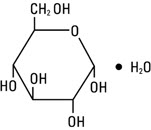
Dextrose Injection, USP is chemically designated D-glucose monohydrate (C6H12O6 • H2O), a hexose sugar freely soluble in water. It has the following structural formula:
Water for Injection, USP is chemically designated H2O.
Section 42228-7
Pregnancy Category C. Animal reproduction studies have not been conducted with dextrose. It is also not known whether dextrose can cause fetal harm when administered to a pregnant woman or can affect reproduction capacity. Dextrose should be given to a pregnant woman only if clearly needed.
This product contains no more than 25 mcg/L of aluminum.
Section 42229-5
10% Dextrose Injection, USP
CONCENTRATED DEXTROSE IN WATER
Concentrated source of carbohydrate calories for intravenous infusion.
NOTE:
This solution is hypertonic − see
WARNINGS
and
PRECAUTIONS
.
Partial-Fill Flexible Plastic Container Rx only
Overdosage
In the event of overhydration or solute overload during therapy, re-evaluate the patient and institute appropriate corrective measures. (See WARNINGS and PRECAUTIONS ).
Precautions
Electrolyte deficits, particularly in serum potassium and phosphate, may occur during prolonged use of concentrated dextrose solutions. Blood electrolyte monitoring is essential, and fluid and electrolyte imbalances should be corrected. Essential vitamins and minerals also should be provided as needed.
Solutions containing dextrose should be used with caution in patients with known subclinical or overt diabetes mellitus.
Care should be exercised to insure that the needle (or catheter) is well within the lumen of the vein and that extravasation does not occur.
Concentrated dextrose solutions should not be administered subcutaneously or intramuscularly.
Do not administer unless solution is clear and container is undamaged. Discard unused portion.
Drug Interaction
Additives may be incompatible. Consult with pharmacist, if available. When introducing additives, use aseptic technique, mix thoroughly and do not store.
Some opacity of the plastic due to moisture absorption during sterilization process may be observed. This is normal and does not affect the solution quality or safety. The opacity will diminish gradually.
WARNING: Do not use flexible container in series connections.
Clinical Pharmacology
When administered intravenously, solutions containing carbohydrate in the form of dextrose restore blood glucose levels and provide calories. Carbohydrate in the form of dextrose may aid in minimizing liver glycogen depletion and exerts a protein sparing action. Dextrose Injection, USP undergoes oxidation to carbon dioxide and water.
Water is an essential constituent of all body tissues and accounts for approximately 70% of total body weight. Average normal adult daily requirement ranges from two to three liters (1.0 to 1.5 liters each for insensible water loss by perspiration and urine production, respectively).
Water balance is maintained by various regulatory mechanisms. Water distribution depends primarily on the concentration of electrolytes in the body compartments, and sodium (Na+) plays a major role in maintaining physiologic equilibrium.
Principal Display Panel 500 Ml Bag Label
500 mL
NDC 0990-7938-19
IN 1000 mL PARTIAL-FILL CONTAINER
10% DEXTROSE
Injection, USP
EACH 100 mL CONTAINS DEXTROSE,
HYDROUS 10 g IN WATER FOR
INJECTION.
505 mOsmol/LITER (CALC.)
pH 4.3 (3.2 TO 6.5)
CAUTION: HYPERTONIC. ADMINISTER
ONLY AFTER DILUTION. DEXTROSE
SOLUTIONS WITHOUT SALTS
SHOULD NOT BE USED IN BLOOD
TRANSFUSIONS BECAUSE OF
POSSIBLE ROULEAU FORMATION.
ADDITIVES MAY BE
INCOMPATIBLE. CONSULT WITH
PHARMACIST, IF AVAILABLE.
WHEN INTRODUCING ADDITIVES,
USE ASEPTIC TECHNIQUE, MIX
THOROUGHLY AND DO NOT
STORE.
SINGLE-DOSE CONTAINER. FOR I.V.
USE. USUAL DOSAGE: SEE INSERT.
STERILE, NONPYROGENIC. USE ONLY
IF SOLUTION IS CLEAR AND
CONTAINER IS UNDAMAGED.
MUST NOT BE USED IN SERIES
CONNECTIONS.
Rx ONLY
IM-4435
3
V
CONTAINS DEHP
icumedical
ICU Medical, Inc., Lake Forest, Illinois, 60045 USA
Principal Display Panel 500 Ml Bag Pouch Label
TO OPEN — TEAR AT NOTCH
The overwrap is a moisture and oxygen barrier. Do not remove
unit from overwrap until ready for use. Visually inspect
overwrap for tears or holes. Discard unit if overwrap is
damaged. Use unit promptly when pouch is opened.
Store at 20 to 25°C (68 to 77°F). [See USP Controlled Room
Temperature.] Protect from freezing. See insert. After removing
the overwrap, check for minute leaks by squeezing container
firmly. If leaks are found, discard solution as sterility may be
impaired.
Rx only
WR-0559
ICU Medical, Inc., Lake Forest, Illinois, 60045 USA
icumedical
Structured Label Content
Warnings (WARNINGS)
Concentrated dextrose in water should be administered only after suitable dilution. Hypertonic dextrose solutions should be given slowly. Significant hyperglycemia and possible hyperosmolar syndrome may result from too rapid administration. The physician should be aware of the symptoms of hyperosmolar syndrome, such as mental confusion and loss of consciousness, especially in patients with chronic uremia and those with known carbohydrate intolerance.
The intravenous administration of this solution can cause fluid and/or solute overloading resulting in dilution of serum electrolyte concentrations, overhydration, congested states or pulmonary edema.
WARNING : This product contains aluminum that may be toxic. Aluminum may reach toxic levels with prolonged parenteral administration if kidney function is impaired. Premature neonates are particularly at risk because their kidneys are immature, and they require large amounts of calcium and phosphate solutions, which contain aluminum.
Research indicates that patients with impaired kidney function, including premature neonates, who receive parenteral levels of aluminum at greater than 4 to 5 mcg/kg/day accumulate aluminum at levels associated with central nervous system and bone toxicity. Tissue loading may occur at even lower rates of administration.
FOR PERIPHERAL VEIN ADMINISTRATION
Hypertonic dextrose solutions (above 5% concentration) should be given slowly, preferably through a small bore needle into a large vein, to minimize venous irritation.
FOR CENTRAL VENOUS ADMINISTRATION
Concentrated dextrose should be administered via central vein after appropriate admixture or dilution when required.
Indications and Usage (INDICATIONS AND USAGE)
10% Dextrose Injection, USP (concentrated dextrose in water) in a partial-fill container is indicated for admixture with amino acids or dilution with other compatible IV fluids to provide a 5% final dextrose concentration for intravenous infusion in patients whose condition requires parenteral nutrition.
Dosage and Administration (DOSAGE AND ADMINISTRATION)
Concentrated Dextrose in Water is administered by slow intravenous infusion (a) after admixture with amino acid solutions or (b) after dilution with other compatible IV fluids. Dosage should be adjusted to meet the requirements of each individual patient.
The maximum rate at which dextrose can be infused without producing glycosuria is 0.5 g/kg of body weight /hr. About 95% of the dextrose is retained when infused at a rate of 0.8 g/kg/hr.
Clinical evaluation and periodic laboratory determinations are necessary to monitor changes in fluid balance, electrolyte concentrations, and acid-base balance during prolonged parenteral therapy or whenever the condition of the patient warrants such evaluation.
A list of nutritional admixture values is appended.
Parenteral drug products should be inspected visually for particulate matter and discoloration prior to administration, whenever solution and container permit. (See PRECAUTIONS ).
Contraindications (CONTRAINDICATIONS)
A concentrated dextrose solution should not be used when intracranial or intraspinal hemorrhage is present nor in the presence of delirium tremens if the patient is already dehydrated.
Dextrose Injection, USP without electrolytes should not be administered simultaneously with blood through the same infusion set because of the possibility that pseudoagglutination of red cells may occur.
Adverse Reactions (ADVERSE REACTIONS)
Hyperosmolar syndrome, resulting from excessively rapid administration of concentrated dextrose may cause hypovolemia, dehydration, mental confusion and/or loss of consciousness.
Reactions which may occur because of the solution or the technique of administration include febrile response, infection at the site of injection, venous thrombosis or phlebitis extending from the site of injection, extravasation and hypervolemia.
If an adverse reaction does occur, discontinue the infusion, evaluate the patient, institute appropriate therapeutic countermeasures and save the remainder of the fluid for examination if deemed necessary.
How Supplied (HOW SUPPLIED)
10% Dextrose Injection, USP is supplied in single-dose, partial-fill, flexible containers as follows: a 500 mL volume in a 1000 mL container. See the following table.
|
NDC No. |
% Conc. |
Fill Volume (mL) |
Total Grams of Dextrose Hydrous Per Container |
kcal Caloric value calculated on the basis of 3.4 kcal/g of dextrose, hydrous.
/100 mL
(Per Container) |
mOsmol/liter (calc.) |
pH (range) |
|
0409-7938-19 |
10 |
500 |
50 |
34 (170) |
505 |
4.3 (3.2 to 6.5) |
| 0990-7938-19 |
10 |
500 |
50 |
34 (170) |
505 |
4.3 (3.2 to 6.5) |
ICU Medical is transitioning NDC codes from the "0409" to a "0990" labeler code. Both NDC codes are expected to be in the market for a period of time.
|
Dextrose Pre-Dilution Concentration |
Admixture
Non-Protein |
Admixture Non-Protein kcal/liter |
Admixture g N/liter |
Admixture Dextrose Concentration |
|
10% |
31 |
170 |
5.5 |
5% |
Store at 20 to 25°C (68 to 77°F). [See USP Controlled Room Temperature.] Protect from freezing.
Revised: November, 2018
EN-4694
ICU Medical, Inc., Lake Forest, Illinois, 60045, USA
Description (DESCRIPTION)
10% Dextrose Injection, USP (concentrated dextrose in water) is a sterile, nonpyrogenic, hypertonic solution of Dextrose, USP in water for injection for intravenous administration after appropriate admixture or dilution.
10% Dextrose Injection, USP is provided as a 500 mL volume in a 1000 mL partial-fill container. The container is designed to facilitate admixture or dilution.
See table under HOW SUPPLIED for summary of content and characteristics of this concentrated solution.
The solution contains no bacteriostat, antimicrobial agent or added buffer and is intended only for use as a single-dose injection following admixture or dilution.
The flexible plastic container is fabricated from a specially formulated polyvinyl chloride. Water can permeate from inside the container into the overwrap but not in amounts sufficient to affect the solution significantly. Solutions in contact with the plastic container may leach out certain chemical components from the plastic in very small amounts; however, biological testing was supportive of the safety of the plastic container materials. Exposure to temperatures above 25°C/77°F during transport and storage will lead to minor losses in moisture content. Higher temperatures lead to greater losses. It is unlikely that these minor losses will lead to clinically significant changes within the expiration period.
Dextrose Injection, USP is a parenteral fluid and nutrient replenisher.
Dextrose Injection, USP is chemically designated D-glucose monohydrate (C6H12O6 • H2O), a hexose sugar freely soluble in water. It has the following structural formula:
Water for Injection, USP is chemically designated H2O.
Section 42228-7 (42228-7)
Pregnancy Category C. Animal reproduction studies have not been conducted with dextrose. It is also not known whether dextrose can cause fetal harm when administered to a pregnant woman or can affect reproduction capacity. Dextrose should be given to a pregnant woman only if clearly needed.
This product contains no more than 25 mcg/L of aluminum.
Section 42229-5 (42229-5)
10% Dextrose Injection, USP
CONCENTRATED DEXTROSE IN WATER
Concentrated source of carbohydrate calories for intravenous infusion.
NOTE:
This solution is hypertonic − see
WARNINGS
and
PRECAUTIONS
.
Partial-Fill Flexible Plastic Container Rx only
Overdosage (OVERDOSAGE)
In the event of overhydration or solute overload during therapy, re-evaluate the patient and institute appropriate corrective measures. (See WARNINGS and PRECAUTIONS ).
Precautions (PRECAUTIONS)
Electrolyte deficits, particularly in serum potassium and phosphate, may occur during prolonged use of concentrated dextrose solutions. Blood electrolyte monitoring is essential, and fluid and electrolyte imbalances should be corrected. Essential vitamins and minerals also should be provided as needed.
Solutions containing dextrose should be used with caution in patients with known subclinical or overt diabetes mellitus.
Care should be exercised to insure that the needle (or catheter) is well within the lumen of the vein and that extravasation does not occur.
Concentrated dextrose solutions should not be administered subcutaneously or intramuscularly.
Do not administer unless solution is clear and container is undamaged. Discard unused portion.
Drug Interaction
Additives may be incompatible. Consult with pharmacist, if available. When introducing additives, use aseptic technique, mix thoroughly and do not store.
Some opacity of the plastic due to moisture absorption during sterilization process may be observed. This is normal and does not affect the solution quality or safety. The opacity will diminish gradually.
WARNING: Do not use flexible container in series connections.
Clinical Pharmacology (CLINICAL PHARMACOLOGY)
When administered intravenously, solutions containing carbohydrate in the form of dextrose restore blood glucose levels and provide calories. Carbohydrate in the form of dextrose may aid in minimizing liver glycogen depletion and exerts a protein sparing action. Dextrose Injection, USP undergoes oxidation to carbon dioxide and water.
Water is an essential constituent of all body tissues and accounts for approximately 70% of total body weight. Average normal adult daily requirement ranges from two to three liters (1.0 to 1.5 liters each for insensible water loss by perspiration and urine production, respectively).
Water balance is maintained by various regulatory mechanisms. Water distribution depends primarily on the concentration of electrolytes in the body compartments, and sodium (Na+) plays a major role in maintaining physiologic equilibrium.
Principal Display Panel 500 Ml Bag Label (PRINCIPAL DISPLAY PANEL - 500 mL Bag Label)
500 mL
NDC 0990-7938-19
IN 1000 mL PARTIAL-FILL CONTAINER
10% DEXTROSE
Injection, USP
EACH 100 mL CONTAINS DEXTROSE,
HYDROUS 10 g IN WATER FOR
INJECTION.
505 mOsmol/LITER (CALC.)
pH 4.3 (3.2 TO 6.5)
CAUTION: HYPERTONIC. ADMINISTER
ONLY AFTER DILUTION. DEXTROSE
SOLUTIONS WITHOUT SALTS
SHOULD NOT BE USED IN BLOOD
TRANSFUSIONS BECAUSE OF
POSSIBLE ROULEAU FORMATION.
ADDITIVES MAY BE
INCOMPATIBLE. CONSULT WITH
PHARMACIST, IF AVAILABLE.
WHEN INTRODUCING ADDITIVES,
USE ASEPTIC TECHNIQUE, MIX
THOROUGHLY AND DO NOT
STORE.
SINGLE-DOSE CONTAINER. FOR I.V.
USE. USUAL DOSAGE: SEE INSERT.
STERILE, NONPYROGENIC. USE ONLY
IF SOLUTION IS CLEAR AND
CONTAINER IS UNDAMAGED.
MUST NOT BE USED IN SERIES
CONNECTIONS.
Rx ONLY
IM-4435
3
V
CONTAINS DEHP
icumedical
ICU Medical, Inc., Lake Forest, Illinois, 60045 USA
Principal Display Panel 500 Ml Bag Pouch Label (PRINCIPAL DISPLAY PANEL - 500 mL Bag Pouch Label)
TO OPEN — TEAR AT NOTCH
The overwrap is a moisture and oxygen barrier. Do not remove
unit from overwrap until ready for use. Visually inspect
overwrap for tears or holes. Discard unit if overwrap is
damaged. Use unit promptly when pouch is opened.
Store at 20 to 25°C (68 to 77°F). [See USP Controlled Room
Temperature.] Protect from freezing. See insert. After removing
the overwrap, check for minute leaks by squeezing container
firmly. If leaks are found, discard solution as sterility may be
impaired.
Rx only
WR-0559
ICU Medical, Inc., Lake Forest, Illinois, 60045 USA
icumedical
Advanced Ingredient Data
Raw Label Data
All Sections (JSON)
Additional Information
Back to search View SPL set listing Open on DailyMed ↗
Source: dailymed · Ingested: 2026-02-15T11:41:48.634765 · Updated: 2026-03-14T22:48:57.475644