These Highlights Do Not Include All The Information Needed To Use Rozlytrek®
c7c71b0c-2549-4495-86b6-c2807fa54908
34391-3
HUMAN PRESCRIPTION DRUG LABEL
Drug Facts
Composition & Product
Identifiers & Packaging
Indications and Usage
ROZLYTREK is a kinase inhibitor indicated for the treatment of: Adult patients with ROS1- positive metastatic non-small cell lung cancer (NSCLC) as detected by an FDA-approved test. ( 1.1 ) Adult and pediatric patients older than 1 month of age with solid tumors that: have a neurotrophic tyrosine receptor kinase ( NTRK) gene fusion, as detected by an FDA-approved test without a known acquired resistance mutation, are metastatic or where surgical resection is likely to result in severe morbidity, and have progressed following treatment or have no satisfactory alternative therapy. This indication is approved under accelerated approval based on tumor response rate and durability of response. Continued approval for this indication may be contingent upon verification and description of clinical benefit in the confirmatory trials. ( 1.2 )
Dosage and Administration
Select patients for treatment based on the presence of ROS1 rearrangement(s) or NTRK gene fusion. ( 2.1 ) Evaluate left ventricular ejection fraction, serum uric acid levels and QT interval and electrolytes prior to ROZLYTREK initiation. ( 2.2 ) Select appropriate dosage form: oral capsules, capsules prepared as an oral suspension or oral pellets. ( 2.3 ) Use capsules prepared as suspension for enteral tube administration. Do not use pellets for enteral tube administration. ( 2.3 ) Administer ROZLYTREK capsules, capsules prepared as a suspension, or pellets once daily, with or without food. ( 2.4 ) Adult Dosage for ROS1- Positive Non-Small Cell Lung Cancer: 600 mg orally once daily. ( 2.5 ) Adult and Pediatric Dosage for NTRK Gene Fusion-Positive Solid Tumors: Adults: 600 mg orally once daily. ( 2.6 ) Pediatric Patients: Recommended dosage is based on age and body surface area (BSA) as shown below. ( 2.6 ) Age Recommended Daily Dosage >6 months ≤0.50 m 2 : 300 mg/m 2 0.51 to 0.80 m 2 : 200 mg 0.81 to 1.10 m 2 : 300 mg 1.11 to 1.50 m 2 : 400 mg BSA ≥1.51 m 2 : 600 mg once daily >1 month to ≤6 months 250 mg/m 2 once daily Modify dosage of ROZLYTREK if coadministration with moderate or strong CYP3A inhibitors cannot be avoided. ( 2.8 ) See preparation and administration instructions. ( 2.9 )
Contraindications
None.
Warnings and Precautions
Congestive Heart Failure (CHF) : Assess left ventricular ejection fraction (LVEF) prior to initiation of ROZLYTREK. Monitor patients for clinical signs and symptoms of CHF. For patients with myocarditis, with or without a decreased ejection fraction, MRI or cardiac biopsy may be required to make the diagnosis. For new onset or worsening CHF, withhold ROZLYTREK, reassess LVEF and institute appropriate medical management. Reduce dose or permanently discontinue ROZLYTREK based on severity of CHF or worsening LVEF. ( 2.7 , 5.1 ) Central Nervous System (CNS) Effects: CNS adverse reactions including cognitive impairment, mood disorders, dizziness, and sleep disturbances can occur with ROZLYTREK. Withhold and then resume at same or reduced dose upon improvement or permanently discontinue ROZLYTREK based on severity. ( 2.7 , 5.2 ) Skeletal Fractures: ROZLYTREK increases the risk of fractures. Promptly evaluate patients with signs or symptoms of fractures. ( 5.3 ) Hepatotoxicity : Monitor liver tests, including ALT and AST, every 2 weeks during the first month of treatment, then monthly thereafter, and as clinically indicated. Withhold or permanently discontinue ROZLYTREK based on severity. If withheld, resume ROZLYTREK at same or reduced dose based on severity. ( 2.7 , 5.4 ) Hyperuricemia : Assess serum uric acid levels prior to initiation and periodically during treatment with ROZLYTREK. Monitor patients for signs and symptoms of hyperuricemia. Initiate treatment with urate-lowering medications as clinically indicated and withhold ROZLYTREK for signs and symptoms of hyperuricemia. Resume at same or reduced dose upon improvement based on severity. ( 2.7 , 5.5 ) QT Interval Prolongation : Monitor patients who have or who are at risk for QTc interval prolongation. Assess QT interval and electrolytes at baseline and periodically during treatment. Withhold and then resume at same or reduced dose, or permanently discontinue ROZLYTREK based on severity. ( 2.7 , 5.6 ) Vision Disorders : Withhold for new visual changes or changes that interfere with activities of daily living until improvement or stabilization. Conduct an ophthalmological evaluation as appropriate. Resume at same or reduced dose upon improvement or stabilization. ( 2.7 , 5.7 ) Embryo-Fetal Toxicity : Can cause fetal harm. Advise females of reproductive potential of the potential risk to a fetus and use of effective contraception. ( 5.8 , 8.1 , 8.3 )
Adverse Reactions
The recommended dosage reductions of ROZLYTREK for the management of adverse reactions for adults and pediatric patients are provided in Table 3 . Table 3. Recommended Dose Reductions for ROZLYTREK for the Management of Adverse Reactions Starting Dose once daily First dose reduction Second dose reduction 250 mg/m 2 or 300 mg/m 2 Reduce the once daily dose to two thirds of the starting dose To enable dosing increments of 10 mg, capsules prepared as an oral suspension must be used [see Dosage and Administration (2.9) ] . Reduce the once daily dose to one third of the starting dose Permanently discontinue ROZLYTREK in patients who are unable to tolerate ROZLYTREK after two dose reductions. 200 mg 150 mg once daily 100 mg once daily 300 mg 200 mg once daily 100 mg once daily 400 mg 300 mg once daily 200 mg once daily 600 mg 400 mg once daily 200 mg once daily Table 4 provides the ROZLYTREK recommended dosage modifications for the management of adverse reactions. Table 4. ROZLYTREK Dosage Modifications for the Management of Adverse Reactions Adverse Reaction Severity Severity as defined by National Cancer Institute Common Terminology Criteria for Adverse Events (NCI CTCAE) version 4.0. Dosage Modification Congestive Heart Failure [see Warnings and Precautions (5.1) ] Grade 2 or 3 Withhold ROZLYTREK until recovered to less than or equal to Grade 1. Resume at reduced dose. Grade 4 Permanently discontinue ROZLYTREK. Central Nervous System Effects [see Warnings and Precautions (5.2) ] Intolerable Grade 2 Withhold ROZLYTREK until recovery to less than or equal to Grade 1 or to baseline. Resume at same dose or reduced dose, as clinically appropriate. Grade 3 Withhold ROZLYTREK until recovery to less than or equal to Grade 1 or to baseline. Resume at reduced dose. Grade 4 Permanently discontinue ROZLYTREK. Hepatotoxicity [see Warnings and Precautions (5.4) ] Grade 3 Withhold ROZLYTREK until recovery to less than or equal to Grade 1 or to baseline. Resume at same dose if resolution occurs within 4 weeks. Permanently discontinue if adverse reaction does not resolve within 4 weeks. Resume at a reduced dose for recurrent Grade 3 events that resolve within 4 weeks. Grade 4 Withhold ROZLYTREK until recovery to less than or equal to Grade 1 or to baseline. Resume at reduced dose if resolution occurs within 4 weeks. Permanently discontinue if adverse reaction does not resolve within 4 weeks. Permanently discontinue for recurrent Grade 4 events. ALT or AST greater than 3 times ULN with concurrent total bilirubin greater than 1.5 times ULN (in the absence of cholestasis or hemolysis). Permanently discontinue ROZLYTREK. Hyperuricemia [see Warnings and Precautions (5.5) ] Symptomatic or Grade 4 Initiate urate-lowering medication. Withhold ROZLYTREK until improvement of signs or symptoms. Resume ROZLYTREK at same or reduced dose. QT Interval Prolongation [see Warnings and Precautions (5.6) ] QTc greater than 500 ms Withhold ROZLYTREK until QTc interval recovers to baseline. Resume at same dose if factors that cause QT prolongation are identified and corrected. Resume at reduced dose if other factors that cause QT prolongation are not identified. Torsade de pointes; polymorphic ventricular tachycardia; signs/symptoms of serious arrhythmia Permanently discontinue ROZLYTREK. Vision Disorders [see Warnings and Precautions (5.7) ] Grade 2 or above Withhold ROZLYTREK until improvement or stabilization. Resume at same dose or reduced dose, as clinically appropriate. Anemia or Neutropenia [see Adverse Reactions (6.1) ] Grade 3 or 4 Withhold ROZLYTREK until recovery to less than or equal to Grade 2. Resume at the same dose or reduced dose, as clinically appropriate. Other Adverse Reactions [see Adverse Reactions (6.1) ] Grade 3 or 4 Withhold ROZLYTREK until adverse reaction resolves or improves to recovery or improvement to Grade 1 or baseline. Resume at the same or reduced dose if resolution occurs within 4 weeks. Permanently discontinue if adverse reaction does not resolve within 4 weeks. Permanently discontinue for recurrent Grade 4 events.
Drug Interactions
Moderate and Strong CYP3A Inhibitors : For adult and pediatric patients 2 years and older, reduce the dose of ROZLYTREK if coadministration of moderate or strong CYP3A inhibitors cannot be avoided. ( 2.8 , 7.1 ) For pediatric patients less than 2 years, avoid coadministration with ROZLYTREK. ( 7.1 ) Moderate and Strong CYP3A Inducers : Avoid coadministration with ROZLYTREK. ( 7.1 ) Drugs That Prolong QTc Interval : Avoid concomitant use with ROZLYTREK. ( 7.2 )
Description
Indications and Usage ( 1.2 ) 10/2023 Dosage and Administration ( 2.1 , 2.3 , 2.4 , 2.6 , 2.7 , 2.8 , 2.9 ) 10/2023 Dosage and Administration ( 2.2 ) 01/2024 Warnings and Precautions ( 5.1 ) 01/2024 Warnings and Precautions ( 5.3 ) 10/2023
Medication Information
Warnings and Precautions
Congestive Heart Failure (CHF) : Assess left ventricular ejection fraction (LVEF) prior to initiation of ROZLYTREK. Monitor patients for clinical signs and symptoms of CHF. For patients with myocarditis, with or without a decreased ejection fraction, MRI or cardiac biopsy may be required to make the diagnosis. For new onset or worsening CHF, withhold ROZLYTREK, reassess LVEF and institute appropriate medical management. Reduce dose or permanently discontinue ROZLYTREK based on severity of CHF or worsening LVEF. ( 2.7 , 5.1 ) Central Nervous System (CNS) Effects: CNS adverse reactions including cognitive impairment, mood disorders, dizziness, and sleep disturbances can occur with ROZLYTREK. Withhold and then resume at same or reduced dose upon improvement or permanently discontinue ROZLYTREK based on severity. ( 2.7 , 5.2 ) Skeletal Fractures: ROZLYTREK increases the risk of fractures. Promptly evaluate patients with signs or symptoms of fractures. ( 5.3 ) Hepatotoxicity : Monitor liver tests, including ALT and AST, every 2 weeks during the first month of treatment, then monthly thereafter, and as clinically indicated. Withhold or permanently discontinue ROZLYTREK based on severity. If withheld, resume ROZLYTREK at same or reduced dose based on severity. ( 2.7 , 5.4 ) Hyperuricemia : Assess serum uric acid levels prior to initiation and periodically during treatment with ROZLYTREK. Monitor patients for signs and symptoms of hyperuricemia. Initiate treatment with urate-lowering medications as clinically indicated and withhold ROZLYTREK for signs and symptoms of hyperuricemia. Resume at same or reduced dose upon improvement based on severity. ( 2.7 , 5.5 ) QT Interval Prolongation : Monitor patients who have or who are at risk for QTc interval prolongation. Assess QT interval and electrolytes at baseline and periodically during treatment. Withhold and then resume at same or reduced dose, or permanently discontinue ROZLYTREK based on severity. ( 2.7 , 5.6 ) Vision Disorders : Withhold for new visual changes or changes that interfere with activities of daily living until improvement or stabilization. Conduct an ophthalmological evaluation as appropriate. Resume at same or reduced dose upon improvement or stabilization. ( 2.7 , 5.7 ) Embryo-Fetal Toxicity : Can cause fetal harm. Advise females of reproductive potential of the potential risk to a fetus and use of effective contraception. ( 5.8 , 8.1 , 8.3 )
Indications and Usage
ROZLYTREK is a kinase inhibitor indicated for the treatment of: Adult patients with ROS1- positive metastatic non-small cell lung cancer (NSCLC) as detected by an FDA-approved test. ( 1.1 ) Adult and pediatric patients older than 1 month of age with solid tumors that: have a neurotrophic tyrosine receptor kinase ( NTRK) gene fusion, as detected by an FDA-approved test without a known acquired resistance mutation, are metastatic or where surgical resection is likely to result in severe morbidity, and have progressed following treatment or have no satisfactory alternative therapy. This indication is approved under accelerated approval based on tumor response rate and durability of response. Continued approval for this indication may be contingent upon verification and description of clinical benefit in the confirmatory trials. ( 1.2 )
Dosage and Administration
Select patients for treatment based on the presence of ROS1 rearrangement(s) or NTRK gene fusion. ( 2.1 ) Evaluate left ventricular ejection fraction, serum uric acid levels and QT interval and electrolytes prior to ROZLYTREK initiation. ( 2.2 ) Select appropriate dosage form: oral capsules, capsules prepared as an oral suspension or oral pellets. ( 2.3 ) Use capsules prepared as suspension for enteral tube administration. Do not use pellets for enteral tube administration. ( 2.3 ) Administer ROZLYTREK capsules, capsules prepared as a suspension, or pellets once daily, with or without food. ( 2.4 ) Adult Dosage for ROS1- Positive Non-Small Cell Lung Cancer: 600 mg orally once daily. ( 2.5 ) Adult and Pediatric Dosage for NTRK Gene Fusion-Positive Solid Tumors: Adults: 600 mg orally once daily. ( 2.6 ) Pediatric Patients: Recommended dosage is based on age and body surface area (BSA) as shown below. ( 2.6 ) Age Recommended Daily Dosage >6 months ≤0.50 m 2 : 300 mg/m 2 0.51 to 0.80 m 2 : 200 mg 0.81 to 1.10 m 2 : 300 mg 1.11 to 1.50 m 2 : 400 mg BSA ≥1.51 m 2 : 600 mg once daily >1 month to ≤6 months 250 mg/m 2 once daily Modify dosage of ROZLYTREK if coadministration with moderate or strong CYP3A inhibitors cannot be avoided. ( 2.8 ) See preparation and administration instructions. ( 2.9 )
Contraindications
None.
Adverse Reactions
The recommended dosage reductions of ROZLYTREK for the management of adverse reactions for adults and pediatric patients are provided in Table 3 . Table 3. Recommended Dose Reductions for ROZLYTREK for the Management of Adverse Reactions Starting Dose once daily First dose reduction Second dose reduction 250 mg/m 2 or 300 mg/m 2 Reduce the once daily dose to two thirds of the starting dose To enable dosing increments of 10 mg, capsules prepared as an oral suspension must be used [see Dosage and Administration (2.9) ] . Reduce the once daily dose to one third of the starting dose Permanently discontinue ROZLYTREK in patients who are unable to tolerate ROZLYTREK after two dose reductions. 200 mg 150 mg once daily 100 mg once daily 300 mg 200 mg once daily 100 mg once daily 400 mg 300 mg once daily 200 mg once daily 600 mg 400 mg once daily 200 mg once daily Table 4 provides the ROZLYTREK recommended dosage modifications for the management of adverse reactions. Table 4. ROZLYTREK Dosage Modifications for the Management of Adverse Reactions Adverse Reaction Severity Severity as defined by National Cancer Institute Common Terminology Criteria for Adverse Events (NCI CTCAE) version 4.0. Dosage Modification Congestive Heart Failure [see Warnings and Precautions (5.1) ] Grade 2 or 3 Withhold ROZLYTREK until recovered to less than or equal to Grade 1. Resume at reduced dose. Grade 4 Permanently discontinue ROZLYTREK. Central Nervous System Effects [see Warnings and Precautions (5.2) ] Intolerable Grade 2 Withhold ROZLYTREK until recovery to less than or equal to Grade 1 or to baseline. Resume at same dose or reduced dose, as clinically appropriate. Grade 3 Withhold ROZLYTREK until recovery to less than or equal to Grade 1 or to baseline. Resume at reduced dose. Grade 4 Permanently discontinue ROZLYTREK. Hepatotoxicity [see Warnings and Precautions (5.4) ] Grade 3 Withhold ROZLYTREK until recovery to less than or equal to Grade 1 or to baseline. Resume at same dose if resolution occurs within 4 weeks. Permanently discontinue if adverse reaction does not resolve within 4 weeks. Resume at a reduced dose for recurrent Grade 3 events that resolve within 4 weeks. Grade 4 Withhold ROZLYTREK until recovery to less than or equal to Grade 1 or to baseline. Resume at reduced dose if resolution occurs within 4 weeks. Permanently discontinue if adverse reaction does not resolve within 4 weeks. Permanently discontinue for recurrent Grade 4 events. ALT or AST greater than 3 times ULN with concurrent total bilirubin greater than 1.5 times ULN (in the absence of cholestasis or hemolysis). Permanently discontinue ROZLYTREK. Hyperuricemia [see Warnings and Precautions (5.5) ] Symptomatic or Grade 4 Initiate urate-lowering medication. Withhold ROZLYTREK until improvement of signs or symptoms. Resume ROZLYTREK at same or reduced dose. QT Interval Prolongation [see Warnings and Precautions (5.6) ] QTc greater than 500 ms Withhold ROZLYTREK until QTc interval recovers to baseline. Resume at same dose if factors that cause QT prolongation are identified and corrected. Resume at reduced dose if other factors that cause QT prolongation are not identified. Torsade de pointes; polymorphic ventricular tachycardia; signs/symptoms of serious arrhythmia Permanently discontinue ROZLYTREK. Vision Disorders [see Warnings and Precautions (5.7) ] Grade 2 or above Withhold ROZLYTREK until improvement or stabilization. Resume at same dose or reduced dose, as clinically appropriate. Anemia or Neutropenia [see Adverse Reactions (6.1) ] Grade 3 or 4 Withhold ROZLYTREK until recovery to less than or equal to Grade 2. Resume at the same dose or reduced dose, as clinically appropriate. Other Adverse Reactions [see Adverse Reactions (6.1) ] Grade 3 or 4 Withhold ROZLYTREK until adverse reaction resolves or improves to recovery or improvement to Grade 1 or baseline. Resume at the same or reduced dose if resolution occurs within 4 weeks. Permanently discontinue if adverse reaction does not resolve within 4 weeks. Permanently discontinue for recurrent Grade 4 events.
Drug Interactions
Moderate and Strong CYP3A Inhibitors : For adult and pediatric patients 2 years and older, reduce the dose of ROZLYTREK if coadministration of moderate or strong CYP3A inhibitors cannot be avoided. ( 2.8 , 7.1 ) For pediatric patients less than 2 years, avoid coadministration with ROZLYTREK. ( 7.1 ) Moderate and Strong CYP3A Inducers : Avoid coadministration with ROZLYTREK. ( 7.1 ) Drugs That Prolong QTc Interval : Avoid concomitant use with ROZLYTREK. ( 7.2 )
Description
Indications and Usage ( 1.2 ) 10/2023 Dosage and Administration ( 2.1 , 2.3 , 2.4 , 2.6 , 2.7 , 2.8 , 2.9 ) 10/2023 Dosage and Administration ( 2.2 ) 01/2024 Warnings and Precautions ( 5.1 ) 01/2024 Warnings and Precautions ( 5.3 ) 10/2023
Section 42229-5
ROZLYTREK Capsules 100 mg and 200 mg
- Whole capsules: For patients who can swallow whole capsules and whose doses are multiples of 100 mg.
-
Capsules prepared as an oral suspension:
- For patients who have difficulty or are unable to swallow capsules or who require enteral administration (e.g., gastric or nasogastric tube). [see Dosage and Administration (2.7)].
- For dose increments of 10 mg, only use capsules prepared as a suspension.
Section 42230-3
| PATIENT INFORMATION | ||||||
|---|---|---|---|---|---|---|
| ROZLYTREK® (roz lye' trek) (entrectinib) capsules |
ROZLYTREK® (roz lye' trek) (entrectinib) oral pellets |
|||||
| This Patient Information has been approved by the U.S. Food and Drug Administration. | Revised 1/2024 | |||||
|
What is the most important information I should know about ROZLYTREK? ROZLYTREK may cause serious side effects, including:
|
||||||
|
|
|||||
|
||||||
|
|
|||||
|
||||||
|
|
|||||
|
||||||
|
|
|||||
| Your healthcare provider may temporarily stop treatment, decrease your dose, or permanently stop ROZLYTREK if you develop certain side effects during treatment with ROZLYTREK. | ||||||
|
What is ROZLYTREK?
ROZLYTREK is a prescription medicine used to treat:
|
||||||
Before taking ROZLYTREK, tell your healthcare provider about all your medical conditions, including if you:
Taking ROZLYTREK with certain other medicines may affect the amount of ROZLYTREK or other medicine in your blood and may cause side effects or affect the way that ROZLYTREK or the other medicine work. Know the medicines you take. Keep a list of them to show to your healthcare provider and pharmacist when you get a new medicine. |
||||||
How should I take ROZLYTREK?
If you are taking whole ROZLYTREK capsules:
|
||||||
What should I avoid while taking ROZLYTREK?
|
||||||
|
What are the possible side effects of ROZLYTREK? ROZLYTREK may cause serious side effects, including: The most common side effects of ROZLYTREK include: |
||||||
|
|
|
||||
| These are not all the possible side effects of ROZLYTREK. Call your doctor for medical advice about side effects. You may report side effects to FDA at 1-800-FDA-1088. |
||||||
|
How should I store ROZLYTREK? ROZLYTREK capsules
|
||||||
|
General information about the safe and effective use of ROZLYTREK.
Medicines are sometimes prescribed for purposes other than those listed in a Patient Information leaflet. Do not use ROZLYTREK for a condition for which it was not prescribed. Do not give ROZLYTREK to other people, even if they have the same symptoms that you have. It may harm them. You can ask your pharmacist or healthcare provider for information about ROZLYTREK that is written for health professionals. |
||||||
|
What are the ingredients in ROZLYTREK?
Active ingredient: entrectinib Inactive ingredients: Capsules: tartaric acid, lactose anhydrous, hypromellose, crospovidone, microcrystalline cellulose, colloidal silicon dioxide, and magnesium stearate.
ROZLYTREK ® is a registered trademark of Genentech, Inc. ©2024 Genentech, Inc. For more information, go to www.ROZLYTREK.com or call 1-877-436-3683. |
Section 43683-2
Section 44425-7
Storage:
Store at 20°C to 25°C (68°F to 77°F); excursions permitted between 15°C to 30°C (59°F to 86°F) [See USP Controlled Room Temperature].
Store ROZLYTREK capsules in the original container and keep the bottle tightly closed in order to protect from moisture.
Storage time should not exceed 2 hours (below 30°C (86°F)) if capsules are prepared as an oral suspension using drinking water or milk. Discard any unused suspension if not used within 2 hours of preparation.
Section 59845-8
INSTRUCTIONS FOR USE
ROZLYTREK® [roz lye trek]
(entrectinib)
capsules, for oral use
This Instructions for Use contains information on how to prepare and take or give ROZLYTREK capsules.
| Before Starting |
Read this Instructions for Use before giving ROZLYTREK capsules for the first time and each time you get a refill. There may be new information.
ROZLYTREK capsules can be swallowed whole or prepared as a suspension and taken or given by mouth or through a nasogastric tube (NG tube) or gastrostomy tube (G tube) feeding tube.
| Important Information You Need to Know Before Taking or Giving ROZLYTREK Capsules |
- Your healthcare provider or pharmacist should show you how to correctly prepare and take or give a dose of ROZLYTREK capsules. Always take or give ROZLYTREK capsules exactly as your healthcare provider tells you.
- Do not take or give ROZLYTREK to someone else until you have been shown how to properly prepare and take or give ROZLYTREK.
- Wash your hands before and after preparing, taking, or giving ROZLYTREK.
- Check the expiration date and check the product for damage before use. Do not use if expired or damaged.
| Dosing of ROZLYTREK capsules to be swallowed whole |
- Your healthcare provider will decide the right dose of ROZLYTREK for you or your child.
- Your healthcare provider will tell you what your daily dose of ROZLYTREK is.
- Swallow ROZLYTREK capsules whole, with or without food.
- Swallow whole capsules with drinking water, as directed by your healthcare provider.
- Do not crush or chew the capsules.
| Dosing of ROZLYTREK capsules prepared as a suspension to be taken by mouth or through a feeding tube |
If you or your child cannot swallow capsules whole, ROZLYTREK capsules can be prepared as a suspension and taken or given by mouth or through a feeding tube. For doses of 3 mL or higher, a NG or G feeding tube size 8 French or larger should be used.
Your healthcare provider or pharmacist will show you how to prepare and take or give a dose of ROZLYTREK capsules prepared as a suspension.
Table 1 shows the prescribed dose, the number and strength of capsules needed, the amount of water or milk needed to mix the capsules, and the amount of suspension needed to give for the prescribed dose.
Your healthcare provider will tell you the number of capsules to use, the amount of liquid needed to mix the capsules, and the amount of suspension (mL) to take or give to get the correct dose of ROZLYTREK.
You may need to measure a smaller amount of suspension than you prepared to take or give the correct prescribed dose of ROZLYTREK.
| Prescribed dose of ROZLYTREK to be given | Number of 100 mg or 200 mg capsules needed | Amount of water or milk needed to mix the capsules | Amount of suspension to take or give |
|---|---|---|---|
| 20 mg | One 100 mg | 5 mL | 1 mL |
| 30 mg | One 100 mg | 5 mL | 1.5 mL |
| 40 mg | One 100 mg | 5 mL | 2 mL |
| 50 mg | One 100 mg | 5 mL | 2.5 mL |
| 60 mg | One 100 mg | 5 mL | 3 mL |
| 70 mg | One 100 mg | 5 mL | 3.5 mL |
| 80 mg | One 100 mg | 5 mL | 4 mL |
| 90 mg | One 100 mg | 5 mL | 4.5 mL |
| 100 mg | One 100 mg | 5 mL | 5 mL |
| 110 mg | One 200 mg | 10 mL | 5.5 mL |
| 120 mg | One 200 mg | 10 mL | 6 mL |
| 130 mg | One 200 mg | 10 mL | 6.5 mL |
| 140 mg | One 200 mg | 10 mL | 7 mL |
| 150 mg | One 200 mg | 10 mL | 7.5 mL |
| 200 mg | One 200 mg | 10 mL | 10 mL |
| 300 mg | Three 100 mg | 15 mL | 15 mL |
| 400 mg | Two 200 mg | 20 mL | 20 mL |
| 600 mg | Three 200 mg | 30 mL | 30 mL |
Supplies needed to prepare and take or give ROZLYTREK as a suspension:
- the number of capsules needed for your prescribed dose
- a clean empty cup
- a paper towel
- a cup of room temperature drinking water or milk
- an oral syringe (provided by your healthcare provider or pharmacist)
| Preparing ROZLYTREK capsules as a suspension |
| Step 1. Wash your hands. | |
| Step 2. Count the number of capsules you will need to give the prescribed dose. | |
| Step 3. Place a clean empty cup on a paper towel. |
Figure A |
| Step 4. Tap the capsules to loosen the contents inside (medicine). | |
|
Step 5. While holding each capsule above the clean cup, open the capsule by gently pressing in on the capsule and twisting both sides apart. Pour the medicine into the clean cup ( Figure A ). |
|
Step 6. Tap both sides of the capsule shell and check to make sure all the medicine has gone into the cup.
|
|
| Step 7. Push the syringe plunger all the way down to remove any air in the oral syringe (Figure B). |
Figure B |
|
Step 8. Place the syringe tip into the room temperature cup of drinking water or milk. Measure the proper amount of liquid (mL) by pulling up on the syringe plunger to draw the liquid into the syringe ( Figure C ). Your healthcare provider will tell you how much liquid to use. Do not use any other type of liquid. |
Figure C |
| Step 9. Check that the correct amount of liquid (mL) is in the syringe (Figure D ). |
Figure D |
| Step 10. Add the liquid to the cup that contains the medicine by holding the barrel of the syringe and pushing the syringe plunger all the way down ( Figure E ). |
Figure E |
|
Step 11. Let the mixture sit for 15 minutes (
Figure F
). Note: It is important to do this to get an even mixture, otherwise you may not get the correct dose. |
Figure F |
|
Step 12. Swirl the cup several times to evenly mix the medicine in the liquid (
Figure G
). Note: The medicine does not dissolve in the liquid and the suspension will be cloudy if you have used water. |
Figure G |
| Step 13. Push the syringe plunger all the way down to remove any air in the syringe (Figure H). |
Figure H |
| Step 14. Swirl the cup of medicine again before placing the syringe in the cup ( Figure I ). |
Figure I |
|
Step 15. Place the syringe tip right away into the cup and slowly pull up the plunger to draw up the correct amount (mL) of suspension (
Figure J
). Do not wait to draw up the suspension. If it sits for too long, the medicine may settle to the bottom, and you may not get the correct dose. |
Figure J |
| Step 16. Check that the correct amount of suspension (mL) is in the syringe ( Figure K ). |
Figure K |
Step 17. With the tip of the syringe pointing up, check that:
NOTE: Throw away the suspension if you do not take or give it within 2 hours of preparing the suspension and start over at step 1. |
Figure L |
| Giving ROZLYTREK capsules prepared as a suspension by mouth | |
|
Step A1. Sit your child upright when you give a dose of ROZLYTREK by mouth (
Figure M
). Place the oral syringe into the mouth with the tip along either cheek. Slowly push the plunger all the way down. Giving ROZLYTREK too fast may cause choking. |
Figure M |
|
Step A2. Check that there is no suspension left in the oral syringe (
Figure N
). If suspension remains in the oral syringe, repeat step A1. |
Figure N |
|
Step A3. Give sips of water right after taking or giving the prescribed dose of ROZLYTREK (
Figure O
). You can breastfeed or give your child milk if they still taste the medicine after you give the dose. Go to Step D1 for clean-up instructions. |
Figure O |
| Giving ROZLYTREK capsules prepared as a suspension through a gastrostomy tube (G tube) | |
| To take or give ROZLYTREK through a G tube review the manufacturer's instructions and consult your healthcare provider. Make sure that the tube is at least 8 French or larger to prevent clogging of the tube if your dose (amount of suspension) is 3 mL or higher. To take or give ROZLYTREK doses of 3 mL or higher, split the dose in half and give it in 2 parts. Flush the tube with the same amount of water or milk after giving each part. To take or give ROZLYTREK doses of 30 mL, split the dose into at least three 10 mL parts. Flush the tube with the same amount of water or milk after giving each part. |
|
|
Step B1
Place the oral syringe tip into the G tube. Slowly push the plunger all the way down to give ROZLYTREK ( Figure P ). |
Figure P |
|
Step B2
Check that there is no suspension left in the oral syringe ( Figure Q ). If suspension remains in the oral syringe, repeat step B1. |
Figure Q |
|
Step B3
Flush the G tube with water or milk right after giving ROZLYTREK ( Figure R ). If you need to split the amount of suspension to give it through the G tube, also split the amount of water or milk you use to flush the tube in the same way. Ask your healthcare provider if you are not sure how much water or milk to use to flush the G tube. Go to Step D1 for clean up instructions. |
Figure R |
| Giving ROZLYTREK capsules prepared as a suspension through a nasogastric tube (NG tube) | |
| If you are giving ROZLYTREK through an NG tube, review the manufacturer instructions and consult your healthcare provider. Make sure that the tube is at least 8 French or larger to prevent clogging of the tube if your dose (amount of suspension) is 3 mL or higher. To take or give ROZLYTREK doses of 3 mL or higher, split the dose in half and give it in 2 parts. Flush the tube with the same amount of water or milk after giving each part. To take or give ROZLYTREK doses of 30 mL, split the dose into at least three 10 mL parts. Flush the tube with the same amount of water or milk after giving each part. |
|
|
Step C1
Place the syringe tip into the NG tube. Slowly press the plunger all the way down to give ROZLYTREK ( Figure S ). |
Figure S |
|
Step C2
Check that there is no suspension left in the syringe ( Figure T ). If suspension remains in the syringe, repeat step C1. |
Figure T |
|
Step C3
Flush the NG tube with water or milk right after giving ROZLYTREK ( Figure U ). If you need to split the amount of suspension to give it through the NG tube, also split the amount of water or milk you use to flush the tube in the same way. Ask your healthcare provider if you are not sure how much water or milk to use to flush the NG tube. Go to Step D1 for clean up instructions. |
Figure U |
| Cleaning up and disposing of ROZLYTREK | |
Step D1
|
|
| Storing ROZLYTREK | |
|
Distributed by:
Genentech USA, Inc.
A Member of the Roche Group
1 DNA Way
South San Francisco, CA 94080-4990
ROZLYTREK® is a registered trademark of Genentech, Inc.
©2023 Genentech, Inc.
For more information, go to www.ROZLYTREK.com or call 1-877-436-3683.
This Instructions for Use has been approved by the U.S. Food and Drug Administration.
Issued: 10/2023
1.1 Ros1
ROZLYTREK is indicated for the treatment of adult patients with ROS1-positive metastatic non-small cell lung cancer (NSCLC), as detected by an FDA-approved test.
1.2 Ntrk
ROZLYTREK is indicated for the treatment of adult and pediatric patients older than 1 month of age with solid tumors that:
- have a neurotrophic tyrosine receptor kinase (NTRK) gene fusion, as detected by an FDA-approved test without a known acquired resistance mutation,
- are metastatic or where surgical resection is likely to result in severe morbidity, and
- have progressed following treatment or have no satisfactory alternative therapy.
This indication is approved under accelerated approval based on tumor response rate and durability of response [see Clinical Studies (14.2)]. Continued approval for this indication may be contingent upon verification and description of clinical benefit in the confirmatory trials.
14.1 Ros1
The efficacy of ROZLYTREK was evaluated in a pooled subgroup of patients with ROS1-positive metastatic NSCLC who received ROZLYTREK at various doses and schedules (90% received ROZLYTREK 600 mg orally once daily) and were enrolled in one of three multicenter, single-arm, open-label clinical trials: ALKA, STARTRK-1 (NCT02097810) and STARTRK-2 (NCT02568267). To be included in this pooled subgroup, patients were required to have histologically confirmed, recurrent or metastatic, ROS1-positive NSCLC, ECOG performance status ≤ 2, measurable disease per RECIST v 1.1, ≥ 18 months of follow-up from first post-treatment tumor assessment, and no prior therapy with a ROS1 inhibitor. Identification of ROS1 gene fusion in tumor specimens was prospectively determined in local laboratories using either a fluorescence in situ hybridization (FISH), next-generation sequencing (NGS), or polymerase chain reaction (PCR) laboratory-developed tests. All patients were assessed for CNS lesions at baseline. The major efficacy outcome measures were overall response rate (ORR) and duration of response (DOR) according to RECIST v1.1 as assessed by Blinded Independent Central Review (BICR). Intracranial response according to Response Evaluation Criteria in Solid Tumors (RECIST v1.1) was assessed by BICR. Tumor assessments with imaging were performed every 8 weeks.
Efficacy was assessed in 92 patients with ROS1-positive NSCLC. The median age was 53 years (range: 27 to 86); female (65%); White (48%), Asian (45%), and Black (5%); and Hispanic or Latino (2.4%); never smoked (59%); and ECOG performance status 0 or 1 (88%). Ninety-nine percent of patients had metastatic disease, including 42% with CNS metastases; 96% had adenocarcinoma; 65% received prior platinum-based chemotherapy for metastatic or recurrent disease and no patient had progressed in less than 6 months following platinum-based adjuvant or neoadjuvant therapy. ROS1 positivity was determined by NGS in 79%, FISH in 16%, and PCR in 4%. Twenty-five percent had central laboratory confirmation of ROS1 positivity using an analytically validated NGS test.
Efficacy results are summarized in Table 12.
| Efficacy Parameters | ROZLYTREK n = 92 |
|---|---|
| Confidence Interval (CI) calculated using the Clopper-Pearson method. | |
| Overall Response Rate (95% CI) | 74% (64, 83) |
| Complete Response | 15% |
| Partial Response | 59% |
|
Duration of Response (DOR) Observed DOR
|
n = 68 |
| Range (months) | 2.4, 55.2 denotes ongoing response
|
| % DOR ≥ 9 months | 75% |
| % DOR ≥ 12 months | 57% |
| % DOR ≥ 18 months | 38% |
Among the 92 patients, 10 had measurable CNS metastases at baseline as assessed by BICR and had not received radiation therapy to the brain within 2 months prior to study entry. Responses in intracranial lesions were observed in 7 of these 10 patients.
11 Description
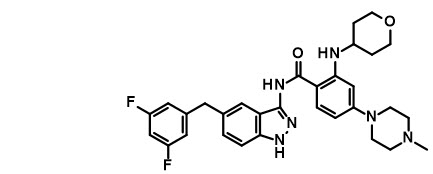
Entrectinib is a kinase inhibitor. The molecular formula for entrectinib is C31H34F2N6O2 and the molecular weight is 560.64 Daltons. The chemical name is N-[5-(3,5-difluorobenzyl)-1H-indazol-3-yl]-4-(4-methylpiperazin-1-yl)-2-(tetrahydro-2H-pyran-4-ylamino) benzamide. The chemical structure of entrectinib is as follows:
Entrectinib is white to pale pink powder.
5.5 Hyperuricemia
Among 355 patients who received ROZLYTREK across clinical trials, 32 patients (9%) experienced hyperuricemia reported as adverse reactions with symptoms, as well as elevated uric acid levels. Grade 4 hyperuricemia occurred in 1.7% of patients, including one patient who died due to tumor lysis syndrome. Among the 32 patients with hyperuricemic adverse reactions, 34% required urate-lowering medication to reduce uric acid levels, 6% required dose reduction and 6% required dose interruption. Hyperuricemia resolved in 73% of patients following initiation of urate-lowering medication without interruption or dose reduction of ROZLYTREK. No patients discontinued ROZLYTREK due to hyperuricemia.
Assess serum uric acid levels prior to initiation of ROZLYTREK and periodically during treatment. Monitor patients for signs and symptoms of hyperuricemia. Initiate treatment with urate-lowering medications as clinically indicated and withhold ROZLYTREK for signs and symptoms of hyperuricemia. Resume ROZLYTREK at same or reduced dose upon improvement of signs or symptoms based on severity [see Dosage and Administration (2.7)].
8.4 Pediatric Use
The safety and effectiveness of ROZLYTREK have been established in pediatric patients older than 1 month of age [Clinical Studies (14.2)]. Use of ROZLYTREK in these age groups is supported by evidence from adequate and well-controlled studies of ROZLYTREK in adults and pediatric patients with additional population pharmacokinetic data demonstrating that the exposure of drug substance in pediatric patients greater than 1 month of age is expected to be in the adult range, and that the course of disease is sufficiently similar in adult and pediatric patients to allow extrapolation of data in adults to pediatric patients.
The safety and effectiveness of ROZLYTREK have not been established in pediatric patients with ROS1-positive NSCLC.
8.5 Geriatric Use
Of the 355 patients who received ROZLYTREK across clinical trials, 25% were 65 years or older, and 5% were 75 years of age or older. Clinical studies of ROZLYTREK did not include sufficient numbers of geriatric patients to determine whether they respond differently from younger patients.
5.4 Hepatotoxicity
Among the 355 patients who received ROZLYTREK, increased AST of any grade occurred in 42% of patients and increased ALT of any grade occurred in 36%. Grade 3 – 4 increased AST or ALT occurred in 2.5% and 2.8% of patients, respectively; the incidence may be underestimated as 4.5% of patients had no post-treatment liver function tests [see Adverse Reactions (6.1)]. The median time to onset of increased AST was 2 weeks (range: 1 day to 29.5 months). The median time to onset of increased ALT was 2 weeks (range: 1 day to 9.2 months). Increased AST or ALT leading to dose interruptions or reductions occurred in 0.8% and 0.8% of patients, respectively. ROZLYTREK was discontinued due to increased AST or ALT in 0.8% patients.
Monitor liver tests, including ALT and AST, every 2 weeks during the first month of treatment, then monthly thereafter, and as clinically indicated. Withhold or permanently discontinue ROZLYTREK based on the severity. If withheld, resume ROZLYTREK at the same or reduced dose [see Dosage and Administration (2.7)].
4 Contraindications
None.
6 Adverse Reactions
The following clinically significant adverse reactions are described elsewhere in the labeling:
- Congestive Heart Failure [see Warnings and Precautions (5.1)]
- Central Nervous System Effects [see Warnings and Precautions (5.2)]
- Skeletal Fractures [see Warnings and Precautions (5.3)]
- Hepatotoxicity [see Warnings and Precautions (5.4)]
- Hyperuricemia [see Warnings and Precautions (5.5)]
- QT Interval Prolongation [see Warnings and Precautions (5.6)]
- Vision Disorders [see Warnings and Precautions (5.7)]
7 Drug Interactions
5.7 Vision Disorders
Among the 355 patients who received ROZLYTREK across clinical trials, vision changes occurred in 21% of patients, including Grade 1 (17%), Grade 2 (2.8%) and Grade 3 (0.8%) [see Adverse Reactions (6.1)]. Vision disorders occurring in ≥ 1% included blurred vision (9%), photophobia (5%), diplopia (3.1%), visual impairment (2%), photopsia (1.1%), cataract (1.1%), and vitreous floaters (1.1%).
For patients with new visual changes or changes that interfere with activities of daily living, withhold ROZLYTREK until improvement or stabilization and conduct an ophthalmological evaluation as clinically appropriate. Upon improvement or stabilization, resume ROZLYTREK at same or reduced dose [see Dosage and Administration (2.7)].
8.6 Renal Impairment
No dose adjustment is recommended for patients with mild or moderate renal impairment (CLcr 30 to < 90 mL/min calculated by Cockcroft-Gault equation). ROZLYTREK has not been studied in patients with severe renal impairment (CLcr < 30 mL/min) [see Clinical Pharmacology (12.3)].
12.2 Pharmacodynamics
Entrectinib exposure-response relationships and the time course of pharmacodynamic responses are unknown.
12.3 Pharmacokinetics
The pharmacokinetics for entrectinib and its pharmacologically active major circulating metabolite M5 were characterized in adult patients with ROS1-positive NSCLC, NTRK gene fusion-positive solid tumors, and healthy subjects. The pharmacokinetics of entrectinib and M5 are linear and are not dose-dependent or time-dependent. Steady state is achieved within one week for entrectinib and two weeks for M5 following daily administration of ROZLYTREK. The pharmacokinetic parameters for entrectinib and M5 are described in Table 11.
| Parameter | Entrectinib Mean Geometric mean (% CV) |
M5 Mean (% CV) |
|---|---|---|
| AUCD1 (nM*h) | 31800 (48%) | 10200 (82%) |
| AUCss (nM*h) | 48000 (77%) | 24000 (97%) |
| CmaxD1 (nM) | 2250 (58%) | 622 (79%) |
| Cmaxss (nM) | 3130 (80%) | 1250 (90%) |
| Racc(AUC) | 1.55 (49%) | 2.84 (93%) |
2.1 Patient Selection
-
Select patients for the treatment of metastatic NSCLC with ROZLYTREK based on the presence of ROS1 rearrangement(s) in tumor or plasma specimens [see Clinical Studies (14.1)]. Testing using plasma specimens is only appropriate for patients for whom tumor tissue is not available for testing.
Information on FDA-approved tests for the detection of ROS1 rearrangement(s) in NSCLC is available at http://www.fda.gov/CompanionDiagnostics. -
Select patients for treatment of locally advanced or metastatic solid tumors with ROZLYTREK based on the presence of a NTRK gene fusion in tumor or plasma specimens [see Clinical Studies (14.2)]. Testing using plasma specimens is only appropriate for patients for whom tumor tissue is not available for testing.
Information on FDA-approved tests for the detection of NTRK gene fusion(s) in solid tumors is available at http://www.fda.gov/CompanionDiagnostics.
5.3 Skeletal Fractures
ROZLYTREK increases the risk of fractures. In an expanded safety population that included 338 adult patients and 76 pediatric patients who received ROZLYTREK across clinical trials, 5% of adult patients and 25% of pediatric patients experienced fractures [see Use in Specific Population (8.4)]. In adult and pediatric patients, some fractures occurred in the setting of a fall or other trauma to the affected area; in pediatric patients some fractures occurred with no trauma. In general, there was inadequate assessment for tumor involvement at the site of fracture; however, radiologic abnormalities possibly indicative of tumor involvement were reported in some adult patients. In both adult and pediatric patients, most fractures were hip or other lower extremity fractures (e.g., femoral or tibial shaft). In two pediatric patients, bilateral femoral neck fractures occurred. A total of 41 fracture events were reported in 19 pediatric patients, with 13 patients who experienced more than one occurrence of fracture. Among the 19 pediatric patients who experienced fractures, 17 patients were less than 12 years of age. Among the 41 fracture events, 27 fracture events resolved, 4 fracture events resolved with sequelae and 3 events were resolving. The median time to fracture was 3.8 months (range 0.3 to 18.5 months) in adults and 4.3 months (range: 2 months to 28.7 months) in pediatric patients. ROZLYTREK was interrupted in 41% of adults and 16% of pediatric patients who experienced fractures. Five pediatric patients discontinued treatment due to fractures.
Promptly evaluate patients with signs or symptoms (e.g., pain, changes in mobility, deformity) of fractures. There are no data on the effects of ROZLYTREK on healing of known fractures and risk of future fractures.
8.7 Hepatic Impairment
The effect of moderate hepatic impairment (total bilirubin > 1.5 – 3.0 times ULN with any aspartate aminotransferase) or severe hepatic impairment (total bilirubin >3.0 times ULN with any aspartate aminotransferase) on the safety of ROZLYTREK at the recommended dosage is unknown. Consider the risk-benefit profile of ROZLYTREK prior to determining whether to administer ROZLYTREK to patients with moderate to severe hepatic impairment. Monitor for ROZLYTREK adverse reactions in patients with hepatic impairment more frequently since these patients may be at increased risk for adverse reactions [see Clinical Pharmacology (12.3)].
1 Indications and Usage
ROZLYTREK is a kinase inhibitor indicated for the treatment of:
- Adult patients with ROS1-positive metastatic non-small cell lung cancer (NSCLC) as detected by an FDA-approved test. (1.1)
- Adult and pediatric patients older than 1 month of age with solid tumors that:
- have a neurotrophic tyrosine receptor kinase (NTRK) gene fusion, as detected by an FDA-approved test without a known acquired resistance mutation,
- are metastatic or where surgical resection is likely to result in severe morbidity, and
- have progressed following treatment or have no satisfactory alternative therapy.
This indication is approved under accelerated approval based on tumor response rate and durability of response. Continued approval for this indication may be contingent upon verification and description of clinical benefit in the confirmatory trials. (1.2)
12.1 Mechanism of Action
Entrectinib is an inhibitor of the tropomyosin receptor tyrosine kinases (TRK) TRKA, TRKB, and TRKC (encoded by the neurotrophic tyrosine receptor kinase [NTRK] genes NTRK1, NTRK2, and NTRK3, respectively), proto-oncogene tyrosine-protein kinase ROS1 (ROS1), and anaplastic lymphoma kinase (ALK) with IC50 values of 0.1 to 2 nM. Entrectinib also inhibits JAK2 and TNK2 with IC50 values > 5 nM. The major active metabolite of entrectinib, M5, showed similar in vitro activity against TRK, ROS1, and ALK.
Fusion proteins that include TRK, ROS1, or ALK kinase domains can drive tumorigenic potential through hyperactivation of downstream signaling pathways leading to unconstrained cell proliferation. Entrectinib demonstrated in vitro and in vivo inhibition of cancer cell lines derived from multiple tumor types harboring NTRK, ROS1, and ALK fusion genes.
Entrectinib demonstrated steady-state brain-to-plasma concentration ratios of 0.4 – 2.2 in multiple animal species (mice, rats, and dogs) and demonstrated in vivo anti-tumor activity in mice with intracranial implantation of TRKA- and ALK-driven tumor cell lines.
5.8 Embryo Fetal Toxicity
Based on literature reports in humans with congenital mutations leading to changes in TRK signaling, findings from animal studies, and its mechanism of action, ROZLYTREK can cause fetal harm when administered to a pregnant woman. Administration of entrectinib to pregnant rats resulted in malformations at exposures approximately 2.7 times the human exposure at the 600 mg dose based on area under the curve (AUC).
Advise pregnant women of the potential risk to a fetus. Advise female patients of reproductive potential to use effective contraception during treatment with ROZLYTREK and for 5 weeks following the last dose. Advise males with female partners of reproductive potential to use effective contraception during treatment with ROZLYTREK and for 3 months after the last dose [see Use in Specific Populations (8.1, 8.3)].
5 Warnings and Precautions
- Congestive Heart Failure (CHF): Assess left ventricular ejection fraction (LVEF) prior to initiation of ROZLYTREK. Monitor patients for clinical signs and symptoms of CHF. For patients with myocarditis, with or without a decreased ejection fraction, MRI or cardiac biopsy may be required to make the diagnosis. For new onset or worsening CHF, withhold ROZLYTREK, reassess LVEF and institute appropriate medical management. Reduce dose or permanently discontinue ROZLYTREK based on severity of CHF or worsening LVEF. (2.7, 5.1)
- Central Nervous System (CNS) Effects: CNS adverse reactions including cognitive impairment, mood disorders, dizziness, and sleep disturbances can occur with ROZLYTREK. Withhold and then resume at same or reduced dose upon improvement or permanently discontinue ROZLYTREK based on severity. (2.7, 5.2)
- Skeletal Fractures: ROZLYTREK increases the risk of fractures. Promptly evaluate patients with signs or symptoms of fractures. (5.3)
- Hepatotoxicity: Monitor liver tests, including ALT and AST, every 2 weeks during the first month of treatment, then monthly thereafter, and as clinically indicated. Withhold or permanently discontinue ROZLYTREK based on severity. If withheld, resume ROZLYTREK at same or reduced dose based on severity. (2.7, 5.4)
- Hyperuricemia: Assess serum uric acid levels prior to initiation and periodically during treatment with ROZLYTREK. Monitor patients for signs and symptoms of hyperuricemia. Initiate treatment with urate-lowering medications as clinically indicated and withhold ROZLYTREK for signs and symptoms of hyperuricemia. Resume at same or reduced dose upon improvement based on severity. (2.7, 5.5)
- QT Interval Prolongation: Monitor patients who have or who are at risk for QTc interval prolongation. Assess QT interval and electrolytes at baseline and periodically during treatment. Withhold and then resume at same or reduced dose, or permanently discontinue ROZLYTREK based on severity. (2.7, 5.6)
- Vision Disorders: Withhold for new visual changes or changes that interfere with activities of daily living until improvement or stabilization. Conduct an ophthalmological evaluation as appropriate. Resume at same or reduced dose upon improvement or stabilization. (2.7, 5.7)
- Embryo-Fetal Toxicity: Can cause fetal harm. Advise females of reproductive potential of the potential risk to a fetus and use of effective contraception. (5.8, 8.1, 8.3)
2 Dosage and Administration
- Select patients for treatment based on the presence of ROS1 rearrangement(s) or NTRK gene fusion. (2.1)
- Evaluate left ventricular ejection fraction, serum uric acid levels and QT interval and electrolytes prior to ROZLYTREK initiation. (2.2)
- Select appropriate dosage form: oral capsules, capsules prepared as an oral suspension or oral pellets. (2.3)
- Use capsules prepared as suspension for enteral tube administration. Do not use pellets for enteral tube administration. (2.3)
- Administer ROZLYTREK capsules, capsules prepared as a suspension, or pellets once daily, with or without food. (2.4)
- Adult Dosage for ROS1-Positive Non-Small Cell Lung Cancer: 600 mg orally once daily. (2.5)
- Adult and Pediatric Dosage for NTRK Gene Fusion-Positive Solid Tumors:
- Adults: 600 mg orally once daily. (2.6)
- Pediatric Patients: Recommended dosage is based on age and body surface area (BSA) as shown below. (2.6)
Age Recommended Daily Dosage >6 months ≤0.50 m2: 300 mg/m2
0.51 to 0.80 m2: 200 mg
0.81 to 1.10 m2: 300 mg
1.11 to 1.50 m2: 400 mg
BSA ≥1.51 m2: 600 mg once daily>1 month to ≤6 months 250 mg/m2 once daily - Modify dosage of ROZLYTREK if coadministration with moderate or strong CYP3A inhibitors cannot be avoided. (2.8)
- See preparation and administration instructions. (2.9)
3 Dosage Forms and Strengths
Capsules:
- 100 mg: Size 2 yellow opaque body and cap, with "ENT 100" printed in blue ink on body.
- 200 mg: Size 0 orange opaque body and cap, with "ENT 200" printed in blue ink on body.
Pellets:
- 50 mg: Supplied as brownish orange or grayish orange pellets in packets.
5.1 Congestive Heart Failure
Among the 355 patients who received ROZLYTREK across clinical trials, congestive heart failure (CHF) occurred in 3.4% of patients, including Grade 3 (2.3%) [see Adverse Reactions (6.1)]. In clinical trials, baseline cardiac function and routine cardiac monitoring other than electrocardiograms (ECGs) were not conducted and eligibility criteria excluded patients with symptomatic CHF, myocardial infarction, unstable angina, and coronary artery bypass graft within 3 months of study entry. Among the 12 patients with CHF, the median time to onset was 2 months (range: 11 days to 12 months). ROZLYTREK was interrupted in 6 of these patients (50%) and discontinued in 2 of these patients (17%). CHF resolved in 6 patients (50%) following interruption or discontinuation of ROZLYTREK and institution of appropriate medical management. In addition, myocarditis in the absence of CHF was documented in 0.3% of patients.
Assess left ventricular ejection fraction (LVEF) prior to initiation of ROZLYTREK. Monitor patients for clinical signs and symptoms of CHF, including shortness of breath and edema. For patients with myocarditis, with or without a decreased ejection fraction, MRI or cardiac biopsy may be required to make the diagnosis. For patients with new onset or worsening CHF, withhold ROZLYTREK, institute appropriate medical management, and reassess LVEF. Based on the severity of CHF or worsening LVEF, resume ROZLYTREK at a reduced dose upon recovery to baseline or permanently discontinue [see Dosage and Administration (2.7)].
5.6 Qt Interval Prolongation
Among the 355 patients who received ROZLYTREK across the clinical trials, 3.1% of patients with at least one post-baseline ECG assessment experienced QTcF interval prolongation of > 60 ms after starting ROZLYTREK and 0.6% had a QTcF interval > 500 ms [see Adverse Reactions (6.1), Clinical Pharmacology (12.2)].
Monitor patients who already have or who are at significant risk of developing QTc interval prolongation, including patients with known long QT syndromes, clinically significant bradyarrhythmias, severe or uncontrolled heart failure and those taking other medicinal products associated with QT prolongation. Assess QT interval and electrolytes prior to initiation of ROZLYTREK and periodically during treatment, adjusting frequency based upon risk factors such as congestive heart failure, electrolyte abnormalities, or concomitant medications known to prolong the QTc interval. Based on the severity of QTc interval prolongation, withhold ROZLYTREK and then resume at same or reduced dose, or permanently discontinue [see Dosage and Administration (2.7)].
6.1 Clinical Trial Experience
Because clinical trials are conducted under widely varying conditions, adverse reaction rates observed in the clinical trials of a drug cannot be directly compared to rates in the clinical trials of another drug and may not reflect the rates observed in practice.
Data in WARNINGS AND PRECAUTIONS and below reflect exposure to ROZLYTREK in 355 patients, including 172 (48%) patients exposed for 6 months or longer and 84 (24%) patients exposed for 1 year or longer. ROZLYTREK was studied in one dose-finding trial in adults [ALKA (n = 57)], one dose-finding and activity-estimating trial in adults [STARTRK-1 (n = 76)], one dose-finding and activity-estimating trial in pediatric and adult patients [STARTRK-NG (n = 16)], and one single arm, activity-estimating trial in adults [STARTRK-2 (n = 206)].
The population characteristics were: median age 55 years (range: 4 to 86 years); 5% (n = 17) were less than 18 years of age; 55% were female; and 66% were White, 23% were Asian, and 5% were Black; 3% were Hispanic/Latino. The most common tumors (≥ 5%) were lung (56%), sarcoma (8%), and colon (5%). ROS1 gene fusions were present in 42% and NTRK gene fusions were present in 20%. Most adults (75%) received ROZLYTREK 600 mg orally once daily. The doses ranged from 100 mg/m2 to 1600 mg/m2 once daily in adults and 250 mg/m2 to 750 mg/m2 once daily in pediatric patients.
Serious adverse reactions occurred in 39% of patients. The most frequent serious adverse reactions (≥ 2%) were pneumonia (3.9%), dyspnea (3.7%), pleural effusion (3.4%), sepsis (2.5%), pulmonary embolism (2.3%), respiratory failure (2%), and pyrexia (2%). Grade 3 or 4 adverse reactions occurred in 60% of patients; the most common (≥ 2%) were lung infection (5%), increased weight (7%), dyspnea (6%), fatigue/asthenia (5%), cognitive disorders (4.5%), syncope (2.5%), pulmonary embolism (3.4%), hypoxia (3.4%), pleural effusion (3.1%), hypotension (2.8%), diarrhea (2%), and urinary tract infection (2.5%). Fatal events included dyspnea (0.6%), pneumonia (0.6%), sepsis (0.6%), completed suicide (0.3%), large intestine perforation (0.3%) and tumor lysis syndrome (0.3%). One patient developed Grade 4 myocarditis after one dose of ROZLYTREK which resolved after discontinuation of ROZLYTREK and administration of high-dose corticosteroids.
Permanent discontinuation due to an adverse reaction occurred in 9% of patients who received ROZLYTREK. The most frequent adverse reactions (< 1% each) that resulted in permanent discontinuation were pneumonia, cardio-respiratory arrest, dyspnea, and fatigue.
Dose interruptions due to adverse reactions occurred in 46% of patients. The most frequent adverse reactions (≥ 2%) that resulted in interruption were increased blood creatinine (4%), fatigue (3.7%), anemia (3.1%), diarrhea (2.8%), pyrexia (2.8%), dizziness (2.5%), dyspnea (2.3%), nausea (2.3%), pneumonia (2.3%), cognitive disorder (2%) and neutropenia (2%).
Dose reductions due to adverse reactions occurred in 29% of patients who received ROZLYTREK. The most frequent adverse reactions resulting in dose reductions (≥ 1%) were dizziness (3.9%), increased blood creatinine (3.1%), fatigue (2.3%), anemia (1.7%), and increased weight (1.4%).
The most common adverse reactions (≥ 20%) were fatigue, constipation, dysgeusia, edema, dizziness, diarrhea, nausea, dysesthesia, dyspnea, myalgia, cognitive impairment, increased weight, cough, vomiting, pyrexia, arthralgia and vision disorders.
Table 7 summarizes the adverse reactions observed in these 355 patients.
| Adverse Reactions | ROZLYTREK n = 355 |
|
|---|---|---|
| All Grades (%) | Grade ≥ 3 Grades 3 – 5, inclusive of fatal adverse reactions, including 2 events of pneumonia and 2 events of dyspnea. (%) |
|
| General | ||
| Fatigue Includes fatigue, asthenia
|
48 | 5 |
| Edema Includes face edema, fluid retention, generalized edema, localized edema, edema, edema peripheral, peripheral swelling
|
40 | 1.1 |
| Pyrexia | 21 | 0.8 |
| Gastrointestinal | ||
| Constipation | 46 | 0.6 |
| Diarrhea | 35 | 2.0 |
| Nausea | 34 | 0.3 |
| Vomiting | 24 | 0.8 |
| Abdominal pain Includes abdominal pain upper, abdominal pain, lower abdominal discomfort, abdominal tenderness
|
16 | 0.6 |
| Nervous System | ||
| Dysgeusia | 44 | 0.3 |
| Dizziness Includes dizziness, vertigo, dizziness postural
|
38 | 0.8 |
| Dysesthesia Includes paresthesia, hyperesthesia, hypoesthesia, dysesthesia, oral hypoesthesia, palmar-plantar erythrodysesthesia, oral paresthesia, genital hypoesthesia
|
34 | 0.3 |
| Cognitive impairment Includes amnesia, aphasia, cognitive disorder, confusional state, delirium, disturbance in attention, hallucinations, visual hallucination, memory impairment, mental disorder, mental status changes
|
27 | 4.5 |
| Peripheral sensory neuropathy Includes neuralgia, neuropathy peripheral, peripheral motor neuropathy, peripheral sensory neuropathy
|
18 | 1.1 |
| Headache | 18 | 0.3 |
| Ataxia Includes ataxia, balance disorder, gait disturbances
|
17 | 0.8 |
| Sleep Includes hypersomnia, insomnia, sleep disorder, somnolence
|
14 | 0.6 |
| Mood disorders Includes anxiety, affect lability, affective disorder, agitation, depressed mood, euphoric mood, mood altered, mood swings, irritability, depression, persistent depressive disorder, psychomotor retardation
|
10 | 0.6 |
| Respiratory, Thoracic and Mediastinal | ||
| Dyspnea | 30 | 6 |
| Cough | 24 | 0.3 |
| Musculoskeletal and Connective Tissue | ||
| Myalgia Includes musculoskeletal pain, musculoskeletal chest pain, myalgia, neck pain
|
28 | 1.1 |
| Arthralgia | 21 | 0.6 |
| Muscular weakness | 12 | 0.8 |
| Back pain | 12 | 1 |
| Pain in extremity | 11 | 0.3 |
| Metabolism and Nutritional | ||
| Increased weight | 25 | 7 |
| Decreased appetite | 13 | 0.3 |
| Dehydration | 10 | 1.1 |
| Eye | ||
| Vision disorders Includes blindness, cataract, cortical cataract, corneal erosion, diplopia, eye disorder, photophobia, photopsia, retinal hemorrhage, vision blurred, visual impairment, vitreous adhesions, vitreous detachment, vitreous floaters
|
21 | 0.8 |
| Infections | ||
| Urinary tract infection | 13 | 2.3 |
| Lung infection Includes lower respiratory tract infection, lung infection, pneumonia, respiratory tract infection
|
10 | 6 |
| Vascular | ||
| Hypotension Includes hypotension, orthostatic hypotension
|
18 | 2.8 |
| Skin and Subcutaneous Tissue | ||
| Rash Includes rash, rash maculopapular, rash pruritic, rash erythematous, rash papular
|
11 | 0.8 |
Clinically relevant adverse reactions occurring in ≤ 10% of patients include dysphagia (10%), fall (8%), pleural effusion (8%), fractures (6%), hypoxia (4.2%), pulmonary embolism (3.9%), syncope (3.9%), congestive heart failure (3.4%), and QT prolongation (3.1%).
Table 8 summarizes the laboratory abnormalities.
| Laboratory Abnormality | ROZLYTREK NCI CTCAE Grade |
|
|---|---|---|
| All Grades (%) Denominator for each laboratory parameter is based on the number of patients with a baseline and post-treatment laboratory value available which ranged from 111 to 346 patients.
|
Grade 3 or 4 (%) | |
| AST: Aspartate Aminotransferase; ALT: Alanine Aminotransferase | ||
| Chemistry | ||
| Increased creatinine Based on NCI CTCAE v5.0
|
73 | 2.1 |
| Hyperuricemia | 52 | 10 |
| Increased AST | 44 | 2.7 |
| Increased ALT | 38 | 2.9 |
| Hypernatremia | 35 | 0.9 |
| Hypocalcemia | 34 | 1.8 |
| Hypophosphatemia | 30 | 7 |
| Increased lipase | 28 | 10 |
| Hypoalbuminemia | 28 | 2.9 |
| Increased amylase | 26 | 5.4 |
| Hyperkalemia | 25 | 1.5 |
| Increased alkaline phosphatase | 25 | 0.9 |
| Hyperglycemia NE = Not evaluable. Grade 1 and 2 could not be determined per NCI CTCAE v5.0, as fasting glucose values were not collected
|
NE | 3.8 |
| Hematology | ||
| Anemia | 67 | 9 |
| Lymphopenia | 40 | 12 |
| Neutropenia | 28 | 7 |
8 Use in Specific Populations
- Lactation: Advise not to breastfeed. (8.2)
17 Patient Counseling Information
Advise the patient to read the FDA-approved patient labeling (Patient Information and Instructions for Use).
2.3 Rozlytrek Dosage Form Overview
The physician should prescribe the most appropriate dosage form of ROZLYTREK according to the dose required and patient needs.
ROZLYTREK is available in two dosage forms, and can be administered either as capsules swallowed whole, capsules made into an oral suspension (or for enteral tube administration) and as oral pellets swallowed with soft food.
5.2 Central Nervous System Effects
A broad spectrum of central nervous system (CNS) adverse reactions occurred in patients receiving ROZLYTREK, including cognitive impairment, mood disorders, dizziness, and sleep disturbances.
Among the 355 patients who received ROZLYTREK across clinical trials, 96 (27%) experienced cognitive impairment; symptoms occurred within 3 months of starting ROZLYTREK in 74 (77%). Cognitive impairment included cognitive disorders (8%), confusional state (7%), disturbance in attention (4.8%), memory impairment (3.7%), amnesia (2.5%), aphasia (2.3%), mental status changes (2%), hallucinations (1.1%), and delirium (0.8%). Grade 3 cognitive adverse reactions occurred in 4.5% of patients. Among the 96 patients with cognitive impairment, 13% required a dose reduction, 18% required dose interruption and 1% discontinued ROZLYTREK due to cognitive adverse reactions.
Among the 355 patients who received ROZLYTREK across clinical trials, 36 (10%) experienced mood disorders. The median time to onset of mood disorders was 1 month (range: 1 day to 9 months). Mood disorders occurring in ≥ 1% of patients included anxiety (4.8%), depression (2.8%) and agitation (2%). Grade 3 mood disorders occurred in 0.6% of patients. One completed suicide was reported 11 days after treatment had ended. Among the 36 patients who experienced mood disorders, 6% required a dose reduction, 6% required dose interruption and no patients discontinued ROZLYTREK due to mood disorders.
Dizziness occurred in 136 (38%) of the 355 patients. Among the 136 patients who experienced dizziness, Grade 3 dizziness occurred in 2.2% of patients. Ten percent of patients required a dose reduction, 7% required dose interruption and 0.7% discontinued ROZLYTREK due to dizziness.
Among the 355 patients who received ROZLYTREK across clinical trials, 51 (14%) experienced sleep disturbances. Sleep disturbances included insomnia (7%), somnolence (7%), hypersomnia (1.1%), and sleep disorder (0.3%). Grade 3 sleep disturbances occurred in 0.6% of patients. Among the 51 patients who experienced sleep disturbances, 6% required a dose reduction and no patients discontinued ROZLYTREK due to sleep disturbances.
The incidence of CNS adverse reactions was similar in patients with and without CNS metastases; however, the incidence of dizziness (38% vs 31%), headache (21% vs 13%), paresthesia (20% vs 6%), balance disorder (13% vs 4%), and confusional state (11% vs 2%) appeared to be increased in patients with CNS metastases who had received prior CNS irradiation (n = 90) compared to those who did not (n = 48).
Advise patients and caregivers of these risks with ROZLYTREK. Advise patients not to drive or operate hazardous machinery if they are experiencing CNS adverse reactions. Withhold and then resume at same or reduced dose upon improvement, or permanently discontinue ROZLYTREK based on severity [see Dosage and Administration (2.7)].
7.2 Drugs That Prolong Qtc Interval
QTc interval prolongation can occur with ROZLYTREK. Avoid coadministration of ROZLYTREK with other products with a known potential to prolong QT/QTc interval [see Warnings and Precautions (5.6), Clinical Pharmacology (12.2)].
2.4 Rozlytrek Administration Overview
- Administer ROZLYTREK capsules, capsules prepared as a suspension, or pellets once daily, with or without food.
- If a dose of ROZYTREK is missed, make up that dose unless the next dose is due within 12 hours.
- If vomiting occurs immediately after taking a dose of ROZLYTREK, repeat that dose.
2.5 Rozlytrek Recommended Dosage for Ros1
The recommended dosage of ROZLYTREK is 600 mg orally once daily with or without food until disease progression or unacceptable toxicity.
2.6 Rozlytrek Recommended Dosage for Ntrk
The recommended dosages of ROZLYTREK for the treatment of adult and pediatric patients with NTRK Gene Fusion-Positive Solid Tumors are provided in Table 1.
Administer the recommended dosage of ROZLYTREK capsules and oral pellets with or without food until disease progression or unacceptable toxicity.
Sprinkle ROZLYTREK oral pellets on one or more spoonfuls of soft food as a vehicle.
| Patient Population | Recommended Dosage of ROZLYTREK | Duration of Treatment |
|---|---|---|
|
Adults Pediatric patients with BSA ≥ 1.51 m2: |
600 mg orally once daily | Until disease progression or unacceptable toxicity. |
| Pediatric patients > 6 months: | see Table 2 | |
| Pediatric patients > 1 month to ≤ 6 months: | 250 mg/m2 orally once daily
To enable dosing increments of 10 mg, capsules prepared as an oral suspension must be used [see Dosage and Administration (2.9)].
|
The recommended dosages of ROZLYTREK for the treatment of pediatric patients older than 6 months with NTRK Gene Fusion-Positive Solid Tumors is provided in Table 2.
|
Body Surface Area (BSA)
BSA categories and recommended dosage above are based on closely matching exposures to a target dose of 300 mg/m2
|
Recommended Dosage Orally Once Daily |
|---|---|
| ≤0.50 m2 | 300 mg/m2
To enable dosing increments of 10 mg, capsules prepared as an oral suspension must be used [see Dosage and Administration (2.9)].
|
| 0.51 to 0.80 m2 | 200 mg |
| 0.81 to 1.10 m2 | 300 mg |
| 1.11 to 1.50 m2 | 400 mg |
| ≥ 1.51 m2 | 600 mg |
Principal Display Panel 50 Mg Pellets Packet Carton
NDC 50242-623-42
Rozlytrek®
(entrectinib)
oral pellets
50 mg
42 packets
Rx only
Genentech
11006603
Principal Display Panel 100 Mg Capsules Bottle Carton
NDC 50242-091-30
Rozlytrek®
(entrectinib)
capsules
100 mg
PHARMACIST: Dispense with
the included Instructions for Use
30 capsules
Rx only
Genentech
11013439
Principal Display Panel 200 Mg Capsules Bottle Carton
NDC 50242-094-90
Rozlytrek®
(entrectinib)
capsules
200 mg
PHARMACIST: Dispense with
the included Instructions for Use
90 capsules
Rx only
Genentech
11013451
2.7 Rozlytrek Dosage Modifications for Adverse Reactions
The recommended dosage reductions of ROZLYTREK for the management of adverse reactions for adults and pediatric patients are provided in Table 3.
| Starting Dose once daily | First dose reduction | Second dose reduction | |
|---|---|---|---|
| 250 mg/m2 or 300 mg/m2 | Reduce the once daily dose to two thirds of the starting dose To enable dosing increments of 10 mg, capsules prepared as an oral suspension must be used [see Dosage and Administration (2.9)].
|
Reduce the once daily dose to one third of the starting dose | Permanently discontinue ROZLYTREK in patients who are unable to tolerate ROZLYTREK after two dose reductions. |
| 200 mg | 150 mg once daily | 100 mg once daily | |
| 300 mg | 200 mg once daily | 100 mg once daily | |
| 400 mg | 300 mg once daily | 200 mg once daily | |
| 600 mg | 400 mg once daily | 200 mg once daily |
Table 4 provides the ROZLYTREK recommended dosage modifications for the management of adverse reactions.
| Adverse Reaction | Severity Severity as defined by National Cancer Institute Common Terminology Criteria for Adverse Events (NCI CTCAE) version 4.0.
|
Dosage Modification |
|---|---|---|
| Congestive Heart Failure [see Warnings and Precautions (5.1)] |
Grade 2 or 3 |
|
| Grade 4 |
|
|
| Central Nervous System Effects [see Warnings and Precautions (5.2)] |
Intolerable Grade 2 |
|
| Grade 3 |
|
|
| Grade 4 |
|
|
| Hepatotoxicity [see Warnings and Precautions (5.4)] |
Grade 3 |
|
| Grade 4 |
|
|
| ALT or AST greater than 3 times ULN with concurrent total bilirubin greater than 1.5 times ULN (in the absence of cholestasis or hemolysis). |
|
|
| Hyperuricemia [see Warnings and Precautions (5.5)] |
Symptomatic or Grade 4 |
|
| QT Interval Prolongation [see Warnings and Precautions (5.6)] |
QTc greater than 500 ms |
|
| Torsade de pointes; polymorphic ventricular tachycardia; signs/symptoms of serious arrhythmia |
|
|
| Vision Disorders [see Warnings and Precautions (5.7)] |
Grade 2 or above |
|
| Anemia or Neutropenia [see Adverse Reactions (6.1)] | Grade 3 or 4 |
|
| Other Adverse Reactions [see Adverse Reactions (6.1)] | Grade 3 or 4 |
|
13.1 Carcinogenesis, Mutagenesis, Impairment of Fertility
Carcinogenicity studies were not conducted with entrectinib. Entrectinib was not mutagenic in vitro in the bacterial reverse mutation (Ames) assay; however, an in vitro assay in cultured human peripheral blood lymphocytes did demonstrate a potential for abnormal chromosome segregation (aneugenicity). Entrectinib was not clastogenic or aneugenic in the in vivo micronucleus assay in rats and did not induce DNA damage in a comet assay in rats.
Dedicated fertility studies were not conducted with entrectinib. With the exception of dose-dependent decreases in prostate weight in male dogs, there were no effects on male and female reproductive organs observed in general toxicology studies conducted in rats and dogs at doses resulting in exposures of up to approximately 3.2-fold the human exposure (AUC) at the 600 mg dose.
2.2 Recommended Evaluation and Testing Before Initiating Rozlytrek
Before initiating ROZLYTREK, evaluate:
- left ventricular ejection fraction (LVEF) [see Warnings and Precautions (5.1)]
- serum uric acid levels [see Warnings and Precautions (5.5)]
- QT interval and electrolytes [see Warnings and Precautions (5.6)]
Structured Label Content
Section 42229-5 (42229-5)
ROZLYTREK Capsules 100 mg and 200 mg
- Whole capsules: For patients who can swallow whole capsules and whose doses are multiples of 100 mg.
-
Capsules prepared as an oral suspension:
- For patients who have difficulty or are unable to swallow capsules or who require enteral administration (e.g., gastric or nasogastric tube). [see Dosage and Administration (2.7)].
- For dose increments of 10 mg, only use capsules prepared as a suspension.
Section 42230-3 (42230-3)
| PATIENT INFORMATION | ||||||
|---|---|---|---|---|---|---|
| ROZLYTREK® (roz lye' trek) (entrectinib) capsules |
ROZLYTREK® (roz lye' trek) (entrectinib) oral pellets |
|||||
| This Patient Information has been approved by the U.S. Food and Drug Administration. | Revised 1/2024 | |||||
|
What is the most important information I should know about ROZLYTREK? ROZLYTREK may cause serious side effects, including:
|
||||||
|
|
|||||
|
||||||
|
|
|||||
|
||||||
|
|
|||||
|
||||||
|
|
|||||
| Your healthcare provider may temporarily stop treatment, decrease your dose, or permanently stop ROZLYTREK if you develop certain side effects during treatment with ROZLYTREK. | ||||||
|
What is ROZLYTREK?
ROZLYTREK is a prescription medicine used to treat:
|
||||||
Before taking ROZLYTREK, tell your healthcare provider about all your medical conditions, including if you:
Taking ROZLYTREK with certain other medicines may affect the amount of ROZLYTREK or other medicine in your blood and may cause side effects or affect the way that ROZLYTREK or the other medicine work. Know the medicines you take. Keep a list of them to show to your healthcare provider and pharmacist when you get a new medicine. |
||||||
How should I take ROZLYTREK?
If you are taking whole ROZLYTREK capsules:
|
||||||
What should I avoid while taking ROZLYTREK?
|
||||||
|
What are the possible side effects of ROZLYTREK? ROZLYTREK may cause serious side effects, including: The most common side effects of ROZLYTREK include: |
||||||
|
|
|
||||
| These are not all the possible side effects of ROZLYTREK. Call your doctor for medical advice about side effects. You may report side effects to FDA at 1-800-FDA-1088. |
||||||
|
How should I store ROZLYTREK? ROZLYTREK capsules
|
||||||
|
General information about the safe and effective use of ROZLYTREK.
Medicines are sometimes prescribed for purposes other than those listed in a Patient Information leaflet. Do not use ROZLYTREK for a condition for which it was not prescribed. Do not give ROZLYTREK to other people, even if they have the same symptoms that you have. It may harm them. You can ask your pharmacist or healthcare provider for information about ROZLYTREK that is written for health professionals. |
||||||
|
What are the ingredients in ROZLYTREK?
Active ingredient: entrectinib Inactive ingredients: Capsules: tartaric acid, lactose anhydrous, hypromellose, crospovidone, microcrystalline cellulose, colloidal silicon dioxide, and magnesium stearate.
ROZLYTREK ® is a registered trademark of Genentech, Inc. ©2024 Genentech, Inc. For more information, go to www.ROZLYTREK.com or call 1-877-436-3683. |
Section 43683-2 (43683-2)
Section 44425-7 (44425-7)
Storage:
Store at 20°C to 25°C (68°F to 77°F); excursions permitted between 15°C to 30°C (59°F to 86°F) [See USP Controlled Room Temperature].
Store ROZLYTREK capsules in the original container and keep the bottle tightly closed in order to protect from moisture.
Storage time should not exceed 2 hours (below 30°C (86°F)) if capsules are prepared as an oral suspension using drinking water or milk. Discard any unused suspension if not used within 2 hours of preparation.
Section 59845-8 (59845-8)
INSTRUCTIONS FOR USE
ROZLYTREK® [roz lye trek]
(entrectinib)
capsules, for oral use
This Instructions for Use contains information on how to prepare and take or give ROZLYTREK capsules.
| Before Starting |
Read this Instructions for Use before giving ROZLYTREK capsules for the first time and each time you get a refill. There may be new information.
ROZLYTREK capsules can be swallowed whole or prepared as a suspension and taken or given by mouth or through a nasogastric tube (NG tube) or gastrostomy tube (G tube) feeding tube.
| Important Information You Need to Know Before Taking or Giving ROZLYTREK Capsules |
- Your healthcare provider or pharmacist should show you how to correctly prepare and take or give a dose of ROZLYTREK capsules. Always take or give ROZLYTREK capsules exactly as your healthcare provider tells you.
- Do not take or give ROZLYTREK to someone else until you have been shown how to properly prepare and take or give ROZLYTREK.
- Wash your hands before and after preparing, taking, or giving ROZLYTREK.
- Check the expiration date and check the product for damage before use. Do not use if expired or damaged.
| Dosing of ROZLYTREK capsules to be swallowed whole |
- Your healthcare provider will decide the right dose of ROZLYTREK for you or your child.
- Your healthcare provider will tell you what your daily dose of ROZLYTREK is.
- Swallow ROZLYTREK capsules whole, with or without food.
- Swallow whole capsules with drinking water, as directed by your healthcare provider.
- Do not crush or chew the capsules.
| Dosing of ROZLYTREK capsules prepared as a suspension to be taken by mouth or through a feeding tube |
If you or your child cannot swallow capsules whole, ROZLYTREK capsules can be prepared as a suspension and taken or given by mouth or through a feeding tube. For doses of 3 mL or higher, a NG or G feeding tube size 8 French or larger should be used.
Your healthcare provider or pharmacist will show you how to prepare and take or give a dose of ROZLYTREK capsules prepared as a suspension.
Table 1 shows the prescribed dose, the number and strength of capsules needed, the amount of water or milk needed to mix the capsules, and the amount of suspension needed to give for the prescribed dose.
Your healthcare provider will tell you the number of capsules to use, the amount of liquid needed to mix the capsules, and the amount of suspension (mL) to take or give to get the correct dose of ROZLYTREK.
You may need to measure a smaller amount of suspension than you prepared to take or give the correct prescribed dose of ROZLYTREK.
| Prescribed dose of ROZLYTREK to be given | Number of 100 mg or 200 mg capsules needed | Amount of water or milk needed to mix the capsules | Amount of suspension to take or give |
|---|---|---|---|
| 20 mg | One 100 mg | 5 mL | 1 mL |
| 30 mg | One 100 mg | 5 mL | 1.5 mL |
| 40 mg | One 100 mg | 5 mL | 2 mL |
| 50 mg | One 100 mg | 5 mL | 2.5 mL |
| 60 mg | One 100 mg | 5 mL | 3 mL |
| 70 mg | One 100 mg | 5 mL | 3.5 mL |
| 80 mg | One 100 mg | 5 mL | 4 mL |
| 90 mg | One 100 mg | 5 mL | 4.5 mL |
| 100 mg | One 100 mg | 5 mL | 5 mL |
| 110 mg | One 200 mg | 10 mL | 5.5 mL |
| 120 mg | One 200 mg | 10 mL | 6 mL |
| 130 mg | One 200 mg | 10 mL | 6.5 mL |
| 140 mg | One 200 mg | 10 mL | 7 mL |
| 150 mg | One 200 mg | 10 mL | 7.5 mL |
| 200 mg | One 200 mg | 10 mL | 10 mL |
| 300 mg | Three 100 mg | 15 mL | 15 mL |
| 400 mg | Two 200 mg | 20 mL | 20 mL |
| 600 mg | Three 200 mg | 30 mL | 30 mL |
Supplies needed to prepare and take or give ROZLYTREK as a suspension:
- the number of capsules needed for your prescribed dose
- a clean empty cup
- a paper towel
- a cup of room temperature drinking water or milk
- an oral syringe (provided by your healthcare provider or pharmacist)
| Preparing ROZLYTREK capsules as a suspension |
| Step 1. Wash your hands. | |
| Step 2. Count the number of capsules you will need to give the prescribed dose. | |
| Step 3. Place a clean empty cup on a paper towel. |
Figure A |
| Step 4. Tap the capsules to loosen the contents inside (medicine). | |
|
Step 5. While holding each capsule above the clean cup, open the capsule by gently pressing in on the capsule and twisting both sides apart. Pour the medicine into the clean cup ( Figure A ). |
|
Step 6. Tap both sides of the capsule shell and check to make sure all the medicine has gone into the cup.
|
|
| Step 7. Push the syringe plunger all the way down to remove any air in the oral syringe (Figure B). |
Figure B |
|
Step 8. Place the syringe tip into the room temperature cup of drinking water or milk. Measure the proper amount of liquid (mL) by pulling up on the syringe plunger to draw the liquid into the syringe ( Figure C ). Your healthcare provider will tell you how much liquid to use. Do not use any other type of liquid. |
Figure C |
| Step 9. Check that the correct amount of liquid (mL) is in the syringe (Figure D ). |
Figure D |
| Step 10. Add the liquid to the cup that contains the medicine by holding the barrel of the syringe and pushing the syringe plunger all the way down ( Figure E ). |
Figure E |
|
Step 11. Let the mixture sit for 15 minutes (
Figure F
). Note: It is important to do this to get an even mixture, otherwise you may not get the correct dose. |
Figure F |
|
Step 12. Swirl the cup several times to evenly mix the medicine in the liquid (
Figure G
). Note: The medicine does not dissolve in the liquid and the suspension will be cloudy if you have used water. |
Figure G |
| Step 13. Push the syringe plunger all the way down to remove any air in the syringe (Figure H). |
Figure H |
| Step 14. Swirl the cup of medicine again before placing the syringe in the cup ( Figure I ). |
Figure I |
|
Step 15. Place the syringe tip right away into the cup and slowly pull up the plunger to draw up the correct amount (mL) of suspension (
Figure J
). Do not wait to draw up the suspension. If it sits for too long, the medicine may settle to the bottom, and you may not get the correct dose. |
Figure J |
| Step 16. Check that the correct amount of suspension (mL) is in the syringe ( Figure K ). |
Figure K |
Step 17. With the tip of the syringe pointing up, check that:
NOTE: Throw away the suspension if you do not take or give it within 2 hours of preparing the suspension and start over at step 1. |
Figure L |
| Giving ROZLYTREK capsules prepared as a suspension by mouth | |
|
Step A1. Sit your child upright when you give a dose of ROZLYTREK by mouth (
Figure M
). Place the oral syringe into the mouth with the tip along either cheek. Slowly push the plunger all the way down. Giving ROZLYTREK too fast may cause choking. |
Figure M |
|
Step A2. Check that there is no suspension left in the oral syringe (
Figure N
). If suspension remains in the oral syringe, repeat step A1. |
Figure N |
|
Step A3. Give sips of water right after taking or giving the prescribed dose of ROZLYTREK (
Figure O
). You can breastfeed or give your child milk if they still taste the medicine after you give the dose. Go to Step D1 for clean-up instructions. |
Figure O |
| Giving ROZLYTREK capsules prepared as a suspension through a gastrostomy tube (G tube) | |
| To take or give ROZLYTREK through a G tube review the manufacturer's instructions and consult your healthcare provider. Make sure that the tube is at least 8 French or larger to prevent clogging of the tube if your dose (amount of suspension) is 3 mL or higher. To take or give ROZLYTREK doses of 3 mL or higher, split the dose in half and give it in 2 parts. Flush the tube with the same amount of water or milk after giving each part. To take or give ROZLYTREK doses of 30 mL, split the dose into at least three 10 mL parts. Flush the tube with the same amount of water or milk after giving each part. |
|
|
Step B1
Place the oral syringe tip into the G tube. Slowly push the plunger all the way down to give ROZLYTREK ( Figure P ). |
Figure P |
|
Step B2
Check that there is no suspension left in the oral syringe ( Figure Q ). If suspension remains in the oral syringe, repeat step B1. |
Figure Q |
|
Step B3
Flush the G tube with water or milk right after giving ROZLYTREK ( Figure R ). If you need to split the amount of suspension to give it through the G tube, also split the amount of water or milk you use to flush the tube in the same way. Ask your healthcare provider if you are not sure how much water or milk to use to flush the G tube. Go to Step D1 for clean up instructions. |
Figure R |
| Giving ROZLYTREK capsules prepared as a suspension through a nasogastric tube (NG tube) | |
| If you are giving ROZLYTREK through an NG tube, review the manufacturer instructions and consult your healthcare provider. Make sure that the tube is at least 8 French or larger to prevent clogging of the tube if your dose (amount of suspension) is 3 mL or higher. To take or give ROZLYTREK doses of 3 mL or higher, split the dose in half and give it in 2 parts. Flush the tube with the same amount of water or milk after giving each part. To take or give ROZLYTREK doses of 30 mL, split the dose into at least three 10 mL parts. Flush the tube with the same amount of water or milk after giving each part. |
|
|
Step C1
Place the syringe tip into the NG tube. Slowly press the plunger all the way down to give ROZLYTREK ( Figure S ). |
Figure S |
|
Step C2
Check that there is no suspension left in the syringe ( Figure T ). If suspension remains in the syringe, repeat step C1. |
Figure T |
|
Step C3
Flush the NG tube with water or milk right after giving ROZLYTREK ( Figure U ). If you need to split the amount of suspension to give it through the NG tube, also split the amount of water or milk you use to flush the tube in the same way. Ask your healthcare provider if you are not sure how much water or milk to use to flush the NG tube. Go to Step D1 for clean up instructions. |
Figure U |
| Cleaning up and disposing of ROZLYTREK | |
Step D1
|
|
| Storing ROZLYTREK | |
|
Distributed by:
Genentech USA, Inc.
A Member of the Roche Group
1 DNA Way
South San Francisco, CA 94080-4990
ROZLYTREK® is a registered trademark of Genentech, Inc.
©2023 Genentech, Inc.
For more information, go to www.ROZLYTREK.com or call 1-877-436-3683.
This Instructions for Use has been approved by the U.S. Food and Drug Administration.
Issued: 10/2023
1.1 Ros1 (1.1 ROS1)
ROZLYTREK is indicated for the treatment of adult patients with ROS1-positive metastatic non-small cell lung cancer (NSCLC), as detected by an FDA-approved test.
1.2 Ntrk (1.2 NTRK)
ROZLYTREK is indicated for the treatment of adult and pediatric patients older than 1 month of age with solid tumors that:
- have a neurotrophic tyrosine receptor kinase (NTRK) gene fusion, as detected by an FDA-approved test without a known acquired resistance mutation,
- are metastatic or where surgical resection is likely to result in severe morbidity, and
- have progressed following treatment or have no satisfactory alternative therapy.
This indication is approved under accelerated approval based on tumor response rate and durability of response [see Clinical Studies (14.2)]. Continued approval for this indication may be contingent upon verification and description of clinical benefit in the confirmatory trials.
14.1 Ros1 (14.1 ROS1)
The efficacy of ROZLYTREK was evaluated in a pooled subgroup of patients with ROS1-positive metastatic NSCLC who received ROZLYTREK at various doses and schedules (90% received ROZLYTREK 600 mg orally once daily) and were enrolled in one of three multicenter, single-arm, open-label clinical trials: ALKA, STARTRK-1 (NCT02097810) and STARTRK-2 (NCT02568267). To be included in this pooled subgroup, patients were required to have histologically confirmed, recurrent or metastatic, ROS1-positive NSCLC, ECOG performance status ≤ 2, measurable disease per RECIST v 1.1, ≥ 18 months of follow-up from first post-treatment tumor assessment, and no prior therapy with a ROS1 inhibitor. Identification of ROS1 gene fusion in tumor specimens was prospectively determined in local laboratories using either a fluorescence in situ hybridization (FISH), next-generation sequencing (NGS), or polymerase chain reaction (PCR) laboratory-developed tests. All patients were assessed for CNS lesions at baseline. The major efficacy outcome measures were overall response rate (ORR) and duration of response (DOR) according to RECIST v1.1 as assessed by Blinded Independent Central Review (BICR). Intracranial response according to Response Evaluation Criteria in Solid Tumors (RECIST v1.1) was assessed by BICR. Tumor assessments with imaging were performed every 8 weeks.
Efficacy was assessed in 92 patients with ROS1-positive NSCLC. The median age was 53 years (range: 27 to 86); female (65%); White (48%), Asian (45%), and Black (5%); and Hispanic or Latino (2.4%); never smoked (59%); and ECOG performance status 0 or 1 (88%). Ninety-nine percent of patients had metastatic disease, including 42% with CNS metastases; 96% had adenocarcinoma; 65% received prior platinum-based chemotherapy for metastatic or recurrent disease and no patient had progressed in less than 6 months following platinum-based adjuvant or neoadjuvant therapy. ROS1 positivity was determined by NGS in 79%, FISH in 16%, and PCR in 4%. Twenty-five percent had central laboratory confirmation of ROS1 positivity using an analytically validated NGS test.
Efficacy results are summarized in Table 12.
| Efficacy Parameters | ROZLYTREK n = 92 |
|---|---|
| Confidence Interval (CI) calculated using the Clopper-Pearson method. | |
| Overall Response Rate (95% CI) | 74% (64, 83) |
| Complete Response | 15% |
| Partial Response | 59% |
|
Duration of Response (DOR) Observed DOR
|
n = 68 |
| Range (months) | 2.4, 55.2 denotes ongoing response
|
| % DOR ≥ 9 months | 75% |
| % DOR ≥ 12 months | 57% |
| % DOR ≥ 18 months | 38% |
Among the 92 patients, 10 had measurable CNS metastases at baseline as assessed by BICR and had not received radiation therapy to the brain within 2 months prior to study entry. Responses in intracranial lesions were observed in 7 of these 10 patients.
11 Description (11 DESCRIPTION)
Entrectinib is a kinase inhibitor. The molecular formula for entrectinib is C31H34F2N6O2 and the molecular weight is 560.64 Daltons. The chemical name is N-[5-(3,5-difluorobenzyl)-1H-indazol-3-yl]-4-(4-methylpiperazin-1-yl)-2-(tetrahydro-2H-pyran-4-ylamino) benzamide. The chemical structure of entrectinib is as follows:
Entrectinib is white to pale pink powder.
5.5 Hyperuricemia
Among 355 patients who received ROZLYTREK across clinical trials, 32 patients (9%) experienced hyperuricemia reported as adverse reactions with symptoms, as well as elevated uric acid levels. Grade 4 hyperuricemia occurred in 1.7% of patients, including one patient who died due to tumor lysis syndrome. Among the 32 patients with hyperuricemic adverse reactions, 34% required urate-lowering medication to reduce uric acid levels, 6% required dose reduction and 6% required dose interruption. Hyperuricemia resolved in 73% of patients following initiation of urate-lowering medication without interruption or dose reduction of ROZLYTREK. No patients discontinued ROZLYTREK due to hyperuricemia.
Assess serum uric acid levels prior to initiation of ROZLYTREK and periodically during treatment. Monitor patients for signs and symptoms of hyperuricemia. Initiate treatment with urate-lowering medications as clinically indicated and withhold ROZLYTREK for signs and symptoms of hyperuricemia. Resume ROZLYTREK at same or reduced dose upon improvement of signs or symptoms based on severity [see Dosage and Administration (2.7)].
8.4 Pediatric Use
The safety and effectiveness of ROZLYTREK have been established in pediatric patients older than 1 month of age [Clinical Studies (14.2)]. Use of ROZLYTREK in these age groups is supported by evidence from adequate and well-controlled studies of ROZLYTREK in adults and pediatric patients with additional population pharmacokinetic data demonstrating that the exposure of drug substance in pediatric patients greater than 1 month of age is expected to be in the adult range, and that the course of disease is sufficiently similar in adult and pediatric patients to allow extrapolation of data in adults to pediatric patients.
The safety and effectiveness of ROZLYTREK have not been established in pediatric patients with ROS1-positive NSCLC.
8.5 Geriatric Use
Of the 355 patients who received ROZLYTREK across clinical trials, 25% were 65 years or older, and 5% were 75 years of age or older. Clinical studies of ROZLYTREK did not include sufficient numbers of geriatric patients to determine whether they respond differently from younger patients.
5.4 Hepatotoxicity
Among the 355 patients who received ROZLYTREK, increased AST of any grade occurred in 42% of patients and increased ALT of any grade occurred in 36%. Grade 3 – 4 increased AST or ALT occurred in 2.5% and 2.8% of patients, respectively; the incidence may be underestimated as 4.5% of patients had no post-treatment liver function tests [see Adverse Reactions (6.1)]. The median time to onset of increased AST was 2 weeks (range: 1 day to 29.5 months). The median time to onset of increased ALT was 2 weeks (range: 1 day to 9.2 months). Increased AST or ALT leading to dose interruptions or reductions occurred in 0.8% and 0.8% of patients, respectively. ROZLYTREK was discontinued due to increased AST or ALT in 0.8% patients.
Monitor liver tests, including ALT and AST, every 2 weeks during the first month of treatment, then monthly thereafter, and as clinically indicated. Withhold or permanently discontinue ROZLYTREK based on the severity. If withheld, resume ROZLYTREK at the same or reduced dose [see Dosage and Administration (2.7)].
4 Contraindications (4 CONTRAINDICATIONS)
None.
6 Adverse Reactions (6 ADVERSE REACTIONS)
The following clinically significant adverse reactions are described elsewhere in the labeling:
- Congestive Heart Failure [see Warnings and Precautions (5.1)]
- Central Nervous System Effects [see Warnings and Precautions (5.2)]
- Skeletal Fractures [see Warnings and Precautions (5.3)]
- Hepatotoxicity [see Warnings and Precautions (5.4)]
- Hyperuricemia [see Warnings and Precautions (5.5)]
- QT Interval Prolongation [see Warnings and Precautions (5.6)]
- Vision Disorders [see Warnings and Precautions (5.7)]
7 Drug Interactions (7 DRUG INTERACTIONS)
5.7 Vision Disorders
Among the 355 patients who received ROZLYTREK across clinical trials, vision changes occurred in 21% of patients, including Grade 1 (17%), Grade 2 (2.8%) and Grade 3 (0.8%) [see Adverse Reactions (6.1)]. Vision disorders occurring in ≥ 1% included blurred vision (9%), photophobia (5%), diplopia (3.1%), visual impairment (2%), photopsia (1.1%), cataract (1.1%), and vitreous floaters (1.1%).
For patients with new visual changes or changes that interfere with activities of daily living, withhold ROZLYTREK until improvement or stabilization and conduct an ophthalmological evaluation as clinically appropriate. Upon improvement or stabilization, resume ROZLYTREK at same or reduced dose [see Dosage and Administration (2.7)].
8.6 Renal Impairment
No dose adjustment is recommended for patients with mild or moderate renal impairment (CLcr 30 to < 90 mL/min calculated by Cockcroft-Gault equation). ROZLYTREK has not been studied in patients with severe renal impairment (CLcr < 30 mL/min) [see Clinical Pharmacology (12.3)].
12.2 Pharmacodynamics
Entrectinib exposure-response relationships and the time course of pharmacodynamic responses are unknown.
12.3 Pharmacokinetics
The pharmacokinetics for entrectinib and its pharmacologically active major circulating metabolite M5 were characterized in adult patients with ROS1-positive NSCLC, NTRK gene fusion-positive solid tumors, and healthy subjects. The pharmacokinetics of entrectinib and M5 are linear and are not dose-dependent or time-dependent. Steady state is achieved within one week for entrectinib and two weeks for M5 following daily administration of ROZLYTREK. The pharmacokinetic parameters for entrectinib and M5 are described in Table 11.
| Parameter | Entrectinib Mean Geometric mean (% CV) |
M5 Mean (% CV) |
|---|---|---|
| AUCD1 (nM*h) | 31800 (48%) | 10200 (82%) |
| AUCss (nM*h) | 48000 (77%) | 24000 (97%) |
| CmaxD1 (nM) | 2250 (58%) | 622 (79%) |
| Cmaxss (nM) | 3130 (80%) | 1250 (90%) |
| Racc(AUC) | 1.55 (49%) | 2.84 (93%) |
2.1 Patient Selection
-
Select patients for the treatment of metastatic NSCLC with ROZLYTREK based on the presence of ROS1 rearrangement(s) in tumor or plasma specimens [see Clinical Studies (14.1)]. Testing using plasma specimens is only appropriate for patients for whom tumor tissue is not available for testing.
Information on FDA-approved tests for the detection of ROS1 rearrangement(s) in NSCLC is available at http://www.fda.gov/CompanionDiagnostics. -
Select patients for treatment of locally advanced or metastatic solid tumors with ROZLYTREK based on the presence of a NTRK gene fusion in tumor or plasma specimens [see Clinical Studies (14.2)]. Testing using plasma specimens is only appropriate for patients for whom tumor tissue is not available for testing.
Information on FDA-approved tests for the detection of NTRK gene fusion(s) in solid tumors is available at http://www.fda.gov/CompanionDiagnostics.
5.3 Skeletal Fractures
ROZLYTREK increases the risk of fractures. In an expanded safety population that included 338 adult patients and 76 pediatric patients who received ROZLYTREK across clinical trials, 5% of adult patients and 25% of pediatric patients experienced fractures [see Use in Specific Population (8.4)]. In adult and pediatric patients, some fractures occurred in the setting of a fall or other trauma to the affected area; in pediatric patients some fractures occurred with no trauma. In general, there was inadequate assessment for tumor involvement at the site of fracture; however, radiologic abnormalities possibly indicative of tumor involvement were reported in some adult patients. In both adult and pediatric patients, most fractures were hip or other lower extremity fractures (e.g., femoral or tibial shaft). In two pediatric patients, bilateral femoral neck fractures occurred. A total of 41 fracture events were reported in 19 pediatric patients, with 13 patients who experienced more than one occurrence of fracture. Among the 19 pediatric patients who experienced fractures, 17 patients were less than 12 years of age. Among the 41 fracture events, 27 fracture events resolved, 4 fracture events resolved with sequelae and 3 events were resolving. The median time to fracture was 3.8 months (range 0.3 to 18.5 months) in adults and 4.3 months (range: 2 months to 28.7 months) in pediatric patients. ROZLYTREK was interrupted in 41% of adults and 16% of pediatric patients who experienced fractures. Five pediatric patients discontinued treatment due to fractures.
Promptly evaluate patients with signs or symptoms (e.g., pain, changes in mobility, deformity) of fractures. There are no data on the effects of ROZLYTREK on healing of known fractures and risk of future fractures.
8.7 Hepatic Impairment
The effect of moderate hepatic impairment (total bilirubin > 1.5 – 3.0 times ULN with any aspartate aminotransferase) or severe hepatic impairment (total bilirubin >3.0 times ULN with any aspartate aminotransferase) on the safety of ROZLYTREK at the recommended dosage is unknown. Consider the risk-benefit profile of ROZLYTREK prior to determining whether to administer ROZLYTREK to patients with moderate to severe hepatic impairment. Monitor for ROZLYTREK adverse reactions in patients with hepatic impairment more frequently since these patients may be at increased risk for adverse reactions [see Clinical Pharmacology (12.3)].
1 Indications and Usage (1 INDICATIONS AND USAGE)
ROZLYTREK is a kinase inhibitor indicated for the treatment of:
- Adult patients with ROS1-positive metastatic non-small cell lung cancer (NSCLC) as detected by an FDA-approved test. (1.1)
- Adult and pediatric patients older than 1 month of age with solid tumors that:
- have a neurotrophic tyrosine receptor kinase (NTRK) gene fusion, as detected by an FDA-approved test without a known acquired resistance mutation,
- are metastatic or where surgical resection is likely to result in severe morbidity, and
- have progressed following treatment or have no satisfactory alternative therapy.
This indication is approved under accelerated approval based on tumor response rate and durability of response. Continued approval for this indication may be contingent upon verification and description of clinical benefit in the confirmatory trials. (1.2)
12.1 Mechanism of Action
Entrectinib is an inhibitor of the tropomyosin receptor tyrosine kinases (TRK) TRKA, TRKB, and TRKC (encoded by the neurotrophic tyrosine receptor kinase [NTRK] genes NTRK1, NTRK2, and NTRK3, respectively), proto-oncogene tyrosine-protein kinase ROS1 (ROS1), and anaplastic lymphoma kinase (ALK) with IC50 values of 0.1 to 2 nM. Entrectinib also inhibits JAK2 and TNK2 with IC50 values > 5 nM. The major active metabolite of entrectinib, M5, showed similar in vitro activity against TRK, ROS1, and ALK.
Fusion proteins that include TRK, ROS1, or ALK kinase domains can drive tumorigenic potential through hyperactivation of downstream signaling pathways leading to unconstrained cell proliferation. Entrectinib demonstrated in vitro and in vivo inhibition of cancer cell lines derived from multiple tumor types harboring NTRK, ROS1, and ALK fusion genes.
Entrectinib demonstrated steady-state brain-to-plasma concentration ratios of 0.4 – 2.2 in multiple animal species (mice, rats, and dogs) and demonstrated in vivo anti-tumor activity in mice with intracranial implantation of TRKA- and ALK-driven tumor cell lines.
5.8 Embryo Fetal Toxicity (5.8 Embryo-Fetal Toxicity)
Based on literature reports in humans with congenital mutations leading to changes in TRK signaling, findings from animal studies, and its mechanism of action, ROZLYTREK can cause fetal harm when administered to a pregnant woman. Administration of entrectinib to pregnant rats resulted in malformations at exposures approximately 2.7 times the human exposure at the 600 mg dose based on area under the curve (AUC).
Advise pregnant women of the potential risk to a fetus. Advise female patients of reproductive potential to use effective contraception during treatment with ROZLYTREK and for 5 weeks following the last dose. Advise males with female partners of reproductive potential to use effective contraception during treatment with ROZLYTREK and for 3 months after the last dose [see Use in Specific Populations (8.1, 8.3)].
5 Warnings and Precautions (5 WARNINGS AND PRECAUTIONS)
- Congestive Heart Failure (CHF): Assess left ventricular ejection fraction (LVEF) prior to initiation of ROZLYTREK. Monitor patients for clinical signs and symptoms of CHF. For patients with myocarditis, with or without a decreased ejection fraction, MRI or cardiac biopsy may be required to make the diagnosis. For new onset or worsening CHF, withhold ROZLYTREK, reassess LVEF and institute appropriate medical management. Reduce dose or permanently discontinue ROZLYTREK based on severity of CHF or worsening LVEF. (2.7, 5.1)
- Central Nervous System (CNS) Effects: CNS adverse reactions including cognitive impairment, mood disorders, dizziness, and sleep disturbances can occur with ROZLYTREK. Withhold and then resume at same or reduced dose upon improvement or permanently discontinue ROZLYTREK based on severity. (2.7, 5.2)
- Skeletal Fractures: ROZLYTREK increases the risk of fractures. Promptly evaluate patients with signs or symptoms of fractures. (5.3)
- Hepatotoxicity: Monitor liver tests, including ALT and AST, every 2 weeks during the first month of treatment, then monthly thereafter, and as clinically indicated. Withhold or permanently discontinue ROZLYTREK based on severity. If withheld, resume ROZLYTREK at same or reduced dose based on severity. (2.7, 5.4)
- Hyperuricemia: Assess serum uric acid levels prior to initiation and periodically during treatment with ROZLYTREK. Monitor patients for signs and symptoms of hyperuricemia. Initiate treatment with urate-lowering medications as clinically indicated and withhold ROZLYTREK for signs and symptoms of hyperuricemia. Resume at same or reduced dose upon improvement based on severity. (2.7, 5.5)
- QT Interval Prolongation: Monitor patients who have or who are at risk for QTc interval prolongation. Assess QT interval and electrolytes at baseline and periodically during treatment. Withhold and then resume at same or reduced dose, or permanently discontinue ROZLYTREK based on severity. (2.7, 5.6)
- Vision Disorders: Withhold for new visual changes or changes that interfere with activities of daily living until improvement or stabilization. Conduct an ophthalmological evaluation as appropriate. Resume at same or reduced dose upon improvement or stabilization. (2.7, 5.7)
- Embryo-Fetal Toxicity: Can cause fetal harm. Advise females of reproductive potential of the potential risk to a fetus and use of effective contraception. (5.8, 8.1, 8.3)
2 Dosage and Administration (2 DOSAGE AND ADMINISTRATION)
- Select patients for treatment based on the presence of ROS1 rearrangement(s) or NTRK gene fusion. (2.1)
- Evaluate left ventricular ejection fraction, serum uric acid levels and QT interval and electrolytes prior to ROZLYTREK initiation. (2.2)
- Select appropriate dosage form: oral capsules, capsules prepared as an oral suspension or oral pellets. (2.3)
- Use capsules prepared as suspension for enteral tube administration. Do not use pellets for enteral tube administration. (2.3)
- Administer ROZLYTREK capsules, capsules prepared as a suspension, or pellets once daily, with or without food. (2.4)
- Adult Dosage for ROS1-Positive Non-Small Cell Lung Cancer: 600 mg orally once daily. (2.5)
- Adult and Pediatric Dosage for NTRK Gene Fusion-Positive Solid Tumors:
- Adults: 600 mg orally once daily. (2.6)
- Pediatric Patients: Recommended dosage is based on age and body surface area (BSA) as shown below. (2.6)
Age Recommended Daily Dosage >6 months ≤0.50 m2: 300 mg/m2
0.51 to 0.80 m2: 200 mg
0.81 to 1.10 m2: 300 mg
1.11 to 1.50 m2: 400 mg
BSA ≥1.51 m2: 600 mg once daily>1 month to ≤6 months 250 mg/m2 once daily - Modify dosage of ROZLYTREK if coadministration with moderate or strong CYP3A inhibitors cannot be avoided. (2.8)
- See preparation and administration instructions. (2.9)
3 Dosage Forms and Strengths (3 DOSAGE FORMS AND STRENGTHS)
Capsules:
- 100 mg: Size 2 yellow opaque body and cap, with "ENT 100" printed in blue ink on body.
- 200 mg: Size 0 orange opaque body and cap, with "ENT 200" printed in blue ink on body.
Pellets:
- 50 mg: Supplied as brownish orange or grayish orange pellets in packets.
5.1 Congestive Heart Failure
Among the 355 patients who received ROZLYTREK across clinical trials, congestive heart failure (CHF) occurred in 3.4% of patients, including Grade 3 (2.3%) [see Adverse Reactions (6.1)]. In clinical trials, baseline cardiac function and routine cardiac monitoring other than electrocardiograms (ECGs) were not conducted and eligibility criteria excluded patients with symptomatic CHF, myocardial infarction, unstable angina, and coronary artery bypass graft within 3 months of study entry. Among the 12 patients with CHF, the median time to onset was 2 months (range: 11 days to 12 months). ROZLYTREK was interrupted in 6 of these patients (50%) and discontinued in 2 of these patients (17%). CHF resolved in 6 patients (50%) following interruption or discontinuation of ROZLYTREK and institution of appropriate medical management. In addition, myocarditis in the absence of CHF was documented in 0.3% of patients.
Assess left ventricular ejection fraction (LVEF) prior to initiation of ROZLYTREK. Monitor patients for clinical signs and symptoms of CHF, including shortness of breath and edema. For patients with myocarditis, with or without a decreased ejection fraction, MRI or cardiac biopsy may be required to make the diagnosis. For patients with new onset or worsening CHF, withhold ROZLYTREK, institute appropriate medical management, and reassess LVEF. Based on the severity of CHF or worsening LVEF, resume ROZLYTREK at a reduced dose upon recovery to baseline or permanently discontinue [see Dosage and Administration (2.7)].
5.6 Qt Interval Prolongation (5.6 QT Interval Prolongation)
Among the 355 patients who received ROZLYTREK across the clinical trials, 3.1% of patients with at least one post-baseline ECG assessment experienced QTcF interval prolongation of > 60 ms after starting ROZLYTREK and 0.6% had a QTcF interval > 500 ms [see Adverse Reactions (6.1), Clinical Pharmacology (12.2)].
Monitor patients who already have or who are at significant risk of developing QTc interval prolongation, including patients with known long QT syndromes, clinically significant bradyarrhythmias, severe or uncontrolled heart failure and those taking other medicinal products associated with QT prolongation. Assess QT interval and electrolytes prior to initiation of ROZLYTREK and periodically during treatment, adjusting frequency based upon risk factors such as congestive heart failure, electrolyte abnormalities, or concomitant medications known to prolong the QTc interval. Based on the severity of QTc interval prolongation, withhold ROZLYTREK and then resume at same or reduced dose, or permanently discontinue [see Dosage and Administration (2.7)].
6.1 Clinical Trial Experience
Because clinical trials are conducted under widely varying conditions, adverse reaction rates observed in the clinical trials of a drug cannot be directly compared to rates in the clinical trials of another drug and may not reflect the rates observed in practice.
Data in WARNINGS AND PRECAUTIONS and below reflect exposure to ROZLYTREK in 355 patients, including 172 (48%) patients exposed for 6 months or longer and 84 (24%) patients exposed for 1 year or longer. ROZLYTREK was studied in one dose-finding trial in adults [ALKA (n = 57)], one dose-finding and activity-estimating trial in adults [STARTRK-1 (n = 76)], one dose-finding and activity-estimating trial in pediatric and adult patients [STARTRK-NG (n = 16)], and one single arm, activity-estimating trial in adults [STARTRK-2 (n = 206)].
The population characteristics were: median age 55 years (range: 4 to 86 years); 5% (n = 17) were less than 18 years of age; 55% were female; and 66% were White, 23% were Asian, and 5% were Black; 3% were Hispanic/Latino. The most common tumors (≥ 5%) were lung (56%), sarcoma (8%), and colon (5%). ROS1 gene fusions were present in 42% and NTRK gene fusions were present in 20%. Most adults (75%) received ROZLYTREK 600 mg orally once daily. The doses ranged from 100 mg/m2 to 1600 mg/m2 once daily in adults and 250 mg/m2 to 750 mg/m2 once daily in pediatric patients.
Serious adverse reactions occurred in 39% of patients. The most frequent serious adverse reactions (≥ 2%) were pneumonia (3.9%), dyspnea (3.7%), pleural effusion (3.4%), sepsis (2.5%), pulmonary embolism (2.3%), respiratory failure (2%), and pyrexia (2%). Grade 3 or 4 adverse reactions occurred in 60% of patients; the most common (≥ 2%) were lung infection (5%), increased weight (7%), dyspnea (6%), fatigue/asthenia (5%), cognitive disorders (4.5%), syncope (2.5%), pulmonary embolism (3.4%), hypoxia (3.4%), pleural effusion (3.1%), hypotension (2.8%), diarrhea (2%), and urinary tract infection (2.5%). Fatal events included dyspnea (0.6%), pneumonia (0.6%), sepsis (0.6%), completed suicide (0.3%), large intestine perforation (0.3%) and tumor lysis syndrome (0.3%). One patient developed Grade 4 myocarditis after one dose of ROZLYTREK which resolved after discontinuation of ROZLYTREK and administration of high-dose corticosteroids.
Permanent discontinuation due to an adverse reaction occurred in 9% of patients who received ROZLYTREK. The most frequent adverse reactions (< 1% each) that resulted in permanent discontinuation were pneumonia, cardio-respiratory arrest, dyspnea, and fatigue.
Dose interruptions due to adverse reactions occurred in 46% of patients. The most frequent adverse reactions (≥ 2%) that resulted in interruption were increased blood creatinine (4%), fatigue (3.7%), anemia (3.1%), diarrhea (2.8%), pyrexia (2.8%), dizziness (2.5%), dyspnea (2.3%), nausea (2.3%), pneumonia (2.3%), cognitive disorder (2%) and neutropenia (2%).
Dose reductions due to adverse reactions occurred in 29% of patients who received ROZLYTREK. The most frequent adverse reactions resulting in dose reductions (≥ 1%) were dizziness (3.9%), increased blood creatinine (3.1%), fatigue (2.3%), anemia (1.7%), and increased weight (1.4%).
The most common adverse reactions (≥ 20%) were fatigue, constipation, dysgeusia, edema, dizziness, diarrhea, nausea, dysesthesia, dyspnea, myalgia, cognitive impairment, increased weight, cough, vomiting, pyrexia, arthralgia and vision disorders.
Table 7 summarizes the adverse reactions observed in these 355 patients.
| Adverse Reactions | ROZLYTREK n = 355 |
|
|---|---|---|
| All Grades (%) | Grade ≥ 3 Grades 3 – 5, inclusive of fatal adverse reactions, including 2 events of pneumonia and 2 events of dyspnea. (%) |
|
| General | ||
| Fatigue Includes fatigue, asthenia
|
48 | 5 |
| Edema Includes face edema, fluid retention, generalized edema, localized edema, edema, edema peripheral, peripheral swelling
|
40 | 1.1 |
| Pyrexia | 21 | 0.8 |
| Gastrointestinal | ||
| Constipation | 46 | 0.6 |
| Diarrhea | 35 | 2.0 |
| Nausea | 34 | 0.3 |
| Vomiting | 24 | 0.8 |
| Abdominal pain Includes abdominal pain upper, abdominal pain, lower abdominal discomfort, abdominal tenderness
|
16 | 0.6 |
| Nervous System | ||
| Dysgeusia | 44 | 0.3 |
| Dizziness Includes dizziness, vertigo, dizziness postural
|
38 | 0.8 |
| Dysesthesia Includes paresthesia, hyperesthesia, hypoesthesia, dysesthesia, oral hypoesthesia, palmar-plantar erythrodysesthesia, oral paresthesia, genital hypoesthesia
|
34 | 0.3 |
| Cognitive impairment Includes amnesia, aphasia, cognitive disorder, confusional state, delirium, disturbance in attention, hallucinations, visual hallucination, memory impairment, mental disorder, mental status changes
|
27 | 4.5 |
| Peripheral sensory neuropathy Includes neuralgia, neuropathy peripheral, peripheral motor neuropathy, peripheral sensory neuropathy
|
18 | 1.1 |
| Headache | 18 | 0.3 |
| Ataxia Includes ataxia, balance disorder, gait disturbances
|
17 | 0.8 |
| Sleep Includes hypersomnia, insomnia, sleep disorder, somnolence
|
14 | 0.6 |
| Mood disorders Includes anxiety, affect lability, affective disorder, agitation, depressed mood, euphoric mood, mood altered, mood swings, irritability, depression, persistent depressive disorder, psychomotor retardation
|
10 | 0.6 |
| Respiratory, Thoracic and Mediastinal | ||
| Dyspnea | 30 | 6 |
| Cough | 24 | 0.3 |
| Musculoskeletal and Connective Tissue | ||
| Myalgia Includes musculoskeletal pain, musculoskeletal chest pain, myalgia, neck pain
|
28 | 1.1 |
| Arthralgia | 21 | 0.6 |
| Muscular weakness | 12 | 0.8 |
| Back pain | 12 | 1 |
| Pain in extremity | 11 | 0.3 |
| Metabolism and Nutritional | ||
| Increased weight | 25 | 7 |
| Decreased appetite | 13 | 0.3 |
| Dehydration | 10 | 1.1 |
| Eye | ||
| Vision disorders Includes blindness, cataract, cortical cataract, corneal erosion, diplopia, eye disorder, photophobia, photopsia, retinal hemorrhage, vision blurred, visual impairment, vitreous adhesions, vitreous detachment, vitreous floaters
|
21 | 0.8 |
| Infections | ||
| Urinary tract infection | 13 | 2.3 |
| Lung infection Includes lower respiratory tract infection, lung infection, pneumonia, respiratory tract infection
|
10 | 6 |
| Vascular | ||
| Hypotension Includes hypotension, orthostatic hypotension
|
18 | 2.8 |
| Skin and Subcutaneous Tissue | ||
| Rash Includes rash, rash maculopapular, rash pruritic, rash erythematous, rash papular
|
11 | 0.8 |
Clinically relevant adverse reactions occurring in ≤ 10% of patients include dysphagia (10%), fall (8%), pleural effusion (8%), fractures (6%), hypoxia (4.2%), pulmonary embolism (3.9%), syncope (3.9%), congestive heart failure (3.4%), and QT prolongation (3.1%).
Table 8 summarizes the laboratory abnormalities.
| Laboratory Abnormality | ROZLYTREK NCI CTCAE Grade |
|
|---|---|---|
| All Grades (%) Denominator for each laboratory parameter is based on the number of patients with a baseline and post-treatment laboratory value available which ranged from 111 to 346 patients.
|
Grade 3 or 4 (%) | |
| AST: Aspartate Aminotransferase; ALT: Alanine Aminotransferase | ||
| Chemistry | ||
| Increased creatinine Based on NCI CTCAE v5.0
|
73 | 2.1 |
| Hyperuricemia | 52 | 10 |
| Increased AST | 44 | 2.7 |
| Increased ALT | 38 | 2.9 |
| Hypernatremia | 35 | 0.9 |
| Hypocalcemia | 34 | 1.8 |
| Hypophosphatemia | 30 | 7 |
| Increased lipase | 28 | 10 |
| Hypoalbuminemia | 28 | 2.9 |
| Increased amylase | 26 | 5.4 |
| Hyperkalemia | 25 | 1.5 |
| Increased alkaline phosphatase | 25 | 0.9 |
| Hyperglycemia NE = Not evaluable. Grade 1 and 2 could not be determined per NCI CTCAE v5.0, as fasting glucose values were not collected
|
NE | 3.8 |
| Hematology | ||
| Anemia | 67 | 9 |
| Lymphopenia | 40 | 12 |
| Neutropenia | 28 | 7 |
8 Use in Specific Populations (8 USE IN SPECIFIC POPULATIONS)
- Lactation: Advise not to breastfeed. (8.2)
17 Patient Counseling Information (17 PATIENT COUNSELING INFORMATION)
Advise the patient to read the FDA-approved patient labeling (Patient Information and Instructions for Use).
2.3 Rozlytrek Dosage Form Overview (2.3 ROZLYTREK Dosage Form Overview)
The physician should prescribe the most appropriate dosage form of ROZLYTREK according to the dose required and patient needs.
ROZLYTREK is available in two dosage forms, and can be administered either as capsules swallowed whole, capsules made into an oral suspension (or for enteral tube administration) and as oral pellets swallowed with soft food.
5.2 Central Nervous System Effects
A broad spectrum of central nervous system (CNS) adverse reactions occurred in patients receiving ROZLYTREK, including cognitive impairment, mood disorders, dizziness, and sleep disturbances.
Among the 355 patients who received ROZLYTREK across clinical trials, 96 (27%) experienced cognitive impairment; symptoms occurred within 3 months of starting ROZLYTREK in 74 (77%). Cognitive impairment included cognitive disorders (8%), confusional state (7%), disturbance in attention (4.8%), memory impairment (3.7%), amnesia (2.5%), aphasia (2.3%), mental status changes (2%), hallucinations (1.1%), and delirium (0.8%). Grade 3 cognitive adverse reactions occurred in 4.5% of patients. Among the 96 patients with cognitive impairment, 13% required a dose reduction, 18% required dose interruption and 1% discontinued ROZLYTREK due to cognitive adverse reactions.
Among the 355 patients who received ROZLYTREK across clinical trials, 36 (10%) experienced mood disorders. The median time to onset of mood disorders was 1 month (range: 1 day to 9 months). Mood disorders occurring in ≥ 1% of patients included anxiety (4.8%), depression (2.8%) and agitation (2%). Grade 3 mood disorders occurred in 0.6% of patients. One completed suicide was reported 11 days after treatment had ended. Among the 36 patients who experienced mood disorders, 6% required a dose reduction, 6% required dose interruption and no patients discontinued ROZLYTREK due to mood disorders.
Dizziness occurred in 136 (38%) of the 355 patients. Among the 136 patients who experienced dizziness, Grade 3 dizziness occurred in 2.2% of patients. Ten percent of patients required a dose reduction, 7% required dose interruption and 0.7% discontinued ROZLYTREK due to dizziness.
Among the 355 patients who received ROZLYTREK across clinical trials, 51 (14%) experienced sleep disturbances. Sleep disturbances included insomnia (7%), somnolence (7%), hypersomnia (1.1%), and sleep disorder (0.3%). Grade 3 sleep disturbances occurred in 0.6% of patients. Among the 51 patients who experienced sleep disturbances, 6% required a dose reduction and no patients discontinued ROZLYTREK due to sleep disturbances.
The incidence of CNS adverse reactions was similar in patients with and without CNS metastases; however, the incidence of dizziness (38% vs 31%), headache (21% vs 13%), paresthesia (20% vs 6%), balance disorder (13% vs 4%), and confusional state (11% vs 2%) appeared to be increased in patients with CNS metastases who had received prior CNS irradiation (n = 90) compared to those who did not (n = 48).
Advise patients and caregivers of these risks with ROZLYTREK. Advise patients not to drive or operate hazardous machinery if they are experiencing CNS adverse reactions. Withhold and then resume at same or reduced dose upon improvement, or permanently discontinue ROZLYTREK based on severity [see Dosage and Administration (2.7)].
7.2 Drugs That Prolong Qtc Interval (7.2 Drugs That Prolong QTc Interval)
QTc interval prolongation can occur with ROZLYTREK. Avoid coadministration of ROZLYTREK with other products with a known potential to prolong QT/QTc interval [see Warnings and Precautions (5.6), Clinical Pharmacology (12.2)].
2.4 Rozlytrek Administration Overview (2.4 ROZLYTREK Administration Overview)
- Administer ROZLYTREK capsules, capsules prepared as a suspension, or pellets once daily, with or without food.
- If a dose of ROZYTREK is missed, make up that dose unless the next dose is due within 12 hours.
- If vomiting occurs immediately after taking a dose of ROZLYTREK, repeat that dose.
2.5 Rozlytrek Recommended Dosage for Ros1 (2.5 ROZLYTREK Recommended Dosage for ROS1)
The recommended dosage of ROZLYTREK is 600 mg orally once daily with or without food until disease progression or unacceptable toxicity.
2.6 Rozlytrek Recommended Dosage for Ntrk (2.6 ROZLYTREK Recommended Dosage for NTRK)
The recommended dosages of ROZLYTREK for the treatment of adult and pediatric patients with NTRK Gene Fusion-Positive Solid Tumors are provided in Table 1.
Administer the recommended dosage of ROZLYTREK capsules and oral pellets with or without food until disease progression or unacceptable toxicity.
Sprinkle ROZLYTREK oral pellets on one or more spoonfuls of soft food as a vehicle.
| Patient Population | Recommended Dosage of ROZLYTREK | Duration of Treatment |
|---|---|---|
|
Adults Pediatric patients with BSA ≥ 1.51 m2: |
600 mg orally once daily | Until disease progression or unacceptable toxicity. |
| Pediatric patients > 6 months: | see Table 2 | |
| Pediatric patients > 1 month to ≤ 6 months: | 250 mg/m2 orally once daily
To enable dosing increments of 10 mg, capsules prepared as an oral suspension must be used [see Dosage and Administration (2.9)].
|
The recommended dosages of ROZLYTREK for the treatment of pediatric patients older than 6 months with NTRK Gene Fusion-Positive Solid Tumors is provided in Table 2.
|
Body Surface Area (BSA)
BSA categories and recommended dosage above are based on closely matching exposures to a target dose of 300 mg/m2
|
Recommended Dosage Orally Once Daily |
|---|---|
| ≤0.50 m2 | 300 mg/m2
To enable dosing increments of 10 mg, capsules prepared as an oral suspension must be used [see Dosage and Administration (2.9)].
|
| 0.51 to 0.80 m2 | 200 mg |
| 0.81 to 1.10 m2 | 300 mg |
| 1.11 to 1.50 m2 | 400 mg |
| ≥ 1.51 m2 | 600 mg |
Principal Display Panel 50 Mg Pellets Packet Carton (PRINCIPAL DISPLAY PANEL - 50 mg Pellets Packet Carton)
NDC 50242-623-42
Rozlytrek®
(entrectinib)
oral pellets
50 mg
42 packets
Rx only
Genentech
11006603
Principal Display Panel 100 Mg Capsules Bottle Carton (PRINCIPAL DISPLAY PANEL - 100 mg Capsules Bottle Carton)
NDC 50242-091-30
Rozlytrek®
(entrectinib)
capsules
100 mg
PHARMACIST: Dispense with
the included Instructions for Use
30 capsules
Rx only
Genentech
11013439
Principal Display Panel 200 Mg Capsules Bottle Carton (PRINCIPAL DISPLAY PANEL - 200 mg Capsules Bottle Carton)
NDC 50242-094-90
Rozlytrek®
(entrectinib)
capsules
200 mg
PHARMACIST: Dispense with
the included Instructions for Use
90 capsules
Rx only
Genentech
11013451
2.7 Rozlytrek Dosage Modifications for Adverse Reactions (2.7 ROZLYTREK Dosage Modifications for Adverse Reactions)
The recommended dosage reductions of ROZLYTREK for the management of adverse reactions for adults and pediatric patients are provided in Table 3.
| Starting Dose once daily | First dose reduction | Second dose reduction | |
|---|---|---|---|
| 250 mg/m2 or 300 mg/m2 | Reduce the once daily dose to two thirds of the starting dose To enable dosing increments of 10 mg, capsules prepared as an oral suspension must be used [see Dosage and Administration (2.9)].
|
Reduce the once daily dose to one third of the starting dose | Permanently discontinue ROZLYTREK in patients who are unable to tolerate ROZLYTREK after two dose reductions. |
| 200 mg | 150 mg once daily | 100 mg once daily | |
| 300 mg | 200 mg once daily | 100 mg once daily | |
| 400 mg | 300 mg once daily | 200 mg once daily | |
| 600 mg | 400 mg once daily | 200 mg once daily |
Table 4 provides the ROZLYTREK recommended dosage modifications for the management of adverse reactions.
| Adverse Reaction | Severity Severity as defined by National Cancer Institute Common Terminology Criteria for Adverse Events (NCI CTCAE) version 4.0.
|
Dosage Modification |
|---|---|---|
| Congestive Heart Failure [see Warnings and Precautions (5.1)] |
Grade 2 or 3 |
|
| Grade 4 |
|
|
| Central Nervous System Effects [see Warnings and Precautions (5.2)] |
Intolerable Grade 2 |
|
| Grade 3 |
|
|
| Grade 4 |
|
|
| Hepatotoxicity [see Warnings and Precautions (5.4)] |
Grade 3 |
|
| Grade 4 |
|
|
| ALT or AST greater than 3 times ULN with concurrent total bilirubin greater than 1.5 times ULN (in the absence of cholestasis or hemolysis). |
|
|
| Hyperuricemia [see Warnings and Precautions (5.5)] |
Symptomatic or Grade 4 |
|
| QT Interval Prolongation [see Warnings and Precautions (5.6)] |
QTc greater than 500 ms |
|
| Torsade de pointes; polymorphic ventricular tachycardia; signs/symptoms of serious arrhythmia |
|
|
| Vision Disorders [see Warnings and Precautions (5.7)] |
Grade 2 or above |
|
| Anemia or Neutropenia [see Adverse Reactions (6.1)] | Grade 3 or 4 |
|
| Other Adverse Reactions [see Adverse Reactions (6.1)] | Grade 3 or 4 |
|
13.1 Carcinogenesis, Mutagenesis, Impairment of Fertility
Carcinogenicity studies were not conducted with entrectinib. Entrectinib was not mutagenic in vitro in the bacterial reverse mutation (Ames) assay; however, an in vitro assay in cultured human peripheral blood lymphocytes did demonstrate a potential for abnormal chromosome segregation (aneugenicity). Entrectinib was not clastogenic or aneugenic in the in vivo micronucleus assay in rats and did not induce DNA damage in a comet assay in rats.
Dedicated fertility studies were not conducted with entrectinib. With the exception of dose-dependent decreases in prostate weight in male dogs, there were no effects on male and female reproductive organs observed in general toxicology studies conducted in rats and dogs at doses resulting in exposures of up to approximately 3.2-fold the human exposure (AUC) at the 600 mg dose.
2.2 Recommended Evaluation and Testing Before Initiating Rozlytrek (2.2 Recommended Evaluation and Testing Before Initiating ROZLYTREK)
Before initiating ROZLYTREK, evaluate:
- left ventricular ejection fraction (LVEF) [see Warnings and Precautions (5.1)]
- serum uric acid levels [see Warnings and Precautions (5.5)]
- QT interval and electrolytes [see Warnings and Precautions (5.6)]
Advanced Ingredient Data
Raw Label Data
All Sections (JSON)
Additional Information
Back to search View SPL set listing Open on DailyMed ↗
Source: dailymed · Ingested: 2026-02-15T11:51:01.106571 · Updated: 2026-03-14T22:39:05.457483