Nicardipine Hydrochloride Injection
c576c9d5-853b-4e93-be6c-3579dfa5564c
34391-3
HUMAN PRESCRIPTION DRUG LABEL
Drug Facts
Composition & Product
Identifiers & Packaging
Indications and Usage
Nicardipine hydrochloride injection is a calcium channel blocker indicated for the short-term treatment of hypertension when oral therapy is not feasible. ( 1.1 )
Dosage and Administration
For Intravenous Use. ( 2.1 ) Dilution is required. ( 2.3 ) When substituting for oral nicardipine therapy, use the intravenous infusion rate from the table below ( 2.1 ): Oral Nicardipine Dose Equivalent I.V. Infusion Rate (0.1 mg per mL) 20 mg q8h 0.5 mg/hr = 5 mL/hr 30 mg q8h 1.2 mg/hr = 12 mL/hr 40 mg q8h 2.2 mg/hr = 22 mL/hr In a patient not receiving oral nicardipine, initiate therapy at 50 mL/hr (5 mg/hr) 0.1 mg/mL solution. Increase the infusion rate by 25 mL/hr every 5 minutes (for rapid titration) to 15 minutes (for gradual titration) up to a maximum of 150 mL/hr until desired blood pressure reduction is achieved. ( 2.1 ) If unacceptable hypotension or tachycardia occurs, discontinue the infusion. When blood pressure and heart rate stabilize, restart the infusion at low doses such as 30 to 50 mL/hr. ( 2.2 )
Contraindications
Do not use in patients with advanced aortic stenosis ( 4.1 ).
Warnings and Precautions
Closely monitor response in patients with angina, heart failure, impaired hepatic function, or renal impairment. ( 5.1 , 5.2 , 5.3 , 5.4 ) To reduce the possibility of venous thrombosis, phlebitis, and vascular impairment, do not use small veins, such as those on the dorsum of the hand or wrist. Exercise extreme care to avoid intra-arterial administration or extravasation. ( 5.5 ) To minimize the risk of peripheral venous irritation, change the site of infusion of nicardipine hydrochloride every 12 hours. ( 5.5 )
Adverse Reactions
Most common adverse reactions are headache (15%), hypotension (6%), tachycardia (4%) and nausea/vomiting (5%). ( 6.1 ) To report SUSPECTED ADVERSE REACTIONS, contact Sagent Pharmaceuticals at 1-866-625-1618 or FDA at 1-800-FDA-1088 or www.fda.gov/medwatch .
Drug Interactions
Cimetidine increases oral nicardipine plasma levels. ( 7.2 ) Oral or intravenous nicardipine may increase cyclosporine and tacrolimus plasma levels. Frequent monitoring of trough blood levels of cyclosporine and tacrolimus is recommended when co-administering nicardipine hydrochloride injection. ( 7.3 , 7.4 )
How Supplied
Nicardipine hydrochloride injection, USP is available as follows: NDC Nicardipine Hydrochloride Injection, USP (2.5 mg per mL) Package Factor 25021-333-10 25 mg per 10 mL Single-Dose Vial 10 vials per carton
Storage and Handling
Store at 20° to 25°C (68° to 77°F). [See USP Controlled Room Temperature.] Freezing does not adversely affect the product, but avoid exposure to elevated temperatures. Protect from light . Retain in carton until time of use. Discard unused portion. Sterile, Nonpyrogenic, Preservative-free. The container closure is not made with natural rubber latex. sagent ® Mfd. for SAGENT Pharmaceuticals Schaumburg, IL 60173 (USA) Made in China ©2025 Sagent Pharmaceuticals July 2025
Description
Nicardipine hydrochloride injection is a calcium channel blocker indicated for the short-term treatment of hypertension when oral therapy is not feasible. ( 1.1 )
Medication Information
Warnings and Precautions
Closely monitor response in patients with angina, heart failure, impaired hepatic function, or renal impairment. ( 5.1 , 5.2 , 5.3 , 5.4 ) To reduce the possibility of venous thrombosis, phlebitis, and vascular impairment, do not use small veins, such as those on the dorsum of the hand or wrist. Exercise extreme care to avoid intra-arterial administration or extravasation. ( 5.5 ) To minimize the risk of peripheral venous irritation, change the site of infusion of nicardipine hydrochloride every 12 hours. ( 5.5 )
Indications and Usage
Nicardipine hydrochloride injection is a calcium channel blocker indicated for the short-term treatment of hypertension when oral therapy is not feasible. ( 1.1 )
Dosage and Administration
For Intravenous Use. ( 2.1 ) Dilution is required. ( 2.3 ) When substituting for oral nicardipine therapy, use the intravenous infusion rate from the table below ( 2.1 ): Oral Nicardipine Dose Equivalent I.V. Infusion Rate (0.1 mg per mL) 20 mg q8h 0.5 mg/hr = 5 mL/hr 30 mg q8h 1.2 mg/hr = 12 mL/hr 40 mg q8h 2.2 mg/hr = 22 mL/hr In a patient not receiving oral nicardipine, initiate therapy at 50 mL/hr (5 mg/hr) 0.1 mg/mL solution. Increase the infusion rate by 25 mL/hr every 5 minutes (for rapid titration) to 15 minutes (for gradual titration) up to a maximum of 150 mL/hr until desired blood pressure reduction is achieved. ( 2.1 ) If unacceptable hypotension or tachycardia occurs, discontinue the infusion. When blood pressure and heart rate stabilize, restart the infusion at low doses such as 30 to 50 mL/hr. ( 2.2 )
Contraindications
Do not use in patients with advanced aortic stenosis ( 4.1 ).
Adverse Reactions
Most common adverse reactions are headache (15%), hypotension (6%), tachycardia (4%) and nausea/vomiting (5%). ( 6.1 ) To report SUSPECTED ADVERSE REACTIONS, contact Sagent Pharmaceuticals at 1-866-625-1618 or FDA at 1-800-FDA-1088 or www.fda.gov/medwatch .
Drug Interactions
Cimetidine increases oral nicardipine plasma levels. ( 7.2 ) Oral or intravenous nicardipine may increase cyclosporine and tacrolimus plasma levels. Frequent monitoring of trough blood levels of cyclosporine and tacrolimus is recommended when co-administering nicardipine hydrochloride injection. ( 7.3 , 7.4 )
Storage and Handling
Store at 20° to 25°C (68° to 77°F). [See USP Controlled Room Temperature.] Freezing does not adversely affect the product, but avoid exposure to elevated temperatures. Protect from light . Retain in carton until time of use. Discard unused portion. Sterile, Nonpyrogenic, Preservative-free. The container closure is not made with natural rubber latex. sagent ® Mfd. for SAGENT Pharmaceuticals Schaumburg, IL 60173 (USA) Made in China ©2025 Sagent Pharmaceuticals July 2025
How Supplied
Nicardipine hydrochloride injection, USP is available as follows: NDC Nicardipine Hydrochloride Injection, USP (2.5 mg per mL) Package Factor 25021-333-10 25 mg per 10 mL Single-Dose Vial 10 vials per carton
Description
Nicardipine hydrochloride injection is a calcium channel blocker indicated for the short-term treatment of hypertension when oral therapy is not feasible. ( 1.1 )
Section 42229-5
Dosage as a Substitute for Oral Nicardipine Therapy
The intravenous infusion rate required to produce an average plasma concentration equivalent to a given oral dose at steady state is shown Table 1:
| Oral Nicardipine Dose |
Equivalent I.V. Infusion Rate
(0.1 mg per mL) |
| 20 mg q8h | 0.5 mg/hr = 5 mL/hr |
| 30 mg q8h | 1.2 mg/hr = 12 mL/hr |
| 40 mg q8h | 2.2 mg/hr = 22 mL/hr |
Section 51945-4
PACKAGE LABEL – PRINCIPAL DISPLAY PANEL – Vial Label
NDC 25021-333-10
Rx only
niCARdipine Hydrochloride Injection, USP
25 mg per 10 mL
(2.5 mg per mL)
For Intravenous Use Only
WARNING: MUST BE DILUTED BEFORE INFUSION
10 mL Single-Dose Vial
Discard unused portion
7.5 in Vitro
The plasma protein binding of nicardipine was not altered when therapeutic concentrations of furosemide, propranolol, dipyridamole, warfarin, quinidine, or naproxen were added to human plasma in vitro.
10 Overdosage
Several overdosages with orally administered nicardipine have been reported. One adult patient allegedly ingested 600 mg of immediate-release oral nicardipine, and another patient, 2,160 mg of the sustained-release formulation of nicardipine. Symptoms included marked hypotension, bradycardia, palpitations, flushing, drowsiness, confusion and slurred speech. All symptoms resolved without sequelae. An overdosage occurred in a one-year-old child who ingested half of the powder in a 30 mg nicardipine standard capsule. The child remained asymptomatic.
Based on results obtained in laboratory animals, lethal overdose may cause systemic hypotension, bradycardia (following initial tachycardia) and progressive atrioventricular conduction block. Reversible hepatic function abnormalities and sporadic focal hepatic necrosis were noted in some animal species receiving very large doses of nicardipine.
For treatment of overdosage, implement standard measures including monitoring of cardiac and respiratory functions. Position the patient so as to avoid cerebral anoxia. Use vasopressors for patients exhibiting profound hypotension.
11 Description
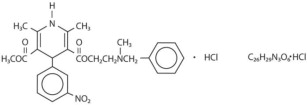
Nicardipine hydrochloride is a calcium ion influx inhibitor (slow channel blocker or calcium channel blocker). Nicardipine hydrochloride injection, USP for intravenous administration contains 2.5 mg per mL of nicardipine hydrochloride. Nicardipine hydrochloride is a dihydropyridine derivative with IUPAC (International Union of Pure and Applied Chemistry) chemical name (±)-2-(benzyl-methyl amino) ethyl methyl 1,4-dihydro-2,6-dimethyl-4-(m-nitrophenyl)-3,5-pyridinedicarboxylate monohydrochloride and has the following structure:
Nicardipine hydrochloride is a greenish-yellow, odorless, crystalline powder that melts at about 169°C. It is freely soluble in chloroform, methanol, and glacial acetic acid, sparingly soluble in anhydrous ethanol, slightly soluble in n-butanol, water, 0.01 M potassium dihydrogen phosphate, acetone, and dioxane, very slightly soluble in ethyl acetate, and practically insoluble in benzene, ether, and hexane. It has a molecular weight of 515.99.
Nicardipine hydrochloride injection, USP is available as a sterile, non-pyrogenic, clear, yellow solution in 10 mL vials for intravenous infusion after dilution. Each mL contains 2.5 mg nicardipine hydrochloride in water for injection with 48 mg sorbitol. Buffered with 0.525 mg citric acid monohydrate and 0.09 mg sodium hydroxide. Additional citric acid and/or sodium hydroxide may have been added to adjust pH.
2.2 Monitoring
The time course of blood pressure decrease is dependent on the initial rate of infusion and the frequency of dosage adjustment. With constant infusion, blood pressure begins to fall within minutes. It reaches about 50% of its ultimate decrease in about 45 minutes.
Monitor blood pressure and heart rate continually during infusion and avoid too rapid or excessive blood pressure drop during treatment. If there is concern of impending hypotension or tachycardia, the infusion should be discontinued. Then, when blood pressure has stabilized, restart infusion of nicardipine hydrochloride injection at low doses such as 30 to 50 mL/hr (3 to 5 mg/hr) and adjusted to maintain desired blood pressure.
7.2 Cimetidine
Cimetidine has been shown to increase nicardipine plasma concentrations with oral nicardipine administration. Frequently monitor response in patients receiving both drugs. Data with other histamine-2 antagonists are not available.
7.4 Tacrolimus
Concomitant administration of intravenous nicardipine and tacrolimus may result in elevated plasma tacrolimus levels through nicardipine inhibition of hepatic microsomal enzymes, including CYP3A4. Closely monitor plasma concentrations of tacrolimus during nicardipine hydrochloride injection administration, and adjust the dose of tacrolimus accordingly.
1.1 Hypertension
Nicardipine hydrochloride injection is indicated for the short-term treatment of hypertension when oral therapy is not feasible or not desirable. For prolonged control of blood pressure, transfer patients to oral medication as soon as their clinical condition permits [see Dosage and Administration (2.1)].
7.3 Cyclosporine
Concomitant administration of oral or intravenous nicardipine and cyclosporine results in elevated plasma cyclosporine levels through nicardipine inhibition of hepatic microsomal enzymes, including CYP3A4. Closely monitor plasma concentrations of cyclosporine during nicardipine hydrochloride injection administration, and reduce the dose of cyclosporine accordingly.
16.1 How Supplied
Nicardipine hydrochloride injection, USP is available as follows:
| NDC | Nicardipine Hydrochloride Injection, USP (2.5 mg per mL) | Package Factor |
| 25021-333-10 | 25 mg per 10 mL Single-Dose Vial | 10 vials per carton |
7.1 Beta Blockers
In most patients, nicardipine hydrochloride injection can safely be used concomitantly with beta-blockers. However, titrate slowly when using nicardipine hydrochloride injection in combination with a beta-blocker in heart failure patients [see Warnings and Precautions (5.2)].
8.4 Pediatric Use
Safety and efficacy in patients under the age of 18 have not been established.
8.5 Geriatric Use
The steady-state pharmacokinetics of nicardipine are similar in elderly hypertensive patients (>65 years) and young healthy adults.
Clinical studies of nicardipine did not include sufficient numbers of subjects aged 65 and over to determine whether they respond differently from younger subjects. Other reported clinical experience has not identified differences in responses between the elderly and younger patients. In general, use low initial doses in elderly patients, reflecting the greater frequency of decreased hepatic, renal or cardiac function, and of concomitant disease or other drug therapy.
4 Contraindications
- Do not use in patients with advanced aortic stenosis (4.1).
6 Adverse Reactions
Most common adverse reactions are headache (15%), hypotension (6%), tachycardia (4%) and nausea/vomiting (5%). (6.1)
To report SUSPECTED ADVERSE REACTIONS, contact Sagent Pharmaceuticals at 1-866-625-1618 or FDA at 1-800-FDA-1088 or
www.fda.gov/medwatch
.
7 Drug Interactions
- Cimetidine increases oral nicardipine plasma levels. (7.2)
- Oral or intravenous nicardipine may increase cyclosporine and tacrolimus plasma levels. Frequent monitoring of trough blood levels of cyclosporine and tacrolimus is recommended when co-administering nicardipine hydrochloride injection. (7.3, 7.4)
8.3 Nursing Mothers
Nicardipine is minimally excreted into human milk. Among 18 infants exposed to nicardipine through breast milk in the postpartum period, calculated daily infant dose was less than 0.3 mcg and there were no adverse events observed. Consider the possibility of infant exposure when using nicardipine in nursing mothers.
In a study of 11 women who received oral nicardipine 4 to 14 days postpartum, 4 women received immediate-release nicardipine 40 to 80 mg daily, 6 received sustained-release nicardipine 100 to 150 mg daily, and one received intravenous nicardipine 120 mg daily. The peak milk concentration was 7.3 mcg/L (range 1.9 to 18.8), and the mean milk concentration was 4.4 mcg/L (range 1.3 to 13.8). Infants received an average of 0.073% of the weight-adjusted maternal oral dose and 0.14% of the weight-adjusted maternal intravenous dose.
In another study of seven women who received intravenous nicardipine for an average of 1.9 days in the immediate postpartum period as therapy for pre-eclampsia, 34 milk samples were obtained at unspecified times and nicardipine was undetectable (<5 mcg/L) in 82% of the samples. Four women who received 1 to 6.5 mg/hour of nicardipine had 6 milk samples with detectable nicardipine levels (range 5.1 to 18.5 mcg/L). The highest concentration of 18.5 mcg/L was found in a woman who received 5.5 mg/hour of nicardipine. The estimated maximum dose in a breastfed infant was <0.3 mcg daily or between 0.015 to 0.004% of the therapeutic dose in a 1 kg infant.
5.5 Local Irritation
To reduce the possibility of venous thrombosis, phlebitis, local irritation, swelling, extravasation, and the occurrence of vascular impairment, administer drug through large peripheral veins or central veins rather than arteries or small peripheral veins, such as those on the dorsum of the hand or wrist. To minimize the risk of peripheral venous irritation, change the site of the drug infusion every 12 hours.
2.1 Recommended Dosing
Nicardipine hydrochloride injection is intended for intravenous use. Vial must be diluted to 0.1 mg per mL before use [see Dosage and Administration (2.3)]. Titrate dose to achieve the desired blood pressure reduction. Individualize dosage depending on the blood pressure to be obtained and the response of the patient.
1 Indications and Usage
- Nicardipine hydrochloride injection is a calcium channel blocker indicated for the short-term treatment of hypertension when oral therapy is not feasible. (1.1)
12.1 Mechanism of Action
Nicardipine inhibits the transmembrane influx of calcium ions into cardiac muscle and smooth muscle without changing serum calcium concentrations. The contractile processes of cardiac muscle and vascular smooth muscle are dependent upon the movement of extracellular calcium ions into these cells through specific ion channels. The effects of nicardipine are more selective to vascular smooth muscle than cardiac muscle. In animal models, nicardipine produced relaxation of coronary vascular smooth muscle at drug levels which cause little or no negative inotropic effect.
16.2 Storage and Handling
Store at 20° to 25°C (68° to 77°F). [See USP Controlled Room Temperature.]
Freezing does not adversely affect the product, but avoid exposure to elevated temperatures.
Protect from light. Retain in carton until time of use.
Discard unused portion.
Sterile, Nonpyrogenic, Preservative-free.
The container closure is not made with natural rubber latex.
sagent
®
Mfd. for SAGENT Pharmaceuticals
Schaumburg, IL 60173 (USA)
Made in China
©2025 Sagent Pharmaceuticals
July 2025
5 Warnings and Precautions
- Closely monitor response in patients with angina, heart failure, impaired hepatic function, or renal impairment. (5.1, 5.2, 5.3, 5.4)
- To reduce the possibility of venous thrombosis, phlebitis, and vascular impairment, do not use small veins, such as those on the dorsum of the hand or wrist. Exercise extreme care to avoid intra-arterial administration or extravasation. (5.5)
- To minimize the risk of peripheral venous irritation, change the site of infusion of nicardipine hydrochloride every 12 hours. (5.5)
5.1 Exacerbation of Angina
Increases in frequency, duration, or severity of angina have been seen in chronic oral therapy with oral nicardipine. Induction or exacerbation of angina has been seen in less than 1% of coronary artery disease patients treated with nicardipine hydrochloride. The mechanism of this effect has not been established.
2 Dosage and Administration
- For Intravenous Use. (2.1)
- Dilution is required. (2.3)
- When substituting for oral nicardipine therapy, use the intravenous infusion rate from the table below (2.1):
Oral Nicardipine Dose Equivalent I.V.
Infusion Rate
(0.1 mg per mL)20 mg q8h 0.5 mg/hr = 5 mL/hr 30 mg q8h 1.2 mg/hr = 12 mL/hr 40 mg q8h 2.2 mg/hr = 22 mL/hr - In a patient not receiving oral nicardipine, initiate therapy at 50 mL/hr (5 mg/hr) 0.1 mg/mL solution. Increase the infusion rate by 25 mL/hr every 5 minutes (for rapid titration) to 15 minutes (for gradual titration) up to a maximum of 150 mL/hr until desired blood pressure reduction is achieved. (2.1)
- If unacceptable hypotension or tachycardia occurs, discontinue the infusion. When blood pressure and heart rate stabilize, restart the infusion at low doses such as 30 to 50 mL/hr. (2.2)
3 Dosage Forms and Strengths
Injection: 25 mg of nicardipine hydrochloride in 10 mL (2.5 mg per mL) as a clear, yellow solution in a vial for dilution.
4.1 Advanced Aortic Stenosis
Nicardipine hydrochloride injection is contraindicated in patients with advanced aortic stenosis because part of the effect of nicardipine hydrochloride injection is secondary to reduced afterload. Reduction of diastolic pressure in these patients may worsen rather than improve myocardial oxygen balance.
6.2 Postmarketing Experience
Because adverse reactions are reported voluntarily from a population of uncertain size, it is not always possible to estimate reliably their frequency or to establish a causal relationship to drug exposure. The following adverse reaction has been identified during post-approval use of nicardipine hydrochloride injection: decreased oxygen saturation (possible pulmonary shunting).
8 Use in Specific Populations
6.1 Clinical Trials Experience
Because clinical trials are conducted under widely varying conditions, adverse reaction rates observed in the clinical trials of a drug cannot be directly compared to rates in the clinical trials of another drug and may not reflect the rates observed in practice. The adverse reaction information from clinical trials does, however, provide a basis for identifying the adverse events that appear to be related to drug use and for approximating rates.
Two hundred forty-four patients participated in two multicenter, double-blind, placebo-controlled trials of nicardipine hydrochloride injection. Adverse experiences were generally not serious and most were expected consequences of vasodilation. Adverse experiences occasionally required dosage adjustment. Therapy was discontinued in approximately 12% of patients, mainly due to hypotension, headache, and tachycardia.
Table 2 shows percentage of patients with adverse reactions where the rate is >3% more common on nicardipine hydrochloride injection than placebo.
| Adverse Event | Nicardipine Hydrochloride Injection (n=144) | Placebo (n=100) |
| Body as a Whole | ||
| Headache, n (%) | 21 (15) | 2 (2) |
| Cardiovascular | ||
| Hypotension, n (%) | 8 (6) | 1 (1) |
| Tachycardia, n (%) | 5 (4) | 0 |
| Digestive | ||
| Nausea/vomiting, n (%) | 7 (5) | 1 (1) |
Other adverse events have been reported in clinical trials or in the literature in association with the use of intravenously administered nicardipine:
Body as a Whole: fever, neck pain
Cardiovascular: angina pectoris, atrioventricular block, ST segment depression, inverted T wave, deep-vein thrombophlebitis
Digestive: dyspepsia
Hemic and Lymphatic: thrombocytopenia
Metabolic and Nutritional: hypophosphatemia, peripheral edema
Nervous: confusion, hypertonia
Respiratory: respiratory disorder
Special Senses: conjunctivitis, ear disorder, tinnitus
Urogenital: urinary frequency
Sinus node dysfunction and myocardial infarction, which may be due to disease progression, have been seen in patients on chronic therapy with orally administered nicardipine.
5.2 Exacerbation of Heart Failure
Titrate slowly when using nicardipine hydrochloride injection, particularly in combination with a beta-blocker, in patients with heart failure or significant left ventricular dysfunction because of possible negative inotropic effects.
2.3 Instructions for Administration
Administer nicardipine hydrochloride by a central line or through a large peripheral vein. Change the infusion site every 12 hours if administered via peripheral vein [see Warnings and Precautions (5.5)].
13.3 Reproductive and Developmental Toxicology
Embryotoxicity, but no teratogenicity, was seen at intravenous doses of 10 mg nicardipine/kg/day in rats and 1 mg/kg/day in rabbits. These doses in the rat and rabbit are equivalent to human IV doses of about 1.6 mg/kg/day and 0.32 mg/kg/day respectively. (The total daily human dose delivered by a continuous IV infusion ranges from 1.2 to 6 mg/kg/day, depending on duration at different infusion rates ranging from 3 to 15 mg/hr as individual patients are titrated for optimal results.) Nicardipine was also embryotoxic when administered orally to pregnant Japanese White rabbits, during organogenesis, at 150 mg/kg/day (a dose associated with marked body weight gain suppression in the treated doe), but not at 50 mg/kg/day (human equivalent dose about 16 mg/kg/day or about 8 times the maximum recommended human oral dose). No adverse effects on the fetus were observed when New Zealand albino rabbits were treated orally, during organogenesis, with up to 100 mg nicardipine/kg/day (a dose associated with significant mortality in the treated doe). In pregnant rats administered nicardipine orally at doses of up to 100 mg/kg/day (human equivalent dose about 16 mg/kg/day) there was no evidence of embryotoxicity or teratogenicity. However, dystocia, reduced birth weight, reduced neonatal survival and reduced neonatal weight gain were noted.
5.4 Prolonged Effects With Impaired Renal Function
When nicardipine hydrochloride injection was given to mild to moderate hypertensive patients with moderate renal impairment, a significantly lower systemic clearance and higher area under the curve (AUC) was observed. These results are consistent with those seen after oral administration of nicardipine. Titrate gradually in patients with renal impairment.
5.3 Increased Effect With Impaired Hepatic Function
Since nicardipine is metabolized in the liver, consider lower dosages and closely monitor responses in patients with impaired liver function or reduced hepatic blood flow.
13.1 Carcinogenesis, Mutagenesis, Impairment of Fertility
Rats treated with nicardipine in the diet (at concentrations calculated to provide daily dosage levels of 5, 15, or 45 mg/kg/day) for two years showed a dose-dependent increase in thyroid hyperplasia and neoplasia (follicular adenoma/carcinoma). One- and three-month studies in the rat have suggested that these results are linked to a nicardipine-induced reduction in plasma thyroxine (T4) levels with a consequent increase in plasma levels of thyroid stimulating hormone (TSH). Chronic elevation of TSH is known to cause hyperstimulation of the thyroid.
In rats on an iodine deficient diet, nicardipine administration for one month was associated with thyroid hyperplasia that was prevented by T4 supplementation. Mice treated with nicardipine in the diet (at concentrations calculated to provide daily dosage levels of up to 100 mg/kg/day) for up to 18 months showed no evidence of neoplasia of any tissue and no evidence of thyroid changes.
There was no evidence of thyroid pathology in dogs treated with up to 25 mg nicardipine/kg/day for one year and no evidence of effects of nicardipine on thyroid function (plasma T4 and TSH) in man.
There was no evidence of a mutagenic potential of nicardipine in a battery of genotoxicity tests conducted on microbial indicator organisms, in micronucleus tests in mice and hamsters, or in a sister chromatid exchange study in hamsters.
No impairment of fertility was seen in male or female rats administered nicardipine at oral doses as high as 100 mg/kg/day (human equivalent dose about 16 mg/kg/day, 8 times the maximum recommended oral dose).
Structured Label Content
Section 42229-5 (42229-5)
Dosage as a Substitute for Oral Nicardipine Therapy
The intravenous infusion rate required to produce an average plasma concentration equivalent to a given oral dose at steady state is shown Table 1:
| Oral Nicardipine Dose |
Equivalent I.V. Infusion Rate
(0.1 mg per mL) |
| 20 mg q8h | 0.5 mg/hr = 5 mL/hr |
| 30 mg q8h | 1.2 mg/hr = 12 mL/hr |
| 40 mg q8h | 2.2 mg/hr = 22 mL/hr |
Section 51945-4 (51945-4)
PACKAGE LABEL – PRINCIPAL DISPLAY PANEL – Vial Label
NDC 25021-333-10
Rx only
niCARdipine Hydrochloride Injection, USP
25 mg per 10 mL
(2.5 mg per mL)
For Intravenous Use Only
WARNING: MUST BE DILUTED BEFORE INFUSION
10 mL Single-Dose Vial
Discard unused portion
7.5 in Vitro (7.5 In Vitro)
The plasma protein binding of nicardipine was not altered when therapeutic concentrations of furosemide, propranolol, dipyridamole, warfarin, quinidine, or naproxen were added to human plasma in vitro.
10 Overdosage (10 OVERDOSAGE)
Several overdosages with orally administered nicardipine have been reported. One adult patient allegedly ingested 600 mg of immediate-release oral nicardipine, and another patient, 2,160 mg of the sustained-release formulation of nicardipine. Symptoms included marked hypotension, bradycardia, palpitations, flushing, drowsiness, confusion and slurred speech. All symptoms resolved without sequelae. An overdosage occurred in a one-year-old child who ingested half of the powder in a 30 mg nicardipine standard capsule. The child remained asymptomatic.
Based on results obtained in laboratory animals, lethal overdose may cause systemic hypotension, bradycardia (following initial tachycardia) and progressive atrioventricular conduction block. Reversible hepatic function abnormalities and sporadic focal hepatic necrosis were noted in some animal species receiving very large doses of nicardipine.
For treatment of overdosage, implement standard measures including monitoring of cardiac and respiratory functions. Position the patient so as to avoid cerebral anoxia. Use vasopressors for patients exhibiting profound hypotension.
11 Description (11 DESCRIPTION)
Nicardipine hydrochloride is a calcium ion influx inhibitor (slow channel blocker or calcium channel blocker). Nicardipine hydrochloride injection, USP for intravenous administration contains 2.5 mg per mL of nicardipine hydrochloride. Nicardipine hydrochloride is a dihydropyridine derivative with IUPAC (International Union of Pure and Applied Chemistry) chemical name (±)-2-(benzyl-methyl amino) ethyl methyl 1,4-dihydro-2,6-dimethyl-4-(m-nitrophenyl)-3,5-pyridinedicarboxylate monohydrochloride and has the following structure:
Nicardipine hydrochloride is a greenish-yellow, odorless, crystalline powder that melts at about 169°C. It is freely soluble in chloroform, methanol, and glacial acetic acid, sparingly soluble in anhydrous ethanol, slightly soluble in n-butanol, water, 0.01 M potassium dihydrogen phosphate, acetone, and dioxane, very slightly soluble in ethyl acetate, and practically insoluble in benzene, ether, and hexane. It has a molecular weight of 515.99.
Nicardipine hydrochloride injection, USP is available as a sterile, non-pyrogenic, clear, yellow solution in 10 mL vials for intravenous infusion after dilution. Each mL contains 2.5 mg nicardipine hydrochloride in water for injection with 48 mg sorbitol. Buffered with 0.525 mg citric acid monohydrate and 0.09 mg sodium hydroxide. Additional citric acid and/or sodium hydroxide may have been added to adjust pH.
2.2 Monitoring
The time course of blood pressure decrease is dependent on the initial rate of infusion and the frequency of dosage adjustment. With constant infusion, blood pressure begins to fall within minutes. It reaches about 50% of its ultimate decrease in about 45 minutes.
Monitor blood pressure and heart rate continually during infusion and avoid too rapid or excessive blood pressure drop during treatment. If there is concern of impending hypotension or tachycardia, the infusion should be discontinued. Then, when blood pressure has stabilized, restart infusion of nicardipine hydrochloride injection at low doses such as 30 to 50 mL/hr (3 to 5 mg/hr) and adjusted to maintain desired blood pressure.
7.2 Cimetidine
Cimetidine has been shown to increase nicardipine plasma concentrations with oral nicardipine administration. Frequently monitor response in patients receiving both drugs. Data with other histamine-2 antagonists are not available.
7.4 Tacrolimus
Concomitant administration of intravenous nicardipine and tacrolimus may result in elevated plasma tacrolimus levels through nicardipine inhibition of hepatic microsomal enzymes, including CYP3A4. Closely monitor plasma concentrations of tacrolimus during nicardipine hydrochloride injection administration, and adjust the dose of tacrolimus accordingly.
1.1 Hypertension
Nicardipine hydrochloride injection is indicated for the short-term treatment of hypertension when oral therapy is not feasible or not desirable. For prolonged control of blood pressure, transfer patients to oral medication as soon as their clinical condition permits [see Dosage and Administration (2.1)].
7.3 Cyclosporine
Concomitant administration of oral or intravenous nicardipine and cyclosporine results in elevated plasma cyclosporine levels through nicardipine inhibition of hepatic microsomal enzymes, including CYP3A4. Closely monitor plasma concentrations of cyclosporine during nicardipine hydrochloride injection administration, and reduce the dose of cyclosporine accordingly.
16.1 How Supplied
Nicardipine hydrochloride injection, USP is available as follows:
| NDC | Nicardipine Hydrochloride Injection, USP (2.5 mg per mL) | Package Factor |
| 25021-333-10 | 25 mg per 10 mL Single-Dose Vial | 10 vials per carton |
7.1 Beta Blockers (7.1 Beta-Blockers)
In most patients, nicardipine hydrochloride injection can safely be used concomitantly with beta-blockers. However, titrate slowly when using nicardipine hydrochloride injection in combination with a beta-blocker in heart failure patients [see Warnings and Precautions (5.2)].
8.4 Pediatric Use
Safety and efficacy in patients under the age of 18 have not been established.
8.5 Geriatric Use
The steady-state pharmacokinetics of nicardipine are similar in elderly hypertensive patients (>65 years) and young healthy adults.
Clinical studies of nicardipine did not include sufficient numbers of subjects aged 65 and over to determine whether they respond differently from younger subjects. Other reported clinical experience has not identified differences in responses between the elderly and younger patients. In general, use low initial doses in elderly patients, reflecting the greater frequency of decreased hepatic, renal or cardiac function, and of concomitant disease or other drug therapy.
4 Contraindications (4 CONTRAINDICATIONS)
- Do not use in patients with advanced aortic stenosis (4.1).
6 Adverse Reactions (6 ADVERSE REACTIONS)
Most common adverse reactions are headache (15%), hypotension (6%), tachycardia (4%) and nausea/vomiting (5%). (6.1)
To report SUSPECTED ADVERSE REACTIONS, contact Sagent Pharmaceuticals at 1-866-625-1618 or FDA at 1-800-FDA-1088 or
www.fda.gov/medwatch
.
7 Drug Interactions (7 DRUG INTERACTIONS)
- Cimetidine increases oral nicardipine plasma levels. (7.2)
- Oral or intravenous nicardipine may increase cyclosporine and tacrolimus plasma levels. Frequent monitoring of trough blood levels of cyclosporine and tacrolimus is recommended when co-administering nicardipine hydrochloride injection. (7.3, 7.4)
8.3 Nursing Mothers
Nicardipine is minimally excreted into human milk. Among 18 infants exposed to nicardipine through breast milk in the postpartum period, calculated daily infant dose was less than 0.3 mcg and there were no adverse events observed. Consider the possibility of infant exposure when using nicardipine in nursing mothers.
In a study of 11 women who received oral nicardipine 4 to 14 days postpartum, 4 women received immediate-release nicardipine 40 to 80 mg daily, 6 received sustained-release nicardipine 100 to 150 mg daily, and one received intravenous nicardipine 120 mg daily. The peak milk concentration was 7.3 mcg/L (range 1.9 to 18.8), and the mean milk concentration was 4.4 mcg/L (range 1.3 to 13.8). Infants received an average of 0.073% of the weight-adjusted maternal oral dose and 0.14% of the weight-adjusted maternal intravenous dose.
In another study of seven women who received intravenous nicardipine for an average of 1.9 days in the immediate postpartum period as therapy for pre-eclampsia, 34 milk samples were obtained at unspecified times and nicardipine was undetectable (<5 mcg/L) in 82% of the samples. Four women who received 1 to 6.5 mg/hour of nicardipine had 6 milk samples with detectable nicardipine levels (range 5.1 to 18.5 mcg/L). The highest concentration of 18.5 mcg/L was found in a woman who received 5.5 mg/hour of nicardipine. The estimated maximum dose in a breastfed infant was <0.3 mcg daily or between 0.015 to 0.004% of the therapeutic dose in a 1 kg infant.
5.5 Local Irritation (5.5 Local irritation)
To reduce the possibility of venous thrombosis, phlebitis, local irritation, swelling, extravasation, and the occurrence of vascular impairment, administer drug through large peripheral veins or central veins rather than arteries or small peripheral veins, such as those on the dorsum of the hand or wrist. To minimize the risk of peripheral venous irritation, change the site of the drug infusion every 12 hours.
2.1 Recommended Dosing
Nicardipine hydrochloride injection is intended for intravenous use. Vial must be diluted to 0.1 mg per mL before use [see Dosage and Administration (2.3)]. Titrate dose to achieve the desired blood pressure reduction. Individualize dosage depending on the blood pressure to be obtained and the response of the patient.
1 Indications and Usage (1 INDICATIONS AND USAGE)
- Nicardipine hydrochloride injection is a calcium channel blocker indicated for the short-term treatment of hypertension when oral therapy is not feasible. (1.1)
12.1 Mechanism of Action
Nicardipine inhibits the transmembrane influx of calcium ions into cardiac muscle and smooth muscle without changing serum calcium concentrations. The contractile processes of cardiac muscle and vascular smooth muscle are dependent upon the movement of extracellular calcium ions into these cells through specific ion channels. The effects of nicardipine are more selective to vascular smooth muscle than cardiac muscle. In animal models, nicardipine produced relaxation of coronary vascular smooth muscle at drug levels which cause little or no negative inotropic effect.
16.2 Storage and Handling
Store at 20° to 25°C (68° to 77°F). [See USP Controlled Room Temperature.]
Freezing does not adversely affect the product, but avoid exposure to elevated temperatures.
Protect from light. Retain in carton until time of use.
Discard unused portion.
Sterile, Nonpyrogenic, Preservative-free.
The container closure is not made with natural rubber latex.
sagent
®
Mfd. for SAGENT Pharmaceuticals
Schaumburg, IL 60173 (USA)
Made in China
©2025 Sagent Pharmaceuticals
July 2025
5 Warnings and Precautions (5 WARNINGS AND PRECAUTIONS)
- Closely monitor response in patients with angina, heart failure, impaired hepatic function, or renal impairment. (5.1, 5.2, 5.3, 5.4)
- To reduce the possibility of venous thrombosis, phlebitis, and vascular impairment, do not use small veins, such as those on the dorsum of the hand or wrist. Exercise extreme care to avoid intra-arterial administration or extravasation. (5.5)
- To minimize the risk of peripheral venous irritation, change the site of infusion of nicardipine hydrochloride every 12 hours. (5.5)
5.1 Exacerbation of Angina
Increases in frequency, duration, or severity of angina have been seen in chronic oral therapy with oral nicardipine. Induction or exacerbation of angina has been seen in less than 1% of coronary artery disease patients treated with nicardipine hydrochloride. The mechanism of this effect has not been established.
2 Dosage and Administration (2 DOSAGE AND ADMINISTRATION)
- For Intravenous Use. (2.1)
- Dilution is required. (2.3)
- When substituting for oral nicardipine therapy, use the intravenous infusion rate from the table below (2.1):
Oral Nicardipine Dose Equivalent I.V.
Infusion Rate
(0.1 mg per mL)20 mg q8h 0.5 mg/hr = 5 mL/hr 30 mg q8h 1.2 mg/hr = 12 mL/hr 40 mg q8h 2.2 mg/hr = 22 mL/hr - In a patient not receiving oral nicardipine, initiate therapy at 50 mL/hr (5 mg/hr) 0.1 mg/mL solution. Increase the infusion rate by 25 mL/hr every 5 minutes (for rapid titration) to 15 minutes (for gradual titration) up to a maximum of 150 mL/hr until desired blood pressure reduction is achieved. (2.1)
- If unacceptable hypotension or tachycardia occurs, discontinue the infusion. When blood pressure and heart rate stabilize, restart the infusion at low doses such as 30 to 50 mL/hr. (2.2)
3 Dosage Forms and Strengths (3 DOSAGE FORMS AND STRENGTHS)
Injection: 25 mg of nicardipine hydrochloride in 10 mL (2.5 mg per mL) as a clear, yellow solution in a vial for dilution.
4.1 Advanced Aortic Stenosis
Nicardipine hydrochloride injection is contraindicated in patients with advanced aortic stenosis because part of the effect of nicardipine hydrochloride injection is secondary to reduced afterload. Reduction of diastolic pressure in these patients may worsen rather than improve myocardial oxygen balance.
6.2 Postmarketing Experience
Because adverse reactions are reported voluntarily from a population of uncertain size, it is not always possible to estimate reliably their frequency or to establish a causal relationship to drug exposure. The following adverse reaction has been identified during post-approval use of nicardipine hydrochloride injection: decreased oxygen saturation (possible pulmonary shunting).
8 Use in Specific Populations (8 USE IN SPECIFIC POPULATIONS)
6.1 Clinical Trials Experience
Because clinical trials are conducted under widely varying conditions, adverse reaction rates observed in the clinical trials of a drug cannot be directly compared to rates in the clinical trials of another drug and may not reflect the rates observed in practice. The adverse reaction information from clinical trials does, however, provide a basis for identifying the adverse events that appear to be related to drug use and for approximating rates.
Two hundred forty-four patients participated in two multicenter, double-blind, placebo-controlled trials of nicardipine hydrochloride injection. Adverse experiences were generally not serious and most were expected consequences of vasodilation. Adverse experiences occasionally required dosage adjustment. Therapy was discontinued in approximately 12% of patients, mainly due to hypotension, headache, and tachycardia.
Table 2 shows percentage of patients with adverse reactions where the rate is >3% more common on nicardipine hydrochloride injection than placebo.
| Adverse Event | Nicardipine Hydrochloride Injection (n=144) | Placebo (n=100) |
| Body as a Whole | ||
| Headache, n (%) | 21 (15) | 2 (2) |
| Cardiovascular | ||
| Hypotension, n (%) | 8 (6) | 1 (1) |
| Tachycardia, n (%) | 5 (4) | 0 |
| Digestive | ||
| Nausea/vomiting, n (%) | 7 (5) | 1 (1) |
Other adverse events have been reported in clinical trials or in the literature in association with the use of intravenously administered nicardipine:
Body as a Whole: fever, neck pain
Cardiovascular: angina pectoris, atrioventricular block, ST segment depression, inverted T wave, deep-vein thrombophlebitis
Digestive: dyspepsia
Hemic and Lymphatic: thrombocytopenia
Metabolic and Nutritional: hypophosphatemia, peripheral edema
Nervous: confusion, hypertonia
Respiratory: respiratory disorder
Special Senses: conjunctivitis, ear disorder, tinnitus
Urogenital: urinary frequency
Sinus node dysfunction and myocardial infarction, which may be due to disease progression, have been seen in patients on chronic therapy with orally administered nicardipine.
5.2 Exacerbation of Heart Failure
Titrate slowly when using nicardipine hydrochloride injection, particularly in combination with a beta-blocker, in patients with heart failure or significant left ventricular dysfunction because of possible negative inotropic effects.
2.3 Instructions for Administration
Administer nicardipine hydrochloride by a central line or through a large peripheral vein. Change the infusion site every 12 hours if administered via peripheral vein [see Warnings and Precautions (5.5)].
13.3 Reproductive and Developmental Toxicology
Embryotoxicity, but no teratogenicity, was seen at intravenous doses of 10 mg nicardipine/kg/day in rats and 1 mg/kg/day in rabbits. These doses in the rat and rabbit are equivalent to human IV doses of about 1.6 mg/kg/day and 0.32 mg/kg/day respectively. (The total daily human dose delivered by a continuous IV infusion ranges from 1.2 to 6 mg/kg/day, depending on duration at different infusion rates ranging from 3 to 15 mg/hr as individual patients are titrated for optimal results.) Nicardipine was also embryotoxic when administered orally to pregnant Japanese White rabbits, during organogenesis, at 150 mg/kg/day (a dose associated with marked body weight gain suppression in the treated doe), but not at 50 mg/kg/day (human equivalent dose about 16 mg/kg/day or about 8 times the maximum recommended human oral dose). No adverse effects on the fetus were observed when New Zealand albino rabbits were treated orally, during organogenesis, with up to 100 mg nicardipine/kg/day (a dose associated with significant mortality in the treated doe). In pregnant rats administered nicardipine orally at doses of up to 100 mg/kg/day (human equivalent dose about 16 mg/kg/day) there was no evidence of embryotoxicity or teratogenicity. However, dystocia, reduced birth weight, reduced neonatal survival and reduced neonatal weight gain were noted.
5.4 Prolonged Effects With Impaired Renal Function (5.4 Prolonged effects with Impaired Renal Function)
When nicardipine hydrochloride injection was given to mild to moderate hypertensive patients with moderate renal impairment, a significantly lower systemic clearance and higher area under the curve (AUC) was observed. These results are consistent with those seen after oral administration of nicardipine. Titrate gradually in patients with renal impairment.
5.3 Increased Effect With Impaired Hepatic Function (5.3 Increased effect with Impaired Hepatic Function)
Since nicardipine is metabolized in the liver, consider lower dosages and closely monitor responses in patients with impaired liver function or reduced hepatic blood flow.
13.1 Carcinogenesis, Mutagenesis, Impairment of Fertility
Rats treated with nicardipine in the diet (at concentrations calculated to provide daily dosage levels of 5, 15, or 45 mg/kg/day) for two years showed a dose-dependent increase in thyroid hyperplasia and neoplasia (follicular adenoma/carcinoma). One- and three-month studies in the rat have suggested that these results are linked to a nicardipine-induced reduction in plasma thyroxine (T4) levels with a consequent increase in plasma levels of thyroid stimulating hormone (TSH). Chronic elevation of TSH is known to cause hyperstimulation of the thyroid.
In rats on an iodine deficient diet, nicardipine administration for one month was associated with thyroid hyperplasia that was prevented by T4 supplementation. Mice treated with nicardipine in the diet (at concentrations calculated to provide daily dosage levels of up to 100 mg/kg/day) for up to 18 months showed no evidence of neoplasia of any tissue and no evidence of thyroid changes.
There was no evidence of thyroid pathology in dogs treated with up to 25 mg nicardipine/kg/day for one year and no evidence of effects of nicardipine on thyroid function (plasma T4 and TSH) in man.
There was no evidence of a mutagenic potential of nicardipine in a battery of genotoxicity tests conducted on microbial indicator organisms, in micronucleus tests in mice and hamsters, or in a sister chromatid exchange study in hamsters.
No impairment of fertility was seen in male or female rats administered nicardipine at oral doses as high as 100 mg/kg/day (human equivalent dose about 16 mg/kg/day, 8 times the maximum recommended oral dose).
Advanced Ingredient Data
Raw Label Data
All Sections (JSON)
Additional Information
Back to search View SPL set listing Open on DailyMed ↗
Source: dailymed · Ingested: 2026-02-15T11:51:54.293315 · Updated: 2026-03-14T22:42:04.935896