Ga 68 Dotatoc Injection
c4d185c3-d520-462d-ba50-4f4ee485ace3
34391-3
HUMAN PRESCRIPTION DRUG LABEL
Drug Facts
Composition & Product
Identifiers & Packaging
Indications and Usage
Ga 68 DOTATOC Injection is indicated for use with positron emission tomography (PET) for the localization of somatostatin receptor positive neuroendocrine tumors (NETs) in adult and pediatric patients.
Dosage and Administration
Recommended dose for adults is 148 MBq (4 mCi) as a bolus intravenous injection ( 2.2 ) Recommended dose for pediatric patients is 1.59 MBq/kg (0.043 mCi/kg) with a range of 11.1 MBq (0.3 mCi) to 111 MBq (3 mCi), as a bolus intravenous injection ( 2.2 ) Initiate imaging 55 to 90 minutes after drug administration ( 2.4 ) See full prescribing information for additional preparation, administration, imaging and radiation dosimetry information ( 2 )
Contraindications
None
Warnings and Precautions
Radiation Risk: Ensure safe handling and preparation procedures to protect patients and health care workers from unintentional radiation exposure Advise patients to hydrate before and after administration and to void frequently after administration ( 2.1 , 2.3 , 5.1 ) Hypersensitivity Reactions: Most reported reactions were rash and pruritus and reversible either spontaneously or with routine symptomatic management. ( 5.2 ) Risk for Image Misinterpretation: Uptake of Ga 68 DOTATOC injection can be seen in a variety of tumor types that contain somatostatin receptors, and in other pathologic conditions, and as a normal physiologic variant (e.g. uncinate process of the pancreas) ( 5.3 )
Adverse Reactions
The following clinically significant adverse reactions are described elsewhere in the labeling: Hypersensitivity reactions
Drug Interactions
Non-radioactive somatostatin analogs bind to the same somatostatin receptors as Ga 68 DOTATOC Injection. Image patients with Ga 68 DOTATOC Injection just prior to dosing with long-acting analogs of somatostatin. Short-acting analogs of somatostatin can be used up to 24 hours before imaging with Ga 68 DOTATOC Injection [see Dosage and Administration (2.3) ] .
How Supplied
Ga 68 DOTATOC Injection is supplied in a multiple-dose, capped 30 mL glass vial containing 18.5 MBq/mL to 148 MBq/mL (0.5 mCi/mL to 4 mCi/mL) of Ga 68 DOTATOC at calibration time in approximately 14 mL of solution (NDC 24417-681-30).
Storage and Handling
Ga 68 DOTATOC Injection is supplied in a multiple-dose, capped 30 mL glass vial containing 18.5 MBq/mL to 148 MBq/mL (0.5 mCi/mL to 4 mCi/mL) of Ga 68 DOTATOC at calibration time in approximately 14 mL of solution (NDC 24417-681-30).
Description
Warnings and Precautions ( 5.2 ) 12/2021
Medication Information
Warnings and Precautions
Radiation Risk: Ensure safe handling and preparation procedures to protect patients and health care workers from unintentional radiation exposure Advise patients to hydrate before and after administration and to void frequently after administration ( 2.1 , 2.3 , 5.1 ) Hypersensitivity Reactions: Most reported reactions were rash and pruritus and reversible either spontaneously or with routine symptomatic management. ( 5.2 ) Risk for Image Misinterpretation: Uptake of Ga 68 DOTATOC injection can be seen in a variety of tumor types that contain somatostatin receptors, and in other pathologic conditions, and as a normal physiologic variant (e.g. uncinate process of the pancreas) ( 5.3 )
Indications and Usage
Ga 68 DOTATOC Injection is indicated for use with positron emission tomography (PET) for the localization of somatostatin receptor positive neuroendocrine tumors (NETs) in adult and pediatric patients.
Dosage and Administration
Recommended dose for adults is 148 MBq (4 mCi) as a bolus intravenous injection ( 2.2 ) Recommended dose for pediatric patients is 1.59 MBq/kg (0.043 mCi/kg) with a range of 11.1 MBq (0.3 mCi) to 111 MBq (3 mCi), as a bolus intravenous injection ( 2.2 ) Initiate imaging 55 to 90 minutes after drug administration ( 2.4 ) See full prescribing information for additional preparation, administration, imaging and radiation dosimetry information ( 2 )
Contraindications
None
Adverse Reactions
The following clinically significant adverse reactions are described elsewhere in the labeling: Hypersensitivity reactions
Drug Interactions
Non-radioactive somatostatin analogs bind to the same somatostatin receptors as Ga 68 DOTATOC Injection. Image patients with Ga 68 DOTATOC Injection just prior to dosing with long-acting analogs of somatostatin. Short-acting analogs of somatostatin can be used up to 24 hours before imaging with Ga 68 DOTATOC Injection [see Dosage and Administration (2.3) ] .
Storage and Handling
Ga 68 DOTATOC Injection is supplied in a multiple-dose, capped 30 mL glass vial containing 18.5 MBq/mL to 148 MBq/mL (0.5 mCi/mL to 4 mCi/mL) of Ga 68 DOTATOC at calibration time in approximately 14 mL of solution (NDC 24417-681-30).
How Supplied
Ga 68 DOTATOC Injection is supplied in a multiple-dose, capped 30 mL glass vial containing 18.5 MBq/mL to 148 MBq/mL (0.5 mCi/mL to 4 mCi/mL) of Ga 68 DOTATOC at calibration time in approximately 14 mL of solution (NDC 24417-681-30).
Description
Warnings and Precautions ( 5.2 ) 12/2021
Section 42229-5
Recommended Dosage
In adults, the recommended amount of radioactivity to be administered for PET imaging is 4 mCi (148 MBq) with a range of 3 mCi to 5 mCi (111 MBq to 185 MBq) administered as an intravenous injection with an injection rate of approximately 10 seconds per mL.
In pediatric patients, the recommended amount of radioactivity to be administered for PET imaging is 0.043 mCi/kg of body weight (1.59 MBq/kg) with a range of 0.3 mCi (11.1 MBq) to 3 mCi (111 MBq) as an intravenous injection with an injection rate of approximately 10 seconds per mL.
Section 43683-2
| Warnings and Precautions (5.2) | 12/2021 |
Section 44425-7
Store Ga 68 DOTATOC Injection upright in a lead shielded container at 25°C (77°F); excursions permitted to 15°C to 30°C (59°F to 86°F).
Receipt, transfer, handling, possession or use of this product is subject to the radioactive material regulations and licensing requirements of the U.S. Nuclear Regulatory Commission, Agreement States or Licensing States as appropriate. Store and dispose of Ga 68 DOTATOC Injection in accordance with the regulations and a general license, or its equivalent, of an Agreement State or a Licensing State.
10 Overdosage
In the event of a radiation overdose, reduce the absorbed dose to the patient by increasing the elimination of the radionuclide from the body by reinforced hydration, frequent bladder voiding, and diuretics, if needed. If possible, perform an estimate of the radioactive dose given to the patient.
8.4 Pediatric Use
The safety and efficacy of Ga 68 DOTATOC Injection have been established in pediatric patients with neuroendocrine tumors. Efficacy is based on data from 14 patients in Study A and B demonstrating the ability of Ga 68 DOTATOC to image NETs [see Clinical Studies (14)]. The safety profile of Ga 68 DOTATOC Injection is similar in adult and pediatric patients with somatostatin receptor positive tumors. The recommended Ga 68 DOTATOC injected dose in pediatric patients is weight based [see Dosage and Administration (2.2)].
8.5 Geriatric Use
Clinical studies of Ga 68 DOTATOC did not include sufficient numbers of subjects aged 65 and over to determine whether they respond differently from younger subjects. Other reported clinical experience has not identified differences in responses between the elderly and younger patients. In general, dose selection for an elderly patient should be cautious, usually starting at the low end of the dosing range, reflecting the greater frequency of decreased hepatic, renal, or cardiac function, and of concomitant disease or other drug therapy.
5.1 Radiation Risk
Ga 68 DOTATOC Injection contributes to a patient's overall long-term cumulative radiation exposure. Long-term cumulative radiation exposure is associated with an increased risk of cancer. Ensure safe handling and preparation procedures to protect patients and health care workers from unintentional radiation exposure. Advise patients to hydrate before and after administration and to void frequently after administration [see Dosage and Administration (2.1, 2.3)].
14 Clinical Studies
The safety and efficacy of Ga-68 DOTATOC Injection were established in two single-center, open-label studies (Study A and Study B) in which 282 patients with known or suspected SSTR-positive NETs received a single dose of Ga-68 DOTATOC. A total of 238 of the 282 patients (84%) had a history of neoplasm at the time of Ga-68 DOTATOC imaging. Among the 282 patients, 59% were female and 95% white; the mean age was 54 years (range from 4 to 82 years).
The Ga-68 DOTATOC images were rated by two independent readers blinded to clinical information as either positive or negative for NET within each patient. The imaging results were compared to a composite reference consisting of histopathology and imaging (MR, CT, or In-111 pentetreotide imaging) acquired within 1 year of the Ga-68 DOTATOC imaging, as well as chromogranin A and pancreastatin levels. The proportion of patients positive for NET per composite reference who were identified as positive by the Ga-68 DOTATOC image was used to quantify positive percent agreement. The proportion of patients without NET per composite reference who were identified as negative by the Ga-68 DOTATOC image was used to quantify negative percent agreement.
4 Contraindications
None
6 Adverse Reactions
The following clinically significant adverse reactions are described elsewhere in the labeling:
- Hypersensitivity reactions
7 Drug Interactions
Non-radioactive somatostatin analogs bind to the same somatostatin receptors as Ga 68 DOTATOC Injection. Image patients with Ga 68 DOTATOC Injection just prior to dosing with long-acting analogs of somatostatin. Short-acting analogs of somatostatin can be used up to 24 hours before imaging with Ga 68 DOTATOC Injection [see Dosage and Administration (2.3)].
12.2 Pharmacodynamics
The relationship between Ga 68 DOTATOC plasma concentrations and successful imaging was not explored in clinical trials.
2.4 Image Acquisition
For Ga 68 DOTATOC PET imaging, a whole-body acquisition from the skull vertex to mid-thigh is recommended. Image acquisition can begin at 60 minutes (range 55 to 90 minutes) after the intravenous administration of the Ga 68 DOTATOC Injection. Adapt Ga 68 DOTATOC Injection uptake time and scan duration according to the equipment used, and the patient and tumor characteristics, to obtain the optimal image quality.
1 Indications and Usage
Ga 68 DOTATOC Injection is indicated for use with positron emission tomography (PET) for the localization of somatostatin receptor positive neuroendocrine tumors (NETs) in adult and pediatric patients.
11.3 External Radiation
Gamma constant: 1.8 × 10⁻⁴ mSv/hr per MBq at 1 meter [0.67 mrem/hr per mCi at 1 meter] Table 5 displays the radiation attenuation by lead shielding of Ga 68.
| Shield Thickness (Pb) mm |
Coefficient of Attenuation |
|---|---|
| 6 | 0.5 |
| 12 | 0.25 |
| 17 | 0.1 |
| 34 | 0.01 |
| 51 | 0.001 |
2.6 Radiation Dosimetry
Estimated radiation absorbed doses per injected activity for organs and tissues of adult patients following an intravenous bolus of Ga 68 DOTATOC Injection are shown in Table 1. Estimated radiation effective doses per injected activity for adult and pediatric patients following an intravenous bolus administration of Ga 68 DOTATOC Injection are shown in Table 2.
| Site | Absorbed Dose (mGy/MBq) |
|---|---|
| Urinary bladder wall | 0.119 ± 0.058 |
| Spleen | 0.108 ± 0.065 |
| Kidney | 0.082 ± 0.020 |
| Adrenal gland | 0.077 ± 0.028 |
| Liver | 0.041 ± 0.014 |
| Red marrow | 0.016 ± 0.003 |
| Gallbladder wall | 0.015 ± 0.001 |
| Total body | 0.014 ± 0.002 |
| Lungs | 0.007 ± 0.001 |
| Effective dose (mSv/MBq) | 0.021 ± 0.003 |
The effective radiation dose resulting from the administration of 148 MBq (4 mCi) to an adult weighing 75 kg, is about 3.11 mSv. For an administered activity of 148 MBq (4 mCi) the typical radiation dose to the critical organs, which are the urinary bladder wall, the spleen and the kidneys/adrenals, are about 18 mSv, 16 mSv and 12 mSv, respectively. Because the spleen has one of the highest physiological uptakes, higher uptake and radiation dose to other organs or pathologic tissues may occur in patients with splenectomy.
| Age | Model Weight (kg) | Effective Dose per Injection Activity (mSv/MBq) |
|---|---|---|
| Adult | 73.7 | 0.019 |
| 15 years | 56.8 | 0.026 |
| 10 years | 33.2 | 0.041 |
| 5 years | 19.8 | 0.066 |
| 1 year | 9.7 | 0.13 |
| Newborn | 3.6 | 0.36 |
12.1 Mechanism of Action
Ga 68 DOTATOC binds to somatostatin receptors, with highest affinity (Ki = 2.5± 0.5 nanomolar) for subtype 2 receptors (sstr2). Ga 68 DOTATOC binds to cells that express somatostatin receptors including malignant neuroendocrine cells, which overexpress sstr2 receptors. Gallium 68 is a β+ emitting radionuclide with associated 511 keV annihilation photons that allow positron emission tomography (PET) imaging.
2.5 Image Interpretation
Ga 68 DOTATOC binds to somatostatin receptors. Based upon the intensity of the signals, PET images obtained using Ga 68 DOTATOC Injection indicate the presence and density of somatostatin receptors in tissues, .Uptake can also be seen in a variety of non-NET tumors that contain somatostatin receptors or as a normal physiologic variant [see Warnings and Precautions (5.2)]. NET tumors that do not bear somatostatin receptors will not be visualized.
5 Warnings and Precautions
- Radiation Risk: Ensure safe handling and preparation procedures to protect patients and health care workers from unintentional radiation exposure Advise patients to hydrate before and after administration and to void frequently after administration (2.1, 2.3, 5.1)
- Hypersensitivity Reactions: Most reported reactions were rash and pruritus and reversible either spontaneously or with routine symptomatic management. (5.2)
- Risk for Image Misinterpretation: Uptake of Ga 68 DOTATOC injection can be seen in a variety of tumor types that contain somatostatin receptors, and in other pathologic conditions, and as a normal physiologic variant (e.g. uncinate process of the pancreas) (5.3)
2 Dosage and Administration
- Recommended dose for adults is 148 MBq (4 mCi) as a bolus intravenous injection (2.2)
- Recommended dose for pediatric patients is 1.59 MBq/kg (0.043 mCi/kg) with a range of 11.1 MBq (0.3 mCi) to 111 MBq (3 mCi), as a bolus intravenous injection (2.2)
- Initiate imaging 55 to 90 minutes after drug administration (2.4)
- See full prescribing information for additional preparation, administration, imaging and radiation dosimetry information (2)
3 Dosage Forms and Strengths
Injection: Gallium Ga 68 DOTATOC Injection is a clear, colorless solution in a 30 mL multiple-dose vial containing 18.5 MBq/mL to 148 MBq/mL (0.5 mCi/mL to 4 mCi/mL) of Ga 68 DOTATOC Injection at calibration date and time.
6.2 Postmarketing Experience
The following adverse reactions have been identified during postapproval use of other somatostatin receptor imaging agents. Because these reactions are reported voluntarily from a population of uncertain size, it is not always possible to reliably estimate their frequency or establish a causal relationship to the drug.
11.1 Chemical Characteristics
Ga 68 DOTATOC Injection is a radioactive diagnostic agent for intravenous administration. It contains 3.6 mcg/mL (DOTA-0-Phe1-Tyr3) octreotide, 18.5 MBq/mL to 148 MBq/mL (0.5 mCi to 4 mCi/mL) of Ga 68 DOTATOC at calibration time, and ethanol (10% v/v) in sodium chloride (9 mg/mL) solution (approximately 14 mL volume). Ga 68 DOTATOC Injection is a sterile, pyrogen free, clear, colorless, buffered solution, with a pH between 4 to 8.
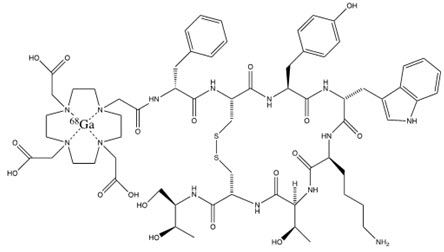
Ga 68 DOTATOC, also known as Gallium-68 (DOTA0-Phe1-Tyr3) octreotide, is a cyclic 8 amino acid peptide with a covalently bound chelator (DOTA). The peptide has the amino acid sequence: H-D-Phe-Cys-Tyr-D-Trp-Lys-Thr-Cys-Thr-OH, and contains one disulfide bond. Ga 68 DOTATOC has a molecular weight of 1489.65 g/mol and its chemical structure is shown in Figure 1.
Figure 1: Chemical Structure of Ga 68 DOTATOC
Gallium-68 labeled 2-[4-[2-[[(2R)-1-[[(4R,7S,10S,13R,16S,19R)-10-(4-aminobutyl)-4-[[(2R,3R)-1,3-dihydroxybutan-2-yl]carbamoyl]-7-[(1R)-1-hydroxyethyl]-16-[(4-hydroxyphenyl)methyl]-13-(1H-indol-3-ylmethyl)-6,9,12,15,18-pentaoxo-1,2-dithia-5,8,11,14,17-pentazacycloicos-19-yl]amino]-1-oxo-3-phenylpropan-2-yl]amino]-2-oxoethyl]-7,10-bis(carboxymethyl)-1,4,7,10-tetrazacyclododec-1-yl]acetic acid.
11.2 Physical Characteristics
Table 3 and Table 4 display the principal radiation emission data and physical decay of Ga 68.
Gallium-68 (Ga 68) decays with a half-life of 68 minutes to stable Zn 68:
- 89% through positron emission with a mean energy of 836 keV followed by emission of two 511 keV annihilation photons (178%),
- 10% through orbital electron capture (with associated X-ray or Auger emissions), and
- 3% through 13 gamma transitions from 5 excited levels of the daughter Zn 68 nucleus. The most probable prompt gamma emission is a 1088 keV gamma with a 3.2% per decay probability.
| Radiation/Emission | % Disintegration | Mean Energy (MeV) |
|---|---|---|
| beta+ | 88% | 0.8360 |
| beta+ | 1.1% | 0.3526 |
| gamma | 178% | 0.5110 |
| gamma | 3% | 1.0770 |
| X-ray | 2.8% | 0.0086 |
| X-ray | 1.4% | 0.0086 |
| Minutes | Fraction Remaining |
|---|---|
| 0 | 1.000 |
| 15 | 0.858 |
| 30 | 0.736 |
| 60 | 0.541 |
| 90 | 0.398 |
| 120 | 0.293 |
| 180 | 0.158 |
| 360 | 0.025 |
6.1 Clinical Trial Experience
Because clinical trials are conducted under widely varying conditions, adverse reaction rates observed in the clinical trials of a drug cannot be directly compared to rates in the clinical trials of another drug and may not reflect the rates observed in practice.
The safety of Ga-68 DOTATOC injection was evaluated in 334 patients in clinical trials of patients receiving a single dose of Ga-68 DOTATOC injection for imaging known or suspected NET.
The following adverse reactions occurred at a rate of < 2%:
Gastrointestinal Disorders: nausea
The following adverse reactions occurred at a rate of a < 1%
Skin and Subcutaneous Tissue Disorders: pruritus
Vascular Disorders: flushing
8 Use in Specific Populations
Lactation: Breast milk should be pumped and discarded for 8 hours after administration (8.2)
5.2 Hypersensitivity Reactions
Hypersensitivity reactions following administration of somatostatin receptor imaging agents predominantly consisted of cutaneous reactions such as rash and pruritus. Reactions reversed either spontaneously or with routine symptomatic management. Less frequently hypersensitivity reactions included angioedema or cases with features of anaphylaxis.
16 How Supplied/storage and Handling
Ga 68 DOTATOC Injection is supplied in a multiple-dose, capped 30 mL glass vial containing 18.5 MBq/mL to 148 MBq/mL (0.5 mCi/mL to 4 mCi/mL) of Ga 68 DOTATOC at calibration time in approximately 14 mL of solution (NDC 24417-681-30).
5.3 Risk for Image Misinterpretation
The uptake of Ga 68 DOTATOC Injection reflects the level of somatostatin receptor density in NETs, however, uptake can also be seen in a variety of other tumors that also express somatostatin receptors. Increased uptake might also be seen in other non-cancerous pathologic conditions that express somatostatin receptors including thyroid disease or in subacute inflammation, or might occur as a normal physiologic variant (e.g. uncinate process of the pancreas) [see Dosage and Administration (2.5)].
A negative scan after the administration of Ga 68 DOTATOC Injection in patients who do not have a history of NET disease does not rule out disease [see Clinical Studies (14)].
2.1 Radiation Safety – Drug Handling
Handle Ga 68 DOTATOC Injection with appropriate safety measures to minimize radiation exposure [see Warnings and Precautions (5.1)]. Use waterproof gloves, effective radiation shielding and appropriate safety measures when preparing and handling Ga 68 DOTATOC Injection.
Radiopharmaceuticals should be used by or under the control of physicians who are qualified by specific training and experience in the safe use and handling of radionuclides, and whose experience and training have been approved by the appropriate governmental agency authorized to license the use of radionuclides.
Principal Display Panel 14 Ml Vial Label
DOTATOC Ga 68 INJECTION
BATCH#
Diagnostic - For intravenous Use Only
Contains: 18.5 MBq/mL to 148 MBq/mL (0.5 mCi/mL to 4 mCi/mL) of no-carrier
added Ga-68 DOTATOC @ end of synthesis; 9 mg/mL of sodium chloride
Rx ONLY
Sterile, non-pyrogenic
Multiple-dose Vial
NDC# 24417-681-30
Manufactured by:
UIHC-PET Imaging Center
200 Hawkins Drive
Iowa City, IA 52242
TOTAL ACTIVITY: mCi
TOTAL VOLUME: mL
RADIOACTIVE CONCENTRATION: mCi/mL @ EOS TIME
EOS TIME:
EXPIRATION TIME:
Store at 25°C (77°F); excursions permitted between 15°C to 30°C (59°F–86°F);
Store upright in a lead shielded container. Expires 3 hours from end of synthesis.
See full prescribing information for dosage and administration information.
Do not use if cloudy or if contains particulate matter.
CAUTION: RADIOACTIVE MATERIAL
Structured Label Content
Section 42229-5 (42229-5)
Recommended Dosage
In adults, the recommended amount of radioactivity to be administered for PET imaging is 4 mCi (148 MBq) with a range of 3 mCi to 5 mCi (111 MBq to 185 MBq) administered as an intravenous injection with an injection rate of approximately 10 seconds per mL.
In pediatric patients, the recommended amount of radioactivity to be administered for PET imaging is 0.043 mCi/kg of body weight (1.59 MBq/kg) with a range of 0.3 mCi (11.1 MBq) to 3 mCi (111 MBq) as an intravenous injection with an injection rate of approximately 10 seconds per mL.
Section 43683-2 (43683-2)
| Warnings and Precautions (5.2) | 12/2021 |
Section 44425-7 (44425-7)
Store Ga 68 DOTATOC Injection upright in a lead shielded container at 25°C (77°F); excursions permitted to 15°C to 30°C (59°F to 86°F).
Receipt, transfer, handling, possession or use of this product is subject to the radioactive material regulations and licensing requirements of the U.S. Nuclear Regulatory Commission, Agreement States or Licensing States as appropriate. Store and dispose of Ga 68 DOTATOC Injection in accordance with the regulations and a general license, or its equivalent, of an Agreement State or a Licensing State.
10 Overdosage (10 OVERDOSAGE)
In the event of a radiation overdose, reduce the absorbed dose to the patient by increasing the elimination of the radionuclide from the body by reinforced hydration, frequent bladder voiding, and diuretics, if needed. If possible, perform an estimate of the radioactive dose given to the patient.
8.4 Pediatric Use
The safety and efficacy of Ga 68 DOTATOC Injection have been established in pediatric patients with neuroendocrine tumors. Efficacy is based on data from 14 patients in Study A and B demonstrating the ability of Ga 68 DOTATOC to image NETs [see Clinical Studies (14)]. The safety profile of Ga 68 DOTATOC Injection is similar in adult and pediatric patients with somatostatin receptor positive tumors. The recommended Ga 68 DOTATOC injected dose in pediatric patients is weight based [see Dosage and Administration (2.2)].
8.5 Geriatric Use
Clinical studies of Ga 68 DOTATOC did not include sufficient numbers of subjects aged 65 and over to determine whether they respond differently from younger subjects. Other reported clinical experience has not identified differences in responses between the elderly and younger patients. In general, dose selection for an elderly patient should be cautious, usually starting at the low end of the dosing range, reflecting the greater frequency of decreased hepatic, renal, or cardiac function, and of concomitant disease or other drug therapy.
5.1 Radiation Risk
Ga 68 DOTATOC Injection contributes to a patient's overall long-term cumulative radiation exposure. Long-term cumulative radiation exposure is associated with an increased risk of cancer. Ensure safe handling and preparation procedures to protect patients and health care workers from unintentional radiation exposure. Advise patients to hydrate before and after administration and to void frequently after administration [see Dosage and Administration (2.1, 2.3)].
14 Clinical Studies (14 CLINICAL STUDIES)
The safety and efficacy of Ga-68 DOTATOC Injection were established in two single-center, open-label studies (Study A and Study B) in which 282 patients with known or suspected SSTR-positive NETs received a single dose of Ga-68 DOTATOC. A total of 238 of the 282 patients (84%) had a history of neoplasm at the time of Ga-68 DOTATOC imaging. Among the 282 patients, 59% were female and 95% white; the mean age was 54 years (range from 4 to 82 years).
The Ga-68 DOTATOC images were rated by two independent readers blinded to clinical information as either positive or negative for NET within each patient. The imaging results were compared to a composite reference consisting of histopathology and imaging (MR, CT, or In-111 pentetreotide imaging) acquired within 1 year of the Ga-68 DOTATOC imaging, as well as chromogranin A and pancreastatin levels. The proportion of patients positive for NET per composite reference who were identified as positive by the Ga-68 DOTATOC image was used to quantify positive percent agreement. The proportion of patients without NET per composite reference who were identified as negative by the Ga-68 DOTATOC image was used to quantify negative percent agreement.
4 Contraindications (4 CONTRAINDICATIONS)
None
6 Adverse Reactions (6 ADVERSE REACTIONS)
The following clinically significant adverse reactions are described elsewhere in the labeling:
- Hypersensitivity reactions
7 Drug Interactions (7 DRUG INTERACTIONS)
Non-radioactive somatostatin analogs bind to the same somatostatin receptors as Ga 68 DOTATOC Injection. Image patients with Ga 68 DOTATOC Injection just prior to dosing with long-acting analogs of somatostatin. Short-acting analogs of somatostatin can be used up to 24 hours before imaging with Ga 68 DOTATOC Injection [see Dosage and Administration (2.3)].
12.2 Pharmacodynamics
The relationship between Ga 68 DOTATOC plasma concentrations and successful imaging was not explored in clinical trials.
2.4 Image Acquisition
For Ga 68 DOTATOC PET imaging, a whole-body acquisition from the skull vertex to mid-thigh is recommended. Image acquisition can begin at 60 minutes (range 55 to 90 minutes) after the intravenous administration of the Ga 68 DOTATOC Injection. Adapt Ga 68 DOTATOC Injection uptake time and scan duration according to the equipment used, and the patient and tumor characteristics, to obtain the optimal image quality.
1 Indications and Usage (1 INDICATIONS AND USAGE)
Ga 68 DOTATOC Injection is indicated for use with positron emission tomography (PET) for the localization of somatostatin receptor positive neuroendocrine tumors (NETs) in adult and pediatric patients.
11.3 External Radiation
Gamma constant: 1.8 × 10⁻⁴ mSv/hr per MBq at 1 meter [0.67 mrem/hr per mCi at 1 meter] Table 5 displays the radiation attenuation by lead shielding of Ga 68.
| Shield Thickness (Pb) mm |
Coefficient of Attenuation |
|---|---|
| 6 | 0.5 |
| 12 | 0.25 |
| 17 | 0.1 |
| 34 | 0.01 |
| 51 | 0.001 |
2.6 Radiation Dosimetry
Estimated radiation absorbed doses per injected activity for organs and tissues of adult patients following an intravenous bolus of Ga 68 DOTATOC Injection are shown in Table 1. Estimated radiation effective doses per injected activity for adult and pediatric patients following an intravenous bolus administration of Ga 68 DOTATOC Injection are shown in Table 2.
| Site | Absorbed Dose (mGy/MBq) |
|---|---|
| Urinary bladder wall | 0.119 ± 0.058 |
| Spleen | 0.108 ± 0.065 |
| Kidney | 0.082 ± 0.020 |
| Adrenal gland | 0.077 ± 0.028 |
| Liver | 0.041 ± 0.014 |
| Red marrow | 0.016 ± 0.003 |
| Gallbladder wall | 0.015 ± 0.001 |
| Total body | 0.014 ± 0.002 |
| Lungs | 0.007 ± 0.001 |
| Effective dose (mSv/MBq) | 0.021 ± 0.003 |
The effective radiation dose resulting from the administration of 148 MBq (4 mCi) to an adult weighing 75 kg, is about 3.11 mSv. For an administered activity of 148 MBq (4 mCi) the typical radiation dose to the critical organs, which are the urinary bladder wall, the spleen and the kidneys/adrenals, are about 18 mSv, 16 mSv and 12 mSv, respectively. Because the spleen has one of the highest physiological uptakes, higher uptake and radiation dose to other organs or pathologic tissues may occur in patients with splenectomy.
| Age | Model Weight (kg) | Effective Dose per Injection Activity (mSv/MBq) |
|---|---|---|
| Adult | 73.7 | 0.019 |
| 15 years | 56.8 | 0.026 |
| 10 years | 33.2 | 0.041 |
| 5 years | 19.8 | 0.066 |
| 1 year | 9.7 | 0.13 |
| Newborn | 3.6 | 0.36 |
12.1 Mechanism of Action
Ga 68 DOTATOC binds to somatostatin receptors, with highest affinity (Ki = 2.5± 0.5 nanomolar) for subtype 2 receptors (sstr2). Ga 68 DOTATOC binds to cells that express somatostatin receptors including malignant neuroendocrine cells, which overexpress sstr2 receptors. Gallium 68 is a β+ emitting radionuclide with associated 511 keV annihilation photons that allow positron emission tomography (PET) imaging.
2.5 Image Interpretation
Ga 68 DOTATOC binds to somatostatin receptors. Based upon the intensity of the signals, PET images obtained using Ga 68 DOTATOC Injection indicate the presence and density of somatostatin receptors in tissues, .Uptake can also be seen in a variety of non-NET tumors that contain somatostatin receptors or as a normal physiologic variant [see Warnings and Precautions (5.2)]. NET tumors that do not bear somatostatin receptors will not be visualized.
5 Warnings and Precautions (5 WARNINGS AND PRECAUTIONS)
- Radiation Risk: Ensure safe handling and preparation procedures to protect patients and health care workers from unintentional radiation exposure Advise patients to hydrate before and after administration and to void frequently after administration (2.1, 2.3, 5.1)
- Hypersensitivity Reactions: Most reported reactions were rash and pruritus and reversible either spontaneously or with routine symptomatic management. (5.2)
- Risk for Image Misinterpretation: Uptake of Ga 68 DOTATOC injection can be seen in a variety of tumor types that contain somatostatin receptors, and in other pathologic conditions, and as a normal physiologic variant (e.g. uncinate process of the pancreas) (5.3)
2 Dosage and Administration (2 DOSAGE AND ADMINISTRATION)
- Recommended dose for adults is 148 MBq (4 mCi) as a bolus intravenous injection (2.2)
- Recommended dose for pediatric patients is 1.59 MBq/kg (0.043 mCi/kg) with a range of 11.1 MBq (0.3 mCi) to 111 MBq (3 mCi), as a bolus intravenous injection (2.2)
- Initiate imaging 55 to 90 minutes after drug administration (2.4)
- See full prescribing information for additional preparation, administration, imaging and radiation dosimetry information (2)
3 Dosage Forms and Strengths (3 DOSAGE FORMS AND STRENGTHS)
Injection: Gallium Ga 68 DOTATOC Injection is a clear, colorless solution in a 30 mL multiple-dose vial containing 18.5 MBq/mL to 148 MBq/mL (0.5 mCi/mL to 4 mCi/mL) of Ga 68 DOTATOC Injection at calibration date and time.
6.2 Postmarketing Experience
The following adverse reactions have been identified during postapproval use of other somatostatin receptor imaging agents. Because these reactions are reported voluntarily from a population of uncertain size, it is not always possible to reliably estimate their frequency or establish a causal relationship to the drug.
11.1 Chemical Characteristics
Ga 68 DOTATOC Injection is a radioactive diagnostic agent for intravenous administration. It contains 3.6 mcg/mL (DOTA-0-Phe1-Tyr3) octreotide, 18.5 MBq/mL to 148 MBq/mL (0.5 mCi to 4 mCi/mL) of Ga 68 DOTATOC at calibration time, and ethanol (10% v/v) in sodium chloride (9 mg/mL) solution (approximately 14 mL volume). Ga 68 DOTATOC Injection is a sterile, pyrogen free, clear, colorless, buffered solution, with a pH between 4 to 8.
Ga 68 DOTATOC, also known as Gallium-68 (DOTA0-Phe1-Tyr3) octreotide, is a cyclic 8 amino acid peptide with a covalently bound chelator (DOTA). The peptide has the amino acid sequence: H-D-Phe-Cys-Tyr-D-Trp-Lys-Thr-Cys-Thr-OH, and contains one disulfide bond. Ga 68 DOTATOC has a molecular weight of 1489.65 g/mol and its chemical structure is shown in Figure 1.
Figure 1: Chemical Structure of Ga 68 DOTATOC
Gallium-68 labeled 2-[4-[2-[[(2R)-1-[[(4R,7S,10S,13R,16S,19R)-10-(4-aminobutyl)-4-[[(2R,3R)-1,3-dihydroxybutan-2-yl]carbamoyl]-7-[(1R)-1-hydroxyethyl]-16-[(4-hydroxyphenyl)methyl]-13-(1H-indol-3-ylmethyl)-6,9,12,15,18-pentaoxo-1,2-dithia-5,8,11,14,17-pentazacycloicos-19-yl]amino]-1-oxo-3-phenylpropan-2-yl]amino]-2-oxoethyl]-7,10-bis(carboxymethyl)-1,4,7,10-tetrazacyclododec-1-yl]acetic acid.
11.2 Physical Characteristics
Table 3 and Table 4 display the principal radiation emission data and physical decay of Ga 68.
Gallium-68 (Ga 68) decays with a half-life of 68 minutes to stable Zn 68:
- 89% through positron emission with a mean energy of 836 keV followed by emission of two 511 keV annihilation photons (178%),
- 10% through orbital electron capture (with associated X-ray or Auger emissions), and
- 3% through 13 gamma transitions from 5 excited levels of the daughter Zn 68 nucleus. The most probable prompt gamma emission is a 1088 keV gamma with a 3.2% per decay probability.
| Radiation/Emission | % Disintegration | Mean Energy (MeV) |
|---|---|---|
| beta+ | 88% | 0.8360 |
| beta+ | 1.1% | 0.3526 |
| gamma | 178% | 0.5110 |
| gamma | 3% | 1.0770 |
| X-ray | 2.8% | 0.0086 |
| X-ray | 1.4% | 0.0086 |
| Minutes | Fraction Remaining |
|---|---|
| 0 | 1.000 |
| 15 | 0.858 |
| 30 | 0.736 |
| 60 | 0.541 |
| 90 | 0.398 |
| 120 | 0.293 |
| 180 | 0.158 |
| 360 | 0.025 |
6.1 Clinical Trial Experience
Because clinical trials are conducted under widely varying conditions, adverse reaction rates observed in the clinical trials of a drug cannot be directly compared to rates in the clinical trials of another drug and may not reflect the rates observed in practice.
The safety of Ga-68 DOTATOC injection was evaluated in 334 patients in clinical trials of patients receiving a single dose of Ga-68 DOTATOC injection for imaging known or suspected NET.
The following adverse reactions occurred at a rate of < 2%:
Gastrointestinal Disorders: nausea
The following adverse reactions occurred at a rate of a < 1%
Skin and Subcutaneous Tissue Disorders: pruritus
Vascular Disorders: flushing
8 Use in Specific Populations (8 USE IN SPECIFIC POPULATIONS)
Lactation: Breast milk should be pumped and discarded for 8 hours after administration (8.2)
5.2 Hypersensitivity Reactions
Hypersensitivity reactions following administration of somatostatin receptor imaging agents predominantly consisted of cutaneous reactions such as rash and pruritus. Reactions reversed either spontaneously or with routine symptomatic management. Less frequently hypersensitivity reactions included angioedema or cases with features of anaphylaxis.
16 How Supplied/storage and Handling (16 HOW SUPPLIED/STORAGE AND HANDLING)
Ga 68 DOTATOC Injection is supplied in a multiple-dose, capped 30 mL glass vial containing 18.5 MBq/mL to 148 MBq/mL (0.5 mCi/mL to 4 mCi/mL) of Ga 68 DOTATOC at calibration time in approximately 14 mL of solution (NDC 24417-681-30).
5.3 Risk for Image Misinterpretation
The uptake of Ga 68 DOTATOC Injection reflects the level of somatostatin receptor density in NETs, however, uptake can also be seen in a variety of other tumors that also express somatostatin receptors. Increased uptake might also be seen in other non-cancerous pathologic conditions that express somatostatin receptors including thyroid disease or in subacute inflammation, or might occur as a normal physiologic variant (e.g. uncinate process of the pancreas) [see Dosage and Administration (2.5)].
A negative scan after the administration of Ga 68 DOTATOC Injection in patients who do not have a history of NET disease does not rule out disease [see Clinical Studies (14)].
2.1 Radiation Safety – Drug Handling
Handle Ga 68 DOTATOC Injection with appropriate safety measures to minimize radiation exposure [see Warnings and Precautions (5.1)]. Use waterproof gloves, effective radiation shielding and appropriate safety measures when preparing and handling Ga 68 DOTATOC Injection.
Radiopharmaceuticals should be used by or under the control of physicians who are qualified by specific training and experience in the safe use and handling of radionuclides, and whose experience and training have been approved by the appropriate governmental agency authorized to license the use of radionuclides.
Principal Display Panel 14 Ml Vial Label (PRINCIPAL DISPLAY PANEL - 14 mL Vial Label)
DOTATOC Ga 68 INJECTION
BATCH#
Diagnostic - For intravenous Use Only
Contains: 18.5 MBq/mL to 148 MBq/mL (0.5 mCi/mL to 4 mCi/mL) of no-carrier
added Ga-68 DOTATOC @ end of synthesis; 9 mg/mL of sodium chloride
Rx ONLY
Sterile, non-pyrogenic
Multiple-dose Vial
NDC# 24417-681-30
Manufactured by:
UIHC-PET Imaging Center
200 Hawkins Drive
Iowa City, IA 52242
TOTAL ACTIVITY: mCi
TOTAL VOLUME: mL
RADIOACTIVE CONCENTRATION: mCi/mL @ EOS TIME
EOS TIME:
EXPIRATION TIME:
Store at 25°C (77°F); excursions permitted between 15°C to 30°C (59°F–86°F);
Store upright in a lead shielded container. Expires 3 hours from end of synthesis.
See full prescribing information for dosage and administration information.
Do not use if cloudy or if contains particulate matter.
CAUTION: RADIOACTIVE MATERIAL
Advanced Ingredient Data
Raw Label Data
All Sections (JSON)
Additional Information
Back to search View SPL set listing Open on DailyMed ↗
Source: dailymed · Ingested: 2026-02-15T11:36:26.302946 · Updated: 2026-03-14T21:46:18.649014