atropine sulfate
c0a56d60-0914-42b1-af59-c56afe93d18c
34391-3
HUMAN PRESCRIPTION DRUG LABEL
Drug Facts
Composition & Product
Identifiers & Packaging
Indications and Usage
For mydriasis and/or cycloplegia. For cycloplegic refraction, for pupillary dilation desired in inflammatory conditions of the iris and uveal tract.
Dosage and Administration
Apply a small amount of ointment to the conjunctival sac once or twice a day, or as directed by a physician. FOR OPHTHALMIC USE ONLY
Contraindications
This product should not be used in patients with primary glaucoma or a predisposition to narrow anterior chamber angle glaucoma. This product should not be used in pediatric patients who have previously had a severe systemic reaction to atropine. This product should not be used in those persons showing hypersensitivity to any component of this preparation.
Adverse Reactions
Prolonged use may produce local irritation characterized by follicular conjunctivitis, vascular congestion, edema, exudate, and an eczematoid dermatitis. Severe reactions are manifested by hypotension with progressive respiratory depression. Coma and death have been reported in the very young. To report SUSPECTED ADVERSE REACTIONS, contact Bausch & Lomb Incorporated at 1-800-321-4576 or FDA at 1-800-FDA-1088 or www.fda.gov/medwatch.
How Supplied
Atropine Sulfate Ophthalmic Ointment, 1% is supplied in an ophthalmic tip applicator tube in the following size: 3.5 g tubes - NDC 24208-825-55
Description
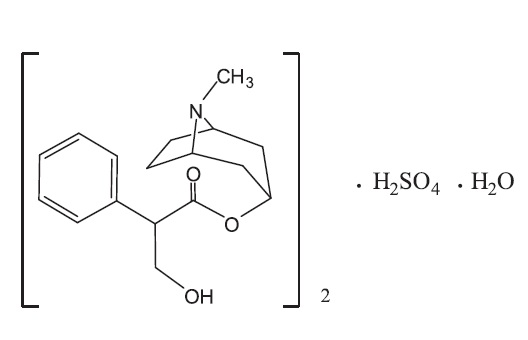
Atropine Sulfate Ophthalmic Ointment, 1% is a sterile topical anticholinergic for ophthalmic use. The active ingredient is represented by the chemical structural formula: (C 17 H 23 NO 3 ) 2 •H 2 SO 4 •H 2 O Mol. Wt. 694.83 Chemical Name: Benzeneacetic acid, α-(hydroxymethyl)-, 8-methyl-8-azabicyclo-[3.2.1]oct-3-yl ester, endo -(±)-, sulfate (2:1) (salt), monohydrate. Each gram contains: ACTIVE: Atropine Sulfate, 1% (10 mg); INACTIVES: Lanolin oil, mineral oil, purified water, and white petrolatum.
Medication Information
Warnings
In pediatric patients, use with extreme caution. Excessive use in pediatric patients or in certain individuals with a previous history of susceptibility to belladonna alkaloids may produce systemic symptoms of atropine poisoning. If this occurs, discontinue medication and use appropriate therapy as outlined in OVERDOSAGE.
Indications and Usage
For mydriasis and/or cycloplegia. For cycloplegic refraction, for pupillary dilation desired in inflammatory conditions of the iris and uveal tract.
Dosage and Administration
Apply a small amount of ointment to the conjunctival sac once or twice a day, or as directed by a physician.
FOR OPHTHALMIC USE ONLY
Contraindications
This product should not be used in patients with primary glaucoma or a predisposition to narrow anterior chamber angle glaucoma.
This product should not be used in pediatric patients who have previously had a severe systemic reaction to atropine. This product should not be used in those persons showing hypersensitivity to any component of this preparation.
Adverse Reactions
Prolonged use may produce local irritation characterized by follicular conjunctivitis, vascular congestion, edema, exudate, and an eczematoid dermatitis. Severe reactions are manifested by hypotension with progressive respiratory depression. Coma and death have been reported in the very young.
To report SUSPECTED ADVERSE REACTIONS, contact Bausch & Lomb Incorporated at 1-800-321-4576 or FDA at 1-800-FDA-1088 or www.fda.gov/medwatch.
How Supplied
Atropine Sulfate Ophthalmic Ointment, 1% is supplied in an ophthalmic tip applicator tube in the following size:
3.5 g tubes - NDC 24208-825-55
Description
Atropine Sulfate Ophthalmic Ointment, 1% is a sterile topical anticholinergic for ophthalmic use. The active ingredient is represented by the chemical structural formula: (C 17 H 23 NO 3 ) 2 •H 2 SO 4 •H 2 O Mol. Wt. 694.83 Chemical Name: Benzeneacetic acid, α-(hydroxymethyl)-, 8-methyl-8-azabicyclo-[3.2.1]oct-3-yl ester, endo -(±)-, sulfate (2:1) (salt), monohydrate. Each gram contains: ACTIVE: Atropine Sulfate, 1% (10 mg); INACTIVES: Lanolin oil, mineral oil, purified water, and white petrolatum.
Storage:
Store between 15° to 25°C (59° to 77°F).
Keep out of reach of children.
Distributed by:
Bausch + Lomb, a division of Bausch Health US, LLC
Bridgewater, NJ 08807 USA
Manufactured by:
Bausch & Lomb Incorporated, Tampa, FL 33637 USA
© 2020 Bausch & Lomb Incorporated or its affiliates
Rev. 04/2020
9115203 (Folded)
9115303 (Flat)
Overdosage
Systemic atropine toxicity is manifested by flushing and dryness of the skin (a rash may be present in pediatric patients), blurred vision, a rapid and irregular pulse, fever, abdominal distension in infants, mental aberration (hallucinosis) and loss of neuromuscular coordination.
Atropine poisoning, although distressing, is rarely fatal, even with large doses of atropine, and is self-limited if the cause is recognized and the atropine medication is discontinued. In severe intoxication, physostigmine salicylate may be administered parenterally to provide more prompt relief of the intoxication. Give physostigmine salicylate as 1-5 mL IV of dilution containing 1 mg in 5 mL of saline. The smaller dose is for pediatric patients, and injection should take not less than 2 minutes. EKG control is advisable. Dosage can be repeated every 5 minutes up to a total dose of 2 mg in pediatric patients and 6 mg in adults every 30 minutes. Physostigmine is contraindicated in hypotensive reactions. Atropine (1 mg) should be available for immediate injection if physostigmine causes bradycardia, convulsions or bronchoconstriction. In pediatric patients, the body surface must be kept moist.
Use extreme caution when employing short-acting barbiturates to control excitement.
Precautions
To avoid excessive systemic absorption, the lacrimal sac should be compressed by digital pressure for two to three minutes after instillation. To avoid inducing angle closure glaucoma, an estimation of the depth of the angle of the anterior chamber should be made. Administration of atropine in infants requires great caution.
Description:
Atropine Sulfate Ophthalmic Ointment, 1% is a sterile topical anticholinergic for ophthalmic use. The active ingredient is represented by the chemical structural formula:
(C17H23NO3)2•H2SO4•H2O
Mol. Wt. 694.83
Chemical Name:
Benzeneacetic acid, α-(hydroxymethyl)-, 8-methyl-8-azabicyclo-[3.2.1]oct-3-yl ester, endo-(±)-, sulfate (2:1) (salt), monohydrate.
Each gram contains:
ACTIVE: Atropine Sulfate, 1% (10 mg); INACTIVES: Lanolin oil, mineral oil, purified water, and white petrolatum.
Pediatric Use:
See CONTRAINDICATIONS and WARNINGS.
Patient Warning:
Patients should be advised not to drive or engage in other hazardous activities while pupils are dilated. Patients may experience sensitivity to light and should protect eyes in bright illumination during dilation.
Parents should be warned not to get this preparation in their children’s mouth and to wash their own hands and the child’s hands following administration.
Chemical Pharmacology
The anticholinergic effect of this product blocks the responses of the sphincter muscle of the iris and the accommodative muscle of the ciliary body to cholinergic stimulation, producing pupillary dilation (mydriasis) and paralysis of accommodation (cycloplegia).
Package/label Principal Display Panel
NDC 24208-825-55
Atropine
Sulfate
Ophthalmic
Ointment, 1%
(Sterile)
FOR OPHTALMIC USE ONLY
Rx only
Net. Wt. 1/8 oz. (3.5g)
BAUSCH + LOMB
Carcinogenesis, Mutagenesis, Impairment of Fertility:
No studies have been conducted in animals or in humans to evaluate the potential of these effects.
Animal reproduction studies have not been performed with atropine. It is also not known whether atropine can cause fetal harm when administered to a pregnant woman or can affect reproduction capacity. Atropine should be given to pregnant women only if clearly needed.
Structured Label Content
Warnings (WARNINGS)
In pediatric patients, use with extreme caution. Excessive use in pediatric patients or in certain individuals with a previous history of susceptibility to belladonna alkaloids may produce systemic symptoms of atropine poisoning. If this occurs, discontinue medication and use appropriate therapy as outlined in OVERDOSAGE.
Indications and Usage (INDICATIONS AND USAGE)
For mydriasis and/or cycloplegia. For cycloplegic refraction, for pupillary dilation desired in inflammatory conditions of the iris and uveal tract.
Dosage and Administration (DOSAGE AND ADMINISTRATION)
Apply a small amount of ointment to the conjunctival sac once or twice a day, or as directed by a physician.
FOR OPHTHALMIC USE ONLY
Contraindications (CONTRAINDICATIONS)
This product should not be used in patients with primary glaucoma or a predisposition to narrow anterior chamber angle glaucoma.
This product should not be used in pediatric patients who have previously had a severe systemic reaction to atropine. This product should not be used in those persons showing hypersensitivity to any component of this preparation.
Adverse Reactions (ADVERSE REACTIONS)
Prolonged use may produce local irritation characterized by follicular conjunctivitis, vascular congestion, edema, exudate, and an eczematoid dermatitis. Severe reactions are manifested by hypotension with progressive respiratory depression. Coma and death have been reported in the very young.
To report SUSPECTED ADVERSE REACTIONS, contact Bausch & Lomb Incorporated at 1-800-321-4576 or FDA at 1-800-FDA-1088 or www.fda.gov/medwatch.
How Supplied (HOW SUPPLIED)
Atropine Sulfate Ophthalmic Ointment, 1% is supplied in an ophthalmic tip applicator tube in the following size:
3.5 g tubes - NDC 24208-825-55
Storage: (STORAGE:)
Store between 15° to 25°C (59° to 77°F).
Keep out of reach of children.
Distributed by:
Bausch + Lomb, a division of Bausch Health US, LLC
Bridgewater, NJ 08807 USA
Manufactured by:
Bausch & Lomb Incorporated, Tampa, FL 33637 USA
© 2020 Bausch & Lomb Incorporated or its affiliates
Rev. 04/2020
9115203 (Folded)
9115303 (Flat)
Overdosage (OVERDOSAGE)
Systemic atropine toxicity is manifested by flushing and dryness of the skin (a rash may be present in pediatric patients), blurred vision, a rapid and irregular pulse, fever, abdominal distension in infants, mental aberration (hallucinosis) and loss of neuromuscular coordination.
Atropine poisoning, although distressing, is rarely fatal, even with large doses of atropine, and is self-limited if the cause is recognized and the atropine medication is discontinued. In severe intoxication, physostigmine salicylate may be administered parenterally to provide more prompt relief of the intoxication. Give physostigmine salicylate as 1-5 mL IV of dilution containing 1 mg in 5 mL of saline. The smaller dose is for pediatric patients, and injection should take not less than 2 minutes. EKG control is advisable. Dosage can be repeated every 5 minutes up to a total dose of 2 mg in pediatric patients and 6 mg in adults every 30 minutes. Physostigmine is contraindicated in hypotensive reactions. Atropine (1 mg) should be available for immediate injection if physostigmine causes bradycardia, convulsions or bronchoconstriction. In pediatric patients, the body surface must be kept moist.
Use extreme caution when employing short-acting barbiturates to control excitement.
Precautions (PRECAUTIONS)
To avoid excessive systemic absorption, the lacrimal sac should be compressed by digital pressure for two to three minutes after instillation. To avoid inducing angle closure glaucoma, an estimation of the depth of the angle of the anterior chamber should be made. Administration of atropine in infants requires great caution.
Description: (DESCRIPTION:)
Atropine Sulfate Ophthalmic Ointment, 1% is a sterile topical anticholinergic for ophthalmic use. The active ingredient is represented by the chemical structural formula:
(C17H23NO3)2•H2SO4•H2O
Mol. Wt. 694.83
Chemical Name:
Benzeneacetic acid, α-(hydroxymethyl)-, 8-methyl-8-azabicyclo-[3.2.1]oct-3-yl ester, endo-(±)-, sulfate (2:1) (salt), monohydrate.
Each gram contains:
ACTIVE: Atropine Sulfate, 1% (10 mg); INACTIVES: Lanolin oil, mineral oil, purified water, and white petrolatum.
Pediatric Use:
See CONTRAINDICATIONS and WARNINGS.
Patient Warning:
Patients should be advised not to drive or engage in other hazardous activities while pupils are dilated. Patients may experience sensitivity to light and should protect eyes in bright illumination during dilation.
Parents should be warned not to get this preparation in their children’s mouth and to wash their own hands and the child’s hands following administration.
Chemical Pharmacology (CHEMICAL PHARMACOLOGY)
The anticholinergic effect of this product blocks the responses of the sphincter muscle of the iris and the accommodative muscle of the ciliary body to cholinergic stimulation, producing pupillary dilation (mydriasis) and paralysis of accommodation (cycloplegia).
Package/label Principal Display Panel (PACKAGE/LABEL PRINCIPAL DISPLAY PANEL)
NDC 24208-825-55
Atropine
Sulfate
Ophthalmic
Ointment, 1%
(Sterile)
FOR OPHTALMIC USE ONLY
Rx only
Net. Wt. 1/8 oz. (3.5g)
BAUSCH + LOMB
Carcinogenesis, Mutagenesis, Impairment of Fertility:
No studies have been conducted in animals or in humans to evaluate the potential of these effects.
Animal reproduction studies have not been performed with atropine. It is also not known whether atropine can cause fetal harm when administered to a pregnant woman or can affect reproduction capacity. Atropine should be given to pregnant women only if clearly needed.
Advanced Ingredient Data
Raw Label Data
All Sections (JSON)
Additional Information
Back to search View SPL set listing Open on DailyMed ↗
Source: dailymed · Ingested: 2026-02-15T11:39:42.282742 · Updated: 2026-03-14T21:58:55.917732