norethindrone tablets usp
bbd54f1e-2d48-4efa-a57e-7fa7b478c457
34391-3
HUMAN PRESCRIPTION DRUG LABEL
Drug Facts
Composition & Product
Identifiers & Packaging
Indications and Usage
1. Indications Progestin-only oral contraceptives are indicated for the prevention of pregnancy. 2. Efficacy If used perfectly, the first-year failure rate for progestin-only oral contraceptives is 0.5%. However, the typical failure rate is estimated to be closer to 5%, due to late or omitted pills. The following table lists the pregnancy rates for users of all major methods of contraception. Table 2. Percentage of Women Experiencing an Unintended Pregnancy During the First Year of Typical Use and the First Year of Perfect Use of Contraception and the Percentage Continuing Use at the End of the First Year. United States. % of Women Experiencing an Unintended Pregnancy within the First Year of Use % of Women Continuing Use at One Year 3 1 Among typical couples who initiate use of a method (not necessarily for the first time), the percentage who experience an accidental pregnancy during the first year if they do not stop use for any reason. 2 Among couples who initiate use of a method (not necessarily for the first time), and who use it perfectly (both consistently and correctly), the percentage who experience an accidental pregnancy during the first year if they do not stop use for any other reason. 3 Among couples attempting to avoid pregnancy, the percentage who continue to use a method for one year. 4 The percentage of women becoming pregnant noted in columns (2) and (3) are based on data from populations where contraception is not used and from women who cease using contraception in order to become pregnant. Among such populations, about 89% become pregnant within one year. This estimate was lowered slightly (to 85%) to represent the percentage that would become pregnant within one year among women now relying on reversible methods of contraception if they abandoned contraception altogether. 5 Foams, creams, gels, vaginal suppositories, and vaginal film. 6 Cervical mucus (ovulation) method supplemented by calendar in the pre-ovulatory and basal body temperature in the post-ovulatory phases. 7 With spermicidal cream or jelly. 8 Without spermicides. 9 The treatment schedule is one dose within 72 hours after unprotected intercourse, and a second dose 12 hours after the first dose. The Food and Drug Administration has declared the following brands of oral contraceptives to be safe and effective for emergency contraception: Ovral ® (1 dose is 2 white pills), Alesse ® (1 dose is 5 pink pills), Nordette ® or Levlen ® (1 dose is 4 yellow pills). 10 However, to maintain effective protection against pregnancy, another method of contraception must be used as soon as menstruation resumes, the frequency or duration of breastfeeds is reduced, bottle feeds are introduced, or the baby reaches 6 months of age. Method Typical Use 1 Perfect Use 2 (1) (2) (3) (4) Chance 4 85 85 Spermicides 5 26 6 40 Periodic abstinence 25 63 Calendar 9 Ovulation Method 3 Sympto-Thermal 6 2 Post-Ovulation 1 Cap 7 Parous Women 40 26 42 Nulliparous Women 20 9 56 Sponge Parous Women 40 20 42 Nulliparous Women 20 9 56 Diaphragm 7 20 6 56 Withdrawal 19 4 Condom 8 Female (Reality) 21 5 56 Male 14 3 61 Pill 5 71 Progestin only 0.5 Combined 0.1 IUDs Progesterone T 2.0 1.5 81 Copper T380A 0.8 0.6 78 LNg 20 0.1 0.1 81 Depo-Provera ® 0.3 0.3 70 Levonorgestrel Implants (Norplant ® ) 0.05 0.05 88 Female Sterilization 0.5 0.5 100 Male Sterilization 0.15 0.10 100 Emergency Contraceptive Pills: Treatment initiated within 72 hours after unprotected intercourse reduces the risk of pregnancy by at least 75%. 9 Lactational Amenorrhea Method: LAM is a highly effective, temporary method of contraception. 10 Source : Trussell, J, Contraceptive Efficacy. In: Hatcher RA, Trussell J, Stewart F, Cates W, Stewart GK, Kowal D, Guest F, Contraceptive Technology: Seventeenth Revised Edition. New York, NY: Irvington Publishers, 1998.
Dosage and Administration
To achieve maximum contraceptive effectiveness, norethindrone tablets must be taken exactly as directed. One tablet is taken every day, at the same time. Administration is continuous, with no interruption between pill packs. See PATIENT LABELING for detailed instructions.
Contraindications
Progestin-only oral contraceptives (POPs) should not be used by women who currently have the following conditions: • Known or suspected pregnancy • Known or suspected carcinoma of the breast • Undiagnosed abnormal genital bleeding • Hypersensitivity to any component of this product • Benign or malignant liver tumors • Acute liver disease
Adverse Reactions
• Menstrual irregularity is the most frequently reported side effect. • Frequent and irregular bleeding are common, while long duration of bleeding episodes and amenorrhea are less likely. • Headache, breast tenderness, nausea, and dizziness are increased among progestin-only oral contraceptive users in some studies. • Androgenic side effects such as acne, hirsutism, and weight gain occur rarely.
How Supplied
Norethindrone Tablets USP containing 0.35 mg of norethindrone, are yellow coloured, round flat face beveled edge tablets debossed with "LU" on one side and "J22" on the other side. Norethindrone Tablets USP are available in 28-tablet wallets. One such wallet is packed in a bag. They are supplied as follows: NDC 82804-175-28 28 tablets blister strips STORAGE Store at 25°C (77°F); excursions permitted to 15° to 30°C (59° to 86°F) [see USP Controlled Room Temperature].
Description
0.35 mg Rx only Patients should be counseled that oral contraceptives do not protect against transmission of HIV (AIDS) and other sexually transmitted diseases (STDs) such as chlamydia, genital herpes, genital warts, gonorrhea, hepatitis B, and syphilis.
Medication Information
Recent Major Changes
Cigarette smoking greatly increases the possibility of suffering heart attacks and strokes. Women who use oral contraceptives are strongly advised not to smoke.
Indications and Usage
1. Indications
Progestin-only oral contraceptives are indicated for the prevention of pregnancy.
2. Efficacy
If used perfectly, the first-year failure rate for progestin-only oral contraceptives is 0.5%. However, the typical failure rate is estimated to be closer to 5%, due to late or omitted pills. The following table lists the pregnancy rates for users of all major methods of contraception.
|
% of Women
Experiencing an Unintended Pregnancy within the First Year of Use |
% of Women
Continuing Use at One Year3 |
||
|---|---|---|---|
|
1Among typical couples who initiate use of a method (not necessarily for the first time), the percentage who experience an accidental pregnancy during the first year if they do not stop use for any reason. |
|||
|
2Among couples who initiate use of a method (not necessarily for the first time), and who use it perfectly (both consistently and correctly), the percentage who experience an accidental pregnancy during the first year if they do not stop use for any other reason. |
|||
|
3Among couples attempting to avoid pregnancy, the percentage who continue to use a method for one year. |
|||
|
4The percentage of women becoming pregnant noted in columns (2) and (3) are based on data from populations where contraception is not used and from women who cease using contraception in order to become pregnant. Among such populations, about 89% become pregnant within one year. This estimate was lowered slightly (to 85%) to represent the percentage that would become pregnant within one year among women now relying on reversible methods of contraception if they abandoned contraception altogether. |
|||
|
5Foams, creams, gels, vaginal suppositories, and vaginal film. |
|||
|
6Cervical mucus (ovulation) method supplemented by calendar in the pre-ovulatory and basal body temperature in the post-ovulatory phases. |
|||
|
7With spermicidal cream or jelly. |
|||
|
8Without spermicides. |
|||
|
9The treatment schedule is one dose within 72 hours after unprotected intercourse, and a second dose 12 hours after the first dose. The Food and Drug Administration has declared the following brands of oral contraceptives to be safe and effective for emergency contraception: Ovral® (1 dose is 2 white pills), Alesse® (1 dose is 5 pink pills), Nordette® or Levlen® (1 dose is 4 yellow pills). |
|||
|
10However, to maintain effective protection against pregnancy, another method of contraception must be used as soon as menstruation resumes, the frequency or duration of breastfeeds is reduced, bottle feeds are introduced, or the baby reaches 6 months of age. |
|||
|
Method
|
Typical Use1
|
Perfect Use2
|
|
|
(1)
|
(2)
|
(3)
|
(4)
|
|
Chance4
|
85 |
85 |
|
|
Spermicides5
|
26 |
6 |
40 |
|
Periodic abstinence |
25 |
63 |
|
|
Calendar |
9 |
||
|
Ovulation Method |
3 |
||
|
Sympto-Thermal6
|
2 |
||
|
Post-Ovulation |
1 |
||
|
Cap7
|
|||
|
Parous Women |
40 |
26 |
42 |
|
Nulliparous Women |
20 |
9 |
56 |
|
Sponge |
|||
|
Parous Women |
40 |
20 |
42 |
|
Nulliparous Women |
20 |
9 |
56 |
|
Diaphragm7
|
20 |
6 |
56 |
|
Withdrawal |
19 |
4 |
|
|
Condom8
|
|||
|
Female (Reality) |
21 |
5 |
56 |
|
Male |
14 |
3 |
61 |
|
Pill |
5 |
71 |
|
|
Progestin only |
0.5 |
||
|
Combined |
0.1 |
||
|
IUDs |
|||
|
Progesterone T |
2.0 |
1.5 |
81 |
|
Copper T380A |
0.8 |
0.6 |
78 |
|
LNg 20 |
0.1 |
0.1 |
81 |
|
Depo-Provera®
|
0.3 |
0.3 |
70 |
|
Levonorgestrel Implants (Norplant®) |
0.05 |
0.05 |
88 |
|
Female Sterilization |
0.5 |
0.5 |
100 |
|
Male Sterilization |
0.15 |
0.10 |
100 |
|
Emergency Contraceptive Pills: Treatment initiated within 72 hours after unprotected intercourse |
Dosage and Administration
To achieve maximum contraceptive effectiveness, norethindrone tablets must be taken exactly as directed. One tablet is taken every day, at the same time. Administration is continuous, with no interruption between pill packs. See PATIENT LABELING for detailed instructions.
Contraindications
Progestin-only oral contraceptives (POPs) should not be used by women who currently have the following conditions:
-
•Known or suspected pregnancy
-
•Known or suspected carcinoma of the breast
-
•Undiagnosed abnormal genital bleeding
-
•Hypersensitivity to any component of this product
-
•Benign or malignant liver tumors
-
•Acute liver disease
Adverse Reactions
-
•Menstrual irregularity is the most frequently reported side effect.
-
•Frequent and irregular bleeding are common, while long duration of bleeding episodes and amenorrhea are less likely.
-
•Headache, breast tenderness, nausea, and dizziness are increased among progestin-only oral contraceptive users in some studies.
-
•Androgenic side effects such as acne, hirsutism, and weight gain occur rarely.
How Supplied
Norethindrone Tablets USP containing 0.35 mg of norethindrone, are yellow coloured, round flat face beveled edge tablets debossed with "LU" on one side and "J22" on the other side.
Norethindrone Tablets USP are available in 28-tablet wallets. One such wallet is packed in a bag.
They are supplied as follows:
NDC 82804-175-28 28 tablets blister strips
STORAGE
Store at 25°C (77°F); excursions permitted to 15° to 30°C (59° to 86°F) [see USP Controlled Room Temperature].
Description
Each yellow norethindrone tablet USP provides a continuous oral contraceptive regimen of 0.35 mg norethindrone daily, and the inactive ingredients include D&C Yellow No. 10, FD&C Yellow No. 6, lactose anhydrous, lactose monohydrate, corn starch, povidone and magnesium stearate.
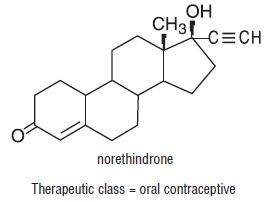
The chemical name for norethindrone is 17-Hydroxy-19-Nor-17α-pregn-4-en-20-yn-3-one. The structural formula follows:
Principal Display Panel
Norethindrone Tablets USP
0.35 mg
Rx Only
NDC 82804-175-28
Bag Label: 1 Wallet, 28 Tablets Each
28 Day Regimen
www.birthcontrolhealth.com
Section 42229-5
0.35 mg
Rx only
Patients should be counseled that oral contraceptives do not protect against transmission of HIV (AIDS) and other sexually transmitted diseases (STDs) such as chlamydia, genital herpes, genital warts, gonorrhea, hepatitis B, and syphilis.
Overdosage
There have been no reports of serious ill effects from overdosage, including ingestion by children.
Precautions
1. General
Patients should be counseled that oral contraceptives do not protect against transmission of HIV (AIDS) and other sexually transmitted diseases (STDs) such as chlamydia, genital herpes, genital warts, gonorrhea, hepatitis B, and syphilis.
2. Physical examination and follow-up
It is considered good medical practice for sexually active women using oral contraceptives to have annual history and physical examinations. The physical examination may be deferred until after initiation of oral contraceptives if requested by the woman and judged appropriate by the clinician.
3. Carbohydrate and lipid metabolism
Some users may experience slight deterioration in glucose tolerance, with increases in plasma insulin, but women with diabetes mellitus who use progestin-only oral contraceptives do not generally experience changes in their insulin requirements. Nonetheless, prediabetic and diabetic women in particular should be carefully monitored while taking POPs.
Lipid metabolism is occasionally affected in that HDL, HDL2, and apolipoprotein A-I and A-II may be decreased; hepatic lipase may be increased. There is no effect on total cholesterol, HDL3, LDL, or VLDL.
4. Drug Interactions
Change in contraceptive effectiveness associated with co-administration of other products:
a. Anti-infective agents and anticonvulsants.
Contraceptive effectiveness may be reduced when hormonal contraceptives are co-administered with antibiotics, anticonvulsants, and other drugs that increase the metabolism of contraceptive steroids. This could result in unintended pregnancy or breakthrough bleeding. Examples include rifampin, barbiturates, phenylbutazone, phenytoin, carbamazepine, felbamate, oxcarbazepine, topiramate, and griseofulvin.
b. Anti-HIV protease inhibitors.
Several of the anti-HIV protease inhibitors have been studied with co-administration of oral contraceptives; significant changes (increase and decrease) in the plasma levels of the estrogen and progestin have been noted in some cases. The safety and efficacy of OC products may be affected with the co-administration of anti-HIV protease inhibitors. Health care providers should refer to the label of the individual anti-HIV protease inhibitors for further drug-drug interaction information.
c. Herbal products.
Herbal products containing St. John's Wort (hypericum perforatum) may induce hepatic enzymes (cytochrome P450) and p-glycoprotein transporter and may reduce the effectiveness of contraceptive steroids. This may also result in breakthrough bleeding.
5. Interactions with laboratory tests
The following endocrine tests may be affected by progestin-only oral contraceptive use:
-
•Sex hormone-binding globulin (SHBG) concentrations may be decreased.
-
•Thyroxine concentrations may be decreased, due to a decrease in thyroid binding globulin (TBG).
6. Carcinogenesis
See WARNINGS section.
7. Pregnancy
Many studies have found no effects on fetal development associated with long-term use of contraceptive doses of oral progestins. The few studies of infant growth and development that have been conducted have not demonstrated significant adverse effects. It is nonetheless prudent to rule out suspected pregnancy before initiating any hormonal contraceptive use.
8. Nursing Mothers
Small amounts of progestin pass into the breast milk, resulting in steroid levels in infant plasma of 1-6% of the levels of maternal plasma.6 However, isolated post-market cases of decreased milk production have been reported in POPs. Very rarely, adverse effects in the infant/child have been reported, including jaundice.
9. Fertility following discontinuation
The limited available data indicate a rapid return of normal ovulation and fertility following discontinuation of progestin-only oral contraceptives.
10. Headache/Migraine
If you have a headache or a worsening migraine headache with a new pattern that is recurrent, persistent, or severe, this requires discontinuation of oral contraceptives and evaluation of the cause.
11. Gastrointestinal
Diarrhea and/or vomiting may reduce hormone absorption resulting in decreased serum concentrations.
12. Pediatric Use
Safety and efficacy of norethindrone tablets have been established in women of reproductive age. Safety and efficacy are expected to be the same for postpubertal adolescents under the age of 16 and for users 16 years and older. Use of this product before menarche is not indicated.
Clinical Pharmacology
1. Mode of Action
Norethindrone tablets progestin-only oral contraceptives prevent conception by suppressing ovulation in approximately half of users, thickening the cervical mucus to inhibit sperm penetration, lowering the mid-cycle LH and FSH peaks, slowing the movement of the ovum through the fallopian tubes, and altering the endometrium.
2. Pharmacokinetics
Absorption
Norethindrone is rapidly absorbed with maximum plasma concentrations occurring within 1 to 2 hours after norethindrone tablet administration (see Table 1). Norethindrone appears to be completely absorbed following oral administration; however, it is subject to first pass metabolism resulting in an absolute bioavailability of approximately 65%.
Figure 1: Mean ± SD Norethindrone Plasma Concentrations Following Norethindrone Tablets Administration.
Peak plasma concentrations occur approximately 1 hour after administration (mean Tmax 1.2 hours). The mean (SD) Cmax was 4816.8 (1532.6) pg/mL and generally occurred within 1 hour (mean) of tablet administration, ranging from 0.5 to 2 hours. The mean (SD) Cavg was 885 (250) pg/mL, however, the mean concentration at 24 hrs was 130 (47) pg/mL.
Table 1 provides summary statistics of the pharmacokinetic parameters associated with single dose norethindrone tablets administration.
|
Pharmacokinetic Parameter
|
Norethindrone 0.35 mg
|
|---|---|
|
Tmax (hr) |
1.2 ± 0.5 |
|
Cmax (pg/mL) |
4817 ± 1533 |
|
AUC(0-48) (pg.h/mL) |
21233 ± 6002 |
|
t1/2 (h) |
7.7 ± 0.5 |
The food effect on the rate and extent of norethindrone absorption after norethindrone tablet administration has not been evaluated.
Distribution
Following oral administration, norethindrone is 36% bound to sex hormone-binding globulin (SHBG) and 61% bound to albumin. Volume of distribution of norethindrone is approximately 4 L/kg.
Metabolism
Norethindrone undergoes extensive biotransformation, primarily via reduction, followed by sulfate and glucuronide conjugation; less than 5% of a norethindrone dose is excreted unchanged; greater than 50% and 20-40% of a dose is excreted in urine and feces, respectively. The majority of metabolites in the circulation are sulfate, with glucuronides accounting for most of the urinary metabolites.
Excretion
Plasma clearance rate for norethindrone has been estimated to be approximately 600 L/day. Norethindrone is excreted in both urine and feces, primarily as metabolites. The mean terminal elimination half-life of norethindrone following single dose administration of norethindrone tablet is approximately 8 hours.
Structured Label Content
Recent Major Changes (34066-1)
Cigarette smoking greatly increases the possibility of suffering heart attacks and strokes. Women who use oral contraceptives are strongly advised not to smoke.
Indications and Usage (INDICATIONS AND USAGE)
1. Indications
Progestin-only oral contraceptives are indicated for the prevention of pregnancy.
2. Efficacy
If used perfectly, the first-year failure rate for progestin-only oral contraceptives is 0.5%. However, the typical failure rate is estimated to be closer to 5%, due to late or omitted pills. The following table lists the pregnancy rates for users of all major methods of contraception.
|
% of Women
Experiencing an Unintended Pregnancy within the First Year of Use |
% of Women
Continuing Use at One Year3 |
||
|---|---|---|---|
|
1Among typical couples who initiate use of a method (not necessarily for the first time), the percentage who experience an accidental pregnancy during the first year if they do not stop use for any reason. |
|||
|
2Among couples who initiate use of a method (not necessarily for the first time), and who use it perfectly (both consistently and correctly), the percentage who experience an accidental pregnancy during the first year if they do not stop use for any other reason. |
|||
|
3Among couples attempting to avoid pregnancy, the percentage who continue to use a method for one year. |
|||
|
4The percentage of women becoming pregnant noted in columns (2) and (3) are based on data from populations where contraception is not used and from women who cease using contraception in order to become pregnant. Among such populations, about 89% become pregnant within one year. This estimate was lowered slightly (to 85%) to represent the percentage that would become pregnant within one year among women now relying on reversible methods of contraception if they abandoned contraception altogether. |
|||
|
5Foams, creams, gels, vaginal suppositories, and vaginal film. |
|||
|
6Cervical mucus (ovulation) method supplemented by calendar in the pre-ovulatory and basal body temperature in the post-ovulatory phases. |
|||
|
7With spermicidal cream or jelly. |
|||
|
8Without spermicides. |
|||
|
9The treatment schedule is one dose within 72 hours after unprotected intercourse, and a second dose 12 hours after the first dose. The Food and Drug Administration has declared the following brands of oral contraceptives to be safe and effective for emergency contraception: Ovral® (1 dose is 2 white pills), Alesse® (1 dose is 5 pink pills), Nordette® or Levlen® (1 dose is 4 yellow pills). |
|||
|
10However, to maintain effective protection against pregnancy, another method of contraception must be used as soon as menstruation resumes, the frequency or duration of breastfeeds is reduced, bottle feeds are introduced, or the baby reaches 6 months of age. |
|||
|
Method
|
Typical Use1
|
Perfect Use2
|
|
|
(1)
|
(2)
|
(3)
|
(4)
|
|
Chance4
|
85 |
85 |
|
|
Spermicides5
|
26 |
6 |
40 |
|
Periodic abstinence |
25 |
63 |
|
|
Calendar |
9 |
||
|
Ovulation Method |
3 |
||
|
Sympto-Thermal6
|
2 |
||
|
Post-Ovulation |
1 |
||
|
Cap7
|
|||
|
Parous Women |
40 |
26 |
42 |
|
Nulliparous Women |
20 |
9 |
56 |
|
Sponge |
|||
|
Parous Women |
40 |
20 |
42 |
|
Nulliparous Women |
20 |
9 |
56 |
|
Diaphragm7
|
20 |
6 |
56 |
|
Withdrawal |
19 |
4 |
|
|
Condom8
|
|||
|
Female (Reality) |
21 |
5 |
56 |
|
Male |
14 |
3 |
61 |
|
Pill |
5 |
71 |
|
|
Progestin only |
0.5 |
||
|
Combined |
0.1 |
||
|
IUDs |
|||
|
Progesterone T |
2.0 |
1.5 |
81 |
|
Copper T380A |
0.8 |
0.6 |
78 |
|
LNg 20 |
0.1 |
0.1 |
81 |
|
Depo-Provera®
|
0.3 |
0.3 |
70 |
|
Levonorgestrel Implants (Norplant®) |
0.05 |
0.05 |
88 |
|
Female Sterilization |
0.5 |
0.5 |
100 |
|
Male Sterilization |
0.15 |
0.10 |
100 |
|
Emergency Contraceptive Pills: Treatment initiated within 72 hours after unprotected intercourse |
Dosage and Administration (DOSAGE AND ADMINISTRATION)
To achieve maximum contraceptive effectiveness, norethindrone tablets must be taken exactly as directed. One tablet is taken every day, at the same time. Administration is continuous, with no interruption between pill packs. See PATIENT LABELING for detailed instructions.
Contraindications (CONTRAINDICATIONS)
Progestin-only oral contraceptives (POPs) should not be used by women who currently have the following conditions:
-
•Known or suspected pregnancy
-
•Known or suspected carcinoma of the breast
-
•Undiagnosed abnormal genital bleeding
-
•Hypersensitivity to any component of this product
-
•Benign or malignant liver tumors
-
•Acute liver disease
Adverse Reactions (ADVERSE REACTIONS)
-
•Menstrual irregularity is the most frequently reported side effect.
-
•Frequent and irregular bleeding are common, while long duration of bleeding episodes and amenorrhea are less likely.
-
•Headache, breast tenderness, nausea, and dizziness are increased among progestin-only oral contraceptive users in some studies.
-
•Androgenic side effects such as acne, hirsutism, and weight gain occur rarely.
How Supplied (HOW SUPPLIED)
Norethindrone Tablets USP containing 0.35 mg of norethindrone, are yellow coloured, round flat face beveled edge tablets debossed with "LU" on one side and "J22" on the other side.
Norethindrone Tablets USP are available in 28-tablet wallets. One such wallet is packed in a bag.
They are supplied as follows:
NDC 82804-175-28 28 tablets blister strips
STORAGE
Store at 25°C (77°F); excursions permitted to 15° to 30°C (59° to 86°F) [see USP Controlled Room Temperature].
Description (DESCRIPTION)
Each yellow norethindrone tablet USP provides a continuous oral contraceptive regimen of 0.35 mg norethindrone daily, and the inactive ingredients include D&C Yellow No. 10, FD&C Yellow No. 6, lactose anhydrous, lactose monohydrate, corn starch, povidone and magnesium stearate.
The chemical name for norethindrone is 17-Hydroxy-19-Nor-17α-pregn-4-en-20-yn-3-one. The structural formula follows:
Principal Display Panel (PRINCIPAL DISPLAY PANEL)
Norethindrone Tablets USP
0.35 mg
Rx Only
NDC 82804-175-28
Bag Label: 1 Wallet, 28 Tablets Each
28 Day Regimen
www.birthcontrolhealth.com
Section 42229-5 (42229-5)
0.35 mg
Rx only
Patients should be counseled that oral contraceptives do not protect against transmission of HIV (AIDS) and other sexually transmitted diseases (STDs) such as chlamydia, genital herpes, genital warts, gonorrhea, hepatitis B, and syphilis.
Overdosage (OVERDOSAGE)
There have been no reports of serious ill effects from overdosage, including ingestion by children.
Precautions (PRECAUTIONS)
1. General
Patients should be counseled that oral contraceptives do not protect against transmission of HIV (AIDS) and other sexually transmitted diseases (STDs) such as chlamydia, genital herpes, genital warts, gonorrhea, hepatitis B, and syphilis.
2. Physical examination and follow-up
It is considered good medical practice for sexually active women using oral contraceptives to have annual history and physical examinations. The physical examination may be deferred until after initiation of oral contraceptives if requested by the woman and judged appropriate by the clinician.
3. Carbohydrate and lipid metabolism
Some users may experience slight deterioration in glucose tolerance, with increases in plasma insulin, but women with diabetes mellitus who use progestin-only oral contraceptives do not generally experience changes in their insulin requirements. Nonetheless, prediabetic and diabetic women in particular should be carefully monitored while taking POPs.
Lipid metabolism is occasionally affected in that HDL, HDL2, and apolipoprotein A-I and A-II may be decreased; hepatic lipase may be increased. There is no effect on total cholesterol, HDL3, LDL, or VLDL.
4. Drug Interactions
Change in contraceptive effectiveness associated with co-administration of other products:
a. Anti-infective agents and anticonvulsants.
Contraceptive effectiveness may be reduced when hormonal contraceptives are co-administered with antibiotics, anticonvulsants, and other drugs that increase the metabolism of contraceptive steroids. This could result in unintended pregnancy or breakthrough bleeding. Examples include rifampin, barbiturates, phenylbutazone, phenytoin, carbamazepine, felbamate, oxcarbazepine, topiramate, and griseofulvin.
b. Anti-HIV protease inhibitors.
Several of the anti-HIV protease inhibitors have been studied with co-administration of oral contraceptives; significant changes (increase and decrease) in the plasma levels of the estrogen and progestin have been noted in some cases. The safety and efficacy of OC products may be affected with the co-administration of anti-HIV protease inhibitors. Health care providers should refer to the label of the individual anti-HIV protease inhibitors for further drug-drug interaction information.
c. Herbal products.
Herbal products containing St. John's Wort (hypericum perforatum) may induce hepatic enzymes (cytochrome P450) and p-glycoprotein transporter and may reduce the effectiveness of contraceptive steroids. This may also result in breakthrough bleeding.
5. Interactions with laboratory tests
The following endocrine tests may be affected by progestin-only oral contraceptive use:
-
•Sex hormone-binding globulin (SHBG) concentrations may be decreased.
-
•Thyroxine concentrations may be decreased, due to a decrease in thyroid binding globulin (TBG).
6. Carcinogenesis
See WARNINGS section.
7. Pregnancy
Many studies have found no effects on fetal development associated with long-term use of contraceptive doses of oral progestins. The few studies of infant growth and development that have been conducted have not demonstrated significant adverse effects. It is nonetheless prudent to rule out suspected pregnancy before initiating any hormonal contraceptive use.
8. Nursing Mothers
Small amounts of progestin pass into the breast milk, resulting in steroid levels in infant plasma of 1-6% of the levels of maternal plasma.6 However, isolated post-market cases of decreased milk production have been reported in POPs. Very rarely, adverse effects in the infant/child have been reported, including jaundice.
9. Fertility following discontinuation
The limited available data indicate a rapid return of normal ovulation and fertility following discontinuation of progestin-only oral contraceptives.
10. Headache/Migraine
If you have a headache or a worsening migraine headache with a new pattern that is recurrent, persistent, or severe, this requires discontinuation of oral contraceptives and evaluation of the cause.
11. Gastrointestinal
Diarrhea and/or vomiting may reduce hormone absorption resulting in decreased serum concentrations.
12. Pediatric Use
Safety and efficacy of norethindrone tablets have been established in women of reproductive age. Safety and efficacy are expected to be the same for postpubertal adolescents under the age of 16 and for users 16 years and older. Use of this product before menarche is not indicated.
Clinical Pharmacology (CLINICAL PHARMACOLOGY)
1. Mode of Action
Norethindrone tablets progestin-only oral contraceptives prevent conception by suppressing ovulation in approximately half of users, thickening the cervical mucus to inhibit sperm penetration, lowering the mid-cycle LH and FSH peaks, slowing the movement of the ovum through the fallopian tubes, and altering the endometrium.
2. Pharmacokinetics
Absorption
Norethindrone is rapidly absorbed with maximum plasma concentrations occurring within 1 to 2 hours after norethindrone tablet administration (see Table 1). Norethindrone appears to be completely absorbed following oral administration; however, it is subject to first pass metabolism resulting in an absolute bioavailability of approximately 65%.
Figure 1: Mean ± SD Norethindrone Plasma Concentrations Following Norethindrone Tablets Administration.
Peak plasma concentrations occur approximately 1 hour after administration (mean Tmax 1.2 hours). The mean (SD) Cmax was 4816.8 (1532.6) pg/mL and generally occurred within 1 hour (mean) of tablet administration, ranging from 0.5 to 2 hours. The mean (SD) Cavg was 885 (250) pg/mL, however, the mean concentration at 24 hrs was 130 (47) pg/mL.
Table 1 provides summary statistics of the pharmacokinetic parameters associated with single dose norethindrone tablets administration.
|
Pharmacokinetic Parameter
|
Norethindrone 0.35 mg
|
|---|---|
|
Tmax (hr) |
1.2 ± 0.5 |
|
Cmax (pg/mL) |
4817 ± 1533 |
|
AUC(0-48) (pg.h/mL) |
21233 ± 6002 |
|
t1/2 (h) |
7.7 ± 0.5 |
The food effect on the rate and extent of norethindrone absorption after norethindrone tablet administration has not been evaluated.
Distribution
Following oral administration, norethindrone is 36% bound to sex hormone-binding globulin (SHBG) and 61% bound to albumin. Volume of distribution of norethindrone is approximately 4 L/kg.
Metabolism
Norethindrone undergoes extensive biotransformation, primarily via reduction, followed by sulfate and glucuronide conjugation; less than 5% of a norethindrone dose is excreted unchanged; greater than 50% and 20-40% of a dose is excreted in urine and feces, respectively. The majority of metabolites in the circulation are sulfate, with glucuronides accounting for most of the urinary metabolites.
Excretion
Plasma clearance rate for norethindrone has been estimated to be approximately 600 L/day. Norethindrone is excreted in both urine and feces, primarily as metabolites. The mean terminal elimination half-life of norethindrone following single dose administration of norethindrone tablet is approximately 8 hours.
Advanced Ingredient Data
Raw Label Data
All Sections (JSON)
Additional Information
Back to search View SPL set listing Open on DailyMed ↗
Source: dailymed · Ingested: 2026-02-15T11:52:26.059830 · Updated: 2026-03-14T22:43:43.392452