These Highlights Do Not Include All The Information Needed To Use Asclera®
bb1f342b-5352-4059-a0b2-e60fd652fd28
34391-3
HUMAN PRESCRIPTION DRUG LABEL
Drug Facts
Composition & Product
Identifiers & Packaging
Indications and Usage
Asclera ® (polidocanol) is indicated to sclerose uncomplicated spider veins (varicose veins ≤1 mm in diameter) and uncomplicated reticular veins (varicose veins 1 to 3 mm in diameter) in the lower extremity. Asclera has not been studied in varicose veins more than 3 mm in diameter.
Dosage and Administration
For intravenous use only. Parenteral drug products should be inspected visually for particulate matter and discoloration prior to administration, whenever solution and container permit. Do not use if particulate matter is seen or if the contents of the vial are discolored or if the vial is damaged in any way. For spider veins (varicose veins ≤1 mm in diameter), use Asclera 0.5%. For reticular veins (varicose veins 1 to 3 mm in diameter), use Asclera 1%. Use 0.1 to 0.3 mL per injection and no more than 10 mL per session. Use a syringe (glass or plastic) with a fine needle (typically, 26- or 30-gauge). Insert the needle tangentially into the vein and inject the solution slowly while the needle is still in the vein. Apply only gentle pressure during injection to prevent vein rupture. After the needle has been removed and the injection site has been covered, apply compression in the form of a stocking or bandage. After the treatment session, encourage the patient to walk for 15 to 20 minutes. Keep the patient under observation to detect any anaphylactic or allergic reaction [see Warnings and Precautions (5.3) ] . Maintain compression for 2 to 3 days after treatment of spider veins and for 5 to 7 days for reticular veins. For extensive varicosities, longer compression treatment with compression bandages or a gradient compression stocking of a higher compression class is recommended. Post-treatment compression is necessary to reduce the risk of deep vein thrombosis. Repeat treatments may be necessary if the extent of the varicose veins requires more than 10 mL. These treatments should be separated by 1 to 2 weeks. Small intravaricose thrombi that develop may be removed by microthrombectomy.
Contraindications
Asclera is contraindicated for patients with known allergy to polidocanol and patients with acute thromboembolic diseases.
Warnings and Precautions
Be prepared to treat anaphylaxis. ( 5.1 ) Venous Thrombosis and Pulmonary Embolism. ( 5.2 ) Arterial Embolism. ( 5.3 ) Tissue ischemia and necrosis: Do not inject intra-arterially. ( 5.4 )
Adverse Reactions
The most common adverse reactions occurring at least 3% more frequently than on placebo are mild local reactions at the site of injection. ( 6 ) To report SUSPECTED ADVERSE REACTIONS, contact Methapharm at 1-866-701-4636 or [email protected] or FDA at 1-800-FDA-1088 or www.fda.gov/medwatch .
Drug Interactions
No drug-drug interactions have been studied with Asclera.
How Supplied
Asclera (polidocanol) injection is a colorless to faintly greenish-yellow solution supplied in single-dose, sterile, preservative free ampules in the following packages: NDC 67850-140-05 Five 0.5 % ampules [10 mg/2 mL (5 mg/mL)] NDC 67850-141-05 Five 1 % ampules [20 mg/2 mL (10 mg/mL)] Each ampule is intended for immediate use in a single patient. Each unopened ampule is stable up to three years.
Storage and Handling
Asclera (polidocanol) injection is a colorless to faintly greenish-yellow solution supplied in single-dose, sterile, preservative free ampules in the following packages: NDC 67850-140-05 Five 0.5 % ampules [10 mg/2 mL (5 mg/mL)] NDC 67850-141-05 Five 1 % ampules [20 mg/2 mL (10 mg/mL)] Each ampule is intended for immediate use in a single patient. Each unopened ampule is stable up to three years.
Description
Asclera ® (polidocanol) is indicated to sclerose uncomplicated spider veins (varicose veins ≤1 mm in diameter) and uncomplicated reticular veins (varicose veins 1 to 3 mm in diameter) in the lower extremity. Asclera has not been studied in varicose veins more than 3 mm in diameter.
Medication Information
Warnings and Precautions
Be prepared to treat anaphylaxis. ( 5.1 ) Venous Thrombosis and Pulmonary Embolism. ( 5.2 ) Arterial Embolism. ( 5.3 ) Tissue ischemia and necrosis: Do not inject intra-arterially. ( 5.4 )
Indications and Usage
Asclera ® (polidocanol) is indicated to sclerose uncomplicated spider veins (varicose veins ≤1 mm in diameter) and uncomplicated reticular veins (varicose veins 1 to 3 mm in diameter) in the lower extremity. Asclera has not been studied in varicose veins more than 3 mm in diameter.
Dosage and Administration
For intravenous use only. Parenteral drug products should be inspected visually for particulate matter and discoloration prior to administration, whenever solution and container permit. Do not use if particulate matter is seen or if the contents of the vial are discolored or if the vial is damaged in any way. For spider veins (varicose veins ≤1 mm in diameter), use Asclera 0.5%. For reticular veins (varicose veins 1 to 3 mm in diameter), use Asclera 1%. Use 0.1 to 0.3 mL per injection and no more than 10 mL per session. Use a syringe (glass or plastic) with a fine needle (typically, 26- or 30-gauge). Insert the needle tangentially into the vein and inject the solution slowly while the needle is still in the vein. Apply only gentle pressure during injection to prevent vein rupture. After the needle has been removed and the injection site has been covered, apply compression in the form of a stocking or bandage. After the treatment session, encourage the patient to walk for 15 to 20 minutes. Keep the patient under observation to detect any anaphylactic or allergic reaction [see Warnings and Precautions (5.3) ] . Maintain compression for 2 to 3 days after treatment of spider veins and for 5 to 7 days for reticular veins. For extensive varicosities, longer compression treatment with compression bandages or a gradient compression stocking of a higher compression class is recommended. Post-treatment compression is necessary to reduce the risk of deep vein thrombosis. Repeat treatments may be necessary if the extent of the varicose veins requires more than 10 mL. These treatments should be separated by 1 to 2 weeks. Small intravaricose thrombi that develop may be removed by microthrombectomy.
Contraindications
Asclera is contraindicated for patients with known allergy to polidocanol and patients with acute thromboembolic diseases.
Adverse Reactions
The most common adverse reactions occurring at least 3% more frequently than on placebo are mild local reactions at the site of injection. ( 6 ) To report SUSPECTED ADVERSE REACTIONS, contact Methapharm at 1-866-701-4636 or [email protected] or FDA at 1-800-FDA-1088 or www.fda.gov/medwatch .
Drug Interactions
No drug-drug interactions have been studied with Asclera.
Storage and Handling
Asclera (polidocanol) injection is a colorless to faintly greenish-yellow solution supplied in single-dose, sterile, preservative free ampules in the following packages: NDC 67850-140-05 Five 0.5 % ampules [10 mg/2 mL (5 mg/mL)] NDC 67850-141-05 Five 1 % ampules [20 mg/2 mL (10 mg/mL)] Each ampule is intended for immediate use in a single patient. Each unopened ampule is stable up to three years.
How Supplied
Asclera (polidocanol) injection is a colorless to faintly greenish-yellow solution supplied in single-dose, sterile, preservative free ampules in the following packages: NDC 67850-140-05 Five 0.5 % ampules [10 mg/2 mL (5 mg/mL)] NDC 67850-141-05 Five 1 % ampules [20 mg/2 mL (10 mg/mL)] Each ampule is intended for immediate use in a single patient. Each unopened ampule is stable up to three years.
Description
Asclera ® (polidocanol) is indicated to sclerose uncomplicated spider veins (varicose veins ≤1 mm in diameter) and uncomplicated reticular veins (varicose veins 1 to 3 mm in diameter) in the lower extremity. Asclera has not been studied in varicose veins more than 3 mm in diameter.
Section 42229-5
Risk Summary
The available data from case reports on use of polidocanol-containing products, including ASCLERA, in pregnant women have not identified any drug-associated risk for major birth defects, miscarriage, or adverse maternal or fetal outcomes. Although none of these risks have been identified, there is minimal benefit in treating uncomplicated spider veins and reticular veins in the lower extremity during pregnancy and lower extremity varicosities that develop during pregnancy as they may spontaneously regress postpartum. The animal reproduction studies were conducted in a manner to achieve systemic exposure, while the intended clinical use is local exposure at the injection site with minimal to no systemic exposure; therefore, these data are not relevant to the intended clinical use (see Data).
The estimated background risk of major birth defects and miscarriage for the indicated population is unknown. All pregnancies have a background risk of birth defect, loss, or other adverse outcomes. In the U.S. general population, the estimated background risk of major birth defects and miscarriage in clinically recognized pregnancies is 2 to 4% and 15 to 20%, respectively.
Section 44425-7
Store at 15°C to 30°C; (59°F to 86°F).
10 Overdosage
Overdose may result in a higher incidence of localized reactions such as necrosis.
11 Description
Asclera is a sterile, nonpyrogenic, and colorless to faintly greenish-yellow solution of polidocanol for intravenous use as a sclerosing agent.
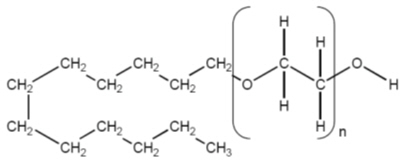
The active ingredient, polidocanol is a non-ionic detergent, consisting of two components, a polar hydrophilic (dodecyl alcohol) and an apolar hydrophobic (polyethylene oxide) chain. Polidocanol has the following structural formula:
C12H25(OCH2CH2)nOH Polyethylene glycol monododecyl ether Mean extent of polymerization (n) : Approximately 9 Mean molecular weight : Approximately 600
Each mL contains 5 mg (0.5%) or 10 mg (1.0%) polidocanol in water for injection with 5% (v/v) ethanol at pH 6.5-8.0; disodium hydrogen phosphate dihydrate (1.2 mg), potassium dihydrogen phosphate (0.43 mg).
5.1 Anaphylaxis
Severe allergic reactions have been reported following polidocanol use, including anaphylactic reactions, some of them fatal. Severe reactions are more frequent with use of larger volumes (> 3 mL). Minimize the dose of polidocanol. Be prepared to treat anaphylaxis appropriately.
Severe adverse local effects, including tissue necrosis, may occur following extravasation; therefore, take care in intravenous needle placement and use the smallest effective volume at each injection.
After the injection session is completed, apply compression with a stocking or bandage, and have the patient walk for 15-20 minutes. Keep the patient under supervision during this period to treat any anaphylactic or allergic reaction [see Dosage and Administration (2)].
8.4 Pediatric Use
The safety and effectiveness of Asclera in pediatric patients have not been established.
8.5 Geriatric Use
Clinical studies of Asclera did not include sufficient numbers of subjects aged 65 and over to determine whether they respond differently from younger subjects.
14 Clinical Studies
Asclera was evaluated in a multicenter, randomized, double-blind, placebo- and comparator-controlled trial (EASI-study) in patients with spider or reticular varicose veins. A total of 338 patients were treated with Asclera [0.5% for spider veins (n=94), 1% for reticular veins (n=86)], sodium tetradecyl sulfate (STS) 1% (n=105), or placebo (0.9% isotonic saline solution) (n=53) for either spider or reticular veins. Patients were predominately female, ranging in age from 19 to 70 years. All of them received an intravenous injection in the first treatment session; repeat injections were given three and six weeks later if the previous injection was evaluated as unsuccessful (defined as 1, 2 or 3 on a 5-point scale, see below). Patients returned at 12 and 26 weeks after the last injection for final assessments.
The primary effectiveness endpoint was improvement of veins judged by a blinded panel. Digital images of the selected treatment area were taken prior to injection, compared with those taken at 12 weeks post-treatment, and rated on a 5-point scale (1 = worse than before, 2 = same as before, 3 = moderate improvement, 4 = good improvement, 5 = complete treatment success); results are shown in Table 2.
| Treatment Group | Polidocanol (n=155) | STS (n=105) | Placebo (n=53) |
|---|---|---|---|
| Digital Photograph Scores at 12 weeks | |||
| Mean ± SD | 4.5 p <0.0001 compared to placebo (Wilcoxon-Mann-Whitney test) ± 0.7 |
4.5± 0.7 | 2.2 ± 0.7 |
| Digital Photograph Scores at 26 weeks | |||
| Mean ± SD | 4.5 ± 0.7 | 4.5± 0.8 | 2.2 ± 0.7 |
The secondary efficacy criterion was the rate of treatment success, pre-defined as a score of 4 or 5 with patients scoring 1, 2, or 3 considered treatment failures; results are shown in Table 3.
| Treatment Success Treatment success: Yes= Grade 4 to 5, No= Grade 1 to 3; derived from median of evaluation;
|
Polidocanol (n=155) | STS (n=105) | Placebo (n=53) |
|---|---|---|---|
| At 12 weeks (Visit 4) | |||
| Yes | 95% p<0.0001 compared to placebo.
|
92% | 8% |
| No | 5% | 8% | 92% |
| Missing | 0.6% | 0% | 0% |
| At 26 weeks (Visit 5) | |||
| Yes | 95% | 91% | 6% |
| No | 5% | 9% | 94% |
At 12 and 26 weeks, patients' judgement of the results was assessed by showing them the digital images of their treatment area taken at baseline and asking them to rate their satisfaction with their treatment using a verbal rating scale (1 = very unsatisfied; 2 = somewhat unsatisfied; 3 = slightly satisfied; 4 = satisfied and 5 = very satisfied); results are shown in Table 4.
| Polidocanol (N=155) | STS (N=105) | Placebo (N=53) | |
|---|---|---|---|
| Patient satisfaction with treatment after 12 weeks (Visit 4) | |||
| Satisfied or very satisfied | 87% p <0.0001 compared to STS and placebo
|
64% | 14% |
| Patient satisfaction with treatment after 26 weeks (Visit 5) | |||
| Satisfied or very satisfied | 84% | 63% | 16% |
4 Contraindications
Asclera is contraindicated for patients with known allergy to polidocanol and patients with acute thromboembolic diseases.
6 Adverse Reactions
The most common adverse reactions occurring at least 3% more frequently than on placebo are mild local reactions at the site of injection. (6)
To report SUSPECTED ADVERSE REACTIONS, contact Methapharm at 1-866-701-4636 or
[email protected] or FDA at 1-800-FDA-1088 or www.fda.gov/medwatch.
7 Drug Interactions
No drug-drug interactions have been studied with Asclera.
12.2 Pharmacodynamics
Polidocanol has a concentration- and volume-dependent damaging effect on the endothelium of blood vessels.
12.3 Pharmacokinetics
During the major effectiveness study (EASI-trial), scheduled blood samples were taken from a sub-group of 22 patients to measure plasma levels of polidocanol after Asclera treatment of spider and reticular veins. Low systemic blood levels of polidocanol were seen in some patients.
The mean t1/2 of polidocanol in 4 patients with evaluable data receiving 4.5 -18.0 mg was 1.5 h.
5.3 Arterial Embolism
Stroke, transient ischemic attack, myocardial infarction, and impaired cardiac function have been reported in close temporal relationship with polidocanol administration. These events may be caused by air embolism when using the product foamed with room air (high nitrogen concentration) or thromboembolism. The safety and efficacy of polidocanol foamed with room air has not been established and its use should be avoided.
1 Indications and Usage
Asclera® (polidocanol) is indicated to sclerose uncomplicated spider veins (varicose veins ≤1 mm in diameter) and uncomplicated reticular veins (varicose veins 1 to 3 mm in diameter) in the lower extremity. Asclera has not been studied in varicose veins more than 3 mm in diameter.
12.1 Mechanism of Action
The active ingredient of Asclera is polidocanol.
Polidocanol is a sclerosing agent that locally damages the endothelium of blood vessels. When injected intravenously, polidocanol induces endothelial damage. Platelets then aggregate at the site of damage and attach to the venous wall. Eventually, a dense network of platelets, cellular debris, and fibrin occludes the vessel. Finally, the occluded vein is replaced with connective fibrous tissue.
5 Warnings and Precautions
2 Dosage and Administration
For intravenous use only. Parenteral drug products should be inspected visually for particulate matter and discoloration prior to administration, whenever solution and container permit. Do not use if particulate matter is seen or if the contents of the vial are discolored or if the vial is damaged in any way.
For spider veins (varicose veins ≤1 mm in diameter), use Asclera 0.5%. For reticular veins (varicose veins 1 to 3 mm in diameter), use Asclera 1%. Use 0.1 to 0.3 mL per injection and no more than 10 mL per session.
Use a syringe (glass or plastic) with a fine needle (typically, 26- or 30-gauge). Insert the needle tangentially into the vein and inject the solution slowly while the needle is still in the vein. Apply only gentle pressure during injection to prevent vein rupture. After the needle has been removed and the injection site has been covered, apply compression in the form of a stocking or bandage. After the treatment session, encourage the patient to walk for 15 to 20 minutes. Keep the patient under observation to detect any anaphylactic or allergic reaction [see Warnings and Precautions (5.3)].
Maintain compression for 2 to 3 days after treatment of spider veins and for 5 to 7 days for reticular veins. For extensive varicosities, longer compression treatment with compression bandages or a gradient compression stocking of a higher compression class is recommended. Post-treatment compression is necessary to reduce the risk of deep vein thrombosis.
Repeat treatments may be necessary if the extent of the varicose veins requires more than 10 mL. These treatments should be separated by 1 to 2 weeks.
Small intravaricose thrombi that develop may be removed by microthrombectomy.
3 Dosage Forms and Strengths
Asclera (polidocanol) is an injection for intravenous use and is available as follows:
• 0.5% [10 mg/2 mL (5 mg/mL)] solution in 2 mL single-dose glass ampule
• 1% [20 mg/2 mL (10 mg/mL)] solution in 2 mL single-dose glass ampule
6.1 Clinical Study Experience
Because clinical trials are conducted under widely varying conditions, adverse reaction rates observed in the clinical trials of a drug cannot be directly compared to rates in the clinical trials of another drug and may not reflect the rates observed in practice.
In 5 controlled randomized clinical trials, Asclera has been administered to 401 patients with small or very small varicose veins (reticular and spider veins) and compared with another sclerosing agent and with placebo. Patients were 18 to 70 years old. The patient population was predominately female and consisted of Caucasian and Asian patients.
Table 1 shows adverse events more common with Asclera or sodium tetradecyl sulfate (STS) 1% than with placebo by at least 3% in the placebo-controlled EASI study [see Clinical Studies (14)]. All of these were injection site reactions and most were mild.
| ASCLERA (180 patients) | STS 1% (105 patients) | Placebo (53 patients) | |
|---|---|---|---|
| Injection site haematoma | 42% | 65% | 19% |
| Injection site irritation | 41% | 73% | 30% |
| Injection site discoloration | 38% | 74% | 4% |
| Injection site pain | 24% | 31% | 9% |
| Injection site pruritus | 19% | 27% | 4% |
| Injection site warmth | 16% | 21% | 6% |
| Neovascularisation | 8% | 20% | 4% |
| Injection site thrombosis | 6% | 1% | 0% |
Ultrasound examinations at one week (±3 days) and 12 weeks (±2 weeks) after treatment did not reveal deep vein thrombosis in any treatment group.
5.4 Tissue Ischemia and Necrosis
Intra-arterial injection or extravasation of polidocanol can cause severe necrosis, ischemia or gangrene. Take care in intravenous needle placement and use the smallest effective volume at each injection site. After the injection session is completed, apply compression with a stocking or bandage and have patients walk for 15-20 minutes. If intra-arterial injection of polidocanol occurs, consult a vascular surgeon immediately.
17 Patient Counseling Information
Advise the patient to wear compression stockings or support hose on the treated legs continuously for 2 to 3 days and for 2 to 3 weeks during the daytime. Compression stockings or support hose should be thigh or knee high depending upon the area treated in order to provide adequate coverage.
Advise the patient to walk for 15 to 20 minutes immediately after the procedure and daily for the next few days.
For two to three days following treatment, advise the patient to avoid heavy exercise, sunbathing, long plane flights, and hot baths or sauna.
Distributed by:
Methapharm, Inc.
Boca Raton, FL 33433
Tel: 1-833-766-8346
www.asclera.com
Manufactured by:
Chemische Fabrik Kreussler & Co. GmbH
65203 Wiesbaden GERMANY
Asclera is a registered trademark of Chemische Fabrik Kreussler & Co. GmbH, 65203 Wiesbaden, GERMANY
16 How Supplied/storage and Handling
Asclera (polidocanol) injection is a colorless to faintly greenish-yellow solution supplied in single-dose, sterile, preservative free ampules in the following packages:
NDC 67850-140-05 Five 0.5 % ampules [10 mg/2 mL (5 mg/mL)]
NDC 67850-141-05 Five 1 % ampules [20 mg/2 mL (10 mg/mL)]
Each ampule is intended for immediate use in a single patient. Each unopened ampule is stable up to three years.
6.2 Post Marketing Safety Experience
The following adverse reactions have been reported during use of polidocanol in world-wide experience. Because these reactions are reported voluntarily from a population of uncertain size and without a control group, it is not possible to estimate their frequency reliably or to establish a causal relationship to drug exposure.
Immune system disorders: Anaphylactic shock, angioedema, urticaria generalized, asthma
Nervous system disorders: Cerebrovascular accident, migraine, paresthesia (local), loss of consciousness, confusional state, dizziness
Cardiac disorders: Cardiac arrest, palpitations
Vascular disorders: Deep vein thrombosis, pulmonary embolism, syncope vasovagal, circulatory collapse, vasculitis
Respiratory, thoracic and mediastinal disorders: Dyspnea
Skin and subcutaneous tissue disorders: Skin hyperpigmentation, dermatitis allergic, hypertrichosis (in the area of sclerotherapy)
General disorders and injection site conditions: Injection site necrosis, pyrexia, hot flush
Injury, poisoning and procedural complications: Nerve injury
5.2 Venous Thrombosis and Pulmonary Embolism
Asclera can cause venous thrombosis and subsequent pulmonary embolism or other thrombotic events. Follow administration instructions closely and monitor for signs of venous thrombosis after treatment. Patients with reduced mobility, history of deep vein thrombosis or pulmonary embolism, or recent (within 3 months) major surgery, prolonged hospitalization or pregnancy are at increased risk for developing thrombosis.
Principal Display Panel 10 Mg Ampule Carton
NDC 67850-140-05
ASCLERA
®
(polidocanol) Injection
10 mg per 2 mL
(5 mg per mL)
0.5%
For Intravenous Use Only
Rx Only
Single use: Discard unused portion
Contains:
5 ampules each containing 10 mg per 2 mL
Principal Display Panel 20 Mg Ampule Carton
NDC 67850-141-05
ASCLERA
®
(polidocanol) Injection
20 mg per 2 mL
(10 mg per mL)
1%
For Intravenous Use Only
Rx Only
Single use: Discard unused portion
Contains:
5 ampules each containing 20 mg per 2 mL
13.1 Carcinogenesis, Mutagenesis, Impairment of Fertility
Long-term studies to evaluate carcinogenic potential have not been conducted with polidocanol. Polidocanol was negative in bacterial reverse mutation assays in Salmonella and E. coli, and in a micronucleus assay conducted in mice. Polidocanol induced numerical chromosomal aberrations in cultured newborn Chinese hamster lung fibroblasts in the absence of metabolic activation.
Polidocanol did not affect reproductive performance (fertility) of rats when administered intermittently at dosages up to 10 mg/kg (approximately equal to the maximum human dose on the basis of body surface area).
Structured Label Content
Section 42229-5 (42229-5)
Risk Summary
The available data from case reports on use of polidocanol-containing products, including ASCLERA, in pregnant women have not identified any drug-associated risk for major birth defects, miscarriage, or adverse maternal or fetal outcomes. Although none of these risks have been identified, there is minimal benefit in treating uncomplicated spider veins and reticular veins in the lower extremity during pregnancy and lower extremity varicosities that develop during pregnancy as they may spontaneously regress postpartum. The animal reproduction studies were conducted in a manner to achieve systemic exposure, while the intended clinical use is local exposure at the injection site with minimal to no systemic exposure; therefore, these data are not relevant to the intended clinical use (see Data).
The estimated background risk of major birth defects and miscarriage for the indicated population is unknown. All pregnancies have a background risk of birth defect, loss, or other adverse outcomes. In the U.S. general population, the estimated background risk of major birth defects and miscarriage in clinically recognized pregnancies is 2 to 4% and 15 to 20%, respectively.
Section 44425-7 (44425-7)
Store at 15°C to 30°C; (59°F to 86°F).
10 Overdosage (10 OVERDOSAGE)
Overdose may result in a higher incidence of localized reactions such as necrosis.
11 Description (11 DESCRIPTION)
Asclera is a sterile, nonpyrogenic, and colorless to faintly greenish-yellow solution of polidocanol for intravenous use as a sclerosing agent.
The active ingredient, polidocanol is a non-ionic detergent, consisting of two components, a polar hydrophilic (dodecyl alcohol) and an apolar hydrophobic (polyethylene oxide) chain. Polidocanol has the following structural formula:
C12H25(OCH2CH2)nOH Polyethylene glycol monododecyl ether Mean extent of polymerization (n) : Approximately 9 Mean molecular weight : Approximately 600
Each mL contains 5 mg (0.5%) or 10 mg (1.0%) polidocanol in water for injection with 5% (v/v) ethanol at pH 6.5-8.0; disodium hydrogen phosphate dihydrate (1.2 mg), potassium dihydrogen phosphate (0.43 mg).
5.1 Anaphylaxis
Severe allergic reactions have been reported following polidocanol use, including anaphylactic reactions, some of them fatal. Severe reactions are more frequent with use of larger volumes (> 3 mL). Minimize the dose of polidocanol. Be prepared to treat anaphylaxis appropriately.
Severe adverse local effects, including tissue necrosis, may occur following extravasation; therefore, take care in intravenous needle placement and use the smallest effective volume at each injection.
After the injection session is completed, apply compression with a stocking or bandage, and have the patient walk for 15-20 minutes. Keep the patient under supervision during this period to treat any anaphylactic or allergic reaction [see Dosage and Administration (2)].
8.4 Pediatric Use
The safety and effectiveness of Asclera in pediatric patients have not been established.
8.5 Geriatric Use
Clinical studies of Asclera did not include sufficient numbers of subjects aged 65 and over to determine whether they respond differently from younger subjects.
14 Clinical Studies (14 CLINICAL STUDIES)
Asclera was evaluated in a multicenter, randomized, double-blind, placebo- and comparator-controlled trial (EASI-study) in patients with spider or reticular varicose veins. A total of 338 patients were treated with Asclera [0.5% for spider veins (n=94), 1% for reticular veins (n=86)], sodium tetradecyl sulfate (STS) 1% (n=105), or placebo (0.9% isotonic saline solution) (n=53) for either spider or reticular veins. Patients were predominately female, ranging in age from 19 to 70 years. All of them received an intravenous injection in the first treatment session; repeat injections were given three and six weeks later if the previous injection was evaluated as unsuccessful (defined as 1, 2 or 3 on a 5-point scale, see below). Patients returned at 12 and 26 weeks after the last injection for final assessments.
The primary effectiveness endpoint was improvement of veins judged by a blinded panel. Digital images of the selected treatment area were taken prior to injection, compared with those taken at 12 weeks post-treatment, and rated on a 5-point scale (1 = worse than before, 2 = same as before, 3 = moderate improvement, 4 = good improvement, 5 = complete treatment success); results are shown in Table 2.
| Treatment Group | Polidocanol (n=155) | STS (n=105) | Placebo (n=53) |
|---|---|---|---|
| Digital Photograph Scores at 12 weeks | |||
| Mean ± SD | 4.5 p <0.0001 compared to placebo (Wilcoxon-Mann-Whitney test) ± 0.7 |
4.5± 0.7 | 2.2 ± 0.7 |
| Digital Photograph Scores at 26 weeks | |||
| Mean ± SD | 4.5 ± 0.7 | 4.5± 0.8 | 2.2 ± 0.7 |
The secondary efficacy criterion was the rate of treatment success, pre-defined as a score of 4 or 5 with patients scoring 1, 2, or 3 considered treatment failures; results are shown in Table 3.
| Treatment Success Treatment success: Yes= Grade 4 to 5, No= Grade 1 to 3; derived from median of evaluation;
|
Polidocanol (n=155) | STS (n=105) | Placebo (n=53) |
|---|---|---|---|
| At 12 weeks (Visit 4) | |||
| Yes | 95% p<0.0001 compared to placebo.
|
92% | 8% |
| No | 5% | 8% | 92% |
| Missing | 0.6% | 0% | 0% |
| At 26 weeks (Visit 5) | |||
| Yes | 95% | 91% | 6% |
| No | 5% | 9% | 94% |
At 12 and 26 weeks, patients' judgement of the results was assessed by showing them the digital images of their treatment area taken at baseline and asking them to rate their satisfaction with their treatment using a verbal rating scale (1 = very unsatisfied; 2 = somewhat unsatisfied; 3 = slightly satisfied; 4 = satisfied and 5 = very satisfied); results are shown in Table 4.
| Polidocanol (N=155) | STS (N=105) | Placebo (N=53) | |
|---|---|---|---|
| Patient satisfaction with treatment after 12 weeks (Visit 4) | |||
| Satisfied or very satisfied | 87% p <0.0001 compared to STS and placebo
|
64% | 14% |
| Patient satisfaction with treatment after 26 weeks (Visit 5) | |||
| Satisfied or very satisfied | 84% | 63% | 16% |
4 Contraindications (4 CONTRAINDICATIONS)
Asclera is contraindicated for patients with known allergy to polidocanol and patients with acute thromboembolic diseases.
6 Adverse Reactions (6 ADVERSE REACTIONS)
The most common adverse reactions occurring at least 3% more frequently than on placebo are mild local reactions at the site of injection. (6)
To report SUSPECTED ADVERSE REACTIONS, contact Methapharm at 1-866-701-4636 or
[email protected] or FDA at 1-800-FDA-1088 or www.fda.gov/medwatch.
7 Drug Interactions (7 DRUG INTERACTIONS)
No drug-drug interactions have been studied with Asclera.
12.2 Pharmacodynamics
Polidocanol has a concentration- and volume-dependent damaging effect on the endothelium of blood vessels.
12.3 Pharmacokinetics
During the major effectiveness study (EASI-trial), scheduled blood samples were taken from a sub-group of 22 patients to measure plasma levels of polidocanol after Asclera treatment of spider and reticular veins. Low systemic blood levels of polidocanol were seen in some patients.
The mean t1/2 of polidocanol in 4 patients with evaluable data receiving 4.5 -18.0 mg was 1.5 h.
5.3 Arterial Embolism
Stroke, transient ischemic attack, myocardial infarction, and impaired cardiac function have been reported in close temporal relationship with polidocanol administration. These events may be caused by air embolism when using the product foamed with room air (high nitrogen concentration) or thromboembolism. The safety and efficacy of polidocanol foamed with room air has not been established and its use should be avoided.
1 Indications and Usage (1 INDICATIONS AND USAGE)
Asclera® (polidocanol) is indicated to sclerose uncomplicated spider veins (varicose veins ≤1 mm in diameter) and uncomplicated reticular veins (varicose veins 1 to 3 mm in diameter) in the lower extremity. Asclera has not been studied in varicose veins more than 3 mm in diameter.
12.1 Mechanism of Action
The active ingredient of Asclera is polidocanol.
Polidocanol is a sclerosing agent that locally damages the endothelium of blood vessels. When injected intravenously, polidocanol induces endothelial damage. Platelets then aggregate at the site of damage and attach to the venous wall. Eventually, a dense network of platelets, cellular debris, and fibrin occludes the vessel. Finally, the occluded vein is replaced with connective fibrous tissue.
5 Warnings and Precautions (5 WARNINGS AND PRECAUTIONS)
2 Dosage and Administration (2 DOSAGE AND ADMINISTRATION)
For intravenous use only. Parenteral drug products should be inspected visually for particulate matter and discoloration prior to administration, whenever solution and container permit. Do not use if particulate matter is seen or if the contents of the vial are discolored or if the vial is damaged in any way.
For spider veins (varicose veins ≤1 mm in diameter), use Asclera 0.5%. For reticular veins (varicose veins 1 to 3 mm in diameter), use Asclera 1%. Use 0.1 to 0.3 mL per injection and no more than 10 mL per session.
Use a syringe (glass or plastic) with a fine needle (typically, 26- or 30-gauge). Insert the needle tangentially into the vein and inject the solution slowly while the needle is still in the vein. Apply only gentle pressure during injection to prevent vein rupture. After the needle has been removed and the injection site has been covered, apply compression in the form of a stocking or bandage. After the treatment session, encourage the patient to walk for 15 to 20 minutes. Keep the patient under observation to detect any anaphylactic or allergic reaction [see Warnings and Precautions (5.3)].
Maintain compression for 2 to 3 days after treatment of spider veins and for 5 to 7 days for reticular veins. For extensive varicosities, longer compression treatment with compression bandages or a gradient compression stocking of a higher compression class is recommended. Post-treatment compression is necessary to reduce the risk of deep vein thrombosis.
Repeat treatments may be necessary if the extent of the varicose veins requires more than 10 mL. These treatments should be separated by 1 to 2 weeks.
Small intravaricose thrombi that develop may be removed by microthrombectomy.
3 Dosage Forms and Strengths (3 DOSAGE FORMS AND STRENGTHS)
Asclera (polidocanol) is an injection for intravenous use and is available as follows:
• 0.5% [10 mg/2 mL (5 mg/mL)] solution in 2 mL single-dose glass ampule
• 1% [20 mg/2 mL (10 mg/mL)] solution in 2 mL single-dose glass ampule
6.1 Clinical Study Experience
Because clinical trials are conducted under widely varying conditions, adverse reaction rates observed in the clinical trials of a drug cannot be directly compared to rates in the clinical trials of another drug and may not reflect the rates observed in practice.
In 5 controlled randomized clinical trials, Asclera has been administered to 401 patients with small or very small varicose veins (reticular and spider veins) and compared with another sclerosing agent and with placebo. Patients were 18 to 70 years old. The patient population was predominately female and consisted of Caucasian and Asian patients.
Table 1 shows adverse events more common with Asclera or sodium tetradecyl sulfate (STS) 1% than with placebo by at least 3% in the placebo-controlled EASI study [see Clinical Studies (14)]. All of these were injection site reactions and most were mild.
| ASCLERA (180 patients) | STS 1% (105 patients) | Placebo (53 patients) | |
|---|---|---|---|
| Injection site haematoma | 42% | 65% | 19% |
| Injection site irritation | 41% | 73% | 30% |
| Injection site discoloration | 38% | 74% | 4% |
| Injection site pain | 24% | 31% | 9% |
| Injection site pruritus | 19% | 27% | 4% |
| Injection site warmth | 16% | 21% | 6% |
| Neovascularisation | 8% | 20% | 4% |
| Injection site thrombosis | 6% | 1% | 0% |
Ultrasound examinations at one week (±3 days) and 12 weeks (±2 weeks) after treatment did not reveal deep vein thrombosis in any treatment group.
5.4 Tissue Ischemia and Necrosis
Intra-arterial injection or extravasation of polidocanol can cause severe necrosis, ischemia or gangrene. Take care in intravenous needle placement and use the smallest effective volume at each injection site. After the injection session is completed, apply compression with a stocking or bandage and have patients walk for 15-20 minutes. If intra-arterial injection of polidocanol occurs, consult a vascular surgeon immediately.
17 Patient Counseling Information (17 PATIENT COUNSELING INFORMATION)
Advise the patient to wear compression stockings or support hose on the treated legs continuously for 2 to 3 days and for 2 to 3 weeks during the daytime. Compression stockings or support hose should be thigh or knee high depending upon the area treated in order to provide adequate coverage.
Advise the patient to walk for 15 to 20 minutes immediately after the procedure and daily for the next few days.
For two to three days following treatment, advise the patient to avoid heavy exercise, sunbathing, long plane flights, and hot baths or sauna.
Distributed by:
Methapharm, Inc.
Boca Raton, FL 33433
Tel: 1-833-766-8346
www.asclera.com
Manufactured by:
Chemische Fabrik Kreussler & Co. GmbH
65203 Wiesbaden GERMANY
Asclera is a registered trademark of Chemische Fabrik Kreussler & Co. GmbH, 65203 Wiesbaden, GERMANY
16 How Supplied/storage and Handling (16 HOW SUPPLIED/STORAGE AND HANDLING)
Asclera (polidocanol) injection is a colorless to faintly greenish-yellow solution supplied in single-dose, sterile, preservative free ampules in the following packages:
NDC 67850-140-05 Five 0.5 % ampules [10 mg/2 mL (5 mg/mL)]
NDC 67850-141-05 Five 1 % ampules [20 mg/2 mL (10 mg/mL)]
Each ampule is intended for immediate use in a single patient. Each unopened ampule is stable up to three years.
6.2 Post Marketing Safety Experience (6.2 Post-marketing Safety Experience)
The following adverse reactions have been reported during use of polidocanol in world-wide experience. Because these reactions are reported voluntarily from a population of uncertain size and without a control group, it is not possible to estimate their frequency reliably or to establish a causal relationship to drug exposure.
Immune system disorders: Anaphylactic shock, angioedema, urticaria generalized, asthma
Nervous system disorders: Cerebrovascular accident, migraine, paresthesia (local), loss of consciousness, confusional state, dizziness
Cardiac disorders: Cardiac arrest, palpitations
Vascular disorders: Deep vein thrombosis, pulmonary embolism, syncope vasovagal, circulatory collapse, vasculitis
Respiratory, thoracic and mediastinal disorders: Dyspnea
Skin and subcutaneous tissue disorders: Skin hyperpigmentation, dermatitis allergic, hypertrichosis (in the area of sclerotherapy)
General disorders and injection site conditions: Injection site necrosis, pyrexia, hot flush
Injury, poisoning and procedural complications: Nerve injury
5.2 Venous Thrombosis and Pulmonary Embolism
Asclera can cause venous thrombosis and subsequent pulmonary embolism or other thrombotic events. Follow administration instructions closely and monitor for signs of venous thrombosis after treatment. Patients with reduced mobility, history of deep vein thrombosis or pulmonary embolism, or recent (within 3 months) major surgery, prolonged hospitalization or pregnancy are at increased risk for developing thrombosis.
Principal Display Panel 10 Mg Ampule Carton (PRINCIPAL DISPLAY PANEL - 10 mg Ampule Carton)
NDC 67850-140-05
ASCLERA
®
(polidocanol) Injection
10 mg per 2 mL
(5 mg per mL)
0.5%
For Intravenous Use Only
Rx Only
Single use: Discard unused portion
Contains:
5 ampules each containing 10 mg per 2 mL
Principal Display Panel 20 Mg Ampule Carton (PRINCIPAL DISPLAY PANEL - 20 mg Ampule Carton)
NDC 67850-141-05
ASCLERA
®
(polidocanol) Injection
20 mg per 2 mL
(10 mg per mL)
1%
For Intravenous Use Only
Rx Only
Single use: Discard unused portion
Contains:
5 ampules each containing 20 mg per 2 mL
13.1 Carcinogenesis, Mutagenesis, Impairment of Fertility
Long-term studies to evaluate carcinogenic potential have not been conducted with polidocanol. Polidocanol was negative in bacterial reverse mutation assays in Salmonella and E. coli, and in a micronucleus assay conducted in mice. Polidocanol induced numerical chromosomal aberrations in cultured newborn Chinese hamster lung fibroblasts in the absence of metabolic activation.
Polidocanol did not affect reproductive performance (fertility) of rats when administered intermittently at dosages up to 10 mg/kg (approximately equal to the maximum human dose on the basis of body surface area).
Advanced Ingredient Data
Raw Label Data
All Sections (JSON)
Additional Information
Back to search View SPL set listing Open on DailyMed ↗
Source: dailymed · Ingested: 2026-02-15T11:48:16.415288 · Updated: 2026-03-14T22:29:27.892649