These Highlights Do Not Include All The Information Needed To Use Cystaran®
b98ee838-ed23-42a9-93b5-72579e490fba
34391-3
HUMAN PRESCRIPTION DRUG LABEL
Drug Facts
Composition & Product
Identifiers & Packaging
Indications and Usage
CYSTARAN ® is a cystine-depleting agent indicated for the treatment of corneal cystine crystal accumulation in patients with cystinosis.
Dosage and Administration
Instill one drop of CYSTARAN in each eye, every waking hour. Do not touch dropper tip to any surface, as this may contaminate the solution. Discard after 1 week of use.
Contraindications
None.
Warnings and Precautions
To minimize the risk of contamination, do not touch the dropper tip to any surface. Keep bottle tightly closed when not in use. ( 5.1 )
Adverse Reactions
The most common adverse reactions (incidence approximately 10% or greater) are sensitivity to light, redness, eye pain/irritation, headache and visual field defects. ( 6 ) To report SUSPECTED ADVERSE REACTIONS, contact Leadiant Biosciences, Inc. at 1-888-393-4584 or FDA at 1-800-FDA-1088 or www.fda.gov/medwatch.
How Supplied
Fifteen (15) mL of CYSTARAN (cysteamine ophthalmic solution) 0.44% is supplied in an opaque, white, low-density polyethylene (LDPE) 88 mm tall bottle with a 1.6 mm blue, silicone rubber flow-controlled dropper tip and closed with a white, high-density polyethylene (HDPE) screw cap. The bottle is foil-wrapped and stored in a carton.
Storage and Handling
Fifteen (15) mL of CYSTARAN (cysteamine ophthalmic solution) 0.44% is supplied in an opaque, white, low-density polyethylene (LDPE) 88 mm tall bottle with a 1.6 mm blue, silicone rubber flow-controlled dropper tip and closed with a white, high-density polyethylene (HDPE) screw cap. The bottle is foil-wrapped and stored in a carton.
Description
CYSTARAN ® is a cystine-depleting agent indicated for the treatment of corneal cystine crystal accumulation in patients with cystinosis.
Medication Information
Warnings and Precautions
To minimize the risk of contamination, do not touch the dropper tip to any surface. Keep bottle tightly closed when not in use. ( 5.1 )
Indications and Usage
CYSTARAN ® is a cystine-depleting agent indicated for the treatment of corneal cystine crystal accumulation in patients with cystinosis.
Dosage and Administration
Instill one drop of CYSTARAN in each eye, every waking hour. Do not touch dropper tip to any surface, as this may contaminate the solution. Discard after 1 week of use.
Contraindications
None.
Adverse Reactions
The most common adverse reactions (incidence approximately 10% or greater) are sensitivity to light, redness, eye pain/irritation, headache and visual field defects. ( 6 ) To report SUSPECTED ADVERSE REACTIONS, contact Leadiant Biosciences, Inc. at 1-888-393-4584 or FDA at 1-800-FDA-1088 or www.fda.gov/medwatch.
Storage and Handling
Fifteen (15) mL of CYSTARAN (cysteamine ophthalmic solution) 0.44% is supplied in an opaque, white, low-density polyethylene (LDPE) 88 mm tall bottle with a 1.6 mm blue, silicone rubber flow-controlled dropper tip and closed with a white, high-density polyethylene (HDPE) screw cap. The bottle is foil-wrapped and stored in a carton.
How Supplied
Fifteen (15) mL of CYSTARAN (cysteamine ophthalmic solution) 0.44% is supplied in an opaque, white, low-density polyethylene (LDPE) 88 mm tall bottle with a 1.6 mm blue, silicone rubber flow-controlled dropper tip and closed with a white, high-density polyethylene (HDPE) screw cap. The bottle is foil-wrapped and stored in a carton.
Description
CYSTARAN ® is a cystine-depleting agent indicated for the treatment of corneal cystine crystal accumulation in patients with cystinosis.
Section 42229-5
Risk Summary
There are no adequate and well controlled studies of ophthalmic cysteamine in pregnant women to inform any drug associated risks. Oral administration of cysteamine to pregnant rats throughout the period of organogenesis was teratogenic at doses 86 to 345 times the recommended human ophthalmic dose (based on body surface area) [see Data]. CYSTARAN should be used during pregnancy only if the potential benefit justifies the potential risk to the fetus.
Section 44425-7
CYSTARAN bottles must be stored in the following conditions:
NDC 54482-020-02
-
Before Opening: Store unopened bottle in freezer at -25°C to -15°C (-13°F to 5°F) in the original packaging including unopened foil. Thaw for approximately 24 hours before use.
-
Open the carton and the foil only when starting a new bottle.
-
After Opening: Record discard date on the bottle, which is 1 week from the day the foil and bottle were opened. Store thawed bottle at 2°C to 25°C (36°F to 77°F) for up to 1 week. The thawed bottle does not require refrigeration between use. Do not refreeze the thawed medication. Discard 1 week after the foil and bottle were opened even if there is medication left in the bottle.
11 Description
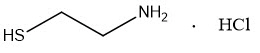
CYSTARAN is a sterile ophthalmic solution containing 6.5 mg/mL of cysteamine hydrochloride, equivalent to 4.4 mg/mL of cysteamine (0.44%) as the active ingredient. Cysteamine is a cystine-depleting agent which lowers the cystine content of cells in patients with cystinosis.
Molecular Formula: C2H7NS HCl
Molecular Weight: 113.61
Each milliliter of CYSTARAN contains: Active: cysteamine 4.4 mg (equivalent to cysteamine hydrochloride 6.5 mg); Preservative: benzalkonium chloride 0.1 mg; Inactive Ingredients: sodium chloride, hydrochloric acid and/or sodium hydroxide (to adjust pH to 4.1-4.5), and purified water.
8.4 Pediatric Use
The safety and effectiveness of CYSTARAN (cysteamine ophthalmic solution) 0.44% have been established in pediatric patients.
8.5 Geriatric Use
When the clinical studies with CYSTARAN were conducted, the reduced life expectancy from cystinosis did not make it possible to include patients in the geriatric age range.
14 Clinical Studies
Clinical efficacy was evaluated in controlled clinical trials in approximately 300 patients. The primary efficacy end point was the response rate of eyes that had a reduction of at least 1 unit in the photo-rated Corneal Cystine Crystal Score (CCCS) at some time point during the study when baseline CCCS ≥1, or a lack of an increase of more than 1 unit in CCCS throughout the study when baseline CCCS <1.
Study 1 combined the data from three smaller studies. For eyes with a lower baseline of CCCS <1, the response rate was 13% (4/30) [95% CI: (4, 32)]. For eyes with a higher baseline of CCCS ≥1, the response rate was 32% (94/291) [95% CI: (27, 38)].
Study 2 evaluated ocular cystinosis patients who had a baseline of CCCS ≥1. The response rate was 67% (10/15) [95% CI: (38, 88)].
Study 3 also evaluated ocular cystinosis patients; for eyes with a baseline of CCCS ≥1, the response rate was 33% (3/9) [95% CI: (8, 70)].
Corneal crystals accumulate if CYSTARAN is discontinued.
4 Contraindications
None.
6 Adverse Reactions
The most common adverse reactions (incidence approximately 10% or greater) are sensitivity to light, redness, eye pain/irritation, headache and visual field defects. (6)
To report SUSPECTED ADVERSE REACTIONS, contact Leadiant Biosciences, Inc. at 1-888-393-4584 or FDA at 1-800-FDA-1088 or www.fda.gov/medwatch.
5.3 Contact Lens Use
CYSTARAN contains benzalkonium chloride, which may be absorbed by soft contact lenses. Contact lenses should be removed prior to application of solution and may be reinserted 15 minutes following its administration [see Patient Counseling Information (17)].
8.6 Renal Impairment
The effect of renal impairment on the pharmacokinetics of cysteamine following ophthalmic administration of cysteamine ophthalmic solution has not been evaluated because ophthalmic exposure compared to systemic exposure is negligible. The majority of the patients in the ophthalmic clinical studies are assumed to have had some degree of renal impairment due to their underlying systemic disease. The total daily ophthalmic dose is less than 2% of the recommended oral daily dose of cysteamine; thus, the systemic exposure following ophthalmic administration is expected to be negligible compared to oral administration.
12.3 Pharmacokinetics
The peak plasma concentration of cysteamine following ocular administration of cysteamine ophthalmic solution in humans is unknown, but it is expected to be substantially less than the peak plasma concentration following oral administration of cysteamine bitartrate.
1 Indications and Usage
CYSTARAN® is a cystine-depleting agent indicated for the treatment of corneal cystine crystal accumulation in patients with cystinosis.
12.1 Mechanism of Action
Cysteamine acts as a cystine-depleting agent by converting cystine to cysteine and cysteine-cysteamine mixed disulfides and reduces corneal cystine crystal accumulation.
5 Warnings and Precautions
To minimize the risk of contamination, do not touch the dropper tip to any surface. Keep bottle tightly closed when not in use. (5.1)
5.4 Topical Ophthalmic Use
CYSTARAN is for topical ophthalmic use.
2 Dosage and Administration
Instill one drop of CYSTARAN in each eye, every waking hour.
Do not touch dropper tip to any surface, as this may contaminate the solution.
Discard after 1 week of use.
3 Dosage Forms and Strengths
Ophthalmic solution containing 6.5 mg/mL of cysteamine hydrochloride equivalent to 4.4 mg/mL of cysteamine (0.44%).
6.1 Clinical Trials Experience
Because clinical trials are conducted under widely varying conditions, adverse reaction rates observed in the clinical trials of a drug cannot be directly compared to rates in the clinical trials of another drug and may not reflect the rates observed in practice.
The safety data described below reflect exposure in controlled clinical trials of six months to 19 years duration in approximately 300 patients.
The most frequently reported ocular adverse reactions occurring in ≥10% of patients were sensitivity to light, redness, and eye pain/irritation, headache and visual field defects.
Principal Display Panel Carton
NDC 54482-035-02
cystaran®
(cysteamine ophthalmic
solution) 0.44%
For Topical Ophthalmic Use
Sterile
NEW STORAGE
Rx only
15 mL
Active Ingredient: Each mL
contains 6.5 mg cysteamine
hydrochloride, equivalent to
4.4 mg cysteamine.
Inactive Ingredients: Benzalko-
nium chloride (preservative);
Sodium chloride; hydrochloric
acid and/or sodium hydroxide (to
adjust pH) and purified water.
Dosage: See Prescribing
Information.
Storage:
Before Opening: Store in
refrigerator in original packaging,
including unopened foil, at 2°C to
8°C (36°F to 46°F).
After Opening: After opening the
foil, store bottle at room
temperature 20°C to 25°C (68°F
to 77°F) during week of use.
Discard the bottle 1 week after
opening the foil and bottle, even
if there is remaining medication
in the bottle. Avoid touching
dropper tip to any surface.
cysc-7-m
Distributed by:
Leadiant Biosciences, Inc.,
Rockville, MD 20850
Made in Switzerland
16 How Supplied/storage and Handling
Fifteen (15) mL of CYSTARAN (cysteamine ophthalmic solution) 0.44% is supplied in an opaque, white, low-density polyethylene (LDPE) 88 mm tall bottle with a 1.6 mm blue, silicone rubber flow-controlled dropper tip and closed with a white, high-density polyethylene (HDPE) screw cap. The bottle is foil-wrapped and stored in a carton.
5.2 Benign Intracranial Hypertension
There have been reports of benign intracranial hypertension (or pseudotumor cerebri) associated with oral cysteamine treatment that has resolved with the addition of diuretic therapy.
There have also been reports associated with ophthalmic use of cysteamine; however, all of these patients were on concurrent oral cysteamine.
5.1 Contamination of Tip and Solution
To minimize contaminating the dropper tip and solution, care should be taken not to touch the eyelids or surrounding areas with the dropper tip of the bottle. Keep bottle tightly closed when not in use.
Principal Display Panel 15 Ml Bottle Carton
NDC 54482-020-02
cystaran®
(cysteamine ophthalmic
solution) 0.44%
For Topical Ophthalmic Use
Sterile
15 mL
Rx only
Active Ingredient: Each mL
contains 6.5 mg cysteamine
hydrochloride, equivalent to
4.4 mg cysteamine. Inactive
Ingredients: Benzalkonium
chloride (preservative); Sodium
chloride; hydrochloric acid
and/or sodium hydroxide (to
adjust pH) and purified water.
Dosage: See Prescribing
Information.
Storage: Store in freezer in
original carton at -25°C to -15°C
(-13°F to 5°F). Thaw in original
carton for approximately 24
hours before use. Store thawed
bottle at 2°C to 25°C (36°F to
77°F) for up to 1 week. Do not
refreeze thawed medication.
Discard after 1 week of use,
even if there is remaining drug
product. Avoid touching dropper
tip to any surface.
For Topical Ophthalmic Use
cysc-6-m
Distributed by:
Leadiant Biosciences Inc.,
Rockville, MD 20850
Made in Switzerland
Structured Label Content
Section 42229-5 (42229-5)
Risk Summary
There are no adequate and well controlled studies of ophthalmic cysteamine in pregnant women to inform any drug associated risks. Oral administration of cysteamine to pregnant rats throughout the period of organogenesis was teratogenic at doses 86 to 345 times the recommended human ophthalmic dose (based on body surface area) [see Data]. CYSTARAN should be used during pregnancy only if the potential benefit justifies the potential risk to the fetus.
Section 44425-7 (44425-7)
CYSTARAN bottles must be stored in the following conditions:
NDC 54482-020-02
-
Before Opening: Store unopened bottle in freezer at -25°C to -15°C (-13°F to 5°F) in the original packaging including unopened foil. Thaw for approximately 24 hours before use.
-
Open the carton and the foil only when starting a new bottle.
-
After Opening: Record discard date on the bottle, which is 1 week from the day the foil and bottle were opened. Store thawed bottle at 2°C to 25°C (36°F to 77°F) for up to 1 week. The thawed bottle does not require refrigeration between use. Do not refreeze the thawed medication. Discard 1 week after the foil and bottle were opened even if there is medication left in the bottle.
11 Description (11 DESCRIPTION)
CYSTARAN is a sterile ophthalmic solution containing 6.5 mg/mL of cysteamine hydrochloride, equivalent to 4.4 mg/mL of cysteamine (0.44%) as the active ingredient. Cysteamine is a cystine-depleting agent which lowers the cystine content of cells in patients with cystinosis.
Molecular Formula: C2H7NS HCl
Molecular Weight: 113.61
Each milliliter of CYSTARAN contains: Active: cysteamine 4.4 mg (equivalent to cysteamine hydrochloride 6.5 mg); Preservative: benzalkonium chloride 0.1 mg; Inactive Ingredients: sodium chloride, hydrochloric acid and/or sodium hydroxide (to adjust pH to 4.1-4.5), and purified water.
8.4 Pediatric Use
The safety and effectiveness of CYSTARAN (cysteamine ophthalmic solution) 0.44% have been established in pediatric patients.
8.5 Geriatric Use
When the clinical studies with CYSTARAN were conducted, the reduced life expectancy from cystinosis did not make it possible to include patients in the geriatric age range.
14 Clinical Studies (14 CLINICAL STUDIES)
Clinical efficacy was evaluated in controlled clinical trials in approximately 300 patients. The primary efficacy end point was the response rate of eyes that had a reduction of at least 1 unit in the photo-rated Corneal Cystine Crystal Score (CCCS) at some time point during the study when baseline CCCS ≥1, or a lack of an increase of more than 1 unit in CCCS throughout the study when baseline CCCS <1.
Study 1 combined the data from three smaller studies. For eyes with a lower baseline of CCCS <1, the response rate was 13% (4/30) [95% CI: (4, 32)]. For eyes with a higher baseline of CCCS ≥1, the response rate was 32% (94/291) [95% CI: (27, 38)].
Study 2 evaluated ocular cystinosis patients who had a baseline of CCCS ≥1. The response rate was 67% (10/15) [95% CI: (38, 88)].
Study 3 also evaluated ocular cystinosis patients; for eyes with a baseline of CCCS ≥1, the response rate was 33% (3/9) [95% CI: (8, 70)].
Corneal crystals accumulate if CYSTARAN is discontinued.
4 Contraindications (4 CONTRAINDICATIONS)
None.
6 Adverse Reactions (6 ADVERSE REACTIONS)
The most common adverse reactions (incidence approximately 10% or greater) are sensitivity to light, redness, eye pain/irritation, headache and visual field defects. (6)
To report SUSPECTED ADVERSE REACTIONS, contact Leadiant Biosciences, Inc. at 1-888-393-4584 or FDA at 1-800-FDA-1088 or www.fda.gov/medwatch.
5.3 Contact Lens Use
CYSTARAN contains benzalkonium chloride, which may be absorbed by soft contact lenses. Contact lenses should be removed prior to application of solution and may be reinserted 15 minutes following its administration [see Patient Counseling Information (17)].
8.6 Renal Impairment
The effect of renal impairment on the pharmacokinetics of cysteamine following ophthalmic administration of cysteamine ophthalmic solution has not been evaluated because ophthalmic exposure compared to systemic exposure is negligible. The majority of the patients in the ophthalmic clinical studies are assumed to have had some degree of renal impairment due to their underlying systemic disease. The total daily ophthalmic dose is less than 2% of the recommended oral daily dose of cysteamine; thus, the systemic exposure following ophthalmic administration is expected to be negligible compared to oral administration.
12.3 Pharmacokinetics
The peak plasma concentration of cysteamine following ocular administration of cysteamine ophthalmic solution in humans is unknown, but it is expected to be substantially less than the peak plasma concentration following oral administration of cysteamine bitartrate.
1 Indications and Usage (1 INDICATIONS AND USAGE)
CYSTARAN® is a cystine-depleting agent indicated for the treatment of corneal cystine crystal accumulation in patients with cystinosis.
12.1 Mechanism of Action
Cysteamine acts as a cystine-depleting agent by converting cystine to cysteine and cysteine-cysteamine mixed disulfides and reduces corneal cystine crystal accumulation.
5 Warnings and Precautions (5 WARNINGS AND PRECAUTIONS)
To minimize the risk of contamination, do not touch the dropper tip to any surface. Keep bottle tightly closed when not in use. (5.1)
5.4 Topical Ophthalmic Use
CYSTARAN is for topical ophthalmic use.
2 Dosage and Administration (2 DOSAGE AND ADMINISTRATION)
Instill one drop of CYSTARAN in each eye, every waking hour.
Do not touch dropper tip to any surface, as this may contaminate the solution.
Discard after 1 week of use.
3 Dosage Forms and Strengths (3 DOSAGE FORMS AND STRENGTHS)
Ophthalmic solution containing 6.5 mg/mL of cysteamine hydrochloride equivalent to 4.4 mg/mL of cysteamine (0.44%).
6.1 Clinical Trials Experience
Because clinical trials are conducted under widely varying conditions, adverse reaction rates observed in the clinical trials of a drug cannot be directly compared to rates in the clinical trials of another drug and may not reflect the rates observed in practice.
The safety data described below reflect exposure in controlled clinical trials of six months to 19 years duration in approximately 300 patients.
The most frequently reported ocular adverse reactions occurring in ≥10% of patients were sensitivity to light, redness, and eye pain/irritation, headache and visual field defects.
Principal Display Panel Carton (PRINCIPAL DISPLAY PANEL - Carton)
NDC 54482-035-02
cystaran®
(cysteamine ophthalmic
solution) 0.44%
For Topical Ophthalmic Use
Sterile
NEW STORAGE
Rx only
15 mL
Active Ingredient: Each mL
contains 6.5 mg cysteamine
hydrochloride, equivalent to
4.4 mg cysteamine.
Inactive Ingredients: Benzalko-
nium chloride (preservative);
Sodium chloride; hydrochloric
acid and/or sodium hydroxide (to
adjust pH) and purified water.
Dosage: See Prescribing
Information.
Storage:
Before Opening: Store in
refrigerator in original packaging,
including unopened foil, at 2°C to
8°C (36°F to 46°F).
After Opening: After opening the
foil, store bottle at room
temperature 20°C to 25°C (68°F
to 77°F) during week of use.
Discard the bottle 1 week after
opening the foil and bottle, even
if there is remaining medication
in the bottle. Avoid touching
dropper tip to any surface.
cysc-7-m
Distributed by:
Leadiant Biosciences, Inc.,
Rockville, MD 20850
Made in Switzerland
16 How Supplied/storage and Handling (16 HOW SUPPLIED/STORAGE AND HANDLING)
Fifteen (15) mL of CYSTARAN (cysteamine ophthalmic solution) 0.44% is supplied in an opaque, white, low-density polyethylene (LDPE) 88 mm tall bottle with a 1.6 mm blue, silicone rubber flow-controlled dropper tip and closed with a white, high-density polyethylene (HDPE) screw cap. The bottle is foil-wrapped and stored in a carton.
5.2 Benign Intracranial Hypertension
There have been reports of benign intracranial hypertension (or pseudotumor cerebri) associated with oral cysteamine treatment that has resolved with the addition of diuretic therapy.
There have also been reports associated with ophthalmic use of cysteamine; however, all of these patients were on concurrent oral cysteamine.
5.1 Contamination of Tip and Solution
To minimize contaminating the dropper tip and solution, care should be taken not to touch the eyelids or surrounding areas with the dropper tip of the bottle. Keep bottle tightly closed when not in use.
Principal Display Panel 15 Ml Bottle Carton (PRINCIPAL DISPLAY PANEL - 15 mL Bottle Carton)
NDC 54482-020-02
cystaran®
(cysteamine ophthalmic
solution) 0.44%
For Topical Ophthalmic Use
Sterile
15 mL
Rx only
Active Ingredient: Each mL
contains 6.5 mg cysteamine
hydrochloride, equivalent to
4.4 mg cysteamine. Inactive
Ingredients: Benzalkonium
chloride (preservative); Sodium
chloride; hydrochloric acid
and/or sodium hydroxide (to
adjust pH) and purified water.
Dosage: See Prescribing
Information.
Storage: Store in freezer in
original carton at -25°C to -15°C
(-13°F to 5°F). Thaw in original
carton for approximately 24
hours before use. Store thawed
bottle at 2°C to 25°C (36°F to
77°F) for up to 1 week. Do not
refreeze thawed medication.
Discard after 1 week of use,
even if there is remaining drug
product. Avoid touching dropper
tip to any surface.
For Topical Ophthalmic Use
cysc-6-m
Distributed by:
Leadiant Biosciences Inc.,
Rockville, MD 20850
Made in Switzerland
Advanced Ingredient Data
Raw Label Data
All Sections (JSON)
Additional Information
Back to search View SPL set listing Open on DailyMed ↗
Source: dailymed · Ingested: 2026-02-15T11:46:58.523542 · Updated: 2026-03-14T22:26:02.784287