Trudhesa
b81397b0-910d-4eb4-8fee-a9a3c9d94d63
34391-3
HUMAN PRESCRIPTION DRUG LABEL
Drug Facts
Composition & Product
Identifiers & Packaging
Indications and Usage
TRUDHESA is indicated for the acute treatment of migraine with or without aura in adults.
Dosage and Administration
The recommended dose of TRUDHESA is 1.45 mg (administered as one metered spray of 0.725 mg into each nostril). ( 2.1 ) The dose may be repeated, if needed, a minimum of 1 hour after the first dose. Do not use more than 2 doses within a 24-hour period or 3 doses within 7 days. ( 2.1 ) Prior to initiation, a cardiovascular evaluation is recommended. ( 2.2 ) TRUDHESA is for nasal administration only. ( 2.3 ) Assemble and prime (i.e., pumped 4 times) before use. ( 2.3 ) Use TRUDHESA immediately after priming and then discard. ( 2.3 )
Contraindications
TRUDHESA is contraindicated in patients: with concomitant use of strong CYP3A4 inhibitors, such as protease inhibitors (e.g., ritonavir, nelfinavir, or indinavir), macrolide antibiotics (e.g., erythromycin or clarithromycin), and antifungals (ketoconazole or itraconazole) [see Warnings and Precautions (5.1) and Drug Interactions (7.1) ] with ischemic heart disease (angina pectoris, history of myocardial infarction, or documented silent ischemia) or patients who have clinical symptoms or findings consistent with coronary artery vasospasm, including Prinzmetal's variant angina [see Warnings and Precautions (5.4) ] with uncontrolled hypertension [see Warnings and Precautions (5.5) ] with peripheral arterial disease with sepsis following vascular surgery with severe hepatic impairment with severe renal impairment with known hypersensitivity to ergot alkaloids with recent use (i.e., within 24 hours) of other 5-HT 1 agonists (e.g., sumatriptan) or ergotamine-containing or ergot-type medications [see Drug Interactions (7.2) ] with concomitant use of peripheral and central vasoconstrictors because the combination may result in additive or synergistic elevation of blood pressure [see Warnings and Precautions (5.5) ]
Warnings and Precautions
Myocardial Ischemia and/or Infarction, Other Cardiac Adverse Reactions, and Fatalities: In patients with risk factors, consider 1 st dose administration under medical supervision with electrocardiogram. ( 2.2 , 5.2 ) Cerebrovascular Adverse Reactions and Fatalities: Cerebral hemorrhage, subarachnoid hemorrhage and stroke have been reported; discontinue TRUDHESA if suspected. ( 5.3 ) Other Vasospasm Related Adverse Reactions: TRUDHESA may cause vasospasm or elevation in blood pressure. Discontinue if signs or symptoms of vasoconstriction develop. ( 5.4 , 5.5 ) Medication Overuse Headache: Detoxification may be necessary. ( 5.6 ) Preterm Labor: Advise pregnant women of the risk. ( 5.7 , 8.1 ) Fibrotic Complications: Pleural and retroperitoneal fibrosis have been reported following prolonged daily use of dihydroergotamine mesylate. Administration of TRUDHESA should not exceed the dosing guidelines or be used for chronic daily administration. ( 5.8 ) Local Irritation: If severe local irritation occurs for no other attributable reasons, suspend TRUDHESA until resolution. ( 5.9 )
Adverse Reactions
The following clinically significant adverse reactions are described elsewhere in the labeling: Peripheral Ischemia Following Coadministration with Strong CYP3A4 Inhibitors [see Boxed Warning and Warnings and Precautions (5.1) ] Myocardial Ischemia and/or Infarction, Other Adverse Cardiac Events, and Fatalities [see Warnings and Precautions (5.2) ] Cerebrovascular Adverse Reactions and Fatalities [see Warnings and Precautions (5.3) ] Other Vasospasm Related Adverse Reactions [see Warnings and Precautions (5.4) ] Increase in Blood Pressure [see Warnings and Precautions (5.5) ] Medication Overuse Headache [see Warnings and Precautions (5.6) ] Preterm Labor [see Warnings and Precautions (5.7) ] Fibrotic Complications [see Warnings and Precautions (5.8) ] Local Irritation [see Warnings and Precautions (5.9) ]
Drug Interactions
Beta Blockers/Nicotine: May potentiate/provoke vasoconstriction ( 7.3 , 7.5 ) Selective Serotonin Reuptake Inhibitors: Weakness, hyperreflexia, and incoordination may occur with coadministration. ( 7.6 )
How Supplied
TRUDHESA (dihydroergotamine mesylate) nasal spray (0.725 mg per spray) is supplied as a package of 4 single-dose units (NDC 77530-725-04). Each single-dose unit contains: One amber glass vial (NDC 77530-725-01) containing 4 mg dihydroergotamine mesylate in a 1 mL clear and colorless to faintly yellow solution. The stopper is not made with natural rubber latex. One nasal spray device.
Storage and Handling
Store TRUDHESA at controlled room temperature, 20°C to 25°C (68°F to 77°F), with excursions allowed between 15°C to 30°C (59°F to 86°F). Do not refrigerate or freeze.
Description
Serious and/or life-threatening peripheral ischemia has been associated with the coadministration of dihydroergotamine with strong CYP3A4 inhibitors. Because CYP3A4 inhibition elevates the serum levels of dihydroergotamine, the risk for vasospasm leading to cerebral ischemia and/or ischemia of the extremities is increased. Hence, concomitant use of TRUDHESA with strong CYP3A4 inhibitors is contraindicated [see Contraindications (4) , Warnings and Precautions (5.1) , and Drug Interactions (7.1) ].
Medication Information
Warnings and Precautions
Myocardial Ischemia and/or Infarction, Other Cardiac Adverse Reactions, and Fatalities: In patients with risk factors, consider 1 st dose administration under medical supervision with electrocardiogram. ( 2.2 , 5.2 ) Cerebrovascular Adverse Reactions and Fatalities: Cerebral hemorrhage, subarachnoid hemorrhage and stroke have been reported; discontinue TRUDHESA if suspected. ( 5.3 ) Other Vasospasm Related Adverse Reactions: TRUDHESA may cause vasospasm or elevation in blood pressure. Discontinue if signs or symptoms of vasoconstriction develop. ( 5.4 , 5.5 ) Medication Overuse Headache: Detoxification may be necessary. ( 5.6 ) Preterm Labor: Advise pregnant women of the risk. ( 5.7 , 8.1 ) Fibrotic Complications: Pleural and retroperitoneal fibrosis have been reported following prolonged daily use of dihydroergotamine mesylate. Administration of TRUDHESA should not exceed the dosing guidelines or be used for chronic daily administration. ( 5.8 ) Local Irritation: If severe local irritation occurs for no other attributable reasons, suspend TRUDHESA until resolution. ( 5.9 )
Indications and Usage
TRUDHESA is indicated for the acute treatment of migraine with or without aura in adults.
Dosage and Administration
The recommended dose of TRUDHESA is 1.45 mg (administered as one metered spray of 0.725 mg into each nostril). ( 2.1 ) The dose may be repeated, if needed, a minimum of 1 hour after the first dose. Do not use more than 2 doses within a 24-hour period or 3 doses within 7 days. ( 2.1 ) Prior to initiation, a cardiovascular evaluation is recommended. ( 2.2 ) TRUDHESA is for nasal administration only. ( 2.3 ) Assemble and prime (i.e., pumped 4 times) before use. ( 2.3 ) Use TRUDHESA immediately after priming and then discard. ( 2.3 )
Contraindications
TRUDHESA is contraindicated in patients: with concomitant use of strong CYP3A4 inhibitors, such as protease inhibitors (e.g., ritonavir, nelfinavir, or indinavir), macrolide antibiotics (e.g., erythromycin or clarithromycin), and antifungals (ketoconazole or itraconazole) [see Warnings and Precautions (5.1) and Drug Interactions (7.1) ] with ischemic heart disease (angina pectoris, history of myocardial infarction, or documented silent ischemia) or patients who have clinical symptoms or findings consistent with coronary artery vasospasm, including Prinzmetal's variant angina [see Warnings and Precautions (5.4) ] with uncontrolled hypertension [see Warnings and Precautions (5.5) ] with peripheral arterial disease with sepsis following vascular surgery with severe hepatic impairment with severe renal impairment with known hypersensitivity to ergot alkaloids with recent use (i.e., within 24 hours) of other 5-HT 1 agonists (e.g., sumatriptan) or ergotamine-containing or ergot-type medications [see Drug Interactions (7.2) ] with concomitant use of peripheral and central vasoconstrictors because the combination may result in additive or synergistic elevation of blood pressure [see Warnings and Precautions (5.5) ]
Adverse Reactions
The following clinically significant adverse reactions are described elsewhere in the labeling: Peripheral Ischemia Following Coadministration with Strong CYP3A4 Inhibitors [see Boxed Warning and Warnings and Precautions (5.1) ] Myocardial Ischemia and/or Infarction, Other Adverse Cardiac Events, and Fatalities [see Warnings and Precautions (5.2) ] Cerebrovascular Adverse Reactions and Fatalities [see Warnings and Precautions (5.3) ] Other Vasospasm Related Adverse Reactions [see Warnings and Precautions (5.4) ] Increase in Blood Pressure [see Warnings and Precautions (5.5) ] Medication Overuse Headache [see Warnings and Precautions (5.6) ] Preterm Labor [see Warnings and Precautions (5.7) ] Fibrotic Complications [see Warnings and Precautions (5.8) ] Local Irritation [see Warnings and Precautions (5.9) ]
Drug Interactions
Beta Blockers/Nicotine: May potentiate/provoke vasoconstriction ( 7.3 , 7.5 ) Selective Serotonin Reuptake Inhibitors: Weakness, hyperreflexia, and incoordination may occur with coadministration. ( 7.6 )
Storage and Handling
Store TRUDHESA at controlled room temperature, 20°C to 25°C (68°F to 77°F), with excursions allowed between 15°C to 30°C (59°F to 86°F). Do not refrigerate or freeze.
How Supplied
TRUDHESA (dihydroergotamine mesylate) nasal spray (0.725 mg per spray) is supplied as a package of 4 single-dose units (NDC 77530-725-04). Each single-dose unit contains: One amber glass vial (NDC 77530-725-01) containing 4 mg dihydroergotamine mesylate in a 1 mL clear and colorless to faintly yellow solution. The stopper is not made with natural rubber latex. One nasal spray device.
Description
Serious and/or life-threatening peripheral ischemia has been associated with the coadministration of dihydroergotamine with strong CYP3A4 inhibitors. Because CYP3A4 inhibition elevates the serum levels of dihydroergotamine, the risk for vasospasm leading to cerebral ischemia and/or ischemia of the extremities is increased. Hence, concomitant use of TRUDHESA with strong CYP3A4 inhibitors is contraindicated [see Contraindications (4) , Warnings and Precautions (5.1) , and Drug Interactions (7.1) ].
Section 42229-5
Limitations of Use
TRUDHESA is not indicated for the preventive treatment of migraine.
TRUDHESA is not indicated for the management of hemiplegic or basilar migraine.
Section 42231-1
| This Medication Guide has been approved by the U.S. Food and Drug Administration | Issued: 9/2021 | |||
|
MEDICATION GUIDE TRUDHESA™ (true - deh - sa) (dihydroergotamine mesylate) nasal spray |
||||
|
What is the most important information I should know about TRUDHESA? TRUDHESA can cause serious side effects, including:
|
||||
|
|
|
||
| These are not all of the medicines that could affect how TRUDHESA works. Your healthcare provider can tell you if it is safe to take TRUDHESA with other medicines. | ||||
|
What is TRUDHESA?
TRUDHESA is a prescription medicine used for the acute treatment of migraine with or without aura in adults.
|
||||
Do not take TRUDHESA if you:
|
||||
Before you take TRUDHESA, tell your healthcare provider about all of your medical conditions, including if you:
Especially tell your healthcare provider if you take: |
||||
|
|
|
||
| These are not all of the medicines that could affect how TRUDHESA works. Your healthcare provider can tell you if it is safe to take TRUDHESA with other medicines. | ||||
How should I take TRUDHESA?
|
||||
|
What are the possible side effects of TRUDHESA? TRUDHESA can cause serious side effects, including: See " What is the most important information I should know about TRUDHESA? "
|
||||
|
|
|||
|
||||
|
|
|||
|
||||
|
|
|||
|
||||
|
|
|
||
| These are not all the possible side effects TRUDHESA. Call your doctor for medical advice about side effects. You may report side effects to FDA at 1-800-FDA-1088. |
||||
|
How should I store TRUDHESA?
Keep TRUDHESA away from heat and light.
Do not throw TRUDHESA into fire or incinerators as the canister inside the device may explode. |
||||
|
General information about the safe and effective use of TRUDHESA.
Medicines are sometimes prescribed for purposes other than those listed in a Medication Guide. Do not use TRUDHESA for a condition for which it was not prescribed. Do not give TRUDHESA to other people, even if they have the same symptoms that you have. It may harm them. You can ask your pharmacist or healthcare provider for information about TRUDHESA that is written for health professionals. |
||||
|
What are the ingredients in TRUDHESA?
Active ingredient: Dihydroergotamine mesylate Inactive ingredients: Caffeine, carbon dioxide, dextrose, and water. The nasal spray device canister contains hydrofluoroalkane-134a (HFA) propellant. The vial stopper is not made with natural rubber latex. TRUDHESA is a trademark of Impel NeuroPharma Inc. Marketed by: Impel NeuroPharma, Seattle, WA 98119, USA www.impelnp.com Manufactured by: Mipharm, S.p.A. Milano, Italy Manufactured for: Impel NeuroPharma Inc. 201 Elliott Ave West, Suite 260 Seattle, WA 98119 USA For more information, go to www.trudhesa.com or call 1-833-878-3437. |
Section 59845-8
|
INSTRUCTIONS FOR USE Trudhesa™ (true-deh-sa) (dihydroergotamine mesylate) nasal spray For Nasal Use Only |
||
|
622344 Remove and Follow When Dosing This Instructions for Use contains information on how to deliver Trudhesa. |
||
|
Introduction
Read this Instructions for Use before you start to use Trudhesa and each time you get a prescription refill. There may be new information. This information does not take the place of talking with your healthcare provider about your medical condition or treatment. You and your healthcare provider should talk about Trudhesa when you start taking it and at regular checkups. It is important to follow these directions accurately in order to receive the correct dose. Contact your healthcare provider if you have any questions about how to use this product.
|
||
|
Nasal Spray Device Parts
Glass Vial Parts
|
||
Important Information You Need To Know Before Dosing with Trudhesa
|
||
|
Storing Trudhesa
|
||
|
Figure A |
||
|
Preparing to Dose with Trudhesa Step 1: Gather and Check Supplies
|
||
Step 2: Remove Blue Plastic Cover, Metal Foil and Grey Rubber Stopper from Glass Vial
|
||
|
Figure D |
Figure E |
|
|
||
|
Figure F |
Figure G |
|
|
||
| Step 3: Remove the Clear Plastic Cover from the Nasal Spray Device | ||
|
||
Step 4: Screw the Glass Vial into the Nasal Spray Device
|
||
|
Figure I |
Figure J |
|
Step 5: Prime the Nasal Spray Device by Pumping Four Times with Fin and Thumb
|
You may or may not see liquid each time you pump. Only pump 4 times to prime. Figure K |
|
|
Important Tip: The purpose of priming is to bring the medicine to the tip of the spray nozzle. If you do not prime the nasal spray device, you will not get your correct dose of medicine. Always prime the nasal spray device before use by pumping exactly 4 times. During priming, make sure to aim the nozzle away from your face and anything that you do not want coming into contact with the spray of medicine. |
||
| Using Trudhesa | ||
| Step 6: Position the Nasal Spray Device | ||
|
||
|
Figure L |
||
| Step 7: Spray the First Spray into 1 Nostril | Step 8: Spray the Second Spray into Other Nostril | |
|
|
|
|
Important Tip: A complete dose is 2 sprays; 1 spray in each nostril.
Do not take more than 2 doses within a 24-hour period. Do not take more than 3 doses in a 7-day period. Please refer to the prescribing information for more information. Sniffing while or after dosing is not necessary. However, sniffing will not hurt you or make the medicine less effective. |
||
| Step 9: Throw away Trudhesa | ||
|
||
|
||
|
Important Frequently Asked Questions (FAQs)
Question: Can I save medicine by skipping the 4 pumps in "Step 5: Prime the Nasal Spray Device"? Answer: No. Skipping the 4 pumps to prime the nasal spray device can result in you not getting your correct dose of medicine. Question: When I first pumped the nasal spray device to prime nothing seemed to happen. Why? Answer: The purpose of priming is to bring the medicine up to the tip of the nozzle. Even though you may not see or hear anything on your first pump or two, the pumping action will move the medicine from the glass vial through the inside of the nasal spray device and into the nozzle. You should see a spray by your fourth pump attempt. Always prime by pumping exactly 4 times prior to dosing. Question: Can I reuse the nasal spray device with a new glass vial? Answer: No. The nasal spray device is for one-time use only and must be thrown away after you have dosed (1 spray in each nostril). This is because the device may clog. After dosing, leave the glass vial screwed onto the nasal spray device and throw away the assembled nasal spray device into the trash. Do not recycle any part of the product. Question: Can I use the medicine that remains in the glass vial for a later dose? Answer: No. Although it is normal for some medicine to remain in the glass vial, it can not be used for later dosing. Any leftover medicine will become ineffective. Question: What happens if I spray more than one time in the same nostril? Answer: A complete and correct dose is one spray into each nostril. Do not dose in your other nostril if you already sprayed two times in one nostril. Talk to your healthcare provider if you have moderate to severe irritation in your nose or changes in smell. Question: How soon can I take another dose if I am not getting relief from my migraine? Answer: You can take another dose at least 1 hour after your first dose if your symptoms persist. Do not take more than 2 doses within a 24-hour period. Do not take more than 3 doses in a 7-day period. Please refer to the prescribing information for more information. |
||
| This Instructions for Use has been approved by the U.S. Food and Drug Administration. | Issued: 9/2021 |
9.2 Abuse
Abuse is the intentional, non-therapeutic use of a drug, even once, for its desirable psychological or physiological effects. Currently available data have not demonstrated drug abuse with dihydroergotamine. However, cases of drug abuse in patients on other forms of ergot therapy have been reported.
7.2 Triptans
Triptans (serotonin [5-HT] 1B/1D receptor agonists) have been reported to cause coronary artery vasospasm, and its effect could be additive with TRUDHESA. Therefore, triptans and TRUDHESA should not be taken within 24 hours of each other [see Contraindications (4)].
7.5 Nicotine
Nicotine may provoke vasoconstriction in some patients, predisposing to a greater ischemic response to ergot therapy [see Warnings and Precautions (5.1, 5.5)].
10.1 Symptoms
Excessive doses of dihydroergotamine may result in peripheral signs and symptoms of ergotism. In general, the symptoms of an acute TRUDHESA overdose are similar to those of an ergotamine overdose, although there may be less pronounced nausea and vomiting with TRUDHESA. The symptoms of an ergotamine overdose include the following: numbness, tingling, pain, and cyanosis of the extremities associated with diminished or absent peripheral pulses; respiratory depression; an increase and/or decrease in blood pressure, usually in that order; confusion, delirium, convulsions, and coma; and/or some degree of nausea, vomiting, and abdominal pain.
In laboratory animals, dihydroergotamine was lethal when given at intravenous doses of 44 mg/kg in mice, 130 mg/kg in rats, and 37 mg/kg in rabbits.
10.2 Treatment
Treatment includes discontinuance of the drug, local application of warmth to the affected area, the administration of vasodilators, and nursing care to prevent tissue damage. Up-to-date information about the treatment of overdosage can often be obtained from a certified Regional Poison Control Center.
11 Description
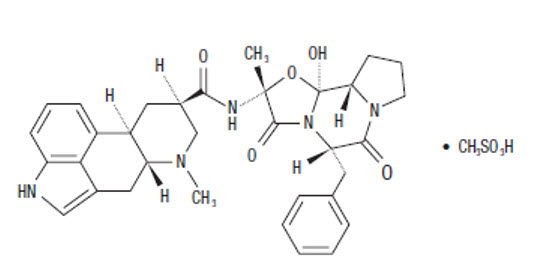
TRUDHESA (dihydroergotamine mesylate) nasal spray is a single-dose, drug-device combination product containing a dihydroergotamine mesylate drug constituent and a nasal spray device constituent.
The chemical name for dihydroergotamine mesylate is ergotaman-3', 6', 18-trione, 9,10-dihydro-12'-hydroxy-2'-methyl-5'- (phenylmethyl)-, (5'α)-, monomethanesulfonate. Its molecular weight is 679.78, and its molecular formula is C33H37N5O5∙CH4O3S.
The chemical structure is:
The drug constituent is a dihydroergotamine mesylate solution. Each milliliter (mL) of solution contains dihydroergotamine mesylate 4.0 mg (equivalent to 3.43 mg dihydroergotamine), and the following inactive ingredients: caffeine (10.0 mg), carbon dioxide (q.s.), dextrose (50.0 mg), and water (q.s. to 1.0 mL).
TRUDHESA nasal spray, after assembly and priming, delivers 0.725 mg dihydroergotamine mesylate per spray. A total dose of 1.45 mg of dihydroergotamine mesylate is delivered in 2 sprays. The nasal spray device contains hydrofluoroalkane-134a (HFA) propellant.
9.3 Dependence
Physical dependence is a state that develops as a result of physiological adaptation in response to repeated drug use, manifested by withdrawal signs and symptoms after abrupt discontinuation or a significant dose reduction of a drug. Currently available data have not demonstrated physical or psychological dependence with dihydroergotamine. However, cases of psychological dependence in patients on other forms of ergot therapy have been reported.
16.1 How Supplied
TRUDHESA (dihydroergotamine mesylate) nasal spray (0.725 mg per spray) is supplied as a package of 4 single-dose units (NDC 77530-725-04). Each single-dose unit contains:
- One amber glass vial (NDC 77530-725-01) containing 4 mg dihydroergotamine mesylate in a 1 mL clear and colorless to faintly yellow solution. The stopper is not made with natural rubber latex.
- One nasal spray device.
5.7 Preterm Labor
Based on the mechanism of action of dihydroergotamine and findings from the published literature, TRUDHESA may cause preterm labor. Avoid use of TRUDHESA during pregnancy [see Use in Specific Populations (8.1)].
7.3 Beta Blockers
There have been reports that propranolol may potentiate the vasoconstrictive action of ergotamine by blocking the vasodilating property of epinephrine.
8.4 Pediatric Use
Safety and effectiveness in pediatric patients have not been established.
8.5 Geriatric Use
Clinical studies of TRUDHESA and other dihydroergotamine mesylate products did not include sufficient numbers of subjects aged 65 and older to determine whether they respond differently from younger subjects. In general, dose selection for an elderly patient should be cautious, usually starting at the low end of the dosing range, reflecting the greater frequency of decreased hepatic, renal, or cardiac function and of concomitant disease or other drug therapy.
14 Clinical Studies
The efficacy of TRUDHESA is based on the relative bioavailability of TRUDHESA nasal spray compared to dihydroergotamine mesylate nasal spray in healthy subjects.
The clinical studies described below were conducted using dihydroergotamine mesylate nasal spray.
The efficacy of dihydroergotamine mesylate nasal spray for the acute treatment of migraine headaches was evaluated in four randomized, double-blind, placebo controlled studies in the U.S. The patient population for the trials was predominantly female (87%) and Caucasian (95%) with a mean age of 39 years (range 18 to 65 years). Patients treated a single moderate to severe migraine headache with a single dose of study medication and assessed pain severity over the 24 hours following treatment. Headache response was determined 0.5, 1, 2, 3 and 4 hours after dosing and was defined as a reduction in headache severity to mild or no pain. In studies 1 and 2, a four-point pain intensity scale was utilized; in studies 3 and 4, a five-point scale was used to record pain response. Although rescue medication was allowed in all four studies, patients were instructed not to use them during the four hour observation period. In studies 3 and 4, a total dose of 2 mg was compared to placebo. In studies 1 and 2, doses of 2 and 3 mg were evaluated, and showed no advantage of the higher dose for a single treatment. In all studies, patients received a regimen consisting of 0.5 mg in each nostril, repeated in 15 minutes (and again in another 15 minutes for the 3 mg dose in studies 1 and 2).
The percentage of patients achieving headache response 4 hours after treatment was significantly greater in patients receiving 2 mg doses of dihydroergotamine mesylate nasal spray compared to those receiving placebo in 3 of the 4 studies (see Table 2 and Table 3 and Figure 1 and Figure 2).
| N | 2 hours | 4 hours | ||
|---|---|---|---|---|
| Study 1 | Dihydroergotamine mesylate nasal spray | 105 | 61% p value < 0.001
|
70% |
| Placebo | 98 | 23% | 28% | |
| Difference from Placebo | 37% | 42% | ||
| Study 2 | Dihydroergotamine mesylate nasal spray | 103 | 47% | 56% p value < 0.01
|
| Placebo | 102 | 33% | 35% | |
| Difference from Placebo | 14% | 21% |
| N | 2 hours | 4 hours | ||
|---|---|---|---|---|
| Study 3 | Dihydroergotamine mesylate nasal spray | 50 | 32% | 48% p value < 0.01
|
| Placebo | 50 | 20% | 22% | |
| Difference from Placebo | 12% | 26% | ||
| Study 4 | Dihydroergotamine mesylate nasal spray | 47 | 30% | 47% |
| Placebo | 50 | 20% | 30% | |
| Difference from Placebo | 10% | 17% |
The Kaplan-Meier plots below (Figure 1 and Figure 2) provides an estimate of the probability that a patient will have responded to a single 2 mg dose of dihydroergotamine mesylate nasal spray as a function of the time elapsed since initiation of treatment.
|
Figure 1 Estimated Probability of a Patient Responding During the Four Hours Following a Single 2 mg Dose of Dihydroergotamine Mesylate Nasal Spray as a Function of the Time Elapsed Since Initiation of Treatment The figure shows the probability over time of obtaining a response following treatment with dihydroergotamine mesylate nasal spray. Headache response was based on pain intensity as interpreted by the patient using a four-point pain intensity scale. Patients not achieving response within 4 hours were censored to 4 hours.
|
|
Figure 2 Estimated Probability of a Patient Responding to Dihydroergotamine Mesylate Nasal Spray During the Four Hours Following Dosing The figure shows the probability over time of obtaining a response following treatment with dihydroergotamine mesylate nasal spray. Headache response was evaluated on a five-point scale that included pain response. Patients not achieving response within 4 hours were censored to 4 hours.
|
For patients with migraine-associated nausea, photophobia, and phonophobia at baseline, there was a lower incidence of these symptoms at 2 and 4 hours following administration of dihydroergotamine mesylate nasal spray compared to placebo.
Patients were not allowed to use additional treatments for 8 hours prior to study medication dosing and during the 4-hour observation period following study treatment. Following the 4-hour observation period, patients were allowed to use additional treatments. For all studies, the estimated probability of patients using additional treatments for their migraines over the 24 hours following the single 2 mg dose of study treatment is summarized in Figure 3 below.
|
Figure 3 Estimated Probability of a Patient Using Additional Treatments for Migraine Over the 24 Hours Following Either Dihydroergotamine Mesylate Nasal Spray 2 mg (or Placebo) Kaplan-Meier plot based on data obtained from all studies with patients not using additional treatments censored to 24 hours. All patients received a single treatment of study medication for their migraine attack. The plot also includes patients who had no response to the initial dose.
|
Neither age nor sex appear to affect the patient's response to dihydroergotamine mesylate nasal spray. The racial distribution of patients was insufficient to determine the effect of race on the efficacy of dihydroergotamine mesylate nasal spray.
4 Contraindications
TRUDHESA is contraindicated in patients:
- with concomitant use of strong CYP3A4 inhibitors, such as protease inhibitors (e.g., ritonavir, nelfinavir, or indinavir), macrolide antibiotics (e.g., erythromycin or clarithromycin), and antifungals (ketoconazole or itraconazole) [see Warnings and Precautions (5.1) and Drug Interactions (7.1)]
- with ischemic heart disease (angina pectoris, history of myocardial infarction, or documented silent ischemia) or patients who have clinical symptoms or findings consistent with coronary artery vasospasm, including Prinzmetal's variant angina [see Warnings and Precautions (5.4)]
- with uncontrolled hypertension [see Warnings and Precautions (5.5)]
- with peripheral arterial disease
- with sepsis
- following vascular surgery
- with severe hepatic impairment
- with severe renal impairment
- with known hypersensitivity to ergot alkaloids
- with recent use (i.e., within 24 hours) of other 5-HT1 agonists (e.g., sumatriptan) or ergotamine-containing or ergot-type medications [see Drug Interactions (7.2)]
- with concomitant use of peripheral and central vasoconstrictors because the combination may result in additive or synergistic elevation of blood pressure [see Warnings and Precautions (5.5)]
6 Adverse Reactions
The following clinically significant adverse reactions are described elsewhere in the labeling:
- Peripheral Ischemia Following Coadministration with Strong CYP3A4 Inhibitors [see Boxed Warning and Warnings and Precautions (5.1)]
- Myocardial Ischemia and/or Infarction, Other Adverse Cardiac Events, and Fatalities [see Warnings and Precautions (5.2)]
- Cerebrovascular Adverse Reactions and Fatalities [see Warnings and Precautions (5.3)]
- Other Vasospasm Related Adverse Reactions [see Warnings and Precautions (5.4)]
- Increase in Blood Pressure [see Warnings and Precautions (5.5)]
- Medication Overuse Headache [see Warnings and Precautions (5.6)]
- Preterm Labor [see Warnings and Precautions (5.7)]
- Fibrotic Complications [see Warnings and Precautions (5.8)]
- Local Irritation [see Warnings and Precautions (5.9)]
7 Drug Interactions
5.9 Local Irritation
Local irritative symptoms were reported in 52% of patients treated with at least one dose of TRUDHESA in an open-labeled trial, which allowed repeated use of TRUDHESA over 6 to 12 months. The most common local irritative symptoms (at least 1% of patients) were nasopharyngitis (21%), rhinitis (19%), nasal discomfort (7%), product taste abnormal/dysgeusia (6%), sinusitis (5%), sinus discomfort (4%), olfactory test abnormal [defined based on a change in score at a prespecified threshold on the University of Pennsylvania Smell Identification Test (UPSIT)] (4%), epistaxis (3%), pharyngitis (3%), nasal mucosal disorder (2%), change in smell (1%), ear discomfort (1%), and rhinorrhea (1%). If a severe local irritation event occurs for no other attributable reasons, TRUDHESA should be temporarily suspended until the event resolves. If the event does not resolve, or it recurs with re-challenge, TRUDHESA should be discontinued permanently. Administration of TRUDHESA should not exceed the dosing guidelines and should not be used for chronic daily administration [see Dosage and Administration (2.1)].
Nasal tissue in animals treated with dihydroergotamine mesylate daily showed mild mucosal irritation characterized by mucous cell and transitional cell hyperplasia and squamous cell metaplasia. Changes in rat nasal mucosa at 64 weeks were less severe than at 13 weeks. Local effects on respiratory tissue after chronic intranasal dosing in animals have not been evaluated.
7.4 Vasoconstrictors
TRUDHESA is contraindicated for use with peripheral and central vasoconstrictors because the combination may cause synergistic elevation of blood pressure [see Warnings and Precautions (5.5)].
12.2 Pharmacodynamics
Significant elevation in blood pressure has been reported in patients with and without a history of hypertension [see Warnings and Precautions (5.5)].
Dihydroergotamine possesses oxytocic properties [see Warnings and Precautions (5.7)].
7.1 Cyp3a4 Inhibitors
There have been rare reports of serious adverse events in connection with the coadministration of intravenous administration of dihydroergotamine and strong CYP3A4 inhibitors, such as protease inhibitors (e.g., ritonavir, nelfinavir, indinavir), macrolide antibiotics (e.g., erythromycin, clarithromycin), and antifungals (e.g., ketoconazole, itraconazole), resulting in vasospasm that led to cerebral ischemia and/or ischemia of the extremities [see Warnings and Precautions (5.1)]. The use of strong CYP3A4 inhibitors with dihydroergotamine is contraindicated [see Contraindications (4)]. Administer moderate CYP3A4 inhibitors (e.g., saquinavir, nefazodone, fluconazole, grapefruit juice, fluoxetine, fluvoxamine, zileuton, clotrimazole) with caution.
2.1 Dosing Information
The recommended dose of TRUDHESA is 1.45 mg administered as two metered sprays into the nose (one spray of 0.725 mg into each nostril).
The dose may be repeated, if needed, a minimum of 1 hour after the first dose. Do not use more than 2 doses of TRUDHESA within a 24-hour period or 3 doses within a 7-day period.
1 Indications and Usage
TRUDHESA is indicated for the acute treatment of migraine with or without aura in adults.
12.1 Mechanism of Action
Dihydroergotamine binds with high affinity to 5-HT1Dα and 5-HT1Dβ receptors. The therapeutic activity of dihydroergotamine in migraine is generally attributed to the agonist effects at 5-HT1D receptors.
9.1 Controlled Substance
TRUDHESA contains dihydroergotamine (as the mesylate salt), which is not a controlled substance.
16.2 Storage and Handling
Store TRUDHESA at controlled room temperature, 20°C to 25°C (68°F to 77°F), with excursions allowed between 15°C to 30°C (59°F to 86°F). Do not refrigerate or freeze.
5 Warnings and Precautions
- Myocardial Ischemia and/or Infarction, Other Cardiac Adverse Reactions, and Fatalities: In patients with risk factors, consider 1st dose administration under medical supervision with electrocardiogram. (2.2, 5.2)
- Cerebrovascular Adverse Reactions and Fatalities: Cerebral hemorrhage, subarachnoid hemorrhage and stroke have been reported; discontinue TRUDHESA if suspected. (5.3)
- Other Vasospasm Related Adverse Reactions: TRUDHESA may cause vasospasm or elevation in blood pressure. Discontinue if signs or symptoms of vasoconstriction develop. (5.4, 5.5)
- Medication Overuse Headache: Detoxification may be necessary. (5.6)
- Preterm Labor: Advise pregnant women of the risk. (5.7, 8.1)
- Fibrotic Complications: Pleural and retroperitoneal fibrosis have been reported following prolonged daily use of dihydroergotamine mesylate. Administration of TRUDHESA should not exceed the dosing guidelines or be used for chronic daily administration. (5.8)
- Local Irritation: If severe local irritation occurs for no other attributable reasons, suspend TRUDHESA until resolution. (5.9)
5.8 Fibrotic Complications
The potential for fibrotic complications exists with TRUDHESA treatment. There have been reports of pleural and retroperitoneal fibrosis in patients following prolonged daily use of dihydroergotamine mesylate. Rarely, prolonged daily use of other ergot alkaloid drugs has been associated with cardiac valvular fibrosis. Rare cases have also been reported in association with the use of dihydroergotamine mesylate; however, in those cases, patients also received drugs known to be associated with cardiac valvular fibrosis.
Administration of TRUDHESA should not exceed the dosing guidelines and should not be used for chronic daily administration [see Dosage and Administration (2.1)].
2 Dosage and Administration
- The recommended dose of TRUDHESA is 1.45 mg (administered as one metered spray of 0.725 mg into each nostril). (2.1)
- The dose may be repeated, if needed, a minimum of 1 hour after the first dose. Do not use more than 2 doses within a 24-hour period or 3 doses within 7 days. (2.1)
- Prior to initiation, a cardiovascular evaluation is recommended. (2.2)
- TRUDHESA is for nasal administration only. (2.3)
- Assemble and prime (i.e., pumped 4 times) before use. (2.3)
- Use TRUDHESA immediately after priming and then discard. (2.3)
3 Dosage Forms and Strengths
TRUDHESA (dihydroergotamine mesylate) nasal spray is a single-dose, drug-device combination product containing a vial of dihydroergotamine mesylate with a clear and colorless to faintly yellow solution and an intranasal delivery device. Each spray delivers 0.725 mg of dihydroergotamine mesylate.
6.2 Postmarketing Experience
The following adverse reactions have been identified during postapproval use of dihydroergotamine mesylate. Because these reactions are reported voluntarily from a population of uncertain size, it is not always possible to reliably estimate their frequency or establish a causal relationship to drug exposure:
Vasospasm, paresthesia, hypertension, dizziness, anxiety, dyspnea, headache, flushing, diarrhea, rash, increased sweating, and pleural and retroperitoneal fibrosis after long-term use of dihydroergotamine. Cases of myocardial infarction and stroke have been reported following the use of dihydroergotamine mesylate [see Warnings and Precautions (5.2)].
8 Use in Specific Populations
5.5 Increase in Blood Pressure
Significant elevation in blood pressure has been reported on rare occasions in patients with and without a history of hypertension treated with dihydroergotamine mesylate. TRUDHESA is contraindicated in patients with uncontrolled hypertension [see Contraindications (4)].
An 18% increase in mean pulmonary artery pressure was seen following dosing with another 5-HT1 agonist in a study evaluating subjects undergoing cardiac catheterization.
6.1 Clinical Trials Experience
Because clinical trials are conducted under widely varying conditions, adverse reaction rates observed in the clinical trials of a drug cannot be directly compared to rates in the clinical trials of another drug and may not reflect the rates observed in practice.
5.6 Medication Overuse Headache
Overuse of acute migraine drugs (e.g., ergotamines, triptans, opioids, or a combination of these drugs for 10 or more days per month) may lead to exacerbation of headache (i.e., medication overuse headache). Medication overuse headache may present as migraine-like daily headaches or as a marked increase in frequency of migraine attacks. Detoxification of patients including withdrawal of the overused drugs and treatment of withdrawal symptoms (which often includes a transient worsening of headache) may be necessary.
17 Patient Counseling Information
Advise the patient to read the FDA-approved patient labeling (Medication Guide and Instructions for Use).
2.2 Assessment Prior to First Dose
Prior to initiation of TRUDHESA, a cardiovascular evaluation is recommended [see Warnings and Precautions (5.2)]. For patients with risk factors predictive of coronary artery disease who are determined to have a satisfactory cardiovascular evaluation, it is strongly recommended that administration of the first dose of TRUDHESA take place in the setting of an equipped healthcare facility.
2.3 Important Administration Instructions
TRUDHESA is for nasal administration only and must not be injected.
TRUDHESA must be assembled prior to use (see Instructions for Use). Use or discard TRUDHESA within 8 hours once the vial has been opened or the product has been assembled.
Prime the assembled TRUDHESA before initial use by releasing 4 sprays. Use TRUDHESA immediately after priming. Discard TRUDHESA immediately after use. Open and prepare a new TRUDHESA if an additional dose is needed.
7.6 Selective Serotonin Reuptake Inhibitors
Weakness, hyperreflexia, and incoordination have been reported rarely when 5-HT1 agonists have been coadministered with selective serotonin reuptake inhibitors (e.g., fluoxetine, fluvoxamine, paroxetine, sertraline).
5.4 Other Vasospasm Related Adverse Reactions
TRUDHESA, like other ergot alkaloids, may cause vasospastic reactions other than coronary artery vasospasm. Myocardial, peripheral vascular, and colonic ischemia have been reported with dihydroergotamine mesylate.
Dihydroergotamine mesylate associated vasospastic phenomena may also cause muscle pains, numbness, coldness, pallor, and cyanosis of the digits. In patients with compromised circulation, persistent vasospasm may result in gangrene or death. TRUDHESA should be discontinued immediately if signs or symptoms of vasoconstriction develop.
Patients who experience other symptoms or signs suggestive of decreased arterial flow, such as ischemic bowel syndrome or Raynaud's syndrome, following the use of any 5-HT agonist, including TRUDHESA, should be evaluated by a healthcare provider.
Principal Display Panel 0.725 Mg Vial Carton
Trudhesa™
(dihydroergotamine mesylate) nasal spray
0.725 mg per spray
Recommended Dosage: See Prescribing Information
Contains: 4 Nasal Spray Devices, 4 Trudhesa Vials,
Instructions for Use and Prescribing Information
NOT FOR INDIVIDUAL SALE
Contents are disposable; discard used nasal spray device
and vial after use. For nasal use only.
RX ONLY
622338
5.3 Cerebrovascular Adverse Reactions and Fatalities
The potential for adverse cerebrovascular adverse reactions exists with TRUDHESA treatment. Cerebral hemorrhage, subarachnoid hemorrhage, stroke, and other cerebrovascular events have been reported in patients treated with dihydroergotamine mesylate; and some have resulted in fatalities. In a number of cases, it appears possible that the cerebrovascular events were primary, the dihydroergotamine mesylate having been administered in the incorrect belief that the symptoms experienced were a consequence of migraine, when they were not. It should be noted that patients with migraine may be at increased risk of certain cerebrovascular events (e.g., stroke, hemorrhage, transient ischemic attack). Discontinue TRUDHESA if a cerebrovascular event is suspected.
5.1 Peripheral Ischemia Following Coadministration With Strong Cyp3a4 Inhibitors
Serious and/or life-threatening peripheral ischemia has been associated with the coadministration of dihydroergotamine with strong CYP3A4 inhibitors, including protease inhibitors, macrolide antibiotics, and antifungals. Because CYP3A4 inhibition elevates the serum levels of dihydroergotamine, the risk for vasospasm leading to cerebral ischemia and/or ischemia of the extremities is increased. Hence, concomitant use of TRUDHESA with strong CYP3A4 inhibitors is contraindicated [see Contraindications (4) and Drug Interactions (7.1)].
Warning: Peripheral Ischemia Following Coadministration With Strong Cyp3a4 Inhibitors
Serious and/or life-threatening peripheral ischemia has been associated with the coadministration of dihydroergotamine with strong CYP3A4 inhibitors. Because CYP3A4 inhibition elevates the serum levels of dihydroergotamine, the risk for vasospasm leading to cerebral ischemia and/or ischemia of the extremities is increased. Hence, concomitant use of TRUDHESA with strong CYP3A4 inhibitors is contraindicated [see Contraindications (4), Warnings and Precautions (5.1), and Drug Interactions (7.1)].
5.2 Myocardial Ischemia And/or Infarction, Other Cardiac Adverse Reactions, and Fatalities
The potential for adverse cardiac adverse reactions exists with TRUDHESA treatment. Serious adverse cardiac events, including some that have been fatal, have occurred following use of dihydroergotamine mesylate. These events have included acute myocardial infarction, life-threatening disturbances of cardiac rhythm (e.g., ventricular tachycardia and ventricular fibrillation), coronary artery vasospasm, and transient myocardial ischemia.
Prior to initiation of TRUDHESA, a cardiovascular evaluation is recommended to determine if the patient is free of coronary artery and ischemic myocardial disease or other significant underlying cardiovascular disease. If, during the cardiovascular evaluation, the patient's medical history (including risk factors), or electrocardiographic investigation, findings are consistent with coronary artery vasospasm or myocardial ischemia, TRUDHESA should not be administered [see Contraindications (4)].
For patients with risk factors predictive of coronary artery disease (e.g., hypertension, hypercholesterolemia, smoker, obesity, diabetes, strong family history of coronary artery disease, females who are surgically or physiologically postmenopausal, or males who are over 40 years of age) who are determined to have a satisfactory cardiovascular evaluation, it is strongly recommended that administration of the first dose of TRUDHESA take place in the setting of an equipped healthcare facility, unless the patient has previously received dihydroergotamine mesylate. During the interval immediately following the first use of TRUDHESA, an electrocardiogram is recommended in those patients with risk factors because ischemia can occur in the absence of clinical symptoms.
Structured Label Content
Section 42229-5 (42229-5)
Limitations of Use
TRUDHESA is not indicated for the preventive treatment of migraine.
TRUDHESA is not indicated for the management of hemiplegic or basilar migraine.
Section 42231-1 (42231-1)
| This Medication Guide has been approved by the U.S. Food and Drug Administration | Issued: 9/2021 | |||
|
MEDICATION GUIDE TRUDHESA™ (true - deh - sa) (dihydroergotamine mesylate) nasal spray |
||||
|
What is the most important information I should know about TRUDHESA? TRUDHESA can cause serious side effects, including:
|
||||
|
|
|
||
| These are not all of the medicines that could affect how TRUDHESA works. Your healthcare provider can tell you if it is safe to take TRUDHESA with other medicines. | ||||
|
What is TRUDHESA?
TRUDHESA is a prescription medicine used for the acute treatment of migraine with or without aura in adults.
|
||||
Do not take TRUDHESA if you:
|
||||
Before you take TRUDHESA, tell your healthcare provider about all of your medical conditions, including if you:
Especially tell your healthcare provider if you take: |
||||
|
|
|
||
| These are not all of the medicines that could affect how TRUDHESA works. Your healthcare provider can tell you if it is safe to take TRUDHESA with other medicines. | ||||
How should I take TRUDHESA?
|
||||
|
What are the possible side effects of TRUDHESA? TRUDHESA can cause serious side effects, including: See " What is the most important information I should know about TRUDHESA? "
|
||||
|
|
|||
|
||||
|
|
|||
|
||||
|
|
|||
|
||||
|
|
|
||
| These are not all the possible side effects TRUDHESA. Call your doctor for medical advice about side effects. You may report side effects to FDA at 1-800-FDA-1088. |
||||
|
How should I store TRUDHESA?
Keep TRUDHESA away from heat and light.
Do not throw TRUDHESA into fire or incinerators as the canister inside the device may explode. |
||||
|
General information about the safe and effective use of TRUDHESA.
Medicines are sometimes prescribed for purposes other than those listed in a Medication Guide. Do not use TRUDHESA for a condition for which it was not prescribed. Do not give TRUDHESA to other people, even if they have the same symptoms that you have. It may harm them. You can ask your pharmacist or healthcare provider for information about TRUDHESA that is written for health professionals. |
||||
|
What are the ingredients in TRUDHESA?
Active ingredient: Dihydroergotamine mesylate Inactive ingredients: Caffeine, carbon dioxide, dextrose, and water. The nasal spray device canister contains hydrofluoroalkane-134a (HFA) propellant. The vial stopper is not made with natural rubber latex. TRUDHESA is a trademark of Impel NeuroPharma Inc. Marketed by: Impel NeuroPharma, Seattle, WA 98119, USA www.impelnp.com Manufactured by: Mipharm, S.p.A. Milano, Italy Manufactured for: Impel NeuroPharma Inc. 201 Elliott Ave West, Suite 260 Seattle, WA 98119 USA For more information, go to www.trudhesa.com or call 1-833-878-3437. |
Section 59845-8 (59845-8)
|
INSTRUCTIONS FOR USE Trudhesa™ (true-deh-sa) (dihydroergotamine mesylate) nasal spray For Nasal Use Only |
||
|
622344 Remove and Follow When Dosing This Instructions for Use contains information on how to deliver Trudhesa. |
||
|
Introduction
Read this Instructions for Use before you start to use Trudhesa and each time you get a prescription refill. There may be new information. This information does not take the place of talking with your healthcare provider about your medical condition or treatment. You and your healthcare provider should talk about Trudhesa when you start taking it and at regular checkups. It is important to follow these directions accurately in order to receive the correct dose. Contact your healthcare provider if you have any questions about how to use this product.
|
||
|
Nasal Spray Device Parts
Glass Vial Parts
|
||
Important Information You Need To Know Before Dosing with Trudhesa
|
||
|
Storing Trudhesa
|
||
|
Figure A |
||
|
Preparing to Dose with Trudhesa Step 1: Gather and Check Supplies
|
||
Step 2: Remove Blue Plastic Cover, Metal Foil and Grey Rubber Stopper from Glass Vial
|
||
|
Figure D |
Figure E |
|
|
||
|
Figure F |
Figure G |
|
|
||
| Step 3: Remove the Clear Plastic Cover from the Nasal Spray Device | ||
|
||
Step 4: Screw the Glass Vial into the Nasal Spray Device
|
||
|
Figure I |
Figure J |
|
Step 5: Prime the Nasal Spray Device by Pumping Four Times with Fin and Thumb
|
You may or may not see liquid each time you pump. Only pump 4 times to prime. Figure K |
|
|
Important Tip: The purpose of priming is to bring the medicine to the tip of the spray nozzle. If you do not prime the nasal spray device, you will not get your correct dose of medicine. Always prime the nasal spray device before use by pumping exactly 4 times. During priming, make sure to aim the nozzle away from your face and anything that you do not want coming into contact with the spray of medicine. |
||
| Using Trudhesa | ||
| Step 6: Position the Nasal Spray Device | ||
|
||
|
Figure L |
||
| Step 7: Spray the First Spray into 1 Nostril | Step 8: Spray the Second Spray into Other Nostril | |
|
|
|
|
Important Tip: A complete dose is 2 sprays; 1 spray in each nostril.
Do not take more than 2 doses within a 24-hour period. Do not take more than 3 doses in a 7-day period. Please refer to the prescribing information for more information. Sniffing while or after dosing is not necessary. However, sniffing will not hurt you or make the medicine less effective. |
||
| Step 9: Throw away Trudhesa | ||
|
||
|
||
|
Important Frequently Asked Questions (FAQs)
Question: Can I save medicine by skipping the 4 pumps in "Step 5: Prime the Nasal Spray Device"? Answer: No. Skipping the 4 pumps to prime the nasal spray device can result in you not getting your correct dose of medicine. Question: When I first pumped the nasal spray device to prime nothing seemed to happen. Why? Answer: The purpose of priming is to bring the medicine up to the tip of the nozzle. Even though you may not see or hear anything on your first pump or two, the pumping action will move the medicine from the glass vial through the inside of the nasal spray device and into the nozzle. You should see a spray by your fourth pump attempt. Always prime by pumping exactly 4 times prior to dosing. Question: Can I reuse the nasal spray device with a new glass vial? Answer: No. The nasal spray device is for one-time use only and must be thrown away after you have dosed (1 spray in each nostril). This is because the device may clog. After dosing, leave the glass vial screwed onto the nasal spray device and throw away the assembled nasal spray device into the trash. Do not recycle any part of the product. Question: Can I use the medicine that remains in the glass vial for a later dose? Answer: No. Although it is normal for some medicine to remain in the glass vial, it can not be used for later dosing. Any leftover medicine will become ineffective. Question: What happens if I spray more than one time in the same nostril? Answer: A complete and correct dose is one spray into each nostril. Do not dose in your other nostril if you already sprayed two times in one nostril. Talk to your healthcare provider if you have moderate to severe irritation in your nose or changes in smell. Question: How soon can I take another dose if I am not getting relief from my migraine? Answer: You can take another dose at least 1 hour after your first dose if your symptoms persist. Do not take more than 2 doses within a 24-hour period. Do not take more than 3 doses in a 7-day period. Please refer to the prescribing information for more information. |
||
| This Instructions for Use has been approved by the U.S. Food and Drug Administration. | Issued: 9/2021 |
9.2 Abuse
Abuse is the intentional, non-therapeutic use of a drug, even once, for its desirable psychological or physiological effects. Currently available data have not demonstrated drug abuse with dihydroergotamine. However, cases of drug abuse in patients on other forms of ergot therapy have been reported.
7.2 Triptans
Triptans (serotonin [5-HT] 1B/1D receptor agonists) have been reported to cause coronary artery vasospasm, and its effect could be additive with TRUDHESA. Therefore, triptans and TRUDHESA should not be taken within 24 hours of each other [see Contraindications (4)].
7.5 Nicotine
Nicotine may provoke vasoconstriction in some patients, predisposing to a greater ischemic response to ergot therapy [see Warnings and Precautions (5.1, 5.5)].
10.1 Symptoms
Excessive doses of dihydroergotamine may result in peripheral signs and symptoms of ergotism. In general, the symptoms of an acute TRUDHESA overdose are similar to those of an ergotamine overdose, although there may be less pronounced nausea and vomiting with TRUDHESA. The symptoms of an ergotamine overdose include the following: numbness, tingling, pain, and cyanosis of the extremities associated with diminished or absent peripheral pulses; respiratory depression; an increase and/or decrease in blood pressure, usually in that order; confusion, delirium, convulsions, and coma; and/or some degree of nausea, vomiting, and abdominal pain.
In laboratory animals, dihydroergotamine was lethal when given at intravenous doses of 44 mg/kg in mice, 130 mg/kg in rats, and 37 mg/kg in rabbits.
10.2 Treatment
Treatment includes discontinuance of the drug, local application of warmth to the affected area, the administration of vasodilators, and nursing care to prevent tissue damage. Up-to-date information about the treatment of overdosage can often be obtained from a certified Regional Poison Control Center.
11 Description (11 DESCRIPTION)
TRUDHESA (dihydroergotamine mesylate) nasal spray is a single-dose, drug-device combination product containing a dihydroergotamine mesylate drug constituent and a nasal spray device constituent.
The chemical name for dihydroergotamine mesylate is ergotaman-3', 6', 18-trione, 9,10-dihydro-12'-hydroxy-2'-methyl-5'- (phenylmethyl)-, (5'α)-, monomethanesulfonate. Its molecular weight is 679.78, and its molecular formula is C33H37N5O5∙CH4O3S.
The chemical structure is:
The drug constituent is a dihydroergotamine mesylate solution. Each milliliter (mL) of solution contains dihydroergotamine mesylate 4.0 mg (equivalent to 3.43 mg dihydroergotamine), and the following inactive ingredients: caffeine (10.0 mg), carbon dioxide (q.s.), dextrose (50.0 mg), and water (q.s. to 1.0 mL).
TRUDHESA nasal spray, after assembly and priming, delivers 0.725 mg dihydroergotamine mesylate per spray. A total dose of 1.45 mg of dihydroergotamine mesylate is delivered in 2 sprays. The nasal spray device contains hydrofluoroalkane-134a (HFA) propellant.
9.3 Dependence
Physical dependence is a state that develops as a result of physiological adaptation in response to repeated drug use, manifested by withdrawal signs and symptoms after abrupt discontinuation or a significant dose reduction of a drug. Currently available data have not demonstrated physical or psychological dependence with dihydroergotamine. However, cases of psychological dependence in patients on other forms of ergot therapy have been reported.
16.1 How Supplied
TRUDHESA (dihydroergotamine mesylate) nasal spray (0.725 mg per spray) is supplied as a package of 4 single-dose units (NDC 77530-725-04). Each single-dose unit contains:
- One amber glass vial (NDC 77530-725-01) containing 4 mg dihydroergotamine mesylate in a 1 mL clear and colorless to faintly yellow solution. The stopper is not made with natural rubber latex.
- One nasal spray device.
5.7 Preterm Labor
Based on the mechanism of action of dihydroergotamine and findings from the published literature, TRUDHESA may cause preterm labor. Avoid use of TRUDHESA during pregnancy [see Use in Specific Populations (8.1)].
7.3 Beta Blockers
There have been reports that propranolol may potentiate the vasoconstrictive action of ergotamine by blocking the vasodilating property of epinephrine.
8.4 Pediatric Use
Safety and effectiveness in pediatric patients have not been established.
8.5 Geriatric Use
Clinical studies of TRUDHESA and other dihydroergotamine mesylate products did not include sufficient numbers of subjects aged 65 and older to determine whether they respond differently from younger subjects. In general, dose selection for an elderly patient should be cautious, usually starting at the low end of the dosing range, reflecting the greater frequency of decreased hepatic, renal, or cardiac function and of concomitant disease or other drug therapy.
14 Clinical Studies (14 CLINICAL STUDIES)
The efficacy of TRUDHESA is based on the relative bioavailability of TRUDHESA nasal spray compared to dihydroergotamine mesylate nasal spray in healthy subjects.
The clinical studies described below were conducted using dihydroergotamine mesylate nasal spray.
The efficacy of dihydroergotamine mesylate nasal spray for the acute treatment of migraine headaches was evaluated in four randomized, double-blind, placebo controlled studies in the U.S. The patient population for the trials was predominantly female (87%) and Caucasian (95%) with a mean age of 39 years (range 18 to 65 years). Patients treated a single moderate to severe migraine headache with a single dose of study medication and assessed pain severity over the 24 hours following treatment. Headache response was determined 0.5, 1, 2, 3 and 4 hours after dosing and was defined as a reduction in headache severity to mild or no pain. In studies 1 and 2, a four-point pain intensity scale was utilized; in studies 3 and 4, a five-point scale was used to record pain response. Although rescue medication was allowed in all four studies, patients were instructed not to use them during the four hour observation period. In studies 3 and 4, a total dose of 2 mg was compared to placebo. In studies 1 and 2, doses of 2 and 3 mg were evaluated, and showed no advantage of the higher dose for a single treatment. In all studies, patients received a regimen consisting of 0.5 mg in each nostril, repeated in 15 minutes (and again in another 15 minutes for the 3 mg dose in studies 1 and 2).
The percentage of patients achieving headache response 4 hours after treatment was significantly greater in patients receiving 2 mg doses of dihydroergotamine mesylate nasal spray compared to those receiving placebo in 3 of the 4 studies (see Table 2 and Table 3 and Figure 1 and Figure 2).
| N | 2 hours | 4 hours | ||
|---|---|---|---|---|
| Study 1 | Dihydroergotamine mesylate nasal spray | 105 | 61% p value < 0.001
|
70% |
| Placebo | 98 | 23% | 28% | |
| Difference from Placebo | 37% | 42% | ||
| Study 2 | Dihydroergotamine mesylate nasal spray | 103 | 47% | 56% p value < 0.01
|
| Placebo | 102 | 33% | 35% | |
| Difference from Placebo | 14% | 21% |
| N | 2 hours | 4 hours | ||
|---|---|---|---|---|
| Study 3 | Dihydroergotamine mesylate nasal spray | 50 | 32% | 48% p value < 0.01
|
| Placebo | 50 | 20% | 22% | |
| Difference from Placebo | 12% | 26% | ||
| Study 4 | Dihydroergotamine mesylate nasal spray | 47 | 30% | 47% |
| Placebo | 50 | 20% | 30% | |
| Difference from Placebo | 10% | 17% |
The Kaplan-Meier plots below (Figure 1 and Figure 2) provides an estimate of the probability that a patient will have responded to a single 2 mg dose of dihydroergotamine mesylate nasal spray as a function of the time elapsed since initiation of treatment.
|
Figure 1 Estimated Probability of a Patient Responding During the Four Hours Following a Single 2 mg Dose of Dihydroergotamine Mesylate Nasal Spray as a Function of the Time Elapsed Since Initiation of Treatment The figure shows the probability over time of obtaining a response following treatment with dihydroergotamine mesylate nasal spray. Headache response was based on pain intensity as interpreted by the patient using a four-point pain intensity scale. Patients not achieving response within 4 hours were censored to 4 hours.
|
|
Figure 2 Estimated Probability of a Patient Responding to Dihydroergotamine Mesylate Nasal Spray During the Four Hours Following Dosing The figure shows the probability over time of obtaining a response following treatment with dihydroergotamine mesylate nasal spray. Headache response was evaluated on a five-point scale that included pain response. Patients not achieving response within 4 hours were censored to 4 hours.
|
For patients with migraine-associated nausea, photophobia, and phonophobia at baseline, there was a lower incidence of these symptoms at 2 and 4 hours following administration of dihydroergotamine mesylate nasal spray compared to placebo.
Patients were not allowed to use additional treatments for 8 hours prior to study medication dosing and during the 4-hour observation period following study treatment. Following the 4-hour observation period, patients were allowed to use additional treatments. For all studies, the estimated probability of patients using additional treatments for their migraines over the 24 hours following the single 2 mg dose of study treatment is summarized in Figure 3 below.
|
Figure 3 Estimated Probability of a Patient Using Additional Treatments for Migraine Over the 24 Hours Following Either Dihydroergotamine Mesylate Nasal Spray 2 mg (or Placebo) Kaplan-Meier plot based on data obtained from all studies with patients not using additional treatments censored to 24 hours. All patients received a single treatment of study medication for their migraine attack. The plot also includes patients who had no response to the initial dose.
|
Neither age nor sex appear to affect the patient's response to dihydroergotamine mesylate nasal spray. The racial distribution of patients was insufficient to determine the effect of race on the efficacy of dihydroergotamine mesylate nasal spray.
4 Contraindications (4 CONTRAINDICATIONS)
TRUDHESA is contraindicated in patients:
- with concomitant use of strong CYP3A4 inhibitors, such as protease inhibitors (e.g., ritonavir, nelfinavir, or indinavir), macrolide antibiotics (e.g., erythromycin or clarithromycin), and antifungals (ketoconazole or itraconazole) [see Warnings and Precautions (5.1) and Drug Interactions (7.1)]
- with ischemic heart disease (angina pectoris, history of myocardial infarction, or documented silent ischemia) or patients who have clinical symptoms or findings consistent with coronary artery vasospasm, including Prinzmetal's variant angina [see Warnings and Precautions (5.4)]
- with uncontrolled hypertension [see Warnings and Precautions (5.5)]
- with peripheral arterial disease
- with sepsis
- following vascular surgery
- with severe hepatic impairment
- with severe renal impairment
- with known hypersensitivity to ergot alkaloids
- with recent use (i.e., within 24 hours) of other 5-HT1 agonists (e.g., sumatriptan) or ergotamine-containing or ergot-type medications [see Drug Interactions (7.2)]
- with concomitant use of peripheral and central vasoconstrictors because the combination may result in additive or synergistic elevation of blood pressure [see Warnings and Precautions (5.5)]
6 Adverse Reactions (6 ADVERSE REACTIONS)
The following clinically significant adverse reactions are described elsewhere in the labeling:
- Peripheral Ischemia Following Coadministration with Strong CYP3A4 Inhibitors [see Boxed Warning and Warnings and Precautions (5.1)]
- Myocardial Ischemia and/or Infarction, Other Adverse Cardiac Events, and Fatalities [see Warnings and Precautions (5.2)]
- Cerebrovascular Adverse Reactions and Fatalities [see Warnings and Precautions (5.3)]
- Other Vasospasm Related Adverse Reactions [see Warnings and Precautions (5.4)]
- Increase in Blood Pressure [see Warnings and Precautions (5.5)]
- Medication Overuse Headache [see Warnings and Precautions (5.6)]
- Preterm Labor [see Warnings and Precautions (5.7)]
- Fibrotic Complications [see Warnings and Precautions (5.8)]
- Local Irritation [see Warnings and Precautions (5.9)]
7 Drug Interactions (7 DRUG INTERACTIONS)
5.9 Local Irritation
Local irritative symptoms were reported in 52% of patients treated with at least one dose of TRUDHESA in an open-labeled trial, which allowed repeated use of TRUDHESA over 6 to 12 months. The most common local irritative symptoms (at least 1% of patients) were nasopharyngitis (21%), rhinitis (19%), nasal discomfort (7%), product taste abnormal/dysgeusia (6%), sinusitis (5%), sinus discomfort (4%), olfactory test abnormal [defined based on a change in score at a prespecified threshold on the University of Pennsylvania Smell Identification Test (UPSIT)] (4%), epistaxis (3%), pharyngitis (3%), nasal mucosal disorder (2%), change in smell (1%), ear discomfort (1%), and rhinorrhea (1%). If a severe local irritation event occurs for no other attributable reasons, TRUDHESA should be temporarily suspended until the event resolves. If the event does not resolve, or it recurs with re-challenge, TRUDHESA should be discontinued permanently. Administration of TRUDHESA should not exceed the dosing guidelines and should not be used for chronic daily administration [see Dosage and Administration (2.1)].
Nasal tissue in animals treated with dihydroergotamine mesylate daily showed mild mucosal irritation characterized by mucous cell and transitional cell hyperplasia and squamous cell metaplasia. Changes in rat nasal mucosa at 64 weeks were less severe than at 13 weeks. Local effects on respiratory tissue after chronic intranasal dosing in animals have not been evaluated.
7.4 Vasoconstrictors
TRUDHESA is contraindicated for use with peripheral and central vasoconstrictors because the combination may cause synergistic elevation of blood pressure [see Warnings and Precautions (5.5)].
12.2 Pharmacodynamics
Significant elevation in blood pressure has been reported in patients with and without a history of hypertension [see Warnings and Precautions (5.5)].
Dihydroergotamine possesses oxytocic properties [see Warnings and Precautions (5.7)].
7.1 Cyp3a4 Inhibitors (7.1 CYP3A4 Inhibitors)
There have been rare reports of serious adverse events in connection with the coadministration of intravenous administration of dihydroergotamine and strong CYP3A4 inhibitors, such as protease inhibitors (e.g., ritonavir, nelfinavir, indinavir), macrolide antibiotics (e.g., erythromycin, clarithromycin), and antifungals (e.g., ketoconazole, itraconazole), resulting in vasospasm that led to cerebral ischemia and/or ischemia of the extremities [see Warnings and Precautions (5.1)]. The use of strong CYP3A4 inhibitors with dihydroergotamine is contraindicated [see Contraindications (4)]. Administer moderate CYP3A4 inhibitors (e.g., saquinavir, nefazodone, fluconazole, grapefruit juice, fluoxetine, fluvoxamine, zileuton, clotrimazole) with caution.
2.1 Dosing Information
The recommended dose of TRUDHESA is 1.45 mg administered as two metered sprays into the nose (one spray of 0.725 mg into each nostril).
The dose may be repeated, if needed, a minimum of 1 hour after the first dose. Do not use more than 2 doses of TRUDHESA within a 24-hour period or 3 doses within a 7-day period.
1 Indications and Usage (1 INDICATIONS AND USAGE)
TRUDHESA is indicated for the acute treatment of migraine with or without aura in adults.
12.1 Mechanism of Action
Dihydroergotamine binds with high affinity to 5-HT1Dα and 5-HT1Dβ receptors. The therapeutic activity of dihydroergotamine in migraine is generally attributed to the agonist effects at 5-HT1D receptors.
9.1 Controlled Substance
TRUDHESA contains dihydroergotamine (as the mesylate salt), which is not a controlled substance.
16.2 Storage and Handling
Store TRUDHESA at controlled room temperature, 20°C to 25°C (68°F to 77°F), with excursions allowed between 15°C to 30°C (59°F to 86°F). Do not refrigerate or freeze.
5 Warnings and Precautions (5 WARNINGS AND PRECAUTIONS)
- Myocardial Ischemia and/or Infarction, Other Cardiac Adverse Reactions, and Fatalities: In patients with risk factors, consider 1st dose administration under medical supervision with electrocardiogram. (2.2, 5.2)
- Cerebrovascular Adverse Reactions and Fatalities: Cerebral hemorrhage, subarachnoid hemorrhage and stroke have been reported; discontinue TRUDHESA if suspected. (5.3)
- Other Vasospasm Related Adverse Reactions: TRUDHESA may cause vasospasm or elevation in blood pressure. Discontinue if signs or symptoms of vasoconstriction develop. (5.4, 5.5)
- Medication Overuse Headache: Detoxification may be necessary. (5.6)
- Preterm Labor: Advise pregnant women of the risk. (5.7, 8.1)
- Fibrotic Complications: Pleural and retroperitoneal fibrosis have been reported following prolonged daily use of dihydroergotamine mesylate. Administration of TRUDHESA should not exceed the dosing guidelines or be used for chronic daily administration. (5.8)
- Local Irritation: If severe local irritation occurs for no other attributable reasons, suspend TRUDHESA until resolution. (5.9)
5.8 Fibrotic Complications
The potential for fibrotic complications exists with TRUDHESA treatment. There have been reports of pleural and retroperitoneal fibrosis in patients following prolonged daily use of dihydroergotamine mesylate. Rarely, prolonged daily use of other ergot alkaloid drugs has been associated with cardiac valvular fibrosis. Rare cases have also been reported in association with the use of dihydroergotamine mesylate; however, in those cases, patients also received drugs known to be associated with cardiac valvular fibrosis.
Administration of TRUDHESA should not exceed the dosing guidelines and should not be used for chronic daily administration [see Dosage and Administration (2.1)].
2 Dosage and Administration (2 DOSAGE AND ADMINISTRATION)
- The recommended dose of TRUDHESA is 1.45 mg (administered as one metered spray of 0.725 mg into each nostril). (2.1)
- The dose may be repeated, if needed, a minimum of 1 hour after the first dose. Do not use more than 2 doses within a 24-hour period or 3 doses within 7 days. (2.1)
- Prior to initiation, a cardiovascular evaluation is recommended. (2.2)
- TRUDHESA is for nasal administration only. (2.3)
- Assemble and prime (i.e., pumped 4 times) before use. (2.3)
- Use TRUDHESA immediately after priming and then discard. (2.3)
3 Dosage Forms and Strengths (3 DOSAGE FORMS AND STRENGTHS)
TRUDHESA (dihydroergotamine mesylate) nasal spray is a single-dose, drug-device combination product containing a vial of dihydroergotamine mesylate with a clear and colorless to faintly yellow solution and an intranasal delivery device. Each spray delivers 0.725 mg of dihydroergotamine mesylate.
6.2 Postmarketing Experience
The following adverse reactions have been identified during postapproval use of dihydroergotamine mesylate. Because these reactions are reported voluntarily from a population of uncertain size, it is not always possible to reliably estimate their frequency or establish a causal relationship to drug exposure:
Vasospasm, paresthesia, hypertension, dizziness, anxiety, dyspnea, headache, flushing, diarrhea, rash, increased sweating, and pleural and retroperitoneal fibrosis after long-term use of dihydroergotamine. Cases of myocardial infarction and stroke have been reported following the use of dihydroergotamine mesylate [see Warnings and Precautions (5.2)].
8 Use in Specific Populations (8 USE IN SPECIFIC POPULATIONS)
5.5 Increase in Blood Pressure
Significant elevation in blood pressure has been reported on rare occasions in patients with and without a history of hypertension treated with dihydroergotamine mesylate. TRUDHESA is contraindicated in patients with uncontrolled hypertension [see Contraindications (4)].
An 18% increase in mean pulmonary artery pressure was seen following dosing with another 5-HT1 agonist in a study evaluating subjects undergoing cardiac catheterization.
6.1 Clinical Trials Experience
Because clinical trials are conducted under widely varying conditions, adverse reaction rates observed in the clinical trials of a drug cannot be directly compared to rates in the clinical trials of another drug and may not reflect the rates observed in practice.
5.6 Medication Overuse Headache
Overuse of acute migraine drugs (e.g., ergotamines, triptans, opioids, or a combination of these drugs for 10 or more days per month) may lead to exacerbation of headache (i.e., medication overuse headache). Medication overuse headache may present as migraine-like daily headaches or as a marked increase in frequency of migraine attacks. Detoxification of patients including withdrawal of the overused drugs and treatment of withdrawal symptoms (which often includes a transient worsening of headache) may be necessary.
17 Patient Counseling Information (17 PATIENT COUNSELING INFORMATION)
Advise the patient to read the FDA-approved patient labeling (Medication Guide and Instructions for Use).
2.2 Assessment Prior to First Dose
Prior to initiation of TRUDHESA, a cardiovascular evaluation is recommended [see Warnings and Precautions (5.2)]. For patients with risk factors predictive of coronary artery disease who are determined to have a satisfactory cardiovascular evaluation, it is strongly recommended that administration of the first dose of TRUDHESA take place in the setting of an equipped healthcare facility.
2.3 Important Administration Instructions
TRUDHESA is for nasal administration only and must not be injected.
TRUDHESA must be assembled prior to use (see Instructions for Use). Use or discard TRUDHESA within 8 hours once the vial has been opened or the product has been assembled.
Prime the assembled TRUDHESA before initial use by releasing 4 sprays. Use TRUDHESA immediately after priming. Discard TRUDHESA immediately after use. Open and prepare a new TRUDHESA if an additional dose is needed.
7.6 Selective Serotonin Reuptake Inhibitors
Weakness, hyperreflexia, and incoordination have been reported rarely when 5-HT1 agonists have been coadministered with selective serotonin reuptake inhibitors (e.g., fluoxetine, fluvoxamine, paroxetine, sertraline).
5.4 Other Vasospasm Related Adverse Reactions
TRUDHESA, like other ergot alkaloids, may cause vasospastic reactions other than coronary artery vasospasm. Myocardial, peripheral vascular, and colonic ischemia have been reported with dihydroergotamine mesylate.
Dihydroergotamine mesylate associated vasospastic phenomena may also cause muscle pains, numbness, coldness, pallor, and cyanosis of the digits. In patients with compromised circulation, persistent vasospasm may result in gangrene or death. TRUDHESA should be discontinued immediately if signs or symptoms of vasoconstriction develop.
Patients who experience other symptoms or signs suggestive of decreased arterial flow, such as ischemic bowel syndrome or Raynaud's syndrome, following the use of any 5-HT agonist, including TRUDHESA, should be evaluated by a healthcare provider.
Principal Display Panel 0.725 Mg Vial Carton (PRINCIPAL DISPLAY PANEL - 0.725 mg Vial Carton)
Trudhesa™
(dihydroergotamine mesylate) nasal spray
0.725 mg per spray
Recommended Dosage: See Prescribing Information
Contains: 4 Nasal Spray Devices, 4 Trudhesa Vials,
Instructions for Use and Prescribing Information
NOT FOR INDIVIDUAL SALE
Contents are disposable; discard used nasal spray device
and vial after use. For nasal use only.
RX ONLY
622338
5.3 Cerebrovascular Adverse Reactions and Fatalities
The potential for adverse cerebrovascular adverse reactions exists with TRUDHESA treatment. Cerebral hemorrhage, subarachnoid hemorrhage, stroke, and other cerebrovascular events have been reported in patients treated with dihydroergotamine mesylate; and some have resulted in fatalities. In a number of cases, it appears possible that the cerebrovascular events were primary, the dihydroergotamine mesylate having been administered in the incorrect belief that the symptoms experienced were a consequence of migraine, when they were not. It should be noted that patients with migraine may be at increased risk of certain cerebrovascular events (e.g., stroke, hemorrhage, transient ischemic attack). Discontinue TRUDHESA if a cerebrovascular event is suspected.
5.1 Peripheral Ischemia Following Coadministration With Strong Cyp3a4 Inhibitors (5.1 Peripheral Ischemia Following Coadministration with Strong CYP3A4 Inhibitors)
Serious and/or life-threatening peripheral ischemia has been associated with the coadministration of dihydroergotamine with strong CYP3A4 inhibitors, including protease inhibitors, macrolide antibiotics, and antifungals. Because CYP3A4 inhibition elevates the serum levels of dihydroergotamine, the risk for vasospasm leading to cerebral ischemia and/or ischemia of the extremities is increased. Hence, concomitant use of TRUDHESA with strong CYP3A4 inhibitors is contraindicated [see Contraindications (4) and Drug Interactions (7.1)].
Warning: Peripheral Ischemia Following Coadministration With Strong Cyp3a4 Inhibitors (WARNING: PERIPHERAL ISCHEMIA FOLLOWING COADMINISTRATION WITH STRONG CYP3A4 INHIBITORS)
Serious and/or life-threatening peripheral ischemia has been associated with the coadministration of dihydroergotamine with strong CYP3A4 inhibitors. Because CYP3A4 inhibition elevates the serum levels of dihydroergotamine, the risk for vasospasm leading to cerebral ischemia and/or ischemia of the extremities is increased. Hence, concomitant use of TRUDHESA with strong CYP3A4 inhibitors is contraindicated [see Contraindications (4), Warnings and Precautions (5.1), and Drug Interactions (7.1)].
5.2 Myocardial Ischemia And/or Infarction, Other Cardiac Adverse Reactions, and Fatalities (5.2 Myocardial Ischemia and/or Infarction, Other Cardiac Adverse Reactions, and Fatalities)
The potential for adverse cardiac adverse reactions exists with TRUDHESA treatment. Serious adverse cardiac events, including some that have been fatal, have occurred following use of dihydroergotamine mesylate. These events have included acute myocardial infarction, life-threatening disturbances of cardiac rhythm (e.g., ventricular tachycardia and ventricular fibrillation), coronary artery vasospasm, and transient myocardial ischemia.
Prior to initiation of TRUDHESA, a cardiovascular evaluation is recommended to determine if the patient is free of coronary artery and ischemic myocardial disease or other significant underlying cardiovascular disease. If, during the cardiovascular evaluation, the patient's medical history (including risk factors), or electrocardiographic investigation, findings are consistent with coronary artery vasospasm or myocardial ischemia, TRUDHESA should not be administered [see Contraindications (4)].
For patients with risk factors predictive of coronary artery disease (e.g., hypertension, hypercholesterolemia, smoker, obesity, diabetes, strong family history of coronary artery disease, females who are surgically or physiologically postmenopausal, or males who are over 40 years of age) who are determined to have a satisfactory cardiovascular evaluation, it is strongly recommended that administration of the first dose of TRUDHESA take place in the setting of an equipped healthcare facility, unless the patient has previously received dihydroergotamine mesylate. During the interval immediately following the first use of TRUDHESA, an electrocardiogram is recommended in those patients with risk factors because ischemia can occur in the absence of clinical symptoms.
Advanced Ingredient Data
Raw Label Data
All Sections (JSON)
Additional Information
Back to search View SPL set listing Open on DailyMed ↗
Source: dailymed · Ingested: 2026-02-15T11:45:17.063360 · Updated: 2026-03-14T22:22:07.806898