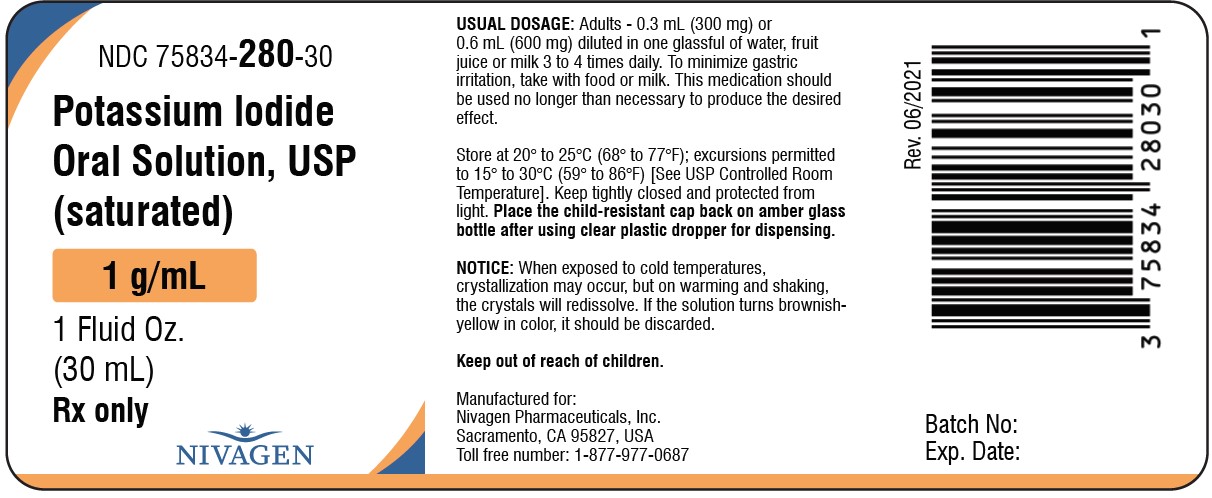
potassium iodide oral solution, usp (saturated) 1 g/ml
b0bf9487-45d0-4fbc-a8dd-90f505355d14
34391-3
Human Prescription Drug Label
Drug Facts
Composition & Product
Identifiers & Packaging
Contraindications
Contraindicated in patients with a known sensitivity to iodides.
Adverse Reactions
The most frequent adverse reactions to potassium iodide are stomach upset, diarrhea, nausea, vomiting, stomach pain, skin rash, and salivary gland swelling or tenderness. Less frequent adverse reactions include gastrointestinal bleeding, confusion, irregular heartbeat, numbness, tingling, pain or weakness in hands or feet, unusual tiredness, weakness or heaviness of legs, fever, and swelling of neck or throat. Thyroid adenoma, goiter, and myxedema are possible side effects. Iodism or chronic iodine poisoning may occur during prolonged treatment or with the use of high doses. The symptoms of iodism include burning of mouth or throat, severe headache, metallic taste, soreness of teeth and gums, symptoms of head cold, irritation of the eyes with swelling of the eyelids, unusual increase in salivation, acneform skin lesions in the seborrheic areas, and rarely, severe skin eruptions. If symptoms of iodism appear, the drug should be withdrawn and the patient given appropriate supportive therapy. Hypersensitivity to iodides may occur and may be manifested by angioedema, cutaneous and mucosal hemorrhage, and signs and symptoms resembling serum sickness, such as fever, arthralgia, lymph node enlargement, and eosinophilia.
Drug Interactions
Concurrent use with lithium or antithyroid drugs may potentiate the hypothyroid and goitrogenic effects of these medications. Concurrent use with potassium-containing medications, potassium-sparing diuretics and angiotensin-converting enzyme inhibitors (ACE inhibitors) may result in hyperkalemia and cardiac arrhythmias or cardiac arrest.
How Supplied
Potassium iodide oral solution, USP is supplied in 1 fluid ounce (30 ml) bottles (NDC 75834-280-30) with a calibrated dropper marked to deliver 0.3 ml (300 mg) and 0.6 ml (600 mg); and 8 fluid ounce (237 ml) bottles (NDC 75834-280-08). Inactive ingredient: Sodium thiosulfate as a preservative. Store at 20° to 25°C (68° to 77°F); excursions permitted to 15° to 30°C (59° to 86°F) [See USP Controlled Room Temperature]. Keep tightly closed and protected from light. For the 237mL bottle, dispense in tight, light-resistant containers with child-resistant closures. For the 30mL bottle, place the child-resistant cap back on the amber glass bottle after using the clear plastic dropper for dispensing. Notice: When exposed to cold temperatures, crystallization may occur, but on warming and shaking, the crystals will redissolve. If the solution turns brownish-yellow in color, it should be discarded. Manufactured for: Nivagen Pharmaceuticals, Inc. Sacramento, CA 95827 USA Toll free number: 1-877-977-0687 Revised: 01/2022
Description
Potassium iodide oral solution, USP is a saturated solution of potassium iodide containing 1 gram of potassium iodide per mL.
Medication Information
Warnings
Potassium iodide can cause fetal harm, abnormal thyroid function, and goiter when administered to a pregnant woman. Because of the possible development of fetal goiter, if the drug is used during pregnancy or if the patient becomes pregnant during therapy, apprise the patient of the potential hazard.
Contraindications
Contraindicated in patients with a known sensitivity to iodides.
Adverse Reactions
The most frequent adverse reactions to potassium iodide are stomach upset, diarrhea, nausea, vomiting, stomach pain, skin rash, and salivary gland swelling or tenderness. Less frequent adverse reactions include gastrointestinal bleeding, confusion, irregular heartbeat, numbness, tingling, pain or weakness in hands or feet, unusual tiredness, weakness or heaviness of legs, fever, and swelling of neck or throat. Thyroid adenoma, goiter, and myxedema are possible side effects.
Iodism or chronic iodine poisoning may occur during prolonged treatment or with the use of high doses. The symptoms of iodism include burning of mouth or throat, severe headache, metallic taste, soreness of teeth and gums, symptoms of head cold, irritation of the eyes with swelling of the eyelids, unusual increase in salivation, acneform skin lesions in the seborrheic areas, and rarely, severe skin eruptions. If symptoms of iodism appear, the drug should be withdrawn and the patient given appropriate supportive therapy.
Hypersensitivity to iodides may occur and may be manifested by angioedema, cutaneous and mucosal hemorrhage, and signs and symptoms resembling serum sickness, such as fever, arthralgia, lymph node enlargement, and eosinophilia.
Drug Interactions
Concurrent use with lithium or antithyroid drugs may potentiate the hypothyroid and goitrogenic effects of these medications. Concurrent use with potassium-containing medications, potassium-sparing diuretics and angiotensin-converting enzyme inhibitors (ACE inhibitors) may result in hyperkalemia and cardiac arrhythmias or cardiac arrest.
How Supplied
Potassium iodide oral solution, USP is supplied in 1 fluid ounce (30 ml) bottles (NDC 75834-280-30) with a calibrated dropper marked to deliver 0.3 ml (300 mg) and 0.6 ml (600 mg); and 8 fluid ounce (237 ml) bottles (NDC 75834-280-08). Inactive ingredient: Sodium thiosulfate as a preservative.
Store at 20° to 25°C (68° to 77°F); excursions permitted to 15° to 30°C (59° to 86°F) [See USP Controlled Room Temperature]. Keep tightly closed and protected from light.
For the 237mL bottle, dispense in tight, light-resistant containers with child-resistant closures. For the 30mL bottle, place the child-resistant cap back on the amber glass bottle after using the clear plastic dropper for dispensing.
Notice: When exposed to cold temperatures, crystallization may occur, but on warming and shaking, the crystals will redissolve. If the solution turns brownish-yellow in color, it should be discarded.
Manufactured for:
Nivagen Pharmaceuticals, Inc.
Sacramento, CA 95827 USA
Toll free number: 1-877-977-0687
Revised: 01/2022
Description
Potassium iodide oral solution, USP is a saturated solution of potassium iodide containing 1 gram of potassium iodide per mL.
General
In some patients, prolonged use of iodides can lead to hypothyroidism. Iodides should be used with caution in patients having Addison's disease, cardiac disease, hyperthyroidism, myotonia congenita, tuberculosis, acute bronchitis, or renal function impairment.
Pregnancy
see "Warnings" section.
Overdosage
Acute toxicity from potassium iodide is relatively rare. An occasional individual may show marked sensitivity and the onset of acute poisoning can occur immediately or hours after administration. Angioedema, laryngeal edema and cutaneous hemorrhages may occur.
Iodism or chronic iodine poisoning may occur during prolonged treatment or with the use of high doses. Symptoms of iodism typically disappear soon after discontinuation of the drug. Abundant fluid and salt intake aids in iodide elimination.
Pediatric Use
Safety and effectiveness in children have not been established.
Nursing Mothers
Potassium iodide is excreted in breast milk. Use by nursing mothers may cause skin rash and thyroid suppression in the infant.
Indications & Usage
Potassium iodide oral solution, USP is for use as an expectorant in the symptomatic treatment of chronic pulmonary diseases where tenacious mucus complicates the problem, including bronchial asthma, bronchitis and pulmonary emphysema.
Clinical Pharmacology
Potassium iodide is thought to act as an expectorant by increasing respiratory tract secretions and thereby decreasing the viscosity of mucus.
Dosage & Administration
Adults
0.3 ml (300 mg) or 0.6 ml (600 mg) diluted in one glassful of water, fruit juice or milk 3 to 4 times daily. To minimize gastric irritation, take with food or milk.
This medication should be used no longer than necessary to produce the desired effect.
Package Label.principal Display Panel
NDC 75834-280-30
Potassium Iodide
Oral Solution, USP
(saturated)
1 g/mL
1 Fluid Oz.
(30 mL)
Rx only
NIVAGEN
NDC 75834-280-08
Potassium Iodide
Oral Solution, USP
(saturated)
1 g/mL
8 Fluid Oz.
(237 mL)
Rx only
NIVAGEN
Drug & Or Laboratory Test Interactions
Thyroid function tests may be altered by iodide.
Structured Label Content
Warnings (WARNINGS)
Potassium iodide can cause fetal harm, abnormal thyroid function, and goiter when administered to a pregnant woman. Because of the possible development of fetal goiter, if the drug is used during pregnancy or if the patient becomes pregnant during therapy, apprise the patient of the potential hazard.
Contraindications (CONTRAINDICATIONS)
Contraindicated in patients with a known sensitivity to iodides.
Adverse Reactions (ADVERSE REACTIONS)
The most frequent adverse reactions to potassium iodide are stomach upset, diarrhea, nausea, vomiting, stomach pain, skin rash, and salivary gland swelling or tenderness. Less frequent adverse reactions include gastrointestinal bleeding, confusion, irregular heartbeat, numbness, tingling, pain or weakness in hands or feet, unusual tiredness, weakness or heaviness of legs, fever, and swelling of neck or throat. Thyroid adenoma, goiter, and myxedema are possible side effects.
Iodism or chronic iodine poisoning may occur during prolonged treatment or with the use of high doses. The symptoms of iodism include burning of mouth or throat, severe headache, metallic taste, soreness of teeth and gums, symptoms of head cold, irritation of the eyes with swelling of the eyelids, unusual increase in salivation, acneform skin lesions in the seborrheic areas, and rarely, severe skin eruptions. If symptoms of iodism appear, the drug should be withdrawn and the patient given appropriate supportive therapy.
Hypersensitivity to iodides may occur and may be manifested by angioedema, cutaneous and mucosal hemorrhage, and signs and symptoms resembling serum sickness, such as fever, arthralgia, lymph node enlargement, and eosinophilia.
Drug Interactions (DRUG INTERACTIONS)
Concurrent use with lithium or antithyroid drugs may potentiate the hypothyroid and goitrogenic effects of these medications. Concurrent use with potassium-containing medications, potassium-sparing diuretics and angiotensin-converting enzyme inhibitors (ACE inhibitors) may result in hyperkalemia and cardiac arrhythmias or cardiac arrest.
How Supplied (HOW SUPPLIED)
Potassium iodide oral solution, USP is supplied in 1 fluid ounce (30 ml) bottles (NDC 75834-280-30) with a calibrated dropper marked to deliver 0.3 ml (300 mg) and 0.6 ml (600 mg); and 8 fluid ounce (237 ml) bottles (NDC 75834-280-08). Inactive ingredient: Sodium thiosulfate as a preservative.
Store at 20° to 25°C (68° to 77°F); excursions permitted to 15° to 30°C (59° to 86°F) [See USP Controlled Room Temperature]. Keep tightly closed and protected from light.
For the 237mL bottle, dispense in tight, light-resistant containers with child-resistant closures. For the 30mL bottle, place the child-resistant cap back on the amber glass bottle after using the clear plastic dropper for dispensing.
Notice: When exposed to cold temperatures, crystallization may occur, but on warming and shaking, the crystals will redissolve. If the solution turns brownish-yellow in color, it should be discarded.
Manufactured for:
Nivagen Pharmaceuticals, Inc.
Sacramento, CA 95827 USA
Toll free number: 1-877-977-0687
Revised: 01/2022
Description (DESCRIPTION)
Potassium iodide oral solution, USP is a saturated solution of potassium iodide containing 1 gram of potassium iodide per mL.
General (GENERAL)
In some patients, prolonged use of iodides can lead to hypothyroidism. Iodides should be used with caution in patients having Addison's disease, cardiac disease, hyperthyroidism, myotonia congenita, tuberculosis, acute bronchitis, or renal function impairment.
Pregnancy (PREGNANCY)
see "Warnings" section.
Overdosage (OVERDOSAGE)
Acute toxicity from potassium iodide is relatively rare. An occasional individual may show marked sensitivity and the onset of acute poisoning can occur immediately or hours after administration. Angioedema, laryngeal edema and cutaneous hemorrhages may occur.
Iodism or chronic iodine poisoning may occur during prolonged treatment or with the use of high doses. Symptoms of iodism typically disappear soon after discontinuation of the drug. Abundant fluid and salt intake aids in iodide elimination.
Pediatric Use (PEDIATRIC USE)
Safety and effectiveness in children have not been established.
Nursing Mothers (NURSING MOTHERS)
Potassium iodide is excreted in breast milk. Use by nursing mothers may cause skin rash and thyroid suppression in the infant.
Indications & Usage (INDICATIONS & USAGE)
Potassium iodide oral solution, USP is for use as an expectorant in the symptomatic treatment of chronic pulmonary diseases where tenacious mucus complicates the problem, including bronchial asthma, bronchitis and pulmonary emphysema.
Clinical Pharmacology (CLINICAL PHARMACOLOGY)
Potassium iodide is thought to act as an expectorant by increasing respiratory tract secretions and thereby decreasing the viscosity of mucus.
Dosage & Administration (DOSAGE & ADMINISTRATION)
Adults
0.3 ml (300 mg) or 0.6 ml (600 mg) diluted in one glassful of water, fruit juice or milk 3 to 4 times daily. To minimize gastric irritation, take with food or milk.
This medication should be used no longer than necessary to produce the desired effect.
Package Label.principal Display Panel (PACKAGE LABEL.PRINCIPAL DISPLAY PANEL)
NDC 75834-280-30
Potassium Iodide
Oral Solution, USP
(saturated)
1 g/mL
1 Fluid Oz.
(30 mL)
Rx only
NIVAGEN
NDC 75834-280-08
Potassium Iodide
Oral Solution, USP
(saturated)
1 g/mL
8 Fluid Oz.
(237 mL)
Rx only
NIVAGEN
Drug & Or Laboratory Test Interactions (DRUG & OR LABORATORY TEST INTERACTIONS)
Thyroid function tests may be altered by iodide.
Advanced Ingredient Data
Raw Label Data
All Sections (JSON)
Additional Information
Back to search View SPL set listing Open on DailyMed ↗
Source: dailymed · Ingested: 2026-02-15T11:37:54.839283 · Updated: 2026-03-14T21:52:37.739890