Topotecan Hydrochloride For Injection
b094e6ba-7cf6-4fb8-8683-73d324650dd3
34391-3
HUMAN PRESCRIPTION DRUG LABEL
Drug Facts
Composition & Product
Identifiers & Packaging
Indications and Usage
Topotecan hydrochloride for injection is a topoisomerase inhibitor indicated for treatment of: • Patients with metastatic ovarian cancer after disease progression on or after initial or subsequent chemotherapy, as a single agent. ( 1.1 ) • Patients with small cell lung cancer (SCLC) platinum-sensitive disease who progressed at least 60 days after initiation of first-line chemotherapy, as a single agent. ( 1.2 ) • Patients with Stage IV-B, recurrent, or persistent cervical cancer which is not amenable to curative treatment, in combination with cisplatin. ( 1.3 )
Dosage and Administration
• Ovarian cancer and small cell lung cancer: 1.5 mg/m 2 by intravenous infusion over 30 minutes daily for 5 consecutive days, starting on Day 1 of a 21-day cycle. ( 2.2 , 2.3 ) • Cervical cancer: 0.75 mg/m 2 by intravenous infusion over 30 minutes on Days 1, 2, and 3 with cisplatin 50 mg/m 2 on Day 1, of a 21-day cycle. ( 2.4 ) • Renal impairment: Reduce dose if creatinine clearance (CLcr) 20 to 39 mL/min. ( 2.6 )
Contraindications
Topotecan hydrochloride is contraindicated in patients who have a history of severe hypersensitivity reactions to topotecan. Reactions have included anaphylactoid reactions [see Adverse Reactions ( 6.2 )] .
Warnings and Precautions
• Interstitial lung disease (ILD): Fatal cases have occurred. Permanently discontinue if ILD confirmed. ( 5.2 ) • Extravasation and tissue injury: Severe cases have occurred. If extravasation occurs, immediately stop administration and institute recommended management procedures. ( 5.3 ) • Embryo-Fetal toxicity: Can cause fetal harm. Advise patients of potential risk to the fetus and to use effective contraception. ( 5.4 , 8.1 , 8.3 )
Adverse Reactions
The following serious adverse reactions are described elsewhere in the labeling: • Myelosuppression [see Warnings and Precautions ( 5.1 )] • Interstitial Lung Disease (ILD) [see Warnings and Precautions ( 5.2 )] • Extravasation and Tissue Injury [see Warnings and Precautions ( 5.3 )]
How Supplied
Topotecan hydrochloride for injection is supplied as a sterile, lyophilized, buffered, light yellow to greenish powder. Topotecan hydrochloride for injection is supplied as follows: Product No. NDC No. Strength PRX760210 63323-762-94 4 mg (free base) per vial Single-dose vial, packaged individually. The container closure is not made with natural rubber latex.
Storage and Handling
Store at 20° to 25°C (68° to 77°F) [see USP Controlled Room Temperature]. Protect from light; product is light-sensitive. Retain in carton. Handle and dispose of topotecan hydrochloride for injection consistent with recommendations for the handling and disposal of hazardous drugs 1 .
Description
Topotecan hydrochloride can cause severe myelosuppression. Administer first cycle only to patients with baseline neutrophil counts of greater than or equal to 1,500/mm 3 and platelet counts greater than or equal to 100,000/mm 3 . Monitor blood cell counts [see Warnings and Precautions ( 5.1 )]
Medication Information
Warnings and Precautions
• Interstitial lung disease (ILD): Fatal cases have occurred. Permanently discontinue if ILD confirmed. ( 5.2 ) • Extravasation and tissue injury: Severe cases have occurred. If extravasation occurs, immediately stop administration and institute recommended management procedures. ( 5.3 ) • Embryo-Fetal toxicity: Can cause fetal harm. Advise patients of potential risk to the fetus and to use effective contraception. ( 5.4 , 8.1 , 8.3 )
Indications and Usage
Topotecan hydrochloride for injection is a topoisomerase inhibitor indicated for treatment of: • Patients with metastatic ovarian cancer after disease progression on or after initial or subsequent chemotherapy, as a single agent. ( 1.1 ) • Patients with small cell lung cancer (SCLC) platinum-sensitive disease who progressed at least 60 days after initiation of first-line chemotherapy, as a single agent. ( 1.2 ) • Patients with Stage IV-B, recurrent, or persistent cervical cancer which is not amenable to curative treatment, in combination with cisplatin. ( 1.3 )
Dosage and Administration
• Ovarian cancer and small cell lung cancer: 1.5 mg/m 2 by intravenous infusion over 30 minutes daily for 5 consecutive days, starting on Day 1 of a 21-day cycle. ( 2.2 , 2.3 ) • Cervical cancer: 0.75 mg/m 2 by intravenous infusion over 30 minutes on Days 1, 2, and 3 with cisplatin 50 mg/m 2 on Day 1, of a 21-day cycle. ( 2.4 ) • Renal impairment: Reduce dose if creatinine clearance (CLcr) 20 to 39 mL/min. ( 2.6 )
Contraindications
Topotecan hydrochloride is contraindicated in patients who have a history of severe hypersensitivity reactions to topotecan. Reactions have included anaphylactoid reactions [see Adverse Reactions ( 6.2 )] .
Adverse Reactions
The following serious adverse reactions are described elsewhere in the labeling: • Myelosuppression [see Warnings and Precautions ( 5.1 )] • Interstitial Lung Disease (ILD) [see Warnings and Precautions ( 5.2 )] • Extravasation and Tissue Injury [see Warnings and Precautions ( 5.3 )]
Storage and Handling
Store at 20° to 25°C (68° to 77°F) [see USP Controlled Room Temperature]. Protect from light; product is light-sensitive. Retain in carton. Handle and dispose of topotecan hydrochloride for injection consistent with recommendations for the handling and disposal of hazardous drugs 1 .
How Supplied
Topotecan hydrochloride for injection is supplied as a sterile, lyophilized, buffered, light yellow to greenish powder. Topotecan hydrochloride for injection is supplied as follows: Product No. NDC No. Strength PRX760210 63323-762-94 4 mg (free base) per vial Single-dose vial, packaged individually. The container closure is not made with natural rubber latex.
Description
Topotecan hydrochloride can cause severe myelosuppression. Administer first cycle only to patients with baseline neutrophil counts of greater than or equal to 1,500/mm 3 and platelet counts greater than or equal to 100,000/mm 3 . Monitor blood cell counts [see Warnings and Precautions ( 5.1 )]
Section 42229-5
Hematologic
Do not administer subsequent cycles of topotecan hydrochloride for injection until neutrophils recover to greater than 1,000/mm3, platelets recover to greater than 100,000/mm3, and hemoglobin levels recover to greater than or equal to 9 g/dL (with transfusion if necessary).
For topotecan hydrochloride as a single agent, reduce the dose to 1.25 mg/m2/day for:
-
•neutrophil counts of less than 500/mm3, or administer granulocyte-colony stimulating factor (GCSF) starting no sooner than 24 hours following the last dose.
-
•platelet counts less than 25,000/mm3 during previous cycle.
For topotecan hydrochloride in combination with cisplatin, reduce the dose to 0.60 mg/m2/day (and further to 0.45 mg/m2 if necessary) for:
-
•febrile neutropenia (defined as neutrophil counts less than 1,000/mm3 with temperature of greater than or equal to 38.0°C (100.4°F), or administer G-CSF starting no sooner than 24 hours following the last dose.
-
•platelet counts less than 25,000/mm3 during previous cycle.
Section 43683-2
10 Overdosage
Overdoses (up to 10-fold of the recommended dose) have occurred in patients receiving intravenous topotecan. The primary complication of overdosage is myelosuppression. Elevated hepatic enzymes, mucositis, gastrointestinal toxicity, and skin toxicity have occurred with overdosages. If an overdose is suspected, monitor the patient closely for myelosuppression and institute supportive-care measures as appropriate.
15 References
-
1.“OSHA Hazardous Drugs.” OSHA. http://www.osha.gov/SLTC/hazardousdrugs/index.html.
11 Description
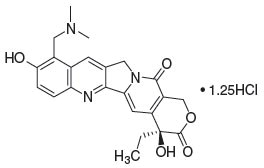
Topotecan is a topoisomerase inhibitor. The chemical name for topotecan hydrochloride is (S)-10-[(dimethylamino)methyl]-4-ethyl-4,9-dihydroxy-1H-pyrano[3',4':6,7] indolizino [1,2-b]quinoline-3,14-(4 H,12H)-dione 1.25 hydrochloride. It is soluble in water and melts with decomposition at 213° to 218°C.
Topotecan hydrochloride has the following structural formula:
C23H23N3O5 • 1.25HCl M.W. 467.02
Topotecan hydrochloride for injection is supplied as a sterile, lyophilized, buffered, light yellow to greenish powder available in single-dose vials. Each vial contains topotecan hydrochloride equivalent to 4 mg of topotecan as free base. The reconstituted solution ranges in color from yellow to yellow green and is intended for administration by intravenous infusion.
Inactive ingredients are mannitol, 48 mg, and tartaric acid, 20 mg. Hydrochloric acid and sodium hydroxide may be used to adjust the pH. The solution pH ranges from 2.5 to 3.5.
16.1 How Supplied
Topotecan hydrochloride for injection is supplied as a sterile, lyophilized, buffered, light yellow to greenish powder. Topotecan hydrochloride for injection is supplied as follows:
|
Product No. |
NDC No. |
Strength |
|
|
PRX760210 |
63323-762-94 |
4 mg (free base) |
Single-dose vial, |
The container closure is not made with natural rubber latex.
8.4 Pediatric Use
Safety and effectiveness in pediatric patients have not been established.
8.5 Geriatric Use
Of the 879 patients with metastatic ovarian cancer or small cell lung cancer in clinical trials of topotecan hydrochloride for injection, 32% were aged 65 years and older, while 3.8% were aged 75 years and older. Of the 140 patients with Stage IV-B, relapsed, or refractory cervical cancer in clinical trials of topotecan hydrochloride for injection who received topotecan hydrochloride with cisplatin in the randomized clinical trial, 6% were aged 65 years and older, while 3% were aged 75 years and older. No overall differences in effectiveness or safety were observed between these patients and younger patients, and other reported clinical experience has not identified differences in responses between the elderly and younger patients.
1.1 Ovarian Cancer
Topotecan hydrochloride for injection, as a single agent, is indicated for the treatment of patients with metastatic ovarian cancer after disease progression on or after initial or subsequent chemotherapy.
1.3 Cervical Cancer
Topotecan hydrochloride for injection in combination with cisplatin is indicated for the treatment of patients with Stage IV-B, recurrent, or persistent cervical cancer not amenable to curative treatment.
14.1 Ovarian Cancer
The efficacy of topotecan hydrochloride was evaluated in 2 clinical trials of 223 patients with metastatic ovarian cancer. All patients had disease that had recurred on, or was unresponsive to, a platinum-containing regimen. Patients in these trials received an initial dose of 1.5 mg/m2 as an intravenous infusion for 5 consecutive days, starting on Day 1 of a 21-day cycle.
One trial (Study 039) was a randomized trial of 112 patients who received topotecan hydrochloride and of 114 patients who received paclitaxel (175 mg/m2 intravenously over 3 hours on Day 1 of a 21-day cycle). All patients had recurrent ovarian cancer after a platinum-containing regimen or had not responded to at least 1 prior platinum-containing regimen. Patients who did not respond to the trial therapy, or who progressed, could be given the alternative treatment. The efficacy outcome measures were overall response rate, response duration, time to progression, and overall survival (OS).
The results of the trial did not show statistically significant improvements in response rates, response duration, time to progression, and OS as shown in Table 4.
| Abbreviation: CI, confidence interval. | ||
| a The calculation for response duration was based on the interval between first response and time to progression. | ||
|
Parameters |
Topotecan
|
Paclitaxel
|
|
Overall response rate (95% Cl) |
21% (13%, 28%) |
14% (8%, 20%) |
|
Complete response rate |
5% |
3% |
|
Partial response rate |
16% |
11% |
|
Response durationa (months) |
||
|
Median (95% Cl) |
6.0 (5.1, 7.6) |
5.0 (3.7, 7.8) |
|
Time to progression (months) |
||
|
Median (95% Cl) |
4.4 (2.8, 5.4) |
3.4 (2.7, 4.2) |
|
Hazard ratio (95% Cl) |
0.76 (0.57, 1.02) |
|
|
Overall survival (months) |
||
|
Median (95% Cl) |
14.5 (10.7, 16.5) |
12.2 (9.7, 15.8) |
|
Hazard ratio (95% Cl) |
0.97 (0.71, 1.34) |
The median time to response was 7.6 weeks (3.1 weeks to 5 months) with topotecan hydrochloride compared with 6.0 weeks (2.4 weeks to 4.1 months) with paclitaxel. In the crossover phase, 13% of 61 patients who received topotecan hydrochloride after paclitaxel had a partial response and 10% of 49 patients who received paclitaxel after topotecan hydrochloride had a response (2 complete responses).
Topotecan hydrochloride was active in ovarian cancer patients who had developed resistance to platinum-containing therapy, defined as tumor progression while on, or tumor relapse within 6 months after completion of, a platinum-containing regimen. One complete and 6 partial responses were seen in 60 patients, for a response rate of 12%. In the same trial, there were no complete responders and 4 partial responders on the paclitaxel arm, for a response rate of 7%.
Topotecan hydrochloride was also studied in an open-label, non-comparative trial in 111 patients with recurrent ovarian cancer after treatment with a platinum-containing regimen, or who had not responded to 1 prior platinum-containing regimen. The response rate was 14% (95% CI: 7%, 20%). The median duration of response was 5 months (4.6 weeks to 9.6 months). The time to progression was 2.6 months (5 days to 1.4 years). The median survival was 1.3 years (1.4 weeks to 2.2 years).
4 Contraindications
Topotecan hydrochloride is contraindicated in patients who have a history of severe hypersensitivity reactions to topotecan. Reactions have included anaphylactoid reactions [see Adverse Reactions (6.2)].
6 Adverse Reactions
14.3 Cervical Cancer
The efficacy of topotecan hydrochloride was evaluated in a multi-center, randomized (1:1), open-label study (Study GOG 0179) conducted in 147 patients with histologically confirmed Stage IV-B, recurrent, or persistent cervical cancer considered not amenable to curative treatment with surgery and/or radiation. Patients were randomized to topotecan hydrochloride (0.75 mg/m2 once daily intravenously for 3 consecutive days starting on Day 1 of a 21-day cycle) with cisplatin (50 mg/m2 intravenously on Day 1) or cisplatin as a single agent. Fifty-six percent of patients treated with topotecan hydrochloride with cisplatin and 56% of patients treated with cisplatin had received prior cisplatin with or without other agents as first-line chemotherapy. The efficacy outcome measure was OS.
Median OS of eligible patients receiving topotecan hydrochloride with cisplatin was 9.4 months (95% CI: 7.9, 11.9) compared with 6.5 months (95% CI: 5.8, 8.8) among patients randomized to cisplatin alone with a log rank P-value of 0.033 (significance level was 0.044 after adjusting for the interim analysis).
The unadjusted hazard ratio for OS was 0.76 (95% CI: 0.59, 0.98).
Figure 1. Kaplan-Meier Curves for Overall Survival in Cervical Cancer in Study GOG 0179
5.1 Myelosuppression
Topotecan hydrochloride can cause severe myelosuppression.
8.6 Renal Impairment
Reduce the dose of topotecan hydrochloride for injection in patients with a CLcr of 20 to 39 mL/min [see Dosage and Administration (2.6), Clinical Pharmacology (12.3)]. No dosage adjustment is recommended for patients with CLcr greater than or equal to 40 mL/min. Insufficient data are available in patients with CLcr less than 20 mL/min to provide a dosage recommendation for topotecan hydrochloride for injection.
12.3 Pharmacokinetics
Following administration of topotecan hydrochloride for injection at doses of 0.5 to 1.5 mg/m2 (0.1 to 0.3 times the recommended single agent dose) administered as a 30-minute infusion, area under the curve (AUC) increases proportionally with dose.
1 Indications and Usage
Topotecan hydrochloride for injection is a topoisomerase inhibitor indicated for treatment of:
-
•Patients with metastatic ovarian cancer after disease progression on or after initial or subsequent chemotherapy, as a single agent. (1.1)
-
•Patients with small cell lung cancer (SCLC) platinum-sensitive disease who progressed at least 60 days after initiation of first-line chemotherapy, as a single agent. (1.2)
-
•Patients with Stage IV-B, recurrent, or persistent cervical cancer which is not amenable to curative treatment, in combination with cisplatin. (1.3)
12.1 Mechanism of Action
Topoisomerase I relieves torsional strain in DNA by inducing reversible single-strand breaks. Topotecan binds to the topoisomerase I-DNA complex and prevents re-ligation of these single-strand breaks. The cytotoxicity of topotecan is thought to be due to double-strand DNA damage produced during DNA synthesis, when replication enzymes interact with the ternary complex formed by topotecan, topoisomerase I, and DNA. Mammalian cells cannot efficiently repair these double-strand breaks.
16.2 Storage and Handling
Store at 20° to 25°C (68° to 77°F) [see USP Controlled Room Temperature]. Protect from light; product is light-sensitive. Retain in carton. Handle and dispose of topotecan hydrochloride for injection consistent with recommendations for the handling and disposal of hazardous drugs1.
5.4 Embryo Fetal Toxicity
Based on animal data, topotecan hydrochloride can cause fetal harm when administered to a pregnant woman. Topotecan caused embryolethality, fetotoxicity, and teratogenicity in rats and rabbits when administered during organogenesis. Advise women of the potential risk to a fetus. Advise females of reproductive potential to use effective contraception during treatment and for 6 months after the last dose of topotecan hydrochloride for injection. Advise males with a female partner of reproductive potential to use effective contraception during treatment with topotecan hydrochloride for injection and for 3 months after the last dose [see Use in Specific Populations (8.1, 8.3), Nonclinical Toxicology (13.1)].
Warning: Myelosuppression
Topotecan hydrochloride can cause severe myelosuppression. Administer first cycle only to patients with baseline neutrophil counts of greater than or equal to 1,500/mm3 and platelet counts greater than or equal to 100,000/mm3. Monitor blood cell counts [see Warnings and Precautions (5.1)]
1.2 Small Cell Lung Cancer
Topotecan hydrochloride for injection, as a single agent, is indicated for the treatment of patients with small cell lung cancer (SCLC) with platinum-sensitive disease who progressed at least 60 days after initiation of first-line chemotherapy.
5 Warnings and Precautions
-
•Interstitial lung disease (ILD): Fatal cases have occurred. Permanently discontinue if ILD confirmed. (5.2)
-
•Extravasation and tissue injury: Severe cases have occurred. If extravasation occurs, immediately stop administration and institute recommended management procedures. (5.3)
-
•Embryo-Fetal toxicity: Can cause fetal harm. Advise patients of potential risk to the fetus and to use effective contraception. (5.4, 8.1, 8.3)
2 Dosage and Administration
-
•Ovarian cancer and small cell lung cancer: 1.5 mg/m2 by intravenous infusion over 30 minutes daily for 5 consecutive days, starting on Day 1 of a 21-day cycle. (2.2, 2.3)
-
•Cervical cancer: 0.75 mg/m2 by intravenous infusion over 30 minutes on Days 1, 2, and 3 with cisplatin 50 mg/m2 on Day 1, of a 21-day cycle. (2.4)
-
•Renal impairment: Reduce dose if creatinine clearance (CLcr) 20 to 39 mL/min. (2.6)
3 Dosage Forms and Strengths
For injection: 4 mg (topotecan free base) lyophilized powder in a single-dose vial for reconstitution; light yellow to greenish powder.
6.2 Postmarketing Experience
The following reactions have been identified during post approval use of topotecan hydrochloride.
Because these reactions are reported voluntarily from a population of unknown size, it is not always possible to reliably estimate their frequency or establish a causal relationship to drug exposure.
5.2 Interstitial Lung Disease
Interstitial lung disease (ILD), including fatalities, can occur with topotecan hydrochloride.
Underlying risk factors include history of ILD, pulmonary fibrosis, lung cancer, thoracic radiation, and use of pneumotoxic drugs or colony stimulating factors. Monitor for pulmonary symptoms indicative of ILD. Permanently discontinue topotecan hydrochloride for injection if ILD is confirmed.
8 Use in Specific Populations
Lactation: Advise not to breastfeed. (8.2)
6.1 Clinical Trials Experience
Because clinical trials are conducted under widely varying conditions, adverse reaction rates observed in the clinical trials of a drug cannot be directly compared with rates in the clinical trials of another drug and may not reflect the rates observed in practice.
The data in Warnings and Precautions reflect exposure to topotecan hydrochloride for injection from eight trials in which 879 patients with ovarian cancer or small cell lung cancer (SCLC) received topotecan hydrochloride for injection 1.5 mg/m2 by intravenous infusion daily for 5 consecutive days, starting on Day 1 of a 21 day cycle and from one trial (Study GOG 0179) in which 147 patients with cervical cancer received topotecan hydrochloride for injection 0.75 mg/m2 by intravenous infusion daily on Days 1, 2, and 3, with cisplatin 50 mg/m2 by intravenous infusion on Day 1, of a 21-day cycle.
2.1 Important Safety Information
Verify dosage using body surface area. Do not exceed a single dose of 4 mg intravenously.
17 Patient Counseling Information
-
•Myelosuppression
Inform patients that topotecan hydrochloride decreases blood cell counts such as white blood cells, platelets, and red blood cells. Advise patients to notify their healthcare provider promptly for fever, other signs of infection, or bleeding [see Warnings and Precautions (5.1)].
-
•Interstitial Lung Disease (ILD)
Inform patients of the risks of severe ILD. Advise patients to contact their healthcare provider immediately to report new or worsening respiratory symptoms [see Warnings and Precautions (5.2)].
-
•Embryo-Fetal Toxicity
Advise females of reproductive potential and males with female partners of reproductive potential of the potential risk to a fetus. Advise women to contact their healthcare provider if they become pregnant, or if pregnancy is suspected during treatment with topotecan hydrochloride for injection [see Warnings and Precautions (5.4), Use in Specific Populations (8.1, 8.3)].
Advise females of reproductive potential to use effective contraception during treatment and for 6 months after the last dose of topotecan hydrochloride for injection [see Use in Specific Populations (8.1, 8.3)].
Advise males with a female partner of reproductive potential to use effective contraception during treatment and for 3 months after the last dose of topotecan hydrochloride for injection [see Use in Specific Populations (8.1, 8.3), Nonclinical Toxicology (13.1)].
-
•Lactation
Advise women to discontinue breastfeeding during treatment and for 1 week after the last dose of topotecan hydrochloride for injection [see Use in Specific Populations (8.2)].
-
•Infertility
Advise male and female patients of the potential risk for impaired fertility [see Use in Specific Populations (8.3), Nonclinical Toxicology (13.1)].
-
•Asthenia and Fatigue
Advise patients that topotecan hydrochloride for injection may cause asthenia or fatigue. These symptoms may impair the ability to safely drive or operate machinery.
PREMIERProRx® is a registered trademark of Premier Healthcare Alliance, L.P., used under license.
Manufactured by:
Fresenius Kabi
Lake Zurich, IL 60047
www.fresenius-kabi.com/us
451322B
14.2 Small Cell Lung Cancer (sclc)
The efficacy of topotecan hydrochloride was evaluated in 426 patients with recurrent or progressive small cell lung cancer (SCLC) in a randomized, comparative trial and in 3 single-arm trials.
5.3 Extravasation and Tissue Injury
Extravasation, including severe cases, can occur with topotecan hydrochloride. If signs or symptoms of extravasation occur, immediately stop administration of topotecan hydrochloride and institute recommended management procedures [see Adverse Reactions (6.1)].
2.2 Recommended Dosage for Ovarian Cancer
The recommended dosage of topotecan hydrochloride is 1.5 mg/m2 by intravenous infusion over 30 minutes daily for 5 consecutive days, starting on Day 1 of a 21-day cycle until disease progression or unacceptable toxicity.
2.4 Recommended Dosage for Cervical Cancer
The recommended dosage of topotecan hydrochloride is 0.75 mg/m2 by intravenous infusion over 30 minutes daily on Days 1, 2, and 3 in combination with cisplatin 50 mg/m2 on Day 1, of a 21-day cycle.
2.6 Dosage Modification for Renal Impairment
For topotecan hydrochloride as a single agent, reduce the dose to 0.75 mg/m2/day for patients with creatinine clearance (CLcr) of 20 to 39 mL/min (calculated with the Cockcroft-Gault method using ideal body weight) [see Clinical Pharmacology (12.3)].
2.7 Preparation and Intravenous Administration
Visually inspect for particulate matter and discoloration prior to administration, whenever solution and container permit.
2.3 Recommended Dosage for Small Cell Lung Cancer (sclc)
The recommended dosage of topotecan hydrochloride is 1.5 mg/m2 by intravenous infusion over 30 minutes daily for 5 consecutive days, starting on Day 1 of a 21-day cycle.
13.1 Carcinogenesis, Mutagenesis, Impairment of Fertility
Carcinogenicity testing of topotecan has not been performed. Topotecan is known to be genotoxic to mammalian cells and is a probable carcinogen. Topotecan was mutagenic to L5178Y mouse lymphoma cells and clastogenic to cultured human lymphocytes with and without metabolic activation. It was also clastogenic to mouse bone marrow. Topotecan did not cause mutations in bacterial cells.
Topotecan given to female rats prior to mating at an intravenous dose of 1.4 mg/m2 [about equal to the clinical dose based on body surface area (BSA)] caused superovulation possibly related to inhibition of follicular atresia. This dose given to pregnant female rats also caused increased pre-implantation loss. Studies in dogs given at an intravenous dose of 0.4 mg/m2 (about 0.25 times the clinical dose based on BSA) of topotecan daily for a month suggest that treatment may cause an increase in the incidence of multinucleated spermatogonial giant cells in the testes.
Package Label Principal Display Topotecan 4 Mg Single Dose Vial Label
NDC 63323-762-94 PRX760210
Topotecan Hydrochloride
for Injection
4 mg (base) per vial
For intravenous use.
MUST BE DILUTED
Single Dose Vial
Rx only
Package Label Principal Display Topotecan 4 Mg Single Dose Vial Carton Label
NDC 63323-762-94 PRX760210
Topotecan Hydrochloride
for Injection
4 mg (base) per vial
For intravenous use.
MUST BE DILUTED.
Cytotoxic agent.
Single Dose Vial
Rx only
Structured Label Content
Section 42229-5 (42229-5)
Hematologic
Do not administer subsequent cycles of topotecan hydrochloride for injection until neutrophils recover to greater than 1,000/mm3, platelets recover to greater than 100,000/mm3, and hemoglobin levels recover to greater than or equal to 9 g/dL (with transfusion if necessary).
For topotecan hydrochloride as a single agent, reduce the dose to 1.25 mg/m2/day for:
-
•neutrophil counts of less than 500/mm3, or administer granulocyte-colony stimulating factor (GCSF) starting no sooner than 24 hours following the last dose.
-
•platelet counts less than 25,000/mm3 during previous cycle.
For topotecan hydrochloride in combination with cisplatin, reduce the dose to 0.60 mg/m2/day (and further to 0.45 mg/m2 if necessary) for:
-
•febrile neutropenia (defined as neutrophil counts less than 1,000/mm3 with temperature of greater than or equal to 38.0°C (100.4°F), or administer G-CSF starting no sooner than 24 hours following the last dose.
-
•platelet counts less than 25,000/mm3 during previous cycle.
Section 43683-2 (43683-2)
10 Overdosage (10 OVERDOSAGE)
Overdoses (up to 10-fold of the recommended dose) have occurred in patients receiving intravenous topotecan. The primary complication of overdosage is myelosuppression. Elevated hepatic enzymes, mucositis, gastrointestinal toxicity, and skin toxicity have occurred with overdosages. If an overdose is suspected, monitor the patient closely for myelosuppression and institute supportive-care measures as appropriate.
15 References (15 REFERENCES)
-
1.“OSHA Hazardous Drugs.” OSHA. http://www.osha.gov/SLTC/hazardousdrugs/index.html.
11 Description (11 DESCRIPTION)
Topotecan is a topoisomerase inhibitor. The chemical name for topotecan hydrochloride is (S)-10-[(dimethylamino)methyl]-4-ethyl-4,9-dihydroxy-1H-pyrano[3',4':6,7] indolizino [1,2-b]quinoline-3,14-(4 H,12H)-dione 1.25 hydrochloride. It is soluble in water and melts with decomposition at 213° to 218°C.
Topotecan hydrochloride has the following structural formula:
C23H23N3O5 • 1.25HCl M.W. 467.02
Topotecan hydrochloride for injection is supplied as a sterile, lyophilized, buffered, light yellow to greenish powder available in single-dose vials. Each vial contains topotecan hydrochloride equivalent to 4 mg of topotecan as free base. The reconstituted solution ranges in color from yellow to yellow green and is intended for administration by intravenous infusion.
Inactive ingredients are mannitol, 48 mg, and tartaric acid, 20 mg. Hydrochloric acid and sodium hydroxide may be used to adjust the pH. The solution pH ranges from 2.5 to 3.5.
16.1 How Supplied
Topotecan hydrochloride for injection is supplied as a sterile, lyophilized, buffered, light yellow to greenish powder. Topotecan hydrochloride for injection is supplied as follows:
|
Product No. |
NDC No. |
Strength |
|
|
PRX760210 |
63323-762-94 |
4 mg (free base) |
Single-dose vial, |
The container closure is not made with natural rubber latex.
8.4 Pediatric Use
Safety and effectiveness in pediatric patients have not been established.
8.5 Geriatric Use
Of the 879 patients with metastatic ovarian cancer or small cell lung cancer in clinical trials of topotecan hydrochloride for injection, 32% were aged 65 years and older, while 3.8% were aged 75 years and older. Of the 140 patients with Stage IV-B, relapsed, or refractory cervical cancer in clinical trials of topotecan hydrochloride for injection who received topotecan hydrochloride with cisplatin in the randomized clinical trial, 6% were aged 65 years and older, while 3% were aged 75 years and older. No overall differences in effectiveness or safety were observed between these patients and younger patients, and other reported clinical experience has not identified differences in responses between the elderly and younger patients.
1.1 Ovarian Cancer
Topotecan hydrochloride for injection, as a single agent, is indicated for the treatment of patients with metastatic ovarian cancer after disease progression on or after initial or subsequent chemotherapy.
1.3 Cervical Cancer
Topotecan hydrochloride for injection in combination with cisplatin is indicated for the treatment of patients with Stage IV-B, recurrent, or persistent cervical cancer not amenable to curative treatment.
14.1 Ovarian Cancer
The efficacy of topotecan hydrochloride was evaluated in 2 clinical trials of 223 patients with metastatic ovarian cancer. All patients had disease that had recurred on, or was unresponsive to, a platinum-containing regimen. Patients in these trials received an initial dose of 1.5 mg/m2 as an intravenous infusion for 5 consecutive days, starting on Day 1 of a 21-day cycle.
One trial (Study 039) was a randomized trial of 112 patients who received topotecan hydrochloride and of 114 patients who received paclitaxel (175 mg/m2 intravenously over 3 hours on Day 1 of a 21-day cycle). All patients had recurrent ovarian cancer after a platinum-containing regimen or had not responded to at least 1 prior platinum-containing regimen. Patients who did not respond to the trial therapy, or who progressed, could be given the alternative treatment. The efficacy outcome measures were overall response rate, response duration, time to progression, and overall survival (OS).
The results of the trial did not show statistically significant improvements in response rates, response duration, time to progression, and OS as shown in Table 4.
| Abbreviation: CI, confidence interval. | ||
| a The calculation for response duration was based on the interval between first response and time to progression. | ||
|
Parameters |
Topotecan
|
Paclitaxel
|
|
Overall response rate (95% Cl) |
21% (13%, 28%) |
14% (8%, 20%) |
|
Complete response rate |
5% |
3% |
|
Partial response rate |
16% |
11% |
|
Response durationa (months) |
||
|
Median (95% Cl) |
6.0 (5.1, 7.6) |
5.0 (3.7, 7.8) |
|
Time to progression (months) |
||
|
Median (95% Cl) |
4.4 (2.8, 5.4) |
3.4 (2.7, 4.2) |
|
Hazard ratio (95% Cl) |
0.76 (0.57, 1.02) |
|
|
Overall survival (months) |
||
|
Median (95% Cl) |
14.5 (10.7, 16.5) |
12.2 (9.7, 15.8) |
|
Hazard ratio (95% Cl) |
0.97 (0.71, 1.34) |
The median time to response was 7.6 weeks (3.1 weeks to 5 months) with topotecan hydrochloride compared with 6.0 weeks (2.4 weeks to 4.1 months) with paclitaxel. In the crossover phase, 13% of 61 patients who received topotecan hydrochloride after paclitaxel had a partial response and 10% of 49 patients who received paclitaxel after topotecan hydrochloride had a response (2 complete responses).
Topotecan hydrochloride was active in ovarian cancer patients who had developed resistance to platinum-containing therapy, defined as tumor progression while on, or tumor relapse within 6 months after completion of, a platinum-containing regimen. One complete and 6 partial responses were seen in 60 patients, for a response rate of 12%. In the same trial, there were no complete responders and 4 partial responders on the paclitaxel arm, for a response rate of 7%.
Topotecan hydrochloride was also studied in an open-label, non-comparative trial in 111 patients with recurrent ovarian cancer after treatment with a platinum-containing regimen, or who had not responded to 1 prior platinum-containing regimen. The response rate was 14% (95% CI: 7%, 20%). The median duration of response was 5 months (4.6 weeks to 9.6 months). The time to progression was 2.6 months (5 days to 1.4 years). The median survival was 1.3 years (1.4 weeks to 2.2 years).
4 Contraindications (4 CONTRAINDICATIONS)
Topotecan hydrochloride is contraindicated in patients who have a history of severe hypersensitivity reactions to topotecan. Reactions have included anaphylactoid reactions [see Adverse Reactions (6.2)].
6 Adverse Reactions (6 ADVERSE REACTIONS)
14.3 Cervical Cancer
The efficacy of topotecan hydrochloride was evaluated in a multi-center, randomized (1:1), open-label study (Study GOG 0179) conducted in 147 patients with histologically confirmed Stage IV-B, recurrent, or persistent cervical cancer considered not amenable to curative treatment with surgery and/or radiation. Patients were randomized to topotecan hydrochloride (0.75 mg/m2 once daily intravenously for 3 consecutive days starting on Day 1 of a 21-day cycle) with cisplatin (50 mg/m2 intravenously on Day 1) or cisplatin as a single agent. Fifty-six percent of patients treated with topotecan hydrochloride with cisplatin and 56% of patients treated with cisplatin had received prior cisplatin with or without other agents as first-line chemotherapy. The efficacy outcome measure was OS.
Median OS of eligible patients receiving topotecan hydrochloride with cisplatin was 9.4 months (95% CI: 7.9, 11.9) compared with 6.5 months (95% CI: 5.8, 8.8) among patients randomized to cisplatin alone with a log rank P-value of 0.033 (significance level was 0.044 after adjusting for the interim analysis).
The unadjusted hazard ratio for OS was 0.76 (95% CI: 0.59, 0.98).
Figure 1. Kaplan-Meier Curves for Overall Survival in Cervical Cancer in Study GOG 0179
5.1 Myelosuppression
Topotecan hydrochloride can cause severe myelosuppression.
8.6 Renal Impairment
Reduce the dose of topotecan hydrochloride for injection in patients with a CLcr of 20 to 39 mL/min [see Dosage and Administration (2.6), Clinical Pharmacology (12.3)]. No dosage adjustment is recommended for patients with CLcr greater than or equal to 40 mL/min. Insufficient data are available in patients with CLcr less than 20 mL/min to provide a dosage recommendation for topotecan hydrochloride for injection.
12.3 Pharmacokinetics
Following administration of topotecan hydrochloride for injection at doses of 0.5 to 1.5 mg/m2 (0.1 to 0.3 times the recommended single agent dose) administered as a 30-minute infusion, area under the curve (AUC) increases proportionally with dose.
1 Indications and Usage (1 INDICATIONS AND USAGE)
Topotecan hydrochloride for injection is a topoisomerase inhibitor indicated for treatment of:
-
•Patients with metastatic ovarian cancer after disease progression on or after initial or subsequent chemotherapy, as a single agent. (1.1)
-
•Patients with small cell lung cancer (SCLC) platinum-sensitive disease who progressed at least 60 days after initiation of first-line chemotherapy, as a single agent. (1.2)
-
•Patients with Stage IV-B, recurrent, or persistent cervical cancer which is not amenable to curative treatment, in combination with cisplatin. (1.3)
12.1 Mechanism of Action
Topoisomerase I relieves torsional strain in DNA by inducing reversible single-strand breaks. Topotecan binds to the topoisomerase I-DNA complex and prevents re-ligation of these single-strand breaks. The cytotoxicity of topotecan is thought to be due to double-strand DNA damage produced during DNA synthesis, when replication enzymes interact with the ternary complex formed by topotecan, topoisomerase I, and DNA. Mammalian cells cannot efficiently repair these double-strand breaks.
16.2 Storage and Handling
Store at 20° to 25°C (68° to 77°F) [see USP Controlled Room Temperature]. Protect from light; product is light-sensitive. Retain in carton. Handle and dispose of topotecan hydrochloride for injection consistent with recommendations for the handling and disposal of hazardous drugs1.
5.4 Embryo Fetal Toxicity (5.4 Embryo-Fetal Toxicity)
Based on animal data, topotecan hydrochloride can cause fetal harm when administered to a pregnant woman. Topotecan caused embryolethality, fetotoxicity, and teratogenicity in rats and rabbits when administered during organogenesis. Advise women of the potential risk to a fetus. Advise females of reproductive potential to use effective contraception during treatment and for 6 months after the last dose of topotecan hydrochloride for injection. Advise males with a female partner of reproductive potential to use effective contraception during treatment with topotecan hydrochloride for injection and for 3 months after the last dose [see Use in Specific Populations (8.1, 8.3), Nonclinical Toxicology (13.1)].
Warning: Myelosuppression (WARNING: MYELOSUPPRESSION)
Topotecan hydrochloride can cause severe myelosuppression. Administer first cycle only to patients with baseline neutrophil counts of greater than or equal to 1,500/mm3 and platelet counts greater than or equal to 100,000/mm3. Monitor blood cell counts [see Warnings and Precautions (5.1)]
1.2 Small Cell Lung Cancer
Topotecan hydrochloride for injection, as a single agent, is indicated for the treatment of patients with small cell lung cancer (SCLC) with platinum-sensitive disease who progressed at least 60 days after initiation of first-line chemotherapy.
5 Warnings and Precautions (5 WARNINGS AND PRECAUTIONS)
-
•Interstitial lung disease (ILD): Fatal cases have occurred. Permanently discontinue if ILD confirmed. (5.2)
-
•Extravasation and tissue injury: Severe cases have occurred. If extravasation occurs, immediately stop administration and institute recommended management procedures. (5.3)
-
•Embryo-Fetal toxicity: Can cause fetal harm. Advise patients of potential risk to the fetus and to use effective contraception. (5.4, 8.1, 8.3)
2 Dosage and Administration (2 DOSAGE AND ADMINISTRATION)
-
•Ovarian cancer and small cell lung cancer: 1.5 mg/m2 by intravenous infusion over 30 minutes daily for 5 consecutive days, starting on Day 1 of a 21-day cycle. (2.2, 2.3)
-
•Cervical cancer: 0.75 mg/m2 by intravenous infusion over 30 minutes on Days 1, 2, and 3 with cisplatin 50 mg/m2 on Day 1, of a 21-day cycle. (2.4)
-
•Renal impairment: Reduce dose if creatinine clearance (CLcr) 20 to 39 mL/min. (2.6)
3 Dosage Forms and Strengths (3 DOSAGE FORMS AND STRENGTHS)
For injection: 4 mg (topotecan free base) lyophilized powder in a single-dose vial for reconstitution; light yellow to greenish powder.
6.2 Postmarketing Experience
The following reactions have been identified during post approval use of topotecan hydrochloride.
Because these reactions are reported voluntarily from a population of unknown size, it is not always possible to reliably estimate their frequency or establish a causal relationship to drug exposure.
5.2 Interstitial Lung Disease
Interstitial lung disease (ILD), including fatalities, can occur with topotecan hydrochloride.
Underlying risk factors include history of ILD, pulmonary fibrosis, lung cancer, thoracic radiation, and use of pneumotoxic drugs or colony stimulating factors. Monitor for pulmonary symptoms indicative of ILD. Permanently discontinue topotecan hydrochloride for injection if ILD is confirmed.
8 Use in Specific Populations (8 USE IN SPECIFIC POPULATIONS)
Lactation: Advise not to breastfeed. (8.2)
6.1 Clinical Trials Experience
Because clinical trials are conducted under widely varying conditions, adverse reaction rates observed in the clinical trials of a drug cannot be directly compared with rates in the clinical trials of another drug and may not reflect the rates observed in practice.
The data in Warnings and Precautions reflect exposure to topotecan hydrochloride for injection from eight trials in which 879 patients with ovarian cancer or small cell lung cancer (SCLC) received topotecan hydrochloride for injection 1.5 mg/m2 by intravenous infusion daily for 5 consecutive days, starting on Day 1 of a 21 day cycle and from one trial (Study GOG 0179) in which 147 patients with cervical cancer received topotecan hydrochloride for injection 0.75 mg/m2 by intravenous infusion daily on Days 1, 2, and 3, with cisplatin 50 mg/m2 by intravenous infusion on Day 1, of a 21-day cycle.
2.1 Important Safety Information
Verify dosage using body surface area. Do not exceed a single dose of 4 mg intravenously.
17 Patient Counseling Information (17 PATIENT COUNSELING INFORMATION)
-
•Myelosuppression
Inform patients that topotecan hydrochloride decreases blood cell counts such as white blood cells, platelets, and red blood cells. Advise patients to notify their healthcare provider promptly for fever, other signs of infection, or bleeding [see Warnings and Precautions (5.1)].
-
•Interstitial Lung Disease (ILD)
Inform patients of the risks of severe ILD. Advise patients to contact their healthcare provider immediately to report new or worsening respiratory symptoms [see Warnings and Precautions (5.2)].
-
•Embryo-Fetal Toxicity
Advise females of reproductive potential and males with female partners of reproductive potential of the potential risk to a fetus. Advise women to contact their healthcare provider if they become pregnant, or if pregnancy is suspected during treatment with topotecan hydrochloride for injection [see Warnings and Precautions (5.4), Use in Specific Populations (8.1, 8.3)].
Advise females of reproductive potential to use effective contraception during treatment and for 6 months after the last dose of topotecan hydrochloride for injection [see Use in Specific Populations (8.1, 8.3)].
Advise males with a female partner of reproductive potential to use effective contraception during treatment and for 3 months after the last dose of topotecan hydrochloride for injection [see Use in Specific Populations (8.1, 8.3), Nonclinical Toxicology (13.1)].
-
•Lactation
Advise women to discontinue breastfeeding during treatment and for 1 week after the last dose of topotecan hydrochloride for injection [see Use in Specific Populations (8.2)].
-
•Infertility
Advise male and female patients of the potential risk for impaired fertility [see Use in Specific Populations (8.3), Nonclinical Toxicology (13.1)].
-
•Asthenia and Fatigue
Advise patients that topotecan hydrochloride for injection may cause asthenia or fatigue. These symptoms may impair the ability to safely drive or operate machinery.
PREMIERProRx® is a registered trademark of Premier Healthcare Alliance, L.P., used under license.
Manufactured by:
Fresenius Kabi
Lake Zurich, IL 60047
www.fresenius-kabi.com/us
451322B
14.2 Small Cell Lung Cancer (sclc) (14.2 Small Cell Lung Cancer (SCLC))
The efficacy of topotecan hydrochloride was evaluated in 426 patients with recurrent or progressive small cell lung cancer (SCLC) in a randomized, comparative trial and in 3 single-arm trials.
5.3 Extravasation and Tissue Injury
Extravasation, including severe cases, can occur with topotecan hydrochloride. If signs or symptoms of extravasation occur, immediately stop administration of topotecan hydrochloride and institute recommended management procedures [see Adverse Reactions (6.1)].
2.2 Recommended Dosage for Ovarian Cancer
The recommended dosage of topotecan hydrochloride is 1.5 mg/m2 by intravenous infusion over 30 minutes daily for 5 consecutive days, starting on Day 1 of a 21-day cycle until disease progression or unacceptable toxicity.
2.4 Recommended Dosage for Cervical Cancer
The recommended dosage of topotecan hydrochloride is 0.75 mg/m2 by intravenous infusion over 30 minutes daily on Days 1, 2, and 3 in combination with cisplatin 50 mg/m2 on Day 1, of a 21-day cycle.
2.6 Dosage Modification for Renal Impairment
For topotecan hydrochloride as a single agent, reduce the dose to 0.75 mg/m2/day for patients with creatinine clearance (CLcr) of 20 to 39 mL/min (calculated with the Cockcroft-Gault method using ideal body weight) [see Clinical Pharmacology (12.3)].
2.7 Preparation and Intravenous Administration
Visually inspect for particulate matter and discoloration prior to administration, whenever solution and container permit.
2.3 Recommended Dosage for Small Cell Lung Cancer (sclc) (2.3 Recommended Dosage for Small Cell Lung Cancer (SCLC))
The recommended dosage of topotecan hydrochloride is 1.5 mg/m2 by intravenous infusion over 30 minutes daily for 5 consecutive days, starting on Day 1 of a 21-day cycle.
13.1 Carcinogenesis, Mutagenesis, Impairment of Fertility
Carcinogenicity testing of topotecan has not been performed. Topotecan is known to be genotoxic to mammalian cells and is a probable carcinogen. Topotecan was mutagenic to L5178Y mouse lymphoma cells and clastogenic to cultured human lymphocytes with and without metabolic activation. It was also clastogenic to mouse bone marrow. Topotecan did not cause mutations in bacterial cells.
Topotecan given to female rats prior to mating at an intravenous dose of 1.4 mg/m2 [about equal to the clinical dose based on body surface area (BSA)] caused superovulation possibly related to inhibition of follicular atresia. This dose given to pregnant female rats also caused increased pre-implantation loss. Studies in dogs given at an intravenous dose of 0.4 mg/m2 (about 0.25 times the clinical dose based on BSA) of topotecan daily for a month suggest that treatment may cause an increase in the incidence of multinucleated spermatogonial giant cells in the testes.
Package Label Principal Display Topotecan 4 Mg Single Dose Vial Label (PACKAGE LABEL - PRINCIPAL DISPLAY - Topotecan 4 mg Single Dose Vial Label)
NDC 63323-762-94 PRX760210
Topotecan Hydrochloride
for Injection
4 mg (base) per vial
For intravenous use.
MUST BE DILUTED
Single Dose Vial
Rx only
Package Label Principal Display Topotecan 4 Mg Single Dose Vial Carton Label (PACKAGE LABEL - PRINCIPAL DISPLAY - Topotecan 4 mg Single Dose Vial Carton Label)
NDC 63323-762-94 PRX760210
Topotecan Hydrochloride
for Injection
4 mg (base) per vial
For intravenous use.
MUST BE DILUTED.
Cytotoxic agent.
Single Dose Vial
Rx only
Advanced Ingredient Data
Raw Label Data
All Sections (JSON)
Additional Information
Back to search View SPL set listing Open on DailyMed ↗
Source: dailymed · Ingested: 2026-02-15T11:51:09.645610 · Updated: 2026-03-14T22:39:28.520287