These Highlights Do Not Include All The Information Needed To Use Qelbree ®
aedf408d-0f84-418d-9416-7c39ddb0d29a
34391-3
HUMAN PRESCRIPTION DRUG LABEL
Drug Facts
Composition & Product
Identifiers & Packaging
Indications and Usage
Qelbree is indicated for the treatment of Attention-Deficit Hyperactivity Disorder (ADHD) in adults and pediatric patients 6 years and older.
Dosage and Administration
Pediatric patients 6 to 11 years of age : Recommended starting dosage is 100 mg once daily. May titrate in increments of 100 mg weekly to the maximum recommended dosage of 400 mg once daily ( 2.2 ) Pediatric patients 12 to 17 years of age : Recommended starting dosage is 200 mg once daily. May titrate after 1 week, by an increment of 200mg, to the maximum recommended dosage of 400 mg once daily ( 2.2 ) Adult patients : Recommended starting dosage is 200 mg once daily. May titrate in increments of 200 mg weekly, to maximum recommended dosage of 600 mg once daily ( 2.2 ) Capsules may be swallowed whole or opened and the entire contents sprinkled onto applesauce or pudding ( 2.3 ) Severe Renal Impairment : Initial dosage is 100 mg once daily. Titrate in weekly increments of 50 mg to 100 mg to a maximum recommended dosage of 200 mg once daily ( 2.4 , 8.6 )
Contraindications
Qelbree is contraindicated in patients: receiving concomitant treatment with monoamine oxidase inhibitors (MAOI), or within 14 days following discontinuing an MAOI, because of an increased risk of hypertensive crisis [see Drug Interactions (7.1) ] . receiving concomitant administration of sensitive CYP1A2 substrates or CYP1A2 substrates with a narrow therapeutic range [see Drug Interactions (7.1) ].
Warnings and Precautions
Blood Pressure and Heart Rate Increases: Assess heart rate and blood pressure prior to initiating treatment, following increases in dosage, and periodically while on therapy ( 5.2 ) Activation of Mania or Hypomania: Screen patients for bipolar disorder ( 5.3 ) Somnolence and Fatigue: Advise patients to use caution when driving or operating hazardous machinery due to potential somnolence (including sedation and lethargy) and fatigue ( 5.4 )
Adverse Reactions
The following serious adverse reactions are described in other sections of the labeling: Suicidal Thoughts and Behaviors [see Warnings and Precautions (5.1) ] Blood Pressure and Heart Rate Increases [see Warnings and Precautions (5.2) ] Activation of Mania or Hypomania [see Warnings and Precautions (5.3) ] Somnolence and Fatigue [see Warnings and Precautions (5.4) ]
Drug Interactions
Moderate sensitive CYP1A2 substrates : Not recommended for coadministration with Qelbree. Dose reduction may be warranted ( 7.1 )
Description
In clinical studies, higher rates of suicidal thoughts and behavior were reported in patients with ADHD treated with Qelbree than in patients treated with placebo . Closely monitor all Qelbree-treated patients for clinical worsening, and for emergence of suicidal thoughts and behaviors [see Warnings and Precautions (5.1) ] .
Medication Information
Warnings and Precautions
Blood Pressure and Heart Rate Increases: Assess heart rate and blood pressure prior to initiating treatment, following increases in dosage, and periodically while on therapy ( 5.2 ) Activation of Mania or Hypomania: Screen patients for bipolar disorder ( 5.3 ) Somnolence and Fatigue: Advise patients to use caution when driving or operating hazardous machinery due to potential somnolence (including sedation and lethargy) and fatigue ( 5.4 )
Indications and Usage
Qelbree is indicated for the treatment of Attention-Deficit Hyperactivity Disorder (ADHD) in adults and pediatric patients 6 years and older.
Dosage and Administration
Pediatric patients 6 to 11 years of age : Recommended starting dosage is 100 mg once daily. May titrate in increments of 100 mg weekly to the maximum recommended dosage of 400 mg once daily ( 2.2 ) Pediatric patients 12 to 17 years of age : Recommended starting dosage is 200 mg once daily. May titrate after 1 week, by an increment of 200mg, to the maximum recommended dosage of 400 mg once daily ( 2.2 ) Adult patients : Recommended starting dosage is 200 mg once daily. May titrate in increments of 200 mg weekly, to maximum recommended dosage of 600 mg once daily ( 2.2 ) Capsules may be swallowed whole or opened and the entire contents sprinkled onto applesauce or pudding ( 2.3 ) Severe Renal Impairment : Initial dosage is 100 mg once daily. Titrate in weekly increments of 50 mg to 100 mg to a maximum recommended dosage of 200 mg once daily ( 2.4 , 8.6 )
Contraindications
Qelbree is contraindicated in patients: receiving concomitant treatment with monoamine oxidase inhibitors (MAOI), or within 14 days following discontinuing an MAOI, because of an increased risk of hypertensive crisis [see Drug Interactions (7.1) ] . receiving concomitant administration of sensitive CYP1A2 substrates or CYP1A2 substrates with a narrow therapeutic range [see Drug Interactions (7.1) ].
Adverse Reactions
The following serious adverse reactions are described in other sections of the labeling: Suicidal Thoughts and Behaviors [see Warnings and Precautions (5.1) ] Blood Pressure and Heart Rate Increases [see Warnings and Precautions (5.2) ] Activation of Mania or Hypomania [see Warnings and Precautions (5.3) ] Somnolence and Fatigue [see Warnings and Precautions (5.4) ]
Drug Interactions
Moderate sensitive CYP1A2 substrates : Not recommended for coadministration with Qelbree. Dose reduction may be warranted ( 7.1 )
Description
In clinical studies, higher rates of suicidal thoughts and behavior were reported in patients with ADHD treated with Qelbree than in patients treated with placebo . Closely monitor all Qelbree-treated patients for clinical worsening, and for emergence of suicidal thoughts and behaviors [see Warnings and Precautions (5.1) ] .
Section 42229-5
Pediatric patients
The recommended starting dosage for pediatric patients 6 to 11 years of age is 100 mg orally once daily. Dosage may be titrated in increments of 100 mg at weekly intervals to the maximum recommended dosage of 400 mg once daily, depending on response and tolerability.
The recommended starting dosage for pediatric patients 12 to 17 years of age is 200 mg orally once daily. After 1 week, dosage may be titrated by an increment of 200 mg to the maximum recommended dosage of 400 mg once daily, depending on response and tolerability.
Section 42231-1
| This Medication Guide has been approved by the U.S. Food and Drug Administration. | Revised: 01/2025 | |||
|
MEDICATION GUIDE
QELBREE ®(Kel' bree) (viloxazine extended-release capsules) for oral use |
||||
|
What is the most important information I should know about QELBREE?
QELBREE can cause serious side effects, including:
|
||||
|
|
|||
| See " What are the possible side effects of QELBREE?" for more information about side effects. | ||||
|
What is QELBREE?
QELBREE is a prescription medicine used to treat attention deficit hyperactivity disorder (ADHD) in adults and children 6 years of age and older. It is not known if QELBREE is safe and effective in children less than 6 years of age. |
||||
Do not take QELBREE if you or your child:
|
||||
Before taking QELBREE, tell your healthcare provider about all your or your child's medical conditions, including if you or your child:
QELBREE and other medicines may affect each other causing possible serious side effects. Your healthcare provider will decide if QELBREE can be taken with other medicines. Especially tell your healthcare provider if you or your child take:
Do not start any new medicine during treatment with QELBREE without first talking to your healthcare provider. |
||||
How should I take QELBREE?
|
||||
|
What should I avoid while taking QELBREE?
Do not drive or operate heavy machinery until you know how QELBREE will affect you. QELBREE may cause you to feel sleepy or tired. |
||||
|
What are the possible side effects of QELBREE?
QELBREE can cause serious side effects, including:
|
||||
|
|
|||
|
||||
|
|
|||
| The most common side effects of QELBREE in adults include: | ||||
|
|
|||
|
Effects on weight. Your healthcare provider should check your or your child's weight before starting and during treatment with
QELBREE.
These are not all of the possible side effects of QELBREE. Call your doctor for medical advice about side effects. You may report side effects to FDA at 1-800-FDA-1088. |
||||
How should I store QELBREE?
|
||||
|
General Information about the safe and effective use of QELBREE.
Medicines are sometimes prescribed for purposes other than those listed in a Medication Guide. Do not take QELBREE for a condition for which it was not prescribed. Do not give QELBREE to other people, even if they have the same symptoms that you have. It may harm them. You can ask your healthcare provider or pharmacist for information about QELBREE that is written for health professionals. |
||||
|
What are the ingredients in QELBREE?
Active ingredient: viloxazine Inactive ingredients:ammonium hydroxide, black iron oxide, butyl alcohol, corn starch, ethylcellulose, FD&C Blue #1, FD&C Red #28, FD&C Yellow #5, FD&C Yellow #6, FD&C Yellow #10, gelatin, hypromellose, isopropyl alcohol, lactose monohydrate, medium chain triglycerides, oleic acid, polyethylene glycol, potassium hydroxide, propylene glycol, shellac, strong ammonia solution, sucrose, talc, triacetin, titanium dioxide. Manufactured by: Catalent Pharma Solutions, LLC, 1100 Enterprise Drive, Winchester KY 40391, USA Distributed by: Supernus Pharmaceuticals, Inc., Rockville, MD USA 20850 © 2025 Supernus Pharmaceuticals Inc. For more information, go to www.supernus.com or call 1-866-398-0833. RA-QBE-MGV3-202501 |
Section 44425-7
Storage and Handling
Store at 20°C to 25°C (68°F to 77°F); excursions permitted between 15°C to 30°C (59°F to 86°F).
11 Description
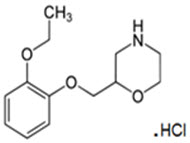
Qelbree contains viloxazine, a selective norepinephrine reuptake inhibitor, in the form of viloxazine hydrochloride which is (±)-2-[(2-ethoxyphenoxy)methyl]morpholine hydrochloride. The molecular formula is C 13H 20NO 3Cl and its molecular weight is 273.8 (HCl salt) with the following structural formula:
Viloxazine hydrochloride is a white to off-white powder. Viloxazine hydrochloride is soluble in water, 0.1N HCl and aqueous solutions of pH 9.5 and lower. Viloxazine hydrochloride is sparingly soluble in methanol, very slightly soluble in acetonitrile, acetic acid and isopropyl alcohol, and practically insoluble in ethyl acetate.
Qelbree extended-release capsules are intended for oral administration. Each extended-release capsule contains 100 mg, 150 mg, and 200 mg of viloxazine free base equivalent to 115mg, 173mg, and 231mg, respectively, of viloxazine hydrochloride salt.
The inactive ingredients are: Ammonium hydroxide, black iron oxide, butyl alcohol, corn starch, ethylcellulose, FD&C Blue #1, FD&C Red #28, FD&C Yellow #5, FD&C Yellow #6, FD&C Yellow #10, gelatin, hypromellose, isopropyl alcohol, lactose monohydrate, medium chain triglycerides, oleic acid, polyethylene glycol, potassium hydroxide, propylene glycol, shellac, strong ammonia solution, sucrose, talc, triacetin, titanium dioxide.
8.4 Pediatric Use
The safety and effectiveness of Qelbree in pediatric patients 6 to 17 years of age with ADHD have been established based on randomized, placebo-controlled studies in pediatric patients [see Adverse Reactions (6.1)and Clinical Studies (14)] .
The safety and effectiveness of Qelbree have not been established in pediatric patients younger than 6 years old.
Patients treated with Qelbree should be monitored for suicidal thoughts and behavior [see Warnings and Precautions (5.1)] , and for changes in weight [see Adverse Reactions (6.1)].
8.5 Geriatric Use
Clinical trials of Qelbree in the treatment of ADHD did not include sufficient numbers of patients aged 65 and older to determine whether or not they respond differently from younger patients.
4 Contraindications
Qelbree is contraindicated in patients:
- receiving concomitant treatment with monoamine oxidase inhibitors (MAOI), or within 14 days following discontinuing an MAOI, because of an increased risk of hypertensive crisis [see Drug Interactions (7.1)] .
- receiving concomitant administration of sensitive CYP1A2 substrates or CYP1A2 substrates with a narrow therapeutic range [see Drug Interactions (7.1)].
6 Adverse Reactions
The following serious adverse reactions are described in other sections of the labeling:
- Suicidal Thoughts and Behaviors [see Warnings and Precautions (5.1)]
- Blood Pressure and Heart Rate Increases [see Warnings and Precautions (5.2)]
- Activation of Mania or Hypomania [see Warnings and Precautions (5.3)]
- Somnolence and Fatigue [see Warnings and Precautions (5.4)]
7 Drug Interactions
Moderate sensitive CYP1A2 substrates: Not recommended for coadministration with Qelbree. Dose reduction may be warranted ( 7.1)
8.6 Renal Impairment
Dosage reduction is recommended in patients with severe (eGFR of < 30 mL/min/1.73m 2[MDRD]) renal impairment [see Dosage and Administration (2.4)] .
No dosage adjustment of Qelbree is recommended in patients with mild to moderate (eGFR of 30 to 89 mL/min/1.73m 2[MDRD]) renal impairment.
The exposure of viloxazine increases in patients with renal impairment [see Clinical Pharmacology (12.3)].
12.2 Pharmacodynamics
Viloxazine binds to and inhibits the norepinephrine transporter (Ki=0.13 μM). In addition, viloxazine binds to and exhibits partial agonist activity at the serotonin 5-HT 2Creceptor (Ki=0.66 μM).
12.3 Pharmacokinetics
Viloxazine C maxand AUC increase proportionally over a dosage range from 100 mg to 600 mg once daily. Steady-state was reached after two days of once-daily administration, and no accumulation was observed.
1 Indications and Usage
Qelbree is indicated for the treatment of Attention-Deficit Hyperactivity Disorder (ADHD) in adults and pediatric patients 6 years and older.
12.1 Mechanism of Action
The mechanism of action of viloxazine in the treatment of ADHD is unclear; however, it is thought to be through inhibiting the reuptake of norepinephrine.
5 Warnings and Precautions
- Blood Pressure and Heart Rate Increases: Assess heart rate and blood pressure prior to initiating treatment, following increases in dosage, and periodically while on therapy ( 5.2)
- Activation of Mania or Hypomania: Screen patients for bipolar disorder ( 5.3)
- Somnolence and Fatigue: Advise patients to use caution when driving or operating hazardous machinery due to potential somnolence (including sedation and lethargy) and fatigue ( 5.4)
5.4 Somnolence and Fatigue
Qelbree can cause somnolence and fatigue. In the short-term, placebo-controlled clinical trials in pediatric patients (6 to 17 years) with ADHD, somnolence (including lethargy and sedation) was reported in 16% of Qelbree-treated patients compared to 4% of placebo-treated patients. Fatigue was reported in 6% of Qelbree-treated patients, compared to 2% of placebo-treated patients [see Adverse Reactions (6.1)]. In adults, somnolence was reported in 6% of Qelbree-treated patients versus 2% in placebo-treated patients. Fatigue was reported in 12% of Qelbree-treated patients versus 3% of placebo-treated patients.
Patients should not perform activities requiring mental alertness, such as operating a motor vehicle or operating hazardous machinery until they know how they will be affected by Qelbree.
2 Dosage and Administration
- Pediatric patients 6 to 11 years of age: Recommended starting dosage is 100 mg once daily. May titrate in increments of 100 mg weekly to the maximum recommended dosage of 400 mg once daily ( 2.2)
- Pediatric patients 12 to 17 years of age: Recommended starting dosage is 200 mg once daily. May titrate after 1 week, by an increment of 200mg, to the maximum recommended dosage of 400 mg once daily ( 2.2)
- Adult patients: Recommended starting dosage is 200 mg once daily. May titrate in increments of 200 mg weekly, to maximum recommended dosage of 600 mg once daily ( 2.2)
- Capsules may be swallowed whole or opened and the entire contents sprinkled onto applesauce or pudding ( 2.3)
- Severe Renal Impairment :Initial dosage is 100 mg once daily. Titrate in weekly increments of 50 mg to 100 mg to a maximum recommended dosage of 200 mg once daily ( 2.4, 8.6)
3 Dosage Forms and Strengths
Qelbree (viloxazine extended-release capsules) are available as:
100 mg: yellow opaque body and cap (printed "SPN" on the cap, "100" on the body)
150 mg: lavender opaque body and cap (printed "SPN" on the cap, "150" on the body)
200 mg: light green opaque body and cap (printed "SPN" on the cap, "200" on the body)
8 Use in Specific Populations
- Pregnancy :May cause maternal harm; discontinue when pregnancy is recognized ( 8.1)
2.3 Administration Information
Administer Qelbree orally with or without food [see Clinical Pharmacology (12.3)] . Do not cut, crush, or chew the capsules.
Swallow Qelbree capsules whole, or open the capsule and sprinkle the entire contents over a teaspoonful or tablespoonful of pudding or applesauce. Consume the food mixture in its entirety, without chewing, within 15 minutes for pudding, or within 2 hours for applesauce; do not store for future use.
6.1 Clinical Trials Experience
Because clinical trials are conducted under widely varying conditions, adverse reaction rates observed in the clinical trials of a drug cannot be directly compared to rates in the clinical trials of another drug and may not reflect the rates observed in practice.
The safety of Qelbree has been evaluated in 1118 pediatric patients (6 to 17 years of age) with ADHD exposed to one or more doses in short-term (6 to 8 week), randomized, double-blind, placebo-controlled trials. A total of 682 pediatric patients 6 to 17 years of age were treated for at least 6 months, and 347 pediatric patients 6 to 17 years of age for at least 12 months with Qelbree.
The safety of Qelbree has been evaluated in 189 adult patients (18 to 60 years of age) with ADHD exposed to one or more doses in a short-term (6 week), randomized, double-blind, placebo-controlled trial. A total of 277 adult patients with ADHD have been exposed to one or more doses of Qelbree. Eighty-four adult patients were treated for at least 6 months, and 22 adult patients for at least 12 months.
17 Patient Counseling Information
Advise the patient to read the FDA-approved patient labeling (Medication Guide).
5.1 Suicidal Thoughts and Behaviors
Higher rates of suicidal thoughts and behaviors were reported in pediatric and adult patients with ADHD treated with Qelbree than in patients treated with placebo.
Among 1019 pediatric patients exposed to Qelbree 100 mg to 400 mg in short-term trials, a total of nine patients (0.9%) reported suicidal ideation (N=6), behavior (N=1) or both (N=2). Eight patients reported suicidal ideation or behavior on the Columbia Suicide Severity Rating Scale (C-SSRS), a validated scale that assesses suicide risk. An additional patient treated with Qelbree reported suicidal behavior during the clinical trials, but did not report it on the C-SSRS. Among 463 patients treated with placebo in these studies, two patients (0.4%) reported suicidal ideation on the C-SSRS. No patients treated with placebo reported suicidal behavior. No completed suicides occurred in these trials.
Among 189 adults treated with Qelbree, a total of three patients (1.6%) reported suicidal ideation on the C-SSRS, versus 0 of 183 adults treated with placebo. No adults treated with either Qelbree or placebo reported suicidal behavior on the C-SSRS in the study. No attempted or completed suicides occurred in the trial.
Patients treated with Qelbree had higher rates of insomnia and irritability [see Adverse Reactions (6.1)] . Although a causal link between the emergence of insomnia and irritability and the emergence of suicidal impulses has not been established, there is a concern that these and other symptoms such as depressed mood, anxiety, agitation, akathisia, mania, hypomania, panic attacks, impulsive behavior, and aggression may represent precursors to emerging suicidal ideation or behavior. Thus, patients being treated with Qelbree should be observed for the emergence of precursor symptoms.
Closely monitor all Qelbree-treated patients for clinical worsening and emergence of suicidal thoughts and behaviors, especially during the initial few months of drug therapy, and at times of dosage changes. Consider changing the therapeutic regimen, including possibly discontinuing Qelbree, in patients who are experiencing emergent suicidal thoughts and behaviors or symptoms that might be precursors to emerging suicidal ideation or behavior, especially if these symptoms are severe or abrupt in onset, or were not part of the patient's presenting symptoms. Advise family members or caregivers of patients to monitor for the emergence of suicidal ideation or behavior, and to report such symptoms immediately to the healthcare provider.
5.3 Activation of Mania Or Hypomania
Noradrenergic drugs, such as Qelbree, may induce a manic or mixed episode in patients with bipolar disorder. Prior to initiating treatment with Qelbree, screen patients to determine if they are at risk for bipolar disorder; such screening should include a detailed psychiatric history, including a personal or family history of suicide, bipolar disorder, and depression [see Dosage and Administration (2.1)].
Warning: Suicidal Thoughts and Behaviors
In clinical studies, higher rates of suicidal thoughts and behavior were reported in patients with ADHD treated with Qelbree than in patients treated with placebo. Closely monitor all Qelbree-treated patients for clinical worsening, and for emergence of suicidal thoughts and behaviors [see Warnings and Precautions (5.1)] .
13.2 Animal Toxicology And/or Pharmacology
In animal studies, viloxazine treatment caused dose-dependent convulsions at oral doses of ≥ 130, ≥ 173, and ≥ 39 mg/kg/day in the rat, mouse, and dog, respectively, which are approximately equal to or slightly higher than the MRHD of 600 mg in adults, based on mg/m 2.
5.2 Blood Pressure and Heart Rate Increases
Qelbree can cause an increase in heart rate and diastolic blood pressure.
Principal Display Panel 100 Mg Capsule Bottle Label
30 Capsules
NDC 17772-131-30
Qelbree
™
(viloxazine
extended-release capsules)
100 mg
Once daily
For oral use
ATTENTION PHARMACIST:
Dispense the Accompanying
Medication Guide to Each Patient
Rx only
Principal Display Panel 150 Mg Capsule Bottle Label
30 Capsules
NDC 17772-132-30
Qelbree
™
(viloxazine
extended-release capsules)
150 mg
Once daily
For oral use
ATTENTION PHARMACIST:
Dispense the Accompanying
Medication Guide to Each Patient
Rx only
Principal Display Panel 200 Mg Capsule Bottle Label
30 Capsules
NDC 17772-133-30
Qelbree
™
(viloxazine
extended-release capsules)
200 mg
Once daily
For oral use
ATTENTION PHARMACIST:
Dispense the Accompanying
Medication Guide to
Each Patient
Rx only
2.1 Important Considerations Prior to Initiating Treatment
- Assess heart rate and blood pressure prior to initiating treatment with Qelbree, following increases in dosage, and periodically while on therapy [see Warnings and Precautions (5.2)] .
- Prior to initiating treatment with Qelbree, screen patients for a personal or family history of suicide, bipolar disorder, and depression [see Warnings and Precautions (5.3)].
2.4 Dosage Recommendations in Patients With Renal Impairment
In patients with severe renal impairment (eGFR < 30 mL/min/1.73m 2), the recommended starting dosage is 100 mg once daily. Dosage may be titrated in weekly increments of 50 to 100 mg once daily, to a maximum recommended dosage of 200 mg once daily.
No dosage adjustment is recommended in patients with mild to moderate (eGFR of 30 to 89 mL/min/1.73m 2) renal impairment [see Use in Specific Populations (8.6)] .
7.1 Drugs Having Clinically Important Interactions With Qelbree
| Monoamine Oxidase Inhibitors (MAOI) | |
| Clinical Impact | Concomitant use of Qelbree with an MAOI may lead to a potentially life-threatening hypertensive crisis. |
| Intervention | Concomitant use of Qelbree with an MAOI or within 2 weeks after discontinuing an MAOI is contraindicated [see Contraindications (4)] . |
| Sensitive CYP1A2 Substrates or CYP1A2 Substrates with a Narrow Therapeutic Range | |
| Clinical Impact | Viloxazine is a strong CYP1A2 inhibitor. Concomitant use of viloxazine significantly increases the total exposure, but not peak exposure, of sensitive CYP1A2 substrates [see Clinical Pharmacology (12.3)] , which may increase the risk of adverse reactions associated with these CYP1A2 substrates. |
| Intervention | Coadministration with Qelbree is contraindicated [see Contraindications (4)] . |
| Moderate Sensitive CYP1A2 Substrate | |
| Clinical Impact | Viloxazine is a strong CYP1A2 inhibitor. Concomitant use of viloxazine significantly increases the total, but not peak, exposure of sensitive CYP1A2 substrates [see Clinical Pharmacology (12.3)] , which may increase the risk of adverse reactions associated with these CYP1A2 substrates. |
| Intervention | Not recommended for coadministration with Qelbree. Dose reduction may be warranted if coadministered. |
| CYP2D6 Substrates | |
| Clinical Impact | Viloxazine is a weak inhibitor of CYP2D6, and increases the exposure of CYP2D6 substrates when coadministered [see Clinical Pharmacology (12.3)] . |
| Intervention | Monitor patients for adverse reactions and adjust dosages of CYP2D6 substrates, as clinically indicated. |
| CYP3A4 Substrates | |
| Clinical Impact | Viloxazine is a weak inhibitor of CYP3A4 which increases the exposure of CYP3A4 substrates when coadministered [see Clinical Pharmacology (12.3)]. |
| Intervention | Monitor patients for adverse reactions and adjust dosages of CYP3A4 substrates, as clinically indicated. |
Structured Label Content
Section 42229-5 (42229-5)
Pediatric patients
The recommended starting dosage for pediatric patients 6 to 11 years of age is 100 mg orally once daily. Dosage may be titrated in increments of 100 mg at weekly intervals to the maximum recommended dosage of 400 mg once daily, depending on response and tolerability.
The recommended starting dosage for pediatric patients 12 to 17 years of age is 200 mg orally once daily. After 1 week, dosage may be titrated by an increment of 200 mg to the maximum recommended dosage of 400 mg once daily, depending on response and tolerability.
Section 42231-1 (42231-1)
| This Medication Guide has been approved by the U.S. Food and Drug Administration. | Revised: 01/2025 | |||
|
MEDICATION GUIDE
QELBREE ®(Kel' bree) (viloxazine extended-release capsules) for oral use |
||||
|
What is the most important information I should know about QELBREE?
QELBREE can cause serious side effects, including:
|
||||
|
|
|||
| See " What are the possible side effects of QELBREE?" for more information about side effects. | ||||
|
What is QELBREE?
QELBREE is a prescription medicine used to treat attention deficit hyperactivity disorder (ADHD) in adults and children 6 years of age and older. It is not known if QELBREE is safe and effective in children less than 6 years of age. |
||||
Do not take QELBREE if you or your child:
|
||||
Before taking QELBREE, tell your healthcare provider about all your or your child's medical conditions, including if you or your child:
QELBREE and other medicines may affect each other causing possible serious side effects. Your healthcare provider will decide if QELBREE can be taken with other medicines. Especially tell your healthcare provider if you or your child take:
Do not start any new medicine during treatment with QELBREE without first talking to your healthcare provider. |
||||
How should I take QELBREE?
|
||||
|
What should I avoid while taking QELBREE?
Do not drive or operate heavy machinery until you know how QELBREE will affect you. QELBREE may cause you to feel sleepy or tired. |
||||
|
What are the possible side effects of QELBREE?
QELBREE can cause serious side effects, including:
|
||||
|
|
|||
|
||||
|
|
|||
| The most common side effects of QELBREE in adults include: | ||||
|
|
|||
|
Effects on weight. Your healthcare provider should check your or your child's weight before starting and during treatment with
QELBREE.
These are not all of the possible side effects of QELBREE. Call your doctor for medical advice about side effects. You may report side effects to FDA at 1-800-FDA-1088. |
||||
How should I store QELBREE?
|
||||
|
General Information about the safe and effective use of QELBREE.
Medicines are sometimes prescribed for purposes other than those listed in a Medication Guide. Do not take QELBREE for a condition for which it was not prescribed. Do not give QELBREE to other people, even if they have the same symptoms that you have. It may harm them. You can ask your healthcare provider or pharmacist for information about QELBREE that is written for health professionals. |
||||
|
What are the ingredients in QELBREE?
Active ingredient: viloxazine Inactive ingredients:ammonium hydroxide, black iron oxide, butyl alcohol, corn starch, ethylcellulose, FD&C Blue #1, FD&C Red #28, FD&C Yellow #5, FD&C Yellow #6, FD&C Yellow #10, gelatin, hypromellose, isopropyl alcohol, lactose monohydrate, medium chain triglycerides, oleic acid, polyethylene glycol, potassium hydroxide, propylene glycol, shellac, strong ammonia solution, sucrose, talc, triacetin, titanium dioxide. Manufactured by: Catalent Pharma Solutions, LLC, 1100 Enterprise Drive, Winchester KY 40391, USA Distributed by: Supernus Pharmaceuticals, Inc., Rockville, MD USA 20850 © 2025 Supernus Pharmaceuticals Inc. For more information, go to www.supernus.com or call 1-866-398-0833. RA-QBE-MGV3-202501 |
Section 44425-7 (44425-7)
Storage and Handling
Store at 20°C to 25°C (68°F to 77°F); excursions permitted between 15°C to 30°C (59°F to 86°F).
11 Description (11 DESCRIPTION)
Qelbree contains viloxazine, a selective norepinephrine reuptake inhibitor, in the form of viloxazine hydrochloride which is (±)-2-[(2-ethoxyphenoxy)methyl]morpholine hydrochloride. The molecular formula is C 13H 20NO 3Cl and its molecular weight is 273.8 (HCl salt) with the following structural formula:
Viloxazine hydrochloride is a white to off-white powder. Viloxazine hydrochloride is soluble in water, 0.1N HCl and aqueous solutions of pH 9.5 and lower. Viloxazine hydrochloride is sparingly soluble in methanol, very slightly soluble in acetonitrile, acetic acid and isopropyl alcohol, and practically insoluble in ethyl acetate.
Qelbree extended-release capsules are intended for oral administration. Each extended-release capsule contains 100 mg, 150 mg, and 200 mg of viloxazine free base equivalent to 115mg, 173mg, and 231mg, respectively, of viloxazine hydrochloride salt.
The inactive ingredients are: Ammonium hydroxide, black iron oxide, butyl alcohol, corn starch, ethylcellulose, FD&C Blue #1, FD&C Red #28, FD&C Yellow #5, FD&C Yellow #6, FD&C Yellow #10, gelatin, hypromellose, isopropyl alcohol, lactose monohydrate, medium chain triglycerides, oleic acid, polyethylene glycol, potassium hydroxide, propylene glycol, shellac, strong ammonia solution, sucrose, talc, triacetin, titanium dioxide.
8.4 Pediatric Use
The safety and effectiveness of Qelbree in pediatric patients 6 to 17 years of age with ADHD have been established based on randomized, placebo-controlled studies in pediatric patients [see Adverse Reactions (6.1)and Clinical Studies (14)] .
The safety and effectiveness of Qelbree have not been established in pediatric patients younger than 6 years old.
Patients treated with Qelbree should be monitored for suicidal thoughts and behavior [see Warnings and Precautions (5.1)] , and for changes in weight [see Adverse Reactions (6.1)].
8.5 Geriatric Use
Clinical trials of Qelbree in the treatment of ADHD did not include sufficient numbers of patients aged 65 and older to determine whether or not they respond differently from younger patients.
4 Contraindications (4 CONTRAINDICATIONS)
Qelbree is contraindicated in patients:
- receiving concomitant treatment with monoamine oxidase inhibitors (MAOI), or within 14 days following discontinuing an MAOI, because of an increased risk of hypertensive crisis [see Drug Interactions (7.1)] .
- receiving concomitant administration of sensitive CYP1A2 substrates or CYP1A2 substrates with a narrow therapeutic range [see Drug Interactions (7.1)].
6 Adverse Reactions (6 ADVERSE REACTIONS)
The following serious adverse reactions are described in other sections of the labeling:
- Suicidal Thoughts and Behaviors [see Warnings and Precautions (5.1)]
- Blood Pressure and Heart Rate Increases [see Warnings and Precautions (5.2)]
- Activation of Mania or Hypomania [see Warnings and Precautions (5.3)]
- Somnolence and Fatigue [see Warnings and Precautions (5.4)]
7 Drug Interactions (7 DRUG INTERACTIONS)
Moderate sensitive CYP1A2 substrates: Not recommended for coadministration with Qelbree. Dose reduction may be warranted ( 7.1)
8.6 Renal Impairment
Dosage reduction is recommended in patients with severe (eGFR of < 30 mL/min/1.73m 2[MDRD]) renal impairment [see Dosage and Administration (2.4)] .
No dosage adjustment of Qelbree is recommended in patients with mild to moderate (eGFR of 30 to 89 mL/min/1.73m 2[MDRD]) renal impairment.
The exposure of viloxazine increases in patients with renal impairment [see Clinical Pharmacology (12.3)].
12.2 Pharmacodynamics
Viloxazine binds to and inhibits the norepinephrine transporter (Ki=0.13 μM). In addition, viloxazine binds to and exhibits partial agonist activity at the serotonin 5-HT 2Creceptor (Ki=0.66 μM).
12.3 Pharmacokinetics
Viloxazine C maxand AUC increase proportionally over a dosage range from 100 mg to 600 mg once daily. Steady-state was reached after two days of once-daily administration, and no accumulation was observed.
1 Indications and Usage (1 INDICATIONS AND USAGE)
Qelbree is indicated for the treatment of Attention-Deficit Hyperactivity Disorder (ADHD) in adults and pediatric patients 6 years and older.
12.1 Mechanism of Action
The mechanism of action of viloxazine in the treatment of ADHD is unclear; however, it is thought to be through inhibiting the reuptake of norepinephrine.
5 Warnings and Precautions (5 WARNINGS AND PRECAUTIONS)
- Blood Pressure and Heart Rate Increases: Assess heart rate and blood pressure prior to initiating treatment, following increases in dosage, and periodically while on therapy ( 5.2)
- Activation of Mania or Hypomania: Screen patients for bipolar disorder ( 5.3)
- Somnolence and Fatigue: Advise patients to use caution when driving or operating hazardous machinery due to potential somnolence (including sedation and lethargy) and fatigue ( 5.4)
5.4 Somnolence and Fatigue
Qelbree can cause somnolence and fatigue. In the short-term, placebo-controlled clinical trials in pediatric patients (6 to 17 years) with ADHD, somnolence (including lethargy and sedation) was reported in 16% of Qelbree-treated patients compared to 4% of placebo-treated patients. Fatigue was reported in 6% of Qelbree-treated patients, compared to 2% of placebo-treated patients [see Adverse Reactions (6.1)]. In adults, somnolence was reported in 6% of Qelbree-treated patients versus 2% in placebo-treated patients. Fatigue was reported in 12% of Qelbree-treated patients versus 3% of placebo-treated patients.
Patients should not perform activities requiring mental alertness, such as operating a motor vehicle or operating hazardous machinery until they know how they will be affected by Qelbree.
2 Dosage and Administration (2 DOSAGE AND ADMINISTRATION)
- Pediatric patients 6 to 11 years of age: Recommended starting dosage is 100 mg once daily. May titrate in increments of 100 mg weekly to the maximum recommended dosage of 400 mg once daily ( 2.2)
- Pediatric patients 12 to 17 years of age: Recommended starting dosage is 200 mg once daily. May titrate after 1 week, by an increment of 200mg, to the maximum recommended dosage of 400 mg once daily ( 2.2)
- Adult patients: Recommended starting dosage is 200 mg once daily. May titrate in increments of 200 mg weekly, to maximum recommended dosage of 600 mg once daily ( 2.2)
- Capsules may be swallowed whole or opened and the entire contents sprinkled onto applesauce or pudding ( 2.3)
- Severe Renal Impairment :Initial dosage is 100 mg once daily. Titrate in weekly increments of 50 mg to 100 mg to a maximum recommended dosage of 200 mg once daily ( 2.4, 8.6)
3 Dosage Forms and Strengths (3 DOSAGE FORMS AND STRENGTHS)
Qelbree (viloxazine extended-release capsules) are available as:
100 mg: yellow opaque body and cap (printed "SPN" on the cap, "100" on the body)
150 mg: lavender opaque body and cap (printed "SPN" on the cap, "150" on the body)
200 mg: light green opaque body and cap (printed "SPN" on the cap, "200" on the body)
8 Use in Specific Populations (8 USE IN SPECIFIC POPULATIONS)
- Pregnancy :May cause maternal harm; discontinue when pregnancy is recognized ( 8.1)
2.3 Administration Information
Administer Qelbree orally with or without food [see Clinical Pharmacology (12.3)] . Do not cut, crush, or chew the capsules.
Swallow Qelbree capsules whole, or open the capsule and sprinkle the entire contents over a teaspoonful or tablespoonful of pudding or applesauce. Consume the food mixture in its entirety, without chewing, within 15 minutes for pudding, or within 2 hours for applesauce; do not store for future use.
6.1 Clinical Trials Experience
Because clinical trials are conducted under widely varying conditions, adverse reaction rates observed in the clinical trials of a drug cannot be directly compared to rates in the clinical trials of another drug and may not reflect the rates observed in practice.
The safety of Qelbree has been evaluated in 1118 pediatric patients (6 to 17 years of age) with ADHD exposed to one or more doses in short-term (6 to 8 week), randomized, double-blind, placebo-controlled trials. A total of 682 pediatric patients 6 to 17 years of age were treated for at least 6 months, and 347 pediatric patients 6 to 17 years of age for at least 12 months with Qelbree.
The safety of Qelbree has been evaluated in 189 adult patients (18 to 60 years of age) with ADHD exposed to one or more doses in a short-term (6 week), randomized, double-blind, placebo-controlled trial. A total of 277 adult patients with ADHD have been exposed to one or more doses of Qelbree. Eighty-four adult patients were treated for at least 6 months, and 22 adult patients for at least 12 months.
17 Patient Counseling Information (17 PATIENT COUNSELING INFORMATION)
Advise the patient to read the FDA-approved patient labeling (Medication Guide).
5.1 Suicidal Thoughts and Behaviors
Higher rates of suicidal thoughts and behaviors were reported in pediatric and adult patients with ADHD treated with Qelbree than in patients treated with placebo.
Among 1019 pediatric patients exposed to Qelbree 100 mg to 400 mg in short-term trials, a total of nine patients (0.9%) reported suicidal ideation (N=6), behavior (N=1) or both (N=2). Eight patients reported suicidal ideation or behavior on the Columbia Suicide Severity Rating Scale (C-SSRS), a validated scale that assesses suicide risk. An additional patient treated with Qelbree reported suicidal behavior during the clinical trials, but did not report it on the C-SSRS. Among 463 patients treated with placebo in these studies, two patients (0.4%) reported suicidal ideation on the C-SSRS. No patients treated with placebo reported suicidal behavior. No completed suicides occurred in these trials.
Among 189 adults treated with Qelbree, a total of three patients (1.6%) reported suicidal ideation on the C-SSRS, versus 0 of 183 adults treated with placebo. No adults treated with either Qelbree or placebo reported suicidal behavior on the C-SSRS in the study. No attempted or completed suicides occurred in the trial.
Patients treated with Qelbree had higher rates of insomnia and irritability [see Adverse Reactions (6.1)] . Although a causal link between the emergence of insomnia and irritability and the emergence of suicidal impulses has not been established, there is a concern that these and other symptoms such as depressed mood, anxiety, agitation, akathisia, mania, hypomania, panic attacks, impulsive behavior, and aggression may represent precursors to emerging suicidal ideation or behavior. Thus, patients being treated with Qelbree should be observed for the emergence of precursor symptoms.
Closely monitor all Qelbree-treated patients for clinical worsening and emergence of suicidal thoughts and behaviors, especially during the initial few months of drug therapy, and at times of dosage changes. Consider changing the therapeutic regimen, including possibly discontinuing Qelbree, in patients who are experiencing emergent suicidal thoughts and behaviors or symptoms that might be precursors to emerging suicidal ideation or behavior, especially if these symptoms are severe or abrupt in onset, or were not part of the patient's presenting symptoms. Advise family members or caregivers of patients to monitor for the emergence of suicidal ideation or behavior, and to report such symptoms immediately to the healthcare provider.
5.3 Activation of Mania Or Hypomania (5.3 Activation of Mania or Hypomania)
Noradrenergic drugs, such as Qelbree, may induce a manic or mixed episode in patients with bipolar disorder. Prior to initiating treatment with Qelbree, screen patients to determine if they are at risk for bipolar disorder; such screening should include a detailed psychiatric history, including a personal or family history of suicide, bipolar disorder, and depression [see Dosage and Administration (2.1)].
Warning: Suicidal Thoughts and Behaviors (WARNING: SUICIDAL THOUGHTS AND BEHAVIORS)
In clinical studies, higher rates of suicidal thoughts and behavior were reported in patients with ADHD treated with Qelbree than in patients treated with placebo. Closely monitor all Qelbree-treated patients for clinical worsening, and for emergence of suicidal thoughts and behaviors [see Warnings and Precautions (5.1)] .
13.2 Animal Toxicology And/or Pharmacology (13.2 Animal Toxicology and/or Pharmacology)
In animal studies, viloxazine treatment caused dose-dependent convulsions at oral doses of ≥ 130, ≥ 173, and ≥ 39 mg/kg/day in the rat, mouse, and dog, respectively, which are approximately equal to or slightly higher than the MRHD of 600 mg in adults, based on mg/m 2.
5.2 Blood Pressure and Heart Rate Increases
Qelbree can cause an increase in heart rate and diastolic blood pressure.
Principal Display Panel 100 Mg Capsule Bottle Label (PRINCIPAL DISPLAY PANEL - 100 mg Capsule Bottle Label)
30 Capsules
NDC 17772-131-30
Qelbree
™
(viloxazine
extended-release capsules)
100 mg
Once daily
For oral use
ATTENTION PHARMACIST:
Dispense the Accompanying
Medication Guide to Each Patient
Rx only
Principal Display Panel 150 Mg Capsule Bottle Label (PRINCIPAL DISPLAY PANEL - 150 mg Capsule Bottle Label)
30 Capsules
NDC 17772-132-30
Qelbree
™
(viloxazine
extended-release capsules)
150 mg
Once daily
For oral use
ATTENTION PHARMACIST:
Dispense the Accompanying
Medication Guide to Each Patient
Rx only
Principal Display Panel 200 Mg Capsule Bottle Label (PRINCIPAL DISPLAY PANEL - 200 mg Capsule Bottle Label)
30 Capsules
NDC 17772-133-30
Qelbree
™
(viloxazine
extended-release capsules)
200 mg
Once daily
For oral use
ATTENTION PHARMACIST:
Dispense the Accompanying
Medication Guide to
Each Patient
Rx only
2.1 Important Considerations Prior to Initiating Treatment
- Assess heart rate and blood pressure prior to initiating treatment with Qelbree, following increases in dosage, and periodically while on therapy [see Warnings and Precautions (5.2)] .
- Prior to initiating treatment with Qelbree, screen patients for a personal or family history of suicide, bipolar disorder, and depression [see Warnings and Precautions (5.3)].
2.4 Dosage Recommendations in Patients With Renal Impairment (2.4 Dosage Recommendations in Patients with Renal Impairment)
In patients with severe renal impairment (eGFR < 30 mL/min/1.73m 2), the recommended starting dosage is 100 mg once daily. Dosage may be titrated in weekly increments of 50 to 100 mg once daily, to a maximum recommended dosage of 200 mg once daily.
No dosage adjustment is recommended in patients with mild to moderate (eGFR of 30 to 89 mL/min/1.73m 2) renal impairment [see Use in Specific Populations (8.6)] .
7.1 Drugs Having Clinically Important Interactions With Qelbree (7.1 Drugs Having Clinically Important Interactions with Qelbree)
| Monoamine Oxidase Inhibitors (MAOI) | |
| Clinical Impact | Concomitant use of Qelbree with an MAOI may lead to a potentially life-threatening hypertensive crisis. |
| Intervention | Concomitant use of Qelbree with an MAOI or within 2 weeks after discontinuing an MAOI is contraindicated [see Contraindications (4)] . |
| Sensitive CYP1A2 Substrates or CYP1A2 Substrates with a Narrow Therapeutic Range | |
| Clinical Impact | Viloxazine is a strong CYP1A2 inhibitor. Concomitant use of viloxazine significantly increases the total exposure, but not peak exposure, of sensitive CYP1A2 substrates [see Clinical Pharmacology (12.3)] , which may increase the risk of adverse reactions associated with these CYP1A2 substrates. |
| Intervention | Coadministration with Qelbree is contraindicated [see Contraindications (4)] . |
| Moderate Sensitive CYP1A2 Substrate | |
| Clinical Impact | Viloxazine is a strong CYP1A2 inhibitor. Concomitant use of viloxazine significantly increases the total, but not peak, exposure of sensitive CYP1A2 substrates [see Clinical Pharmacology (12.3)] , which may increase the risk of adverse reactions associated with these CYP1A2 substrates. |
| Intervention | Not recommended for coadministration with Qelbree. Dose reduction may be warranted if coadministered. |
| CYP2D6 Substrates | |
| Clinical Impact | Viloxazine is a weak inhibitor of CYP2D6, and increases the exposure of CYP2D6 substrates when coadministered [see Clinical Pharmacology (12.3)] . |
| Intervention | Monitor patients for adverse reactions and adjust dosages of CYP2D6 substrates, as clinically indicated. |
| CYP3A4 Substrates | |
| Clinical Impact | Viloxazine is a weak inhibitor of CYP3A4 which increases the exposure of CYP3A4 substrates when coadministered [see Clinical Pharmacology (12.3)]. |
| Intervention | Monitor patients for adverse reactions and adjust dosages of CYP3A4 substrates, as clinically indicated. |
Advanced Ingredient Data
Raw Label Data
All Sections (JSON)
Additional Information
Back to search View SPL set listing Open on DailyMed ↗
Source: dailymed · Ingested: 2026-02-15T11:48:53.021921 · Updated: 2026-03-14T22:39:05.457483