Taltz
ac96658a-d7dc-4c7c-8928-2adcdf4318b2
34391-3
HUMAN PRESCRIPTION DRUG LABEL
Drug Facts
Composition & Product
Identifiers & Packaging
Indications and Usage
TALTZ ® is a humanized interleukin-17A antagonist indicated for the treatment of: patients aged 6 years or older with moderate-to-severe plaque psoriasis who are candidates for systemic therapy or phototherapy. ( 1.1 ) adults with active psoriatic arthritis. ( 1.2 ) adults with active ankylosing spondylitis. ( 1.3 ) adults with active non-radiographic axial spondyloarthritis with objective signs of inflammation. ( 1.4 )
Dosage and Administration
Administer by subcutaneous injection. Adult Plaque Psoriasis ( 2.2 ) Recommended dosage is 160 mg (two 80 mg injections) at Week 0, followed by 80 mg at Weeks 2, 4, 6, 8, 10, and 12, then 80 mg every 4 weeks. Pediatric Plaque Psoriasis ( 2.3 ) For patients weighing greater than 50 kg, recommended dosage is 160 mg (two 80 mg injections) at Week 0, followed by 80 mg every 4 weeks. For patients weighing 25-50 kg, recommended dosage is 80 mg at Week 0, followed by 40 mg every 4 weeks. For patients weighing less than 25 kg, recommended dosage is 40 mg at Week 0, followed by 20 mg every 4 weeks. Psoriatic Arthritis ( 2.4 ) Recommended dosage is 160 mg by subcutaneous injection (two 80 mg injections) at Week 0, followed by 80 mg every 4 weeks. For psoriatic arthritis patients with coexistent moderate-to-severe plaque psoriasis, use the dosing regimen for adult plaque psoriasis. ( 2.2 ) TALTZ may be administered alone or in combination with a conventional DMARD (e.g., methotrexate). Ankylosing Spondylitis ( 2.5 ) Recommended dosage is 160 mg by subcutaneous injection (two 80 mg injections) at Week 0, followed by 80 mg every 4 weeks. Non-radiographic Axial Spondyloarthritis ( 2.6 ) Recommended dosage is 80 mg by subcutaneous injection every 4 weeks.
Contraindications
TALTZ is contraindicated in patients with a previous serious hypersensitivity reaction, such as anaphylaxis, to ixekizumab or to any of the excipients [see Warnings and Precautions ( 5.3 )] .
Warnings and Precautions
Infections : Serious infections have occurred. Instruct patients to seek medical advice if signs or symptoms of clinically important chronic or acute infection occur. If a serious infection develops, discontinue TALTZ until the infection resolves. ( 5.1 ) Tuberculosis (TB) : Evaluate for TB prior to initiating treatment. ( 5.2 ) Hypersensitivity : If a serious allergic reaction occurs, discontinue TALTZ immediately and initiate appropriate therapy. ( 5.3 ) Eczematous Eruptions: In the postmarketing setting, cases of severe eczematous eruptions were reported in patients receiving TALTZ. Treatment may need to be discontinued to resolve the eczematous eruption. ( 5.4 ) Inflammatory Bowel Disease : Crohn's disease and ulcerative colitis, including exacerbations, occurred during clinical trials. Monitor closely when prescribing TALTZ to patients with inflammatory bowel disease (IBD). Discontinue TALTZ and initiate appropriate medical management if IBD develops. ( 5.5 ) Immunizations : Avoid use of live vaccines. ( 5.6 )
Adverse Reactions
The following adverse drug reactions are discussed in greater detail in other sections of the label: Infections [see Warnings and Precautions ( 5.1 )] Hypersensitivity Reactions [see Contraindications ( 4 ) and Warnings and Precautions ( 5.3 )] Eczematous Eruptions [see Warnings and Precautions ( 5.4 )] Inflammatory Bowel Disease [see Warnings and Precautions ( 5.5 )]
Description
Dosage and Administration ( 2.7 , 2.8 ) 02/2024 Warnings and Precautions ( 5.1 , 5.4 ) 08/2024
Medication Information
Warnings and Precautions
Infections : Serious infections have occurred. Instruct patients to seek medical advice if signs or symptoms of clinically important chronic or acute infection occur. If a serious infection develops, discontinue TALTZ until the infection resolves. ( 5.1 ) Tuberculosis (TB) : Evaluate for TB prior to initiating treatment. ( 5.2 ) Hypersensitivity : If a serious allergic reaction occurs, discontinue TALTZ immediately and initiate appropriate therapy. ( 5.3 ) Eczematous Eruptions: In the postmarketing setting, cases of severe eczematous eruptions were reported in patients receiving TALTZ. Treatment may need to be discontinued to resolve the eczematous eruption. ( 5.4 ) Inflammatory Bowel Disease : Crohn's disease and ulcerative colitis, including exacerbations, occurred during clinical trials. Monitor closely when prescribing TALTZ to patients with inflammatory bowel disease (IBD). Discontinue TALTZ and initiate appropriate medical management if IBD develops. ( 5.5 ) Immunizations : Avoid use of live vaccines. ( 5.6 )
Indications and Usage
TALTZ ® is a humanized interleukin-17A antagonist indicated for the treatment of: patients aged 6 years or older with moderate-to-severe plaque psoriasis who are candidates for systemic therapy or phototherapy. ( 1.1 ) adults with active psoriatic arthritis. ( 1.2 ) adults with active ankylosing spondylitis. ( 1.3 ) adults with active non-radiographic axial spondyloarthritis with objective signs of inflammation. ( 1.4 )
Dosage and Administration
Administer by subcutaneous injection. Adult Plaque Psoriasis ( 2.2 ) Recommended dosage is 160 mg (two 80 mg injections) at Week 0, followed by 80 mg at Weeks 2, 4, 6, 8, 10, and 12, then 80 mg every 4 weeks. Pediatric Plaque Psoriasis ( 2.3 ) For patients weighing greater than 50 kg, recommended dosage is 160 mg (two 80 mg injections) at Week 0, followed by 80 mg every 4 weeks. For patients weighing 25-50 kg, recommended dosage is 80 mg at Week 0, followed by 40 mg every 4 weeks. For patients weighing less than 25 kg, recommended dosage is 40 mg at Week 0, followed by 20 mg every 4 weeks. Psoriatic Arthritis ( 2.4 ) Recommended dosage is 160 mg by subcutaneous injection (two 80 mg injections) at Week 0, followed by 80 mg every 4 weeks. For psoriatic arthritis patients with coexistent moderate-to-severe plaque psoriasis, use the dosing regimen for adult plaque psoriasis. ( 2.2 ) TALTZ may be administered alone or in combination with a conventional DMARD (e.g., methotrexate). Ankylosing Spondylitis ( 2.5 ) Recommended dosage is 160 mg by subcutaneous injection (two 80 mg injections) at Week 0, followed by 80 mg every 4 weeks. Non-radiographic Axial Spondyloarthritis ( 2.6 ) Recommended dosage is 80 mg by subcutaneous injection every 4 weeks.
Dosage Forms and Strengths
How Supplied
TALTZ injection is a sterile, preservative free, clear and colorless to slightly yellow solution available in:
- a single-dose prefilled autoinjector or a single-dose prefilled syringe to deliver 80 mg ixekizumab.
- a single-dose prefilled syringe to deliver 40 mg ixekizumab.
- a single-dose prefilled syringe to deliver 20 mg ixekizumab.
TALTZ is supplied as:
| Pack Size | NDC Code | |
| Autoinjector | ||
| Carton of 1 | 0002-1445-11 | |
| 80 mg single-dose | Carton of 2 | 0002-1445-27 |
| Carton of 3 | 0002-1445-09 | |
| Prefilled syringe | ||
| 80 mg single-dose | Carton of 1 | 0002-7724-11 |
| 40 mg single-dose | Carton of 1 | 0002-8905-11 |
| 20 mg single-dose | Carton of 1 | 0002-8900-11 |
Contraindications
TALTZ is contraindicated in patients with a previous serious hypersensitivity reaction, such as anaphylaxis, to ixekizumab or to any of the excipients [see Warnings and Precautions ( 5.3 )] .
Adverse Reactions
The following adverse drug reactions are discussed in greater detail in other sections of the label: Infections [see Warnings and Precautions ( 5.1 )] Hypersensitivity Reactions [see Contraindications ( 4 ) and Warnings and Precautions ( 5.3 )] Eczematous Eruptions [see Warnings and Precautions ( 5.4 )] Inflammatory Bowel Disease [see Warnings and Precautions ( 5.5 )]
Description
Dosage and Administration ( 2.7 , 2.8 ) 02/2024 Warnings and Precautions ( 5.1 , 5.4 ) 08/2024
Section 42229-5
If the 20 mg/0.25 mL or 40 mg/0.5 mL prefilled syringe is unavailable, TALTZ doses of 20 mg or 40 mg for pediatric patients with plaque psoriasis [see Dosage and Administration (2.3)] must be manually prepared according to the steps below using only the TALTZ 80 mg/mL prefilled syringe. The preparation and administration of the 20 mg and 40 mg doses should only be performed by a qualified healthcare professional. For additional preparation and administration instructions, [see Dosage and Administration (2.7)].
-
Gather the following necessary supplies for preparation:
- 0.5 mL or 1 mL disposable syringe
- Sterile needle for withdrawal
- 27-gauge sterile needle for administration
- Sterile, clear glass vial.
- Expel the entire contents of the prefilled syringe into the sterile vial. DO NOT shake or swirl the vial. Do not add other medications to solutions containing TALTZ.
- Using the 0.5 mL or 1 mL disposable syringe and sterile needle, withdraw the prescribed dose from the vial (0.25 mL for 20 mg; 0.5 mL for 40 mg).
- Remove the needle from the syringe and replace it with a 27-gauge needle prior to administering TALTZ.
Storage of Prepared TALTZ
If necessary, TALTZ 20 mg or 40 mg doses prepared from an 80 mg/mL prefilled syringe may be stored at room temperature for up to 4 hours from first puncturing the sterile vial.
Section 42231-1
|
This Medication Guide has been approved by the U.S. Food and Drug Administration. |
Revised: 08/2024 |
|
Medication Guide
TALTZ ® (tolts) (ixekizumab) injection, for subcutaneous use |
|
|
What is the most important information I should know about TALTZ?
|
|
Before starting TALTZ, tell your healthcare provider if you:
|
|
|
|
|
After starting TALTZ, call your healthcare provider right away if you have any of the symptoms of infection listed above.
Do not use TALTZ if you have any symptoms of infection unless you are instructed to by your healthcare provider. See “What are the possible side effects of TALTZ?” for more information about side effects. |
|
|
What is TALTZ?
TALTZ is a prescription medicine used to treat:
|
|
| It is not known if TALTZ is safe and effective in children for conditions other than plaque psoriasis or in children under 6 years of age. | |
|
Do not use TALTZ if you have had a severe allergic reaction to ixekizumab or any of the other ingredients in TALTZ. See the end of this Medication Guide for a complete list of ingredients in TALTZ. |
|
Before using TALTZ, tell your healthcare provider about all of your medical conditions, including if you:
|
|
| Tell your healthcare provider about all the medicines you take, including prescription and over-the-counter medicines, vitamins, and herbal supplements. | |
|
How should I use TALTZ?
See the detailed “Instructions for Use” that comes with your TALTZ for information on how to prepare and inject a dose of TALTZ, and how to properly throw away (dispose of) used TALTZ autoinjectors and prefilled syringes.
|
|
If you or your child forget to take a dose of TALTZ:
|
|
|
What are the possible side effects of TALTZ?
|
|
|
|
|
|
|
|
|
|
|
|
|
|
| These are not all of the possible side effects of TALTZ. Tell your healthcare provider about any side effect that bothers you or that does not go away. Call your doctor for medical advice about side effects. You may report side effects to FDA at 1-800-FDA-1088. | |
How should I store TALTZ?
|
|
| Keep TALTZ and all medicines out of the reach of children. | |
|
General information about the safe and effective use of TALTZ.
Medicines are sometimes prescribed for purposes other than those listed in a Medication Guide. Do not use TALTZ for a condition for which it was not prescribed. Do not give TALTZ to other people, even if they have the same symptoms you have. It may harm them. You can ask your healthcare provider or pharmacist for information about TALTZ that is written for health professionals. |
|
|
What are the ingredients in TALTZ?
Active ingredient: ixekizumab Inactive ingredients: Polysorbate 80, Sucrose, and Water for Injection. Sodium Hydroxide may have been added to adjust pH. Not made with natural rubber latex. For more information about TALTZ, call 1-800-545-5979 (1-800-LillyRx) or go to the following website: www.taltz.com. TALTZ® (ixekizumab) injection is a registered trademark of Eli Lilly and Company. Eli Lilly and Company Indianapolis, IN 46285, USA, US License Number 1891 Copyright © 2016, 2024, Eli Lilly and Company. All rights reserved. TAL-0011-MG-20240820 |
Section 43683-2
Section 44425-7
Storage and Handling
TALTZ is sterile and preservative-free. Discard any unused portion.
- TALTZ must be protected from light until use.
- Store refrigerated at 2°C to 8°C (36°F to 46°F).
- If needed, patients/caregivers may store TALTZ at room temperature up to 30°C (86°F) for up to 5 days in the original carton to protect from light. Once TALTZ has been stored at room temperature, do not return to the refrigerator and discard, if unused, within 5 days.
- Record the date when TALTZ is first removed from the refrigerator in the spaces provided on the carton.
- For the 2 or 3 autoinjector pack, remove a single autoinjector at a time leaving the remaining autoinjector(s) in the original carton in the refrigerator. Ensure the unrefrigerated TALTZ is protected from light.
- Do not freeze. Do not use TALTZ if it has been frozen.
- Do not shake.
- Discard the TALTZ single-dose autoinjector or syringe after use in a puncture-resistant container.
- Not made with natural rubber latex.
8.2 Lactation
Risk Summary
There are no available data on the presence of ixekizumab in human milk, the effects on the breastfed infant, or the effects on milk production. Ixekizumab was detected in the milk of lactating cynomolgus monkeys. When a drug is present in animal milk, it is likely that the drug will be present in human milk. The developmental and health benefits of breastfeeding should be considered along with the mother's clinical need for TALTZ and any potential adverse effects on the breastfed infant from TALTZ or from the underlying maternal condition.
11 Description
Ixekizumab is a humanized immunoglobulin G subclass 4 (IgG4) monoclonal antibody (mAb) with neutralizing activity against IL-17A. Ixekizumab is produced by recombinant DNA technology in a recombinant mammalian cell line and purified using standard technology for bioprocessing. Ixekizumab is comprised of two identical light chain polypeptides of 219 amino acids each and two identical heavy chain polypeptides of 445 amino acids each and has a molecular weight of 146,158 Daltons for the protein backbone of the molecule.
TALTZ injection is a sterile, preservative free, clear and colorless to slightly yellow solution, for subcutaneous use available as 80 mg of ixekizumab in a 1 mL single-dose prefilled autoinjector or a single-dose prefilled syringe, 40 mg of ixekizumab in a 0.5 mL single-dose prefilled syringe, or 20 mg of ixekizumab in a 0.25 mL single-dose prefilled syringe. The prefilled autoinjector and prefilled syringe each contain a 1 mL glass syringe with a fixed 27 gauge ½ inch needle. The TALTZ 80 mg prefilled autoinjector and prefilled syringe are manufactured to deliver 80 mg of ixekizumab. The TALTZ 40 mg prefilled syringe is manufactured to deliver 40 mg of ixekizumab. The TALTZ 20 mg prefilled syringe is manufactured to deliver 20 mg of ixekizumab.
Each TALTZ 80 mg/mL single-dose autoinjector or TALTZ 80 mg/mL single-dose prefilled syringe is composed of ixekizumab (80 mg); Polysorbate 80, USP (0.3 mg); Sucrose, USP (80 mg); and Water for Injection, USP. Sodium Hydroxide, USP-NF, may have been added to adjust pH. The TALTZ solution has a pH of 5.2 – 6.2.
Each TALTZ 40 mg/0.5 mL single-dose prefilled syringe is composed of ixekizumab (40 mg); Polysorbate 80, USP (0.15 mg); Sucrose, USP (40 mg); and Water for Injection, USP. Sodium Hydroxide, USP-NF, may have been added to adjust pH. The TALTZ solution has a pH of 5.2 – 6.2.
Each TALTZ 20 mg/0.25 mL single-dose prefilled syringe is composed of ixekizumab (20 mg); Polysorbate 80, USP (0.08 mg); Sucrose, USP (20 mg); and Water for Injection, USP. Sodium Hydroxide, USP-NF, may have been added to adjust pH. The TALTZ solution has a pH of 5.2 – 6.2.
5.1 Infections
TALTZ may increase the risk of infection. In clinical trials in adult patients with plaque psoriasis, the TALTZ group had a higher rate of infections than the placebo group (27% vs. 23%). Upper respiratory tract infections, oral candidiasis, conjunctivitis and tinea infections occurred more frequently in the TALTZ group than in the placebo group. A similar increase in risk of infection was seen in placebo-controlled trials in patients with pediatric psoriasis, psoriatic arthritis, ankylosing spondylitis, and non-radiographic axial spondyloarthritis [see Adverse Reactions (6.1)].
In the postmarketing setting, serious bacterial, viral, and fungal opportunistic infections have been reported in patients receiving IL-17 inhibitors including TALTZ. Instruct patients treated with TALTZ to seek medical advice if signs or symptoms of clinically important chronic or acute infection occur. If a patient develops a serious infection or is not responding to standard therapy, monitor the patient closely and discontinue TALTZ until the infection resolves.
5.6 Immunizations
Prior to initiating therapy with TALTZ, consider completion of all age-appropriate immunizations according to current immunization guidelines. Avoid use of live vaccines in patients treated with TALTZ. No data are available on the response to live vaccines.
8.4 Pediatric Use
The safety and effectiveness of TALTZ have been established in pediatric subjects aged 6 years to less than 18 years with moderate-to-severe plaque psoriasis. The safety and effectiveness of TALTZ in other pediatric indications and for pediatric subjects less than 6 years of age have not been established.
8.5 Geriatric Use
Of the 4204 adult psoriasis subjects exposed to TALTZ, a total of 301 were 65 years or older, and 36 subjects were 75 years or older. Although no differences in safety or efficacy were observed between older and younger subjects, the number of subjects aged 65 and over is not sufficient to determine whether they respond differently from younger subjects [see Clinical Pharmacology (12.3)].
6.2 Immunogenicity
As with all therapeutic proteins there is the potential for immunogenicity with TALTZ. The assay to test for neutralizing antibodies has limitations detecting neutralizing antibodies in the presence of ixekizumab; therefore, the incidence of neutralizing antibodies development could be underestimated.
4 Contraindications
TALTZ is contraindicated in patients with a previous serious hypersensitivity reaction, such as anaphylaxis, to ixekizumab or to any of the excipients [see Warnings and Precautions (5.3)].
6 Adverse Reactions
The following adverse drug reactions are discussed in greater detail in other sections of the label:
1.1 Plaque Psoriasis
TALTZ® is indicated for the treatment of patients 6 years of age and older with moderate-to-severe plaque psoriasis who are candidates for systemic therapy or phototherapy.
5.3 Hypersensitivity
Serious hypersensitivity reactions, including angioedema and urticaria (each ≤0.1%), occurred in the TALTZ group in clinical trials. Anaphylaxis, including cases leading to hospitalization, has been reported in post marketing use with TALTZ [see Adverse Reactions (6.1, 6.3)]. If a serious hypersensitivity reaction occurs, discontinue TALTZ immediately and initiate appropriate therapy.
12.2 Pharmacodynamics
No formal pharmacodynamic studies have been conducted with TALTZ.
12.3 Pharmacokinetics
The pharmacokinetic (PK) properties of ixekizumab were similar across the adult plaque psoriasis, psoriatic arthritis, ankylosing spondylitis, and non-radiographic axial spondyloarthritis indications.
1 Indications and Usage
TALTZ® is a humanized interleukin-17A antagonist indicated for the treatment of:
- patients aged 6 years or older with moderate-to-severe plaque psoriasis who are candidates for systemic therapy or phototherapy. (1.1)
- adults with active psoriatic arthritis. (1.2)
- adults with active ankylosing spondylitis. (1.3)
- adults with active non-radiographic axial spondyloarthritis with objective signs of inflammation. (1.4)
1.2 Psoriatic Arthritis
TALTZ is indicated for the treatment of adult patients with active psoriatic arthritis.
12.1 Mechanism of Action
Ixekizumab is a humanized IgG4 monoclonal antibody that selectively binds with the interleukin 17A (IL-17A) cytokine and inhibits its interaction with the IL-17 receptor. IL-17A is a naturally occurring cytokine that is involved in normal inflammatory and immune responses. Ixekizumab inhibits the release of proinflammatory cytokines and chemokines.
14.3 Psoriatic Arthritis
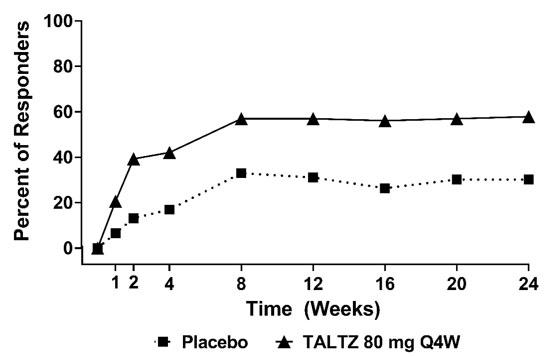
The safety and efficacy of TALTZ were assessed in 679 patients, in 2 randomized, double-blind, placebo-controlled studies (PsA1 and PsA2) in adult patients, age 18 years and older with active psoriatic arthritis (at least 3 swollen and at least 3 tender joints) despite non-steroidal anti-inflammatory drug (NSAID), corticosteroid or disease modifying anti-rheumatic drug (DMARD) therapy. Patients in these studies had a diagnosis of PsA for at least 6 months across both studies. At baseline, 60% and 23% of the patients had enthesitis and dactylitis, respectively. In PsA2, all patients discontinued previous treatment with anti-TNFα agents due to either inadequate response or intolerance. In addition, approximately 47% of patients from both studies had concomitant methotrexate (MTX) use.
PsA1 Study (NCT 01695239) evaluated 417 biologic-naive patients, who were treated with either TALTZ 160 mg at Week 0 followed by 80 mg every 2 weeks (Q2W) or 4 weeks (Q4W), adalimumab 40 mg every 2 weeks, or placebo. PsA2 Study (NCT 02349295) evaluated 363 anti-TNFα experienced patients, who were treated with TALTZ 160 mg at Week 0 followed by 80 mg every 2 or 4 weeks, or placebo. Patients receiving placebo were re-randomized to receive TALTZ (80 mg every 2 or 4 weeks) at Week 16 or Week 24 based on responder status. The primary endpoint was the percentage of patients achieving an ACR20 response at Week 24.
Taltz 80 Mg Autoinjector
| INSTRUCTIONS FOR USE |
|
TALTZ® [tol-t-s]
(ixekizumab) injection, for subcutaneous use Autoinjector |
| This Instructions for Use contains information on how to inject TALTZ. |
|
|
| Important Information You Need to Know Before Injecting TALTZ |
|
|
|
|
|
|
|
INSTRUCTIONS FOR USE
Before you use the TALTZ autoinjector, read and carefully follow all the step-by-step instructions. |
||
| Parts of the TALTZ autoinjector | ||
| Step 1 | Preparing to Inject TALTZ | |
|
Step 1a |
|
|
| Step 1b |
Gather the supplies needed for your injection:
|
|
|
Step 1c |
Figure A |
Inspect the autoinjector.
|
|
Step 1d |
Wash your hands with soap and water before you inject TALTZ. |
|
|
Step 1e |
Figure B |
You may inject in your stomach area (abdomen) or in your thigh, or in the back of your arm (see Figure B). To inject in your arm, you will need someone to help you. Do not give an injection into areas where the skin is tender, bruised, red or hard, or in an area of skin that is affected by psoriasis. Do not inject within 1 inch of the navel (belly button). Alternate your injection sites.
|
|
Step 1f |
Prepare your skin. Clean your injection site with an alcohol wipe. Let the injection site dry before you inject TALTZ. |
|
| Step 2 | Injecting TALTZ | |
|
Step 2a |
Figure C |
Make sure the lock ring is in the lock position.
|
|
Step 2b |
Figure D |
Place the clear base flat and firmly against your skin at the injection site (see Figure D). |
|
Step 2c |
Figure E |
While holding the clear base against your skin, turn the lock ring to the unlock position (see Figure E). You are now ready to inject. |
|
Step 2d |
Figure F |
Press the green injection button. There will be a loud click (see Figure F).
|
|
Step 3 |
|
|
|
Step 3a |
Figure G |
|
|
||
|
||
|
||
|
||
| Commonly asked questions and answers. | |
| Q. | What if I see bubbles in the TALTZ autoinjector? |
| A. | It is normal to have air bubbles in the autoinjector. |
| Q. | What if there is a drop of liquid on the tip of the needle when I remove the base cap? |
| A. | It is okay to see a drop of liquid on the tip of the needle. |
| Q. | What if I unlocked the autoinjector and pressed the green injection button before I twisted off the base cap? |
| A. | Do not remove the base cap. Dispose of the autoinjector and get a new one. |
| Q. | Do I need to hold the injection button down until the injection is complete? |
| A. | You do not need to hold the injection button down, but it may help you keep the autoinjector steady and firm against your skin. |
| Q. | What if the needle did not retract after my injection or I am not sure that the autoinjector worked in the right way? |
| A. | Do not touch the needle or replace the base cap. Store the autoinjector in a safe place (e.g., a household container as described in “Disposing of TALTZ”) to avoid an accidental needlestick and contact Lilly (1-800-545-5979) for instructions on how to return the autoinjector. |
| Q. | What if I hear more than 2 clicks during my injection? Did I get my complete dose? |
| A. | You may hear a soft click right before the second loud click. This is the normal operation of the autoinjector. Do not remove the autoinjector from your skin until you hear the second loud click. |
| Q. | How can I tell if my injection is complete? |
| A. | After you press the green injection button, you will hear 2 loud clicks. The second click tells you that your injection is complete. You will also see the gray plunger at the top of the clear base. |
| Q. | What if the autoinjector is left at room temperature for longer than 30 minutes? |
| A. | If needed, the autoinjector may be left out of the refrigerator at room temperature up to 86°F (30°C) for up to 5 days if protected from light. Throw away TALTZ if not used within the 5-day period at room temperature. See "Storing TALTZ" for more detail. |
| If you have more questions about how to use the TALTZ autoinjector: | |
|
|
| Storing TALTZ |
|
|
|
|
| Keep TALTZ and all medicines out of the reach of children. |
|
Read the full Prescribing Information and Medication Guide for TALTZ inside this box to learn more about your medicine. |
|
|
| Eli Lilly and Company Indianapolis, IN 46285, USA US License Number 1891 TALTZ is a trademark of Eli Lilly and Company. Copyright © 2016, 2023, Eli Lilly and Company. All rights reserved. The TALTZ autoinjector meets the current dose accuracy and functional requirements of ISO 11608-1 and 11608-5. This Instructions for Use has been approved by the U.S. Food and Drug Administration. Revised: December 2023 TALAI-0008-IFU-20231218 |
1.3 Ankylosing Spondylitis
TALTZ is indicated for the treatment of adult patients with active ankylosing spondylitis.
5 Warnings and Precautions
- Infections: Serious infections have occurred. Instruct patients to seek medical advice if signs or symptoms of clinically important chronic or acute infection occur. If a serious infection develops, discontinue TALTZ until the infection resolves. (5.1)
- Tuberculosis (TB): Evaluate for TB prior to initiating treatment. (5.2)
- Hypersensitivity: If a serious allergic reaction occurs, discontinue TALTZ immediately and initiate appropriate therapy. (5.3)
- Eczematous Eruptions: In the postmarketing setting, cases of severe eczematous eruptions were reported in patients receiving TALTZ. Treatment may need to be discontinued to resolve the eczematous eruption. (5.4)
- Inflammatory Bowel Disease: Crohn's disease and ulcerative colitis, including exacerbations, occurred during clinical trials. Monitor closely when prescribing TALTZ to patients with inflammatory bowel disease (IBD). Discontinue TALTZ and initiate appropriate medical management if IBD develops. (5.5)
- Immunizations: Avoid use of live vaccines. (5.6)
14.1 Adult Plaque Psoriasis
Three multicenter, randomized, double-blind, placebo-controlled trials, Trials 1, 2, and 3 (NCT 01474512, NCT 01597245, NCT 01646177), enrolled a total of 3866 subjects 18 years of age and older with plaque psoriasis who had a minimum body surface area involvement of 10%, a static Physician Global Assessment (sPGA) score of ≥3 in the overall assessment (plaque thickness/induration, erythema, and scaling) of psoriasis on a severity scale of 0 to 5, a Psoriasis Area and Severity Index (PASI) score ≥12, and who were candidates for phototherapy or systemic therapy.
In all three trials, subjects were randomized to either placebo or TALTZ (80 mg every 2 weeks [Q2W]) for 12 weeks, following a 160 mg starting dose. In the two active comparator trials (Trials 2 and 3), subjects were also randomized to receive U.S. approved etanercept 50 mg twice weekly for 12 weeks.
All three trials assessed the changes from baseline to Week 12 in the two co-primary endpoints: 1) PASI 75, the proportion of subjects who achieved at least a 75% reduction in the PASI composite score that takes into consideration both the percentage of body surface area affected and the nature and severity of psoriatic changes (induration, erythema and scaling) within the affected regions, and 2) sPGA of “0” (clear) or “1” (minimal), the proportion of subjects with an sPGA 0 or 1 and at least a 2-point improvement.
Other evaluated outcomes included the proportion of subjects with an sPGA score of 0 (clear), a reduction of at least 90% in PASI (PASI 90), a reduction of 100% in PASI (PASI 100), and an improvement of itch severity as measured by a reduction of at least 4 points on an 11-point itch Numeric Rating Scale.
Subjects in all treatment groups had a median baseline PASI score ranging from approximately 17 to 18. Baseline sPGA score was severe or very severe in 51% of subjects in Trial 1, 50% in Trial 2, and 48% in Trial 3.
Of all subjects, 44% had received prior phototherapy, 49% had received prior conventional systemic therapy, and 26% had received prior biologic therapy for the treatment of psoriasis. Of the subjects who had received prior biologic therapy, 15% had received at least one anti-TNF alpha agent, and 9% had received an anti-IL 12/IL23. A total of 23% of study subjects had a history of psoriatic arthritis.
14.4 Ankylosing Spondylitis
The safety and efficacy of TALTZ were assessed in 567 patients, in 2 randomized, double-blind, placebo-controlled studies (AS1 and AS2) in adult patients, age 18 years and older with active ankylosing spondylitis. Patients had active disease as defined by the Bath Ankylosing Spondylitis Disease Activity Index (BASDAI) ≥4 despite non-steroidal anti-inflammatory drug (NSAID), corticosteroid, or disease modifying anti-rheumatic drug (DMARD) therapy. At baseline, patients had symptoms of AS for an average of 17 years across both studies. At baseline, approximately 32% of the patients were on a concomitant cDMARD. In AS2, all patients discontinued previous treatment with 1 or 2 TNF inhibitors due to either inadequate response or intolerance.
AS1 Study (NCT 02696785) evaluated 341 biologic-naive patients, who were treated with either TALTZ 80 mg or 160 mg at Week 0 followed by 80 mg every 2 weeks (Q2W) or 4 weeks (Q4W), adalimumab 40 mg every 2 weeks, or with placebo. Patients receiving placebo were re-randomized at Week 16 to receive TALTZ (160 mg starting dose, followed by 80 mg Q2W or Q4W). Patients receiving adalimumab were re-randomized at Week 16 to receive TALTZ (80 mg Q2W or Q4W). AS2 Study (NCT 02696798) evaluated 316 TNF-inhibitor experienced patients (90% were inadequate responders and 10% were intolerant to TNF inhibitors). All patients were treated with TALTZ 80 or 160 mg at Week 0 followed by 80 mg Q2W or Q4W, or with placebo. Patients receiving placebo were re-randomized at Week 16 to receive TALTZ (160 mg initial dose, followed by 80 mg Q2W or Q4W). The primary endpoint in both studies was the percentage of patients achieving an Assessment of Spondyloarthritis International Society 40 (ASAS40) response at Week 16.
2 Dosage and Administration
Administer by subcutaneous injection.
Adult Plaque Psoriasis (2.2)
- Recommended dosage is 160 mg (two 80 mg injections) at Week 0, followed by 80 mg at Weeks 2, 4, 6, 8, 10, and 12, then 80 mg every 4 weeks.
Pediatric Plaque Psoriasis (2.3)
- For patients weighing greater than 50 kg, recommended dosage is 160 mg (two 80 mg injections) at Week 0, followed by 80 mg every 4 weeks.
- For patients weighing 25-50 kg, recommended dosage is 80 mg at Week 0, followed by 40 mg every 4 weeks.
- For patients weighing less than 25 kg, recommended dosage is 40 mg at Week 0, followed by 20 mg every 4 weeks.
Psoriatic Arthritis (2.4)
- Recommended dosage is 160 mg by subcutaneous injection (two 80 mg injections) at Week 0, followed by 80 mg every 4 weeks.
- For psoriatic arthritis patients with coexistent moderate-to-severe plaque psoriasis, use the dosing regimen for adult plaque psoriasis. (2.2)
- TALTZ may be administered alone or in combination with a conventional DMARD (e.g., methotrexate).
Ankylosing Spondylitis (2.5)
- Recommended dosage is 160 mg by subcutaneous injection (two 80 mg injections) at Week 0, followed by 80 mg every 4 weeks.
Non-radiographic Axial Spondyloarthritis (2.6)
- Recommended dosage is 80 mg by subcutaneous injection every 4 weeks.
3 Dosage Forms and Strengths
TALTZ is a clear and colorless to slightly yellow solution available as:
- Injection: 80 mg/mL solution of TALTZ in a single-dose prefilled autoinjector
- Injection: 80 mg/mL solution of TALTZ in a single-dose prefilled syringe
- Injection: 40 mg/0.5 mL solution of TALTZ in a single-dose prefilled syringe
- Injection: 20 mg/0.25 mL solution of TALTZ in a single-dose prefilled syringe
6.3 Postmarketing Experience
The following adverse reactions have been identified during post-approval use of TALTZ. Because the reactions are reported voluntarily from a population of uncertain size, it is not always possible to reliably estimate their frequency or establish a causal relationship to TALTZ exposure.
Immune system disorders: anaphylaxis [see Contraindications (4)].
Infections: bacterial, viral, and fungal opportunistic infections, including cryptococcal meningoencephalitis, esophageal and disseminated mucocutaneous candidiasis, pulmonary tuberculosis, toxoplasmosis, varicella zoster virus reactivation, cytomegalovirus colitis, pulmonary aspergillosis.
Skin and subcutaneous tissue disorders: Eczematous eruptions (erythroderma, atopic dermatitis-like eruptions, and dyshidrotic eczema).
Taltz 20 Mg Prefilled Syringe
| INSTRUCTIONS FOR USE |
|
TALTZ® [tol-t-s]
(ixekizumab) injection, for subcutaneous use 20 mg/0.25 mL single-dose prefilled syringe |
| This Instructions for Use contains information on how to inject TALTZ. |
|
|
| Important Information You Need to Know Before Giving TALTZ Injection to Your Child |
|
|
| Before you use the TALTZ prefilled syringe, read and carefully follow all the step-by-step instructions. | ||
| Parts of the TALTZ prefilled syringe | ||
| Step 1 | Preparing to Inject TALTZ | |
| Step 1a |
|
|
| Step 1b |
Gather the supplies needed for injection:
|
|
| Step 1c |
Inspect the syringe. Leave the needle cap on the syringe until you are ready to inject.
|
|
| Step 1d | Wash your hands with soap and water before you inject TALTZ. | |
| Step 1e |
Choose the injection site. You may inject in the stomach area (abdomen) or in the thigh, or in the back of the arm (see Figure B). Do not give an injection into areas where the skin is tender, bruised, red or hard, or in an area of skin that is affected by psoriasis. Do not inject within 1 inch of the navel (belly button). Change (alternate) injection sites.
|
|
| Step 1f | Prepare the skin. Clean the injection site with an alcohol wipe. Let the injection site dry before you inject TALTZ. | |
| Step 2 | Injecting TALTZ | |
|
Step 2a |
|
Pull the needle cap off and throw it away (see Figure C).
|
|
Step 2b |
|
Gently pinch and hold a fold of skin where you will inject (see Figure D). |
|
Step 2c |
|
Let go of the skin before you push the plunger in (see Figure F). |
| Step 2d |
Push in the plunger.
|
|
| Step 3 |
Disposing of TALTZ |
|
|
Step 3a |
|
|
|
||
|
||
|
||
|
||
| Commonly asked questions and answers. | ||
| Q. | What if I see air bubbles in the TALTZ prefilled syringe? | |
| A. | It is normal to have air bubbles in the prefilled syringe. | |
| Q. | What if there is a drop of liquid on the tip of the needle when I remove the needle cap? | |
| A. | It is okay to see a drop of liquid on the tip of the needle. | |
| Q. | What if I cannot push in the plunger? | |
| A. | If the plunger is stuck or damaged: | |
|
||
|
||
|
||
| Q. | How can I tell if the injection is complete? | |
| A. | When the injection is complete: | |
|
||
| Q. | What if the syringe is left at room temperature for longer than 30 minutes? | |
| A. | If needed, the syringe may be left out of the refrigerator at room temperature up to 86°F (30°C) for up to 5 days if protected from light. Throw away TALTZ if not used within the 5-day period at room temperature. See "Storing TALTZ" for more detail. |
|
| If you have more questions about how to use the TALTZ prefilled syringe: | ||
|
||
| Storing TALTZ | ||
|
||
|
Keep TALTZ and all medicines out of the reach of children.
|
||
|
Read the Medication Guide for TALTZ inside this box to learn more about the medicine.
|
||
|
|
||
| Eli Lilly and Company Indianapolis, IN 46285, USA US License Number 1891 TALTZ is a trademark of Eli Lilly and Company. Copyright © 2024 Eli Lilly and Company. All rights reserved. This Instructions for Use has been approved by the U.S. Food and Drug Administration. Approved: February 2024 TAL-0.25ML-PFS-0001-IFU-20240202 |
Taltz 40 Mg Prefilled Syringe
| INSTRUCTIONS FOR USE |
|
TALTZ® [tol-t-s]
(ixekizumab) injection, for subcutaneous use 40 mg/0.5 mL single-dose prefilled syringe |
| This Instructions for Use contains information on how to inject TALTZ. |
|
|
| Important Information You Need to Know Before Giving TALTZ Injection to Your Child |
|
| Before you use the TALTZ prefilled syringe, read and carefully follow all the step-by-step instructions. | ||
| Parts of the TALTZ prefilled syringe | ||
| Step 1 | Preparing to Inject TALTZ | |
| Step 1a |
|
|
| Step 1b |
Gather the supplies needed for injection:
|
|
| Step 1c |
Inspect the syringe. Leave the needle cap on the syringe until you are ready to inject.
|
|
| Step 1d | Wash your hands with soap and water before you inject TALTZ. | |
| Step 1e |
Choose the injection site. You may inject in the stomach area (abdomen) or in the thigh, or in the back of the arm (see Figure B). Do not give an injection into areas where the skin is tender, bruised, red or hard, or in an area of skin that is affected by psoriasis. Do not inject within 1 inch of the navel (belly button). Change (alternate) injection sites.
|
|
| Step 1f | Prepare the skin. Clean the injection site with an alcohol wipe. Let the injection site dry before you inject TALTZ. | |
| Step 2 | Injecting TALTZ | |
|
Step 2a |
|
Pull the needle cap off and throw it away (see Figure C).
|
|
Step 2b |
|
Gently pinch and hold a fold of skin where you will inject (see Figure D). |
|
Step 2c |
|
Let go of the skin before you push the plunger in (see Figure F). |
| Step 2d |
Push in the plunger.
|
|
| Step 3 |
Disposing of TALTZ |
|
|
Step 3a |
|
|
|
||
|
||
|
||
|
||
| Commonly asked questions and answers. | ||
| Q. | What if I see air bubbles in the TALTZ prefilled syringe? | |
| A. | It is normal to have air bubbles in the prefilled syringe. | |
| Q. | What if there is a drop of liquid on the tip of the needle when I remove the needle cap? | |
| A. | It is okay to see a drop of liquid on the tip of the needle. | |
| Q. | What if I cannot push in the plunger? | |
| A. | If the plunger is stuck or damaged: | |
|
||
|
||
|
||
| Q. | How can I tell if the injection is complete? | |
| A. | When the injection is complete: | |
|
||
| Q. | What if the syringe is left at room temperature for longer than 30 minutes? | |
| A. | If needed, the syringe may be left out of the refrigerator at room temperature up to 86°F (30°C) for up to 5 days if protected from light. Throw away TALTZ if not used within the 5-day period at room temperature. See "Storing TALTZ" for more detail. |
|
| If you have more questions about how to use the TALTZ prefilled syringe: | ||
|
||
| Storing TALTZ | ||
|
||
| Keep TALTZ and all medicines out of the reach of children. | ||
|
Read the Medication Guide for TALTZ inside this box to learn more about the medicine.
|
||
|
|
||
| Eli Lilly and Company Indianapolis, IN 46285, USA US License Number 1891 TALTZ is a trademark of Eli Lilly and Company. Copyright © 2024 Eli Lilly and Company. All rights reserved. This Instructions for Use has been approved by the U.S. Food and Drug Administration. Approved: February 2024 TAL-0.5ML-PFS-0001-IFU-20240202 |
Taltz 80 Mg Prefilled Syringe
| INSTRUCTIONS FOR USE |
|
TALTZ® (tol(t)s)
(ixekizumab) injection, for subcutaneous use Prefilled Syringe |
|
|
| Before you use the TALTZ prefilled syringe, read and carefully follow all the step-by-step instructions. |
| Important information: |
|
|
|
|
|
|
INSTRUCTIONS FOR USE
Before you use the TALTZ prefilled syringe, read and carefully follow all the step-by-step instructions. |
||
| Parts of the TALTZ prefilled syringe | ||
| 1 | Get Ready | |
| 1a |
|
|
| 1b |
Gather the supplies needed for your injection:
|
|
| 1c |
Inspect the syringe. Leave the needle cap on the syringe until you are ready to inject.
|
|
| 1d | Wash your hands with soap and water before you inject TALTZ. | |
| 1e |
Choose your injection site. You may inject in your stomach area (abdomen) or in your thigh, or in the back of your arm. To inject in your arm, you will need someone to help you. Do not give an injection into areas where the skin is tender, bruised, red or hard, or in an area of skin that is affected by psoriasis. Do not inject within 1 inch of the navel (belly button). Alternate your injection sites.
|
|
| 1f | Prepare your skin. Clean your injection site with an alcohol wipe. Let the injection site dry before you inject TALTZ. | |
| 2 | Inject TALTZ | |
|
2a |
|
Pull the needle cap off and throw it away.
|
|
2b |
|
Gently pinch and hold a fold of skin where you will inject. |
|
2c |
|
Let go of your skin before you push the plunger in. |
| 2d |
Push in the plunger.
|
|
| 3 |
Dispose of (throw away) the used prefilled syringe. |
|
|
3a |
|
|
|
||
|
||
|
||
|
||
| Commonly asked questions and answers. | ||
| Q. | What if I see air bubbles in my TALTZ prefilled syringe? | |
| A. | It is normal to have air bubbles in the prefilled syringe. | |
| Q. | What if there is a drop of liquid on the tip of the needle when I remove the needle cap? | |
| A. | It is okay to see a drop of liquid on the tip of the needle. | |
| Q. | What if I cannot push in the plunger? | |
| A. | If the plunger is stuck or damaged: | |
|
||
|
||
|
||
| Q. | How can I tell if my injection is complete? | |
| A. | When your injection is complete: | |
|
||
|
||
| Q. | What if the syringe is left at room temperature for longer than 30 minutes? | |
| A. | If needed, the syringe may be left out of the refrigerator at room temperature up to 86°F (30°C) for up to 5 days if protected from light. Throw away TALTZ if not used within the 5-day period at room temperature. See "How should I store TALTZ prefilled syringe?" for more detail. |
|
| If you have more questions about how to use the TALTZ prefilled syringe: | ||
|
||
| How should I store TALTZ prefilled syringe? | ||
|
||
|
||
|
||
|
||
| Keep TALTZ and all medicines out of the reach of children. | ||
|
Read the full Prescribing Information and Medication Guide for TALTZ inside this box to learn more about your medicine.
|
||
| This Instructions for Use has been approved by the U.S. Food and Drug Administration. |
||
|
|
||
| Eli Lilly and Company Indianapolis, IN 46285, USA US License Number 1891 TALTZ is a trademark of Eli Lilly and Company. Copyright © 2016, 2021, Eli Lilly and Company. All rights reserved. TALPFS-0005-IFU-20210622 Revised: June 2021 |
5.5 Inflammatory Bowel Disease
Patients treated with TALTZ may be at increased risk of inflammatory bowel disease. In clinical trials, Crohn's disease and ulcerative colitis, including exacerbations, occurred at a greater frequency in the TALTZ group than the placebo control group [see Adverse Reactions (6.1)]. During TALTZ treatment, monitor for onset or exacerbation of inflammatory bowel disease and if IBD occurs, discontinue TALTZ and initiate appropriate medical management.
6.1 Clinical Trials Experience
Because clinical trials are conducted under widely varying and controlled conditions, adverse reaction rates observed in the clinical trials of a drug cannot be directly compared to rates in the clinical trials of another drug and may not reflect the rates observed in practice.
14.2 Pediatric Plaque Psoriasis
A randomized, double-blind, multicenter, placebo-controlled trial (IXORA-Peds, NCT03073200) enrolled 171 pediatric subjects 6 to less than 18 years of age, with moderate-to-severe plaque psoriasis (as defined by a sPGA score ≥3, involving ≥10% of the body surface area, and a PASI score ≥12) who were candidates for phototherapy or systemic therapy or were inadequately controlled on topical therapy.
Subjects were randomized to placebo or TALTZ with dosing stratified by weight.
- <25 kg: 40 mg at Week 0 followed by 20 mg Q4W
- 25 kg to 50 kg: 80 mg at Week 0 followed by 40 mg Q4W
- >50 kg: 160 mg at Week 0 followed by 80 mg Q4W
Response to treatment was assessed at 12 weeks of therapy and was defined by the proportion of subjects who achieved an sPGA score of “0” (clear) or “1” (almost clear) with at least a 2-point improvement from baseline and the proportion of subjects that achieved a reduction in PASI score of at least 75% (PASI 75) from baseline.
Other evaluated outcomes included the proportion of subjects who achieved PASI 90, PASI 100, sPGA of “0” and an improvement of itch severity as measured by a reduction of at least 4 points on an 11-point itch Numeric Rating Scale.
Subjects had a median baseline PASI score of 17 (range 12-49). Baseline sPGA score was severe or very severe in 49%. Of all subjects, 22% had received prior phototherapy and 32% had received prior conventional systemic therapy for the treatment of psoriasis.
17 Patient Counseling Information
Advise the patient and/or caregiver to read the FDA-approved patient labeling (Medication Guide and Instructions for Use) before the patient starts using TALTZ, and each time the prescription is renewed, as there may be new information they need to know.
Instructions on Self-Administration: Provide guidance to patients and caregivers on proper subcutaneous injection technique, including aseptic technique, and how to use the autoinjector or prefilled syringe correctly [see Instructions for Use].
Infection: Inform patients that TALTZ may lower the ability of their immune system to fight infections, and that serious infections, including opportunistic infections, may occur with the use of TALTZ. Instruct patients of the importance of communicating any history of infections to the healthcare provider, and contacting their healthcare provider if they develop any symptoms of infection [see Warnings and Precautions (5.1)].
Allergic Reactions: Advise patients to seek immediate medical attention if they experience any symptoms of serious hypersensitivity reactions [see Warnings and Precautions (5.3)].
Eczematous Eruptions: Inform patients that skin reactions resembling eczema may occur with the use of TALTZ. Instruct patients to seek medical advice if they develop signs or symptoms of eczema [see Warnings and Precautions (5.4)].
Pregnancy: Advise patients that there is a pregnancy exposure registry that monitors pregnancy outcomes in women exposed to TALTZ during pregnancy. Advise patients to contact the registry at 1-800-284-1695 to enroll [see Use in Specific Populations (8.1)].
Eli Lilly and Company, Indianapolis, IN 46285, USA
US License Number 1891
Copyright © 2016, 2024, Eli Lilly and Company. All rights reserved.
TAL-0016-USPI-20240820
Package Carton – Taltz Autoinjector 80 Mg
taltz®
(ixekizumab)
injection
80 mg/mL
For Subcutaneous Use Only
1 Single-Dose prefilled autoinjector
Discard any unused product.
NDC 0002-1445-11
1 x 1 mL Single-Dose prefilled autoinjector
Rx Only
Dispense enclosed Medication Guide to each patient.
Lilly
1.4 Non Radiographic Axial Spondyloarthritis
TALTZ is indicated for the treatment of adult patients with active non-radiographic axial spondyloarthritis (nr-axSpA) with objective signs of inflammation.
14.5 Non Radiographic Axial Spondyloarthritis
The efficacy and safety of TALTZ were assessed in a randomized, double-blind, 52-week placebo-controlled study (nr-axSpA1) (NCT 02757352) in patients ≥18 years of age with active axial spondyloarthritis for at least 3 months. Patients must have had objective signs of inflammation indicated by elevated C-reactive protein (CRP) (defined as greater than 5 mg/L), and/or sacroiliitis on magnetic resonance imaging (MRI), and no definitive radiographic evidence of structural damage on sacroiliac joints. Patients had active disease as defined by the Bath Ankylosing Spondylitis Disease Activity Index (BASDAI) ≥4, and spinal pain ≥4 on a 0 to 10 Numerical Rating Scale (NRS). Patients must have been intolerant to or had an inadequate response to at least two NSAIDs. Patients were treated with either placebo or TALTZ 80 mg or 160 mg at Week 0, followed by either 80 mg every 2 weeks (Q2W) or 80 mg every 4 weeks (Q4W). Initiation and/or dose adjustment of concomitant medications (NSAIDs, cDMARDs, corticosteroids, analgesics) were permitted starting at Week 16. Patients were allowed to transition to use of open-label TALTZ 80 mg Q2W starting at Week 16 up to Week 44 at the discretion of the investigator.
At baseline, patients had symptoms of nr-axSpA for an average of 11 years. Approximately 39% of the patients were on a concomitant cDMARD.
The primary endpoint was the percentage of patients achieving an Assessment of Spondyloarthritis International Society 40 (ASAS40) response at Week 52. The ASAS40 response was also evaluated at Week 16 as a major secondary endpoint.
2.4 Recommended Dosage in Psoriatic Arthritis
The recommended dosage is 160 mg by subcutaneous injection (two 80 mg injections) at Week 0, followed by 80 mg every 4 weeks.
For psoriatic arthritis patients with coexistent moderate-to-severe plaque psoriasis, use the dosing regimen for adult plaque psoriasis [see Dosage and Administration (2.2)].
TALTZ may be administered alone or in combination with a conventional disease-modifying antirheumatic drug (cDMARD) (e.g., methotrexate).
5.2 Pre Treatment Evaluation for Tuberculosis
Evaluate patients for tuberculosis (TB) infection prior to initiating treatment with TALTZ. Do not administer to patients with active TB infection. Initiate treatment of latent TB prior to administering TALTZ. Consider anti-TB therapy prior to initiating TALTZ in patients with a past history of latent or active TB in whom an adequate course of treatment cannot be confirmed. Patients receiving TALTZ should be monitored closely for signs and symptoms of active TB during and after treatment.
2.7 Preparation and Administration Instructions
TALTZ is intended for use under the guidance and supervision of a healthcare provider. Adult patients may self-inject or caregivers may give injections of TALTZ after training in subcutaneous injection technique using the autoinjector or prefilled syringe. Safety and effectiveness of pediatric self-administration has not been established. Therefore, TALTZ should be administered to pediatric patients by a healthcare provider or by a caregiver who has received training and demonstrated proper subcutaneous injection technique.
TALTZ 20 mg and 40 mg doses prepared from the TALTZ 80 mg/mL prefilled syringe should only be administered by a qualified healthcare professional [see Dosage and Administration (2.8)].
The TALTZ “Instructions for Use” contains more detailed instructions on the preparation and administration of TALTZ [see Instructions for Use].
Before injection, remove TALTZ autoinjector or TALTZ prefilled syringe from the refrigerator and allow TALTZ to reach room temperature (30 minutes) without removing the needle cap. Inspect TALTZ visually for particulate matter and discoloration prior to administration. TALTZ is a clear and colorless to slightly yellow solution. Do not use if the liquid contains visible particles, is discolored or cloudy (other than clear and colorless to slightly yellow).
Administer each injection at a different anatomic location (such as upper arms, thighs or any quadrant of abdomen) than the previous injection, and not into areas where the skin is tender, bruised, erythematous, indurated or affected by psoriasis. Administration of TALTZ in the upper, outer arm may be performed by a caregiver or healthcare provider [see Instructions for Use].
TALTZ does not contain preservatives, therefore discard any unused product.
If a dose is missed, administer the dose as soon as possible. Thereafter, resume dosing at the regular scheduled time.
2.2 Recommended Dosage in Adult Plaque Psoriasis
TALTZ is administered by subcutaneous injection. The recommended dosage in adults with moderate-to-severe plaque psoriasis is 160 mg (two 80 mg injections) at Week 0, followed by 80 mg at Weeks 2, 4, 6, 8, 10, and 12, then 80 mg every 4 weeks.
2.5 Recommended Dosage in Ankylosing Spondylitis
The recommended dosage is 160 mg by subcutaneous injection (two 80 mg injections) at Week 0, followed by 80 mg every 4 weeks.
Package Carton – Taltz Prefilled Syringe 20 Mg
taltz®
(ixekizumab)
injection
20 mg/0.25 mL
For Subcutaneous Use Only
1 Single-Dose prefilled syringe
Discard any unused product.
NDC 0002-8900-11
1 x 0.25 mL Single-Dose prefilled syringe
Rx Only
Dispense enclosed Medication Guide to each patient.
Lilly
Package Carton – Taltz Prefilled Syringe 40 Mg
taltz®
(ixekizumab)
injection
40 mg/0.5 mL
For Subcutaneous Use Only
1 Single-Dose prefilled syringe
Discard any unused product.
NDC 0002-8905-11
1 x 0.5 mL Single-Dose prefilled syringe
Rx Only
Dispense enclosed Medication Guide to each patient.
Lilly
Package Carton – Taltz Prefilled Syringe 80 Mg
taltz®
(ixekizumab)
injection
80 mg/mL
For Subcutaneous Use Only
1 Single-Dose prefilled syringe
Discard any unused product.
NDC 0002-7724-11
1 x 1 mL Single-Dose prefilled syringe
Rx Only
Dispense enclosed Medication Guide to each patient.
Lilly
2.3 Recommended Dosage in Pediatric Plaque Psoriasis
TALTZ is administered by subcutaneous injection every 4 weeks (Q4W). The recommended dosage in pediatric patients from 6 to less than 18 years of age with moderate-to-severe plaque psoriasis is based on the following weight categories.
| Pediatric Patient's Weight | Starting Dose (Week 0) | Dose every 4 weeks (Q4W) Thereafter |
| Greater than 50 kg | 160 mg (two 80 mg injections) | 80 mg |
| 25 to 50 kg | 80 mg | 40 mg |
| Less than 25 kg | 40 mg | 20 mg |
2.1 Testing and Procedures Prior to Treatment Initiation
Perform the following evaluations prior to TALTZ initiation:
- Evaluate patients for tuberculosis (TB) infection. TALTZ initiation is not recommended in patients with active TB infection. Initiate treatment of latent TB prior to initiation of TALTZ [see Warnings and Precautions (5.2)].
- Complete all age-appropriate vaccinations as recommended by current immunization guidelines prior to initiating treatment with TALTZ [see Warnings and Precautions (5.6)].
13.1 Carcinogenesis, Mutagenesis, Impairment of Fertility
Animal studies have not been conducted to evaluate the carcinogenic or mutagenic potential of TALTZ. Moreover published literature is mixed on potential effects on malignancy risk due to the inhibition of IL-17A activity, the pharmacological action of TALTZ. Some published literature suggests that IL-17A directly promotes cancer cell invasion, suggesting a potential beneficial effect by TALTZ, whereas other reports indicate IL-17A promotes T-cell mediated tumor rejection, suggesting a potential adverse effect by TALTZ. However, neutralization of IL-17A with TALTZ has not been studied in these models. Depletion of IL-17A with a neutralizing antibody inhibited tumor development in mice, suggesting a potential beneficial effect by TALTZ. The relevance of experimental findings in mouse models for malignancy risk in humans is unknown.
No effects on fertility parameters such as reproductive organs, menstrual cycle length, or sperm analysis were observed in sexually mature cynomolgus monkeys that were administered ixekizumab for 13 weeks at a subcutaneous dose of 50 mg/kg/week (19 times the MRHD on a mg/kg basis). The monkeys were not mated to evaluate fertility.
2.6 Recommended Dosage in Non Radiographic Axial Spondyloarthritis
The recommended dosage is 80 mg by subcutaneous injection every 4 weeks.
Structured Label Content
Dosage Forms and Strengths (34069-5)
How Supplied
TALTZ injection is a sterile, preservative free, clear and colorless to slightly yellow solution available in:
- a single-dose prefilled autoinjector or a single-dose prefilled syringe to deliver 80 mg ixekizumab.
- a single-dose prefilled syringe to deliver 40 mg ixekizumab.
- a single-dose prefilled syringe to deliver 20 mg ixekizumab.
TALTZ is supplied as:
| Pack Size | NDC Code | |
| Autoinjector | ||
| Carton of 1 | 0002-1445-11 | |
| 80 mg single-dose | Carton of 2 | 0002-1445-27 |
| Carton of 3 | 0002-1445-09 | |
| Prefilled syringe | ||
| 80 mg single-dose | Carton of 1 | 0002-7724-11 |
| 40 mg single-dose | Carton of 1 | 0002-8905-11 |
| 20 mg single-dose | Carton of 1 | 0002-8900-11 |
Section 42229-5 (42229-5)
If the 20 mg/0.25 mL or 40 mg/0.5 mL prefilled syringe is unavailable, TALTZ doses of 20 mg or 40 mg for pediatric patients with plaque psoriasis [see Dosage and Administration (2.3)] must be manually prepared according to the steps below using only the TALTZ 80 mg/mL prefilled syringe. The preparation and administration of the 20 mg and 40 mg doses should only be performed by a qualified healthcare professional. For additional preparation and administration instructions, [see Dosage and Administration (2.7)].
-
Gather the following necessary supplies for preparation:
- 0.5 mL or 1 mL disposable syringe
- Sterile needle for withdrawal
- 27-gauge sterile needle for administration
- Sterile, clear glass vial.
- Expel the entire contents of the prefilled syringe into the sterile vial. DO NOT shake or swirl the vial. Do not add other medications to solutions containing TALTZ.
- Using the 0.5 mL or 1 mL disposable syringe and sterile needle, withdraw the prescribed dose from the vial (0.25 mL for 20 mg; 0.5 mL for 40 mg).
- Remove the needle from the syringe and replace it with a 27-gauge needle prior to administering TALTZ.
Storage of Prepared TALTZ
If necessary, TALTZ 20 mg or 40 mg doses prepared from an 80 mg/mL prefilled syringe may be stored at room temperature for up to 4 hours from first puncturing the sterile vial.
Section 42231-1 (42231-1)
|
This Medication Guide has been approved by the U.S. Food and Drug Administration. |
Revised: 08/2024 |
|
Medication Guide
TALTZ ® (tolts) (ixekizumab) injection, for subcutaneous use |
|
|
What is the most important information I should know about TALTZ?
|
|
Before starting TALTZ, tell your healthcare provider if you:
|
|
|
|
|
After starting TALTZ, call your healthcare provider right away if you have any of the symptoms of infection listed above.
Do not use TALTZ if you have any symptoms of infection unless you are instructed to by your healthcare provider. See “What are the possible side effects of TALTZ?” for more information about side effects. |
|
|
What is TALTZ?
TALTZ is a prescription medicine used to treat:
|
|
| It is not known if TALTZ is safe and effective in children for conditions other than plaque psoriasis or in children under 6 years of age. | |
|
Do not use TALTZ if you have had a severe allergic reaction to ixekizumab or any of the other ingredients in TALTZ. See the end of this Medication Guide for a complete list of ingredients in TALTZ. |
|
Before using TALTZ, tell your healthcare provider about all of your medical conditions, including if you:
|
|
| Tell your healthcare provider about all the medicines you take, including prescription and over-the-counter medicines, vitamins, and herbal supplements. | |
|
How should I use TALTZ?
See the detailed “Instructions for Use” that comes with your TALTZ for information on how to prepare and inject a dose of TALTZ, and how to properly throw away (dispose of) used TALTZ autoinjectors and prefilled syringes.
|
|
If you or your child forget to take a dose of TALTZ:
|
|
|
What are the possible side effects of TALTZ?
|
|
|
|
|
|
|
|
|
|
|
|
|
|
| These are not all of the possible side effects of TALTZ. Tell your healthcare provider about any side effect that bothers you or that does not go away. Call your doctor for medical advice about side effects. You may report side effects to FDA at 1-800-FDA-1088. | |
How should I store TALTZ?
|
|
| Keep TALTZ and all medicines out of the reach of children. | |
|
General information about the safe and effective use of TALTZ.
Medicines are sometimes prescribed for purposes other than those listed in a Medication Guide. Do not use TALTZ for a condition for which it was not prescribed. Do not give TALTZ to other people, even if they have the same symptoms you have. It may harm them. You can ask your healthcare provider or pharmacist for information about TALTZ that is written for health professionals. |
|
|
What are the ingredients in TALTZ?
Active ingredient: ixekizumab Inactive ingredients: Polysorbate 80, Sucrose, and Water for Injection. Sodium Hydroxide may have been added to adjust pH. Not made with natural rubber latex. For more information about TALTZ, call 1-800-545-5979 (1-800-LillyRx) or go to the following website: www.taltz.com. TALTZ® (ixekizumab) injection is a registered trademark of Eli Lilly and Company. Eli Lilly and Company Indianapolis, IN 46285, USA, US License Number 1891 Copyright © 2016, 2024, Eli Lilly and Company. All rights reserved. TAL-0011-MG-20240820 |
Section 43683-2 (43683-2)
Section 44425-7 (44425-7)
Storage and Handling
TALTZ is sterile and preservative-free. Discard any unused portion.
- TALTZ must be protected from light until use.
- Store refrigerated at 2°C to 8°C (36°F to 46°F).
- If needed, patients/caregivers may store TALTZ at room temperature up to 30°C (86°F) for up to 5 days in the original carton to protect from light. Once TALTZ has been stored at room temperature, do not return to the refrigerator and discard, if unused, within 5 days.
- Record the date when TALTZ is first removed from the refrigerator in the spaces provided on the carton.
- For the 2 or 3 autoinjector pack, remove a single autoinjector at a time leaving the remaining autoinjector(s) in the original carton in the refrigerator. Ensure the unrefrigerated TALTZ is protected from light.
- Do not freeze. Do not use TALTZ if it has been frozen.
- Do not shake.
- Discard the TALTZ single-dose autoinjector or syringe after use in a puncture-resistant container.
- Not made with natural rubber latex.
8.2 Lactation
Risk Summary
There are no available data on the presence of ixekizumab in human milk, the effects on the breastfed infant, or the effects on milk production. Ixekizumab was detected in the milk of lactating cynomolgus monkeys. When a drug is present in animal milk, it is likely that the drug will be present in human milk. The developmental and health benefits of breastfeeding should be considered along with the mother's clinical need for TALTZ and any potential adverse effects on the breastfed infant from TALTZ or from the underlying maternal condition.
11 Description (11 DESCRIPTION)
Ixekizumab is a humanized immunoglobulin G subclass 4 (IgG4) monoclonal antibody (mAb) with neutralizing activity against IL-17A. Ixekizumab is produced by recombinant DNA technology in a recombinant mammalian cell line and purified using standard technology for bioprocessing. Ixekizumab is comprised of two identical light chain polypeptides of 219 amino acids each and two identical heavy chain polypeptides of 445 amino acids each and has a molecular weight of 146,158 Daltons for the protein backbone of the molecule.
TALTZ injection is a sterile, preservative free, clear and colorless to slightly yellow solution, for subcutaneous use available as 80 mg of ixekizumab in a 1 mL single-dose prefilled autoinjector or a single-dose prefilled syringe, 40 mg of ixekizumab in a 0.5 mL single-dose prefilled syringe, or 20 mg of ixekizumab in a 0.25 mL single-dose prefilled syringe. The prefilled autoinjector and prefilled syringe each contain a 1 mL glass syringe with a fixed 27 gauge ½ inch needle. The TALTZ 80 mg prefilled autoinjector and prefilled syringe are manufactured to deliver 80 mg of ixekizumab. The TALTZ 40 mg prefilled syringe is manufactured to deliver 40 mg of ixekizumab. The TALTZ 20 mg prefilled syringe is manufactured to deliver 20 mg of ixekizumab.
Each TALTZ 80 mg/mL single-dose autoinjector or TALTZ 80 mg/mL single-dose prefilled syringe is composed of ixekizumab (80 mg); Polysorbate 80, USP (0.3 mg); Sucrose, USP (80 mg); and Water for Injection, USP. Sodium Hydroxide, USP-NF, may have been added to adjust pH. The TALTZ solution has a pH of 5.2 – 6.2.
Each TALTZ 40 mg/0.5 mL single-dose prefilled syringe is composed of ixekizumab (40 mg); Polysorbate 80, USP (0.15 mg); Sucrose, USP (40 mg); and Water for Injection, USP. Sodium Hydroxide, USP-NF, may have been added to adjust pH. The TALTZ solution has a pH of 5.2 – 6.2.
Each TALTZ 20 mg/0.25 mL single-dose prefilled syringe is composed of ixekizumab (20 mg); Polysorbate 80, USP (0.08 mg); Sucrose, USP (20 mg); and Water for Injection, USP. Sodium Hydroxide, USP-NF, may have been added to adjust pH. The TALTZ solution has a pH of 5.2 – 6.2.
5.1 Infections
TALTZ may increase the risk of infection. In clinical trials in adult patients with plaque psoriasis, the TALTZ group had a higher rate of infections than the placebo group (27% vs. 23%). Upper respiratory tract infections, oral candidiasis, conjunctivitis and tinea infections occurred more frequently in the TALTZ group than in the placebo group. A similar increase in risk of infection was seen in placebo-controlled trials in patients with pediatric psoriasis, psoriatic arthritis, ankylosing spondylitis, and non-radiographic axial spondyloarthritis [see Adverse Reactions (6.1)].
In the postmarketing setting, serious bacterial, viral, and fungal opportunistic infections have been reported in patients receiving IL-17 inhibitors including TALTZ. Instruct patients treated with TALTZ to seek medical advice if signs or symptoms of clinically important chronic or acute infection occur. If a patient develops a serious infection or is not responding to standard therapy, monitor the patient closely and discontinue TALTZ until the infection resolves.
5.6 Immunizations
Prior to initiating therapy with TALTZ, consider completion of all age-appropriate immunizations according to current immunization guidelines. Avoid use of live vaccines in patients treated with TALTZ. No data are available on the response to live vaccines.
8.4 Pediatric Use
The safety and effectiveness of TALTZ have been established in pediatric subjects aged 6 years to less than 18 years with moderate-to-severe plaque psoriasis. The safety and effectiveness of TALTZ in other pediatric indications and for pediatric subjects less than 6 years of age have not been established.
8.5 Geriatric Use
Of the 4204 adult psoriasis subjects exposed to TALTZ, a total of 301 were 65 years or older, and 36 subjects were 75 years or older. Although no differences in safety or efficacy were observed between older and younger subjects, the number of subjects aged 65 and over is not sufficient to determine whether they respond differently from younger subjects [see Clinical Pharmacology (12.3)].
6.2 Immunogenicity
As with all therapeutic proteins there is the potential for immunogenicity with TALTZ. The assay to test for neutralizing antibodies has limitations detecting neutralizing antibodies in the presence of ixekizumab; therefore, the incidence of neutralizing antibodies development could be underestimated.
4 Contraindications (4 CONTRAINDICATIONS)
TALTZ is contraindicated in patients with a previous serious hypersensitivity reaction, such as anaphylaxis, to ixekizumab or to any of the excipients [see Warnings and Precautions (5.3)].
6 Adverse Reactions (6 ADVERSE REACTIONS)
The following adverse drug reactions are discussed in greater detail in other sections of the label:
1.1 Plaque Psoriasis
TALTZ® is indicated for the treatment of patients 6 years of age and older with moderate-to-severe plaque psoriasis who are candidates for systemic therapy or phototherapy.
5.3 Hypersensitivity
Serious hypersensitivity reactions, including angioedema and urticaria (each ≤0.1%), occurred in the TALTZ group in clinical trials. Anaphylaxis, including cases leading to hospitalization, has been reported in post marketing use with TALTZ [see Adverse Reactions (6.1, 6.3)]. If a serious hypersensitivity reaction occurs, discontinue TALTZ immediately and initiate appropriate therapy.
12.2 Pharmacodynamics
No formal pharmacodynamic studies have been conducted with TALTZ.
12.3 Pharmacokinetics
The pharmacokinetic (PK) properties of ixekizumab were similar across the adult plaque psoriasis, psoriatic arthritis, ankylosing spondylitis, and non-radiographic axial spondyloarthritis indications.
1 Indications and Usage (1 INDICATIONS AND USAGE)
TALTZ® is a humanized interleukin-17A antagonist indicated for the treatment of:
- patients aged 6 years or older with moderate-to-severe plaque psoriasis who are candidates for systemic therapy or phototherapy. (1.1)
- adults with active psoriatic arthritis. (1.2)
- adults with active ankylosing spondylitis. (1.3)
- adults with active non-radiographic axial spondyloarthritis with objective signs of inflammation. (1.4)
1.2 Psoriatic Arthritis
TALTZ is indicated for the treatment of adult patients with active psoriatic arthritis.
12.1 Mechanism of Action
Ixekizumab is a humanized IgG4 monoclonal antibody that selectively binds with the interleukin 17A (IL-17A) cytokine and inhibits its interaction with the IL-17 receptor. IL-17A is a naturally occurring cytokine that is involved in normal inflammatory and immune responses. Ixekizumab inhibits the release of proinflammatory cytokines and chemokines.
14.3 Psoriatic Arthritis
The safety and efficacy of TALTZ were assessed in 679 patients, in 2 randomized, double-blind, placebo-controlled studies (PsA1 and PsA2) in adult patients, age 18 years and older with active psoriatic arthritis (at least 3 swollen and at least 3 tender joints) despite non-steroidal anti-inflammatory drug (NSAID), corticosteroid or disease modifying anti-rheumatic drug (DMARD) therapy. Patients in these studies had a diagnosis of PsA for at least 6 months across both studies. At baseline, 60% and 23% of the patients had enthesitis and dactylitis, respectively. In PsA2, all patients discontinued previous treatment with anti-TNFα agents due to either inadequate response or intolerance. In addition, approximately 47% of patients from both studies had concomitant methotrexate (MTX) use.
PsA1 Study (NCT 01695239) evaluated 417 biologic-naive patients, who were treated with either TALTZ 160 mg at Week 0 followed by 80 mg every 2 weeks (Q2W) or 4 weeks (Q4W), adalimumab 40 mg every 2 weeks, or placebo. PsA2 Study (NCT 02349295) evaluated 363 anti-TNFα experienced patients, who were treated with TALTZ 160 mg at Week 0 followed by 80 mg every 2 or 4 weeks, or placebo. Patients receiving placebo were re-randomized to receive TALTZ (80 mg every 2 or 4 weeks) at Week 16 or Week 24 based on responder status. The primary endpoint was the percentage of patients achieving an ACR20 response at Week 24.
Taltz 80 Mg Autoinjector (TALTZ 80 mg Autoinjector)
| INSTRUCTIONS FOR USE |
|
TALTZ® [tol-t-s]
(ixekizumab) injection, for subcutaneous use Autoinjector |
| This Instructions for Use contains information on how to inject TALTZ. |
|
|
| Important Information You Need to Know Before Injecting TALTZ |
|
|
|
|
|
|
|
INSTRUCTIONS FOR USE
Before you use the TALTZ autoinjector, read and carefully follow all the step-by-step instructions. |
||
| Parts of the TALTZ autoinjector | ||
| Step 1 | Preparing to Inject TALTZ | |
|
Step 1a |
|
|
| Step 1b |
Gather the supplies needed for your injection:
|
|
|
Step 1c |
Figure A |
Inspect the autoinjector.
|
|
Step 1d |
Wash your hands with soap and water before you inject TALTZ. |
|
|
Step 1e |
Figure B |
You may inject in your stomach area (abdomen) or in your thigh, or in the back of your arm (see Figure B). To inject in your arm, you will need someone to help you. Do not give an injection into areas where the skin is tender, bruised, red or hard, or in an area of skin that is affected by psoriasis. Do not inject within 1 inch of the navel (belly button). Alternate your injection sites.
|
|
Step 1f |
Prepare your skin. Clean your injection site with an alcohol wipe. Let the injection site dry before you inject TALTZ. |
|
| Step 2 | Injecting TALTZ | |
|
Step 2a |
Figure C |
Make sure the lock ring is in the lock position.
|
|
Step 2b |
Figure D |
Place the clear base flat and firmly against your skin at the injection site (see Figure D). |
|
Step 2c |
Figure E |
While holding the clear base against your skin, turn the lock ring to the unlock position (see Figure E). You are now ready to inject. |
|
Step 2d |
Figure F |
Press the green injection button. There will be a loud click (see Figure F).
|
|
Step 3 |
|
|
|
Step 3a |
Figure G |
|
|
||
|
||
|
||
|
||
| Commonly asked questions and answers. | |
| Q. | What if I see bubbles in the TALTZ autoinjector? |
| A. | It is normal to have air bubbles in the autoinjector. |
| Q. | What if there is a drop of liquid on the tip of the needle when I remove the base cap? |
| A. | It is okay to see a drop of liquid on the tip of the needle. |
| Q. | What if I unlocked the autoinjector and pressed the green injection button before I twisted off the base cap? |
| A. | Do not remove the base cap. Dispose of the autoinjector and get a new one. |
| Q. | Do I need to hold the injection button down until the injection is complete? |
| A. | You do not need to hold the injection button down, but it may help you keep the autoinjector steady and firm against your skin. |
| Q. | What if the needle did not retract after my injection or I am not sure that the autoinjector worked in the right way? |
| A. | Do not touch the needle or replace the base cap. Store the autoinjector in a safe place (e.g., a household container as described in “Disposing of TALTZ”) to avoid an accidental needlestick and contact Lilly (1-800-545-5979) for instructions on how to return the autoinjector. |
| Q. | What if I hear more than 2 clicks during my injection? Did I get my complete dose? |
| A. | You may hear a soft click right before the second loud click. This is the normal operation of the autoinjector. Do not remove the autoinjector from your skin until you hear the second loud click. |
| Q. | How can I tell if my injection is complete? |
| A. | After you press the green injection button, you will hear 2 loud clicks. The second click tells you that your injection is complete. You will also see the gray plunger at the top of the clear base. |
| Q. | What if the autoinjector is left at room temperature for longer than 30 minutes? |
| A. | If needed, the autoinjector may be left out of the refrigerator at room temperature up to 86°F (30°C) for up to 5 days if protected from light. Throw away TALTZ if not used within the 5-day period at room temperature. See "Storing TALTZ" for more detail. |
| If you have more questions about how to use the TALTZ autoinjector: | |
|
|
| Storing TALTZ |
|
|
|
|
| Keep TALTZ and all medicines out of the reach of children. |
|
Read the full Prescribing Information and Medication Guide for TALTZ inside this box to learn more about your medicine. |
|
|
| Eli Lilly and Company Indianapolis, IN 46285, USA US License Number 1891 TALTZ is a trademark of Eli Lilly and Company. Copyright © 2016, 2023, Eli Lilly and Company. All rights reserved. The TALTZ autoinjector meets the current dose accuracy and functional requirements of ISO 11608-1 and 11608-5. This Instructions for Use has been approved by the U.S. Food and Drug Administration. Revised: December 2023 TALAI-0008-IFU-20231218 |
1.3 Ankylosing Spondylitis
TALTZ is indicated for the treatment of adult patients with active ankylosing spondylitis.
5 Warnings and Precautions (5 WARNINGS AND PRECAUTIONS)
- Infections: Serious infections have occurred. Instruct patients to seek medical advice if signs or symptoms of clinically important chronic or acute infection occur. If a serious infection develops, discontinue TALTZ until the infection resolves. (5.1)
- Tuberculosis (TB): Evaluate for TB prior to initiating treatment. (5.2)
- Hypersensitivity: If a serious allergic reaction occurs, discontinue TALTZ immediately and initiate appropriate therapy. (5.3)
- Eczematous Eruptions: In the postmarketing setting, cases of severe eczematous eruptions were reported in patients receiving TALTZ. Treatment may need to be discontinued to resolve the eczematous eruption. (5.4)
- Inflammatory Bowel Disease: Crohn's disease and ulcerative colitis, including exacerbations, occurred during clinical trials. Monitor closely when prescribing TALTZ to patients with inflammatory bowel disease (IBD). Discontinue TALTZ and initiate appropriate medical management if IBD develops. (5.5)
- Immunizations: Avoid use of live vaccines. (5.6)
14.1 Adult Plaque Psoriasis
Three multicenter, randomized, double-blind, placebo-controlled trials, Trials 1, 2, and 3 (NCT 01474512, NCT 01597245, NCT 01646177), enrolled a total of 3866 subjects 18 years of age and older with plaque psoriasis who had a minimum body surface area involvement of 10%, a static Physician Global Assessment (sPGA) score of ≥3 in the overall assessment (plaque thickness/induration, erythema, and scaling) of psoriasis on a severity scale of 0 to 5, a Psoriasis Area and Severity Index (PASI) score ≥12, and who were candidates for phototherapy or systemic therapy.
In all three trials, subjects were randomized to either placebo or TALTZ (80 mg every 2 weeks [Q2W]) for 12 weeks, following a 160 mg starting dose. In the two active comparator trials (Trials 2 and 3), subjects were also randomized to receive U.S. approved etanercept 50 mg twice weekly for 12 weeks.
All three trials assessed the changes from baseline to Week 12 in the two co-primary endpoints: 1) PASI 75, the proportion of subjects who achieved at least a 75% reduction in the PASI composite score that takes into consideration both the percentage of body surface area affected and the nature and severity of psoriatic changes (induration, erythema and scaling) within the affected regions, and 2) sPGA of “0” (clear) or “1” (minimal), the proportion of subjects with an sPGA 0 or 1 and at least a 2-point improvement.
Other evaluated outcomes included the proportion of subjects with an sPGA score of 0 (clear), a reduction of at least 90% in PASI (PASI 90), a reduction of 100% in PASI (PASI 100), and an improvement of itch severity as measured by a reduction of at least 4 points on an 11-point itch Numeric Rating Scale.
Subjects in all treatment groups had a median baseline PASI score ranging from approximately 17 to 18. Baseline sPGA score was severe or very severe in 51% of subjects in Trial 1, 50% in Trial 2, and 48% in Trial 3.
Of all subjects, 44% had received prior phototherapy, 49% had received prior conventional systemic therapy, and 26% had received prior biologic therapy for the treatment of psoriasis. Of the subjects who had received prior biologic therapy, 15% had received at least one anti-TNF alpha agent, and 9% had received an anti-IL 12/IL23. A total of 23% of study subjects had a history of psoriatic arthritis.
14.4 Ankylosing Spondylitis
The safety and efficacy of TALTZ were assessed in 567 patients, in 2 randomized, double-blind, placebo-controlled studies (AS1 and AS2) in adult patients, age 18 years and older with active ankylosing spondylitis. Patients had active disease as defined by the Bath Ankylosing Spondylitis Disease Activity Index (BASDAI) ≥4 despite non-steroidal anti-inflammatory drug (NSAID), corticosteroid, or disease modifying anti-rheumatic drug (DMARD) therapy. At baseline, patients had symptoms of AS for an average of 17 years across both studies. At baseline, approximately 32% of the patients were on a concomitant cDMARD. In AS2, all patients discontinued previous treatment with 1 or 2 TNF inhibitors due to either inadequate response or intolerance.
AS1 Study (NCT 02696785) evaluated 341 biologic-naive patients, who were treated with either TALTZ 80 mg or 160 mg at Week 0 followed by 80 mg every 2 weeks (Q2W) or 4 weeks (Q4W), adalimumab 40 mg every 2 weeks, or with placebo. Patients receiving placebo were re-randomized at Week 16 to receive TALTZ (160 mg starting dose, followed by 80 mg Q2W or Q4W). Patients receiving adalimumab were re-randomized at Week 16 to receive TALTZ (80 mg Q2W or Q4W). AS2 Study (NCT 02696798) evaluated 316 TNF-inhibitor experienced patients (90% were inadequate responders and 10% were intolerant to TNF inhibitors). All patients were treated with TALTZ 80 or 160 mg at Week 0 followed by 80 mg Q2W or Q4W, or with placebo. Patients receiving placebo were re-randomized at Week 16 to receive TALTZ (160 mg initial dose, followed by 80 mg Q2W or Q4W). The primary endpoint in both studies was the percentage of patients achieving an Assessment of Spondyloarthritis International Society 40 (ASAS40) response at Week 16.
2 Dosage and Administration (2 DOSAGE AND ADMINISTRATION)
Administer by subcutaneous injection.
Adult Plaque Psoriasis (2.2)
- Recommended dosage is 160 mg (two 80 mg injections) at Week 0, followed by 80 mg at Weeks 2, 4, 6, 8, 10, and 12, then 80 mg every 4 weeks.
Pediatric Plaque Psoriasis (2.3)
- For patients weighing greater than 50 kg, recommended dosage is 160 mg (two 80 mg injections) at Week 0, followed by 80 mg every 4 weeks.
- For patients weighing 25-50 kg, recommended dosage is 80 mg at Week 0, followed by 40 mg every 4 weeks.
- For patients weighing less than 25 kg, recommended dosage is 40 mg at Week 0, followed by 20 mg every 4 weeks.
Psoriatic Arthritis (2.4)
- Recommended dosage is 160 mg by subcutaneous injection (two 80 mg injections) at Week 0, followed by 80 mg every 4 weeks.
- For psoriatic arthritis patients with coexistent moderate-to-severe plaque psoriasis, use the dosing regimen for adult plaque psoriasis. (2.2)
- TALTZ may be administered alone or in combination with a conventional DMARD (e.g., methotrexate).
Ankylosing Spondylitis (2.5)
- Recommended dosage is 160 mg by subcutaneous injection (two 80 mg injections) at Week 0, followed by 80 mg every 4 weeks.
Non-radiographic Axial Spondyloarthritis (2.6)
- Recommended dosage is 80 mg by subcutaneous injection every 4 weeks.
3 Dosage Forms and Strengths (3 DOSAGE FORMS AND STRENGTHS)
TALTZ is a clear and colorless to slightly yellow solution available as:
- Injection: 80 mg/mL solution of TALTZ in a single-dose prefilled autoinjector
- Injection: 80 mg/mL solution of TALTZ in a single-dose prefilled syringe
- Injection: 40 mg/0.5 mL solution of TALTZ in a single-dose prefilled syringe
- Injection: 20 mg/0.25 mL solution of TALTZ in a single-dose prefilled syringe
6.3 Postmarketing Experience
The following adverse reactions have been identified during post-approval use of TALTZ. Because the reactions are reported voluntarily from a population of uncertain size, it is not always possible to reliably estimate their frequency or establish a causal relationship to TALTZ exposure.
Immune system disorders: anaphylaxis [see Contraindications (4)].
Infections: bacterial, viral, and fungal opportunistic infections, including cryptococcal meningoencephalitis, esophageal and disseminated mucocutaneous candidiasis, pulmonary tuberculosis, toxoplasmosis, varicella zoster virus reactivation, cytomegalovirus colitis, pulmonary aspergillosis.
Skin and subcutaneous tissue disorders: Eczematous eruptions (erythroderma, atopic dermatitis-like eruptions, and dyshidrotic eczema).
Taltz 20 Mg Prefilled Syringe (TALTZ 20 mg Prefilled Syringe)
| INSTRUCTIONS FOR USE |
|
TALTZ® [tol-t-s]
(ixekizumab) injection, for subcutaneous use 20 mg/0.25 mL single-dose prefilled syringe |
| This Instructions for Use contains information on how to inject TALTZ. |
|
|
| Important Information You Need to Know Before Giving TALTZ Injection to Your Child |
|
|
| Before you use the TALTZ prefilled syringe, read and carefully follow all the step-by-step instructions. | ||
| Parts of the TALTZ prefilled syringe | ||
| Step 1 | Preparing to Inject TALTZ | |
| Step 1a |
|
|
| Step 1b |
Gather the supplies needed for injection:
|
|
| Step 1c |
Inspect the syringe. Leave the needle cap on the syringe until you are ready to inject.
|
|
| Step 1d | Wash your hands with soap and water before you inject TALTZ. | |
| Step 1e |
Choose the injection site. You may inject in the stomach area (abdomen) or in the thigh, or in the back of the arm (see Figure B). Do not give an injection into areas where the skin is tender, bruised, red or hard, or in an area of skin that is affected by psoriasis. Do not inject within 1 inch of the navel (belly button). Change (alternate) injection sites.
|
|
| Step 1f | Prepare the skin. Clean the injection site with an alcohol wipe. Let the injection site dry before you inject TALTZ. | |
| Step 2 | Injecting TALTZ | |
|
Step 2a |
|
Pull the needle cap off and throw it away (see Figure C).
|
|
Step 2b |
|
Gently pinch and hold a fold of skin where you will inject (see Figure D). |
|
Step 2c |
|
Let go of the skin before you push the plunger in (see Figure F). |
| Step 2d |
Push in the plunger.
|
|
| Step 3 |
Disposing of TALTZ |
|
|
Step 3a |
|
|
|
||
|
||
|
||
|
||
| Commonly asked questions and answers. | ||
| Q. | What if I see air bubbles in the TALTZ prefilled syringe? | |
| A. | It is normal to have air bubbles in the prefilled syringe. | |
| Q. | What if there is a drop of liquid on the tip of the needle when I remove the needle cap? | |
| A. | It is okay to see a drop of liquid on the tip of the needle. | |
| Q. | What if I cannot push in the plunger? | |
| A. | If the plunger is stuck or damaged: | |
|
||
|
||
|
||
| Q. | How can I tell if the injection is complete? | |
| A. | When the injection is complete: | |
|
||
| Q. | What if the syringe is left at room temperature for longer than 30 minutes? | |
| A. | If needed, the syringe may be left out of the refrigerator at room temperature up to 86°F (30°C) for up to 5 days if protected from light. Throw away TALTZ if not used within the 5-day period at room temperature. See "Storing TALTZ" for more detail. |
|
| If you have more questions about how to use the TALTZ prefilled syringe: | ||
|
||
| Storing TALTZ | ||
|
||
|
Keep TALTZ and all medicines out of the reach of children.
|
||
|
Read the Medication Guide for TALTZ inside this box to learn more about the medicine.
|
||
|
|
||
| Eli Lilly and Company Indianapolis, IN 46285, USA US License Number 1891 TALTZ is a trademark of Eli Lilly and Company. Copyright © 2024 Eli Lilly and Company. All rights reserved. This Instructions for Use has been approved by the U.S. Food and Drug Administration. Approved: February 2024 TAL-0.25ML-PFS-0001-IFU-20240202 |
Taltz 40 Mg Prefilled Syringe (TALTZ 40 mg Prefilled Syringe)
| INSTRUCTIONS FOR USE |
|
TALTZ® [tol-t-s]
(ixekizumab) injection, for subcutaneous use 40 mg/0.5 mL single-dose prefilled syringe |
| This Instructions for Use contains information on how to inject TALTZ. |
|
|
| Important Information You Need to Know Before Giving TALTZ Injection to Your Child |
|
| Before you use the TALTZ prefilled syringe, read and carefully follow all the step-by-step instructions. | ||
| Parts of the TALTZ prefilled syringe | ||
| Step 1 | Preparing to Inject TALTZ | |
| Step 1a |
|
|
| Step 1b |
Gather the supplies needed for injection:
|
|
| Step 1c |
Inspect the syringe. Leave the needle cap on the syringe until you are ready to inject.
|
|
| Step 1d | Wash your hands with soap and water before you inject TALTZ. | |
| Step 1e |
Choose the injection site. You may inject in the stomach area (abdomen) or in the thigh, or in the back of the arm (see Figure B). Do not give an injection into areas where the skin is tender, bruised, red or hard, or in an area of skin that is affected by psoriasis. Do not inject within 1 inch of the navel (belly button). Change (alternate) injection sites.
|
|
| Step 1f | Prepare the skin. Clean the injection site with an alcohol wipe. Let the injection site dry before you inject TALTZ. | |
| Step 2 | Injecting TALTZ | |
|
Step 2a |
|
Pull the needle cap off and throw it away (see Figure C).
|
|
Step 2b |
|
Gently pinch and hold a fold of skin where you will inject (see Figure D). |
|
Step 2c |
|
Let go of the skin before you push the plunger in (see Figure F). |
| Step 2d |
Push in the plunger.
|
|
| Step 3 |
Disposing of TALTZ |
|
|
Step 3a |
|
|
|
||
|
||
|
||
|
||
| Commonly asked questions and answers. | ||
| Q. | What if I see air bubbles in the TALTZ prefilled syringe? | |
| A. | It is normal to have air bubbles in the prefilled syringe. | |
| Q. | What if there is a drop of liquid on the tip of the needle when I remove the needle cap? | |
| A. | It is okay to see a drop of liquid on the tip of the needle. | |
| Q. | What if I cannot push in the plunger? | |
| A. | If the plunger is stuck or damaged: | |
|
||
|
||
|
||
| Q. | How can I tell if the injection is complete? | |
| A. | When the injection is complete: | |
|
||
| Q. | What if the syringe is left at room temperature for longer than 30 minutes? | |
| A. | If needed, the syringe may be left out of the refrigerator at room temperature up to 86°F (30°C) for up to 5 days if protected from light. Throw away TALTZ if not used within the 5-day period at room temperature. See "Storing TALTZ" for more detail. |
|
| If you have more questions about how to use the TALTZ prefilled syringe: | ||
|
||
| Storing TALTZ | ||
|
||
| Keep TALTZ and all medicines out of the reach of children. | ||
|
Read the Medication Guide for TALTZ inside this box to learn more about the medicine.
|
||
|
|
||
| Eli Lilly and Company Indianapolis, IN 46285, USA US License Number 1891 TALTZ is a trademark of Eli Lilly and Company. Copyright © 2024 Eli Lilly and Company. All rights reserved. This Instructions for Use has been approved by the U.S. Food and Drug Administration. Approved: February 2024 TAL-0.5ML-PFS-0001-IFU-20240202 |
Taltz 80 Mg Prefilled Syringe (TALTZ 80 mg Prefilled Syringe)
| INSTRUCTIONS FOR USE |
|
TALTZ® (tol(t)s)
(ixekizumab) injection, for subcutaneous use Prefilled Syringe |
|
|
| Before you use the TALTZ prefilled syringe, read and carefully follow all the step-by-step instructions. |
| Important information: |
|
|
|
|
|
|
INSTRUCTIONS FOR USE
Before you use the TALTZ prefilled syringe, read and carefully follow all the step-by-step instructions. |
||
| Parts of the TALTZ prefilled syringe | ||
| 1 | Get Ready | |
| 1a |
|
|
| 1b |
Gather the supplies needed for your injection:
|
|
| 1c |
Inspect the syringe. Leave the needle cap on the syringe until you are ready to inject.
|
|
| 1d | Wash your hands with soap and water before you inject TALTZ. | |
| 1e |
Choose your injection site. You may inject in your stomach area (abdomen) or in your thigh, or in the back of your arm. To inject in your arm, you will need someone to help you. Do not give an injection into areas where the skin is tender, bruised, red or hard, or in an area of skin that is affected by psoriasis. Do not inject within 1 inch of the navel (belly button). Alternate your injection sites.
|
|
| 1f | Prepare your skin. Clean your injection site with an alcohol wipe. Let the injection site dry before you inject TALTZ. | |
| 2 | Inject TALTZ | |
|
2a |
|
Pull the needle cap off and throw it away.
|
|
2b |
|
Gently pinch and hold a fold of skin where you will inject. |
|
2c |
|
Let go of your skin before you push the plunger in. |
| 2d |
Push in the plunger.
|
|
| 3 |
Dispose of (throw away) the used prefilled syringe. |
|
|
3a |
|
|
|
||
|
||
|
||
|
||
| Commonly asked questions and answers. | ||
| Q. | What if I see air bubbles in my TALTZ prefilled syringe? | |
| A. | It is normal to have air bubbles in the prefilled syringe. | |
| Q. | What if there is a drop of liquid on the tip of the needle when I remove the needle cap? | |
| A. | It is okay to see a drop of liquid on the tip of the needle. | |
| Q. | What if I cannot push in the plunger? | |
| A. | If the plunger is stuck or damaged: | |
|
||
|
||
|
||
| Q. | How can I tell if my injection is complete? | |
| A. | When your injection is complete: | |
|
||
|
||
| Q. | What if the syringe is left at room temperature for longer than 30 minutes? | |
| A. | If needed, the syringe may be left out of the refrigerator at room temperature up to 86°F (30°C) for up to 5 days if protected from light. Throw away TALTZ if not used within the 5-day period at room temperature. See "How should I store TALTZ prefilled syringe?" for more detail. |
|
| If you have more questions about how to use the TALTZ prefilled syringe: | ||
|
||
| How should I store TALTZ prefilled syringe? | ||
|
||
|
||
|
||
|
||
| Keep TALTZ and all medicines out of the reach of children. | ||
|
Read the full Prescribing Information and Medication Guide for TALTZ inside this box to learn more about your medicine.
|
||
| This Instructions for Use has been approved by the U.S. Food and Drug Administration. |
||
|
|
||
| Eli Lilly and Company Indianapolis, IN 46285, USA US License Number 1891 TALTZ is a trademark of Eli Lilly and Company. Copyright © 2016, 2021, Eli Lilly and Company. All rights reserved. TALPFS-0005-IFU-20210622 Revised: June 2021 |
5.5 Inflammatory Bowel Disease
Patients treated with TALTZ may be at increased risk of inflammatory bowel disease. In clinical trials, Crohn's disease and ulcerative colitis, including exacerbations, occurred at a greater frequency in the TALTZ group than the placebo control group [see Adverse Reactions (6.1)]. During TALTZ treatment, monitor for onset or exacerbation of inflammatory bowel disease and if IBD occurs, discontinue TALTZ and initiate appropriate medical management.
6.1 Clinical Trials Experience
Because clinical trials are conducted under widely varying and controlled conditions, adverse reaction rates observed in the clinical trials of a drug cannot be directly compared to rates in the clinical trials of another drug and may not reflect the rates observed in practice.
14.2 Pediatric Plaque Psoriasis
A randomized, double-blind, multicenter, placebo-controlled trial (IXORA-Peds, NCT03073200) enrolled 171 pediatric subjects 6 to less than 18 years of age, with moderate-to-severe plaque psoriasis (as defined by a sPGA score ≥3, involving ≥10% of the body surface area, and a PASI score ≥12) who were candidates for phototherapy or systemic therapy or were inadequately controlled on topical therapy.
Subjects were randomized to placebo or TALTZ with dosing stratified by weight.
- <25 kg: 40 mg at Week 0 followed by 20 mg Q4W
- 25 kg to 50 kg: 80 mg at Week 0 followed by 40 mg Q4W
- >50 kg: 160 mg at Week 0 followed by 80 mg Q4W
Response to treatment was assessed at 12 weeks of therapy and was defined by the proportion of subjects who achieved an sPGA score of “0” (clear) or “1” (almost clear) with at least a 2-point improvement from baseline and the proportion of subjects that achieved a reduction in PASI score of at least 75% (PASI 75) from baseline.
Other evaluated outcomes included the proportion of subjects who achieved PASI 90, PASI 100, sPGA of “0” and an improvement of itch severity as measured by a reduction of at least 4 points on an 11-point itch Numeric Rating Scale.
Subjects had a median baseline PASI score of 17 (range 12-49). Baseline sPGA score was severe or very severe in 49%. Of all subjects, 22% had received prior phototherapy and 32% had received prior conventional systemic therapy for the treatment of psoriasis.
17 Patient Counseling Information (17 PATIENT COUNSELING INFORMATION)
Advise the patient and/or caregiver to read the FDA-approved patient labeling (Medication Guide and Instructions for Use) before the patient starts using TALTZ, and each time the prescription is renewed, as there may be new information they need to know.
Instructions on Self-Administration: Provide guidance to patients and caregivers on proper subcutaneous injection technique, including aseptic technique, and how to use the autoinjector or prefilled syringe correctly [see Instructions for Use].
Infection: Inform patients that TALTZ may lower the ability of their immune system to fight infections, and that serious infections, including opportunistic infections, may occur with the use of TALTZ. Instruct patients of the importance of communicating any history of infections to the healthcare provider, and contacting their healthcare provider if they develop any symptoms of infection [see Warnings and Precautions (5.1)].
Allergic Reactions: Advise patients to seek immediate medical attention if they experience any symptoms of serious hypersensitivity reactions [see Warnings and Precautions (5.3)].
Eczematous Eruptions: Inform patients that skin reactions resembling eczema may occur with the use of TALTZ. Instruct patients to seek medical advice if they develop signs or symptoms of eczema [see Warnings and Precautions (5.4)].
Pregnancy: Advise patients that there is a pregnancy exposure registry that monitors pregnancy outcomes in women exposed to TALTZ during pregnancy. Advise patients to contact the registry at 1-800-284-1695 to enroll [see Use in Specific Populations (8.1)].
Eli Lilly and Company, Indianapolis, IN 46285, USA
US License Number 1891
Copyright © 2016, 2024, Eli Lilly and Company. All rights reserved.
TAL-0016-USPI-20240820
Package Carton – Taltz Autoinjector 80 Mg (PACKAGE CARTON – Taltz Autoinjector 80 mg)
taltz®
(ixekizumab)
injection
80 mg/mL
For Subcutaneous Use Only
1 Single-Dose prefilled autoinjector
Discard any unused product.
NDC 0002-1445-11
1 x 1 mL Single-Dose prefilled autoinjector
Rx Only
Dispense enclosed Medication Guide to each patient.
Lilly
1.4 Non Radiographic Axial Spondyloarthritis (1.4 Non-radiographic Axial Spondyloarthritis)
TALTZ is indicated for the treatment of adult patients with active non-radiographic axial spondyloarthritis (nr-axSpA) with objective signs of inflammation.
14.5 Non Radiographic Axial Spondyloarthritis (14.5 Non-radiographic Axial Spondyloarthritis)
The efficacy and safety of TALTZ were assessed in a randomized, double-blind, 52-week placebo-controlled study (nr-axSpA1) (NCT 02757352) in patients ≥18 years of age with active axial spondyloarthritis for at least 3 months. Patients must have had objective signs of inflammation indicated by elevated C-reactive protein (CRP) (defined as greater than 5 mg/L), and/or sacroiliitis on magnetic resonance imaging (MRI), and no definitive radiographic evidence of structural damage on sacroiliac joints. Patients had active disease as defined by the Bath Ankylosing Spondylitis Disease Activity Index (BASDAI) ≥4, and spinal pain ≥4 on a 0 to 10 Numerical Rating Scale (NRS). Patients must have been intolerant to or had an inadequate response to at least two NSAIDs. Patients were treated with either placebo or TALTZ 80 mg or 160 mg at Week 0, followed by either 80 mg every 2 weeks (Q2W) or 80 mg every 4 weeks (Q4W). Initiation and/or dose adjustment of concomitant medications (NSAIDs, cDMARDs, corticosteroids, analgesics) were permitted starting at Week 16. Patients were allowed to transition to use of open-label TALTZ 80 mg Q2W starting at Week 16 up to Week 44 at the discretion of the investigator.
At baseline, patients had symptoms of nr-axSpA for an average of 11 years. Approximately 39% of the patients were on a concomitant cDMARD.
The primary endpoint was the percentage of patients achieving an Assessment of Spondyloarthritis International Society 40 (ASAS40) response at Week 52. The ASAS40 response was also evaluated at Week 16 as a major secondary endpoint.
2.4 Recommended Dosage in Psoriatic Arthritis
The recommended dosage is 160 mg by subcutaneous injection (two 80 mg injections) at Week 0, followed by 80 mg every 4 weeks.
For psoriatic arthritis patients with coexistent moderate-to-severe plaque psoriasis, use the dosing regimen for adult plaque psoriasis [see Dosage and Administration (2.2)].
TALTZ may be administered alone or in combination with a conventional disease-modifying antirheumatic drug (cDMARD) (e.g., methotrexate).
5.2 Pre Treatment Evaluation for Tuberculosis (5.2 Pre-treatment Evaluation for Tuberculosis)
Evaluate patients for tuberculosis (TB) infection prior to initiating treatment with TALTZ. Do not administer to patients with active TB infection. Initiate treatment of latent TB prior to administering TALTZ. Consider anti-TB therapy prior to initiating TALTZ in patients with a past history of latent or active TB in whom an adequate course of treatment cannot be confirmed. Patients receiving TALTZ should be monitored closely for signs and symptoms of active TB during and after treatment.
2.7 Preparation and Administration Instructions
TALTZ is intended for use under the guidance and supervision of a healthcare provider. Adult patients may self-inject or caregivers may give injections of TALTZ after training in subcutaneous injection technique using the autoinjector or prefilled syringe. Safety and effectiveness of pediatric self-administration has not been established. Therefore, TALTZ should be administered to pediatric patients by a healthcare provider or by a caregiver who has received training and demonstrated proper subcutaneous injection technique.
TALTZ 20 mg and 40 mg doses prepared from the TALTZ 80 mg/mL prefilled syringe should only be administered by a qualified healthcare professional [see Dosage and Administration (2.8)].
The TALTZ “Instructions for Use” contains more detailed instructions on the preparation and administration of TALTZ [see Instructions for Use].
Before injection, remove TALTZ autoinjector or TALTZ prefilled syringe from the refrigerator and allow TALTZ to reach room temperature (30 minutes) without removing the needle cap. Inspect TALTZ visually for particulate matter and discoloration prior to administration. TALTZ is a clear and colorless to slightly yellow solution. Do not use if the liquid contains visible particles, is discolored or cloudy (other than clear and colorless to slightly yellow).
Administer each injection at a different anatomic location (such as upper arms, thighs or any quadrant of abdomen) than the previous injection, and not into areas where the skin is tender, bruised, erythematous, indurated or affected by psoriasis. Administration of TALTZ in the upper, outer arm may be performed by a caregiver or healthcare provider [see Instructions for Use].
TALTZ does not contain preservatives, therefore discard any unused product.
If a dose is missed, administer the dose as soon as possible. Thereafter, resume dosing at the regular scheduled time.
2.2 Recommended Dosage in Adult Plaque Psoriasis
TALTZ is administered by subcutaneous injection. The recommended dosage in adults with moderate-to-severe plaque psoriasis is 160 mg (two 80 mg injections) at Week 0, followed by 80 mg at Weeks 2, 4, 6, 8, 10, and 12, then 80 mg every 4 weeks.
2.5 Recommended Dosage in Ankylosing Spondylitis
The recommended dosage is 160 mg by subcutaneous injection (two 80 mg injections) at Week 0, followed by 80 mg every 4 weeks.
Package Carton – Taltz Prefilled Syringe 20 Mg (PACKAGE CARTON – Taltz Prefilled Syringe 20 mg)
taltz®
(ixekizumab)
injection
20 mg/0.25 mL
For Subcutaneous Use Only
1 Single-Dose prefilled syringe
Discard any unused product.
NDC 0002-8900-11
1 x 0.25 mL Single-Dose prefilled syringe
Rx Only
Dispense enclosed Medication Guide to each patient.
Lilly
Package Carton – Taltz Prefilled Syringe 40 Mg (PACKAGE CARTON – Taltz Prefilled Syringe 40 mg)
taltz®
(ixekizumab)
injection
40 mg/0.5 mL
For Subcutaneous Use Only
1 Single-Dose prefilled syringe
Discard any unused product.
NDC 0002-8905-11
1 x 0.5 mL Single-Dose prefilled syringe
Rx Only
Dispense enclosed Medication Guide to each patient.
Lilly
Package Carton – Taltz Prefilled Syringe 80 Mg (PACKAGE CARTON – Taltz Prefilled Syringe 80 mg)
taltz®
(ixekizumab)
injection
80 mg/mL
For Subcutaneous Use Only
1 Single-Dose prefilled syringe
Discard any unused product.
NDC 0002-7724-11
1 x 1 mL Single-Dose prefilled syringe
Rx Only
Dispense enclosed Medication Guide to each patient.
Lilly
2.3 Recommended Dosage in Pediatric Plaque Psoriasis
TALTZ is administered by subcutaneous injection every 4 weeks (Q4W). The recommended dosage in pediatric patients from 6 to less than 18 years of age with moderate-to-severe plaque psoriasis is based on the following weight categories.
| Pediatric Patient's Weight | Starting Dose (Week 0) | Dose every 4 weeks (Q4W) Thereafter |
| Greater than 50 kg | 160 mg (two 80 mg injections) | 80 mg |
| 25 to 50 kg | 80 mg | 40 mg |
| Less than 25 kg | 40 mg | 20 mg |
2.1 Testing and Procedures Prior to Treatment Initiation
Perform the following evaluations prior to TALTZ initiation:
- Evaluate patients for tuberculosis (TB) infection. TALTZ initiation is not recommended in patients with active TB infection. Initiate treatment of latent TB prior to initiation of TALTZ [see Warnings and Precautions (5.2)].
- Complete all age-appropriate vaccinations as recommended by current immunization guidelines prior to initiating treatment with TALTZ [see Warnings and Precautions (5.6)].
13.1 Carcinogenesis, Mutagenesis, Impairment of Fertility
Animal studies have not been conducted to evaluate the carcinogenic or mutagenic potential of TALTZ. Moreover published literature is mixed on potential effects on malignancy risk due to the inhibition of IL-17A activity, the pharmacological action of TALTZ. Some published literature suggests that IL-17A directly promotes cancer cell invasion, suggesting a potential beneficial effect by TALTZ, whereas other reports indicate IL-17A promotes T-cell mediated tumor rejection, suggesting a potential adverse effect by TALTZ. However, neutralization of IL-17A with TALTZ has not been studied in these models. Depletion of IL-17A with a neutralizing antibody inhibited tumor development in mice, suggesting a potential beneficial effect by TALTZ. The relevance of experimental findings in mouse models for malignancy risk in humans is unknown.
No effects on fertility parameters such as reproductive organs, menstrual cycle length, or sperm analysis were observed in sexually mature cynomolgus monkeys that were administered ixekizumab for 13 weeks at a subcutaneous dose of 50 mg/kg/week (19 times the MRHD on a mg/kg basis). The monkeys were not mated to evaluate fertility.
2.6 Recommended Dosage in Non Radiographic Axial Spondyloarthritis (2.6 Recommended Dosage in Non-radiographic Axial Spondyloarthritis)
The recommended dosage is 80 mg by subcutaneous injection every 4 weeks.
Advanced Ingredient Data
Raw Label Data
All Sections (JSON)
Additional Information
Back to search View SPL set listing Open on DailyMed ↗
Source: dailymed · Ingested: 2026-02-15T11:44:16.842967 · Updated: 2026-03-14T22:19:26.002754