Firmagon
ab11dd8a-0fd9-4013-89ab-e114557c7e4b
34391-3
HUMAN PRESCRIPTION DRUG LABEL
Drug Facts
Composition & Product
Identifiers & Packaging
Indications and Usage
FIRMAGON ® is indicated for treatment of patients with advanced prostate cancer.
Dosage and Administration
FIRMAGON is for subcutaneous use only Starting Dosage: 240 mg given as two injections of 120 mg each ( 2.1 ) Maintenance Dosage: 80 mg administered as a single injection every 28 days ( 2.1 )
Contraindications
FIRMAGON is contraindicated in patients with history of severe hypersensitivity to degarelix or to any of the product components [see Warnings and Precautions (5.1) ] .
Warnings and Precautions
Hypersensitivity: Anaphylaxis, urticaria and angioedema have been reported. Discontinue FIRMAGON if a severe hypersensitivity reaction occurs and manage as clinically indicated ( 5.1 ) QT Interval Prolongation: Androgen deprivation therapy treatment with FIRMAGON may prolong the QT interval. ( 5.2 ) Embryo-Fetal Toxicity: FIRMAGON can cause fetal harm. ( 5.4 , 8.1 )
Adverse Reactions
Most common adverse reactions (≥10%) are injection site reactions (e.g., pain, erythema, swelling or induration), hot flashes, and increases in serum levels of transaminases and gamma-glutamyltransferase (GGT) ( 6.1 ) To report SUSPECTED ADVERSE REACTIONS, contact Ferring at 1-888-FERRING (1-888-337-7464) or FDA at 1-800-FDA-1088 or www.fda.gov/medwatch .
Drug Interactions
No drug-drug interaction studies were conducted. Degarelix is not a substrate for the human CYP450 system. Degarelix is not an inducer or inhibitor of the CYP450 system in vitro . Therefore, clinically significant CYP450 pharmacokinetic drug-drug interactions are unlikely.
How Supplied
FIRMAGON is available as: NDC 55566-8403-1, Starting dose – One carton contains: Two single-dose vials each delivering 120 mg of degarelix in a white to off-white lyophilized powder for injection Two prefilled syringes each containing 3 mL of Sterile Water for Injection, USP Two vial adapters Two administration needles NDC 55566-8303-1, Maintenance dose – One carton contains: One single-dose vial delivering 80 mg of degarelix in a white to off-white lyophilized powder for injection One prefilled syringe containing 4.2 mL of Sterile Water for Injection, USP One vial adapter One administration needle
Storage and Handling
FIRMAGON is available as: NDC 55566-8403-1, Starting dose – One carton contains: Two single-dose vials each delivering 120 mg of degarelix in a white to off-white lyophilized powder for injection Two prefilled syringes each containing 3 mL of Sterile Water for Injection, USP Two vial adapters Two administration needles NDC 55566-8303-1, Maintenance dose – One carton contains: One single-dose vial delivering 80 mg of degarelix in a white to off-white lyophilized powder for injection One prefilled syringe containing 4.2 mL of Sterile Water for Injection, USP One vial adapter One administration needle
Patient Information
FIRMAGON (FIRM-uh-gahn) (degarelix for injection) What is FIRMAGON? FIRMAGON is a prescription medicine used in the treatment of advanced prostate cancer. It is not known if FIRMAGON is safe or effective in children. Who should not receive FIRMAGON? Do not receive FIRMAGON if you are allergic to degarelix or any ingredient in FIRMAGON. See the end of this leaflet for a complete list of ingredients in FIRMAGON. Talk to your healthcare provider before receiving FIRMAGON if you have any of these conditions. Before receiving FIRMAGON, tell your healthcare provider about all your medical conditions, including if you: have any heart problems including a condition called long QT syndrome. have problems with blood levels such as sodium, potassium, calcium, and magnesium have kidney or liver problems are pregnant or plan to become pregnant. FIRMAGON can cause harm to your unborn baby and loss of pregnancy (miscarriage) are breastfeeding or plan to breastfeed. It is not known if FIRMAGON passes into your breast milk. You and your healthcare provider should decide if you will receive FIRMAGON or breastfeed. You should not do both. Tell your healthcare provider about all the medicines you take , including prescription and over-the-counter medicines, vitamins, and herbal supplements. Know the medicines you take. Keep a list of them and show it to your healthcare provider and pharmacist when you get a new medicine. How will I receive FIRMAGON? You will receive an injection of FIRMAGON from your healthcare provider. The injection site will always be in the stomach (abdominal area). The injection site will change within the stomach area each time you receive a dose of FIRMAGON. Two injections are given as a first dose. The following monthly doses are one injection. Do not rub or scratch the injection site. Make sure your injection site is free of any pressure from belts, waistbands or other types of clothing. Always set up an appointment for your next injection. What are the possible side effects of FIRMAGON? FIRMAGON can cause serious side effects, including: Serious allergic reactions. Get medical help right away if you get any of these symptoms: trouble breathing or wheezing severe itching swelling of your face, lips, mouth, or tongue Disorder of the heart's electrical activity. Your healthcare provider may do tests during treatment with FIRMAGON to check your heart for a condition called long QT syndrome. The common side effects of FIRMAGON include: injection site pain, redness, and swelling hot flashes weight gain increase in some liver enzymes Other side effects include decreased sex drive and erectile function problems. Tell your healthcare provider if you have any side effect that bothers you or that does not go away. These are not all the possible side effects. Call your healthcare provider for medical advice about side effects. You may report side effects to FDA at 1-800-FDA-1088. General information about the safe and effective use of FIRMAGON. Medicines are sometimes prescribed for conditions that are not mentioned in a Patient Information leaflet. Do not use FIRMAGON for a condition for which it was not prescribed. Do not give FIRMAGON to other people, even if they have the same symptoms that you have. It may harm them. You can ask your pharmacist or healthcare provider for information about FIRMAGON that is written for health professionals. What are the ingredients in FIRMAGON? Active ingredient: degarelix (as acetate) Inactive ingredient: mannitol MANUFACTURED FOR: FERRING PHARMACEUTICALS INC., PARSIPPANY, NJ 07054 Manufactured in Germany For more information, go to www.FIRMAGON.com or call 1-888-337-7464. This Patient Information has been approved by the U.S. Food and Drug Administration. 02/2020
Description
Warnings and Precautions, Embryo-Fetal Toxicity ( 5.4 ) 02/2020
Medication Information
Warnings and Precautions
Hypersensitivity: Anaphylaxis, urticaria and angioedema have been reported. Discontinue FIRMAGON if a severe hypersensitivity reaction occurs and manage as clinically indicated ( 5.1 ) QT Interval Prolongation: Androgen deprivation therapy treatment with FIRMAGON may prolong the QT interval. ( 5.2 ) Embryo-Fetal Toxicity: FIRMAGON can cause fetal harm. ( 5.4 , 8.1 )
Indications and Usage
FIRMAGON ® is indicated for treatment of patients with advanced prostate cancer.
Dosage and Administration
FIRMAGON is for subcutaneous use only Starting Dosage: 240 mg given as two injections of 120 mg each ( 2.1 ) Maintenance Dosage: 80 mg administered as a single injection every 28 days ( 2.1 )
Contraindications
FIRMAGON is contraindicated in patients with history of severe hypersensitivity to degarelix or to any of the product components [see Warnings and Precautions (5.1) ] .
Adverse Reactions
Most common adverse reactions (≥10%) are injection site reactions (e.g., pain, erythema, swelling or induration), hot flashes, and increases in serum levels of transaminases and gamma-glutamyltransferase (GGT) ( 6.1 ) To report SUSPECTED ADVERSE REACTIONS, contact Ferring at 1-888-FERRING (1-888-337-7464) or FDA at 1-800-FDA-1088 or www.fda.gov/medwatch .
Drug Interactions
No drug-drug interaction studies were conducted. Degarelix is not a substrate for the human CYP450 system. Degarelix is not an inducer or inhibitor of the CYP450 system in vitro . Therefore, clinically significant CYP450 pharmacokinetic drug-drug interactions are unlikely.
Storage and Handling
FIRMAGON is available as: NDC 55566-8403-1, Starting dose – One carton contains: Two single-dose vials each delivering 120 mg of degarelix in a white to off-white lyophilized powder for injection Two prefilled syringes each containing 3 mL of Sterile Water for Injection, USP Two vial adapters Two administration needles NDC 55566-8303-1, Maintenance dose – One carton contains: One single-dose vial delivering 80 mg of degarelix in a white to off-white lyophilized powder for injection One prefilled syringe containing 4.2 mL of Sterile Water for Injection, USP One vial adapter One administration needle
How Supplied
FIRMAGON is available as: NDC 55566-8403-1, Starting dose – One carton contains: Two single-dose vials each delivering 120 mg of degarelix in a white to off-white lyophilized powder for injection Two prefilled syringes each containing 3 mL of Sterile Water for Injection, USP Two vial adapters Two administration needles NDC 55566-8303-1, Maintenance dose – One carton contains: One single-dose vial delivering 80 mg of degarelix in a white to off-white lyophilized powder for injection One prefilled syringe containing 4.2 mL of Sterile Water for Injection, USP One vial adapter One administration needle
Patient Information
FIRMAGON (FIRM-uh-gahn)
(degarelix for injection)
What is FIRMAGON?
FIRMAGON is a prescription medicine used in the treatment of advanced prostate cancer.
It is not known if FIRMAGON is safe or effective in children.
Who should not receive FIRMAGON?
Do not receive FIRMAGON if you are allergic to degarelix or any ingredient in FIRMAGON. See the end of this leaflet for a complete list of ingredients in FIRMAGON.
Talk to your healthcare provider before receiving FIRMAGON if you have any of these conditions.
Before receiving FIRMAGON, tell your healthcare provider about all your medical conditions, including if you:
- have any heart problems including a condition called long QT syndrome.
- have problems with blood levels such as sodium, potassium, calcium, and magnesium
- have kidney or liver problems
- are pregnant or plan to become pregnant. FIRMAGON can cause harm to your unborn baby and loss of pregnancy (miscarriage)
- are breastfeeding or plan to breastfeed. It is not known if FIRMAGON passes into your breast milk. You and your healthcare provider should decide if you will receive FIRMAGON or breastfeed. You should not do both.
Tell your healthcare provider about all the medicines you take, including prescription and over-the-counter medicines, vitamins, and herbal supplements.
Know the medicines you take. Keep a list of them and show it to your healthcare provider and pharmacist when you get a new medicine.
How will I receive FIRMAGON?
You will receive an injection of FIRMAGON from your healthcare provider.
- The injection site will always be in the stomach (abdominal area). The injection site will change within the stomach area each time you receive a dose of FIRMAGON.
- Two injections are given as a first dose. The following monthly doses are one injection.
- Do not rub or scratch the injection site. Make sure your injection site is free of any pressure from belts, waistbands or other types of clothing.
- Always set up an appointment for your next injection.
What are the possible side effects of FIRMAGON?
FIRMAGON can cause serious side effects, including:
- Serious allergic reactions. Get medical help right away if you get any of these symptoms:
|
|
- Disorder of the heart's electrical activity. Your healthcare provider may do tests during treatment with FIRMAGON to check your heart for a condition called long QT syndrome.
The common side effects of FIRMAGON include:
|
|
Other side effects include decreased sex drive and erectile function problems.
Tell your healthcare provider if you have any side effect that bothers you or that does not go away.
These are not all the possible side effects.
Call your healthcare provider for medical advice about side effects. You may report side effects to FDA at 1-800-FDA-1088.
General information about the safe and effective use of FIRMAGON.
Medicines are sometimes prescribed for conditions that are not mentioned in a Patient Information leaflet. Do not use FIRMAGON for a condition for which it was not prescribed. Do not give FIRMAGON to other people, even if they have the same symptoms that you have. It may harm them.
You can ask your pharmacist or healthcare provider for information about FIRMAGON that is written for health professionals.
What are the ingredients in FIRMAGON?
Active ingredient: degarelix (as acetate)
Inactive ingredient: mannitol
MANUFACTURED FOR:
FERRING PHARMACEUTICALS INC., PARSIPPANY, NJ 07054
Manufactured in Germany
For more information, go to www.FIRMAGON.com or call 1-888-337-7464.
This Patient Information has been approved by the U.S. Food and Drug Administration.
02/2020
Description
Warnings and Precautions, Embryo-Fetal Toxicity ( 5.4 ) 02/2020
Section 42229-5
Disposing used needles and syringes
- Put used alcohol swabs, needles and syringes in an FDA-cleared sharps disposal container right away after use. Do not throw away loose needles and syringes in the trash.
- For more information about safe sharps disposal, go to the FDA's website at: http://www.fda.gov/safesharpsdisposal.
Section 43683-2
| Warnings and Precautions, Embryo-Fetal Toxicity (5.4) | 02/2020 |
Section 44425-7
Store at 20°C to 25°C (68°F to 77°F); excursions permitted to 15°C to 30°C (59°F to 86°F). [see USP Controlled Room Temperature].
10 Overdosage
There have been no reports of overdose with FIRMAGON. In the case of overdose, however, discontinue FIRMAGON, treat the patient symptomatically, and institute supportive measures.
8.2 Lactation
The safety and efficacy of FIRMAGON have not been established in females. There are no data on the presence of degarelix in human milk, the effects on the breastfed child, or the effects on milk production. Because many drugs are present in human milk and because of the potential for serious adverse reactions in a breastfed child from degarelix, a decision should be made whether to discontinue nursing or discontinue the drug taking into account the importance of the drug to the mother.
11 Description
FIRMAGON is a sterile lyophilized powder for injection containing degarelix (as the acetate) and mannitol. Degarelix is a synthetic linear decapeptide amide containing seven unnatural amino acids, five of which are D-amino acids. The acetate salt of degarelix is a white to off-white amorphous powder of low density as obtained after lyophilization.
The chemical name of degarelix is D-Alaninamide, N-acetyl-3-(2-naphthalenyl)-D-alanyl-4-chloro-D-phenylalanyl-3-(3-pyridinyl)-D-alanyl-L-seryl-4-[[[(4S)-hexahydro-2,6-dioxo-4-pyrimidinyl]carbonyl]amino]-L phenylalanyl-4-[(aminocarbonyl)amino]-D-phenylalanyl-L-leucyl-N6–(1-methylethyl)-L-lysyl-L-prolyl. It has an empirical formula of C82H103N18O16Cl and a molecular weight of 1632.3 Da.
Degarelix acetate has the following structural formula:
FIRMAGON is available in two packaging configurations:
- Starting Dose: Two vial carton with each vial delivering 120 mg of degarelix (equivalent to the median value of 126 mg degarelix acetate). Each 120 mg dose contains 150 mg mannitol.
- Maintenance Dose: One-vial carton delivering 80 mg of degarelix (equivalent to the median value of 84 mg degarelix acetate). Each 80 mg dose contains 200 mg mannitol.
8.4 Pediatric Use
Safety and effectiveness in pediatric patients have not been established.
8.5 Geriatric Use
Of the total number of subjects in clinical studies of FIRMAGON, 82% were age 65 and over, while 42% were age 75 and over. No overall differences in safety or effectiveness were observed between these subjects and younger subjects, but greater sensitivity of some older individuals cannot be ruled out.
6.2 Immunogenicity
As with all peptides, there is potential for immunogenicity. The detection of antibody formation is highly dependent on the sensitivity and specificity of the assay. Additionally, the observed incidence of antibody (including neutralizing antibody) positivity in an assay may be influenced by several factors including assay methodology, sample handling, timing of sample collection, concomitant medications, and underlying disease.
14 Clinical Studies
The safety and efficacy of FIRMAGON were evaluated in an open-label, multi-center, randomized, parallel-group study (NCT00295750) in patients with prostate cancer. A total of 620 patients were randomized to receive one of two FIRMAGON dosing regimens or leuprolide for one year:
-
a.FIRMAGON at a starting dose of 240 mg (40 mg/mL) followed by monthly doses of 80 mg (20 mg/mL) subcutaneously,
-
b.leuprolide 7.5 mg intramuscularly monthly.
-
c.FIRMAGON at a starting dose of 240 mg (40 mg/mL) followed by monthly doses of 160 mg (40 mg/mL) subcutaneously.
FIRMAGON is not approved for use with monthly doses of 160 mg (40 mg/mL) subcutaneously.
Serum levels of testosterone were measured at screening, on Day 0, 1, 3, 7, 14, and 28 in the first month, and then monthly until the end of the study.
The clinical trial population (n=610) across all treatment arms had an overall median age of approximately 73 (range 50 to 98). The ethnic/racial distribution was 84% white, 6% black and 10% others. Disease stage was distributed approximately as follows: 20% metastatic, 29% locally advanced (T3/T4 Nx M0 or N1 M0), 31% localized (T1 or T2 N0 M0) and 20% classified as other (including patients whose disease metastatic status could not be determined definitively - or patients with PSA relapse after primary curative therapy). In addition, the median testosterone baseline value across treatment arms was approximately 400 ng/dL.
The primary objective was to demonstrate that FIRMAGON is effective achieving and maintaining testosterone suppression to castration levels (T ≤ 50 ng/dL) during 12 months of treatment. The results are shown in Table 3.
| FIRMAGON 240/80 mg N=207 |
Leuprolide 7.5 mg N=201 |
|
|---|---|---|
| No. of Responders | 202 | 194 |
| Castration Rate (95% CIs) Kaplan Meier estimates within group
|
97.2% (93.5; 98.8) |
96.4% (92.5; 98.2) |
Percentage changes in testosterone from baseline to Day 28 (median with interquartile ranges) are shown in Figure 2 and the percentages of patients who attained the medical castration of testosterone ≤ 50 ng/dL are summarized in Table 4.
| FIRMAGON 240/80 mg N=207 |
Leuprolide 7.5 mg N=201 |
|
|---|---|---|
| Day 1 | 52% | 0% |
| Day 3 | 96% | 0% |
| Day 7 | 99% | 1% |
| Day 14 | 99% | 18% |
| Day 28 | 100% | 100% |
In the clinical trial, PSA levels were monitored as a secondary endpoint. PSA levels were lowered by 64% two weeks after administration of FIRMAGON, 85% after one month, 95% after three months, and remained suppressed throughout the one year of treatment. These PSA results should be interpreted with caution because of the heterogeneity of the patient population studied. No evidence has shown that the rapidity of PSA decline is related to a clinical benefit.
4 Contraindications
FIRMAGON is contraindicated in patients with history of severe hypersensitivity to degarelix or to any of the product components [see Warnings and Precautions (5.1)].
6 Adverse Reactions
Most common adverse reactions (≥10%) are injection site reactions (e.g., pain, erythema, swelling or induration), hot flashes, and increases in serum levels of transaminases and gamma-glutamyltransferase (GGT) (6.1)
To report SUSPECTED ADVERSE REACTIONS, contact Ferring at 1-888-FERRING (1-888-337-7464) or FDA at 1-800-FDA-1088 or www.fda.gov/medwatch .
7 Drug Interactions
No drug-drug interaction studies were conducted.
Degarelix is not a substrate for the human CYP450 system. Degarelix is not an inducer or inhibitor of the CYP450 system in vitro. Therefore, clinically significant CYP450 pharmacokinetic drug-drug interactions are unlikely.
8.6 Renal Impairment
No pharmacokinetic studies in renally impaired patients have been conducted. At least 20-30% of a given dose of degarelix is excreted unchanged in the urine. A population pharmacokinetic analysis of data from the randomized study demonstrated that there is no significant effect of mild renal impairment [creatinine clearance (CrCL) 50-80 mL/min] on either the degarelix concentration or testosterone concentration. Data on patients with moderate or severe renal impairment is limited and therefore degarelix should be used with caution in patients with CrCL < 50 mL/min.
12.2 Pharmacodynamics
A single dose of 240 mg FIRMAGON causes a decrease in the plasma concentrations of luteinizing hormone (LH) and follicle stimulating hormone (FSH), and subsequently testosterone.
FIRMAGON is effective in achieving and maintaining testosterone suppression below the castration level of 50 ng/dL.
2.1 Dosing Information
FIRMAGON is administered as a subcutaneous injection in the abdominal region only at the dosages in Table 1 below.
| Starting Dosage | Maintenance Dosage – Administered once every 28 days |
|---|---|
|
|
5.3 Laboratory Testing
FIRMAGON results in suppression of the pituitary gonadal system. Results of diagnostic tests of the pituitary gonadotropic and gonadal functions conducted during and after FIRMAGON may be affected. The therapeutic effect of FIRMAGON should be monitored by measuring serum concentrations of prostate-specific antigen (PSA) periodically. If PSA increases, serum concentrations of testosterone should be measured.
8.7 Hepatic Impairment
Patients with hepatic impairment were excluded from the randomized trial.
A single dose of 1 mg degarelix administered as an intravenous infusion over 1 hour was studied in 16 non-prostate cancer patients with either mild (Child Pugh A) or moderate (Child Pugh B) hepatic impairment. Compared to non-prostate cancer patients with normal liver function, the exposure of degarelix decreased by 10% and 18% in patients with mild and moderate hepatic impairment, respectively. Therefore, dose adjustment is not necessary in patients with mild or moderate hepatic impairment. However, since hepatic impairment can lower degarelix exposure, it is recommended that in patients with hepatic impairment testosterone concentrations should be monitored on a monthly basis until medical castration is achieved. Once medical castration is achieved, an every-other-month testosterone monitoring approach could be considered.
Patients with severe hepatic dysfunction have not been studied and caution is therefore warranted in this group.
1 Indications and Usage
FIRMAGON® is indicated for treatment of patients with advanced prostate cancer.
12.1 Mechanism of Action
Degarelix is a GnRH receptor antagonist. It binds reversibly to the pituitary GnRH receptors, thereby reducing the release of gonadotropins and consequently testosterone.
5.4 Embryo Fetal Toxicity
Based on findings in animal studies, FIRMAGON can cause fetal harm and loss of pregnancy when administered to a pregnant woman. In animal developmental and reproductive toxicity studies in rats and rabbits, oral administration of degarelix during organogenesis caused embryo-fetal lethality and abortion as well as increased post-implantation loss and decreased the number of live fetuses in animals at doses less than the clinical loading dose based on body surface area. Advise pregnant patients and females of reproductive potential of the potential risk to the fetus [see Use in Specific Populations (8.1)].
5 Warnings and Precautions
- Hypersensitivity: Anaphylaxis, urticaria and angioedema have been reported. Discontinue FIRMAGON if a severe hypersensitivity reaction occurs and manage as clinically indicated (5.1)
- QT Interval Prolongation: Androgen deprivation therapy treatment with FIRMAGON may prolong the QT interval. (5.2)
- Embryo-Fetal Toxicity: FIRMAGON can cause fetal harm. (5.4, 8.1)
2 Dosage and Administration
3 Dosage Forms and Strengths
For injection:
- FIRMAGON (240 mg): Two single-dose vials each delivering 120 mg of degarelix in a white to off-white lyophilized powder for reconstitution supplied with diluent in two prefilled syringes.
- FIRMAGON (80 mg): One single-dose vial delivering 80 mg of degarelix in a white to off-white lyophilized powder for reconstitution supplied with diluent in one prefilled syringe.
5.2 Qt Interval Prolongation
Androgen deprivation therapy may prolong the QT interval. Providers should consider whether the benefits of androgen deprivation therapy outweigh the potential risks in patients with congenital long QT syndrome, congestive heart failure, frequent electrolyte abnormalities, and in patients taking drugs known to prolong the QT interval. Electrolyte abnormalities should be corrected. Consider periodic monitoring of electrocardiograms and electrolytes.
In the randomized, active-controlled trial comparing FIRMAGON to leuprolide, periodic electro-cardiograms were performed. Seven patients, three (<1%) in the pooled degarelix group and four (2%) patients in the leuprolide 7.5 mg group, had a QTcF ≥ 500 msec. From baseline to end of study, the median change for FIRMAGON was 12.3 msec and for leuprolide was 16.7 msec.
6.3 Postmarketing Experience
The following adverse reactions have been identified during post-approval use of FIRMAGON. Because these reactions are reported voluntarily from a population of uncertain size, it is not always possible to reliably estimate their frequency or establish a causal relationship to drug exposure.
8 Use in Specific Populations
5.1 Hypersensitivity Reactions
FIRMAGON is contraindicated in patients with history of severe hypersensitivity to degarelix or to any of the product components [see Contraindications (4)].
Hypersensitivity reactions, including anaphylaxis, urticaria and angioedema, have been reported post-marketing with FIRMAGON.
In case of a severe hypersensitivity reaction, discontinue FIRMAGON immediately if the injection has not been completed, and manage as clinically indicated. Patients with a known history of severe hypersensitivity reactions to FIRMAGON should not be re-challenged with FIRMAGON.
6.1 Clinical Trials Experience
Because clinical trials are conducted under widely varying conditions, adverse reaction rates observed in the clinical trials of a drug cannot be directly compared to rates in the clinical trials of another drug and may not reflect the rates observed in practice.
FIRMAGON was studied in a randomized, open-label trial in which patients with prostate cancer were randomized to receive FIRMAGON (subcutaneous) or leuprolide (intramuscular) monthly for 12 months [see Clinical Studies (14)].
The most common adverse reactions (≥10%) during FIRMAGON therapy are injection site reactions (e.g., pain, erythema, swelling or induration), hot flashes, and increases in serum levels of transaminases and gamma-glutamyltransferase (GGT). The majority of the adverse reactions were Grade 1 or 2, with Grade 3/4 adverse reaction incidences of 1% or less.
Adverse reactions reported in ≥ 5% of patients treated with FIRMAGON (subcutaneous) 240 mg starting dose and then 80 mg maintenance dose once every 28 days or who were treated with 7.5 mg of leuprolide (intramuscular) every 28 days are shown in Table 2.
| FIRMAGON 240/80 mg (subcutaneous) N = 207 |
Leuprolide 7.5 mg (intramuscular) N = 201 |
|
|---|---|---|
| Any adverse reaction | 79% | 78% |
| Body as a whole | ||
| Injection site reactions Includes pain, erythema, swelling, induration, or nodule.
|
35% | <1% |
| Weight increase | 9% | 12% |
| Chills | 5% | 0% |
| Cardiovascular system | ||
| Hot flash | 26% | 21% |
| Hypertension | 6% | 4% |
| Digestive system | ||
| Increases in Transaminases and GGT | 10% | 5% |
| Constipation | 5% | 5% |
| Musculoskeletal system | ||
| Back pain | 6% | 8% |
| Arthralgia | 5% | 9% |
| Urogenital system | ||
| Urinary tract infection | 5% | 9% |
The following adverse reactions occurred in 1 to < 5% of patients treated with FIRMAGON:
-
Body as a whole: Asthenia, fatigue, fever, night sweats
-
Digestive system: Nausea
-
Nervous system: Dizziness, headache, insomnia
The following adverse reactions, not already listed, occurred in ≥ 1% of patients treated in any study with FIRMAGON:
-
Reproductive System: Erectile dysfunction, testicular atrophy
-
Endocrine Disorders: Gynecomastia
-
General: Hyperhidrosis
-
Gastrointestinal: Diarrhea
17 Patient Counseling Information
Advise the patient to read the FDA-approved patient labeling (Patient Information).
16 How Supplied/storage and Handling
FIRMAGON is available as:
- NDC 55566-8403-1, Starting dose – One carton contains:
Two single-dose vials each delivering 120 mg of degarelix in a white to off-white lyophilized powder for injection
Two prefilled syringes each containing 3 mL of Sterile Water for Injection, USP
Two vial adapters
Two administration needles - NDC 55566-8303-1, Maintenance dose – One carton contains:
One single-dose vial delivering 80 mg of degarelix in a white to off-white lyophilized powder for injection
One prefilled syringe containing 4.2 mL of Sterile Water for Injection, USP
One vial adapter
One administration needle
Principal Display Panel 80 Mg Kit Carton
NDC 55566-8303-1
FERRING
PHARMACEUTICALS
FIRMAGON® 80 mg
(degarelix for injection)
For single use subcutaneous injection only
Discard unused portion
Kit contents:
1 vial with 80 mg powder for injection
1 syringe with Sterile Water for Injection, USP
for reconstitution/administration
1 vial adapter
1 administration needle
Maintenance Dose (28 Days)
Rx only
Principal Display Panel 240 Mg Kit Carton
NDC 55566-8403-1
FERRING
PHARMACEUTICALS
FIRMAGON® 240 mg*
(degarelix for injection)
*240 mg dose administered from
two vials each containing 120 mg
For single use subcutaneous injection only
Discard unused portion
Kit contents:
2 vials each with 120 mg powder for injection
2 syringes with Sterile Water for Injection, USP
for reconstitution/administration
2 vial adapters
2 administration needles
Starting Dose
Rx only
2.2 Reconstitution and Administration Instructions
FIRMAGON is to be administered by a healthcare professional only.
Before administering FIRMAGON read the Instructions for reconstitution and administration carefully.
As with other drugs administered by subcutaneous injection, the injection site should vary periodically. Injections should be given only in areas of the abdomen that will not be exposed to pressure, e.g., not close to waistband or belt nor close to the ribs.
FIRMAGON is supplied as a powder to be reconstituted with Sterile Water for Injection, USP.
- Starting dose (240 mg): Two single-dose vials each delivering 120 mg of degarelix in a white to off-white lyophilized powder for reconstitution supplied with diluent in two prefilled syringes. Each vial is to be reconstituted with a prefilled syringe containing 3 mL of Sterile Water for Injection. 3 mL is withdrawn to deliver 120 mg degarelix at a concentration of 40 mg/mL.
- Maintenance dose (80 mg): One single-dose vial delivering 80 mg of degarelix in a white to off-white lyophilized powder for reconstitution supplied with diluent in one prefilled syringe. Each vial is to be reconstituted with a prefilled syringe containing 4.2 mL of Sterile Water for Injection. 4 mL is withdrawn to deliver 80 mg degarelix at a concentration of 20 mg/mL.
Follow the instructions for reconstitution closely and read the complete instructions before performing the subcutaneous injection.
Reconstituted drug must be administered within one hour after addition of Sterile Water for Injection, USP.
Do not shake the vials.
Follow aseptic technique.
|
|
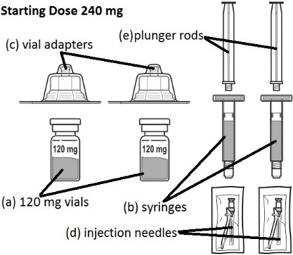
FIRMAGON 240 mg Starting Dose Kit contains:
|
|
|
FIRMAGON 80 mg Maintenance Dose Kit contains:
|
|
|
In addition the healthcare professional will need:
|
The drug product must be prepared using the following instructions:
NOTE: The mixing process must be repeated for the two injections of the Starting Dose prior to injecting the product into the patient's abdomen.
|
|
Step 1: Attaching the vial adaptor to the vial
|
|
|
|
|
|
|
|
|
|
|
|
Step 2: Assembling the syringe
NOTE: You will only feel light resistance screwing the plunger rod in position. |
|
|
Step 3: Transferring Sterile Water for Injection, USP from the syringe to the vial
|
|
|
|
|
|
|
|
|
Step 4: Preparing the reconstituted injection
Reconstitution time can take up to 15 min but usually takes a few minutes. |
|
|
Step 5: Transferring the liquid to the syringe
|
|
|
Step 6: Preparing the syringe for injection
|
|
|
|
|
|
Step 7: Preparing the patient
|
|
|
|
|
|
|
Step 8: Performing the injection
|
|
|
|
|
|
|
|
|
Step 9: Locking the needle into the shield
|
|
|
|
|
|
Step 10: Advising the patient
|
13.1 Carcinogenesis, Mutagenesis, Impairment of Fertility
Degarelix was administered subcutaneously to rats every 2 weeks for 2 years at doses of 2, 10 and 25 mg/kg (about 9, 45 and 120% of the recommended human loading dose on a mg/m2 basis). Long term treatment with degarelix at 25 mg/kg caused an increase in the combined incidence of benign hemangiomas plus malignant hemangiosarcomas in females.
Degarelix was administered subcutaneously to mice every 2 weeks for 2 years at doses of 2, 10 and 50 mg/kg (about 5, 22 and 120% of the recommended human loading dose (240 mg) on a mg/m2 basis). There was no statistically significant increase in tumor incidence associated with this treatment.
Degarelix did not cause genetic damage in standard in vitro assays (bacterial mutation, human lymphocyte chromosome aberration) nor in in vivo rodent bone marrow micronucleus tests.
Single degarelix doses of ≥ 1 mg/kg (about 5% of the clinical loading dose on a mg/m2 basis) caused reversible infertility in male rats. Single doses of ≥ 0.1 mg/kg (about 0.5% of the clinical loading dose on a mg/m2 basis) caused a decrease in fertility in female rats.
Structured Label Content
Patient Information
FIRMAGON (FIRM-uh-gahn)
(degarelix for injection)
What is FIRMAGON?
FIRMAGON is a prescription medicine used in the treatment of advanced prostate cancer.
It is not known if FIRMAGON is safe or effective in children.
Who should not receive FIRMAGON?
Do not receive FIRMAGON if you are allergic to degarelix or any ingredient in FIRMAGON. See the end of this leaflet for a complete list of ingredients in FIRMAGON.
Talk to your healthcare provider before receiving FIRMAGON if you have any of these conditions.
Before receiving FIRMAGON, tell your healthcare provider about all your medical conditions, including if you:
- have any heart problems including a condition called long QT syndrome.
- have problems with blood levels such as sodium, potassium, calcium, and magnesium
- have kidney or liver problems
- are pregnant or plan to become pregnant. FIRMAGON can cause harm to your unborn baby and loss of pregnancy (miscarriage)
- are breastfeeding or plan to breastfeed. It is not known if FIRMAGON passes into your breast milk. You and your healthcare provider should decide if you will receive FIRMAGON or breastfeed. You should not do both.
Tell your healthcare provider about all the medicines you take, including prescription and over-the-counter medicines, vitamins, and herbal supplements.
Know the medicines you take. Keep a list of them and show it to your healthcare provider and pharmacist when you get a new medicine.
How will I receive FIRMAGON?
You will receive an injection of FIRMAGON from your healthcare provider.
- The injection site will always be in the stomach (abdominal area). The injection site will change within the stomach area each time you receive a dose of FIRMAGON.
- Two injections are given as a first dose. The following monthly doses are one injection.
- Do not rub or scratch the injection site. Make sure your injection site is free of any pressure from belts, waistbands or other types of clothing.
- Always set up an appointment for your next injection.
What are the possible side effects of FIRMAGON?
FIRMAGON can cause serious side effects, including:
- Serious allergic reactions. Get medical help right away if you get any of these symptoms:
|
|
- Disorder of the heart's electrical activity. Your healthcare provider may do tests during treatment with FIRMAGON to check your heart for a condition called long QT syndrome.
The common side effects of FIRMAGON include:
|
|
Other side effects include decreased sex drive and erectile function problems.
Tell your healthcare provider if you have any side effect that bothers you or that does not go away.
These are not all the possible side effects.
Call your healthcare provider for medical advice about side effects. You may report side effects to FDA at 1-800-FDA-1088.
General information about the safe and effective use of FIRMAGON.
Medicines are sometimes prescribed for conditions that are not mentioned in a Patient Information leaflet. Do not use FIRMAGON for a condition for which it was not prescribed. Do not give FIRMAGON to other people, even if they have the same symptoms that you have. It may harm them.
You can ask your pharmacist or healthcare provider for information about FIRMAGON that is written for health professionals.
What are the ingredients in FIRMAGON?
Active ingredient: degarelix (as acetate)
Inactive ingredient: mannitol
MANUFACTURED FOR:
FERRING PHARMACEUTICALS INC., PARSIPPANY, NJ 07054
Manufactured in Germany
For more information, go to www.FIRMAGON.com or call 1-888-337-7464.
This Patient Information has been approved by the U.S. Food and Drug Administration.
02/2020
Section 42229-5 (42229-5)
Disposing used needles and syringes
- Put used alcohol swabs, needles and syringes in an FDA-cleared sharps disposal container right away after use. Do not throw away loose needles and syringes in the trash.
- For more information about safe sharps disposal, go to the FDA's website at: http://www.fda.gov/safesharpsdisposal.
Section 43683-2 (43683-2)
| Warnings and Precautions, Embryo-Fetal Toxicity (5.4) | 02/2020 |
Section 44425-7 (44425-7)
Store at 20°C to 25°C (68°F to 77°F); excursions permitted to 15°C to 30°C (59°F to 86°F). [see USP Controlled Room Temperature].
10 Overdosage (10 OVERDOSAGE)
There have been no reports of overdose with FIRMAGON. In the case of overdose, however, discontinue FIRMAGON, treat the patient symptomatically, and institute supportive measures.
8.2 Lactation
The safety and efficacy of FIRMAGON have not been established in females. There are no data on the presence of degarelix in human milk, the effects on the breastfed child, or the effects on milk production. Because many drugs are present in human milk and because of the potential for serious adverse reactions in a breastfed child from degarelix, a decision should be made whether to discontinue nursing or discontinue the drug taking into account the importance of the drug to the mother.
11 Description (11 DESCRIPTION)
FIRMAGON is a sterile lyophilized powder for injection containing degarelix (as the acetate) and mannitol. Degarelix is a synthetic linear decapeptide amide containing seven unnatural amino acids, five of which are D-amino acids. The acetate salt of degarelix is a white to off-white amorphous powder of low density as obtained after lyophilization.
The chemical name of degarelix is D-Alaninamide, N-acetyl-3-(2-naphthalenyl)-D-alanyl-4-chloro-D-phenylalanyl-3-(3-pyridinyl)-D-alanyl-L-seryl-4-[[[(4S)-hexahydro-2,6-dioxo-4-pyrimidinyl]carbonyl]amino]-L phenylalanyl-4-[(aminocarbonyl)amino]-D-phenylalanyl-L-leucyl-N6–(1-methylethyl)-L-lysyl-L-prolyl. It has an empirical formula of C82H103N18O16Cl and a molecular weight of 1632.3 Da.
Degarelix acetate has the following structural formula:
FIRMAGON is available in two packaging configurations:
- Starting Dose: Two vial carton with each vial delivering 120 mg of degarelix (equivalent to the median value of 126 mg degarelix acetate). Each 120 mg dose contains 150 mg mannitol.
- Maintenance Dose: One-vial carton delivering 80 mg of degarelix (equivalent to the median value of 84 mg degarelix acetate). Each 80 mg dose contains 200 mg mannitol.
8.4 Pediatric Use
Safety and effectiveness in pediatric patients have not been established.
8.5 Geriatric Use
Of the total number of subjects in clinical studies of FIRMAGON, 82% were age 65 and over, while 42% were age 75 and over. No overall differences in safety or effectiveness were observed between these subjects and younger subjects, but greater sensitivity of some older individuals cannot be ruled out.
6.2 Immunogenicity
As with all peptides, there is potential for immunogenicity. The detection of antibody formation is highly dependent on the sensitivity and specificity of the assay. Additionally, the observed incidence of antibody (including neutralizing antibody) positivity in an assay may be influenced by several factors including assay methodology, sample handling, timing of sample collection, concomitant medications, and underlying disease.
14 Clinical Studies (14 CLINICAL STUDIES)
The safety and efficacy of FIRMAGON were evaluated in an open-label, multi-center, randomized, parallel-group study (NCT00295750) in patients with prostate cancer. A total of 620 patients were randomized to receive one of two FIRMAGON dosing regimens or leuprolide for one year:
-
a.FIRMAGON at a starting dose of 240 mg (40 mg/mL) followed by monthly doses of 80 mg (20 mg/mL) subcutaneously,
-
b.leuprolide 7.5 mg intramuscularly monthly.
-
c.FIRMAGON at a starting dose of 240 mg (40 mg/mL) followed by monthly doses of 160 mg (40 mg/mL) subcutaneously.
FIRMAGON is not approved for use with monthly doses of 160 mg (40 mg/mL) subcutaneously.
Serum levels of testosterone were measured at screening, on Day 0, 1, 3, 7, 14, and 28 in the first month, and then monthly until the end of the study.
The clinical trial population (n=610) across all treatment arms had an overall median age of approximately 73 (range 50 to 98). The ethnic/racial distribution was 84% white, 6% black and 10% others. Disease stage was distributed approximately as follows: 20% metastatic, 29% locally advanced (T3/T4 Nx M0 or N1 M0), 31% localized (T1 or T2 N0 M0) and 20% classified as other (including patients whose disease metastatic status could not be determined definitively - or patients with PSA relapse after primary curative therapy). In addition, the median testosterone baseline value across treatment arms was approximately 400 ng/dL.
The primary objective was to demonstrate that FIRMAGON is effective achieving and maintaining testosterone suppression to castration levels (T ≤ 50 ng/dL) during 12 months of treatment. The results are shown in Table 3.
| FIRMAGON 240/80 mg N=207 |
Leuprolide 7.5 mg N=201 |
|
|---|---|---|
| No. of Responders | 202 | 194 |
| Castration Rate (95% CIs) Kaplan Meier estimates within group
|
97.2% (93.5; 98.8) |
96.4% (92.5; 98.2) |
Percentage changes in testosterone from baseline to Day 28 (median with interquartile ranges) are shown in Figure 2 and the percentages of patients who attained the medical castration of testosterone ≤ 50 ng/dL are summarized in Table 4.
| FIRMAGON 240/80 mg N=207 |
Leuprolide 7.5 mg N=201 |
|
|---|---|---|
| Day 1 | 52% | 0% |
| Day 3 | 96% | 0% |
| Day 7 | 99% | 1% |
| Day 14 | 99% | 18% |
| Day 28 | 100% | 100% |
In the clinical trial, PSA levels were monitored as a secondary endpoint. PSA levels were lowered by 64% two weeks after administration of FIRMAGON, 85% after one month, 95% after three months, and remained suppressed throughout the one year of treatment. These PSA results should be interpreted with caution because of the heterogeneity of the patient population studied. No evidence has shown that the rapidity of PSA decline is related to a clinical benefit.
4 Contraindications (4 CONTRAINDICATIONS)
FIRMAGON is contraindicated in patients with history of severe hypersensitivity to degarelix or to any of the product components [see Warnings and Precautions (5.1)].
6 Adverse Reactions (6 ADVERSE REACTIONS)
Most common adverse reactions (≥10%) are injection site reactions (e.g., pain, erythema, swelling or induration), hot flashes, and increases in serum levels of transaminases and gamma-glutamyltransferase (GGT) (6.1)
To report SUSPECTED ADVERSE REACTIONS, contact Ferring at 1-888-FERRING (1-888-337-7464) or FDA at 1-800-FDA-1088 or www.fda.gov/medwatch .
7 Drug Interactions (7 DRUG INTERACTIONS)
No drug-drug interaction studies were conducted.
Degarelix is not a substrate for the human CYP450 system. Degarelix is not an inducer or inhibitor of the CYP450 system in vitro. Therefore, clinically significant CYP450 pharmacokinetic drug-drug interactions are unlikely.
8.6 Renal Impairment
No pharmacokinetic studies in renally impaired patients have been conducted. At least 20-30% of a given dose of degarelix is excreted unchanged in the urine. A population pharmacokinetic analysis of data from the randomized study demonstrated that there is no significant effect of mild renal impairment [creatinine clearance (CrCL) 50-80 mL/min] on either the degarelix concentration or testosterone concentration. Data on patients with moderate or severe renal impairment is limited and therefore degarelix should be used with caution in patients with CrCL < 50 mL/min.
12.2 Pharmacodynamics
A single dose of 240 mg FIRMAGON causes a decrease in the plasma concentrations of luteinizing hormone (LH) and follicle stimulating hormone (FSH), and subsequently testosterone.
FIRMAGON is effective in achieving and maintaining testosterone suppression below the castration level of 50 ng/dL.
2.1 Dosing Information (2.1 Dosing information)
FIRMAGON is administered as a subcutaneous injection in the abdominal region only at the dosages in Table 1 below.
| Starting Dosage | Maintenance Dosage – Administered once every 28 days |
|---|---|
|
|
5.3 Laboratory Testing
FIRMAGON results in suppression of the pituitary gonadal system. Results of diagnostic tests of the pituitary gonadotropic and gonadal functions conducted during and after FIRMAGON may be affected. The therapeutic effect of FIRMAGON should be monitored by measuring serum concentrations of prostate-specific antigen (PSA) periodically. If PSA increases, serum concentrations of testosterone should be measured.
8.7 Hepatic Impairment
Patients with hepatic impairment were excluded from the randomized trial.
A single dose of 1 mg degarelix administered as an intravenous infusion over 1 hour was studied in 16 non-prostate cancer patients with either mild (Child Pugh A) or moderate (Child Pugh B) hepatic impairment. Compared to non-prostate cancer patients with normal liver function, the exposure of degarelix decreased by 10% and 18% in patients with mild and moderate hepatic impairment, respectively. Therefore, dose adjustment is not necessary in patients with mild or moderate hepatic impairment. However, since hepatic impairment can lower degarelix exposure, it is recommended that in patients with hepatic impairment testosterone concentrations should be monitored on a monthly basis until medical castration is achieved. Once medical castration is achieved, an every-other-month testosterone monitoring approach could be considered.
Patients with severe hepatic dysfunction have not been studied and caution is therefore warranted in this group.
1 Indications and Usage (1 INDICATIONS AND USAGE)
FIRMAGON® is indicated for treatment of patients with advanced prostate cancer.
12.1 Mechanism of Action
Degarelix is a GnRH receptor antagonist. It binds reversibly to the pituitary GnRH receptors, thereby reducing the release of gonadotropins and consequently testosterone.
5.4 Embryo Fetal Toxicity (5.4 Embryo-Fetal Toxicity)
Based on findings in animal studies, FIRMAGON can cause fetal harm and loss of pregnancy when administered to a pregnant woman. In animal developmental and reproductive toxicity studies in rats and rabbits, oral administration of degarelix during organogenesis caused embryo-fetal lethality and abortion as well as increased post-implantation loss and decreased the number of live fetuses in animals at doses less than the clinical loading dose based on body surface area. Advise pregnant patients and females of reproductive potential of the potential risk to the fetus [see Use in Specific Populations (8.1)].
5 Warnings and Precautions (5 WARNINGS AND PRECAUTIONS)
- Hypersensitivity: Anaphylaxis, urticaria and angioedema have been reported. Discontinue FIRMAGON if a severe hypersensitivity reaction occurs and manage as clinically indicated (5.1)
- QT Interval Prolongation: Androgen deprivation therapy treatment with FIRMAGON may prolong the QT interval. (5.2)
- Embryo-Fetal Toxicity: FIRMAGON can cause fetal harm. (5.4, 8.1)
2 Dosage and Administration (2 DOSAGE AND ADMINISTRATION)
3 Dosage Forms and Strengths (3 DOSAGE FORMS AND STRENGTHS)
For injection:
- FIRMAGON (240 mg): Two single-dose vials each delivering 120 mg of degarelix in a white to off-white lyophilized powder for reconstitution supplied with diluent in two prefilled syringes.
- FIRMAGON (80 mg): One single-dose vial delivering 80 mg of degarelix in a white to off-white lyophilized powder for reconstitution supplied with diluent in one prefilled syringe.
5.2 Qt Interval Prolongation (5.2 QT Interval Prolongation)
Androgen deprivation therapy may prolong the QT interval. Providers should consider whether the benefits of androgen deprivation therapy outweigh the potential risks in patients with congenital long QT syndrome, congestive heart failure, frequent electrolyte abnormalities, and in patients taking drugs known to prolong the QT interval. Electrolyte abnormalities should be corrected. Consider periodic monitoring of electrocardiograms and electrolytes.
In the randomized, active-controlled trial comparing FIRMAGON to leuprolide, periodic electro-cardiograms were performed. Seven patients, three (<1%) in the pooled degarelix group and four (2%) patients in the leuprolide 7.5 mg group, had a QTcF ≥ 500 msec. From baseline to end of study, the median change for FIRMAGON was 12.3 msec and for leuprolide was 16.7 msec.
6.3 Postmarketing Experience
The following adverse reactions have been identified during post-approval use of FIRMAGON. Because these reactions are reported voluntarily from a population of uncertain size, it is not always possible to reliably estimate their frequency or establish a causal relationship to drug exposure.
8 Use in Specific Populations (8 USE IN SPECIFIC POPULATIONS)
5.1 Hypersensitivity Reactions
FIRMAGON is contraindicated in patients with history of severe hypersensitivity to degarelix or to any of the product components [see Contraindications (4)].
Hypersensitivity reactions, including anaphylaxis, urticaria and angioedema, have been reported post-marketing with FIRMAGON.
In case of a severe hypersensitivity reaction, discontinue FIRMAGON immediately if the injection has not been completed, and manage as clinically indicated. Patients with a known history of severe hypersensitivity reactions to FIRMAGON should not be re-challenged with FIRMAGON.
6.1 Clinical Trials Experience
Because clinical trials are conducted under widely varying conditions, adverse reaction rates observed in the clinical trials of a drug cannot be directly compared to rates in the clinical trials of another drug and may not reflect the rates observed in practice.
FIRMAGON was studied in a randomized, open-label trial in which patients with prostate cancer were randomized to receive FIRMAGON (subcutaneous) or leuprolide (intramuscular) monthly for 12 months [see Clinical Studies (14)].
The most common adverse reactions (≥10%) during FIRMAGON therapy are injection site reactions (e.g., pain, erythema, swelling or induration), hot flashes, and increases in serum levels of transaminases and gamma-glutamyltransferase (GGT). The majority of the adverse reactions were Grade 1 or 2, with Grade 3/4 adverse reaction incidences of 1% or less.
Adverse reactions reported in ≥ 5% of patients treated with FIRMAGON (subcutaneous) 240 mg starting dose and then 80 mg maintenance dose once every 28 days or who were treated with 7.5 mg of leuprolide (intramuscular) every 28 days are shown in Table 2.
| FIRMAGON 240/80 mg (subcutaneous) N = 207 |
Leuprolide 7.5 mg (intramuscular) N = 201 |
|
|---|---|---|
| Any adverse reaction | 79% | 78% |
| Body as a whole | ||
| Injection site reactions Includes pain, erythema, swelling, induration, or nodule.
|
35% | <1% |
| Weight increase | 9% | 12% |
| Chills | 5% | 0% |
| Cardiovascular system | ||
| Hot flash | 26% | 21% |
| Hypertension | 6% | 4% |
| Digestive system | ||
| Increases in Transaminases and GGT | 10% | 5% |
| Constipation | 5% | 5% |
| Musculoskeletal system | ||
| Back pain | 6% | 8% |
| Arthralgia | 5% | 9% |
| Urogenital system | ||
| Urinary tract infection | 5% | 9% |
The following adverse reactions occurred in 1 to < 5% of patients treated with FIRMAGON:
-
Body as a whole: Asthenia, fatigue, fever, night sweats
-
Digestive system: Nausea
-
Nervous system: Dizziness, headache, insomnia
The following adverse reactions, not already listed, occurred in ≥ 1% of patients treated in any study with FIRMAGON:
-
Reproductive System: Erectile dysfunction, testicular atrophy
-
Endocrine Disorders: Gynecomastia
-
General: Hyperhidrosis
-
Gastrointestinal: Diarrhea
17 Patient Counseling Information (17 PATIENT COUNSELING INFORMATION)
Advise the patient to read the FDA-approved patient labeling (Patient Information).
16 How Supplied/storage and Handling (16 HOW SUPPLIED/STORAGE AND HANDLING)
FIRMAGON is available as:
- NDC 55566-8403-1, Starting dose – One carton contains:
Two single-dose vials each delivering 120 mg of degarelix in a white to off-white lyophilized powder for injection
Two prefilled syringes each containing 3 mL of Sterile Water for Injection, USP
Two vial adapters
Two administration needles - NDC 55566-8303-1, Maintenance dose – One carton contains:
One single-dose vial delivering 80 mg of degarelix in a white to off-white lyophilized powder for injection
One prefilled syringe containing 4.2 mL of Sterile Water for Injection, USP
One vial adapter
One administration needle
Principal Display Panel 80 Mg Kit Carton (PRINCIPAL DISPLAY PANEL - 80 mg Kit Carton)
NDC 55566-8303-1
FERRING
PHARMACEUTICALS
FIRMAGON® 80 mg
(degarelix for injection)
For single use subcutaneous injection only
Discard unused portion
Kit contents:
1 vial with 80 mg powder for injection
1 syringe with Sterile Water for Injection, USP
for reconstitution/administration
1 vial adapter
1 administration needle
Maintenance Dose (28 Days)
Rx only
Principal Display Panel 240 Mg Kit Carton (PRINCIPAL DISPLAY PANEL - 240 mg Kit Carton)
NDC 55566-8403-1
FERRING
PHARMACEUTICALS
FIRMAGON® 240 mg*
(degarelix for injection)
*240 mg dose administered from
two vials each containing 120 mg
For single use subcutaneous injection only
Discard unused portion
Kit contents:
2 vials each with 120 mg powder for injection
2 syringes with Sterile Water for Injection, USP
for reconstitution/administration
2 vial adapters
2 administration needles
Starting Dose
Rx only
2.2 Reconstitution and Administration Instructions
FIRMAGON is to be administered by a healthcare professional only.
Before administering FIRMAGON read the Instructions for reconstitution and administration carefully.
As with other drugs administered by subcutaneous injection, the injection site should vary periodically. Injections should be given only in areas of the abdomen that will not be exposed to pressure, e.g., not close to waistband or belt nor close to the ribs.
FIRMAGON is supplied as a powder to be reconstituted with Sterile Water for Injection, USP.
- Starting dose (240 mg): Two single-dose vials each delivering 120 mg of degarelix in a white to off-white lyophilized powder for reconstitution supplied with diluent in two prefilled syringes. Each vial is to be reconstituted with a prefilled syringe containing 3 mL of Sterile Water for Injection. 3 mL is withdrawn to deliver 120 mg degarelix at a concentration of 40 mg/mL.
- Maintenance dose (80 mg): One single-dose vial delivering 80 mg of degarelix in a white to off-white lyophilized powder for reconstitution supplied with diluent in one prefilled syringe. Each vial is to be reconstituted with a prefilled syringe containing 4.2 mL of Sterile Water for Injection. 4 mL is withdrawn to deliver 80 mg degarelix at a concentration of 20 mg/mL.
Follow the instructions for reconstitution closely and read the complete instructions before performing the subcutaneous injection.
Reconstituted drug must be administered within one hour after addition of Sterile Water for Injection, USP.
Do not shake the vials.
Follow aseptic technique.
|
|
FIRMAGON 240 mg Starting Dose Kit contains:
|
|
|
FIRMAGON 80 mg Maintenance Dose Kit contains:
|
|
|
In addition the healthcare professional will need:
|
The drug product must be prepared using the following instructions:
NOTE: The mixing process must be repeated for the two injections of the Starting Dose prior to injecting the product into the patient's abdomen.
|
|
Step 1: Attaching the vial adaptor to the vial
|
|
|
|
|
|
|
|
|
|
|
|
Step 2: Assembling the syringe
NOTE: You will only feel light resistance screwing the plunger rod in position. |
|
|
Step 3: Transferring Sterile Water for Injection, USP from the syringe to the vial
|
|
|
|
|
|
|
|
|
Step 4: Preparing the reconstituted injection
Reconstitution time can take up to 15 min but usually takes a few minutes. |
|
|
Step 5: Transferring the liquid to the syringe
|
|
|
Step 6: Preparing the syringe for injection
|
|
|
|
|
|
Step 7: Preparing the patient
|
|
|
|
|
|
|
Step 8: Performing the injection
|
|
|
|
|
|
|
|
|
Step 9: Locking the needle into the shield
|
|
|
|
|
|
Step 10: Advising the patient
|
13.1 Carcinogenesis, Mutagenesis, Impairment of Fertility
Degarelix was administered subcutaneously to rats every 2 weeks for 2 years at doses of 2, 10 and 25 mg/kg (about 9, 45 and 120% of the recommended human loading dose on a mg/m2 basis). Long term treatment with degarelix at 25 mg/kg caused an increase in the combined incidence of benign hemangiomas plus malignant hemangiosarcomas in females.
Degarelix was administered subcutaneously to mice every 2 weeks for 2 years at doses of 2, 10 and 50 mg/kg (about 5, 22 and 120% of the recommended human loading dose (240 mg) on a mg/m2 basis). There was no statistically significant increase in tumor incidence associated with this treatment.
Degarelix did not cause genetic damage in standard in vitro assays (bacterial mutation, human lymphocyte chromosome aberration) nor in in vivo rodent bone marrow micronucleus tests.
Single degarelix doses of ≥ 1 mg/kg (about 5% of the clinical loading dose on a mg/m2 basis) caused reversible infertility in male rats. Single doses of ≥ 0.1 mg/kg (about 0.5% of the clinical loading dose on a mg/m2 basis) caused a decrease in fertility in female rats.
Advanced Ingredient Data
Raw Label Data
All Sections (JSON)
Additional Information
Back to search View SPL set listing Open on DailyMed ↗
Source: dailymed · Ingested: 2026-02-15T11:40:09.975103 · Updated: 2026-03-14T22:00:59.848985