Prucalopride Tablets
a1488b84-40e4-472a-a34b-68ef37c0260e
34391-3
HUMAN PRESCRIPTION DRUG LABEL
Drug Facts
Composition & Product
Identifiers & Packaging
Indications and Usage
Prucalopride tablets are indicated for the treatment of chronic idiopathic constipation (CIC) in adults.
Dosage and Administration
Prucalopride tablets can be taken with or without food. The recommended dosage by patient population is shown in Table 1. Table 1: Recommended Dosage Regimen and Dosage Adjustments by Population Population with CIC Recommended Oral Dose Regimen Adults 2 mg once daily Patients with severe renal impairment (creatinine clearance (CrCL) less than 30 mL/min) [see Use in Specific Populations ( 8.5 and 8.6) ] . 1 mg once daily
Contraindications
Prucalopride is contraindicated in patients with: A history of hypersensitivity to prucalopride. Reactions including dyspnea, rash, pruritus, urticaria, and facial edema have been observed [see Adverse Reactions (6.2) ] . Intestinal perforation or obstruction due to structural or functional disorder of the gut wall, obstructive ileus, severe inflammatory conditions of the intestinal tract such as Crohn's disease, ulcerative colitis, and toxic megacolon/megarectum.
Warnings and Precautions
Suicidal Ideation and Behavior : Monitor patients for suicidal ideation and behavior as well as self-injurious ideation and new-onset or worsening of depression. Instruct patients to discontinue prucalopride immediately and contact their healthcare provider if they experience any unusual changes in mood or behavior, or they experience emerging suicidal thoughts or behaviors. ( 5.1 )
Adverse Reactions
Most common adverse reactions (≥ 2%) are headache, abdominal pain, nausea, diarrhea, abdominal distension, dizziness, vomiting, flatulence, and fatigue. ( 6.1 ) To report SUSPECTED ADVERSE REACTIONS, contact SKG Pharma Inc. at 1-866-495-2621 or FDA at 1-800-FDA-1088 or www.fda.gov/medwatch .
How Supplied
Prucalopride tablets containing 1 mg prucalopride are white to off-white, round, biconvex film-coated tablets debossed with “P1” on one side and plain on other side. They are supplied as: NDC 83085-005-30: HDPE bottle of 30 tablets, with child-resistant closure. Prucalopride tablets containing 2 mg prucalopride are yellow, round, biconvex film-coated tablets debossed with “P2” on one side and plain on other side. They are supplied as: NDC 83085-006-30: HDPE bottle of 30 tablets, with child-resistant closure.
Storage and Handling
Prucalopride tablets containing 1 mg prucalopride are white to off-white, round, biconvex film-coated tablets debossed with “P1” on one side and plain on other side. They are supplied as: NDC 83085-005-30: HDPE bottle of 30 tablets, with child-resistant closure. Prucalopride tablets containing 2 mg prucalopride are yellow, round, biconvex film-coated tablets debossed with “P2” on one side and plain on other side. They are supplied as: NDC 83085-006-30: HDPE bottle of 30 tablets, with child-resistant closure.
Description
Prucalopride tablets are indicated for the treatment of chronic idiopathic constipation (CIC) in adults.
Medication Information
Warnings and Precautions
Suicidal Ideation and Behavior : Monitor patients for suicidal ideation and behavior as well as self-injurious ideation and new-onset or worsening of depression. Instruct patients to discontinue prucalopride immediately and contact their healthcare provider if they experience any unusual changes in mood or behavior, or they experience emerging suicidal thoughts or behaviors. ( 5.1 )
Indications and Usage
Prucalopride tablets are indicated for the treatment of chronic idiopathic constipation (CIC) in adults.
Dosage and Administration
Prucalopride tablets can be taken with or without food. The recommended dosage by patient population is shown in Table 1. Table 1: Recommended Dosage Regimen and Dosage Adjustments by Population Population with CIC Recommended Oral Dose Regimen Adults 2 mg once daily Patients with severe renal impairment (creatinine clearance (CrCL) less than 30 mL/min) [see Use in Specific Populations ( 8.5 and 8.6) ] . 1 mg once daily
Contraindications
Prucalopride is contraindicated in patients with: A history of hypersensitivity to prucalopride. Reactions including dyspnea, rash, pruritus, urticaria, and facial edema have been observed [see Adverse Reactions (6.2) ] . Intestinal perforation or obstruction due to structural or functional disorder of the gut wall, obstructive ileus, severe inflammatory conditions of the intestinal tract such as Crohn's disease, ulcerative colitis, and toxic megacolon/megarectum.
Adverse Reactions
Most common adverse reactions (≥ 2%) are headache, abdominal pain, nausea, diarrhea, abdominal distension, dizziness, vomiting, flatulence, and fatigue. ( 6.1 ) To report SUSPECTED ADVERSE REACTIONS, contact SKG Pharma Inc. at 1-866-495-2621 or FDA at 1-800-FDA-1088 or www.fda.gov/medwatch .
Storage and Handling
Prucalopride tablets containing 1 mg prucalopride are white to off-white, round, biconvex film-coated tablets debossed with “P1” on one side and plain on other side. They are supplied as: NDC 83085-005-30: HDPE bottle of 30 tablets, with child-resistant closure. Prucalopride tablets containing 2 mg prucalopride are yellow, round, biconvex film-coated tablets debossed with “P2” on one side and plain on other side. They are supplied as: NDC 83085-006-30: HDPE bottle of 30 tablets, with child-resistant closure.
How Supplied
Prucalopride tablets containing 1 mg prucalopride are white to off-white, round, biconvex film-coated tablets debossed with “P1” on one side and plain on other side. They are supplied as: NDC 83085-005-30: HDPE bottle of 30 tablets, with child-resistant closure. Prucalopride tablets containing 2 mg prucalopride are yellow, round, biconvex film-coated tablets debossed with “P2” on one side and plain on other side. They are supplied as: NDC 83085-006-30: HDPE bottle of 30 tablets, with child-resistant closure.
Description
Prucalopride tablets are indicated for the treatment of chronic idiopathic constipation (CIC) in adults.
Section 42229-5
Common Adverse Reactions
Table 2 below summarizes the incidence (%) of common adverse reactions occurring in at least 2% of patients with CIC receiving either 2 mg of prucalopride once daily or placebo and at an incidence greater than in the placebo group from the six double-blind placebo-controlled trials described above.
| Adverse Reaction |
Prucalopride
2 mg Once Daily N = 1,251 Includes 93 patients who started on prucalopride 1 mg and increased to prucalopride 2 mg.
% |
Placebo
N = 1,279 % |
| Headache | 19 | 9 |
| Abdominal pain Includes abdominal pain, upper abdominal pain, lower abdominal pain, abdominal tenderness, abdominal discomfort, and epigastric discomfort.
|
16 | 11 |
| Nausea | 14 | 7 |
| Diarrhea | 13 | 5 |
| Abdominal distension | 5 | 4 |
| Dizziness | 4 | 2 |
| Vomiting | 3 | 2 |
| Flatulence | 3 | 2 |
| Fatigue | 2 | 1 |
Section 42230-3
| This Patient Information has been approved by the U.S. Food and Drug Administration. | Revised: March 2024 | ||
|
PATIENT INFORMATION Prucalopride (proo-KAL-oh-pride) tablets, for oral use |
|||
|
What are prucalopride tablets?
Prucalopride tablets are a prescription medicine used in adults to treat a type of constipation called chronic idiopathic constipation (CIC). Idiopathic means the cause of the constipation is unknown. It is not known if prucalopride tablets are safe and effective in children. |
|||
Do not take prucalopride tablets if you:
|
|||
Before taking prucalopride tablets, tell your healthcare provider about all of your medical conditions, including if you:
|
|||
How should I take prucalopride tablets?
|
|||
|
What are the possible side effects of prucalopride tablets
? unusual changes in mood or behavior, thoughts of hurting yourself, trying to hurt yourself, or suicide. Stop taking prucalopride tablets right away and tell your healthcare provider immediately if your depression gets worse, you feel sad, hopeless, begin to have thoughts of suicide, thoughts of hurting yourself or you have tried to hurt yourself or if you develop new depression. |
|||
| The most common side effects of prucalopride tablets include: | |||
|
|
|
|
| These are not all the possible side effects of prucalopride tablets. Call your doctor for medical advice about side effects. You may report side effects to FDA at 1-800-FDA-1088. |
|||
How should I store prucalopride tablets?
|
|||
|
General information about the safe and effective use of prucalopride tablets.
Medicines are sometimes prescribed for purposes other than those listed in a Patient Information leaflet. Do not use prucalopride tablets for a condition for which it was not prescribed. Do not give prucalopride tablets to other people, even if they have the same symptoms that you have. It may harm them. You can ask your pharmacist or healthcare provider for information about prucalopride tablets that is written for health professionals. |
|||
|
What are the ingredients in prucalopride tablets?
Active ingredient: prucalopride Inactive ingredients: anhydrous lactose, colloidal silicon dioxide, magnesium stearate and microcrystalline cellulose. The coating contains hypromellose, lactose monohydrate, polyethylene glycol, titanium dioxide and triacetin. The 2 mg tablet also contains red iron oxide, and yellow iron oxide. |
|||
|
Distributed by: For more information, call SKG Pharma Inc. at 1-866-495-2621. |
Section 44425-7
Store prucalopride tablets at 20°C to 25°C (68°F to 77°F); excursions permitted between 15°C to 30°C (59°F to 86°F) [see USP Controlled Room Temperature].
Store prucalopride tablets in the original container to protect from moisture.
10 Overdosage
An overdose may result in appearance of symptoms from an exaggeration of the known pharmacodynamic effects of prucalopride and includes headache, nausea, and diarrhea. Specific treatment is not available for prucalopride overdose. Should an overdose occur, treat symptomatically and institute supportive measures, as required. Extensive fluid loss from diarrhea or vomiting may require correction of electrolyte disturbances.
11 Description
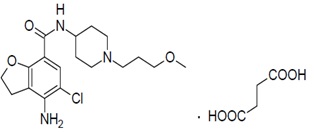
Prucalopride tablets for oral use contain prucalopride succinate, a dihydrobenzofurancarboxamide that is a serotonin type 4 (5-HT4) receptor agonist. The IUPAC name is: 4-amino-5-chloro-N-[1-(3-methoxypropyl)piperidin-4-yl]-2,3-dihydrobenzofuran-7-carboxamide succinate.
The molecular formula is C18H26ClN3O3.C4H6O4 and the molecular weight is 485.96 g/mol. The structural formula is:
Prucalopride succinate is a white to almost white powder. It is sparingly soluble in dimethyl sulphoxide, methanol and soluble in water.
Each 1 mg film-coated tablet of prucalopride contains 1 mg of prucalopride (equivalent to 1.32 mg prucalopride succinate), and the following inactive ingredients: anhydrous lactose, colloidal silicon dioxide, magnesium stearate, and microcrystalline cellulose. The coating for the 1 mg tablet contains hypromellose, lactose monohydrate, polyethylene glycol, titanium dioxide, and triacetin.
Each 2 mg film-coated tablet of prucalopride contains 2 mg of prucalopride (equivalent to 2.64 mg prucalopride succinate), and the following inactive ingredients: anhydrous lactose, colloidal silicon dioxide, magnesium stearate, and microcrystalline cellulose. The coating for the 2 mg tablet contains hypromellose, lactose monohydrate, polyethylene glycol, titanium dioxide, triacetin, red iron oxide, and yellow iron oxide.
8.4 Pediatric Use
The safety and effectiveness of prucalopride have not been established in pediatric patients.
8.5 Geriatric Use
Of the 2,484 patients treated with prucalopride 1 mg or 2 mg once daily in 6 controlled trials of at least 12-week duration in patients with CIC, 15% were 65 years of age and over, and 5% were 75 years of age and over [see Clinical Studies (14)]. No overall differences in safety and effectiveness were observed between elderly and younger patients.
In an additional 4-week double-blind, placebo-controlled dose escalation study in 89 elderly nursing home residents with CIC (PRU-USA-26, NCT00627692), no unanticipated safety issues were identified.
Elderly subjects had higher prucalopride exposure compared to younger subjects. However, the effect of age on the pharmacokinetics of prucalopride appeared to be related to decreased renal function [see Clinical Pharmacology (12.3)]. Adjust the dosage in elderly patients based on renal function [see Dosage and Administration (2), Use in Specific Populations (8.6)].
14 Clinical Studies
The efficacy of prucalopride for the treatment of CIC was evaluated in six double-blind, placebo-controlled, randomized, multicenter clinical trials in 2,484 adult patients (Studies 1 to 6; see Table 3). Studies 1 through 5 were 12-week treatment duration and Study 6 included 24 weeks of treatment. Patients less than 65 years were dosed with prucalopride 2 mg once daily. In Studies 2 and 6, the geriatric patients started on prucalopride 1 mg once daily and, if necessary, the dose was increased to 2 mg after 2 weeks or 4 weeks of treatment in the event of insufficient response at 1 mg; of these patients 81% increased to 2 mg. Overall, the majority of patients were female (76%) and white (76%), and also included Asian (19%) and black (3%). The mean adult age was 47 years ± 16 years (range 17 years to 95 years) and the mean duration of constipation was 16 years ± 15 years with 28% of patients having chronic constipation for at least 20 years.
| Study Number | Duration |
|---|---|
| Study 1 (PRU-CRC-3001, NCT01116206) | 12 Weeks |
| Study 2 (SPD555-302, NCT01147926) | 12 Weeks |
| Study 3 (PRU-INT-6, NCT00488137) | 12 Weeks |
| Study 4 (PRU-USA-11, NCT00483886) | 12 Weeks |
| Study 5 (PRU-USA-13, NCT00485940) | 12 Weeks |
| Study 6 (SPD-555-401, NCT01424228) | 24 Weeks |
Eligible patients required a history of chronic constipation defined as having fewer than 3 spontaneous bowel movements (SBMs) per week that resulted in a feeling of complete evacuation (complete, spontaneous bowel movement [CSBM]) and 1 or more of the following symptoms for greater than 25% of bowel movements in the preceding 3 months, with symptoms onset more than 6 months prior to screening:
- Lumpy or hard stools
- Sensation of incomplete evacuation
- Straining at defecation
Patients who never had SBMs were eligible. In Study 1, eligibility also included sensation of ano-rectal obstruction or blockade or the need for digital manipulation in more than 25% of bowel movements. In all studies, patients were excluded if constipation was due to secondary causes or suspected to be drug-induced.
Efficacy was assessed using information provided by patients in a daily diary.
4 Contraindications
Prucalopride is contraindicated in patients with:
- A history of hypersensitivity to prucalopride. Reactions including dyspnea, rash, pruritus, urticaria, and facial edema have been observed [see Adverse Reactions (6.2)].
- Intestinal perforation or obstruction due to structural or functional disorder of the gut wall, obstructive ileus, severe inflammatory conditions of the intestinal tract such as Crohn's disease, ulcerative colitis, and toxic megacolon/megarectum.
6 Adverse Reactions
Most common adverse reactions (≥ 2%) are headache, abdominal pain, nausea, diarrhea, abdominal distension, dizziness, vomiting, flatulence, and fatigue. (6.1)
To report SUSPECTED ADVERSE REACTIONS, contact SKG Pharma Inc. at 1-866-495-2621 or FDA at 1-800-FDA-1088 or www.fda.gov/medwatch.
8.6 Renal Impairment
No dosage adjustment is required for patients with mild and moderate renal impairment (creatinine clearance at least 30 mL/min, as determined from a 24-hour urine collection in the clinical trial).
Prucalopride is known to be substantially excreted by the kidney, and the risk of adverse reactions may be greater in patients with impaired renal function. A decreased dosage is recommended in patients with severe renal impairment (creatinine clearance less than 30 mL/min, as determined from a 24-hour urine collection in the clinical trial) [see Dosage and Administration (2)].
Avoid prucalopride in patients with end-stage renal disease requiring dialysis [see Clinical Pharmacology (12.3)].
12.3 Pharmacokinetics
The pharmacokinetics of prucalopride has been evaluated in healthy subjects and is dose-proportional within and beyond the therapeutic range (tested up to 20 mg, 10 times the maximum approved recommended dose). Prucalopride administered once daily displays time-independent kinetics during prolonged treatment. With once daily administration of 2 mg prucalopride, pharmacokinetic steady-state is attained within 3 days to 4 days, and steady-state plasma concentrations fluctuate between trough and peak values of 2.5 ng/mL and 7 ng/mL, respectively, with mean plasma AUC0-24h of 109 ng∙h/mL. The accumulation ratio after once daily dosing ranged from 1.9 to 2.3. The terminal half-life is approximately 1 day.
Pharmacokinetic parameters in patients with CIC are similar to those seen in healthy subjects.
1 Indications and Usage
Prucalopride tablets are indicated for the treatment of chronic idiopathic constipation (CIC) in adults.
12.1 Mechanism of Action
Prucalopride, a selective serotonin type 4 (5-HT4) receptor agonist, is a gastrointestinal (GI) prokinetic agent that stimulates colonic peristalsis (high-amplitude propagating contractions [HAPCs]), which increases bowel motility.
Prucalopride was devoid of effects mediated via 5-HT2A, 5-HT2B, 5-HT3, motilin or CCK-A receptors in vitro at concentrations exceeding 5-HT4 receptor affinity by 150-fold or greater. In isolated GI tissues from various animal species, prucalopride facilitated acetylcholine release to enhance the amplitude of contractions and stimulate peristalsis. In rats and dogs, prucalopride stimulated gastrointestinal motility with contractions starting from the proximal colon to the anal sphincter.
5 Warnings and Precautions
Suicidal Ideation and Behavior: Monitor patients for suicidal ideation and behavior as well as self-injurious ideation and new-onset or worsening of depression. Instruct patients to discontinue prucalopride immediately and contact their healthcare provider if they experience any unusual changes in mood or behavior, or they experience emerging suicidal thoughts or behaviors. (5.1)
2 Dosage and Administration
Prucalopride tablets can be taken with or without food. The recommended dosage by patient population is shown in Table 1.
| Population with CIC | Recommended Oral Dose Regimen |
|---|---|
| Adults | 2 mg once daily |
| Patients with severe renal impairment (creatinine clearance (CrCL) less than 30 mL/min) [see Use in Specific Populations ( 8.5 and 8.6)]. | 1 mg once daily |
3 Dosage Forms and Strengths
Prucalopride Tablets:
- 1 mg prucalopride: White to off-white, round, biconvex film-coated tablets debossed with “P1” on one side and plain on other side.
- 2 mg prucalopride: Yellow, round, biconvex film-coated tablets debossed with “P2” on one side and plain on the other side.
6.2 Postmarketing Experience
The following adverse reactions have been identified during post-approval use of prucalopride. Because these reactions are reported voluntarily from a population of uncertain size, it is not always possible to reliably estimate their frequency or establish a causal relationship to drug exposure.
Hypersensitivity reactions: dyspnea, rash, pruritus, urticaria, and facial edema [see Contraindications (4)].
Psychiatric disorders: Suicide, suicide attempts, suicidal ideation, self-injurious ideation, depression, anxiety, insomnia, nightmares, and visual hallucinations [see Warnings and Precautions (5.1)].
6.1 Clinical Trials Experience
Because clinical trials are conducted under widely varying conditions, adverse reaction rates observed in the clinical trials of a drug cannot be directly compared to rates in the clinical trials of another drug and may not reflect the rates observed in practice.
The data described below represent 2,530 patients (1,251 received prucalopride 2 mg once daily and 1,279 received placebo) with CIC from 6 double-blind, placebo-controlled clinical trials of 12 weeks to 24 weeks in duration. In these trials overall, patients were primarily female (76%) and white (76%). The mean age was 47 years (range 17 years to 95 years) [see Clinical Studies (14)].
17 Patient Counseling Information
Advise the patient to read the FDA-approved patient labeling (Patient Information)
Suicidal Ideation and Behavior: Inform patients, their caregivers, and family members that suicidal ideation and behavior, self-injurious ideation as well as new onset or worsening depression have been reported in patients treated with prucalopride tablets. Advise them to be aware of any unusual changes in mood or behavior, new onset or worsening of depression, or the emergence of suicidal thoughts or behavior. Instruct patients, caregivers, and family members to discontinue prucalopride tablets immediately and contact their healthcare provider if any of these symptoms occur [see Warnings and Precautions (5.1)].
5.1 Suicidal Ideation and Behavior
In clinical trials, suicides, suicide attempts, and suicidal ideation have been reported. Postmarketing cases of suicidal ideation and behavior as well as self-injurious ideation and new onset or worsening of depression have been reported within the first few weeks of starting prucalopride [see Adverse Reactions (6.1, 6.2)].
A causal association between treatment with prucalopride and an increased risk of suicidal ideation and behavior has not been established.
Monitor all patients treated with prucalopride for new onset or worsening of depression or the emergence of suicidal thoughts and behaviors. Counsel patients, their caregivers, and family members of patients to be aware of any unusual changes in mood or behavior and alert the healthcare provider. Instruct patients to discontinue prucalopride immediately and contact their healthcare provider if they experience any of these symptoms.
16 How Supplied/storage and Handling
Prucalopride tablets containing 1 mg prucalopride are white to off-white, round, biconvex film-coated tablets debossed with “P1” on one side and plain on other side. They are supplied as:
- NDC 83085-005-30: HDPE bottle of 30 tablets, with child-resistant closure.
Prucalopride tablets containing 2 mg prucalopride are yellow, round, biconvex film-coated tablets debossed with “P2” on one side and plain on other side. They are supplied as:
- NDC 83085-006-30: HDPE bottle of 30 tablets, with child-resistant closure.
13.2 Animal Toxicology And/or Pharmacology
In safety pharmacology studies, no relevant effects were observed in any of the cardiovascular studies at concentrations at least 50 times the human therapeutic Cmax. Prucalopride had no effect on potassium current in hERG-transfected HEK cells at concentrations up to 1 micromolar (50 times the human therapeutic Cmax). At concentrations ≥ 3 micromolar, concentration-dependent inhibition of the current was observed (IC50 = 22 micromolar; 1,100 times the human therapeutic Cmax). In studies in pigs, minor and transient increases in heart rate and blood pressure were noted upon first exposure to prucalopride, at plasma levels at least 10 times the human therapeutic Cmax.
In repeated-dose toxicology studies in male rats, increases in heart weight (up to 9%) were observed at doses of 20 mg/kg/day or higher (at least 75 times the human therapeutic AUC). Cardiac histology revealed an increase in focal infiltration of chronic inflammatory cells in the heart at a dose of 80 mg/kg/day (at least 785 times the human therapeutic AUC). In dogs, no changes in heart rate, blood pressure, electrocardiogram parameters, heart weight, or cardiac histology were observed at any dose tested (the highest dose of 30 mg/kg/day was 572 times the human therapeutic AUC).
In vitro studies demonstrated no effect of prucalopride on either contractile responses in human, canine, and porcine coronary arteries at concentrations up to 10 micromolar (500 times the human clinical Cmax) or on platelet aggregation at concentrations up to 200 nanomolar (10 times the human clinical Cmax).
Principal Display Panel 1 Mg Tablet Bottle Label
NDC 83085-005-30
Prucalopride Tablets
1 mg
Usual Dose: One tablet once daily.
Rx only
30 Tablets
Principal Display Panel 2 Mg Tablet Bottle Label
NDC 83085-006-30
Prucalopride
Tablets
2 mg
Usual Dose: One tablet once daily.
Rx only
30 Tablets
Structured Label Content
Section 42229-5 (42229-5)
Common Adverse Reactions
Table 2 below summarizes the incidence (%) of common adverse reactions occurring in at least 2% of patients with CIC receiving either 2 mg of prucalopride once daily or placebo and at an incidence greater than in the placebo group from the six double-blind placebo-controlled trials described above.
| Adverse Reaction |
Prucalopride
2 mg Once Daily N = 1,251 Includes 93 patients who started on prucalopride 1 mg and increased to prucalopride 2 mg.
% |
Placebo
N = 1,279 % |
| Headache | 19 | 9 |
| Abdominal pain Includes abdominal pain, upper abdominal pain, lower abdominal pain, abdominal tenderness, abdominal discomfort, and epigastric discomfort.
|
16 | 11 |
| Nausea | 14 | 7 |
| Diarrhea | 13 | 5 |
| Abdominal distension | 5 | 4 |
| Dizziness | 4 | 2 |
| Vomiting | 3 | 2 |
| Flatulence | 3 | 2 |
| Fatigue | 2 | 1 |
Section 42230-3 (42230-3)
| This Patient Information has been approved by the U.S. Food and Drug Administration. | Revised: March 2024 | ||
|
PATIENT INFORMATION Prucalopride (proo-KAL-oh-pride) tablets, for oral use |
|||
|
What are prucalopride tablets?
Prucalopride tablets are a prescription medicine used in adults to treat a type of constipation called chronic idiopathic constipation (CIC). Idiopathic means the cause of the constipation is unknown. It is not known if prucalopride tablets are safe and effective in children. |
|||
Do not take prucalopride tablets if you:
|
|||
Before taking prucalopride tablets, tell your healthcare provider about all of your medical conditions, including if you:
|
|||
How should I take prucalopride tablets?
|
|||
|
What are the possible side effects of prucalopride tablets
? unusual changes in mood or behavior, thoughts of hurting yourself, trying to hurt yourself, or suicide. Stop taking prucalopride tablets right away and tell your healthcare provider immediately if your depression gets worse, you feel sad, hopeless, begin to have thoughts of suicide, thoughts of hurting yourself or you have tried to hurt yourself or if you develop new depression. |
|||
| The most common side effects of prucalopride tablets include: | |||
|
|
|
|
| These are not all the possible side effects of prucalopride tablets. Call your doctor for medical advice about side effects. You may report side effects to FDA at 1-800-FDA-1088. |
|||
How should I store prucalopride tablets?
|
|||
|
General information about the safe and effective use of prucalopride tablets.
Medicines are sometimes prescribed for purposes other than those listed in a Patient Information leaflet. Do not use prucalopride tablets for a condition for which it was not prescribed. Do not give prucalopride tablets to other people, even if they have the same symptoms that you have. It may harm them. You can ask your pharmacist or healthcare provider for information about prucalopride tablets that is written for health professionals. |
|||
|
What are the ingredients in prucalopride tablets?
Active ingredient: prucalopride Inactive ingredients: anhydrous lactose, colloidal silicon dioxide, magnesium stearate and microcrystalline cellulose. The coating contains hypromellose, lactose monohydrate, polyethylene glycol, titanium dioxide and triacetin. The 2 mg tablet also contains red iron oxide, and yellow iron oxide. |
|||
|
Distributed by: For more information, call SKG Pharma Inc. at 1-866-495-2621. |
Section 44425-7 (44425-7)
Store prucalopride tablets at 20°C to 25°C (68°F to 77°F); excursions permitted between 15°C to 30°C (59°F to 86°F) [see USP Controlled Room Temperature].
Store prucalopride tablets in the original container to protect from moisture.
10 Overdosage (10 OVERDOSAGE)
An overdose may result in appearance of symptoms from an exaggeration of the known pharmacodynamic effects of prucalopride and includes headache, nausea, and diarrhea. Specific treatment is not available for prucalopride overdose. Should an overdose occur, treat symptomatically and institute supportive measures, as required. Extensive fluid loss from diarrhea or vomiting may require correction of electrolyte disturbances.
11 Description (11 DESCRIPTION)
Prucalopride tablets for oral use contain prucalopride succinate, a dihydrobenzofurancarboxamide that is a serotonin type 4 (5-HT4) receptor agonist. The IUPAC name is: 4-amino-5-chloro-N-[1-(3-methoxypropyl)piperidin-4-yl]-2,3-dihydrobenzofuran-7-carboxamide succinate.
The molecular formula is C18H26ClN3O3.C4H6O4 and the molecular weight is 485.96 g/mol. The structural formula is:
Prucalopride succinate is a white to almost white powder. It is sparingly soluble in dimethyl sulphoxide, methanol and soluble in water.
Each 1 mg film-coated tablet of prucalopride contains 1 mg of prucalopride (equivalent to 1.32 mg prucalopride succinate), and the following inactive ingredients: anhydrous lactose, colloidal silicon dioxide, magnesium stearate, and microcrystalline cellulose. The coating for the 1 mg tablet contains hypromellose, lactose monohydrate, polyethylene glycol, titanium dioxide, and triacetin.
Each 2 mg film-coated tablet of prucalopride contains 2 mg of prucalopride (equivalent to 2.64 mg prucalopride succinate), and the following inactive ingredients: anhydrous lactose, colloidal silicon dioxide, magnesium stearate, and microcrystalline cellulose. The coating for the 2 mg tablet contains hypromellose, lactose monohydrate, polyethylene glycol, titanium dioxide, triacetin, red iron oxide, and yellow iron oxide.
8.4 Pediatric Use
The safety and effectiveness of prucalopride have not been established in pediatric patients.
8.5 Geriatric Use
Of the 2,484 patients treated with prucalopride 1 mg or 2 mg once daily in 6 controlled trials of at least 12-week duration in patients with CIC, 15% were 65 years of age and over, and 5% were 75 years of age and over [see Clinical Studies (14)]. No overall differences in safety and effectiveness were observed between elderly and younger patients.
In an additional 4-week double-blind, placebo-controlled dose escalation study in 89 elderly nursing home residents with CIC (PRU-USA-26, NCT00627692), no unanticipated safety issues were identified.
Elderly subjects had higher prucalopride exposure compared to younger subjects. However, the effect of age on the pharmacokinetics of prucalopride appeared to be related to decreased renal function [see Clinical Pharmacology (12.3)]. Adjust the dosage in elderly patients based on renal function [see Dosage and Administration (2), Use in Specific Populations (8.6)].
14 Clinical Studies (14 CLINICAL STUDIES)
The efficacy of prucalopride for the treatment of CIC was evaluated in six double-blind, placebo-controlled, randomized, multicenter clinical trials in 2,484 adult patients (Studies 1 to 6; see Table 3). Studies 1 through 5 were 12-week treatment duration and Study 6 included 24 weeks of treatment. Patients less than 65 years were dosed with prucalopride 2 mg once daily. In Studies 2 and 6, the geriatric patients started on prucalopride 1 mg once daily and, if necessary, the dose was increased to 2 mg after 2 weeks or 4 weeks of treatment in the event of insufficient response at 1 mg; of these patients 81% increased to 2 mg. Overall, the majority of patients were female (76%) and white (76%), and also included Asian (19%) and black (3%). The mean adult age was 47 years ± 16 years (range 17 years to 95 years) and the mean duration of constipation was 16 years ± 15 years with 28% of patients having chronic constipation for at least 20 years.
| Study Number | Duration |
|---|---|
| Study 1 (PRU-CRC-3001, NCT01116206) | 12 Weeks |
| Study 2 (SPD555-302, NCT01147926) | 12 Weeks |
| Study 3 (PRU-INT-6, NCT00488137) | 12 Weeks |
| Study 4 (PRU-USA-11, NCT00483886) | 12 Weeks |
| Study 5 (PRU-USA-13, NCT00485940) | 12 Weeks |
| Study 6 (SPD-555-401, NCT01424228) | 24 Weeks |
Eligible patients required a history of chronic constipation defined as having fewer than 3 spontaneous bowel movements (SBMs) per week that resulted in a feeling of complete evacuation (complete, spontaneous bowel movement [CSBM]) and 1 or more of the following symptoms for greater than 25% of bowel movements in the preceding 3 months, with symptoms onset more than 6 months prior to screening:
- Lumpy or hard stools
- Sensation of incomplete evacuation
- Straining at defecation
Patients who never had SBMs were eligible. In Study 1, eligibility also included sensation of ano-rectal obstruction or blockade or the need for digital manipulation in more than 25% of bowel movements. In all studies, patients were excluded if constipation was due to secondary causes or suspected to be drug-induced.
Efficacy was assessed using information provided by patients in a daily diary.
4 Contraindications (4 CONTRAINDICATIONS)
Prucalopride is contraindicated in patients with:
- A history of hypersensitivity to prucalopride. Reactions including dyspnea, rash, pruritus, urticaria, and facial edema have been observed [see Adverse Reactions (6.2)].
- Intestinal perforation or obstruction due to structural or functional disorder of the gut wall, obstructive ileus, severe inflammatory conditions of the intestinal tract such as Crohn's disease, ulcerative colitis, and toxic megacolon/megarectum.
6 Adverse Reactions (6 ADVERSE REACTIONS)
Most common adverse reactions (≥ 2%) are headache, abdominal pain, nausea, diarrhea, abdominal distension, dizziness, vomiting, flatulence, and fatigue. (6.1)
To report SUSPECTED ADVERSE REACTIONS, contact SKG Pharma Inc. at 1-866-495-2621 or FDA at 1-800-FDA-1088 or www.fda.gov/medwatch.
8.6 Renal Impairment
No dosage adjustment is required for patients with mild and moderate renal impairment (creatinine clearance at least 30 mL/min, as determined from a 24-hour urine collection in the clinical trial).
Prucalopride is known to be substantially excreted by the kidney, and the risk of adverse reactions may be greater in patients with impaired renal function. A decreased dosage is recommended in patients with severe renal impairment (creatinine clearance less than 30 mL/min, as determined from a 24-hour urine collection in the clinical trial) [see Dosage and Administration (2)].
Avoid prucalopride in patients with end-stage renal disease requiring dialysis [see Clinical Pharmacology (12.3)].
12.3 Pharmacokinetics
The pharmacokinetics of prucalopride has been evaluated in healthy subjects and is dose-proportional within and beyond the therapeutic range (tested up to 20 mg, 10 times the maximum approved recommended dose). Prucalopride administered once daily displays time-independent kinetics during prolonged treatment. With once daily administration of 2 mg prucalopride, pharmacokinetic steady-state is attained within 3 days to 4 days, and steady-state plasma concentrations fluctuate between trough and peak values of 2.5 ng/mL and 7 ng/mL, respectively, with mean plasma AUC0-24h of 109 ng∙h/mL. The accumulation ratio after once daily dosing ranged from 1.9 to 2.3. The terminal half-life is approximately 1 day.
Pharmacokinetic parameters in patients with CIC are similar to those seen in healthy subjects.
1 Indications and Usage (1 INDICATIONS AND USAGE)
Prucalopride tablets are indicated for the treatment of chronic idiopathic constipation (CIC) in adults.
12.1 Mechanism of Action
Prucalopride, a selective serotonin type 4 (5-HT4) receptor agonist, is a gastrointestinal (GI) prokinetic agent that stimulates colonic peristalsis (high-amplitude propagating contractions [HAPCs]), which increases bowel motility.
Prucalopride was devoid of effects mediated via 5-HT2A, 5-HT2B, 5-HT3, motilin or CCK-A receptors in vitro at concentrations exceeding 5-HT4 receptor affinity by 150-fold or greater. In isolated GI tissues from various animal species, prucalopride facilitated acetylcholine release to enhance the amplitude of contractions and stimulate peristalsis. In rats and dogs, prucalopride stimulated gastrointestinal motility with contractions starting from the proximal colon to the anal sphincter.
5 Warnings and Precautions (5 WARNINGS AND PRECAUTIONS)
Suicidal Ideation and Behavior: Monitor patients for suicidal ideation and behavior as well as self-injurious ideation and new-onset or worsening of depression. Instruct patients to discontinue prucalopride immediately and contact their healthcare provider if they experience any unusual changes in mood or behavior, or they experience emerging suicidal thoughts or behaviors. (5.1)
2 Dosage and Administration (2 DOSAGE AND ADMINISTRATION)
Prucalopride tablets can be taken with or without food. The recommended dosage by patient population is shown in Table 1.
| Population with CIC | Recommended Oral Dose Regimen |
|---|---|
| Adults | 2 mg once daily |
| Patients with severe renal impairment (creatinine clearance (CrCL) less than 30 mL/min) [see Use in Specific Populations ( 8.5 and 8.6)]. | 1 mg once daily |
3 Dosage Forms and Strengths (3 DOSAGE FORMS AND STRENGTHS)
Prucalopride Tablets:
- 1 mg prucalopride: White to off-white, round, biconvex film-coated tablets debossed with “P1” on one side and plain on other side.
- 2 mg prucalopride: Yellow, round, biconvex film-coated tablets debossed with “P2” on one side and plain on the other side.
6.2 Postmarketing Experience
The following adverse reactions have been identified during post-approval use of prucalopride. Because these reactions are reported voluntarily from a population of uncertain size, it is not always possible to reliably estimate their frequency or establish a causal relationship to drug exposure.
Hypersensitivity reactions: dyspnea, rash, pruritus, urticaria, and facial edema [see Contraindications (4)].
Psychiatric disorders: Suicide, suicide attempts, suicidal ideation, self-injurious ideation, depression, anxiety, insomnia, nightmares, and visual hallucinations [see Warnings and Precautions (5.1)].
6.1 Clinical Trials Experience
Because clinical trials are conducted under widely varying conditions, adverse reaction rates observed in the clinical trials of a drug cannot be directly compared to rates in the clinical trials of another drug and may not reflect the rates observed in practice.
The data described below represent 2,530 patients (1,251 received prucalopride 2 mg once daily and 1,279 received placebo) with CIC from 6 double-blind, placebo-controlled clinical trials of 12 weeks to 24 weeks in duration. In these trials overall, patients were primarily female (76%) and white (76%). The mean age was 47 years (range 17 years to 95 years) [see Clinical Studies (14)].
17 Patient Counseling Information (17 PATIENT COUNSELING INFORMATION)
Advise the patient to read the FDA-approved patient labeling (Patient Information)
Suicidal Ideation and Behavior: Inform patients, their caregivers, and family members that suicidal ideation and behavior, self-injurious ideation as well as new onset or worsening depression have been reported in patients treated with prucalopride tablets. Advise them to be aware of any unusual changes in mood or behavior, new onset or worsening of depression, or the emergence of suicidal thoughts or behavior. Instruct patients, caregivers, and family members to discontinue prucalopride tablets immediately and contact their healthcare provider if any of these symptoms occur [see Warnings and Precautions (5.1)].
5.1 Suicidal Ideation and Behavior
In clinical trials, suicides, suicide attempts, and suicidal ideation have been reported. Postmarketing cases of suicidal ideation and behavior as well as self-injurious ideation and new onset or worsening of depression have been reported within the first few weeks of starting prucalopride [see Adverse Reactions (6.1, 6.2)].
A causal association between treatment with prucalopride and an increased risk of suicidal ideation and behavior has not been established.
Monitor all patients treated with prucalopride for new onset or worsening of depression or the emergence of suicidal thoughts and behaviors. Counsel patients, their caregivers, and family members of patients to be aware of any unusual changes in mood or behavior and alert the healthcare provider. Instruct patients to discontinue prucalopride immediately and contact their healthcare provider if they experience any of these symptoms.
16 How Supplied/storage and Handling (16 HOW SUPPLIED/STORAGE AND HANDLING)
Prucalopride tablets containing 1 mg prucalopride are white to off-white, round, biconvex film-coated tablets debossed with “P1” on one side and plain on other side. They are supplied as:
- NDC 83085-005-30: HDPE bottle of 30 tablets, with child-resistant closure.
Prucalopride tablets containing 2 mg prucalopride are yellow, round, biconvex film-coated tablets debossed with “P2” on one side and plain on other side. They are supplied as:
- NDC 83085-006-30: HDPE bottle of 30 tablets, with child-resistant closure.
13.2 Animal Toxicology And/or Pharmacology (13.2 Animal Toxicology and/or Pharmacology)
In safety pharmacology studies, no relevant effects were observed in any of the cardiovascular studies at concentrations at least 50 times the human therapeutic Cmax. Prucalopride had no effect on potassium current in hERG-transfected HEK cells at concentrations up to 1 micromolar (50 times the human therapeutic Cmax). At concentrations ≥ 3 micromolar, concentration-dependent inhibition of the current was observed (IC50 = 22 micromolar; 1,100 times the human therapeutic Cmax). In studies in pigs, minor and transient increases in heart rate and blood pressure were noted upon first exposure to prucalopride, at plasma levels at least 10 times the human therapeutic Cmax.
In repeated-dose toxicology studies in male rats, increases in heart weight (up to 9%) were observed at doses of 20 mg/kg/day or higher (at least 75 times the human therapeutic AUC). Cardiac histology revealed an increase in focal infiltration of chronic inflammatory cells in the heart at a dose of 80 mg/kg/day (at least 785 times the human therapeutic AUC). In dogs, no changes in heart rate, blood pressure, electrocardiogram parameters, heart weight, or cardiac histology were observed at any dose tested (the highest dose of 30 mg/kg/day was 572 times the human therapeutic AUC).
In vitro studies demonstrated no effect of prucalopride on either contractile responses in human, canine, and porcine coronary arteries at concentrations up to 10 micromolar (500 times the human clinical Cmax) or on platelet aggregation at concentrations up to 200 nanomolar (10 times the human clinical Cmax).
Principal Display Panel 1 Mg Tablet Bottle Label (PRINCIPAL DISPLAY PANEL - 1 mg Tablet Bottle Label)
NDC 83085-005-30
Prucalopride Tablets
1 mg
Usual Dose: One tablet once daily.
Rx only
30 Tablets
Principal Display Panel 2 Mg Tablet Bottle Label (PRINCIPAL DISPLAY PANEL - 2 mg Tablet Bottle Label)
NDC 83085-006-30
Prucalopride
Tablets
2 mg
Usual Dose: One tablet once daily.
Rx only
30 Tablets
Advanced Ingredient Data
Raw Label Data
All Sections (JSON)
Additional Information
Back to search View SPL set listing Open on DailyMed ↗
Source: dailymed · Ingested: 2026-02-15T11:47:54.367355 · Updated: 2026-03-14T22:28:23.695723