Halcion
a0da0dba-a56d-486b-a45b-e8a7cdfbeac6
34391-3
HUMAN PRESCRIPTION DRUG LABEL
Drug Facts
Composition & Product
Identifiers & Packaging
Indications and Usage
Halcion is indicated for the short-term treatment of insomnia (generally 7 to 10 days) in adults.
Dosage and Administration
• Adults : Recommended dosage is 0.25 mg once daily before bedtime. Maximum recommended dosage is 0.5 mg once daily ( 2.1 ) • Geriatric patients : Reduce starting dosage to 0.125 mg once daily. May increase to 0.25 mg if no response. Geriatric patients should not exceed 0.25 mg once daily ( 2.2 , 8.5 ) • Halcion should not be prescribed in quantities exceeding a 1-month supply ( 2.1 )
Contraindications
Halcion is contraindicated in: • Patients with known hypersensitivity to triazolam, any of component of Halcion, or other benzodiazepines. Reactions consistent with angioedema (involving the tongue, glottis, or larynx), dyspnea, and throat closing have been reported and may be fatal. • Concomitant administration of strong cytochrome P450 (CYP 3A) enzyme inhibitors (e.g., ketoconazole, itraconazole, nefazodone, lopinavir, ritonavir) [see Warnings and Precautions (5.8) , Drug Interactions (7.1) ].
Warnings and Precautions
• Persistent or Worsening Insomnia : Since sleep disturbances may be the presenting manifestation of a physical and/or psychiatric disorder, symptomatic treatment of insomnia should be initiated only after a careful evaluation of the patient. The failure of insomnia to remit after 7 to 10 days of treatment may indicate the presence of a primary psychiatric and/or medical illness that should be evaluated. ( 5.4 ) • "Sleep-driving" and Other Complex Behaviors : Complex behaviors such as "sleep-driving" have been reported. The use of alcohol and other central nervous system (CNS) depressants with sedative-hypnotics appears to increase the risk, as well as doses exceeding the maximum recommended dose. ( 5.5 ) • CNS Manifestations : An increase in daytime anxiety, abnormal thinking, and behavioral changes have been reported. Emergence of any new behavioral changes require careful and immediate evaluation. ( 5.6 ) • Effects on Driving and Operating Heavy Machinery : Patients receiving triazolam should be cautioned against driving or operating heavy machinery, as well as avoiding concomitant use with alcohol and other CNS depressant drugs. ( 5.7 ) • Patients with Depression: Caution should be exercised in patients with signs or symptoms of depression that could be intensified by hypnotic drugs. Prescribe the least number of tablets feasible to avoid intentional overdose. ( 5.9 ) • Neonatal Sedation and Withdrawal Syndrome : Halcion use during pregnancy can result in neonatal sedation and/or neonatal withdrawal. ( 5.10 , 8.1 )
Adverse Reactions
The following serious adverse reactions are discussed in greater detail in other sections: • Risks from Concomitant Use with Opioids [see Warnings and Precautions (5.1) ] • Abuse, Misuse, and Addiction [see Warnings and Precautions (5.2) ] • Dependence and Withdrawal Reactions [see Warnings and Precautions (5.3) ] • Persistent or Worsening Insomnia [see Warnings and Precautions (5.4) ] • "Sleep-driving" and Other Complex Behaviors [see Warnings and Precautions (5.5) ] • Central Nervous System Manifestations [see Warnings and Precautions (5.6) ] • Effects on Driving and Operating Heavy Machinery [see Warnings and Precautions (5.7) ] • Patients with Depression [see Warnings and Precautions (5.9) ] • Neonatal Sedation and Withdrawal Syndrome [see Warnings and Precautions (5.10) ] • Compromised Respiratory Function [see Warnings and Precautions (5.11) ]
Drug Interactions
• Use with Opioids : Increase the risk of respiratory depression ( 7.1 ) • Use with Other CNS Depressants : Produces additive CNS depressant effects ( 7.1 ) • Use with CYP 3A4 Inhibitors : Increased risk of adverse reactions ( 4 , 5.8 , 7.1 )
How Supplied
Halcion is supplied as a powder blue, elliptical, scored tablet in the following strengths and package configurations: Package Configuration Tablet Strength (mg) NDC Print Reverse numbered Unit Dose (100) 0.25 mg NDC 0009-0017-55 HALCION 0.25 Bottles of 10 0.25 mg NDC 0009-0017-58 HALCION 0.25
Storage and Handling
Halcion is supplied as a powder blue, elliptical, scored tablet in the following strengths and package configurations: Package Configuration Tablet Strength (mg) NDC Print Reverse numbered Unit Dose (100) 0.25 mg NDC 0009-0017-55 HALCION 0.25 Bottles of 10 0.25 mg NDC 0009-0017-58 HALCION 0.25
Description
• Concomitant use of benzodiazepines and opioids may result in profound sedation, respiratory depression, coma, and death. Reserve concomitant prescribing of these drugs in patients for whom alternative treatment options are inadequate. Limit dosages and durations to the minimum required. Follow patients for signs and symptoms of respiratory depression and sedation [see Warnings and Precautions (5.1) , Drug Interactions (7.1) ] . • The use of benzodiazepines, including Halcion, exposes users to risks of abuse, misuse, and addiction, which can lead to overdose or death. Abuse and misuse of benzodiazepines commonly involve concomitant use of other medications, alcohol, and/or illicit substances, which is associated with an increased frequency of serious adverse outcomes. Before prescribing Halcion and throughout treatment, assess each patient's risk for abuse, misuse, and addiction [see Warnings and Precautions (5.2) ] . • The continued use of benzodiazepines, including Halcion, may lead to clinically significant physical dependence. The risks of dependence and withdrawal increase with longer treatment duration and higher daily dose. Abrupt discontinuation or rapid dosage reduction of Halcion after continued use may precipitate acute withdrawal reactions, which can be life-threatening. To reduce the risk of withdrawal reactions, use a gradual taper to discontinue Halcion or reduce the dosage [see Dosage and Administration (2.3) , Warnings and Precautions (5.3) ] .
Medication Information
Warnings and Precautions
• Persistent or Worsening Insomnia : Since sleep disturbances may be the presenting manifestation of a physical and/or psychiatric disorder, symptomatic treatment of insomnia should be initiated only after a careful evaluation of the patient. The failure of insomnia to remit after 7 to 10 days of treatment may indicate the presence of a primary psychiatric and/or medical illness that should be evaluated. ( 5.4 ) • "Sleep-driving" and Other Complex Behaviors : Complex behaviors such as "sleep-driving" have been reported. The use of alcohol and other central nervous system (CNS) depressants with sedative-hypnotics appears to increase the risk, as well as doses exceeding the maximum recommended dose. ( 5.5 ) • CNS Manifestations : An increase in daytime anxiety, abnormal thinking, and behavioral changes have been reported. Emergence of any new behavioral changes require careful and immediate evaluation. ( 5.6 ) • Effects on Driving and Operating Heavy Machinery : Patients receiving triazolam should be cautioned against driving or operating heavy machinery, as well as avoiding concomitant use with alcohol and other CNS depressant drugs. ( 5.7 ) • Patients with Depression: Caution should be exercised in patients with signs or symptoms of depression that could be intensified by hypnotic drugs. Prescribe the least number of tablets feasible to avoid intentional overdose. ( 5.9 ) • Neonatal Sedation and Withdrawal Syndrome : Halcion use during pregnancy can result in neonatal sedation and/or neonatal withdrawal. ( 5.10 , 8.1 )
Indications and Usage
Halcion is indicated for the short-term treatment of insomnia (generally 7 to 10 days) in adults.
Dosage and Administration
• Adults : Recommended dosage is 0.25 mg once daily before bedtime. Maximum recommended dosage is 0.5 mg once daily ( 2.1 ) • Geriatric patients : Reduce starting dosage to 0.125 mg once daily. May increase to 0.25 mg if no response. Geriatric patients should not exceed 0.25 mg once daily ( 2.2 , 8.5 ) • Halcion should not be prescribed in quantities exceeding a 1-month supply ( 2.1 )
Contraindications
Halcion is contraindicated in: • Patients with known hypersensitivity to triazolam, any of component of Halcion, or other benzodiazepines. Reactions consistent with angioedema (involving the tongue, glottis, or larynx), dyspnea, and throat closing have been reported and may be fatal. • Concomitant administration of strong cytochrome P450 (CYP 3A) enzyme inhibitors (e.g., ketoconazole, itraconazole, nefazodone, lopinavir, ritonavir) [see Warnings and Precautions (5.8) , Drug Interactions (7.1) ].
Adverse Reactions
The following serious adverse reactions are discussed in greater detail in other sections: • Risks from Concomitant Use with Opioids [see Warnings and Precautions (5.1) ] • Abuse, Misuse, and Addiction [see Warnings and Precautions (5.2) ] • Dependence and Withdrawal Reactions [see Warnings and Precautions (5.3) ] • Persistent or Worsening Insomnia [see Warnings and Precautions (5.4) ] • "Sleep-driving" and Other Complex Behaviors [see Warnings and Precautions (5.5) ] • Central Nervous System Manifestations [see Warnings and Precautions (5.6) ] • Effects on Driving and Operating Heavy Machinery [see Warnings and Precautions (5.7) ] • Patients with Depression [see Warnings and Precautions (5.9) ] • Neonatal Sedation and Withdrawal Syndrome [see Warnings and Precautions (5.10) ] • Compromised Respiratory Function [see Warnings and Precautions (5.11) ]
Drug Interactions
• Use with Opioids : Increase the risk of respiratory depression ( 7.1 ) • Use with Other CNS Depressants : Produces additive CNS depressant effects ( 7.1 ) • Use with CYP 3A4 Inhibitors : Increased risk of adverse reactions ( 4 , 5.8 , 7.1 )
Storage and Handling
Halcion is supplied as a powder blue, elliptical, scored tablet in the following strengths and package configurations: Package Configuration Tablet Strength (mg) NDC Print Reverse numbered Unit Dose (100) 0.25 mg NDC 0009-0017-55 HALCION 0.25 Bottles of 10 0.25 mg NDC 0009-0017-58 HALCION 0.25
How Supplied
Halcion is supplied as a powder blue, elliptical, scored tablet in the following strengths and package configurations: Package Configuration Tablet Strength (mg) NDC Print Reverse numbered Unit Dose (100) 0.25 mg NDC 0009-0017-55 HALCION 0.25 Bottles of 10 0.25 mg NDC 0009-0017-58 HALCION 0.25
Description
• Concomitant use of benzodiazepines and opioids may result in profound sedation, respiratory depression, coma, and death. Reserve concomitant prescribing of these drugs in patients for whom alternative treatment options are inadequate. Limit dosages and durations to the minimum required. Follow patients for signs and symptoms of respiratory depression and sedation [see Warnings and Precautions (5.1) , Drug Interactions (7.1) ] . • The use of benzodiazepines, including Halcion, exposes users to risks of abuse, misuse, and addiction, which can lead to overdose or death. Abuse and misuse of benzodiazepines commonly involve concomitant use of other medications, alcohol, and/or illicit substances, which is associated with an increased frequency of serious adverse outcomes. Before prescribing Halcion and throughout treatment, assess each patient's risk for abuse, misuse, and addiction [see Warnings and Precautions (5.2) ] . • The continued use of benzodiazepines, including Halcion, may lead to clinically significant physical dependence. The risks of dependence and withdrawal increase with longer treatment duration and higher daily dose. Abrupt discontinuation or rapid dosage reduction of Halcion after continued use may precipitate acute withdrawal reactions, which can be life-threatening. To reduce the risk of withdrawal reactions, use a gradual taper to discontinue Halcion or reduce the dosage [see Dosage and Administration (2.3) , Warnings and Precautions (5.3) ] .
Section 42229-5
Acute Withdrawal Reactions
The continued use of benzodiazepines, including Halcion, may lead to clinically significant physical dependence. Abrupt discontinuation or rapid dosage reduction of Halcion after continued use, or administration of flumazenil (a benzodiazepine antagonist) may precipitate acute withdrawal reactions, which can be life-threatening (e.g., seizures) [see Drug Abuse and Dependence (9.3)].
Section 42231-1
|
MEDICATION GUIDE
HALCION (HAL-cee-on) (triazolam) tablets, CIV |
||
|---|---|---|
| This Medication Guide has been approved by the U.S. Food and Drug Administration. Revised 7/2024 | ||
|
What is the most important information I should know about HALCION?
|
||
|
|
|
|
Call your healthcare provider right away if you find out that you have done any of the above activities after taking HALCION. |
||
|
What is HALCION? HALCION is a prescription medicine used in adults for the short-term treatment of a sleep problem called insomnia. HALCION is usually taken for 7 to 10 days.
|
||
|
Do not take HALCION if you:
|
||
|
Before you take HALCION, tell your healthcare provider about all of your medical conditions, including if you:
Tell your healthcare provider about all of the medicines you take, including prescription and over-the-counter medicines, vitamins, and herbal supplements. Taking HALCION with certain other medicines can cause side effects or affect how well HALCION or the other medicines work. Do not start or stop other medicines without talking to your healthcare provider. |
||
|
How should I take HALCION?
|
||
|
What are the possible side effects of HALCION? HALCION may cause serious side effects, including:
|
||
|
The most common side effects of HALCION include: |
||
|
|
|
|
Elderly people have an increased risk of dose related side effects during treatment with HALCION. These are not all the possible side effects of HALCION. Call your doctor for medical advice about side effects. You may report side effects to FDA at 1-800-FDA-1088. |
||
|
How should I store HALCION?
|
||
|
General information about the safe and effective use of HALCION. Medicines are sometimes prescribed for purposes other than those listed in a Medication Guide. Do not use HALCION for a condition for which it was not prescribed. Do not give HALCION to other people, even if they have the same symptoms that you have. It may harm them. You can ask your healthcare provider or pharmacist for information about HALCION that is written for healthcare professionals. |
||
|
What are the ingredients in HALCION? Active ingredient: triazolam Inactive ingredients: cellulose, corn starch, docusate sodium, FD&C Blue No. 2, lactose, magnesium stearate, silicon dioxide, sodium benzoate. If you would like more information, call 1-800-438-1985 or visit www.pfizer.com. LAB-0259-19.0 |
Section 44425-7
Store at controlled room temperature 20° to 25°C (68° to 77°F) [see USP Controlled Room Temperature].
9.2 Abuse
Halcion is a benzodiazepine and a CNS depressant with a potential for abuse and addiction. Abuse is the intentional, non-therapeutic use of a drug, even once, for its desirable psychological or physiological effects. Misuse is the intentional use, for therapeutic purposes, of a drug by an individual in a way other than prescribed by a health care provider or for whom it was not prescribed. Drug addiction is a cluster of behavioral, cognitive, and physiological phenomena that may include a strong desire to take the drug, difficulties in controlling drug use (e.g., continuing drug use despite harmful consequences, giving a higher priority to drug use than other activities and obligations), and possible tolerance or physical dependence. Even taking benzodiazepines as prescribed may put patients at risk for abuse and misuse of their medication. Abuse and misuse of benzodiazepines may lead to addiction.
Abuse and misuse of benzodiazepines often (but not always) involve the use of doses greater than the maximum recommended dosage and commonly involve concomitant use of other medications, alcohol, and/or illicit substances, which is associated with an increased frequency of serious adverse outcomes, including respiratory depression, overdose, or death. Benzodiazepines are often sought by individuals who abuse drugs and other substances, and by individuals with addictive disorders [see Warnings and Precautions (5.2)].
The following adverse reactions have occurred with benzodiazepine abuse and/or misuse: abdominal pain, amnesia, anorexia, anxiety, aggression, ataxia, blurred vision, confusion, depression, disinhibition, disorientation, dizziness, euphoria, impaired concentration and memory, indigestion, irritability, muscle pain, slurred speech, tremors, and vertigo.
The following severe adverse reactions have occurred with benzodiazepine abuse and/or misuse: delirium, paranoia, suicidal ideation and behavior, seizures, coma, breathing difficulty, and death. Death is more often associated with polysubstance use (especially benzodiazepines with other CNS depressants such as opioids and alcohol).
10 Overdosage
Overdosage of benzodiazepines is characterized by central nervous system depression ranging from drowsiness to coma. In mild to moderate cases, symptoms can include drowsiness, confusion, dysarthria, lethargy, hypnotic state, diminished reflexes, ataxia, and hypotonia. Rarely, paradoxical or disinhibitory reactions (including agitation, irritability, impulsivity, violent behavior, confusion, restlessness, excitement, and talkativeness) may occur. In severe overdosage cases, patients may develop respiratory depression and coma. Overdosage of benzodiazepines in combination with other CNS depressants (including alcohol and opioids) may be fatal [see Warnings and Precautions (5.2)]. Markedly abnormal (lowered or elevated) blood pressure, heart rate, or respiratory rate raise the concern that additional drugs and/or alcohol are involved in the overdosage.
In managing benzodiazepine overdosage, employ general supportive measures, including intravenous fluids and airway management. Flumazenil, a specific benzodiazepine receptor antagonist indicated for the complete or partial reversal of the sedative effects of benzodiazepines in the management of benzodiazepine overdosage, can lead to withdrawal and adverse reactions, including seizures, particularly in the context of mixed overdosage with drugs that increase seizure risk (e.g., tricyclic and tetracyclic antidepressants) and in patients with long-term benzodiazepine use and physical dependency. The risk of withdrawal seizures with flumazenil use may be increased in patients with epilepsy. Flumazenil is contraindicated in patients who have received a benzodiazepine for control of a potentially life-threatening condition (e.g., status epilepticus). If the decision is made to use flumazenil, it should be used as an adjunct to, not as a substitute for, supportive management of benzodiazepine overdosage. See the flumazenil injection Prescribing Information.
Consider contacting the Poison Help line at (1-800-222-1222) or a medical toxicologist for additional overdosage management recommendations.
11 Description
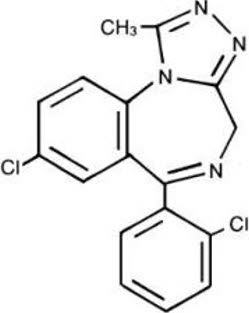
Halcion Tablets contains triazolam, a triazolobenzodiazepine.
Triazolam is a white crystalline powder, soluble in alcohol and poorly soluble in water. It has a molecular weight of 343.21.
The chemical name for triazolam is 8-chloro-6-(o-chlorophenyl)-1-methyl-4H-s-triazolo-[4,3-α] [1,4] benzodiazepine.
The structural formula is represented below:
Each Halcion tablet, for oral administration, contains 0.25 mg of triazolam.
Inactive ingredients: cellulose, corn starch, docusate sodium, FD&C Blue No. 2, lactose, magnesium stearate, silicon dioxide, sodium benzoate.
8.4 Pediatric Use
Safety and effectiveness of Halcion have not been established in pediatric patients.
8.5 Geriatric Use
Elderly patients exhibit higher plasma triazolam concentrations due to reduced clearance as compared with younger subjects at the same dose. Because elderly patients are especially susceptible to dose related adverse reactions and to minimize oversedation, the smallest effective dose should be used [see Dosage and Administration (2.2), Clinical Pharmacology (12.3)].
4 Contraindications
Halcion is contraindicated in:
-
•Patients with known hypersensitivity to triazolam, any of component of Halcion, or other benzodiazepines. Reactions consistent with angioedema (involving the tongue, glottis, or larynx), dyspnea, and throat closing have been reported and may be fatal.
-
•Concomitant administration of strong cytochrome P450 (CYP 3A) enzyme inhibitors (e.g., ketoconazole, itraconazole, nefazodone, lopinavir, ritonavir) [see Warnings and Precautions (5.8), Drug Interactions (7.1)].
6 Adverse Reactions
The following serious adverse reactions are discussed in greater detail in other sections:
-
•Risks from Concomitant Use with Opioids [see Warnings and Precautions (5.1)]
-
•Abuse, Misuse, and Addiction [see Warnings and Precautions (5.2)]
-
•Dependence and Withdrawal Reactions [see Warnings and Precautions (5.3)]
-
•Persistent or Worsening Insomnia [see Warnings and Precautions (5.4)]
-
•"Sleep-driving" and Other Complex Behaviors [see Warnings and Precautions (5.5)]
-
•Central Nervous System Manifestations [see Warnings and Precautions (5.6)]
-
•Effects on Driving and Operating Heavy Machinery [see Warnings and Precautions (5.7)]
-
•Patients with Depression [see Warnings and Precautions (5.9)]
-
•Neonatal Sedation and Withdrawal Syndrome [see Warnings and Precautions (5.10)]
-
•Compromised Respiratory Function [see Warnings and Precautions (5.11)]
7 Drug Interactions
2.1 Dosing Information
The recommended dosage is 0.25 mg once daily before bedtime. A dosage of 0.125 mg once daily may be sufficient for some patients (e.g., patients with low body weight). A dosage of 0.5 mg should be used only for patients who do not respond adequately to a trial of a lower dose. The maximum recommended dosage is 0.5 mg once daily.
Use the lowest effective dose for the patient as there are significant dose related adverse reactions.
Use of Halcion for more than 3 weeks requires evaluation of the patient for a primary psychiatric or medical condition [see Warnings and Precautions (5.4, 5.6)].
Prescriptions for Halcion should be written for short-term use (7 to 10 days) and it should not be prescribed in quantities exceeding a 1-month supply.
1 Indications and Usage
Halcion is indicated for the short-term treatment of insomnia (generally 7 to 10 days) in adults.
12 Clinical Pharmacology
12.1 Mechanism of Action
Triazolam is a benzodiazepine. Triazolam exerts its effect for the short-term treatment of insomnia through binding to the benzodiazepine site of the gamma-aminobutyric acid-A (GABAA) receptors in the brain and enhances GABA-mediated synaptic inhibition.
9.1 Controlled Substance
Halcion contains triazolam, a Schedule IV controlled substance.
5 Warnings and Precautions
-
•Persistent or Worsening Insomnia: Since sleep disturbances may be the presenting manifestation of a physical and/or psychiatric disorder, symptomatic treatment of insomnia should be initiated only after a careful evaluation of the patient. The failure of insomnia to remit after 7 to 10 days of treatment may indicate the presence of a primary psychiatric and/or medical illness that should be evaluated. (5.4)
-
•"Sleep-driving" and Other Complex Behaviors: Complex behaviors such as "sleep-driving" have been reported. The use of alcohol and other central nervous system (CNS) depressants with sedative-hypnotics appears to increase the risk, as well as doses exceeding the maximum recommended dose. (5.5)
-
•CNS Manifestations: An increase in daytime anxiety, abnormal thinking, and behavioral changes have been reported. Emergence of any new behavioral changes require careful and immediate evaluation. (5.6)
-
•Effects on Driving and Operating Heavy Machinery: Patients receiving triazolam should be cautioned against driving or operating heavy machinery, as well as avoiding concomitant use with alcohol and other CNS depressant drugs. (5.7)
-
•Patients with Depression: Caution should be exercised in patients with signs or symptoms of depression that could be intensified by hypnotic drugs. Prescribe the least number of tablets feasible to avoid intentional overdose. (5.9)
-
•Neonatal Sedation and Withdrawal Syndrome: Halcion use during pregnancy can result in neonatal sedation and/or neonatal withdrawal. (5.10, 8.1)
2 Dosage and Administration
-
•Adults: Recommended dosage is 0.25 mg once daily before bedtime. Maximum recommended dosage is 0.5 mg once daily (2.1)
-
•Geriatric patients: Reduce starting dosage to 0.125 mg once daily. May increase to 0.25 mg if no response. Geriatric patients should not exceed 0.25 mg once daily (2.2, 8.5)
-
•Halcion should not be prescribed in quantities exceeding a 1-month supply (2.1)
3 Dosage Forms and Strengths
Halcion is available as 0.25 mg tablets. The tablets are powder blue, elliptical, scored, and imprinted with HALCION 0.25.
5.9 Patients With Depression
Benzodiazepines may worsen depression. Consequently, appropriate precautions (e.g., limiting the total prescription size and increased monitoring for suicidal ideation) should be considered in patients with depression.
6.2 Postmarketing Experience
The following adverse reactions have been identified during post-approval use of Halcion. Because these reactions are reported voluntarily from a population of uncertain size, it is not always possible to reliably estimate their frequency or establish a causal relationship to drug exposure.
General disorders and administration site conditions: Paradoxical drug reaction, chest pain and fatigue
Gastrointestinal disorders: Tongue discomfort, glossitis, stomatitis
Hepatobiliary disorders: Jaundice
Injury, poisoning and procedural complications: Fall
Metabolism and nutrition disorders: Anorexia
Nervous system disorders: Anterograde amnesia, altered state of consciousness, dystonia, sedation, syncope, dysarthria and muscle spasticity
Psychiatric disorders: Confusional state (disorientation, derealisation, depersonalization), mania, agitation, restlessness, irritability, sleep disorder and libido disorder, hallucination, delusion, aggression, somnambulism, and abnormal behavior
Renal and urinary disorders: Urinary retention and urinary incontinence
Reproductive system and breast disorders: Menstruation irregular
Skin and subcutaneous tissue disorders: Pruritis
2.2 Use in Geriatric Patients
In geriatric patients, the recommended dosage is 0.125 mg to 0.25 mg once daily. Initiate therapy at 0.125 mg once daily. The 0.25 mg dose should be used only for patients who do not respond to a trial of the lower dose. The maximum recommended dosage is 0.25 mg once daily. Elderly patients have an increased risk of dose related adverse reactions [see Use in Specific Populations (8.5)].
8 Use in Specific Populations
Lactation: A lactating woman may pump and discard breast milk during treatment and for 28 hours after HALCION administration (8.2)
6.1 Clinical Trials Experience
Because clinical trials are conducted under widely varying conditions, adverse reaction rates observed in the clinical trials of a drug cannot be directly compared to rates in the clinical trials of another drug and may not reflect the rates observed in practice.
The incidences cited below are estimates of clinical reactions among 1003 subjects who participated in the short term (duration of 1 to 42 days) placebo-controlled clinical trials of Halcion.
Adverse reactions leading to discontinuation in two multi-dose placebo controlled clinical trials include coordination disorders, drowsiness, grogginess, somnolence, depression, restlessness, dizziness, lightheadedness, headache, nausea, visual disturbance, nervousness, abdominal distress, bladder trouble, aching limbs, backache, and blepharitis.
| Event |
Halcion
(N=1003) % Patients Reporting |
Placebo
(N=997) % Patients Reporting |
|---|---|---|
|
Central Nervous System |
||
|
Drowsiness |
14.0 |
6.4 |
|
Headache |
9.7 |
8.4 |
|
Dizziness |
7.8 |
3.1 |
|
Nervousness |
5.2 |
4.5 |
|
Light-headedness |
4.9 |
0.9 |
|
Coordination disorders/ataxia |
4.6 |
0.8 |
|
Gastrointestinal |
||
|
Nausea/vomiting |
4.6 |
3.7 |
In addition to the common reactions enumerated above in Table1, the following adverse reactions have been reported at an incidence of 0.9% to 0.5%: euphoria, tachycardia, tiredness, confusional states/memory impairment, cramps/pain, depression, and visual disturbances.
Adverse reactions reported at an incidence less than 0.5% include: constipation, taste alterations, diarrhea, dry mouth, dermatitis/allergy, dreaming/nightmares, insomnia, paresthesia, tinnitus, dysesthesia, weakness, congestion, and death from hepatic failure in a patient also receiving diuretic drugs.
5.2 Abuse, Misuse, and Addiction
The use of benzodiazepines, including Halcion, exposes users to the risks of abuse, misuse, and addiction, which can lead to overdose or death. Abuse and misuse of benzodiazepines often (but not always) involve the use of doses greater than the maximum recommended dosage and commonly involve concomitant use of other medications, alcohol, and/or illicit substances, which is associated with an increased frequency of serious adverse outcomes, including respiratory depression, overdose, or death [see Drug Abuse and Dependence (9.2)].
Before prescribing Halcion and throughout treatment, assess each patient's risk for abuse, misuse, and addiction (e.g., using a standardized screening tool). Use of Halcion, particularly in patients at elevated risk, necessitates counseling about the risks and proper use of Halcion along with monitoring for signs and symptoms of abuse, misuse, and addiction. Prescribe the lowest effective dosage; avoid or minimize concomitant use of CNS depressants and other substances associated with abuse, misuse, and addiction (e.g., opioid analgesics, stimulants); and advise patients on the proper disposal of unused drug. If a substance use disorder is suspected, evaluate the patient and institute (or refer them for) early treatment, as appropriate.
17 Patient Counseling Information
Advise the patient to read the FDA-approved patient labeling (Medication Guide).
16 How Supplied/storage and Handling
Halcion is supplied as a powder blue, elliptical, scored tablet in the following strengths and package configurations:
| Package Configuration | Tablet Strength (mg) | NDC | |
|---|---|---|---|
|
Reverse numbered |
0.25 mg |
NDC 0009-0017-55 |
HALCION 0.25 |
|
Bottles of 10 |
0.25 mg |
NDC 0009-0017-58 |
HALCION 0.25 |
5.4 Persistent Or Worsening Insomnia
Since sleep disturbances may be the presenting manifestation of a physical and/or psychiatric disorder, symptomatic treatment of insomnia should be initiated only after a careful evaluation of the patient. The failure of insomnia to remit after 7 to 10 days of treatment may indicate the presence of a primary psychiatric and/or medical illness that should be evaluated. Worsening of insomnia or the emergence of new thinking or behavior abnormalities may be the consequence of an unrecognized psychiatric or physical disorder. Such findings have emerged during the course of treatment with sedative-hypnotic drugs.
5.11 Compromised Respiratory Function
In patients with compromised respiratory function, respiratory depression and apnea have been reported. Closely monitor patients with compromised respiratory function. If signs and symptoms of respiratory depression or apnea occur, consider discontinuation.
5.3 Dependence and Withdrawal Reactions
To reduce the risk of withdrawal reactions, use a gradual taper to discontinue Halcion or reduce the dosage (a patient-specific plan should be used to taper the dose) [see Dosage and Administration (2.3)].
Patients at an increased risk of withdrawal adverse reactions after benzodiazepine discontinuation or rapid dosage reduction include those who take higher dosages, and those who have had longer durations of use.
5.6 Central Nervous System Manifestations
An increase in daytime anxiety has been reported for Halcion after as few as 10 days of continuous use. In some patients this may be a manifestation of interdose withdrawal. If increased daytime anxiety is observed during treatment, discontinuation of treatment may be advisable.
A variety of abnormal thinking and behavior changes have been reported to occur in association with the use of benzodiazepine hypnotics including Halcion. Some of these changes may be characterized by decreased inhibition, e.g., aggressiveness and extroversion that seem excessive, similar to that seen with alcohol and other CNS depressants (e.g., sedative/hypnotics). Other kinds of behavioral changes have also been reported, for example, bizarre behavior, agitation, hallucinations, depersonalization. In primarily depressed patients, the worsening of depression, including suicidal thinking, has been reported in association with the use of benzodiazepines [see Warnings and Precautions (5.9)].
Some adverse reactions reported in association with the use of Halcion such as drowsiness, dizziness, light-headedness, and amnesia appear to be dose related. More serious behavioral phenomena such as confusion, bizarre or abnormal behavior, agitation, and hallucinations may also be dose related, but this evidence is inconclusive. Therapy should be initiated at the lowest effective dose [see Dosage and Administration (2.1)].
It can rarely be determined with certainty whether a particular instance of the abnormal behaviors listed above is drug induced, spontaneous in origin, or a result of an underlying psychiatric or physical disorder. Nonetheless, the emergence of any new behavioral sign or symptom of concern requires careful and immediate evaluation.
Anterograde amnesia of varying severity and paradoxical reactions have been reported following recommended dosages of Halcion. Data from several sources suggest that anterograde amnesia may occur at a higher rate with Halcion than with other benzodiazepine hypnotics. Because HALCION can cause drowsiness and a decreased level of consciousness, patients, particularly the elderly, are at higher risk of falls.
Cases of "traveler's amnesia" have been reported by individuals who have taken Halcion to induce sleep while traveling, such as during an airplane flight. In some of these cases, insufficient time was allowed for the sleep period prior to awakening and before beginning activity. Also, the concomitant use of alcohol may have been a factor in some cases.
5.1 Risks From Concomitant Use With Opioids
Concomitant use of benzodiazepines, including Halcion, and opioids may result in profound sedation, respiratory depression, coma, and death. Because of these risks, reserve concomitant prescribing of these drugs in patients for whom alternative treatment options are inadequate.
Observational studies have demonstrated that concomitant use of opioid analgesics and benzodiazepines increases the risk of drug-related mortality compared to use of opioids alone. If a decision is made to prescribe Halcion concomitantly with opioids, prescribe the lowest effective dosages and minimum durations of concomitant use, and follow patients closely for signs and symptoms of respiratory depression and sedation. In patients already receiving an opioid analgesic, prescribe a lower initial dose of Halcion than indicated in the absence of an opioid and titrate based on clinical response. If an opioid is initiated in a patient already taking Halcion, prescribe a lower initial dose of the opioid and titrate based upon clinical response.
Advise both patients and caregivers about the risks of respiratory depression and sedation when Halcion is used with opioids. Advise patients not to drive or operate heavy machinery until the effects of concomitant use with the opioid have been determined [see Drug Interactions (7.1)].
5.10 Neonatal Sedation and Withdrawal Syndrome
Use of Halcion late in pregnancy can result in sedation (respiratory depression, lethargy, hypotonia) and/or withdrawal symptoms (hyperreflexia, irritability, restlessness, tremors, inconsolable crying, and feeding difficulties) in the neonate [see Use in Specific Populations (8.1)]. Monitor neonates exposed to HALCION during pregnancy or labor for signs of sedation and monitor neonates exposed to HALCION during pregnancy for signs of withdrawal; manage these neonates accordingly.
5.5 "sleep Driving" and Other Complex Behaviors
Complex behaviors such as "sleep-driving" (i.e., driving while not fully awake after ingestion of a sedative-hypnotic, with amnesia for the event) have been reported with Halcion use. These events can occur in sedative-hypnotic-naïve as well as in sedative-hypnotic-experienced persons. Although behaviors such as sleep-driving may occur with sedative-hypnotics alone at recommended dosages, the use of alcohol and other central nervous system (CNS) depressants with sedative-hypnotics appears to increase the risk of such behaviors, as does the use of sedative-hypnotics at doses exceeding the maximum recommended dose. Due to the risk to the patient and the community, discontinuation of sedative-hypnotics should be strongly considered for patients who report a "sleep-driving" episode.
Other complex behaviors (e.g., preparing and eating food, making phone calls, or having sex) have been reported in patients who are not fully awake after taking a sedative-hypnotic, including Halcion. As with sleep-driving, patients usually do not remember these events.
2.3 Discontinuation Or Dosage Reduction of Halcion
To reduce the risk of withdrawal reactions, use a gradual taper to discontinue Halcion or reduce the dosage. If a patient develops withdrawal reactions, consider pausing the taper or increasing the dosage to the previous tapered dosage level. Subsequently decrease the dosage more slowly [see Warnings and Precautions (5.3), Drug Abuse and Dependence (9.3)].
5.7 Effects On Driving and Operating Heavy Machinery
Due to its depressant CNS effects, patients receiving Halcion should be cautioned against engaging in hazardous occupations requiring complete mental alertness such as operating machinery or driving a motor vehicle. For the same reason, patients should be cautioned about the concomitant use of alcohol and other CNS depressant drugs during treatment with Halcion.
Principal Display Panel 0.25 Mg Tablet Blister Pack
Halcion®
triazolam tablets, USP
CIV
0.25 mg
Pharmacia & Upjohn Co LLC
A sub. of Pfizer Inc.
NY, NY 10001
75106078
EXP &
LOT AREA
Principal Display Panel 0.25 Mg Tablet Bottle Label
ALWAYS DISPENSE WITH MEDICATION GUIDE
NDC 0009-0017-58
Pfizer
Halcion
®
triazolam
tablets, USP
CIV
0.25 mg
10 Tablets
Rx only
Principal Display Panel 0.25 Mg Tablet Blister Pack Carton
ALWAYS DISPENSE WITH MEDICATION GUIDE
NDC 0009-0017-55
Pfizer
Halcion
®
triazolam tablets,
USP
CIV
0.25 mg
For in-institution use only
100 Tablets
Reverse Numbered
Rx only
7.1 Drugs Having Clinically Important Interactions With Halcion
Table 2 includes clinically significant drug interactions with Halcion [see Clinical Pharmacology (12.3)].
|
Opioids |
|
|
Clinical implication |
The concomitant use of benzodiazepines and opioids increases the risk of respiratory depression because of actions at different receptor sites in the CNS that control respiration. Benzodiazepines interact at GABAA sites and opioids interact primarily at mu receptors. When benzodiazepines and opioids are combined, the potential for benzodiazepines to significantly worsen opioid-related respiratory depression exists. |
|
Prevention or management |
Limit dosage and duration of concomitant use of Halcion and opioids, and monitor patients closely for respiratory depression and sedation [see Warnings and Precautions (5.1)]. |
|
CNS Depressants |
|
|
Clinical implication |
Triazolam produces additive CNS depressant effects when co-administered with other CNS depressants. |
|
Prevention or management |
Limit dosage and duration of Halcion during concomitant use with CNS depressants. |
|
Strong Inhibitors of CYP 3A |
|
|
Clinical implication |
Concomitant use of Halcion with strong CYP3A inhibitors has a profound effect on the clearance of Halcion, resulting in increased concentrations of triazolam and increased risk of adverse reactions [see Clinical Pharmacology (12.3)]. |
|
Prevention or management |
Do not administer Halcion with a strong CYP3A4 inhibitor [see Contraindications (4), Warnings and Precautions (5.8)]. |
|
Moderate and Weak Inhibitors of CYP 3A |
|
|
Clinical implication |
Concomitant use of Halcion with moderate or weak inhibitors of CYP3A inhibitors may increase the concentrations of Halcion, resulting in increased risk of adverse reactions [see Clinical Pharmacology (12.3)]. |
|
Prevention or management |
Use with caution and consider appropriate dose reduction of HALCION when coadministered with moderate and weak CYP3A inhibitors [see Warnings and Precautions (5.8)]. |
|
Strong Inducers of CYP 3A |
|
|
Clinical implication |
Coadministration of triazolam with strong inducers of CYP3A4 can significantly decrease the plasma concentration of triazolam and may decrease effectiveness of triazolam. |
|
Prevention or management |
Caution is recommended during coadministration of Halcion with strong inducers of CYP3A4. |
|
Interactions Based on Experience with Other Benzodiazepines or in vitro Studies with Triazolam |
|
|
Clinical implication |
Available data from clinical studies of benzodiazepines other than triazolam, from in vitro studies with triazolam, or from in vitro studies with benzodiazepines other than triazolam suggest a possible drug interaction with triazolam [see Clinical Pharmacology (12.3)]. |
|
Prevention or management |
Caution is recommended during coadministration of Halcion with any of these drugs. [see Warnings and Precautions (5.8)]. |
5.8 Triazolam Interaction With Drugs That Inhibit Metabolism Via Cytochrome P450 3a
The initial step in triazolam metabolism is hydroxylation catalyzed by CYP 3A. Drugs that inhibit this metabolic pathway may have a profound effect on the clearance of triazolam.
Warning: Risks From Concomitant Use With Opioids; Abuse, Misuse, and Addiction; and Dependence and Withdrawal Reactions
-
•Concomitant use of benzodiazepines and opioids may result in profound sedation, respiratory depression, coma, and death. Reserve concomitant prescribing of these drugs in patients for whom alternative treatment options are inadequate. Limit dosages and durations to the minimum required. Follow patients for signs and symptoms of respiratory depression and sedation [see Warnings and Precautions (5.1), Drug Interactions (7.1)].
-
•The use of benzodiazepines, including Halcion, exposes users to risks of abuse, misuse, and addiction, which can lead to overdose or death. Abuse and misuse of benzodiazepines commonly involve concomitant use of other medications, alcohol, and/or illicit substances, which is associated with an increased frequency of serious adverse outcomes. Before prescribing Halcion and throughout treatment, assess each patient's risk for abuse, misuse, and addiction [see Warnings and Precautions (5.2)].
-
•The continued use of benzodiazepines, including Halcion, may lead to clinically significant physical dependence. The risks of dependence and withdrawal increase with longer treatment duration and higher daily dose. Abrupt discontinuation or rapid dosage reduction of Halcion after continued use may precipitate acute withdrawal reactions, which can be life-threatening. To reduce the risk of withdrawal reactions, use a gradual taper to discontinue Halcion or reduce the dosage [see Dosage and Administration (2.3), Warnings and Precautions (5.3)].
Structured Label Content
Section 42229-5 (42229-5)
Acute Withdrawal Reactions
The continued use of benzodiazepines, including Halcion, may lead to clinically significant physical dependence. Abrupt discontinuation or rapid dosage reduction of Halcion after continued use, or administration of flumazenil (a benzodiazepine antagonist) may precipitate acute withdrawal reactions, which can be life-threatening (e.g., seizures) [see Drug Abuse and Dependence (9.3)].
Section 42231-1 (42231-1)
|
MEDICATION GUIDE
HALCION (HAL-cee-on) (triazolam) tablets, CIV |
||
|---|---|---|
| This Medication Guide has been approved by the U.S. Food and Drug Administration. Revised 7/2024 | ||
|
What is the most important information I should know about HALCION?
|
||
|
|
|
|
Call your healthcare provider right away if you find out that you have done any of the above activities after taking HALCION. |
||
|
What is HALCION? HALCION is a prescription medicine used in adults for the short-term treatment of a sleep problem called insomnia. HALCION is usually taken for 7 to 10 days.
|
||
|
Do not take HALCION if you:
|
||
|
Before you take HALCION, tell your healthcare provider about all of your medical conditions, including if you:
Tell your healthcare provider about all of the medicines you take, including prescription and over-the-counter medicines, vitamins, and herbal supplements. Taking HALCION with certain other medicines can cause side effects or affect how well HALCION or the other medicines work. Do not start or stop other medicines without talking to your healthcare provider. |
||
|
How should I take HALCION?
|
||
|
What are the possible side effects of HALCION? HALCION may cause serious side effects, including:
|
||
|
The most common side effects of HALCION include: |
||
|
|
|
|
Elderly people have an increased risk of dose related side effects during treatment with HALCION. These are not all the possible side effects of HALCION. Call your doctor for medical advice about side effects. You may report side effects to FDA at 1-800-FDA-1088. |
||
|
How should I store HALCION?
|
||
|
General information about the safe and effective use of HALCION. Medicines are sometimes prescribed for purposes other than those listed in a Medication Guide. Do not use HALCION for a condition for which it was not prescribed. Do not give HALCION to other people, even if they have the same symptoms that you have. It may harm them. You can ask your healthcare provider or pharmacist for information about HALCION that is written for healthcare professionals. |
||
|
What are the ingredients in HALCION? Active ingredient: triazolam Inactive ingredients: cellulose, corn starch, docusate sodium, FD&C Blue No. 2, lactose, magnesium stearate, silicon dioxide, sodium benzoate. If you would like more information, call 1-800-438-1985 or visit www.pfizer.com. LAB-0259-19.0 |
Section 44425-7 (44425-7)
Store at controlled room temperature 20° to 25°C (68° to 77°F) [see USP Controlled Room Temperature].
9.2 Abuse
Halcion is a benzodiazepine and a CNS depressant with a potential for abuse and addiction. Abuse is the intentional, non-therapeutic use of a drug, even once, for its desirable psychological or physiological effects. Misuse is the intentional use, for therapeutic purposes, of a drug by an individual in a way other than prescribed by a health care provider or for whom it was not prescribed. Drug addiction is a cluster of behavioral, cognitive, and physiological phenomena that may include a strong desire to take the drug, difficulties in controlling drug use (e.g., continuing drug use despite harmful consequences, giving a higher priority to drug use than other activities and obligations), and possible tolerance or physical dependence. Even taking benzodiazepines as prescribed may put patients at risk for abuse and misuse of their medication. Abuse and misuse of benzodiazepines may lead to addiction.
Abuse and misuse of benzodiazepines often (but not always) involve the use of doses greater than the maximum recommended dosage and commonly involve concomitant use of other medications, alcohol, and/or illicit substances, which is associated with an increased frequency of serious adverse outcomes, including respiratory depression, overdose, or death. Benzodiazepines are often sought by individuals who abuse drugs and other substances, and by individuals with addictive disorders [see Warnings and Precautions (5.2)].
The following adverse reactions have occurred with benzodiazepine abuse and/or misuse: abdominal pain, amnesia, anorexia, anxiety, aggression, ataxia, blurred vision, confusion, depression, disinhibition, disorientation, dizziness, euphoria, impaired concentration and memory, indigestion, irritability, muscle pain, slurred speech, tremors, and vertigo.
The following severe adverse reactions have occurred with benzodiazepine abuse and/or misuse: delirium, paranoia, suicidal ideation and behavior, seizures, coma, breathing difficulty, and death. Death is more often associated with polysubstance use (especially benzodiazepines with other CNS depressants such as opioids and alcohol).
10 Overdosage (10 OVERDOSAGE)
Overdosage of benzodiazepines is characterized by central nervous system depression ranging from drowsiness to coma. In mild to moderate cases, symptoms can include drowsiness, confusion, dysarthria, lethargy, hypnotic state, diminished reflexes, ataxia, and hypotonia. Rarely, paradoxical or disinhibitory reactions (including agitation, irritability, impulsivity, violent behavior, confusion, restlessness, excitement, and talkativeness) may occur. In severe overdosage cases, patients may develop respiratory depression and coma. Overdosage of benzodiazepines in combination with other CNS depressants (including alcohol and opioids) may be fatal [see Warnings and Precautions (5.2)]. Markedly abnormal (lowered or elevated) blood pressure, heart rate, or respiratory rate raise the concern that additional drugs and/or alcohol are involved in the overdosage.
In managing benzodiazepine overdosage, employ general supportive measures, including intravenous fluids and airway management. Flumazenil, a specific benzodiazepine receptor antagonist indicated for the complete or partial reversal of the sedative effects of benzodiazepines in the management of benzodiazepine overdosage, can lead to withdrawal and adverse reactions, including seizures, particularly in the context of mixed overdosage with drugs that increase seizure risk (e.g., tricyclic and tetracyclic antidepressants) and in patients with long-term benzodiazepine use and physical dependency. The risk of withdrawal seizures with flumazenil use may be increased in patients with epilepsy. Flumazenil is contraindicated in patients who have received a benzodiazepine for control of a potentially life-threatening condition (e.g., status epilepticus). If the decision is made to use flumazenil, it should be used as an adjunct to, not as a substitute for, supportive management of benzodiazepine overdosage. See the flumazenil injection Prescribing Information.
Consider contacting the Poison Help line at (1-800-222-1222) or a medical toxicologist for additional overdosage management recommendations.
11 Description (11 DESCRIPTION)
Halcion Tablets contains triazolam, a triazolobenzodiazepine.
Triazolam is a white crystalline powder, soluble in alcohol and poorly soluble in water. It has a molecular weight of 343.21.
The chemical name for triazolam is 8-chloro-6-(o-chlorophenyl)-1-methyl-4H-s-triazolo-[4,3-α] [1,4] benzodiazepine.
The structural formula is represented below:
Each Halcion tablet, for oral administration, contains 0.25 mg of triazolam.
Inactive ingredients: cellulose, corn starch, docusate sodium, FD&C Blue No. 2, lactose, magnesium stearate, silicon dioxide, sodium benzoate.
8.4 Pediatric Use
Safety and effectiveness of Halcion have not been established in pediatric patients.
8.5 Geriatric Use
Elderly patients exhibit higher plasma triazolam concentrations due to reduced clearance as compared with younger subjects at the same dose. Because elderly patients are especially susceptible to dose related adverse reactions and to minimize oversedation, the smallest effective dose should be used [see Dosage and Administration (2.2), Clinical Pharmacology (12.3)].
4 Contraindications (4 CONTRAINDICATIONS)
Halcion is contraindicated in:
-
•Patients with known hypersensitivity to triazolam, any of component of Halcion, or other benzodiazepines. Reactions consistent with angioedema (involving the tongue, glottis, or larynx), dyspnea, and throat closing have been reported and may be fatal.
-
•Concomitant administration of strong cytochrome P450 (CYP 3A) enzyme inhibitors (e.g., ketoconazole, itraconazole, nefazodone, lopinavir, ritonavir) [see Warnings and Precautions (5.8), Drug Interactions (7.1)].
6 Adverse Reactions (6 ADVERSE REACTIONS)
The following serious adverse reactions are discussed in greater detail in other sections:
-
•Risks from Concomitant Use with Opioids [see Warnings and Precautions (5.1)]
-
•Abuse, Misuse, and Addiction [see Warnings and Precautions (5.2)]
-
•Dependence and Withdrawal Reactions [see Warnings and Precautions (5.3)]
-
•Persistent or Worsening Insomnia [see Warnings and Precautions (5.4)]
-
•"Sleep-driving" and Other Complex Behaviors [see Warnings and Precautions (5.5)]
-
•Central Nervous System Manifestations [see Warnings and Precautions (5.6)]
-
•Effects on Driving and Operating Heavy Machinery [see Warnings and Precautions (5.7)]
-
•Patients with Depression [see Warnings and Precautions (5.9)]
-
•Neonatal Sedation and Withdrawal Syndrome [see Warnings and Precautions (5.10)]
-
•Compromised Respiratory Function [see Warnings and Precautions (5.11)]
7 Drug Interactions (7 DRUG INTERACTIONS)
2.1 Dosing Information
The recommended dosage is 0.25 mg once daily before bedtime. A dosage of 0.125 mg once daily may be sufficient for some patients (e.g., patients with low body weight). A dosage of 0.5 mg should be used only for patients who do not respond adequately to a trial of a lower dose. The maximum recommended dosage is 0.5 mg once daily.
Use the lowest effective dose for the patient as there are significant dose related adverse reactions.
Use of Halcion for more than 3 weeks requires evaluation of the patient for a primary psychiatric or medical condition [see Warnings and Precautions (5.4, 5.6)].
Prescriptions for Halcion should be written for short-term use (7 to 10 days) and it should not be prescribed in quantities exceeding a 1-month supply.
1 Indications and Usage (1 INDICATIONS AND USAGE)
Halcion is indicated for the short-term treatment of insomnia (generally 7 to 10 days) in adults.
12 Clinical Pharmacology (12 CLINICAL PHARMACOLOGY)
12.1 Mechanism of Action
Triazolam is a benzodiazepine. Triazolam exerts its effect for the short-term treatment of insomnia through binding to the benzodiazepine site of the gamma-aminobutyric acid-A (GABAA) receptors in the brain and enhances GABA-mediated synaptic inhibition.
9.1 Controlled Substance
Halcion contains triazolam, a Schedule IV controlled substance.
5 Warnings and Precautions (5 WARNINGS AND PRECAUTIONS)
-
•Persistent or Worsening Insomnia: Since sleep disturbances may be the presenting manifestation of a physical and/or psychiatric disorder, symptomatic treatment of insomnia should be initiated only after a careful evaluation of the patient. The failure of insomnia to remit after 7 to 10 days of treatment may indicate the presence of a primary psychiatric and/or medical illness that should be evaluated. (5.4)
-
•"Sleep-driving" and Other Complex Behaviors: Complex behaviors such as "sleep-driving" have been reported. The use of alcohol and other central nervous system (CNS) depressants with sedative-hypnotics appears to increase the risk, as well as doses exceeding the maximum recommended dose. (5.5)
-
•CNS Manifestations: An increase in daytime anxiety, abnormal thinking, and behavioral changes have been reported. Emergence of any new behavioral changes require careful and immediate evaluation. (5.6)
-
•Effects on Driving and Operating Heavy Machinery: Patients receiving triazolam should be cautioned against driving or operating heavy machinery, as well as avoiding concomitant use with alcohol and other CNS depressant drugs. (5.7)
-
•Patients with Depression: Caution should be exercised in patients with signs or symptoms of depression that could be intensified by hypnotic drugs. Prescribe the least number of tablets feasible to avoid intentional overdose. (5.9)
-
•Neonatal Sedation and Withdrawal Syndrome: Halcion use during pregnancy can result in neonatal sedation and/or neonatal withdrawal. (5.10, 8.1)
2 Dosage and Administration (2 DOSAGE AND ADMINISTRATION)
-
•Adults: Recommended dosage is 0.25 mg once daily before bedtime. Maximum recommended dosage is 0.5 mg once daily (2.1)
-
•Geriatric patients: Reduce starting dosage to 0.125 mg once daily. May increase to 0.25 mg if no response. Geriatric patients should not exceed 0.25 mg once daily (2.2, 8.5)
-
•Halcion should not be prescribed in quantities exceeding a 1-month supply (2.1)
3 Dosage Forms and Strengths (3 DOSAGE FORMS AND STRENGTHS)
Halcion is available as 0.25 mg tablets. The tablets are powder blue, elliptical, scored, and imprinted with HALCION 0.25.
5.9 Patients With Depression
Benzodiazepines may worsen depression. Consequently, appropriate precautions (e.g., limiting the total prescription size and increased monitoring for suicidal ideation) should be considered in patients with depression.
6.2 Postmarketing Experience
The following adverse reactions have been identified during post-approval use of Halcion. Because these reactions are reported voluntarily from a population of uncertain size, it is not always possible to reliably estimate their frequency or establish a causal relationship to drug exposure.
General disorders and administration site conditions: Paradoxical drug reaction, chest pain and fatigue
Gastrointestinal disorders: Tongue discomfort, glossitis, stomatitis
Hepatobiliary disorders: Jaundice
Injury, poisoning and procedural complications: Fall
Metabolism and nutrition disorders: Anorexia
Nervous system disorders: Anterograde amnesia, altered state of consciousness, dystonia, sedation, syncope, dysarthria and muscle spasticity
Psychiatric disorders: Confusional state (disorientation, derealisation, depersonalization), mania, agitation, restlessness, irritability, sleep disorder and libido disorder, hallucination, delusion, aggression, somnambulism, and abnormal behavior
Renal and urinary disorders: Urinary retention and urinary incontinence
Reproductive system and breast disorders: Menstruation irregular
Skin and subcutaneous tissue disorders: Pruritis
2.2 Use in Geriatric Patients
In geriatric patients, the recommended dosage is 0.125 mg to 0.25 mg once daily. Initiate therapy at 0.125 mg once daily. The 0.25 mg dose should be used only for patients who do not respond to a trial of the lower dose. The maximum recommended dosage is 0.25 mg once daily. Elderly patients have an increased risk of dose related adverse reactions [see Use in Specific Populations (8.5)].
8 Use in Specific Populations (8 USE IN SPECIFIC POPULATIONS)
Lactation: A lactating woman may pump and discard breast milk during treatment and for 28 hours after HALCION administration (8.2)
6.1 Clinical Trials Experience
Because clinical trials are conducted under widely varying conditions, adverse reaction rates observed in the clinical trials of a drug cannot be directly compared to rates in the clinical trials of another drug and may not reflect the rates observed in practice.
The incidences cited below are estimates of clinical reactions among 1003 subjects who participated in the short term (duration of 1 to 42 days) placebo-controlled clinical trials of Halcion.
Adverse reactions leading to discontinuation in two multi-dose placebo controlled clinical trials include coordination disorders, drowsiness, grogginess, somnolence, depression, restlessness, dizziness, lightheadedness, headache, nausea, visual disturbance, nervousness, abdominal distress, bladder trouble, aching limbs, backache, and blepharitis.
| Event |
Halcion
(N=1003) % Patients Reporting |
Placebo
(N=997) % Patients Reporting |
|---|---|---|
|
Central Nervous System |
||
|
Drowsiness |
14.0 |
6.4 |
|
Headache |
9.7 |
8.4 |
|
Dizziness |
7.8 |
3.1 |
|
Nervousness |
5.2 |
4.5 |
|
Light-headedness |
4.9 |
0.9 |
|
Coordination disorders/ataxia |
4.6 |
0.8 |
|
Gastrointestinal |
||
|
Nausea/vomiting |
4.6 |
3.7 |
In addition to the common reactions enumerated above in Table1, the following adverse reactions have been reported at an incidence of 0.9% to 0.5%: euphoria, tachycardia, tiredness, confusional states/memory impairment, cramps/pain, depression, and visual disturbances.
Adverse reactions reported at an incidence less than 0.5% include: constipation, taste alterations, diarrhea, dry mouth, dermatitis/allergy, dreaming/nightmares, insomnia, paresthesia, tinnitus, dysesthesia, weakness, congestion, and death from hepatic failure in a patient also receiving diuretic drugs.
5.2 Abuse, Misuse, and Addiction
The use of benzodiazepines, including Halcion, exposes users to the risks of abuse, misuse, and addiction, which can lead to overdose or death. Abuse and misuse of benzodiazepines often (but not always) involve the use of doses greater than the maximum recommended dosage and commonly involve concomitant use of other medications, alcohol, and/or illicit substances, which is associated with an increased frequency of serious adverse outcomes, including respiratory depression, overdose, or death [see Drug Abuse and Dependence (9.2)].
Before prescribing Halcion and throughout treatment, assess each patient's risk for abuse, misuse, and addiction (e.g., using a standardized screening tool). Use of Halcion, particularly in patients at elevated risk, necessitates counseling about the risks and proper use of Halcion along with monitoring for signs and symptoms of abuse, misuse, and addiction. Prescribe the lowest effective dosage; avoid or minimize concomitant use of CNS depressants and other substances associated with abuse, misuse, and addiction (e.g., opioid analgesics, stimulants); and advise patients on the proper disposal of unused drug. If a substance use disorder is suspected, evaluate the patient and institute (or refer them for) early treatment, as appropriate.
17 Patient Counseling Information (17 PATIENT COUNSELING INFORMATION)
Advise the patient to read the FDA-approved patient labeling (Medication Guide).
16 How Supplied/storage and Handling (16 HOW SUPPLIED/STORAGE AND HANDLING)
Halcion is supplied as a powder blue, elliptical, scored tablet in the following strengths and package configurations:
| Package Configuration | Tablet Strength (mg) | NDC | |
|---|---|---|---|
|
Reverse numbered |
0.25 mg |
NDC 0009-0017-55 |
HALCION 0.25 |
|
Bottles of 10 |
0.25 mg |
NDC 0009-0017-58 |
HALCION 0.25 |
5.4 Persistent Or Worsening Insomnia (5.4 Persistent or Worsening Insomnia)
Since sleep disturbances may be the presenting manifestation of a physical and/or psychiatric disorder, symptomatic treatment of insomnia should be initiated only after a careful evaluation of the patient. The failure of insomnia to remit after 7 to 10 days of treatment may indicate the presence of a primary psychiatric and/or medical illness that should be evaluated. Worsening of insomnia or the emergence of new thinking or behavior abnormalities may be the consequence of an unrecognized psychiatric or physical disorder. Such findings have emerged during the course of treatment with sedative-hypnotic drugs.
5.11 Compromised Respiratory Function
In patients with compromised respiratory function, respiratory depression and apnea have been reported. Closely monitor patients with compromised respiratory function. If signs and symptoms of respiratory depression or apnea occur, consider discontinuation.
5.3 Dependence and Withdrawal Reactions
To reduce the risk of withdrawal reactions, use a gradual taper to discontinue Halcion or reduce the dosage (a patient-specific plan should be used to taper the dose) [see Dosage and Administration (2.3)].
Patients at an increased risk of withdrawal adverse reactions after benzodiazepine discontinuation or rapid dosage reduction include those who take higher dosages, and those who have had longer durations of use.
5.6 Central Nervous System Manifestations
An increase in daytime anxiety has been reported for Halcion after as few as 10 days of continuous use. In some patients this may be a manifestation of interdose withdrawal. If increased daytime anxiety is observed during treatment, discontinuation of treatment may be advisable.
A variety of abnormal thinking and behavior changes have been reported to occur in association with the use of benzodiazepine hypnotics including Halcion. Some of these changes may be characterized by decreased inhibition, e.g., aggressiveness and extroversion that seem excessive, similar to that seen with alcohol and other CNS depressants (e.g., sedative/hypnotics). Other kinds of behavioral changes have also been reported, for example, bizarre behavior, agitation, hallucinations, depersonalization. In primarily depressed patients, the worsening of depression, including suicidal thinking, has been reported in association with the use of benzodiazepines [see Warnings and Precautions (5.9)].
Some adverse reactions reported in association with the use of Halcion such as drowsiness, dizziness, light-headedness, and amnesia appear to be dose related. More serious behavioral phenomena such as confusion, bizarre or abnormal behavior, agitation, and hallucinations may also be dose related, but this evidence is inconclusive. Therapy should be initiated at the lowest effective dose [see Dosage and Administration (2.1)].
It can rarely be determined with certainty whether a particular instance of the abnormal behaviors listed above is drug induced, spontaneous in origin, or a result of an underlying psychiatric or physical disorder. Nonetheless, the emergence of any new behavioral sign or symptom of concern requires careful and immediate evaluation.
Anterograde amnesia of varying severity and paradoxical reactions have been reported following recommended dosages of Halcion. Data from several sources suggest that anterograde amnesia may occur at a higher rate with Halcion than with other benzodiazepine hypnotics. Because HALCION can cause drowsiness and a decreased level of consciousness, patients, particularly the elderly, are at higher risk of falls.
Cases of "traveler's amnesia" have been reported by individuals who have taken Halcion to induce sleep while traveling, such as during an airplane flight. In some of these cases, insufficient time was allowed for the sleep period prior to awakening and before beginning activity. Also, the concomitant use of alcohol may have been a factor in some cases.
5.1 Risks From Concomitant Use With Opioids
Concomitant use of benzodiazepines, including Halcion, and opioids may result in profound sedation, respiratory depression, coma, and death. Because of these risks, reserve concomitant prescribing of these drugs in patients for whom alternative treatment options are inadequate.
Observational studies have demonstrated that concomitant use of opioid analgesics and benzodiazepines increases the risk of drug-related mortality compared to use of opioids alone. If a decision is made to prescribe Halcion concomitantly with opioids, prescribe the lowest effective dosages and minimum durations of concomitant use, and follow patients closely for signs and symptoms of respiratory depression and sedation. In patients already receiving an opioid analgesic, prescribe a lower initial dose of Halcion than indicated in the absence of an opioid and titrate based on clinical response. If an opioid is initiated in a patient already taking Halcion, prescribe a lower initial dose of the opioid and titrate based upon clinical response.
Advise both patients and caregivers about the risks of respiratory depression and sedation when Halcion is used with opioids. Advise patients not to drive or operate heavy machinery until the effects of concomitant use with the opioid have been determined [see Drug Interactions (7.1)].
5.10 Neonatal Sedation and Withdrawal Syndrome
Use of Halcion late in pregnancy can result in sedation (respiratory depression, lethargy, hypotonia) and/or withdrawal symptoms (hyperreflexia, irritability, restlessness, tremors, inconsolable crying, and feeding difficulties) in the neonate [see Use in Specific Populations (8.1)]. Monitor neonates exposed to HALCION during pregnancy or labor for signs of sedation and monitor neonates exposed to HALCION during pregnancy for signs of withdrawal; manage these neonates accordingly.
5.5 "sleep Driving" and Other Complex Behaviors (5.5 "Sleep-driving" and Other Complex Behaviors)
Complex behaviors such as "sleep-driving" (i.e., driving while not fully awake after ingestion of a sedative-hypnotic, with amnesia for the event) have been reported with Halcion use. These events can occur in sedative-hypnotic-naïve as well as in sedative-hypnotic-experienced persons. Although behaviors such as sleep-driving may occur with sedative-hypnotics alone at recommended dosages, the use of alcohol and other central nervous system (CNS) depressants with sedative-hypnotics appears to increase the risk of such behaviors, as does the use of sedative-hypnotics at doses exceeding the maximum recommended dose. Due to the risk to the patient and the community, discontinuation of sedative-hypnotics should be strongly considered for patients who report a "sleep-driving" episode.
Other complex behaviors (e.g., preparing and eating food, making phone calls, or having sex) have been reported in patients who are not fully awake after taking a sedative-hypnotic, including Halcion. As with sleep-driving, patients usually do not remember these events.
2.3 Discontinuation Or Dosage Reduction of Halcion (2.3 Discontinuation or Dosage Reduction of Halcion)
To reduce the risk of withdrawal reactions, use a gradual taper to discontinue Halcion or reduce the dosage. If a patient develops withdrawal reactions, consider pausing the taper or increasing the dosage to the previous tapered dosage level. Subsequently decrease the dosage more slowly [see Warnings and Precautions (5.3), Drug Abuse and Dependence (9.3)].
5.7 Effects On Driving and Operating Heavy Machinery (5.7 Effects on Driving and Operating Heavy Machinery)
Due to its depressant CNS effects, patients receiving Halcion should be cautioned against engaging in hazardous occupations requiring complete mental alertness such as operating machinery or driving a motor vehicle. For the same reason, patients should be cautioned about the concomitant use of alcohol and other CNS depressant drugs during treatment with Halcion.
Principal Display Panel 0.25 Mg Tablet Blister Pack (PRINCIPAL DISPLAY PANEL - 0.25 mg Tablet Blister Pack)
Halcion®
triazolam tablets, USP
CIV
0.25 mg
Pharmacia & Upjohn Co LLC
A sub. of Pfizer Inc.
NY, NY 10001
75106078
EXP &
LOT AREA
Principal Display Panel 0.25 Mg Tablet Bottle Label (PRINCIPAL DISPLAY PANEL - 0.25 mg Tablet Bottle Label)
ALWAYS DISPENSE WITH MEDICATION GUIDE
NDC 0009-0017-58
Pfizer
Halcion
®
triazolam
tablets, USP
CIV
0.25 mg
10 Tablets
Rx only
Principal Display Panel 0.25 Mg Tablet Blister Pack Carton (PRINCIPAL DISPLAY PANEL - 0.25 mg Tablet Blister Pack Carton)
ALWAYS DISPENSE WITH MEDICATION GUIDE
NDC 0009-0017-55
Pfizer
Halcion
®
triazolam tablets,
USP
CIV
0.25 mg
For in-institution use only
100 Tablets
Reverse Numbered
Rx only
7.1 Drugs Having Clinically Important Interactions With Halcion
Table 2 includes clinically significant drug interactions with Halcion [see Clinical Pharmacology (12.3)].
|
Opioids |
|
|
Clinical implication |
The concomitant use of benzodiazepines and opioids increases the risk of respiratory depression because of actions at different receptor sites in the CNS that control respiration. Benzodiazepines interact at GABAA sites and opioids interact primarily at mu receptors. When benzodiazepines and opioids are combined, the potential for benzodiazepines to significantly worsen opioid-related respiratory depression exists. |
|
Prevention or management |
Limit dosage and duration of concomitant use of Halcion and opioids, and monitor patients closely for respiratory depression and sedation [see Warnings and Precautions (5.1)]. |
|
CNS Depressants |
|
|
Clinical implication |
Triazolam produces additive CNS depressant effects when co-administered with other CNS depressants. |
|
Prevention or management |
Limit dosage and duration of Halcion during concomitant use with CNS depressants. |
|
Strong Inhibitors of CYP 3A |
|
|
Clinical implication |
Concomitant use of Halcion with strong CYP3A inhibitors has a profound effect on the clearance of Halcion, resulting in increased concentrations of triazolam and increased risk of adverse reactions [see Clinical Pharmacology (12.3)]. |
|
Prevention or management |
Do not administer Halcion with a strong CYP3A4 inhibitor [see Contraindications (4), Warnings and Precautions (5.8)]. |
|
Moderate and Weak Inhibitors of CYP 3A |
|
|
Clinical implication |
Concomitant use of Halcion with moderate or weak inhibitors of CYP3A inhibitors may increase the concentrations of Halcion, resulting in increased risk of adverse reactions [see Clinical Pharmacology (12.3)]. |
|
Prevention or management |
Use with caution and consider appropriate dose reduction of HALCION when coadministered with moderate and weak CYP3A inhibitors [see Warnings and Precautions (5.8)]. |
|
Strong Inducers of CYP 3A |
|
|
Clinical implication |
Coadministration of triazolam with strong inducers of CYP3A4 can significantly decrease the plasma concentration of triazolam and may decrease effectiveness of triazolam. |
|
Prevention or management |
Caution is recommended during coadministration of Halcion with strong inducers of CYP3A4. |
|
Interactions Based on Experience with Other Benzodiazepines or in vitro Studies with Triazolam |
|
|
Clinical implication |
Available data from clinical studies of benzodiazepines other than triazolam, from in vitro studies with triazolam, or from in vitro studies with benzodiazepines other than triazolam suggest a possible drug interaction with triazolam [see Clinical Pharmacology (12.3)]. |
|
Prevention or management |
Caution is recommended during coadministration of Halcion with any of these drugs. [see Warnings and Precautions (5.8)]. |
5.8 Triazolam Interaction With Drugs That Inhibit Metabolism Via Cytochrome P450 3a (5.8 Triazolam Interaction With Drugs That Inhibit Metabolism via Cytochrome P450 3A)
The initial step in triazolam metabolism is hydroxylation catalyzed by CYP 3A. Drugs that inhibit this metabolic pathway may have a profound effect on the clearance of triazolam.
Warning: Risks From Concomitant Use With Opioids; Abuse, Misuse, and Addiction; and Dependence and Withdrawal Reactions (WARNING: RISKS FROM CONCOMITANT USE WITH OPIOIDS; ABUSE, MISUSE, AND ADDICTION; and DEPENDENCE AND WITHDRAWAL REACTIONS)
-
•Concomitant use of benzodiazepines and opioids may result in profound sedation, respiratory depression, coma, and death. Reserve concomitant prescribing of these drugs in patients for whom alternative treatment options are inadequate. Limit dosages and durations to the minimum required. Follow patients for signs and symptoms of respiratory depression and sedation [see Warnings and Precautions (5.1), Drug Interactions (7.1)].
-
•The use of benzodiazepines, including Halcion, exposes users to risks of abuse, misuse, and addiction, which can lead to overdose or death. Abuse and misuse of benzodiazepines commonly involve concomitant use of other medications, alcohol, and/or illicit substances, which is associated with an increased frequency of serious adverse outcomes. Before prescribing Halcion and throughout treatment, assess each patient's risk for abuse, misuse, and addiction [see Warnings and Precautions (5.2)].
-
•The continued use of benzodiazepines, including Halcion, may lead to clinically significant physical dependence. The risks of dependence and withdrawal increase with longer treatment duration and higher daily dose. Abrupt discontinuation or rapid dosage reduction of Halcion after continued use may precipitate acute withdrawal reactions, which can be life-threatening. To reduce the risk of withdrawal reactions, use a gradual taper to discontinue Halcion or reduce the dosage [see Dosage and Administration (2.3), Warnings and Precautions (5.3)].
Advanced Ingredient Data
Raw Label Data
All Sections (JSON)
Additional Information
Back to search View SPL set listing Open on DailyMed ↗
Source: dailymed · Ingested: 2026-02-15T11:52:55.926961 · Updated: 2026-03-14T22:44:59.713526