Sarclisa
a0473462-6f9d-4eca-a5bf-8620aea68e8a
34391-3
HUMAN PRESCRIPTION DRUG LABEL
Drug Facts
Composition & Product
Identifiers & Packaging
Indications and Usage
SARCLISA is indicated: in combination with pomalidomide and dexamethasone, for the treatment of adult patients with multiple myeloma who have received at least 2 prior therapies including lenalidomide and a proteasome inhibitor. in combination with carfilzomib and dexamethasone, for the treatment of adult patients with relapsed or refractory multiple myeloma who have received 1 to 3 prior lines of therapy. in combination with bortezomib, lenalidomide, and dexamethasone, for the treatment of adult patients with newly diagnosed multiple myeloma who are not eligible for autologous stem cell transplant (ASCT).
Dosage and Administration
Premedicate with dexamethasone, acetaminophen, H2 antagonists, and diphenhydramine. ( 2.2 ) The recommended dosage of SARCLISA is 10 mg/kg as an intravenous infusion. See full prescribing information for SARCLISA schedules of administration and drugs used in combination. ( 2.1 )
Contraindications
SARCLISA is contraindicated in patients with severe hypersensitivity to isatuximab-irfc or to any of its excipients [see Warnings and Precautions (5.1) ] .
Warnings and Precautions
Infusion-Related Reactions : In case of grade ≥2, interrupt SARCLISA and manage medically. Permanently discontinue for grade 4 infusion-related reactions or anaphylactic reaction. ( 5.1 ) Infections : SARCLISA can cause serious and fatal infections. Monitor patients for signs and symptoms of infection and treat appropriately. ( 5.2 ) Neutropenia : Monitor complete blood cell counts periodically during treatment. Monitor patients with neutropenia for signs of infection. SARCLISA dose delays and the use of colony-stimulating factor may be required to allow improvement of neutrophil count. ( 5.3 ) Second Primary Malignancies (SPM) : Monitor patients for the development of second primary malignancies. ( 5.4 ) Laboratory Test Interference : Interference with Serological Testing (Indirect Antiglobulin Test): Type and screen patients prior to starting treatment. Inform blood banks that a patient has received SARCLISA. ( 5.5 , 7.1 ) Interference with Serum Protein Electrophoresis and Immunofixation Tests: SARCLISA may interfere with the assays used to monitor M-protein, which may impact the determination of complete response. ( 5.5 , 7.1 ) Embryo-Fetal Toxicity : Can cause fetal harm. ( 5.6 )
Adverse Reactions
The following clinically significant adverse reactions from SARCLISA are also described in other sections of the labeling: Infusion-Related Reactions [see Warnings and Precautions (5.1) ] Infections [see Warnings and Precautions (5.2) ] Neutropenia [see Warnings and Precautions (5.3) ] Second Primary Malignancies [see Warnings and Precautions (5.4) ]
Description
Indications and Usage ( 1 ) 9/2024 Dosage and Administration ( 2.1 , 2.2 ) 9/2024 Warnings and Precautions ( 5.1 , 5.2 , 5.3 , 5.4 , 5.5 ) 10/2024
Medication Information
Warnings and Precautions
Infusion-Related Reactions : In case of grade ≥2, interrupt SARCLISA and manage medically. Permanently discontinue for grade 4 infusion-related reactions or anaphylactic reaction. ( 5.1 ) Infections : SARCLISA can cause serious and fatal infections. Monitor patients for signs and symptoms of infection and treat appropriately. ( 5.2 ) Neutropenia : Monitor complete blood cell counts periodically during treatment. Monitor patients with neutropenia for signs of infection. SARCLISA dose delays and the use of colony-stimulating factor may be required to allow improvement of neutrophil count. ( 5.3 ) Second Primary Malignancies (SPM) : Monitor patients for the development of second primary malignancies. ( 5.4 ) Laboratory Test Interference : Interference with Serological Testing (Indirect Antiglobulin Test): Type and screen patients prior to starting treatment. Inform blood banks that a patient has received SARCLISA. ( 5.5 , 7.1 ) Interference with Serum Protein Electrophoresis and Immunofixation Tests: SARCLISA may interfere with the assays used to monitor M-protein, which may impact the determination of complete response. ( 5.5 , 7.1 ) Embryo-Fetal Toxicity : Can cause fetal harm. ( 5.6 )
Indications and Usage
SARCLISA is indicated: in combination with pomalidomide and dexamethasone, for the treatment of adult patients with multiple myeloma who have received at least 2 prior therapies including lenalidomide and a proteasome inhibitor. in combination with carfilzomib and dexamethasone, for the treatment of adult patients with relapsed or refractory multiple myeloma who have received 1 to 3 prior lines of therapy. in combination with bortezomib, lenalidomide, and dexamethasone, for the treatment of adult patients with newly diagnosed multiple myeloma who are not eligible for autologous stem cell transplant (ASCT).
Dosage and Administration
Premedicate with dexamethasone, acetaminophen, H2 antagonists, and diphenhydramine. ( 2.2 ) The recommended dosage of SARCLISA is 10 mg/kg as an intravenous infusion. See full prescribing information for SARCLISA schedules of administration and drugs used in combination. ( 2.1 )
Contraindications
SARCLISA is contraindicated in patients with severe hypersensitivity to isatuximab-irfc or to any of its excipients [see Warnings and Precautions (5.1) ] .
Adverse Reactions
The following clinically significant adverse reactions from SARCLISA are also described in other sections of the labeling: Infusion-Related Reactions [see Warnings and Precautions (5.1) ] Infections [see Warnings and Precautions (5.2) ] Neutropenia [see Warnings and Precautions (5.3) ] Second Primary Malignancies [see Warnings and Precautions (5.4) ]
Description
Indications and Usage ( 1 ) 9/2024 Dosage and Administration ( 2.1 , 2.2 ) 9/2024 Warnings and Precautions ( 5.1 , 5.2 , 5.3 , 5.4 , 5.5 ) 10/2024
Section 42229-5
Missed SARCLISA Doses
If a planned dose of SARCLISA is missed, administer the dose as soon as possible and adjust the treatment schedule accordingly, maintaining the treatment interval.
Section 42230-3
| This Patient Information has been approved by the U.S. Food and Drug Administration. | Revised: 06/2025 | ||
|
Patient Information
SARCLISA® (sar-cli-sa) (isatuximab-irfc) injection |
|||
| SARCLISA is used together with two or three other combinations of medicines: either pomalidomide and dexamethasone, or carfilzomib and dexamethasone, or bortezomib, lenalidomide, and dexamethasone. You should also read the Medication Guide that comes with pomalidomide and lenalidomide. You can ask your healthcare provider or pharmacist for information about carfilzomib and dexamethasone. | |||
|
What is SARCLISA?
SARCLISA is a prescription medicine used in combination with:
|
|||
| Do not receive SARCLISA if you have a severe allergic reaction to isatuximab-irfc or any of the ingredients in SARCLISA. See the end of this leaflet for complete list of ingredients in SARCLISA. | |||
Before receiving SARCLISA, tell your healthcare provider about all of your medical conditions, including if you:
|
|||
How will I receive SARCLISA?
|
|||
|
What are the possible side effects of SARCLISA? SARCLISA may cause serious side effects including:
|
|||
|
|
|
|
|
|||
| The most common side effects of SARCLISA in combination with pomalidomide and dexamethasone include: | |||
|
|
||
| The most common side effects of SARCLISA in combination with carfilzomib and dexamethasone include: | |||
|
|
||
| The most common side effects of SARCLISA in combination with bortezomib, lenalidomide and dexamethasone include: | |||
|
|
||
| Heart failure can happen during treatment with SARCLISA in combination with carfilzomib and dexamethasone. Tell your healthcare provider right away if you develop any of the following symptoms: | |||
|
|
|
|
| These are not all the possible side effects of SARCLISA. For more information, ask your healthcare provider or pharmacist. | |||
| Call your doctor for medical advice about side effects. You may report side effects to FDA at 1-800-FDA-1088. | |||
|
General information about the safe and effective use of SARCLISA.
Medicines are sometimes prescribed for purposes other than those listed in a Patient Information leaflet. You can ask your pharmacist or healthcare provider for information about SARCLISA that is written for health professionals. |
|||
|
What are the ingredients in SARCLISA? Active ingredient: isatuximab-irfc Inactive ingredients: histidine, histidine hydrochloride monohydrate, polysorbate 80, sucrose, and water for injection. Manufactured by: sanofi-aventis U.S. LLC, Morristown, NJ 07960, A SANOFI COMPANY. U.S. License No. 1752. SARCLISA is a registered trademark of Sanofi. ©2025 sanofi-aventis U.S. LLC. For more information, go to www.sanofi-aventis.us or call 1-800-633-1610. |
Section 43683-2
Section 44425-7
Storage
Store in a refrigerator at 36°F to 46°F (2°C to 8°C) in the original carton to protect from light. Do not freeze. Do not shake.
11 Description
Isatuximab-irfc, a CD38-directed cytolytic antibody, is a chimeric immunoglobulin G1 (IgG1) monoclonal antibody (mAb). Isatuximab-irfc is produced from a mammalian cell line (Chinese hamster ovary, CHO) using a fed-batch production process. Isatuximab-irfc is composed of two identical immunoglobulin kappa light chains and two identical immunoglobulin gamma heavy chains and has an overall molecular weight of approximately 148 kDa.
SARCLISA (isatuximab-irfc) injection is a sterile, preservative-free, clear to slightly opalescent, colorless to slightly yellow solution, essentially free of visible particles in a single-dose vial for intravenous use. Each vial contains either 100 mg/5 mL or 500 mg/25 mL of isatuximab-irfc at a concentration of 20 mg/mL with a pH of 6.0. Each mL of solution contains 20 mg isatuximab-irfc, histidine (1.46 mg), histidine hydrochloride monohydrate (2.22 mg), polysorbate 80 (0.2 mg), sucrose (100 mg), and water for injection.
5.2 Infections
SARCLISA can cause severe, life-threatening, or fatal infections. In patients who received SARCLISA at the recommended dose in ICARIA-MM, IKEMA, and IMROZ (N=592), serious infections, including opportunistic infections, occurred in 46% of patients, grade 3 or 4 infections occurred in 43%, and fatal infections occurred in 4.7%. The most common type of serious infection reported was pneumonia (32%).
Monitor patients for signs and symptoms of infection prior to and during treatment with SARCLISA and treat appropriately. Administer prophylactic antimicrobials according to guidelines [see Dosage and Administration (2.2)].
2.4 Preparation
Prepare the solution for infusion using aseptic technique as follows:
Calculate the dose (mg) of required SARCLISA based on actual patient weight (measured prior to each cycle to have the administered dose adjusted accordingly) [see Dosage and Administration (2.1)]. More than one SARCLISA vial may be necessary to obtain the required dose for the patient.
- Parenteral drug products should be inspected visually for particulate matter and discoloration prior to administration, whenever solution and container permit.
- Remove the volume of diluent from the 250 mL Sodium Chloride Injection, or 5% Dextrose Injection, diluent bag that is equal to the required volume of SARCLISA injection.
- Withdraw the necessary volume of SARCLISA injection from the vial and dilute by adding to the infusion bag of 0.9% Sodium Chloride Injection, or 5% Dextrose Injection. Discard any unused portion left in the vial.
- The infusion bag must be made of polyolefins (PO), polyethylene (PE), polypropylene (PP), polyvinyl chloride (PVC) with di-(2-ethylhexyl) phthalate (DEHP) or ethyl vinyl acetate (EVA).
- Gently homogenize the diluted solution by inverting the bag. Do not shake.
5.3 Neutropenia
SARCLISA can cause neutropenia.
In clinical trials (ICARIA-MM, IKEMA, and IMROZ), in patients treated with SARCLISA (N=592), neutropenia based on laboratory values occurred in 81%, with grade 3 or 4 occurring in 52%. Neutropenic infections occurred in 12% of patients, with grade 3 or 4 in 4.9%, and febrile neutropenia in 4% [see Adverse Reactions (6.1)].
Monitor complete blood cell counts periodically during treatment. If needed, use antibacterial and antiviral prophylaxis during treatment [see Dosage and Administration (2.2)]. Monitor patients with neutropenia for signs of infection. In case of grade 4 neutropenia delay SARCLISA dose until neutrophil count recovery to at least 1 × 10⁹/L, and provide supportive care with growth factors, according to institutional guidelines. No dose reductions of SARCLISA are recommended.
8.4 Pediatric Use
The safety and effectiveness of SARCLISA in pediatric patients have not been established.
The safety and efficacy of SARCLISA in combination with chemotherapy were assessed, but not established, in an open-label study (ACT15378, ISAKIDS, NCT03860844) in 62 pediatric patients aged 1.4 years to < 17 years with relapsed or refractory T-acute lymphoblastic leukemia (T-ALL), B-acute lymphoblastic leukemia (B-ALL), or acute myeloid leukemia (AML). No new safety signals were observed in pediatric patients in this trial.
Body weight adjusted clearance at steady state and volume of distribution of isatuximab in pediatric patients were within the range of values that were observed in adults.
8.5 Geriatric Use
Of the total number of patients with relapsed or refractory multiple myeloma in clinical studies of SARCLISA, 56% (n=586) were 65 years of age and older, while 16% (n=163) were 75 years of age and older [see Clinical Studies (14)]. No overall differences in safety or effectiveness were observed between patients 65 years of age and older compared to younger patients, and other reported clinical experience has not identified differences in responses between the adults 65 years of age and older and younger patients, but greater sensitivity of some older individuals cannot be ruled out.
Of the total number of SARCLISA-treated patients with newly diagnosed multiple myeloma in IMROZ, 72% (n=319) were less than 75 years of age and 28% (n=125) were 75 years of age and older. The clinical trial did not enroll patients over age 80 [see Clinical Studies (14)]. Adverse reactions occurring at a higher frequency in the SARCLISA arm (≥5%) in patients 75 years of age and older included neutropenia. Adverse reactions leading to dose modifications in patients 75 years of age and older occurred at a higher frequency (≥5%) in the SARCLISA arm. The hazard ratio for overall survival (OS) in patients 75 years of age and older was 1.25 [95% CI: 0.68 to 2.3].
2.5 Administration
- Administer the infusion solution by intravenous infusion using an intravenous tubing infusion set (in PE, PVC with or without DEHP, polybutadiene [PBD], or polyurethane [PU]) with a 0.22 micron in-line filter (polyethersulfone [PES], polysulfone, or nylon).
- The infusion solution should be administered for a period of time that will depend on the infusion rate (see Table 3). Use prepared SARCLISA infusion solution within 48 hours when stored refrigerated at 2°C to 8°C, followed by 8 hours (including the infusion time) at room temperature.
- Do not administer SARCLISA infusion solution concomitantly in the same intravenous line with other agents.
- On the days where both SARCLISA and carfilzomib are administered, administer dexamethasone first, followed by SARCLISA infusion, then followed by carfilzomib infusion.
12.6 Immunogenicity
The observed incidence of anti-drug antibodies is highly dependent on the sensitivity and specificity of the assay. Differences in assay methods preclude meaningful comparisons of the incidence of anti-drug antibodies in the studies described below with the incidence of anti-drug antibodies in other studies, including those of isatuximab-irfc or of other isatuximab products.
Overall, across 9 clinical studies in relapsed and/or refractory multiple myeloma (RRMM) with SARCLISA single-agent and combination therapies including ICARIA-MM and IKEMA (N=1023), the incidence of treatment emergent anti-drug antibodies (ADAs) was <2%. In ICARIA-MM and IKEMA, no patients with RRMM tested positive for ADA. Therefore, the neutralizing ADA status was not determined. In RRMM, no effect of ADAs was observed on the pharmacokinetics, safety, or efficacy of SARCLISA.
In IMROZ, out of the 263 patients with NDMM treated with SARCLISA in combination with bortezomib, lenalidomide, and dexamethasone, 253 were evaluable for the presence of ADA, 22 patients (8.7%) tested positive for treatment-emergent ADAs, with 21 patients considered to have a transient ADA response and 1 considered to have an indeterminate ADA response. Among these 22 ADA-positive patients, 13 (5.9%) had neutralizing antibodies. In IMROZ, a trend to lower exposure was observed in ADA-positive patients, which was considered not clinically relevant. In patients with ADA-positive status to SARCLISA, including those with neutralizing antibodies, no meaningful impact of ADAs on safety or efficacy of SARCLISA was observed.
4 Contraindications
SARCLISA is contraindicated in patients with severe hypersensitivity to isatuximab-irfc or to any of its excipients [see Warnings and Precautions (5.1)].
6 Adverse Reactions
The following clinically significant adverse reactions from SARCLISA are also described in other sections of the labeling:
- Infusion-Related Reactions [see Warnings and Precautions (5.1)]
- Infections [see Warnings and Precautions (5.2)]
- Neutropenia [see Warnings and Precautions (5.3)]
- Second Primary Malignancies [see Warnings and Precautions (5.4)]
12.2 Pharmacodynamics
In multiple myeloma patients treated with SARCLISA combined with pomalidomide and dexamethasone, a decrease in absolute counts of total NK cells (including inflammatory CD16+ low CD56+ bright and cytotoxic CD16+ bright CD56+ dim NK cells) and CD19+ B cells was observed in peripheral blood.
12.3 Pharmacokinetics
Following administration of isatuximab-irfc in combination with pomalidomide and dexamethasone at the recommended dose and schedule, the steady-state mean (CV%) predicted maximum plasma concentration (Cmax) and area under the plasma concentration-time curve (AUC) of isatuximab-irfc were 351 µg/mL (36.0%) and 72,600 µg∙h/mL (51.7%), respectively.
Following administration of isatuximab-irfc in combination with carfilzomib and dexamethasone at the recommended dose and schedule, the steady state mean (CV%) predicted Cmax and AUC of isatuximab-irfc were 655 µg/mL (30.8%) and 159,000 µg∙h/mL (37.1%), respectively.
The median time to reach steady state of isatuximab-irfc was 18 weeks with a 3.1-fold accumulation.
Following administration of isatuximab-irfc in combination with bortezomib, lenalidomide, and dexamethasone at the recommended dose and schedule, the mean (CV%) predicted Cmax and AUC of isatuximab-irfc after the dose on Week 21 were 496 µg/mL (25.6%) and 120,000 µg∙h/mL (28.9%), respectively. The geometric mean (CV%) of accumulation ratio between steady state AUC and AUC after the dose on Week 21 is predicted to be 1.4 (35.8%). Isatuximab-irfc AUC increases in a greater than dose proportional manner over a dosage range from 1 mg/kg to 20 mg/kg (0.1 to 2 times the approved recommended dosage) every 2 weeks. Isatuximab-irfc AUC increases proportionally over a dosage range from 5 mg/kg to 20 mg/kg (0.5 to 2 times the approved recommended dosage) every week for 4 weeks followed by every 2 weeks.
2.1 Recommended Dosage
- Administer pre-infusion medications [see Dosage and Administration (2.2)].
- SARCLISA should be administered by a healthcare professional, with immediate access to emergency equipment and appropriate medical support to manage infusion-related reactions if they occur [see Warnings and Precautions (5.1)].
The recommended dose of SARCLISA is 10 mg/kg actual body weight administered as an intravenous infusion in combination with pomalidomide and dexamethasone or in combination with carfilzomib and dexamethasone, or in combination with bortezomib, lenalidomide, and dexamethasone.
SARCLISA dosing schedules are provided in Tables 1 and 2 [see Clinical Studies (14)].
| Cycles | Dosing schedules |
|---|---|
| Cycle 1 (28-day cycle) | Days 1, 8, 15, and 22 (weekly) |
| Cycle 2 and beyond (28-day cycles) | Days 1, 15 (every 2 weeks) |
| Cycles | Dosing schedules |
|---|---|
| Cycle 1 (42-day cycle) | Days 1, 8, 15, 22, and 29 |
| Cycles 2 to 4 (42-day cycles) | Days 1, 15, and 29 (every 2 weeks) |
| Cycles 5 to 17 (28-day cycles) | Days 1 and 15 (every 2 weeks) |
| Cycles 18 and beyond (28-day cycles) | Day 1 (every 4 weeks) |
Treatment is repeated until disease progression or unacceptable toxicity.
SARCLISA is used in combination with pomalidomide and dexamethasone or in combination with carfilzomib and dexamethasone or in combination with bortezomib, lenalidomide, and dexamethasone. For dosing instructions of combination agents administered with SARCLISA, see Clinical Studies (14) and manufacturer's prescribing information.
1 Indications and Usage
SARCLISA is indicated:
- in combination with pomalidomide and dexamethasone, for the treatment of adult patients with multiple myeloma who have received at least 2 prior therapies including lenalidomide and a proteasome inhibitor.
- in combination with carfilzomib and dexamethasone, for the treatment of adult patients with relapsed or refractory multiple myeloma who have received 1 to 3 prior lines of therapy.
- in combination with bortezomib, lenalidomide, and dexamethasone, for the treatment of adult patients with newly diagnosed multiple myeloma who are not eligible for autologous stem cell transplant (ASCT).
12.1 Mechanism of Action
Isatuximab-irfc is an IgG1-derived monoclonal antibody that binds to CD38 expressed on the surface of hematopoietic and tumor cells, including multiple myeloma cells. Isatuximab-irfc induces apoptosis of tumor cells and activation of immune effector mechanisms including antibody-dependent cell-mediated cytotoxicity (ADCC), antibody-dependent cellular phagocytosis (ADCP), and complement dependent cytotoxicity (CDC). Isatuximab-irfc inhibits the ADP-ribosyl cyclase activity of CD38. Isatuximab-irfc can activate natural killer (NK) cells in the absence of CD38-positive target tumor cells and suppresses CD38-positive T-regulatory cells. The combination of isatuximab-irfc and pomalidomide enhanced ADCC activity and direct tumor cell killing compared to that of isatuximab-irfc alone in vitro, and enhanced antitumor activity compared to the activity of isatuximab-irfc or pomalidomide alone in a human multiple myeloma xenograft model.
2.3 Dosage Modifications
No dose reduction of SARCLISA is recommended. Dose delay may be required to allow recovery of blood counts in the event of hematological toxicity [see Warnings and Precautions (5.3, 5.5)]. For information concerning drugs given in combination with SARCLISA, see manufacturer's prescribing information.
5.6 Embryo Fetal Toxicity
Based on the mechanism of action, SARCLISA can cause fetal harm when administered to a pregnant woman. SARCLISA may cause fetal immune cell depletion and decreased bone density. Advise pregnant women of the potential risk to a fetus. Advise females with reproductive potential to use an effective method of contraception during treatment with SARCLISA and for 5 months after the last dose [see Use in Specific Populations (8.1, 8.3)]. The combination of SARCLISA with pomalidomide or lenalidomide is contraindicated in pregnant women because pomalidomide or lenalidomide may cause birth defects and death of the unborn child. Refer to the pomalidomide or lenalidomide prescribing information on use during pregnancy.
5 Warnings and Precautions
- Infusion-Related Reactions: In case of grade ≥2, interrupt SARCLISA and manage medically. Permanently discontinue for grade 4 infusion-related reactions or anaphylactic reaction. (5.1)
- Infections: SARCLISA can cause serious and fatal infections. Monitor patients for signs and symptoms of infection and treat appropriately. (5.2)
- Neutropenia: Monitor complete blood cell counts periodically during treatment. Monitor patients with neutropenia for signs of infection. SARCLISA dose delays and the use of colony-stimulating factor may be required to allow improvement of neutrophil count. (5.3)
- Second Primary Malignancies (SPM): Monitor patients for the development of second primary malignancies. (5.4)
-
Laboratory Test Interference:
- Interference with Serological Testing (Indirect Antiglobulin Test): Type and screen patients prior to starting treatment. Inform blood banks that a patient has received SARCLISA. (5.5, 7.1)
- Interference with Serum Protein Electrophoresis and Immunofixation Tests: SARCLISA may interfere with the assays used to monitor M-protein, which may impact the determination of complete response. (5.5, 7.1)
- Embryo-Fetal Toxicity: Can cause fetal harm. (5.6)
2 Dosage and Administration
3 Dosage Forms and Strengths
SARCLISA is a clear to slightly opalescent, colorless to slightly yellow solution, essentially free of visible particulates available as:
- Injection: 100 mg/5 mL (20 mg/mL) in a single-dose vial
- Injection: 500 mg/25 mL (20 mg/mL) in a single-dose vial
8 Use in Specific Populations
Lactation: Advise not to breastfeed. (8.2)
5.1 Infusion Related Reactions
Serious infusion-related reactions including life-threatening anaphylactic reactions have occurred with SARCLISA treatment. Severe signs and symptoms included cardiac arrest, hypertension, hypotension, bronchospasm, dyspnea, angioedema, and swelling. In clinical trials (ICARIA-MM, IKEMA, and IMROZ), in patients treated with SARCLISA (N=592), infusion-related reactions occurred in 206 patients (35%). Among these 206 patients, 92% experienced infusion-related reactions during the first infusion and 12% after the first cycle. The most common symptoms (≥5%) of an infusion-related reaction included dyspnea and cough. Grade 1 infusion-related reactions were reported in 6% of patients, grade 2 in 28%, and grade 3 or 4 in 1.2%. Anaphylactic reactions occurred in less than 1% of patients. The total incidence of SARCLISA infusion interruptions was less than 1% and the incidence of patients with at least one SARCLISA infusion interruption due to infusion-related reactions was 26%. The median time to first SARCLISA infusion interruption was 61 minutes (range 4 to 240 minutes). SARCLISA was discontinued in 1% of patients due to infusion-related reactions.
To decrease the risk and severity of infusion-related reactions, premedicate patients prior to SARCLISA infusion with acetaminophen, H2 antagonists, diphenhydramine, or equivalent, and dexamethasone [see Dosage and Administration (2.2)].
Monitor vital signs frequently during the entire SARCLISA infusion. For patients with grade ≥2 reactions, interrupt SARCLISA infusion and provide appropriate medical management. For patients with grade 2 or grade 3 reactions, if symptoms improve to grade ≤1, restart SARCLISA infusion at half of the initial infusion rate, with supportive care as needed, and closely monitor patients. If symptoms do not recur after 30 minutes, the infusion rate may be increased to the initial rate, and then increased incrementally, as shown in Table 3 [see Dosage and Administration (2.5)]. In case symptoms do not improve to grade ≤1 after interruption of SARCLISA infusion, persist or worsen despite appropriate medications, or require hospitalization, permanently discontinue SARCLISA and institute appropriate management. Permanently discontinue SARCLISA if an anaphylactic reaction or life-threatening (grade 4) infusion-related reaction occurs and institute appropriate management.
6.1 Clinical Trials Experience
Because clinical trials are conducted under widely varying conditions, adverse reaction rates observed in the clinical trials of a drug cannot be directly compared to rates in the clinical trials of another drug and may not reflect the rates observed in practice.
5.4 Second Primary Malignancies
The incidence of second primary malignancies, during treatment and post-treatment, is increased in patients treated with SARCLISA-containing regimens. In clinical trials (ICARIA-MM, IKEMA, and IMROZ), in patients treated with SARCLISA (N=592), second primary malignancies occurred in 71 patients (12%).
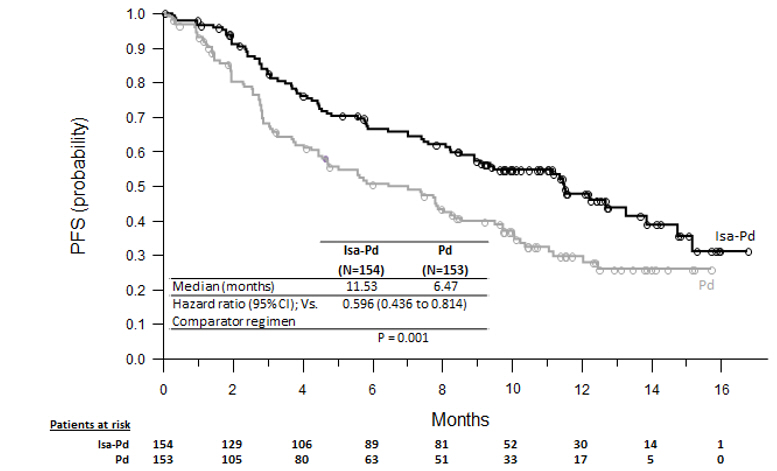
In ICARIA-MM, at a median follow-up time of 52 months, second primary malignancies occurred in 7% of patients in the Isa-Pd arm and in 2% of patients in the Pd arm.
In IKEMA study, at a median follow-up time of 57 months, second primary malignancies occurred in 10% of patients in the Isa-Kd arm and in 8% of patients in the Kd arm.
In IMROZ study, at a median follow-up time of 60 months, second primary malignancies occurred in 16% of patients in the Isa-VRd arm and in 9% of patients in the VRd arm.
The most common (≥1%) second primary malignancies in ICARIA-MM, IKEMA, and IMROZ (N=592) included skin cancers (7% with SARCLISA-containing regimens and 3.1% with comparative regimens) and solid tumors other than skin cancer (4.6% with SARCLISA-containing regimens and 2.9% with comparative regimens). Patients with non-melanoma skin cancer continued treatment after resection of the skin cancer, except 2 patients on the Isa-VRd arm and 1 patient on the VRd arm of the IMROZ study.
Monitor patients for the development of second primary malignancies.
17 Patient Counseling Information
Advise the patient to read the FDA-approved patient labeling (Patient Information).
8.3 Females and Males of Reproductive Potential
SARCLISA can cause fetal harm when administered to a pregnant woman [see Use in Specific Populations (8.1)].
Principal Display Panel 100 Mg/5 Ml Vial Carton
NDC 0024-0654-01
Rx only
SARCLISA®
(isatuximab-irfc)
Injection
100 mg/5 mL (20 mg/mL)
For Intravenous Infusion After Dilution
One single-dose vial
Discard unused portion
sanofi
Principal Display Panel 500 Mg/25 Ml Vial Carton
NDC 0024-0656-01
Rx only
SARCLISA®
(isatuximab-irfc)
Injection
500 mg/25 mL (20 mg/mL)
For Intravenous Infusion After Dilution
One single-dose vial
Discard unused portion
sanofi
13.1 Carcinogenesis, Mutagenesis, Impairment of Fertility
Carcinogenicity and genotoxicity studies have not been conducted with isatuximab-irfc. Fertility studies have not been conducted with isatuximab-irfc.
Structured Label Content
Section 42229-5 (42229-5)
Missed SARCLISA Doses
If a planned dose of SARCLISA is missed, administer the dose as soon as possible and adjust the treatment schedule accordingly, maintaining the treatment interval.
Section 42230-3 (42230-3)
| This Patient Information has been approved by the U.S. Food and Drug Administration. | Revised: 06/2025 | ||
|
Patient Information
SARCLISA® (sar-cli-sa) (isatuximab-irfc) injection |
|||
| SARCLISA is used together with two or three other combinations of medicines: either pomalidomide and dexamethasone, or carfilzomib and dexamethasone, or bortezomib, lenalidomide, and dexamethasone. You should also read the Medication Guide that comes with pomalidomide and lenalidomide. You can ask your healthcare provider or pharmacist for information about carfilzomib and dexamethasone. | |||
|
What is SARCLISA?
SARCLISA is a prescription medicine used in combination with:
|
|||
| Do not receive SARCLISA if you have a severe allergic reaction to isatuximab-irfc or any of the ingredients in SARCLISA. See the end of this leaflet for complete list of ingredients in SARCLISA. | |||
Before receiving SARCLISA, tell your healthcare provider about all of your medical conditions, including if you:
|
|||
How will I receive SARCLISA?
|
|||
|
What are the possible side effects of SARCLISA? SARCLISA may cause serious side effects including:
|
|||
|
|
|
|
|
|||
| The most common side effects of SARCLISA in combination with pomalidomide and dexamethasone include: | |||
|
|
||
| The most common side effects of SARCLISA in combination with carfilzomib and dexamethasone include: | |||
|
|
||
| The most common side effects of SARCLISA in combination with bortezomib, lenalidomide and dexamethasone include: | |||
|
|
||
| Heart failure can happen during treatment with SARCLISA in combination with carfilzomib and dexamethasone. Tell your healthcare provider right away if you develop any of the following symptoms: | |||
|
|
|
|
| These are not all the possible side effects of SARCLISA. For more information, ask your healthcare provider or pharmacist. | |||
| Call your doctor for medical advice about side effects. You may report side effects to FDA at 1-800-FDA-1088. | |||
|
General information about the safe and effective use of SARCLISA.
Medicines are sometimes prescribed for purposes other than those listed in a Patient Information leaflet. You can ask your pharmacist or healthcare provider for information about SARCLISA that is written for health professionals. |
|||
|
What are the ingredients in SARCLISA? Active ingredient: isatuximab-irfc Inactive ingredients: histidine, histidine hydrochloride monohydrate, polysorbate 80, sucrose, and water for injection. Manufactured by: sanofi-aventis U.S. LLC, Morristown, NJ 07960, A SANOFI COMPANY. U.S. License No. 1752. SARCLISA is a registered trademark of Sanofi. ©2025 sanofi-aventis U.S. LLC. For more information, go to www.sanofi-aventis.us or call 1-800-633-1610. |
Section 43683-2 (43683-2)
Section 44425-7 (44425-7)
Storage
Store in a refrigerator at 36°F to 46°F (2°C to 8°C) in the original carton to protect from light. Do not freeze. Do not shake.
11 Description (11 DESCRIPTION)
Isatuximab-irfc, a CD38-directed cytolytic antibody, is a chimeric immunoglobulin G1 (IgG1) monoclonal antibody (mAb). Isatuximab-irfc is produced from a mammalian cell line (Chinese hamster ovary, CHO) using a fed-batch production process. Isatuximab-irfc is composed of two identical immunoglobulin kappa light chains and two identical immunoglobulin gamma heavy chains and has an overall molecular weight of approximately 148 kDa.
SARCLISA (isatuximab-irfc) injection is a sterile, preservative-free, clear to slightly opalescent, colorless to slightly yellow solution, essentially free of visible particles in a single-dose vial for intravenous use. Each vial contains either 100 mg/5 mL or 500 mg/25 mL of isatuximab-irfc at a concentration of 20 mg/mL with a pH of 6.0. Each mL of solution contains 20 mg isatuximab-irfc, histidine (1.46 mg), histidine hydrochloride monohydrate (2.22 mg), polysorbate 80 (0.2 mg), sucrose (100 mg), and water for injection.
5.2 Infections
SARCLISA can cause severe, life-threatening, or fatal infections. In patients who received SARCLISA at the recommended dose in ICARIA-MM, IKEMA, and IMROZ (N=592), serious infections, including opportunistic infections, occurred in 46% of patients, grade 3 or 4 infections occurred in 43%, and fatal infections occurred in 4.7%. The most common type of serious infection reported was pneumonia (32%).
Monitor patients for signs and symptoms of infection prior to and during treatment with SARCLISA and treat appropriately. Administer prophylactic antimicrobials according to guidelines [see Dosage and Administration (2.2)].
2.4 Preparation
Prepare the solution for infusion using aseptic technique as follows:
Calculate the dose (mg) of required SARCLISA based on actual patient weight (measured prior to each cycle to have the administered dose adjusted accordingly) [see Dosage and Administration (2.1)]. More than one SARCLISA vial may be necessary to obtain the required dose for the patient.
- Parenteral drug products should be inspected visually for particulate matter and discoloration prior to administration, whenever solution and container permit.
- Remove the volume of diluent from the 250 mL Sodium Chloride Injection, or 5% Dextrose Injection, diluent bag that is equal to the required volume of SARCLISA injection.
- Withdraw the necessary volume of SARCLISA injection from the vial and dilute by adding to the infusion bag of 0.9% Sodium Chloride Injection, or 5% Dextrose Injection. Discard any unused portion left in the vial.
- The infusion bag must be made of polyolefins (PO), polyethylene (PE), polypropylene (PP), polyvinyl chloride (PVC) with di-(2-ethylhexyl) phthalate (DEHP) or ethyl vinyl acetate (EVA).
- Gently homogenize the diluted solution by inverting the bag. Do not shake.
5.3 Neutropenia
SARCLISA can cause neutropenia.
In clinical trials (ICARIA-MM, IKEMA, and IMROZ), in patients treated with SARCLISA (N=592), neutropenia based on laboratory values occurred in 81%, with grade 3 or 4 occurring in 52%. Neutropenic infections occurred in 12% of patients, with grade 3 or 4 in 4.9%, and febrile neutropenia in 4% [see Adverse Reactions (6.1)].
Monitor complete blood cell counts periodically during treatment. If needed, use antibacterial and antiviral prophylaxis during treatment [see Dosage and Administration (2.2)]. Monitor patients with neutropenia for signs of infection. In case of grade 4 neutropenia delay SARCLISA dose until neutrophil count recovery to at least 1 × 10⁹/L, and provide supportive care with growth factors, according to institutional guidelines. No dose reductions of SARCLISA are recommended.
8.4 Pediatric Use
The safety and effectiveness of SARCLISA in pediatric patients have not been established.
The safety and efficacy of SARCLISA in combination with chemotherapy were assessed, but not established, in an open-label study (ACT15378, ISAKIDS, NCT03860844) in 62 pediatric patients aged 1.4 years to < 17 years with relapsed or refractory T-acute lymphoblastic leukemia (T-ALL), B-acute lymphoblastic leukemia (B-ALL), or acute myeloid leukemia (AML). No new safety signals were observed in pediatric patients in this trial.
Body weight adjusted clearance at steady state and volume of distribution of isatuximab in pediatric patients were within the range of values that were observed in adults.
8.5 Geriatric Use
Of the total number of patients with relapsed or refractory multiple myeloma in clinical studies of SARCLISA, 56% (n=586) were 65 years of age and older, while 16% (n=163) were 75 years of age and older [see Clinical Studies (14)]. No overall differences in safety or effectiveness were observed between patients 65 years of age and older compared to younger patients, and other reported clinical experience has not identified differences in responses between the adults 65 years of age and older and younger patients, but greater sensitivity of some older individuals cannot be ruled out.
Of the total number of SARCLISA-treated patients with newly diagnosed multiple myeloma in IMROZ, 72% (n=319) were less than 75 years of age and 28% (n=125) were 75 years of age and older. The clinical trial did not enroll patients over age 80 [see Clinical Studies (14)]. Adverse reactions occurring at a higher frequency in the SARCLISA arm (≥5%) in patients 75 years of age and older included neutropenia. Adverse reactions leading to dose modifications in patients 75 years of age and older occurred at a higher frequency (≥5%) in the SARCLISA arm. The hazard ratio for overall survival (OS) in patients 75 years of age and older was 1.25 [95% CI: 0.68 to 2.3].
2.5 Administration
- Administer the infusion solution by intravenous infusion using an intravenous tubing infusion set (in PE, PVC with or without DEHP, polybutadiene [PBD], or polyurethane [PU]) with a 0.22 micron in-line filter (polyethersulfone [PES], polysulfone, or nylon).
- The infusion solution should be administered for a period of time that will depend on the infusion rate (see Table 3). Use prepared SARCLISA infusion solution within 48 hours when stored refrigerated at 2°C to 8°C, followed by 8 hours (including the infusion time) at room temperature.
- Do not administer SARCLISA infusion solution concomitantly in the same intravenous line with other agents.
- On the days where both SARCLISA and carfilzomib are administered, administer dexamethasone first, followed by SARCLISA infusion, then followed by carfilzomib infusion.
12.6 Immunogenicity
The observed incidence of anti-drug antibodies is highly dependent on the sensitivity and specificity of the assay. Differences in assay methods preclude meaningful comparisons of the incidence of anti-drug antibodies in the studies described below with the incidence of anti-drug antibodies in other studies, including those of isatuximab-irfc or of other isatuximab products.
Overall, across 9 clinical studies in relapsed and/or refractory multiple myeloma (RRMM) with SARCLISA single-agent and combination therapies including ICARIA-MM and IKEMA (N=1023), the incidence of treatment emergent anti-drug antibodies (ADAs) was <2%. In ICARIA-MM and IKEMA, no patients with RRMM tested positive for ADA. Therefore, the neutralizing ADA status was not determined. In RRMM, no effect of ADAs was observed on the pharmacokinetics, safety, or efficacy of SARCLISA.
In IMROZ, out of the 263 patients with NDMM treated with SARCLISA in combination with bortezomib, lenalidomide, and dexamethasone, 253 were evaluable for the presence of ADA, 22 patients (8.7%) tested positive for treatment-emergent ADAs, with 21 patients considered to have a transient ADA response and 1 considered to have an indeterminate ADA response. Among these 22 ADA-positive patients, 13 (5.9%) had neutralizing antibodies. In IMROZ, a trend to lower exposure was observed in ADA-positive patients, which was considered not clinically relevant. In patients with ADA-positive status to SARCLISA, including those with neutralizing antibodies, no meaningful impact of ADAs on safety or efficacy of SARCLISA was observed.
4 Contraindications (4 CONTRAINDICATIONS)
SARCLISA is contraindicated in patients with severe hypersensitivity to isatuximab-irfc or to any of its excipients [see Warnings and Precautions (5.1)].
6 Adverse Reactions (6 ADVERSE REACTIONS)
The following clinically significant adverse reactions from SARCLISA are also described in other sections of the labeling:
- Infusion-Related Reactions [see Warnings and Precautions (5.1)]
- Infections [see Warnings and Precautions (5.2)]
- Neutropenia [see Warnings and Precautions (5.3)]
- Second Primary Malignancies [see Warnings and Precautions (5.4)]
12.2 Pharmacodynamics
In multiple myeloma patients treated with SARCLISA combined with pomalidomide and dexamethasone, a decrease in absolute counts of total NK cells (including inflammatory CD16+ low CD56+ bright and cytotoxic CD16+ bright CD56+ dim NK cells) and CD19+ B cells was observed in peripheral blood.
12.3 Pharmacokinetics
Following administration of isatuximab-irfc in combination with pomalidomide and dexamethasone at the recommended dose and schedule, the steady-state mean (CV%) predicted maximum plasma concentration (Cmax) and area under the plasma concentration-time curve (AUC) of isatuximab-irfc were 351 µg/mL (36.0%) and 72,600 µg∙h/mL (51.7%), respectively.
Following administration of isatuximab-irfc in combination with carfilzomib and dexamethasone at the recommended dose and schedule, the steady state mean (CV%) predicted Cmax and AUC of isatuximab-irfc were 655 µg/mL (30.8%) and 159,000 µg∙h/mL (37.1%), respectively.
The median time to reach steady state of isatuximab-irfc was 18 weeks with a 3.1-fold accumulation.
Following administration of isatuximab-irfc in combination with bortezomib, lenalidomide, and dexamethasone at the recommended dose and schedule, the mean (CV%) predicted Cmax and AUC of isatuximab-irfc after the dose on Week 21 were 496 µg/mL (25.6%) and 120,000 µg∙h/mL (28.9%), respectively. The geometric mean (CV%) of accumulation ratio between steady state AUC and AUC after the dose on Week 21 is predicted to be 1.4 (35.8%). Isatuximab-irfc AUC increases in a greater than dose proportional manner over a dosage range from 1 mg/kg to 20 mg/kg (0.1 to 2 times the approved recommended dosage) every 2 weeks. Isatuximab-irfc AUC increases proportionally over a dosage range from 5 mg/kg to 20 mg/kg (0.5 to 2 times the approved recommended dosage) every week for 4 weeks followed by every 2 weeks.
2.1 Recommended Dosage
- Administer pre-infusion medications [see Dosage and Administration (2.2)].
- SARCLISA should be administered by a healthcare professional, with immediate access to emergency equipment and appropriate medical support to manage infusion-related reactions if they occur [see Warnings and Precautions (5.1)].
The recommended dose of SARCLISA is 10 mg/kg actual body weight administered as an intravenous infusion in combination with pomalidomide and dexamethasone or in combination with carfilzomib and dexamethasone, or in combination with bortezomib, lenalidomide, and dexamethasone.
SARCLISA dosing schedules are provided in Tables 1 and 2 [see Clinical Studies (14)].
| Cycles | Dosing schedules |
|---|---|
| Cycle 1 (28-day cycle) | Days 1, 8, 15, and 22 (weekly) |
| Cycle 2 and beyond (28-day cycles) | Days 1, 15 (every 2 weeks) |
| Cycles | Dosing schedules |
|---|---|
| Cycle 1 (42-day cycle) | Days 1, 8, 15, 22, and 29 |
| Cycles 2 to 4 (42-day cycles) | Days 1, 15, and 29 (every 2 weeks) |
| Cycles 5 to 17 (28-day cycles) | Days 1 and 15 (every 2 weeks) |
| Cycles 18 and beyond (28-day cycles) | Day 1 (every 4 weeks) |
Treatment is repeated until disease progression or unacceptable toxicity.
SARCLISA is used in combination with pomalidomide and dexamethasone or in combination with carfilzomib and dexamethasone or in combination with bortezomib, lenalidomide, and dexamethasone. For dosing instructions of combination agents administered with SARCLISA, see Clinical Studies (14) and manufacturer's prescribing information.
1 Indications and Usage (1 INDICATIONS AND USAGE)
SARCLISA is indicated:
- in combination with pomalidomide and dexamethasone, for the treatment of adult patients with multiple myeloma who have received at least 2 prior therapies including lenalidomide and a proteasome inhibitor.
- in combination with carfilzomib and dexamethasone, for the treatment of adult patients with relapsed or refractory multiple myeloma who have received 1 to 3 prior lines of therapy.
- in combination with bortezomib, lenalidomide, and dexamethasone, for the treatment of adult patients with newly diagnosed multiple myeloma who are not eligible for autologous stem cell transplant (ASCT).
12.1 Mechanism of Action
Isatuximab-irfc is an IgG1-derived monoclonal antibody that binds to CD38 expressed on the surface of hematopoietic and tumor cells, including multiple myeloma cells. Isatuximab-irfc induces apoptosis of tumor cells and activation of immune effector mechanisms including antibody-dependent cell-mediated cytotoxicity (ADCC), antibody-dependent cellular phagocytosis (ADCP), and complement dependent cytotoxicity (CDC). Isatuximab-irfc inhibits the ADP-ribosyl cyclase activity of CD38. Isatuximab-irfc can activate natural killer (NK) cells in the absence of CD38-positive target tumor cells and suppresses CD38-positive T-regulatory cells. The combination of isatuximab-irfc and pomalidomide enhanced ADCC activity and direct tumor cell killing compared to that of isatuximab-irfc alone in vitro, and enhanced antitumor activity compared to the activity of isatuximab-irfc or pomalidomide alone in a human multiple myeloma xenograft model.
2.3 Dosage Modifications
No dose reduction of SARCLISA is recommended. Dose delay may be required to allow recovery of blood counts in the event of hematological toxicity [see Warnings and Precautions (5.3, 5.5)]. For information concerning drugs given in combination with SARCLISA, see manufacturer's prescribing information.
5.6 Embryo Fetal Toxicity (5.6 Embryo-Fetal Toxicity)
Based on the mechanism of action, SARCLISA can cause fetal harm when administered to a pregnant woman. SARCLISA may cause fetal immune cell depletion and decreased bone density. Advise pregnant women of the potential risk to a fetus. Advise females with reproductive potential to use an effective method of contraception during treatment with SARCLISA and for 5 months after the last dose [see Use in Specific Populations (8.1, 8.3)]. The combination of SARCLISA with pomalidomide or lenalidomide is contraindicated in pregnant women because pomalidomide or lenalidomide may cause birth defects and death of the unborn child. Refer to the pomalidomide or lenalidomide prescribing information on use during pregnancy.
5 Warnings and Precautions (5 WARNINGS AND PRECAUTIONS)
- Infusion-Related Reactions: In case of grade ≥2, interrupt SARCLISA and manage medically. Permanently discontinue for grade 4 infusion-related reactions or anaphylactic reaction. (5.1)
- Infections: SARCLISA can cause serious and fatal infections. Monitor patients for signs and symptoms of infection and treat appropriately. (5.2)
- Neutropenia: Monitor complete blood cell counts periodically during treatment. Monitor patients with neutropenia for signs of infection. SARCLISA dose delays and the use of colony-stimulating factor may be required to allow improvement of neutrophil count. (5.3)
- Second Primary Malignancies (SPM): Monitor patients for the development of second primary malignancies. (5.4)
-
Laboratory Test Interference:
- Interference with Serological Testing (Indirect Antiglobulin Test): Type and screen patients prior to starting treatment. Inform blood banks that a patient has received SARCLISA. (5.5, 7.1)
- Interference with Serum Protein Electrophoresis and Immunofixation Tests: SARCLISA may interfere with the assays used to monitor M-protein, which may impact the determination of complete response. (5.5, 7.1)
- Embryo-Fetal Toxicity: Can cause fetal harm. (5.6)
2 Dosage and Administration (2 DOSAGE AND ADMINISTRATION)
3 Dosage Forms and Strengths (3 DOSAGE FORMS AND STRENGTHS)
SARCLISA is a clear to slightly opalescent, colorless to slightly yellow solution, essentially free of visible particulates available as:
- Injection: 100 mg/5 mL (20 mg/mL) in a single-dose vial
- Injection: 500 mg/25 mL (20 mg/mL) in a single-dose vial
8 Use in Specific Populations (8 USE IN SPECIFIC POPULATIONS)
Lactation: Advise not to breastfeed. (8.2)
5.1 Infusion Related Reactions (5.1 Infusion-Related Reactions)
Serious infusion-related reactions including life-threatening anaphylactic reactions have occurred with SARCLISA treatment. Severe signs and symptoms included cardiac arrest, hypertension, hypotension, bronchospasm, dyspnea, angioedema, and swelling. In clinical trials (ICARIA-MM, IKEMA, and IMROZ), in patients treated with SARCLISA (N=592), infusion-related reactions occurred in 206 patients (35%). Among these 206 patients, 92% experienced infusion-related reactions during the first infusion and 12% after the first cycle. The most common symptoms (≥5%) of an infusion-related reaction included dyspnea and cough. Grade 1 infusion-related reactions were reported in 6% of patients, grade 2 in 28%, and grade 3 or 4 in 1.2%. Anaphylactic reactions occurred in less than 1% of patients. The total incidence of SARCLISA infusion interruptions was less than 1% and the incidence of patients with at least one SARCLISA infusion interruption due to infusion-related reactions was 26%. The median time to first SARCLISA infusion interruption was 61 minutes (range 4 to 240 minutes). SARCLISA was discontinued in 1% of patients due to infusion-related reactions.
To decrease the risk and severity of infusion-related reactions, premedicate patients prior to SARCLISA infusion with acetaminophen, H2 antagonists, diphenhydramine, or equivalent, and dexamethasone [see Dosage and Administration (2.2)].
Monitor vital signs frequently during the entire SARCLISA infusion. For patients with grade ≥2 reactions, interrupt SARCLISA infusion and provide appropriate medical management. For patients with grade 2 or grade 3 reactions, if symptoms improve to grade ≤1, restart SARCLISA infusion at half of the initial infusion rate, with supportive care as needed, and closely monitor patients. If symptoms do not recur after 30 minutes, the infusion rate may be increased to the initial rate, and then increased incrementally, as shown in Table 3 [see Dosage and Administration (2.5)]. In case symptoms do not improve to grade ≤1 after interruption of SARCLISA infusion, persist or worsen despite appropriate medications, or require hospitalization, permanently discontinue SARCLISA and institute appropriate management. Permanently discontinue SARCLISA if an anaphylactic reaction or life-threatening (grade 4) infusion-related reaction occurs and institute appropriate management.
6.1 Clinical Trials Experience
Because clinical trials are conducted under widely varying conditions, adverse reaction rates observed in the clinical trials of a drug cannot be directly compared to rates in the clinical trials of another drug and may not reflect the rates observed in practice.
5.4 Second Primary Malignancies
The incidence of second primary malignancies, during treatment and post-treatment, is increased in patients treated with SARCLISA-containing regimens. In clinical trials (ICARIA-MM, IKEMA, and IMROZ), in patients treated with SARCLISA (N=592), second primary malignancies occurred in 71 patients (12%).
In ICARIA-MM, at a median follow-up time of 52 months, second primary malignancies occurred in 7% of patients in the Isa-Pd arm and in 2% of patients in the Pd arm.
In IKEMA study, at a median follow-up time of 57 months, second primary malignancies occurred in 10% of patients in the Isa-Kd arm and in 8% of patients in the Kd arm.
In IMROZ study, at a median follow-up time of 60 months, second primary malignancies occurred in 16% of patients in the Isa-VRd arm and in 9% of patients in the VRd arm.
The most common (≥1%) second primary malignancies in ICARIA-MM, IKEMA, and IMROZ (N=592) included skin cancers (7% with SARCLISA-containing regimens and 3.1% with comparative regimens) and solid tumors other than skin cancer (4.6% with SARCLISA-containing regimens and 2.9% with comparative regimens). Patients with non-melanoma skin cancer continued treatment after resection of the skin cancer, except 2 patients on the Isa-VRd arm and 1 patient on the VRd arm of the IMROZ study.
Monitor patients for the development of second primary malignancies.
17 Patient Counseling Information (17 PATIENT COUNSELING INFORMATION)
Advise the patient to read the FDA-approved patient labeling (Patient Information).
8.3 Females and Males of Reproductive Potential
SARCLISA can cause fetal harm when administered to a pregnant woman [see Use in Specific Populations (8.1)].
Principal Display Panel 100 Mg/5 Ml Vial Carton (PRINCIPAL DISPLAY PANEL - 100 mg/5 mL Vial Carton)
NDC 0024-0654-01
Rx only
SARCLISA®
(isatuximab-irfc)
Injection
100 mg/5 mL (20 mg/mL)
For Intravenous Infusion After Dilution
One single-dose vial
Discard unused portion
sanofi
Principal Display Panel 500 Mg/25 Ml Vial Carton (PRINCIPAL DISPLAY PANEL - 500 mg/25 mL Vial Carton)
NDC 0024-0656-01
Rx only
SARCLISA®
(isatuximab-irfc)
Injection
500 mg/25 mL (20 mg/mL)
For Intravenous Infusion After Dilution
One single-dose vial
Discard unused portion
sanofi
13.1 Carcinogenesis, Mutagenesis, Impairment of Fertility
Carcinogenicity and genotoxicity studies have not been conducted with isatuximab-irfc. Fertility studies have not been conducted with isatuximab-irfc.
Advanced Ingredient Data
Raw Label Data
All Sections (JSON)
Additional Information
Back to search View SPL set listing Open on DailyMed ↗
Source: dailymed · Ingested: 2026-02-15T11:47:49.825207 · Updated: 2026-03-14T22:28:13.751851