Pantoprazole Sodium Delayed-release Tablets
a03aa46f-9eb5-4cf4-addf-745d94af8261
34391-3
HUMAN PRESCRIPTION DRUG LABEL
Drug Facts
Composition & Product
Identifiers & Packaging
Indications and Usage
Pantoprazole Sodium Delayed-Release Tablets, USP are indicated for:
Dosage and Administration
Indication Dose Frequency Short-Term Treatment of Erosive Esophagitis Associated With GERD ( 2.1 ) Adults 40 mg Once Daily for up to 8 wks Children (5 years and older) ≥ 15 kg to < 40 kg 20 mg Once Daily for up to 8 wks ≥ 40 kg 40 mg Maintenance of Healing of Erosive Esophagitis ( 2.1 ) Adults 40 mg Once Daily Controlled studies did not extend beyond 12 months Pathological Hypersecretory Conditions Including Zollinger-Ellison Syndrome ( 2.1 ) Adults 40 mg Twice Daily See full prescribing information for administration instructions
Contraindications
Pantoprazole is contraindicated in patients with known hypersensitivity to any component of the formulation or any substituted benzimidazole. Hypersensitivity reactions may include anaphylaxis, anaphylactic shock, angioedema, bronchospasm, acute interstitial nephritis, and urticaria [ see Adverse Reactions ( 6 ) ]. Proton pump inhibitors (PPIs), including Pantoprazole, are contraindicated in patients receiving rilpivirine-containing products [ see Drug Interactions ( 7 ) ].
Warnings and Precautions
Gastric Malignancy: In adults, symptomatic response does not preclude presence of gastric malignancy. Consider additional follow-up and diagnostic testing. ( 5.1 ) Acute Interstitial Nephritis: Observed in patients taking PPIs. ( 5.2 ) Clostridium difficile-associated diarrhea : PPI therapy may be associated with increased risk. ( 5.3 ) Bone Fracture: Long-term and multiple daily dose PPI therapy may be associated with an increased risk for osteoporosis-related fractures of the hip, wrist or spine. ( 5.4 ) Cutaneous and Systemic Lupus Erythematosus: Mostly cutaneous; new onset or exacerbation of existing disease; discontinue Pantoprazole and refer to specialist for evaluation. ( 5.5 ) Cyanocobalamin (Vitamin B-12) Deficiency: Daily long-term use (e.g., longer than 3 years) may lead to malabsorption or a deficiency of cyanocobalamin. ( 5.6 ) Hypomagnesemia: Reported rarely with prolonged treatment with PPIs. ( 5.7 )
Adverse Reactions
The following serious adverse reactions are described below and elsewhere in labeling: Acute Interstitial Nephritis [ see Warnings and Precautions ( 5.2 ) ] Clostridium difficile- Associated Diarrhea [ see Warnings and Precautions ( 5.3 ) ] Bone Fracture [ see Warnings and Precautions ( Error! Hyperlink reference not valid. ) ] Cutaneous and Systemic Lupus Erythematosus [ see Warnings and Precautions ( Error! Hyperlink reference not valid. ) ] Cyanocobalamin (Vitamin B-12) Deficiency [ see Warnings and Precautions ( Error! Hyperlink reference not valid. ) ] 1. Hypomagnesemia [ see Warnings and Precautions ( Error! Hyperlink reference not valid. ) ]
Drug Interactions
Table 4 includes drugs with clinically important drug interactions and interaction with diagnostics when administered concomitantly with Pantoprazole and instructions for preventing or managing them. Consult the labeling of concomitantly used drugs to obtain further information about interactions with PPIs. Table 4: Clinically relevant Interactions Affecting Drugs Co-Administered with Pantoprazole and Interaction with Diagnostics Antiretrovirals Clinical Impact: The effect of PPIs on antiretroviral drugs is variable. The clinical importance and the mechanisms behind these interactions are not always known. Decreased exposure of some antiretroviral drugs (e.g., rilpivirine atazanavir, and nelfinavir) when used concomitantly with Pantoprazole may reduce antiviral effect and promote the development of drug resistance. Increased exposure of other antiretroviral drugs (e.g., saquinavir) when used concomitantly with Pantoprazole may increase toxicity . There are other antiretroviral drugs which do not result in clinically relevant interactions with pantoprazole sodium. Intervention: Rilpivirine-containing products: Concomitant use with Pantoprazole is contraindicated [ see Contraindications ( 4 ) ]. Atazanavir: See prescribing information for atazanavir for dosing information. Nelfinavir: Avoid concomitant use with Pantoprazole. See prescribing information for nelfinavir. Saquinavir: See the prescribing information for saquinavir for monitoring of potential saquinavir-related toxicities. Other antiretrovirals: See prescribing information for specific antiretroviral drugs. Warfarin Clinical Impact: Increased INR and prothrombin time in patients receiving PPIs, including pantoprazole sodium, and warfarin concomitantly. Increases in INR and prothrombin time may lead to abnormal bleeding and even death. Intervention: Monitor INR and prothrombin time and adjust the dose of warfarin, if needed, to maintain the target INR range. Methotrexate Clinical Impact: Concomitant use of pantoprazole sodium with methotrexate (primarily at high dose) may elevate and prolong serum concentrations of methotrexate and/or its metabolite hydroxymethotrexate, possibly leading to methotrexate toxicities. No formal drug interaction studies of high-dose methotrexate with PPIs have been conducted [ see Warnings and Precautions ( 5.10 ) ]. Intervention: A temporary withdrawal of Pantoprazole may be considered in some patients receiving high-dose methotrexate. Drugs Dependent on Gastric pH for Absorption (e.g., iron salts, erlotinib, dasatinib, nilotinib, mycophenolate mofetil, ketoconazole) Clinical Impact: Pantoprazole sodium can reduce the absorption of other drugs due to its effect on reducing intragastric acidity Intervention: Mycophenolate mofetil (MMF): Co-administration of pantoprazole sodium in healthy subjects and in transplant patients receiving MMF has been reported to reduce the exposure to the active metabolite, mycophenolic acid (MPA), possibly due to a decrease in MMF solubility at an increased gastric pH. The clinical relevance of reduced MPA exposure on organ rejection has not been established in transplant patients receiving Pantoprazole Sodium for Injection and MMF. Use Pantoprazole with caution in transplant patients receiving MMF [ see Clinical Pharmacology ( 12.3 ) ]. See the prescribing information for other drugs dependent on gastric pH for absorption. False Positive Urine Tests for THC Clinical Impact: There have been reports of false positive urine screening tests for tetrahydrocannabinol (THC) in patients receiving PPIs, including Pantoprazole [ see Warnings and Precautions ( 5.9 ) ]. Intervention: An alternative confirmatory method should be considered to verify positive results.
Description
Warnings and Precautions, Atrophic Gastritis removed (5.2) 10/2016 Warnings and Precautions, Cutaneous and Systemic Lupus Erythematosus (5.5) 10/2016
Medication Information
Recent Major Changes
Warnings and Precautions, Atrophic Gastritis removed (5.2) 10/2016
Warnings and Precautions, Cutaneous and Systemic Lupus Erythematosus (5.5) 10/2016
Warnings and Precautions
Gastric Malignancy: In adults, symptomatic response does not preclude presence of gastric malignancy. Consider additional follow-up and diagnostic testing. ( 5.1 ) Acute Interstitial Nephritis: Observed in patients taking PPIs. ( 5.2 ) Clostridium difficile-associated diarrhea : PPI therapy may be associated with increased risk. ( 5.3 ) Bone Fracture: Long-term and multiple daily dose PPI therapy may be associated with an increased risk for osteoporosis-related fractures of the hip, wrist or spine. ( 5.4 ) Cutaneous and Systemic Lupus Erythematosus: Mostly cutaneous; new onset or exacerbation of existing disease; discontinue Pantoprazole and refer to specialist for evaluation. ( 5.5 ) Cyanocobalamin (Vitamin B-12) Deficiency: Daily long-term use (e.g., longer than 3 years) may lead to malabsorption or a deficiency of cyanocobalamin. ( 5.6 ) Hypomagnesemia: Reported rarely with prolonged treatment with PPIs. ( 5.7 )
Indications and Usage
Pantoprazole Sodium Delayed-Release Tablets, USP are indicated for:
Dosage and Administration
Indication Dose Frequency Short-Term Treatment of Erosive Esophagitis Associated With GERD ( 2.1 ) Adults 40 mg Once Daily for up to 8 wks Children (5 years and older) ≥ 15 kg to < 40 kg 20 mg Once Daily for up to 8 wks ≥ 40 kg 40 mg Maintenance of Healing of Erosive Esophagitis ( 2.1 ) Adults 40 mg Once Daily Controlled studies did not extend beyond 12 months Pathological Hypersecretory Conditions Including Zollinger-Ellison Syndrome ( 2.1 ) Adults 40 mg Twice Daily See full prescribing information for administration instructions
Contraindications
Pantoprazole is contraindicated in patients with known hypersensitivity to any component of the formulation or any substituted benzimidazole. Hypersensitivity reactions may include anaphylaxis, anaphylactic shock, angioedema, bronchospasm, acute interstitial nephritis, and urticaria [ see Adverse Reactions ( 6 ) ]. Proton pump inhibitors (PPIs), including Pantoprazole, are contraindicated in patients receiving rilpivirine-containing products [ see Drug Interactions ( 7 ) ].
Adverse Reactions
The following serious adverse reactions are described below and elsewhere in labeling: Acute Interstitial Nephritis [ see Warnings and Precautions ( 5.2 ) ] Clostridium difficile- Associated Diarrhea [ see Warnings and Precautions ( 5.3 ) ] Bone Fracture [ see Warnings and Precautions ( Error! Hyperlink reference not valid. ) ] Cutaneous and Systemic Lupus Erythematosus [ see Warnings and Precautions ( Error! Hyperlink reference not valid. ) ] Cyanocobalamin (Vitamin B-12) Deficiency [ see Warnings and Precautions ( Error! Hyperlink reference not valid. ) ] 1. Hypomagnesemia [ see Warnings and Precautions ( Error! Hyperlink reference not valid. ) ]
Drug Interactions
Table 4 includes drugs with clinically important drug interactions and interaction with diagnostics when administered concomitantly with Pantoprazole and instructions for preventing or managing them. Consult the labeling of concomitantly used drugs to obtain further information about interactions with PPIs. Table 4: Clinically relevant Interactions Affecting Drugs Co-Administered with Pantoprazole and Interaction with Diagnostics Antiretrovirals Clinical Impact: The effect of PPIs on antiretroviral drugs is variable. The clinical importance and the mechanisms behind these interactions are not always known. Decreased exposure of some antiretroviral drugs (e.g., rilpivirine atazanavir, and nelfinavir) when used concomitantly with Pantoprazole may reduce antiviral effect and promote the development of drug resistance. Increased exposure of other antiretroviral drugs (e.g., saquinavir) when used concomitantly with Pantoprazole may increase toxicity . There are other antiretroviral drugs which do not result in clinically relevant interactions with pantoprazole sodium. Intervention: Rilpivirine-containing products: Concomitant use with Pantoprazole is contraindicated [ see Contraindications ( 4 ) ]. Atazanavir: See prescribing information for atazanavir for dosing information. Nelfinavir: Avoid concomitant use with Pantoprazole. See prescribing information for nelfinavir. Saquinavir: See the prescribing information for saquinavir for monitoring of potential saquinavir-related toxicities. Other antiretrovirals: See prescribing information for specific antiretroviral drugs. Warfarin Clinical Impact: Increased INR and prothrombin time in patients receiving PPIs, including pantoprazole sodium, and warfarin concomitantly. Increases in INR and prothrombin time may lead to abnormal bleeding and even death. Intervention: Monitor INR and prothrombin time and adjust the dose of warfarin, if needed, to maintain the target INR range. Methotrexate Clinical Impact: Concomitant use of pantoprazole sodium with methotrexate (primarily at high dose) may elevate and prolong serum concentrations of methotrexate and/or its metabolite hydroxymethotrexate, possibly leading to methotrexate toxicities. No formal drug interaction studies of high-dose methotrexate with PPIs have been conducted [ see Warnings and Precautions ( 5.10 ) ]. Intervention: A temporary withdrawal of Pantoprazole may be considered in some patients receiving high-dose methotrexate. Drugs Dependent on Gastric pH for Absorption (e.g., iron salts, erlotinib, dasatinib, nilotinib, mycophenolate mofetil, ketoconazole) Clinical Impact: Pantoprazole sodium can reduce the absorption of other drugs due to its effect on reducing intragastric acidity Intervention: Mycophenolate mofetil (MMF): Co-administration of pantoprazole sodium in healthy subjects and in transplant patients receiving MMF has been reported to reduce the exposure to the active metabolite, mycophenolic acid (MPA), possibly due to a decrease in MMF solubility at an increased gastric pH. The clinical relevance of reduced MPA exposure on organ rejection has not been established in transplant patients receiving Pantoprazole Sodium for Injection and MMF. Use Pantoprazole with caution in transplant patients receiving MMF [ see Clinical Pharmacology ( 12.3 ) ]. See the prescribing information for other drugs dependent on gastric pH for absorption. False Positive Urine Tests for THC Clinical Impact: There have been reports of false positive urine screening tests for tetrahydrocannabinol (THC) in patients receiving PPIs, including Pantoprazole [ see Warnings and Precautions ( 5.9 ) ]. Intervention: An alternative confirmatory method should be considered to verify positive results.
Description
Warnings and Precautions, Atrophic Gastritis removed (5.2) 10/2016 Warnings and Precautions, Cutaneous and Systemic Lupus Erythematosus (5.5) 10/2016
Section 42229-5
Pantoprazole Sodium Delayed-Release Tablets
Pantoprazole Sodium Delayed-Release Tablets should be swallowed whole, with or without food in the stomach. If patients are unable to swallow a 40 mg tablet, two 20 mg tablets may be taken. Concomitant administration of antacids does not affect the absorption of Pantoprazole Sodium Delayed-Release Tablets.
Section 44425-7
Storage
Store Pantoprazole Sodium Delayed-Release Tablets, USP at 20° to 25°C (68° to 77°F); excursions permitted to 15° to 30°C (59° to 86°F) [see USP Controlled Room Temperature].
10 Overdosage
Experience in patients taking very high doses of Pantoprazole (greater than 240 mg) is limited. Spontaneous post-marketing reports of overdose are generally within the known safety profile of Pantoprazole.
Pantoprazole is not removed by hemodialysis. In case of overdosage, treatment should be symptomatic and supportive.
Single oral doses of pantoprazole at 709 mg/kg, 798 mg/kg, and 887 mg/kg were lethal to mice, rats, and dogs, respectively. The symptoms of acute toxicity were hypoactivity, ataxia, hunched sitting, limb-splay, lateral position, segregation, absence of ear reflex, and tremor.
11 Description
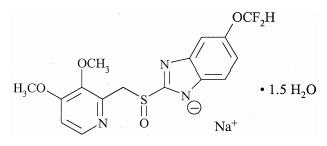
The active ingredient in Pantoprazole Sodium Delayed-Release Tablets, USP is a substituted benzimidazole, sodium 5-(difluoromethoxy)-2-[[(3,4-dimethoxy-2-pyridinyl)methyl] sulfinyl]-1H-benzimidazole sesquihydrate, a compound that inhibits gastric acid secretion. Its empirical formula is C16H14F2N3NaO4S × 1.5 H2O, with a molecular weight of 432.4. The structural formula is:
Pantoprazole sodium sesquihydrate is a white to off-white crystalline powder and is racemic. Pantoprazole has weakly basic and acidic properties. Pantoprazole sodium sesquihydrate is freely soluble in water, very slightly soluble in phosphate buffer at pH 7.4, and practically insoluble in n-hexane.
The stability of the compound in aqueous solution is pH-dependent. The rate of degradation increases with decreasing pH. At ambient temperature, the degradation half-life is approximately 2.8 hours at pH 5 and approximately 220 hours at pH 7.8.
Pantoprazole is supplied as a delayed-release tablet, available in two strengths (20 mg and 40 mg).
Each Pantoprazole Sodium Delayed-Release Tablet contains 45.1 mg or 22.55 mg of pantoprazole sodium sesquihydrate (equivalent to 40 mg or 20 mg pantoprazole, respectively) with the following inactive ingredients: crospovidone, glyceryl dibehenate, hypromellose, lactose monohydrate, methacrylic acid copolymer dispersion, talc, titanium dioxide, and triethyl citrate. The 20 mg tablet also contains black iron oxide, isopropyl alcohol, and propylene glycol. Pantoprazole Sodium Delayed-Release Tablets (40 mg and 20 mg) complies with USP dissolution test 4.
Medication Guide
|
Pantoprazole (pan-TOE-pruh-zole) Sodium Delayed-Release Tablets, USP CIA77568J Rev. 07/2017 |
|
Read this Medication Guide before you start taking Pantoprazole and each time you get a refill. There may be new information. This information does not take the place of talking with your doctor about your medical condition or your treatment. |
|
What is the most important information I should know about Pantoprazole? Pantoprazole may help your acid-related symptoms, but you could still have serious stomach problems. Talk with your doctor. Pantoprazole can cause serious side effects, including:
Pantoprazole can have other serious side effects. See “ Error! Hyperlink reference not valid.?" |
|
What is Pantoprazole? Pantoprazole is a prescription medicine called a proton pump inhibitor (PPI). Pantoprazole reduces the amount of acid in your stomach. Pantoprazole is used in adults:
Pantoprazole is used in children 5 years of age and older for up to 8 weeks to heal acid-related damage to the lining of the esophagus (erosive esophagitis or EE) caused by GERD. It is not known if Pantoprazole is safe if used longer than 8 weeks in children. Pantoprazole is not for use in children under 5 years of age. |
|
Who should not take Pantoprazole? Do not take Pantoprazole if you are:
|
|
What should I tell my doctor before taking Pantoprazole? Before taking Pantoprazole, tell your doctor if you:
Tell your doctor about all of the medicines you take, including prescription and non-prescription drugs, vitamins and herbal supplements. Pantoprazole may affect how other medicines work, and other medicines may affect how Pantoprazole works. Especially tell your doctor if you take:
Ask your doctor or pharmacist for a list of these medicines, if you are not sure. Know the medicines that you take. Keep a list of them to show your doctor and pharmacist when you get a new medicine. |
|
How should I take Pantoprazole?
◦ how to take Pantoprazole Tablets |
|
What are the possible side effects of Pantoprazole? Pantoprazole may cause serious side effects, including: See “ Error! Hyperlink reference not valid. ?”
Your doctor may check the level of magnesium in your body before you start taking Pantoprazole or during treatment, if you will be taking Pantoprazole for a long period of time. The most common side effects with Pantoprazole in adults include: ● Headache ● Vomiting ● Diarrhea ● Gas ● Nausea ● Dizziness ● Stomach pain ● Pain in your joints |
|
The most common side effects with Pantoprazole in children include: ● Upper respiratory infection ● Vomiting ● Headache ● Rash ● Fever ● Stomach pain ● Diarrhea Other side effects:
Your doctor may stop Pantoprazole if these symptoms happen. Tell your doctor about any side effects that bother you or that do not go away. These are not all the possible side effects with Pantoprazole. For more information, ask your doctor or pharmacist. Call your doctor for medical advice about side effects. You may report side effects to FDA at 1-800-FDA-1088. |
|
How should I store Pantoprazole?
Keep Pantoprazole and all medicines out of the reach of children. |
|
General information about Pantoprazole Medicines are sometimes prescribed for purposes other than those listed in a Medication Guide. Do not use Pantoprazole for a condition for which it was not prescribed. Do not give Pantoprazole to other people, even if they have the same symptoms you have. It may harm them. This Medication Guide summarizes the most important information about Pantoprazole. For more information, ask your doctor. You can ask your doctor or pharmacist for information that is written for healthcare professionals. |
|
What are the ingredients in Pantoprazole? Active ingredient: pantoprazole sodium sesquihydrate Inactive ingredients in Pantoprazole Sodium Delayed-Release Tablets: crospovidone, glyceryl dibehenate, hypromellose, lactose monohydrate, methacrylic acid copolymer dispersion, talc, titanium dioxide, and triethyl citrate. The 20 mg tablets also contains black iron oxide, isopropyl alcohol, and propylene glycol. For more information, call 1-844-834-0530. |
Instructions for Use
Pantoprazole Sodium Delayed-Release Tablets:
-
•You can take Pantoprazole sodium delayed-release tablets with food or on an empty stomach.
-
•Swallow Pantoprazole sodium delayed-release tablets whole.
-
•If you have trouble swallowing a Pantoprazole sodium delayed-release 40 mg tablet, you can take two 20 mg tablets instead.
-
•Do not split, chew, or crush Pantoprazole sodium delayed-release tablets.
This Medication Guide and Instructions for Use has been approved by the U.S. Food and Drug Administration.
This product's label may have been updated. For more information, call 1-844-834-0530.
Distributed by:
Lannett Company, Inc.
Philadelphia, PA 19154
Repackaged by:
Proficient Rx LP
Thousand Oaks, CA 91320
CIA77568J
Rev. 07/2017
All brand names are the trademarks of their respective owners.
5.4 Bone Fracture
Several published observational studies suggest that PPI therapy may be associated with an increased risk for osteoporosis-related fractures of the hip, wrist, or spine. The risk of fracture was increased in patients who received high-dose, defined as multiple daily doses, and long-term PPI therapy (a year or longer). Patients should use the lowest dose and shortest duration of PPI therapy appropriate to the condition being treated. Patients at risk for osteoporosis-related fractures should be managed according to established treatment guidelines [see Dosage and Administration (2) and Adverse Reactions (6.2)].
8.4 Pediatric Use
The safety and effectiveness of Pantoprazole for short-term treatment (up to eight weeks) of erosive esophagitis (EE) associated with GERD have been established in pediatric patients 1 year through 16 years of age. Effectiveness for EE has not been demonstrated in patients less than 1 year of age. In addition, for patients less than 5 years of age, there is no appropriate dosage strength in an age-appropriate formulation available. Therefore, Pantoprazole is indicated for the short-term treatment of EE associated with GERD for patients 5 years and older. The safety and effectiveness of Pantoprazole for pediatric uses other than EE have not been established.
8.5 Geriatric Use
In short-term US clinical trials, erosive esophagitis healing rates in the 107 elderly patients (≥ 65 years old) treated with Pantoprazole were similar to those found in patients under the age of 65. The incidence rates of adverse reactions and laboratory abnormalities in patients aged 65 years and older were similar to those associated with patients younger than 65 years of age.
5.7 Hypomagnesemia
Hypomagnesemia, symptomatic and asymptomatic, has been reported rarely in patients treated with PPIs for at least three months, in most cases after a year of therapy. Serious adverse events include tetany, arrhythmias, and seizures. In most patients, treatment of hypomagnesemia required magnesium replacement and discontinuation of the PPI.
For patients expected to be on prolonged treatment or who take PPIs with medications such as digoxin or drugs that may cause hypomagnesemia (e.g., diuretics), health care professionals may consider monitoring magnesium levels prior to initiation of PPI treatment and periodically [see Adverse Reactions (6.2)].
5.8 Tumorigenicity
Due to the chronic nature of GERD, there may be a potential for prolonged administration of Pantoprazole. In long-term rodent studies, pantoprazole was carcinogenic and caused rare types of gastrointestinal tumors. The relevance of these findings to tumor development in humans is unknown [see Nonclinical Toxicology (13.1)].
14 Clinical Studies
Pantoprazole Sodium Delayed-Release Tablets were used in the following clinical trials.
4 Contraindications
-
Pantoprazole is contraindicated in patients with known hypersensitivity to any component of the formulation or any substituted benzimidazole. Hypersensitivity reactions may include anaphylaxis, anaphylactic shock, angioedema, bronchospasm, acute interstitial nephritis, and urticaria [see Adverse Reactions (6)].
-
Proton pump inhibitors (PPIs), including Pantoprazole, are contraindicated in patients receiving rilpivirine-containing products [see Drug Interactions (7)].
6 Adverse Reactions
The following serious adverse reactions are described below and elsewhere in labeling:
-
Acute Interstitial Nephritis [see Warnings and Precautions (5.2)]
-
Clostridium difficile-Associated Diarrhea [see Warnings and Precautions (5.3)]
-
Bone Fracture [see Warnings and Precautions ( Error! Hyperlink reference not valid. )]
-
Cutaneous and Systemic Lupus Erythematosus [see Warnings and Precautions ( Error! Hyperlink reference not valid. )]
-
Cyanocobalamin (Vitamin B-12) Deficiency [see Warnings and Precautions ( Error! Hyperlink reference not valid. )]
-
1.Hypomagnesemia [see Warnings and Precautions ( Error! Hyperlink reference not valid. )]
7 Drug Interactions
Table 4 includes drugs with clinically important drug interactions and interaction with diagnostics when administered concomitantly with Pantoprazole and instructions for preventing or managing them.
Consult the labeling of concomitantly used drugs to obtain further information about interactions with PPIs.
Table 4: Clinically relevant Interactions Affecting Drugs Co-Administered with Pantoprazole and Interaction with Diagnostics
|
Antiretrovirals |
|
|
Clinical Impact: |
The effect of PPIs on antiretroviral drugs is variable. The clinical importance and the mechanisms behind these interactions are not always known.
|
|
Intervention: |
Rilpivirine-containing products: Concomitant use with Pantoprazole is contraindicated [see Contraindications (4)]. Atazanavir: See prescribing information for atazanavir for dosing information. Nelfinavir: Avoid concomitant use with Pantoprazole. See prescribing information for nelfinavir. Saquinavir: See the prescribing information for saquinavir for monitoring of potential saquinavir-related toxicities. Other antiretrovirals: See prescribing information for specific antiretroviral drugs. |
|
Warfarin |
|
|
Clinical Impact: |
Increased INR and prothrombin time in patients receiving PPIs, including pantoprazole sodium, and warfarin concomitantly. Increases in INR and prothrombin time may lead to abnormal bleeding and even death. |
|
Intervention: |
Monitor INR and prothrombin time and adjust the dose of warfarin, if needed, to maintain the target INR range. |
|
Methotrexate |
|
|
Clinical Impact: |
Concomitant use of pantoprazole sodium with methotrexate (primarily at high dose) may elevate and prolong serum concentrations of methotrexate and/or its metabolite hydroxymethotrexate, possibly leading to methotrexate toxicities. No formal drug interaction studies of high-dose methotrexate with PPIs have been conducted [see Warnings and Precautions (5.10)]. |
|
Intervention: |
A temporary withdrawal of Pantoprazole may be considered in some patients receiving high-dose methotrexate. |
|
Drugs Dependent on Gastric pH for Absorption (e.g., iron salts, erlotinib, dasatinib, nilotinib, mycophenolate mofetil, ketoconazole) |
|
|
Clinical Impact: |
Pantoprazole sodium can reduce the absorption of other drugs due to its effect on reducing intragastric acidity |
|
Intervention: |
Mycophenolate mofetil (MMF): Co-administration of pantoprazole sodium in healthy subjects and in transplant patients receiving MMF has been reported to reduce the exposure to the active metabolite, mycophenolic acid (MPA), possibly due to a decrease in MMF solubility at an increased gastric pH. The clinical relevance of reduced MPA exposure on organ rejection has not been established in transplant patients receiving Pantoprazole Sodium for Injection and MMF. Use Pantoprazole with caution in transplant patients receiving MMF [see Clinical Pharmacology (12.3)]. See the prescribing information for other drugs dependent on gastric pH for absorption. |
|
False Positive Urine Tests for THC |
|
|
Clinical Impact: |
There have been reports of false positive urine screening tests for tetrahydrocannabinol (THC) in patients receiving PPIs, including Pantoprazole [see Warnings and Precautions (5.9)]. |
|
Intervention: |
An alternative confirmatory method should be considered to verify positive results. |
8.3 Nursing Mothers
Pantoprazole and its metabolites are excreted in the milk of rats. Pantoprazole excretion in human milk has been detected in a study of a single nursing mother after a single 40 mg oral dose of pantoprazole sodium. The clinical relevance of this finding is not known. Many drugs which are excreted in human milk have a potential for serious adverse reactions in nursing infants. Based on the potential for tumorigenicity shown for pantoprazole sodium in rodent carcinogenicity studies, a decision should be made whether to discontinue nursing or to discontinue the drug, taking into account the benefit of the drug to the mother.
12.3 Pharmacokinetics
Pantoprazole Sodium Delayed-Release Tablets are prepared as enteric-coated tablets so that absorption of pantoprazole begins only after the tablet leaves the stomach. Peak serum concentration (Cmax) and area under the serum concentration time curve (AUC) increase in a manner proportional to oral doses from 10 mg to 80 mg. Pantoprazole does not accumulate, and its pharmacokinetics are unaltered with multiple daily dosing. Following oral administration, the serum concentration of pantoprazole declines biexponentially, with a terminal elimination half-life of approximately one hour.
In extensive metabolizers with normal liver function receiving an oral dose of the enteric-coated 40 mg pantoprazole tablet, the peak concentration (Cmax) is 2.5 mcg/mL; the time to reach the peak concentration (tmax) is 2.5 h, and the mean total area under the plasma concentration versus time curve (AUC) is 4.8 mcg∙h/mL (range 1.4 to 13.3 mcg∙h/mL).
12.4 Pharmacogenomics
CYP2C19 displays a known genetic polymorphism due to its deficiency in some subpopulations (e.g., approximately 3% of Caucasians and African-Americans and 17% to 23% of Asians are poor metabolizers). Although these subpopulations of pantoprazole poor metabolizers have elimination half-life values of 3.5 to 10 hours in adults, they still have minimal accumulation (≤ 23%) with once-daily dosing. For adult patients who are CYP2C19 poor metabolizers, no dosage adjustment is needed.
Similar to adults, pediatric patients who have the poor metabolizer genotype of CYP2C19 (CYP2C19 *2/*2) exhibited greater than a 6-fold increase in AUC compared to pediatric extensive (CYP2C19 *1/*1) and intermediate (CYP2C19 *1/*x) metabolizers. Poor metabolizers exhibited approximately 10‑fold lower apparent oral clearance compared to extensive metabolizers.
For known pediatric poor metabolizers, a dose reduction should be considered.
12.1 Mechanism of Action
Pantoprazole is a PPI that suppresses the final step in gastric acid production by covalently binding to the (H+, K+)-ATPase enzyme system at the secretory surface of the gastric parietal cell. This effect leads to inhibition of both basal and stimulated gastric acid secretion, irrespective of the stimulus. The binding to the (H+, K+)-ATPase results in a duration of antisecretory effect that persists longer than 24 hours for all doses tested (20 mg to 120 mg).
1 indications and Usage
Pantoprazole Sodium Delayed-Release Tablets, USP are indicated for:
5 Warnings and Precautions
-
Gastric Malignancy: In adults, symptomatic response does not preclude presence of gastric malignancy. Consider additional follow-up and diagnostic testing. (5.1)
-
Acute Interstitial Nephritis: Observed in patients taking PPIs. (5.2)
-
Clostridium difficile-associated diarrhea: PPI therapy may be associated with increased risk. (5.3)
-
Bone Fracture: Long-term and multiple daily dose PPI therapy may be associated with an increased risk for osteoporosis-related fractures of the hip, wrist or spine. (5.4)
-
Cutaneous and Systemic Lupus Erythematosus: Mostly cutaneous; new onset or exacerbation of existing disease; discontinue Pantoprazole and refer to specialist for evaluation. (5.5)
-
Cyanocobalamin (Vitamin B-12) Deficiency: Daily long-term use (e.g., longer than 3 years) may lead to malabsorption or a deficiency of cyanocobalamin. (5.6)
-
Hypomagnesemia: Reported rarely with prolonged treatment with PPIs. (5.7)
5.3 Clostridium Difficile
Published observational studies suggest that PPI therapy like Pantoprazole may be associated with an increased risk of Clostridium difficile associated diarrhea, especially in hospitalized patients. This diagnosis should be considered for diarrhea that does not improve [see Adverse Reactions (6.2)].
Patients should use the lowest dose and shortest duration of PPI therapy appropriate to the condition being treated.
2 Dosage and Administration
| Indication | Dose | Frequency |
|---|---|---|
|
Short-Term Treatment of Erosive Esophagitis Associated With GERD (2.1) |
||
|
Adults |
40 mg |
Once Daily for up to 8 wks |
|
Children (5 years and older) |
|
|
|
≥ 15 kg to < 40 kg |
20 mg |
Once Daily for up to 8 wks |
|
≥ 40 kg |
40 mg |
|
|
Maintenance of Healing of Erosive Esophagitis (2.1) |
||
|
Adults |
40 mg |
Once Daily Controlled studies did not extend beyond 12 months
|
|
Pathological Hypersecretory Conditions Including Zollinger-Ellison Syndrome (2.1) |
||
|
Adults |
40 mg |
Twice Daily |
See full prescribing information for administration instructions
40 Mg 30 Count Bottle Label
PRINCIPAL DISPLAY PANEL - 40 mg Tablet Bottle Label
NDC 63187-938-30
Pantoprazole
Sodium
Delayed-Release
Tablets, USP
40 mg*
Rx Only
30 Tablets
PHARMACIST: Dispense the
accompanying Medication Guide
to each patient.
3 Dosage Forms and Strengths
Delayed-Release Tablets:
-
•40 mg, white oval biconvex tablets debossed with "17" on one side
-
•20 mg, white oval biconvex tablets imprinted in black ink with "KU" on one side and "180" on the other side
6.2 Postmarketing Experience
The following adverse reactions have been identified during postapproval use of Pantoprazole. Because these reactions are reported voluntarily from a population of uncertain size, it is not always possible to reliably estimate their frequency or establish a causal relationship to drug exposure.
These adverse reactions are listed below by body system:
General Disorders and Administration Conditions: asthenia, fatigue, malaise
Hematologic: pancytopenia, agranulocytosis
Hepatobiliary Disorders: hepatocellular damage leading to jaundice and hepatic failure
Immune System Disorders: anaphylaxis (including anaphylactic shock), systemic lupus erythematosus
Infections and Infestations:Clostridium difficile associated diarrhea
Investigations: weight changes
Metabolism and Nutritional Disorders: hyponatremia, hypomagnesemia
Musculoskeletal Disorders: rhabdomyolysis, bone fracture
Nervous: ageusia, dysgeusia
Psychiatric Disorders: hallucination, confusion, insomnia, somnolence
Renal and Urinary Disorders: interstitial nephritis
Skin and Subcutaneous Tissue Disorders: severe dermatologic reactions (some fatal), including erythema multiforme, Stevens-Johnson syndrome, toxic epidermal necrolysis (TEN, some fatal), angioedema (Quincke’s edema) and cutaneous lupus erythematosus
8 Use in Specific Populations
-
Pregnancy: Based on animal data, may cause fetal harm. (8.1)
6.1 Clinical Trials Experience
Because clinical trials are conducted under widely varying conditions, adverse reaction rates observed in the clinical trials of a drug cannot be directly compared to rates in the clinical trials of another drug and may not reflect the rates observed in clinical practice.
2.1 Recommended Dosing Schedule
Pantoprazole is supplied as delayed-release tablets. The recommended dosages are outlined in Table 1.
| Indication | Dose | Frequency |
|---|---|---|
|
Short-Term Treatment of Erosive Esophagitis Associated With GERD |
||
|
Adults |
40 mg |
Once daily for up to 8 weeks For adult patients who have not healed after 8 weeks of treatment, an additional 8-week course of Pantoprazole may be considered.
|
|
Children (5 years and older) |
|
|
|
≥ 15 kg to < 40 kg |
20 mg |
Once daily for up to 8 weeks |
|
≥ 40 kg |
40 mg |
|
|
Maintenance of Healing of Erosive Esophagitis |
||
|
Adults |
40 mg |
Once daily Controlled studies did not extend beyond 12 months
|
|
Pathological Hypersecretory Conditions Including Zollinger-Ellison Syndrome |
||
|
Adults |
40 mg |
Twice daily Dosage regimens should be adjusted to individual patient needs and should continue for as long as clinically indicated. Doses up to 240 mg daily have been administered.
|
2.2 Administration Instructions
Directions for method of administration for each dosage form are presented in Table 2.
| Formulation | Route |
Instructions
Patients should be cautioned that Pantoprazole Sodium Delayed-Release Tablets should not be split, chewed, or crushed.
|
|---|---|---|
|
Delayed-Release Tablets |
Oral |
Swallowed whole, with or without food |
5.2 Acute Interstitial Nephritis
Acute interstitial nephritis has been observed in patients taking PPIs including Pantoprazole. Acute interstitial nephritis may occur at any point during PPI therapy and is generally attributed to an idiopathic hypersensitivity reaction. Discontinue Pantoprazole if acute interstitial nephritis develops [see Contraindications (4)].
17 Patient Counseling Information
Advise the patient to read the FDA-approved patient labeling (Medication Guide).
Adverse Reactions
-
Hypersensitivity Reactions [see Contraindications ( Error! Hyperlink reference not valid. )]
-
Acute Interstitial Nephritis [see Warnings and Precautions ( Error! Hyperlink reference not valid. )]
-
Clostridium difficile-Associated Diarrhea [see Warnings and Precautions ( Error! Hyperlink reference not valid. )]
-
Bone Fracture [see Warnings and Precautions ( Error! Hyperlink reference not valid. )]
-
Cutaneous and Systemic Lupus Erythematosus [see Warnings and Precautions ( Error! Hyperlink reference not valid. )]
-
Cyanocobalamin (Vitamin B-12) Deficiency [see Warnings and Precautions ( Error! Hyperlink reference not valid. )]
-
Hypomagnesemia [see Warnings and Precautions ( Error! Hyperlink reference not valid. )]
Drug Interactions
Instruct patients to inform their healthcare provider of any other medications they are currently taking, including rilpivirine-containing products [Contraindications (4)], high dose methotrexate [Warnings and Precautions (5.10)] and over-the-counter medications.
Pregnancy
Inform female patients of reproductive potential that Pantoprazole may cause fetal harm and to inform their prescriber of a known or suspected pregnancy [see Use in Specific Populations (8.1)].
Administration
-
Caution patients that Pantoprazole Sodium Delayed-Release Tablets should not be split, crushed, or chewed.
-
Tell patients that Pantoprazole Sodium Delayed-Release Tablets should be swallowed whole, with or without food in the stomach.
-
Let patients know that concomitant administration of antacids does not affect the absorption of Pantoprazole Sodium Delayed-Release Tablets.
This product’s label may have been updated. For more information, call 1-844-834-0530.
Distributed by:
Lannett Company, Inc.
Philadelphia, PA 19154
Repackaged by:
Proficient Rx LP
Thousand Oaks, CA 91320
CIA72949N
Rev. 07/2017
5.1 presence Of gastric Malignancy
In adults, symptomatic response to therapy with Pantoprazole does not preclude the presence of gastric malignancy. Consider additional follow-up and diagnostic testing in adult patients who have a suboptimal response or an early symptomatic relapse after completing treatment with a PPI. In older patients, also consider an endoscopy.
5.9 Interference With Urine Screen for Thc
There have been reports of false positive urine screening tests for tetrahydrocannabinol (THC) in patients receiving PPIs, including Pantoprazole [see Drug Interactions (7)].
5.6 Cyanocobalamin (vitamin B 12) Deficiency
Generally, daily treatment with any acid-suppressing medications over a long period of time (e.g., longer than 3 years) may lead to malabsorption of cyanocobalamin (Vitamin B-12) caused by hypo- or achlorhydria. Rare reports of cyanocobalamin deficiency occurring with acid-suppressing therapy have been reported in the literature. This diagnosis should be considered if clinical symptoms consistent with cyanocobalamin deficiency are observed.
5.5 Cutaneous and Systemic Lupus Erythematosus
Cutaneous lupus erythematosus (CLE) and systemic lupus erythematosus (SLE) have been reported in patients taking PPIs, including pantoprazole sodium. These events have occurred as both new onset and an exacerbation of existing autoimmune disease. The majority of PPI-induced lupus erythematous cases were CLE.
The most common form of CLE reported in patients treated with PPIs was subacute CLE (SCLE) and occurred within weeks to years after continuous drug therapy in patients ranging from infants to the elderly. Generally, histological findings were observed without organ involvement.
Systemic lupus erythematosus (SLE) is less commonly reported than CLE in patients receiving PPIs. PPI associated SLE is usually milder than non-drug induced SLE. Onset of SLE typically occurred within days to years after initiating treatment primarily in patients ranging from young adults to the elderly. The majority of patients presented with rash; however, arthralgia and cytopenia were also reported.
Avoid administration of PPIs for longer than medically indicated. If signs or symptoms consistent with CLE or SLE are noted in patients receiving Pantoprazole, discontinue the drug and refer the patient to the appropriate specialist for evaluation. Most patients improve with discontinuation of the PPI alone in 4 to 12 weeks. Serological testing (e.g. ANA) may be positive and elevated serological test results may take longer to resolve than clinical manifestations.
1.2 Maintenance of Healing of Erosive Esophagitis
Pantoprazole is indicated for maintenance of healing of EE and reduction in relapse rates of daytime and nighttime heartburn symptoms in adult patients with GERD. Controlled studies did not extend beyond 12 months.
5.10 Concomitant Use of Pantoprazole With Methotrexate
Literature suggests that concomitant use of PPIs with methotrexate (primarily at high dose; see methotrexate prescribing information) may elevate and prolong serum levels of methotrexate and/or its metabolite, possibly leading to methotrexate toxicities. In high-dose methotrexate administration, a temporary withdrawal of the PPI may be considered in some patients [see Drug Interactions (7)].
13.1 Carcinogenesis, Mutagenesis, Impairment of Fertility
In a 24-month carcinogenicity study, Sprague-Dawley rats were treated orally with doses of 0.5 to 200 mg/kg/day, about 0.1 to 40 times the exposure on a body surface area basis of a 50 kg person dosed with 40 mg/day. In the gastric fundus, treatment at 0.5 to 200 mg/kg/day produced enterochromaffin-like (ECL) cell hyperplasia and benign and malignant neuroendocrine cell tumors in a dose-related manner. In the forestomach, treatment with 50 and 200 mg/kg/day (about 10 and 40 times the recommended human dose on a body surface area basis) produced benign squamous cell papillomas and malignant squamous cell carcinomas. Rare gastrointestinal tumors associated with pantoprazole treatment included an adenocarcinoma of the duodenum with 50 mg/kg/day and benign polyps and adenocarcinomas of the gastric fundus with 200 mg/kg/day. In the liver, treatment at 0.5 to 200 mg/kg/day produced dose-related increases in the incidences of hepatocellular adenomas and carcinomas. In the thyroid gland, treatment with 200 mg/kg/day produced increased incidences of follicular cell adenomas and carcinomas for both male and female rats.
In a 24-month carcinogenicity study, Fischer 344 rats were treated orally with doses of 5 to 50 mg/kg/day of pantoprazole, approximately 1 to 10 times the recommended human dose based on body surface area. In the gastric fundus, treatment with 5 to 50 mg/kg/day produced enterochromaffin-like (ECL) cell hyperplasia and benign and malignant neuroendocrine cell tumors. Dose selection for this study may not have been adequate to comprehensively evaluate the carcinogenic potential of pantoprazole.
In a 24-month carcinogenicity study, B6C3F1 mice were treated orally with doses of 5 to 150 mg/kg/day of pantoprazole, 0.5 to 15 times the recommended human dose based on body surface area. In the liver, treatment with 150 mg/kg/day produced increased incidences of hepatocellular adenomas and carcinomas in female mice. Treatment with 5 to 150 mg/kg/day also produced gastric-fundic ECL cell hyperplasia.
A 26-week p53 +/- transgenic mouse carcinogenicity study was not positive.
Pantoprazole was positive in the in vitro human lymphocyte chromosomal aberration assays, in one of two mouse micronucleus tests for clastogenic effects, and in the in vitro Chinese hamster ovarian cell/HGPRT forward mutation assay for mutagenic effects. Equivocal results were observed in the in vivo rat liver DNA covalent binding assay. Pantoprazole was negative in the in vitro Ames mutation assay, the in vitro unscheduled DNA synthesis (UDS) assay with rat hepatocytes, the in vitro AS52/GPT mammalian cell-forward gene mutation assay, the in vitro thymidine kinase mutation test with mouse lymphoma L5178Y cells, and the in vivo rat bone marrow cell chromosomal aberration assay.
There were no effects on fertility or reproductive performance when pantoprazole was given at oral doses up to 500 mg/kg/day in male rats (98 times the recommended human dose based on body surface area) and 450 mg/kg/day in female rats (88 times the recommended human dose based on body surface area).
14.2 Long Term Maintenance of Healing of Erosive Esophagitis
Two independent, multicenter, randomized, double-blind, comparator-controlled trials of identical design were conducted in adult GERD patients with endoscopically confirmed healed erosive esophagitis to demonstrate efficacy of Pantoprazole in long-term maintenance of healing. The two US studies enrolled 386 and 404 patients, respectively, to receive either 10 mg, 20 mg, or 40 mg of Pantoprazole Sodium Delayed-Release Tablets once daily or 150 mg of ranitidine twice daily. As demonstrated in Table 9, Pantoprazole 40 mg and 20 mg were significantly superior to ranitidine at every timepoint with respect to the maintenance of healing. In addition, Pantoprazole 40 mg was superior to all other treatments studied.
|
Pantoprazole
20 mg daily |
Pantoprazole
40 mg daily |
Ranitidine
150 mg twice daily |
|
|---|---|---|---|
| Note: Pantoprazole 10 mg was superior (p < 0.05) to ranitidine in Study 2, but not Study 1. | |||
|
Study 1 |
n = 75 |
n = 74 |
n = 75 |
|
Month 1 |
91 (p < 0.05 vs. ranitidine)
|
99 |
68 |
|
Month 3 |
82 |
93 (p < 0.05 vs. Pantoprazole 20 mg)
|
54 |
|
Month 6 |
76 |
90 |
44 |
|
Month 12 |
70 |
86 |
35 |
|
|
|
|
|
|
Study 2 |
n = 74 |
n = 88 |
n = 84 |
|
Month 1 |
89 |
92 |
62 |
|
Month 3 |
78 |
91 |
47 |
|
Month 6 |
72 |
88 |
39 |
|
Month 12 |
72 |
83 |
37 |
Pantoprazole 40 mg was superior to ranitidine in reducing the number of daytime and nighttime heartburn episodes from the first through the twelfth month of treatment. Pantoprazole 20 mg, administered once daily, was also effective in reducing episodes of daytime and nighttime heartburn in one trial, as presented in Table 10.
|
Pantoprazole
40 mg daily |
Ranitidine
150 mg twice daily |
||
|---|---|---|---|
|
Month 1 |
Daytime |
5.1 ± 1.6 (p < 0.001 vs. ranitidine, combined data from the two US studies)
|
18.3 ± 1.6 |
|
|
Nighttime |
3.9 ± 1.1 |
11.9 ± 1.1 |
|
Month 12 |
Daytime |
2.9 ± 1.5 |
17.5 ± 1.5 |
|
|
Nighttime |
2.5 ± 1.2 |
13.8 ± 1.3 |
1.3 Pathological Hypersecretory Conditions Including Zollinger Ellison Syndrome
Pantoprazole is indicated for the long-term treatment of pathological hypersecretory conditions, including Zollinger-Ellison syndrome.
14.3 Pathological Hypersecretory Conditions Including Zollinger Ellison Syndrome
In a multicenter, open-label trial of 35 patients with pathological hypersecretory conditions, such as Zollinger-Ellison syndrome, with or without multiple endocrine neoplasia-type I, Pantoprazole successfully controlled gastric acid secretion. Doses ranging from 80 mg daily to 240 mg daily maintained gastric acid output below 10 mEq/h in patients without prior acid-reducing surgery and below 5 mEq/h in patients with prior acid-reducing surgery.
Doses were initially titrated to the individual patient needs, and adjusted in some patients based on the clinical response with time [see Dosage and Administration (2)]. Pantoprazole was well tolerated at these dose levels for prolonged periods (greater than 2 years in some patients).
1.1 Short Term Treatment of Erosive Esophagitis Associated With Gastroesophageal Reflux Disease (gerd)
Pantoprazole is indicated in adults and pediatric patients five years of age and older for the short-term treatment (up to 8 weeks) in the healing and symptomatic relief of erosive esophagitis (EE). For those adult patients who have not healed after 8 weeks of treatment, an additional 8-week course of Pantoprazole may be considered. Safety of treatment beyond 8 weeks in pediatric patients has not been established.
Structured Label Content
Recent Major Changes (RECENT MAJOR CHANGES)
Warnings and Precautions, Atrophic Gastritis removed (5.2) 10/2016
Warnings and Precautions, Cutaneous and Systemic Lupus Erythematosus (5.5) 10/2016
Section 42229-5 (42229-5)
Pantoprazole Sodium Delayed-Release Tablets
Pantoprazole Sodium Delayed-Release Tablets should be swallowed whole, with or without food in the stomach. If patients are unable to swallow a 40 mg tablet, two 20 mg tablets may be taken. Concomitant administration of antacids does not affect the absorption of Pantoprazole Sodium Delayed-Release Tablets.
Section 44425-7 (44425-7)
Storage
Store Pantoprazole Sodium Delayed-Release Tablets, USP at 20° to 25°C (68° to 77°F); excursions permitted to 15° to 30°C (59° to 86°F) [see USP Controlled Room Temperature].
10 Overdosage (10 OVERDOSAGE)
Experience in patients taking very high doses of Pantoprazole (greater than 240 mg) is limited. Spontaneous post-marketing reports of overdose are generally within the known safety profile of Pantoprazole.
Pantoprazole is not removed by hemodialysis. In case of overdosage, treatment should be symptomatic and supportive.
Single oral doses of pantoprazole at 709 mg/kg, 798 mg/kg, and 887 mg/kg were lethal to mice, rats, and dogs, respectively. The symptoms of acute toxicity were hypoactivity, ataxia, hunched sitting, limb-splay, lateral position, segregation, absence of ear reflex, and tremor.
11 Description (11 DESCRIPTION)
The active ingredient in Pantoprazole Sodium Delayed-Release Tablets, USP is a substituted benzimidazole, sodium 5-(difluoromethoxy)-2-[[(3,4-dimethoxy-2-pyridinyl)methyl] sulfinyl]-1H-benzimidazole sesquihydrate, a compound that inhibits gastric acid secretion. Its empirical formula is C16H14F2N3NaO4S × 1.5 H2O, with a molecular weight of 432.4. The structural formula is:
Pantoprazole sodium sesquihydrate is a white to off-white crystalline powder and is racemic. Pantoprazole has weakly basic and acidic properties. Pantoprazole sodium sesquihydrate is freely soluble in water, very slightly soluble in phosphate buffer at pH 7.4, and practically insoluble in n-hexane.
The stability of the compound in aqueous solution is pH-dependent. The rate of degradation increases with decreasing pH. At ambient temperature, the degradation half-life is approximately 2.8 hours at pH 5 and approximately 220 hours at pH 7.8.
Pantoprazole is supplied as a delayed-release tablet, available in two strengths (20 mg and 40 mg).
Each Pantoprazole Sodium Delayed-Release Tablet contains 45.1 mg or 22.55 mg of pantoprazole sodium sesquihydrate (equivalent to 40 mg or 20 mg pantoprazole, respectively) with the following inactive ingredients: crospovidone, glyceryl dibehenate, hypromellose, lactose monohydrate, methacrylic acid copolymer dispersion, talc, titanium dioxide, and triethyl citrate. The 20 mg tablet also contains black iron oxide, isopropyl alcohol, and propylene glycol. Pantoprazole Sodium Delayed-Release Tablets (40 mg and 20 mg) complies with USP dissolution test 4.
Medication Guide (MEDICATION GUIDE)
|
Pantoprazole (pan-TOE-pruh-zole) Sodium Delayed-Release Tablets, USP CIA77568J Rev. 07/2017 |
|
Read this Medication Guide before you start taking Pantoprazole and each time you get a refill. There may be new information. This information does not take the place of talking with your doctor about your medical condition or your treatment. |
|
What is the most important information I should know about Pantoprazole? Pantoprazole may help your acid-related symptoms, but you could still have serious stomach problems. Talk with your doctor. Pantoprazole can cause serious side effects, including:
Pantoprazole can have other serious side effects. See “ Error! Hyperlink reference not valid.?" |
|
What is Pantoprazole? Pantoprazole is a prescription medicine called a proton pump inhibitor (PPI). Pantoprazole reduces the amount of acid in your stomach. Pantoprazole is used in adults:
Pantoprazole is used in children 5 years of age and older for up to 8 weeks to heal acid-related damage to the lining of the esophagus (erosive esophagitis or EE) caused by GERD. It is not known if Pantoprazole is safe if used longer than 8 weeks in children. Pantoprazole is not for use in children under 5 years of age. |
|
Who should not take Pantoprazole? Do not take Pantoprazole if you are:
|
|
What should I tell my doctor before taking Pantoprazole? Before taking Pantoprazole, tell your doctor if you:
Tell your doctor about all of the medicines you take, including prescription and non-prescription drugs, vitamins and herbal supplements. Pantoprazole may affect how other medicines work, and other medicines may affect how Pantoprazole works. Especially tell your doctor if you take:
Ask your doctor or pharmacist for a list of these medicines, if you are not sure. Know the medicines that you take. Keep a list of them to show your doctor and pharmacist when you get a new medicine. |
|
How should I take Pantoprazole?
◦ how to take Pantoprazole Tablets |
|
What are the possible side effects of Pantoprazole? Pantoprazole may cause serious side effects, including: See “ Error! Hyperlink reference not valid. ?”
Your doctor may check the level of magnesium in your body before you start taking Pantoprazole or during treatment, if you will be taking Pantoprazole for a long period of time. The most common side effects with Pantoprazole in adults include: ● Headache ● Vomiting ● Diarrhea ● Gas ● Nausea ● Dizziness ● Stomach pain ● Pain in your joints |
|
The most common side effects with Pantoprazole in children include: ● Upper respiratory infection ● Vomiting ● Headache ● Rash ● Fever ● Stomach pain ● Diarrhea Other side effects:
Your doctor may stop Pantoprazole if these symptoms happen. Tell your doctor about any side effects that bother you or that do not go away. These are not all the possible side effects with Pantoprazole. For more information, ask your doctor or pharmacist. Call your doctor for medical advice about side effects. You may report side effects to FDA at 1-800-FDA-1088. |
|
How should I store Pantoprazole?
Keep Pantoprazole and all medicines out of the reach of children. |
|
General information about Pantoprazole Medicines are sometimes prescribed for purposes other than those listed in a Medication Guide. Do not use Pantoprazole for a condition for which it was not prescribed. Do not give Pantoprazole to other people, even if they have the same symptoms you have. It may harm them. This Medication Guide summarizes the most important information about Pantoprazole. For more information, ask your doctor. You can ask your doctor or pharmacist for information that is written for healthcare professionals. |
|
What are the ingredients in Pantoprazole? Active ingredient: pantoprazole sodium sesquihydrate Inactive ingredients in Pantoprazole Sodium Delayed-Release Tablets: crospovidone, glyceryl dibehenate, hypromellose, lactose monohydrate, methacrylic acid copolymer dispersion, talc, titanium dioxide, and triethyl citrate. The 20 mg tablets also contains black iron oxide, isopropyl alcohol, and propylene glycol. For more information, call 1-844-834-0530. |
Instructions for Use
Pantoprazole Sodium Delayed-Release Tablets:
-
•You can take Pantoprazole sodium delayed-release tablets with food or on an empty stomach.
-
•Swallow Pantoprazole sodium delayed-release tablets whole.
-
•If you have trouble swallowing a Pantoprazole sodium delayed-release 40 mg tablet, you can take two 20 mg tablets instead.
-
•Do not split, chew, or crush Pantoprazole sodium delayed-release tablets.
This Medication Guide and Instructions for Use has been approved by the U.S. Food and Drug Administration.
This product's label may have been updated. For more information, call 1-844-834-0530.
Distributed by:
Lannett Company, Inc.
Philadelphia, PA 19154
Repackaged by:
Proficient Rx LP
Thousand Oaks, CA 91320
CIA77568J
Rev. 07/2017
All brand names are the trademarks of their respective owners.
5.4 Bone Fracture
Several published observational studies suggest that PPI therapy may be associated with an increased risk for osteoporosis-related fractures of the hip, wrist, or spine. The risk of fracture was increased in patients who received high-dose, defined as multiple daily doses, and long-term PPI therapy (a year or longer). Patients should use the lowest dose and shortest duration of PPI therapy appropriate to the condition being treated. Patients at risk for osteoporosis-related fractures should be managed according to established treatment guidelines [see Dosage and Administration (2) and Adverse Reactions (6.2)].
8.4 Pediatric Use
The safety and effectiveness of Pantoprazole for short-term treatment (up to eight weeks) of erosive esophagitis (EE) associated with GERD have been established in pediatric patients 1 year through 16 years of age. Effectiveness for EE has not been demonstrated in patients less than 1 year of age. In addition, for patients less than 5 years of age, there is no appropriate dosage strength in an age-appropriate formulation available. Therefore, Pantoprazole is indicated for the short-term treatment of EE associated with GERD for patients 5 years and older. The safety and effectiveness of Pantoprazole for pediatric uses other than EE have not been established.
8.5 Geriatric Use
In short-term US clinical trials, erosive esophagitis healing rates in the 107 elderly patients (≥ 65 years old) treated with Pantoprazole were similar to those found in patients under the age of 65. The incidence rates of adverse reactions and laboratory abnormalities in patients aged 65 years and older were similar to those associated with patients younger than 65 years of age.
5.7 Hypomagnesemia
Hypomagnesemia, symptomatic and asymptomatic, has been reported rarely in patients treated with PPIs for at least three months, in most cases after a year of therapy. Serious adverse events include tetany, arrhythmias, and seizures. In most patients, treatment of hypomagnesemia required magnesium replacement and discontinuation of the PPI.
For patients expected to be on prolonged treatment or who take PPIs with medications such as digoxin or drugs that may cause hypomagnesemia (e.g., diuretics), health care professionals may consider monitoring magnesium levels prior to initiation of PPI treatment and periodically [see Adverse Reactions (6.2)].
5.8 Tumorigenicity
Due to the chronic nature of GERD, there may be a potential for prolonged administration of Pantoprazole. In long-term rodent studies, pantoprazole was carcinogenic and caused rare types of gastrointestinal tumors. The relevance of these findings to tumor development in humans is unknown [see Nonclinical Toxicology (13.1)].
14 Clinical Studies (14 CLINICAL STUDIES)
Pantoprazole Sodium Delayed-Release Tablets were used in the following clinical trials.
4 Contraindications (4 CONTRAINDICATIONS)
-
Pantoprazole is contraindicated in patients with known hypersensitivity to any component of the formulation or any substituted benzimidazole. Hypersensitivity reactions may include anaphylaxis, anaphylactic shock, angioedema, bronchospasm, acute interstitial nephritis, and urticaria [see Adverse Reactions (6)].
-
Proton pump inhibitors (PPIs), including Pantoprazole, are contraindicated in patients receiving rilpivirine-containing products [see Drug Interactions (7)].
6 Adverse Reactions (6 ADVERSE REACTIONS)
The following serious adverse reactions are described below and elsewhere in labeling:
-
Acute Interstitial Nephritis [see Warnings and Precautions (5.2)]
-
Clostridium difficile-Associated Diarrhea [see Warnings and Precautions (5.3)]
-
Bone Fracture [see Warnings and Precautions ( Error! Hyperlink reference not valid. )]
-
Cutaneous and Systemic Lupus Erythematosus [see Warnings and Precautions ( Error! Hyperlink reference not valid. )]
-
Cyanocobalamin (Vitamin B-12) Deficiency [see Warnings and Precautions ( Error! Hyperlink reference not valid. )]
-
1.Hypomagnesemia [see Warnings and Precautions ( Error! Hyperlink reference not valid. )]
7 Drug Interactions (7 DRUG INTERACTIONS)
Table 4 includes drugs with clinically important drug interactions and interaction with diagnostics when administered concomitantly with Pantoprazole and instructions for preventing or managing them.
Consult the labeling of concomitantly used drugs to obtain further information about interactions with PPIs.
Table 4: Clinically relevant Interactions Affecting Drugs Co-Administered with Pantoprazole and Interaction with Diagnostics
|
Antiretrovirals |
|
|
Clinical Impact: |
The effect of PPIs on antiretroviral drugs is variable. The clinical importance and the mechanisms behind these interactions are not always known.
|
|
Intervention: |
Rilpivirine-containing products: Concomitant use with Pantoprazole is contraindicated [see Contraindications (4)]. Atazanavir: See prescribing information for atazanavir for dosing information. Nelfinavir: Avoid concomitant use with Pantoprazole. See prescribing information for nelfinavir. Saquinavir: See the prescribing information for saquinavir for monitoring of potential saquinavir-related toxicities. Other antiretrovirals: See prescribing information for specific antiretroviral drugs. |
|
Warfarin |
|
|
Clinical Impact: |
Increased INR and prothrombin time in patients receiving PPIs, including pantoprazole sodium, and warfarin concomitantly. Increases in INR and prothrombin time may lead to abnormal bleeding and even death. |
|
Intervention: |
Monitor INR and prothrombin time and adjust the dose of warfarin, if needed, to maintain the target INR range. |
|
Methotrexate |
|
|
Clinical Impact: |
Concomitant use of pantoprazole sodium with methotrexate (primarily at high dose) may elevate and prolong serum concentrations of methotrexate and/or its metabolite hydroxymethotrexate, possibly leading to methotrexate toxicities. No formal drug interaction studies of high-dose methotrexate with PPIs have been conducted [see Warnings and Precautions (5.10)]. |
|
Intervention: |
A temporary withdrawal of Pantoprazole may be considered in some patients receiving high-dose methotrexate. |
|
Drugs Dependent on Gastric pH for Absorption (e.g., iron salts, erlotinib, dasatinib, nilotinib, mycophenolate mofetil, ketoconazole) |
|
|
Clinical Impact: |
Pantoprazole sodium can reduce the absorption of other drugs due to its effect on reducing intragastric acidity |
|
Intervention: |
Mycophenolate mofetil (MMF): Co-administration of pantoprazole sodium in healthy subjects and in transplant patients receiving MMF has been reported to reduce the exposure to the active metabolite, mycophenolic acid (MPA), possibly due to a decrease in MMF solubility at an increased gastric pH. The clinical relevance of reduced MPA exposure on organ rejection has not been established in transplant patients receiving Pantoprazole Sodium for Injection and MMF. Use Pantoprazole with caution in transplant patients receiving MMF [see Clinical Pharmacology (12.3)]. See the prescribing information for other drugs dependent on gastric pH for absorption. |
|
False Positive Urine Tests for THC |
|
|
Clinical Impact: |
There have been reports of false positive urine screening tests for tetrahydrocannabinol (THC) in patients receiving PPIs, including Pantoprazole [see Warnings and Precautions (5.9)]. |
|
Intervention: |
An alternative confirmatory method should be considered to verify positive results. |
8.3 Nursing Mothers
Pantoprazole and its metabolites are excreted in the milk of rats. Pantoprazole excretion in human milk has been detected in a study of a single nursing mother after a single 40 mg oral dose of pantoprazole sodium. The clinical relevance of this finding is not known. Many drugs which are excreted in human milk have a potential for serious adverse reactions in nursing infants. Based on the potential for tumorigenicity shown for pantoprazole sodium in rodent carcinogenicity studies, a decision should be made whether to discontinue nursing or to discontinue the drug, taking into account the benefit of the drug to the mother.
12.3 Pharmacokinetics
Pantoprazole Sodium Delayed-Release Tablets are prepared as enteric-coated tablets so that absorption of pantoprazole begins only after the tablet leaves the stomach. Peak serum concentration (Cmax) and area under the serum concentration time curve (AUC) increase in a manner proportional to oral doses from 10 mg to 80 mg. Pantoprazole does not accumulate, and its pharmacokinetics are unaltered with multiple daily dosing. Following oral administration, the serum concentration of pantoprazole declines biexponentially, with a terminal elimination half-life of approximately one hour.
In extensive metabolizers with normal liver function receiving an oral dose of the enteric-coated 40 mg pantoprazole tablet, the peak concentration (Cmax) is 2.5 mcg/mL; the time to reach the peak concentration (tmax) is 2.5 h, and the mean total area under the plasma concentration versus time curve (AUC) is 4.8 mcg∙h/mL (range 1.4 to 13.3 mcg∙h/mL).
12.4 Pharmacogenomics
CYP2C19 displays a known genetic polymorphism due to its deficiency in some subpopulations (e.g., approximately 3% of Caucasians and African-Americans and 17% to 23% of Asians are poor metabolizers). Although these subpopulations of pantoprazole poor metabolizers have elimination half-life values of 3.5 to 10 hours in adults, they still have minimal accumulation (≤ 23%) with once-daily dosing. For adult patients who are CYP2C19 poor metabolizers, no dosage adjustment is needed.
Similar to adults, pediatric patients who have the poor metabolizer genotype of CYP2C19 (CYP2C19 *2/*2) exhibited greater than a 6-fold increase in AUC compared to pediatric extensive (CYP2C19 *1/*1) and intermediate (CYP2C19 *1/*x) metabolizers. Poor metabolizers exhibited approximately 10‑fold lower apparent oral clearance compared to extensive metabolizers.
For known pediatric poor metabolizers, a dose reduction should be considered.
12.1 Mechanism of Action
Pantoprazole is a PPI that suppresses the final step in gastric acid production by covalently binding to the (H+, K+)-ATPase enzyme system at the secretory surface of the gastric parietal cell. This effect leads to inhibition of both basal and stimulated gastric acid secretion, irrespective of the stimulus. The binding to the (H+, K+)-ATPase results in a duration of antisecretory effect that persists longer than 24 hours for all doses tested (20 mg to 120 mg).
1 indications and Usage (1 INDICATIONS AND USAGE)
Pantoprazole Sodium Delayed-Release Tablets, USP are indicated for:
5 Warnings and Precautions (5 WARNINGS AND PRECAUTIONS)
-
Gastric Malignancy: In adults, symptomatic response does not preclude presence of gastric malignancy. Consider additional follow-up and diagnostic testing. (5.1)
-
Acute Interstitial Nephritis: Observed in patients taking PPIs. (5.2)
-
Clostridium difficile-associated diarrhea: PPI therapy may be associated with increased risk. (5.3)
-
Bone Fracture: Long-term and multiple daily dose PPI therapy may be associated with an increased risk for osteoporosis-related fractures of the hip, wrist or spine. (5.4)
-
Cutaneous and Systemic Lupus Erythematosus: Mostly cutaneous; new onset or exacerbation of existing disease; discontinue Pantoprazole and refer to specialist for evaluation. (5.5)
-
Cyanocobalamin (Vitamin B-12) Deficiency: Daily long-term use (e.g., longer than 3 years) may lead to malabsorption or a deficiency of cyanocobalamin. (5.6)
-
Hypomagnesemia: Reported rarely with prolonged treatment with PPIs. (5.7)
5.3 Clostridium Difficile (5.3 Clostridium difficile-)
Published observational studies suggest that PPI therapy like Pantoprazole may be associated with an increased risk of Clostridium difficile associated diarrhea, especially in hospitalized patients. This diagnosis should be considered for diarrhea that does not improve [see Adverse Reactions (6.2)].
Patients should use the lowest dose and shortest duration of PPI therapy appropriate to the condition being treated.
2 Dosage and Administration (2 DOSAGE AND ADMINISTRATION)
| Indication | Dose | Frequency |
|---|---|---|
|
Short-Term Treatment of Erosive Esophagitis Associated With GERD (2.1) |
||
|
Adults |
40 mg |
Once Daily for up to 8 wks |
|
Children (5 years and older) |
|
|
|
≥ 15 kg to < 40 kg |
20 mg |
Once Daily for up to 8 wks |
|
≥ 40 kg |
40 mg |
|
|
Maintenance of Healing of Erosive Esophagitis (2.1) |
||
|
Adults |
40 mg |
Once Daily Controlled studies did not extend beyond 12 months
|
|
Pathological Hypersecretory Conditions Including Zollinger-Ellison Syndrome (2.1) |
||
|
Adults |
40 mg |
Twice Daily |
See full prescribing information for administration instructions
40 Mg 30 Count Bottle Label (40 mg 30 count bottle label)
PRINCIPAL DISPLAY PANEL - 40 mg Tablet Bottle Label
NDC 63187-938-30
Pantoprazole
Sodium
Delayed-Release
Tablets, USP
40 mg*
Rx Only
30 Tablets
PHARMACIST: Dispense the
accompanying Medication Guide
to each patient.
3 Dosage Forms and Strengths (3 DOSAGE FORMS AND STRENGTHS)
Delayed-Release Tablets:
-
•40 mg, white oval biconvex tablets debossed with "17" on one side
-
•20 mg, white oval biconvex tablets imprinted in black ink with "KU" on one side and "180" on the other side
6.2 Postmarketing Experience
The following adverse reactions have been identified during postapproval use of Pantoprazole. Because these reactions are reported voluntarily from a population of uncertain size, it is not always possible to reliably estimate their frequency or establish a causal relationship to drug exposure.
These adverse reactions are listed below by body system:
General Disorders and Administration Conditions: asthenia, fatigue, malaise
Hematologic: pancytopenia, agranulocytosis
Hepatobiliary Disorders: hepatocellular damage leading to jaundice and hepatic failure
Immune System Disorders: anaphylaxis (including anaphylactic shock), systemic lupus erythematosus
Infections and Infestations:Clostridium difficile associated diarrhea
Investigations: weight changes
Metabolism and Nutritional Disorders: hyponatremia, hypomagnesemia
Musculoskeletal Disorders: rhabdomyolysis, bone fracture
Nervous: ageusia, dysgeusia
Psychiatric Disorders: hallucination, confusion, insomnia, somnolence
Renal and Urinary Disorders: interstitial nephritis
Skin and Subcutaneous Tissue Disorders: severe dermatologic reactions (some fatal), including erythema multiforme, Stevens-Johnson syndrome, toxic epidermal necrolysis (TEN, some fatal), angioedema (Quincke’s edema) and cutaneous lupus erythematosus
8 Use in Specific Populations (8 USE IN SPECIFIC POPULATIONS)
-
Pregnancy: Based on animal data, may cause fetal harm. (8.1)
6.1 Clinical Trials Experience
Because clinical trials are conducted under widely varying conditions, adverse reaction rates observed in the clinical trials of a drug cannot be directly compared to rates in the clinical trials of another drug and may not reflect the rates observed in clinical practice.
2.1 Recommended Dosing Schedule
Pantoprazole is supplied as delayed-release tablets. The recommended dosages are outlined in Table 1.
| Indication | Dose | Frequency |
|---|---|---|
|
Short-Term Treatment of Erosive Esophagitis Associated With GERD |
||
|
Adults |
40 mg |
Once daily for up to 8 weeks For adult patients who have not healed after 8 weeks of treatment, an additional 8-week course of Pantoprazole may be considered.
|
|
Children (5 years and older) |
|
|
|
≥ 15 kg to < 40 kg |
20 mg |
Once daily for up to 8 weeks |
|
≥ 40 kg |
40 mg |
|
|
Maintenance of Healing of Erosive Esophagitis |
||
|
Adults |
40 mg |
Once daily Controlled studies did not extend beyond 12 months
|
|
Pathological Hypersecretory Conditions Including Zollinger-Ellison Syndrome |
||
|
Adults |
40 mg |
Twice daily Dosage regimens should be adjusted to individual patient needs and should continue for as long as clinically indicated. Doses up to 240 mg daily have been administered.
|
2.2 Administration Instructions
Directions for method of administration for each dosage form are presented in Table 2.
| Formulation | Route |
Instructions
Patients should be cautioned that Pantoprazole Sodium Delayed-Release Tablets should not be split, chewed, or crushed.
|
|---|---|---|
|
Delayed-Release Tablets |
Oral |
Swallowed whole, with or without food |
5.2 Acute Interstitial Nephritis
Acute interstitial nephritis has been observed in patients taking PPIs including Pantoprazole. Acute interstitial nephritis may occur at any point during PPI therapy and is generally attributed to an idiopathic hypersensitivity reaction. Discontinue Pantoprazole if acute interstitial nephritis develops [see Contraindications (4)].
17 Patient Counseling Information (17 PATIENT COUNSELING INFORMATION)
Advise the patient to read the FDA-approved patient labeling (Medication Guide).
Adverse Reactions
-
Hypersensitivity Reactions [see Contraindications ( Error! Hyperlink reference not valid. )]
-
Acute Interstitial Nephritis [see Warnings and Precautions ( Error! Hyperlink reference not valid. )]
-
Clostridium difficile-Associated Diarrhea [see Warnings and Precautions ( Error! Hyperlink reference not valid. )]
-
Bone Fracture [see Warnings and Precautions ( Error! Hyperlink reference not valid. )]
-
Cutaneous and Systemic Lupus Erythematosus [see Warnings and Precautions ( Error! Hyperlink reference not valid. )]
-
Cyanocobalamin (Vitamin B-12) Deficiency [see Warnings and Precautions ( Error! Hyperlink reference not valid. )]
-
Hypomagnesemia [see Warnings and Precautions ( Error! Hyperlink reference not valid. )]
Drug Interactions
Instruct patients to inform their healthcare provider of any other medications they are currently taking, including rilpivirine-containing products [Contraindications (4)], high dose methotrexate [Warnings and Precautions (5.10)] and over-the-counter medications.
Pregnancy
Inform female patients of reproductive potential that Pantoprazole may cause fetal harm and to inform their prescriber of a known or suspected pregnancy [see Use in Specific Populations (8.1)].
Administration
-
Caution patients that Pantoprazole Sodium Delayed-Release Tablets should not be split, crushed, or chewed.
-
Tell patients that Pantoprazole Sodium Delayed-Release Tablets should be swallowed whole, with or without food in the stomach.
-
Let patients know that concomitant administration of antacids does not affect the absorption of Pantoprazole Sodium Delayed-Release Tablets.
This product’s label may have been updated. For more information, call 1-844-834-0530.
Distributed by:
Lannett Company, Inc.
Philadelphia, PA 19154
Repackaged by:
Proficient Rx LP
Thousand Oaks, CA 91320
CIA72949N
Rev. 07/2017
5.1 presence Of gastric Malignancy (5.1 Presence of Gastric Malignancy)
In adults, symptomatic response to therapy with Pantoprazole does not preclude the presence of gastric malignancy. Consider additional follow-up and diagnostic testing in adult patients who have a suboptimal response or an early symptomatic relapse after completing treatment with a PPI. In older patients, also consider an endoscopy.
5.9 Interference With Urine Screen for Thc (5.9 Interference with Urine Screen for THC)
There have been reports of false positive urine screening tests for tetrahydrocannabinol (THC) in patients receiving PPIs, including Pantoprazole [see Drug Interactions (7)].
5.6 Cyanocobalamin (vitamin B 12) Deficiency (5.6 Cyanocobalamin (Vitamin B-12) Deficiency)
Generally, daily treatment with any acid-suppressing medications over a long period of time (e.g., longer than 3 years) may lead to malabsorption of cyanocobalamin (Vitamin B-12) caused by hypo- or achlorhydria. Rare reports of cyanocobalamin deficiency occurring with acid-suppressing therapy have been reported in the literature. This diagnosis should be considered if clinical symptoms consistent with cyanocobalamin deficiency are observed.
5.5 Cutaneous and Systemic Lupus Erythematosus
Cutaneous lupus erythematosus (CLE) and systemic lupus erythematosus (SLE) have been reported in patients taking PPIs, including pantoprazole sodium. These events have occurred as both new onset and an exacerbation of existing autoimmune disease. The majority of PPI-induced lupus erythematous cases were CLE.
The most common form of CLE reported in patients treated with PPIs was subacute CLE (SCLE) and occurred within weeks to years after continuous drug therapy in patients ranging from infants to the elderly. Generally, histological findings were observed without organ involvement.
Systemic lupus erythematosus (SLE) is less commonly reported than CLE in patients receiving PPIs. PPI associated SLE is usually milder than non-drug induced SLE. Onset of SLE typically occurred within days to years after initiating treatment primarily in patients ranging from young adults to the elderly. The majority of patients presented with rash; however, arthralgia and cytopenia were also reported.
Avoid administration of PPIs for longer than medically indicated. If signs or symptoms consistent with CLE or SLE are noted in patients receiving Pantoprazole, discontinue the drug and refer the patient to the appropriate specialist for evaluation. Most patients improve with discontinuation of the PPI alone in 4 to 12 weeks. Serological testing (e.g. ANA) may be positive and elevated serological test results may take longer to resolve than clinical manifestations.
1.2 Maintenance of Healing of Erosive Esophagitis
Pantoprazole is indicated for maintenance of healing of EE and reduction in relapse rates of daytime and nighttime heartburn symptoms in adult patients with GERD. Controlled studies did not extend beyond 12 months.
5.10 Concomitant Use of Pantoprazole With Methotrexate (5.10 Concomitant Use of Pantoprazole with Methotrexate)
Literature suggests that concomitant use of PPIs with methotrexate (primarily at high dose; see methotrexate prescribing information) may elevate and prolong serum levels of methotrexate and/or its metabolite, possibly leading to methotrexate toxicities. In high-dose methotrexate administration, a temporary withdrawal of the PPI may be considered in some patients [see Drug Interactions (7)].
13.1 Carcinogenesis, Mutagenesis, Impairment of Fertility
In a 24-month carcinogenicity study, Sprague-Dawley rats were treated orally with doses of 0.5 to 200 mg/kg/day, about 0.1 to 40 times the exposure on a body surface area basis of a 50 kg person dosed with 40 mg/day. In the gastric fundus, treatment at 0.5 to 200 mg/kg/day produced enterochromaffin-like (ECL) cell hyperplasia and benign and malignant neuroendocrine cell tumors in a dose-related manner. In the forestomach, treatment with 50 and 200 mg/kg/day (about 10 and 40 times the recommended human dose on a body surface area basis) produced benign squamous cell papillomas and malignant squamous cell carcinomas. Rare gastrointestinal tumors associated with pantoprazole treatment included an adenocarcinoma of the duodenum with 50 mg/kg/day and benign polyps and adenocarcinomas of the gastric fundus with 200 mg/kg/day. In the liver, treatment at 0.5 to 200 mg/kg/day produced dose-related increases in the incidences of hepatocellular adenomas and carcinomas. In the thyroid gland, treatment with 200 mg/kg/day produced increased incidences of follicular cell adenomas and carcinomas for both male and female rats.
In a 24-month carcinogenicity study, Fischer 344 rats were treated orally with doses of 5 to 50 mg/kg/day of pantoprazole, approximately 1 to 10 times the recommended human dose based on body surface area. In the gastric fundus, treatment with 5 to 50 mg/kg/day produced enterochromaffin-like (ECL) cell hyperplasia and benign and malignant neuroendocrine cell tumors. Dose selection for this study may not have been adequate to comprehensively evaluate the carcinogenic potential of pantoprazole.
In a 24-month carcinogenicity study, B6C3F1 mice were treated orally with doses of 5 to 150 mg/kg/day of pantoprazole, 0.5 to 15 times the recommended human dose based on body surface area. In the liver, treatment with 150 mg/kg/day produced increased incidences of hepatocellular adenomas and carcinomas in female mice. Treatment with 5 to 150 mg/kg/day also produced gastric-fundic ECL cell hyperplasia.
A 26-week p53 +/- transgenic mouse carcinogenicity study was not positive.
Pantoprazole was positive in the in vitro human lymphocyte chromosomal aberration assays, in one of two mouse micronucleus tests for clastogenic effects, and in the in vitro Chinese hamster ovarian cell/HGPRT forward mutation assay for mutagenic effects. Equivocal results were observed in the in vivo rat liver DNA covalent binding assay. Pantoprazole was negative in the in vitro Ames mutation assay, the in vitro unscheduled DNA synthesis (UDS) assay with rat hepatocytes, the in vitro AS52/GPT mammalian cell-forward gene mutation assay, the in vitro thymidine kinase mutation test with mouse lymphoma L5178Y cells, and the in vivo rat bone marrow cell chromosomal aberration assay.
There were no effects on fertility or reproductive performance when pantoprazole was given at oral doses up to 500 mg/kg/day in male rats (98 times the recommended human dose based on body surface area) and 450 mg/kg/day in female rats (88 times the recommended human dose based on body surface area).
14.2 Long Term Maintenance of Healing of Erosive Esophagitis (14.2 Long-Term Maintenance of Healing of Erosive Esophagitis)
Two independent, multicenter, randomized, double-blind, comparator-controlled trials of identical design were conducted in adult GERD patients with endoscopically confirmed healed erosive esophagitis to demonstrate efficacy of Pantoprazole in long-term maintenance of healing. The two US studies enrolled 386 and 404 patients, respectively, to receive either 10 mg, 20 mg, or 40 mg of Pantoprazole Sodium Delayed-Release Tablets once daily or 150 mg of ranitidine twice daily. As demonstrated in Table 9, Pantoprazole 40 mg and 20 mg were significantly superior to ranitidine at every timepoint with respect to the maintenance of healing. In addition, Pantoprazole 40 mg was superior to all other treatments studied.
|
Pantoprazole
20 mg daily |
Pantoprazole
40 mg daily |
Ranitidine
150 mg twice daily |
|
|---|---|---|---|
| Note: Pantoprazole 10 mg was superior (p < 0.05) to ranitidine in Study 2, but not Study 1. | |||
|
Study 1 |
n = 75 |
n = 74 |
n = 75 |
|
Month 1 |
91 (p < 0.05 vs. ranitidine)
|
99 |
68 |
|
Month 3 |
82 |
93 (p < 0.05 vs. Pantoprazole 20 mg)
|
54 |
|
Month 6 |
76 |
90 |
44 |
|
Month 12 |
70 |
86 |
35 |
|
|
|
|
|
|
Study 2 |
n = 74 |
n = 88 |
n = 84 |
|
Month 1 |
89 |
92 |
62 |
|
Month 3 |
78 |
91 |
47 |
|
Month 6 |
72 |
88 |
39 |
|
Month 12 |
72 |
83 |
37 |
Pantoprazole 40 mg was superior to ranitidine in reducing the number of daytime and nighttime heartburn episodes from the first through the twelfth month of treatment. Pantoprazole 20 mg, administered once daily, was also effective in reducing episodes of daytime and nighttime heartburn in one trial, as presented in Table 10.
|
Pantoprazole
40 mg daily |
Ranitidine
150 mg twice daily |
||
|---|---|---|---|
|
Month 1 |
Daytime |
5.1 ± 1.6 (p < 0.001 vs. ranitidine, combined data from the two US studies)
|
18.3 ± 1.6 |
|
|
Nighttime |
3.9 ± 1.1 |
11.9 ± 1.1 |
|
Month 12 |
Daytime |
2.9 ± 1.5 |
17.5 ± 1.5 |
|
|
Nighttime |
2.5 ± 1.2 |
13.8 ± 1.3 |
1.3 Pathological Hypersecretory Conditions Including Zollinger Ellison Syndrome (1.3 Pathological Hypersecretory Conditions Including Zollinger-Ellison Syndrome)
Pantoprazole is indicated for the long-term treatment of pathological hypersecretory conditions, including Zollinger-Ellison syndrome.
14.3 Pathological Hypersecretory Conditions Including Zollinger Ellison Syndrome (14.3 Pathological Hypersecretory Conditions Including Zollinger-Ellison Syndrome)
In a multicenter, open-label trial of 35 patients with pathological hypersecretory conditions, such as Zollinger-Ellison syndrome, with or without multiple endocrine neoplasia-type I, Pantoprazole successfully controlled gastric acid secretion. Doses ranging from 80 mg daily to 240 mg daily maintained gastric acid output below 10 mEq/h in patients without prior acid-reducing surgery and below 5 mEq/h in patients with prior acid-reducing surgery.
Doses were initially titrated to the individual patient needs, and adjusted in some patients based on the clinical response with time [see Dosage and Administration (2)]. Pantoprazole was well tolerated at these dose levels for prolonged periods (greater than 2 years in some patients).
1.1 Short Term Treatment of Erosive Esophagitis Associated With Gastroesophageal Reflux Disease (gerd) (1.1 Short-Term Treatment of Erosive Esophagitis Associated With Gastroesophageal Reflux Disease (GERD))
Pantoprazole is indicated in adults and pediatric patients five years of age and older for the short-term treatment (up to 8 weeks) in the healing and symptomatic relief of erosive esophagitis (EE). For those adult patients who have not healed after 8 weeks of treatment, an additional 8-week course of Pantoprazole may be considered. Safety of treatment beyond 8 weeks in pediatric patients has not been established.
Advanced Ingredient Data
Raw Label Data
All Sections (JSON)
Additional Information
Back to search View SPL set listing Open on DailyMed ↗
Source: dailymed · Ingested: 2026-02-15T11:37:03.267930 · Updated: 2026-03-14T21:48:32.066159