Finacea Foam
9fabd24e-4c3b-49a0-aa5f-c8d75ae67572
34391-3
HUMAN PRESCRIPTION DRUG LABEL
Drug Facts
Composition & Product
Identifiers & Packaging
Indications and Usage
FINACEA Foam, 15% is indicated for topical treatment of the inflammatory papules and pustules of mild to moderate rosacea.
Dosage and Administration
Shake well before use. Cleanse affected area(s) using only very mild soaps or soapless cleansing lotion and pat dry with a soft towel before application of FINACEA Foam. Apply FINACEA Foam twice daily (morning and evening) to the entire facial area (cheeks, chin, forehead, and nose). For a single application, dispense the smallest amount of foam necessary to adequately cover the affected area(s) with a thin layer. Use FINACEA Foam continuously over 12 weeks. Wash hands immediately following application of FINACEA Foam. Cosmetics may be applied after the application of FINACEA Foam has dried. Reassess the diagnosis if no improvement is observed upon completing 12 weeks of therapy. Avoid the use of occlusive dressings or wrappings. Instruct patients to avoid use of alcoholic cleansers, tinctures and astringents, abrasives and peeling agents. For topical use. Not for oral, ophthalmic or intravaginal use.
Contraindications
None.
Warnings and Precautions
Hypopigmentation: Isolated cases of hypopigmentation occurred after azelaic acid use. Monitor patients with dark complexion for early signs of hypopigmentation ( 5.1 ) Eye and Mucous Membrane Irritation: Azelaic acid has been reported to cause irritation of the eyes. Avoid contact with the eyes and mucous membranes. ( 5.2 ) Flammability: Contents are flammable. Instruct the patient to avoid fire, flame, and smoking during and immediately following application. ( 5.3 )
Adverse Reactions
The following adverse reactions are described elsewhere in the prescribing information: Hypopigmentation [see Warnings and Precautions (5.1) ]. Eye and Mucous Membranes Irritation [see Warnings and Precautions (5.2) ].
Description
FINACEA Foam, 15% is indicated for topical treatment of the inflammatory papules and pustules of mild to moderate rosacea.
Medication Information
Warnings and Precautions
Hypopigmentation: Isolated cases of hypopigmentation occurred after azelaic acid use. Monitor patients with dark complexion for early signs of hypopigmentation ( 5.1 ) Eye and Mucous Membrane Irritation: Azelaic acid has been reported to cause irritation of the eyes. Avoid contact with the eyes and mucous membranes. ( 5.2 ) Flammability: Contents are flammable. Instruct the patient to avoid fire, flame, and smoking during and immediately following application. ( 5.3 )
Indications and Usage
FINACEA Foam, 15% is indicated for topical treatment of the inflammatory papules and pustules of mild to moderate rosacea.
Dosage and Administration
Shake well before use. Cleanse affected area(s) using only very mild soaps or soapless cleansing lotion and pat dry with a soft towel before application of FINACEA Foam. Apply FINACEA Foam twice daily (morning and evening) to the entire facial area (cheeks, chin, forehead, and nose). For a single application, dispense the smallest amount of foam necessary to adequately cover the affected area(s) with a thin layer. Use FINACEA Foam continuously over 12 weeks. Wash hands immediately following application of FINACEA Foam. Cosmetics may be applied after the application of FINACEA Foam has dried. Reassess the diagnosis if no improvement is observed upon completing 12 weeks of therapy. Avoid the use of occlusive dressings or wrappings. Instruct patients to avoid use of alcoholic cleansers, tinctures and astringents, abrasives and peeling agents. For topical use. Not for oral, ophthalmic or intravaginal use.
Contraindications
None.
Adverse Reactions
The following adverse reactions are described elsewhere in the prescribing information: Hypopigmentation [see Warnings and Precautions (5.1) ]. Eye and Mucous Membranes Irritation [see Warnings and Precautions (5.2) ].
Description
FINACEA Foam, 15% is indicated for topical treatment of the inflammatory papules and pustules of mild to moderate rosacea.
Section 42229-5
Local Tolerability Studies
In a 21-day cumulative irritation study under occlusive conditions, mild-to-moderate irritation was observed for azelaic acid pre-foam emulsion. In a human repeat insult patch test (HRIPT) study, no sensitization potential was observed for azelaic acid pre-foam emulsion.
Section 44425-7
Storage and Handling
Store at 25◦C (77◦F); excursions permitted between 15–30◦C (59–86◦F) [See USP Controlled Room Temperature].
Flammable. Avoid fire, flame, or smoking during and immediately following application. Contents under pressure. Do not puncture or incinerate. Do not expose to heat or store at temperatures above 120°F (49°C).
11 Description
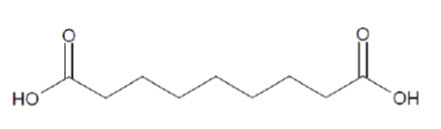
FINACEA (azelaic acid) Foam contains 15% (w/w) azelaic acid, a naturally-occurring saturated dicarboxylic acid and is suspended in an oil-in-water emulsion vehicle. It is for topical use. Chemically, azelaic acid is 1,7-heptanedicarboxylic acid. The structural formula of azelaic acid is:
Azelaic acid has a molecular formula of C9 H16 O4 and a molecular weight of 188.22.
The aluminum containers are filled with hydrophilic emulsion, crimped with a continuous spray valve, and pressurized with propellants consisting of propane, butane, and isobutane. Each gram of FINACEA Foam, 15% contains 0.15 g of azelaic acid. FINACEA Foam also contains benzoic acid (as a preservative), cetostearyl alcohol, dimethyl isosorbide, medium-chain triglycerides, methylcellulose, mono- and di-glycerides, polyoxyl 40 stearate, polysorbate 80, propylene glycol, purified water, sodium hydroxide (to adjust pH), and xanthan gum as inactive ingredients.
5.3 Flammability
The propellant in FINACEA Foam is flammable. Instruct the patient to avoid fire, flame, and smoking during and immediately following application. Do not puncture and/or incinerate the containers. Do not expose containers to heat and/or store at temperatures above 120°F (49°C).
8.4 Pediatric Use
The safety and efficacy of FINACEA Foam have not been established in pediatric patients.
8.5 Geriatric Use
Of the total number of subjects in clinical studies of FINACEA Foam, 18.8 percent were 65 and over, while 7.2 percent were 75 and over. No overall differences in safety or effectiveness were observed between these subjects and younger subjects, and other reported clinical experience has not identified differences in responses between the elderly and younger patients, but greater sensitivity of some older individuals cannot be ruled out.
14 Clinical Studies
The efficacy and safety of FINACEA Foam was evaluated in two multicenter, randomized, double-blind, vehicle-controlled, 12-week clinical trials (Trials 1 and 2) in subjects with papulopustular rosacea, with a mean lesion count of 21.3 (range 12 to 50) inflammatory papules and pustules. A total of 1362 (active: 681; vehicle: 681) subjects aged 19 to 92 years (mean age = 50.6 years), 95.7% Caucasian, and 73.4% female participated in the trials. The following subjects were excluded: a) those with ocular rosacea, phymatous rosacea or plaque-type rosacea lesions; b) those with rosacea that requires systemic treatment; c) those who are known non-responders to azelaic acid, and d) those with a known hypersensitivity to any ingredients of the study drug. FINACEA Foam or its vehicle were to be applied twice daily for 12 weeks; no other topical or systemic medication affecting the course of rosacea and/or evaluability was to be used during the studies. Subjects were instructed to avoid any food and beverages that, by their own experience, may provoke erythema, flushing and blushing, including spicy food, hot drinks and alcoholic beverages during the study. Subjects were also instructed to avoid use of products which may cause local irritation such as soaps, alcohol-containing cleansers, tinctures and astringents, abrasives and peeling agents during the study.
The efficacy endpoints were 1) nominal change in inflammatory lesion count from baseline and 2) success defined as a score of "clear" or "minimal" with at least 2-step reduction from baseline on a 5-point Investigator's Global Assessment (IGA). Details on IGA are specified below:
| Clear | no papules and/or pustules; no erythema |
| Minimal | rare papules and/or pustules; faint, up to but not including mild erythema |
| Mild | few papules and/or pustules; mild erythema |
| Moderate | pronounced number of papules and/or pustules, but less than numerous papules and/or pustules; moderate erythema |
| Severe | numerous papules and/or pustules, occasionally with confluent areas of inflamed lesions; moderate to severe erythema |
FINACEA Foam was superior to its vehicle in the treatment of rosacea in reducing the number of inflammatory papules and pustules and demonstrating success according to IGA at the end of treatment (Table 2).
| Trial 1 | Trial 2 | |||
|---|---|---|---|---|
| FINACEA Foam, 15% | Vehicle | FINACEA Foam, 15% | Vehicle | |
| N=483 | N=478 | N=198 | N=203 | |
| IGA success rate | 32.1% | 23.4% | 43.4% | 32.5% |
| Mean nominal change in inflammatory lesion count from baseline | -13.2 | -10.3 | -13.3 | -9.5 |
4 Contraindications
None.
6 Adverse Reactions
The following adverse reactions are described elsewhere in the prescribing information:
- Hypopigmentation [see Warnings and Precautions (5.1)].
- Eye and Mucous Membranes Irritation [see Warnings and Precautions (5.2)].
5.1 Hypopigmentation
There have been reports of hypopigmentation after use of azelaic acid. Because azelaic acid has not been well studied in patients with dark complexion, monitor these patients for early signs of hypopigmentation.
12.2 Pharmacodynamics
The efficacy of FINACEA Foam is being driven by local mechanisms of azelaic acid within the skin.
12.3 Pharmacokinetics
Pharmacokinetics of azelaic acid and its metabolite pimelic acid was assessed in 21 adult subjects with moderate papulopustular rosacea with a minimum of 15 and no more than 50 inflammatory lesions (papules and/or pustules). Endogenous plasma concentrations of azelaic acid (range <1-105 ng/mL) and pimelic acid (range 0.69-27 ng/mL) were measured over various time points over 2 days prior to treatment initiation. The endogenous plasma concentrations varied widely across subjects and the mean ± SD values of endogenous azelaic acid plasma concentrations ranged between 4.5 ± 2.4 ng/mL and 14.6 ± 5.6 ng/mL and pimelic acid plasma concentrations ranged between 2.2 ± 1.1 ng/mL and 3.7 ± 3.1 ng/mL.
Following topical dermal applications of a mean dose of 0.94 g of FINACEA Foam (141 mg azelaic acid) twice daily for 7 consecutive days, systemic concentrations of azelaic acid were at steady state by Day 5. On Day 7, a wide range of maximum azelaic acid (22.2 to 90.1 ng/mL) and pimelic acid (2.3-16.9 ng/mL) plasma concentrations (Cmax) was also observed after treatment with FINACEA Foam. The mean ± SD Cmax for azelaic acid and pimelic acid were 51.8 ± 18.5 ng/mL and 5.0 ± 3.0 ng/mL, respectively. The mean ± SD systemic exposure of azelaic acid and pimelic acid within a dosing interval (AUC0-12h) were 442.0 ± 177.6 ng.h/mL and 43.4 ± 15.4 ng.h/mL, respectively.
Azelaic acid is mainly excreted unchanged in the urine, but undergoes some ß-oxidation to shorter chain dicarboxylic acids.
1 Indications and Usage
FINACEA Foam, 15% is indicated for topical treatment of the inflammatory papules and pustules of mild to moderate rosacea.
12.1 Mechanism of Action
The mechanism(s) by which azelaic acid interferes with the pathogenic events in rosacea are unknown.
5 Warnings and Precautions
- Hypopigmentation: Isolated cases of hypopigmentation occurred after azelaic acid use. Monitor patients with dark complexion for early signs of hypopigmentation (5.1)
- Eye and Mucous Membrane Irritation: Azelaic acid has been reported to cause irritation of the eyes. Avoid contact with the eyes and mucous membranes. (5.2)
- Flammability: Contents are flammable. Instruct the patient to avoid fire, flame, and smoking during and immediately following application. (5.3)
2 Dosage and Administration
- Shake well before use.
- Cleanse affected area(s) using only very mild soaps or soapless cleansing lotion and pat dry with a soft towel before application of FINACEA Foam.
- Apply FINACEA Foam twice daily (morning and evening) to the entire facial area (cheeks, chin, forehead, and nose). For a single application, dispense the smallest amount of foam necessary to adequately cover the affected area(s) with a thin layer.
- Use FINACEA Foam continuously over 12 weeks.
- Wash hands immediately following application of FINACEA Foam.
- Cosmetics may be applied after the application of FINACEA Foam has dried.
- Reassess the diagnosis if no improvement is observed upon completing 12 weeks of therapy.
- Avoid the use of occlusive dressings or wrappings.
- Instruct patients to avoid use of alcoholic cleansers, tinctures and astringents, abrasives and peeling agents.
- For topical use.
- Not for oral, ophthalmic or intravaginal use.
3 Dosage Forms and Strengths
Each gram of FINACEA (azelaic acid) Foam contains 0.15 g of azelaic acid (15% w/w) in a white to off-white foam.
6.2 Postmarketing Experience
Hypersensitivity, rash and worsening of asthma have been reported from the postmarketing experience of azelaic acid-containing formulations. Because these reactions are reported voluntarily from a population of uncertain size, it is not always possible to reliably estimate their frequency or establish a causal relationship to drug exposure.
6.1 Clinical Trials Experience
Because clinical trials are conducted under widely varying conditions, adverse reaction rates observed in the clinical trials of a drug cannot be directly compared to rates in the clinical trials of another drug and may not reflect the rates observed in practice.
FINACEA Foam was evaluated for the treatment of papulopustular rosacea in two multicenter, randomized, double-blind, vehicle-controlled, 12-week clinical trials involving a total of 1362 (FINACEA Foam, 15%: 681; vehicle: 681) subjects. Overall, 95.7% of subjects were White, 73.4% were female, and the mean age was 50.6 years.
| System/Organ Class Preferred |
FINACEA Foam, 15% (N=681) n (%) |
Vehicle (N=681) n (%) |
|---|---|---|
| General disorders and application site conditions | ||
| Application site pain
"Application site pain" is a term used to describe
disagreeable skin sensations, including burning, stinging, paraesthesia and tenderness.
|
42 (6.2%) | 10 (1.5%) |
| Application site pruritus | 17 (2.5%) | 2 (0.3%) |
| Application site dryness | 5 (0.7%) | 5 (0.7%) |
| Application site erythema | 5 (0.7%) | 6 (0.9%) |
17 Patient Counseling Information
Inform patients using FINACEA Foam of the following:
5.2 Eye and Mucous Membranes Irritation
Azelaic acid has been reported to cause irritation of the eyes. Avoid contact with the eyes, mouth and other mucous membranes. If FINACEA Foam does come in contact with the eyes, wash the eyes with large amounts of water and consult a physician if eye irritation persists.
Principal Display Panel 15 G Can Carton
NDC 50222-303-91
Finacea®
(azelaic acid)
Foam, 15%
For Topical Use Only
Not for ophthalmic,
oral or intravaginal
use
Sample - Not For Sale
Rx only
Net Wt. 15 g
LEO®
Principal Display Panel 50 G Can Carton
NDC 50222-303-50
Finacea®
(azelaic acid)
Foam, 15%
For Topical Use Only
Not for ophthalmic,
oral or intravaginal use
Rx only
Net Wt. 50 g
LEO®
13.1 Carcinogenesis, Mutagenesis, Impairment of Fertility
In a 2-year dermal mouse carcinogenicity study, azelaic acid pre-foam emulsion was administered twice daily to CD-1 mice at topical doses of 5%, 15%, and 30% (500, 1500, and 3000 mg/kg/day azelaic acid). No drug-related tumors were noted at concentrations up to 30% azelaic acid (527 times the MRHD based on AUC comparison).
Azelaic acid was not mutagenic or clastogenic in a battery of in vitro [Ames assay, HGPRT assay in V79 cells (Chinese hamster lung cells), and chromosomal aberration assay in human lymphocytes] and in vivo (dominant lethal assay in mice and mouse micronucleus assay) genotoxicity tests.
Oral administration of azelaic acid at dose levels up to 2500 mg/kg/day (162 times the MRHD based on BSA comparison) did not affect fertility or reproductive performance in male or female rats.
Structured Label Content
Section 42229-5 (42229-5)
Local Tolerability Studies
In a 21-day cumulative irritation study under occlusive conditions, mild-to-moderate irritation was observed for azelaic acid pre-foam emulsion. In a human repeat insult patch test (HRIPT) study, no sensitization potential was observed for azelaic acid pre-foam emulsion.
Section 44425-7 (44425-7)
Storage and Handling
Store at 25◦C (77◦F); excursions permitted between 15–30◦C (59–86◦F) [See USP Controlled Room Temperature].
Flammable. Avoid fire, flame, or smoking during and immediately following application. Contents under pressure. Do not puncture or incinerate. Do not expose to heat or store at temperatures above 120°F (49°C).
11 Description (11 DESCRIPTION)
FINACEA (azelaic acid) Foam contains 15% (w/w) azelaic acid, a naturally-occurring saturated dicarboxylic acid and is suspended in an oil-in-water emulsion vehicle. It is for topical use. Chemically, azelaic acid is 1,7-heptanedicarboxylic acid. The structural formula of azelaic acid is:
Azelaic acid has a molecular formula of C9 H16 O4 and a molecular weight of 188.22.
The aluminum containers are filled with hydrophilic emulsion, crimped with a continuous spray valve, and pressurized with propellants consisting of propane, butane, and isobutane. Each gram of FINACEA Foam, 15% contains 0.15 g of azelaic acid. FINACEA Foam also contains benzoic acid (as a preservative), cetostearyl alcohol, dimethyl isosorbide, medium-chain triglycerides, methylcellulose, mono- and di-glycerides, polyoxyl 40 stearate, polysorbate 80, propylene glycol, purified water, sodium hydroxide (to adjust pH), and xanthan gum as inactive ingredients.
5.3 Flammability
The propellant in FINACEA Foam is flammable. Instruct the patient to avoid fire, flame, and smoking during and immediately following application. Do not puncture and/or incinerate the containers. Do not expose containers to heat and/or store at temperatures above 120°F (49°C).
8.4 Pediatric Use
The safety and efficacy of FINACEA Foam have not been established in pediatric patients.
8.5 Geriatric Use
Of the total number of subjects in clinical studies of FINACEA Foam, 18.8 percent were 65 and over, while 7.2 percent were 75 and over. No overall differences in safety or effectiveness were observed between these subjects and younger subjects, and other reported clinical experience has not identified differences in responses between the elderly and younger patients, but greater sensitivity of some older individuals cannot be ruled out.
14 Clinical Studies (14 CLINICAL STUDIES)
The efficacy and safety of FINACEA Foam was evaluated in two multicenter, randomized, double-blind, vehicle-controlled, 12-week clinical trials (Trials 1 and 2) in subjects with papulopustular rosacea, with a mean lesion count of 21.3 (range 12 to 50) inflammatory papules and pustules. A total of 1362 (active: 681; vehicle: 681) subjects aged 19 to 92 years (mean age = 50.6 years), 95.7% Caucasian, and 73.4% female participated in the trials. The following subjects were excluded: a) those with ocular rosacea, phymatous rosacea or plaque-type rosacea lesions; b) those with rosacea that requires systemic treatment; c) those who are known non-responders to azelaic acid, and d) those with a known hypersensitivity to any ingredients of the study drug. FINACEA Foam or its vehicle were to be applied twice daily for 12 weeks; no other topical or systemic medication affecting the course of rosacea and/or evaluability was to be used during the studies. Subjects were instructed to avoid any food and beverages that, by their own experience, may provoke erythema, flushing and blushing, including spicy food, hot drinks and alcoholic beverages during the study. Subjects were also instructed to avoid use of products which may cause local irritation such as soaps, alcohol-containing cleansers, tinctures and astringents, abrasives and peeling agents during the study.
The efficacy endpoints were 1) nominal change in inflammatory lesion count from baseline and 2) success defined as a score of "clear" or "minimal" with at least 2-step reduction from baseline on a 5-point Investigator's Global Assessment (IGA). Details on IGA are specified below:
| Clear | no papules and/or pustules; no erythema |
| Minimal | rare papules and/or pustules; faint, up to but not including mild erythema |
| Mild | few papules and/or pustules; mild erythema |
| Moderate | pronounced number of papules and/or pustules, but less than numerous papules and/or pustules; moderate erythema |
| Severe | numerous papules and/or pustules, occasionally with confluent areas of inflamed lesions; moderate to severe erythema |
FINACEA Foam was superior to its vehicle in the treatment of rosacea in reducing the number of inflammatory papules and pustules and demonstrating success according to IGA at the end of treatment (Table 2).
| Trial 1 | Trial 2 | |||
|---|---|---|---|---|
| FINACEA Foam, 15% | Vehicle | FINACEA Foam, 15% | Vehicle | |
| N=483 | N=478 | N=198 | N=203 | |
| IGA success rate | 32.1% | 23.4% | 43.4% | 32.5% |
| Mean nominal change in inflammatory lesion count from baseline | -13.2 | -10.3 | -13.3 | -9.5 |
4 Contraindications (4 CONTRAINDICATIONS)
None.
6 Adverse Reactions (6 ADVERSE REACTIONS)
The following adverse reactions are described elsewhere in the prescribing information:
- Hypopigmentation [see Warnings and Precautions (5.1)].
- Eye and Mucous Membranes Irritation [see Warnings and Precautions (5.2)].
5.1 Hypopigmentation
There have been reports of hypopigmentation after use of azelaic acid. Because azelaic acid has not been well studied in patients with dark complexion, monitor these patients for early signs of hypopigmentation.
12.2 Pharmacodynamics
The efficacy of FINACEA Foam is being driven by local mechanisms of azelaic acid within the skin.
12.3 Pharmacokinetics
Pharmacokinetics of azelaic acid and its metabolite pimelic acid was assessed in 21 adult subjects with moderate papulopustular rosacea with a minimum of 15 and no more than 50 inflammatory lesions (papules and/or pustules). Endogenous plasma concentrations of azelaic acid (range <1-105 ng/mL) and pimelic acid (range 0.69-27 ng/mL) were measured over various time points over 2 days prior to treatment initiation. The endogenous plasma concentrations varied widely across subjects and the mean ± SD values of endogenous azelaic acid plasma concentrations ranged between 4.5 ± 2.4 ng/mL and 14.6 ± 5.6 ng/mL and pimelic acid plasma concentrations ranged between 2.2 ± 1.1 ng/mL and 3.7 ± 3.1 ng/mL.
Following topical dermal applications of a mean dose of 0.94 g of FINACEA Foam (141 mg azelaic acid) twice daily for 7 consecutive days, systemic concentrations of azelaic acid were at steady state by Day 5. On Day 7, a wide range of maximum azelaic acid (22.2 to 90.1 ng/mL) and pimelic acid (2.3-16.9 ng/mL) plasma concentrations (Cmax) was also observed after treatment with FINACEA Foam. The mean ± SD Cmax for azelaic acid and pimelic acid were 51.8 ± 18.5 ng/mL and 5.0 ± 3.0 ng/mL, respectively. The mean ± SD systemic exposure of azelaic acid and pimelic acid within a dosing interval (AUC0-12h) were 442.0 ± 177.6 ng.h/mL and 43.4 ± 15.4 ng.h/mL, respectively.
Azelaic acid is mainly excreted unchanged in the urine, but undergoes some ß-oxidation to shorter chain dicarboxylic acids.
1 Indications and Usage (1 INDICATIONS AND USAGE)
FINACEA Foam, 15% is indicated for topical treatment of the inflammatory papules and pustules of mild to moderate rosacea.
12.1 Mechanism of Action
The mechanism(s) by which azelaic acid interferes with the pathogenic events in rosacea are unknown.
5 Warnings and Precautions (5 WARNINGS AND PRECAUTIONS)
- Hypopigmentation: Isolated cases of hypopigmentation occurred after azelaic acid use. Monitor patients with dark complexion for early signs of hypopigmentation (5.1)
- Eye and Mucous Membrane Irritation: Azelaic acid has been reported to cause irritation of the eyes. Avoid contact with the eyes and mucous membranes. (5.2)
- Flammability: Contents are flammable. Instruct the patient to avoid fire, flame, and smoking during and immediately following application. (5.3)
2 Dosage and Administration (2 DOSAGE AND ADMINISTRATION)
- Shake well before use.
- Cleanse affected area(s) using only very mild soaps or soapless cleansing lotion and pat dry with a soft towel before application of FINACEA Foam.
- Apply FINACEA Foam twice daily (morning and evening) to the entire facial area (cheeks, chin, forehead, and nose). For a single application, dispense the smallest amount of foam necessary to adequately cover the affected area(s) with a thin layer.
- Use FINACEA Foam continuously over 12 weeks.
- Wash hands immediately following application of FINACEA Foam.
- Cosmetics may be applied after the application of FINACEA Foam has dried.
- Reassess the diagnosis if no improvement is observed upon completing 12 weeks of therapy.
- Avoid the use of occlusive dressings or wrappings.
- Instruct patients to avoid use of alcoholic cleansers, tinctures and astringents, abrasives and peeling agents.
- For topical use.
- Not for oral, ophthalmic or intravaginal use.
3 Dosage Forms and Strengths (3 DOSAGE FORMS AND STRENGTHS)
Each gram of FINACEA (azelaic acid) Foam contains 0.15 g of azelaic acid (15% w/w) in a white to off-white foam.
6.2 Postmarketing Experience
Hypersensitivity, rash and worsening of asthma have been reported from the postmarketing experience of azelaic acid-containing formulations. Because these reactions are reported voluntarily from a population of uncertain size, it is not always possible to reliably estimate their frequency or establish a causal relationship to drug exposure.
6.1 Clinical Trials Experience
Because clinical trials are conducted under widely varying conditions, adverse reaction rates observed in the clinical trials of a drug cannot be directly compared to rates in the clinical trials of another drug and may not reflect the rates observed in practice.
FINACEA Foam was evaluated for the treatment of papulopustular rosacea in two multicenter, randomized, double-blind, vehicle-controlled, 12-week clinical trials involving a total of 1362 (FINACEA Foam, 15%: 681; vehicle: 681) subjects. Overall, 95.7% of subjects were White, 73.4% were female, and the mean age was 50.6 years.
| System/Organ Class Preferred |
FINACEA Foam, 15% (N=681) n (%) |
Vehicle (N=681) n (%) |
|---|---|---|
| General disorders and application site conditions | ||
| Application site pain
"Application site pain" is a term used to describe
disagreeable skin sensations, including burning, stinging, paraesthesia and tenderness.
|
42 (6.2%) | 10 (1.5%) |
| Application site pruritus | 17 (2.5%) | 2 (0.3%) |
| Application site dryness | 5 (0.7%) | 5 (0.7%) |
| Application site erythema | 5 (0.7%) | 6 (0.9%) |
17 Patient Counseling Information (17 PATIENT COUNSELING INFORMATION)
Inform patients using FINACEA Foam of the following:
5.2 Eye and Mucous Membranes Irritation
Azelaic acid has been reported to cause irritation of the eyes. Avoid contact with the eyes, mouth and other mucous membranes. If FINACEA Foam does come in contact with the eyes, wash the eyes with large amounts of water and consult a physician if eye irritation persists.
Principal Display Panel 15 G Can Carton (PRINCIPAL DISPLAY PANEL - 15 g Can Carton)
NDC 50222-303-91
Finacea®
(azelaic acid)
Foam, 15%
For Topical Use Only
Not for ophthalmic,
oral or intravaginal
use
Sample - Not For Sale
Rx only
Net Wt. 15 g
LEO®
Principal Display Panel 50 G Can Carton (PRINCIPAL DISPLAY PANEL - 50 g Can Carton)
NDC 50222-303-50
Finacea®
(azelaic acid)
Foam, 15%
For Topical Use Only
Not for ophthalmic,
oral or intravaginal use
Rx only
Net Wt. 50 g
LEO®
13.1 Carcinogenesis, Mutagenesis, Impairment of Fertility
In a 2-year dermal mouse carcinogenicity study, azelaic acid pre-foam emulsion was administered twice daily to CD-1 mice at topical doses of 5%, 15%, and 30% (500, 1500, and 3000 mg/kg/day azelaic acid). No drug-related tumors were noted at concentrations up to 30% azelaic acid (527 times the MRHD based on AUC comparison).
Azelaic acid was not mutagenic or clastogenic in a battery of in vitro [Ames assay, HGPRT assay in V79 cells (Chinese hamster lung cells), and chromosomal aberration assay in human lymphocytes] and in vivo (dominant lethal assay in mice and mouse micronucleus assay) genotoxicity tests.
Oral administration of azelaic acid at dose levels up to 2500 mg/kg/day (162 times the MRHD based on BSA comparison) did not affect fertility or reproductive performance in male or female rats.
Advanced Ingredient Data
Raw Label Data
All Sections (JSON)
Additional Information
Back to search View SPL set listing Open on DailyMed ↗
Source: dailymed · Ingested: 2026-02-15T11:35:39.707550 · Updated: 2026-03-14T21:44:05.617922