Osphena
9accbcc9-78ee-4f84-9b7e-704f2ab1c413
34391-3
HUMAN PRESCRIPTION DRUG LABEL
Drug Facts
Composition & Product
Identifiers & Packaging
Indications and Usage
OSPHENA is indicated for:
Dosage and Administration
OSPHENA is an estrogen agonist/antagonist which has agonistic effects on the endometrium [see Warnings and Precautions (5.2) ]. Use OSPHENA for the shortest duration consistent with treatment goals and risks for the individual woman. Reevaluate postmenopausal women periodically as clinically appropriate to determine if treatment is still necessary.
Contraindications
OSPHENA is contraindicated in women with any of the following conditions: Undiagnosed abnormal genital bleeding. Estrogen-dependent neoplasia. Active DVT, PE, or a history of these conditions. Active arterial thromboembolic disease (for example, stroke and MI), or a history of these conditions. Hypersensitivity (for example, angioedema, urticaria, rash, pruritus) to OSPHENA or any ingredients. OSPHENA is contraindicated in women who are or may become pregnant. OSPHENA may cause fetal harm when administered to a pregnant woman. Ospemifene was embryo-fetal lethal with labor difficulties and increased pup deaths in rats at doses below clinical exposures, and embryo-fetal lethal in rabbits at 10 times the clinical exposure based on mg/m 2 . If this drug is used during pregnancy, or if a woman becomes pregnant while taking this drug, she should be apprised of the potential hazard to a fetus.
Warnings and Precautions
Venous Thromboembolism: Risk of DVT and PE ( 5.1 ) Known, suspected, or history of breast cancer ( 5.2 ) Severe Hepatic Impairment ( 5.3 , 8.7 , 12.3 )
Adverse Reactions
The following serious adverse reactions are discussed elsewhere in the labeling: Cardiovascular Disorders [see Boxed Warning , Warnings and Precautions (5.1) ] Malignant Neoplasms [see Boxed Warning , Warnings and Precautions (5.2) ]
Drug Interactions
OSPHENA is primarily metabolized by CYP3A4 and CYP2C9. CYP2C19 and other pathways contribute to the metabolism of ospemifene.
How Supplied
OSPHENA tablets are white to off-white, oval, biconvex, film coated tablets containing 60 mg of ospemifene and engraved with "60" on one side. They are available as follows: NDC 55494-580-90 Bottle of 90 tablets NDC 55494-580-30 Bottle of 30 tablets
Storage and Handling
Store at 20ºC to 25ºC (68ºF to 77ºF); excursions permitted to 15ºC to 30ºC (59ºF to 86ºF) [see USP Controlled Room Temperature].
Description
WARNING: ENDOMETRIAL CANCER and CARDIOVASCULAR DISORDERS See full prescribing information for complete boxed warning. OSPHENA is an estrogen agonist/antagonist with tissue selective effects. In the endometrium, OSPHENA has estrogen agonistic effects. There is an increased risk of endometrial cancer in a woman with a uterus who uses unopposed estrogens. Perform adequate diagnostic measures, including directed and random endometrial sampling when indicated, to rule out malignancy in postmenopausal women with undiagnosed persistent or recurring abnormal genital bleeding [see Warnings and Precautions (5.2) ]. Estrogen-alone therapy has an increased risk of stroke and deep vein thrombosis (DVT). OSPHENA 60 mg had cerebral thromboembolic and hemorrhagic stroke incidence rates of 1.13 and 3.39 per thousand women years, respectively vs. 3.15 and 0 per thousand women years, respectively with placebo. For deep vein thrombosis, the incidence rate for OSPHENA 60 mg is 2.26 per thousand women years (2 reported cases) vs. 3.15 per thousand women years (1 reported case) with placebo [see Warnings and Precautions (5.1) ].
Medication Information
Warnings and Precautions
Venous Thromboembolism: Risk of DVT and PE ( 5.1 ) Known, suspected, or history of breast cancer ( 5.2 ) Severe Hepatic Impairment ( 5.3 , 8.7 , 12.3 )
Indications and Usage
OSPHENA is indicated for:
Dosage and Administration
OSPHENA is an estrogen agonist/antagonist which has agonistic effects on the endometrium [see Warnings and Precautions (5.2) ]. Use OSPHENA for the shortest duration consistent with treatment goals and risks for the individual woman. Reevaluate postmenopausal women periodically as clinically appropriate to determine if treatment is still necessary.
Contraindications
OSPHENA is contraindicated in women with any of the following conditions: Undiagnosed abnormal genital bleeding. Estrogen-dependent neoplasia. Active DVT, PE, or a history of these conditions. Active arterial thromboembolic disease (for example, stroke and MI), or a history of these conditions. Hypersensitivity (for example, angioedema, urticaria, rash, pruritus) to OSPHENA or any ingredients. OSPHENA is contraindicated in women who are or may become pregnant. OSPHENA may cause fetal harm when administered to a pregnant woman. Ospemifene was embryo-fetal lethal with labor difficulties and increased pup deaths in rats at doses below clinical exposures, and embryo-fetal lethal in rabbits at 10 times the clinical exposure based on mg/m 2 . If this drug is used during pregnancy, or if a woman becomes pregnant while taking this drug, she should be apprised of the potential hazard to a fetus.
Adverse Reactions
The following serious adverse reactions are discussed elsewhere in the labeling: Cardiovascular Disorders [see Boxed Warning , Warnings and Precautions (5.1) ] Malignant Neoplasms [see Boxed Warning , Warnings and Precautions (5.2) ]
Drug Interactions
OSPHENA is primarily metabolized by CYP3A4 and CYP2C9. CYP2C19 and other pathways contribute to the metabolism of ospemifene.
Storage and Handling
Store at 20ºC to 25ºC (68ºF to 77ºF); excursions permitted to 15ºC to 30ºC (59ºF to 86ºF) [see USP Controlled Room Temperature].
How Supplied
OSPHENA tablets are white to off-white, oval, biconvex, film coated tablets containing 60 mg of ospemifene and engraved with "60" on one side. They are available as follows: NDC 55494-580-90 Bottle of 90 tablets NDC 55494-580-30 Bottle of 30 tablets
Description
WARNING: ENDOMETRIAL CANCER and CARDIOVASCULAR DISORDERS See full prescribing information for complete boxed warning. OSPHENA is an estrogen agonist/antagonist with tissue selective effects. In the endometrium, OSPHENA has estrogen agonistic effects. There is an increased risk of endometrial cancer in a woman with a uterus who uses unopposed estrogens. Perform adequate diagnostic measures, including directed and random endometrial sampling when indicated, to rule out malignancy in postmenopausal women with undiagnosed persistent or recurring abnormal genital bleeding [see Warnings and Precautions (5.2) ]. Estrogen-alone therapy has an increased risk of stroke and deep vein thrombosis (DVT). OSPHENA 60 mg had cerebral thromboembolic and hemorrhagic stroke incidence rates of 1.13 and 3.39 per thousand women years, respectively vs. 3.15 and 0 per thousand women years, respectively with placebo. For deep vein thrombosis, the incidence rate for OSPHENA 60 mg is 2.26 per thousand women years (2 reported cases) vs. 3.15 per thousand women years (1 reported case) with placebo [see Warnings and Precautions (5.1) ].
Section 42229-5
Endometrial Cancer
OSPHENA is an estrogen agonist/antagonist with tissue selective effects. In the endometrium, OSPHENA has estrogen agonistic effects. There is an increased risk of endometrial cancer in a woman with a uterus who uses unopposed estrogens. Perform adequate diagnostic measures, including directed and random endometrial sampling when indicated, to rule out malignancy in postmenopausal women with undiagnosed persistent or recurring abnormal genital bleeding [see Warnings and Precautions (5.2)].
Section 42230-3
| This Patient Information has been approved by the U.S. Food and Drug Administration | Revised: 02/2025 | |||
|
PATIENT INFORMATION
OSPHENA ®(os fee' nah) (ospemifene) tablets, for oral use |
||||
| Read this Patient Information before you start taking OSPHENA and each time you get a refill. There may be new information. This information does not take the place of talking to your healthcare provider about your medical condition or your treatment. | ||||
What is the most important information I should know about OSPHENA?
|
||||
What is OSPHENA?
|
||||
|
Who should not take OSPHENA?
Do not start taking OSPHENA if you:
|
||||
|
What should I tell my healthcare provider before taking OSPHENA?
Before you take OSPHENA, tell your healthcare provider about all of your medical conditions, including if you:
Know the medicines you take. Keep a list of your medicines and show it to your healthcare provider and pharmacist each time you get a new medicine. |
||||
How should I take OSPHENA?
|
||||
|
What are the possible side effects of OSPHENA?
OSPHENA may cause serious side effects, including: Serious, but less common side effects include: |
||||
|
|
|
||
Call your healthcare provider right away if you get any of the following warning signs or any other unusual symptoms that concern you:
|
||||
|
|
|||
| These are not all the possible side effects of OSPHENA. For more information, ask your healthcare provider or pharmacist. Tell your healthcare provider about any side effects that bother you or do not go away.
Call your doctor for medical advice about side effects. You may report side effects to FDA at 1-800-FDA-1088. What can I do to lower my chances of a serious side effect with OSPHENA?
|
||||
How should I store OSPHENA?
|
||||
|
General information about the safe and effective use of OSPHENA.
Medicines are sometimes prescribed for purposes other than those listed in a Patient Information leaflet. Do not take OSPHENA for a condition for which it was not prescribed. Do not give OSPHENA to other people, even if they have the same symptoms you have. It may harm them. This Patient Information leaflet summarizes the most important information about OSPHENA. If you would like more information, talk with your healthcare provider or pharmacist. You can ask your healthcare provider or pharmacist for information about OSPHENA that is written for health professionals. |
||||
|
What are the ingredients in OSPHENA?
Active Ingredient : ospemifene. Inactive Ingredients: colloidal silicon dioxide, hypromellose, lactose monohydrate, magnesium stearate, mannitol, microcrystalline cellulose, polyethylene glycol, povidone, pregelatinized starch, sodium starch glycolate, titanium dioxide, and triacetin. Distributed by: Duchesnay USA, Inc. Princeton, NJ 08540 Made in UK For more information, go to www.osphena.com or call Duchesnay Inc. at 1-855-OSPHENA (1-855-677-4362). |
Section 43683-2
Warnings and Precautions, Malignant Neoplasms ( 5.2) 02/2025
7.3 Rifampin
Rifampin, a strong CYP3A4 / moderate CYP2C9 / moderate CYP2C19 inducer, decreases the systemic exposure of ospemifene by 58%. Therefore, co-administration of OSPHENA with drugs such as rifampin which induce CYP3A4, CYP2C9 and/or CYP2C19 activity would be expected to decrease the systemic exposure of ospemifene, which may decrease the clinical effect [see Clinical Pharmacology (12.3)] .
7.5 Warfarin
Repeated administration of ospemifene had no effect on the pharmacokinetics of a single 10 mg dose of warfarin. No study was conducted with multiple doses of warfarin. The effect of ospemifene on clotting time such as the International Normalized Ratio (INR) or prothrombin time (PT) was not studied [see Clinical Pharmacology (12.3)] .
11 Description
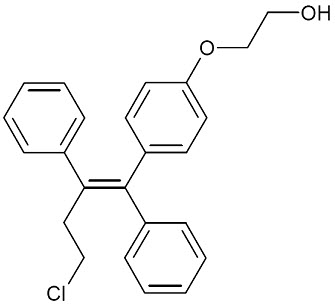
OSPHENA is an estrogen agonist/antagonist. OSPHENA is not a hormone. The chemical structure of ospemifene is shown in Figure 1.
| Figure 1: Chemical Structure |
The chemical designation is Z-2-[4-(4-chloro-1,2-diphenylbut-1-enyl)phenoxy]ethanol, and has the empirical formula C 24H 23ClO 2, which corresponds to a molecular weight of 378.9. Ospemifene is a white to off-white crystalline powder that is insoluble in water and soluble in ethanol.
Each OSPHENA tablet contains 60 mg of ospemifene. Inactive ingredients include colloidal silicon dioxide, hypromellose, lactose monohydrate, magnesium stearate, mannitol, microcrystalline cellulose, polyethylene glycol, povidone, pregelatinized starch, sodium starch glycolate, titanium dioxide, and triacetin.
7.2 Fluconazole
Do not use OSPHENA concomitantly with fluconazole, a moderate CYP3A / strong CYP2C9 / moderate CYP2C19 inhibitor. Fluconazole increases the systemic exposure of ospemifene by 2.7-fold. Administration of fluconazole with ospemifene may increase the risk of OSPHENA-related adverse reactions [see Clinical Pharmacology (12.3)] .
7.4 Ketoconazole
Ketoconazole, a strong CYP3A4 inhibitor, increases the systemic exposure of ospemifene by 1.4-fold. Administration of ketoconazole chronically with ospemifene may increase the risk of OSPHENA-related adverse reactions [see Clinical Pharmacology (12.3)] .
16.1 How Supplied
OSPHENA tablets are white to off-white, oval, biconvex, film coated tablets containing 60 mg of ospemifene and engraved with "60" on one side. They are available as follows:
| NDC 55494-580-90 | Bottle of 90 tablets |
| NDC 55494-580-30 | Bottle of 30 tablets |
8.4 Pediatric Use
OSPHENA is not indicated in pediatric patients. Clinical studies have not been conducted in the pediatric population.
8.5 Geriatric Use
Of the 2209 OSPHENA-treated women enrolled in the ten phase 2/3 trials of OSPHENA, >19 percent were 65 years of age or older. No clinically meaningful differences in safety or effectiveness were observed between these women and younger women less than 65 years of age.
14 Clinical Studies
The effectiveness and safety of OSPHENA on moderate to severe symptoms of vulvar and vaginal atrophy in postmenopausal women were examined in four placebo-controlled clinical trials (three 12-week efficacy trials and one 52-week long-term safety trial). In the four placebo-controlled trials, a total of 1100 women received placebo and 1416 women received 60 mg OSPHENA.
Trial 1 was a 12-week, randomized, double-blind, placebo-controlled, parallel-group trial that enrolled 826 generally healthy postmenopausal women between 41 to 81 years of age (mean 59 years of age) who at baseline had ≤5 percent superficial cells on a vaginal smear, a vaginal pH >5.0, and who identified at least one moderate to severe vaginal symptom that was considered the most bothersome to her (vaginal dryness, pain during intercourse [dyspareunia], or vaginal irritation/itching). Treatment groups included 30 mg ospemifene (n=282), 60 mg ospemifene (n=276), and placebo (n=268). All women were assessed for improvement in the mean change from baseline to Week 12 for the co-primary efficacy variables of: most bothersome symptom (MBS) of vulvar and vaginal atrophy (defined as the individual moderate to severe symptom that was identified by the woman as most bothersome at baseline), percentage of vaginal superficial and vaginal parabasal cells on a vaginal smear, and vaginal pH. Following completion of 12-weeks, women with an intact uterus were allowed to enroll in a 40-week double-blind extension study, and women without an intact uterus were allowed to enroll in a 52-week open-label extension study.
Trial 2 was a 12-week, randomized, double-blind, placebo-controlled, parallel-group trial that enrolled 919 generally healthy postmenopausal women between 41 to 79 years of age (mean 59 years of age) who at baseline had ≤5 percent superficial cells on a vaginal smear, a vaginal pH >5.0, and who identified either moderate to severe vaginal dryness (dryness cohort) or moderate to severe dyspareunia (dyspareunia cohort) as most bothersome to her at baseline. Treatment groups included 60 mg ospemifene (n=463) and placebo (n=456). Primary endpoints and study conduct were similar to those in Trial 1.
Trial 3 was a 12-week, randomized, double-blind, placebo-controlled, parallel-group trial that enrolled 631 generally healthy postmenopausal women between 40 and 80 years of age (mean 60 years of age) who at baseline had ≤5 percent superficial cells on a vaginal smear, a vaginal pH >5.0, and had moderate to severe vaginal dryness as the self-reported most bothersome symptom of VVA. Treatment groups included 60 mg ospemifene (n=316) and placebo (n=315). Primary endpoints and study conduct were similar to those in Trials 1 and 2. In Trial 3, 52 healthy postmenopausal women in the 60 mg ospemifene treatment group and 53 in placebo received treatment for up to 52-weeks.
Trial 4 was a 52-week, randomized, double-blind, placebo-controlled, long-term safety trial that enrolled 426 generally healthy postmenopausal women between 49 to 79 years of age (mean 62 years of age) with an intact uterus. Treatment groups included 60 mg ospemifene (n=363) and placebo (n=63).
4 Contraindications
OSPHENA is contraindicated in women with any of the following conditions:
- Undiagnosed abnormal genital bleeding.
- Estrogen-dependent neoplasia.
- Active DVT, PE, or a history of these conditions.
- Active arterial thromboembolic disease (for example, stroke and MI), or a history of these conditions.
- Hypersensitivity (for example, angioedema, urticaria, rash, pruritus) to OSPHENA or any ingredients.
- OSPHENA is contraindicated in women who are or may become pregnant. OSPHENA may cause fetal harm when administered to a pregnant woman. Ospemifene was embryo-fetal lethal with labor difficulties and increased pup deaths in rats at doses below clinical exposures, and embryo-fetal lethal in rabbits at 10 times the clinical exposure based on mg/m 2. If this drug is used during pregnancy, or if a woman becomes pregnant while taking this drug, she should be apprised of the potential hazard to a fetus.
6 Adverse Reactions
The following serious adverse reactions are discussed elsewhere in the labeling:
- Cardiovascular Disorders [see Boxed Warning, Warnings and Precautions (5.1)]
- Malignant Neoplasms [see Boxed Warning, Warnings and Precautions (5.2)]
7 Drug Interactions
OSPHENA is primarily metabolized by CYP3A4 and CYP2C9. CYP2C19 and other pathways contribute to the metabolism of ospemifene.
8.6 Renal Impairment
The pharmacokinetics of ospemifene in women with severe renal impairment (CrCL <30 mL/min) was similar to those in women with normal renal function [see Clinical Pharmacology (12.3)].
No dose adjustment of OSPHENA is required in women with renal impairment.
12.2 Pharmacodynamics
Generally, a serum estrogen concentration does not predict an individual woman’s therapeutic response to OSPHENA nor her risk for adverse outcomes.
8.7 Hepatic Impairment
The pharmacokinetics of ospemifene has not been studied in women with severe hepatic impairment (Child-Pugh Class C); therefore, do not use OSPHENA in women with severe hepatic impairment [see Warnings and Precautions (5.3), and Clinical Pharmacology (12.3)].
No clinically important pharmacokinetic differences with OSPHENA were observed between women with mild to moderate hepatic impairment and healthy women [see Clinical Pharmacology (12.3)].
No dose adjustment of OSPHENA is required in women with mild (Child-Pugh Class A) or moderate (Child-Pugh Class B) hepatic impairment.
1 Indications and Usage
OSPHENA is indicated for:
12.1 Mechanism of Action
OSPHENA is an estrogen receptor agonist/antagonist with tissue selective effects. Its biological actions are mediated through binding to estrogen receptors. This binding results in activation of estrogenic pathways in some tissues (agonism) and blockade of estrogenic pathways in others (antagonism).
16.2 Storage and Handling
Store at 20ºC to 25ºC (68ºF to 77ºF); excursions permitted to 15ºC to 30ºC (59ºF to 86ºF) [see USP Controlled Room Temperature].
5 Warnings and Precautions
2 Dosage and Administration
OSPHENA is an estrogen agonist/antagonist which has agonistic effects on the endometrium [see Warnings and Precautions (5.2)].
Use OSPHENA for the shortest duration consistent with treatment goals and risks for the individual woman. Reevaluate postmenopausal women periodically as clinically appropriate to determine if treatment is still necessary.
3 Dosage Forms and Strengths
OSPHENA tablets are white to off-white, oval, biconvex, film coated tablets containing 60 mg of ospemifene and engraved with "60" on one side.
5.1 Cardiovascular Disorders
Manage appropriately any risk factors for cardiovascular disorders, arterial vascular disease (for example, hypertension, diabetes mellitus, tobacco use, hypercholesterolemia, and obesity) and/or venous thromboembolism (VTE) (for example, personal history or family history of VTE, obesity, and systemic lupus erythematosus).
6.2 Postmarketing Experience
The following adverse reactions have been identified during post-approval use of ospemifene. Because these reactions are reported voluntarily from a population of uncertain size, it is not possible to reliably estimate their frequency or establish a causal relationship to drug exposure.
Neoplasms Benign, Malignant and Unspecified (incl. cysts and polyps): endometrial hyperplasia, endometrial cancer
Immune System Disorders: allergic conditions including hypersensitivity, angioedema
Nervous System Disorders: headache
Vascular Disorders: deep vein thrombosis, thrombosis, pulmonary embolism
Skin and Subcutaneous Tissue Disorders: rash, rash erythematous, rash generalized, pruritus, urticaria
5.3 Severe Hepatic Impairment
OSPHENA should not be used in women with severe hepatic impairment [see Use in Specific Populations (8.7), and Clinical Pharmacology (12.3)] .
6.1 Clinical Trials Experience
Because clinical trials are conducted under widely varying conditions, adverse reaction rates observed in the clinical trials of a drug cannot be directly compared to rates in the clinical trials of another drug and may not reflect the rates observed in practice.
The safety of OSPHENA has been assessed in ten phase 2/3 trials (N=2209) with doses ranging from 5 to 90 mg per day. The duration of treatment in these studies ranged from 6 weeks to 15 months. The majority of women (N=1683) had treatment exposure up to 12 weeks; 847 had up to 52 weeks (1 year) of exposure.
The incidence rates of thromboembolic and hemorrhagic stroke were 1.13 per thousand women years (1 reported case of thromboembolic stroke) and 3.39 per thousand women years (3 reported cases of hemorrhagic stroke), respectively in OSPHENA 60 mg treatment group and 3.15 (1 case of thromboembolic stroke) and 0 per thousand women years, respectively in placebo. There were 2 reported cases of DVT among the 1459 women in the OSPHENA 60 mg treatment group and 1 case of DVT among the 1136 women in the placebo group.
Table 1 lists adverse reactions occurring more frequently in the OSPHENA 60 mg treatment group than in placebo and at a frequency ≥1% in the 12-week, double-blind, placebo-controlled clinical trials. Table 2 lists adverse reactions occurring more frequently in the OSPHENA 60 mg treatment group than in placebo and at a frequency ≥1% in all clinical trials up to 52-weeks.
| Ospemifene 60 mg
(N=1459) % |
Placebo
(N=1136) % |
|
|---|---|---|
| Vascular Disorders | ||
| Hot flush | 6.5 | 2.6 |
| Reproductive System and Breast Disorders | ||
| Vaginal discharge | 3.8 | 0.4 |
| Musculoskeletal and Connective Tissue Disorders | ||
| Muscle spasms | 1.8 | 0.6 |
| Skin and Subcutaneous Tissue Disorders | ||
| Hyperhidrosis | 1.1 | 0.2 |
| Ospemifene 60 mg
All Trials (N=847) % |
Placebo
(N=165) % |
|
|---|---|---|
| Nervous System Disorders | ||
| Headaches | 2.8 | 2.4 |
| Vascular Disorders | ||
| Hot flush | 12.2 | 4.2 |
| Musculoskeletal and Connective Tissue Disorders | ||
| Muscle spasms | 4.5 | 2.4 |
| Skin and Subcutaneous Tissue Disorders | ||
| Hyperhidrosis | 2.5 | 1.8 |
| Night sweats | 1.2 | 0.0 |
| Reproductive System and Breast Disorders | ||
| Vaginal discharge | 6.0 | 0.6 |
| Vaginal hemorrhage | 1.3 | 0.0 |
7.6 Highly Protein Bound Drugs
Ospemifene is more than 99% bound to serum proteins and might affect the protein binding of other drugs. Use of OSPHENA with other drug products that are highly protein-bound may lead to increased exposure of either that drug or ospemifene [see Clinical Pharmacology (12.3)] .
7.7 Multiple Enzyme Inhibition
Co-administration of OSPHENA with a drug known to inhibit CYP3A4 and CYP2C9 isoenzymes may increase the risk of OSPHENA-related adverse reactions.
17 Patient Counseling Information
Advise women to read the FDA-approved labeling (Patient Information).
7.1 Estrogens and Estrogen Agonist/antagonist
Do not use OSPHENA concomitantly with estrogens and estrogen agonists/antagonists. The safety of concomitant use of OSPHENA with estrogens and estrogen agonists/antagonists has not been studied.
Principal Display Panel 60 Mg Tablet Bottle Label
NDC 55494-580-90
90 Tablets
Osphena
®
(ospemifene) tablets
60 mg
For oral use only
DUCHESNAY
Rx only
Warning: Endometrial Cancer and Cardiovascular Disorders
WARNING: ENDOMETRIAL CANCER and CARDIOVASCULAR DISORDERS
See full prescribing information for complete boxed warning.
OSPHENA is an estrogen agonist/antagonist with tissue selective effects. In the endometrium, OSPHENA has estrogen agonistic effects. There is an increased risk of endometrial cancer in a woman with a uterus who uses unopposed estrogens. Perform adequate diagnostic measures, including directed and random endometrial sampling when indicated, to rule out malignancy in postmenopausal women with undiagnosed persistent or recurring abnormal genital bleeding [see Warnings and Precautions (5.2)].
Estrogen-alone therapy has an increased risk of stroke and deep vein thrombosis (DVT). OSPHENA 60 mg had cerebral thromboembolic and hemorrhagic stroke incidence rates of 1.13 and 3.39 per thousand women years, respectively vs. 3.15 and 0 per thousand women years, respectively with placebo. For deep vein thrombosis, the incidence rate for OSPHENA 60 mg is 2.26 per thousand women years (2 reported cases) vs. 3.15 per thousand women years (1 reported case) with placebo [see Warnings and Precautions (5.1)].
2.1 Treatment of Moderate to Severe Dyspareunia, A Symptom of Vulvar and Vaginal Atrophy, Due to Menopause
One 60 mg tablet taken orally with food once daily.
2.2 Treatment of Moderate to Severe Vaginal Dryness, A Symptom of Vulvar and Vaginal Atrophy, Due to Menopause
One 60 mg tablet taken orally with food once daily.
1.1 the Treatment of Moderate to Severe Dyspareunia, A Symptom of Vulvar and Vaginal Atrophy, Due to Menopause.
1.2 the Treatment of Moderate to Severe Vaginal Dryness, A Symptom of Vulvar and Vaginal Atrophy, Due to Menopause.
Structured Label Content
Section 42229-5 (42229-5)
Endometrial Cancer
OSPHENA is an estrogen agonist/antagonist with tissue selective effects. In the endometrium, OSPHENA has estrogen agonistic effects. There is an increased risk of endometrial cancer in a woman with a uterus who uses unopposed estrogens. Perform adequate diagnostic measures, including directed and random endometrial sampling when indicated, to rule out malignancy in postmenopausal women with undiagnosed persistent or recurring abnormal genital bleeding [see Warnings and Precautions (5.2)].
Section 42230-3 (42230-3)
| This Patient Information has been approved by the U.S. Food and Drug Administration | Revised: 02/2025 | |||
|
PATIENT INFORMATION
OSPHENA ®(os fee' nah) (ospemifene) tablets, for oral use |
||||
| Read this Patient Information before you start taking OSPHENA and each time you get a refill. There may be new information. This information does not take the place of talking to your healthcare provider about your medical condition or your treatment. | ||||
What is the most important information I should know about OSPHENA?
|
||||
What is OSPHENA?
|
||||
|
Who should not take OSPHENA?
Do not start taking OSPHENA if you:
|
||||
|
What should I tell my healthcare provider before taking OSPHENA?
Before you take OSPHENA, tell your healthcare provider about all of your medical conditions, including if you:
Know the medicines you take. Keep a list of your medicines and show it to your healthcare provider and pharmacist each time you get a new medicine. |
||||
How should I take OSPHENA?
|
||||
|
What are the possible side effects of OSPHENA?
OSPHENA may cause serious side effects, including: Serious, but less common side effects include: |
||||
|
|
|
||
Call your healthcare provider right away if you get any of the following warning signs or any other unusual symptoms that concern you:
|
||||
|
|
|||
| These are not all the possible side effects of OSPHENA. For more information, ask your healthcare provider or pharmacist. Tell your healthcare provider about any side effects that bother you or do not go away.
Call your doctor for medical advice about side effects. You may report side effects to FDA at 1-800-FDA-1088. What can I do to lower my chances of a serious side effect with OSPHENA?
|
||||
How should I store OSPHENA?
|
||||
|
General information about the safe and effective use of OSPHENA.
Medicines are sometimes prescribed for purposes other than those listed in a Patient Information leaflet. Do not take OSPHENA for a condition for which it was not prescribed. Do not give OSPHENA to other people, even if they have the same symptoms you have. It may harm them. This Patient Information leaflet summarizes the most important information about OSPHENA. If you would like more information, talk with your healthcare provider or pharmacist. You can ask your healthcare provider or pharmacist for information about OSPHENA that is written for health professionals. |
||||
|
What are the ingredients in OSPHENA?
Active Ingredient : ospemifene. Inactive Ingredients: colloidal silicon dioxide, hypromellose, lactose monohydrate, magnesium stearate, mannitol, microcrystalline cellulose, polyethylene glycol, povidone, pregelatinized starch, sodium starch glycolate, titanium dioxide, and triacetin. Distributed by: Duchesnay USA, Inc. Princeton, NJ 08540 Made in UK For more information, go to www.osphena.com or call Duchesnay Inc. at 1-855-OSPHENA (1-855-677-4362). |
Section 43683-2 (43683-2)
Warnings and Precautions, Malignant Neoplasms ( 5.2) 02/2025
7.3 Rifampin
Rifampin, a strong CYP3A4 / moderate CYP2C9 / moderate CYP2C19 inducer, decreases the systemic exposure of ospemifene by 58%. Therefore, co-administration of OSPHENA with drugs such as rifampin which induce CYP3A4, CYP2C9 and/or CYP2C19 activity would be expected to decrease the systemic exposure of ospemifene, which may decrease the clinical effect [see Clinical Pharmacology (12.3)] .
7.5 Warfarin
Repeated administration of ospemifene had no effect on the pharmacokinetics of a single 10 mg dose of warfarin. No study was conducted with multiple doses of warfarin. The effect of ospemifene on clotting time such as the International Normalized Ratio (INR) or prothrombin time (PT) was not studied [see Clinical Pharmacology (12.3)] .
11 Description (11 DESCRIPTION)
OSPHENA is an estrogen agonist/antagonist. OSPHENA is not a hormone. The chemical structure of ospemifene is shown in Figure 1.
| Figure 1: Chemical Structure |
The chemical designation is Z-2-[4-(4-chloro-1,2-diphenylbut-1-enyl)phenoxy]ethanol, and has the empirical formula C 24H 23ClO 2, which corresponds to a molecular weight of 378.9. Ospemifene is a white to off-white crystalline powder that is insoluble in water and soluble in ethanol.
Each OSPHENA tablet contains 60 mg of ospemifene. Inactive ingredients include colloidal silicon dioxide, hypromellose, lactose monohydrate, magnesium stearate, mannitol, microcrystalline cellulose, polyethylene glycol, povidone, pregelatinized starch, sodium starch glycolate, titanium dioxide, and triacetin.
7.2 Fluconazole
Do not use OSPHENA concomitantly with fluconazole, a moderate CYP3A / strong CYP2C9 / moderate CYP2C19 inhibitor. Fluconazole increases the systemic exposure of ospemifene by 2.7-fold. Administration of fluconazole with ospemifene may increase the risk of OSPHENA-related adverse reactions [see Clinical Pharmacology (12.3)] .
7.4 Ketoconazole
Ketoconazole, a strong CYP3A4 inhibitor, increases the systemic exposure of ospemifene by 1.4-fold. Administration of ketoconazole chronically with ospemifene may increase the risk of OSPHENA-related adverse reactions [see Clinical Pharmacology (12.3)] .
16.1 How Supplied
OSPHENA tablets are white to off-white, oval, biconvex, film coated tablets containing 60 mg of ospemifene and engraved with "60" on one side. They are available as follows:
| NDC 55494-580-90 | Bottle of 90 tablets |
| NDC 55494-580-30 | Bottle of 30 tablets |
8.4 Pediatric Use
OSPHENA is not indicated in pediatric patients. Clinical studies have not been conducted in the pediatric population.
8.5 Geriatric Use
Of the 2209 OSPHENA-treated women enrolled in the ten phase 2/3 trials of OSPHENA, >19 percent were 65 years of age or older. No clinically meaningful differences in safety or effectiveness were observed between these women and younger women less than 65 years of age.
14 Clinical Studies (14 CLINICAL STUDIES)
The effectiveness and safety of OSPHENA on moderate to severe symptoms of vulvar and vaginal atrophy in postmenopausal women were examined in four placebo-controlled clinical trials (three 12-week efficacy trials and one 52-week long-term safety trial). In the four placebo-controlled trials, a total of 1100 women received placebo and 1416 women received 60 mg OSPHENA.
Trial 1 was a 12-week, randomized, double-blind, placebo-controlled, parallel-group trial that enrolled 826 generally healthy postmenopausal women between 41 to 81 years of age (mean 59 years of age) who at baseline had ≤5 percent superficial cells on a vaginal smear, a vaginal pH >5.0, and who identified at least one moderate to severe vaginal symptom that was considered the most bothersome to her (vaginal dryness, pain during intercourse [dyspareunia], or vaginal irritation/itching). Treatment groups included 30 mg ospemifene (n=282), 60 mg ospemifene (n=276), and placebo (n=268). All women were assessed for improvement in the mean change from baseline to Week 12 for the co-primary efficacy variables of: most bothersome symptom (MBS) of vulvar and vaginal atrophy (defined as the individual moderate to severe symptom that was identified by the woman as most bothersome at baseline), percentage of vaginal superficial and vaginal parabasal cells on a vaginal smear, and vaginal pH. Following completion of 12-weeks, women with an intact uterus were allowed to enroll in a 40-week double-blind extension study, and women without an intact uterus were allowed to enroll in a 52-week open-label extension study.
Trial 2 was a 12-week, randomized, double-blind, placebo-controlled, parallel-group trial that enrolled 919 generally healthy postmenopausal women between 41 to 79 years of age (mean 59 years of age) who at baseline had ≤5 percent superficial cells on a vaginal smear, a vaginal pH >5.0, and who identified either moderate to severe vaginal dryness (dryness cohort) or moderate to severe dyspareunia (dyspareunia cohort) as most bothersome to her at baseline. Treatment groups included 60 mg ospemifene (n=463) and placebo (n=456). Primary endpoints and study conduct were similar to those in Trial 1.
Trial 3 was a 12-week, randomized, double-blind, placebo-controlled, parallel-group trial that enrolled 631 generally healthy postmenopausal women between 40 and 80 years of age (mean 60 years of age) who at baseline had ≤5 percent superficial cells on a vaginal smear, a vaginal pH >5.0, and had moderate to severe vaginal dryness as the self-reported most bothersome symptom of VVA. Treatment groups included 60 mg ospemifene (n=316) and placebo (n=315). Primary endpoints and study conduct were similar to those in Trials 1 and 2. In Trial 3, 52 healthy postmenopausal women in the 60 mg ospemifene treatment group and 53 in placebo received treatment for up to 52-weeks.
Trial 4 was a 52-week, randomized, double-blind, placebo-controlled, long-term safety trial that enrolled 426 generally healthy postmenopausal women between 49 to 79 years of age (mean 62 years of age) with an intact uterus. Treatment groups included 60 mg ospemifene (n=363) and placebo (n=63).
4 Contraindications (4 CONTRAINDICATIONS)
OSPHENA is contraindicated in women with any of the following conditions:
- Undiagnosed abnormal genital bleeding.
- Estrogen-dependent neoplasia.
- Active DVT, PE, or a history of these conditions.
- Active arterial thromboembolic disease (for example, stroke and MI), or a history of these conditions.
- Hypersensitivity (for example, angioedema, urticaria, rash, pruritus) to OSPHENA or any ingredients.
- OSPHENA is contraindicated in women who are or may become pregnant. OSPHENA may cause fetal harm when administered to a pregnant woman. Ospemifene was embryo-fetal lethal with labor difficulties and increased pup deaths in rats at doses below clinical exposures, and embryo-fetal lethal in rabbits at 10 times the clinical exposure based on mg/m 2. If this drug is used during pregnancy, or if a woman becomes pregnant while taking this drug, she should be apprised of the potential hazard to a fetus.
6 Adverse Reactions (6 ADVERSE REACTIONS)
The following serious adverse reactions are discussed elsewhere in the labeling:
- Cardiovascular Disorders [see Boxed Warning, Warnings and Precautions (5.1)]
- Malignant Neoplasms [see Boxed Warning, Warnings and Precautions (5.2)]
7 Drug Interactions (7 DRUG INTERACTIONS)
OSPHENA is primarily metabolized by CYP3A4 and CYP2C9. CYP2C19 and other pathways contribute to the metabolism of ospemifene.
8.6 Renal Impairment
The pharmacokinetics of ospemifene in women with severe renal impairment (CrCL <30 mL/min) was similar to those in women with normal renal function [see Clinical Pharmacology (12.3)].
No dose adjustment of OSPHENA is required in women with renal impairment.
12.2 Pharmacodynamics
Generally, a serum estrogen concentration does not predict an individual woman’s therapeutic response to OSPHENA nor her risk for adverse outcomes.
8.7 Hepatic Impairment
The pharmacokinetics of ospemifene has not been studied in women with severe hepatic impairment (Child-Pugh Class C); therefore, do not use OSPHENA in women with severe hepatic impairment [see Warnings and Precautions (5.3), and Clinical Pharmacology (12.3)].
No clinically important pharmacokinetic differences with OSPHENA were observed between women with mild to moderate hepatic impairment and healthy women [see Clinical Pharmacology (12.3)].
No dose adjustment of OSPHENA is required in women with mild (Child-Pugh Class A) or moderate (Child-Pugh Class B) hepatic impairment.
1 Indications and Usage (1 INDICATIONS AND USAGE)
OSPHENA is indicated for:
12.1 Mechanism of Action
OSPHENA is an estrogen receptor agonist/antagonist with tissue selective effects. Its biological actions are mediated through binding to estrogen receptors. This binding results in activation of estrogenic pathways in some tissues (agonism) and blockade of estrogenic pathways in others (antagonism).
16.2 Storage and Handling
Store at 20ºC to 25ºC (68ºF to 77ºF); excursions permitted to 15ºC to 30ºC (59ºF to 86ºF) [see USP Controlled Room Temperature].
5 Warnings and Precautions (5 WARNINGS AND PRECAUTIONS)
2 Dosage and Administration (2 DOSAGE AND ADMINISTRATION)
OSPHENA is an estrogen agonist/antagonist which has agonistic effects on the endometrium [see Warnings and Precautions (5.2)].
Use OSPHENA for the shortest duration consistent with treatment goals and risks for the individual woman. Reevaluate postmenopausal women periodically as clinically appropriate to determine if treatment is still necessary.
3 Dosage Forms and Strengths (3 DOSAGE FORMS AND STRENGTHS)
OSPHENA tablets are white to off-white, oval, biconvex, film coated tablets containing 60 mg of ospemifene and engraved with "60" on one side.
5.1 Cardiovascular Disorders
Manage appropriately any risk factors for cardiovascular disorders, arterial vascular disease (for example, hypertension, diabetes mellitus, tobacco use, hypercholesterolemia, and obesity) and/or venous thromboembolism (VTE) (for example, personal history or family history of VTE, obesity, and systemic lupus erythematosus).
6.2 Postmarketing Experience
The following adverse reactions have been identified during post-approval use of ospemifene. Because these reactions are reported voluntarily from a population of uncertain size, it is not possible to reliably estimate their frequency or establish a causal relationship to drug exposure.
Neoplasms Benign, Malignant and Unspecified (incl. cysts and polyps): endometrial hyperplasia, endometrial cancer
Immune System Disorders: allergic conditions including hypersensitivity, angioedema
Nervous System Disorders: headache
Vascular Disorders: deep vein thrombosis, thrombosis, pulmonary embolism
Skin and Subcutaneous Tissue Disorders: rash, rash erythematous, rash generalized, pruritus, urticaria
5.3 Severe Hepatic Impairment
OSPHENA should not be used in women with severe hepatic impairment [see Use in Specific Populations (8.7), and Clinical Pharmacology (12.3)] .
6.1 Clinical Trials Experience
Because clinical trials are conducted under widely varying conditions, adverse reaction rates observed in the clinical trials of a drug cannot be directly compared to rates in the clinical trials of another drug and may not reflect the rates observed in practice.
The safety of OSPHENA has been assessed in ten phase 2/3 trials (N=2209) with doses ranging from 5 to 90 mg per day. The duration of treatment in these studies ranged from 6 weeks to 15 months. The majority of women (N=1683) had treatment exposure up to 12 weeks; 847 had up to 52 weeks (1 year) of exposure.
The incidence rates of thromboembolic and hemorrhagic stroke were 1.13 per thousand women years (1 reported case of thromboembolic stroke) and 3.39 per thousand women years (3 reported cases of hemorrhagic stroke), respectively in OSPHENA 60 mg treatment group and 3.15 (1 case of thromboembolic stroke) and 0 per thousand women years, respectively in placebo. There were 2 reported cases of DVT among the 1459 women in the OSPHENA 60 mg treatment group and 1 case of DVT among the 1136 women in the placebo group.
Table 1 lists adverse reactions occurring more frequently in the OSPHENA 60 mg treatment group than in placebo and at a frequency ≥1% in the 12-week, double-blind, placebo-controlled clinical trials. Table 2 lists adverse reactions occurring more frequently in the OSPHENA 60 mg treatment group than in placebo and at a frequency ≥1% in all clinical trials up to 52-weeks.
| Ospemifene 60 mg
(N=1459) % |
Placebo
(N=1136) % |
|
|---|---|---|
| Vascular Disorders | ||
| Hot flush | 6.5 | 2.6 |
| Reproductive System and Breast Disorders | ||
| Vaginal discharge | 3.8 | 0.4 |
| Musculoskeletal and Connective Tissue Disorders | ||
| Muscle spasms | 1.8 | 0.6 |
| Skin and Subcutaneous Tissue Disorders | ||
| Hyperhidrosis | 1.1 | 0.2 |
| Ospemifene 60 mg
All Trials (N=847) % |
Placebo
(N=165) % |
|
|---|---|---|
| Nervous System Disorders | ||
| Headaches | 2.8 | 2.4 |
| Vascular Disorders | ||
| Hot flush | 12.2 | 4.2 |
| Musculoskeletal and Connective Tissue Disorders | ||
| Muscle spasms | 4.5 | 2.4 |
| Skin and Subcutaneous Tissue Disorders | ||
| Hyperhidrosis | 2.5 | 1.8 |
| Night sweats | 1.2 | 0.0 |
| Reproductive System and Breast Disorders | ||
| Vaginal discharge | 6.0 | 0.6 |
| Vaginal hemorrhage | 1.3 | 0.0 |
7.6 Highly Protein Bound Drugs (7.6 Highly Protein-Bound Drugs)
Ospemifene is more than 99% bound to serum proteins and might affect the protein binding of other drugs. Use of OSPHENA with other drug products that are highly protein-bound may lead to increased exposure of either that drug or ospemifene [see Clinical Pharmacology (12.3)] .
7.7 Multiple Enzyme Inhibition
Co-administration of OSPHENA with a drug known to inhibit CYP3A4 and CYP2C9 isoenzymes may increase the risk of OSPHENA-related adverse reactions.
17 Patient Counseling Information (17 PATIENT COUNSELING INFORMATION)
Advise women to read the FDA-approved labeling (Patient Information).
7.1 Estrogens and Estrogen Agonist/antagonist (7.1 Estrogens and Estrogen Agonist/Antagonist)
Do not use OSPHENA concomitantly with estrogens and estrogen agonists/antagonists. The safety of concomitant use of OSPHENA with estrogens and estrogen agonists/antagonists has not been studied.
Principal Display Panel 60 Mg Tablet Bottle Label (PRINCIPAL DISPLAY PANEL - 60 mg Tablet Bottle Label)
NDC 55494-580-90
90 Tablets
Osphena
®
(ospemifene) tablets
60 mg
For oral use only
DUCHESNAY
Rx only
Warning: Endometrial Cancer and Cardiovascular Disorders (WARNING: ENDOMETRIAL CANCER and CARDIOVASCULAR DISORDERS)
WARNING: ENDOMETRIAL CANCER and CARDIOVASCULAR DISORDERS
See full prescribing information for complete boxed warning.
OSPHENA is an estrogen agonist/antagonist with tissue selective effects. In the endometrium, OSPHENA has estrogen agonistic effects. There is an increased risk of endometrial cancer in a woman with a uterus who uses unopposed estrogens. Perform adequate diagnostic measures, including directed and random endometrial sampling when indicated, to rule out malignancy in postmenopausal women with undiagnosed persistent or recurring abnormal genital bleeding [see Warnings and Precautions (5.2)].
Estrogen-alone therapy has an increased risk of stroke and deep vein thrombosis (DVT). OSPHENA 60 mg had cerebral thromboembolic and hemorrhagic stroke incidence rates of 1.13 and 3.39 per thousand women years, respectively vs. 3.15 and 0 per thousand women years, respectively with placebo. For deep vein thrombosis, the incidence rate for OSPHENA 60 mg is 2.26 per thousand women years (2 reported cases) vs. 3.15 per thousand women years (1 reported case) with placebo [see Warnings and Precautions (5.1)].
2.1 Treatment of Moderate to Severe Dyspareunia, A Symptom of Vulvar and Vaginal Atrophy, Due to Menopause (2.1 Treatment of Moderate to Severe Dyspareunia, a Symptom of Vulvar and Vaginal Atrophy, Due to Menopause)
One 60 mg tablet taken orally with food once daily.
2.2 Treatment of Moderate to Severe Vaginal Dryness, A Symptom of Vulvar and Vaginal Atrophy, Due to Menopause (2.2 Treatment of Moderate to Severe Vaginal Dryness, a Symptom of Vulvar and Vaginal Atrophy, Due to Menopause)
One 60 mg tablet taken orally with food once daily.
1.1 the Treatment of Moderate to Severe Dyspareunia, A Symptom of Vulvar and Vaginal Atrophy, Due to Menopause. (1.1 The Treatment of Moderate to Severe Dyspareunia, a Symptom of Vulvar and Vaginal Atrophy, due to Menopause.)
1.2 the Treatment of Moderate to Severe Vaginal Dryness, A Symptom of Vulvar and Vaginal Atrophy, Due to Menopause. (1.2 The Treatment of Moderate to Severe Vaginal Dryness, a Symptom of Vulvar and Vaginal Atrophy, due to Menopause.)
Advanced Ingredient Data
Raw Label Data
All Sections (JSON)
Additional Information
Back to search View SPL set listing Open on DailyMed ↗
Source: dailymed · Ingested: 2026-02-15T11:45:44.556172 · Updated: 2026-03-14T22:23:07.861015