Pradaxa Oral Pellets
9ac0a64a-8666-45f7-9d4f-40fd894f7e6d
34391-3
HUMAN PRESCRIPTION DRUG LABEL
Drug Facts
Composition & Product
Identifiers & Packaging
Indications and Usage
PRADAXA Oral Pellets are a direct thrombin inhibitor indicated: For the treatment of venous thromboembolic events (VTE) in pediatric patients aged 3 months to less than 12 years of age who have been treated with a parenteral anticoagulant for at least 5 days ( 1.1 ) To reduce the risk of recurrence of VTE in pediatric patients aged 3 months to less than 12 years of age who have been previously treated ( 1.2 )
Dosage and Administration
Treatment of Pediatric Venous Thromboembolic Events (VTE): For pediatric patients aged 3 months to less than 2 years: age- and weight-based dosage, twice daily after at least 5 days of parenteral anticoagulant ( 2.2 ) For pediatric patients 2 years to less than 12 years: weight-based dosage, twice daily after at least 5 days of parenteral anticoagulant ( 2.2 ) Reduction in the Risk of Recurrence of Pediatric VTE: For pediatric patients aged 3 months to less than 2 years: age- and weight-based dosage, twice daily after previous treatment ( 2.2 ) For pediatric patients aged 2 years to less than 12 years: weight-based dosage, twice daily after previous treatment ( 2.2 ) Pradaxa Oral Pellets are NOT substitutable on a milligram-to-milligram basis with other dabigatran etexilate dosage forms ( 2.1 ) Review recommendations for converting to or from other oral or parenteral anticoagulants ( 2.5 , 2.6 ) Temporarily discontinue PRADAXA before invasive or surgical procedures when possible, then restart promptly ( 2.7 )
Contraindications
PRADAXA is contraindicated in patients with: Active pathological bleeding [see Warnings and Precautions (5.2) and Adverse Reactions (6.1) ] History of a serious hypersensitivity reaction to dabigatran, dabigatran etexilate, or to one of the excipients of the product (e.g., anaphylactic reaction or anaphylactic shock) [see Adverse Reactions (6.1) ] Mechanical prosthetic heart valve [see Warnings and Precautions (5.4) ]
Warnings and Precautions
Bleeding: PRADAXA can cause serious and fatal bleeding ( 5.2 ) Bioprosthetic heart valves: PRADAXA use not recommended ( 5.4 ) Increased Risk of Thrombosis in Patients with Triple-Positive Antiphospholipid Syndrome: PRADAXA use not recommended ( 5.6 )
Adverse Reactions
The following clinically significant adverse reactions are described elsewhere in the labeling: Increased Risk of Thrombotic Events after Premature Discontinuation [see Warnings and Precautions (5.1) ] Risk of Bleeding [see Warnings and Precautions (5.2) ] Spinal/Epidural Anesthesia or Puncture [see Warnings and Precautions (5.3) ] Thromboembolic and Bleeding Events in Patients with Prosthetic Heart Valves [see Warnings and Precautions (5.4) ] Increased Risk of Thrombosis in Patients with Triple-Positive Antiphospholipid Syndrome [see Warnings and Precautions (5.6) ] The most serious adverse reactions reported with PRADAXA were related to bleeding [see Warnings and Precautions (5.2) ] .
Drug Interactions
The concomitant use of PRADAXA with P-gp inhibitors has not been studied in pediatric patients but may increase exposure to dabigatran [see Warnings and Precautions (5.5) ] .
How Supplied
PRADAXA Oral Pellets are yellowish in a silver-colored, child-resistant packet. The packets are placed in an aluminum bag with a desiccant. PRADAXA Oral Pellets are supplied as follows: Strength Package NDC 20 mg unit of use carton with 1 aluminum bag containing 60 packets 0597-0425-78 30 mg unit of use carton with 1 aluminum bag containing 60 packets 0597-0430-18 40 mg unit of use carton with 1 aluminum bag containing 60 packets 0597-0435-96 50 mg unit of use carton with 1 aluminum bag containing 60 packets 0597-0440-53 110 mg unit of use carton with 1 aluminum bag containing 60 packets 0597-0445-87 150 mg unit of use carton with 1 aluminum bag containing 60 packets 0597-0450-16
Storage and Handling
PRADAXA Oral Pellets are yellowish in a silver-colored, child-resistant packet. The packets are placed in an aluminum bag with a desiccant. PRADAXA Oral Pellets are supplied as follows: Strength Package NDC 20 mg unit of use carton with 1 aluminum bag containing 60 packets 0597-0425-78 30 mg unit of use carton with 1 aluminum bag containing 60 packets 0597-0430-18 40 mg unit of use carton with 1 aluminum bag containing 60 packets 0597-0435-96 50 mg unit of use carton with 1 aluminum bag containing 60 packets 0597-0440-53 110 mg unit of use carton with 1 aluminum bag containing 60 packets 0597-0445-87 150 mg unit of use carton with 1 aluminum bag containing 60 packets 0597-0450-16
Description
WARNING: (A) PREMATURE DISCONTINUATION OF PRADAXA INCREASES THE RISK OF THROMBOTIC EVENTS, and (B) SPINAL/EPIDURAL HEMATOMA See full prescribing information for complete boxed warning (A) PREMATURE DISCONTINUATION OF PRADAXA INCREASES THE RISK OF THROMBOTIC EVENTS: Premature discontinuation of any oral anticoagulant, including PRADAXA, increases the risk of thrombotic events. To reduce this risk, consider coverage with another anticoagulant if PRADAXA is discontinued for a reason other than pathological bleeding or completion of a course of therapy ( 2.5 , 2.6 , 2.7 , 5.1 ). (B) SPINAL/EPIDURAL HEMATOMA: Epidural or spinal hematomas may occur in patients treated with PRADAXA who are receiving neuraxial anesthesia or undergoing spinal puncture. These hematomas may result in long-term or permanent paralysis ( 5.3 ). Monitor patients frequently for signs and symptoms of neurological impairment and if observed, treat urgently. Consider the benefits and risks before neuraxial intervention in patients who are or who need to be anticoagulated ( 5.3 ).
Medication Information
Warnings and Precautions
Bleeding: PRADAXA can cause serious and fatal bleeding ( 5.2 ) Bioprosthetic heart valves: PRADAXA use not recommended ( 5.4 ) Increased Risk of Thrombosis in Patients with Triple-Positive Antiphospholipid Syndrome: PRADAXA use not recommended ( 5.6 )
Indications and Usage
PRADAXA Oral Pellets are a direct thrombin inhibitor indicated: For the treatment of venous thromboembolic events (VTE) in pediatric patients aged 3 months to less than 12 years of age who have been treated with a parenteral anticoagulant for at least 5 days ( 1.1 ) To reduce the risk of recurrence of VTE in pediatric patients aged 3 months to less than 12 years of age who have been previously treated ( 1.2 )
Dosage and Administration
Treatment of Pediatric Venous Thromboembolic Events (VTE): For pediatric patients aged 3 months to less than 2 years: age- and weight-based dosage, twice daily after at least 5 days of parenteral anticoagulant ( 2.2 ) For pediatric patients 2 years to less than 12 years: weight-based dosage, twice daily after at least 5 days of parenteral anticoagulant ( 2.2 ) Reduction in the Risk of Recurrence of Pediatric VTE: For pediatric patients aged 3 months to less than 2 years: age- and weight-based dosage, twice daily after previous treatment ( 2.2 ) For pediatric patients aged 2 years to less than 12 years: weight-based dosage, twice daily after previous treatment ( 2.2 ) Pradaxa Oral Pellets are NOT substitutable on a milligram-to-milligram basis with other dabigatran etexilate dosage forms ( 2.1 ) Review recommendations for converting to or from other oral or parenteral anticoagulants ( 2.5 , 2.6 ) Temporarily discontinue PRADAXA before invasive or surgical procedures when possible, then restart promptly ( 2.7 )
Contraindications
PRADAXA is contraindicated in patients with: Active pathological bleeding [see Warnings and Precautions (5.2) and Adverse Reactions (6.1) ] History of a serious hypersensitivity reaction to dabigatran, dabigatran etexilate, or to one of the excipients of the product (e.g., anaphylactic reaction or anaphylactic shock) [see Adverse Reactions (6.1) ] Mechanical prosthetic heart valve [see Warnings and Precautions (5.4) ]
Adverse Reactions
The following clinically significant adverse reactions are described elsewhere in the labeling: Increased Risk of Thrombotic Events after Premature Discontinuation [see Warnings and Precautions (5.1) ] Risk of Bleeding [see Warnings and Precautions (5.2) ] Spinal/Epidural Anesthesia or Puncture [see Warnings and Precautions (5.3) ] Thromboembolic and Bleeding Events in Patients with Prosthetic Heart Valves [see Warnings and Precautions (5.4) ] Increased Risk of Thrombosis in Patients with Triple-Positive Antiphospholipid Syndrome [see Warnings and Precautions (5.6) ] The most serious adverse reactions reported with PRADAXA were related to bleeding [see Warnings and Precautions (5.2) ] .
Drug Interactions
The concomitant use of PRADAXA with P-gp inhibitors has not been studied in pediatric patients but may increase exposure to dabigatran [see Warnings and Precautions (5.5) ] .
Storage and Handling
PRADAXA Oral Pellets are yellowish in a silver-colored, child-resistant packet. The packets are placed in an aluminum bag with a desiccant. PRADAXA Oral Pellets are supplied as follows: Strength Package NDC 20 mg unit of use carton with 1 aluminum bag containing 60 packets 0597-0425-78 30 mg unit of use carton with 1 aluminum bag containing 60 packets 0597-0430-18 40 mg unit of use carton with 1 aluminum bag containing 60 packets 0597-0435-96 50 mg unit of use carton with 1 aluminum bag containing 60 packets 0597-0440-53 110 mg unit of use carton with 1 aluminum bag containing 60 packets 0597-0445-87 150 mg unit of use carton with 1 aluminum bag containing 60 packets 0597-0450-16
How Supplied
PRADAXA Oral Pellets are yellowish in a silver-colored, child-resistant packet. The packets are placed in an aluminum bag with a desiccant. PRADAXA Oral Pellets are supplied as follows: Strength Package NDC 20 mg unit of use carton with 1 aluminum bag containing 60 packets 0597-0425-78 30 mg unit of use carton with 1 aluminum bag containing 60 packets 0597-0430-18 40 mg unit of use carton with 1 aluminum bag containing 60 packets 0597-0435-96 50 mg unit of use carton with 1 aluminum bag containing 60 packets 0597-0440-53 110 mg unit of use carton with 1 aluminum bag containing 60 packets 0597-0445-87 150 mg unit of use carton with 1 aluminum bag containing 60 packets 0597-0450-16
Description
WARNING: (A) PREMATURE DISCONTINUATION OF PRADAXA INCREASES THE RISK OF THROMBOTIC EVENTS, and (B) SPINAL/EPIDURAL HEMATOMA See full prescribing information for complete boxed warning (A) PREMATURE DISCONTINUATION OF PRADAXA INCREASES THE RISK OF THROMBOTIC EVENTS: Premature discontinuation of any oral anticoagulant, including PRADAXA, increases the risk of thrombotic events. To reduce this risk, consider coverage with another anticoagulant if PRADAXA is discontinued for a reason other than pathological bleeding or completion of a course of therapy ( 2.5 , 2.6 , 2.7 , 5.1 ). (B) SPINAL/EPIDURAL HEMATOMA: Epidural or spinal hematomas may occur in patients treated with PRADAXA who are receiving neuraxial anesthesia or undergoing spinal puncture. These hematomas may result in long-term or permanent paralysis ( 5.3 ). Monitor patients frequently for signs and symptoms of neurological impairment and if observed, treat urgently. Consider the benefits and risks before neuraxial intervention in patients who are or who need to be anticoagulated ( 5.3 ).
Section 42229-5
(A) PREMATURE DISCONTINUATION OF PRADAXA INCREASES THE RISK OF THROMBOTIC EVENTS
Premature discontinuation of any oral anticoagulant, including PRADAXA, increases the risk of thrombotic events. If anticoagulation with PRADAXA is discontinued for a reason other than pathological bleeding or completion of a course of therapy, consider coverage with another anticoagulant [see Dosage and Administration (2.5, 2.6, 2.7) and Warnings and Precautions (5.1)].
Section 42231-1
| This Medication Guide has been approved by the U.S. Food and Drug Administration. | Revised: 6/2025 | ||
|
MEDICATION GUIDE PRADAXA (pra dax a) (dabigatran etexilate) Oral Pellets |
|||
| This Medication Guide is for PRADAXA Oral Pellets. If your child is over 8 years of age and your healthcare provider prescribes PRADAXA Capsules for your child, read the Medication Guide that comes with your medicine. Read this Medication Guide before you start giving PRADAXA Oral Pellets to your child and each time you get a refill. There may be new information. This Medication Guide does not take the place of talking with your healthcare provider about your child's medical condition or their treatment. |
|||
|
What is the most important information I should know about PRADAXA? Do not stop giving PRADAXA without talking to the healthcare provider who prescribes it for your child. Stopping PRADAXA increases your child's risk of a clot forming in their blood. PRADAXA may need to be stopped, if possible, before surgery or a medical or dental procedure. Ask the healthcare provider who prescribed PRADAXA for your child when your child should stop taking it. Your healthcare provider will tell you when you may start giving PRADAXA to your child again after their surgery or procedure. If your child has to stop taking PRADAXA, your healthcare provider may prescribe another medicine to help prevent a blood clot from forming.
|
|||
|
What is PRADAXA Oral Pellets?
PRADAXA Oral Pellets is a prescription medicine that is used to:
|
|||
Do not give PRADAXA if your child:
|
|||
Before giving PRADAXA to your child, tell your healthcare provider about all of your child's medical conditions, including if they:
Tell your healthcare provider about all the medicines your child takes, including prescription and over-the-counter medicines, vitamins, and herbal supplements. Some of your child's other medicines may affect the way PRADAXA works. Certain medicines may increase your child's risk of bleeding. See "What is the most important information I should know about PRADAXA?" Especially tell your healthcare provider if your child takes a medicine that contains rifampin. Know the medicines your child takes. Keep a list of them and show it to your healthcare provider and pharmacist when your child gets a new medicine. |
|||
How should I give PRADAXA?
|
|||
|
|
|
|
|
|||
|
What are the possible side effects of PRADAXA? PRADAXA can cause serious side effects. See "What is the most important information I should know about PRADAXA?"
|
|||
|
|
|
|
|
|||
|
|
||
Common side effects of PRADAXA in children include:
Tell your healthcare provider if your child has any side effect that bothers them or that does not go away. These are not all of the possible side effects of PRADAXA. For more information, ask your healthcare provider or pharmacist. Call your doctor for medical advice about side effects. You may report side effects to FDA at 1-800-FDA-1088. |
|||
How should I store PRADAXA Oral Pellets?
|
|||
|
General information about the safe and effective use of PRADAXA
Medicines are sometimes prescribed for purposes other than those listed in a Medication Guide. Do not use PRADAXA for a condition for which it was not prescribed. Do not give PRADAXA to other people, even if they have the same symptoms that your child has. It may harm them. This Medication Guide summarizes the most important information about PRADAXA. If you would like more information, talk with your child's healthcare provider. You can ask your child's pharmacist or healthcare provider for information about PRADAXA that is written for health professionals. |
|||
|
What are the ingredients in PRADAXA Oral Pellets?
Active ingredient: dabigatran etexilate mesylate Inactive ingredients: acacia, dimethicone, hydroxypropyl cellulose, hypromellose, talc, and tartaric acid. Distributed by: Boehringer Ingelheim Pharmaceuticals, Inc. Ridgefield, CT 06877 USA For more information about PRADAXA Oral Pellets, call Boehringer Ingelheim Pharmaceuticals, Inc. at 1-800-542-6257. Copyright © 2025 Boehringer Ingelheim Pharmaceuticals, Inc. ALL RIGHTS RESERVED COL8834FF232025 |
Section 44425-7
Store at 20°C to 25°C (68°F to 77°F); excursions permitted to 15°C to 30°C (59°F to 86°F) [see USP Controlled Room Temperature]. Store in the original package to protect from moisture.
Do not open the packets until ready for use. Use the PRADAXA Oral Pellets within 6 months of opening the aluminum bag containing the packets.
10 Overdosage
Accidental overdose may lead to hemorrhagic complications. In the event of hemorrhagic complications, initiate appropriate clinical support, discontinue treatment with PRADAXA, and investigate the source of bleeding. A specific reversal agent (idarucizumab) is available for adult patients.
Dabigatran is primarily eliminated by the kidneys with a low plasma protein binding of approximately 35%. Hemodialysis can remove dabigatran; however, data supporting this approach are limited. Using a high-flux dialyzer, blood flow rate of 200 mL/min, and dialysate flow rate of 700 mL/min, approximately 49% of total dabigatran can be cleared from plasma over 4 hours. At the same dialysate flow rate, approximately 57% can be cleared using a dialyzer blood flow rate of 300 mL/min, with no appreciable increase in clearance observed at higher blood flow rates. Upon cessation of hemodialysis, a redistribution effect of approximately 7% to 15% is seen. The effect of dialysis on dabigatran's plasma concentration would be expected to vary based on patient specific characteristics. Measurement of aPTT or ECT may help guide therapy [see Warnings and Precautions (5.2) and Clinical Pharmacology (12.2)].
11 Description
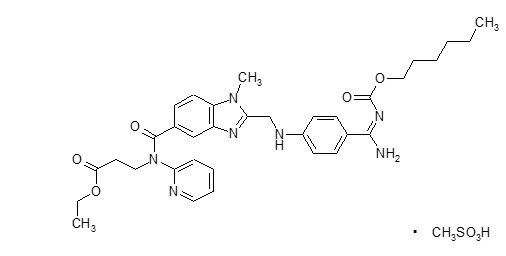
PRADAXA Oral Pellets contain dabigatran etexilate mesylate, a direct thrombin inhibitor. The chemical name of dabigatran etexilate mesylate is β-Alanine, N-[[2-[[[4-[[[(hexyloxy)carbonyl]amino]iminomethyl] phenyl]amino]methyl]-1-methyl-1H-benzimidazol-5-yl]carbonyl]-N-2-pyridinyl-,ethyl ester, methanesulfonate and it has a molecular formula of C34H41N7O5 ∙ CH4O3S and molecular weight of 723.86 for the mesylate salt and 627.75 for the free base. The structural formula is:
Dabigatran etexilate mesylate is a yellow-white to yellow powder. It is freely soluble in methanol, slightly soluble in ethanol, and sparingly soluble in isopropanol. A saturated solution in pure water has a solubility of 1.8 mg/mL.
Each packet of PRADAXA Oral Pellets contains 20 mg, 30 mg, 40 mg, 50 mg, 110 mg, or 150 mg dabigatran etexilate (equivalent to 23.06 mg, 34.59 mg, 46.12 mg, 57.65 mg, 126.83 mg, or 172.95 mg dabigatran etexilate mesylate) along with the following inactive ingredients: acacia, dimethicone, hydroxypropyl cellulose, hypromellose, talc, and tartaric acid.
8.4 Pediatric Use
The safety and effectiveness of PRADAXA Oral Pellets for the treatment and the reduction in risk of recurrence of venous thromboembolism have been established in pediatric patients less than 12 years of age. Use of PRADAXA Oral Pellets for this indication is supported by evidence from adequate and well-controlled studies in pediatric patients. These studies included an open-label, randomized, parallel-group study and an open-label, single-arm safety study [see Adverse Reactions (6.1) and Clinical Studies (14.1, 14.2)]. Other age-appropriate pediatric formulations of dabigatran etexilate are available for pediatric patients aged 12 years and older for these indications.
Safety and effectiveness of PRADAXA have not been established in pediatric patients with non-valvular atrial fibrillation or those who have undergone hip replacement surgery.
8.5 Geriatric Use
Clinical studies of PRADAXA Oral Pellets did not include patients 65 years of age and older. Information on the use of PRADAXA Capsules in geriatric patients is available in that prescribing information.
2.4 Administration
PRADAXA Oral Pellets are administered twice daily, one dose in the morning and one dose in the evening, at approximately the same time every day. The dosing interval should be as close to 12 hours as possible.
If a dose of PRADAXA Oral Pellets is not taken at the scheduled time, the dose should be taken as soon as possible on the same day; the missed dose should be skipped if it cannot be taken at least 6 hours before the next scheduled dose. The dose of PRADAXA Oral Pellets should not be doubled to make up for a missed dose.
If a partial dose has been taken, a second dose should not be administered at that time. The next dose should be taken as scheduled approximately 12 hours later.
The prepared medication should be given before meals to ensure that the patient takes the full dose.
PRADAXA Oral Pellets should be administered immediately after mixing or within 30 minutes after mixing. If the PRADAXA dose is not administered within 30 minutes of mixing, the dose should be discarded, and a new dose prepared.
PRADAXA Oral Pellets should be administered with only specific soft foods or apple juice.
4 Contraindications
PRADAXA is contraindicated in patients with:
- Active pathological bleeding [see Warnings and Precautions (5.2) and Adverse Reactions (6.1)]
- History of a serious hypersensitivity reaction to dabigatran, dabigatran etexilate, or to one of the excipients of the product (e.g., anaphylactic reaction or anaphylactic shock) [see Adverse Reactions (6.1)]
- Mechanical prosthetic heart valve [see Warnings and Precautions (5.4)]
6 Adverse Reactions
The following clinically significant adverse reactions are described elsewhere in the labeling:
- Increased Risk of Thrombotic Events after Premature Discontinuation [see Warnings and Precautions (5.1)]
- Risk of Bleeding [see Warnings and Precautions (5.2)]
- Spinal/Epidural Anesthesia or Puncture [see Warnings and Precautions (5.3)]
- Thromboembolic and Bleeding Events in Patients with Prosthetic Heart Valves [see Warnings and Precautions (5.4)]
- Increased Risk of Thrombosis in Patients with Triple-Positive Antiphospholipid Syndrome [see Warnings and Precautions (5.6)]
The most serious adverse reactions reported with PRADAXA were related to bleeding [see Warnings and Precautions (5.2)].
7 Drug Interactions
The concomitant use of PRADAXA with P-gp inhibitors has not been studied in pediatric patients but may increase exposure to dabigatran [see Warnings and Precautions (5.5)].
5.2 Risk of Bleeding
PRADAXA increases the risk of bleeding and can cause significant and, sometimes, fatal bleeding. Promptly evaluate any signs or symptoms of blood loss (e.g., a drop in hemoglobin and/or hematocrit or hypotension). Discontinue PRADAXA Oral Pellets in patients with active pathological bleeding [see Dosage and Administration (2.2)].
Risk factors for bleeding include the concomitant use of other drugs that increase the risk of bleeding (e.g., anti-platelet agents, heparin, fibrinolytic therapy, and chronic use of NSAIDs). PRADAXA's anticoagulant activity and half-life are increased in patients with renal impairment [see Clinical Pharmacology (12.2)].
8.6 Renal Impairment
PRADAXA has not been studied in pediatric patients with an eGFR < 50 mL/min/1.73 m2. Reduced renal function could increase exposure. Dosing recommendations cannot be provided for treatment of these patients. Avoid use of PRADAXA in these patients [see Dosage and Administration (2.3)].
Instructions for Use
Read the Medication Guide and this Instructions for Use that come with PRADAXA Oral Pellets for the most important information you need to know before giving PRADAXA Oral Pellets to your child for the first time, and each time you get a refill. The information may have changed. This Instructions for Use does not take the place of talking to your healthcare provider about your child's medical condition or treatment.
Your healthcare provider should tell you the amount (dose) of PRADAXA Oral Pellets to give your child. Your child's dose of PRADAXA Oral Pellets will change as they grow.
Important Information
- PRADAXA Oral Pellets can be used in children as soon as they are able to swallow soft food
- Do not open the packets of PRADAXA Oral Pellets until you are ready to use them
- Give PRADAXA Oral Pellets either with soft foods or apple juice
- Do not give PRADAXA Oral Pellets using syringes or through feeding tubes
- Do not mix PRADAXA Oral Pellets with milk or soft foods containing milk products
- Give your child the prepared dose of PRADAXA Oral Pellets before meals to help ensure that your child takes the full dose
- Give PRADAXA Oral Pellets to your child right away or within 30 minutes after mixing
- Do not give PRADAXA Oral Pellets if they have been in contact with the food or apple juice for more than 30 minutes
- If your child does not take all of the mixed PRADAXA Oral Pellets, do not give another dose at that time. Give the next scheduled dose about 12 hours later.
- If a dose of PRADAXA Oral Pellets is not taken at the scheduled time, the dose should be taken as soon as possible on the same day; the missed dose should be skipped if it cannot be taken at least 6 hours before the next scheduled dose. The dose of PRADAXA Oral Pellets should not be doubled to make up for a missed dose.
Instructions are provided below for preparing and giving a dose of PRADAXA Oral Pellets with soft foods and preparing and giving a dose of PRADAXA Oral Pellets with apple juice.
How to prepare and give a dose of PRADAXA Oral Pellets with soft foods:
The food should be at room temperature before mixing with the pellets. Use only one of the following soft foods:
- Mashed carrots
- Apple sauce (for administration with apple juice see below)
- Mashed banana
Do not mix with milk, milk products, or soft foods containing milk products.
Step 1 – Prepare cup or bowl
|
Step 2 – Collect PRADAXA Oral Pellets packet(s)
|
|
|
Step 3 – Open the PRADAXA Oral Pellets packet(s)
|
|
|
|
Step 4 – Add the PRADAXA Oral Pellets to soft food
|
Step 5 – Stir the soft food to mix with the PRADAXA Oral Pellets
|
Step 6 – Give the soft food and oral pellet mixture
|
How to prepare and give a dose of PRADAXA Oral Pellets with apple juice:
|
Step 1 – Pour about 1 to 2 ounces of apple juice into a clean drinking cup. Step 2 – Collect PRADAXA Oral Pellets packet(s)
|
|
|
Step 3 – Open PRADAXA Oral Pellets packet(s)
|
|
|
|
Step 4 – Mix the PRADAXA Oral Pellets with apple juice
|
|
|
|
Storing PRADAXA Oral Pellets
- Store PRADAXA Oral Pellets at room temperature from 68°F to 77°F (20°C to 25°C).
- After opening the silver aluminum bag that contains the packets of Oral Pellets:
- The silver aluminum bag contains a desiccant container. Throw away (dispose of) the desiccant container in your household trash.
- PRADAXA Oral Pellets must be used within 6 months. Safely throw away any unused PRADAXA Oral Pellets after 6 months.
- Keep PRADAXA Oral Pellets packets in the original silver aluminum bag to keep them dry (protect the packets from moisture). Do not open packets of PRADAXA Oral Pellets until you are ready to use them.
- Throw away any PRADAXA Oral Pellets that have not been given within 30 minutes after the Oral Pellets come into contact with apple juice or food.
Keep PRADAXA Oral Pellets and all medicines out of the reach of children.
For more information about PRADAXA Oral Pellets, call Boehringer Ingelheim Pharmaceuticals, Inc. at 1-800-542-6257.
Distributed by: Boehringer Ingelheim Pharmaceuticals, Inc. Ridgefield, CT 06877 USA
Copyright © 2025 Boehringer Ingelheim Pharmaceuticals, Inc.
ALL RIGHTS RESERVED
COL8834FF232025
This Instructions for Use has been approved by the U.S. Food and Drug Administration.
Revised: 6/2025
12.2 Pharmacodynamics
At recommended therapeutic doses, dabigatran etexilate prolongs the coagulation markers such as aPTT, ECT, TT, and dTT. INR is relatively insensitive to the exposure to dabigatran and cannot be interpreted the same way as used for warfarin monitoring.
As in adults, there is a correlation between plasma dabigatran concentrations and the degree of its anticoagulant effect in pediatric patients with venous thromboembolism. The parameters dTT and ECT increased in direct linear proportion to the plasma concentration of dabigatran, whereas aPTT prolongation increases in a nonlinear fashion with dabigatran plasma concentrations.
Similar PK/PD relationships for aPTT, ECT and dTT were observed across age groups of pediatric patients (ages 26 days to < 18 years) and between pediatric and adult patients with venous thromboembolism. This similarity in PK/PD relationship suggests that similar exposure-response relationship is expected for dabigatran etexilate treatment across the pediatric age groups and adult patients.
12.3 Pharmacokinetics
Dabigatran etexilate mesylate is absorbed as the dabigatran etexilate ester. The ester is then hydrolyzed, forming dabigatran, the active moiety. Dabigatran is metabolized to four different acyl glucuronides and both the glucuronides and dabigatran have similar pharmacological activity. Pharmacokinetics described here refer to the sum of dabigatran and its glucuronides. Dabigatran displays dose-proportional pharmacokinetics in healthy adult subjects and adult patients in the range of doses from 10 mg to 400 mg. Given twice daily, dabigatran's accumulation factor in pediatric patients receiving pellets is 1.5-1.7.
1 Indications and Usage
PRADAXA Oral Pellets are a direct thrombin inhibitor indicated:
- For the treatment of venous thromboembolic events (VTE) in pediatric patients aged 3 months to less than 12 years of age who have been treated with a parenteral anticoagulant for at least 5 days (1.1)
- To reduce the risk of recurrence of VTE in pediatric patients aged 3 months to less than 12 years of age who have been previously treated (1.2)
12.1 Mechanism of Action
Dabigatran and its acyl glucuronides are competitive, direct thrombin inhibitors. Because thrombin (serine protease) enables the conversion of fibrinogen into fibrin during the coagulation cascade, its inhibition prevents the development of a thrombus. Both free and clot-bound thrombin, and thrombin-induced platelet aggregation are inhibited by the active moieties.
5 Warnings and Precautions
2 Dosage and Administration
- Treatment of Pediatric Venous Thromboembolic Events (VTE):
- Reduction in the Risk of Recurrence of Pediatric VTE:
- Pradaxa Oral Pellets are NOT substitutable on a milligram-to-milligram basis with other dabigatran etexilate dosage forms (2.1)
- Review recommendations for converting to or from other oral or parenteral anticoagulants (2.5, 2.6)
- Temporarily discontinue PRADAXA before invasive or surgical procedures when possible, then restart promptly (2.7)
3 Dosage Forms and Strengths
PRADAXA Oral Pellets are available in the following strengths:
- 20 mg yellowish pellets in a packet
- 30 mg yellowish pellets in a packet
- 40 mg yellowish pellets in a packet
- 50 mg yellowish pellets in a packet
- 110 mg yellowish pellets in a packet
- 150 mg yellowish pellets in a packet
6.2 Postmarketing Experience
The following adverse reactions have been identified during post approval use of PRADAXA. Because these reactions are reported voluntarily from a population of uncertain size, it is not always possible to reliably estimate their frequency or establish a causal relationship to drug exposure.
Blood and Lymphatic System Disorders: Agranulocytosis, neutropenia, thrombocytopenia
Gastrointestinal Disorders: Esophageal ulcer
Immune System Disorders: Angioedema
Renal and Urinary Disorders: Anticoagulant-related nephropathy
Skin and Subcutaneous Tissue Disorders: Alopecia
8 Use in Specific Populations
- Lactation: Breastfeeding not recommended (8.2)
6.1 Clinical Trials Experience
Because clinical trials are conducted under widely varying conditions, adverse reactions rates observed in the clinical trials of a drug cannot be directly compared to rates in the clinical trials of another drug and may not reflect the rates observed in practice.
2.1 Important Dosage Information
Dabigatran etexilate is available in different dosage forms and not all dosage forms are approved for the same indications and age groups. In addition, there are differences between the dosage forms with respect to dosing due to differences in bioavailability. Do not substitute different dosage forms (for example, capsules) for oral pellets on a milligram-to-milligram basis and do not combine more than one dosage form to achieve the total dose [see Clinical Pharmacology (12.3)].
17 Patient Counseling Information
Advise the patient or caregiver to read the FDA-approved patient labeling (Medication Guide and Instruction for Use).
2.5 Converting From Or to Warfarin
When converting patients from warfarin therapy to PRADAXA Oral Pellets, discontinue warfarin and start PRADAXA Oral Pellets when the INR is below 2.0.
When converting from PRADAXA Oral Pellets to warfarin, adjust the starting time of warfarin as follows:
- For eGFR ≥ 50 mL/min/1.73 m2, start warfarin 3 days before discontinuing PRADAXA Oral Pellets.
- Patients with an eGFR < 50 mL/min/1.73 m2 have not been studied. Avoid use of PRADAXA Oral Pellets in these patients.
Because PRADAXA Oral Pellets can increase INR, the INR will better reflect warfarin's effect only after PRADAXA Oral Pellets have been stopped for at least 2 days [see Clinical Pharmacology (12.2)].
16 How Supplied/storage and Handling
PRADAXA Oral Pellets are yellowish in a silver-colored, child-resistant packet. The packets are placed in an aluminum bag with a desiccant. PRADAXA Oral Pellets are supplied as follows:
| Strength | Package | NDC |
|---|---|---|
| 20 mg | unit of use carton with 1 aluminum bag containing 60 packets | 0597-0425-78 |
| 30 mg | unit of use carton with 1 aluminum bag containing 60 packets | 0597-0430-18 |
| 40 mg | unit of use carton with 1 aluminum bag containing 60 packets | 0597-0435-96 |
| 50 mg | unit of use carton with 1 aluminum bag containing 60 packets | 0597-0440-53 |
| 110 mg | unit of use carton with 1 aluminum bag containing 60 packets | 0597-0445-87 |
| 150 mg | unit of use carton with 1 aluminum bag containing 60 packets | 0597-0450-16 |
5.3 Spinal/epidural Anesthesia Or Puncture
When neuraxial anesthesia (spinal/epidural anesthesia) or spinal puncture is employed, patients treated with anticoagulant agents are at risk of developing an epidural or spinal hematoma which can result in long-term or permanent paralysis [see Boxed Warning].
To reduce the potential risk of bleeding associated with the concurrent use of PRADAXA and epidural or spinal anesthesia/analgesia or spinal puncture, consider the pharmacokinetic profile of dabigatran [see Clinical Pharmacology (12.3)]. Placement or removal of an epidural catheter or lumbar puncture is best performed when the anticoagulant effect of dabigatran is low; however, the exact timing to reach a sufficiently low anticoagulant effect in each patient is not known.
Should the physician decide to administer anticoagulation in the context of epidural or spinal anesthesia/analgesia or lumbar puncture, monitor frequently to detect any signs or symptoms of neurological impairment, such as midline back pain, sensory and motor deficits (numbness, tingling, or weakness in lower limbs), and bowel and/or bladder dysfunction. Instruct patients to immediately report if they experience any of the above signs or symptoms. If signs or symptoms of spinal hematoma are suspected, initiate urgent diagnosis and treatment including consideration for spinal cord decompression even though such treatment may not prevent or reverse neurological sequelae.
14.1 Treatment of Vte in Pediatric Patients
The DIVERSITY study was conducted to demonstrate the efficacy and safety of PRADAXA compared to standard of care (SOC) for the treatment of venous thromboembolism (VTE) in pediatric patients from birth to less than 18 years of age. The study was designed as an open-label, randomized, parallel-group, non-inferiority study. Patients enrolled were randomized according to a 2:1 scheme to either an age-appropriate formulation (capsules, oral pellets, or oral solution) of PRADAXA (dosages adjusted for age and weight) after at least 5 days and no longer than 21 days of treatment with a parenteral anticoagulant, or to SOC comprised of low molecular weight heparins (LMWH) or vitamin K antagonists (VKA) or fondaparinux. For patients on PRADAXA, drug concentration was determined prior to the 7th dose and a single titration was permitted to achieve drug target levels of 50-250 ng/ml. Inability to achieve target, after one up-titration, resulted in premature termination of study drug in 12 patients (6.8%).
The median treatment duration during the treatment period was 85 days. In total, 267 patients entered the study (leading index VTE was 64% deep vein thrombosis, 10% cerebral venous thrombosis or sinus thrombosis, and 9.0% pulmonary embolism), with 18% of patients having a central line-associated thrombosis. The patient population was 49.8% male, 91.8% white, 4.9% Asian, and 1.5% black; 168 patients were 12 to < 18 years old, 64 patients 2 to < 12 years, and 35 patients were younger than 2 years. The concomitant VTE-related risk factors of patients in this trial among study arms were as follows: inherited thrombophilia disorder (PRADAXA: 20%; SOC: 22%), congenital heart disease (PRADAXA: 12%; SOC: 30%), heart failure (PRADAXA: 3%; SOC: 18%), history of cancer (PRADAXA: 10%; SOC: 1%), CVL insertion (PRADAXA: 23%; SOC: 27%), immobility (PRADAXA: 13%; SOC: 10%) and significant infection (PRADAXA: 15%; SOC: 13%). The number of patients taking concomitant medications with hemostatic effects was similar in both treatment groups (PRADAXA: 15%; SOC: 16%).
The efficacy of PRADAXA was established based on a composite endpoint of patients with complete thrombus resolution, freedom from recurrent venous thromboembolic event, and freedom from mortality related to venous thromboembolic event (composite primary endpoint). Of the 267 randomized patients, 81 patients (45.8%) in the dabigatran etexilate group and 38 patients (42.2%) in the SOC group met the criteria for the composite primary endpoint. The corresponding rate difference and 95% CI was -0.038 (-0.161, 0.086) and thus demonstrated non-inferiority of PRADAXA to SOC, since the upper bound of the 95% CI was lower than the predefined non-inferiority margin of 20% (see Table 5).
| PRADAXA | Standard of Care | |||
|---|---|---|---|---|
| 1 Mantel-Haenszel weighted difference with age group as stratification factor | ||||
| Number of patients randomized (%) | 177 (100.0) | 90 (100.0) | ||
| Complete thrombus resolution | 81 | (45.8) | 38 | (42.2) |
| Freedom from recurrent VTE | 170 | (96.0) | 83 | (92.2) |
| Freedom from mortality related to VTE | 177 | (100.0) | 89 | (98.9) |
| Composite endpoint met | 81 | (45.8) | 38 | (42.2) |
| Difference in rate (95% CI)1 | -0.038 (-0.161, 0.086) | |||
| p-value for non-inferiority | < 0.0001 | |||
| p-value for superiority | 0.2739 |
Subgroup analyses showed that there were no outliers in the treatment effect for the subgroups by age, sex, region, and presence of certain risk factors (central venous line, congenital heart disease, malignant disease). For the 3 different age strata, the proportions of patients that met the efficacy endpoint in the PRADAXA and SOC groups, respectively, were 13/22 (59.1%) and 7/13 (53.8%) for patients from birth to < 2 years [Rate Difference -0.052; (95%CI: -0.393, 0.288)], 21/43 (48.8%) and 12/21 (57.1%) for patients aged 2 to < 12 years [Rate Difference 0.083; (95%CI: -0.176, 0.342)], and 47/112 (42.0%) and 19/56 (33.9%) for patients aged 12 to < 18 years [Rate Difference -0.080; (95%CI: -0.234, 0.074)].
8.3 Females and Males of Reproductive Potential
The risk of clinically significant uterine bleeding, potentially requiring gynecological surgical interventions, identified with oral anticoagulants including PRADAXA should be assessed in females of reproductive potential and those with abnormal uterine bleeding.
Principal Display Panel 20 Mg Packet Bag Carton
NDC 0597-0425-78
DISPENSE IN THIS UNIT OF USE CONTAINER
WITH ENCLOSED MEDICATION GUIDE
Pradaxa®
(dabigatran etexilate)
Oral Pellets
20 mg* per packet
Pradaxa oral pellets are NOT substitutable on a mg-to-mg basis with other dabigatran
etexilate dosage forms.
Do not open PRADAXA packets until you are ready to use them. Discard unused
PRADAXA oral pellets 6 months after first opening the aluminum bag.
1 aluminum bag containing 60 packets
Rx only
Boehringer
Ingelheim
Principal Display Panel 30 Mg Packet Bag Carton
NDC 0597-0430-18
DISPENSE IN THIS UNIT OF USE CONTAINER
WITH ENCLOSED MEDICATION GUIDE
Pradaxa®
(dabigatran etexilate)
Oral Pellets
30 mg* per packet
Pradaxa oral pellets are NOT substitutable on a mg-to-mg basis with other dabigatran
etexilate dosage forms.
Do not open PRADAXA packets until you are ready to use them. Discard unused
PRADAXA oral pellets 6 months after first opening the aluminum bag.
1 aluminum bag containing 60 packets
Rx only
Boehringer
Ingelheim
Principal Display Panel 40 Mg Packet Bag Carton
NDC 0597-0435-96
DISPENSE IN THIS UNIT OF USE CONTAINER
WITH ENCLOSED MEDICATION GUIDE
Pradaxa®
(dabigatran etexilate)
Oral Pellets
40 mg* per packet
Pradaxa oral pellets are NOT substitutable on a mg-to-mg basis with other dabigatran
etexilate dosage forms.
Do not open PRADAXA packets until you are ready to use them. Discard unused
PRADAXA oral pellets 6 months after first opening the aluminum bag.
1 aluminum bag containing 60 packets
Rx only
Boehringer
Ingelheim
Principal Display Panel 50 Mg Packet Bag Carton
NDC 0597-0440-53
DISPENSE IN THIS UNIT OF USE CONTAINER
WITH ENCLOSED MEDICATION GUIDE
Pradaxa®
(dabigatran etexilate)
Oral Pellets
50 mg* per packet
Pradaxa oral pellets are NOT substitutable on a mg-to-mg basis with other dabigatran
etexilate dosage forms.
Do not open PRADAXA packets until you are ready to use them. Discard unused
PRADAXA oral pellets 6 months after first opening the aluminum bag.
1 aluminum bag containing 60 packets
Rx only
Boehringer
Ingelheim
Principal Display Panel 110 Mg Packet Bag Carton
NDC 0597-0445-87
DISPENSE IN THIS UNIT OF USE CONTAINER
WITH ENCLOSED MEDICATION GUIDE
Pradaxa®
(dabigatran etexilate)
Oral Pellets
110 mg* per packet
Pradaxa oral pellets are NOT substitutable on a mg-to-mg basis with other dabigatran
etexilate dosage forms.
Do not open PRADAXA packets until you are ready to use them. Discard unused
PRADAXA oral pellets 6 months after first opening the aluminum bag.
1 aluminum bag containing 60 packets
Rx only
Boehringer
Ingelheim
Principal Display Panel 150 Mg Packet Bag Carton
NDC 0597-0450-16
DISPENSE IN THIS UNIT OF USE CONTAINER
WITH ENCLOSED MEDICATION GUIDE
Pradaxa®
(dabigatran etexilate)
Oral Pellets
150 mg* per packet
Pradaxa oral pellets are NOT substitutable on a mg-to-mg basis with other dabigatran
etexilate dosage forms.
Do not open PRADAXA packets until you are ready to use them. Discard unused
PRADAXA oral pellets 6 months after first opening the aluminum bag.
1 aluminum bag containing 60 packets
Rx only
Boehringer
Ingelheim
2.6 Converting From Or to Parenteral Anticoagulants
For pediatric patients currently receiving a parenteral anticoagulant, start PRADAXA Oral Pellets 0 to 2 hours before the time that the next dose of the parenteral drug was to have been administered or at the time of discontinuation of a continuously administered parenteral drug (e.g., intravenous unfractionated heparin).
For pediatric patients currently taking PRADAXA Oral Pellets, wait 12 hours after the last dose before switching to a parenteral anticoagulant [see Clinical Pharmacology (12.3)].
2.7 Discontinuation for Surgery and Other Interventions
If possible, discontinue PRADAXA Oral Pellets before invasive or surgical procedures because of the increased risk of bleeding. For pediatric patients, PRADAXA Oral Pellets should be stopped 24 hours before an elective surgery (eGFR > 80 mL/min/1.73 m2) or 2 days before an elective surgery (eGFR 50-80 mL/min/1.73 m2). Pediatric patients with an eGFR < 50 mL/min/1.73 m2 have not been studied, avoid use of PRADAXA Oral Pellets in these patients.
Consider longer times for patients undergoing major surgery, spinal puncture, or placement of a spinal or epidural catheter or port, in whom complete hemostasis may be required [see Use in Specific Populations (8.6) and Clinical Pharmacology (12.3)].
If surgery cannot be delayed, there is an increased risk of bleeding [see Warnings and Precautions (5.2)]. This risk of bleeding should be weighed against the urgency of intervention [see Warnings and Precautions (5.1, 5.3)]. In adults, a specific reversal agent (idarucizumab) is available in case of emergency surgery or urgent procedures when reversal of the anticoagulant effect of dabigatran is needed. Efficacy and safety of idarucizumab have not been established in pediatric patients [see Warnings and Precautions (5.2)]. Refer to the idarucizumab prescribing information for additional information. Restart PRADAXA Oral Pellets as soon as medically appropriate.
13.1 Carcinogenesis, Mutagenesis, Impairment of Fertility
Dabigatran was not carcinogenic when administered by oral gavage to mice and rats for up to 2 years. The highest doses tested (200 mg/kg/day) in mice and rats were approximately 3.6 and 6 times, respectively, the human exposure at MRHD of 300 mg/day based on AUC comparisons.
Dabigatran was not mutagenic in in vitro tests, including bacterial reversion tests, mouse lymphoma assay and chromosomal aberration assay in human lymphocytes, and the in vivo micronucleus assay in rats.
In the rat fertility study with oral gavage doses of 15, 70, and 200 mg/kg, males were treated for 29 days prior to mating, during mating up to scheduled termination, and females were treated 15 days prior to mating through gestation Day 6. No adverse effects on male or female fertility were observed at 200 mg/kg or 9 to 12 times the human exposure at MRHD of 300 mg/day based on AUC comparisons. However, the number of implantations decreased in females receiving 70 mg/kg, or 3 times the human exposure at MRHD based on AUC comparisons.
5.5 Effect of P Gp Inducers and Inhibitors On Dabigatran Exposure
The concomitant use of PRADAXA with P-gp inducers (e.g., rifampin) reduces exposure to dabigatran and should generally be avoided [see Clinical Pharmacology (12.3)].
P-gp inhibition and impaired renal function are the major independent factors that result in increased exposure to dabigatran [see Clinical Pharmacology (12.3)]. Concomitant use of P-gp inhibitors in patients with renal impairment is expected to produce increased exposure of dabigatran compared to that seen with either factor alone.
The concomitant use of PRADAXA Oral Pellets with P-gp-inhibitors has not been studied in pediatric patients but may increase exposure to dabigatran.
2.2 Recommended Pradaxa Oral Pellets Dosage for Pediatric Patients
PRADAXA Oral Pellets can be used in pediatric patients aged 3 months to less than 12 years as soon as they are able to swallow soft food. For the treatment of VTE in pediatric patients, treatment should be initiated following treatment with a parenteral anticoagulant for at least 5 days. For reduction in risk of recurrence of VTE, treatment should be initiated following previous treatment.
The recommended dosage of PRADAXA Oral Pellets is based on the patient's age and actual weight as shown in the tables below. PRADAXA Oral Pellets is administered twice daily. Adjust the dosage according to age and actual weight as treatment progresses.
| Actual Weight (kg) | Age (in months) | Dosage (mg) twice daily | Number of Packets Needed |
|---|---|---|---|
| 3 kg to less than 4 kg | 3 to less than 6 months | 30 mg | one 30 mg packet twice daily |
| 4 kg to less than 5 kg | 3 to less than 10 months | 40 mg | one 40 mg packet twice daily |
| 5 kg to less than 7 kg | 3 to less than 5 months | 40 mg | one 40 mg packet twice daily |
| 5 to less than 24 months | 50 mg | one 50 mg packet twice daily | |
| 7 kg to less than 9 kg | 3 to less than 4 months | 50 mg | one 50 mg packet twice daily |
| 4 to less than 9 months | 60 mg | two 30 mg packets twice daily | |
| 9 to less than 24 months | 70 mg | one 30 mg packet plus one 40 mg packet twice daily | |
| 9 kg to less than 11 kg | 5 to less than 6 months | 60 mg | two 30 mg packets twice daily |
| 6 to less than 11 months | 80 mg | two 40 mg packets twice daily | |
| 11 to less than 24 months | 90 mg | one 40 mg packet plus one 50 mg packet twice daily | |
| 11 kg to less than 13 kg | 8 to less than 18 months | 100 mg | two 50 mg packets twice daily |
| 18 to less than 24 months | 110 mg | one 110 mg packet twice daily | |
| 13 kg to less than 16 kg | 10 to less than 11 months | 100 mg | two 50 mg packets twice daily |
| 11 to less than 24 months | 140 mg | one 30 mg packet plus one 110 mg packet twice daily | |
| 16 kg to less than 21 kg | 12 to less than 24 months | 140 mg | one 30 mg packet plus one 110 mg packet twice daily |
| 21 kg to less than 26 kg | 18 to less than 24 months | 180 mg | one 30 mg packet plus one 150 mg packet twice daily |
| Actual Weight (kg) | Dosage (mg) twice daily | Number of Packets Needed |
|---|---|---|
| 7 kg to less than 9 kg | 70 mg | one 30 mg packet plus one 40 mg packet twice daily |
| 9 kg to less than 11 kg | 90 mg | one 40 mg packet plus one 50 mg packet twice daily |
| 11 kg to less than 13 kg | 110 mg | one 110 mg packet twice daily |
| 13 kg to less than 16 kg | 140 mg | one 30 mg packet plus one 110 mg packet twice daily |
| 16 kg to less than 21 kg | 170 mg | one 20 mg packet plus one 150 mg packet twice daily |
| 21 kg to less than 41 kg | 220 mg | two 110 mg packets twice daily |
| 41 kg or greater | 260 mg | one 110 mg packet plus one 150 mg packet twice daily |
Evaluation of the extent of anticoagulation in pediatric patients on PRADAXA Oral Pellets may be accomplished using dTT or ECT, and not INR [see Warnings and Precautions (5.2) and Clinical Pharmacology (12.2)].
1.1 Treatment of Venous Thromboembolic Events in Pediatric Patients
PRADAXA Oral Pellets are indicated for the treatment of venous thromboembolic events (VTE) in pediatric patients aged 3 months to less than 12 years of age who have been treated with a parenteral anticoagulant for at least 5 days.
14.2 Reduction in the Risk of Recurrence of Vte in Pediatric Patients
Study 2 was an open-label, single-arm safety study to assess the safety of PRADAXA for the prevention of recurrent VTE in pediatric patients from birth to < 18 years. Patients who required further anticoagulation due to the presence of a clinical risk factor after completing the initial treatment for confirmed VTE (for at least 3 months) or after completing the DIVERSITY study were included in the study. Eligible patients received age- and weight-adjusted dosages of an age-appropriate formulation (capsules or oral pellets) of PRADAXA until the clinical risk factor resolved, or up to a maximum of 12 months. The primary endpoints of the study included the recurrence of VTE, major and minor bleeding events, and mortality (overall and related to thrombotic or thromboembolic events) at 6 and 12 months.
Of the 214 patients in the study, 162 patients were 12 to < 18 years old, 43 patients were 2 to < 12 years old, and 9 patients were aged 6 months to < 2 years old.
The overall probability of being free from recurrence of VTE during the on-treatment period was 0.990 (95% CI: 0.960, 0.997) at 3 months, 0.984 (95% CI: 0.950, 0.995) at 6 months, and 0.984 (95% CI: 0.950, 0.995) at 12 months. The probability of being free from bleeding events during the on-treatment period was 0.849 (95% CI: 0.792, 0.891) at 3 months, 0.785 (95% CI: 0.718, 0.838) at 6 months, and 0.723 (95% CI: 0.645, 0.787) at 12 months. No on-treatment deaths occurred.
5.1 Increased Risk of Thrombotic Events After Premature Discontinuation
Premature discontinuation of any oral anticoagulant, including PRADAXA, in the absence of adequate alternative anticoagulation increases the risk of thrombotic events. If PRADAXA Oral Pellets are discontinued for a reason other than pathological bleeding or completion of a course of therapy, consider coverage with another anticoagulant and restart PRADAXA Oral Pellets as soon as medically appropriate [see Dosage and Administration (2.5, 2.6, 2.7)].
5.4 Thromboembolic and Bleeding Events in Patients With Prosthetic Heart Valves
The safety and efficacy of PRADAXA Capsules in adult patients with bileaflet mechanical prosthetic heart valves was evaluated in the RE-ALIGN trial, in which patients with bileaflet mechanical prosthetic heart valves (recently implanted or implanted more than three months prior to enrollment) were randomized to dose-adjusted warfarin or 150 mg, 220 mg, or 300 mg of PRADAXA Capsules twice a day. RE-ALIGN was terminated early due to the occurrence of significantly more thromboembolic events (valve thrombosis, stroke, transient ischemic attack, and myocardial infarction) and an excess of major bleeding (predominantly postoperative pericardial effusions requiring intervention for hemodynamic compromise) in the PRADAXA treatment arm as compared to the warfarin treatment arm. These bleeding and thromboembolic events were seen both in patients who were initiated on PRADAXA Capsules postoperatively within three days of mechanical bileaflet valve implantation, as well as in patients whose valves had been implanted more than three months prior to enrollment. Therefore, the use of PRADAXA is contraindicated in all patients with mechanical prosthetic valves [see Contraindications (4)].
The use of PRADAXA for the prophylaxis of thromboembolic events in patients with atrial fibrillation in the setting of other forms of valvular heart disease, including the presence of a bioprosthetic heart valve, has not been studied and is not recommended.
5.6 Increased Risk of Thrombosis in Patients With Triple Positive Antiphospholipid Syndrome
Direct-acting oral anticoagulants (DOACs), including PRADAXA, are not recommended for use in patients with triple-positive antiphospholipid syndrome (APS). For patients with APS (especially those who are triple-positive [positive for lupus anticoagulant, anticardiolipin, and anti-beta 2-glycoprotein I antibodies]), treatment with DOACs has been associated with increased rates of recurrent thrombotic events compared with vitamin K antagonist therapy.
1.2 Reduction in the Risk of Recurrence of Venous Thromboembolic Events in Pediatric Patients
PRADAXA Oral Pellets are indicated to reduce the risk of recurrence of VTE in pediatric patients aged 3 months to less than 12 years of age who have been previously treated.
Warning: (a) Premature Discontinuation of Pradaxa Increases the Risk of Thrombotic Events, and (b) Spinal/epidural Hematoma
WARNING: (A) PREMATURE DISCONTINUATION OF PRADAXA INCREASES THE RISK OF THROMBOTIC EVENTS, and (B) SPINAL/EPIDURAL HEMATOMA
See full prescribing information for complete boxed warning
(A) PREMATURE DISCONTINUATION OF PRADAXA INCREASES THE RISK OF THROMBOTIC EVENTS: Premature discontinuation of any oral anticoagulant, including PRADAXA, increases the risk of thrombotic events. To reduce this risk, consider coverage with another anticoagulant if PRADAXA is discontinued for a reason other than pathological bleeding or completion of a course of therapy (2.5, 2.6, 2.7, 5.1).
(B) SPINAL/EPIDURAL HEMATOMA: Epidural or spinal hematomas may occur in patients treated with PRADAXA who are receiving neuraxial anesthesia or undergoing spinal puncture. These hematomas may result in long-term or permanent paralysis (5.3). Monitor patients frequently for signs and symptoms of neurological impairment and if observed, treat urgently. Consider the benefits and risks before neuraxial intervention in patients who are or who need to be anticoagulated (5.3).
Structured Label Content
Section 42229-5 (42229-5)
(A) PREMATURE DISCONTINUATION OF PRADAXA INCREASES THE RISK OF THROMBOTIC EVENTS
Premature discontinuation of any oral anticoagulant, including PRADAXA, increases the risk of thrombotic events. If anticoagulation with PRADAXA is discontinued for a reason other than pathological bleeding or completion of a course of therapy, consider coverage with another anticoagulant [see Dosage and Administration (2.5, 2.6, 2.7) and Warnings and Precautions (5.1)].
Section 42231-1 (42231-1)
| This Medication Guide has been approved by the U.S. Food and Drug Administration. | Revised: 6/2025 | ||
|
MEDICATION GUIDE PRADAXA (pra dax a) (dabigatran etexilate) Oral Pellets |
|||
| This Medication Guide is for PRADAXA Oral Pellets. If your child is over 8 years of age and your healthcare provider prescribes PRADAXA Capsules for your child, read the Medication Guide that comes with your medicine. Read this Medication Guide before you start giving PRADAXA Oral Pellets to your child and each time you get a refill. There may be new information. This Medication Guide does not take the place of talking with your healthcare provider about your child's medical condition or their treatment. |
|||
|
What is the most important information I should know about PRADAXA? Do not stop giving PRADAXA without talking to the healthcare provider who prescribes it for your child. Stopping PRADAXA increases your child's risk of a clot forming in their blood. PRADAXA may need to be stopped, if possible, before surgery or a medical or dental procedure. Ask the healthcare provider who prescribed PRADAXA for your child when your child should stop taking it. Your healthcare provider will tell you when you may start giving PRADAXA to your child again after their surgery or procedure. If your child has to stop taking PRADAXA, your healthcare provider may prescribe another medicine to help prevent a blood clot from forming.
|
|||
|
What is PRADAXA Oral Pellets?
PRADAXA Oral Pellets is a prescription medicine that is used to:
|
|||
Do not give PRADAXA if your child:
|
|||
Before giving PRADAXA to your child, tell your healthcare provider about all of your child's medical conditions, including if they:
Tell your healthcare provider about all the medicines your child takes, including prescription and over-the-counter medicines, vitamins, and herbal supplements. Some of your child's other medicines may affect the way PRADAXA works. Certain medicines may increase your child's risk of bleeding. See "What is the most important information I should know about PRADAXA?" Especially tell your healthcare provider if your child takes a medicine that contains rifampin. Know the medicines your child takes. Keep a list of them and show it to your healthcare provider and pharmacist when your child gets a new medicine. |
|||
How should I give PRADAXA?
|
|||
|
|
|
|
|
|||
|
What are the possible side effects of PRADAXA? PRADAXA can cause serious side effects. See "What is the most important information I should know about PRADAXA?"
|
|||
|
|
|
|
|
|||
|
|
||
Common side effects of PRADAXA in children include:
Tell your healthcare provider if your child has any side effect that bothers them or that does not go away. These are not all of the possible side effects of PRADAXA. For more information, ask your healthcare provider or pharmacist. Call your doctor for medical advice about side effects. You may report side effects to FDA at 1-800-FDA-1088. |
|||
How should I store PRADAXA Oral Pellets?
|
|||
|
General information about the safe and effective use of PRADAXA
Medicines are sometimes prescribed for purposes other than those listed in a Medication Guide. Do not use PRADAXA for a condition for which it was not prescribed. Do not give PRADAXA to other people, even if they have the same symptoms that your child has. It may harm them. This Medication Guide summarizes the most important information about PRADAXA. If you would like more information, talk with your child's healthcare provider. You can ask your child's pharmacist or healthcare provider for information about PRADAXA that is written for health professionals. |
|||
|
What are the ingredients in PRADAXA Oral Pellets?
Active ingredient: dabigatran etexilate mesylate Inactive ingredients: acacia, dimethicone, hydroxypropyl cellulose, hypromellose, talc, and tartaric acid. Distributed by: Boehringer Ingelheim Pharmaceuticals, Inc. Ridgefield, CT 06877 USA For more information about PRADAXA Oral Pellets, call Boehringer Ingelheim Pharmaceuticals, Inc. at 1-800-542-6257. Copyright © 2025 Boehringer Ingelheim Pharmaceuticals, Inc. ALL RIGHTS RESERVED COL8834FF232025 |
Section 44425-7 (44425-7)
Store at 20°C to 25°C (68°F to 77°F); excursions permitted to 15°C to 30°C (59°F to 86°F) [see USP Controlled Room Temperature]. Store in the original package to protect from moisture.
Do not open the packets until ready for use. Use the PRADAXA Oral Pellets within 6 months of opening the aluminum bag containing the packets.
10 Overdosage (10 OVERDOSAGE)
Accidental overdose may lead to hemorrhagic complications. In the event of hemorrhagic complications, initiate appropriate clinical support, discontinue treatment with PRADAXA, and investigate the source of bleeding. A specific reversal agent (idarucizumab) is available for adult patients.
Dabigatran is primarily eliminated by the kidneys with a low plasma protein binding of approximately 35%. Hemodialysis can remove dabigatran; however, data supporting this approach are limited. Using a high-flux dialyzer, blood flow rate of 200 mL/min, and dialysate flow rate of 700 mL/min, approximately 49% of total dabigatran can be cleared from plasma over 4 hours. At the same dialysate flow rate, approximately 57% can be cleared using a dialyzer blood flow rate of 300 mL/min, with no appreciable increase in clearance observed at higher blood flow rates. Upon cessation of hemodialysis, a redistribution effect of approximately 7% to 15% is seen. The effect of dialysis on dabigatran's plasma concentration would be expected to vary based on patient specific characteristics. Measurement of aPTT or ECT may help guide therapy [see Warnings and Precautions (5.2) and Clinical Pharmacology (12.2)].
11 Description (11 DESCRIPTION)
PRADAXA Oral Pellets contain dabigatran etexilate mesylate, a direct thrombin inhibitor. The chemical name of dabigatran etexilate mesylate is β-Alanine, N-[[2-[[[4-[[[(hexyloxy)carbonyl]amino]iminomethyl] phenyl]amino]methyl]-1-methyl-1H-benzimidazol-5-yl]carbonyl]-N-2-pyridinyl-,ethyl ester, methanesulfonate and it has a molecular formula of C34H41N7O5 ∙ CH4O3S and molecular weight of 723.86 for the mesylate salt and 627.75 for the free base. The structural formula is:
Dabigatran etexilate mesylate is a yellow-white to yellow powder. It is freely soluble in methanol, slightly soluble in ethanol, and sparingly soluble in isopropanol. A saturated solution in pure water has a solubility of 1.8 mg/mL.
Each packet of PRADAXA Oral Pellets contains 20 mg, 30 mg, 40 mg, 50 mg, 110 mg, or 150 mg dabigatran etexilate (equivalent to 23.06 mg, 34.59 mg, 46.12 mg, 57.65 mg, 126.83 mg, or 172.95 mg dabigatran etexilate mesylate) along with the following inactive ingredients: acacia, dimethicone, hydroxypropyl cellulose, hypromellose, talc, and tartaric acid.
8.4 Pediatric Use
The safety and effectiveness of PRADAXA Oral Pellets for the treatment and the reduction in risk of recurrence of venous thromboembolism have been established in pediatric patients less than 12 years of age. Use of PRADAXA Oral Pellets for this indication is supported by evidence from adequate and well-controlled studies in pediatric patients. These studies included an open-label, randomized, parallel-group study and an open-label, single-arm safety study [see Adverse Reactions (6.1) and Clinical Studies (14.1, 14.2)]. Other age-appropriate pediatric formulations of dabigatran etexilate are available for pediatric patients aged 12 years and older for these indications.
Safety and effectiveness of PRADAXA have not been established in pediatric patients with non-valvular atrial fibrillation or those who have undergone hip replacement surgery.
8.5 Geriatric Use
Clinical studies of PRADAXA Oral Pellets did not include patients 65 years of age and older. Information on the use of PRADAXA Capsules in geriatric patients is available in that prescribing information.
2.4 Administration
PRADAXA Oral Pellets are administered twice daily, one dose in the morning and one dose in the evening, at approximately the same time every day. The dosing interval should be as close to 12 hours as possible.
If a dose of PRADAXA Oral Pellets is not taken at the scheduled time, the dose should be taken as soon as possible on the same day; the missed dose should be skipped if it cannot be taken at least 6 hours before the next scheduled dose. The dose of PRADAXA Oral Pellets should not be doubled to make up for a missed dose.
If a partial dose has been taken, a second dose should not be administered at that time. The next dose should be taken as scheduled approximately 12 hours later.
The prepared medication should be given before meals to ensure that the patient takes the full dose.
PRADAXA Oral Pellets should be administered immediately after mixing or within 30 minutes after mixing. If the PRADAXA dose is not administered within 30 minutes of mixing, the dose should be discarded, and a new dose prepared.
PRADAXA Oral Pellets should be administered with only specific soft foods or apple juice.
4 Contraindications (4 CONTRAINDICATIONS)
PRADAXA is contraindicated in patients with:
- Active pathological bleeding [see Warnings and Precautions (5.2) and Adverse Reactions (6.1)]
- History of a serious hypersensitivity reaction to dabigatran, dabigatran etexilate, or to one of the excipients of the product (e.g., anaphylactic reaction or anaphylactic shock) [see Adverse Reactions (6.1)]
- Mechanical prosthetic heart valve [see Warnings and Precautions (5.4)]
6 Adverse Reactions (6 ADVERSE REACTIONS)
The following clinically significant adverse reactions are described elsewhere in the labeling:
- Increased Risk of Thrombotic Events after Premature Discontinuation [see Warnings and Precautions (5.1)]
- Risk of Bleeding [see Warnings and Precautions (5.2)]
- Spinal/Epidural Anesthesia or Puncture [see Warnings and Precautions (5.3)]
- Thromboembolic and Bleeding Events in Patients with Prosthetic Heart Valves [see Warnings and Precautions (5.4)]
- Increased Risk of Thrombosis in Patients with Triple-Positive Antiphospholipid Syndrome [see Warnings and Precautions (5.6)]
The most serious adverse reactions reported with PRADAXA were related to bleeding [see Warnings and Precautions (5.2)].
7 Drug Interactions (7 DRUG INTERACTIONS)
The concomitant use of PRADAXA with P-gp inhibitors has not been studied in pediatric patients but may increase exposure to dabigatran [see Warnings and Precautions (5.5)].
5.2 Risk of Bleeding
PRADAXA increases the risk of bleeding and can cause significant and, sometimes, fatal bleeding. Promptly evaluate any signs or symptoms of blood loss (e.g., a drop in hemoglobin and/or hematocrit or hypotension). Discontinue PRADAXA Oral Pellets in patients with active pathological bleeding [see Dosage and Administration (2.2)].
Risk factors for bleeding include the concomitant use of other drugs that increase the risk of bleeding (e.g., anti-platelet agents, heparin, fibrinolytic therapy, and chronic use of NSAIDs). PRADAXA's anticoagulant activity and half-life are increased in patients with renal impairment [see Clinical Pharmacology (12.2)].
8.6 Renal Impairment
PRADAXA has not been studied in pediatric patients with an eGFR < 50 mL/min/1.73 m2. Reduced renal function could increase exposure. Dosing recommendations cannot be provided for treatment of these patients. Avoid use of PRADAXA in these patients [see Dosage and Administration (2.3)].
Instructions for Use
Read the Medication Guide and this Instructions for Use that come with PRADAXA Oral Pellets for the most important information you need to know before giving PRADAXA Oral Pellets to your child for the first time, and each time you get a refill. The information may have changed. This Instructions for Use does not take the place of talking to your healthcare provider about your child's medical condition or treatment.
Your healthcare provider should tell you the amount (dose) of PRADAXA Oral Pellets to give your child. Your child's dose of PRADAXA Oral Pellets will change as they grow.
Important Information
- PRADAXA Oral Pellets can be used in children as soon as they are able to swallow soft food
- Do not open the packets of PRADAXA Oral Pellets until you are ready to use them
- Give PRADAXA Oral Pellets either with soft foods or apple juice
- Do not give PRADAXA Oral Pellets using syringes or through feeding tubes
- Do not mix PRADAXA Oral Pellets with milk or soft foods containing milk products
- Give your child the prepared dose of PRADAXA Oral Pellets before meals to help ensure that your child takes the full dose
- Give PRADAXA Oral Pellets to your child right away or within 30 minutes after mixing
- Do not give PRADAXA Oral Pellets if they have been in contact with the food or apple juice for more than 30 minutes
- If your child does not take all of the mixed PRADAXA Oral Pellets, do not give another dose at that time. Give the next scheduled dose about 12 hours later.
- If a dose of PRADAXA Oral Pellets is not taken at the scheduled time, the dose should be taken as soon as possible on the same day; the missed dose should be skipped if it cannot be taken at least 6 hours before the next scheduled dose. The dose of PRADAXA Oral Pellets should not be doubled to make up for a missed dose.
Instructions are provided below for preparing and giving a dose of PRADAXA Oral Pellets with soft foods and preparing and giving a dose of PRADAXA Oral Pellets with apple juice.
How to prepare and give a dose of PRADAXA Oral Pellets with soft foods:
The food should be at room temperature before mixing with the pellets. Use only one of the following soft foods:
- Mashed carrots
- Apple sauce (for administration with apple juice see below)
- Mashed banana
Do not mix with milk, milk products, or soft foods containing milk products.
Step 1 – Prepare cup or bowl
|
Step 2 – Collect PRADAXA Oral Pellets packet(s)
|
|
|
Step 3 – Open the PRADAXA Oral Pellets packet(s)
|
|
|
|
Step 4 – Add the PRADAXA Oral Pellets to soft food
|
Step 5 – Stir the soft food to mix with the PRADAXA Oral Pellets
|
Step 6 – Give the soft food and oral pellet mixture
|
How to prepare and give a dose of PRADAXA Oral Pellets with apple juice:
|
Step 1 – Pour about 1 to 2 ounces of apple juice into a clean drinking cup. Step 2 – Collect PRADAXA Oral Pellets packet(s)
|
|
|
Step 3 – Open PRADAXA Oral Pellets packet(s)
|
|
|
|
Step 4 – Mix the PRADAXA Oral Pellets with apple juice
|
|
|
|
Storing PRADAXA Oral Pellets
- Store PRADAXA Oral Pellets at room temperature from 68°F to 77°F (20°C to 25°C).
- After opening the silver aluminum bag that contains the packets of Oral Pellets:
- The silver aluminum bag contains a desiccant container. Throw away (dispose of) the desiccant container in your household trash.
- PRADAXA Oral Pellets must be used within 6 months. Safely throw away any unused PRADAXA Oral Pellets after 6 months.
- Keep PRADAXA Oral Pellets packets in the original silver aluminum bag to keep them dry (protect the packets from moisture). Do not open packets of PRADAXA Oral Pellets until you are ready to use them.
- Throw away any PRADAXA Oral Pellets that have not been given within 30 minutes after the Oral Pellets come into contact with apple juice or food.
Keep PRADAXA Oral Pellets and all medicines out of the reach of children.
For more information about PRADAXA Oral Pellets, call Boehringer Ingelheim Pharmaceuticals, Inc. at 1-800-542-6257.
Distributed by: Boehringer Ingelheim Pharmaceuticals, Inc. Ridgefield, CT 06877 USA
Copyright © 2025 Boehringer Ingelheim Pharmaceuticals, Inc.
ALL RIGHTS RESERVED
COL8834FF232025
This Instructions for Use has been approved by the U.S. Food and Drug Administration.
Revised: 6/2025
12.2 Pharmacodynamics
At recommended therapeutic doses, dabigatran etexilate prolongs the coagulation markers such as aPTT, ECT, TT, and dTT. INR is relatively insensitive to the exposure to dabigatran and cannot be interpreted the same way as used for warfarin monitoring.
As in adults, there is a correlation between plasma dabigatran concentrations and the degree of its anticoagulant effect in pediatric patients with venous thromboembolism. The parameters dTT and ECT increased in direct linear proportion to the plasma concentration of dabigatran, whereas aPTT prolongation increases in a nonlinear fashion with dabigatran plasma concentrations.
Similar PK/PD relationships for aPTT, ECT and dTT were observed across age groups of pediatric patients (ages 26 days to < 18 years) and between pediatric and adult patients with venous thromboembolism. This similarity in PK/PD relationship suggests that similar exposure-response relationship is expected for dabigatran etexilate treatment across the pediatric age groups and adult patients.
12.3 Pharmacokinetics
Dabigatran etexilate mesylate is absorbed as the dabigatran etexilate ester. The ester is then hydrolyzed, forming dabigatran, the active moiety. Dabigatran is metabolized to four different acyl glucuronides and both the glucuronides and dabigatran have similar pharmacological activity. Pharmacokinetics described here refer to the sum of dabigatran and its glucuronides. Dabigatran displays dose-proportional pharmacokinetics in healthy adult subjects and adult patients in the range of doses from 10 mg to 400 mg. Given twice daily, dabigatran's accumulation factor in pediatric patients receiving pellets is 1.5-1.7.
1 Indications and Usage (1 INDICATIONS AND USAGE)
PRADAXA Oral Pellets are a direct thrombin inhibitor indicated:
- For the treatment of venous thromboembolic events (VTE) in pediatric patients aged 3 months to less than 12 years of age who have been treated with a parenteral anticoagulant for at least 5 days (1.1)
- To reduce the risk of recurrence of VTE in pediatric patients aged 3 months to less than 12 years of age who have been previously treated (1.2)
12.1 Mechanism of Action
Dabigatran and its acyl glucuronides are competitive, direct thrombin inhibitors. Because thrombin (serine protease) enables the conversion of fibrinogen into fibrin during the coagulation cascade, its inhibition prevents the development of a thrombus. Both free and clot-bound thrombin, and thrombin-induced platelet aggregation are inhibited by the active moieties.
5 Warnings and Precautions (5 WARNINGS AND PRECAUTIONS)
2 Dosage and Administration (2 DOSAGE AND ADMINISTRATION)
- Treatment of Pediatric Venous Thromboembolic Events (VTE):
- Reduction in the Risk of Recurrence of Pediatric VTE:
- Pradaxa Oral Pellets are NOT substitutable on a milligram-to-milligram basis with other dabigatran etexilate dosage forms (2.1)
- Review recommendations for converting to or from other oral or parenteral anticoagulants (2.5, 2.6)
- Temporarily discontinue PRADAXA before invasive or surgical procedures when possible, then restart promptly (2.7)
3 Dosage Forms and Strengths (3 DOSAGE FORMS AND STRENGTHS)
PRADAXA Oral Pellets are available in the following strengths:
- 20 mg yellowish pellets in a packet
- 30 mg yellowish pellets in a packet
- 40 mg yellowish pellets in a packet
- 50 mg yellowish pellets in a packet
- 110 mg yellowish pellets in a packet
- 150 mg yellowish pellets in a packet
6.2 Postmarketing Experience
The following adverse reactions have been identified during post approval use of PRADAXA. Because these reactions are reported voluntarily from a population of uncertain size, it is not always possible to reliably estimate their frequency or establish a causal relationship to drug exposure.
Blood and Lymphatic System Disorders: Agranulocytosis, neutropenia, thrombocytopenia
Gastrointestinal Disorders: Esophageal ulcer
Immune System Disorders: Angioedema
Renal and Urinary Disorders: Anticoagulant-related nephropathy
Skin and Subcutaneous Tissue Disorders: Alopecia
8 Use in Specific Populations (8 USE IN SPECIFIC POPULATIONS)
- Lactation: Breastfeeding not recommended (8.2)
6.1 Clinical Trials Experience
Because clinical trials are conducted under widely varying conditions, adverse reactions rates observed in the clinical trials of a drug cannot be directly compared to rates in the clinical trials of another drug and may not reflect the rates observed in practice.
2.1 Important Dosage Information
Dabigatran etexilate is available in different dosage forms and not all dosage forms are approved for the same indications and age groups. In addition, there are differences between the dosage forms with respect to dosing due to differences in bioavailability. Do not substitute different dosage forms (for example, capsules) for oral pellets on a milligram-to-milligram basis and do not combine more than one dosage form to achieve the total dose [see Clinical Pharmacology (12.3)].
17 Patient Counseling Information (17 PATIENT COUNSELING INFORMATION)
Advise the patient or caregiver to read the FDA-approved patient labeling (Medication Guide and Instruction for Use).
2.5 Converting From Or to Warfarin (2.5 Converting from or to Warfarin)
When converting patients from warfarin therapy to PRADAXA Oral Pellets, discontinue warfarin and start PRADAXA Oral Pellets when the INR is below 2.0.
When converting from PRADAXA Oral Pellets to warfarin, adjust the starting time of warfarin as follows:
- For eGFR ≥ 50 mL/min/1.73 m2, start warfarin 3 days before discontinuing PRADAXA Oral Pellets.
- Patients with an eGFR < 50 mL/min/1.73 m2 have not been studied. Avoid use of PRADAXA Oral Pellets in these patients.
Because PRADAXA Oral Pellets can increase INR, the INR will better reflect warfarin's effect only after PRADAXA Oral Pellets have been stopped for at least 2 days [see Clinical Pharmacology (12.2)].
16 How Supplied/storage and Handling (16 HOW SUPPLIED/STORAGE AND HANDLING)
PRADAXA Oral Pellets are yellowish in a silver-colored, child-resistant packet. The packets are placed in an aluminum bag with a desiccant. PRADAXA Oral Pellets are supplied as follows:
| Strength | Package | NDC |
|---|---|---|
| 20 mg | unit of use carton with 1 aluminum bag containing 60 packets | 0597-0425-78 |
| 30 mg | unit of use carton with 1 aluminum bag containing 60 packets | 0597-0430-18 |
| 40 mg | unit of use carton with 1 aluminum bag containing 60 packets | 0597-0435-96 |
| 50 mg | unit of use carton with 1 aluminum bag containing 60 packets | 0597-0440-53 |
| 110 mg | unit of use carton with 1 aluminum bag containing 60 packets | 0597-0445-87 |
| 150 mg | unit of use carton with 1 aluminum bag containing 60 packets | 0597-0450-16 |
5.3 Spinal/epidural Anesthesia Or Puncture (5.3 Spinal/Epidural Anesthesia or Puncture)
When neuraxial anesthesia (spinal/epidural anesthesia) or spinal puncture is employed, patients treated with anticoagulant agents are at risk of developing an epidural or spinal hematoma which can result in long-term or permanent paralysis [see Boxed Warning].
To reduce the potential risk of bleeding associated with the concurrent use of PRADAXA and epidural or spinal anesthesia/analgesia or spinal puncture, consider the pharmacokinetic profile of dabigatran [see Clinical Pharmacology (12.3)]. Placement or removal of an epidural catheter or lumbar puncture is best performed when the anticoagulant effect of dabigatran is low; however, the exact timing to reach a sufficiently low anticoagulant effect in each patient is not known.
Should the physician decide to administer anticoagulation in the context of epidural or spinal anesthesia/analgesia or lumbar puncture, monitor frequently to detect any signs or symptoms of neurological impairment, such as midline back pain, sensory and motor deficits (numbness, tingling, or weakness in lower limbs), and bowel and/or bladder dysfunction. Instruct patients to immediately report if they experience any of the above signs or symptoms. If signs or symptoms of spinal hematoma are suspected, initiate urgent diagnosis and treatment including consideration for spinal cord decompression even though such treatment may not prevent or reverse neurological sequelae.
14.1 Treatment of Vte in Pediatric Patients (14.1 Treatment of VTE in Pediatric Patients)
The DIVERSITY study was conducted to demonstrate the efficacy and safety of PRADAXA compared to standard of care (SOC) for the treatment of venous thromboembolism (VTE) in pediatric patients from birth to less than 18 years of age. The study was designed as an open-label, randomized, parallel-group, non-inferiority study. Patients enrolled were randomized according to a 2:1 scheme to either an age-appropriate formulation (capsules, oral pellets, or oral solution) of PRADAXA (dosages adjusted for age and weight) after at least 5 days and no longer than 21 days of treatment with a parenteral anticoagulant, or to SOC comprised of low molecular weight heparins (LMWH) or vitamin K antagonists (VKA) or fondaparinux. For patients on PRADAXA, drug concentration was determined prior to the 7th dose and a single titration was permitted to achieve drug target levels of 50-250 ng/ml. Inability to achieve target, after one up-titration, resulted in premature termination of study drug in 12 patients (6.8%).
The median treatment duration during the treatment period was 85 days. In total, 267 patients entered the study (leading index VTE was 64% deep vein thrombosis, 10% cerebral venous thrombosis or sinus thrombosis, and 9.0% pulmonary embolism), with 18% of patients having a central line-associated thrombosis. The patient population was 49.8% male, 91.8% white, 4.9% Asian, and 1.5% black; 168 patients were 12 to < 18 years old, 64 patients 2 to < 12 years, and 35 patients were younger than 2 years. The concomitant VTE-related risk factors of patients in this trial among study arms were as follows: inherited thrombophilia disorder (PRADAXA: 20%; SOC: 22%), congenital heart disease (PRADAXA: 12%; SOC: 30%), heart failure (PRADAXA: 3%; SOC: 18%), history of cancer (PRADAXA: 10%; SOC: 1%), CVL insertion (PRADAXA: 23%; SOC: 27%), immobility (PRADAXA: 13%; SOC: 10%) and significant infection (PRADAXA: 15%; SOC: 13%). The number of patients taking concomitant medications with hemostatic effects was similar in both treatment groups (PRADAXA: 15%; SOC: 16%).
The efficacy of PRADAXA was established based on a composite endpoint of patients with complete thrombus resolution, freedom from recurrent venous thromboembolic event, and freedom from mortality related to venous thromboembolic event (composite primary endpoint). Of the 267 randomized patients, 81 patients (45.8%) in the dabigatran etexilate group and 38 patients (42.2%) in the SOC group met the criteria for the composite primary endpoint. The corresponding rate difference and 95% CI was -0.038 (-0.161, 0.086) and thus demonstrated non-inferiority of PRADAXA to SOC, since the upper bound of the 95% CI was lower than the predefined non-inferiority margin of 20% (see Table 5).
| PRADAXA | Standard of Care | |||
|---|---|---|---|---|
| 1 Mantel-Haenszel weighted difference with age group as stratification factor | ||||
| Number of patients randomized (%) | 177 (100.0) | 90 (100.0) | ||
| Complete thrombus resolution | 81 | (45.8) | 38 | (42.2) |
| Freedom from recurrent VTE | 170 | (96.0) | 83 | (92.2) |
| Freedom from mortality related to VTE | 177 | (100.0) | 89 | (98.9) |
| Composite endpoint met | 81 | (45.8) | 38 | (42.2) |
| Difference in rate (95% CI)1 | -0.038 (-0.161, 0.086) | |||
| p-value for non-inferiority | < 0.0001 | |||
| p-value for superiority | 0.2739 |
Subgroup analyses showed that there were no outliers in the treatment effect for the subgroups by age, sex, region, and presence of certain risk factors (central venous line, congenital heart disease, malignant disease). For the 3 different age strata, the proportions of patients that met the efficacy endpoint in the PRADAXA and SOC groups, respectively, were 13/22 (59.1%) and 7/13 (53.8%) for patients from birth to < 2 years [Rate Difference -0.052; (95%CI: -0.393, 0.288)], 21/43 (48.8%) and 12/21 (57.1%) for patients aged 2 to < 12 years [Rate Difference 0.083; (95%CI: -0.176, 0.342)], and 47/112 (42.0%) and 19/56 (33.9%) for patients aged 12 to < 18 years [Rate Difference -0.080; (95%CI: -0.234, 0.074)].
8.3 Females and Males of Reproductive Potential
The risk of clinically significant uterine bleeding, potentially requiring gynecological surgical interventions, identified with oral anticoagulants including PRADAXA should be assessed in females of reproductive potential and those with abnormal uterine bleeding.
Principal Display Panel 20 Mg Packet Bag Carton (PRINCIPAL DISPLAY PANEL - 20 mg Packet Bag Carton)
NDC 0597-0425-78
DISPENSE IN THIS UNIT OF USE CONTAINER
WITH ENCLOSED MEDICATION GUIDE
Pradaxa®
(dabigatran etexilate)
Oral Pellets
20 mg* per packet
Pradaxa oral pellets are NOT substitutable on a mg-to-mg basis with other dabigatran
etexilate dosage forms.
Do not open PRADAXA packets until you are ready to use them. Discard unused
PRADAXA oral pellets 6 months after first opening the aluminum bag.
1 aluminum bag containing 60 packets
Rx only
Boehringer
Ingelheim
Principal Display Panel 30 Mg Packet Bag Carton (PRINCIPAL DISPLAY PANEL - 30 mg Packet Bag Carton)
NDC 0597-0430-18
DISPENSE IN THIS UNIT OF USE CONTAINER
WITH ENCLOSED MEDICATION GUIDE
Pradaxa®
(dabigatran etexilate)
Oral Pellets
30 mg* per packet
Pradaxa oral pellets are NOT substitutable on a mg-to-mg basis with other dabigatran
etexilate dosage forms.
Do not open PRADAXA packets until you are ready to use them. Discard unused
PRADAXA oral pellets 6 months after first opening the aluminum bag.
1 aluminum bag containing 60 packets
Rx only
Boehringer
Ingelheim
Principal Display Panel 40 Mg Packet Bag Carton (PRINCIPAL DISPLAY PANEL - 40 mg Packet Bag Carton)
NDC 0597-0435-96
DISPENSE IN THIS UNIT OF USE CONTAINER
WITH ENCLOSED MEDICATION GUIDE
Pradaxa®
(dabigatran etexilate)
Oral Pellets
40 mg* per packet
Pradaxa oral pellets are NOT substitutable on a mg-to-mg basis with other dabigatran
etexilate dosage forms.
Do not open PRADAXA packets until you are ready to use them. Discard unused
PRADAXA oral pellets 6 months after first opening the aluminum bag.
1 aluminum bag containing 60 packets
Rx only
Boehringer
Ingelheim
Principal Display Panel 50 Mg Packet Bag Carton (PRINCIPAL DISPLAY PANEL - 50 mg Packet Bag Carton)
NDC 0597-0440-53
DISPENSE IN THIS UNIT OF USE CONTAINER
WITH ENCLOSED MEDICATION GUIDE
Pradaxa®
(dabigatran etexilate)
Oral Pellets
50 mg* per packet
Pradaxa oral pellets are NOT substitutable on a mg-to-mg basis with other dabigatran
etexilate dosage forms.
Do not open PRADAXA packets until you are ready to use them. Discard unused
PRADAXA oral pellets 6 months after first opening the aluminum bag.
1 aluminum bag containing 60 packets
Rx only
Boehringer
Ingelheim
Principal Display Panel 110 Mg Packet Bag Carton (PRINCIPAL DISPLAY PANEL - 110 mg Packet Bag Carton)
NDC 0597-0445-87
DISPENSE IN THIS UNIT OF USE CONTAINER
WITH ENCLOSED MEDICATION GUIDE
Pradaxa®
(dabigatran etexilate)
Oral Pellets
110 mg* per packet
Pradaxa oral pellets are NOT substitutable on a mg-to-mg basis with other dabigatran
etexilate dosage forms.
Do not open PRADAXA packets until you are ready to use them. Discard unused
PRADAXA oral pellets 6 months after first opening the aluminum bag.
1 aluminum bag containing 60 packets
Rx only
Boehringer
Ingelheim
Principal Display Panel 150 Mg Packet Bag Carton (PRINCIPAL DISPLAY PANEL - 150 mg Packet Bag Carton)
NDC 0597-0450-16
DISPENSE IN THIS UNIT OF USE CONTAINER
WITH ENCLOSED MEDICATION GUIDE
Pradaxa®
(dabigatran etexilate)
Oral Pellets
150 mg* per packet
Pradaxa oral pellets are NOT substitutable on a mg-to-mg basis with other dabigatran
etexilate dosage forms.
Do not open PRADAXA packets until you are ready to use them. Discard unused
PRADAXA oral pellets 6 months after first opening the aluminum bag.
1 aluminum bag containing 60 packets
Rx only
Boehringer
Ingelheim
2.6 Converting From Or to Parenteral Anticoagulants (2.6 Converting from or to Parenteral Anticoagulants)
For pediatric patients currently receiving a parenteral anticoagulant, start PRADAXA Oral Pellets 0 to 2 hours before the time that the next dose of the parenteral drug was to have been administered or at the time of discontinuation of a continuously administered parenteral drug (e.g., intravenous unfractionated heparin).
For pediatric patients currently taking PRADAXA Oral Pellets, wait 12 hours after the last dose before switching to a parenteral anticoagulant [see Clinical Pharmacology (12.3)].
2.7 Discontinuation for Surgery and Other Interventions
If possible, discontinue PRADAXA Oral Pellets before invasive or surgical procedures because of the increased risk of bleeding. For pediatric patients, PRADAXA Oral Pellets should be stopped 24 hours before an elective surgery (eGFR > 80 mL/min/1.73 m2) or 2 days before an elective surgery (eGFR 50-80 mL/min/1.73 m2). Pediatric patients with an eGFR < 50 mL/min/1.73 m2 have not been studied, avoid use of PRADAXA Oral Pellets in these patients.
Consider longer times for patients undergoing major surgery, spinal puncture, or placement of a spinal or epidural catheter or port, in whom complete hemostasis may be required [see Use in Specific Populations (8.6) and Clinical Pharmacology (12.3)].
If surgery cannot be delayed, there is an increased risk of bleeding [see Warnings and Precautions (5.2)]. This risk of bleeding should be weighed against the urgency of intervention [see Warnings and Precautions (5.1, 5.3)]. In adults, a specific reversal agent (idarucizumab) is available in case of emergency surgery or urgent procedures when reversal of the anticoagulant effect of dabigatran is needed. Efficacy and safety of idarucizumab have not been established in pediatric patients [see Warnings and Precautions (5.2)]. Refer to the idarucizumab prescribing information for additional information. Restart PRADAXA Oral Pellets as soon as medically appropriate.
13.1 Carcinogenesis, Mutagenesis, Impairment of Fertility
Dabigatran was not carcinogenic when administered by oral gavage to mice and rats for up to 2 years. The highest doses tested (200 mg/kg/day) in mice and rats were approximately 3.6 and 6 times, respectively, the human exposure at MRHD of 300 mg/day based on AUC comparisons.
Dabigatran was not mutagenic in in vitro tests, including bacterial reversion tests, mouse lymphoma assay and chromosomal aberration assay in human lymphocytes, and the in vivo micronucleus assay in rats.
In the rat fertility study with oral gavage doses of 15, 70, and 200 mg/kg, males were treated for 29 days prior to mating, during mating up to scheduled termination, and females were treated 15 days prior to mating through gestation Day 6. No adverse effects on male or female fertility were observed at 200 mg/kg or 9 to 12 times the human exposure at MRHD of 300 mg/day based on AUC comparisons. However, the number of implantations decreased in females receiving 70 mg/kg, or 3 times the human exposure at MRHD based on AUC comparisons.
5.5 Effect of P Gp Inducers and Inhibitors On Dabigatran Exposure (5.5 Effect of P-gp Inducers and Inhibitors on Dabigatran Exposure)
The concomitant use of PRADAXA with P-gp inducers (e.g., rifampin) reduces exposure to dabigatran and should generally be avoided [see Clinical Pharmacology (12.3)].
P-gp inhibition and impaired renal function are the major independent factors that result in increased exposure to dabigatran [see Clinical Pharmacology (12.3)]. Concomitant use of P-gp inhibitors in patients with renal impairment is expected to produce increased exposure of dabigatran compared to that seen with either factor alone.
The concomitant use of PRADAXA Oral Pellets with P-gp-inhibitors has not been studied in pediatric patients but may increase exposure to dabigatran.
2.2 Recommended Pradaxa Oral Pellets Dosage for Pediatric Patients (2.2 Recommended PRADAXA Oral Pellets Dosage for Pediatric Patients)
PRADAXA Oral Pellets can be used in pediatric patients aged 3 months to less than 12 years as soon as they are able to swallow soft food. For the treatment of VTE in pediatric patients, treatment should be initiated following treatment with a parenteral anticoagulant for at least 5 days. For reduction in risk of recurrence of VTE, treatment should be initiated following previous treatment.
The recommended dosage of PRADAXA Oral Pellets is based on the patient's age and actual weight as shown in the tables below. PRADAXA Oral Pellets is administered twice daily. Adjust the dosage according to age and actual weight as treatment progresses.
| Actual Weight (kg) | Age (in months) | Dosage (mg) twice daily | Number of Packets Needed |
|---|---|---|---|
| 3 kg to less than 4 kg | 3 to less than 6 months | 30 mg | one 30 mg packet twice daily |
| 4 kg to less than 5 kg | 3 to less than 10 months | 40 mg | one 40 mg packet twice daily |
| 5 kg to less than 7 kg | 3 to less than 5 months | 40 mg | one 40 mg packet twice daily |
| 5 to less than 24 months | 50 mg | one 50 mg packet twice daily | |
| 7 kg to less than 9 kg | 3 to less than 4 months | 50 mg | one 50 mg packet twice daily |
| 4 to less than 9 months | 60 mg | two 30 mg packets twice daily | |
| 9 to less than 24 months | 70 mg | one 30 mg packet plus one 40 mg packet twice daily | |
| 9 kg to less than 11 kg | 5 to less than 6 months | 60 mg | two 30 mg packets twice daily |
| 6 to less than 11 months | 80 mg | two 40 mg packets twice daily | |
| 11 to less than 24 months | 90 mg | one 40 mg packet plus one 50 mg packet twice daily | |
| 11 kg to less than 13 kg | 8 to less than 18 months | 100 mg | two 50 mg packets twice daily |
| 18 to less than 24 months | 110 mg | one 110 mg packet twice daily | |
| 13 kg to less than 16 kg | 10 to less than 11 months | 100 mg | two 50 mg packets twice daily |
| 11 to less than 24 months | 140 mg | one 30 mg packet plus one 110 mg packet twice daily | |
| 16 kg to less than 21 kg | 12 to less than 24 months | 140 mg | one 30 mg packet plus one 110 mg packet twice daily |
| 21 kg to less than 26 kg | 18 to less than 24 months | 180 mg | one 30 mg packet plus one 150 mg packet twice daily |
| Actual Weight (kg) | Dosage (mg) twice daily | Number of Packets Needed |
|---|---|---|
| 7 kg to less than 9 kg | 70 mg | one 30 mg packet plus one 40 mg packet twice daily |
| 9 kg to less than 11 kg | 90 mg | one 40 mg packet plus one 50 mg packet twice daily |
| 11 kg to less than 13 kg | 110 mg | one 110 mg packet twice daily |
| 13 kg to less than 16 kg | 140 mg | one 30 mg packet plus one 110 mg packet twice daily |
| 16 kg to less than 21 kg | 170 mg | one 20 mg packet plus one 150 mg packet twice daily |
| 21 kg to less than 41 kg | 220 mg | two 110 mg packets twice daily |
| 41 kg or greater | 260 mg | one 110 mg packet plus one 150 mg packet twice daily |
Evaluation of the extent of anticoagulation in pediatric patients on PRADAXA Oral Pellets may be accomplished using dTT or ECT, and not INR [see Warnings and Precautions (5.2) and Clinical Pharmacology (12.2)].
1.1 Treatment of Venous Thromboembolic Events in Pediatric Patients
PRADAXA Oral Pellets are indicated for the treatment of venous thromboembolic events (VTE) in pediatric patients aged 3 months to less than 12 years of age who have been treated with a parenteral anticoagulant for at least 5 days.
14.2 Reduction in the Risk of Recurrence of Vte in Pediatric Patients (14.2 Reduction in the Risk of Recurrence of VTE in Pediatric Patients)
Study 2 was an open-label, single-arm safety study to assess the safety of PRADAXA for the prevention of recurrent VTE in pediatric patients from birth to < 18 years. Patients who required further anticoagulation due to the presence of a clinical risk factor after completing the initial treatment for confirmed VTE (for at least 3 months) or after completing the DIVERSITY study were included in the study. Eligible patients received age- and weight-adjusted dosages of an age-appropriate formulation (capsules or oral pellets) of PRADAXA until the clinical risk factor resolved, or up to a maximum of 12 months. The primary endpoints of the study included the recurrence of VTE, major and minor bleeding events, and mortality (overall and related to thrombotic or thromboembolic events) at 6 and 12 months.
Of the 214 patients in the study, 162 patients were 12 to < 18 years old, 43 patients were 2 to < 12 years old, and 9 patients were aged 6 months to < 2 years old.
The overall probability of being free from recurrence of VTE during the on-treatment period was 0.990 (95% CI: 0.960, 0.997) at 3 months, 0.984 (95% CI: 0.950, 0.995) at 6 months, and 0.984 (95% CI: 0.950, 0.995) at 12 months. The probability of being free from bleeding events during the on-treatment period was 0.849 (95% CI: 0.792, 0.891) at 3 months, 0.785 (95% CI: 0.718, 0.838) at 6 months, and 0.723 (95% CI: 0.645, 0.787) at 12 months. No on-treatment deaths occurred.
5.1 Increased Risk of Thrombotic Events After Premature Discontinuation (5.1 Increased Risk of Thrombotic Events after Premature Discontinuation)
Premature discontinuation of any oral anticoagulant, including PRADAXA, in the absence of adequate alternative anticoagulation increases the risk of thrombotic events. If PRADAXA Oral Pellets are discontinued for a reason other than pathological bleeding or completion of a course of therapy, consider coverage with another anticoagulant and restart PRADAXA Oral Pellets as soon as medically appropriate [see Dosage and Administration (2.5, 2.6, 2.7)].
5.4 Thromboembolic and Bleeding Events in Patients With Prosthetic Heart Valves (5.4 Thromboembolic and Bleeding Events in Patients with Prosthetic Heart Valves)
The safety and efficacy of PRADAXA Capsules in adult patients with bileaflet mechanical prosthetic heart valves was evaluated in the RE-ALIGN trial, in which patients with bileaflet mechanical prosthetic heart valves (recently implanted or implanted more than three months prior to enrollment) were randomized to dose-adjusted warfarin or 150 mg, 220 mg, or 300 mg of PRADAXA Capsules twice a day. RE-ALIGN was terminated early due to the occurrence of significantly more thromboembolic events (valve thrombosis, stroke, transient ischemic attack, and myocardial infarction) and an excess of major bleeding (predominantly postoperative pericardial effusions requiring intervention for hemodynamic compromise) in the PRADAXA treatment arm as compared to the warfarin treatment arm. These bleeding and thromboembolic events were seen both in patients who were initiated on PRADAXA Capsules postoperatively within three days of mechanical bileaflet valve implantation, as well as in patients whose valves had been implanted more than three months prior to enrollment. Therefore, the use of PRADAXA is contraindicated in all patients with mechanical prosthetic valves [see Contraindications (4)].
The use of PRADAXA for the prophylaxis of thromboembolic events in patients with atrial fibrillation in the setting of other forms of valvular heart disease, including the presence of a bioprosthetic heart valve, has not been studied and is not recommended.
5.6 Increased Risk of Thrombosis in Patients With Triple Positive Antiphospholipid Syndrome (5.6 Increased Risk of Thrombosis in Patients with Triple-Positive Antiphospholipid Syndrome)
Direct-acting oral anticoagulants (DOACs), including PRADAXA, are not recommended for use in patients with triple-positive antiphospholipid syndrome (APS). For patients with APS (especially those who are triple-positive [positive for lupus anticoagulant, anticardiolipin, and anti-beta 2-glycoprotein I antibodies]), treatment with DOACs has been associated with increased rates of recurrent thrombotic events compared with vitamin K antagonist therapy.
1.2 Reduction in the Risk of Recurrence of Venous Thromboembolic Events in Pediatric Patients
PRADAXA Oral Pellets are indicated to reduce the risk of recurrence of VTE in pediatric patients aged 3 months to less than 12 years of age who have been previously treated.
Warning: (a) Premature Discontinuation of Pradaxa Increases the Risk of Thrombotic Events, and (b) Spinal/epidural Hematoma (WARNING: (A) PREMATURE DISCONTINUATION OF PRADAXA INCREASES THE RISK OF THROMBOTIC EVENTS, and (B) SPINAL/EPIDURAL HEMATOMA)
WARNING: (A) PREMATURE DISCONTINUATION OF PRADAXA INCREASES THE RISK OF THROMBOTIC EVENTS, and (B) SPINAL/EPIDURAL HEMATOMA
See full prescribing information for complete boxed warning
(A) PREMATURE DISCONTINUATION OF PRADAXA INCREASES THE RISK OF THROMBOTIC EVENTS: Premature discontinuation of any oral anticoagulant, including PRADAXA, increases the risk of thrombotic events. To reduce this risk, consider coverage with another anticoagulant if PRADAXA is discontinued for a reason other than pathological bleeding or completion of a course of therapy (2.5, 2.6, 2.7, 5.1).
(B) SPINAL/EPIDURAL HEMATOMA: Epidural or spinal hematomas may occur in patients treated with PRADAXA who are receiving neuraxial anesthesia or undergoing spinal puncture. These hematomas may result in long-term or permanent paralysis (5.3). Monitor patients frequently for signs and symptoms of neurological impairment and if observed, treat urgently. Consider the benefits and risks before neuraxial intervention in patients who are or who need to be anticoagulated (5.3).
Advanced Ingredient Data
Raw Label Data
All Sections (JSON)
Additional Information
Back to search View SPL set listing Open on DailyMed ↗
Source: dailymed · Ingested: 2026-02-15T11:47:57.657077 · Updated: 2026-03-14T22:28:36.113572