Zinplava
8f479bfe-2bfa-4cc5-9aee-1357364480b0
34391-3
HUMAN PRESCRIPTION DRUG LABEL
Drug Facts
Composition & Product
Identifiers & Packaging
Indications and Usage
ZINPLAVA™ is indicated to reduce recurrence of Clostridioides difficile infection (CDI) in adults and pediatric patients 1 year of age and older who are receiving antibacterial drug treatment for CDI and are at a high risk for CDI recurrence.
Dosage and Administration
Administer ZINPLAVA during antibacterial drug treatment for CDI. ( 2.1 ) The recommended dose is a single dose of 10 mg/kg administered as an intravenous infusion over 60 minutes. ( 2.2 ) Dilute prior to intravenous infusion. Administer via a low-protein binding 0.2 micron to 5 micron in-line or add-on filter. See Full Prescribing Information for dilution and administration instructions. ( 2.3 )
Contraindications
None.
Warnings and Precautions
Heart Failure : Was reported more commonly in ZINPLAVA-treated patients with a history of congestive heart failure (CHF) in Trial 1 and Trial 2. In patients with a history of CHF, ZINPLAVA should be reserved for use when the benefit outweighs the risk. ( 5.1 )
Adverse Reactions
Adult Patients : The most common adverse reactions (reported in ≥4% of adult patients) included nausea, pyrexia, and headache. ( 6.1 ) Pediatric Patients : The most common adverse reactions (reported in >10% of pediatric patients) were pyrexia and headache ( 6.1 ) To report SUSPECTED ADVERSE REACTIONS, contact Merck Sharp & Dohme LLC at 1-877-888-4231 or FDA at 1-800-FDA-1088 or www.fda.gov/medwatch .
Drug Interactions
Since ZINPLAVA is eliminated by catabolism, no metabolic drug-drug interactions are expected [see Clinical Pharmacology (12.3) ] .
How Supplied
ZINPLAVA Injection: is a sterile, preservative-free, clear to moderately opalescent, colorless to pale yellow solution and is supplied in the following packaging configuration: Carton (NDC 0006-3025-00) containing one (1) single-dose vial of ZINPLAVA 1,000 mg/40 mL (25 mg/mL).
Storage and Handling
ZINPLAVA Injection: is a sterile, preservative-free, clear to moderately opalescent, colorless to pale yellow solution and is supplied in the following packaging configuration: Carton (NDC 0006-3025-00) containing one (1) single-dose vial of ZINPLAVA 1,000 mg/40 mL (25 mg/mL).
Description
Indications and Usage ( 1 ) 5/2023 Dosage and Administration, Dosing Recommendations in Adults and Pediatric Patients 1 year of age and older ( 2.2 ) 5/2023
Medication Information
Warnings and Precautions
Heart Failure : Was reported more commonly in ZINPLAVA-treated patients with a history of congestive heart failure (CHF) in Trial 1 and Trial 2. In patients with a history of CHF, ZINPLAVA should be reserved for use when the benefit outweighs the risk. ( 5.1 )
Indications and Usage
ZINPLAVA™ is indicated to reduce recurrence of Clostridioides difficile infection (CDI) in adults and pediatric patients 1 year of age and older who are receiving antibacterial drug treatment for CDI and are at a high risk for CDI recurrence.
Dosage and Administration
Administer ZINPLAVA during antibacterial drug treatment for CDI. ( 2.1 ) The recommended dose is a single dose of 10 mg/kg administered as an intravenous infusion over 60 minutes. ( 2.2 ) Dilute prior to intravenous infusion. Administer via a low-protein binding 0.2 micron to 5 micron in-line or add-on filter. See Full Prescribing Information for dilution and administration instructions. ( 2.3 )
Contraindications
None.
Adverse Reactions
Adult Patients : The most common adverse reactions (reported in ≥4% of adult patients) included nausea, pyrexia, and headache. ( 6.1 ) Pediatric Patients : The most common adverse reactions (reported in >10% of pediatric patients) were pyrexia and headache ( 6.1 ) To report SUSPECTED ADVERSE REACTIONS, contact Merck Sharp & Dohme LLC at 1-877-888-4231 or FDA at 1-800-FDA-1088 or www.fda.gov/medwatch .
Drug Interactions
Since ZINPLAVA is eliminated by catabolism, no metabolic drug-drug interactions are expected [see Clinical Pharmacology (12.3) ] .
Storage and Handling
ZINPLAVA Injection: is a sterile, preservative-free, clear to moderately opalescent, colorless to pale yellow solution and is supplied in the following packaging configuration: Carton (NDC 0006-3025-00) containing one (1) single-dose vial of ZINPLAVA 1,000 mg/40 mL (25 mg/mL).
How Supplied
ZINPLAVA Injection: is a sterile, preservative-free, clear to moderately opalescent, colorless to pale yellow solution and is supplied in the following packaging configuration: Carton (NDC 0006-3025-00) containing one (1) single-dose vial of ZINPLAVA 1,000 mg/40 mL (25 mg/mL).
Description
Indications and Usage ( 1 ) 5/2023 Dosage and Administration, Dosing Recommendations in Adults and Pediatric Patients 1 year of age and older ( 2.2 ) 5/2023
Section 42229-5
Limitation of Use:
ZINPLAVA is not indicated for the treatment of CDI. ZINPLAVA is not an antibacterial drug. ZINPLAVA should only be used in conjunction with antibacterial drug treatment of CDI. [See Dosage and Administration (2.1).]
Section 42230-3
| This Patient Information has been approved by the U.S. Food and Drug Administration. | Issued: 5/2023 |
|
Patient Information ZINPLAVA™ (zin-PLAH-va) (bezlotoxumab) injection, for intravenous use |
|
|
What is ZINPLAVA?
ZINPLAVA is a prescription medicine used to help decrease the risk of C-diff (Clostridioides difficile infection) from coming back in adults and children 1 year of age and older who are taking an antibiotic for C-diff and who have a high risk of C-diff coming back. ZINPLAVA is not used to treat C-diff and is not an antibiotic. ZINPLAVA should only be used along with the antibiotic that you are taking to treat C-diff. Keep taking your antibiotic for your C-diff as directed by your doctor. It is not known if ZINPLAVA is safe and effective in children under 1 year of age. |
|
Before receiving ZINPLAVA, tell your doctor about all of your medical conditions, including if you:
|
|
How will I receive ZINPLAVA?
|
|
|
What are the possible side effects of ZINPLAVA? ZINPLAVA may cause serious side effects, including:
The most common side effects that may happen on the day of or the day after receiving ZINPLAVA include: |
|
|
|
| The most common side effects that may happen up to four weeks after receiving ZINPLAVA include: | |
|
|
|
If you have any side effect that bothers you or does not go away, tell your doctor.
These are not all the possible side effects of ZINPLAVA. For more information, ask your doctor or pharmacist. Call your doctor for medical advice about side effects. You may report side effects to FDA at 1-800-FDA-1088. |
|
|
General information about the safe and effective use of ZINPLAVA.
Medicines are sometimes prescribed for purposes other than those listed in a Patient Information leaflet. You can ask your pharmacist or doctor for information about ZINPLAVA that is written for health professionals. |
|
|
What are the ingredients in ZINPLAVA?
The active ingredient is: bezlotoxumab The inactive ingredients are: citric acid monohydrate, diethylenetriaminepentaacetic acid, polysorbate 80, sodium chloride, sodium citrate dihydrate, and water for injection, USP. ZINPLAVA may also contain sodium hydroxide. For more information, call the company that makes ZINPLAVA, at 1-800-444-2080, or go to the website – www.ZINPLAVA.com. You can also find the full prescribing information written for health professionals at www.ZINPLAVA.com Manufactured by: Merck Sharp & Dohme LLC Rahway, NJ 07065, USA U.S. License No. 0002 At: MSD Ireland (Carlow) County Carlow, Ireland For patent information: www.msd.com/research/patent Copyright © 2016-2023 Merck & Co., Inc., Rahway, NJ, USA, and its affiliates All rights reserved. usppi-mk6072-iv-2305r002 |
Section 43679-0
Mechanism of Action
Bezlotoxumab is a human monoclonal antibody that binds C. difficile toxin B with an equilibrium dissociation constant (Kd) of <1×10⁻⁹M. Bezlotoxumab inhibits the binding of toxin B and prevents its effects on mammalian cells. Bezlotoxumab does not bind to C. difficile toxin A.
Section 43683-2
Section 44425-7
Store in a refrigerator, 2ºC to 8ºC (36ºF to 46ºF) in original carton to protect from light. Do Not Freeze. Do Not Shake.
10 Overdosage
There is no clinical experience with overdosage of ZINPLAVA. In case of overdose, patients should be closely monitored for signs or symptoms of adverse reactions, and appropriate symptomatic treatment should be instituted.
15 References
- Zar FA, Bakkanagari SR, Moorthi KM, Davis MB. A comparison of vancomycin and metronidazole for the treatment of Clostridium difficile-associated diarrhea, stratified by disease severity. Clin Infect Dis 2007;45(3):302-7.
11 Description
Bezlotoxumab is a human monoclonal antibody that binds to C. difficile toxin B and neutralizes its effects. Bezlotoxumab is an IgG1 immunoglobulin with an approximate molecular weight of 148.2 kDa.
ZINPLAVA (bezlotoxumab) Injection is a sterile, preservative-free, clear to moderately opalescent, colorless to pale yellow solution that requires dilution for intravenous infusion. The product is provided in a 50 mL vial that contains 1000 mg of bezlotoxumab in 40 mL of solution. Each mL of solution contains bezlotoxumab (25 mg), citric acid monohydrate (0.8 mg), diethylenetriaminepentaacetic acid (0.0078 mg), polysorbate 80 (0.25 mg), sodium chloride (8.77 mg), sodium citrate dihydrate (4.75 mg), and Water for Injection, USP. The vial may contain sodium hydroxide to adjust the pH to 6.0.
5.1 Heart Failure
Heart failure was reported more commonly in Trial 1 and Trial 2 in ZINPLAVA-treated patients compared to placebo-treated patients. These adverse reactions occurred primarily in patients with underlying congestive heart failure (CHF). In patients with a history of CHF, 12.7% (15/118) of ZINPLAVA-treated patients and 4.8% (5/104) of placebo-treated patients had the serious adverse reaction of heart failure during the 12-week study period [see Adverse Reactions (6.1)]. Additionally, in patients with a history of CHF, there were more deaths in ZINPLAVA-treated patients, 19.5% (23/118) than in placebo-treated patients, 12.5% (13/104) during the 12-week study period. The causes of death varied and included cardiac failure, infections, and respiratory failure.
In patients with a history of CHF, ZINPLAVA should be reserved for use when the benefit outweighs the risk.
8.4 Pediatric Use
The safety and effectiveness of ZINPLAVA to reduce recurrence of CDI have been established in pediatric patients 1 year of age and older. Use of ZINPLAVA in pediatric patients 1 year of age and older is supported by evidence from adequate and well-controlled trials in adults with additional pharmacokinetic and safety data in pediatric patients aged 1 year and older. The adverse reactions and the pharmacokinetics observed in pediatric patients were comparable to that observed in adult patients [see Adverse Reactions (6.1) and Clinical Pharmacology (12.3)].
The safety and effectiveness of ZINPLAVA have not been established in pediatric patients younger than 1 year of age.
8.5 Geriatric Use
Of the 786 patients treated with ZINPLAVA, 50% were 65 years of age and over, and 27% were 75 years of age and over. No overall differences in safety and efficacy were observed between these subjects and younger subjects [see Clinical Studies (14)]. No dose adjustment is necessary for patients ≥65 years of age [see Clinical Pharmacology (12.3)].
12.6 Immunogenicity
The observed incidence of anti-drug antibodies (ADA) is highly dependent on the sensitivity and specificity of the assay. Differences in assay methods preclude meaningful comparisons of the incidence of ADA in the studies described below with the incidence of ADA in other studies, including those of ZINPLAVA or of other bezlotoxumab products.
Following treatment with a single dose of ZINPLAVA in:
- Trial 1 and Trial 2 [see Clinical Studies (14)], none of the 710 evaluable adult patients with CDI developed anti-bezlotoxumab antibodies (referred to as ADA) through 12 weeks post-treatment.
- Trial 3 [see Adverse Reactions (6.1)], 2 of the 100 evaluable pediatric patients with CDI developed ADA through 12 weeks post-treatment.
Because of the low occurrence of ADA, the effect of these ADA on the pharmacokinetics, pharmacodynamics, safety and/or effectiveness of ZINPLAVA is unknown.
14 Clinical Studies
Clinical Trials in Adults
The safety and efficacy of ZINPLAVA were investigated in two randomized, double-blind, placebo-controlled, multicenter, Phase 3 trials (Trial 1 and Trial 2) in patients receiving Standard of Care antibacterial drugs for treatment of CDI (SoC).
Randomization was stratified by SoC (metronidazole, vancomycin, or fidaxomicin) and hospitalization status (inpatient vs. outpatient) at the time of study entry.
Enrolled patients were 18 years of age or older and had a confirmed diagnosis of CDI, which was defined as diarrhea (passage of 3 or more loose bowel movements in 24 or fewer hours) and a positive stool test for toxigenic C. difficile from a stool sample collected no more than 7 days before study entry. Patients were excluded if surgery for CDI was planned, or if they had uncontrolled chronic diarrheal illness. Patients received a 10- to 14-day course of oral SoC and a single infusion of ZINPLAVA or placebo was administered during the course of SoC. Patients on oral vancomycin or oral fidaxomicin could have also received intravenous metronidazole. Choice of SoC was at the discretion of the health care provider. The day of the infusion of ZINPLAVA or placebo in relation to the start of SoC ranged from the day prior to the start of SoC to 14 days after the start of SoC with the median being day 3 of SoC.
In Trial 1, 403 patients were randomized to receive ZINPLAVA and 404 patients were randomized to receive placebo. In Trial 2, 407 subjects were randomized to receive ZINPLAVA and 399 patients were randomized to receive placebo. The Full Analysis Set (FAS) was a subset of all randomized subjects with exclusions for: (i) not receiving infusion of study medication; (ii) not having a positive local stool test for toxigenic C. difficile; (iii) not receiving protocol defined standard of care therapy within a 1 day window of the infusion. The baseline characteristics of the 1554 patients randomized to ZINPLAVA or placebo in the FAS were similar across treatment arms and in Trial 1 and Trial 2. The median age was 65 years, 85% were white, 57% were female, and 68% were inpatients. A similar proportion of patients received oral metronidazole (48%) or oral vancomycin (48%) and 4% of the patients received oral fidaxomicin as their SoC.
The following risk factors associated with a high risk of CDI recurrence or CDI-related adverse outcomes were present in the study population: 51% were ≥65 years of age, 39% received one or more systemic antibacterial drugs (during the 12-week follow-up period), 28% had one or more episodes of CDI within the six months prior to the episode under treatment (15% had two or more episodes prior to the episode under treatment), 21% were immunocompromised and 16% presented at study entry with clinically severe CDI (as defined by a Zar score of ≥21). A hypervirulent strain (ribotypes 027, 078 or 244) was isolated in 22% of patients who had a positive baseline culture, of which 87% (189 of 217 strains) were ribotype 027.
Patients were assessed for clinical cure of the presenting CDI episode, defined as no diarrhea for 2 consecutive days following the completion of a ≤14 day SoC regimen. Patients who achieved clinical cure were then assessed for recurrence of CDI through 12 weeks following administration of the infusion of ZINPLAVA or placebo. CDI recurrence was defined as the development of a new episode of diarrhea associated with a positive stool test for toxigenic C. difficile following clinical cure of the presenting CDI episode. Sustained clinical response was defined as clinical cure of the presenting CDI episode and no CDI recurrence through 12 weeks after infusion. Table 2 contains the results for Trial 1 and Trial 2.
| Trial | ZINPLAVA with SoC SoC = Standard of Care antibacterial drugs (metronidazole or vancomycin or fidaxomicin) for CDI
|
Placebo with SoC | Adjusted Difference (95% CI) Adjusted difference of ZINPLAVA-placebo (95% confidence interval) based on Miettinen and Nurminen method stratified by SoC antibacterial drugs (metronidazole vs. vancomycin vs. fidaxomicin) and hospitalization status (inpatient vs. outpatient).
|
|
|---|---|---|---|---|
| n (%) | n (%) | |||
| n (%) = Number (percentage) of subjects in the analysis population meeting the criteria for endpoint | ||||
| N = Number of subjects included in the analysis population | ||||
| 1 | N=386 | N=395 | ||
| Sustained clinical response | 232 (60.1) | 218 (55.2) | 4.8 (-2.1, 11.7) | |
| Reasons for failure to achieve sustained clinical response: | ||||
| Clinical failure | 87 (22.5) | 68 (17.2) | ||
| Recurrence | 67 (17.4) | 109 (27.6) | ||
| 2 | N=395 | N=378 | ||
| Sustained clinical response | 264 (66.8) | 197 (52.1) | 14.6 (7.7, 21.4) | |
| Reasons for failure to achieve sustained clinical response: | ||||
| Clinical failure | 69 (17.5) | 84 (22.2) | ||
| Recurrence | 62 (15.7) | 97 (25.7) |
In Trial 1, the clinical cure rate of the presenting CDI episode was lower in the ZINPLAVA arm as compared to the placebo arm and in Trial 2, the clinical cure rate was lower in the placebo arm compared to the ZINPLAVA arm. Patients in the ZINPLAVA and placebo arms who did not achieve clinical cure of the presenting CDI episode (no diarrhea for 2 consecutive days following the completion of a ≤14 day SoC regimen) received a mean of 18 to 19 days of SoC and had a mean of 4 additional days of diarrhea following completion of SoC. Additional analyses showed that by 3 weeks post study drug infusion the clinical cure rates of the presenting CDI episode were similar between treatment arms.
Efficacy results in patients at high risk for CDI recurrence (i.e., patients aged 65 years and older, with a history of CDI in the past 6 months, immunocompromised state, severe CDI at presentation, or C. difficile ribotype 027) were consistent with the efficacy results in the overall trial population in Trials 1 and 2.
4 Contraindications
None.
6 Adverse Reactions
- Adult Patients: The most common adverse reactions (reported in ≥4% of adult patients) included nausea, pyrexia, and headache. (6.1)
- Pediatric Patients: The most common adverse reactions (reported in >10% of pediatric patients) were pyrexia and headache (6.1)
To report SUSPECTED ADVERSE REACTIONS, contact Merck Sharp & Dohme LLC at 1-877-888-4231 or FDA at 1-800-FDA-1088 or www.fda.gov/medwatch .
7 Drug Interactions
Since ZINPLAVA is eliminated by catabolism, no metabolic drug-drug interactions are expected [see Clinical Pharmacology (12.3)].
12.3 Pharmacokinetics
The pharmacokinetics of bezlotoxumab were studied in 1515 adult CDI patients in two Phase 3 trials (Trial 1 and Trial 2). Based on a population PK analysis, the geometric mean (%CV) clearance of bezlotoxumab was 0.317 L/day (41%), with a mean volume of distribution of 7.33 L (16%), and elimination half-life (t½) of approximately 19 days (28%). After a single intravenous dose of 10 mg/kg ZINPLAVA, geometric mean AUC0-INF and Cmax were 53000 mcg∙h/mL and 185 mcg/mL, respectively, in the adult patients with CDI. The clearance of bezlotoxumab increased with increasing body weight; the resulting exposure differences are adequately addressed by the administration of a weight-based dose. Bezlotoxumab is eliminated by catabolism.
1 Indications and Usage
ZINPLAVA™ is indicated to reduce recurrence of Clostridioides difficile infection (CDI) in adults and pediatric patients 1 year of age and older who are receiving antibacterial drug treatment for CDI and are at a high risk for CDI recurrence.
12.1 Mechanism of Action
ZINPLAVA (bezlotoxumab) is a human monoclonal antibody that binds to C. difficile toxin B and neutralizes its effects [see Microbiology (12.4)].
5 Warnings and Precautions
Heart Failure: Was reported more commonly in ZINPLAVA-treated patients with a history of congestive heart failure (CHF) in Trial 1 and Trial 2. In patients with a history of CHF, ZINPLAVA should be reserved for use when the benefit outweighs the risk. (5.1)
2 Dosage and Administration
- Administer ZINPLAVA during antibacterial drug treatment for CDI. (2.1)
- The recommended dose is a single dose of 10 mg/kg administered as an intravenous infusion over 60 minutes. (2.2)
- Dilute prior to intravenous infusion. Administer via a low-protein binding 0.2 micron to 5 micron in-line or add-on filter. See Full Prescribing Information for dilution and administration instructions. (2.3)
3 Dosage Forms and Strengths
Injection: 1,000 mg/40 mL (25 mg/mL) clear to moderately opalescent, colorless to pale yellow solution in a single-dose vial.
6.1 Clinical Trials Experience
Because clinical trials are conducted under widely varying conditions, adverse reaction rates observed in the clinical trials of a drug cannot be directly compared to rates in the clinical trials of another drug and may not reflect the rates observed in practice.
Clinical Trials Experience in Adults
The safety of ZINPLAVA was evaluated in two placebo-controlled Phase 3 trials (Trial 1 n=390 and Trial 2 n=396). Patients received a single 10 mg/kg intravenous infusion of ZINPLAVA and concomitant standard of care (SoC) antibacterial drugs (metronidazole, vancomycin or fidaxomicin) for CDI. Adverse reactions reported within the first 4 weeks after ZINPLAVA was administered are described for the pooled Phase 3 trial population of 786 patients. The median age of patients receiving ZINPLAVA was 65 years (range 18 to 100), 50% were age 65 years or older, 56% were female, and 83% were white.
Serious Adverse Reactions in Adults
Serious adverse reactions occurring within 12 weeks following infusion were reported in 29% of ZINPLAVA-treated patients and 33% of placebo-treated patients. Heart failure was reported as a serious adverse reaction in 2.3% of the ZINPLAVA-treated patients and 1.0% of the placebo-treated patients [see Warnings and Precautions (5.1)].
One patient discontinued the ZINPLAVA infusion due to ventricular tachyarrhythmia that occurred 30 minutes after the start of the infusion.
Mortality rates were 7.1% and 7.6% in ZINPLAVA-treated patients and placebo-treated patients, respectively, during the 12-week follow-up period.
Most Common Adverse Reactions in Adults
The most common adverse reactions following treatment with ZINPLAVA (reported in ≥4% of patients within the first 4 weeks of infusion and with a frequency greater than placebo) were nausea, pyrexia, and headache (see Table 1).
| Adverse Reaction | ZINPLAVA with SoC SoC = Standard of Care antibacterial drugs (metronidazole or vancomycin or fidaxomicin) for CDI
N=786 % |
Placebo with SoC
N=781 % |
|---|---|---|
| Gastrointestinal disorders | ||
| Nausea | 7% | 5% |
| General disorders and administration site conditions | ||
| Pyrexia | 5% | 3% |
| Nervous system disorders | ||
| Headache | 4% | 3% |
17 Patient Counseling Information
Advise the patient to read the FDA-approved patient labeling (Patient Information).
16 How Supplied/storage and Handling
ZINPLAVA Injection: is a sterile, preservative-free, clear to moderately opalescent, colorless to pale yellow solution and is supplied in the following packaging configuration:
Carton (NDC 0006-3025-00) containing one (1) single-dose vial of ZINPLAVA 1,000 mg/40 mL (25 mg/mL).
2.1 Important Administration Instructions
Administer ZINPLAVA during antibacterial drug treatment for CDI.
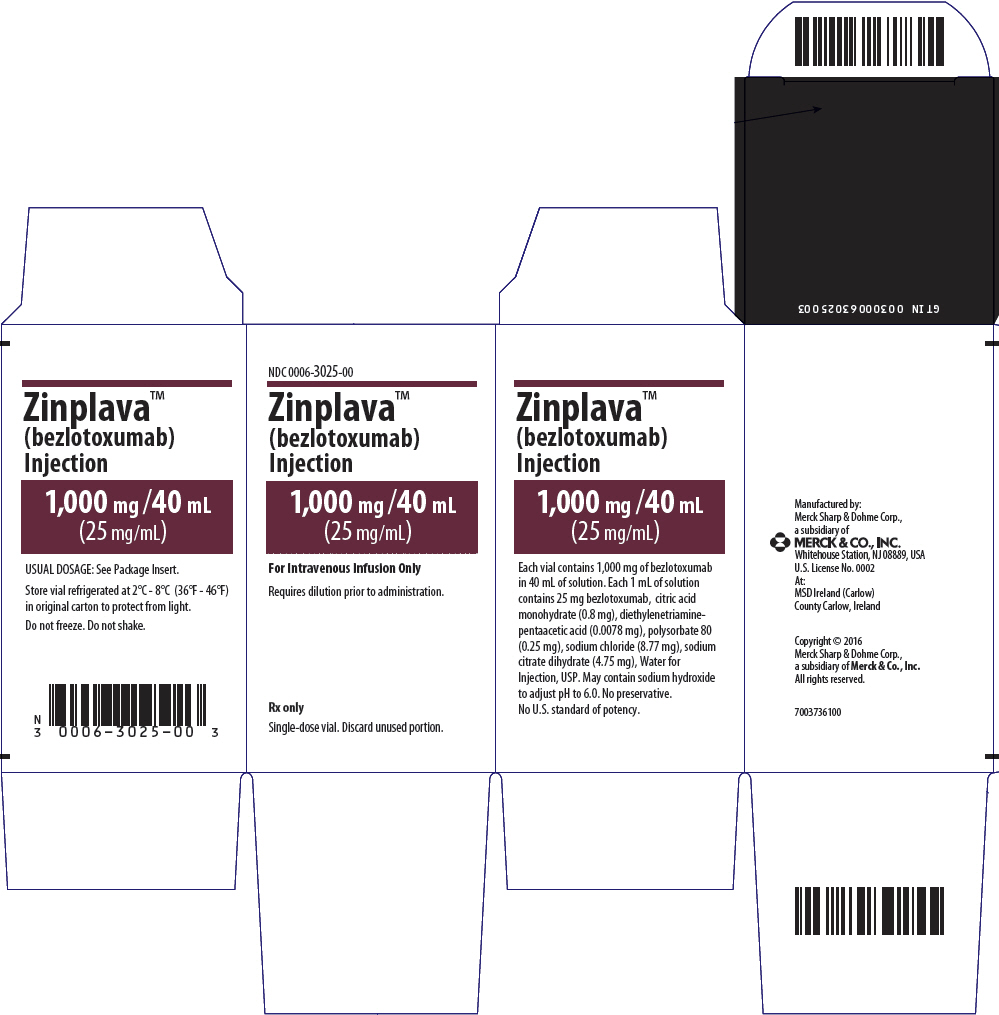
Principal Display Panel 1,000 Mg/40 Ml Vial Carton
NDC 0006-3025-00
Zinplava™
(bezlotoxumab)
Injection
1,000 mg /40 mL
(25 mg/mL)
For Intravenous Infusion Only
Requires dilution prior to administration.
Rx only
Single-dose vial. Discard unused portion.
13.1 Carcinogenesis, Mutagenesis, Impairment of Fertility
No studies have been performed to test the potential of bezlotoxumab for carcinogenicity or genotoxicity.
Fertility studies have not been conducted with bezlotoxumab.
2.2 Dosing Recommendations in Adults and Pediatric Patients 1 Year of Age and Older
The recommended dose of ZINPLAVA is a single dose of 10 mg/kg administered as an intravenous infusion over 60 minutes. The safety and efficacy of repeat administration of ZINPLAVA in patients with CDI have not been studied.
Structured Label Content
Section 42229-5 (42229-5)
Limitation of Use:
ZINPLAVA is not indicated for the treatment of CDI. ZINPLAVA is not an antibacterial drug. ZINPLAVA should only be used in conjunction with antibacterial drug treatment of CDI. [See Dosage and Administration (2.1).]
Section 42230-3 (42230-3)
| This Patient Information has been approved by the U.S. Food and Drug Administration. | Issued: 5/2023 |
|
Patient Information ZINPLAVA™ (zin-PLAH-va) (bezlotoxumab) injection, for intravenous use |
|
|
What is ZINPLAVA?
ZINPLAVA is a prescription medicine used to help decrease the risk of C-diff (Clostridioides difficile infection) from coming back in adults and children 1 year of age and older who are taking an antibiotic for C-diff and who have a high risk of C-diff coming back. ZINPLAVA is not used to treat C-diff and is not an antibiotic. ZINPLAVA should only be used along with the antibiotic that you are taking to treat C-diff. Keep taking your antibiotic for your C-diff as directed by your doctor. It is not known if ZINPLAVA is safe and effective in children under 1 year of age. |
|
Before receiving ZINPLAVA, tell your doctor about all of your medical conditions, including if you:
|
|
How will I receive ZINPLAVA?
|
|
|
What are the possible side effects of ZINPLAVA? ZINPLAVA may cause serious side effects, including:
The most common side effects that may happen on the day of or the day after receiving ZINPLAVA include: |
|
|
|
| The most common side effects that may happen up to four weeks after receiving ZINPLAVA include: | |
|
|
|
If you have any side effect that bothers you or does not go away, tell your doctor.
These are not all the possible side effects of ZINPLAVA. For more information, ask your doctor or pharmacist. Call your doctor for medical advice about side effects. You may report side effects to FDA at 1-800-FDA-1088. |
|
|
General information about the safe and effective use of ZINPLAVA.
Medicines are sometimes prescribed for purposes other than those listed in a Patient Information leaflet. You can ask your pharmacist or doctor for information about ZINPLAVA that is written for health professionals. |
|
|
What are the ingredients in ZINPLAVA?
The active ingredient is: bezlotoxumab The inactive ingredients are: citric acid monohydrate, diethylenetriaminepentaacetic acid, polysorbate 80, sodium chloride, sodium citrate dihydrate, and water for injection, USP. ZINPLAVA may also contain sodium hydroxide. For more information, call the company that makes ZINPLAVA, at 1-800-444-2080, or go to the website – www.ZINPLAVA.com. You can also find the full prescribing information written for health professionals at www.ZINPLAVA.com Manufactured by: Merck Sharp & Dohme LLC Rahway, NJ 07065, USA U.S. License No. 0002 At: MSD Ireland (Carlow) County Carlow, Ireland For patent information: www.msd.com/research/patent Copyright © 2016-2023 Merck & Co., Inc., Rahway, NJ, USA, and its affiliates All rights reserved. usppi-mk6072-iv-2305r002 |
Section 43679-0 (43679-0)
Mechanism of Action
Bezlotoxumab is a human monoclonal antibody that binds C. difficile toxin B with an equilibrium dissociation constant (Kd) of <1×10⁻⁹M. Bezlotoxumab inhibits the binding of toxin B and prevents its effects on mammalian cells. Bezlotoxumab does not bind to C. difficile toxin A.
Section 43683-2 (43683-2)
Section 44425-7 (44425-7)
Store in a refrigerator, 2ºC to 8ºC (36ºF to 46ºF) in original carton to protect from light. Do Not Freeze. Do Not Shake.
10 Overdosage (10 OVERDOSAGE)
There is no clinical experience with overdosage of ZINPLAVA. In case of overdose, patients should be closely monitored for signs or symptoms of adverse reactions, and appropriate symptomatic treatment should be instituted.
15 References (15 REFERENCES)
- Zar FA, Bakkanagari SR, Moorthi KM, Davis MB. A comparison of vancomycin and metronidazole for the treatment of Clostridium difficile-associated diarrhea, stratified by disease severity. Clin Infect Dis 2007;45(3):302-7.
11 Description (11 DESCRIPTION)
Bezlotoxumab is a human monoclonal antibody that binds to C. difficile toxin B and neutralizes its effects. Bezlotoxumab is an IgG1 immunoglobulin with an approximate molecular weight of 148.2 kDa.
ZINPLAVA (bezlotoxumab) Injection is a sterile, preservative-free, clear to moderately opalescent, colorless to pale yellow solution that requires dilution for intravenous infusion. The product is provided in a 50 mL vial that contains 1000 mg of bezlotoxumab in 40 mL of solution. Each mL of solution contains bezlotoxumab (25 mg), citric acid monohydrate (0.8 mg), diethylenetriaminepentaacetic acid (0.0078 mg), polysorbate 80 (0.25 mg), sodium chloride (8.77 mg), sodium citrate dihydrate (4.75 mg), and Water for Injection, USP. The vial may contain sodium hydroxide to adjust the pH to 6.0.
5.1 Heart Failure
Heart failure was reported more commonly in Trial 1 and Trial 2 in ZINPLAVA-treated patients compared to placebo-treated patients. These adverse reactions occurred primarily in patients with underlying congestive heart failure (CHF). In patients with a history of CHF, 12.7% (15/118) of ZINPLAVA-treated patients and 4.8% (5/104) of placebo-treated patients had the serious adverse reaction of heart failure during the 12-week study period [see Adverse Reactions (6.1)]. Additionally, in patients with a history of CHF, there were more deaths in ZINPLAVA-treated patients, 19.5% (23/118) than in placebo-treated patients, 12.5% (13/104) during the 12-week study period. The causes of death varied and included cardiac failure, infections, and respiratory failure.
In patients with a history of CHF, ZINPLAVA should be reserved for use when the benefit outweighs the risk.
8.4 Pediatric Use
The safety and effectiveness of ZINPLAVA to reduce recurrence of CDI have been established in pediatric patients 1 year of age and older. Use of ZINPLAVA in pediatric patients 1 year of age and older is supported by evidence from adequate and well-controlled trials in adults with additional pharmacokinetic and safety data in pediatric patients aged 1 year and older. The adverse reactions and the pharmacokinetics observed in pediatric patients were comparable to that observed in adult patients [see Adverse Reactions (6.1) and Clinical Pharmacology (12.3)].
The safety and effectiveness of ZINPLAVA have not been established in pediatric patients younger than 1 year of age.
8.5 Geriatric Use
Of the 786 patients treated with ZINPLAVA, 50% were 65 years of age and over, and 27% were 75 years of age and over. No overall differences in safety and efficacy were observed between these subjects and younger subjects [see Clinical Studies (14)]. No dose adjustment is necessary for patients ≥65 years of age [see Clinical Pharmacology (12.3)].
12.6 Immunogenicity
The observed incidence of anti-drug antibodies (ADA) is highly dependent on the sensitivity and specificity of the assay. Differences in assay methods preclude meaningful comparisons of the incidence of ADA in the studies described below with the incidence of ADA in other studies, including those of ZINPLAVA or of other bezlotoxumab products.
Following treatment with a single dose of ZINPLAVA in:
- Trial 1 and Trial 2 [see Clinical Studies (14)], none of the 710 evaluable adult patients with CDI developed anti-bezlotoxumab antibodies (referred to as ADA) through 12 weeks post-treatment.
- Trial 3 [see Adverse Reactions (6.1)], 2 of the 100 evaluable pediatric patients with CDI developed ADA through 12 weeks post-treatment.
Because of the low occurrence of ADA, the effect of these ADA on the pharmacokinetics, pharmacodynamics, safety and/or effectiveness of ZINPLAVA is unknown.
14 Clinical Studies (14 CLINICAL STUDIES)
Clinical Trials in Adults
The safety and efficacy of ZINPLAVA were investigated in two randomized, double-blind, placebo-controlled, multicenter, Phase 3 trials (Trial 1 and Trial 2) in patients receiving Standard of Care antibacterial drugs for treatment of CDI (SoC).
Randomization was stratified by SoC (metronidazole, vancomycin, or fidaxomicin) and hospitalization status (inpatient vs. outpatient) at the time of study entry.
Enrolled patients were 18 years of age or older and had a confirmed diagnosis of CDI, which was defined as diarrhea (passage of 3 or more loose bowel movements in 24 or fewer hours) and a positive stool test for toxigenic C. difficile from a stool sample collected no more than 7 days before study entry. Patients were excluded if surgery for CDI was planned, or if they had uncontrolled chronic diarrheal illness. Patients received a 10- to 14-day course of oral SoC and a single infusion of ZINPLAVA or placebo was administered during the course of SoC. Patients on oral vancomycin or oral fidaxomicin could have also received intravenous metronidazole. Choice of SoC was at the discretion of the health care provider. The day of the infusion of ZINPLAVA or placebo in relation to the start of SoC ranged from the day prior to the start of SoC to 14 days after the start of SoC with the median being day 3 of SoC.
In Trial 1, 403 patients were randomized to receive ZINPLAVA and 404 patients were randomized to receive placebo. In Trial 2, 407 subjects were randomized to receive ZINPLAVA and 399 patients were randomized to receive placebo. The Full Analysis Set (FAS) was a subset of all randomized subjects with exclusions for: (i) not receiving infusion of study medication; (ii) not having a positive local stool test for toxigenic C. difficile; (iii) not receiving protocol defined standard of care therapy within a 1 day window of the infusion. The baseline characteristics of the 1554 patients randomized to ZINPLAVA or placebo in the FAS were similar across treatment arms and in Trial 1 and Trial 2. The median age was 65 years, 85% were white, 57% were female, and 68% were inpatients. A similar proportion of patients received oral metronidazole (48%) or oral vancomycin (48%) and 4% of the patients received oral fidaxomicin as their SoC.
The following risk factors associated with a high risk of CDI recurrence or CDI-related adverse outcomes were present in the study population: 51% were ≥65 years of age, 39% received one or more systemic antibacterial drugs (during the 12-week follow-up period), 28% had one or more episodes of CDI within the six months prior to the episode under treatment (15% had two or more episodes prior to the episode under treatment), 21% were immunocompromised and 16% presented at study entry with clinically severe CDI (as defined by a Zar score of ≥21). A hypervirulent strain (ribotypes 027, 078 or 244) was isolated in 22% of patients who had a positive baseline culture, of which 87% (189 of 217 strains) were ribotype 027.
Patients were assessed for clinical cure of the presenting CDI episode, defined as no diarrhea for 2 consecutive days following the completion of a ≤14 day SoC regimen. Patients who achieved clinical cure were then assessed for recurrence of CDI through 12 weeks following administration of the infusion of ZINPLAVA or placebo. CDI recurrence was defined as the development of a new episode of diarrhea associated with a positive stool test for toxigenic C. difficile following clinical cure of the presenting CDI episode. Sustained clinical response was defined as clinical cure of the presenting CDI episode and no CDI recurrence through 12 weeks after infusion. Table 2 contains the results for Trial 1 and Trial 2.
| Trial | ZINPLAVA with SoC SoC = Standard of Care antibacterial drugs (metronidazole or vancomycin or fidaxomicin) for CDI
|
Placebo with SoC | Adjusted Difference (95% CI) Adjusted difference of ZINPLAVA-placebo (95% confidence interval) based on Miettinen and Nurminen method stratified by SoC antibacterial drugs (metronidazole vs. vancomycin vs. fidaxomicin) and hospitalization status (inpatient vs. outpatient).
|
|
|---|---|---|---|---|
| n (%) | n (%) | |||
| n (%) = Number (percentage) of subjects in the analysis population meeting the criteria for endpoint | ||||
| N = Number of subjects included in the analysis population | ||||
| 1 | N=386 | N=395 | ||
| Sustained clinical response | 232 (60.1) | 218 (55.2) | 4.8 (-2.1, 11.7) | |
| Reasons for failure to achieve sustained clinical response: | ||||
| Clinical failure | 87 (22.5) | 68 (17.2) | ||
| Recurrence | 67 (17.4) | 109 (27.6) | ||
| 2 | N=395 | N=378 | ||
| Sustained clinical response | 264 (66.8) | 197 (52.1) | 14.6 (7.7, 21.4) | |
| Reasons for failure to achieve sustained clinical response: | ||||
| Clinical failure | 69 (17.5) | 84 (22.2) | ||
| Recurrence | 62 (15.7) | 97 (25.7) |
In Trial 1, the clinical cure rate of the presenting CDI episode was lower in the ZINPLAVA arm as compared to the placebo arm and in Trial 2, the clinical cure rate was lower in the placebo arm compared to the ZINPLAVA arm. Patients in the ZINPLAVA and placebo arms who did not achieve clinical cure of the presenting CDI episode (no diarrhea for 2 consecutive days following the completion of a ≤14 day SoC regimen) received a mean of 18 to 19 days of SoC and had a mean of 4 additional days of diarrhea following completion of SoC. Additional analyses showed that by 3 weeks post study drug infusion the clinical cure rates of the presenting CDI episode were similar between treatment arms.
Efficacy results in patients at high risk for CDI recurrence (i.e., patients aged 65 years and older, with a history of CDI in the past 6 months, immunocompromised state, severe CDI at presentation, or C. difficile ribotype 027) were consistent with the efficacy results in the overall trial population in Trials 1 and 2.
4 Contraindications (4 CONTRAINDICATIONS)
None.
6 Adverse Reactions (6 ADVERSE REACTIONS)
- Adult Patients: The most common adverse reactions (reported in ≥4% of adult patients) included nausea, pyrexia, and headache. (6.1)
- Pediatric Patients: The most common adverse reactions (reported in >10% of pediatric patients) were pyrexia and headache (6.1)
To report SUSPECTED ADVERSE REACTIONS, contact Merck Sharp & Dohme LLC at 1-877-888-4231 or FDA at 1-800-FDA-1088 or www.fda.gov/medwatch .
7 Drug Interactions (7 DRUG INTERACTIONS)
Since ZINPLAVA is eliminated by catabolism, no metabolic drug-drug interactions are expected [see Clinical Pharmacology (12.3)].
12.3 Pharmacokinetics
The pharmacokinetics of bezlotoxumab were studied in 1515 adult CDI patients in two Phase 3 trials (Trial 1 and Trial 2). Based on a population PK analysis, the geometric mean (%CV) clearance of bezlotoxumab was 0.317 L/day (41%), with a mean volume of distribution of 7.33 L (16%), and elimination half-life (t½) of approximately 19 days (28%). After a single intravenous dose of 10 mg/kg ZINPLAVA, geometric mean AUC0-INF and Cmax were 53000 mcg∙h/mL and 185 mcg/mL, respectively, in the adult patients with CDI. The clearance of bezlotoxumab increased with increasing body weight; the resulting exposure differences are adequately addressed by the administration of a weight-based dose. Bezlotoxumab is eliminated by catabolism.
1 Indications and Usage (1 INDICATIONS AND USAGE)
ZINPLAVA™ is indicated to reduce recurrence of Clostridioides difficile infection (CDI) in adults and pediatric patients 1 year of age and older who are receiving antibacterial drug treatment for CDI and are at a high risk for CDI recurrence.
12.1 Mechanism of Action
ZINPLAVA (bezlotoxumab) is a human monoclonal antibody that binds to C. difficile toxin B and neutralizes its effects [see Microbiology (12.4)].
5 Warnings and Precautions (5 WARNINGS AND PRECAUTIONS)
Heart Failure: Was reported more commonly in ZINPLAVA-treated patients with a history of congestive heart failure (CHF) in Trial 1 and Trial 2. In patients with a history of CHF, ZINPLAVA should be reserved for use when the benefit outweighs the risk. (5.1)
2 Dosage and Administration (2 DOSAGE AND ADMINISTRATION)
- Administer ZINPLAVA during antibacterial drug treatment for CDI. (2.1)
- The recommended dose is a single dose of 10 mg/kg administered as an intravenous infusion over 60 minutes. (2.2)
- Dilute prior to intravenous infusion. Administer via a low-protein binding 0.2 micron to 5 micron in-line or add-on filter. See Full Prescribing Information for dilution and administration instructions. (2.3)
3 Dosage Forms and Strengths (3 DOSAGE FORMS AND STRENGTHS)
Injection: 1,000 mg/40 mL (25 mg/mL) clear to moderately opalescent, colorless to pale yellow solution in a single-dose vial.
6.1 Clinical Trials Experience
Because clinical trials are conducted under widely varying conditions, adverse reaction rates observed in the clinical trials of a drug cannot be directly compared to rates in the clinical trials of another drug and may not reflect the rates observed in practice.
Clinical Trials Experience in Adults
The safety of ZINPLAVA was evaluated in two placebo-controlled Phase 3 trials (Trial 1 n=390 and Trial 2 n=396). Patients received a single 10 mg/kg intravenous infusion of ZINPLAVA and concomitant standard of care (SoC) antibacterial drugs (metronidazole, vancomycin or fidaxomicin) for CDI. Adverse reactions reported within the first 4 weeks after ZINPLAVA was administered are described for the pooled Phase 3 trial population of 786 patients. The median age of patients receiving ZINPLAVA was 65 years (range 18 to 100), 50% were age 65 years or older, 56% were female, and 83% were white.
Serious Adverse Reactions in Adults
Serious adverse reactions occurring within 12 weeks following infusion were reported in 29% of ZINPLAVA-treated patients and 33% of placebo-treated patients. Heart failure was reported as a serious adverse reaction in 2.3% of the ZINPLAVA-treated patients and 1.0% of the placebo-treated patients [see Warnings and Precautions (5.1)].
One patient discontinued the ZINPLAVA infusion due to ventricular tachyarrhythmia that occurred 30 minutes after the start of the infusion.
Mortality rates were 7.1% and 7.6% in ZINPLAVA-treated patients and placebo-treated patients, respectively, during the 12-week follow-up period.
Most Common Adverse Reactions in Adults
The most common adverse reactions following treatment with ZINPLAVA (reported in ≥4% of patients within the first 4 weeks of infusion and with a frequency greater than placebo) were nausea, pyrexia, and headache (see Table 1).
| Adverse Reaction | ZINPLAVA with SoC SoC = Standard of Care antibacterial drugs (metronidazole or vancomycin or fidaxomicin) for CDI
N=786 % |
Placebo with SoC
N=781 % |
|---|---|---|
| Gastrointestinal disorders | ||
| Nausea | 7% | 5% |
| General disorders and administration site conditions | ||
| Pyrexia | 5% | 3% |
| Nervous system disorders | ||
| Headache | 4% | 3% |
17 Patient Counseling Information (17 PATIENT COUNSELING INFORMATION)
Advise the patient to read the FDA-approved patient labeling (Patient Information).
16 How Supplied/storage and Handling (16 HOW SUPPLIED/STORAGE AND HANDLING)
ZINPLAVA Injection: is a sterile, preservative-free, clear to moderately opalescent, colorless to pale yellow solution and is supplied in the following packaging configuration:
Carton (NDC 0006-3025-00) containing one (1) single-dose vial of ZINPLAVA 1,000 mg/40 mL (25 mg/mL).
2.1 Important Administration Instructions
Administer ZINPLAVA during antibacterial drug treatment for CDI.
Principal Display Panel 1,000 Mg/40 Ml Vial Carton (PRINCIPAL DISPLAY PANEL - 1,000 mg/40 mL Vial Carton)
NDC 0006-3025-00
Zinplava™
(bezlotoxumab)
Injection
1,000 mg /40 mL
(25 mg/mL)
For Intravenous Infusion Only
Requires dilution prior to administration.
Rx only
Single-dose vial. Discard unused portion.
13.1 Carcinogenesis, Mutagenesis, Impairment of Fertility
No studies have been performed to test the potential of bezlotoxumab for carcinogenicity or genotoxicity.
Fertility studies have not been conducted with bezlotoxumab.
2.2 Dosing Recommendations in Adults and Pediatric Patients 1 Year of Age and Older (2.2 Dosing Recommendations in Adults and Pediatric Patients 1 year of age and older)
The recommended dose of ZINPLAVA is a single dose of 10 mg/kg administered as an intravenous infusion over 60 minutes. The safety and efficacy of repeat administration of ZINPLAVA in patients with CDI have not been studied.
Advanced Ingredient Data
Raw Label Data
All Sections (JSON)
Additional Information
Back to search View SPL set listing Open on DailyMed ↗
Source: dailymed · Ingested: 2026-02-15T11:43:57.860715 · Updated: 2026-03-14T22:48:45.434128