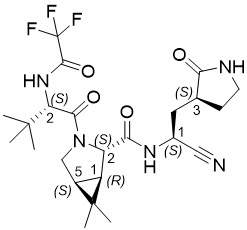
Paxlovid
8a99d6d6-fd9e-45bb-b1bf-48c7f761232a
34391-3
HUMAN PRESCRIPTION DRUG LABEL
Drug Facts
Composition & Product
Identifiers & Packaging
Indications and Usage
PAXLOVID is indicated for the treatment of mild-to-moderate coronavirus disease 2019 (COVID-19) in adults who are at high risk for progression to severe COVID-19, including hospitalization or death.
Dosage and Administration
PAXLOVID is nirmatrelvir tablets co-packaged with ritonavir tablets. There are three different dose packs available: • PAXLOVID (nirmatrelvir; ritonavir) co-packaged for oral use 300 mg;100 mg [see Dosage and Administration (2.2) ] . • PAXLOVID (nirmatrelvir; ritonavir) co-packaged for oral use 150 mg;100 mg for patients with moderate renal impairment [see Dosage and Administration (2.3) ]. • PAXLOVID (nirmatrelvir; ritonavir) co-packaged for oral use 300 mg;100 mg (Day 1) and 150 mg;100 mg (Days 2-5) for patients with severe renal impairment [see Dosage and Administration (2.3) ]. Nirmatrelvir must be co-administered with ritonavir. Failure to correctly co-administer nirmatrelvir with ritonavir may result in plasma levels of nirmatrelvir that are insufficient to achieve the desired therapeutic effect. Prescriptions should specify the numeric dose of each active ingredient within PAXLOVID [see Dosage and Administration (2.2 , 2.3 )]. Completion of the full 5-day treatment course and continued isolation in accordance with public health recommendations are important to maximize viral clearance and minimize transmission of SARS-CoV-2. The 5-day treatment course of PAXLOVID should be initiated as soon as possible after a diagnosis of COVID-19 has been made, and within 5 days of symptom onset even if baseline COVID-19 symptoms are mild. Should a patient require hospitalization due to severe or critical COVID-19 after starting treatment with PAXLOVID, the patient should complete the full 5-day treatment course per the healthcare provider's discretion. If the patient misses a dose of PAXLOVID within 8 hours of the time it is usually taken, the patient should take it as soon as possible and resume the normal dosing schedule. If the patient misses a dose by more than 8 hours, the patient should not take the missed dose and instead take the next dose at the regularly scheduled time. The patient should not double the dose to make up for a missed dose. PAXLOVID (both nirmatrelvir and ritonavir tablets) can be taken with or without food [see Clinical Pharmacology (12.3) ] . The tablets should be swallowed whole and not chewed, broken, or crushed.
Contraindications
PAXLOVID is contraindicated in patients with a history of clinically significant hypersensitivity reactions [e.g., toxic epidermal necrolysis (TEN) or Stevens-Johnson syndrome] to its active ingredients (nirmatrelvir or ritonavir) or any other components of the product. PAXLOVID is contraindicated with drugs that are primarily metabolized by CYP3A and for which elevated concentrations are associated with serious and/or life-threatening reactions and drugs that are strong CYP3A inducers where significantly reduced nirmatrelvir or ritonavir plasma concentrations may be associated with the potential for loss of virologic response and possible resistance. There are certain other drugs for which concomitant use with PAXLOVID should be avoided and/or dose adjustment, interruption, or therapeutic monitoring is recommended. Drugs listed in this section are a guide and not considered a comprehensive list of all drugs that may be contraindicated with PAXLOVID. The healthcare provider should consult other appropriate resources such as the prescribing information for the interacting drug for comprehensive information on dosing or monitoring with concomitant use of a strong CYP3A inhibitor like PAXLOVID [see Drug Interactions (7.3) ] : ➢ Drugs that are primarily metabolized by CYP3A for which elevated concentrations are associated with serious and/or life-threatening reactions [see Drug Interactions (7.3) ] : • Alpha 1-adrenoreceptor antagonist: alfuzosin • Antianginal: ranolazine • Antiarrhythmic: amiodarone, dronedarone, flecainide, propafenone, quinidine • Anti-gout: colchicine (in patients with renal and/or hepatic impairment [see Table 2 , Drug Interactions (7.3)] ) • Antipsychotics: lurasidone, pimozide • Benign prostatic hyperplasia agents: silodosin • Cardiovascular agents: eplerenone, ivabradine • Ergot derivatives: dihydroergotamine, ergotamine, methylergonovine • HMG-CoA reductase inhibitors: lovastatin, simvastatin (these drugs can be temporarily discontinued to allow PAXLOVID use [see Table 2 , Drug Interactions (7.3) ] ) • Immunosuppressants: voclosporin • Microsomal triglyceride transfer protein inhibitor: lomitapide • Migraine medications: eletriptan, ubrogepant • Mineralocorticoid receptor antagonists: finerenone • Non-opioid analgesic (selective blocker of Na v 1.8 sodium channels): suzetrigine • Opioid antagonists: naloxegol • PDE5 inhibitor: sildenafil (Revatio ® ) when used for pulmonary arterial hypertension (PAH) • Sedative/hypnotics: triazolam, oral midazolam • Serotonin receptor 1A agonist/serotonin receptor 2A antagonist: flibanserin • Vasopressin receptor antagonists: tolvaptan ➢ Drugs that are strong CYP3A inducers where significantly reduced nirmatrelvir or ritonavir plasma concentrations may be associated with the potential for loss of virologic response and possible resistance. PAXLOVID cannot be started immediately after discontinuation of any of the following medications due to the delayed offset of the recently discontinued CYP3A inducer [see Drug Interactions (7.3) ] : • Anticancer drugs: apalutamide, enzalutamide • Anticonvulsant: carbamazepine, phenobarbital, primidone, phenytoin • Antimycobacterials: rifampin, rifapentine • Cystic fibrosis transmembrane conductance regulator potentiators: lumacaftor/ivacaftor • Herbal products: St. John's Wort ( hypericum perforatum )
Warnings and Precautions
• The concomitant use of PAXLOVID and certain other drugs may result in potentially significant drug interactions. Consult the Full Prescribing Information prior to and during treatment for potential drug interactions. ( 5.1 , 7 ) • Hypersensitivity Reactions: Anaphylaxis, serious skin reactions (including toxic epidermal necrolysis and Stevens-Johnson syndrome), and other hypersensitivity reactions have been reported with PAXLOVID. If signs and symptoms of a clinically significant hypersensitivity reaction or anaphylaxis occur, immediately discontinue PAXLOVID and initiate appropriate medications and/or supportive care. ( 5.2 ) • Hepatotoxicity: Hepatic transaminase elevations, clinical hepatitis, and jaundice have occurred in patients receiving ritonavir. ( 5.3 ) • HIV-1 Drug Resistance: PAXLOVID use may lead to a risk of HIV-1 developing resistance to HIV protease inhibitors in individuals with uncontrolled or undiagnosed HIV-1 infection. ( 5.4 )
Adverse Reactions
The following clinically significant adverse reactions are described elsewhere in the labeling: • Hypersensitivity reactions [see Warnings and Precautions (5.2) ]
Drug Interactions
Table 2 provides a listing of clinically significant drug interactions, including contraindicated drugs [see Contraindications (4) and Warnings and Precautions (5.1) ] . Drugs listed in Table 2 are a guide and not considered a comprehensive list of all possible drugs that may interact with PAXLOVID. The healthcare provider should consult other appropriate resources such as the prescribing information for the interacting drug for comprehensive information on dosing or monitoring with concomitant use of a strong CYP3A inhibitor such as ritonavir. Table 2: Established and Other Potentially Significant Drug Interactions Drug Class Drugs within Class Effect on Concentration Clinical Comments Alpha 1- adrenoreceptor antagonist alfuzosin ↑ alfuzosin Co-administration contraindicated due to potential hypotension [see Contraindications (4) ] . Alpha 1- adrenoreceptor antagonist tamsulosin ↑ tamsulosin Avoid concomitant use with PAXLOVID. Antianginal ranolazine ↑ ranolazine Co-administration contraindicated due to potential for serious and/or life-threatening reactions [see Contraindications (4) ] . Antiarrhythmics amiodarone, dronedarone, flecainide, propafenone, quinidine ↑ antiarrhythmic Co-administration contraindicated due to potential for cardiac arrhythmias [see Contraindications (4) ] . Antiarrhythmics lidocaine (systemic), disopyramide ↑ antiarrhythmic Caution is warranted and therapeutic concentration monitoring is recommended for antiarrhythmics if available. Anticancer drugs apalutamide, enzalutamide ↓ nirmatrelvir/ritonavir Co-administration contraindicated due to potential loss of virologic response and possible resistance [see Contraindications (4) ]. Anticancer drugs abemaciclib, ceritinib, dasatinib, encorafenib, ibrutinib, ivosidenib, neratinib, nilotinib, venetoclax, vinblastine, vincristine ↑ anticancer drugs Avoid co-administration of encorafenib or ivosidenib due to potential risk of serious adverse events such as QT interval prolongation. Avoid use of neratinib, venetoclax or ibrutinib. Co-administration of vincristine and vinblastine may lead to significant hematologic or gastrointestinal side effects. For further information, refer to the individual product prescribing information for anticancer drug. Anticoagulants warfarin ↑↓ warfarin Closely monitor international normalized ratio (INR) if co-administration with warfarin is necessary. rivaroxaban ↑ rivaroxaban Increased bleeding risk with rivaroxaban. Avoid concomitant use. dabigatran See Pharmacokinetics, Clinical Drug Interaction Studies (12.3) . ↑ dabigatran Increased bleeding risk with dabigatran. Depending on dabigatran indication and renal function, reduce dose of dabigatran or avoid concomitant use. Refer to the dabigatran prescribing information for further information. apixaban ↑ apixaban Combined P-gp and strong CYP3A inhibitors increase blood levels of apixaban and increase the risk of bleeding. Dosing recommendations for co-administration of apixaban with PAXLOVID depend on the apixaban dose. Refer to the apixaban prescribing information for more information. Anticonvulsants carbamazepine , phenobarbital, primidone, phenytoin ↓ nirmatrelvir/ritonavir Co-administration contraindicated due to potential loss of virologic response and possible resistance [see Contraindications (4) ] . Anticonvulsants clonazepam ↑ anticonvulsant A dose decrease may be needed for clonazepam when co-administered with PAXLOVID and clinical monitoring is recommended. Antidepressants bupropion ↓ bupropion and active metabolite hydroxy-bupropion Monitor for an adequate clinical response to bupropion. trazodone ↑ trazodone Adverse reactions of nausea, dizziness, hypotension, and syncope have been observed following co-administration of trazodone and ritonavir. A lower dose of trazodone should be considered. Refer to the trazadone prescribing information for further information. Antifungals voriconazole ↓ voriconazole Avoid concomitant use of voriconazole. ketoconazole, isavuconazonium sulfate, itraconazole ↑ ketoconazole ↑ isavuconazonium sulfate ↑ itraconazole Refer to the ketoconazole, isavuconazonium sulfate, and itraconazole prescribing information for further information. ↑ nirmatrelvir/ritonavir A nirmatrelvir/ritonavir dose reduction is not needed. Anti-gout colchicine ↑ colchicine Co-administration contraindicated due to potential for serious and/or life-threatening reactions in patients with renal and/or hepatic impairment [see Contraindications (4) ] . Anti-HIV protease inhibitors atazanavir, darunavir, tipranavir ↑ protease inhibitor For further information, refer to the respective protease inhibitors' prescribing information. Patients on ritonavir- or cobicistat-containing HIV regimens should continue their treatment as indicated. Monitor for increased PAXLOVID or protease inhibitor adverse events . Anti-HIV efavirenz, maraviroc, nevirapine, zidovudine, bictegravir/ emtricitabine/ tenofovir ↑ efavirenz ↑ maraviroc ↑ nevirapine ↓ zidovudine ↑ bictegravir ↔ emtricitabine ↑ tenofovir For further information, refer to the respective anti-HIV drugs prescribing information. Anti-infective clarithromycin, erythromycin ↑ clarithromycin ↑ erythromycin Refer to the respective prescribing information for anti-infective dose adjustment. Antimycobacterial rifampin, rifapentine ↓ nirmatrelvir/ritonavir Co-administration contraindicated due to potential loss of virologic response and possible resistance. Alternate antimycobacterial drugs such as rifabutin should be considered [see Contraindications (4) ] . Antimycobacterial bedaquiline ↑ bedaquiline Refer to the bedaquiline prescribing information for further information. rifabutin ↑ rifabutin Refer to the rifabutin prescribing information for further information on rifabutin dose reduction. Antipsychotics lurasidone, pimozide ↑ lurasidone ↑ pimozide Co-administration contraindicated due to serious and/or life-threatening reactions such as cardiac arrhythmias [see Contraindications (4) ] . Antipsychotics quetiapine ↑ quetiapine If co-administration is necessary, reduce quetiapine dose and monitor for quetiapine-associated adverse reactions. Refer to the quetiapine prescribing information for recommendations. clozapine ↑ clozapine If co-administration is necessary, consider reducing the clozapine dose and monitor for adverse reactions. Benign prostatic hyperplasia agents silodosin ↑ silodosin Co-administration contraindicated due to potential for postural hypotension [see Contraindications (4) ] . Calcium channel blockers amlodipine, diltiazem, felodipine, nicardipine, nifedipine, verapamil ↑ calcium channel blocker Caution is warranted and clinical monitoring of patients is recommended. A dose decrease may be needed for these drugs when co-administered with PAXLOVID. If co-administered, refer to the individual product prescribing information for calcium channel blocker for further information. Cardiac glycosides digoxin ↑ digoxin Caution should be exercised when co-administering PAXLOVID with digoxin, with appropriate monitoring of serum digoxin levels. Refer to the digoxin prescribing information for further information. Cardiovascular agents eplerenone ↑ eplerenone Co-administration with eplerenone is contraindicated due to potential for hyperkalemia [see Contraindications (4) ] . ivabradine ↑ ivabradine Co-administration with ivabradine is contraindicated due to potential for bradycardia or conduction disturbances [see Contraindications (4) ] . Cardiovascular agents aliskiren, ticagrelor, vorapaxar clopidogrel ↑ aliskiren ↑ ticagrelor ↑ vorapaxar ↓ clopidogrel active metabolite Avoid concomitant use with PAXLOVID. cilostazol ↑ cilostazol Dosage adjustment of cilostazol is recommended. Refer to the cilostazol prescribing information for more information. mavacamten ↑ mavacamten Co-administration with mavacamten may increase mavacamten plasma concentration and increase the risk of heart failure. Discontinue mavacamten for the duration of PAXLOVID treatment. Resumption of mavacamten within 5 days of completing PAXLOVID may result in higher exposure of mavacamten. Refer to the mavacamten prescribing information for more information. Corticosteroids primarily metabolized by CYP3A betamethasone, budesonide, ciclesonide, dexamethasone, fluticasone, methylprednisolone, mometasone, triamcinolone ↑ corticosteroid Co-administration with corticosteroids (all routes of administration) of which exposures are significantly increased by strong CYP3A inhibitors can increase the risk for Cushing’s syndrome and adrenal suppression. However, the risk of Cushing’s syndrome and adrenal suppression associated with short-term use of a strong CYP3A inhibitor is low. Alternative corticosteroids including beclomethasone, prednisone, and prednisolone should be considered. Cystic fibrosis transmembrane conductance regulator potentiators lumacaftor/ivacaftor ↓ nirmatrelvir/ritonavir Co-administration contraindicated due to potential loss of virologic response and possible resistance [see Contraindications (4) ] . Cystic fibrosis transmembrane conductance regulator potentiators ivacaftor elexacaftor/tezacaftor/ ivacaftor tezacaftor/ivacaftor ↑ ivacaftor ↑ elexacaftor/tezacaftor/ ivacaftor ↑ tezacaftor/ivacaftor Reduce dosage when co-administered with PAXLOVID. Refer to the individual product prescribing information for more information. Dipeptidyl peptidase 4 (DPP4) inhibitors saxagliptin ↑ saxagliptin Dosage adjustment of saxagliptin is recommended. Refer to the saxagliptin prescribing information for more information. Endothelin receptor antagonists bosentan ↑ bosentan ↓ nirmatrelvir/ritonavir Discontinue use of bosentan at least 36 hours prior to initiation of PAXLOVID. Refer to the bosentan prescribing information for further information. Ergot derivatives dihydroergotamine, ergotamine, methylergonovine ↑ dihydroergotamine ↑ ergotamine ↑ methylergonovine Co-administration contraindicated due to potential for acute ergot toxicity characterized by vasospasm and ischemia of the extremities and other tissues including the central nervous system [see Contraindications (4) ] . Hepatitis C direct acting antivirals elbasvir/grazoprevir ↑ antiviral Increased grazoprevir concentrations can result in alanine transaminase (ALT) elevations. glecaprevir/pibrentasvir Avoid concomitant use of glecaprevir/pibrentasvir with PAXLOVID. ombitasvir/paritaprevir/ritonavir and dasabuvir Refer to the ombitasvir/paritaprevir/ritonavir and dasabuvir label for further information. sofosbuvir/velpatasvir/voxilaprevir Refer to the sofosbuvir/velpatasvir/voxilaprevir prescribing information for further information. Patients on ritonavir-containing HCV regimens should continue their treatment as indicated. Monitor for increased PAXLOVID or HCV drug adverse events with concomitant use . Herbal products St. John's Wort ( hypericum perforatum ) ↓ nirmatrelvir/ritonavir Co-administration contraindicated due to potential loss of virologic response and possible resistance [see Contraindications (4) ] . HMG-CoA reductase inhibitors lovastatin, simvastatin ↑ lovastatin ↑ simvastatin Co-administration contraindicated due to potential for myopathy including rhabdomyolysis [see Contraindications (4) ] . If treatment with PAXLOVID is considered medically necessary, discontinue use of lovastatin and simvastatin at least 12 hours prior to initiation of PAXLOVID, during the 5 days of PAXLOVID treatment, and for 5 days after completing PAXLOVID. HMG-CoA reductase inhibitors atorvastatin ↑ atorvastatin Consider temporary discontinuation of atorvastatin during treatment with PAXLOVID. Atorvastatin does not need to be withheld prior to or after completing PAXLOVID. Hormonal contraceptive ethinyl estradiol ↓ ethinyl estradiol An additional, non-hormonal method of contraception should be considered during the 5 days of PAXLOVID treatment and until one menstrual cycle after stopping PAXLOVID. Immunosuppressants voclosporin ↑ voclosporin Co-administration contraindicated due to potential for acute and/or chronic nephrotoxicity [see Contraindications (4) ] . Immunosuppressants calcineurin inhibitors: cyclosporine, tacrolimus ↑ cyclosporine ↑ tacrolimus Avoid concomitant use of calcineurin inhibitors with PAXLOVID when close monitoring of immunosuppressant concentrations is not feasible. If co-administered, dose adjustment of the immunosuppressant and close and regular monitoring for immunosuppressant concentrations and adverse reactions are recommended during and after treatment with PAXLOVID. Obtain expert consultation to appropriately manage the complexity of this co-administration [see Warnings and Precautions (5.1) ] . mTOR inhibitors: everolimus, sirolimus ↑ everolimus ↑ sirolimus Avoid concomitant use of everolimus and sirolimus and PAXLOVID. Refer to the individual immunosuppressant prescribing information and latest guidelines for further information. Janus kinase (JAK) inhibitors tofacitinib ↑ tofacitinib Dosage adjustment of tofacitinib is recommended. Refer to the tofacitinib prescribing information for more information. upadacitinib ↑ upadacitinib Dosing recommendations for co-administration of upadacitinib with PAXLOVID depends on the upadacitinib indication. Refer to the upadacitinib prescribing information for more information. Long-acting beta-adrenoceptor agonist salmeterol ↑ salmeterol Avoid concomitant use with PAXLOVID. The combination may result in increased risk of cardiovascular adverse events associated with salmeterol, including QT prolongation, palpitations, and sinus tachycardia. Microsomal triglyceride transfer protein (MTTP) inhibitor lomitapide ↑ lomitapide Co-administration contraindicated due to potential for hepatotoxicity and gastrointestinal adverse reactions [see Contraindications (4) ] . Migraine medications eletriptan ↑ eletriptan Co-administration of eletriptan within at least 72 hours of PAXLOVID is contraindicated due to potential for serious adverse reactions including cardiovascular and cerebrovascular events [see Contraindications (4) ] . ubrogepant ↑ ubrogepant Co-administration of ubrogepant with PAXLOVID is contraindicated due to potential for serious adverse reactions [see Contraindications (4) ] . Migraine medications rimegepant ↑ rimegepant Avoid concomitant use with PAXLOVID. Mineralocorticoid receptor antagonists finerenone ↑ finerenone Co-administration contraindicated due to potential for serious adverse reactions including hyperkalemia, hypotension, and hyponatremia [see Contraindications (4) ] . Muscarinic receptor antagonists darifenacin ↑ darifenacin The darifenacin daily-dose should not exceed 7.5 mg when co-administered with PAXLOVID. Refer to the darifenacin prescribing information for more information. Narcotic analgesics fentanyl, hydrocodone, oxycodone, meperidine ↑ fentanyl ↑ hydrocodone ↑ oxycodone ↑ meperidine Careful monitoring of therapeutic and adverse effects (including potentially fatal respiratory depression) is recommended when fentanyl, hydrocodone, oxycodone, or meperidine is concomitantly administered with PAXLOVID. If concomitant use with PAXLOVID is necessary, consider a dosage reduction of the narcotic analgesic and monitor patients closely at frequent intervals. Refer to the individual product prescribing information for more information. methadone ↓ methadone Monitor methadone-maintained patients closely for evidence of withdrawal effects and adjust the methadone dose accordingly. Neuropsychiatric agents suvorexant ↑ suvorexant Avoid concomitant use of suvorexant with PAXLOVID. aripiprazole, brexpiprazole, cariprazine, iloperidone, lumateperone, pimavanserin ↑ aripiprazole ↑ brexpiprazole ↑ cariprazine ↑ iloperidone ↑ lumateperone ↑ pimavanserin Dosage adjustment of aripiprazole, brexpiprazole, cariprazine, iloperidone, lumateperone, and pimavanserin is recommended. Refer to the individual product prescribing information for more information. Non-opioid analgesic (selective blocker of Na v 1.8 sodium channels) suzetrigine ↑ suzetrigine and active metabolite M6‑SUZ Co-administration contraindicated due to potential for serious and/or life-threatening suzetrigine adverse reactions [see Contraindications (4) ] . Opioid antagonists naloxegol ↑ naloxegol Co-administration contraindicated due to the potential for opioid withdrawal symptoms [see Contraindications (4) ] . Pulmonary hypertension agents (PDE5 inhibitors) sildenafil (Revatio ® ) ↑ sildenafil Co-administration of sildenafil with PAXLOVID is contraindicated for use in pulmonary hypertension due to the potential for sildenafil associated adverse events, including visual abnormalities hypotension, prolonged erection, and syncope [see Contraindications (4) ] . Pulmonary hypertension agents (PDE5 inhibitors) tadalafil (Adcirca ® ) ↑ tadalafil Avoid concomitant use of tadalafil with PAXLOVID for pulmonary hypertension. Pulmonary hypertension agents (sGC stimulators) riociguat ↑ riociguat Dosage adjustment is recommended for riociguat when used for pulmonary hypertension. Refer to the riociguat prescribing information for more information. Erectile dysfunction agents (PDE5 inhibitors) avanafil ↑ avanafil Do not use PAXLOVID with avanafil because a safe and effective avanafil dosage regimen has not been established. sildenafil, tadalafil, vardenafil ↑ sildenafil ↑ tadalafil ↑ vardenafil Dosage adjustment is recommended for use of sildenafil, tadalafil or vardenafil with PAXLOVID when used for erectile dysfunction. Refer to the individual product prescribing information for more information. Sedative/hypnotics triazolam, oral midazolam ↑ triazolam ↑ midazolam Co-administration contraindicated due to potential for extreme sedation and respiratory depression [see Contraindications (4) ] . Sedative/hypnotics buspirone, clorazepate, diazepam, estazolam, flurazepam, zolpidem ↑ sedative/hypnotic A dose decrease may be needed for these drugs when co-administered with PAXLOVID and monitoring for adverse events. midazolam (administered parenterally) ↑ midazolam Co-administration of midazolam (parenteral) should be done in a setting which ensures close clinical monitoring and appropriate medical management in case of respiratory depression and/or prolonged sedation. Dosage reduction for midazolam should be considered, especially if more than a single dose of midazolam is administered. Refer to the midazolam prescribing information for further information. Serotonin receptor 1A agonist/ serotonin receptor 2A antagonist flibanserin ↑ flibanserin Co-administration contraindicated due to potential for hypotension, syncope, and CNS depression [see Contraindications (4) ] . Vasopressin receptor antagonists tolvaptan ↑ tolvaptan Co-administration contraindicated due to potential for dehydration, hypovolemia and hyperkalemia [see Contraindications (4) ] .
Description
Contraindications ( 4 ) 02/2026
Medication Information
Warnings and Precautions
• The concomitant use of PAXLOVID and certain other drugs may result in potentially significant drug interactions. Consult the Full Prescribing Information prior to and during treatment for potential drug interactions. ( 5.1 , 7 ) • Hypersensitivity Reactions: Anaphylaxis, serious skin reactions (including toxic epidermal necrolysis and Stevens-Johnson syndrome), and other hypersensitivity reactions have been reported with PAXLOVID. If signs and symptoms of a clinically significant hypersensitivity reaction or anaphylaxis occur, immediately discontinue PAXLOVID and initiate appropriate medications and/or supportive care. ( 5.2 ) • Hepatotoxicity: Hepatic transaminase elevations, clinical hepatitis, and jaundice have occurred in patients receiving ritonavir. ( 5.3 ) • HIV-1 Drug Resistance: PAXLOVID use may lead to a risk of HIV-1 developing resistance to HIV protease inhibitors in individuals with uncontrolled or undiagnosed HIV-1 infection. ( 5.4 )
Indications and Usage
PAXLOVID is indicated for the treatment of mild-to-moderate coronavirus disease 2019 (COVID-19) in adults who are at high risk for progression to severe COVID-19, including hospitalization or death.
Dosage and Administration
PAXLOVID is nirmatrelvir tablets co-packaged with ritonavir tablets. There are three different dose packs available: • PAXLOVID (nirmatrelvir; ritonavir) co-packaged for oral use 300 mg;100 mg [see Dosage and Administration (2.2) ] . • PAXLOVID (nirmatrelvir; ritonavir) co-packaged for oral use 150 mg;100 mg for patients with moderate renal impairment [see Dosage and Administration (2.3) ]. • PAXLOVID (nirmatrelvir; ritonavir) co-packaged for oral use 300 mg;100 mg (Day 1) and 150 mg;100 mg (Days 2-5) for patients with severe renal impairment [see Dosage and Administration (2.3) ]. Nirmatrelvir must be co-administered with ritonavir. Failure to correctly co-administer nirmatrelvir with ritonavir may result in plasma levels of nirmatrelvir that are insufficient to achieve the desired therapeutic effect. Prescriptions should specify the numeric dose of each active ingredient within PAXLOVID [see Dosage and Administration (2.2 , 2.3 )]. Completion of the full 5-day treatment course and continued isolation in accordance with public health recommendations are important to maximize viral clearance and minimize transmission of SARS-CoV-2. The 5-day treatment course of PAXLOVID should be initiated as soon as possible after a diagnosis of COVID-19 has been made, and within 5 days of symptom onset even if baseline COVID-19 symptoms are mild. Should a patient require hospitalization due to severe or critical COVID-19 after starting treatment with PAXLOVID, the patient should complete the full 5-day treatment course per the healthcare provider's discretion. If the patient misses a dose of PAXLOVID within 8 hours of the time it is usually taken, the patient should take it as soon as possible and resume the normal dosing schedule. If the patient misses a dose by more than 8 hours, the patient should not take the missed dose and instead take the next dose at the regularly scheduled time. The patient should not double the dose to make up for a missed dose. PAXLOVID (both nirmatrelvir and ritonavir tablets) can be taken with or without food [see Clinical Pharmacology (12.3) ] . The tablets should be swallowed whole and not chewed, broken, or crushed.
Contraindications
PAXLOVID is contraindicated in patients with a history of clinically significant hypersensitivity reactions [e.g., toxic epidermal necrolysis (TEN) or Stevens-Johnson syndrome] to its active ingredients (nirmatrelvir or ritonavir) or any other components of the product. PAXLOVID is contraindicated with drugs that are primarily metabolized by CYP3A and for which elevated concentrations are associated with serious and/or life-threatening reactions and drugs that are strong CYP3A inducers where significantly reduced nirmatrelvir or ritonavir plasma concentrations may be associated with the potential for loss of virologic response and possible resistance. There are certain other drugs for which concomitant use with PAXLOVID should be avoided and/or dose adjustment, interruption, or therapeutic monitoring is recommended. Drugs listed in this section are a guide and not considered a comprehensive list of all drugs that may be contraindicated with PAXLOVID. The healthcare provider should consult other appropriate resources such as the prescribing information for the interacting drug for comprehensive information on dosing or monitoring with concomitant use of a strong CYP3A inhibitor like PAXLOVID [see Drug Interactions (7.3) ] : ➢ Drugs that are primarily metabolized by CYP3A for which elevated concentrations are associated with serious and/or life-threatening reactions [see Drug Interactions (7.3) ] : • Alpha 1-adrenoreceptor antagonist: alfuzosin • Antianginal: ranolazine • Antiarrhythmic: amiodarone, dronedarone, flecainide, propafenone, quinidine • Anti-gout: colchicine (in patients with renal and/or hepatic impairment [see Table 2 , Drug Interactions (7.3)] ) • Antipsychotics: lurasidone, pimozide • Benign prostatic hyperplasia agents: silodosin • Cardiovascular agents: eplerenone, ivabradine • Ergot derivatives: dihydroergotamine, ergotamine, methylergonovine • HMG-CoA reductase inhibitors: lovastatin, simvastatin (these drugs can be temporarily discontinued to allow PAXLOVID use [see Table 2 , Drug Interactions (7.3) ] ) • Immunosuppressants: voclosporin • Microsomal triglyceride transfer protein inhibitor: lomitapide • Migraine medications: eletriptan, ubrogepant • Mineralocorticoid receptor antagonists: finerenone • Non-opioid analgesic (selective blocker of Na v 1.8 sodium channels): suzetrigine • Opioid antagonists: naloxegol • PDE5 inhibitor: sildenafil (Revatio ® ) when used for pulmonary arterial hypertension (PAH) • Sedative/hypnotics: triazolam, oral midazolam • Serotonin receptor 1A agonist/serotonin receptor 2A antagonist: flibanserin • Vasopressin receptor antagonists: tolvaptan ➢ Drugs that are strong CYP3A inducers where significantly reduced nirmatrelvir or ritonavir plasma concentrations may be associated with the potential for loss of virologic response and possible resistance. PAXLOVID cannot be started immediately after discontinuation of any of the following medications due to the delayed offset of the recently discontinued CYP3A inducer [see Drug Interactions (7.3) ] : • Anticancer drugs: apalutamide, enzalutamide • Anticonvulsant: carbamazepine, phenobarbital, primidone, phenytoin • Antimycobacterials: rifampin, rifapentine • Cystic fibrosis transmembrane conductance regulator potentiators: lumacaftor/ivacaftor • Herbal products: St. John's Wort ( hypericum perforatum )
Adverse Reactions
The following clinically significant adverse reactions are described elsewhere in the labeling: • Hypersensitivity reactions [see Warnings and Precautions (5.2) ]
Drug Interactions
Table 2 provides a listing of clinically significant drug interactions, including contraindicated drugs [see Contraindications (4) and Warnings and Precautions (5.1) ] . Drugs listed in Table 2 are a guide and not considered a comprehensive list of all possible drugs that may interact with PAXLOVID. The healthcare provider should consult other appropriate resources such as the prescribing information for the interacting drug for comprehensive information on dosing or monitoring with concomitant use of a strong CYP3A inhibitor such as ritonavir. Table 2: Established and Other Potentially Significant Drug Interactions Drug Class Drugs within Class Effect on Concentration Clinical Comments Alpha 1- adrenoreceptor antagonist alfuzosin ↑ alfuzosin Co-administration contraindicated due to potential hypotension [see Contraindications (4) ] . Alpha 1- adrenoreceptor antagonist tamsulosin ↑ tamsulosin Avoid concomitant use with PAXLOVID. Antianginal ranolazine ↑ ranolazine Co-administration contraindicated due to potential for serious and/or life-threatening reactions [see Contraindications (4) ] . Antiarrhythmics amiodarone, dronedarone, flecainide, propafenone, quinidine ↑ antiarrhythmic Co-administration contraindicated due to potential for cardiac arrhythmias [see Contraindications (4) ] . Antiarrhythmics lidocaine (systemic), disopyramide ↑ antiarrhythmic Caution is warranted and therapeutic concentration monitoring is recommended for antiarrhythmics if available. Anticancer drugs apalutamide, enzalutamide ↓ nirmatrelvir/ritonavir Co-administration contraindicated due to potential loss of virologic response and possible resistance [see Contraindications (4) ]. Anticancer drugs abemaciclib, ceritinib, dasatinib, encorafenib, ibrutinib, ivosidenib, neratinib, nilotinib, venetoclax, vinblastine, vincristine ↑ anticancer drugs Avoid co-administration of encorafenib or ivosidenib due to potential risk of serious adverse events such as QT interval prolongation. Avoid use of neratinib, venetoclax or ibrutinib. Co-administration of vincristine and vinblastine may lead to significant hematologic or gastrointestinal side effects. For further information, refer to the individual product prescribing information for anticancer drug. Anticoagulants warfarin ↑↓ warfarin Closely monitor international normalized ratio (INR) if co-administration with warfarin is necessary. rivaroxaban ↑ rivaroxaban Increased bleeding risk with rivaroxaban. Avoid concomitant use. dabigatran See Pharmacokinetics, Clinical Drug Interaction Studies (12.3) . ↑ dabigatran Increased bleeding risk with dabigatran. Depending on dabigatran indication and renal function, reduce dose of dabigatran or avoid concomitant use. Refer to the dabigatran prescribing information for further information. apixaban ↑ apixaban Combined P-gp and strong CYP3A inhibitors increase blood levels of apixaban and increase the risk of bleeding. Dosing recommendations for co-administration of apixaban with PAXLOVID depend on the apixaban dose. Refer to the apixaban prescribing information for more information. Anticonvulsants carbamazepine , phenobarbital, primidone, phenytoin ↓ nirmatrelvir/ritonavir Co-administration contraindicated due to potential loss of virologic response and possible resistance [see Contraindications (4) ] . Anticonvulsants clonazepam ↑ anticonvulsant A dose decrease may be needed for clonazepam when co-administered with PAXLOVID and clinical monitoring is recommended. Antidepressants bupropion ↓ bupropion and active metabolite hydroxy-bupropion Monitor for an adequate clinical response to bupropion. trazodone ↑ trazodone Adverse reactions of nausea, dizziness, hypotension, and syncope have been observed following co-administration of trazodone and ritonavir. A lower dose of trazodone should be considered. Refer to the trazadone prescribing information for further information. Antifungals voriconazole ↓ voriconazole Avoid concomitant use of voriconazole. ketoconazole, isavuconazonium sulfate, itraconazole ↑ ketoconazole ↑ isavuconazonium sulfate ↑ itraconazole Refer to the ketoconazole, isavuconazonium sulfate, and itraconazole prescribing information for further information. ↑ nirmatrelvir/ritonavir A nirmatrelvir/ritonavir dose reduction is not needed. Anti-gout colchicine ↑ colchicine Co-administration contraindicated due to potential for serious and/or life-threatening reactions in patients with renal and/or hepatic impairment [see Contraindications (4) ] . Anti-HIV protease inhibitors atazanavir, darunavir, tipranavir ↑ protease inhibitor For further information, refer to the respective protease inhibitors' prescribing information. Patients on ritonavir- or cobicistat-containing HIV regimens should continue their treatment as indicated. Monitor for increased PAXLOVID or protease inhibitor adverse events . Anti-HIV efavirenz, maraviroc, nevirapine, zidovudine, bictegravir/ emtricitabine/ tenofovir ↑ efavirenz ↑ maraviroc ↑ nevirapine ↓ zidovudine ↑ bictegravir ↔ emtricitabine ↑ tenofovir For further information, refer to the respective anti-HIV drugs prescribing information. Anti-infective clarithromycin, erythromycin ↑ clarithromycin ↑ erythromycin Refer to the respective prescribing information for anti-infective dose adjustment. Antimycobacterial rifampin, rifapentine ↓ nirmatrelvir/ritonavir Co-administration contraindicated due to potential loss of virologic response and possible resistance. Alternate antimycobacterial drugs such as rifabutin should be considered [see Contraindications (4) ] . Antimycobacterial bedaquiline ↑ bedaquiline Refer to the bedaquiline prescribing information for further information. rifabutin ↑ rifabutin Refer to the rifabutin prescribing information for further information on rifabutin dose reduction. Antipsychotics lurasidone, pimozide ↑ lurasidone ↑ pimozide Co-administration contraindicated due to serious and/or life-threatening reactions such as cardiac arrhythmias [see Contraindications (4) ] . Antipsychotics quetiapine ↑ quetiapine If co-administration is necessary, reduce quetiapine dose and monitor for quetiapine-associated adverse reactions. Refer to the quetiapine prescribing information for recommendations. clozapine ↑ clozapine If co-administration is necessary, consider reducing the clozapine dose and monitor for adverse reactions. Benign prostatic hyperplasia agents silodosin ↑ silodosin Co-administration contraindicated due to potential for postural hypotension [see Contraindications (4) ] . Calcium channel blockers amlodipine, diltiazem, felodipine, nicardipine, nifedipine, verapamil ↑ calcium channel blocker Caution is warranted and clinical monitoring of patients is recommended. A dose decrease may be needed for these drugs when co-administered with PAXLOVID. If co-administered, refer to the individual product prescribing information for calcium channel blocker for further information. Cardiac glycosides digoxin ↑ digoxin Caution should be exercised when co-administering PAXLOVID with digoxin, with appropriate monitoring of serum digoxin levels. Refer to the digoxin prescribing information for further information. Cardiovascular agents eplerenone ↑ eplerenone Co-administration with eplerenone is contraindicated due to potential for hyperkalemia [see Contraindications (4) ] . ivabradine ↑ ivabradine Co-administration with ivabradine is contraindicated due to potential for bradycardia or conduction disturbances [see Contraindications (4) ] . Cardiovascular agents aliskiren, ticagrelor, vorapaxar clopidogrel ↑ aliskiren ↑ ticagrelor ↑ vorapaxar ↓ clopidogrel active metabolite Avoid concomitant use with PAXLOVID. cilostazol ↑ cilostazol Dosage adjustment of cilostazol is recommended. Refer to the cilostazol prescribing information for more information. mavacamten ↑ mavacamten Co-administration with mavacamten may increase mavacamten plasma concentration and increase the risk of heart failure. Discontinue mavacamten for the duration of PAXLOVID treatment. Resumption of mavacamten within 5 days of completing PAXLOVID may result in higher exposure of mavacamten. Refer to the mavacamten prescribing information for more information. Corticosteroids primarily metabolized by CYP3A betamethasone, budesonide, ciclesonide, dexamethasone, fluticasone, methylprednisolone, mometasone, triamcinolone ↑ corticosteroid Co-administration with corticosteroids (all routes of administration) of which exposures are significantly increased by strong CYP3A inhibitors can increase the risk for Cushing’s syndrome and adrenal suppression. However, the risk of Cushing’s syndrome and adrenal suppression associated with short-term use of a strong CYP3A inhibitor is low. Alternative corticosteroids including beclomethasone, prednisone, and prednisolone should be considered. Cystic fibrosis transmembrane conductance regulator potentiators lumacaftor/ivacaftor ↓ nirmatrelvir/ritonavir Co-administration contraindicated due to potential loss of virologic response and possible resistance [see Contraindications (4) ] . Cystic fibrosis transmembrane conductance regulator potentiators ivacaftor elexacaftor/tezacaftor/ ivacaftor tezacaftor/ivacaftor ↑ ivacaftor ↑ elexacaftor/tezacaftor/ ivacaftor ↑ tezacaftor/ivacaftor Reduce dosage when co-administered with PAXLOVID. Refer to the individual product prescribing information for more information. Dipeptidyl peptidase 4 (DPP4) inhibitors saxagliptin ↑ saxagliptin Dosage adjustment of saxagliptin is recommended. Refer to the saxagliptin prescribing information for more information. Endothelin receptor antagonists bosentan ↑ bosentan ↓ nirmatrelvir/ritonavir Discontinue use of bosentan at least 36 hours prior to initiation of PAXLOVID. Refer to the bosentan prescribing information for further information. Ergot derivatives dihydroergotamine, ergotamine, methylergonovine ↑ dihydroergotamine ↑ ergotamine ↑ methylergonovine Co-administration contraindicated due to potential for acute ergot toxicity characterized by vasospasm and ischemia of the extremities and other tissues including the central nervous system [see Contraindications (4) ] . Hepatitis C direct acting antivirals elbasvir/grazoprevir ↑ antiviral Increased grazoprevir concentrations can result in alanine transaminase (ALT) elevations. glecaprevir/pibrentasvir Avoid concomitant use of glecaprevir/pibrentasvir with PAXLOVID. ombitasvir/paritaprevir/ritonavir and dasabuvir Refer to the ombitasvir/paritaprevir/ritonavir and dasabuvir label for further information. sofosbuvir/velpatasvir/voxilaprevir Refer to the sofosbuvir/velpatasvir/voxilaprevir prescribing information for further information. Patients on ritonavir-containing HCV regimens should continue their treatment as indicated. Monitor for increased PAXLOVID or HCV drug adverse events with concomitant use . Herbal products St. John's Wort ( hypericum perforatum ) ↓ nirmatrelvir/ritonavir Co-administration contraindicated due to potential loss of virologic response and possible resistance [see Contraindications (4) ] . HMG-CoA reductase inhibitors lovastatin, simvastatin ↑ lovastatin ↑ simvastatin Co-administration contraindicated due to potential for myopathy including rhabdomyolysis [see Contraindications (4) ] . If treatment with PAXLOVID is considered medically necessary, discontinue use of lovastatin and simvastatin at least 12 hours prior to initiation of PAXLOVID, during the 5 days of PAXLOVID treatment, and for 5 days after completing PAXLOVID. HMG-CoA reductase inhibitors atorvastatin ↑ atorvastatin Consider temporary discontinuation of atorvastatin during treatment with PAXLOVID. Atorvastatin does not need to be withheld prior to or after completing PAXLOVID. Hormonal contraceptive ethinyl estradiol ↓ ethinyl estradiol An additional, non-hormonal method of contraception should be considered during the 5 days of PAXLOVID treatment and until one menstrual cycle after stopping PAXLOVID. Immunosuppressants voclosporin ↑ voclosporin Co-administration contraindicated due to potential for acute and/or chronic nephrotoxicity [see Contraindications (4) ] . Immunosuppressants calcineurin inhibitors: cyclosporine, tacrolimus ↑ cyclosporine ↑ tacrolimus Avoid concomitant use of calcineurin inhibitors with PAXLOVID when close monitoring of immunosuppressant concentrations is not feasible. If co-administered, dose adjustment of the immunosuppressant and close and regular monitoring for immunosuppressant concentrations and adverse reactions are recommended during and after treatment with PAXLOVID. Obtain expert consultation to appropriately manage the complexity of this co-administration [see Warnings and Precautions (5.1) ] . mTOR inhibitors: everolimus, sirolimus ↑ everolimus ↑ sirolimus Avoid concomitant use of everolimus and sirolimus and PAXLOVID. Refer to the individual immunosuppressant prescribing information and latest guidelines for further information. Janus kinase (JAK) inhibitors tofacitinib ↑ tofacitinib Dosage adjustment of tofacitinib is recommended. Refer to the tofacitinib prescribing information for more information. upadacitinib ↑ upadacitinib Dosing recommendations for co-administration of upadacitinib with PAXLOVID depends on the upadacitinib indication. Refer to the upadacitinib prescribing information for more information. Long-acting beta-adrenoceptor agonist salmeterol ↑ salmeterol Avoid concomitant use with PAXLOVID. The combination may result in increased risk of cardiovascular adverse events associated with salmeterol, including QT prolongation, palpitations, and sinus tachycardia. Microsomal triglyceride transfer protein (MTTP) inhibitor lomitapide ↑ lomitapide Co-administration contraindicated due to potential for hepatotoxicity and gastrointestinal adverse reactions [see Contraindications (4) ] . Migraine medications eletriptan ↑ eletriptan Co-administration of eletriptan within at least 72 hours of PAXLOVID is contraindicated due to potential for serious adverse reactions including cardiovascular and cerebrovascular events [see Contraindications (4) ] . ubrogepant ↑ ubrogepant Co-administration of ubrogepant with PAXLOVID is contraindicated due to potential for serious adverse reactions [see Contraindications (4) ] . Migraine medications rimegepant ↑ rimegepant Avoid concomitant use with PAXLOVID. Mineralocorticoid receptor antagonists finerenone ↑ finerenone Co-administration contraindicated due to potential for serious adverse reactions including hyperkalemia, hypotension, and hyponatremia [see Contraindications (4) ] . Muscarinic receptor antagonists darifenacin ↑ darifenacin The darifenacin daily-dose should not exceed 7.5 mg when co-administered with PAXLOVID. Refer to the darifenacin prescribing information for more information. Narcotic analgesics fentanyl, hydrocodone, oxycodone, meperidine ↑ fentanyl ↑ hydrocodone ↑ oxycodone ↑ meperidine Careful monitoring of therapeutic and adverse effects (including potentially fatal respiratory depression) is recommended when fentanyl, hydrocodone, oxycodone, or meperidine is concomitantly administered with PAXLOVID. If concomitant use with PAXLOVID is necessary, consider a dosage reduction of the narcotic analgesic and monitor patients closely at frequent intervals. Refer to the individual product prescribing information for more information. methadone ↓ methadone Monitor methadone-maintained patients closely for evidence of withdrawal effects and adjust the methadone dose accordingly. Neuropsychiatric agents suvorexant ↑ suvorexant Avoid concomitant use of suvorexant with PAXLOVID. aripiprazole, brexpiprazole, cariprazine, iloperidone, lumateperone, pimavanserin ↑ aripiprazole ↑ brexpiprazole ↑ cariprazine ↑ iloperidone ↑ lumateperone ↑ pimavanserin Dosage adjustment of aripiprazole, brexpiprazole, cariprazine, iloperidone, lumateperone, and pimavanserin is recommended. Refer to the individual product prescribing information for more information. Non-opioid analgesic (selective blocker of Na v 1.8 sodium channels) suzetrigine ↑ suzetrigine and active metabolite M6‑SUZ Co-administration contraindicated due to potential for serious and/or life-threatening suzetrigine adverse reactions [see Contraindications (4) ] . Opioid antagonists naloxegol ↑ naloxegol Co-administration contraindicated due to the potential for opioid withdrawal symptoms [see Contraindications (4) ] . Pulmonary hypertension agents (PDE5 inhibitors) sildenafil (Revatio ® ) ↑ sildenafil Co-administration of sildenafil with PAXLOVID is contraindicated for use in pulmonary hypertension due to the potential for sildenafil associated adverse events, including visual abnormalities hypotension, prolonged erection, and syncope [see Contraindications (4) ] . Pulmonary hypertension agents (PDE5 inhibitors) tadalafil (Adcirca ® ) ↑ tadalafil Avoid concomitant use of tadalafil with PAXLOVID for pulmonary hypertension. Pulmonary hypertension agents (sGC stimulators) riociguat ↑ riociguat Dosage adjustment is recommended for riociguat when used for pulmonary hypertension. Refer to the riociguat prescribing information for more information. Erectile dysfunction agents (PDE5 inhibitors) avanafil ↑ avanafil Do not use PAXLOVID with avanafil because a safe and effective avanafil dosage regimen has not been established. sildenafil, tadalafil, vardenafil ↑ sildenafil ↑ tadalafil ↑ vardenafil Dosage adjustment is recommended for use of sildenafil, tadalafil or vardenafil with PAXLOVID when used for erectile dysfunction. Refer to the individual product prescribing information for more information. Sedative/hypnotics triazolam, oral midazolam ↑ triazolam ↑ midazolam Co-administration contraindicated due to potential for extreme sedation and respiratory depression [see Contraindications (4) ] . Sedative/hypnotics buspirone, clorazepate, diazepam, estazolam, flurazepam, zolpidem ↑ sedative/hypnotic A dose decrease may be needed for these drugs when co-administered with PAXLOVID and monitoring for adverse events. midazolam (administered parenterally) ↑ midazolam Co-administration of midazolam (parenteral) should be done in a setting which ensures close clinical monitoring and appropriate medical management in case of respiratory depression and/or prolonged sedation. Dosage reduction for midazolam should be considered, especially if more than a single dose of midazolam is administered. Refer to the midazolam prescribing information for further information. Serotonin receptor 1A agonist/ serotonin receptor 2A antagonist flibanserin ↑ flibanserin Co-administration contraindicated due to potential for hypotension, syncope, and CNS depression [see Contraindications (4) ] . Vasopressin receptor antagonists tolvaptan ↑ tolvaptan Co-administration contraindicated due to potential for dehydration, hypovolemia and hyperkalemia [see Contraindications (4) ] .
Description
Contraindications ( 4 ) 02/2026
Section 42229-5
Limitations of Use
PAXLOVID is not approved for use as pre-exposure or post-exposure prophylaxis for prevention of COVID-19 [see Clinical Studies (14.3)].
Section 42230-3
|
PATIENT INFORMATION
|
||
|
What is the most important information I should know about PAXLOVID? PAXLOVID can interact with other medicines causing severe or life-threatening side effects or death. It is important to know the medicines that should not be taken with PAXLOVID. Do not take PAXLOVID if:
|
||
|
|
|
|
These are not the only medicines that may cause serious or life-threatening side effects if taken with PAXLOVID. PAXLOVID may increase or decrease the levels of multiple other medicines. It is very important to tell your healthcare provider about all of the medicines you are taking because additional laboratory tests or changes in the dose of your other medicines may be necessary during treatment with PAXLOVID. Your healthcare provider may also tell you about specific symptoms to watch out for that may indicate that you need to stop or decrease the dose of some of your other medicines.
|
||
|
What is PAXLOVID?
PAXLOVID is not approved for use as pre-exposure or post-exposure treatment for prevention of COVID-19. |
||
|
Before taking PAXLOVID, tell your healthcare provider about all of your medical conditions, including if you:
Tell your healthcare provider about all the medicines you take, including prescription and over-the-counter medicines, vitamins, and herbal supplements.
Tell your healthcare provider if you are taking combined birth control (hormonal contraceptive). PAXLOVID may affect how your hormonal contraceptives work. Females who are able to become pregnant should use another effective alternative form of contraception or an additional barrier method of contraception during treatment with PAXLOVID. Talk to your healthcare provider if you have any questions about contraceptive methods that might be right for you. |
||
|
How should I take PAXLOVID?
|
||
|
Figure A |
||
|
If you are prescribed PAXLOVID 300 mg; 100 mg Dose Pack |
||
|
How to take PAXLOVID 300 mg; 100 mg Dose Pack |
||
|
Morning Dose:
|
||
|
Bedtime Dose: |
||
|
Figure B |
||
|
If you are prescribed PAXLOVID 150 mg; 100 mg Dose Pack |
||
|
How to take PAXLOVID 150 mg; 100 mg Dose Pack |
||
|
Morning Dose:
|
||
|
Bedtime Dose: |
||
|
Figure C |
||
|
If you are prescribed PAXLOVID 300 mg; 100 mg (Day 1) and 150 mg; 100 mg (Days 2-5) |
||
|
How to take PAXLOVID 300 mg; 100 mg (Day 1) and 150 mg; 100 mg (Days 2-5) |
||
|
Day 1 (First Day): Take the 2 pink nirmatrelvir tablets and |
||
|
Days 2-5: Take the 1 pink nirmatrelvir tablet and 1 white ritonavir tablet together (Pink part of the blister card). |
||
Talk to your healthcare provider if you do not feel better or if you feel worse after 5 days. |
||
|
What are the possible side effects of PAXLOVID? PAXLOVID may cause serious side effects, including:
|
||
|
|
|
|
||
|
|
|
|
The most common side effects of PAXLOVID include: altered sense of taste (such as metallic, bitter taste) and diarrhea. Other possible side effects include:
These are not all of the possible side effects of PAXLOVID. For more information, ask your healthcare provider or pharmacist. Call your doctor for medical advice about side effects. You may report side effects to FDA at 1-800-FDA-1088. |
||
|
How should I store PAXLOVID?
Keep PAXLOVID and all medicines out of the reach of children. |
||
|
General information about the safe and effective use of PAXLOVID.
|
||
|
What are the ingredients in PAXLOVID?
|
||
|
LAB-1524-5.0 |
This Patient Information has been approved by the U.S. Food and Drug Administration. Revised: 02/2026
Section 43683-2
|
Contraindications (4) |
02/2026 |
Section 44425-7
Storage and Handling
Store at USP controlled room temperature 20°C to 25°C (68°F to 77°F); excursions permitted between 15°C to 30°C (59°F to 86°F).
10 Overdosage
Treatment of overdose with PAXLOVID should consist of general supportive measures including monitoring of vital signs and observation of the clinical status of the patient. There is no specific antidote for overdose with PAXLOVID.
11 Description
PAXLOVID is nirmatrelvir tablets co-packaged with ritonavir tablets. Nirmatrelvir is a SARS-CoV-2 main protease (Mpro) inhibitor, and ritonavir is an HIV-1 protease inhibitor and CYP3A inhibitor.
12.4 Microbiology
Mechanism of Action
Nirmatrelvir is a peptidomimetic inhibitor of the SARS-CoV-2 main protease (Mpro), also referred to as 3C-like protease (3CLpro) or nonstructural protein 5 (nsp5) protease. Inhibition of SARS-CoV-2 Mpro renders it incapable of processing the viral polyproteins pp1a and pp1ab, preventing viral replication. Nirmatrelvir inhibited the activity of recombinant SARS-CoV-2 Mpro in a biochemical assay with a Ki value of 3.1 nM and an IC50 value of 19.2 nM. Nirmatrelvir was found to bind directly to the SARS-CoV-2 Mpro active site by X-ray crystallography.
8.4 Pediatric Use
The optimal dose of PAXLOVID has not been established in pediatric patients.
8.5 Geriatric Use
Clinical studies of PAXLOVID include subjects 65 years of age and older and their data contributes to the overall assessment of safety and efficacy [see Adverse Reactions (6.1) and Clinical Studies (14.1)]. Of the total number of subjects in the integrated dataset consisting of EPIC-HR and EPIC-SR who were randomized to and received PAXLOVID (N=1,578), 165 (10%) were 65 years of age and older and 39 (2%) were 75 years of age and older. No overall differences in safety were observed between these subjects and younger subjects, and other reported clinical experience has not identified differences in safety between the elderly and younger patients, but greater sensitivity of some older individuals cannot be ruled out.
5.3 Hepatotoxicity
Hepatic transaminase elevations, clinical hepatitis, and jaundice have occurred in patients receiving ritonavir. Therefore, caution should be exercised when administering PAXLOVID to patients with pre-existing liver diseases, liver enzyme abnormalities, or hepatitis.
4 Contraindications
PAXLOVID is contraindicated in patients with a history of clinically significant hypersensitivity reactions [e.g., toxic epidermal necrolysis (TEN) or Stevens-Johnson syndrome] to its active ingredients (nirmatrelvir or ritonavir) or any other components of the product.
PAXLOVID is contraindicated with drugs that are primarily metabolized by CYP3A and for which elevated concentrations are associated with serious and/or life-threatening reactions and drugs that are strong CYP3A inducers where significantly reduced nirmatrelvir or ritonavir plasma concentrations may be associated with the potential for loss of virologic response and possible resistance. There are certain other drugs for which concomitant use with PAXLOVID should be avoided and/or dose adjustment, interruption, or therapeutic monitoring is recommended. Drugs listed in this section are a guide and not considered a comprehensive list of all drugs that may be contraindicated with PAXLOVID. The healthcare provider should consult other appropriate resources such as the prescribing information for the interacting drug for comprehensive information on dosing or monitoring with concomitant use of a strong CYP3A inhibitor like PAXLOVID [see Drug Interactions (7.3)]:
-
➢Drugs that are primarily metabolized by CYP3A for which elevated concentrations are associated with serious and/or life-threatening reactions [see Drug Interactions (7.3)]:
-
•Alpha 1-adrenoreceptor antagonist: alfuzosin
-
•Antianginal: ranolazine
-
•Antiarrhythmic: amiodarone, dronedarone, flecainide, propafenone, quinidine
-
•Anti-gout: colchicine (in patients with renal and/or hepatic impairment [see Table 2 , Drug Interactions (7.3)] )
-
•Antipsychotics: lurasidone, pimozide
-
•Benign prostatic hyperplasia agents: silodosin
-
•Cardiovascular agents: eplerenone, ivabradine
-
•Ergot derivatives: dihydroergotamine, ergotamine, methylergonovine
-
•HMG-CoA reductase inhibitors: lovastatin, simvastatin (these drugs can be temporarily discontinued to allow PAXLOVID use [see Table 2 , Drug Interactions (7.3)])
-
•Immunosuppressants: voclosporin
-
•Microsomal triglyceride transfer protein inhibitor: lomitapide
-
•Migraine medications: eletriptan, ubrogepant
-
•Mineralocorticoid receptor antagonists: finerenone
-
•Non-opioid analgesic (selective blocker of Nav1.8 sodium channels): suzetrigine
-
•Opioid antagonists: naloxegol
-
•PDE5 inhibitor: sildenafil (Revatio®) when used for pulmonary arterial hypertension (PAH)
-
•Sedative/hypnotics: triazolam, oral midazolam
-
•Serotonin receptor 1A agonist/serotonin receptor 2A antagonist: flibanserin
-
•Vasopressin receptor antagonists: tolvaptan
-
-
➢Drugs that are strong CYP3A inducers where significantly reduced nirmatrelvir or ritonavir plasma concentrations may be associated with the potential for loss of virologic response and possible resistance. PAXLOVID cannot be started immediately after discontinuation of any of the following medications due to the delayed offset of the recently discontinued CYP3A inducer [see Drug Interactions (7.3)]:
-
•Anticancer drugs: apalutamide, enzalutamide
-
•Anticonvulsant: carbamazepine, phenobarbital, primidone, phenytoin
-
•Antimycobacterials: rifampin, rifapentine
-
•Cystic fibrosis transmembrane conductance regulator potentiators: lumacaftor/ivacaftor
-
•Herbal products: St. John's Wort (hypericum perforatum)
-
6 Adverse Reactions
The following clinically significant adverse reactions are described elsewhere in the labeling:
-
•Hypersensitivity reactions [see Warnings and Precautions (5.2)]
7 Drug Interactions
Co-administration of PAXLOVID can alter the plasma concentrations of other drugs and other drugs may alter the plasma concentrations of PAXLOVID. Consider the potential for drug interactions prior to and during PAXLOVID therapy and review concomitant medications during PAXLOVID therapy. (4, 5.1, 7, 12.3)
8.6 Renal Impairment
Renal impairment increases nirmatrelvir exposure, which may increase the risk of PAXLOVID adverse reactions. No dosage adjustment is recommended in patients with mild renal impairment (eGFR ≥60 to <90 mL/min). Reduce the PAXLOVID dosage in patients with moderate renal impairment (eGFR ≥30 to <60 mL/min). Reduce the PAXLOVID dose and dose frequency in patients with severe renal impairment (eGFR <30 mL/min), including those requiring hemodialysis. On days when patients undergo hemodialysis, the PAXLOVID dose should be administered after hemodialysis [see Dosage and Administration (2.3), Adverse Reactions (6.1), and Clinical Pharmacology (12.3)]. Prescriptions should specify the numeric dose of each active ingredient within PAXLOVID. Providers should counsel patients about renal dosing instructions [see Patient Counseling Information (17)].
12.2 Pharmacodynamics
Cardiac Electrophysiology
At 3 times the steady state peak plasma concentration (Cmax) at the recommended dose, nirmatrelvir does not prolong the QTc interval to any clinically relevant extent.
12.3 Pharmacokinetics
The pharmacokinetics of nirmatrelvir/ritonavir were similar in healthy subjects and in subjects with mild-to-moderate COVID-19.
Nirmatrelvir AUC increased in a less than dose proportional manner over a single dose range from 250 mg to 750 mg (0.83 to 2.5 times the approved recommended dose) and multiple dose range from 75 mg to 500 mg (0.25 to 1.67 times the approved recommended dose), when administered in combination with 100 mg ritonavir. Nirmatrelvir steady state was achieved on Day 2 following administration of the approved recommended dosage and the mean accumulation ratio was approximately 2-fold.
The pharmacokinetic properties of nirmatrelvir/ritonavir are displayed in Table 3.
| Nirmatrelvir (When Given With Ritonavir) | Ritonavir | |
|---|---|---|
| Abbreviations: CL/F=apparent clearance; hr=hour; L/hr=liters per hour; T½=terminal elimination half-life; Tmax=the time to reach Cmax; Vz/F=apparent volume of distribution. | ||
|
Absorption |
||
|
Tmax (hr), median |
3.00 Represents data after a single dose of 300 mg nirmatrelvir (2 × 150 mg tablet formulation) administered together with 100 mg ritonavir tablet in healthy subjects.
|
3.98 |
|
Food effect |
Test/reference (fed/fasted) ratios of adjusted geometric means (90% CI) AUCinf and Cmax for nirmatrelvir were 119.67 (108.75, 131.68) and 161.01 (139.05, 186.44), respectively. Following a single oral dose of nirmatrelvir 300 mg boosted ritonavir 100 mg at -12 hours, 0 hours and 12 hours, administered under fed (high fat and high calorie meal) or fasted conditions.
|
|
|
Distribution |
||
|
% bound to human plasma proteins |
69% |
98–99% |
|
Blood-to-plasma ratio |
0.60 |
0.14 Red blood cell to plasma ratio.
|
|
Vz/F (L), mean |
104.7 300 mg nirmatrelvir (oral suspension formulation) co-administered with 100 mg ritonavir (tablet formulation) twice daily for 3 days.
|
112.4 |
|
Elimination |
||
|
Major route of elimination |
Renal elimination |
Hepatic metabolism |
|
Half-life (T½) (hr), mean |
6.05 |
6.15 |
|
Oral clearance (CL/F) (L/hr), mean |
8.99 |
13.92 |
|
Metabolism |
||
|
Metabolic pathways |
Nirmatrelvir is a CYP3A substrate but when dosed with ritonavir, metabolic clearance is minimal. |
Major CYP3A, Minor CYP2D6 |
|
Excretion |
||
|
% drug-related material in feces |
35.3% Determined by 19F-NMR analysis following 300 mg nirmatrelvir oral suspension administered at 0 hr enhanced with 100 mg ritonavir at -12 hours, 0 hours, 12 hours, and 24 hours.
|
86.4% Determined by 14C analysis following 600 mg 14C-ritonavir oral solution (6 times the approved ritonavir dose).
|
|
% of dose excreted as total (unchanged drug) in feces |
27.5% |
33.8% |
|
% drug-related material in urine |
49.6% |
11.3% |
|
% of dose excreted as total (unchanged drug) in urine |
55.0% |
3.5% |
The predicted Day 5 nirmatrelvir exposure parameters in adult subjects with mild-to-moderate COVID-19 who were treated with PAXLOVID in EPIC-HR are presented in Table 4.
|
Pharmacokinetic Parameter (units)
Data presented as geometric mean (10th and 90th percentile).
|
Nirmatrelvir
Based on 1,017 subjects with their post hoc PK parameters.
|
|---|---|
| Abbreviations: Cmax=predicted maximal concentration; Cmin=predicted minimal concentration (Ctrough). | |
|
Cmax (µg/mL) |
3.29 (1.93, 5.40) |
|
AUCtau (µg*hr/mL) AUCtau=predicted area under the plasma concentration-time profile from time 0 to 12 hours for twice-daily dosing.
|
28.3 (12.5, 52.5) |
|
Cmin (µg/mL) |
1.40 (0.48, 3.45) |
2.2 Recommended Dosage
The recommended dosage for PAXLOVID is 300 mg nirmatrelvir (two 150 mg tablets) with 100 mg ritonavir (one 100 mg tablet) with all 3 tablets taken together orally twice daily in the morning and at bedtime for 5 days.
8.7 Hepatic Impairment
No dosage adjustment of PAXLOVID is recommended for patients with mild (Child-Pugh Class A) or moderate (Child-Pugh Class B) hepatic impairment. No pharmacokinetic or safety data are available regarding the use of nirmatrelvir or ritonavir in subjects with severe (Child-Pugh Class C) hepatic impairment, therefore, PAXLOVID is not recommended for use in patients with severe (Child-Pugh Class C) hepatic impairment [see Warnings and Precautions (5.3) and Clinical Pharmacology (12.3)].
1 Indications and Usage
PAXLOVID is indicated for the treatment of mild-to-moderate coronavirus disease 2019 (COVID-19) in adults who are at high risk for progression to severe COVID-19, including hospitalization or death.
12.1 Mechanism of Action
Nirmatrelvir is a severe acute respiratory syndrome coronavirus 2 (SARS-CoV-2) antiviral drug [see Microbiology (12.4)].
Ritonavir is an HIV-1 protease inhibitor but is not active against SARS-CoV-2 Mpro. Ritonavir inhibits the CYP3A-mediated metabolism of nirmatrelvir, resulting in increased plasma concentrations of nirmatrelvir.
5 Warnings and Precautions
-
•The concomitant use of PAXLOVID and certain other drugs may result in potentially significant drug interactions. Consult the Full Prescribing Information prior to and during treatment for potential drug interactions. (5.1, 7)
-
•Hypersensitivity Reactions: Anaphylaxis, serious skin reactions (including toxic epidermal necrolysis and Stevens-Johnson syndrome), and other hypersensitivity reactions have been reported with PAXLOVID. If signs and symptoms of a clinically significant hypersensitivity reaction or anaphylaxis occur, immediately discontinue PAXLOVID and initiate appropriate medications and/or supportive care. (5.2)
-
•Hepatotoxicity: Hepatic transaminase elevations, clinical hepatitis, and jaundice have occurred in patients receiving ritonavir. (5.3)
-
•HIV-1 Drug Resistance: PAXLOVID use may lead to a risk of HIV-1 developing resistance to HIV protease inhibitors in individuals with uncontrolled or undiagnosed HIV-1 infection. (5.4)
2 Dosage and Administration
PAXLOVID is nirmatrelvir tablets co-packaged with ritonavir tablets. (2.1)
Nirmatrelvir must be co-administered with ritonavir. (2.1)
-
•Initiate PAXLOVID treatment as soon as possible after diagnosis of COVID-19 and within 5 days of symptom onset. (2.1)
-
•Administer orally with or without food. (2.1)
-
•Administer at approximately the same time each day. (2.2, 2.3)
-
•Dosage: 300 mg nirmatrelvir (two 150 mg tablets) with 100 mg ritonavir (one 100 mg tablet), with all 3 tablets taken together twice daily for 5 days. (2.2)
-
•Dose Reduction for Renal Impairment (2.3, 8.6, 12.3)
| Abbreviation: eGFR=estimated glomerular filtration rate. | ||
|
Days of Treatment |
|
|
|
|
|
|
|
|
|
3 Dosage Forms and Strengths
PAXLOVID is nirmatrelvir tablets co-packaged with ritonavir tablets [see How Supplied/Storage and Handling (16)].
-
•Nirmatrelvir is supplied as oval, pink immediate-release, film-coated tablets debossed with "PFE" on one side and "3CL" on the other side. Each tablet contains 150 mg of nirmatrelvir.
-
•Ritonavir is supplied as white or white to off-white film-coated tablets uniquely identified by the color, shape, and debossing. Each tablet contains 100 mg of ritonavir.
5.2 Hypersensitivity Reactions
Anaphylaxis, serious skin reactions (including toxic epidermal necrolysis and Stevens-Johnson syndrome), and other hypersensitivity reactions have been reported with PAXLOVID [see Adverse Reactions (6.1)]. If signs and symptoms of a clinically significant hypersensitivity reaction or anaphylaxis occur, immediately discontinue PAXLOVID and initiate appropriate medications and/or supportive care.
6.1 Clinical Trials Experience
Because clinical trials are conducted under widely varying conditions, adverse reaction rates observed in the clinical trials of a drug cannot be directly compared to rates in the clinical trials of another drug and may not reflect the rates observed in practice.
The safety of PAXLOVID is based on two Phase 2/3 randomized, placebo-controlled trials in symptomatic adult subjects 18 years of age and older with a laboratory confirmed diagnosis of SARS-CoV-2 infection. Subjects in both studies received PAXLOVID (nirmatrelvir/ritonavir 300 mg/100 mg) or placebo every 12 hours for 5 days for the treatment of mild-to-moderate COVID-19 within 5 days of symptom onset [see Clinical Studies (14)]:
-
•Trial C4671005 (EPIC-HR) enrolled subjects who were at high risk for progression to severe disease.
-
•Trial C4671002 (EPIC-SR) enrolled subjects who were at standard risk for progression to severe disease (previously unvaccinated subjects at standard risk or fully vaccinated subjects with at least 1 risk factor for progression to severe disease).
Adverse reactions were those reported while subjects were on study medication and through 28 days after the last dose of study treatment.
In Trial C4671005 (EPIC-HR), 1,038 subjects received PAXLOVID and 1,053 subjects received placebo. The most common adverse reactions (≥1% incidence in the PAXLOVID group and occurring at a greater frequency than in the placebo group) were dysgeusia (5% and <1%, respectively) and diarrhea (3% and 2%, respectively).
Among vaccinated or unvaccinated subjects at standard risk or fully vaccinated subjects with at least 1 risk factor for progression to severe disease in Trial C4671002 (EPIC-SR), 540 subjects received PAXLOVID and 528 subjects received placebo. The adverse reactions observed were consistent with those observed in EPIC-HR.
Trial C4671028 (EPIC-SRI) was a Phase 1, open-label trial that evaluated the effects of severe renal impairment on the pharmacokinetics, safety, and tolerability of PAXLOVID in non-hospitalized adult participants with COVID-19 and severe renal impairment. A total of 15 subjects with severe renal impairment were enrolled in this trial, with 12 subjects receiving intermittent hemodialysis and 3 subjects not on hemodialysis. Subjects received nirmatrelvir/ritonavir 300 mg/100 mg once on Day 1 followed by nirmatrelvir/ritonavir 150 mg/100 mg once daily from Days 2-5. The safety profile of PAXLOVID in subjects with severe renal impairment, including those requiring hemodialysis, was consistent with the safety profile observed in the Phase 2/3 randomized, placebo-controlled trials.
Emergency Use Authorization Experience in Subjects with COVID-19
The following adverse reactions have been identified during use of PAXLOVID under Emergency Use Authorization.
Immune System Disorders: Anaphylaxis, hypersensitivity reactions [see Warnings and Precautions (5.2)]
Skin and Subcutaneous Tissue Disorders: Toxic epidermal necrolysis, Stevens-Johnson syndrome [see Warnings and Precautions (5.2)]
Nervous System Disorders: Headache
Vascular Disorders: Hypertension
Gastrointestinal Disorders: Abdominal pain, nausea, vomiting
General Disorders and Administration Site Conditions: Malaise
17 Patient Counseling Information
Advise the patient to read the FDA-approved patient labeling (Patient Information).
14.3 Post Exposure Prophylaxis Trial
PAXLOVID is not indicated for the post-exposure prophylaxis of COVID-19.
In a double-blind, double-dummy, placebo-controlled trial, the efficacy of PAXLOVID when administered for 5 or 10 days as post-exposure prophylaxis of COVID-19 was evaluated. Eligible subjects were asymptomatic adults 18 years of age and older who were SARS-CoV-2 negative at baseline and who lived in the same household with symptomatic individuals with a recent diagnosis of SARS-CoV-2. A total of 2,736 subjects were randomized (1:1:1) to receive PAXLOVID orally every 12 hours for 5 days, PAXLOVID orally every 12 hours for 10 days, or placebo.
The primary endpoint for this trial was not met. The primary endpoint was the risk reduction between the 5-day and 10-day PAXLOVID regimens versus placebo in the proportion of subjects who developed RT-PCR or RAT-confirmed symptomatic SARS-CoV-2 infection through Day 14 who had a negative SARS-CoV-2 RT-PCR result at baseline. The proportion of subjects who had events through Day 14 was 2.6% for the 5-day PAXLOVID regimen, 2.4% for the 10-day PAXLOVID regimen, and 3.9% for placebo. There was not a statistically significant risk reduction versus placebo for either the 5-day or 10-day PAXLOVID regimen.
5.4 Risk of Hiv 1 Resistance Development
Because nirmatrelvir is co-administered with ritonavir, there may be a risk of HIV-1 developing resistance to HIV protease inhibitors in individuals with uncontrolled or undiagnosed HIV-1 infection [see Contraindications (4) and Drug Interactions (7)].
2.4 Use in Patients With Hepatic Impairment
No dosage adjustment is needed in patients with mild (Child-Pugh Class A) or moderate (Child-Pugh Class B) hepatic impairment.
No pharmacokinetic or safety data are available regarding the use of nirmatrelvir or ritonavir in subjects with severe (Child-Pugh Class C) hepatic impairment; therefore, PAXLOVID is not recommended for use in patients with severe hepatic impairment [see Use in Specific Populations (8.7)].
2.3 Dosage in Patients With Renal Impairment
Prescriptions should specify the numeric dose of each active ingredient within PAXLOVID. Providers should counsel patients about renal dosing instructions [see Patient Counseling Information (17)].
No dosage adjustment is recommended in patients with mild renal impairment [estimated glomerular filtration rate (eGFR) ≥60 to <90 mL/min].
In patients with moderate renal impairment (eGFR ≥30 to <60 mL/min) or with severe renal impairment (eGFR <30 mL/min) including those requiring hemodialysis, the dosage of PAXLOVID should be reduced as shown in Table 1. PAXLOVID should be administered at approximately the same time each day for 5 days. On days patients with severe renal impairment undergo hemodialysis, the PAXLOVID dose should be administered after hemodialysis [see Use in Specific Populations (8.6), Clinical Pharmacology (12.3), and How Supplied/Storage and Handling (16)].
Table 1: Recommended Dose and Regimen for Patients with Renal Impairment
| Abbreviation: eGFR=estimated glomerular filtration rate. | ||
|
Renal Function |
Days of Treatment |
Dose and Dose Frequency |
|
Moderate renal impairment (eGFR ≥30 to <60 mL/min) |
Days 1-5 |
150 mg nirmatrelvir (one 150 mg tablet) with 100 mg ritonavir (one 100 mg tablet) twice daily |
|
Severe renal impairment (eGFR <30 mL/min) including those requiring hemodialysis On days of hemodialysis, the PAXLOVID dose should be administered after hemodialysis.
|
Day 1 |
300 mg nirmatrelvir (two 150 mg tablets) with 100 mg ritonavir (one 100 mg tablet) once |
|
Days 2-5 |
150 mg nirmatrelvir (one 150 mg tablet) with 100 mg ritonavir (one 100 mg tablet) once daily |
7.1 Potential for Paxlovid to Affect Other Drugs
PAXLOVID (nirmatrelvir co-packaged with ritonavir) is a strong inhibitor of CYP3A, and an inhibitor of CYP2D6, P-gp and OATP1B1. Co-administration of PAXLOVID with drugs that are primarily metabolized by CYP3A and CYP2D6 or are transported by P-gp or OATP1B1 may result in increased plasma concentrations of such drugs and increase the risk of adverse events. Co-administration of PAXLOVID with drugs highly dependent on CYP3A for clearance and for which elevated plasma concentrations are associated with serious and/or life-threatening events is contraindicated [see Contraindications (4) and Drug Interactions (7.3) Table 2 ]. Co-administration with other CYP3A substrates may require a dose adjustment or additional monitoring as shown in Table 2.
7.2 Potential for Other Drugs to Affect Paxlovid
Nirmatrelvir and ritonavir are CYP3A substrates; therefore, drugs that induce CYP3A may decrease nirmatrelvir and ritonavir plasma concentrations and reduce PAXLOVID therapeutic effect [see Contraindications (4) and Drug Interactions (7.3) Table 2 ].
Principal Display Panel Kit Carton 0069 5045
Pfizer
NDC 0069-5045-30
PAXLOVID™
(nirmatrelvir tablets; ritonavir tablets),
co-packaged for oral use
300 mg; 100 mg Dose Pack
Take all 3 tablets from one blister
card together, twice daily (in morning
and at bedtime) for 5 days.
Each carton contains 30 tablets in 10 blister cards
Each blister card contains 3 tablets:
-
•2 nirmatrelvir tablets (150 mg each)
-
•1 ritonavir tablet (100 mg each)
Note to pharmacist:
Do not cover ALERT box with pharmacy label.
ALERT: Find out about medicines that
should NOT be taken with Paxlovid
Rx only
Principal Display Panel Kit Carton 0069 5317
Pfizer
NDC 0069-5317-20
PAXLOVID™
(nirmatrelvir tablets; ritonavir tablets),
co-packaged for oral use
150 mg; 100 mg Dose Pack
Take both tablets from one blister
card together, twice daily (in morning
and at bedtime) for 5 days.
Each carton contains 20 tablets in 10 blister cards
Each blister card contains 2 tablets:
-
•1 nirmatrelvir tablet (150 mg each)
-
•1 ritonavir tablet (100 mg each)
Note to pharmacist:
Do not cover ALERT box with pharmacy label.
ALERT: Find out about medicines that
should NOT be taken with Paxlovid
Rx only
Principal Display Panel Kit Carton 0069 5321
Pfizer
NDC 0069-5321-30
PAXLOVID™
(nirmatrelvir tablets; ritonavir tablets),
co-packaged for oral use
300 mg; 100 mg Dose Pack
Take all 3 tablets from one blister
card together, twice daily (in morning
and at bedtime) for 5 days.
Each carton contains 30 tablets in 10 blister cards
Each blister card contains 3 tablets:
-
•2 nirmatrelvir tablets (150 mg each)
-
•1 ritonavir tablet (100 mg each)
Note to pharmacist:
Do not cover ALERT box with pharmacy label.
ALERT: Find out about medicines that
should NOT be taken with Paxlovid
Rx only
Principal Display Panel Kit Carton 0069 5434
Pfizer
NDC 0069-5434-20
PAXLOVID™
(nirmatrelvir tablets; ritonavir tablets),
co-packaged for oral use
150 mg; 100 mg Dose Pack
Take both tablets from one blister
card together, twice daily (in morning
and at bedtime) for 5 days.
Each carton contains 20 tablets in 10 blister cards
Each blister card contains 2 tablets:
-
•1 nirmatrelvir tablet (150 mg each)
-
•1 ritonavir tablet (100 mg each)
Note to pharmacist:
Do not cover ALERT box with pharmacy label.
ALERT: Find out about medicines that
should NOT be taken with Paxlovid
Rx only
Principal Display Panel – Kit Carton 0069 0521
Pfizer
NDC 0069-0521-11
PAXLOVID™
(nirmatrelvir tablets; ritonavir tablets),
co-packaged for oral use
300 mg; 100 mg (Day 1)
150 mg; 100 mg (Days 2 – 5)
Day 1:
Take 2 nirmatrelvir tablets and
1 ritonavir tablet together
Days 2 - 5:
Take 1 nirmatrelvir tablet and
1 ritonavir tablet together
Carton contains 1 blister card with 11 tablets:
-
•6 nirmatrelvir tablets (150 mg each)
-
•5 ritonavir tablets (100 mg each)
Note to pharmacist:
Do not cover ALERT box with pharmacy label.
ALERT: Find out about medicines that
should NOT be taken with Paxlovid
Rx only
Principal Display Panel – Kit Carton 0069 5450
Pfizer
NDC 0069-5450-11
PAXLOVID™
(nirmatrelvir tablets; ritonavir tablets),
co-packaged for oral use
300 mg; 100 mg (Day 1)
150 mg; 100 mg (Days 2 – 5)
Day 1:
Take 2 nirmatrelvir tablets and
1 ritonavir tablet together
Days 2 - 5:
Take 1 nirmatrelvir tablet and
1 ritonavir tablet together
Carton contains 1 blister card with 11 tablets:
-
•6 nirmatrelvir tablets (150 mg each)
-
•5 ritonavir tablets (100 mg each)
Note to pharmacist:
Do not cover ALERT box with pharmacy label.
ALERT: Find out about medicines that
should NOT be taken with Paxlovid
Rx only
2.1 Important Dosage and Administration Information
PAXLOVID is nirmatrelvir tablets co-packaged with ritonavir tablets. There are three different dose packs available:
-
•PAXLOVID (nirmatrelvir; ritonavir) co-packaged for oral use 300 mg;100 mg [see Dosage and Administration (2.2)].
-
•PAXLOVID (nirmatrelvir; ritonavir) co-packaged for oral use 150 mg;100 mg for patients with moderate renal impairment [see Dosage and Administration (2.3)].
-
•PAXLOVID (nirmatrelvir; ritonavir) co-packaged for oral use 300 mg;100 mg (Day 1) and 150 mg;100 mg (Days 2-5) for patients with severe renal impairment [see Dosage and Administration (2.3)].
Nirmatrelvir must be co-administered with ritonavir. Failure to correctly co-administer nirmatrelvir with ritonavir may result in plasma levels of nirmatrelvir that are insufficient to achieve the desired therapeutic effect.
Prescriptions should specify the numeric dose of each active ingredient within PAXLOVID [see Dosage and Administration (2.2, 2.3)]. Completion of the full 5-day treatment course and continued isolation in accordance with public health recommendations are important to maximize viral clearance and minimize transmission of SARS-CoV-2.
The 5-day treatment course of PAXLOVID should be initiated as soon as possible after a diagnosis of COVID-19 has been made, and within 5 days of symptom onset even if baseline COVID-19 symptoms are mild. Should a patient require hospitalization due to severe or critical COVID-19 after starting treatment with PAXLOVID, the patient should complete the full 5-day treatment course per the healthcare provider's discretion.
If the patient misses a dose of PAXLOVID within 8 hours of the time it is usually taken, the patient should take it as soon as possible and resume the normal dosing schedule. If the patient misses a dose by more than 8 hours, the patient should not take the missed dose and instead take the next dose at the regularly scheduled time. The patient should not double the dose to make up for a missed dose.
PAXLOVID (both nirmatrelvir and ritonavir tablets) can be taken with or without food [see Clinical Pharmacology (12.3)]. The tablets should be swallowed whole and not chewed, broken, or crushed.
Warning: Significant Drug Interactions With Paxlovid
-
•PAXLOVID includes ritonavir, a strong CYP3A inhibitor, which may lead to greater exposure of certain concomitant medications, resulting in potentially severe, life-threatening, or fatal events [see Contraindications (4), Warnings and Precautions (5.1), and Drug Interactions (7)].
-
•Prior to prescribing PAXLOVID: 1) Review all medications taken by the patient to assess potential drug-drug interactions with a strong CYP3A inhibitor like PAXLOVID and 2) Determine if concomitant medications require a dose adjustment, interruption, and/or additional monitoring [see Drug Interactions (7)].
-
•Consider the benefit of PAXLOVID treatment in reducing hospitalization and death, and whether the risk of potential drug-drug interactions for an individual patient can be appropriately managed [see Warnings and Precautions (5.1), Drug Interactions (7), and Clinical Studies (14)].
Principal Display Panel 2 Tablet Blister Pack 0069 5317
NDC 0069-5317-02
Rx only
nirmatrelvir
tablet
(150 mg)
This cavity
intentionally
left empty
Take these
2 tablets
together
PAXLOVID™
(nirmatrelvir tablets;
ritonavir tablets),
co-packaged for oral use
150 mg; 100 mg
This cavity
intentionally
left empty
ritonavir
tablet
(100 mg)
Dist. by Pfizer Labs
Div. of Pfizer Inc., NY, NY 10001
LOT:
EXP:
PAA206982
Principal Display Panel 2 Tablet Blister Pack 0069 5434
NDC 0069-5434-02
Rx only
nirmatrelvir
tablet
(150 mg)
This cavity
intentionally
left empty
Take these
2 tablets
together
PAXLOVID™
(nirmatrelvir tablets;
ritonavir tablets),
co-packaged for oral use
150 mg; 100 mg
This cavity
intentionally
left empty
ritonavir
tablet
(100 mg)
Dist. by Pfizer Labs
Div. of Pfizer Inc., NY, NY 10001
LOT:
EXP:
PAA232045
Principal Display Panel 3 Tablet Blister Pack 0069 5045
NDC 0069-5045-06
PAXLOVID™
(nirmatrelvir tablets;
ritonavir tablets),
co-packaged for oral use
300 mg; 100 mg
nirmatrelvir
tablet
(150 mg)
Take these
3 tablets
together
ritonavir
tablet
(100 mg)
nirmatrelvir
tablet
(150 mg)
Rx only
PAA232044
Dist. by Pfizer Labs
Div. of Pfizer Inc., NY, NY 10001
LOT:
EXP:
Principal Display Panel 3 Tablet Blister Pack 0069 5321
NDC 0069-5321-03
PAXLOVID™
(nirmatrelvir tablets;
ritonavir tablets),
co-packaged for oral use
300 mg; 100 mg
nirmatrelvir
tablet
(150 mg)
Take these
3 tablets
together
ritonavir
tablet
(100 mg)
nirmatrelvir
tablet
(150 mg)
Rx only
PAA206981
Dist. by Pfizer Labs
Div. of Pfizer Inc., NY, NY 10001
LOT:
EXP:
Principal Display Panel 11 Tablet Blister Pack 0069 0521
Day 1 (300 mg; 100 mg)
Your first day’s dose. Take these 3 tablets together
nirmatrelvir
tablet
(150 mg)
nirmatrelvir
tablet
(150 mg)
ritonavir
tablet
(100 mg)
NDC 0069-0521-11
Rx only
PAXLOVID™
(nirmatrelvir tablets; ritonavir tablets), co-packaged for oral use
nirmatrelvir
tablet
(150 mg)
Day 2 (150 mg; 100 mg)
Take these
2 tablets together
ritonavir
tablet
(100 mg)
PAA228321
nirmatrelvir
tablet
(150 mg)
Day 3 (150 mg; 100 mg)
Take these
2 tablets together
ritonavir
tablet
(100 mg)
nirmatrelvir
tablet
(150 mg)
Day 4 (150 mg; 100 mg)
Take these
2 tablets together
ritonavir
tablet
(100 mg)
nirmatrelvir
tablet
(150 mg)
Day 5 (150 mg; 100 mg)
Take these
2 tablets together
ritonavir
tablet
(100 mg)
Dist. by Pfizer Labs, Div. of Pfizer Inc., NY, NY 10001
Principal Display Panel 11 Tablet Blister Pack 0069 5450
Day 1 (300 mg; 100 mg)
Your first day’s dose. Take these 3 tablets together
nirmatrelvir
tablet
(150 mg)
nirmatrelvir
tablet
(150 mg)
ritonavir
tablet
(100 mg)
NDC 0069-5450-11
Rx only
PAXLOVID™
(nirmatrelvir tablets; ritonavir tablets), co-packaged for oral use
nirmatrelvir
tablet
(150 mg)
Day 2 (150 mg; 100 mg)
Take these
2 tablets together
ritonavir
tablet
(100 mg)
PAA228417
nirmatrelvir
tablet
(150 mg)
Day 3 (150 mg; 100 mg)
Take these
2 tablets together
ritonavir
tablet
(100 mg)
nirmatrelvir
tablet
(150 mg)
Day 4 (150 mg; 100 mg)
Take these
2 tablets together
ritonavir
tablet
(100 mg)
nirmatrelvir
tablet
(150 mg)
Day 5 (150 mg; 100 mg)
Take these
2 tablets together
ritonavir
tablet
(100 mg)
Dist. by Pfizer Labs, Div. of Pfizer Inc., NY, NY 10001
5.1 Risk of Serious Adverse Reactions Due to Drug Interactions
Initiation of PAXLOVID, which contains ritonavir, a strong CYP3A inhibitor, in patients receiving medications metabolized by CYP3A or initiation of medications metabolized by CYP3A in patients already receiving PAXLOVID, may increase plasma concentrations of medications metabolized by CYP3A. Medications that induce CYP3A may decrease concentrations of PAXLOVID. These interactions may lead to:
-
•Clinically significant adverse reactions, potentially leading to severe, life-threatening, or fatal events from greater exposures of concomitant medications.
-
•Loss of therapeutic effect of PAXLOVID and possible development of viral resistance.
Severe, life-threatening, and/or fatal adverse reactions due to drug interactions have been reported in patients treated with PAXLOVID. The most commonly reported concomitant medications resulting in serious adverse reactions were calcineurin inhibitors (e.g., tacrolimus, cyclosporine), followed by calcium channel blockers.
Prior to prescribing PAXLOVID, review all medications taken by the patient to assess potential drug-drug interactions and determine if concomitant medications require a dose adjustment, interruption, and/or additional monitoring (e.g., calcineurin inhibitors) [see Contraindications (4) and Drug Interactions (7)]. See Table 2 for clinically significant drug interactions, including contraindicated drugs. Drugs listed in Table 2 are a guide and not considered a comprehensive list of all possible drugs that may interact with PAXLOVID.
Consider the benefit of PAXLOVID treatment in reducing hospitalization and death, and whether the risk of potential drug-drug interactions for an individual patient can be appropriately managed [see Drug Interactions (7) and Clinical Studies (14)].
7.3 Established and Other Potentially Significant Drug Interactions
Table 2 provides a listing of clinically significant drug interactions, including contraindicated drugs [see Contraindications (4) and Warnings and Precautions (5.1)]. Drugs listed in Table 2 are a guide and not considered a comprehensive list of all possible drugs that may interact with PAXLOVID. The healthcare provider should consult other appropriate resources such as the prescribing information for the interacting drug for comprehensive information on dosing or monitoring with concomitant use of a strong CYP3A inhibitor such as ritonavir.
| Drug Class | Drugs within Class | Effect on Concentration | Clinical Comments |
|---|---|---|---|
|
Alpha 1- |
alfuzosin |
↑ alfuzosin |
Co-administration contraindicated due to potential hypotension [see Contraindications (4)]. |
|
Alpha 1- |
tamsulosin |
↑ tamsulosin |
Avoid concomitant use with PAXLOVID. |
|
Antianginal |
ranolazine |
↑ ranolazine |
Co-administration contraindicated due to potential for serious and/or life-threatening reactions [see Contraindications (4)]. |
|
Antiarrhythmics |
amiodarone, |
↑ antiarrhythmic |
Co-administration contraindicated due to potential for cardiac arrhythmias [see Contraindications (4)]. |
|
Antiarrhythmics |
lidocaine (systemic), |
↑ antiarrhythmic |
Caution is warranted and therapeutic concentration monitoring is recommended for antiarrhythmics if available. |
|
Anticancer drugs |
apalutamide, enzalutamide |
↓ nirmatrelvir/ritonavir |
Co-administration contraindicated due to potential loss of virologic response and possible resistance [see Contraindications (4)]. |
|
Anticancer drugs |
abemaciclib, |
↑ anticancer drugs |
Avoid co-administration of encorafenib or ivosidenib due to potential risk of serious adverse events such as QT interval prolongation. Avoid use of neratinib, venetoclax or ibrutinib. |
|
Anticoagulants |
warfarin |
↑↓ warfarin |
Closely monitor international normalized ratio (INR) if co-administration with warfarin is necessary. |
|
rivaroxaban |
↑ rivaroxaban |
Increased bleeding risk with rivaroxaban. Avoid concomitant use. |
|
|
dabigatran |
↑ dabigatran |
Increased bleeding risk with dabigatran. Depending on dabigatran indication and renal function, reduce dose of dabigatran or avoid concomitant use. Refer to the dabigatran prescribing information for further information. |
|
|
apixaban |
↑ apixaban |
Combined P-gp and strong CYP3A inhibitors increase blood levels of apixaban and increase the risk of bleeding. Dosing recommendations for co-administration of apixaban with PAXLOVID depend on the apixaban dose. Refer to the apixaban prescribing information for more information. |
|
|
Anticonvulsants |
carbamazepine ,phenobarbital, primidone, phenytoin |
↓ nirmatrelvir/ritonavir |
Co-administration contraindicated due to potential loss of virologic response and possible resistance [see Contraindications (4)]. |
|
Anticonvulsants |
clonazepam |
↑ anticonvulsant |
A dose decrease may be needed for clonazepam when co-administered with PAXLOVID and clinical monitoring is recommended. |
|
Antidepressants |
bupropion |
↓ bupropion and active metabolite hydroxy-bupropion |
Monitor for an adequate clinical response to bupropion. |
|
trazodone |
↑ trazodone |
Adverse reactions of nausea, dizziness, hypotension, and syncope have been observed following co-administration of trazodone and ritonavir. A lower dose of trazodone should be considered. Refer to the trazadone prescribing information for further information. |
|
|
Antifungals |
voriconazole |
↓ voriconazole |
Avoid concomitant use of voriconazole. |
|
ketoconazole, |
↑ ketoconazole |
Refer to the ketoconazole, isavuconazonium sulfate, and itraconazole prescribing information for further information. |
|
|
↑ nirmatrelvir/ritonavir |
A nirmatrelvir/ritonavir dose reduction is not needed. |
||
|
Anti-gout |
colchicine |
↑ colchicine |
Co-administration contraindicated due to potential for serious and/or life-threatening reactions in patients with renal and/or hepatic impairment [see Contraindications (4)]. |
|
Anti-HIV protease inhibitors |
atazanavir, |
↑ protease inhibitor |
For further information, refer to the respective protease inhibitors' prescribing information. |
|
Anti-HIV |
efavirenz, |
↑ efavirenz |
For further information, refer to the respective anti-HIV drugs prescribing information. |
|
Anti-infective |
clarithromycin, |
↑ clarithromycin |
Refer to the respective prescribing information for anti-infective dose adjustment. |
|
Antimycobacterial |
rifampin, |
↓ nirmatrelvir/ritonavir |
Co-administration contraindicated due to potential loss of virologic response and possible resistance. Alternate antimycobacterial drugs such as rifabutin should be considered [see Contraindications (4)]. |
|
Antimycobacterial |
bedaquiline |
↑ bedaquiline |
Refer to the bedaquiline prescribing information for further information. |
|
rifabutin |
↑ rifabutin |
Refer to the rifabutin prescribing information for further information on rifabutin dose reduction. |
|
|
Antipsychotics |
lurasidone, |
↑ lurasidone |
Co-administration contraindicated due to serious and/or life-threatening reactions such as cardiac arrhythmias [see Contraindications (4)]. |
|
Antipsychotics |
quetiapine |
↑ quetiapine |
If co-administration is necessary, reduce quetiapine dose and monitor for quetiapine-associated adverse reactions. Refer to the quetiapine prescribing information for recommendations. |
|
clozapine |
↑ clozapine |
If co-administration is necessary, consider reducing the clozapine dose and monitor for adverse reactions. |
|
|
Benign prostatic hyperplasia agents |
silodosin |
↑ silodosin |
Co-administration contraindicated due to potential for postural hypotension [see Contraindications (4)]. |
|
Calcium channel blockers |
amlodipine, |
↑ calcium channel blocker |
Caution is warranted and clinical monitoring of patients is recommended. A dose decrease may be needed for these drugs when co-administered with PAXLOVID. |
|
Cardiac glycosides |
digoxin |
↑ digoxin |
Caution should be exercised when co-administering PAXLOVID with digoxin, with appropriate monitoring of serum digoxin levels. |
|
Cardiovascular agents |
eplerenone |
↑ eplerenone |
Co-administration with eplerenone is contraindicated due to potential for hyperkalemia [see Contraindications (4)]. |
|
ivabradine |
↑ ivabradine |
Co-administration with ivabradine is contraindicated due to potential for bradycardia or conduction disturbances [see Contraindications (4)]. |
|
|
Cardiovascular agents |
aliskiren, |
↑ aliskiren |
Avoid concomitant use with PAXLOVID. |
|
cilostazol |
↑ cilostazol |
Dosage adjustment of cilostazol is recommended. Refer to the cilostazol prescribing information for more information. |
|
|
mavacamten |
↑ mavacamten |
Co-administration with mavacamten may increase mavacamten plasma concentration and increase the risk of heart failure. Discontinue mavacamten for the duration of PAXLOVID treatment. Resumption of mavacamten within 5 days of completing PAXLOVID may result in higher exposure of mavacamten. Refer to the mavacamten prescribing information for more information. |
|
|
Corticosteroids primarily metabolized by CYP3A |
betamethasone, |
↑ corticosteroid |
Co-administration with corticosteroids (all routes of administration) of which exposures are significantly increased by strong CYP3A inhibitors can increase the risk for Cushing’s syndrome and adrenal suppression. However, the risk of Cushing’s syndrome and adrenal suppression associated with short-term use of a strong CYP3A inhibitor is low. |
|
Cystic fibrosis transmembrane conductance regulator potentiators |
lumacaftor/ivacaftor |
↓ nirmatrelvir/ritonavir |
Co-administration contraindicated due to potential loss of virologic response and possible resistance [see Contraindications (4)]. |
|
Cystic fibrosis transmembrane conductance regulator potentiators |
ivacaftor |
↑ ivacaftor |
Reduce dosage when co-administered with PAXLOVID. Refer to the individual product prescribing information for more information. |
|
Dipeptidyl peptidase 4 (DPP4) inhibitors |
saxagliptin |
↑ saxagliptin |
Dosage adjustment of saxagliptin is recommended. Refer to the saxagliptin prescribing information for more information. |
|
Endothelin receptor antagonists |
bosentan |
↑ bosentan |
Discontinue use of bosentan at least 36 hours prior to initiation of PAXLOVID. |
|
Ergot derivatives |
dihydroergotamine, |
↑ dihydroergotamine |
Co-administration contraindicated due to potential for acute ergot toxicity characterized by vasospasm and ischemia of the extremities and other tissues including the central nervous system [see Contraindications (4)]. |
|
Hepatitis C direct acting antivirals |
elbasvir/grazoprevir |
↑ antiviral |
Increased grazoprevir concentrations can result in alanine transaminase (ALT) elevations. |
|
glecaprevir/pibrentasvir |
Avoid concomitant use of glecaprevir/pibrentasvir with PAXLOVID. |
||
|
ombitasvir/paritaprevir/ritonavir and dasabuvir |
Refer to the ombitasvir/paritaprevir/ritonavir and dasabuvir label for further information. |
||
|
sofosbuvir/velpatasvir/voxilaprevir |
Refer to the sofosbuvir/velpatasvir/voxilaprevir prescribing information for further information. |
||
|
Herbal products |
St. John's Wort (hypericum perforatum) |
↓ nirmatrelvir/ritonavir |
Co-administration contraindicated due to potential loss of virologic response and possible resistance [see Contraindications (4)]. |
|
HMG-CoA reductase inhibitors |
lovastatin, |
↑ lovastatin |
Co-administration contraindicated due to potential for myopathy including rhabdomyolysis [see Contraindications (4)]. |
|
HMG-CoA reductase inhibitors |
atorvastatin |
↑ atorvastatin |
Consider temporary discontinuation of atorvastatin during treatment with PAXLOVID. Atorvastatin does not need to be withheld prior to or after completing PAXLOVID. |
|
Hormonal contraceptive |
ethinyl estradiol |
↓ ethinyl estradiol |
An additional, non-hormonal method of contraception should be considered during the 5 days of PAXLOVID treatment and until one menstrual cycle after stopping PAXLOVID. |
|
Immunosuppressants |
voclosporin |
↑ voclosporin |
Co-administration contraindicated due to potential for acute and/or chronic nephrotoxicity [see Contraindications (4)]. |
|
Immunosuppressants |
calcineurin inhibitors: |
|
Avoid concomitant use of calcineurin inhibitors with PAXLOVID when close monitoring of immunosuppressant concentrations is not feasible. If co-administered, dose adjustment of the immunosuppressant and close and regular monitoring for immunosuppressant concentrations and adverse reactions are recommended during and after treatment with PAXLOVID. Obtain expert consultation to appropriately manage the complexity of this co-administration [see Warnings and Precautions (5.1)]. |
|
mTOR inhibitors: |
|
|
|
|
Janus kinase (JAK) inhibitors |
tofacitinib |
↑ tofacitinib |
Dosage adjustment of tofacitinib is recommended. Refer to the tofacitinib prescribing information for more information. |
|
upadacitinib |
↑ upadacitinib |
Dosing recommendations for co-administration of upadacitinib with PAXLOVID depends on the upadacitinib indication. Refer to the upadacitinib prescribing information for more information. |
|
|
Long-acting beta-adrenoceptor agonist |
salmeterol |
↑ salmeterol |
Avoid concomitant use with PAXLOVID. The combination may result in increased risk of cardiovascular adverse events associated with salmeterol, including QT prolongation, palpitations, and sinus tachycardia. |
|
Microsomal triglyceride transfer protein (MTTP) inhibitor |
lomitapide |
↑ lomitapide |
Co-administration contraindicated due to potential for hepatotoxicity and gastrointestinal adverse reactions [see Contraindications (4)]. |
|
Migraine medications |
eletriptan |
↑ eletriptan |
Co-administration of eletriptan within at least 72 hours of PAXLOVID is contraindicated due to potential for serious adverse reactions including cardiovascular and cerebrovascular events [see Contraindications (4)]. |
|
ubrogepant |
↑ ubrogepant |
Co-administration of ubrogepant with PAXLOVID is contraindicated due to potential for serious adverse reactions [see Contraindications (4)]. |
|
|
Migraine medications |
rimegepant |
↑ rimegepant |
Avoid concomitant use with PAXLOVID. |
|
Mineralocorticoid receptor antagonists |
finerenone |
↑ finerenone |
Co-administration contraindicated due to potential for serious adverse reactions including hyperkalemia, hypotension, and hyponatremia [see Contraindications (4)]. |
|
Muscarinic receptor antagonists |
darifenacin |
↑ darifenacin |
The darifenacin daily-dose should not exceed 7.5 mg when co-administered with PAXLOVID. Refer to the darifenacin prescribing information for more information. |
|
Narcotic analgesics |
fentanyl, |
↑ fentanyl |
Careful monitoring of therapeutic and adverse effects (including potentially fatal respiratory depression) is recommended when fentanyl, hydrocodone, oxycodone, or meperidine is concomitantly administered with PAXLOVID. If concomitant use with PAXLOVID is necessary, consider a dosage reduction of the narcotic analgesic and monitor patients closely at frequent intervals. Refer to the individual product prescribing information for more information. |
|
methadone |
↓ methadone |
Monitor methadone-maintained patients closely for evidence of withdrawal effects and adjust the methadone dose accordingly. |
|
|
Neuropsychiatric agents |
suvorexant |
↑ suvorexant |
Avoid concomitant use of suvorexant with PAXLOVID. |
|
aripiprazole, |
↑ aripiprazole |
Dosage adjustment of aripiprazole, brexpiprazole, cariprazine, iloperidone, lumateperone, and pimavanserin is recommended. Refer to the individual product prescribing information for more information. |
|
|
Non-opioid analgesic (selective blocker of Nav1.8 sodium channels) |
suzetrigine |
↑ suzetrigine and active metabolite M6‑SUZ |
Co-administration contraindicated due to potential for serious and/or life-threatening suzetrigine adverse reactions [see Contraindications (4)]. |
|
Opioid antagonists |
naloxegol |
↑ naloxegol |
Co-administration contraindicated due to the potential for opioid withdrawal symptoms [see Contraindications (4)]. |
|
Pulmonary hypertension agents (PDE5 inhibitors) |
sildenafil (Revatio®) |
↑ sildenafil |
Co-administration of sildenafil with PAXLOVID is contraindicated for use in pulmonary hypertension due to the potential for sildenafil associated adverse events, including visual abnormalities hypotension, prolonged erection, and syncope [see Contraindications (4)]. |
|
Pulmonary hypertension agents (PDE5 inhibitors) |
tadalafil (Adcirca®) |
↑ tadalafil |
Avoid concomitant use of tadalafil with PAXLOVID for pulmonary hypertension. |
|
Pulmonary hypertension agents (sGC stimulators) |
riociguat |
↑ riociguat |
Dosage adjustment is recommended for riociguat when used for pulmonary hypertension. Refer to the riociguat prescribing information for more information. |
|
Erectile dysfunction agents (PDE5 inhibitors) |
avanafil |
↑ avanafil |
Do not use PAXLOVID with avanafil because a safe and effective avanafil dosage regimen has not been established. |
|
sildenafil, |
↑ sildenafil |
Dosage adjustment is recommended for use of sildenafil, tadalafil or vardenafil with PAXLOVID when used for erectile dysfunction. Refer to the individual product prescribing information for more information. |
|
|
Sedative/hypnotics |
triazolam, |
↑ triazolam |
Co-administration contraindicated due to potential for extreme sedation and respiratory depression [see Contraindications (4)]. |
|
Sedative/hypnotics |
buspirone, |
↑ sedative/hypnotic |
A dose decrease may be needed for these drugs when co-administered with PAXLOVID and monitoring for adverse events. |
|
midazolam (administered parenterally) |
↑ midazolam |
Co-administration of midazolam (parenteral) should be done in a setting which ensures close clinical monitoring and appropriate medical management in case of respiratory depression and/or prolonged sedation. Dosage reduction for midazolam should be considered, especially if more than a single dose of midazolam is administered. |
|
|
Serotonin receptor 1A agonist/ serotonin receptor 2A antagonist |
flibanserin |
↑ flibanserin |
Co-administration contraindicated due to potential for hypotension, syncope, and CNS depression [see Contraindications (4)]. |
|
Vasopressin receptor antagonists |
tolvaptan |
↑ tolvaptan |
Co-administration contraindicated due to potential for dehydration, hypovolemia and hyperkalemia [see Contraindications (4)]. |
14.1 Efficacy in Subjects At High Risk of Progression to Severe Covid 19 (epic Hr)
EPIC-HR (NCT04960202) was a Phase 2/3, randomized, double-blind, placebo-controlled trial in non-hospitalized symptomatic adult subjects with a laboratory confirmed diagnosis of SARS-CoV-2 infection. Eligible subjects were 18 years of age and older with at least 1 of the following risk factors for progression to severe disease: diabetes, overweight (BMI >25), chronic lung disease (including asthma), chronic kidney disease, current smoker, immunosuppressive disease or immunosuppressive treatment, cardiovascular disease, hypertension, sickle cell disease, neurodevelopmental disorders, active cancer, medically-related technological dependence, or were 60 years of age and older regardless of comorbidities. Subjects with COVID-19 symptom onset of ≤5 days were included in the study. Subjects were randomized (1:1) to receive PAXLOVID (nirmatrelvir/ritonavir 300 mg/100 mg) or placebo orally every 12 hours for 5 days. The trial excluded individuals with a history of prior COVID-19 infection or vaccination and excluded individuals taking any medications with clinically significant drug interactions with PAXLOVID. The primary efficacy endpoint was the proportion of subjects with COVID-19 related hospitalization or death from any cause through Day 28. The analysis was conducted in the modified intent-to-treat (mITT) analysis set [all treated subjects with onset of symptoms ≤3 days who at baseline did not receive nor were expected to receive COVID-19 therapeutic monoclonal antibody (mAb) treatment], the mITT1 analysis set (all treated subjects with onset of symptoms ≤5 days who at baseline did not receive nor were expected to receive COVID-19 therapeutic mAb treatment), and the mITT2 analysis set (all treated subjects with onset of symptoms ≤5 days).
A total of 2,113 subjects were randomized to receive either PAXLOVID or placebo. At baseline, mean age was 45 years; 51% were male; 71% were White, 15% were Asian, 9% were American Indian or Alaska Native, 4% were Black or African American, and 1% was missing or unknown; 41% were Hispanic or Latino; 67% of subjects had onset of symptoms ≤3 days before initiation of study treatment; 49% of subjects were serological negative at baseline; the mean (SD) baseline viral RNA in nasopharyngeal samples was 4.71 log10 copies/mL (2.89); 27% of subjects had a baseline viral RNA of ≥10^7 (log10 copies/mL); 6% of subjects either received or were expected to receive COVID-19 therapeutic monoclonal antibody treatment at the time of randomization and were excluded from the mITT and mITT1 analyses.
The baseline demographic and disease characteristics were balanced between the PAXLOVID and placebo groups.
The proportions of subjects who discontinued treatment due to an adverse event were 2.0% in the PAXLOVID group and 4.2% in the placebo group.
Table 9 provides results of the primary endpoint in mITT1 analysis population. For the primary endpoint, the relative risk reduction in the mITT1 analysis population for PAXLOVID compared to placebo was 86% (95% CI: 72%, 93%).
|
PAXLOVID
(N=977) |
Placebo
(N=989) |
|
|---|---|---|
| Abbreviations: CI=confidence interval; COVID-19=coronavirus disease 2019; mAb=monoclonal antibody; mITT1=modified intent-to-treat 1 (all treated subjects with onset of symptoms ≤5 days who at baseline did not receive nor were expected to receive COVID-19 therapeutic mAb treatment). The determination of primary efficacy was based on a planned interim analysis of 754 subjects in mITT population. The estimated risk reduction was -6.5% with a 95% CI of (-9.3%, -3.7%) and 2-sided p-value <0.0001. |
||
|
COVID-19 Related Hospitalization or Death from Any Cause Through Day 28 |
||
|
n (%) |
9 (0.9%) |
64 (6.5%) |
|
Reduction Relative to Placebo The estimated cumulative proportion of subjects hospitalized or death by Day 28 was calculated for each treatment group using the Kaplan-Meier method, where subjects without hospitalization and death status through Day 28 were censored at the time of study discontinuation. (95% CI), %
|
-5.6 (-7.3, -4.0) |
|
|
COVID-19 Related Hospitalization Through Day 28, % |
9 (0.9%) |
63 (6.4%) |
|
All-cause Mortality Through Day 28 For the secondary endpoint of all-cause mortality through Week 24, there were 0 and 15 (1%) events in the PAXLOVID arm and placebo arm, respectively. , %
|
0 |
12 (1.2%) |
Consistent results were observed in the mITT and mITT2 analysis populations.
Similar trends have been observed across subgroups of subjects (see Figure 1).
Figure 1: Subgroup Analysis of Adults with COVID-19 Dosed within 5 Days of Symptom Onset with COVID-19 Related Hospitalization or Death from Any Cause Through Day 28: EPIC-HR
| Abbreviations: BMI=body mass index; COVID-19=coronavirus disease 2019; mAb=monoclonal antibody; mITT=modified intent-to-treat; SARS-CoV-2=severe acute respiratory syndrome coronavirus 2. N=number of subjects in the category of the analysis set. All categories are based on mITT1 population except for COVID-19 mAb treatment which is based on mITT2 population. Seropositivity was defined if results were positive in either Elecsys anti-SARS-CoV-2 S or Elecsys anti-SARS-CoV-2 (N) assay. The difference of the proportions in the 2 treatment groups and its 95% confidence interval based on normal approximation of the data are presented. |
Among subjects who were SARS-CoV-2 seropositive at baseline, 1/490 (0.2%) PAXLOVID recipients versus 8/479 (1.7%) placebo recipients met the primary endpoint of COVID-19 related hospitalization or death from any cause through Day 28 [reduction relative to placebo -1.47% (-2.70%, -0.25%)].
14.2 Trial in Unvaccinated Subjects Without A Risk Factor for Progression to Severe Covid 19 Or Subjects Fully Vaccinated Against Covid 19 With At Least One Factor for Progression to Severe Covid 19 (epic Sr)
PAXLOVID is not indicated for the treatment of COVID-19 in patients without a risk factor for progression to severe COVID-19.
EPIC-SR (NCT05011513) was a Phase 2/3, randomized, double-blind, placebo-controlled trial in non-hospitalized symptomatic adult subjects with a laboratory confirmed diagnosis of SARS-CoV-2 infection. Eligible subjects were 18 years of age or older with COVID-19 symptom onset of ≤5 days who were at standard risk for progression to severe disease. The trial included previously unvaccinated subjects with no risk factors for progression to severe disease or subjects fully vaccinated against COVID-19 (i.e., completed a primary vaccination series) with at least 1 of the risk factors for progression to severe disease as defined in EPIC-HR. Through the December 19, 2021, data cutoff, a total of 1,075 subjects were randomized (1:1) to receive PAXLOVID or placebo orally every 12 hours for 5 days; of these, 59% were fully vaccinated high-risk subjects.
The primary endpoint in this trial, the difference in time to sustained alleviation of all targeted COVID-19 signs and symptoms through Day 28 among PAXLOVID versus placebo recipients, was not met.
In an exploratory analysis of the subgroup of fully vaccinated subjects with at least 1 risk factor for progression to severe disease, a non-statistically significant numerical reduction relative to placebo for the secondary endpoint of COVID-19 related hospitalization or death from any cause through Day 28 was observed.
Structured Label Content
Section 42229-5 (42229-5)
Limitations of Use
PAXLOVID is not approved for use as pre-exposure or post-exposure prophylaxis for prevention of COVID-19 [see Clinical Studies (14.3)].
Section 42230-3 (42230-3)
|
PATIENT INFORMATION
|
||
|
What is the most important information I should know about PAXLOVID? PAXLOVID can interact with other medicines causing severe or life-threatening side effects or death. It is important to know the medicines that should not be taken with PAXLOVID. Do not take PAXLOVID if:
|
||
|
|
|
|
These are not the only medicines that may cause serious or life-threatening side effects if taken with PAXLOVID. PAXLOVID may increase or decrease the levels of multiple other medicines. It is very important to tell your healthcare provider about all of the medicines you are taking because additional laboratory tests or changes in the dose of your other medicines may be necessary during treatment with PAXLOVID. Your healthcare provider may also tell you about specific symptoms to watch out for that may indicate that you need to stop or decrease the dose of some of your other medicines.
|
||
|
What is PAXLOVID?
PAXLOVID is not approved for use as pre-exposure or post-exposure treatment for prevention of COVID-19. |
||
|
Before taking PAXLOVID, tell your healthcare provider about all of your medical conditions, including if you:
Tell your healthcare provider about all the medicines you take, including prescription and over-the-counter medicines, vitamins, and herbal supplements.
Tell your healthcare provider if you are taking combined birth control (hormonal contraceptive). PAXLOVID may affect how your hormonal contraceptives work. Females who are able to become pregnant should use another effective alternative form of contraception or an additional barrier method of contraception during treatment with PAXLOVID. Talk to your healthcare provider if you have any questions about contraceptive methods that might be right for you. |
||
|
How should I take PAXLOVID?
|
||
|
Figure A |
||
|
If you are prescribed PAXLOVID 300 mg; 100 mg Dose Pack |
||
|
How to take PAXLOVID 300 mg; 100 mg Dose Pack |
||
|
Morning Dose:
|
||
|
Bedtime Dose: |
||
|
Figure B |
||
|
If you are prescribed PAXLOVID 150 mg; 100 mg Dose Pack |
||
|
How to take PAXLOVID 150 mg; 100 mg Dose Pack |
||
|
Morning Dose:
|
||
|
Bedtime Dose: |
||
|
Figure C |
||
|
If you are prescribed PAXLOVID 300 mg; 100 mg (Day 1) and 150 mg; 100 mg (Days 2-5) |
||
|
How to take PAXLOVID 300 mg; 100 mg (Day 1) and 150 mg; 100 mg (Days 2-5) |
||
|
Day 1 (First Day): Take the 2 pink nirmatrelvir tablets and |
||
|
Days 2-5: Take the 1 pink nirmatrelvir tablet and 1 white ritonavir tablet together (Pink part of the blister card). |
||
Talk to your healthcare provider if you do not feel better or if you feel worse after 5 days. |
||
|
What are the possible side effects of PAXLOVID? PAXLOVID may cause serious side effects, including:
|
||
|
|
|
|
||
|
|
|
|
The most common side effects of PAXLOVID include: altered sense of taste (such as metallic, bitter taste) and diarrhea. Other possible side effects include:
These are not all of the possible side effects of PAXLOVID. For more information, ask your healthcare provider or pharmacist. Call your doctor for medical advice about side effects. You may report side effects to FDA at 1-800-FDA-1088. |
||
|
How should I store PAXLOVID?
Keep PAXLOVID and all medicines out of the reach of children. |
||
|
General information about the safe and effective use of PAXLOVID.
|
||
|
What are the ingredients in PAXLOVID?
|
||
|
LAB-1524-5.0 |
This Patient Information has been approved by the U.S. Food and Drug Administration. Revised: 02/2026
Section 43683-2 (43683-2)
|
Contraindications (4) |
02/2026 |
Section 44425-7 (44425-7)
Storage and Handling
Store at USP controlled room temperature 20°C to 25°C (68°F to 77°F); excursions permitted between 15°C to 30°C (59°F to 86°F).
10 Overdosage (10 OVERDOSAGE)
Treatment of overdose with PAXLOVID should consist of general supportive measures including monitoring of vital signs and observation of the clinical status of the patient. There is no specific antidote for overdose with PAXLOVID.
11 Description (11 DESCRIPTION)
PAXLOVID is nirmatrelvir tablets co-packaged with ritonavir tablets. Nirmatrelvir is a SARS-CoV-2 main protease (Mpro) inhibitor, and ritonavir is an HIV-1 protease inhibitor and CYP3A inhibitor.
12.4 Microbiology
Mechanism of Action
Nirmatrelvir is a peptidomimetic inhibitor of the SARS-CoV-2 main protease (Mpro), also referred to as 3C-like protease (3CLpro) or nonstructural protein 5 (nsp5) protease. Inhibition of SARS-CoV-2 Mpro renders it incapable of processing the viral polyproteins pp1a and pp1ab, preventing viral replication. Nirmatrelvir inhibited the activity of recombinant SARS-CoV-2 Mpro in a biochemical assay with a Ki value of 3.1 nM and an IC50 value of 19.2 nM. Nirmatrelvir was found to bind directly to the SARS-CoV-2 Mpro active site by X-ray crystallography.
8.4 Pediatric Use
The optimal dose of PAXLOVID has not been established in pediatric patients.
8.5 Geriatric Use
Clinical studies of PAXLOVID include subjects 65 years of age and older and their data contributes to the overall assessment of safety and efficacy [see Adverse Reactions (6.1) and Clinical Studies (14.1)]. Of the total number of subjects in the integrated dataset consisting of EPIC-HR and EPIC-SR who were randomized to and received PAXLOVID (N=1,578), 165 (10%) were 65 years of age and older and 39 (2%) were 75 years of age and older. No overall differences in safety were observed between these subjects and younger subjects, and other reported clinical experience has not identified differences in safety between the elderly and younger patients, but greater sensitivity of some older individuals cannot be ruled out.
5.3 Hepatotoxicity
Hepatic transaminase elevations, clinical hepatitis, and jaundice have occurred in patients receiving ritonavir. Therefore, caution should be exercised when administering PAXLOVID to patients with pre-existing liver diseases, liver enzyme abnormalities, or hepatitis.
4 Contraindications (4 CONTRAINDICATIONS)
PAXLOVID is contraindicated in patients with a history of clinically significant hypersensitivity reactions [e.g., toxic epidermal necrolysis (TEN) or Stevens-Johnson syndrome] to its active ingredients (nirmatrelvir or ritonavir) or any other components of the product.
PAXLOVID is contraindicated with drugs that are primarily metabolized by CYP3A and for which elevated concentrations are associated with serious and/or life-threatening reactions and drugs that are strong CYP3A inducers where significantly reduced nirmatrelvir or ritonavir plasma concentrations may be associated with the potential for loss of virologic response and possible resistance. There are certain other drugs for which concomitant use with PAXLOVID should be avoided and/or dose adjustment, interruption, or therapeutic monitoring is recommended. Drugs listed in this section are a guide and not considered a comprehensive list of all drugs that may be contraindicated with PAXLOVID. The healthcare provider should consult other appropriate resources such as the prescribing information for the interacting drug for comprehensive information on dosing or monitoring with concomitant use of a strong CYP3A inhibitor like PAXLOVID [see Drug Interactions (7.3)]:
-
➢Drugs that are primarily metabolized by CYP3A for which elevated concentrations are associated with serious and/or life-threatening reactions [see Drug Interactions (7.3)]:
-
•Alpha 1-adrenoreceptor antagonist: alfuzosin
-
•Antianginal: ranolazine
-
•Antiarrhythmic: amiodarone, dronedarone, flecainide, propafenone, quinidine
-
•Anti-gout: colchicine (in patients with renal and/or hepatic impairment [see Table 2 , Drug Interactions (7.3)] )
-
•Antipsychotics: lurasidone, pimozide
-
•Benign prostatic hyperplasia agents: silodosin
-
•Cardiovascular agents: eplerenone, ivabradine
-
•Ergot derivatives: dihydroergotamine, ergotamine, methylergonovine
-
•HMG-CoA reductase inhibitors: lovastatin, simvastatin (these drugs can be temporarily discontinued to allow PAXLOVID use [see Table 2 , Drug Interactions (7.3)])
-
•Immunosuppressants: voclosporin
-
•Microsomal triglyceride transfer protein inhibitor: lomitapide
-
•Migraine medications: eletriptan, ubrogepant
-
•Mineralocorticoid receptor antagonists: finerenone
-
•Non-opioid analgesic (selective blocker of Nav1.8 sodium channels): suzetrigine
-
•Opioid antagonists: naloxegol
-
•PDE5 inhibitor: sildenafil (Revatio®) when used for pulmonary arterial hypertension (PAH)
-
•Sedative/hypnotics: triazolam, oral midazolam
-
•Serotonin receptor 1A agonist/serotonin receptor 2A antagonist: flibanserin
-
•Vasopressin receptor antagonists: tolvaptan
-
-
➢Drugs that are strong CYP3A inducers where significantly reduced nirmatrelvir or ritonavir plasma concentrations may be associated with the potential for loss of virologic response and possible resistance. PAXLOVID cannot be started immediately after discontinuation of any of the following medications due to the delayed offset of the recently discontinued CYP3A inducer [see Drug Interactions (7.3)]:
-
•Anticancer drugs: apalutamide, enzalutamide
-
•Anticonvulsant: carbamazepine, phenobarbital, primidone, phenytoin
-
•Antimycobacterials: rifampin, rifapentine
-
•Cystic fibrosis transmembrane conductance regulator potentiators: lumacaftor/ivacaftor
-
•Herbal products: St. John's Wort (hypericum perforatum)
-
6 Adverse Reactions (6 ADVERSE REACTIONS)
The following clinically significant adverse reactions are described elsewhere in the labeling:
-
•Hypersensitivity reactions [see Warnings and Precautions (5.2)]
7 Drug Interactions (7 DRUG INTERACTIONS)
Co-administration of PAXLOVID can alter the plasma concentrations of other drugs and other drugs may alter the plasma concentrations of PAXLOVID. Consider the potential for drug interactions prior to and during PAXLOVID therapy and review concomitant medications during PAXLOVID therapy. (4, 5.1, 7, 12.3)
8.6 Renal Impairment
Renal impairment increases nirmatrelvir exposure, which may increase the risk of PAXLOVID adverse reactions. No dosage adjustment is recommended in patients with mild renal impairment (eGFR ≥60 to <90 mL/min). Reduce the PAXLOVID dosage in patients with moderate renal impairment (eGFR ≥30 to <60 mL/min). Reduce the PAXLOVID dose and dose frequency in patients with severe renal impairment (eGFR <30 mL/min), including those requiring hemodialysis. On days when patients undergo hemodialysis, the PAXLOVID dose should be administered after hemodialysis [see Dosage and Administration (2.3), Adverse Reactions (6.1), and Clinical Pharmacology (12.3)]. Prescriptions should specify the numeric dose of each active ingredient within PAXLOVID. Providers should counsel patients about renal dosing instructions [see Patient Counseling Information (17)].
12.2 Pharmacodynamics
Cardiac Electrophysiology
At 3 times the steady state peak plasma concentration (Cmax) at the recommended dose, nirmatrelvir does not prolong the QTc interval to any clinically relevant extent.
12.3 Pharmacokinetics
The pharmacokinetics of nirmatrelvir/ritonavir were similar in healthy subjects and in subjects with mild-to-moderate COVID-19.
Nirmatrelvir AUC increased in a less than dose proportional manner over a single dose range from 250 mg to 750 mg (0.83 to 2.5 times the approved recommended dose) and multiple dose range from 75 mg to 500 mg (0.25 to 1.67 times the approved recommended dose), when administered in combination with 100 mg ritonavir. Nirmatrelvir steady state was achieved on Day 2 following administration of the approved recommended dosage and the mean accumulation ratio was approximately 2-fold.
The pharmacokinetic properties of nirmatrelvir/ritonavir are displayed in Table 3.
| Nirmatrelvir (When Given With Ritonavir) | Ritonavir | |
|---|---|---|
| Abbreviations: CL/F=apparent clearance; hr=hour; L/hr=liters per hour; T½=terminal elimination half-life; Tmax=the time to reach Cmax; Vz/F=apparent volume of distribution. | ||
|
Absorption |
||
|
Tmax (hr), median |
3.00 Represents data after a single dose of 300 mg nirmatrelvir (2 × 150 mg tablet formulation) administered together with 100 mg ritonavir tablet in healthy subjects.
|
3.98 |
|
Food effect |
Test/reference (fed/fasted) ratios of adjusted geometric means (90% CI) AUCinf and Cmax for nirmatrelvir were 119.67 (108.75, 131.68) and 161.01 (139.05, 186.44), respectively. Following a single oral dose of nirmatrelvir 300 mg boosted ritonavir 100 mg at -12 hours, 0 hours and 12 hours, administered under fed (high fat and high calorie meal) or fasted conditions.
|
|
|
Distribution |
||
|
% bound to human plasma proteins |
69% |
98–99% |
|
Blood-to-plasma ratio |
0.60 |
0.14 Red blood cell to plasma ratio.
|
|
Vz/F (L), mean |
104.7 300 mg nirmatrelvir (oral suspension formulation) co-administered with 100 mg ritonavir (tablet formulation) twice daily for 3 days.
|
112.4 |
|
Elimination |
||
|
Major route of elimination |
Renal elimination |
Hepatic metabolism |
|
Half-life (T½) (hr), mean |
6.05 |
6.15 |
|
Oral clearance (CL/F) (L/hr), mean |
8.99 |
13.92 |
|
Metabolism |
||
|
Metabolic pathways |
Nirmatrelvir is a CYP3A substrate but when dosed with ritonavir, metabolic clearance is minimal. |
Major CYP3A, Minor CYP2D6 |
|
Excretion |
||
|
% drug-related material in feces |
35.3% Determined by 19F-NMR analysis following 300 mg nirmatrelvir oral suspension administered at 0 hr enhanced with 100 mg ritonavir at -12 hours, 0 hours, 12 hours, and 24 hours.
|
86.4% Determined by 14C analysis following 600 mg 14C-ritonavir oral solution (6 times the approved ritonavir dose).
|
|
% of dose excreted as total (unchanged drug) in feces |
27.5% |
33.8% |
|
% drug-related material in urine |
49.6% |
11.3% |
|
% of dose excreted as total (unchanged drug) in urine |
55.0% |
3.5% |
The predicted Day 5 nirmatrelvir exposure parameters in adult subjects with mild-to-moderate COVID-19 who were treated with PAXLOVID in EPIC-HR are presented in Table 4.
|
Pharmacokinetic Parameter (units)
Data presented as geometric mean (10th and 90th percentile).
|
Nirmatrelvir
Based on 1,017 subjects with their post hoc PK parameters.
|
|---|---|
| Abbreviations: Cmax=predicted maximal concentration; Cmin=predicted minimal concentration (Ctrough). | |
|
Cmax (µg/mL) |
3.29 (1.93, 5.40) |
|
AUCtau (µg*hr/mL) AUCtau=predicted area under the plasma concentration-time profile from time 0 to 12 hours for twice-daily dosing.
|
28.3 (12.5, 52.5) |
|
Cmin (µg/mL) |
1.40 (0.48, 3.45) |
2.2 Recommended Dosage
The recommended dosage for PAXLOVID is 300 mg nirmatrelvir (two 150 mg tablets) with 100 mg ritonavir (one 100 mg tablet) with all 3 tablets taken together orally twice daily in the morning and at bedtime for 5 days.
8.7 Hepatic Impairment
No dosage adjustment of PAXLOVID is recommended for patients with mild (Child-Pugh Class A) or moderate (Child-Pugh Class B) hepatic impairment. No pharmacokinetic or safety data are available regarding the use of nirmatrelvir or ritonavir in subjects with severe (Child-Pugh Class C) hepatic impairment, therefore, PAXLOVID is not recommended for use in patients with severe (Child-Pugh Class C) hepatic impairment [see Warnings and Precautions (5.3) and Clinical Pharmacology (12.3)].
1 Indications and Usage (1 INDICATIONS AND USAGE)
PAXLOVID is indicated for the treatment of mild-to-moderate coronavirus disease 2019 (COVID-19) in adults who are at high risk for progression to severe COVID-19, including hospitalization or death.
12.1 Mechanism of Action
Nirmatrelvir is a severe acute respiratory syndrome coronavirus 2 (SARS-CoV-2) antiviral drug [see Microbiology (12.4)].
Ritonavir is an HIV-1 protease inhibitor but is not active against SARS-CoV-2 Mpro. Ritonavir inhibits the CYP3A-mediated metabolism of nirmatrelvir, resulting in increased plasma concentrations of nirmatrelvir.
5 Warnings and Precautions (5 WARNINGS AND PRECAUTIONS)
-
•The concomitant use of PAXLOVID and certain other drugs may result in potentially significant drug interactions. Consult the Full Prescribing Information prior to and during treatment for potential drug interactions. (5.1, 7)
-
•Hypersensitivity Reactions: Anaphylaxis, serious skin reactions (including toxic epidermal necrolysis and Stevens-Johnson syndrome), and other hypersensitivity reactions have been reported with PAXLOVID. If signs and symptoms of a clinically significant hypersensitivity reaction or anaphylaxis occur, immediately discontinue PAXLOVID and initiate appropriate medications and/or supportive care. (5.2)
-
•Hepatotoxicity: Hepatic transaminase elevations, clinical hepatitis, and jaundice have occurred in patients receiving ritonavir. (5.3)
-
•HIV-1 Drug Resistance: PAXLOVID use may lead to a risk of HIV-1 developing resistance to HIV protease inhibitors in individuals with uncontrolled or undiagnosed HIV-1 infection. (5.4)
2 Dosage and Administration (2 DOSAGE AND ADMINISTRATION)
PAXLOVID is nirmatrelvir tablets co-packaged with ritonavir tablets. (2.1)
Nirmatrelvir must be co-administered with ritonavir. (2.1)
-
•Initiate PAXLOVID treatment as soon as possible after diagnosis of COVID-19 and within 5 days of symptom onset. (2.1)
-
•Administer orally with or without food. (2.1)
-
•Administer at approximately the same time each day. (2.2, 2.3)
-
•Dosage: 300 mg nirmatrelvir (two 150 mg tablets) with 100 mg ritonavir (one 100 mg tablet), with all 3 tablets taken together twice daily for 5 days. (2.2)
-
•Dose Reduction for Renal Impairment (2.3, 8.6, 12.3)
| Abbreviation: eGFR=estimated glomerular filtration rate. | ||
|
Days of Treatment |
|
|
|
|
|
|
|
|
|
3 Dosage Forms and Strengths (3 DOSAGE FORMS AND STRENGTHS)
PAXLOVID is nirmatrelvir tablets co-packaged with ritonavir tablets [see How Supplied/Storage and Handling (16)].
-
•Nirmatrelvir is supplied as oval, pink immediate-release, film-coated tablets debossed with "PFE" on one side and "3CL" on the other side. Each tablet contains 150 mg of nirmatrelvir.
-
•Ritonavir is supplied as white or white to off-white film-coated tablets uniquely identified by the color, shape, and debossing. Each tablet contains 100 mg of ritonavir.
5.2 Hypersensitivity Reactions
Anaphylaxis, serious skin reactions (including toxic epidermal necrolysis and Stevens-Johnson syndrome), and other hypersensitivity reactions have been reported with PAXLOVID [see Adverse Reactions (6.1)]. If signs and symptoms of a clinically significant hypersensitivity reaction or anaphylaxis occur, immediately discontinue PAXLOVID and initiate appropriate medications and/or supportive care.
6.1 Clinical Trials Experience
Because clinical trials are conducted under widely varying conditions, adverse reaction rates observed in the clinical trials of a drug cannot be directly compared to rates in the clinical trials of another drug and may not reflect the rates observed in practice.
The safety of PAXLOVID is based on two Phase 2/3 randomized, placebo-controlled trials in symptomatic adult subjects 18 years of age and older with a laboratory confirmed diagnosis of SARS-CoV-2 infection. Subjects in both studies received PAXLOVID (nirmatrelvir/ritonavir 300 mg/100 mg) or placebo every 12 hours for 5 days for the treatment of mild-to-moderate COVID-19 within 5 days of symptom onset [see Clinical Studies (14)]:
-
•Trial C4671005 (EPIC-HR) enrolled subjects who were at high risk for progression to severe disease.
-
•Trial C4671002 (EPIC-SR) enrolled subjects who were at standard risk for progression to severe disease (previously unvaccinated subjects at standard risk or fully vaccinated subjects with at least 1 risk factor for progression to severe disease).
Adverse reactions were those reported while subjects were on study medication and through 28 days after the last dose of study treatment.
In Trial C4671005 (EPIC-HR), 1,038 subjects received PAXLOVID and 1,053 subjects received placebo. The most common adverse reactions (≥1% incidence in the PAXLOVID group and occurring at a greater frequency than in the placebo group) were dysgeusia (5% and <1%, respectively) and diarrhea (3% and 2%, respectively).
Among vaccinated or unvaccinated subjects at standard risk or fully vaccinated subjects with at least 1 risk factor for progression to severe disease in Trial C4671002 (EPIC-SR), 540 subjects received PAXLOVID and 528 subjects received placebo. The adverse reactions observed were consistent with those observed in EPIC-HR.
Trial C4671028 (EPIC-SRI) was a Phase 1, open-label trial that evaluated the effects of severe renal impairment on the pharmacokinetics, safety, and tolerability of PAXLOVID in non-hospitalized adult participants with COVID-19 and severe renal impairment. A total of 15 subjects with severe renal impairment were enrolled in this trial, with 12 subjects receiving intermittent hemodialysis and 3 subjects not on hemodialysis. Subjects received nirmatrelvir/ritonavir 300 mg/100 mg once on Day 1 followed by nirmatrelvir/ritonavir 150 mg/100 mg once daily from Days 2-5. The safety profile of PAXLOVID in subjects with severe renal impairment, including those requiring hemodialysis, was consistent with the safety profile observed in the Phase 2/3 randomized, placebo-controlled trials.
Emergency Use Authorization Experience in Subjects with COVID-19
The following adverse reactions have been identified during use of PAXLOVID under Emergency Use Authorization.
Immune System Disorders: Anaphylaxis, hypersensitivity reactions [see Warnings and Precautions (5.2)]
Skin and Subcutaneous Tissue Disorders: Toxic epidermal necrolysis, Stevens-Johnson syndrome [see Warnings and Precautions (5.2)]
Nervous System Disorders: Headache
Vascular Disorders: Hypertension
Gastrointestinal Disorders: Abdominal pain, nausea, vomiting
General Disorders and Administration Site Conditions: Malaise
17 Patient Counseling Information (17 PATIENT COUNSELING INFORMATION)
Advise the patient to read the FDA-approved patient labeling (Patient Information).
14.3 Post Exposure Prophylaxis Trial (14.3 Post-Exposure Prophylaxis Trial)
PAXLOVID is not indicated for the post-exposure prophylaxis of COVID-19.
In a double-blind, double-dummy, placebo-controlled trial, the efficacy of PAXLOVID when administered for 5 or 10 days as post-exposure prophylaxis of COVID-19 was evaluated. Eligible subjects were asymptomatic adults 18 years of age and older who were SARS-CoV-2 negative at baseline and who lived in the same household with symptomatic individuals with a recent diagnosis of SARS-CoV-2. A total of 2,736 subjects were randomized (1:1:1) to receive PAXLOVID orally every 12 hours for 5 days, PAXLOVID orally every 12 hours for 10 days, or placebo.
The primary endpoint for this trial was not met. The primary endpoint was the risk reduction between the 5-day and 10-day PAXLOVID regimens versus placebo in the proportion of subjects who developed RT-PCR or RAT-confirmed symptomatic SARS-CoV-2 infection through Day 14 who had a negative SARS-CoV-2 RT-PCR result at baseline. The proportion of subjects who had events through Day 14 was 2.6% for the 5-day PAXLOVID regimen, 2.4% for the 10-day PAXLOVID regimen, and 3.9% for placebo. There was not a statistically significant risk reduction versus placebo for either the 5-day or 10-day PAXLOVID regimen.
5.4 Risk of Hiv 1 Resistance Development (5.4 Risk of HIV-1 Resistance Development)
Because nirmatrelvir is co-administered with ritonavir, there may be a risk of HIV-1 developing resistance to HIV protease inhibitors in individuals with uncontrolled or undiagnosed HIV-1 infection [see Contraindications (4) and Drug Interactions (7)].
2.4 Use in Patients With Hepatic Impairment (2.4 Use in Patients with Hepatic Impairment)
No dosage adjustment is needed in patients with mild (Child-Pugh Class A) or moderate (Child-Pugh Class B) hepatic impairment.
No pharmacokinetic or safety data are available regarding the use of nirmatrelvir or ritonavir in subjects with severe (Child-Pugh Class C) hepatic impairment; therefore, PAXLOVID is not recommended for use in patients with severe hepatic impairment [see Use in Specific Populations (8.7)].
2.3 Dosage in Patients With Renal Impairment (2.3 Dosage in Patients with Renal Impairment)
Prescriptions should specify the numeric dose of each active ingredient within PAXLOVID. Providers should counsel patients about renal dosing instructions [see Patient Counseling Information (17)].
No dosage adjustment is recommended in patients with mild renal impairment [estimated glomerular filtration rate (eGFR) ≥60 to <90 mL/min].
In patients with moderate renal impairment (eGFR ≥30 to <60 mL/min) or with severe renal impairment (eGFR <30 mL/min) including those requiring hemodialysis, the dosage of PAXLOVID should be reduced as shown in Table 1. PAXLOVID should be administered at approximately the same time each day for 5 days. On days patients with severe renal impairment undergo hemodialysis, the PAXLOVID dose should be administered after hemodialysis [see Use in Specific Populations (8.6), Clinical Pharmacology (12.3), and How Supplied/Storage and Handling (16)].
Table 1: Recommended Dose and Regimen for Patients with Renal Impairment
| Abbreviation: eGFR=estimated glomerular filtration rate. | ||
|
Renal Function |
Days of Treatment |
Dose and Dose Frequency |
|
Moderate renal impairment (eGFR ≥30 to <60 mL/min) |
Days 1-5 |
150 mg nirmatrelvir (one 150 mg tablet) with 100 mg ritonavir (one 100 mg tablet) twice daily |
|
Severe renal impairment (eGFR <30 mL/min) including those requiring hemodialysis On days of hemodialysis, the PAXLOVID dose should be administered after hemodialysis.
|
Day 1 |
300 mg nirmatrelvir (two 150 mg tablets) with 100 mg ritonavir (one 100 mg tablet) once |
|
Days 2-5 |
150 mg nirmatrelvir (one 150 mg tablet) with 100 mg ritonavir (one 100 mg tablet) once daily |
7.1 Potential for Paxlovid to Affect Other Drugs (7.1 Potential for PAXLOVID to Affect Other Drugs)
PAXLOVID (nirmatrelvir co-packaged with ritonavir) is a strong inhibitor of CYP3A, and an inhibitor of CYP2D6, P-gp and OATP1B1. Co-administration of PAXLOVID with drugs that are primarily metabolized by CYP3A and CYP2D6 or are transported by P-gp or OATP1B1 may result in increased plasma concentrations of such drugs and increase the risk of adverse events. Co-administration of PAXLOVID with drugs highly dependent on CYP3A for clearance and for which elevated plasma concentrations are associated with serious and/or life-threatening events is contraindicated [see Contraindications (4) and Drug Interactions (7.3) Table 2 ]. Co-administration with other CYP3A substrates may require a dose adjustment or additional monitoring as shown in Table 2.
7.2 Potential for Other Drugs to Affect Paxlovid (7.2 Potential for Other Drugs to Affect PAXLOVID)
Nirmatrelvir and ritonavir are CYP3A substrates; therefore, drugs that induce CYP3A may decrease nirmatrelvir and ritonavir plasma concentrations and reduce PAXLOVID therapeutic effect [see Contraindications (4) and Drug Interactions (7.3) Table 2 ].
Principal Display Panel Kit Carton 0069 5045 (PRINCIPAL DISPLAY PANEL - Kit Carton - 0069-5045)
Pfizer
NDC 0069-5045-30
PAXLOVID™
(nirmatrelvir tablets; ritonavir tablets),
co-packaged for oral use
300 mg; 100 mg Dose Pack
Take all 3 tablets from one blister
card together, twice daily (in morning
and at bedtime) for 5 days.
Each carton contains 30 tablets in 10 blister cards
Each blister card contains 3 tablets:
-
•2 nirmatrelvir tablets (150 mg each)
-
•1 ritonavir tablet (100 mg each)
Note to pharmacist:
Do not cover ALERT box with pharmacy label.
ALERT: Find out about medicines that
should NOT be taken with Paxlovid
Rx only
Principal Display Panel Kit Carton 0069 5317 (PRINCIPAL DISPLAY PANEL - Kit Carton - 0069-5317)
Pfizer
NDC 0069-5317-20
PAXLOVID™
(nirmatrelvir tablets; ritonavir tablets),
co-packaged for oral use
150 mg; 100 mg Dose Pack
Take both tablets from one blister
card together, twice daily (in morning
and at bedtime) for 5 days.
Each carton contains 20 tablets in 10 blister cards
Each blister card contains 2 tablets:
-
•1 nirmatrelvir tablet (150 mg each)
-
•1 ritonavir tablet (100 mg each)
Note to pharmacist:
Do not cover ALERT box with pharmacy label.
ALERT: Find out about medicines that
should NOT be taken with Paxlovid
Rx only
Principal Display Panel Kit Carton 0069 5321 (PRINCIPAL DISPLAY PANEL - Kit Carton - 0069-5321)
Pfizer
NDC 0069-5321-30
PAXLOVID™
(nirmatrelvir tablets; ritonavir tablets),
co-packaged for oral use
300 mg; 100 mg Dose Pack
Take all 3 tablets from one blister
card together, twice daily (in morning
and at bedtime) for 5 days.
Each carton contains 30 tablets in 10 blister cards
Each blister card contains 3 tablets:
-
•2 nirmatrelvir tablets (150 mg each)
-
•1 ritonavir tablet (100 mg each)
Note to pharmacist:
Do not cover ALERT box with pharmacy label.
ALERT: Find out about medicines that
should NOT be taken with Paxlovid
Rx only
Principal Display Panel Kit Carton 0069 5434 (PRINCIPAL DISPLAY PANEL - Kit Carton - 0069-5434)
Pfizer
NDC 0069-5434-20
PAXLOVID™
(nirmatrelvir tablets; ritonavir tablets),
co-packaged for oral use
150 mg; 100 mg Dose Pack
Take both tablets from one blister
card together, twice daily (in morning
and at bedtime) for 5 days.
Each carton contains 20 tablets in 10 blister cards
Each blister card contains 2 tablets:
-
•1 nirmatrelvir tablet (150 mg each)
-
•1 ritonavir tablet (100 mg each)
Note to pharmacist:
Do not cover ALERT box with pharmacy label.
ALERT: Find out about medicines that
should NOT be taken with Paxlovid
Rx only
Principal Display Panel – Kit Carton 0069 0521 (PRINCIPAL DISPLAY PANEL – Kit Carton - 0069-0521)
Pfizer
NDC 0069-0521-11
PAXLOVID™
(nirmatrelvir tablets; ritonavir tablets),
co-packaged for oral use
300 mg; 100 mg (Day 1)
150 mg; 100 mg (Days 2 – 5)
Day 1:
Take 2 nirmatrelvir tablets and
1 ritonavir tablet together
Days 2 - 5:
Take 1 nirmatrelvir tablet and
1 ritonavir tablet together
Carton contains 1 blister card with 11 tablets:
-
•6 nirmatrelvir tablets (150 mg each)
-
•5 ritonavir tablets (100 mg each)
Note to pharmacist:
Do not cover ALERT box with pharmacy label.
ALERT: Find out about medicines that
should NOT be taken with Paxlovid
Rx only
Principal Display Panel – Kit Carton 0069 5450 (PRINCIPAL DISPLAY PANEL – Kit Carton - 0069-5450)
Pfizer
NDC 0069-5450-11
PAXLOVID™
(nirmatrelvir tablets; ritonavir tablets),
co-packaged for oral use
300 mg; 100 mg (Day 1)
150 mg; 100 mg (Days 2 – 5)
Day 1:
Take 2 nirmatrelvir tablets and
1 ritonavir tablet together
Days 2 - 5:
Take 1 nirmatrelvir tablet and
1 ritonavir tablet together
Carton contains 1 blister card with 11 tablets:
-
•6 nirmatrelvir tablets (150 mg each)
-
•5 ritonavir tablets (100 mg each)
Note to pharmacist:
Do not cover ALERT box with pharmacy label.
ALERT: Find out about medicines that
should NOT be taken with Paxlovid
Rx only
2.1 Important Dosage and Administration Information
PAXLOVID is nirmatrelvir tablets co-packaged with ritonavir tablets. There are three different dose packs available:
-
•PAXLOVID (nirmatrelvir; ritonavir) co-packaged for oral use 300 mg;100 mg [see Dosage and Administration (2.2)].
-
•PAXLOVID (nirmatrelvir; ritonavir) co-packaged for oral use 150 mg;100 mg for patients with moderate renal impairment [see Dosage and Administration (2.3)].
-
•PAXLOVID (nirmatrelvir; ritonavir) co-packaged for oral use 300 mg;100 mg (Day 1) and 150 mg;100 mg (Days 2-5) for patients with severe renal impairment [see Dosage and Administration (2.3)].
Nirmatrelvir must be co-administered with ritonavir. Failure to correctly co-administer nirmatrelvir with ritonavir may result in plasma levels of nirmatrelvir that are insufficient to achieve the desired therapeutic effect.
Prescriptions should specify the numeric dose of each active ingredient within PAXLOVID [see Dosage and Administration (2.2, 2.3)]. Completion of the full 5-day treatment course and continued isolation in accordance with public health recommendations are important to maximize viral clearance and minimize transmission of SARS-CoV-2.
The 5-day treatment course of PAXLOVID should be initiated as soon as possible after a diagnosis of COVID-19 has been made, and within 5 days of symptom onset even if baseline COVID-19 symptoms are mild. Should a patient require hospitalization due to severe or critical COVID-19 after starting treatment with PAXLOVID, the patient should complete the full 5-day treatment course per the healthcare provider's discretion.
If the patient misses a dose of PAXLOVID within 8 hours of the time it is usually taken, the patient should take it as soon as possible and resume the normal dosing schedule. If the patient misses a dose by more than 8 hours, the patient should not take the missed dose and instead take the next dose at the regularly scheduled time. The patient should not double the dose to make up for a missed dose.
PAXLOVID (both nirmatrelvir and ritonavir tablets) can be taken with or without food [see Clinical Pharmacology (12.3)]. The tablets should be swallowed whole and not chewed, broken, or crushed.
Warning: Significant Drug Interactions With Paxlovid (WARNING: SIGNIFICANT DRUG INTERACTIONS WITH PAXLOVID)
-
•PAXLOVID includes ritonavir, a strong CYP3A inhibitor, which may lead to greater exposure of certain concomitant medications, resulting in potentially severe, life-threatening, or fatal events [see Contraindications (4), Warnings and Precautions (5.1), and Drug Interactions (7)].
-
•Prior to prescribing PAXLOVID: 1) Review all medications taken by the patient to assess potential drug-drug interactions with a strong CYP3A inhibitor like PAXLOVID and 2) Determine if concomitant medications require a dose adjustment, interruption, and/or additional monitoring [see Drug Interactions (7)].
-
•Consider the benefit of PAXLOVID treatment in reducing hospitalization and death, and whether the risk of potential drug-drug interactions for an individual patient can be appropriately managed [see Warnings and Precautions (5.1), Drug Interactions (7), and Clinical Studies (14)].
Principal Display Panel 2 Tablet Blister Pack 0069 5317 (PRINCIPAL DISPLAY PANEL - 2 Tablet Blister Pack - 0069-5317)
NDC 0069-5317-02
Rx only
nirmatrelvir
tablet
(150 mg)
This cavity
intentionally
left empty
Take these
2 tablets
together
PAXLOVID™
(nirmatrelvir tablets;
ritonavir tablets),
co-packaged for oral use
150 mg; 100 mg
This cavity
intentionally
left empty
ritonavir
tablet
(100 mg)
Dist. by Pfizer Labs
Div. of Pfizer Inc., NY, NY 10001
LOT:
EXP:
PAA206982
Principal Display Panel 2 Tablet Blister Pack 0069 5434 (PRINCIPAL DISPLAY PANEL - 2 Tablet Blister Pack - 0069-5434)
NDC 0069-5434-02
Rx only
nirmatrelvir
tablet
(150 mg)
This cavity
intentionally
left empty
Take these
2 tablets
together
PAXLOVID™
(nirmatrelvir tablets;
ritonavir tablets),
co-packaged for oral use
150 mg; 100 mg
This cavity
intentionally
left empty
ritonavir
tablet
(100 mg)
Dist. by Pfizer Labs
Div. of Pfizer Inc., NY, NY 10001
LOT:
EXP:
PAA232045
Principal Display Panel 3 Tablet Blister Pack 0069 5045 (PRINCIPAL DISPLAY PANEL - 3 Tablet Blister Pack - 0069-5045)
NDC 0069-5045-06
PAXLOVID™
(nirmatrelvir tablets;
ritonavir tablets),
co-packaged for oral use
300 mg; 100 mg
nirmatrelvir
tablet
(150 mg)
Take these
3 tablets
together
ritonavir
tablet
(100 mg)
nirmatrelvir
tablet
(150 mg)
Rx only
PAA232044
Dist. by Pfizer Labs
Div. of Pfizer Inc., NY, NY 10001
LOT:
EXP:
Principal Display Panel 3 Tablet Blister Pack 0069 5321 (PRINCIPAL DISPLAY PANEL - 3 Tablet Blister Pack - 0069-5321)
NDC 0069-5321-03
PAXLOVID™
(nirmatrelvir tablets;
ritonavir tablets),
co-packaged for oral use
300 mg; 100 mg
nirmatrelvir
tablet
(150 mg)
Take these
3 tablets
together
ritonavir
tablet
(100 mg)
nirmatrelvir
tablet
(150 mg)
Rx only
PAA206981
Dist. by Pfizer Labs
Div. of Pfizer Inc., NY, NY 10001
LOT:
EXP:
Principal Display Panel 11 Tablet Blister Pack 0069 0521 (PRINCIPAL DISPLAY PANEL - 11 Tablet Blister Pack - 0069-0521)
Day 1 (300 mg; 100 mg)
Your first day’s dose. Take these 3 tablets together
nirmatrelvir
tablet
(150 mg)
nirmatrelvir
tablet
(150 mg)
ritonavir
tablet
(100 mg)
NDC 0069-0521-11
Rx only
PAXLOVID™
(nirmatrelvir tablets; ritonavir tablets), co-packaged for oral use
nirmatrelvir
tablet
(150 mg)
Day 2 (150 mg; 100 mg)
Take these
2 tablets together
ritonavir
tablet
(100 mg)
PAA228321
nirmatrelvir
tablet
(150 mg)
Day 3 (150 mg; 100 mg)
Take these
2 tablets together
ritonavir
tablet
(100 mg)
nirmatrelvir
tablet
(150 mg)
Day 4 (150 mg; 100 mg)
Take these
2 tablets together
ritonavir
tablet
(100 mg)
nirmatrelvir
tablet
(150 mg)
Day 5 (150 mg; 100 mg)
Take these
2 tablets together
ritonavir
tablet
(100 mg)
Dist. by Pfizer Labs, Div. of Pfizer Inc., NY, NY 10001
Principal Display Panel 11 Tablet Blister Pack 0069 5450 (PRINCIPAL DISPLAY PANEL - 11 Tablet Blister Pack - 0069-5450)
Day 1 (300 mg; 100 mg)
Your first day’s dose. Take these 3 tablets together
nirmatrelvir
tablet
(150 mg)
nirmatrelvir
tablet
(150 mg)
ritonavir
tablet
(100 mg)
NDC 0069-5450-11
Rx only
PAXLOVID™
(nirmatrelvir tablets; ritonavir tablets), co-packaged for oral use
nirmatrelvir
tablet
(150 mg)
Day 2 (150 mg; 100 mg)
Take these
2 tablets together
ritonavir
tablet
(100 mg)
PAA228417
nirmatrelvir
tablet
(150 mg)
Day 3 (150 mg; 100 mg)
Take these
2 tablets together
ritonavir
tablet
(100 mg)
nirmatrelvir
tablet
(150 mg)
Day 4 (150 mg; 100 mg)
Take these
2 tablets together
ritonavir
tablet
(100 mg)
nirmatrelvir
tablet
(150 mg)
Day 5 (150 mg; 100 mg)
Take these
2 tablets together
ritonavir
tablet
(100 mg)
Dist. by Pfizer Labs, Div. of Pfizer Inc., NY, NY 10001
5.1 Risk of Serious Adverse Reactions Due to Drug Interactions
Initiation of PAXLOVID, which contains ritonavir, a strong CYP3A inhibitor, in patients receiving medications metabolized by CYP3A or initiation of medications metabolized by CYP3A in patients already receiving PAXLOVID, may increase plasma concentrations of medications metabolized by CYP3A. Medications that induce CYP3A may decrease concentrations of PAXLOVID. These interactions may lead to:
-
•Clinically significant adverse reactions, potentially leading to severe, life-threatening, or fatal events from greater exposures of concomitant medications.
-
•Loss of therapeutic effect of PAXLOVID and possible development of viral resistance.
Severe, life-threatening, and/or fatal adverse reactions due to drug interactions have been reported in patients treated with PAXLOVID. The most commonly reported concomitant medications resulting in serious adverse reactions were calcineurin inhibitors (e.g., tacrolimus, cyclosporine), followed by calcium channel blockers.
Prior to prescribing PAXLOVID, review all medications taken by the patient to assess potential drug-drug interactions and determine if concomitant medications require a dose adjustment, interruption, and/or additional monitoring (e.g., calcineurin inhibitors) [see Contraindications (4) and Drug Interactions (7)]. See Table 2 for clinically significant drug interactions, including contraindicated drugs. Drugs listed in Table 2 are a guide and not considered a comprehensive list of all possible drugs that may interact with PAXLOVID.
Consider the benefit of PAXLOVID treatment in reducing hospitalization and death, and whether the risk of potential drug-drug interactions for an individual patient can be appropriately managed [see Drug Interactions (7) and Clinical Studies (14)].
7.3 Established and Other Potentially Significant Drug Interactions
Table 2 provides a listing of clinically significant drug interactions, including contraindicated drugs [see Contraindications (4) and Warnings and Precautions (5.1)]. Drugs listed in Table 2 are a guide and not considered a comprehensive list of all possible drugs that may interact with PAXLOVID. The healthcare provider should consult other appropriate resources such as the prescribing information for the interacting drug for comprehensive information on dosing or monitoring with concomitant use of a strong CYP3A inhibitor such as ritonavir.
| Drug Class | Drugs within Class | Effect on Concentration | Clinical Comments |
|---|---|---|---|
|
Alpha 1- |
alfuzosin |
↑ alfuzosin |
Co-administration contraindicated due to potential hypotension [see Contraindications (4)]. |
|
Alpha 1- |
tamsulosin |
↑ tamsulosin |
Avoid concomitant use with PAXLOVID. |
|
Antianginal |
ranolazine |
↑ ranolazine |
Co-administration contraindicated due to potential for serious and/or life-threatening reactions [see Contraindications (4)]. |
|
Antiarrhythmics |
amiodarone, |
↑ antiarrhythmic |
Co-administration contraindicated due to potential for cardiac arrhythmias [see Contraindications (4)]. |
|
Antiarrhythmics |
lidocaine (systemic), |
↑ antiarrhythmic |
Caution is warranted and therapeutic concentration monitoring is recommended for antiarrhythmics if available. |
|
Anticancer drugs |
apalutamide, enzalutamide |
↓ nirmatrelvir/ritonavir |
Co-administration contraindicated due to potential loss of virologic response and possible resistance [see Contraindications (4)]. |
|
Anticancer drugs |
abemaciclib, |
↑ anticancer drugs |
Avoid co-administration of encorafenib or ivosidenib due to potential risk of serious adverse events such as QT interval prolongation. Avoid use of neratinib, venetoclax or ibrutinib. |
|
Anticoagulants |
warfarin |
↑↓ warfarin |
Closely monitor international normalized ratio (INR) if co-administration with warfarin is necessary. |
|
rivaroxaban |
↑ rivaroxaban |
Increased bleeding risk with rivaroxaban. Avoid concomitant use. |
|
|
dabigatran |
↑ dabigatran |
Increased bleeding risk with dabigatran. Depending on dabigatran indication and renal function, reduce dose of dabigatran or avoid concomitant use. Refer to the dabigatran prescribing information for further information. |
|
|
apixaban |
↑ apixaban |
Combined P-gp and strong CYP3A inhibitors increase blood levels of apixaban and increase the risk of bleeding. Dosing recommendations for co-administration of apixaban with PAXLOVID depend on the apixaban dose. Refer to the apixaban prescribing information for more information. |
|
|
Anticonvulsants |
carbamazepine ,phenobarbital, primidone, phenytoin |
↓ nirmatrelvir/ritonavir |
Co-administration contraindicated due to potential loss of virologic response and possible resistance [see Contraindications (4)]. |
|
Anticonvulsants |
clonazepam |
↑ anticonvulsant |
A dose decrease may be needed for clonazepam when co-administered with PAXLOVID and clinical monitoring is recommended. |
|
Antidepressants |
bupropion |
↓ bupropion and active metabolite hydroxy-bupropion |
Monitor for an adequate clinical response to bupropion. |
|
trazodone |
↑ trazodone |
Adverse reactions of nausea, dizziness, hypotension, and syncope have been observed following co-administration of trazodone and ritonavir. A lower dose of trazodone should be considered. Refer to the trazadone prescribing information for further information. |
|
|
Antifungals |
voriconazole |
↓ voriconazole |
Avoid concomitant use of voriconazole. |
|
ketoconazole, |
↑ ketoconazole |
Refer to the ketoconazole, isavuconazonium sulfate, and itraconazole prescribing information for further information. |
|
|
↑ nirmatrelvir/ritonavir |
A nirmatrelvir/ritonavir dose reduction is not needed. |
||
|
Anti-gout |
colchicine |
↑ colchicine |
Co-administration contraindicated due to potential for serious and/or life-threatening reactions in patients with renal and/or hepatic impairment [see Contraindications (4)]. |
|
Anti-HIV protease inhibitors |
atazanavir, |
↑ protease inhibitor |
For further information, refer to the respective protease inhibitors' prescribing information. |
|
Anti-HIV |
efavirenz, |
↑ efavirenz |
For further information, refer to the respective anti-HIV drugs prescribing information. |
|
Anti-infective |
clarithromycin, |
↑ clarithromycin |
Refer to the respective prescribing information for anti-infective dose adjustment. |
|
Antimycobacterial |
rifampin, |
↓ nirmatrelvir/ritonavir |
Co-administration contraindicated due to potential loss of virologic response and possible resistance. Alternate antimycobacterial drugs such as rifabutin should be considered [see Contraindications (4)]. |
|
Antimycobacterial |
bedaquiline |
↑ bedaquiline |
Refer to the bedaquiline prescribing information for further information. |
|
rifabutin |
↑ rifabutin |
Refer to the rifabutin prescribing information for further information on rifabutin dose reduction. |
|
|
Antipsychotics |
lurasidone, |
↑ lurasidone |
Co-administration contraindicated due to serious and/or life-threatening reactions such as cardiac arrhythmias [see Contraindications (4)]. |
|
Antipsychotics |
quetiapine |
↑ quetiapine |
If co-administration is necessary, reduce quetiapine dose and monitor for quetiapine-associated adverse reactions. Refer to the quetiapine prescribing information for recommendations. |
|
clozapine |
↑ clozapine |
If co-administration is necessary, consider reducing the clozapine dose and monitor for adverse reactions. |
|
|
Benign prostatic hyperplasia agents |
silodosin |
↑ silodosin |
Co-administration contraindicated due to potential for postural hypotension [see Contraindications (4)]. |
|
Calcium channel blockers |
amlodipine, |
↑ calcium channel blocker |
Caution is warranted and clinical monitoring of patients is recommended. A dose decrease may be needed for these drugs when co-administered with PAXLOVID. |
|
Cardiac glycosides |
digoxin |
↑ digoxin |
Caution should be exercised when co-administering PAXLOVID with digoxin, with appropriate monitoring of serum digoxin levels. |
|
Cardiovascular agents |
eplerenone |
↑ eplerenone |
Co-administration with eplerenone is contraindicated due to potential for hyperkalemia [see Contraindications (4)]. |
|
ivabradine |
↑ ivabradine |
Co-administration with ivabradine is contraindicated due to potential for bradycardia or conduction disturbances [see Contraindications (4)]. |
|
|
Cardiovascular agents |
aliskiren, |
↑ aliskiren |
Avoid concomitant use with PAXLOVID. |
|
cilostazol |
↑ cilostazol |
Dosage adjustment of cilostazol is recommended. Refer to the cilostazol prescribing information for more information. |
|
|
mavacamten |
↑ mavacamten |
Co-administration with mavacamten may increase mavacamten plasma concentration and increase the risk of heart failure. Discontinue mavacamten for the duration of PAXLOVID treatment. Resumption of mavacamten within 5 days of completing PAXLOVID may result in higher exposure of mavacamten. Refer to the mavacamten prescribing information for more information. |
|
|
Corticosteroids primarily metabolized by CYP3A |
betamethasone, |
↑ corticosteroid |
Co-administration with corticosteroids (all routes of administration) of which exposures are significantly increased by strong CYP3A inhibitors can increase the risk for Cushing’s syndrome and adrenal suppression. However, the risk of Cushing’s syndrome and adrenal suppression associated with short-term use of a strong CYP3A inhibitor is low. |
|
Cystic fibrosis transmembrane conductance regulator potentiators |
lumacaftor/ivacaftor |
↓ nirmatrelvir/ritonavir |
Co-administration contraindicated due to potential loss of virologic response and possible resistance [see Contraindications (4)]. |
|
Cystic fibrosis transmembrane conductance regulator potentiators |
ivacaftor |
↑ ivacaftor |
Reduce dosage when co-administered with PAXLOVID. Refer to the individual product prescribing information for more information. |
|
Dipeptidyl peptidase 4 (DPP4) inhibitors |
saxagliptin |
↑ saxagliptin |
Dosage adjustment of saxagliptin is recommended. Refer to the saxagliptin prescribing information for more information. |
|
Endothelin receptor antagonists |
bosentan |
↑ bosentan |
Discontinue use of bosentan at least 36 hours prior to initiation of PAXLOVID. |
|
Ergot derivatives |
dihydroergotamine, |
↑ dihydroergotamine |
Co-administration contraindicated due to potential for acute ergot toxicity characterized by vasospasm and ischemia of the extremities and other tissues including the central nervous system [see Contraindications (4)]. |
|
Hepatitis C direct acting antivirals |
elbasvir/grazoprevir |
↑ antiviral |
Increased grazoprevir concentrations can result in alanine transaminase (ALT) elevations. |
|
glecaprevir/pibrentasvir |
Avoid concomitant use of glecaprevir/pibrentasvir with PAXLOVID. |
||
|
ombitasvir/paritaprevir/ritonavir and dasabuvir |
Refer to the ombitasvir/paritaprevir/ritonavir and dasabuvir label for further information. |
||
|
sofosbuvir/velpatasvir/voxilaprevir |
Refer to the sofosbuvir/velpatasvir/voxilaprevir prescribing information for further information. |
||
|
Herbal products |
St. John's Wort (hypericum perforatum) |
↓ nirmatrelvir/ritonavir |
Co-administration contraindicated due to potential loss of virologic response and possible resistance [see Contraindications (4)]. |
|
HMG-CoA reductase inhibitors |
lovastatin, |
↑ lovastatin |
Co-administration contraindicated due to potential for myopathy including rhabdomyolysis [see Contraindications (4)]. |
|
HMG-CoA reductase inhibitors |
atorvastatin |
↑ atorvastatin |
Consider temporary discontinuation of atorvastatin during treatment with PAXLOVID. Atorvastatin does not need to be withheld prior to or after completing PAXLOVID. |
|
Hormonal contraceptive |
ethinyl estradiol |
↓ ethinyl estradiol |
An additional, non-hormonal method of contraception should be considered during the 5 days of PAXLOVID treatment and until one menstrual cycle after stopping PAXLOVID. |
|
Immunosuppressants |
voclosporin |
↑ voclosporin |
Co-administration contraindicated due to potential for acute and/or chronic nephrotoxicity [see Contraindications (4)]. |
|
Immunosuppressants |
calcineurin inhibitors: |
|
Avoid concomitant use of calcineurin inhibitors with PAXLOVID when close monitoring of immunosuppressant concentrations is not feasible. If co-administered, dose adjustment of the immunosuppressant and close and regular monitoring for immunosuppressant concentrations and adverse reactions are recommended during and after treatment with PAXLOVID. Obtain expert consultation to appropriately manage the complexity of this co-administration [see Warnings and Precautions (5.1)]. |
|
mTOR inhibitors: |
|
|
|
|
Janus kinase (JAK) inhibitors |
tofacitinib |
↑ tofacitinib |
Dosage adjustment of tofacitinib is recommended. Refer to the tofacitinib prescribing information for more information. |
|
upadacitinib |
↑ upadacitinib |
Dosing recommendations for co-administration of upadacitinib with PAXLOVID depends on the upadacitinib indication. Refer to the upadacitinib prescribing information for more information. |
|
|
Long-acting beta-adrenoceptor agonist |
salmeterol |
↑ salmeterol |
Avoid concomitant use with PAXLOVID. The combination may result in increased risk of cardiovascular adverse events associated with salmeterol, including QT prolongation, palpitations, and sinus tachycardia. |
|
Microsomal triglyceride transfer protein (MTTP) inhibitor |
lomitapide |
↑ lomitapide |
Co-administration contraindicated due to potential for hepatotoxicity and gastrointestinal adverse reactions [see Contraindications (4)]. |
|
Migraine medications |
eletriptan |
↑ eletriptan |
Co-administration of eletriptan within at least 72 hours of PAXLOVID is contraindicated due to potential for serious adverse reactions including cardiovascular and cerebrovascular events [see Contraindications (4)]. |
|
ubrogepant |
↑ ubrogepant |
Co-administration of ubrogepant with PAXLOVID is contraindicated due to potential for serious adverse reactions [see Contraindications (4)]. |
|
|
Migraine medications |
rimegepant |
↑ rimegepant |
Avoid concomitant use with PAXLOVID. |
|
Mineralocorticoid receptor antagonists |
finerenone |
↑ finerenone |
Co-administration contraindicated due to potential for serious adverse reactions including hyperkalemia, hypotension, and hyponatremia [see Contraindications (4)]. |
|
Muscarinic receptor antagonists |
darifenacin |
↑ darifenacin |
The darifenacin daily-dose should not exceed 7.5 mg when co-administered with PAXLOVID. Refer to the darifenacin prescribing information for more information. |
|
Narcotic analgesics |
fentanyl, |
↑ fentanyl |
Careful monitoring of therapeutic and adverse effects (including potentially fatal respiratory depression) is recommended when fentanyl, hydrocodone, oxycodone, or meperidine is concomitantly administered with PAXLOVID. If concomitant use with PAXLOVID is necessary, consider a dosage reduction of the narcotic analgesic and monitor patients closely at frequent intervals. Refer to the individual product prescribing information for more information. |
|
methadone |
↓ methadone |
Monitor methadone-maintained patients closely for evidence of withdrawal effects and adjust the methadone dose accordingly. |
|
|
Neuropsychiatric agents |
suvorexant |
↑ suvorexant |
Avoid concomitant use of suvorexant with PAXLOVID. |
|
aripiprazole, |
↑ aripiprazole |
Dosage adjustment of aripiprazole, brexpiprazole, cariprazine, iloperidone, lumateperone, and pimavanserin is recommended. Refer to the individual product prescribing information for more information. |
|
|
Non-opioid analgesic (selective blocker of Nav1.8 sodium channels) |
suzetrigine |
↑ suzetrigine and active metabolite M6‑SUZ |
Co-administration contraindicated due to potential for serious and/or life-threatening suzetrigine adverse reactions [see Contraindications (4)]. |
|
Opioid antagonists |
naloxegol |
↑ naloxegol |
Co-administration contraindicated due to the potential for opioid withdrawal symptoms [see Contraindications (4)]. |
|
Pulmonary hypertension agents (PDE5 inhibitors) |
sildenafil (Revatio®) |
↑ sildenafil |
Co-administration of sildenafil with PAXLOVID is contraindicated for use in pulmonary hypertension due to the potential for sildenafil associated adverse events, including visual abnormalities hypotension, prolonged erection, and syncope [see Contraindications (4)]. |
|
Pulmonary hypertension agents (PDE5 inhibitors) |
tadalafil (Adcirca®) |
↑ tadalafil |
Avoid concomitant use of tadalafil with PAXLOVID for pulmonary hypertension. |
|
Pulmonary hypertension agents (sGC stimulators) |
riociguat |
↑ riociguat |
Dosage adjustment is recommended for riociguat when used for pulmonary hypertension. Refer to the riociguat prescribing information for more information. |
|
Erectile dysfunction agents (PDE5 inhibitors) |
avanafil |
↑ avanafil |
Do not use PAXLOVID with avanafil because a safe and effective avanafil dosage regimen has not been established. |
|
sildenafil, |
↑ sildenafil |
Dosage adjustment is recommended for use of sildenafil, tadalafil or vardenafil with PAXLOVID when used for erectile dysfunction. Refer to the individual product prescribing information for more information. |
|
|
Sedative/hypnotics |
triazolam, |
↑ triazolam |
Co-administration contraindicated due to potential for extreme sedation and respiratory depression [see Contraindications (4)]. |
|
Sedative/hypnotics |
buspirone, |
↑ sedative/hypnotic |
A dose decrease may be needed for these drugs when co-administered with PAXLOVID and monitoring for adverse events. |
|
midazolam (administered parenterally) |
↑ midazolam |
Co-administration of midazolam (parenteral) should be done in a setting which ensures close clinical monitoring and appropriate medical management in case of respiratory depression and/or prolonged sedation. Dosage reduction for midazolam should be considered, especially if more than a single dose of midazolam is administered. |
|
|
Serotonin receptor 1A agonist/ serotonin receptor 2A antagonist |
flibanserin |
↑ flibanserin |
Co-administration contraindicated due to potential for hypotension, syncope, and CNS depression [see Contraindications (4)]. |
|
Vasopressin receptor antagonists |
tolvaptan |
↑ tolvaptan |
Co-administration contraindicated due to potential for dehydration, hypovolemia and hyperkalemia [see Contraindications (4)]. |
14.1 Efficacy in Subjects At High Risk of Progression to Severe Covid 19 (epic Hr) (14.1 Efficacy in Subjects at High Risk of Progression to Severe COVID-19 (EPIC-HR))
EPIC-HR (NCT04960202) was a Phase 2/3, randomized, double-blind, placebo-controlled trial in non-hospitalized symptomatic adult subjects with a laboratory confirmed diagnosis of SARS-CoV-2 infection. Eligible subjects were 18 years of age and older with at least 1 of the following risk factors for progression to severe disease: diabetes, overweight (BMI >25), chronic lung disease (including asthma), chronic kidney disease, current smoker, immunosuppressive disease or immunosuppressive treatment, cardiovascular disease, hypertension, sickle cell disease, neurodevelopmental disorders, active cancer, medically-related technological dependence, or were 60 years of age and older regardless of comorbidities. Subjects with COVID-19 symptom onset of ≤5 days were included in the study. Subjects were randomized (1:1) to receive PAXLOVID (nirmatrelvir/ritonavir 300 mg/100 mg) or placebo orally every 12 hours for 5 days. The trial excluded individuals with a history of prior COVID-19 infection or vaccination and excluded individuals taking any medications with clinically significant drug interactions with PAXLOVID. The primary efficacy endpoint was the proportion of subjects with COVID-19 related hospitalization or death from any cause through Day 28. The analysis was conducted in the modified intent-to-treat (mITT) analysis set [all treated subjects with onset of symptoms ≤3 days who at baseline did not receive nor were expected to receive COVID-19 therapeutic monoclonal antibody (mAb) treatment], the mITT1 analysis set (all treated subjects with onset of symptoms ≤5 days who at baseline did not receive nor were expected to receive COVID-19 therapeutic mAb treatment), and the mITT2 analysis set (all treated subjects with onset of symptoms ≤5 days).
A total of 2,113 subjects were randomized to receive either PAXLOVID or placebo. At baseline, mean age was 45 years; 51% were male; 71% were White, 15% were Asian, 9% were American Indian or Alaska Native, 4% were Black or African American, and 1% was missing or unknown; 41% were Hispanic or Latino; 67% of subjects had onset of symptoms ≤3 days before initiation of study treatment; 49% of subjects were serological negative at baseline; the mean (SD) baseline viral RNA in nasopharyngeal samples was 4.71 log10 copies/mL (2.89); 27% of subjects had a baseline viral RNA of ≥10^7 (log10 copies/mL); 6% of subjects either received or were expected to receive COVID-19 therapeutic monoclonal antibody treatment at the time of randomization and were excluded from the mITT and mITT1 analyses.
The baseline demographic and disease characteristics were balanced between the PAXLOVID and placebo groups.
The proportions of subjects who discontinued treatment due to an adverse event were 2.0% in the PAXLOVID group and 4.2% in the placebo group.
Table 9 provides results of the primary endpoint in mITT1 analysis population. For the primary endpoint, the relative risk reduction in the mITT1 analysis population for PAXLOVID compared to placebo was 86% (95% CI: 72%, 93%).
|
PAXLOVID
(N=977) |
Placebo
(N=989) |
|
|---|---|---|
| Abbreviations: CI=confidence interval; COVID-19=coronavirus disease 2019; mAb=monoclonal antibody; mITT1=modified intent-to-treat 1 (all treated subjects with onset of symptoms ≤5 days who at baseline did not receive nor were expected to receive COVID-19 therapeutic mAb treatment). The determination of primary efficacy was based on a planned interim analysis of 754 subjects in mITT population. The estimated risk reduction was -6.5% with a 95% CI of (-9.3%, -3.7%) and 2-sided p-value <0.0001. |
||
|
COVID-19 Related Hospitalization or Death from Any Cause Through Day 28 |
||
|
n (%) |
9 (0.9%) |
64 (6.5%) |
|
Reduction Relative to Placebo The estimated cumulative proportion of subjects hospitalized or death by Day 28 was calculated for each treatment group using the Kaplan-Meier method, where subjects without hospitalization and death status through Day 28 were censored at the time of study discontinuation. (95% CI), %
|
-5.6 (-7.3, -4.0) |
|
|
COVID-19 Related Hospitalization Through Day 28, % |
9 (0.9%) |
63 (6.4%) |
|
All-cause Mortality Through Day 28 For the secondary endpoint of all-cause mortality through Week 24, there were 0 and 15 (1%) events in the PAXLOVID arm and placebo arm, respectively. , %
|
0 |
12 (1.2%) |
Consistent results were observed in the mITT and mITT2 analysis populations.
Similar trends have been observed across subgroups of subjects (see Figure 1).
Figure 1: Subgroup Analysis of Adults with COVID-19 Dosed within 5 Days of Symptom Onset with COVID-19 Related Hospitalization or Death from Any Cause Through Day 28: EPIC-HR
| Abbreviations: BMI=body mass index; COVID-19=coronavirus disease 2019; mAb=monoclonal antibody; mITT=modified intent-to-treat; SARS-CoV-2=severe acute respiratory syndrome coronavirus 2. N=number of subjects in the category of the analysis set. All categories are based on mITT1 population except for COVID-19 mAb treatment which is based on mITT2 population. Seropositivity was defined if results were positive in either Elecsys anti-SARS-CoV-2 S or Elecsys anti-SARS-CoV-2 (N) assay. The difference of the proportions in the 2 treatment groups and its 95% confidence interval based on normal approximation of the data are presented. |
Among subjects who were SARS-CoV-2 seropositive at baseline, 1/490 (0.2%) PAXLOVID recipients versus 8/479 (1.7%) placebo recipients met the primary endpoint of COVID-19 related hospitalization or death from any cause through Day 28 [reduction relative to placebo -1.47% (-2.70%, -0.25%)].
14.2 Trial in Unvaccinated Subjects Without A Risk Factor for Progression to Severe Covid 19 Or Subjects Fully Vaccinated Against Covid 19 With At Least One Factor for Progression to Severe Covid 19 (epic Sr) (14.2 Trial in Unvaccinated Subjects Without a Risk Factor for Progression to Severe COVID-19 or Subjects Fully Vaccinated Against COVID-19 With at Least One Factor for Progression to Severe COVID-19 (EPIC-SR))
PAXLOVID is not indicated for the treatment of COVID-19 in patients without a risk factor for progression to severe COVID-19.
EPIC-SR (NCT05011513) was a Phase 2/3, randomized, double-blind, placebo-controlled trial in non-hospitalized symptomatic adult subjects with a laboratory confirmed diagnosis of SARS-CoV-2 infection. Eligible subjects were 18 years of age or older with COVID-19 symptom onset of ≤5 days who were at standard risk for progression to severe disease. The trial included previously unvaccinated subjects with no risk factors for progression to severe disease or subjects fully vaccinated against COVID-19 (i.e., completed a primary vaccination series) with at least 1 of the risk factors for progression to severe disease as defined in EPIC-HR. Through the December 19, 2021, data cutoff, a total of 1,075 subjects were randomized (1:1) to receive PAXLOVID or placebo orally every 12 hours for 5 days; of these, 59% were fully vaccinated high-risk subjects.
The primary endpoint in this trial, the difference in time to sustained alleviation of all targeted COVID-19 signs and symptoms through Day 28 among PAXLOVID versus placebo recipients, was not met.
In an exploratory analysis of the subgroup of fully vaccinated subjects with at least 1 risk factor for progression to severe disease, a non-statistically significant numerical reduction relative to placebo for the secondary endpoint of COVID-19 related hospitalization or death from any cause through Day 28 was observed.
Advanced Ingredient Data
Raw Label Data
All Sections (JSON)
Additional Information
Back to search View SPL set listing Open on DailyMed ↗
Source: dailymed · Ingested: 2026-02-15T11:51:55.978826 · Updated: 2026-03-14T22:50:34.462981