prednisolone sodium
8a7f0f2a-3a48-4488-89cd-3e91c3b1365f
34391-3
HUMAN PRESCRIPTION DRUG LABEL
Drug Facts
Composition & Product
Identifiers & Packaging
Indications and Usage
Prednisolone sodium phosphate ophthalmic solution, 1% or 1/8% is for the treatment of steroid responsive inflammatory conditions of the palpebral and bulbar conjunctiva, cornea, and anterior segment of the globe, such as allergic conjunctivitis, acne rosacea, superficial punctate keratitis, herpes zoster keratitis, iritis, cyclitis, selected infective conjunctivitis when the inherent hazard of steroid use is accepted to obtain an advisable diminution in edema and inflammation, corneal injury from chemical, radiation, or thermal burns, or penetration of foreign bodies. Prednisolone sodium phosphate ophthalmic solution, 1%, is recommended for moderate to severe inflammations, particularly when unusually rapid control is desired. In stubborn cases of anterior segment eye disease, systemic adrenocortical hormone therapy may be required. When deeper ocular structures are involved, systemic therapy is necessary.
Dosage and Administration
Depending on the severity of inflammation, instill one or two drops of solution into the conjunctival sac up to every hour during the day and every two hours during the night as necessary as initial therapy. When a favorable response is observed, reduce dosage to one drop every four hours. Later, further reduction in dosage to one drop three to four times daily may suffice to control symptoms. The duration of treatment will vary with the type of lesion and may extend from a few days to several weeks, according to therapeutic response. Relapses, more common in chronic active lesions than in self-limited conditions, usually respond to retreatment.
Contraindications
The use of this preparation is contraindicated in the presence of: 1. Acute superficial herpes simplex keratitis. 2. Fungal diseases of ocular structures. 3. Acute infectious stages of vaccinia, varicella and most other viral diseases of the cornea and conjunctiva. 4. Tuberculosis of the eye. 5. Hypersensitivity to a component of this medication. The use of this preparation is always contraindicated after uncomplicated removal of a superficial corneal foreign body.
Adverse Reactions
Glaucoma with optic nerve damage, visual acuity and field defects, posterior subcapsular cataract formation, secondary ocular infections from pathogens including herpes simplex and fungi, and perforation of the globe. Rarely, filtering blebs have been reported when topical steroids have been used following cataract surgery. Rarely, stinging, or burning may occur. To report SUSPECTED ADVERSE REACTIONS, contact Bausch & Lomb Incorporated at 1-800-553-5340 or FDA at 1-800-FDA-1088 or www.fda.gov/medwatch.
How Supplied
Prednisolone sodium phosphate ophthalmic solution USP, 1% is supplied in a plastic squeeze bottle with a white cap and a controlled drop tip in the following size: 10 mL bottle - NDC 24208-715-10 Storage: Store between 15°C to 25°C (59°F to 77°F). Protect from light. Keep tightly closed. Keep out of reach of children. Distributed by: Bausch & Lomb Americas Inc. Bridgewater, NJ 08807 USA Manufactured by: Bausch & Lomb Incorporated Tampa, FL 33637 USA © 2023 Bausch & Lomb Incorporated or its affiliates Revised: April 2023 9101406 (Folded) 9101506 (Flat)
Description
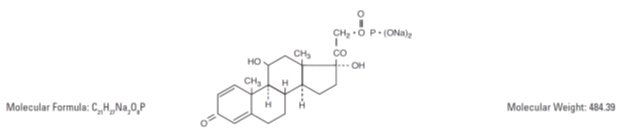
Prednisolone sodium phosphate ophthalmic solution USP, 1%, is a sterile solution for ophthalmic administration having the following composition: Each mL contains: Active: prednisolone sodium phosphate 10 mg (1%) [equivalent to 9.1 mg/mL prednisolone phosphate] in a buffered isotonic solution containing: Inactives: hypromellose, monobasic and dibasic sodium phosphate, sodium chloride, edetate disodium and purified water. Sodium hydroxide and/or hydrochloric acid may be added to adjust the pH (6.2-8.2). Preservative: benzalkonium chloride 0.01%. The chemical name for prednisolone sodium phosphate is Pregna-1, 4-diene - 3, 20-dione, 11, 17-dihydroxy-21-(phosphonooxy)-, disodium salt, (11 β) -, which has the following structural formula:
Medication Information
Warnings
NOT FOR INJECTION INTO EYE - FOR TOPICAL USE ONLY
Employment of steroid medication in the treatment of herpes simplex keratitis involving the stroma requires great caution; frequent slit-lamp microscopy is mandatory.
Prolonged use may result in elevated intraocular pressure and/or glaucoma, damage to the optic nerve, defects in visual acuity and fields of vision, posterior subcapsular cataract formation, or may aid in the establishment of secondary ocular infections from pathogens liberated from ocular tissues. In those diseases causing thinning of the cornea or sclera, perforation has been known to occur with the use of topical steroids. Acute purulent untreated infection of the eye may be masked or activity enhanced by presence of steroid medication. Viral, bacterial, and fungal infections of the cornea may be exacerbated by the application of steroids.
This drug is not effective in mustard gas keratitis and Sjögren’s keratoconjuncitivitis.
If irritation persists or develops, the patient should be advised to discontinue use and consult prescribing physician.
Indications and Usage
Prednisolone sodium phosphate ophthalmic solution, 1% or 1/8% is for the treatment of steroid responsive inflammatory conditions of the palpebral and bulbar conjunctiva, cornea, and anterior segment of the globe, such as allergic conjunctivitis, acne rosacea, superficial punctate keratitis, herpes zoster keratitis, iritis, cyclitis, selected infective conjunctivitis when the inherent hazard of steroid use is accepted to obtain an advisable diminution in edema and inflammation, corneal injury from chemical, radiation, or thermal burns, or penetration of foreign bodies.
Prednisolone sodium phosphate ophthalmic solution, 1%, is recommended for moderate to severe inflammations, particularly when unusually rapid control is desired. In stubborn cases of anterior segment eye disease, systemic adrenocortical hormone therapy may be required. When deeper ocular structures are involved, systemic therapy is necessary.
Dosage and Administration
Depending on the severity of inflammation, instill one or two drops of solution into the conjunctival sac up to every hour during the day and every two hours during the night as necessary as initial therapy.
When a favorable response is observed, reduce dosage to one drop every four hours.
Later, further reduction in dosage to one drop three to four times daily may suffice to control symptoms.
The duration of treatment will vary with the type of lesion and may extend from a few days to several weeks, according to therapeutic response. Relapses, more common in chronic active lesions than in self-limited conditions, usually respond to retreatment.
Contraindications
The use of this preparation is contraindicated in the presence of:
-
1.Acute superficial herpes simplex keratitis.
-
2.Fungal diseases of ocular structures.
-
3.Acute infectious stages of vaccinia, varicella and most other viral diseases of the cornea and conjunctiva.
-
4.Tuberculosis of the eye.
-
5.Hypersensitivity to a component of this medication.
The use of this preparation is always contraindicated after uncomplicated removal of a superficial corneal foreign body.
Adverse Reactions
Glaucoma with optic nerve damage, visual acuity and field defects, posterior subcapsular cataract formation, secondary ocular infections from pathogens including herpes simplex and fungi, and perforation of the globe.
Rarely, filtering blebs have been reported when topical steroids have been used following cataract surgery.
Rarely, stinging, or burning may occur.
To report SUSPECTED ADVERSE REACTIONS, contact Bausch & Lomb Incorporated at 1-800-553-5340 or FDA at 1-800-FDA-1088 or www.fda.gov/medwatch.
How Supplied
Prednisolone sodium phosphate ophthalmic solution USP, 1% is supplied in a plastic squeeze bottle with a white cap and a controlled drop tip in the following size:
10 mL bottle - NDC 24208-715-10
Storage: Store between 15°C to 25°C (59°F to 77°F).
Protect from light. Keep tightly closed.
Keep out of reach of children.
Distributed by:
Bausch & Lomb Americas Inc.
Bridgewater, NJ 08807 USA
Manufactured by:
Bausch & Lomb Incorporated
Tampa, FL 33637 USA
© 2023 Bausch & Lomb Incorporated or its affiliates
Revised: April 2023
9101406 (Folded)
9101506 (Flat)
Description
Prednisolone sodium phosphate ophthalmic solution USP, 1%, is a sterile solution for ophthalmic administration having the following composition:
Each mL contains:
Active: prednisolone sodium phosphate 10 mg (1%) [equivalent to 9.1 mg/mL prednisolone phosphate] in a buffered isotonic solution containing: Inactives: hypromellose, monobasic and dibasic sodium phosphate, sodium chloride, edetate disodium and purified water. Sodium hydroxide and/or hydrochloric acid may be added to adjust the pH (6.2-8.2).
Preservative: benzalkonium chloride 0.01%.
The chemical name for prednisolone sodium phosphate is Pregna-1, 4-diene - 3, 20-dione, 11, 17-dihydroxy-21-(phosphonooxy)-, disodium salt, (11 β) -, which has the following structural formula:
General
As fungal infections of the cornea are particularly prone to develop coincidentally with long-term steroid applications, fungus invasion must be suspected in any persistent corneal ulceration where a steroid has been used or is in use.
Intraocular pressure should be checked frequently.
Pediatric Use
Safety and effectiveness in pediatric patients have not been established.
Nursing Mothers
It is not known whether this drug is excreted in human milk. Because many drugs are excreted in human milk, caution should be exercised when prednisolone sodium phosphate is administered to a nursing woman.
Usage in Pregnancy
Animal reproductive studies have not been conducted with prednisolone sodium phosphate. It is also not known whether prednisolone sodium phosphate can cause fetal harm when administered to a pregnant woman or can affect reproductive capacity. Prednisolone sodium phosphate should be given to a pregnant woman only if clearly needed.
The effect of prednisolone sodium phosphate on the later growth, development and functional maturation of the child is unknown.
Clinical Pharmacology
Prednisolone sodium phosphate causes inhibition of inflammatory response to inciting agents of mechanical, chemical, or immunological nature. No generally accepted explanation of this steroid property has been advanced.
Information for Patients
Do not touch dropper tip to any surface as this may contaminate the solution.
Package/label Principal Display Panel
NDC 24208-715-10
Prednisolone
Sodium
Phosphate
Ophthalmic
Solution, USP
1%
(Sterile)
FOR OPHTHALMIC USE ONLY
Rx only 10 mL
BAUSCH + LOMB
9564402
Structured Label Content
Warnings (WARNINGS)
NOT FOR INJECTION INTO EYE - FOR TOPICAL USE ONLY
Employment of steroid medication in the treatment of herpes simplex keratitis involving the stroma requires great caution; frequent slit-lamp microscopy is mandatory.
Prolonged use may result in elevated intraocular pressure and/or glaucoma, damage to the optic nerve, defects in visual acuity and fields of vision, posterior subcapsular cataract formation, or may aid in the establishment of secondary ocular infections from pathogens liberated from ocular tissues. In those diseases causing thinning of the cornea or sclera, perforation has been known to occur with the use of topical steroids. Acute purulent untreated infection of the eye may be masked or activity enhanced by presence of steroid medication. Viral, bacterial, and fungal infections of the cornea may be exacerbated by the application of steroids.
This drug is not effective in mustard gas keratitis and Sjögren’s keratoconjuncitivitis.
If irritation persists or develops, the patient should be advised to discontinue use and consult prescribing physician.
Indications and Usage (INDICATIONS AND USAGE)
Prednisolone sodium phosphate ophthalmic solution, 1% or 1/8% is for the treatment of steroid responsive inflammatory conditions of the palpebral and bulbar conjunctiva, cornea, and anterior segment of the globe, such as allergic conjunctivitis, acne rosacea, superficial punctate keratitis, herpes zoster keratitis, iritis, cyclitis, selected infective conjunctivitis when the inherent hazard of steroid use is accepted to obtain an advisable diminution in edema and inflammation, corneal injury from chemical, radiation, or thermal burns, or penetration of foreign bodies.
Prednisolone sodium phosphate ophthalmic solution, 1%, is recommended for moderate to severe inflammations, particularly when unusually rapid control is desired. In stubborn cases of anterior segment eye disease, systemic adrenocortical hormone therapy may be required. When deeper ocular structures are involved, systemic therapy is necessary.
Dosage and Administration (DOSAGE AND ADMINISTRATION)
Depending on the severity of inflammation, instill one or two drops of solution into the conjunctival sac up to every hour during the day and every two hours during the night as necessary as initial therapy.
When a favorable response is observed, reduce dosage to one drop every four hours.
Later, further reduction in dosage to one drop three to four times daily may suffice to control symptoms.
The duration of treatment will vary with the type of lesion and may extend from a few days to several weeks, according to therapeutic response. Relapses, more common in chronic active lesions than in self-limited conditions, usually respond to retreatment.
Contraindications (CONTRAINDICATIONS)
The use of this preparation is contraindicated in the presence of:
-
1.Acute superficial herpes simplex keratitis.
-
2.Fungal diseases of ocular structures.
-
3.Acute infectious stages of vaccinia, varicella and most other viral diseases of the cornea and conjunctiva.
-
4.Tuberculosis of the eye.
-
5.Hypersensitivity to a component of this medication.
The use of this preparation is always contraindicated after uncomplicated removal of a superficial corneal foreign body.
Adverse Reactions (ADVERSE REACTIONS)
Glaucoma with optic nerve damage, visual acuity and field defects, posterior subcapsular cataract formation, secondary ocular infections from pathogens including herpes simplex and fungi, and perforation of the globe.
Rarely, filtering blebs have been reported when topical steroids have been used following cataract surgery.
Rarely, stinging, or burning may occur.
To report SUSPECTED ADVERSE REACTIONS, contact Bausch & Lomb Incorporated at 1-800-553-5340 or FDA at 1-800-FDA-1088 or www.fda.gov/medwatch.
How Supplied (HOW SUPPLIED)
Prednisolone sodium phosphate ophthalmic solution USP, 1% is supplied in a plastic squeeze bottle with a white cap and a controlled drop tip in the following size:
10 mL bottle - NDC 24208-715-10
Storage: Store between 15°C to 25°C (59°F to 77°F).
Protect from light. Keep tightly closed.
Keep out of reach of children.
Distributed by:
Bausch & Lomb Americas Inc.
Bridgewater, NJ 08807 USA
Manufactured by:
Bausch & Lomb Incorporated
Tampa, FL 33637 USA
© 2023 Bausch & Lomb Incorporated or its affiliates
Revised: April 2023
9101406 (Folded)
9101506 (Flat)
Description (DESCRIPTION)
Prednisolone sodium phosphate ophthalmic solution USP, 1%, is a sterile solution for ophthalmic administration having the following composition:
Each mL contains:
Active: prednisolone sodium phosphate 10 mg (1%) [equivalent to 9.1 mg/mL prednisolone phosphate] in a buffered isotonic solution containing: Inactives: hypromellose, monobasic and dibasic sodium phosphate, sodium chloride, edetate disodium and purified water. Sodium hydroxide and/or hydrochloric acid may be added to adjust the pH (6.2-8.2).
Preservative: benzalkonium chloride 0.01%.
The chemical name for prednisolone sodium phosphate is Pregna-1, 4-diene - 3, 20-dione, 11, 17-dihydroxy-21-(phosphonooxy)-, disodium salt, (11 β) -, which has the following structural formula:
General
As fungal infections of the cornea are particularly prone to develop coincidentally with long-term steroid applications, fungus invasion must be suspected in any persistent corneal ulceration where a steroid has been used or is in use.
Intraocular pressure should be checked frequently.
Pediatric Use
Safety and effectiveness in pediatric patients have not been established.
Nursing Mothers
It is not known whether this drug is excreted in human milk. Because many drugs are excreted in human milk, caution should be exercised when prednisolone sodium phosphate is administered to a nursing woman.
Usage in Pregnancy
Animal reproductive studies have not been conducted with prednisolone sodium phosphate. It is also not known whether prednisolone sodium phosphate can cause fetal harm when administered to a pregnant woman or can affect reproductive capacity. Prednisolone sodium phosphate should be given to a pregnant woman only if clearly needed.
The effect of prednisolone sodium phosphate on the later growth, development and functional maturation of the child is unknown.
Clinical Pharmacology (CLINICAL PHARMACOLOGY)
Prednisolone sodium phosphate causes inhibition of inflammatory response to inciting agents of mechanical, chemical, or immunological nature. No generally accepted explanation of this steroid property has been advanced.
Information for Patients
Do not touch dropper tip to any surface as this may contaminate the solution.
Package/label Principal Display Panel (PACKAGE/LABEL PRINCIPAL DISPLAY PANEL)
NDC 24208-715-10
Prednisolone
Sodium
Phosphate
Ophthalmic
Solution, USP
1%
(Sterile)
FOR OPHTHALMIC USE ONLY
Rx only 10 mL
BAUSCH + LOMB
9564402
Advanced Ingredient Data
Raw Label Data
All Sections (JSON)
Additional Information
Back to search View SPL set listing Open on DailyMed ↗
Source: dailymed · Ingested: 2026-02-15T11:38:33.002792 · Updated: 2026-03-14T21:55:04.881225