Calcium Acetate Capsules
89a2ee04-1024-4a81-ba0d-a6655d529827
34391-3
HUMAN PRESCRIPTION DRUG LABEL
Drug Facts
Composition & Product
Identifiers & Packaging
Indications and Usage
Calcium acetate capsule is a phosphate binder indicated for the reduction of serum phosphorus in patients with end stage renal disease. ( 1 )
Dosage and Administration
Starting dose is 2 capsules with each meal. ( 2 ) Titrate the dose every 2 to 3 weeks until acceptable serum phosphorus level is reached. Most patients require 3 to 4 capsules with each meal.( 2 )
Contraindications
Patients with hypercalcemia.
Warnings and Precautions
Treat mild hypercalcemia by reducing or interrupting calcium acetate and Vitamin D. Severe hypercalcemia may require hemodialysis and discontinuation of calcium acetate capsules. ( 5.1 ) Hypercalcemia may aggravate digitalis toxicity. ( 5.2 )
Adverse Reactions
The most common (>10%) adverse reactions are hypercalcemia, nausea, and vomiting. ( 6.1 ). In clinical studies, patients have occasionally experienced nausea during calcium acetate therapy. ( 6 ). To report SUSPECTED ADVERSE REACTIONS, contact Avet Pharmaceuticals Inc. at 1-866-901-DRUG (3784) or FDA at 1-800-FDA-1088 or www.fda.gov/medwatch.
Drug Interactions
Calcium acetate capsule may decrease the bioavailability of tetracyclines or fluoroquinolones . ( 7 ) When clinically significant drug interactions are expected, administer the drug at least one hour before or at least three hours after calcium acetate capsule, or consider monitoring blood levels of the drug. ( 7 )
How Supplied
Calcium Acetate Capsules, USP are blue opaque capsules imprinted with "HP 531" for oral administration containing 667 mg calcium acetate (anhydrous Ca(CH3COO)2; MW=158.17 grams) equal to 169 mg (8.45 mEq) calcium. NDC: 70518-4299-00 PACKAGING: 30 in 1 BLISTER PACK STORAGE: Store at 25°C (77°F); excursions permitted to 15 to 30°C (59 to 86°F) [See USP Controlled Room Temperature]. Repackaged and Distributed By: Remedy Repack, Inc. 625 Kolter Dr. Suite #4 Indiana, PA 1-724-465-8762
Storage and Handling
Calcium Acetate Capsules, USP are blue opaque capsules imprinted with "HP 531" for oral administration containing 667 mg calcium acetate (anhydrous Ca(CH3COO)2; MW=158.17 grams) equal to 169 mg (8.45 mEq) calcium. NDC: 70518-4299-00 PACKAGING: 30 in 1 BLISTER PACK STORAGE: Store at 25°C (77°F); excursions permitted to 15 to 30°C (59 to 86°F) [See USP Controlled Room Temperature]. Repackaged and Distributed By: Remedy Repack, Inc. 625 Kolter Dr. Suite #4 Indiana, PA 1-724-465-8762
Description
Calcium acetate capsule is a phosphate binder indicated for the reduction of serum phosphorus in patients with end stage renal disease. ( 1 )
Medication Information
Warnings and Precautions
Treat mild hypercalcemia by reducing or interrupting calcium acetate and Vitamin D. Severe hypercalcemia may require hemodialysis and discontinuation of calcium acetate capsules. ( 5.1 ) Hypercalcemia may aggravate digitalis toxicity. ( 5.2 )
Indications and Usage
Calcium acetate capsule is a phosphate binder indicated for the reduction of serum phosphorus in patients with end stage renal disease. ( 1 )
Dosage and Administration
Starting dose is 2 capsules with each meal. ( 2 ) Titrate the dose every 2 to 3 weeks until acceptable serum phosphorus level is reached. Most patients require 3 to 4 capsules with each meal.( 2 )
Contraindications
Patients with hypercalcemia.
Adverse Reactions
The most common (>10%) adverse reactions are hypercalcemia, nausea, and vomiting. ( 6.1 ). In clinical studies, patients have occasionally experienced nausea during calcium acetate therapy. ( 6 ). To report SUSPECTED ADVERSE REACTIONS, contact Avet Pharmaceuticals Inc. at 1-866-901-DRUG (3784) or FDA at 1-800-FDA-1088 or www.fda.gov/medwatch.
Drug Interactions
Calcium acetate capsule may decrease the bioavailability of tetracyclines or fluoroquinolones . ( 7 ) When clinically significant drug interactions are expected, administer the drug at least one hour before or at least three hours after calcium acetate capsule, or consider monitoring blood levels of the drug. ( 7 )
Storage and Handling
Calcium Acetate Capsules, USP are blue opaque capsules imprinted with "HP 531" for oral administration containing 667 mg calcium acetate (anhydrous Ca(CH3COO)2; MW=158.17 grams) equal to 169 mg (8.45 mEq) calcium. NDC: 70518-4299-00 PACKAGING: 30 in 1 BLISTER PACK STORAGE: Store at 25°C (77°F); excursions permitted to 15 to 30°C (59 to 86°F) [See USP Controlled Room Temperature]. Repackaged and Distributed By: Remedy Repack, Inc. 625 Kolter Dr. Suite #4 Indiana, PA 1-724-465-8762
How Supplied
Calcium Acetate Capsules, USP are blue opaque capsules imprinted with "HP 531" for oral administration containing 667 mg calcium acetate (anhydrous Ca(CH3COO)2; MW=158.17 grams) equal to 169 mg (8.45 mEq) calcium. NDC: 70518-4299-00 PACKAGING: 30 in 1 BLISTER PACK STORAGE: Store at 25°C (77°F); excursions permitted to 15 to 30°C (59 to 86°F) [See USP Controlled Room Temperature]. Repackaged and Distributed By: Remedy Repack, Inc. 625 Kolter Dr. Suite #4 Indiana, PA 1-724-465-8762
Description
Calcium acetate capsule is a phosphate binder indicated for the reduction of serum phosphorus in patients with end stage renal disease. ( 1 )
Section 42229-5
Calcium acetate capsule is a phosphate binder indicated to reduce serum phosphorus in patients with end stage renal disease (ESRD).
Section 51945-4
DRUG: calcium acetate
GENERIC: calcium acetate
DOSAGE: CAPSULE
ADMINSTRATION: ORAL
NDC: 70518-4299-0
COLOR: blue
SHAPE: CAPSULE
SCORE: No score
SIZE: 23 mm
IMPRINT: HP531
PACKAGING: 30 in 1 BLISTER PACK
ACTIVE INGREDIENT(S):
- CALCIUM ACETATE 667mg in 1
INACTIVE INGREDIENT(S):
- MAGNESIUM STEARATE
- SODIUM LAURYL SULFATE
- FD&C BLUE NO. 1
- TITANIUM DIOXIDE
- GELATIN
- BUTYL ALCOHOL
- PROPYLENE GLYCOL
- SHELLAC
- FERROSOFERRIC OXIDE
- CROSPOVIDONE (120 .MU.M)
- FD&C RED NO. 3
10 Overdosage
Administration of calcium acetate capsule in excess of the appropriate daily dosage may result in hypercalcemia [see Warnings and Precautions (5.1)].
8.1 Pregnancy
Pregnancy Category C
Calcium acetate capsules contains calcium acetate. Animal reproduction studies have not been conducted with calcium acetate, and there are no adequate and well controlled studies of calcium acetate use in pregnant women. Patients with end stage renal disease may develop hypercalcemia with calcium acetate treatment [see Warnings and Precautions (5.1)] . Maintenance of normal serum calcium levels is important for maternal and fetal well being. Hypercalcemia during pregnancy may increase the risk for maternal and neonatal complications such as stillbirth, preterm delivery, and neonatal hypocalcemia and hypoparathyroidism. Calcium acetate treatment, as recommended, is not expected to harm a fetus if maternal calcium levels are properly monitored during and following treatment.
11 Description
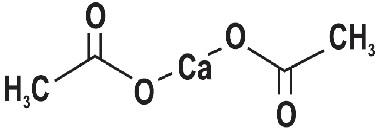
Calcium acetate, USP acts as a phosphate binder. Its chemical name is calcium acetate. Its molecular formula is C 4H 6CaO 4, and its molecular weight is 158.17. Its structural formula is:
Calcium acetate capsules, USP are hard gelatin capsules with blue opaque cap and body both imprinted "HP 531" in black ink. Each capsule contains 667 mg calcium acetate, USP (anhydrous; Ca(CH 3COO) 2; MW=158.17 grams) equal to 169 mg (8.45 mEq) calcium and following inactive ingredients crospovidone, FD&C Blue No. 1, FD&C Red No. 3, gelatin, magnesium stearate, sodium lauryl sulfate and titanium dioxide. In addition to the ingredients listed above, each capsule contains following inactive ingredients from imprinting ink: butyl alcohol, iron oxide black, propylene glycol and shellac.
FDA approved dissolution test specifications differ from USP.
5.1 Hypercalcemia
Patients with end stage renal disease may develop hypercalcemia when treated with calcium, including calcium acetate. Avoid the use of calcium supplements, including calcium-based nonprescription antacids, concurrently with calcium acetate.
An overdose of calcium acetate may lead to progressive hypercalcemia, which may require emergency measures. Therefore, early in the treatment phase during the dosage adjustment period, monitor serum calcium levels twice weekly. Should hypercalcemia develop, reduce the calcium acetate dosage or discontinue the treatment, depending on the severity of hypercalcemia.
More severe hypercalcemia (Ca>12 mg/dL) is associated with confusion, delirium, stupor and coma. Severe hypercalcemia can be treated by acute hemodialysis and discontinuing calcium acetate therapy.
Mild hypercalcemia (10.5 to 11.9 mg/dL) may be asymptomatic or manifest as constipation, anorexia, nausea, and vomiting. Mild hypercalcemia is usually controlled by reducing the calcium acetate dose or temporarily discontinuing therapy. Decreasing or discontinuing Vitamin D therapy is recommended as well.
Chronic hypercalcemia may lead to vascular calcification and other soft-tissue calcification. Radiographic evaluation of suspected anatomical regions may be helpful in early detection of soft tissue calcification. The long term effect of calcium acetate on the progression of vascular or soft tissue calcification has not been determined.
Hypercalcemia (>11 mg/dL) was reported in 16% of patients in a 3-month study of a solid dose formulation of calcium acetate; all cases resolved upon lowering the dose or discontinuing treatment.
Maintain the serum calcium-phosphorus (Ca x P) product below 55 mg 2/dL 2.
7.1 Ciprofloxacin
In a study of 15 healthy subjects, a co-administered single dose of 4 calcium acetate tablets approximately 2.7 g, decreased the bioavailability of ciprofloxacin by approximately 50%.
8.4 Pediatric Use
Safety and effectiveness in pediatric patients have not been established.
8.5 Geriatric Use
Clinical studies of calcium acetate did not include sufficient numbers of subjects aged 65 and over to determine whether they respond differently from younger subjects. Other clinical experience has not identified differences in responses between the elderly and younger patients. In general, dose selection for an elderly patient should be cautious, usually starting at the low end of the dosing range, reflecting the greater frequency of decreased hepatic, renal, or cardiac function, and of concomitant disease or other drug therapy.
14 Clinical Studies
Effectiveness of calcium acetate in decreasing serum phosphorus has been demonstrated in two studies of the calcium acetate solid dosage form.
Ninety-one patients with end-stage renal disease who were undergoing hemodialysis and were hyperphosphatemic (serum phosphorus >5.5 mg/dL) following a 1-week phosphate binder washout period contributed efficacy data to an open-label, non-randomized study.
The patients received calcium acetate 667 mg tablets at each meal for a period of 12 weeks. The initial starting dose was 2 tablets per meal for 3 meals a day, and the dose was adjusted as necessary to control serum phosphorus levels. The average final dose after 12 weeks of treatment was 3.4 tablets per meal. Although there was a decrease in serum phosphorus, in the absence of a control group the true magnitude of effect is uncertain.
The data presented in Table 2 demonstrate the efficacy of calcium acetate in the treatment of hyperphosphatemia in end-stage renal disease patients. The effects on serum calcium levels are also presented.
|
aValues expressed as mean ± SE. |
|||||
|
bNinety-one patients completed at least 6 weeks of the study. |
|||||
|
cANOVA of difference in values at pre-study and study completion |
|||||
|
Parameter
|
Pre-Study
|
Week 4
b
|
Week 8
|
Week 12
|
p-value
c
|
| Phosphorus (mg/dL)
a
|
7.4 ± 0.17
|
5.9 ± 0.16
|
5.6 ± 0.17
|
5.2 ± 0.17
|
≤0.01
|
| Calcium (mg/dL)
a
|
8.9 ± 0.09
|
9.5 ± 0.10
|
9.7 ± 0.10
|
9.7 ± 0.10
|
≤0.01
|
There was a 30% decrease in serum phosphorus levels during the 12 week study period (p<0.01). Two-thirds of the decline occurred in the first month of the study. Serum calcium increased 9% during the study mostly in the first month of the study.
Treatment with the phosphate binder was discontinued for patients from the open-label study, and those patients whose serum phosphorus exceeded 5.5 mg/dL were eligible for entry into a double-blind, placebo-controlled, cross-over study. Patients were randomized to receive calcium acetate or placebo, and each continued to receive the same number of tablets as had been individually established during the previous study. Following 2 weeks of treatment, patients switched to the alternative therapy for an additional 2 weeks.
The phosphate binding effect of calcium acetate is shown in the Table 3.
4 Contraindications
Patients with hypercalcemia.
6 Adverse Reactions
- The most common (>10%) adverse reactions are hypercalcemia, nausea, and vomiting. ( 6.1).
- In clinical studies, patients have occasionally experienced nausea during calcium acetate therapy. ( 6).
To report SUSPECTED ADVERSE REACTIONS, contact Avet Pharmaceuticals Inc. at 1-866-901-DRUG (3784) or FDA at 1-800-FDA-1088 or www.fda.gov/medwatch.
7 Drug Interactions
- Calcium acetate capsule may decrease the bioavailability of tetracyclines or fluoroquinolones .( 7)
- When clinically significant drug interactions are expected, administer the drug at least one hour before or at least three hours after calcium acetate capsule, or consider monitoring blood levels of the drug. ( 7)
8.3 Nursing Mothers
Calcium acetate capsule contains calcium acetate and is excreted in human milk. Human milk feeding by a mother receiving calcium acetate is not expected to harm an infant, provided maternal serum calcium levels are appropriately monitored.
8.2 Labor & Delivery
The effects of calcium acetate on labor and delivery are unknown.
12.2 Pharmacodynamics
Orally administered calcium acetate from pharmaceutical dosage forms is systemically absorbed up to approximately 40% under fasting conditions and up to approximately 30% under non-fasting conditions. This range represents data from both healthy subjects and renal dialysis patients under various conditions.
1 Indications and Usage
- Calcium acetate capsule is a phosphate binder indicated for the reduction of serum phosphorus in patients with end stage renal disease. ( 1)
12 Clinical Pharmacology
Patients with ESRD retain phosphorus and can develop hyperphosphatemia. High serum phosphorus can precipitate serum calcium resulting in ectopic calcification. Hyperphosphatemia also plays a role in the development of secondary hyperparathyroidism in patients with ESRD.
12.1 Mechanism of Action
Calcium acetate, when taken with meals, combines with dietary phosphate to form an insoluble calcium phosphate complex, which is excreted in the feces, resulting in decreased serum phosphorus concentration.
5 Warnings and Precautions
2 Dosage and Administration
3 Dosage Forms and Strengths
- Capsule: 667 mg calcium acetate capsule.( 3)
6.2 Postmarketing Experience
Because these reactions are reported voluntarily from a population of uncertain size, it is not always possible to estimate their frequency or to establish a causal relationship to drug exposure.
The following additional adverse reactions have been identified during post-approval of calcium acetate: dizziness, edema, and weakness.
6.1 Clinical Trial Experience
Because clinical trials are conducted under widely varying conditions, adverse reaction rates observed in the clinical trials of a drug cannot be directly compared to rates in the clinical trials of another drug and may not reflect the rates observed in practice.
In clinical studies, calcium acetate has been generally well tolerated.
Calcium acetate was studied in a 3-month, open-label, non-randomized study of 98 enrolled ESRD hemodialysis patients and in a two week double-blind, placebo-controlled, cross-over study with 69 enrolled ESRD hemodialysis patients. Adverse reactions (>2% on treatment) from these trials are presented in Table 1.
|
Preferred Term
|
Total adverse reactions reported for
calcium acetate |
3 – mo,
open-label study of calcium acetate
n = 98 |
Double-blind,
placebo-controlled,
cross over study of calcium acetate
n = 69 |
|
|
n = 167
n (%) |
n (%)
|
Calcium acetate
n (%) |
Placebo
n (%) |
|
| Nausea
|
6 (3.6)
|
6 (6.1)
|
0 (0.0)
|
0 (0.0)
|
| Vomiting
|
4 (2.4)
|
4 (4.1)
|
0 (0.0)
|
0 (0.0)
|
| Hypercalcemia
|
21 (12.6)
|
16 (16.3)
|
5 (7.2)
|
0 (0.0)
|
Mild hypercalcemia may be asymptomatic or manifest itself as constipation, anorexia, nausea, and vomiting. More severe hypercalcemia is associated with confusion, delirium, stupor, and coma. Decreasing dialysate calcium concentration could reduce the incidence and severity of calcium acetate-induced hypercalcemia. Isolated cases of pruritus have been reported, which may represent allergic reactions.
17 Patient Counseling Information
Inform patients to take calcium acetate capsules with meals, adhere to their prescribed diets, and avoid the use of calcium supplements including nonprescription antacids. Inform the patients about the symptoms of hypercalcemia [see Warnings and Precautions (5.1)and Adverse Reactions (6.1)].
Advise patients who are taking an oral medication where reduction in the bioavailability of that medication would have clinically significant effect on its safety and efficacy to take the drug one hour before or three hours after calcium acetate capsules.
Repackaged By / Distributed By: RemedyRepack Inc.
625 Kolter Drive, Indiana, PA 15701
(724) 465-8762
16 How Supplied/storage and Handling
Calcium Acetate Capsules, USP are blue opaque capsules imprinted with "HP 531" for oral administration containing 667 mg calcium acetate (anhydrous Ca(CH3COO)2; MW=158.17 grams) equal to 169 mg (8.45 mEq) calcium.
NDC: 70518-4299-00
PACKAGING: 30 in 1 BLISTER PACK
STORAGE: Store at 25°C (77°F); excursions permitted to 15 to 30°C (59 to 86°F) [See USP Controlled Room Temperature].
Repackaged and Distributed By:
Remedy Repack, Inc.
625 Kolter Dr. Suite #4 Indiana, PA 1-724-465-8762
5.2 Concomitant Use With Medications
Hypercalcemia may aggravate digitalis toxicity.
13.1 carcinogenesis & Mutagenesis & Impairment of Fertility
No carcinogenicity, mutagenicity, or fertility studies have been conducted with calcium acetate.
Structured Label Content
Section 42229-5 (42229-5)
Calcium acetate capsule is a phosphate binder indicated to reduce serum phosphorus in patients with end stage renal disease (ESRD).
Section 51945-4 (51945-4)
DRUG: calcium acetate
GENERIC: calcium acetate
DOSAGE: CAPSULE
ADMINSTRATION: ORAL
NDC: 70518-4299-0
COLOR: blue
SHAPE: CAPSULE
SCORE: No score
SIZE: 23 mm
IMPRINT: HP531
PACKAGING: 30 in 1 BLISTER PACK
ACTIVE INGREDIENT(S):
- CALCIUM ACETATE 667mg in 1
INACTIVE INGREDIENT(S):
- MAGNESIUM STEARATE
- SODIUM LAURYL SULFATE
- FD&C BLUE NO. 1
- TITANIUM DIOXIDE
- GELATIN
- BUTYL ALCOHOL
- PROPYLENE GLYCOL
- SHELLAC
- FERROSOFERRIC OXIDE
- CROSPOVIDONE (120 .MU.M)
- FD&C RED NO. 3
10 Overdosage (10 OVERDOSAGE)
Administration of calcium acetate capsule in excess of the appropriate daily dosage may result in hypercalcemia [see Warnings and Precautions (5.1)].
8.1 Pregnancy (8.1 PREGNANCY)
Pregnancy Category C
Calcium acetate capsules contains calcium acetate. Animal reproduction studies have not been conducted with calcium acetate, and there are no adequate and well controlled studies of calcium acetate use in pregnant women. Patients with end stage renal disease may develop hypercalcemia with calcium acetate treatment [see Warnings and Precautions (5.1)] . Maintenance of normal serum calcium levels is important for maternal and fetal well being. Hypercalcemia during pregnancy may increase the risk for maternal and neonatal complications such as stillbirth, preterm delivery, and neonatal hypocalcemia and hypoparathyroidism. Calcium acetate treatment, as recommended, is not expected to harm a fetus if maternal calcium levels are properly monitored during and following treatment.
11 Description (11 DESCRIPTION)
Calcium acetate, USP acts as a phosphate binder. Its chemical name is calcium acetate. Its molecular formula is C 4H 6CaO 4, and its molecular weight is 158.17. Its structural formula is:
Calcium acetate capsules, USP are hard gelatin capsules with blue opaque cap and body both imprinted "HP 531" in black ink. Each capsule contains 667 mg calcium acetate, USP (anhydrous; Ca(CH 3COO) 2; MW=158.17 grams) equal to 169 mg (8.45 mEq) calcium and following inactive ingredients crospovidone, FD&C Blue No. 1, FD&C Red No. 3, gelatin, magnesium stearate, sodium lauryl sulfate and titanium dioxide. In addition to the ingredients listed above, each capsule contains following inactive ingredients from imprinting ink: butyl alcohol, iron oxide black, propylene glycol and shellac.
FDA approved dissolution test specifications differ from USP.
5.1 Hypercalcemia
Patients with end stage renal disease may develop hypercalcemia when treated with calcium, including calcium acetate. Avoid the use of calcium supplements, including calcium-based nonprescription antacids, concurrently with calcium acetate.
An overdose of calcium acetate may lead to progressive hypercalcemia, which may require emergency measures. Therefore, early in the treatment phase during the dosage adjustment period, monitor serum calcium levels twice weekly. Should hypercalcemia develop, reduce the calcium acetate dosage or discontinue the treatment, depending on the severity of hypercalcemia.
More severe hypercalcemia (Ca>12 mg/dL) is associated with confusion, delirium, stupor and coma. Severe hypercalcemia can be treated by acute hemodialysis and discontinuing calcium acetate therapy.
Mild hypercalcemia (10.5 to 11.9 mg/dL) may be asymptomatic or manifest as constipation, anorexia, nausea, and vomiting. Mild hypercalcemia is usually controlled by reducing the calcium acetate dose or temporarily discontinuing therapy. Decreasing or discontinuing Vitamin D therapy is recommended as well.
Chronic hypercalcemia may lead to vascular calcification and other soft-tissue calcification. Radiographic evaluation of suspected anatomical regions may be helpful in early detection of soft tissue calcification. The long term effect of calcium acetate on the progression of vascular or soft tissue calcification has not been determined.
Hypercalcemia (>11 mg/dL) was reported in 16% of patients in a 3-month study of a solid dose formulation of calcium acetate; all cases resolved upon lowering the dose or discontinuing treatment.
Maintain the serum calcium-phosphorus (Ca x P) product below 55 mg 2/dL 2.
7.1 Ciprofloxacin
In a study of 15 healthy subjects, a co-administered single dose of 4 calcium acetate tablets approximately 2.7 g, decreased the bioavailability of ciprofloxacin by approximately 50%.
8.4 Pediatric Use (8.4 PEDIATRIC USE)
Safety and effectiveness in pediatric patients have not been established.
8.5 Geriatric Use (8.5 GERIATRIC USE)
Clinical studies of calcium acetate did not include sufficient numbers of subjects aged 65 and over to determine whether they respond differently from younger subjects. Other clinical experience has not identified differences in responses between the elderly and younger patients. In general, dose selection for an elderly patient should be cautious, usually starting at the low end of the dosing range, reflecting the greater frequency of decreased hepatic, renal, or cardiac function, and of concomitant disease or other drug therapy.
14 Clinical Studies (14 CLINICAL STUDIES)
Effectiveness of calcium acetate in decreasing serum phosphorus has been demonstrated in two studies of the calcium acetate solid dosage form.
Ninety-one patients with end-stage renal disease who were undergoing hemodialysis and were hyperphosphatemic (serum phosphorus >5.5 mg/dL) following a 1-week phosphate binder washout period contributed efficacy data to an open-label, non-randomized study.
The patients received calcium acetate 667 mg tablets at each meal for a period of 12 weeks. The initial starting dose was 2 tablets per meal for 3 meals a day, and the dose was adjusted as necessary to control serum phosphorus levels. The average final dose after 12 weeks of treatment was 3.4 tablets per meal. Although there was a decrease in serum phosphorus, in the absence of a control group the true magnitude of effect is uncertain.
The data presented in Table 2 demonstrate the efficacy of calcium acetate in the treatment of hyperphosphatemia in end-stage renal disease patients. The effects on serum calcium levels are also presented.
|
aValues expressed as mean ± SE. |
|||||
|
bNinety-one patients completed at least 6 weeks of the study. |
|||||
|
cANOVA of difference in values at pre-study and study completion |
|||||
|
Parameter
|
Pre-Study
|
Week 4
b
|
Week 8
|
Week 12
|
p-value
c
|
| Phosphorus (mg/dL)
a
|
7.4 ± 0.17
|
5.9 ± 0.16
|
5.6 ± 0.17
|
5.2 ± 0.17
|
≤0.01
|
| Calcium (mg/dL)
a
|
8.9 ± 0.09
|
9.5 ± 0.10
|
9.7 ± 0.10
|
9.7 ± 0.10
|
≤0.01
|
There was a 30% decrease in serum phosphorus levels during the 12 week study period (p<0.01). Two-thirds of the decline occurred in the first month of the study. Serum calcium increased 9% during the study mostly in the first month of the study.
Treatment with the phosphate binder was discontinued for patients from the open-label study, and those patients whose serum phosphorus exceeded 5.5 mg/dL were eligible for entry into a double-blind, placebo-controlled, cross-over study. Patients were randomized to receive calcium acetate or placebo, and each continued to receive the same number of tablets as had been individually established during the previous study. Following 2 weeks of treatment, patients switched to the alternative therapy for an additional 2 weeks.
The phosphate binding effect of calcium acetate is shown in the Table 3.
4 Contraindications (4 CONTRAINDICATIONS)
Patients with hypercalcemia.
6 Adverse Reactions (6 ADVERSE REACTIONS)
- The most common (>10%) adverse reactions are hypercalcemia, nausea, and vomiting. ( 6.1).
- In clinical studies, patients have occasionally experienced nausea during calcium acetate therapy. ( 6).
To report SUSPECTED ADVERSE REACTIONS, contact Avet Pharmaceuticals Inc. at 1-866-901-DRUG (3784) or FDA at 1-800-FDA-1088 or www.fda.gov/medwatch.
7 Drug Interactions (7 DRUG INTERACTIONS)
- Calcium acetate capsule may decrease the bioavailability of tetracyclines or fluoroquinolones .( 7)
- When clinically significant drug interactions are expected, administer the drug at least one hour before or at least three hours after calcium acetate capsule, or consider monitoring blood levels of the drug. ( 7)
8.3 Nursing Mothers (8.3 NURSING MOTHERS)
Calcium acetate capsule contains calcium acetate and is excreted in human milk. Human milk feeding by a mother receiving calcium acetate is not expected to harm an infant, provided maternal serum calcium levels are appropriately monitored.
8.2 Labor & Delivery (8.2 LABOR & DELIVERY)
The effects of calcium acetate on labor and delivery are unknown.
12.2 Pharmacodynamics (12.2 PHARMACODYNAMICS)
Orally administered calcium acetate from pharmaceutical dosage forms is systemically absorbed up to approximately 40% under fasting conditions and up to approximately 30% under non-fasting conditions. This range represents data from both healthy subjects and renal dialysis patients under various conditions.
1 Indications and Usage (1 INDICATIONS AND USAGE)
- Calcium acetate capsule is a phosphate binder indicated for the reduction of serum phosphorus in patients with end stage renal disease. ( 1)
12 Clinical Pharmacology (12 CLINICAL PHARMACOLOGY)
Patients with ESRD retain phosphorus and can develop hyperphosphatemia. High serum phosphorus can precipitate serum calcium resulting in ectopic calcification. Hyperphosphatemia also plays a role in the development of secondary hyperparathyroidism in patients with ESRD.
12.1 Mechanism of Action (12.1 MECHANISM OF ACTION)
Calcium acetate, when taken with meals, combines with dietary phosphate to form an insoluble calcium phosphate complex, which is excreted in the feces, resulting in decreased serum phosphorus concentration.
5 Warnings and Precautions (5 WARNINGS AND PRECAUTIONS)
2 Dosage and Administration (2 DOSAGE AND ADMINISTRATION)
3 Dosage Forms and Strengths (3 DOSAGE FORMS AND STRENGTHS)
- Capsule: 667 mg calcium acetate capsule.( 3)
6.2 Postmarketing Experience
Because these reactions are reported voluntarily from a population of uncertain size, it is not always possible to estimate their frequency or to establish a causal relationship to drug exposure.
The following additional adverse reactions have been identified during post-approval of calcium acetate: dizziness, edema, and weakness.
6.1 Clinical Trial Experience
Because clinical trials are conducted under widely varying conditions, adverse reaction rates observed in the clinical trials of a drug cannot be directly compared to rates in the clinical trials of another drug and may not reflect the rates observed in practice.
In clinical studies, calcium acetate has been generally well tolerated.
Calcium acetate was studied in a 3-month, open-label, non-randomized study of 98 enrolled ESRD hemodialysis patients and in a two week double-blind, placebo-controlled, cross-over study with 69 enrolled ESRD hemodialysis patients. Adverse reactions (>2% on treatment) from these trials are presented in Table 1.
|
Preferred Term
|
Total adverse reactions reported for
calcium acetate |
3 – mo,
open-label study of calcium acetate
n = 98 |
Double-blind,
placebo-controlled,
cross over study of calcium acetate
n = 69 |
|
|
n = 167
n (%) |
n (%)
|
Calcium acetate
n (%) |
Placebo
n (%) |
|
| Nausea
|
6 (3.6)
|
6 (6.1)
|
0 (0.0)
|
0 (0.0)
|
| Vomiting
|
4 (2.4)
|
4 (4.1)
|
0 (0.0)
|
0 (0.0)
|
| Hypercalcemia
|
21 (12.6)
|
16 (16.3)
|
5 (7.2)
|
0 (0.0)
|
Mild hypercalcemia may be asymptomatic or manifest itself as constipation, anorexia, nausea, and vomiting. More severe hypercalcemia is associated with confusion, delirium, stupor, and coma. Decreasing dialysate calcium concentration could reduce the incidence and severity of calcium acetate-induced hypercalcemia. Isolated cases of pruritus have been reported, which may represent allergic reactions.
17 Patient Counseling Information (17 PATIENT COUNSELING INFORMATION)
Inform patients to take calcium acetate capsules with meals, adhere to their prescribed diets, and avoid the use of calcium supplements including nonprescription antacids. Inform the patients about the symptoms of hypercalcemia [see Warnings and Precautions (5.1)and Adverse Reactions (6.1)].
Advise patients who are taking an oral medication where reduction in the bioavailability of that medication would have clinically significant effect on its safety and efficacy to take the drug one hour before or three hours after calcium acetate capsules.
Repackaged By / Distributed By: RemedyRepack Inc.
625 Kolter Drive, Indiana, PA 15701
(724) 465-8762
16 How Supplied/storage and Handling (16 HOW SUPPLIED/STORAGE AND HANDLING)
Calcium Acetate Capsules, USP are blue opaque capsules imprinted with "HP 531" for oral administration containing 667 mg calcium acetate (anhydrous Ca(CH3COO)2; MW=158.17 grams) equal to 169 mg (8.45 mEq) calcium.
NDC: 70518-4299-00
PACKAGING: 30 in 1 BLISTER PACK
STORAGE: Store at 25°C (77°F); excursions permitted to 15 to 30°C (59 to 86°F) [See USP Controlled Room Temperature].
Repackaged and Distributed By:
Remedy Repack, Inc.
625 Kolter Dr. Suite #4 Indiana, PA 1-724-465-8762
5.2 Concomitant Use With Medications (5.2 Concomitant Use with Medications)
Hypercalcemia may aggravate digitalis toxicity.
13.1 carcinogenesis & Mutagenesis & Impairment of Fertility (13.1 CARCINOGENESIS & MUTAGENESIS & IMPAIRMENT OF FERTILITY)
No carcinogenicity, mutagenicity, or fertility studies have been conducted with calcium acetate.
Advanced Ingredient Data
Raw Label Data
All Sections (JSON)
Additional Information
Back to search View SPL set listing Open on DailyMed ↗
Source: dailymed · Ingested: 2026-02-15T11:50:08.835299 · Updated: 2026-03-14T22:36:03.395056