Posaconazole Delayed-release Tablets
8412398b-c696-4f12-ba3a-da74dc8dadaf
34391-3
HUMAN PRESCRIPTION DRUG LABEL
Drug Facts
Composition & Product
Identifiers & Packaging
Indications and Usage
Posaconazole delayed-release tablets are an azole antifungal indicated as follows: Posaconazole delayed-release tablets are indicated for the prophylaxis of invasive Aspergillus and Candida infections in patients who are at high risk of developing these infections due to being severely immunocompromised, such as hematopoietic stem cell transplant (HSCT) recipients with graft-versus-host disease (GVHD) or those with hematologic malignancies with prolonged neutropenia from chemotherapy as follows: ( 1.2 ) Posaconazole delayed-release tablets: adults and pediatric patients 13 years of age and older
Dosage and Administration
Posaconazole delayed-release tablets are not substitutable with Noxafil ® Oral Suspension or Noxafil ® PowderMix for Delayed-Release Oral Suspension due to the differences in the dosing of each formulation. Therefore, follow the specific dosage recommendations for each of the formulations. ( 2.1 , 2.2 , 2.3 ) Administer posaconazole delayed-release tablets with or without food. ( 2.1 ) Table 1. Recommended Dosage in Adult Patients Indication Dosage Form, Dose, and Duration of Therapy Prophylaxis of invasive Aspergillus and Candida infections Posaconazole Delayed-Release Tablets: Loading dose : 300 mg (three 100 mg delayed-release tablets) twice a day on the first day. Maintenance dose : 300 mg (three 100 mg delayed-release tablets) once a day, starting on the second day. Duration of therapy is based on recovery from neutropenia or immunosuppression. ( 2.2 , 2.3 )
Contraindications
Known hypersensitivity to posaconazole or other azole antifungal agents. ( 4.1 ) Coadministration of posaconazole delayed-release tablets with the following drugs is contraindicated; posaconazole delayed-release tablets increase concentrations and toxicities of: Sirolimus ( 4.2 , 5.1 , 7.1 ) CYP3A4 substrates (pimozide, quinidine): can result in QTc interval prolongation and cases of torsades de pointes (TdP) ( 4.3 , 5.2 , 7.2 ) HMG-CoA Reductase Inhibitors Primarily Metabolized through CYP3A4 ( 4.4 , 7.3 ) Ergot alkaloids ( 4.5 , 7.4 ) Venetoclax: In patients with chronic lymphocytic leukemia (CLL) or small lymphocytic lymphoma (SLL) at initiation and during the ramp-up phase ( 4.6 , 5.11 , 7.16 )
Warnings and Precautions
Calcineurin-Inhibitor Toxicity: Posaconazole delayed-release tablets increase concentrations of cyclosporine or tacrolimus; reduce dose of cyclosporine and tacrolimus and monitor concentrations frequently. ( 5.1 ) Arrhythmias and QTc Prolongation: Posaconazole delayed-release tablets have been shown to prolong the QTc interval and cause cases of TdP. Administer with caution to patients with potentially proarrhythmic conditions. Do not administer with drugs known to prolong QTc interval and metabolized through CYP3A4. ( 5.2 ) Electrolyte Disturbances: Monitor and correct, especially those involving potassium (K + ), magnesium (Mg ++ ), and calcium (Ca ++ ), before and during posaconazole delayed-release tablets therapy. ( 5.3 ) Pseudoaldosteronism: Manifested by the onset or worsening of hypertension, and abnormal laboratory findings. Monitor blood pressure and potassium levels, and manage as necessary. ( 5.4 ) Hepatic Toxicity: Elevations in liver tests may occur. Discontinuation should be considered in patients who develop abnormal liver tests or monitor liver tests during treatment. ( 5.5 ) Concomitant Use with Midazolam: Posaconazole delayed-release tablets can prolong hypnotic/sedative effects. Monitor patients and benzodiazepine receptor antagonists should be available. ( 5.7 , 7.5 ) Vincristine Toxicity: Concomitant administration of azole antifungals, including posaconazole delayed-release tablets, with vincristine has been associated with neurotoxicity and other serious adverse reactions; reserve azole antifungals, including posaconazole delayed-release tablets, for patients receiving a vinca alkaloid, including vincristine, who have no alternative antifungal treatment options. ( 5.8 , 7.10 ) Breakthrough Fungal Infections: Monitor patients with severe diarrhea or vomiting when receiving posaconazole delayed-release tablets. ( 5.10 ) Venetoclax Toxicity: Concomitant administration of posaconazole delayed-release tablets with venetoclax may increase venetoclax toxicities, including the risk of tumor lysis syndrome, neutropenia, and serious infections; monitor for toxicity and reduce venetoclax dose. ( 4.6 , 5.11 , 7.16 )
Adverse Reactions
The following serious and otherwise important adverse reactions are discussed in detail in another section of the labeling: Hypersensitivity [see Contraindications (4.1) ] Arrhythmias and QT Prolongation [see Warnings and Precautions (5.2) ] Hepatic Toxicity [see Warnings and Precautions (5.5) ]
Drug Interactions
Posaconazole is primarily metabolized via UDP glucuronosyltransferase and is a substrate of p-glycoprotein (P-gp) efflux. Therefore, inhibitors or inducers of these clearance pathways may affect posaconazole plasma concentrations. Coadministration of drugs that can decrease the plasma concentrations of posaconazole should generally be avoided unless the benefit outweighs the risk. If such drugs are necessary, patients should be monitored closely for breakthrough fungal infections. Posaconazole is also a strong inhibitor of CYP3A4. Therefore, plasma concentrations of drugs predominantly metabolized by CYP3A4 may be increased by posaconazole [see Clinical Pharmacology (12.3) ] . The following information was derived from data with Noxafil ® Oral Suspension or early tablet formulation unless otherwise noted. All drug interactions with Noxafil ® Oral Suspension, except for those that affect the absorption of posaconazole (via gastric pH and motility), are considered relevant to posaconazole delayed-release tablets as well [see Drug Interactions (7.9) and (7.13) ] .
How Supplied
Posaconazole delayed-release tablets are yellow, modified, oval, convex tablets debossed with a logo "M" inside a square on one side and "100" on the opposite side containing 100 mg of posaconazole. Bottles of 60 . . . . . . . . . . . . . . NDC 0406-7711-60
Storage and Handling
Store at 20° to 25°C (68° to 77°F), excursions permitted to 15° to 30°C (59° to 86°F) [see USP Controlled Room Temperature]. Dispense in a tight, light-resistant container (as defined in USP) with a child-resistant closure.
Description
Warnings and Precautions, Pseudoaldosteronism (5.4) 10/2024
Medication Information
Recent Major Changes
Warnings and Precautions, Pseudoaldosteronism (5.4) 10/2024
Warnings and Precautions
Calcineurin-Inhibitor Toxicity: Posaconazole delayed-release tablets increase concentrations of cyclosporine or tacrolimus; reduce dose of cyclosporine and tacrolimus and monitor concentrations frequently. ( 5.1 ) Arrhythmias and QTc Prolongation: Posaconazole delayed-release tablets have been shown to prolong the QTc interval and cause cases of TdP. Administer with caution to patients with potentially proarrhythmic conditions. Do not administer with drugs known to prolong QTc interval and metabolized through CYP3A4. ( 5.2 ) Electrolyte Disturbances: Monitor and correct, especially those involving potassium (K + ), magnesium (Mg ++ ), and calcium (Ca ++ ), before and during posaconazole delayed-release tablets therapy. ( 5.3 ) Pseudoaldosteronism: Manifested by the onset or worsening of hypertension, and abnormal laboratory findings. Monitor blood pressure and potassium levels, and manage as necessary. ( 5.4 ) Hepatic Toxicity: Elevations in liver tests may occur. Discontinuation should be considered in patients who develop abnormal liver tests or monitor liver tests during treatment. ( 5.5 ) Concomitant Use with Midazolam: Posaconazole delayed-release tablets can prolong hypnotic/sedative effects. Monitor patients and benzodiazepine receptor antagonists should be available. ( 5.7 , 7.5 ) Vincristine Toxicity: Concomitant administration of azole antifungals, including posaconazole delayed-release tablets, with vincristine has been associated with neurotoxicity and other serious adverse reactions; reserve azole antifungals, including posaconazole delayed-release tablets, for patients receiving a vinca alkaloid, including vincristine, who have no alternative antifungal treatment options. ( 5.8 , 7.10 ) Breakthrough Fungal Infections: Monitor patients with severe diarrhea or vomiting when receiving posaconazole delayed-release tablets. ( 5.10 ) Venetoclax Toxicity: Concomitant administration of posaconazole delayed-release tablets with venetoclax may increase venetoclax toxicities, including the risk of tumor lysis syndrome, neutropenia, and serious infections; monitor for toxicity and reduce venetoclax dose. ( 4.6 , 5.11 , 7.16 )
Indications and Usage
Posaconazole delayed-release tablets are an azole antifungal indicated as follows: Posaconazole delayed-release tablets are indicated for the prophylaxis of invasive Aspergillus and Candida infections in patients who are at high risk of developing these infections due to being severely immunocompromised, such as hematopoietic stem cell transplant (HSCT) recipients with graft-versus-host disease (GVHD) or those with hematologic malignancies with prolonged neutropenia from chemotherapy as follows: ( 1.2 ) Posaconazole delayed-release tablets: adults and pediatric patients 13 years of age and older
Dosage and Administration
Posaconazole delayed-release tablets are not substitutable with Noxafil ® Oral Suspension or Noxafil ® PowderMix for Delayed-Release Oral Suspension due to the differences in the dosing of each formulation. Therefore, follow the specific dosage recommendations for each of the formulations. ( 2.1 , 2.2 , 2.3 ) Administer posaconazole delayed-release tablets with or without food. ( 2.1 ) Table 1. Recommended Dosage in Adult Patients Indication Dosage Form, Dose, and Duration of Therapy Prophylaxis of invasive Aspergillus and Candida infections Posaconazole Delayed-Release Tablets: Loading dose : 300 mg (three 100 mg delayed-release tablets) twice a day on the first day. Maintenance dose : 300 mg (three 100 mg delayed-release tablets) once a day, starting on the second day. Duration of therapy is based on recovery from neutropenia or immunosuppression. ( 2.2 , 2.3 )
Contraindications
Known hypersensitivity to posaconazole or other azole antifungal agents. ( 4.1 ) Coadministration of posaconazole delayed-release tablets with the following drugs is contraindicated; posaconazole delayed-release tablets increase concentrations and toxicities of: Sirolimus ( 4.2 , 5.1 , 7.1 ) CYP3A4 substrates (pimozide, quinidine): can result in QTc interval prolongation and cases of torsades de pointes (TdP) ( 4.3 , 5.2 , 7.2 ) HMG-CoA Reductase Inhibitors Primarily Metabolized through CYP3A4 ( 4.4 , 7.3 ) Ergot alkaloids ( 4.5 , 7.4 ) Venetoclax: In patients with chronic lymphocytic leukemia (CLL) or small lymphocytic lymphoma (SLL) at initiation and during the ramp-up phase ( 4.6 , 5.11 , 7.16 )
Adverse Reactions
The following serious and otherwise important adverse reactions are discussed in detail in another section of the labeling: Hypersensitivity [see Contraindications (4.1) ] Arrhythmias and QT Prolongation [see Warnings and Precautions (5.2) ] Hepatic Toxicity [see Warnings and Precautions (5.5) ]
Drug Interactions
Posaconazole is primarily metabolized via UDP glucuronosyltransferase and is a substrate of p-glycoprotein (P-gp) efflux. Therefore, inhibitors or inducers of these clearance pathways may affect posaconazole plasma concentrations. Coadministration of drugs that can decrease the plasma concentrations of posaconazole should generally be avoided unless the benefit outweighs the risk. If such drugs are necessary, patients should be monitored closely for breakthrough fungal infections. Posaconazole is also a strong inhibitor of CYP3A4. Therefore, plasma concentrations of drugs predominantly metabolized by CYP3A4 may be increased by posaconazole [see Clinical Pharmacology (12.3) ] . The following information was derived from data with Noxafil ® Oral Suspension or early tablet formulation unless otherwise noted. All drug interactions with Noxafil ® Oral Suspension, except for those that affect the absorption of posaconazole (via gastric pH and motility), are considered relevant to posaconazole delayed-release tablets as well [see Drug Interactions (7.9) and (7.13) ] .
Storage and Handling
Store at 20° to 25°C (68° to 77°F), excursions permitted to 15° to 30°C (59° to 86°F) [see USP Controlled Room Temperature]. Dispense in a tight, light-resistant container (as defined in USP) with a child-resistant closure.
How Supplied
Posaconazole delayed-release tablets are yellow, modified, oval, convex tablets debossed with a logo "M" inside a square on one side and "100" on the opposite side containing 100 mg of posaconazole. Bottles of 60 . . . . . . . . . . . . . . NDC 0406-7711-60
Description
Warnings and Precautions, Pseudoaldosteronism (5.4) 10/2024
Section 42229-5
Sirolimus: Concomitant administration of posaconazole with sirolimus increases the sirolimus blood concentrations by approximately 9-fold and can result in sirolimus toxicity. Therefore, posaconazole is contraindicated with sirolimus [see Contraindications (4.2) and Clinical Pharmacology (12.3)].
Section 42230-3
|
Patient Information
Posaconazole (poe'' sa kon' a zole) delayed-release tablets |
|
What are posaconazole delayed-release tablets?
Posaconazole delayed-release tablets are a prescription medicine used in adults and children 13 years of age and older to help prevent fungal infections that can spread throughout your body (invasive fungal infections). These infections are caused by fungi called Aspergillus or Candida. Posaconazole delayed-release tablets are used in people who have an increased chance of getting these infections due to a weak immune system. These include people who have had a hematopoietic stem cell transplantation (bone marrow transplant) with graft-versus-host disease or those with a low white blood cell count due to chemotherapy for blood cancers (hematologic malignancies). Posaconazole delayed-release tablets are used for:
It is not known if posaconazole delayed-release tablets are safe and effective in children under 2 years of age. |
|
Who should not take posaconazole delayed-release tablets?
Ask your healthcare provider or pharmacist if you are not sure if you are taking any of these medicines. Do not start taking a new medicine without talking to your healthcare provider or pharmacist. |
|
What should I tell my healthcare provider before taking posaconazole delayed-release tablets? Before you take posaconazole delayed-release tablets, tell your healthcare provider if you:
Tell your healthcare provider about all the medicines you take, including prescription and over-the-counter medicines, vitamins, and herbal supplements. Posaconazole delayed-release tablets can affect the way other medicines work, and other medicines can affect the way posaconazole delayed-release tablets work, and can cause serious side effects. Especially tell your healthcare provider if you take:
Ask your healthcare provider or pharmacist for a list of these medicines if you are not sure. Know the medicines you take. Keep a list of them with you to show your healthcare provider or pharmacist when you get a new medicine. |
How will I take posaconazole delayed-release tablets?
Follow the instructions from your healthcare provider on how many posaconazole delayed-release tablets you should take and when to take them. |
|
What are the possible side effects of posaconazole delayed-release tablets? Posaconazole delayed-release tablets may cause serious side effects, including:
The most common side effects of posaconazole delayed-release tablets include:
If you take posaconazole delayed-release tablets, tell your healthcare provider right away if you have diarrhea or vomiting. Tell your healthcare provider if you have any side effect that bothers you or that does not go away. These are not all the possible side effects of posaconazole delayed-release tablets. For more information, ask your healthcare provider or pharmacist. Call your doctor for medical advice about side effects. You may report side effects to FDA at 1-800-FDA-1088. |
|
How should I store posaconazole delayed-release tablets?
Keep posaconazole delayed-release tablets and all medicines out of the reach of children. |
|
General information about the safe and effective use of posaconazole delayed-release tablets.
Medicines are sometimes prescribed for purposes other than those listed in a Patient Information leaflet. Do not use posaconazole delayed-release tablets for a condition for which they were not prescribed. Do not give posaconazole delayed-release tablets to other people, even if they have the same symptoms that you have. It may harm them. You can ask your pharmacist or healthcare provider for information about posaconazole delayed-release tablets that is written for health professionals. |
|
What are the ingredients in posaconazole delayed-release tablets? Additional Pediatric Use information is approved for Merck Sharp & Dohme Corp.’s NOXAFIL (posaconazole) delayed-release tablets. However, due to Merck Sharp & Dohme Corp.’s marketing exclusivity rights, this drug product is not labeled with that pediatric information. SpecGx LLC Mallinckrodt™ |
This Patient Information has been approved by the U.S. Food and Drug Administration.
Revised: 10/2024
X30000254
8.9 Race
The pharmacokinetic profile of posaconazole is not significantly affected by race. No adjustment in the dosage of posaconazole delayed-release tablets is necessary based on race.
8.8 Gender
The pharmacokinetics of posaconazole are comparable in males and females. No adjustment in the dosage of posaconazole delayed-release tablets is necessary based on gender.
8.10 Weight
Pharmacokinetic modeling suggests that patients weighing greater than 120 kg may have lower posaconazole plasma drug exposure. It is, therefore, suggested to closely monitor for breakthrough fungal infections [see Clinical Pharmacology (12.3)].
7.12 Digoxin
Increased plasma concentrations of digoxin have been reported in patients receiving digoxin and posaconazole. Therefore, monitoring of digoxin plasma concentrations is recommended during coadministration.
10 Overdosage
There is no experience with overdosage of posaconazole delayed-release tablets.
During the clinical trials, some patients received Noxafil® Oral Suspension up to 1600 mg/day with no adverse reactions noted that were different from the lower doses. In addition, accidental overdose was noted in one patient who took 1200 mg twice daily Noxafil® Oral Suspension for 3 days. No related adverse reactions were noted by the investigator.
Posaconazole is not removed by hemodialysis.
7.7 Rifabutin
Rifabutin induces UDP-glucuronidase and decreases posaconazole plasma concentrations. Rifabutin is also metabolized by CYP3A4. Therefore, coadministration of rifabutin with posaconazole increases rifabutin plasma concentrations [see Clinical Pharmacology (12.3)]. Concomitant use of posaconazole and rifabutin should be avoided unless the benefit to the patient outweighs the risk. However, if concomitant administration is required, close monitoring for breakthrough fungal infections as well as frequent monitoring of full blood counts and adverse reactions due to increased rifabutin plasma concentrations (e.g., uveitis, leukopenia) are recommended.
7.8 Phenytoin
Phenytoin induces UDP-glucuronidase and decreases posaconazole plasma concentrations. Phenytoin is also metabolized by CYP3A4. Therefore, coadministration of phenytoin with posaconazole increases phenytoin plasma concentrations [see Clinical Pharmacology (12.3)]. Concomitant use of posaconazole and phenytoin should be avoided unless the benefit to the patient outweighs the risk. However, if concomitant administration is required, close monitoring for breakthrough fungal infections is recommended and frequent monitoring of phenytoin concentrations should be performed while coadministered with posaconazole and dose reduction of phenytoin should be considered.
8.1 Pregnancy
Risk Summary
Based on findings from animal data, posaconazole delayed-release tablets may cause fetal harm when administered to pregnant women. Available data for use of posaconazole delayed-release tablets in pregnant women are insufficient to establish a drug-associated risk of major birth defects, miscarriage, or adverse maternal or fetal outcomes. In animal reproduction studies, skeletal malformations (cranial malformations and missing ribs) and maternal toxicity (reduced food consumption and reduced body weight gain) were observed when posaconazole was dosed orally to pregnant rats during organogenesis at doses ≥1.4 times the 400 mg twice daily Noxafil® Oral Suspension regimen based on steady-state plasma concentrations of posaconazole delayed-release tablets in healthy volunteers. In pregnant rabbits dosed orally during organogenesis, increased resorptions, reduced litter size, and reduced body weight gain of females were seen at doses 5 times the exposure achieved with the 400 mg twice daily Noxafil® Oral Suspension regimen. Doses of ≥ 3 times the clinical exposure caused an increase in resorptions in these rabbits (see Data). Based on animal data, advise pregnant women of the potential risk to a fetus.
The estimated background risk of major birth defects and miscarriage for the indicated population is unknown. All pregnancies have a background risk of birth defect, loss, or other adverse outcomes. In the U.S. general population, the estimated background risk of major birth defects and miscarriage in clinically recognized pregnancies is 2 to 4% and 15 to 20%, respectively.
8.2 Lactation
Risk Summary
There are no data on the presence of posaconazole in human milk, the effects on the breastfed infant, or the effects on milk production. Posaconazole is excreted in the milk of lactating rats. When a drug is present in animal milk, it is likely that the drug will be present in human milk. The developmental and health benefits of breastfeeding should be considered along with the mother's clinical need for posaconazole delayed-release tablets and any potential adverse effects on the breastfed child from posaconazole delayed-release tablets or from the underlying maternal condition.
11 Description
Posaconazole delayed-release tablets are an azole antifungal agent.
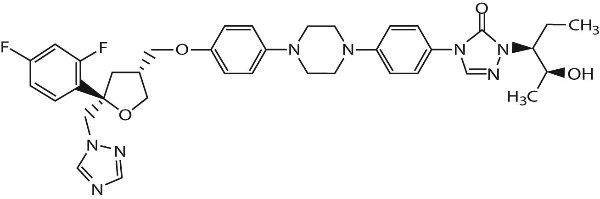
Posaconazole is designated chemically as 4-[4-[4-[4-[[ (3R,5R)-5- (2,4-difluorophenyl)tetrahydro-5- (1H-1,2,4-triazol-1-ylmethyl)-3-furanyl]methoxy]phenyl]-1-piperazinyl]phenyl]-2-[(1S,2S)-1-ethyl-2-hydroxypropyl]-2,4-dihydro-3H-1,2,4-triazol-3-one with an empirical formula of C37H42F2N8O4 and a molecular weight of 700.8. The chemical structure is:
Posaconazole is a white powder with a low aqueous solubility.
Posaconazole delayed-release tablets are yellow, modified, oval, convex tablets containing 100 mg of posaconazole. Each delayed-release tablet contains the inactive ingredients: Hypromellose Acetate Succinate, Microcrystalline Cellulose, Hydroxypropyl Cellulose, Croscarmellose Sodium, Silicon Dioxide, and Magnesium Stearate. The color coating contains (Polyvinyl Alcohol, Titanium Dioxide, Polyethylene Glycol, Talc, Ferric Oxide Yellow, and Ferrosoferric Oxide).
7.14 Glipizide
Although no dosage adjustment of glipizide is required, it is recommended to monitor glucose concentrations when posaconazole and glipizide are concomitantly used.
7.16 Venetoclax
Concomitant use of venetoclax (a CYP3A4 substrate) with posaconazole increases venetoclax Cmax and AUC0-INF, which may increase venetoclax toxicities [see Contraindications (4.6), Warnings and Precautions (5.11)]. Refer to the venetoclax prescribing information for more information on the dosing instructions and the extent of increase in venetoclax exposure.
16.1 How Supplied
Posaconazole delayed-release tablets are yellow, modified, oval, convex tablets debossed with a logo "M" inside a square on one side and "100" on the opposite side containing 100 mg of posaconazole.
Bottles of 60 . . . . . . . . . . . . . . NDC 0406-7711-60
8.4 Pediatric Use
The safety and effectiveness of posaconazole delayed-release tablets for the prophylaxis of invasive Aspergillus and Candida infections have been established in pediatric patients aged 13 years and older who are at high risk of developing these infections due to being severely immunocompromised, such as HSCT recipients with GVHD or those with hematologic malignancies with prolonged neutropenia from chemotherapy.
Use of posaconazole in these age groups is supported by evidence from adequate and well controlled studies of posaconazole in adult and pediatric patients and additional pharmacokinetic and safety data in pediatric patients 13 years of age and older [see Adverse Reactions (6.1), Clinical Pharmacology (12.3) and Clinical Studies (14)].
The safety and effectiveness of posaconazole have not been established in pediatric patients younger than 2 years of age.
Additional Pediatric Use information is approved for Merck Sharp & Dohme Corp.’s NOXAFIL (posaconazole delayed-release tablets). However, due to Merck Sharp & Dohme Corp.’s marketing exclusivity rights, this drug product is not labeled with that pediatric information.
8.5 Geriatric Use
No overall differences in the safety of posaconazole delayed-release tablets were observed between geriatric patients and younger adult patients in the clinical trials; therefore, no dosage adjustment is recommended for any formulation of posaconazole in geriatric patients. No clinically meaningful differences in the pharmacokinetics of posaconazole were observed in geriatric patients compared to younger adult patients during clinical trials [see Clinical Pharmacology (12.3)].
Of the 230 patients treated with posaconazole delayed-release tablets, 38 (17%) were greater than 65 years of age.
No overall differences in the pharmacokinetics and safety were observed between elderly and young subjects during clinical trials, but greater sensitivity of some older individuals cannot be ruled out.
4 Contraindications
- Known hypersensitivity to posaconazole or other azole antifungal agents. (4.1)
- Coadministration of posaconazole delayed-release tablets with the following drugs is contraindicated; posaconazole delayed-release tablets increase concentrations and toxicities of:
- Sirolimus (4.2, 5.1, 7.1)
- CYP3A4 substrates (pimozide, quinidine): can result in QTc interval prolongation and cases of torsades de pointes (TdP) (4.3, 5.2, 7.2)
- HMG-CoA Reductase Inhibitors Primarily Metabolized through CYP3A4 (4.4, 7.3)
- Ergot alkaloids (4.5, 7.4)
- Venetoclax: In patients with chronic lymphocytic leukemia (CLL) or small lymphocytic lymphoma (SLL) at initiation and during the ramp-up phase (4.6, 5.11, 7.16)
6 Adverse Reactions
The following serious and otherwise important adverse reactions are discussed in detail in another section of the labeling:
- Hypersensitivity [see Contraindications (4.1)]
- Arrhythmias and QT Prolongation [see Warnings and Precautions (5.2)]
- Hepatic Toxicity [see Warnings and Precautions (5.5)]
7 Drug Interactions
Posaconazole is primarily metabolized via UDP glucuronosyltransferase and is a substrate of p-glycoprotein (P-gp) efflux. Therefore, inhibitors or inducers of these clearance pathways may affect posaconazole plasma concentrations. Coadministration of drugs that can decrease the plasma concentrations of posaconazole should generally be avoided unless the benefit outweighs the risk. If such drugs are necessary, patients should be monitored closely for breakthrough fungal infections.
Posaconazole is also a strong inhibitor of CYP3A4. Therefore, plasma concentrations of drugs predominantly metabolized by CYP3A4 may be increased by posaconazole [see Clinical Pharmacology (12.3)].
The following information was derived from data with Noxafil® Oral Suspension or early tablet formulation unless otherwise noted. All drug interactions with Noxafil® Oral Suspension, except for those that affect the absorption of posaconazole (via gastric pH and motility), are considered relevant to posaconazole delayed-release tablets as well [see Drug Interactions (7.9) and (7.13)].
7.4 Ergot Alkaloids
Most of the ergot alkaloids are substrates of CYP3A4. Posaconazole may increase the plasma concentrations of ergot alkaloids (ergotamine and dihydroergotamine) which may lead to ergotism. Therefore, posaconazole is contraindicated with ergot alkaloids [see Contraindications (4.5)].
4.1 Hypersensitivity
Posaconazole delayed-release tablets are contraindicated in persons with known hypersensitivity to posaconazole or other azole antifungal agents.
5.5 Hepatic Toxicity
Hepatic reactions (e.g., mild to moderate elevations in alanine aminotransferase (ALT), aspartate aminotransferase (AST), alkaline phosphatase, total bilirubin, and/or clinical hepatitis) have been reported in clinical trials. The elevations in liver tests were generally reversible on discontinuation of therapy, and in some instances these tests normalized without drug interruption. Cases of more severe hepatic reactions including cholestasis or hepatic failure including deaths have been reported in patients with serious underlying medical conditions (e.g., hematologic malignancy) during treatment with posaconazole. These severe hepatic reactions were seen primarily in subjects receiving the Noxafil® Oral Suspension 800 mg daily (400 mg twice daily or 200 mg four times a day) in clinical trials.
Liver tests should be evaluated at the start of and during the course of posaconazole therapy. Patients who develop abnormal liver tests during posaconazole therapy should be monitored for the development of more severe hepatic injury. Patient management should include laboratory evaluation of hepatic function (particularly liver tests and bilirubin). Discontinuation of posaconazole must be considered if clinical signs and symptoms consistent with liver disease develop that may be attributable to posaconazole.
5.6 Renal Impairment
Due to the variability in exposure with posaconazole delayed-release tablets, Noxafil® Oral Suspension, and Noxafil® PowderMix for Delayed-Release Oral Suspension, patients with severe renal impairment should be monitored closely for breakthrough fungal infections [see Dosage and Administration (2.9) and Use in Specific Populations (8.6)].
7.10 Vinca Alkaloids
Most of the vinca alkaloids (e.g., vincristine and vinblastine) are substrates of CYP3A4. Concomitant administration of azole antifungals, including posaconazole, with vincristine has been associated with serious adverse reactions [see Warnings and Precautions (5.8) ]. Posaconazole may increase the plasma concentrations of vinca alkaloids which may lead to neurotoxicity and other serious adverse reactions. Therefore, reserve azole antifungals, including posaconazole, for patients receiving a vinca alkaloid, including vincristine, who have no alternative antifungal treatment options.
8.6 Renal Impairment
Following single-dose administration of 400 mg of the Noxafil® Oral Suspension, there was no significant effect of mild (eGFR: 50-80 mL/min/1.73 m2, n=6) or moderate (eGFR: 20-49 mL/min/1.73 m2, n=6) renal impairment on posaconazole pharmacokinetics; therefore, no dose adjustment is required in patients with mild to moderate renal impairment. In subjects with severe renal impairment (eGFR: <20 mL/min/1.73 m2), the mean plasma exposure (AUC) was similar to that in patients with normal renal function (eGFR: >80 mL/min/1.73 m2); however, the range of the AUC estimates was highly variable (CV=96%) in these subjects with severe renal impairment as compared to that in the other renal impairment groups (CV<40%). Due to the variability in exposure, patients with severe renal impairment should be monitored closely for breakthrough fungal infections [see Dosage and Administration (2)]. Similar recommendations apply to posaconazole delayed-release tablets; however, a specific study has not been conducted with the delayed-release tablets.
12.2 Pharmacodynamics
Exposure Response Relationship Prophylaxis : In clinical studies of neutropenic patients who were receiving cytotoxic chemotherapy for acute myelogenous leukemia (AML) or myelodysplastic syndromes (MDS) or hematopoietic stem cell transplant (HSCT) recipients with graft-versus-host disease (GVHD), a wide range of plasma exposures to posaconazole was noted following administration of Noxafil® Oral Suspension. A pharmacokinetic-pharmacodynamic analysis of patient data revealed an apparent association between average posaconazole concentrations (Cavg) and prophylactic efficacy (Table 17). A lower Cavg may be associated with an increased risk of treatment failure, defined as treatment discontinuation, use of empiric systemic antifungal therapy (SAF), or occurrence of breakthrough invasive fungal infections.
|
Prophylaxis in AML/MDS Neutropenic patients who were receiving cytotoxic chemotherapy for AML or MDS
|
Prophylaxis in GVHD HSCT recipients with GVHD
|
|||
| Cavg Range (ng/mL) | Treatment Failure Defined as treatment discontinuation, use of empiric systemic antifungal therapy (SAF), or occurrence of breakthrough invasive fungal infections (%) |
Cavg Range (ng/mL) | Treatment Failure(%) | |
|
Quartile 1 |
90-322 |
54.7 |
22-557 |
44.4 |
|
Quartile 2 |
322-490 |
37.0 |
557-915 |
20.6 |
|
Quartile 3 |
490-734 |
46.8 |
915-1563 |
17.5 |
|
Quartile 4 |
734-2200 |
27.8 |
1563-3650 |
17.5 |
| Cavg = the average posaconazole concentration when measured at steady state |
7.2 Cyp3a4 Substrates
Concomitant administration of posaconazole with CYP3A4 substrates such as pimozide and quinidine may result in increased plasma concentrations of these drugs, leading to QTc prolongation and cases of torsades de pointes. Therefore, posaconazole is contraindicated with these drugs [see Contraindications (4.3) and Warnings and Precautions (5.2)].
4.2 Use With Sirolimus
Posaconazole delayed-release tablets are contraindicated with sirolimus. Concomitant administration of posaconazole delayed-release tablets with sirolimus increases the sirolimus blood concentrations by approximately 9-fold and can result in sirolimus toxicity [see Drug Interactions (7.1) and Clinical Pharmacology (12.3)].
5.7 Midazolam Toxicity
Concomitant administration of posaconazole delayed-release tablets with midazolam increases the midazolam plasma concentrations by approximately 5-fold. Increased plasma midazolam concentrations could potentiate and prolong hypnotic and sedative effects. Patients must be monitored closely for adverse effects associated with high plasma concentrations of midazolam and benzodiazepine receptor antagonists must be available to reverse these effects [see Drug Interactions (7.5) and Clinical Pharmacology (12.3)].
8.7 Hepatic Impairment
After a single oral dose of Noxafil® Oral Suspension 400 mg, the mean AUC was 43%, 27%, and 21% higher in subjects with mild (Child-Pugh Class A, N=6), moderate (Child-Pugh Class B, N=6), or severe (Child-Pugh Class C, N=6) hepatic impairment, respectively, compared to subjects with normal hepatic function (N=18). Compared to subjects with normal hepatic function, the mean Cmax was 1% higher, 40% higher, and 34% lower in subjects with mild, moderate, or severe hepatic impairment, respectively. The mean apparent oral clearance (CL/F) was reduced by 18%, 36%, and 28% in subjects with mild, moderate, or severe hepatic impairment, respectively, compared to subjects with normal hepatic function. The elimination half-life (t1/2;) was 27 hours, 39 hours, 27 hours, and 43 hours in subjects with normal hepatic function and mild, moderate, or severe hepatic impairment, respectively.
It is recommended that no dose adjustment of posaconazole is needed in patients with mild to severe hepatic impairment (Child-Pugh Class A, B, or C) [see Dosage and Administration (2) and Warnings and Precautions (5.5)]. However, a specific study has not been conducted with the delayed-release tablets.
1 Indications and Usage
Posaconazole delayed-release tablets are an azole antifungal indicated as follows:
-
Posaconazole delayed-release tablets are indicated for the prophylaxis of invasive Aspergillus and Candida infections in patients who are at high risk of developing these infections due to being severely immunocompromised, such as hematopoietic stem cell transplant (HSCT) recipients with graft-versus-host disease (GVHD) or those with hematologic malignancies with prolonged neutropenia from chemotherapy as follows: (1.2)
- Posaconazole delayed-release tablets: adults and pediatric patients 13 years of age and older
4.6 Use With Venetoclax
Coadministration of posaconazole delayed-release tablets with venetoclax at initiation and during the ramp-up phase is contraindicated in patients with chronic lymphocytic leukemia (CLL) or small lymphocytic lymphoma (SLL) due to the potential for increased risk of tumor lysis syndrome [see Warnings and Precautions (5.11) and Drug Interactions (7.16)].
12.1 Mechanism of Action
Posaconazole is an azole antifungal agent [see Clinical Pharmacology (12.4)].
5.11 Venetoclax Toxicity
Concomitant administration of posaconazole delayed-release tablets, a strong CYP3A4 inhibitor, with venetoclax may increase venetoclax toxicities, including the risk of tumor lysis syndrome (TLS), neutropenia, and serious infections. In patients with CLL/SLL, administration of posaconazole delayed-release tablets during initiation and the ramp-up phase of venetoclax is contraindicated [see Contraindications (4.6)]. Refer to the venetoclax labeling for safety monitoring and dose reduction in the steady daily dosing phase in CLL/SLL patients.
For patients with acute myeloid leukemia (AML), dose reduction and safety monitoring are recommended across all dosing phases when coadministering posaconazole delayed-release tablets with venetoclax [see Drug Interactions (7.16)]. Refer to the venetoclax prescribing information for dosing instructions.
5.4 pseudoaldosteronism
Pseudoaldosteronism, manifested by the onset of hypertension or worsening of hypertension, and abnormal laboratory findings (hypokalemia, low serum renin and aldosterone, and elevated 11-deoxycortisol), has been reported with posaconazole use in the postmarket setting. Monitor blood pressure and potassium levels and manage as necessary. Management of pseudoaldosteronism may include discontinuation of posaconazole delayed-release tablets, substitution with an appropriate antifungal drug that is not associated with pseudoaldosteronism, or use of aldosterone receptor antagonists.
5.8 Vincristine Toxicity
Concomitant administration of azole antifungals, including posaconazole delayed-release tablets, with vincristine has been associated with neurotoxicity and other serious adverse reactions, including seizures, peripheral neuropathy, syndrome of inappropriate antidiuretic hormone secretion, and paralytic ileus. Reserve azole antifungals, including posaconazole delayed-release tablets, for patients receiving a vinca alkaloid, including vincristine, who have no alternative antifungal treatment options [see Drug Interactions (7.10)].
16.2 Storage and Handling
Store at 20° to 25°C (68° to 77°F), excursions permitted to 15° to 30°C (59° to 86°F) [see USP Controlled Room Temperature].
Dispense in a tight, light-resistant container (as defined in USP) with a child-resistant closure.
5 Warnings and Precautions
- Calcineurin-Inhibitor Toxicity: Posaconazole delayed-release tablets increase concentrations of cyclosporine or tacrolimus; reduce dose of cyclosporine and tacrolimus and monitor concentrations frequently. (5.1)
- Arrhythmias and QTc Prolongation: Posaconazole delayed-release tablets have been shown to prolong the QTc interval and cause cases of TdP. Administer with caution to patients with potentially proarrhythmic conditions. Do not administer with drugs known to prolong QTc interval and metabolized through CYP3A4. (5.2)
- Electrolyte Disturbances: Monitor and correct, especially those involving potassium (K+), magnesium (Mg++), and calcium (Ca++), before and during posaconazole delayed-release tablets therapy. (5.3)
- Pseudoaldosteronism: Manifested by the onset or worsening of hypertension, and abnormal laboratory findings. Monitor blood pressure and potassium levels, and manage as necessary. (5.4)
- Hepatic Toxicity: Elevations in liver tests may occur. Discontinuation should be considered in patients who develop abnormal liver tests or monitor liver tests during treatment. (5.5)
- Concomitant Use with Midazolam: Posaconazole delayed-release tablets can prolong hypnotic/sedative effects. Monitor patients and benzodiazepine receptor antagonists should be available. (5.7, 7.5)
- Vincristine Toxicity: Concomitant administration of azole antifungals, including posaconazole delayed-release tablets, with vincristine has been associated with neurotoxicity and other serious adverse reactions; reserve azole antifungals, including posaconazole delayed-release tablets, for patients receiving a vinca alkaloid, including vincristine, who have no alternative antifungal treatment options. (5.8, 7.10)
- Breakthrough Fungal Infections: Monitor patients with severe diarrhea or vomiting when receiving posaconazole delayed-release tablets. (5.10)
- Venetoclax Toxicity: Concomitant administration of posaconazole delayed-release tablets with venetoclax may increase venetoclax toxicities, including the risk of tumor lysis syndrome, neutropenia, and serious infections; monitor for toxicity and reduce venetoclax dose. (4.6, 5.11, 7.16)
2 Dosage and Administration
- Posaconazole delayed-release tablets are not substitutable with Noxafil® Oral Suspension or Noxafil® PowderMix for Delayed-Release Oral Suspension due to the differences in the dosing of each formulation. Therefore, follow the specific dosage recommendations for each of the formulations. (2.1, 2.2, 2.3)
- Administer posaconazole delayed-release tablets with or without food. (2.1)
| Table 1. Recommended Dosage in Adult Patients | |
|---|---|
| Indication | Dosage Form, Dose, and Duration of Therapy |
| Prophylaxis of invasive Aspergillus and Candida infections |
Posaconazole Delayed-Release Tablets:
Loading dose: 300 mg (three 100 mg delayed-release tablets) twice a day on the first day. Maintenance dose: 300 mg (three 100 mg delayed-release tablets) once a day, starting on the second day. Duration of therapy is based on recovery from neutropenia or immunosuppression. (2.2, 2.3) |
3 Dosage Forms and Strengths
Posaconazole delayed-release tablets are available as yellow, modified, oval, convex tablets debossed with a logo "M" inside a square on one side and "100" on the opposite side containing 100 mg of posaconazole.
4.5 Use With Ergot Alkaloids
Posaconazole may increase the plasma concentrations of ergot alkaloids (ergotamine and dihydroergotamine) which may lead to ergotism [see Drug Interactions (7.4)].
5.3 Electrolyte Disturbances
Electrolyte disturbances, especially those involving potassium, magnesium or calcium levels, should be monitored and corrected as necessary before and during posaconazole therapy.
6.2 Postmarketing Experience
The following adverse reaction has been identified during the post-approval use of posaconazole. Because these reactions are reported voluntarily from a population of uncertain size, it is not always possible to reliably estimate their frequency.
Endocrine Disorders: Pseudoaldosteronism
8 Use in Specific Populations
6.1 Clinical Trials Experience
Because clinical trials are conducted under widely varying conditions, adverse reaction rates observed in clinical trials of posaconazole delayed-release tablets cannot be directly compared to rates in the clinical trials of another drug and may not reflect the rates observed in practice.
Clinical Trial Experience in Adults
Clinical Trial Experience with P
osaconazole Delayed-Release Tablets for Prophylaxis
The safety of posaconazole delayed-release tablets has been assessed in 230 patients in clinical trials. Patients were enrolled in a non-comparative pharmacokinetic and safety trial of posaconazole delayed-release tablets when given as antifungal prophylaxis (Posaconazole Delayed-Release Tablet Study). Patients were immunocompromised with underlying conditions including hematological malignancy, neutropenia postchemotherapy, GVHD, and post HSCT. This patient population was 62% male, had a mean age of 51 years (range 19-78 years, 17% of patients were ≥65 years of age), and were 93% white and 16% Hispanic. Posaconazole therapy was given for a median duration of 28 days. Twenty patients received 200 mg daily dose and 210 patients received 300 mg daily dose (following twice daily dosing on Day 1 in each cohort). Table 9 presents adverse reactions observed in patients treated with 300 mg daily dose at an incidence of ≥10% in Posaconazole Delayed-Release Tablet Study.
|
Body System |
Posaconazole delayed- release tablet (300 mg) n=210 (%) |
|
|
Subjects Reporting any Adverse Reaction |
207 |
(99) |
|
Blood and Lymphatic System Disorder |
||
|
Anemia |
22 |
(10) |
|
Thrombocytopenia |
29 |
(14) |
|
Gastrointestinal Disorders |
||
|
Abdominal Pain |
23 |
(11) |
|
Constipation |
20 |
(10) |
|
Diarrhea |
61 |
(29) |
|
Nausea |
56 |
(27) |
|
Vomiting |
28 |
(13) |
|
General Disorders and Administration Site Conditions |
||
|
Asthenia |
20 |
(10) |
|
Chills |
22 |
(10) |
|
Mucosal Inflammation |
29 |
(14) |
|
Edema Peripheral |
33 |
(16) |
|
Pyrexia |
59 |
(28) |
|
Metabolism and Nutrition Disorders |
||
|
Hypokalemia |
46 |
(22) |
|
Hypomagnesemia |
20 |
(10) |
|
Nervous System Disorders |
||
|
Headache |
30 |
(14) |
|
Respiratory, Thoracic and Mediastinal Disorders |
||
|
Cough |
35 |
(17) |
|
Epistaxis |
30 |
(14) |
|
Skin and Subcutaneous Tissue Disorders |
||
|
Rash |
34 |
(16) |
|
Vascular Disorders |
||
|
Hypertension |
23 |
(11) |
The most frequently reported adverse reactions (>25%) with posaconazole delayed-release tablets 300 mg once daily were diarrhea, pyrexia, and nausea.
The most common adverse reaction leading to discontinuation of posaconazole delayed-release tablets 300 mg once daily was nausea (2%).
Additional Pediatric Use information is approved for Merck Sharp & Dohme Corp.’s NOXAFIL (posaconazole) delayed-release tablets. However, due to Merck Sharp & Dohme Corp.’s marketing exclusivity rights, this drug product is not labeled with that pediatric information.
14.2 Prophylaxis of Aspergillus
Two randomized, controlled studies were conducted using posaconazole as prophylaxis for the prevention of invasive fungal infections (IFIs) among patients at high risk due to severely compromised immune systems.
The first study (Noxafil® Oral Suspension Study 1) was a randomized, double-blind trial that compared Noxafil® Oral Suspension (200 mg three times a day) with fluconazole capsules (400 mg once daily) as prophylaxis against invasive fungal infections in allogeneic hematopoietic stem cell transplant (HSCT) recipients with graft-versus-host disease (GVHD). Efficacy of prophylaxis was evaluated using a composite endpoint of proven/probable IFIs, death, or treatment with systemic antifungal therapy (patients may have met more than one of these criteria). This assessed all patients while on study therapy plus 7 days and at 16 weeks post-randomization. The mean duration of therapy was comparable between the 2 treatment groups (80 days, posaconazole; 77 days, fluconazole). Table 32 contains the results from Noxafil® Oral Suspension Study 1.
| Posaconazole n=301 | Fluconazole n=299 | |
| On therapy plus 7 days | ||
| Clinical Failure Patients may have met more than one criterion defining failure.
|
50 (17%) | 55 (18%) |
| Failure due to: | ||
| Proven/Probable IFI | 7 (2%) | 22 (7%) |
| (Aspergillus) | 3 (1%) | 17 (6%) |
| (Candida) | 1 (<1%) | 3 (1%) |
| (Other) | 3 (1%) | 2 (1%) |
| All Deaths | 22 (7%) | 24 (8%) |
| Proven/probable fungal infection prior to death | 2 (<1%) | 6 (2%) |
| SAF Use of systemic antifungal therapy (SAF) criterion is based on protocol definitions (empiric/IFI usage >4 consecutive days). |
27 (9%) | 25 (8%) |
| Through 16 weeks | ||
|
Clinical Failure 95% confidence interval (posaconazole-fluconazole) = (-11.5%, +3.7%).
|
99 (33%) | 110 (37%) |
| Failure due to: | ||
| Proven/Probable IFI | 16 (5%) | 27 (9%) |
| (Aspergillus) | 7 (2%) | 21 (7%) |
| (Candida) | 4 (1%) | 4 (1%) |
| (Other) | 5 (2%) | 2 (1%) |
| All Deaths | 58 (19%) | 59 (20%) |
| Proven/probable fungal infection prior to death | 10 (3%) | 16 (5%) |
| SAF | 26 (9%) | 30 (10%) |
| Event free lost to follow-up Patients who are lost to follow-up (not observed for 112 days), and who did not meet another clinical failure endpoint. These patients were considered failures. |
24 (8%) | 30 (10%) |
The second study (Noxafil® Oral Suspension Study 2) was a randomized, open-label study that compared Noxafil® Oral Suspension (200 mg 3 times a day) with fluconazole suspension (400 mg once daily) or itraconazole oral solution (200 mg twice a day) as prophylaxis against IFIs in neutropenic patients who were receiving cytotoxic chemotherapy for AML or MDS. As in Noxafil® Oral Suspension Study 1, efficacy of prophylaxis was evaluated using a composite endpoint of proven/probable IFIs, death, or treatment with systemic antifungal therapy (patients might have met more than one of these criteria). This study assessed patients while on treatment plus 7 days and 100 days post-randomization. The mean duration of therapy was comparable between the 2 treatment groups (29 days, posaconazole; 25 days, fluconazole or itraconazole). Table 33 contains the results from Noxafil® Oral Suspension Study 2.
| Posaconazole n=304 | Fluconazole/Itraconazole n=298 | |
| On therapy plus 7 days | ||
|
Clinical Failure 95% confidence interval (posaconazole-fluconazole/itraconazole) = (-22.9%, -7.8%). , Patients may have met more than one criterion defining failure.
|
82 (27%) | 126 (42%) |
| Failure due to: | ||
| Proven/Probable IFI | 7 (2%) | 25 (8%) |
| (Aspergillus) | 2 (1%) | 20 (7%) |
| (Candida) | 3 (1%) | 2 (1%) |
| (Other) | 2 (1%) | 3 (1%) |
| All Deaths | 17 (6%) | 25 (8%) |
| Proven/probable fungal infection prior to death | 1 (<1%) | 2 (1%) |
| SAF Use of systemic antifungal therapy (SAF) criterion is based on protocol definitions (empiric/IFI usage >3 consecutive days). |
67 (22%) | 98 (33%) |
| Through 100 days post-randomization | ||
| Clinical Failure | 158 (52%) | 191 (64%) |
| Failure due to: | ||
| Proven/Probable IFI | 14 (5%) | 33 (11%) |
| (Aspergillus) | 2 (1%) | 26 (9%) |
| (Candida) | 10 (3%) | 4 (1%) |
| (Other) | 2 (1%) | 3 (1%) |
| All Deaths | 44 (14%) | 64 (21%) |
| Proven/probable fungal infection prior to death | 2 (1%) | 16 (5%) |
| SAF | 98 (32%) | 125 (42%) |
| Event free lost to follow-up Patients who are lost to follow-up (not observed for 100 days), and who did not meet another clinical failure endpoint. These patients were considered failures. |
34 (11%) | 24 (8%) |
In summary, 2 clinical studies of prophylaxis were conducted with the Noxafil® Oral Suspension. As seen in the accompanying tables (Tables 32 and 33), clinical failure represented a composite endpoint of breakthrough IFI, mortality and use of systemic antifungal therapy. In Noxafil® Oral Suspension Study 1 (Table 32), the clinical failure rate of posaconazole (33%) was similar to fluconazole (37%), (95% CI for the difference posaconazole–comparator -11.5% to 3.7%) while in Noxafil® Oral Suspension Study 2 (Table 33) clinical failure was lower for patients treated with posaconazole (27%) when compared to patients treated with fluconazole or itraconazole (42%), (95% CI for the difference posaconazole–comparator -22.9% to -7.8%).
All-cause mortality was similar at 16 weeks for both treatment arms in Noxafil® Oral Suspension Study 1 [POS 58/301 (19%) vs. FLU 59/299 (20%)]; all-cause mortality was lower at 100 days for posaconazole-treated patients in Noxafil® Oral Suspension Study 2 [POS 44/304 (14%) vs. FLU/ITZ 64/298 (21%)]. Both studies demonstrated fewer breakthrough infections caused by Aspergillus species in patients receiving posaconazole prophylaxis when compared to patients receiving fluconazole or itraconazole.
17 Patient Counseling Information
Advise the patient to read the FDA-approved patient labeling (Patient Information).
Important Administration Instructions
Posaconazole Delayed-Release Tablets
Advise patients that posaconazole delayed-release tablets must be swallowed whole and not divided, crushed, or chewed.
Instruct patients that if they miss a dose, they should take it as soon as they remember. If they do not remember until it is within 12 hours of the next dose, they should be instructed to skip the missed dose and go back to the regular schedule. Patients should not double their next dose or take more than the prescribed dose.
Drug Interactions
Advise patients to inform their physician immediately if they:
- develop severe diarrhea or vomiting.
- are currently taking drugs that are known to prolong the QTc interval and are metabolized through CYP3A4.
- are currently taking a cyclosporine or tacrolimus, or they notice swelling in an arm or leg or shortness of breath.
- are taking other drugs or before they begin taking other drugs as certain drugs can decrease or increase the plasma concentrations of posaconazole.
Serious and Potentially Serious Adverse Reactions
Advise patients to inform their physician immediately if they:
- notice a change in heart rate or heart rhythm, or have a heart condition or circulatory disease. Posaconazole can be administered with caution to patients with potentially proarrhythmic conditions.
- are pregnant, plan to become pregnant, or are nursing.
- have liver disease or develop itching, nausea or vomiting, their eyes or skin turn yellow, they feel more tired than usual or feel like they have the flu.
- have ever had an allergic reaction to other antifungal medicines such as ketoconazole, fluconazole, itraconazole, or voriconazole.
Mallinckrodt, the “M” brand mark and the Mallinckrodt Pharmaceuticals logo are trademarks of a Mallinckrodt company.
© 2024 Mallinckrodt.
Mylanta, Zantac, Nexium, and Reglan are trademarks of their respective owners.
SpecGx LLC
Webster Groves, MO 63119 USA
www.mallinckrodt.com or call 1-800-778-7898
L20P21
Revised: 10/2024
Mallinckrodt™
Pharmaceuticals
PHARMACIST: Dispense separate Patient Information to each patient. Patient Information available at: www.mallinckrodt.com/medguide/X30000254.pdf or call 1-800-778-7898
5.1 Calcineurin Inhibitor Toxicity
Concomitant administration of posaconazole delayed-release tablets with cyclosporine or tacrolimus increases the whole blood trough concentrations of these calcineurin-inhibitors [see Drug Interactions (7.1) and Clinical Pharmacology (12.3)]. Nephrotoxicity and leukoencephalopathy (including deaths) have been reported in clinical efficacy studies in patients with elevated cyclosporine or tacrolimus concentrations. Frequent monitoring of tacrolimus or cyclosporine whole blood trough concentrations should be performed during and at discontinuation of posaconazole treatment and the tacrolimus or cyclosporine dose adjusted accordingly.
5.10 Breakthrough Fungal Infections
Patients who have severe diarrhea or vomiting should be monitored closely for breakthrough fungal infections when receiving posaconazole delayed-release tablets.
5.2 Arrhythmias and Qt Prolongation
Some azoles, including posaconazole, have been associated with prolongation of the QT interval on the electrocardiogram. In addition, cases of torsades de pointes have been reported in patients taking posaconazole.
Results from a multiple time-matched ECG analysis in healthy volunteers did not show any increase in the mean of the QTc interval. Multiple, time-matched ECGs collected over a 12-hour period were recorded at baseline and steady-state from 173 healthy male and female volunteers (18-85 years of age) administered Noxafil® Oral Suspension 400 mg twice daily with a high-fat meal. In this pooled analysis, the mean QTc (Fridericia) interval change from baseline was –5 msec following administration of the recommended clinical dose. A decrease in the QTc(F) interval (–3 msec) was also observed in a small number of subjects (n=16) administered placebo. The placebo-adjusted mean maximum QTc(F) interval change from baseline was <0 msec (–8 msec). No healthy subject administered posaconazole had a QTc(F) interval ≥500 msec or an increase ≥60 msec in their QTc(F) interval from baseline.
Posaconazole should be administered with caution to patients with potentially proarrhythmic conditions. Do not administer with drugs that are known to prolong the QTc interval and are metabolized through CYP3A4 [see Contraindications (4.3) and Drug Interactions (7.2)].
2.2 Dosing Regimen in Adult Patients
|
Indication |
Dose and Frequency |
Duration of Therapy |
|
Prophylaxis of invasive Aspergillus and Candida infections |
Posaconazole Delayed-Release Tablets:
|
Loading dose:
Maintenance dose: |
7.13 Gastrointestinal Motility Agents
Concomitant administration of metoclopramide with posaconazole delayed-release tablets did not affect the pharmacokinetics of posaconazole [see Clinical Pharmacology (12.3)]. No dosage adjustment of posaconazole delayed-release tablets is required when given concomitantly with metoclopramide.
1.2 Prophylaxis of Invasive Aspergillus
Posaconazole delayed-release tablets are indicated for the prophylaxis of invasive Aspergillus and Candida infections in patients who are at high risk of developing these infections due to being severely immunocompromised, such as hematopoietic stem cell transplant (HSCT) recipients with graft-versus-host disease (GVHD) or those with hematologic malignancies with prolonged neutropenia from chemotherapy [see Clinical Studies (14.2)] as follows:
- Posaconazole delayed-release tablets: adults and pediatric patients 13 years of age and older
Additional Pediatric Use information is approved for Merck Sharp & Dohme Corp.’s NOXAFIL (posaconazole) delayed-release tablets. However, due to Merck Sharp & Dohme Corp.’s marketing exclusivity rights, this drug product is not labeled with that pediatric information.
Principal Display Panel 100 Mg label
NDC 0406-7711-60
60 TABLETS
Posaconazole
Delayed-Release Tablets
100 mg
Rx only
ATTENTION: Noxafil™ Oral Suspension and Posaconazole Delayed-Release Tablets are NOT interchangeable due to differences in the dosing of each formulation.
PHARMACIST: Dispense the Patient Information provided separately to each patient.
Mallinckrodt™
L00P34
Rev 05/2022
2.1 Important Administration Instructions
Non-substitutable
Posaconazole delayed-release tablets are not substitutable with Noxafil® Oral Suspension or Noxafil® PowderMix for Delayed-Release Oral Suspension due to the differences in the dosing of each formulation. Therefore, follow the specific dosage recommendations for each of the formulations [see Dosage and Administration (2.2, 2.3)].
Posaconazole delayed-release tablets
- Swallow tablets whole. Do not divide, crush, or chew.
- Administer with or without food [see Dosage and Administration (2.5) and Clinical Pharmacology (12.3)].
- For patients who cannot eat a full meal, posaconazole delayed-release tablets should be used instead of Noxafil® Oral Suspension for the prophylaxis indication. Posaconazole delayed-release tablets generally provide higher plasma drug exposures than Noxafil® Oral Suspension under both fed and fasted conditions.
7.5 Benzodiazepines Metabolized By Cyp3a4
Concomitant administration of posaconazole with midazolam increases the midazolam plasma concentrations by approximately 5-fold. Increased plasma midazolam concentrations could potentiate and prolong hypnotic and sedative effects. Concomitant use of posaconazole and other benzodiazepines metabolized by CYP3A4 (e.g., alprazolam, triazolam) could result in increased plasma concentrations of these benzodiazepines. Patients must be monitored closely for adverse effects associated with high plasma concentrations of benzodiazepines metabolized by CYP3A4 and benzodiazepine receptor antagonists must be available to reverse these effects [see Warnings and Precautions (5.7) and Clinical Pharmacology (12.3)].
7.9 Gastric Acid Suppressors/neutralizers
No clinically relevant effects on the pharmacokinetics of posaconazole were observed when posaconazole delayed-release tablets are concomitantly used with antacids, H2-receptor antagonists and proton pump inhibitors [see Clinical Pharmacology (12.3)]. No dosage adjustment of posaconazole delayed-release tablets is required when posaconazole delayed-release tablets are concomitantly used with antacids, H2-receptor antagonists and proton pump inhibitors.
13.2 Animal Toxicology And/or Pharmacology
In a nonclinical study using intravenous administration of posaconazole in very young dogs (dosed from 2 to 8 weeks of age), an increase in the incidence of brain ventricle enlargement was observed in treated animals as compared with concurrent control animals. No difference in the incidence of brain ventricle enlargement between control and treated animals was observed following the subsequent 5-month treatment-free period. There were no neurologic, behavioral or developmental abnormalities in the dogs with this finding, and a similar brain finding was not seen with oral posaconazole administration to juvenile dogs (4 days to 9 months of age). There were no drug-related increases in the incidence of brain ventricle enlargement when treated and control animals were compared in a separate study of 10-week-old dogs dosed with intravenous posaconazole for 13 weeks with a 9-week recovery period or a follow-up study of 31-week-old dogs dosed for 3 months.
2.7 Non Substitutability Between Noxafil®
Posaconazole delayed-release tablets are not substitutable with Noxafil® Oral Suspension or Noxafil® PowderMix for Delayed-Release Oral Suspension due to the differences in the dosing of each formulation. Therefore, follow the specific dosage recommendations for each of the formulations [see Dosage and Administration (2.2, 2.3)].
7.11 Calcium Channel Blockers Metabolized By Cyp3a4
Posaconazole may increase the plasma concentrations of calcium channel blockers metabolized by CYP3A4 (e.g., verapamil, diltiazem, nifedipine, nicardipine, felodipine). Frequent monitoring for adverse reactions and toxicity related to calcium channel blockers is recommended during coadministration. Dose reduction of calcium channel blockers may be needed.
2.9 Dosage Adjustments in Patients With Renal Impairment
The pharmacokinetics of posaconazole delayed-release tablets are not significantly affected by renal impairment. Therefore, no adjustment is necessary for oral dosing in patients with mild to severe renal impairment.
13.1 Carcinogenesis, Mutagenesis, Impairment of Fertility
Carcinogenesis
No drug-related neoplasms were recorded in rats or mice treated with posaconazole for 2 years at doses higher than the clinical dose. In a 2-year carcinogenicity study, rats were given posaconazole orally at doses up to 20 mg/kg (females), or 30 mg/kg (males). These doses are equivalent to 3.9- or 3.5-times the exposure achieved with a 400-mg twice daily Noxafil® Oral Suspension regimen, respectively, based on steady-state AUC in healthy volunteers administered a high-fat meal (400-mg twice daily Noxafil® Oral Suspension regimen). In the mouse study, mice were treated at oral doses up to 60 mg/kg/day or 4.8-times the exposure achieved with a 400-mg twice daily Noxafil® Oral Suspension regimen.
Mutagenesis
Posaconazole was not genotoxic or clastogenic when evaluated in bacterial mutagenicity (Ames), a chromosome aberration study in human peripheral blood lymphocytes, a Chinese hamster ovary cell mutagenicity study, and a mouse bone marrow micronucleus study.
Impairment of Fertility
Posaconazole had no effect on fertility of male rats at a dose up to 180 mg/kg (1.7 × the 400-mg twice daily Noxafil® Oral Suspension regimen based on steady-state plasma concentrations in healthy volunteers) or female rats at a dose up to 45 mg/kg (2.2 × the 400-mg twice daily Noxafil® Oral Suspension regimen).
4.3 Qt Prolongation With Concomitant Use With Cyp3a4 Substrates
Posaconazole delayed-release tablets are contraindicated with CYP3A4 substrates that prolong the QT interval. Concomitant administration of posaconazole delayed-release tablets with the CYP3A4 substrates, pimozide and quinidine may result in increased plasma concentrations of these drugs, leading to QTc prolongation and cases of torsades de pointes [see Warnings and Precautions (5.2) and Drug Interactions (7.2)].
4.4 Hmg Coa Reductase Inhibitors Primarily Metabolized Through Cyp3a4
Coadministration with the HMG-CoA reductase inhibitors that are primarily metabolized through CYP3A4 (e.g., atorvastatin, lovastatin, and simvastatin) is contraindicated since increased plasma concentration of these drugs can lead to rhabdomyolysis [see Drug Interactions (7.3) and Clinical Pharmacology (12.3)].
2.5 Administration Instructions for Posaconazole Delayed Release Tablets
- Swallow tablets whole. Do not divide, crush, or chew.
- Administer posaconazole delayed-release tablets with or without food [see Clinical Pharmacology (12.3)].
2.3 Dosing Regimen in Pediatric Patients (ages 13 to Less Than 18 Years of Age)
The recommended dosing regimen of posaconazole delayed-release tablets for pediatric patients 13 to less than 18 years of age is shown in Table 2 [see Dosage and Administration (2.5) and Clinical Pharmacology (12.3)].
|
Indication |
Delayed-Release Tablet |
Duration of therapy |
|
Prophylaxis of Invasive Aspergillus and Candida infections |
Loading dose:
300 mg twice daily on the first day
Maintenance dose: |
Duration of therapy is based on recovery from neutropenia or immunosuppression. |
Additional Pediatric Use information is approved for Merck Sharp & Dohme Corp.’s NOXAFIL (posaconazole) delayed-release tablets. However, due to Merck Sharp & Dohme Corp.’s marketing exclusivity rights, this drug product is not labeled with that pediatric information.
7.3 Hmg Coa Reductase Inhibitors (statins) Primarily Metabolized Through Cyp3a4
Concomitant administration of posaconazole with simvastatin increases the simvastatin plasma concentrations by approximately 10-fold. Therefore, posaconazole is contraindicated with HMG-CoA reductase inhibitors primarily metabolized through CYP3A4 [see Contraindications (4.4) and Clinical Pharmacology (12.3)].
Structured Label Content
Recent Major Changes (RECENT MAJOR CHANGES)
Warnings and Precautions, Pseudoaldosteronism (5.4) 10/2024
Section 42229-5 (42229-5)
Sirolimus: Concomitant administration of posaconazole with sirolimus increases the sirolimus blood concentrations by approximately 9-fold and can result in sirolimus toxicity. Therefore, posaconazole is contraindicated with sirolimus [see Contraindications (4.2) and Clinical Pharmacology (12.3)].
Section 42230-3 (42230-3)
|
Patient Information
Posaconazole (poe'' sa kon' a zole) delayed-release tablets |
|
What are posaconazole delayed-release tablets?
Posaconazole delayed-release tablets are a prescription medicine used in adults and children 13 years of age and older to help prevent fungal infections that can spread throughout your body (invasive fungal infections). These infections are caused by fungi called Aspergillus or Candida. Posaconazole delayed-release tablets are used in people who have an increased chance of getting these infections due to a weak immune system. These include people who have had a hematopoietic stem cell transplantation (bone marrow transplant) with graft-versus-host disease or those with a low white blood cell count due to chemotherapy for blood cancers (hematologic malignancies). Posaconazole delayed-release tablets are used for:
It is not known if posaconazole delayed-release tablets are safe and effective in children under 2 years of age. |
|
Who should not take posaconazole delayed-release tablets?
Ask your healthcare provider or pharmacist if you are not sure if you are taking any of these medicines. Do not start taking a new medicine without talking to your healthcare provider or pharmacist. |
|
What should I tell my healthcare provider before taking posaconazole delayed-release tablets? Before you take posaconazole delayed-release tablets, tell your healthcare provider if you:
Tell your healthcare provider about all the medicines you take, including prescription and over-the-counter medicines, vitamins, and herbal supplements. Posaconazole delayed-release tablets can affect the way other medicines work, and other medicines can affect the way posaconazole delayed-release tablets work, and can cause serious side effects. Especially tell your healthcare provider if you take:
Ask your healthcare provider or pharmacist for a list of these medicines if you are not sure. Know the medicines you take. Keep a list of them with you to show your healthcare provider or pharmacist when you get a new medicine. |
How will I take posaconazole delayed-release tablets?
Follow the instructions from your healthcare provider on how many posaconazole delayed-release tablets you should take and when to take them. |
|
What are the possible side effects of posaconazole delayed-release tablets? Posaconazole delayed-release tablets may cause serious side effects, including:
The most common side effects of posaconazole delayed-release tablets include:
If you take posaconazole delayed-release tablets, tell your healthcare provider right away if you have diarrhea or vomiting. Tell your healthcare provider if you have any side effect that bothers you or that does not go away. These are not all the possible side effects of posaconazole delayed-release tablets. For more information, ask your healthcare provider or pharmacist. Call your doctor for medical advice about side effects. You may report side effects to FDA at 1-800-FDA-1088. |
|
How should I store posaconazole delayed-release tablets?
Keep posaconazole delayed-release tablets and all medicines out of the reach of children. |
|
General information about the safe and effective use of posaconazole delayed-release tablets.
Medicines are sometimes prescribed for purposes other than those listed in a Patient Information leaflet. Do not use posaconazole delayed-release tablets for a condition for which they were not prescribed. Do not give posaconazole delayed-release tablets to other people, even if they have the same symptoms that you have. It may harm them. You can ask your pharmacist or healthcare provider for information about posaconazole delayed-release tablets that is written for health professionals. |
|
What are the ingredients in posaconazole delayed-release tablets? Additional Pediatric Use information is approved for Merck Sharp & Dohme Corp.’s NOXAFIL (posaconazole) delayed-release tablets. However, due to Merck Sharp & Dohme Corp.’s marketing exclusivity rights, this drug product is not labeled with that pediatric information. SpecGx LLC Mallinckrodt™ |
This Patient Information has been approved by the U.S. Food and Drug Administration.
Revised: 10/2024
X30000254
8.9 Race
The pharmacokinetic profile of posaconazole is not significantly affected by race. No adjustment in the dosage of posaconazole delayed-release tablets is necessary based on race.
8.8 Gender
The pharmacokinetics of posaconazole are comparable in males and females. No adjustment in the dosage of posaconazole delayed-release tablets is necessary based on gender.
8.10 Weight
Pharmacokinetic modeling suggests that patients weighing greater than 120 kg may have lower posaconazole plasma drug exposure. It is, therefore, suggested to closely monitor for breakthrough fungal infections [see Clinical Pharmacology (12.3)].
7.12 Digoxin
Increased plasma concentrations of digoxin have been reported in patients receiving digoxin and posaconazole. Therefore, monitoring of digoxin plasma concentrations is recommended during coadministration.
10 Overdosage (10 OVERDOSAGE)
There is no experience with overdosage of posaconazole delayed-release tablets.
During the clinical trials, some patients received Noxafil® Oral Suspension up to 1600 mg/day with no adverse reactions noted that were different from the lower doses. In addition, accidental overdose was noted in one patient who took 1200 mg twice daily Noxafil® Oral Suspension for 3 days. No related adverse reactions were noted by the investigator.
Posaconazole is not removed by hemodialysis.
7.7 Rifabutin
Rifabutin induces UDP-glucuronidase and decreases posaconazole plasma concentrations. Rifabutin is also metabolized by CYP3A4. Therefore, coadministration of rifabutin with posaconazole increases rifabutin plasma concentrations [see Clinical Pharmacology (12.3)]. Concomitant use of posaconazole and rifabutin should be avoided unless the benefit to the patient outweighs the risk. However, if concomitant administration is required, close monitoring for breakthrough fungal infections as well as frequent monitoring of full blood counts and adverse reactions due to increased rifabutin plasma concentrations (e.g., uveitis, leukopenia) are recommended.
7.8 Phenytoin
Phenytoin induces UDP-glucuronidase and decreases posaconazole plasma concentrations. Phenytoin is also metabolized by CYP3A4. Therefore, coadministration of phenytoin with posaconazole increases phenytoin plasma concentrations [see Clinical Pharmacology (12.3)]. Concomitant use of posaconazole and phenytoin should be avoided unless the benefit to the patient outweighs the risk. However, if concomitant administration is required, close monitoring for breakthrough fungal infections is recommended and frequent monitoring of phenytoin concentrations should be performed while coadministered with posaconazole and dose reduction of phenytoin should be considered.
8.1 Pregnancy
Risk Summary
Based on findings from animal data, posaconazole delayed-release tablets may cause fetal harm when administered to pregnant women. Available data for use of posaconazole delayed-release tablets in pregnant women are insufficient to establish a drug-associated risk of major birth defects, miscarriage, or adverse maternal or fetal outcomes. In animal reproduction studies, skeletal malformations (cranial malformations and missing ribs) and maternal toxicity (reduced food consumption and reduced body weight gain) were observed when posaconazole was dosed orally to pregnant rats during organogenesis at doses ≥1.4 times the 400 mg twice daily Noxafil® Oral Suspension regimen based on steady-state plasma concentrations of posaconazole delayed-release tablets in healthy volunteers. In pregnant rabbits dosed orally during organogenesis, increased resorptions, reduced litter size, and reduced body weight gain of females were seen at doses 5 times the exposure achieved with the 400 mg twice daily Noxafil® Oral Suspension regimen. Doses of ≥ 3 times the clinical exposure caused an increase in resorptions in these rabbits (see Data). Based on animal data, advise pregnant women of the potential risk to a fetus.
The estimated background risk of major birth defects and miscarriage for the indicated population is unknown. All pregnancies have a background risk of birth defect, loss, or other adverse outcomes. In the U.S. general population, the estimated background risk of major birth defects and miscarriage in clinically recognized pregnancies is 2 to 4% and 15 to 20%, respectively.
8.2 Lactation
Risk Summary
There are no data on the presence of posaconazole in human milk, the effects on the breastfed infant, or the effects on milk production. Posaconazole is excreted in the milk of lactating rats. When a drug is present in animal milk, it is likely that the drug will be present in human milk. The developmental and health benefits of breastfeeding should be considered along with the mother's clinical need for posaconazole delayed-release tablets and any potential adverse effects on the breastfed child from posaconazole delayed-release tablets or from the underlying maternal condition.
11 Description (11 DESCRIPTION)
Posaconazole delayed-release tablets are an azole antifungal agent.
Posaconazole is designated chemically as 4-[4-[4-[4-[[ (3R,5R)-5- (2,4-difluorophenyl)tetrahydro-5- (1H-1,2,4-triazol-1-ylmethyl)-3-furanyl]methoxy]phenyl]-1-piperazinyl]phenyl]-2-[(1S,2S)-1-ethyl-2-hydroxypropyl]-2,4-dihydro-3H-1,2,4-triazol-3-one with an empirical formula of C37H42F2N8O4 and a molecular weight of 700.8. The chemical structure is:
Posaconazole is a white powder with a low aqueous solubility.
Posaconazole delayed-release tablets are yellow, modified, oval, convex tablets containing 100 mg of posaconazole. Each delayed-release tablet contains the inactive ingredients: Hypromellose Acetate Succinate, Microcrystalline Cellulose, Hydroxypropyl Cellulose, Croscarmellose Sodium, Silicon Dioxide, and Magnesium Stearate. The color coating contains (Polyvinyl Alcohol, Titanium Dioxide, Polyethylene Glycol, Talc, Ferric Oxide Yellow, and Ferrosoferric Oxide).
7.14 Glipizide
Although no dosage adjustment of glipizide is required, it is recommended to monitor glucose concentrations when posaconazole and glipizide are concomitantly used.
7.16 Venetoclax
Concomitant use of venetoclax (a CYP3A4 substrate) with posaconazole increases venetoclax Cmax and AUC0-INF, which may increase venetoclax toxicities [see Contraindications (4.6), Warnings and Precautions (5.11)]. Refer to the venetoclax prescribing information for more information on the dosing instructions and the extent of increase in venetoclax exposure.
16.1 How Supplied
Posaconazole delayed-release tablets are yellow, modified, oval, convex tablets debossed with a logo "M" inside a square on one side and "100" on the opposite side containing 100 mg of posaconazole.
Bottles of 60 . . . . . . . . . . . . . . NDC 0406-7711-60
8.4 Pediatric Use
The safety and effectiveness of posaconazole delayed-release tablets for the prophylaxis of invasive Aspergillus and Candida infections have been established in pediatric patients aged 13 years and older who are at high risk of developing these infections due to being severely immunocompromised, such as HSCT recipients with GVHD or those with hematologic malignancies with prolonged neutropenia from chemotherapy.
Use of posaconazole in these age groups is supported by evidence from adequate and well controlled studies of posaconazole in adult and pediatric patients and additional pharmacokinetic and safety data in pediatric patients 13 years of age and older [see Adverse Reactions (6.1), Clinical Pharmacology (12.3) and Clinical Studies (14)].
The safety and effectiveness of posaconazole have not been established in pediatric patients younger than 2 years of age.
Additional Pediatric Use information is approved for Merck Sharp & Dohme Corp.’s NOXAFIL (posaconazole delayed-release tablets). However, due to Merck Sharp & Dohme Corp.’s marketing exclusivity rights, this drug product is not labeled with that pediatric information.
8.5 Geriatric Use
No overall differences in the safety of posaconazole delayed-release tablets were observed between geriatric patients and younger adult patients in the clinical trials; therefore, no dosage adjustment is recommended for any formulation of posaconazole in geriatric patients. No clinically meaningful differences in the pharmacokinetics of posaconazole were observed in geriatric patients compared to younger adult patients during clinical trials [see Clinical Pharmacology (12.3)].
Of the 230 patients treated with posaconazole delayed-release tablets, 38 (17%) were greater than 65 years of age.
No overall differences in the pharmacokinetics and safety were observed between elderly and young subjects during clinical trials, but greater sensitivity of some older individuals cannot be ruled out.
4 Contraindications (4 CONTRAINDICATIONS)
- Known hypersensitivity to posaconazole or other azole antifungal agents. (4.1)
- Coadministration of posaconazole delayed-release tablets with the following drugs is contraindicated; posaconazole delayed-release tablets increase concentrations and toxicities of:
- Sirolimus (4.2, 5.1, 7.1)
- CYP3A4 substrates (pimozide, quinidine): can result in QTc interval prolongation and cases of torsades de pointes (TdP) (4.3, 5.2, 7.2)
- HMG-CoA Reductase Inhibitors Primarily Metabolized through CYP3A4 (4.4, 7.3)
- Ergot alkaloids (4.5, 7.4)
- Venetoclax: In patients with chronic lymphocytic leukemia (CLL) or small lymphocytic lymphoma (SLL) at initiation and during the ramp-up phase (4.6, 5.11, 7.16)
6 Adverse Reactions (6 ADVERSE REACTIONS)
The following serious and otherwise important adverse reactions are discussed in detail in another section of the labeling:
- Hypersensitivity [see Contraindications (4.1)]
- Arrhythmias and QT Prolongation [see Warnings and Precautions (5.2)]
- Hepatic Toxicity [see Warnings and Precautions (5.5)]
7 Drug Interactions (7 DRUG INTERACTIONS)
Posaconazole is primarily metabolized via UDP glucuronosyltransferase and is a substrate of p-glycoprotein (P-gp) efflux. Therefore, inhibitors or inducers of these clearance pathways may affect posaconazole plasma concentrations. Coadministration of drugs that can decrease the plasma concentrations of posaconazole should generally be avoided unless the benefit outweighs the risk. If such drugs are necessary, patients should be monitored closely for breakthrough fungal infections.
Posaconazole is also a strong inhibitor of CYP3A4. Therefore, plasma concentrations of drugs predominantly metabolized by CYP3A4 may be increased by posaconazole [see Clinical Pharmacology (12.3)].
The following information was derived from data with Noxafil® Oral Suspension or early tablet formulation unless otherwise noted. All drug interactions with Noxafil® Oral Suspension, except for those that affect the absorption of posaconazole (via gastric pH and motility), are considered relevant to posaconazole delayed-release tablets as well [see Drug Interactions (7.9) and (7.13)].
7.4 Ergot Alkaloids
Most of the ergot alkaloids are substrates of CYP3A4. Posaconazole may increase the plasma concentrations of ergot alkaloids (ergotamine and dihydroergotamine) which may lead to ergotism. Therefore, posaconazole is contraindicated with ergot alkaloids [see Contraindications (4.5)].
4.1 Hypersensitivity
Posaconazole delayed-release tablets are contraindicated in persons with known hypersensitivity to posaconazole or other azole antifungal agents.
5.5 Hepatic Toxicity
Hepatic reactions (e.g., mild to moderate elevations in alanine aminotransferase (ALT), aspartate aminotransferase (AST), alkaline phosphatase, total bilirubin, and/or clinical hepatitis) have been reported in clinical trials. The elevations in liver tests were generally reversible on discontinuation of therapy, and in some instances these tests normalized without drug interruption. Cases of more severe hepatic reactions including cholestasis or hepatic failure including deaths have been reported in patients with serious underlying medical conditions (e.g., hematologic malignancy) during treatment with posaconazole. These severe hepatic reactions were seen primarily in subjects receiving the Noxafil® Oral Suspension 800 mg daily (400 mg twice daily or 200 mg four times a day) in clinical trials.
Liver tests should be evaluated at the start of and during the course of posaconazole therapy. Patients who develop abnormal liver tests during posaconazole therapy should be monitored for the development of more severe hepatic injury. Patient management should include laboratory evaluation of hepatic function (particularly liver tests and bilirubin). Discontinuation of posaconazole must be considered if clinical signs and symptoms consistent with liver disease develop that may be attributable to posaconazole.
5.6 Renal Impairment
Due to the variability in exposure with posaconazole delayed-release tablets, Noxafil® Oral Suspension, and Noxafil® PowderMix for Delayed-Release Oral Suspension, patients with severe renal impairment should be monitored closely for breakthrough fungal infections [see Dosage and Administration (2.9) and Use in Specific Populations (8.6)].
7.10 Vinca Alkaloids
Most of the vinca alkaloids (e.g., vincristine and vinblastine) are substrates of CYP3A4. Concomitant administration of azole antifungals, including posaconazole, with vincristine has been associated with serious adverse reactions [see Warnings and Precautions (5.8) ]. Posaconazole may increase the plasma concentrations of vinca alkaloids which may lead to neurotoxicity and other serious adverse reactions. Therefore, reserve azole antifungals, including posaconazole, for patients receiving a vinca alkaloid, including vincristine, who have no alternative antifungal treatment options.
8.6 Renal Impairment
Following single-dose administration of 400 mg of the Noxafil® Oral Suspension, there was no significant effect of mild (eGFR: 50-80 mL/min/1.73 m2, n=6) or moderate (eGFR: 20-49 mL/min/1.73 m2, n=6) renal impairment on posaconazole pharmacokinetics; therefore, no dose adjustment is required in patients with mild to moderate renal impairment. In subjects with severe renal impairment (eGFR: <20 mL/min/1.73 m2), the mean plasma exposure (AUC) was similar to that in patients with normal renal function (eGFR: >80 mL/min/1.73 m2); however, the range of the AUC estimates was highly variable (CV=96%) in these subjects with severe renal impairment as compared to that in the other renal impairment groups (CV<40%). Due to the variability in exposure, patients with severe renal impairment should be monitored closely for breakthrough fungal infections [see Dosage and Administration (2)]. Similar recommendations apply to posaconazole delayed-release tablets; however, a specific study has not been conducted with the delayed-release tablets.
12.2 Pharmacodynamics
Exposure Response Relationship Prophylaxis : In clinical studies of neutropenic patients who were receiving cytotoxic chemotherapy for acute myelogenous leukemia (AML) or myelodysplastic syndromes (MDS) or hematopoietic stem cell transplant (HSCT) recipients with graft-versus-host disease (GVHD), a wide range of plasma exposures to posaconazole was noted following administration of Noxafil® Oral Suspension. A pharmacokinetic-pharmacodynamic analysis of patient data revealed an apparent association between average posaconazole concentrations (Cavg) and prophylactic efficacy (Table 17). A lower Cavg may be associated with an increased risk of treatment failure, defined as treatment discontinuation, use of empiric systemic antifungal therapy (SAF), or occurrence of breakthrough invasive fungal infections.
|
Prophylaxis in AML/MDS Neutropenic patients who were receiving cytotoxic chemotherapy for AML or MDS
|
Prophylaxis in GVHD HSCT recipients with GVHD
|
|||
| Cavg Range (ng/mL) | Treatment Failure Defined as treatment discontinuation, use of empiric systemic antifungal therapy (SAF), or occurrence of breakthrough invasive fungal infections (%) |
Cavg Range (ng/mL) | Treatment Failure(%) | |
|
Quartile 1 |
90-322 |
54.7 |
22-557 |
44.4 |
|
Quartile 2 |
322-490 |
37.0 |
557-915 |
20.6 |
|
Quartile 3 |
490-734 |
46.8 |
915-1563 |
17.5 |
|
Quartile 4 |
734-2200 |
27.8 |
1563-3650 |
17.5 |
| Cavg = the average posaconazole concentration when measured at steady state |
7.2 Cyp3a4 Substrates (7.2 CYP3A4 Substrates)
Concomitant administration of posaconazole with CYP3A4 substrates such as pimozide and quinidine may result in increased plasma concentrations of these drugs, leading to QTc prolongation and cases of torsades de pointes. Therefore, posaconazole is contraindicated with these drugs [see Contraindications (4.3) and Warnings and Precautions (5.2)].
4.2 Use With Sirolimus (4.2 Use with Sirolimus)
Posaconazole delayed-release tablets are contraindicated with sirolimus. Concomitant administration of posaconazole delayed-release tablets with sirolimus increases the sirolimus blood concentrations by approximately 9-fold and can result in sirolimus toxicity [see Drug Interactions (7.1) and Clinical Pharmacology (12.3)].
5.7 Midazolam Toxicity
Concomitant administration of posaconazole delayed-release tablets with midazolam increases the midazolam plasma concentrations by approximately 5-fold. Increased plasma midazolam concentrations could potentiate and prolong hypnotic and sedative effects. Patients must be monitored closely for adverse effects associated with high plasma concentrations of midazolam and benzodiazepine receptor antagonists must be available to reverse these effects [see Drug Interactions (7.5) and Clinical Pharmacology (12.3)].
8.7 Hepatic Impairment
After a single oral dose of Noxafil® Oral Suspension 400 mg, the mean AUC was 43%, 27%, and 21% higher in subjects with mild (Child-Pugh Class A, N=6), moderate (Child-Pugh Class B, N=6), or severe (Child-Pugh Class C, N=6) hepatic impairment, respectively, compared to subjects with normal hepatic function (N=18). Compared to subjects with normal hepatic function, the mean Cmax was 1% higher, 40% higher, and 34% lower in subjects with mild, moderate, or severe hepatic impairment, respectively. The mean apparent oral clearance (CL/F) was reduced by 18%, 36%, and 28% in subjects with mild, moderate, or severe hepatic impairment, respectively, compared to subjects with normal hepatic function. The elimination half-life (t1/2;) was 27 hours, 39 hours, 27 hours, and 43 hours in subjects with normal hepatic function and mild, moderate, or severe hepatic impairment, respectively.
It is recommended that no dose adjustment of posaconazole is needed in patients with mild to severe hepatic impairment (Child-Pugh Class A, B, or C) [see Dosage and Administration (2) and Warnings and Precautions (5.5)]. However, a specific study has not been conducted with the delayed-release tablets.
1 Indications and Usage (1 INDICATIONS AND USAGE)
Posaconazole delayed-release tablets are an azole antifungal indicated as follows:
-
Posaconazole delayed-release tablets are indicated for the prophylaxis of invasive Aspergillus and Candida infections in patients who are at high risk of developing these infections due to being severely immunocompromised, such as hematopoietic stem cell transplant (HSCT) recipients with graft-versus-host disease (GVHD) or those with hematologic malignancies with prolonged neutropenia from chemotherapy as follows: (1.2)
- Posaconazole delayed-release tablets: adults and pediatric patients 13 years of age and older
4.6 Use With Venetoclax (4.6 Use with Venetoclax)
Coadministration of posaconazole delayed-release tablets with venetoclax at initiation and during the ramp-up phase is contraindicated in patients with chronic lymphocytic leukemia (CLL) or small lymphocytic lymphoma (SLL) due to the potential for increased risk of tumor lysis syndrome [see Warnings and Precautions (5.11) and Drug Interactions (7.16)].
12.1 Mechanism of Action
Posaconazole is an azole antifungal agent [see Clinical Pharmacology (12.4)].
5.11 Venetoclax Toxicity
Concomitant administration of posaconazole delayed-release tablets, a strong CYP3A4 inhibitor, with venetoclax may increase venetoclax toxicities, including the risk of tumor lysis syndrome (TLS), neutropenia, and serious infections. In patients with CLL/SLL, administration of posaconazole delayed-release tablets during initiation and the ramp-up phase of venetoclax is contraindicated [see Contraindications (4.6)]. Refer to the venetoclax labeling for safety monitoring and dose reduction in the steady daily dosing phase in CLL/SLL patients.
For patients with acute myeloid leukemia (AML), dose reduction and safety monitoring are recommended across all dosing phases when coadministering posaconazole delayed-release tablets with venetoclax [see Drug Interactions (7.16)]. Refer to the venetoclax prescribing information for dosing instructions.
5.4 pseudoaldosteronism (5.4 Pseudoaldosteronism)
Pseudoaldosteronism, manifested by the onset of hypertension or worsening of hypertension, and abnormal laboratory findings (hypokalemia, low serum renin and aldosterone, and elevated 11-deoxycortisol), has been reported with posaconazole use in the postmarket setting. Monitor blood pressure and potassium levels and manage as necessary. Management of pseudoaldosteronism may include discontinuation of posaconazole delayed-release tablets, substitution with an appropriate antifungal drug that is not associated with pseudoaldosteronism, or use of aldosterone receptor antagonists.
5.8 Vincristine Toxicity
Concomitant administration of azole antifungals, including posaconazole delayed-release tablets, with vincristine has been associated with neurotoxicity and other serious adverse reactions, including seizures, peripheral neuropathy, syndrome of inappropriate antidiuretic hormone secretion, and paralytic ileus. Reserve azole antifungals, including posaconazole delayed-release tablets, for patients receiving a vinca alkaloid, including vincristine, who have no alternative antifungal treatment options [see Drug Interactions (7.10)].
16.2 Storage and Handling
Store at 20° to 25°C (68° to 77°F), excursions permitted to 15° to 30°C (59° to 86°F) [see USP Controlled Room Temperature].
Dispense in a tight, light-resistant container (as defined in USP) with a child-resistant closure.
5 Warnings and Precautions (5 WARNINGS AND PRECAUTIONS)
- Calcineurin-Inhibitor Toxicity: Posaconazole delayed-release tablets increase concentrations of cyclosporine or tacrolimus; reduce dose of cyclosporine and tacrolimus and monitor concentrations frequently. (5.1)
- Arrhythmias and QTc Prolongation: Posaconazole delayed-release tablets have been shown to prolong the QTc interval and cause cases of TdP. Administer with caution to patients with potentially proarrhythmic conditions. Do not administer with drugs known to prolong QTc interval and metabolized through CYP3A4. (5.2)
- Electrolyte Disturbances: Monitor and correct, especially those involving potassium (K+), magnesium (Mg++), and calcium (Ca++), before and during posaconazole delayed-release tablets therapy. (5.3)
- Pseudoaldosteronism: Manifested by the onset or worsening of hypertension, and abnormal laboratory findings. Monitor blood pressure and potassium levels, and manage as necessary. (5.4)
- Hepatic Toxicity: Elevations in liver tests may occur. Discontinuation should be considered in patients who develop abnormal liver tests or monitor liver tests during treatment. (5.5)
- Concomitant Use with Midazolam: Posaconazole delayed-release tablets can prolong hypnotic/sedative effects. Monitor patients and benzodiazepine receptor antagonists should be available. (5.7, 7.5)
- Vincristine Toxicity: Concomitant administration of azole antifungals, including posaconazole delayed-release tablets, with vincristine has been associated with neurotoxicity and other serious adverse reactions; reserve azole antifungals, including posaconazole delayed-release tablets, for patients receiving a vinca alkaloid, including vincristine, who have no alternative antifungal treatment options. (5.8, 7.10)
- Breakthrough Fungal Infections: Monitor patients with severe diarrhea or vomiting when receiving posaconazole delayed-release tablets. (5.10)
- Venetoclax Toxicity: Concomitant administration of posaconazole delayed-release tablets with venetoclax may increase venetoclax toxicities, including the risk of tumor lysis syndrome, neutropenia, and serious infections; monitor for toxicity and reduce venetoclax dose. (4.6, 5.11, 7.16)
2 Dosage and Administration (2 DOSAGE AND ADMINISTRATION)
- Posaconazole delayed-release tablets are not substitutable with Noxafil® Oral Suspension or Noxafil® PowderMix for Delayed-Release Oral Suspension due to the differences in the dosing of each formulation. Therefore, follow the specific dosage recommendations for each of the formulations. (2.1, 2.2, 2.3)
- Administer posaconazole delayed-release tablets with or without food. (2.1)
| Table 1. Recommended Dosage in Adult Patients | |
|---|---|
| Indication | Dosage Form, Dose, and Duration of Therapy |
| Prophylaxis of invasive Aspergillus and Candida infections |
Posaconazole Delayed-Release Tablets:
Loading dose: 300 mg (three 100 mg delayed-release tablets) twice a day on the first day. Maintenance dose: 300 mg (three 100 mg delayed-release tablets) once a day, starting on the second day. Duration of therapy is based on recovery from neutropenia or immunosuppression. (2.2, 2.3) |
3 Dosage Forms and Strengths (3 DOSAGE FORMS AND STRENGTHS)
Posaconazole delayed-release tablets are available as yellow, modified, oval, convex tablets debossed with a logo "M" inside a square on one side and "100" on the opposite side containing 100 mg of posaconazole.
4.5 Use With Ergot Alkaloids (4.5 Use with Ergot Alkaloids)
Posaconazole may increase the plasma concentrations of ergot alkaloids (ergotamine and dihydroergotamine) which may lead to ergotism [see Drug Interactions (7.4)].
5.3 Electrolyte Disturbances
Electrolyte disturbances, especially those involving potassium, magnesium or calcium levels, should be monitored and corrected as necessary before and during posaconazole therapy.
6.2 Postmarketing Experience
The following adverse reaction has been identified during the post-approval use of posaconazole. Because these reactions are reported voluntarily from a population of uncertain size, it is not always possible to reliably estimate their frequency.
Endocrine Disorders: Pseudoaldosteronism
8 Use in Specific Populations (8 USE IN SPECIFIC POPULATIONS)
6.1 Clinical Trials Experience
Because clinical trials are conducted under widely varying conditions, adverse reaction rates observed in clinical trials of posaconazole delayed-release tablets cannot be directly compared to rates in the clinical trials of another drug and may not reflect the rates observed in practice.
Clinical Trial Experience in Adults
Clinical Trial Experience with P
osaconazole Delayed-Release Tablets for Prophylaxis
The safety of posaconazole delayed-release tablets has been assessed in 230 patients in clinical trials. Patients were enrolled in a non-comparative pharmacokinetic and safety trial of posaconazole delayed-release tablets when given as antifungal prophylaxis (Posaconazole Delayed-Release Tablet Study). Patients were immunocompromised with underlying conditions including hematological malignancy, neutropenia postchemotherapy, GVHD, and post HSCT. This patient population was 62% male, had a mean age of 51 years (range 19-78 years, 17% of patients were ≥65 years of age), and were 93% white and 16% Hispanic. Posaconazole therapy was given for a median duration of 28 days. Twenty patients received 200 mg daily dose and 210 patients received 300 mg daily dose (following twice daily dosing on Day 1 in each cohort). Table 9 presents adverse reactions observed in patients treated with 300 mg daily dose at an incidence of ≥10% in Posaconazole Delayed-Release Tablet Study.
|
Body System |
Posaconazole delayed- release tablet (300 mg) n=210 (%) |
|
|
Subjects Reporting any Adverse Reaction |
207 |
(99) |
|
Blood and Lymphatic System Disorder |
||
|
Anemia |
22 |
(10) |
|
Thrombocytopenia |
29 |
(14) |
|
Gastrointestinal Disorders |
||
|
Abdominal Pain |
23 |
(11) |
|
Constipation |
20 |
(10) |
|
Diarrhea |
61 |
(29) |
|
Nausea |
56 |
(27) |
|
Vomiting |
28 |
(13) |
|
General Disorders and Administration Site Conditions |
||
|
Asthenia |
20 |
(10) |
|
Chills |
22 |
(10) |
|
Mucosal Inflammation |
29 |
(14) |
|
Edema Peripheral |
33 |
(16) |
|
Pyrexia |
59 |
(28) |
|
Metabolism and Nutrition Disorders |
||
|
Hypokalemia |
46 |
(22) |
|
Hypomagnesemia |
20 |
(10) |
|
Nervous System Disorders |
||
|
Headache |
30 |
(14) |
|
Respiratory, Thoracic and Mediastinal Disorders |
||
|
Cough |
35 |
(17) |
|
Epistaxis |
30 |
(14) |
|
Skin and Subcutaneous Tissue Disorders |
||
|
Rash |
34 |
(16) |
|
Vascular Disorders |
||
|
Hypertension |
23 |
(11) |
The most frequently reported adverse reactions (>25%) with posaconazole delayed-release tablets 300 mg once daily were diarrhea, pyrexia, and nausea.
The most common adverse reaction leading to discontinuation of posaconazole delayed-release tablets 300 mg once daily was nausea (2%).
Additional Pediatric Use information is approved for Merck Sharp & Dohme Corp.’s NOXAFIL (posaconazole) delayed-release tablets. However, due to Merck Sharp & Dohme Corp.’s marketing exclusivity rights, this drug product is not labeled with that pediatric information.
14.2 Prophylaxis of Aspergillus
Two randomized, controlled studies were conducted using posaconazole as prophylaxis for the prevention of invasive fungal infections (IFIs) among patients at high risk due to severely compromised immune systems.
The first study (Noxafil® Oral Suspension Study 1) was a randomized, double-blind trial that compared Noxafil® Oral Suspension (200 mg three times a day) with fluconazole capsules (400 mg once daily) as prophylaxis against invasive fungal infections in allogeneic hematopoietic stem cell transplant (HSCT) recipients with graft-versus-host disease (GVHD). Efficacy of prophylaxis was evaluated using a composite endpoint of proven/probable IFIs, death, or treatment with systemic antifungal therapy (patients may have met more than one of these criteria). This assessed all patients while on study therapy plus 7 days and at 16 weeks post-randomization. The mean duration of therapy was comparable between the 2 treatment groups (80 days, posaconazole; 77 days, fluconazole). Table 32 contains the results from Noxafil® Oral Suspension Study 1.
| Posaconazole n=301 | Fluconazole n=299 | |
| On therapy plus 7 days | ||
| Clinical Failure Patients may have met more than one criterion defining failure.
|
50 (17%) | 55 (18%) |
| Failure due to: | ||
| Proven/Probable IFI | 7 (2%) | 22 (7%) |
| (Aspergillus) | 3 (1%) | 17 (6%) |
| (Candida) | 1 (<1%) | 3 (1%) |
| (Other) | 3 (1%) | 2 (1%) |
| All Deaths | 22 (7%) | 24 (8%) |
| Proven/probable fungal infection prior to death | 2 (<1%) | 6 (2%) |
| SAF Use of systemic antifungal therapy (SAF) criterion is based on protocol definitions (empiric/IFI usage >4 consecutive days). |
27 (9%) | 25 (8%) |
| Through 16 weeks | ||
|
Clinical Failure 95% confidence interval (posaconazole-fluconazole) = (-11.5%, +3.7%).
|
99 (33%) | 110 (37%) |
| Failure due to: | ||
| Proven/Probable IFI | 16 (5%) | 27 (9%) |
| (Aspergillus) | 7 (2%) | 21 (7%) |
| (Candida) | 4 (1%) | 4 (1%) |
| (Other) | 5 (2%) | 2 (1%) |
| All Deaths | 58 (19%) | 59 (20%) |
| Proven/probable fungal infection prior to death | 10 (3%) | 16 (5%) |
| SAF | 26 (9%) | 30 (10%) |
| Event free lost to follow-up Patients who are lost to follow-up (not observed for 112 days), and who did not meet another clinical failure endpoint. These patients were considered failures. |
24 (8%) | 30 (10%) |
The second study (Noxafil® Oral Suspension Study 2) was a randomized, open-label study that compared Noxafil® Oral Suspension (200 mg 3 times a day) with fluconazole suspension (400 mg once daily) or itraconazole oral solution (200 mg twice a day) as prophylaxis against IFIs in neutropenic patients who were receiving cytotoxic chemotherapy for AML or MDS. As in Noxafil® Oral Suspension Study 1, efficacy of prophylaxis was evaluated using a composite endpoint of proven/probable IFIs, death, or treatment with systemic antifungal therapy (patients might have met more than one of these criteria). This study assessed patients while on treatment plus 7 days and 100 days post-randomization. The mean duration of therapy was comparable between the 2 treatment groups (29 days, posaconazole; 25 days, fluconazole or itraconazole). Table 33 contains the results from Noxafil® Oral Suspension Study 2.
| Posaconazole n=304 | Fluconazole/Itraconazole n=298 | |
| On therapy plus 7 days | ||
|
Clinical Failure 95% confidence interval (posaconazole-fluconazole/itraconazole) = (-22.9%, -7.8%). , Patients may have met more than one criterion defining failure.
|
82 (27%) | 126 (42%) |
| Failure due to: | ||
| Proven/Probable IFI | 7 (2%) | 25 (8%) |
| (Aspergillus) | 2 (1%) | 20 (7%) |
| (Candida) | 3 (1%) | 2 (1%) |
| (Other) | 2 (1%) | 3 (1%) |
| All Deaths | 17 (6%) | 25 (8%) |
| Proven/probable fungal infection prior to death | 1 (<1%) | 2 (1%) |
| SAF Use of systemic antifungal therapy (SAF) criterion is based on protocol definitions (empiric/IFI usage >3 consecutive days). |
67 (22%) | 98 (33%) |
| Through 100 days post-randomization | ||
| Clinical Failure | 158 (52%) | 191 (64%) |
| Failure due to: | ||
| Proven/Probable IFI | 14 (5%) | 33 (11%) |
| (Aspergillus) | 2 (1%) | 26 (9%) |
| (Candida) | 10 (3%) | 4 (1%) |
| (Other) | 2 (1%) | 3 (1%) |
| All Deaths | 44 (14%) | 64 (21%) |
| Proven/probable fungal infection prior to death | 2 (1%) | 16 (5%) |
| SAF | 98 (32%) | 125 (42%) |
| Event free lost to follow-up Patients who are lost to follow-up (not observed for 100 days), and who did not meet another clinical failure endpoint. These patients were considered failures. |
34 (11%) | 24 (8%) |
In summary, 2 clinical studies of prophylaxis were conducted with the Noxafil® Oral Suspension. As seen in the accompanying tables (Tables 32 and 33), clinical failure represented a composite endpoint of breakthrough IFI, mortality and use of systemic antifungal therapy. In Noxafil® Oral Suspension Study 1 (Table 32), the clinical failure rate of posaconazole (33%) was similar to fluconazole (37%), (95% CI for the difference posaconazole–comparator -11.5% to 3.7%) while in Noxafil® Oral Suspension Study 2 (Table 33) clinical failure was lower for patients treated with posaconazole (27%) when compared to patients treated with fluconazole or itraconazole (42%), (95% CI for the difference posaconazole–comparator -22.9% to -7.8%).
All-cause mortality was similar at 16 weeks for both treatment arms in Noxafil® Oral Suspension Study 1 [POS 58/301 (19%) vs. FLU 59/299 (20%)]; all-cause mortality was lower at 100 days for posaconazole-treated patients in Noxafil® Oral Suspension Study 2 [POS 44/304 (14%) vs. FLU/ITZ 64/298 (21%)]. Both studies demonstrated fewer breakthrough infections caused by Aspergillus species in patients receiving posaconazole prophylaxis when compared to patients receiving fluconazole or itraconazole.
17 Patient Counseling Information (17 PATIENT COUNSELING INFORMATION)
Advise the patient to read the FDA-approved patient labeling (Patient Information).
Important Administration Instructions
Posaconazole Delayed-Release Tablets
Advise patients that posaconazole delayed-release tablets must be swallowed whole and not divided, crushed, or chewed.
Instruct patients that if they miss a dose, they should take it as soon as they remember. If they do not remember until it is within 12 hours of the next dose, they should be instructed to skip the missed dose and go back to the regular schedule. Patients should not double their next dose or take more than the prescribed dose.
Drug Interactions
Advise patients to inform their physician immediately if they:
- develop severe diarrhea or vomiting.
- are currently taking drugs that are known to prolong the QTc interval and are metabolized through CYP3A4.
- are currently taking a cyclosporine or tacrolimus, or they notice swelling in an arm or leg or shortness of breath.
- are taking other drugs or before they begin taking other drugs as certain drugs can decrease or increase the plasma concentrations of posaconazole.
Serious and Potentially Serious Adverse Reactions
Advise patients to inform their physician immediately if they:
- notice a change in heart rate or heart rhythm, or have a heart condition or circulatory disease. Posaconazole can be administered with caution to patients with potentially proarrhythmic conditions.
- are pregnant, plan to become pregnant, or are nursing.
- have liver disease or develop itching, nausea or vomiting, their eyes or skin turn yellow, they feel more tired than usual or feel like they have the flu.
- have ever had an allergic reaction to other antifungal medicines such as ketoconazole, fluconazole, itraconazole, or voriconazole.
Mallinckrodt, the “M” brand mark and the Mallinckrodt Pharmaceuticals logo are trademarks of a Mallinckrodt company.
© 2024 Mallinckrodt.
Mylanta, Zantac, Nexium, and Reglan are trademarks of their respective owners.
SpecGx LLC
Webster Groves, MO 63119 USA
www.mallinckrodt.com or call 1-800-778-7898
L20P21
Revised: 10/2024
Mallinckrodt™
Pharmaceuticals
PHARMACIST: Dispense separate Patient Information to each patient. Patient Information available at: www.mallinckrodt.com/medguide/X30000254.pdf or call 1-800-778-7898
5.1 Calcineurin Inhibitor Toxicity (5.1 Calcineurin-Inhibitor Toxicity)
Concomitant administration of posaconazole delayed-release tablets with cyclosporine or tacrolimus increases the whole blood trough concentrations of these calcineurin-inhibitors [see Drug Interactions (7.1) and Clinical Pharmacology (12.3)]. Nephrotoxicity and leukoencephalopathy (including deaths) have been reported in clinical efficacy studies in patients with elevated cyclosporine or tacrolimus concentrations. Frequent monitoring of tacrolimus or cyclosporine whole blood trough concentrations should be performed during and at discontinuation of posaconazole treatment and the tacrolimus or cyclosporine dose adjusted accordingly.
5.10 Breakthrough Fungal Infections
Patients who have severe diarrhea or vomiting should be monitored closely for breakthrough fungal infections when receiving posaconazole delayed-release tablets.
5.2 Arrhythmias and Qt Prolongation (5.2 Arrhythmias and QT Prolongation)
Some azoles, including posaconazole, have been associated with prolongation of the QT interval on the electrocardiogram. In addition, cases of torsades de pointes have been reported in patients taking posaconazole.
Results from a multiple time-matched ECG analysis in healthy volunteers did not show any increase in the mean of the QTc interval. Multiple, time-matched ECGs collected over a 12-hour period were recorded at baseline and steady-state from 173 healthy male and female volunteers (18-85 years of age) administered Noxafil® Oral Suspension 400 mg twice daily with a high-fat meal. In this pooled analysis, the mean QTc (Fridericia) interval change from baseline was –5 msec following administration of the recommended clinical dose. A decrease in the QTc(F) interval (–3 msec) was also observed in a small number of subjects (n=16) administered placebo. The placebo-adjusted mean maximum QTc(F) interval change from baseline was <0 msec (–8 msec). No healthy subject administered posaconazole had a QTc(F) interval ≥500 msec or an increase ≥60 msec in their QTc(F) interval from baseline.
Posaconazole should be administered with caution to patients with potentially proarrhythmic conditions. Do not administer with drugs that are known to prolong the QTc interval and are metabolized through CYP3A4 [see Contraindications (4.3) and Drug Interactions (7.2)].
2.2 Dosing Regimen in Adult Patients
|
Indication |
Dose and Frequency |
Duration of Therapy |
|
Prophylaxis of invasive Aspergillus and Candida infections |
Posaconazole Delayed-Release Tablets:
|
Loading dose:
Maintenance dose: |
7.13 Gastrointestinal Motility Agents
Concomitant administration of metoclopramide with posaconazole delayed-release tablets did not affect the pharmacokinetics of posaconazole [see Clinical Pharmacology (12.3)]. No dosage adjustment of posaconazole delayed-release tablets is required when given concomitantly with metoclopramide.
1.2 Prophylaxis of Invasive Aspergillus
Posaconazole delayed-release tablets are indicated for the prophylaxis of invasive Aspergillus and Candida infections in patients who are at high risk of developing these infections due to being severely immunocompromised, such as hematopoietic stem cell transplant (HSCT) recipients with graft-versus-host disease (GVHD) or those with hematologic malignancies with prolonged neutropenia from chemotherapy [see Clinical Studies (14.2)] as follows:
- Posaconazole delayed-release tablets: adults and pediatric patients 13 years of age and older
Additional Pediatric Use information is approved for Merck Sharp & Dohme Corp.’s NOXAFIL (posaconazole) delayed-release tablets. However, due to Merck Sharp & Dohme Corp.’s marketing exclusivity rights, this drug product is not labeled with that pediatric information.
Principal Display Panel 100 Mg label (PRINCIPAL DISPLAY PANEL - 100 mg Label)
NDC 0406-7711-60
60 TABLETS
Posaconazole
Delayed-Release Tablets
100 mg
Rx only
ATTENTION: Noxafil™ Oral Suspension and Posaconazole Delayed-Release Tablets are NOT interchangeable due to differences in the dosing of each formulation.
PHARMACIST: Dispense the Patient Information provided separately to each patient.
Mallinckrodt™
L00P34
Rev 05/2022
2.1 Important Administration Instructions
Non-substitutable
Posaconazole delayed-release tablets are not substitutable with Noxafil® Oral Suspension or Noxafil® PowderMix for Delayed-Release Oral Suspension due to the differences in the dosing of each formulation. Therefore, follow the specific dosage recommendations for each of the formulations [see Dosage and Administration (2.2, 2.3)].
Posaconazole delayed-release tablets
- Swallow tablets whole. Do not divide, crush, or chew.
- Administer with or without food [see Dosage and Administration (2.5) and Clinical Pharmacology (12.3)].
- For patients who cannot eat a full meal, posaconazole delayed-release tablets should be used instead of Noxafil® Oral Suspension for the prophylaxis indication. Posaconazole delayed-release tablets generally provide higher plasma drug exposures than Noxafil® Oral Suspension under both fed and fasted conditions.
7.5 Benzodiazepines Metabolized By Cyp3a4 (7.5 Benzodiazepines Metabolized by CYP3A4)
Concomitant administration of posaconazole with midazolam increases the midazolam plasma concentrations by approximately 5-fold. Increased plasma midazolam concentrations could potentiate and prolong hypnotic and sedative effects. Concomitant use of posaconazole and other benzodiazepines metabolized by CYP3A4 (e.g., alprazolam, triazolam) could result in increased plasma concentrations of these benzodiazepines. Patients must be monitored closely for adverse effects associated with high plasma concentrations of benzodiazepines metabolized by CYP3A4 and benzodiazepine receptor antagonists must be available to reverse these effects [see Warnings and Precautions (5.7) and Clinical Pharmacology (12.3)].
7.9 Gastric Acid Suppressors/neutralizers (7.9 Gastric Acid Suppressors/Neutralizers)
No clinically relevant effects on the pharmacokinetics of posaconazole were observed when posaconazole delayed-release tablets are concomitantly used with antacids, H2-receptor antagonists and proton pump inhibitors [see Clinical Pharmacology (12.3)]. No dosage adjustment of posaconazole delayed-release tablets is required when posaconazole delayed-release tablets are concomitantly used with antacids, H2-receptor antagonists and proton pump inhibitors.
13.2 Animal Toxicology And/or Pharmacology (13.2 Animal Toxicology and/or Pharmacology)
In a nonclinical study using intravenous administration of posaconazole in very young dogs (dosed from 2 to 8 weeks of age), an increase in the incidence of brain ventricle enlargement was observed in treated animals as compared with concurrent control animals. No difference in the incidence of brain ventricle enlargement between control and treated animals was observed following the subsequent 5-month treatment-free period. There were no neurologic, behavioral or developmental abnormalities in the dogs with this finding, and a similar brain finding was not seen with oral posaconazole administration to juvenile dogs (4 days to 9 months of age). There were no drug-related increases in the incidence of brain ventricle enlargement when treated and control animals were compared in a separate study of 10-week-old dogs dosed with intravenous posaconazole for 13 weeks with a 9-week recovery period or a follow-up study of 31-week-old dogs dosed for 3 months.
2.7 Non Substitutability Between Noxafil® (2.7 Non-Substitutability Between Noxafil®)
Posaconazole delayed-release tablets are not substitutable with Noxafil® Oral Suspension or Noxafil® PowderMix for Delayed-Release Oral Suspension due to the differences in the dosing of each formulation. Therefore, follow the specific dosage recommendations for each of the formulations [see Dosage and Administration (2.2, 2.3)].
7.11 Calcium Channel Blockers Metabolized By Cyp3a4 (7.11 Calcium Channel Blockers Metabolized by CYP3A4)
Posaconazole may increase the plasma concentrations of calcium channel blockers metabolized by CYP3A4 (e.g., verapamil, diltiazem, nifedipine, nicardipine, felodipine). Frequent monitoring for adverse reactions and toxicity related to calcium channel blockers is recommended during coadministration. Dose reduction of calcium channel blockers may be needed.
2.9 Dosage Adjustments in Patients With Renal Impairment (2.9 Dosage Adjustments in Patients with Renal Impairment)
The pharmacokinetics of posaconazole delayed-release tablets are not significantly affected by renal impairment. Therefore, no adjustment is necessary for oral dosing in patients with mild to severe renal impairment.
13.1 Carcinogenesis, Mutagenesis, Impairment of Fertility
Carcinogenesis
No drug-related neoplasms were recorded in rats or mice treated with posaconazole for 2 years at doses higher than the clinical dose. In a 2-year carcinogenicity study, rats were given posaconazole orally at doses up to 20 mg/kg (females), or 30 mg/kg (males). These doses are equivalent to 3.9- or 3.5-times the exposure achieved with a 400-mg twice daily Noxafil® Oral Suspension regimen, respectively, based on steady-state AUC in healthy volunteers administered a high-fat meal (400-mg twice daily Noxafil® Oral Suspension regimen). In the mouse study, mice were treated at oral doses up to 60 mg/kg/day or 4.8-times the exposure achieved with a 400-mg twice daily Noxafil® Oral Suspension regimen.
Mutagenesis
Posaconazole was not genotoxic or clastogenic when evaluated in bacterial mutagenicity (Ames), a chromosome aberration study in human peripheral blood lymphocytes, a Chinese hamster ovary cell mutagenicity study, and a mouse bone marrow micronucleus study.
Impairment of Fertility
Posaconazole had no effect on fertility of male rats at a dose up to 180 mg/kg (1.7 × the 400-mg twice daily Noxafil® Oral Suspension regimen based on steady-state plasma concentrations in healthy volunteers) or female rats at a dose up to 45 mg/kg (2.2 × the 400-mg twice daily Noxafil® Oral Suspension regimen).
4.3 Qt Prolongation With Concomitant Use With Cyp3a4 Substrates (4.3 QT Prolongation with Concomitant Use with CYP3A4 Substrates)
Posaconazole delayed-release tablets are contraindicated with CYP3A4 substrates that prolong the QT interval. Concomitant administration of posaconazole delayed-release tablets with the CYP3A4 substrates, pimozide and quinidine may result in increased plasma concentrations of these drugs, leading to QTc prolongation and cases of torsades de pointes [see Warnings and Precautions (5.2) and Drug Interactions (7.2)].
4.4 Hmg Coa Reductase Inhibitors Primarily Metabolized Through Cyp3a4 (4.4 HMG-CoA Reductase Inhibitors Primarily Metabolized Through CYP3A4)
Coadministration with the HMG-CoA reductase inhibitors that are primarily metabolized through CYP3A4 (e.g., atorvastatin, lovastatin, and simvastatin) is contraindicated since increased plasma concentration of these drugs can lead to rhabdomyolysis [see Drug Interactions (7.3) and Clinical Pharmacology (12.3)].
2.5 Administration Instructions for Posaconazole Delayed Release Tablets (2.5 Administration Instructions for Posaconazole Delayed-Release Tablets)
- Swallow tablets whole. Do not divide, crush, or chew.
- Administer posaconazole delayed-release tablets with or without food [see Clinical Pharmacology (12.3)].
2.3 Dosing Regimen in Pediatric Patients (ages 13 to Less Than 18 Years of Age) (2.3 Dosing Regimen in Pediatric Patients (ages 13 to less than 18 years of age))
The recommended dosing regimen of posaconazole delayed-release tablets for pediatric patients 13 to less than 18 years of age is shown in Table 2 [see Dosage and Administration (2.5) and Clinical Pharmacology (12.3)].
|
Indication |
Delayed-Release Tablet |
Duration of therapy |
|
Prophylaxis of Invasive Aspergillus and Candida infections |
Loading dose:
300 mg twice daily on the first day
Maintenance dose: |
Duration of therapy is based on recovery from neutropenia or immunosuppression. |
Additional Pediatric Use information is approved for Merck Sharp & Dohme Corp.’s NOXAFIL (posaconazole) delayed-release tablets. However, due to Merck Sharp & Dohme Corp.’s marketing exclusivity rights, this drug product is not labeled with that pediatric information.
7.3 Hmg Coa Reductase Inhibitors (statins) Primarily Metabolized Through Cyp3a4 (7.3 HMG-CoA Reductase Inhibitors (Statins) Primarily Metabolized Through CYP3A4)
Concomitant administration of posaconazole with simvastatin increases the simvastatin plasma concentrations by approximately 10-fold. Therefore, posaconazole is contraindicated with HMG-CoA reductase inhibitors primarily metabolized through CYP3A4 [see Contraindications (4.4) and Clinical Pharmacology (12.3)].
Advanced Ingredient Data
Raw Label Data
All Sections (JSON)
Additional Information
Back to search View SPL set listing Open on DailyMed ↗
Source: dailymed · Ingested: 2026-02-15T11:51:28.454376 · Updated: 2026-03-14T22:40:31.369897