Akeega
8245a990-3268-4613-b5c5-9537858a1eb9
34391-3
HUMAN PRESCRIPTION DRUG LABEL
Drug Facts
Composition & Product
Identifiers & Packaging
Indications and Usage
AKEEGA with prednisone is indicated for the treatment of adult patients with deleterious or suspected deleterious BRCA2 -mutated ( BRCA2 m) metastatic castration-sensitive prostate cancer (mCSPC). AKEEGA with prednisone is indicated for the treatment of adult patients with deleterious or suspected deleterious BRCA -mutated ( BRCA m) metastatic castration-resistant prostate cancer (mCRPC). Select patients for therapy based on an FDA-approved test for AKEEGA [see Dosage and Administration (2.1) ] .
Dosage and Administration
BRCA2 m mCSPC: The recommended dosage of AKEEGA is 200 mg niraparib/1,000 mg abiraterone acetate orally once daily in combination with 5 mg prednisone daily until disease progression or unacceptable toxicity. ( 2.2 ) BRCA m mCRPC : The recommended dosage of AKEEGA is 200 mg niraparib/1,000 mg abiraterone acetate orally once daily in combination with 10 mg prednisone daily until disease progression or unacceptable toxicity. ( 2.2 ) Patients receiving AKEEGA should also receive a gonadotropin-releasing hormone (GnRH) analog concurrently or should have had bilateral orchiectomy. ( 2.2 ) Take AKEEGA on an empty stomach at least one hour before or two hours after food. ( 2.2 ) For adverse reactions, consider interruption of treatment, dose reduction, or dose discontinuation. ( 2.3 )
Contraindications
None.
Warnings and Precautions
Myelodysplastic Syndrome/Acute Myeloid Leukemia (MDS/AML) : MDS/AML, including a case with fatal outcome, has been observed in patients treated with AKEEGA. Monitor patients for hematological toxicity and discontinue if MDS/AML is confirmed. ( 5.1 ) Myelosuppression: Test complete blood counts weekly for the first month, every two weeks for the next two months, monthly for the remainder of the first year, then every other month, and as clinically indicated. ( 2.3 , 5.2 ) Hypokalemia, Fluid Retention, and Cardiovascular Adverse Reactions: Monitor patients for hypertension, hypokalemia, and fluid retention at least weekly for the first two months, then once a month. Closely monitor patients whose underlying medical conditions might be compromised by increases in blood pressure, hypokalemia, or fluid retention. Control hypertension and correct hypokalemia before and during treatment with AKEEGA. ( 5.3 ) Hepatotoxicity: Can be severe and fatal. Monitor liver function and modify, interrupt, or discontinue treatment as recommended. ( 2.3 , 5.4 ) Adrenocortical insufficiency : Monitor for symptoms and signs of adrenocortical insufficiency. Increased dosage of corticosteroids may be indicated before, during and after stressful situations. ( 5.5 ) Hypoglycemia: Severe hypoglycemia has been reported when abiraterone acetate, a component of AKEEGA, was administered to patients receiving medications containing thiazolidinediones (including pioglitazone) or repaglinide. Monitor blood glucose in patients with diabetes during and assess if antidiabetic agent dose modifications are required. ( 5.6 ) Increased fractures and mortality in combination with radium Ra 223 dichloride : Use of AKEEGA plus prednisone in combination with radium Ra 223 dichloride is not recommended. ( 5.7 ) Posterior Reversible Encephalopathy Syndrome (PRES): PRES has been observed in patients treated with niraparib, a component of AKEEGA. Discontinue AKEEGA if PRES is confirmed. ( 5.8 ) Embryo-Fetal Toxicity: AKEEGA can cause fetal harm. Advise males with female partners of reproductive potential to use effective contraception. ( 5.9 , 8.1 , 8.3 )
Adverse Reactions
The recommended dosage modifications for AKEEGA are provided in Table 1. Treatment with AKEEGA should not be reinitiated until the toxicity has resolved to Grade 1 or baseline. If the toxicity is attributed to one component of AKEEGA, the other component of AKEEGA may be continued as a single agent at the current dose until the adverse reaction resolves and AKEEGA can be resumed (see Table 1 ). Table 1: Dosage Modifications for Adverse Reactions Adverse Reaction Severity Dosage Modification Myelosuppression [see Warnings and Precautions (5.2) ] Hemoglobin <8 g/dL Withhold AKEEGA and monitor blood counts weekly. When hemoglobin returns to ≥9 g/dL, resume at the reduced dose of AKEEGA 100 mg/1,000 mg once daily and monitor blood counts weekly for 28 days and as clinically indicated. Permanently discontinue AKEEGA if hemoglobin has not returned to acceptable levels within 28 days of the dose interruption period or if the patient has already undergone dose reduction to 100 mg/1,000 mg once daily. If myelodysplastic syndrome or acute myeloid leukemia (MDS/AML) is confirmed, discontinue AKEEGA [see Warnings and Precautions (5.1)]. Platelet count <100,000/mcL First occurrence: Withhold AKEEGA for a maximum of 28 days and monitor blood counts weekly until platelet counts return to ≥100,000/mcL. Resume AKEEGA at same or the reduced dose of 100 mg/1,000 mg once daily. If platelet count is <75,000/mcL, resume at the reduced dose of AKEEGA 100 mg/1,000 mg once daily. Second occurrence: Withhold AKEEGA for a maximum of 28 days and monitor blood counts weekly until platelet counts return to ≥100,000/mcL. Resume at the reduced dose of AKEEGA 100 mg/1,000 mg once daily. Permanently discontinue AKEEGA if the platelet count has not returned to acceptable levels within 28 days of the dose interruption period or if the patient has already undergone dose reduction to 100 mg/1,000 mg once daily. Neutrophil <1,000/mcL Withhold AKEEGA and monitor blood counts weekly. When neutrophil counts return to ≥1,500/mcL, resume at the reduced dose of AKEEGA 100 mg/1,000 mg once daily and monitor blood counts weekly for 28 days and as clinically indicated. Permanently discontinue AKEEGA if neutrophils have not returned to acceptable levels within 28 days of the dose interruption period or if the patient has already undergone dose reduction to 100 mg/1,000 mg once daily. Hematologic adverse reaction requiring transfusion Consider platelet transfusion for patients with platelet count ≤10,000/mcL. If there are other risk factors such as coadministration of anticoagulation or antiplatelet drugs, consider interrupting these drugs and/or transfusion at a higher platelet count. Resume at the reduced dose of AKEEGA 100 mg/1,000 mg once daily. Hepatotoxicity [see Warnings and Precautions (5.4) ] ALT and/or AST greater than 5 × ULN or total bilirubin greater than 3 × ULN Withhold AKEEGA and closely monitor liver function. Permanently discontinue AKEEGA if: ALT or AST ≥ 20 times the ULN – OR– ALT > 3 × ULN and total bilirubin > 2 × ULN in the absence of biliary obstruction or other causes responsible for the concurrent elevation -OR- Hepatotoxicity recurs at the reduced dose 100 mg/500 mg. When AST and ALT resolves to less ≤ 2.5 × ULN and total bilirubin ≤ 1.5 × ULN, AKEEGA may be resumed at the reduced dose of 100 mg/500 mg once daily. When resumed, monitor serum transaminases every two weeks for three months, monthly thereafter, and as clinically indicated. Other non-hematological adverse reactions that persist despite medical management [see Warnings and Precautions (5) and Adverse Reactions (6.1) ] Grade 3 or 4 Discontinue AKEEGA in patients who develop hypertensive crisis or other severe cardiovascular adverse reactions [see Warnings and Precautions (5.3)]. Withhold AKEEGA until resolution of adverse reaction or for a maximum of 28 days. If resolves in 28 days or less, AKEEGA may be resumed at the reduced dose. Permanently discontinue AKEEGA if adverse reaction(s) has not resolved after 28 days or Grade 3 or 4 adverse reaction reoccurs after dose reduction.
Drug Interactions
Strong CYP3A4 Inducers: Avoid coadministration. ( 7.1 ) CYP2D6 Substrates: Avoid coadministration of AKEEGA with CYP2D6 substrates for which minimal changes in concentration may lead to serious toxicities. If alternative treatments cannot be used, consider a dose reduction of the concomitant CYP2D6 substrate. ( 7.2 )
How Supplied
AKEEGA ® (niraparib and abiraterone acetate) tablets are available in the strengths and packages listed below: AKEEGA 50 mg/500 mg film-coated tablets Yellowish orange to yellowish brown, oval, film-coated tablets debossed with "N 50 A" on one side and plain on the other side. They are available in bottles of 60 tablets. NDC 57894-050-60 AKEEGA 100 mg/500 mg film-coated tablets Orange, oval, film-coated tablets debossed with "N 100 A" on one side and plain on the other side. They are available in bottles of 60 tablets. NDC 57894-100-60
Storage and Handling
AKEEGA ® (niraparib and abiraterone acetate) tablets are available in the strengths and packages listed below: AKEEGA 50 mg/500 mg film-coated tablets Yellowish orange to yellowish brown, oval, film-coated tablets debossed with "N 50 A" on one side and plain on the other side. They are available in bottles of 60 tablets. NDC 57894-050-60 AKEEGA 100 mg/500 mg film-coated tablets Orange, oval, film-coated tablets debossed with "N 100 A" on one side and plain on the other side. They are available in bottles of 60 tablets. NDC 57894-100-60
Description
Indications and Usage ( 1 ) 12/2025 Dosage and Administration ( 2.1 , 2.2 ) 12/2025 Warnings and Precautions ( 5.1 , 5.2 , 5.3 , 5.4 ) 12/2025
Medication Information
Warnings and Precautions
Myelodysplastic Syndrome/Acute Myeloid Leukemia (MDS/AML) : MDS/AML, including a case with fatal outcome, has been observed in patients treated with AKEEGA. Monitor patients for hematological toxicity and discontinue if MDS/AML is confirmed. ( 5.1 ) Myelosuppression: Test complete blood counts weekly for the first month, every two weeks for the next two months, monthly for the remainder of the first year, then every other month, and as clinically indicated. ( 2.3 , 5.2 ) Hypokalemia, Fluid Retention, and Cardiovascular Adverse Reactions: Monitor patients for hypertension, hypokalemia, and fluid retention at least weekly for the first two months, then once a month. Closely monitor patients whose underlying medical conditions might be compromised by increases in blood pressure, hypokalemia, or fluid retention. Control hypertension and correct hypokalemia before and during treatment with AKEEGA. ( 5.3 ) Hepatotoxicity: Can be severe and fatal. Monitor liver function and modify, interrupt, or discontinue treatment as recommended. ( 2.3 , 5.4 ) Adrenocortical insufficiency : Monitor for symptoms and signs of adrenocortical insufficiency. Increased dosage of corticosteroids may be indicated before, during and after stressful situations. ( 5.5 ) Hypoglycemia: Severe hypoglycemia has been reported when abiraterone acetate, a component of AKEEGA, was administered to patients receiving medications containing thiazolidinediones (including pioglitazone) or repaglinide. Monitor blood glucose in patients with diabetes during and assess if antidiabetic agent dose modifications are required. ( 5.6 ) Increased fractures and mortality in combination with radium Ra 223 dichloride : Use of AKEEGA plus prednisone in combination with radium Ra 223 dichloride is not recommended. ( 5.7 ) Posterior Reversible Encephalopathy Syndrome (PRES): PRES has been observed in patients treated with niraparib, a component of AKEEGA. Discontinue AKEEGA if PRES is confirmed. ( 5.8 ) Embryo-Fetal Toxicity: AKEEGA can cause fetal harm. Advise males with female partners of reproductive potential to use effective contraception. ( 5.9 , 8.1 , 8.3 )
Indications and Usage
AKEEGA with prednisone is indicated for the treatment of adult patients with deleterious or suspected deleterious BRCA2 -mutated ( BRCA2 m) metastatic castration-sensitive prostate cancer (mCSPC). AKEEGA with prednisone is indicated for the treatment of adult patients with deleterious or suspected deleterious BRCA -mutated ( BRCA m) metastatic castration-resistant prostate cancer (mCRPC). Select patients for therapy based on an FDA-approved test for AKEEGA [see Dosage and Administration (2.1) ] .
Dosage and Administration
BRCA2 m mCSPC: The recommended dosage of AKEEGA is 200 mg niraparib/1,000 mg abiraterone acetate orally once daily in combination with 5 mg prednisone daily until disease progression or unacceptable toxicity. ( 2.2 ) BRCA m mCRPC : The recommended dosage of AKEEGA is 200 mg niraparib/1,000 mg abiraterone acetate orally once daily in combination with 10 mg prednisone daily until disease progression or unacceptable toxicity. ( 2.2 ) Patients receiving AKEEGA should also receive a gonadotropin-releasing hormone (GnRH) analog concurrently or should have had bilateral orchiectomy. ( 2.2 ) Take AKEEGA on an empty stomach at least one hour before or two hours after food. ( 2.2 ) For adverse reactions, consider interruption of treatment, dose reduction, or dose discontinuation. ( 2.3 )
Contraindications
None.
Adverse Reactions
The recommended dosage modifications for AKEEGA are provided in Table 1. Treatment with AKEEGA should not be reinitiated until the toxicity has resolved to Grade 1 or baseline. If the toxicity is attributed to one component of AKEEGA, the other component of AKEEGA may be continued as a single agent at the current dose until the adverse reaction resolves and AKEEGA can be resumed (see Table 1 ). Table 1: Dosage Modifications for Adverse Reactions Adverse Reaction Severity Dosage Modification Myelosuppression [see Warnings and Precautions (5.2) ] Hemoglobin <8 g/dL Withhold AKEEGA and monitor blood counts weekly. When hemoglobin returns to ≥9 g/dL, resume at the reduced dose of AKEEGA 100 mg/1,000 mg once daily and monitor blood counts weekly for 28 days and as clinically indicated. Permanently discontinue AKEEGA if hemoglobin has not returned to acceptable levels within 28 days of the dose interruption period or if the patient has already undergone dose reduction to 100 mg/1,000 mg once daily. If myelodysplastic syndrome or acute myeloid leukemia (MDS/AML) is confirmed, discontinue AKEEGA [see Warnings and Precautions (5.1)]. Platelet count <100,000/mcL First occurrence: Withhold AKEEGA for a maximum of 28 days and monitor blood counts weekly until platelet counts return to ≥100,000/mcL. Resume AKEEGA at same or the reduced dose of 100 mg/1,000 mg once daily. If platelet count is <75,000/mcL, resume at the reduced dose of AKEEGA 100 mg/1,000 mg once daily. Second occurrence: Withhold AKEEGA for a maximum of 28 days and monitor blood counts weekly until platelet counts return to ≥100,000/mcL. Resume at the reduced dose of AKEEGA 100 mg/1,000 mg once daily. Permanently discontinue AKEEGA if the platelet count has not returned to acceptable levels within 28 days of the dose interruption period or if the patient has already undergone dose reduction to 100 mg/1,000 mg once daily. Neutrophil <1,000/mcL Withhold AKEEGA and monitor blood counts weekly. When neutrophil counts return to ≥1,500/mcL, resume at the reduced dose of AKEEGA 100 mg/1,000 mg once daily and monitor blood counts weekly for 28 days and as clinically indicated. Permanently discontinue AKEEGA if neutrophils have not returned to acceptable levels within 28 days of the dose interruption period or if the patient has already undergone dose reduction to 100 mg/1,000 mg once daily. Hematologic adverse reaction requiring transfusion Consider platelet transfusion for patients with platelet count ≤10,000/mcL. If there are other risk factors such as coadministration of anticoagulation or antiplatelet drugs, consider interrupting these drugs and/or transfusion at a higher platelet count. Resume at the reduced dose of AKEEGA 100 mg/1,000 mg once daily. Hepatotoxicity [see Warnings and Precautions (5.4) ] ALT and/or AST greater than 5 × ULN or total bilirubin greater than 3 × ULN Withhold AKEEGA and closely monitor liver function. Permanently discontinue AKEEGA if: ALT or AST ≥ 20 times the ULN – OR– ALT > 3 × ULN and total bilirubin > 2 × ULN in the absence of biliary obstruction or other causes responsible for the concurrent elevation -OR- Hepatotoxicity recurs at the reduced dose 100 mg/500 mg. When AST and ALT resolves to less ≤ 2.5 × ULN and total bilirubin ≤ 1.5 × ULN, AKEEGA may be resumed at the reduced dose of 100 mg/500 mg once daily. When resumed, monitor serum transaminases every two weeks for three months, monthly thereafter, and as clinically indicated. Other non-hematological adverse reactions that persist despite medical management [see Warnings and Precautions (5) and Adverse Reactions (6.1) ] Grade 3 or 4 Discontinue AKEEGA in patients who develop hypertensive crisis or other severe cardiovascular adverse reactions [see Warnings and Precautions (5.3)]. Withhold AKEEGA until resolution of adverse reaction or for a maximum of 28 days. If resolves in 28 days or less, AKEEGA may be resumed at the reduced dose. Permanently discontinue AKEEGA if adverse reaction(s) has not resolved after 28 days or Grade 3 or 4 adverse reaction reoccurs after dose reduction.
Drug Interactions
Strong CYP3A4 Inducers: Avoid coadministration. ( 7.1 ) CYP2D6 Substrates: Avoid coadministration of AKEEGA with CYP2D6 substrates for which minimal changes in concentration may lead to serious toxicities. If alternative treatments cannot be used, consider a dose reduction of the concomitant CYP2D6 substrate. ( 7.2 )
Storage and Handling
AKEEGA ® (niraparib and abiraterone acetate) tablets are available in the strengths and packages listed below: AKEEGA 50 mg/500 mg film-coated tablets Yellowish orange to yellowish brown, oval, film-coated tablets debossed with "N 50 A" on one side and plain on the other side. They are available in bottles of 60 tablets. NDC 57894-050-60 AKEEGA 100 mg/500 mg film-coated tablets Orange, oval, film-coated tablets debossed with "N 100 A" on one side and plain on the other side. They are available in bottles of 60 tablets. NDC 57894-100-60
How Supplied
AKEEGA ® (niraparib and abiraterone acetate) tablets are available in the strengths and packages listed below: AKEEGA 50 mg/500 mg film-coated tablets Yellowish orange to yellowish brown, oval, film-coated tablets debossed with "N 50 A" on one side and plain on the other side. They are available in bottles of 60 tablets. NDC 57894-050-60 AKEEGA 100 mg/500 mg film-coated tablets Orange, oval, film-coated tablets debossed with "N 100 A" on one side and plain on the other side. They are available in bottles of 60 tablets. NDC 57894-100-60
Description
Indications and Usage ( 1 ) 12/2025 Dosage and Administration ( 2.1 , 2.2 ) 12/2025 Warnings and Precautions ( 5.1 , 5.2 , 5.3 , 5.4 ) 12/2025
Section 42229-5
BRCA2-mutated Metastatic Castration-Sensitive Prostate Cancer (mCSPC)
The safety of AKEEGA in patients with BRCA2m mCSPC was evaluated in AMPLITUDE [see Clinical Studies (14.1)]. Patients were randomized to receive either AKEEGA (niraparib 200 mg and abiraterone acetate 1,000 mg once daily) (n=162), or placebo and abiraterone acetate (n=161) until unacceptable toxicity or progression. Patients in both arms also received prednisone 5 mg daily. The median duration of exposure for AKEEGA was 26 months (range: 0 to 48 months).
Serious adverse reactions occurred in 36% of patients who received AKEEGA. Serious adverse reactions reported in >2% of patients included anemia (4.9%), and pneumonia (3.7%). Fatal adverse reactions occurred in 4.9% of patients who received AKEEGA, including sudden death (1.9%), COVID-19 pneumonia (1.2%), pneumocystis jirovecii pneumonia (0.6%), pneumonia (0.6%), and cardio-respiratory arrest (0.6%).
Permanent discontinuation of any component of AKEEGA due to an adverse reaction occurred in 13% of patients.
Dosage interruptions of any component of AKEEGA due to an adverse reaction occurred in 67% of patients. Adverse reactions which required dosage interruption in >2% of patients included anemia (30%), COVID-19 (10%), hypertension (9%), neutropenia (8%), thrombocytopenia (8%), hypokalemia (7%), vomiting (4.9%), fatigue (4.3%), diarrhea (2.5%), and pneumonia (2.5%).
Dose reductions of any component of AKEEGA due to an adverse reaction occurred in 25% of patients. Adverse reactions which required dose reductions in >2% of patients included anemia (17%).
The most common adverse reactions (>20%), including laboratory abnormalities, in patients who received AKEEGA were decreased hemoglobin, decreased lymphocyte count, hypertension, decreased neutrophil count, musculoskeletal pain, decreased platelet count, constipation, fatigue, decreased potassium, increase creatinine, nausea, increased alkaline phosphate, increased aspartate aminotransferase, respiratory tract infection, arrhythmia, increased blood bilirubin, and fluid retention/edema.
| Adverse Reaction | AKEEGA
(N=162) |
Placebo with Abiraterone Acetate
(N=161) |
||
|---|---|---|---|---|
| All Grades
% |
Grade 3 or 4
% |
All Grades
% |
Grade 3 or 4
% |
|
| Vascular disorders | ||||
| Hypertension
Grouped terms including multiple similar terms
|
51 | 31 | 36 | 19 |
| Musculoskeletal and connective tissue disorders | ||||
| Musculoskeletal pain | 45 | 6 | 58 | 4.3 |
| Gastrointestinal disorders | ||||
| Constipation | 41 | 0 | 17 | 0.6 |
| Nausea | 30 | 0 | 17 | 0 |
| General disorders and administration | ||||
| Fatigue | 39 | 4.3 | 29 | 3.1 |
| Respiratory, thoracic and mediastinal disorders | ||||
| Respiratory Tract Infection | 23 | 0.6 | 13 | 0.6 |
| Cardiac disorders | ||||
| Arrhythmia | 23 | 3.7 | 9 | 2.5 |
Clinically relevant adverse reactions that occurred in ≤20% of patients receiving AKEEGA plus prednisone were hot flush (18%), vomiting (17%), dizziness (17%), abdominal pain (15%), weight decreased (14%), diarrhea (14%), decreased appetite (12%), headache (12%), hemorrhage (12%), dyspnea (10%), urinary tract infection (8%), pneumonia (7%), osteoporosis (4.9%), rash (3.7%), cardiac failure (3.1%), ischemic heart disease (4.9%), acute kidney injury (2.5%), pulmonary embolism (2.5%), and urosepsis (0.6%).
The most common select laboratory abnormalities (>20%) that worsened from baseline in patients who received AKEEGA are in Table 3.
| Laboratory Abnormality | AKEEGA
The denominator used to calculate the rate varied from 160 to 161 for placebo with abiraterone acetate plus prednisone and 159 to 162 for AKEEGA with prednisone based on the number of patients with a baseline value and at least one post-treatment value.
(N=162) |
Placebo with Abiraterone Acetate
(N=161) |
||
|---|---|---|---|---|
| All Grades
(%) |
Grade 3 or 4
(%) |
All Grades
(%) |
Grade 3 or 4
(%) |
|
| Hematology | ||||
| Decreased Hemoglobin | 74 | 29 | 53 | 1.9 |
| Decreased Lymphocyte Count | 59 | 20 | 37 | 13 |
| Decreased Neutrophil Count | 49 | 10 | 19 | 3.1 |
| Decreased Platelet Count | 41 | 4.9 | 23 | 0.6 |
| Chemistry | ||||
| Decreased Potassium | 38 | 9 | 29 | 10 |
| Increased Creatinine | 30 | 1.3 | 16 | 2.5 |
| Increased Alkaline Phosphatase | 28 | 0.6 | 24 | 3.1 |
| Increased Aspartate Aminotransferase | 24 | 1.3 | 33 | 2.5 |
| Increased Blood Bilirubin | 22 | 0 | 11 | 0 |
Section 42230-3
| This Patient Information has been approved by the U.S. Food and Drug Administration. | Revised: 12/2025 | |||
|
PATIENT INFORMATION
AKEEGA ® (a kee' gah) (niraparib and abiraterone acetate) tablets |
||||
|
What is the most important information I should know about AKEEGA?
AKEEGA may cause serious side effects including:
|
||||
|
|
|||
Your healthcare provider will do blood tests to check your blood cell counts:
|
||||
| See " What are the possible side effects of AKEEGA?" for more information about side effects. | ||||
|
What is AKEEGA?
AKEEGA is a prescription medicine used with prednisone to treat adults with prostate cancer:
It is not known if AKEEGA is safe and effective in females. It is not known if AKEEGA is safe and effective in children. |
||||
Before taking AKEEGA, tell your healthcare provider about all of your medical conditions, including if you:
|
||||
How should I take AKEEGA?
|
||||
|
What are the possible side effects of AKEEGA?
AKEEGA may cause serious side effects, including:
|
||||
|
|
|||
|
||||
|
|
|||
|
||||
|
|
|||
|
||||
|
|
|||
|
||||
|
|
|
||
| AKEEGA may cause fertility problems in males, which may affect the ability to father children. Talk to your healthcare provider if you have concerns about fertility.
These are not all the possible side effects of AKEEGA. Call your doctor for medical advice about side effects. You may report side effects to FDA at 1-800-FDA-1088. |
||||
How should I store AKEEGA?
|
||||
|
General information about the safe and effective use of AKEEGA.
Medicines are sometimes prescribed for purposes other than those listed in a Patient Information leaflet. Do not use AKEEGA for a condition for which it was not prescribed. Do not give AKEEGA to other people, even if they have the same symptoms that you have. It may harm them. You can ask your healthcare provider or pharmacist for information about AKEEGA that is written for health professionals. |
||||
|
What are the ingredients in AKEEGA?
Active ingredients: niraparib tosylate and abiraterone acetate Inactive ingredients: Core tablet: colloidal anhydrous silica, crospovidone, hypromellose, lactose monohydrate, magnesium stearate, silicified microcrystalline cellulose, sodium lauryl sulfate. 50 mg/500 mg film-coated tablets: The film-coating contains iron oxide black, iron oxide red, iron oxide yellow, sodium lauryl sulphate, glycerol monocaprylocaprate, polyvinyl alcohol, talc, and titanium dioxide. 100 mg/500 mg film-coated tablets: The film-coating contains iron oxide red, iron oxide yellow, sodium lauryl sulphate, glycerol monocaprylocaprate, polyvinyl alcohol, talc, and titanium dioxide. Manufactured for: Janssen Biotech, Inc., Horsham, PA 19044, USA For patent information: www.janssenpatents.com © Johnson & Johnson and its affiliates 2025 For more information, call Janssen Biotech, Inc. at 1-800-526-7736 (1-800-JANSSEN) or go to www.akeegahcp.com. |
||||
Section 43683-2
Section 44425-7
Storage and Handling
Store at 20°C to 25°C (68°F to 77°F); excursions permitted to 15°C to 30°C (59°F to 86°F) [see USP Controlled Room Temperature].
Based on its mechanism of action, AKEEGA may harm a developing fetus. Females who are or may become pregnant should handle AKEEGA tablets with protection, e.g., gloves [see Use in Specific Populations (8.1)] .
14.2 Brca
The efficacy of AKEEGA was investigated in Cohort 1 of MAGNITUDE (NCT03748641), a randomized double-blind, placebo-controlled, multi-cohort, multi-center study in which 423 patients with homologous recombination repair (HRR) gene-mutated (HRRm) mCRPC were randomized (1:1) to receive niraparib 200 mg and abiraterone 1,000 mg (N=212) or placebo and abiraterone (N=211) until unacceptable toxicity or progression. All patients received prednisone 10 mg daily and a GnRH analog or had prior bilateral orchiectomy. Patients with mCRPC who had not received prior systemic therapy in the mCRPC setting except for a short duration of prior abiraterone acetate plus prednisone (up to four months) and ongoing ADT, were eligible. Patients could have received prior docetaxel or androgen-receptor (AR) targeted therapies in either the metastatic castration-sensitive prostate cancer (mCSPC) or non-metastatic castration-resistant prostate cancer (nmCRPC) setting.
Randomization was stratified by prior docetaxel for mCSPC (yes or no), prior AR targeted therapy for mCSPC or nmCRPC (yes or no), prior abiraterone acetate for mCRPC (yes or no), and BRCA-status ( BRCAm vs. other).
Of the 423 patients enrolled, 225 (53%) had BRCA gene mutations ( BRCA m). Mutation status of BRCA genes was determined prospectively using the Foundation One CDx tissue assay or other clinical trial assays.
Among the 225 patients with BRCA m, the median age was 68 years (range 43–100) and 66% were 65 years of age or older; 72% were White, 17% Asian, and 1% Black, and 10% other or not reported; 12% were Hispanic or Latino; and baseline ECOG performance status (PS) was 0 (66%) or 1 (34%). Twenty-four percent had received prior docetaxel, 5% received prior AR-targeted therapy for mCSPC or nmCRPC, and 26% received prior abiraterone acetate plus prednisone for up to 4 months for mCRPC. Thirty-seven percent had bone-only metastases and 21% had visceral metastases. Seven percent had BRCA1 mutations, 78% had BRCA2 mutations, and 15% had BRCA mutations in combination with mutations in other HRR genes.
The major efficacy outcome measure was radiographic progression free survival (rPFS) determined by blinded independent central radiology (BICR) review evaluated per Response Evaluation Criteria In Solid Tumors (RECIST) 1.1 (soft tissue lesions) and Prostate Cancer Working Group-3 (PCWG-3) criteria (bone lesions). Overall survival (OS) was an additional efficacy outcome measure.
A statistically significant improvement in rPFS for niraparib plus abiraterone compared to placebo plus abiraterone was observed in BRCA m patients, and the Cohort 1 intention to treat (ITT) population. In an exploratory analysis in the subgroup of 198 (47%) patients with non- BRCA mutations, the rPFS hazard ratio was 0.99 (95% CI: 0.67, 1.44) and the OS hazard ratio was 1.13 (95% CI: 0.77, 1.64), indicating that the improvement in the ITT population was primarily attributed to the results seen in the subgroup of patients with BRCA m.
The efficacy results are presented in Table 7 and Figures 2 and 3 for patients in Cohort 1 with BRCA mutations.
| Endpoints | AKEEGA
(N=113) |
Placebo + Abiraterone Acetate
(N=112) |
|---|---|---|
| NE = not estimable | ||
|
Radiographic Progression-free Survival
rPFS results based on blinded independent central review at primary analysis.
|
||
| Event of disease progression or death (%) | 45 (40%) | 64 (57%) |
| Median, months (95% CI) | 16.6 (13.9, NE) | 10.9 (8.3, 13.8) |
| Hazard Ratio
Cox proportional hazards model stratified by prior docetaxel (yes vs. no) and prior abiraterone (yes vs. no). (95% CI)
|
0.53 (0.36, 0.79) | |
| p-value
Stratified log-rank test two-sided p-value
|
0.0014 |
At the protocol pre-specified final OS analysis in Cohort 1, 60 (53%) deaths and 70 (63%) deaths were observed in the AKEEGA arm and placebo arm, respectively, for patients with BRCAm. In an exploratory OS analysis in the subgroup of patients with BRCAm, the median in the AKEEGA arm was 30.4 (95% CI: 27.6, NE) and 28.6 months (95% CI: 23.8, 33.0) in the placebo arm, with an OS hazard ratio of 0.79 (95% CI: 0.55, 1.12).
Figure 2: Kaplan-Meier Plot of BICR Assessed Radiographic Progression-Free Survival in the BRCAm Population (MAGNITUDE, primary analysis)
Figure 3: Kaplan-Meier Plot of Overall Survival in the BRCAm Population (MAGNITUDE, final analysis)
14.1 Brca2
The efficacy of AKEEGA was investigated in AMPLITUDE (NCT04497844), a randomized double-blind, placebo-controlled, multi-cohort, multi-center study in which 696 patients with homologous recombination repair (HRR) gene-mutated (HRRm) mCSPC were randomized (1:1) to receive niraparib 200 mg and abiraterone acetate 1,000 mg (N=348) or placebo and abiraterone acetate (N=348). All patients received prednisone 5 mg daily and were required to have androgen deprivation therapy (ADT) (medical or surgical) >14 days prior to randomization. The only allowable prior systemic therapy in the mCSPC setting, was up to 45 days of abiraterone acetate, up to 6 cycles of docetaxel, and up to 6 months of ADT.
Randomization was stratified by HRR gene alteration ( BRCA2versus CDK12versus all other pathogenic alterations), prior docetaxel use (yes versus no), and volume of disease at screening (high versus low).
Of the 696 patients enrolled, 323 were randomized as having BRCA2gene mutation ( BRCA2m). Mutation status was determined prospectively using the Foundation One CDx tissue assay or other clinical trial assays.
Among the 323 patients with BRCA2m the median age was 66 years (range 41; 92); 68% were White, 25% Asian, 4% Black, and 3% other or not reported; 10% were Hispanic or Latino; and baseline ECOG performance status was 0 (68%), 1 (30%) or 2 (1.2%). 16% had received prior docetaxel and 11% received prior abiraterone acetate for up to 45 days for mCSPC. 40% had bone-only metastases and 15% had visceral metastases, 10% had BRCA2 mutations in combination with mutations in other HRR genes.
The major efficacy outcome measure was radiographic progression free survival (rPFS) determined by investigator-assessed radiographic progression by bone scan (according to PCWG3 criteria) or soft tissue lesions by CT or MRI (according to RECIST 1.1 criteria) or death, whichever occurred first. Overall Survival (OS) and Time to Symptomatic Progression (TSP) were additional efficacy outcome measures. A statistically significant improvement in rPFS for niraparib and abiraterone acetate compared to placebo and abiraterone acetate was observed in the overall population of patients with HRRm. In an exploratory analysis in the subgroup of 373 patients with non- BRCA2mutations, the investigator-assessed rPFS hazard ratio was 0.88 (95% CI: 0.63, 1.24), indicating that the improvement in the overall population was primarily attributed to the results seen in the subgroup of patients with BRCA2mutation.
The efficacy results are presented in Table 6 and Figure 1 for patients with BRCA2mutations in AMPLITUDE.
| Endpoints | AKEEGA
(N=162) |
Placebo +Abiraterone Acetate
(N=161) |
|---|---|---|
| NE = not estimable | ||
|
Radiographic Progression-free Survival
Investigator-assessed
|
||
| Events | 48 (30%) | 82(51%) |
| Median (95% CI) time to event (months) | NE (41, NE) | 26 (18, 28) |
| Hazard Ratio (95% CI)
Calculated using an unstratified Cox proportional hazards model
|
0.46 (0.32, 0.66) |
At the first interim analysis for OS, 91 deaths occurred in the BRCA2m population, 36 [22%] in the AKEEGA arm) and 55 [34%] in the placebo and abiraterone acetate arm.
Figure 1: Kaplan-Meier Plot of Radiographic Progression-Free Survival in the BRCA2 m Population (AMPLITUDE)
Treatment with AKEEGA resulted in a delay in TSP (HR = 0.41, 95% CI= 0.26, 0.65). TSP was defined as the time from randomization to the time of symptomatic progression, which included use of external beam radiation for skeletal or pelvic symptoms, cancer-related morbid events, initiation of new systemic anti-cancer therapy, and other cancer-related procedures.
10 Overdosage
In the event of an overdose, administration of AKEEGA should be stopped and general supportive measures undertaken, including monitoring for arrhythmias and cardiac failure and assessing liver function.
There is no specific treatment in the event of AKEEGA overdose.
11 Description
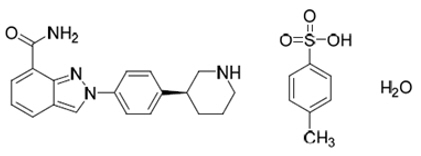
AKEEGA ® (niraparib and abiraterone acetate) tablets contain niraparib tosylate (as the monohydrate) and abiraterone acetate.
5.6 Hypoglycemia
AKEEGA may cause hypoglycemia in patients being treated with other medications for diabetes.
Severe hypoglycemia has been reported when abiraterone acetate, a component of AKEEGA, was administered to patients receiving medications containing thiazolidinediones (including pioglitazone) or repaglinide [see Drug Interactions (7.2)] .
Monitor blood glucose in patients with diabetes during and after discontinuation of treatment with AKEEGA. Assess if antidiabetic drug dosage needs to be adjusted to minimize the risk of hypoglycemia.
8.4 Pediatric Use
Safety and effectiveness of AKEEGA in pediatric patients have not been established.
8.5 Geriatric Use
Of the 162 patients with BRCA2gene alteration(s) who received AKEEGA in AMPLITUDE, 40% of patients were less than 65 years, 36% of patients were 65 years to 74 years, and 23% were 75 years and over.
Of the 113 patients with BRCAgene alteration(s) who received AKEEGA in MAGNITUDE, 34.5% of patients were less than 65 years, 38.9% of patients were 65 years to 74 years, and 26.5% were 75 years and over.
No overall differences in effectiveness were observed between patients 65 years of age or older and younger patients in AMPLITUDE or MAGNITUDE. Patients 75 years of age or older who received AKEEGA experienced a higher incidence of fatal adverse reactions than younger patients. The incidence of fatal adverse reactions was 4.3% in patients younger than 75 and 13% in patients 75 or older.
5.4 Hepatotoxicity
AKEEGA may cause hepatotoxicity.
Hepatotoxicity in patients receiving abiraterone acetate, a component of AKEEGA, has been reported in clinical trials. In post-marketing experience, there have been abiraterone acetate-associated severe hepatic toxicity, including fulminant hepatitis, acute liver failure, and deaths.
In AMPLITUDE, Grade 3–4 ALT or AST increases (at least 5 × ULN) were reported in 1.9% and 1.3% of patients, respectively.
In MAGNITUDE Cohort 1, Grade 3–4 ALT or AST increases (at least 5 × ULN) were reported in 1.8% and 0.9% of patients, respectively.
The safety of AKEEGA in patients with moderate or severe hepatic impairment has not been established as these patients were excluded from AMPLITUDE and MAGNITUDE.
Measure serum transaminases (ALT and AST) and bilirubin levels prior to starting treatment with AKEEGA, every two weeks for the first three months of treatment and monthly thereafter. Promptly measure serum total bilirubin, AST, and ALT if clinical symptoms or signs suggestive of hepatotoxicity develop. Elevations of AST, ALT, or bilirubin from the patient's baseline should prompt more frequent monitoring and may require dosage modifications [see Dosage and Administration (2.3)].
Permanently discontinue AKEEGA for patients who develop a concurrent elevation of ALT greater than 3 × ULN and total bilirubin greater than 2 × ULN in the absence of biliary obstruction or other causes responsible for the concurrent elevation, or in patients who develop ALT or AST ≥20 × ULN at any time after receiving AKEEGA.
4 Contraindications
None.
6 Adverse Reactions
The following adverse reactions are discussed elsewhere in the labeling:
- Myelodysplastic syndrome/acute myeloid leukemia [see Warnings and Precautions (5.1)]
- Myelosuppression [see Warnings and Precautions (5.2)]
- Hypokalemia, fluid retention, and cardiovascular adverse reactions [see Warnings and Precautions (5.3)]
- Hepatotoxicity [see Warnings and Precautions (5.4)]
- Adrenocortical insufficiency [see Warnings and Precautions (5.5)]
- Hypoglycemia [see Warnings and Precautions (5.6)]
- Increased fractures and mortality in combination with Radium 223 Dichloride [see Warnings and Precautions (5.7)]
- Posterior reversible encephalopathy syndrome [see Warnings and Precautions (5.8)]
7 Drug Interactions
- Strong CYP3A4 Inducers: Avoid coadministration. ( 7.1)
- CYP2D6 Substrates: Avoid coadministration of AKEEGA with CYP2D6 substrates for which minimal changes in concentration may lead to serious toxicities. If alternative treatments cannot be used, consider a dose reduction of the concomitant CYP2D6 substrate. ( 7.2)
5.2 Myelosuppression
AKEEGA may cause myelosuppression (anemia, thrombocytopenia, or neutropenia).
In AMPLITUDE, Grade 3–4 anemia, neutropenia, and thrombocytopenia were reported, respectively in 29%, 10%, and 4.9% of patients receiving AKEEGA. Overall, 25% of patients with anemia required a red blood cell transfusion, including 15% who required more than one transfusion. Discontinuation due to anemia occurred in 1.2% of patients.
In MAGNITUDE Cohort 1, Grade 3–4 anemia, thrombocytopenia, and neutropenia were reported, respectively in 28%, 8%, and 7% of patients receiving AKEEGA. Overall, 27% of patients with anemia required a red blood cell transfusion, including 19.5% who required more than one transfusion. Discontinuation due to anemia occurred in 3% of patients.
Monitor complete blood counts weekly during the first month of AKEEGA treatment, every two weeks for the next two months, monthly for the remainder of the first year and then every other month, and as clinically indicated. Do not start AKEEGA until patients have adequately recovered from hematologic toxicity caused by previous therapy. If hematologic toxicities do not resolve within 28 days following interruption, discontinue AKEEGA and refer the patient to a hematologist for further investigations, including bone marrow analysis and blood sample for cytogenetics [see Dosage and Administration (2.3)] .
8.7 Renal Impairment
Monitor patients with severe renal impairment for increased adverse reactions and modify dosage as recommended for adverse reactions [see Clinical Pharmacology (12.3)].
No dosage modification is recommended for patients with mild to moderate renal impairment.
12.2 Pharmacodynamics
The exposure-response relationship and time-course of pharmacodynamic response for the safety and effectiveness of AKEEGA have not been fully characterized.
2.1 Patient Selection
Select patients for the treatment of mCSPC with AKEEGA based on the presence of a BRCA2 gene alteration [see Clinical Studies (14.1)] .
Select patients for the treatment of mCRPC with AKEEGA based on the presence of a BRCA gene alteration [see Clinical Studies (14.2)] .
Information on FDA-approved tests is available at: http://www.fda.gov/CompanionDiagnostics.
2.2 Recommended Dosage
BRCA2-mutated ( BRCA2m) Metastatic Castration-Sensitive Prostate Cancer (mCSPC)
- The recommended dosage of AKEEGA is 200 mg niraparib/1,000 mg abiraterone acetate orally once daily in combination with 5 mg prednisone once daily until disease progression or unacceptable toxicity.
BRCA-mutated ( BRCAm) Metastatic Castration-Resistant Prostate Cancer (mCRPC)
- The recommended dosage of AKEEGA is 200 mg niraparib/1,000 mg abiraterone acetate orally once daily in combination with 10 mg prednisone once daily until disease progression or unacceptable toxicity.
Patients receiving AKEEGA should also receive a gonadotropin-releasing hormone (GnRH) analog concurrently or should have had bilateral orchiectomy.
Take AKEEGA on an empty stomach at least one hour before or two hours after food. Swallow tablets whole with water. Do not break, crush, or chew tablets.
If a patient misses a dose, instruct patients to take the dose as soon as possible on the same day and resume their next dose at the normal schedule the following day.
8.6 Hepatic Impairment
Avoid use of AKEEGA in patients with moderate or severe hepatic impairment [see Warnings and Precautions (5.4)and Clinical Pharmacology (12.3)] .
No dosage modification is necessary for patients with mild hepatic impairment.
1 Indications and Usage
AKEEGA with prednisone is indicated for the treatment of adult patients with deleterious or suspected deleterious BRCA2-mutated ( BRCA2m) metastatic castration-sensitive prostate cancer (mCSPC).
AKEEGA with prednisone is indicated for the treatment of adult patients with deleterious or suspected deleterious BRCA-mutated ( BRCAm) metastatic castration-resistant prostate cancer (mCRPC).
Select patients for therapy based on an FDA-approved test for AKEEGA [see Dosage and Administration (2.1)] .
12.1 Mechanism of Action
Niraparib is an inhibitor of PARP enzymes, including PARP-1 and PARP-2, that play a role in DNA repair. In vitro studies have shown that niraparib-induced cytotoxicity may involve inhibition of PARP enzymatic activity and increased formation of PARP-DNA complexes resulting in DNA damage, apoptosis, and cell death. Increased niraparib‑induced cytotoxicity was observed in tumor cell lines with or without deficiencies in BRCA1/2. Niraparib decreased tumor growth in mouse xenograft models of human cancer cell lines with deficiencies in BRCA1/2 and in human patient‑derived xenograft tumor models with homologous recombination deficiency (HRD) that had either mutated or wild-type BRCA1/2.
Abiraterone acetate is converted in vivo to abiraterone, an androgen biosynthesis inhibitor, that inhibits 17 α-hydroxylase/C17,20-lyase (CYP17). This enzyme is expressed in testicular, adrenal, and prostatic tumor tissues and is required for androgen biosynthesis.
CYP17 catalyzes two sequential reactions: 1) the conversion of pregnenolone and progesterone to their 17α-hydroxy derivatives by 17α-hydroxylase activity and 2) the subsequent formation of dehydroepiandrosterone (DHEA) and androstenedione, respectively, by C17, 20 lyase activity. DHEA and androstenedione are androgens and are precursors of testosterone. Inhibition of CYP17 by abiraterone can also result in increased mineralocorticoid production by the adrenals [see Warnings and Precautions (5.9)] .
Androgen sensitive prostatic carcinoma responds to treatment that decreases androgen levels. Androgen deprivation therapies, such as treatment with GnRH agonists or orchiectomy, decrease androgen production in the testes but do not affect androgen production by the adrenals or in the tumor.
Abiraterone decreased serum testosterone and other androgens in patients in the placebo-controlled clinical trial. It is not necessary to monitor the effect of abiraterone on serum testosterone levels.
Changes in serum prostate specific antigen (PSA) levels may be observed but have not been shown to correlate with clinical benefit in individual patients.
In mouse xenograft models of prostate cancer, the combination of niraparib and abiraterone acetate increased anti-tumor activity when compared to either drug alone.
5.9 Embryo Fetal Toxicity
The safety and efficacy of AKEEGA have not been established in females. Based on animal reproductive studies and mechanism of action, AKEEGA can cause fetal harm and loss of pregnancy when administered to a pregnant female [see Clinical Pharmacology (12.1)] .
Niraparib has the potential to cause teratogenicity and/or embryo-fetal death since niraparib is genotoxic and targets actively dividing cells in animals and patients (e.g., bone marrow) [see Warnings and Precautions (5.2)and Nonclinical Toxicology (13.1)] .
In animal reproduction studies, oral administration of abiraterone acetate to pregnant rats during organogenesis caused adverse developmental effects at maternal exposures approximately ≥ 0.03 times the human exposure (AUC) at the recommended dose.
Advise males with female partners of reproductive potential to use effective contraception during treatment and for 4 months after the last dose of AKEEGA [see Use in Specific Populations (8.1, 8.3)] . Females who are or may become pregnant should handle AKEEGA with protection, e.g., gloves [see How Supplied/Storage and Handling (16)].
5 Warnings and Precautions
- Myelodysplastic Syndrome/Acute Myeloid Leukemia (MDS/AML): MDS/AML, including a case with fatal outcome, has been observed in patients treated with AKEEGA. Monitor patients for hematological toxicity and discontinue if MDS/AML is confirmed. ( 5.1)
- Myelosuppression:Test complete blood counts weekly for the first month, every two weeks for the next two months, monthly for the remainder of the first year, then every other month, and as clinically indicated. ( 2.3, 5.2)
- Hypokalemia, Fluid Retention, and Cardiovascular Adverse Reactions:Monitor patients for hypertension, hypokalemia, and fluid retention at least weekly for the first two months, then once a month. Closely monitor patients whose underlying medical conditions might be compromised by increases in blood pressure, hypokalemia, or fluid retention. Control hypertension and correct hypokalemia before and during treatment with AKEEGA. ( 5.3)
- Hepatotoxicity:Can be severe and fatal. Monitor liver function and modify, interrupt, or discontinue treatment as recommended. ( 2.3, 5.4)
- Adrenocortical insufficiency: Monitor for symptoms and signs of adrenocortical insufficiency. Increased dosage of corticosteroids may be indicated before, during and after stressful situations. ( 5.5)
- Hypoglycemia:Severe hypoglycemia has been reported when abiraterone acetate, a component of AKEEGA, was administered to patients receiving medications containing thiazolidinediones (including pioglitazone) or repaglinide. Monitor blood glucose in patients with diabetes during and assess if antidiabetic agent dose modifications are required. ( 5.6)
- Increased fractures and mortality in combination with radium Ra 223 dichloride: Use of AKEEGA plus prednisone in combination with radium Ra 223 dichloride is not recommended. ( 5.7)
- Posterior Reversible Encephalopathy Syndrome (PRES):PRES has been observed in patients treated with niraparib, a component of AKEEGA. Discontinue AKEEGA if PRES is confirmed. ( 5.8)
- Embryo-Fetal Toxicity:AKEEGA can cause fetal harm. Advise males with female partners of reproductive potential to use effective contraception. ( 5.9, 8.1, 8.3)
2 Dosage and Administration
BRCA2m mCSPC:
- The recommended dosage of AKEEGA is 200 mg niraparib/1,000 mg abiraterone acetate orally once daily in combination with 5 mg prednisone daily until disease progression or unacceptable toxicity. ( 2.2)
BRCAm mCRPC :
- The recommended dosage of AKEEGA is 200 mg niraparib/1,000 mg abiraterone acetate orally once daily in combination with 10 mg prednisone daily until disease progression or unacceptable toxicity. ( 2.2)
- Patients receiving AKEEGA should also receive a gonadotropin-releasing hormone (GnRH) analog concurrently or should have had bilateral orchiectomy. ( 2.2)
- Take AKEEGA on an empty stomach at least one hour before or two hours after food. ( 2.2)
- For adverse reactions, consider interruption of treatment, dose reduction, or dose discontinuation. ( 2.3)
3 Dosage Forms and Strengths
Tablets
- 50 mg niraparib/500 mg abiraterone acetate: yellowish orange to yellowish brown, oval, film-coated tablets debossed with "N 50 A" on one side and plain on the other side.
- 100 mg niraparib/500 mg abiraterone acetate: orange, oval, film-coated tablets debossed with "N 100 A" on one side and plain on the other side.
6.1 Clinical Trial Experience
Because clinical trials are conducted under widely varying conditions, adverse reaction rates observed in the clinical trials of a drug cannot be directly compared to rates in the clinical trials of another drug and may not reflect the rates observed in practice.
The safety population described in the WARNINGS and PRECAUTIONS reflect exposure to AKEEGA (niraparib 200 mg and abiraterone acetate 1,000 mg) in BRCA2m patients (N=162) in the AMPLITUDE study and in BRCAm patients in Cohort 1 (N=113) in the MAGNITUDE study unless otherwise specified.
8 Use in Specific Populations
- Moderate or Severe Hepatic impairment: Avoid use. ( 8.6)
5.5 Adrenocortical Insufficiency
AKEEGA may cause adrenal insufficiency.
Adrenocortical insufficiency has been reported in clinical trials in patients receiving abiraterone acetate, a component of AKEEGA, in combination with prednisone, following interruption of daily steroids and/or with concurrent infection or stress. Monitor patients for symptoms and signs of adrenocortical insufficiency, particularly if patients are withdrawn from prednisone, have prednisone dose reductions, or experience unusual stress. Symptoms and signs of adrenocortical insufficiency may be masked by adverse reactions associated with mineralocorticoid excess seen in patients treated with abiraterone acetate. If clinically indicated, perform appropriate tests to confirm the diagnosis of adrenocortical insufficiency. Increased doses of corticosteroids may be indicated before, during, and after stressful situations.
17 Patient Counseling Information
Advise the patient to read the FDA-approved patient labeling (Patient Information).
16 How Supplied/storage and Handling
AKEEGA ® (niraparib and abiraterone acetate) tablets are available in the strengths and packages listed below:
- AKEEGA 50 mg/500 mg film-coated tablets
Yellowish orange to yellowish brown, oval, film-coated tablets debossed with "N 50 A" on one side and plain on the other side. They are available in bottles of 60 tablets.
NDC 57894-050-60 - AKEEGA 100 mg/500 mg film-coated tablets
Orange, oval, film-coated tablets debossed with "N 100 A" on one side and plain on the other side. They are available in bottles of 60 tablets.
NDC 57894-100-60
2.3 Dosage Modification for Adverse Reactions
The recommended dosage modifications for AKEEGA are provided in Table 1.
Treatment with AKEEGA should not be reinitiated until the toxicity has resolved to Grade 1 or baseline. If the toxicity is attributed to one component of AKEEGA, the other component of AKEEGA may be continued as a single agent at the current dose until the adverse reaction resolves and AKEEGA can be resumed (see Table 1).
| Adverse Reaction | Severity | Dosage Modification |
|---|---|---|
| Myelosuppression
[see Warnings and Precautions (5.2)] |
Hemoglobin <8 g/dL |
|
| Platelet count <100,000/mcL | First occurrence:
|
|
| Neutrophil <1,000/mcL |
|
|
| Hematologic adverse reaction requiring transfusion |
|
|
| Hepatotoxicity
[see Warnings and Precautions (5.4)] |
ALT and/or AST greater than 5 × ULN or total bilirubin greater than 3 × ULN |
|
| Other non-hematological adverse reactions that persist despite medical management [see Warnings and Precautions (5)and Adverse Reactions (6.1)] | Grade 3 or 4
Discontinue AKEEGA in patients who develop hypertensive crisis or other severe cardiovascular adverse reactions
[see
Warnings and Precautions (5.3)].
|
|
5.8 Posterior Reversible Encephalopathy Syndrome
AKEEGA may cause Posterior Reversible Encephalopathy Syndrome (PRES).
PRES has been observed in patients treated with niraparib as a single agent at higher than the recommended dose of niraparib included in AKEEGA.
Monitor all patients treated with AKEEGA for signs and symptoms of PRES. If PRES is suspected, promptly discontinue AKEEGA and administer appropriate treatment. The safety of reinitiating AKEEGA in patients previously experiencing PRES is not known.
5.1 Myelodysplastic Syndrome/acute Myeloid Leukemia
AKEEGA may cause myelodysplastic syndrome/acute myeloid leukemia (MDS/AML).
In the individual AMPLITUDE and MAGNITUDE studies, MDS or AML, including cases with fatal outcomes, were reported in 0.6% (2/347) and 0.5% (1/212) of patients treated with AKEEGA plus prednisone, respectively.
All patients in other tumor types treated with niraparib, a component of AKEEGA, who developed secondary MDS/cancer-therapy-related AML had received previous chemotherapy with platinum agents and/or other DNA-damaging agents, including radiotherapy.
For suspected MDS/AML or prolonged hematological toxicities, refer the patient to a hematologist for further evaluation. Discontinue AKEEGA if MDS/AML is confirmed.
Principal Display Panel 50 Mg / 500 Mg Bottle Carton
NDC 57894-050-60
Tamper AREA
Akeega™
(niraparib and
abiraterone acetate)
tablets
50 mg / 500 mg
Warning: Women who are or may
be(come) pregnant should not
handle AKEEGA™ tablets
without protection, e.g., gloves
(See Prescribing Information).
Do not break, crush, or chew tablets
Rx only
60 film-coated tablets
janssen
Principal Display Panel 100 Mg / 500 Mg Bottle Carton
NDC 57894-100-60
Tamper AREA
Akeega™
(niraparib and
abiraterone acetate)
tablets
100 mg / 500 mg
Warning: Women who are or may
be(come) pregnant should not
handle AKEEGA™ tablets
without protection, e.g., gloves
(See Prescribing Information).
Do not break, crush, or chew tablets
Rx only
60 film-coated tablets
janssen
5.3 Hypokalemia, Fluid Retention, and Cardiovascular Adverse Reactions
AKEEGA may cause hypokalemia and fluid retention as a consequence of increased mineralocorticoid levels resulting from CYP17 inhibition [see Clinical Pharmacology (12.1)] . In post-marketing experience, QT prolongation and Torsades de Pointes have been observed in patients who develop hypokalemia while taking abiraterone acetate, a component of AKEEGA. Hypertension and hypertensive crisis have also been reported in patients treated with niraparib, a component of AKEEGA.
In AMPLITUDE, which used prednisone 5 mg daily in combination with AKEEGA, Grades 3–4 hypokalemia was detected in 9% of patients on the AKEEGA arm, and Grades 3–4 hypertension was observed in 30% of patients on the AKEEGA arm.
In MAGNITUDE Cohort 1, which used prednisone 10 mg daily in combination with AKEEGA, Grade 3–4 hypokalemia was detected in 2.7% of patients on the AKEEGA arm and Grade 3–4 hypertension was observed in 14% of patients on the AKEEGA arm.
Monitor patients for hypertension, hypokalemia, and fluid retention at least weekly for the first two months, then once a month. Closely monitor patients whose underlying medical conditions might be compromised by increases in blood pressure, hypokalemia, or fluid retention, such as those with heart failure, recent myocardial infarction, cardiovascular disease, or ventricular arrhythmia. Control hypertension and correct hypokalemia before and during treatment with AKEEGA. Discontinue AKEEGA in patients who develop hypertensive crisis or other severe cardiovascular adverse reactions.
The safety of AKEEGA in patients with New York Heart Association (NYHA) Class II to IV heart failure has not been established because these patients were excluded from AMPLITUDE and MAGNITUDE.
5.7 Increased Fractures and Mortality in Combination With Radium 223 Dichloride
AKEEGA with prednisone is not recommended for use in combination with Ra-223 dichloride outside of clinical trials.
The clinical efficacy and safety of concurrent initiation of abiraterone acetate plus prednisone/prednisolone and radium Ra 223 dichloride was assessed in a randomized, placebo-controlled multicenter study (ERA-223 trial) in 806 patients with asymptomatic or mildly symptomatic castration-resistant prostate cancer with bone metastases. The study was unblinded early based on an Independent Data Monitoring Committee recommendation.
At the primary analysis, increased incidences of fractures (29% vs 11%) and deaths (39% vs 36%) have been observed in patients who received abiraterone acetate plus prednisone/prednisolone in combination with radium Ra 223 dichloride compared to patients who received placebo in combination with abiraterone acetate plus prednisone.
It is recommended that subsequent treatment with Ra-223 not be initiated for at least five days after the last administration of AKEEGA, in combination with prednisone.
Structured Label Content
Section 42229-5 (42229-5)
BRCA2-mutated Metastatic Castration-Sensitive Prostate Cancer (mCSPC)
The safety of AKEEGA in patients with BRCA2m mCSPC was evaluated in AMPLITUDE [see Clinical Studies (14.1)]. Patients were randomized to receive either AKEEGA (niraparib 200 mg and abiraterone acetate 1,000 mg once daily) (n=162), or placebo and abiraterone acetate (n=161) until unacceptable toxicity or progression. Patients in both arms also received prednisone 5 mg daily. The median duration of exposure for AKEEGA was 26 months (range: 0 to 48 months).
Serious adverse reactions occurred in 36% of patients who received AKEEGA. Serious adverse reactions reported in >2% of patients included anemia (4.9%), and pneumonia (3.7%). Fatal adverse reactions occurred in 4.9% of patients who received AKEEGA, including sudden death (1.9%), COVID-19 pneumonia (1.2%), pneumocystis jirovecii pneumonia (0.6%), pneumonia (0.6%), and cardio-respiratory arrest (0.6%).
Permanent discontinuation of any component of AKEEGA due to an adverse reaction occurred in 13% of patients.
Dosage interruptions of any component of AKEEGA due to an adverse reaction occurred in 67% of patients. Adverse reactions which required dosage interruption in >2% of patients included anemia (30%), COVID-19 (10%), hypertension (9%), neutropenia (8%), thrombocytopenia (8%), hypokalemia (7%), vomiting (4.9%), fatigue (4.3%), diarrhea (2.5%), and pneumonia (2.5%).
Dose reductions of any component of AKEEGA due to an adverse reaction occurred in 25% of patients. Adverse reactions which required dose reductions in >2% of patients included anemia (17%).
The most common adverse reactions (>20%), including laboratory abnormalities, in patients who received AKEEGA were decreased hemoglobin, decreased lymphocyte count, hypertension, decreased neutrophil count, musculoskeletal pain, decreased platelet count, constipation, fatigue, decreased potassium, increase creatinine, nausea, increased alkaline phosphate, increased aspartate aminotransferase, respiratory tract infection, arrhythmia, increased blood bilirubin, and fluid retention/edema.
| Adverse Reaction | AKEEGA
(N=162) |
Placebo with Abiraterone Acetate
(N=161) |
||
|---|---|---|---|---|
| All Grades
% |
Grade 3 or 4
% |
All Grades
% |
Grade 3 or 4
% |
|
| Vascular disorders | ||||
| Hypertension
Grouped terms including multiple similar terms
|
51 | 31 | 36 | 19 |
| Musculoskeletal and connective tissue disorders | ||||
| Musculoskeletal pain | 45 | 6 | 58 | 4.3 |
| Gastrointestinal disorders | ||||
| Constipation | 41 | 0 | 17 | 0.6 |
| Nausea | 30 | 0 | 17 | 0 |
| General disorders and administration | ||||
| Fatigue | 39 | 4.3 | 29 | 3.1 |
| Respiratory, thoracic and mediastinal disorders | ||||
| Respiratory Tract Infection | 23 | 0.6 | 13 | 0.6 |
| Cardiac disorders | ||||
| Arrhythmia | 23 | 3.7 | 9 | 2.5 |
Clinically relevant adverse reactions that occurred in ≤20% of patients receiving AKEEGA plus prednisone were hot flush (18%), vomiting (17%), dizziness (17%), abdominal pain (15%), weight decreased (14%), diarrhea (14%), decreased appetite (12%), headache (12%), hemorrhage (12%), dyspnea (10%), urinary tract infection (8%), pneumonia (7%), osteoporosis (4.9%), rash (3.7%), cardiac failure (3.1%), ischemic heart disease (4.9%), acute kidney injury (2.5%), pulmonary embolism (2.5%), and urosepsis (0.6%).
The most common select laboratory abnormalities (>20%) that worsened from baseline in patients who received AKEEGA are in Table 3.
| Laboratory Abnormality | AKEEGA
The denominator used to calculate the rate varied from 160 to 161 for placebo with abiraterone acetate plus prednisone and 159 to 162 for AKEEGA with prednisone based on the number of patients with a baseline value and at least one post-treatment value.
(N=162) |
Placebo with Abiraterone Acetate
(N=161) |
||
|---|---|---|---|---|
| All Grades
(%) |
Grade 3 or 4
(%) |
All Grades
(%) |
Grade 3 or 4
(%) |
|
| Hematology | ||||
| Decreased Hemoglobin | 74 | 29 | 53 | 1.9 |
| Decreased Lymphocyte Count | 59 | 20 | 37 | 13 |
| Decreased Neutrophil Count | 49 | 10 | 19 | 3.1 |
| Decreased Platelet Count | 41 | 4.9 | 23 | 0.6 |
| Chemistry | ||||
| Decreased Potassium | 38 | 9 | 29 | 10 |
| Increased Creatinine | 30 | 1.3 | 16 | 2.5 |
| Increased Alkaline Phosphatase | 28 | 0.6 | 24 | 3.1 |
| Increased Aspartate Aminotransferase | 24 | 1.3 | 33 | 2.5 |
| Increased Blood Bilirubin | 22 | 0 | 11 | 0 |
Section 42230-3 (42230-3)
| This Patient Information has been approved by the U.S. Food and Drug Administration. | Revised: 12/2025 | |||
|
PATIENT INFORMATION
AKEEGA ® (a kee' gah) (niraparib and abiraterone acetate) tablets |
||||
|
What is the most important information I should know about AKEEGA?
AKEEGA may cause serious side effects including:
|
||||
|
|
|||
Your healthcare provider will do blood tests to check your blood cell counts:
|
||||
| See " What are the possible side effects of AKEEGA?" for more information about side effects. | ||||
|
What is AKEEGA?
AKEEGA is a prescription medicine used with prednisone to treat adults with prostate cancer:
It is not known if AKEEGA is safe and effective in females. It is not known if AKEEGA is safe and effective in children. |
||||
Before taking AKEEGA, tell your healthcare provider about all of your medical conditions, including if you:
|
||||
How should I take AKEEGA?
|
||||
|
What are the possible side effects of AKEEGA?
AKEEGA may cause serious side effects, including:
|
||||
|
|
|||
|
||||
|
|
|||
|
||||
|
|
|||
|
||||
|
|
|||
|
||||
|
|
|
||
| AKEEGA may cause fertility problems in males, which may affect the ability to father children. Talk to your healthcare provider if you have concerns about fertility.
These are not all the possible side effects of AKEEGA. Call your doctor for medical advice about side effects. You may report side effects to FDA at 1-800-FDA-1088. |
||||
How should I store AKEEGA?
|
||||
|
General information about the safe and effective use of AKEEGA.
Medicines are sometimes prescribed for purposes other than those listed in a Patient Information leaflet. Do not use AKEEGA for a condition for which it was not prescribed. Do not give AKEEGA to other people, even if they have the same symptoms that you have. It may harm them. You can ask your healthcare provider or pharmacist for information about AKEEGA that is written for health professionals. |
||||
|
What are the ingredients in AKEEGA?
Active ingredients: niraparib tosylate and abiraterone acetate Inactive ingredients: Core tablet: colloidal anhydrous silica, crospovidone, hypromellose, lactose monohydrate, magnesium stearate, silicified microcrystalline cellulose, sodium lauryl sulfate. 50 mg/500 mg film-coated tablets: The film-coating contains iron oxide black, iron oxide red, iron oxide yellow, sodium lauryl sulphate, glycerol monocaprylocaprate, polyvinyl alcohol, talc, and titanium dioxide. 100 mg/500 mg film-coated tablets: The film-coating contains iron oxide red, iron oxide yellow, sodium lauryl sulphate, glycerol monocaprylocaprate, polyvinyl alcohol, talc, and titanium dioxide. Manufactured for: Janssen Biotech, Inc., Horsham, PA 19044, USA For patent information: www.janssenpatents.com © Johnson & Johnson and its affiliates 2025 For more information, call Janssen Biotech, Inc. at 1-800-526-7736 (1-800-JANSSEN) or go to www.akeegahcp.com. |
||||
Section 43683-2 (43683-2)
Section 44425-7 (44425-7)
Storage and Handling
Store at 20°C to 25°C (68°F to 77°F); excursions permitted to 15°C to 30°C (59°F to 86°F) [see USP Controlled Room Temperature].
Based on its mechanism of action, AKEEGA may harm a developing fetus. Females who are or may become pregnant should handle AKEEGA tablets with protection, e.g., gloves [see Use in Specific Populations (8.1)] .
14.2 Brca (14.2 BRCA)
The efficacy of AKEEGA was investigated in Cohort 1 of MAGNITUDE (NCT03748641), a randomized double-blind, placebo-controlled, multi-cohort, multi-center study in which 423 patients with homologous recombination repair (HRR) gene-mutated (HRRm) mCRPC were randomized (1:1) to receive niraparib 200 mg and abiraterone 1,000 mg (N=212) or placebo and abiraterone (N=211) until unacceptable toxicity or progression. All patients received prednisone 10 mg daily and a GnRH analog or had prior bilateral orchiectomy. Patients with mCRPC who had not received prior systemic therapy in the mCRPC setting except for a short duration of prior abiraterone acetate plus prednisone (up to four months) and ongoing ADT, were eligible. Patients could have received prior docetaxel or androgen-receptor (AR) targeted therapies in either the metastatic castration-sensitive prostate cancer (mCSPC) or non-metastatic castration-resistant prostate cancer (nmCRPC) setting.
Randomization was stratified by prior docetaxel for mCSPC (yes or no), prior AR targeted therapy for mCSPC or nmCRPC (yes or no), prior abiraterone acetate for mCRPC (yes or no), and BRCA-status ( BRCAm vs. other).
Of the 423 patients enrolled, 225 (53%) had BRCA gene mutations ( BRCA m). Mutation status of BRCA genes was determined prospectively using the Foundation One CDx tissue assay or other clinical trial assays.
Among the 225 patients with BRCA m, the median age was 68 years (range 43–100) and 66% were 65 years of age or older; 72% were White, 17% Asian, and 1% Black, and 10% other or not reported; 12% were Hispanic or Latino; and baseline ECOG performance status (PS) was 0 (66%) or 1 (34%). Twenty-four percent had received prior docetaxel, 5% received prior AR-targeted therapy for mCSPC or nmCRPC, and 26% received prior abiraterone acetate plus prednisone for up to 4 months for mCRPC. Thirty-seven percent had bone-only metastases and 21% had visceral metastases. Seven percent had BRCA1 mutations, 78% had BRCA2 mutations, and 15% had BRCA mutations in combination with mutations in other HRR genes.
The major efficacy outcome measure was radiographic progression free survival (rPFS) determined by blinded independent central radiology (BICR) review evaluated per Response Evaluation Criteria In Solid Tumors (RECIST) 1.1 (soft tissue lesions) and Prostate Cancer Working Group-3 (PCWG-3) criteria (bone lesions). Overall survival (OS) was an additional efficacy outcome measure.
A statistically significant improvement in rPFS for niraparib plus abiraterone compared to placebo plus abiraterone was observed in BRCA m patients, and the Cohort 1 intention to treat (ITT) population. In an exploratory analysis in the subgroup of 198 (47%) patients with non- BRCA mutations, the rPFS hazard ratio was 0.99 (95% CI: 0.67, 1.44) and the OS hazard ratio was 1.13 (95% CI: 0.77, 1.64), indicating that the improvement in the ITT population was primarily attributed to the results seen in the subgroup of patients with BRCA m.
The efficacy results are presented in Table 7 and Figures 2 and 3 for patients in Cohort 1 with BRCA mutations.
| Endpoints | AKEEGA
(N=113) |
Placebo + Abiraterone Acetate
(N=112) |
|---|---|---|
| NE = not estimable | ||
|
Radiographic Progression-free Survival
rPFS results based on blinded independent central review at primary analysis.
|
||
| Event of disease progression or death (%) | 45 (40%) | 64 (57%) |
| Median, months (95% CI) | 16.6 (13.9, NE) | 10.9 (8.3, 13.8) |
| Hazard Ratio
Cox proportional hazards model stratified by prior docetaxel (yes vs. no) and prior abiraterone (yes vs. no). (95% CI)
|
0.53 (0.36, 0.79) | |
| p-value
Stratified log-rank test two-sided p-value
|
0.0014 |
At the protocol pre-specified final OS analysis in Cohort 1, 60 (53%) deaths and 70 (63%) deaths were observed in the AKEEGA arm and placebo arm, respectively, for patients with BRCAm. In an exploratory OS analysis in the subgroup of patients with BRCAm, the median in the AKEEGA arm was 30.4 (95% CI: 27.6, NE) and 28.6 months (95% CI: 23.8, 33.0) in the placebo arm, with an OS hazard ratio of 0.79 (95% CI: 0.55, 1.12).
Figure 2: Kaplan-Meier Plot of BICR Assessed Radiographic Progression-Free Survival in the BRCAm Population (MAGNITUDE, primary analysis)
Figure 3: Kaplan-Meier Plot of Overall Survival in the BRCAm Population (MAGNITUDE, final analysis)
14.1 Brca2 (14.1 BRCA2)
The efficacy of AKEEGA was investigated in AMPLITUDE (NCT04497844), a randomized double-blind, placebo-controlled, multi-cohort, multi-center study in which 696 patients with homologous recombination repair (HRR) gene-mutated (HRRm) mCSPC were randomized (1:1) to receive niraparib 200 mg and abiraterone acetate 1,000 mg (N=348) or placebo and abiraterone acetate (N=348). All patients received prednisone 5 mg daily and were required to have androgen deprivation therapy (ADT) (medical or surgical) >14 days prior to randomization. The only allowable prior systemic therapy in the mCSPC setting, was up to 45 days of abiraterone acetate, up to 6 cycles of docetaxel, and up to 6 months of ADT.
Randomization was stratified by HRR gene alteration ( BRCA2versus CDK12versus all other pathogenic alterations), prior docetaxel use (yes versus no), and volume of disease at screening (high versus low).
Of the 696 patients enrolled, 323 were randomized as having BRCA2gene mutation ( BRCA2m). Mutation status was determined prospectively using the Foundation One CDx tissue assay or other clinical trial assays.
Among the 323 patients with BRCA2m the median age was 66 years (range 41; 92); 68% were White, 25% Asian, 4% Black, and 3% other or not reported; 10% were Hispanic or Latino; and baseline ECOG performance status was 0 (68%), 1 (30%) or 2 (1.2%). 16% had received prior docetaxel and 11% received prior abiraterone acetate for up to 45 days for mCSPC. 40% had bone-only metastases and 15% had visceral metastases, 10% had BRCA2 mutations in combination with mutations in other HRR genes.
The major efficacy outcome measure was radiographic progression free survival (rPFS) determined by investigator-assessed radiographic progression by bone scan (according to PCWG3 criteria) or soft tissue lesions by CT or MRI (according to RECIST 1.1 criteria) or death, whichever occurred first. Overall Survival (OS) and Time to Symptomatic Progression (TSP) were additional efficacy outcome measures. A statistically significant improvement in rPFS for niraparib and abiraterone acetate compared to placebo and abiraterone acetate was observed in the overall population of patients with HRRm. In an exploratory analysis in the subgroup of 373 patients with non- BRCA2mutations, the investigator-assessed rPFS hazard ratio was 0.88 (95% CI: 0.63, 1.24), indicating that the improvement in the overall population was primarily attributed to the results seen in the subgroup of patients with BRCA2mutation.
The efficacy results are presented in Table 6 and Figure 1 for patients with BRCA2mutations in AMPLITUDE.
| Endpoints | AKEEGA
(N=162) |
Placebo +Abiraterone Acetate
(N=161) |
|---|---|---|
| NE = not estimable | ||
|
Radiographic Progression-free Survival
Investigator-assessed
|
||
| Events | 48 (30%) | 82(51%) |
| Median (95% CI) time to event (months) | NE (41, NE) | 26 (18, 28) |
| Hazard Ratio (95% CI)
Calculated using an unstratified Cox proportional hazards model
|
0.46 (0.32, 0.66) |
At the first interim analysis for OS, 91 deaths occurred in the BRCA2m population, 36 [22%] in the AKEEGA arm) and 55 [34%] in the placebo and abiraterone acetate arm.
Figure 1: Kaplan-Meier Plot of Radiographic Progression-Free Survival in the BRCA2 m Population (AMPLITUDE)
Treatment with AKEEGA resulted in a delay in TSP (HR = 0.41, 95% CI= 0.26, 0.65). TSP was defined as the time from randomization to the time of symptomatic progression, which included use of external beam radiation for skeletal or pelvic symptoms, cancer-related morbid events, initiation of new systemic anti-cancer therapy, and other cancer-related procedures.
10 Overdosage (10 OVERDOSAGE)
In the event of an overdose, administration of AKEEGA should be stopped and general supportive measures undertaken, including monitoring for arrhythmias and cardiac failure and assessing liver function.
There is no specific treatment in the event of AKEEGA overdose.
11 Description (11 DESCRIPTION)
AKEEGA ® (niraparib and abiraterone acetate) tablets contain niraparib tosylate (as the monohydrate) and abiraterone acetate.
5.6 Hypoglycemia
AKEEGA may cause hypoglycemia in patients being treated with other medications for diabetes.
Severe hypoglycemia has been reported when abiraterone acetate, a component of AKEEGA, was administered to patients receiving medications containing thiazolidinediones (including pioglitazone) or repaglinide [see Drug Interactions (7.2)] .
Monitor blood glucose in patients with diabetes during and after discontinuation of treatment with AKEEGA. Assess if antidiabetic drug dosage needs to be adjusted to minimize the risk of hypoglycemia.
8.4 Pediatric Use
Safety and effectiveness of AKEEGA in pediatric patients have not been established.
8.5 Geriatric Use
Of the 162 patients with BRCA2gene alteration(s) who received AKEEGA in AMPLITUDE, 40% of patients were less than 65 years, 36% of patients were 65 years to 74 years, and 23% were 75 years and over.
Of the 113 patients with BRCAgene alteration(s) who received AKEEGA in MAGNITUDE, 34.5% of patients were less than 65 years, 38.9% of patients were 65 years to 74 years, and 26.5% were 75 years and over.
No overall differences in effectiveness were observed between patients 65 years of age or older and younger patients in AMPLITUDE or MAGNITUDE. Patients 75 years of age or older who received AKEEGA experienced a higher incidence of fatal adverse reactions than younger patients. The incidence of fatal adverse reactions was 4.3% in patients younger than 75 and 13% in patients 75 or older.
5.4 Hepatotoxicity
AKEEGA may cause hepatotoxicity.
Hepatotoxicity in patients receiving abiraterone acetate, a component of AKEEGA, has been reported in clinical trials. In post-marketing experience, there have been abiraterone acetate-associated severe hepatic toxicity, including fulminant hepatitis, acute liver failure, and deaths.
In AMPLITUDE, Grade 3–4 ALT or AST increases (at least 5 × ULN) were reported in 1.9% and 1.3% of patients, respectively.
In MAGNITUDE Cohort 1, Grade 3–4 ALT or AST increases (at least 5 × ULN) were reported in 1.8% and 0.9% of patients, respectively.
The safety of AKEEGA in patients with moderate or severe hepatic impairment has not been established as these patients were excluded from AMPLITUDE and MAGNITUDE.
Measure serum transaminases (ALT and AST) and bilirubin levels prior to starting treatment with AKEEGA, every two weeks for the first three months of treatment and monthly thereafter. Promptly measure serum total bilirubin, AST, and ALT if clinical symptoms or signs suggestive of hepatotoxicity develop. Elevations of AST, ALT, or bilirubin from the patient's baseline should prompt more frequent monitoring and may require dosage modifications [see Dosage and Administration (2.3)].
Permanently discontinue AKEEGA for patients who develop a concurrent elevation of ALT greater than 3 × ULN and total bilirubin greater than 2 × ULN in the absence of biliary obstruction or other causes responsible for the concurrent elevation, or in patients who develop ALT or AST ≥20 × ULN at any time after receiving AKEEGA.
4 Contraindications (4 CONTRAINDICATIONS)
None.
6 Adverse Reactions (6 ADVERSE REACTIONS)
The following adverse reactions are discussed elsewhere in the labeling:
- Myelodysplastic syndrome/acute myeloid leukemia [see Warnings and Precautions (5.1)]
- Myelosuppression [see Warnings and Precautions (5.2)]
- Hypokalemia, fluid retention, and cardiovascular adverse reactions [see Warnings and Precautions (5.3)]
- Hepatotoxicity [see Warnings and Precautions (5.4)]
- Adrenocortical insufficiency [see Warnings and Precautions (5.5)]
- Hypoglycemia [see Warnings and Precautions (5.6)]
- Increased fractures and mortality in combination with Radium 223 Dichloride [see Warnings and Precautions (5.7)]
- Posterior reversible encephalopathy syndrome [see Warnings and Precautions (5.8)]
7 Drug Interactions (7 DRUG INTERACTIONS)
- Strong CYP3A4 Inducers: Avoid coadministration. ( 7.1)
- CYP2D6 Substrates: Avoid coadministration of AKEEGA with CYP2D6 substrates for which minimal changes in concentration may lead to serious toxicities. If alternative treatments cannot be used, consider a dose reduction of the concomitant CYP2D6 substrate. ( 7.2)
5.2 Myelosuppression
AKEEGA may cause myelosuppression (anemia, thrombocytopenia, or neutropenia).
In AMPLITUDE, Grade 3–4 anemia, neutropenia, and thrombocytopenia were reported, respectively in 29%, 10%, and 4.9% of patients receiving AKEEGA. Overall, 25% of patients with anemia required a red blood cell transfusion, including 15% who required more than one transfusion. Discontinuation due to anemia occurred in 1.2% of patients.
In MAGNITUDE Cohort 1, Grade 3–4 anemia, thrombocytopenia, and neutropenia were reported, respectively in 28%, 8%, and 7% of patients receiving AKEEGA. Overall, 27% of patients with anemia required a red blood cell transfusion, including 19.5% who required more than one transfusion. Discontinuation due to anemia occurred in 3% of patients.
Monitor complete blood counts weekly during the first month of AKEEGA treatment, every two weeks for the next two months, monthly for the remainder of the first year and then every other month, and as clinically indicated. Do not start AKEEGA until patients have adequately recovered from hematologic toxicity caused by previous therapy. If hematologic toxicities do not resolve within 28 days following interruption, discontinue AKEEGA and refer the patient to a hematologist for further investigations, including bone marrow analysis and blood sample for cytogenetics [see Dosage and Administration (2.3)] .
8.7 Renal Impairment
Monitor patients with severe renal impairment for increased adverse reactions and modify dosage as recommended for adverse reactions [see Clinical Pharmacology (12.3)].
No dosage modification is recommended for patients with mild to moderate renal impairment.
12.2 Pharmacodynamics
The exposure-response relationship and time-course of pharmacodynamic response for the safety and effectiveness of AKEEGA have not been fully characterized.
2.1 Patient Selection
Select patients for the treatment of mCSPC with AKEEGA based on the presence of a BRCA2 gene alteration [see Clinical Studies (14.1)] .
Select patients for the treatment of mCRPC with AKEEGA based on the presence of a BRCA gene alteration [see Clinical Studies (14.2)] .
Information on FDA-approved tests is available at: http://www.fda.gov/CompanionDiagnostics.
2.2 Recommended Dosage
BRCA2-mutated ( BRCA2m) Metastatic Castration-Sensitive Prostate Cancer (mCSPC)
- The recommended dosage of AKEEGA is 200 mg niraparib/1,000 mg abiraterone acetate orally once daily in combination with 5 mg prednisone once daily until disease progression or unacceptable toxicity.
BRCA-mutated ( BRCAm) Metastatic Castration-Resistant Prostate Cancer (mCRPC)
- The recommended dosage of AKEEGA is 200 mg niraparib/1,000 mg abiraterone acetate orally once daily in combination with 10 mg prednisone once daily until disease progression or unacceptable toxicity.
Patients receiving AKEEGA should also receive a gonadotropin-releasing hormone (GnRH) analog concurrently or should have had bilateral orchiectomy.
Take AKEEGA on an empty stomach at least one hour before or two hours after food. Swallow tablets whole with water. Do not break, crush, or chew tablets.
If a patient misses a dose, instruct patients to take the dose as soon as possible on the same day and resume their next dose at the normal schedule the following day.
8.6 Hepatic Impairment
Avoid use of AKEEGA in patients with moderate or severe hepatic impairment [see Warnings and Precautions (5.4)and Clinical Pharmacology (12.3)] .
No dosage modification is necessary for patients with mild hepatic impairment.
1 Indications and Usage (1 INDICATIONS AND USAGE)
AKEEGA with prednisone is indicated for the treatment of adult patients with deleterious or suspected deleterious BRCA2-mutated ( BRCA2m) metastatic castration-sensitive prostate cancer (mCSPC).
AKEEGA with prednisone is indicated for the treatment of adult patients with deleterious or suspected deleterious BRCA-mutated ( BRCAm) metastatic castration-resistant prostate cancer (mCRPC).
Select patients for therapy based on an FDA-approved test for AKEEGA [see Dosage and Administration (2.1)] .
12.1 Mechanism of Action
Niraparib is an inhibitor of PARP enzymes, including PARP-1 and PARP-2, that play a role in DNA repair. In vitro studies have shown that niraparib-induced cytotoxicity may involve inhibition of PARP enzymatic activity and increased formation of PARP-DNA complexes resulting in DNA damage, apoptosis, and cell death. Increased niraparib‑induced cytotoxicity was observed in tumor cell lines with or without deficiencies in BRCA1/2. Niraparib decreased tumor growth in mouse xenograft models of human cancer cell lines with deficiencies in BRCA1/2 and in human patient‑derived xenograft tumor models with homologous recombination deficiency (HRD) that had either mutated or wild-type BRCA1/2.
Abiraterone acetate is converted in vivo to abiraterone, an androgen biosynthesis inhibitor, that inhibits 17 α-hydroxylase/C17,20-lyase (CYP17). This enzyme is expressed in testicular, adrenal, and prostatic tumor tissues and is required for androgen biosynthesis.
CYP17 catalyzes two sequential reactions: 1) the conversion of pregnenolone and progesterone to their 17α-hydroxy derivatives by 17α-hydroxylase activity and 2) the subsequent formation of dehydroepiandrosterone (DHEA) and androstenedione, respectively, by C17, 20 lyase activity. DHEA and androstenedione are androgens and are precursors of testosterone. Inhibition of CYP17 by abiraterone can also result in increased mineralocorticoid production by the adrenals [see Warnings and Precautions (5.9)] .
Androgen sensitive prostatic carcinoma responds to treatment that decreases androgen levels. Androgen deprivation therapies, such as treatment with GnRH agonists or orchiectomy, decrease androgen production in the testes but do not affect androgen production by the adrenals or in the tumor.
Abiraterone decreased serum testosterone and other androgens in patients in the placebo-controlled clinical trial. It is not necessary to monitor the effect of abiraterone on serum testosterone levels.
Changes in serum prostate specific antigen (PSA) levels may be observed but have not been shown to correlate with clinical benefit in individual patients.
In mouse xenograft models of prostate cancer, the combination of niraparib and abiraterone acetate increased anti-tumor activity when compared to either drug alone.
5.9 Embryo Fetal Toxicity (5.9 Embryo-Fetal Toxicity)
The safety and efficacy of AKEEGA have not been established in females. Based on animal reproductive studies and mechanism of action, AKEEGA can cause fetal harm and loss of pregnancy when administered to a pregnant female [see Clinical Pharmacology (12.1)] .
Niraparib has the potential to cause teratogenicity and/or embryo-fetal death since niraparib is genotoxic and targets actively dividing cells in animals and patients (e.g., bone marrow) [see Warnings and Precautions (5.2)and Nonclinical Toxicology (13.1)] .
In animal reproduction studies, oral administration of abiraterone acetate to pregnant rats during organogenesis caused adverse developmental effects at maternal exposures approximately ≥ 0.03 times the human exposure (AUC) at the recommended dose.
Advise males with female partners of reproductive potential to use effective contraception during treatment and for 4 months after the last dose of AKEEGA [see Use in Specific Populations (8.1, 8.3)] . Females who are or may become pregnant should handle AKEEGA with protection, e.g., gloves [see How Supplied/Storage and Handling (16)].
5 Warnings and Precautions (5 WARNINGS AND PRECAUTIONS)
- Myelodysplastic Syndrome/Acute Myeloid Leukemia (MDS/AML): MDS/AML, including a case with fatal outcome, has been observed in patients treated with AKEEGA. Monitor patients for hematological toxicity and discontinue if MDS/AML is confirmed. ( 5.1)
- Myelosuppression:Test complete blood counts weekly for the first month, every two weeks for the next two months, monthly for the remainder of the first year, then every other month, and as clinically indicated. ( 2.3, 5.2)
- Hypokalemia, Fluid Retention, and Cardiovascular Adverse Reactions:Monitor patients for hypertension, hypokalemia, and fluid retention at least weekly for the first two months, then once a month. Closely monitor patients whose underlying medical conditions might be compromised by increases in blood pressure, hypokalemia, or fluid retention. Control hypertension and correct hypokalemia before and during treatment with AKEEGA. ( 5.3)
- Hepatotoxicity:Can be severe and fatal. Monitor liver function and modify, interrupt, or discontinue treatment as recommended. ( 2.3, 5.4)
- Adrenocortical insufficiency: Monitor for symptoms and signs of adrenocortical insufficiency. Increased dosage of corticosteroids may be indicated before, during and after stressful situations. ( 5.5)
- Hypoglycemia:Severe hypoglycemia has been reported when abiraterone acetate, a component of AKEEGA, was administered to patients receiving medications containing thiazolidinediones (including pioglitazone) or repaglinide. Monitor blood glucose in patients with diabetes during and assess if antidiabetic agent dose modifications are required. ( 5.6)
- Increased fractures and mortality in combination with radium Ra 223 dichloride: Use of AKEEGA plus prednisone in combination with radium Ra 223 dichloride is not recommended. ( 5.7)
- Posterior Reversible Encephalopathy Syndrome (PRES):PRES has been observed in patients treated with niraparib, a component of AKEEGA. Discontinue AKEEGA if PRES is confirmed. ( 5.8)
- Embryo-Fetal Toxicity:AKEEGA can cause fetal harm. Advise males with female partners of reproductive potential to use effective contraception. ( 5.9, 8.1, 8.3)
2 Dosage and Administration (2 DOSAGE AND ADMINISTRATION)
BRCA2m mCSPC:
- The recommended dosage of AKEEGA is 200 mg niraparib/1,000 mg abiraterone acetate orally once daily in combination with 5 mg prednisone daily until disease progression or unacceptable toxicity. ( 2.2)
BRCAm mCRPC :
- The recommended dosage of AKEEGA is 200 mg niraparib/1,000 mg abiraterone acetate orally once daily in combination with 10 mg prednisone daily until disease progression or unacceptable toxicity. ( 2.2)
- Patients receiving AKEEGA should also receive a gonadotropin-releasing hormone (GnRH) analog concurrently or should have had bilateral orchiectomy. ( 2.2)
- Take AKEEGA on an empty stomach at least one hour before or two hours after food. ( 2.2)
- For adverse reactions, consider interruption of treatment, dose reduction, or dose discontinuation. ( 2.3)
3 Dosage Forms and Strengths (3 DOSAGE FORMS AND STRENGTHS)
Tablets
- 50 mg niraparib/500 mg abiraterone acetate: yellowish orange to yellowish brown, oval, film-coated tablets debossed with "N 50 A" on one side and plain on the other side.
- 100 mg niraparib/500 mg abiraterone acetate: orange, oval, film-coated tablets debossed with "N 100 A" on one side and plain on the other side.
6.1 Clinical Trial Experience
Because clinical trials are conducted under widely varying conditions, adverse reaction rates observed in the clinical trials of a drug cannot be directly compared to rates in the clinical trials of another drug and may not reflect the rates observed in practice.
The safety population described in the WARNINGS and PRECAUTIONS reflect exposure to AKEEGA (niraparib 200 mg and abiraterone acetate 1,000 mg) in BRCA2m patients (N=162) in the AMPLITUDE study and in BRCAm patients in Cohort 1 (N=113) in the MAGNITUDE study unless otherwise specified.
8 Use in Specific Populations (8 USE IN SPECIFIC POPULATIONS)
- Moderate or Severe Hepatic impairment: Avoid use. ( 8.6)
5.5 Adrenocortical Insufficiency
AKEEGA may cause adrenal insufficiency.
Adrenocortical insufficiency has been reported in clinical trials in patients receiving abiraterone acetate, a component of AKEEGA, in combination with prednisone, following interruption of daily steroids and/or with concurrent infection or stress. Monitor patients for symptoms and signs of adrenocortical insufficiency, particularly if patients are withdrawn from prednisone, have prednisone dose reductions, or experience unusual stress. Symptoms and signs of adrenocortical insufficiency may be masked by adverse reactions associated with mineralocorticoid excess seen in patients treated with abiraterone acetate. If clinically indicated, perform appropriate tests to confirm the diagnosis of adrenocortical insufficiency. Increased doses of corticosteroids may be indicated before, during, and after stressful situations.
17 Patient Counseling Information (17 PATIENT COUNSELING INFORMATION)
Advise the patient to read the FDA-approved patient labeling (Patient Information).
16 How Supplied/storage and Handling (16 HOW SUPPLIED/STORAGE AND HANDLING)
AKEEGA ® (niraparib and abiraterone acetate) tablets are available in the strengths and packages listed below:
- AKEEGA 50 mg/500 mg film-coated tablets
Yellowish orange to yellowish brown, oval, film-coated tablets debossed with "N 50 A" on one side and plain on the other side. They are available in bottles of 60 tablets.
NDC 57894-050-60 - AKEEGA 100 mg/500 mg film-coated tablets
Orange, oval, film-coated tablets debossed with "N 100 A" on one side and plain on the other side. They are available in bottles of 60 tablets.
NDC 57894-100-60
2.3 Dosage Modification for Adverse Reactions
The recommended dosage modifications for AKEEGA are provided in Table 1.
Treatment with AKEEGA should not be reinitiated until the toxicity has resolved to Grade 1 or baseline. If the toxicity is attributed to one component of AKEEGA, the other component of AKEEGA may be continued as a single agent at the current dose until the adverse reaction resolves and AKEEGA can be resumed (see Table 1).
| Adverse Reaction | Severity | Dosage Modification |
|---|---|---|
| Myelosuppression
[see Warnings and Precautions (5.2)] |
Hemoglobin <8 g/dL |
|
| Platelet count <100,000/mcL | First occurrence:
|
|
| Neutrophil <1,000/mcL |
|
|
| Hematologic adverse reaction requiring transfusion |
|
|
| Hepatotoxicity
[see Warnings and Precautions (5.4)] |
ALT and/or AST greater than 5 × ULN or total bilirubin greater than 3 × ULN |
|
| Other non-hematological adverse reactions that persist despite medical management [see Warnings and Precautions (5)and Adverse Reactions (6.1)] | Grade 3 or 4
Discontinue AKEEGA in patients who develop hypertensive crisis or other severe cardiovascular adverse reactions
[see
Warnings and Precautions (5.3)].
|
|
5.8 Posterior Reversible Encephalopathy Syndrome
AKEEGA may cause Posterior Reversible Encephalopathy Syndrome (PRES).
PRES has been observed in patients treated with niraparib as a single agent at higher than the recommended dose of niraparib included in AKEEGA.
Monitor all patients treated with AKEEGA for signs and symptoms of PRES. If PRES is suspected, promptly discontinue AKEEGA and administer appropriate treatment. The safety of reinitiating AKEEGA in patients previously experiencing PRES is not known.
5.1 Myelodysplastic Syndrome/acute Myeloid Leukemia (5.1 Myelodysplastic Syndrome/Acute Myeloid Leukemia)
AKEEGA may cause myelodysplastic syndrome/acute myeloid leukemia (MDS/AML).
In the individual AMPLITUDE and MAGNITUDE studies, MDS or AML, including cases with fatal outcomes, were reported in 0.6% (2/347) and 0.5% (1/212) of patients treated with AKEEGA plus prednisone, respectively.
All patients in other tumor types treated with niraparib, a component of AKEEGA, who developed secondary MDS/cancer-therapy-related AML had received previous chemotherapy with platinum agents and/or other DNA-damaging agents, including radiotherapy.
For suspected MDS/AML or prolonged hematological toxicities, refer the patient to a hematologist for further evaluation. Discontinue AKEEGA if MDS/AML is confirmed.
Principal Display Panel 50 Mg / 500 Mg Bottle Carton (PRINCIPAL DISPLAY PANEL - 50 mg / 500 mg Bottle Carton)
NDC 57894-050-60
Tamper AREA
Akeega™
(niraparib and
abiraterone acetate)
tablets
50 mg / 500 mg
Warning: Women who are or may
be(come) pregnant should not
handle AKEEGA™ tablets
without protection, e.g., gloves
(See Prescribing Information).
Do not break, crush, or chew tablets
Rx only
60 film-coated tablets
janssen
Principal Display Panel 100 Mg / 500 Mg Bottle Carton (PRINCIPAL DISPLAY PANEL - 100 mg / 500 mg Bottle Carton)
NDC 57894-100-60
Tamper AREA
Akeega™
(niraparib and
abiraterone acetate)
tablets
100 mg / 500 mg
Warning: Women who are or may
be(come) pregnant should not
handle AKEEGA™ tablets
without protection, e.g., gloves
(See Prescribing Information).
Do not break, crush, or chew tablets
Rx only
60 film-coated tablets
janssen
5.3 Hypokalemia, Fluid Retention, and Cardiovascular Adverse Reactions
AKEEGA may cause hypokalemia and fluid retention as a consequence of increased mineralocorticoid levels resulting from CYP17 inhibition [see Clinical Pharmacology (12.1)] . In post-marketing experience, QT prolongation and Torsades de Pointes have been observed in patients who develop hypokalemia while taking abiraterone acetate, a component of AKEEGA. Hypertension and hypertensive crisis have also been reported in patients treated with niraparib, a component of AKEEGA.
In AMPLITUDE, which used prednisone 5 mg daily in combination with AKEEGA, Grades 3–4 hypokalemia was detected in 9% of patients on the AKEEGA arm, and Grades 3–4 hypertension was observed in 30% of patients on the AKEEGA arm.
In MAGNITUDE Cohort 1, which used prednisone 10 mg daily in combination with AKEEGA, Grade 3–4 hypokalemia was detected in 2.7% of patients on the AKEEGA arm and Grade 3–4 hypertension was observed in 14% of patients on the AKEEGA arm.
Monitor patients for hypertension, hypokalemia, and fluid retention at least weekly for the first two months, then once a month. Closely monitor patients whose underlying medical conditions might be compromised by increases in blood pressure, hypokalemia, or fluid retention, such as those with heart failure, recent myocardial infarction, cardiovascular disease, or ventricular arrhythmia. Control hypertension and correct hypokalemia before and during treatment with AKEEGA. Discontinue AKEEGA in patients who develop hypertensive crisis or other severe cardiovascular adverse reactions.
The safety of AKEEGA in patients with New York Heart Association (NYHA) Class II to IV heart failure has not been established because these patients were excluded from AMPLITUDE and MAGNITUDE.
5.7 Increased Fractures and Mortality in Combination With Radium 223 Dichloride (5.7 Increased Fractures and Mortality in Combination with Radium 223 Dichloride)
AKEEGA with prednisone is not recommended for use in combination with Ra-223 dichloride outside of clinical trials.
The clinical efficacy and safety of concurrent initiation of abiraterone acetate plus prednisone/prednisolone and radium Ra 223 dichloride was assessed in a randomized, placebo-controlled multicenter study (ERA-223 trial) in 806 patients with asymptomatic or mildly symptomatic castration-resistant prostate cancer with bone metastases. The study was unblinded early based on an Independent Data Monitoring Committee recommendation.
At the primary analysis, increased incidences of fractures (29% vs 11%) and deaths (39% vs 36%) have been observed in patients who received abiraterone acetate plus prednisone/prednisolone in combination with radium Ra 223 dichloride compared to patients who received placebo in combination with abiraterone acetate plus prednisone.
It is recommended that subsequent treatment with Ra-223 not be initiated for at least five days after the last administration of AKEEGA, in combination with prednisone.
Advanced Ingredient Data
Raw Label Data
All Sections (JSON)
Additional Information
Back to search View SPL set listing Open on DailyMed ↗
Source: dailymed · Ingested: 2026-02-15T11:51:26.319462 · Updated: 2026-03-14T22:40:22.461215