820eadcb-1230-4b17-a652-e69b52b3c12f
820eadcb-1230-4b17-a652-e69b52b3c12f
34391-3
HUMAN PRESCRIPTION DRUG LABEL
Drug Facts
Composition & Product
Identifiers & Packaging
Indications and Usage
Sodium nitroprusside is indicated for the immediate reduction of blood pressure of adult and pediatric patients in hypertensive crises. Concomitant longer-acting antihypertensive medication should be administered so that the duration of treatment with sodium nitroprusside can be minimized. Sodium nitroprusside is also indicated for producing controlled hypotension in order to reduce bleeding during surgery. Sodium nitroprusside is also indicated for the treatment of acute congestive heart failure.
Contraindications
Sodium nitroprusside should not be used in the treatment of compensatory hypertension, where the primary hemodynamic lesion is aortic coarctation or arteriovenous shunting. Sodium nitroprusside should not be used to produce hypotension during surgery in patients with known inadequate cerebral circulation, or in moribund patients (A.S.A. Class 5E) coming to emergency surgery. Patients with congenital (Leber's) optic atrophy or with tobacco amblyopia have unusually high cyanide/thiocyanate ratios. These rare conditions are probably associated with defective or absent rhodanase, and sodium nitroprusside should be avoided in these patients. Sodium nitroprusside should not be used for the treatment of acute congestive heart failure associated with reduced peripheral vascular resistance such as high-output heart failure that may be seen in endotoxic sepsis.
Adverse Reactions
The most important adverse reactions to sodium nitroprusside are the avoidable ones of excessive hypotension and cyanide toxicity, described above under WARNINGS . The adverse reactions described in this section develop less rapidly and, as it happens, less commonly.
How Supplied
Sodium nitroprusside Injection is supplied as follows: NDC Sodium Nitroprusside Injection (25 mg per mL) Package Factor 71288- 202 -02 50 mg per 2 mL in amber-colored, single-dose Fliptop Vials 1 vial per carton
Description
Sodium Nitroprusside Injection (For Intravenous Infusion Only) meitheal ® Fliptop Vial Rx only
Medication Information
Recent Major Changes
Sodium nitroprusside injection is not suitable for direct injection. The solution must be further diluted in sterile 5% dextrose injection before infusion.
Sodium nitroprusside injection can cause precipitous decreases in blood pressure (see DOSAGE AND ADMINISTRATION ). In patients not properly monitored, these decreases can lead to irreversible ischemic injuries or death. Sodium nitroprusside should be used only when available equipment and personnel allow blood pressure to be continuously monitored.
Except when used briefly or at low (< 2 mcg/kg/min) infusion rates, sodium nitroprusside gives rise to important quantities of cyanide ion, which can reach toxic, potentially lethal levels (see WARNINGS ). The usual dose rate is 0.5-10 mcg/kg/min, but infusion at the maximum dose rate should never last more than 10 minutes. If blood pressure has not been adequately controlled after 10 minutes of infusion at the maximum rate, administration of sodium nitroprusside should be terminated immediately.
Although acid-base balance and venous oxygen concentration should be monitored and may indicate cyanide toxicity, these laboratory tests provide imperfect guidance.
Warnings
(See also the boxed warning at the beginning of this insert.)
The principal hazards of Sodium nitroprusside injection administration are excessive hypotension and excessive accumulation of cyanide (see also OVERDOSAGE and DOSAGE AND ADMINISTRATION ).
Indications and Usage
Sodium nitroprusside is indicated for the immediate reduction of blood pressure of adult and pediatric patients in hypertensive crises. Concomitant longer-acting antihypertensive medication should be administered so that the duration of treatment with sodium nitroprusside can be minimized.
Sodium nitroprusside is also indicated for producing controlled hypotension in order to reduce bleeding during surgery.
Sodium nitroprusside is also indicated for the treatment of acute congestive heart failure.
Contraindications
Sodium nitroprusside should not be used in the treatment of compensatory hypertension, where the primary hemodynamic lesion is aortic coarctation or arteriovenous shunting.
Sodium nitroprusside should not be used to produce hypotension during surgery in patients with known inadequate cerebral circulation, or in moribund patients (A.S.A. Class 5E) coming to emergency surgery.
Patients with congenital (Leber's) optic atrophy or with tobacco amblyopia have unusually high cyanide/thiocyanate ratios. These rare conditions are probably associated with defective or absent rhodanase, and sodium nitroprusside should be avoided in these patients.
Sodium nitroprusside should not be used for the treatment of acute congestive heart failure associated with reduced peripheral vascular resistance such as high-output heart failure that may be seen in endotoxic sepsis.
Adverse Reactions
The most important adverse reactions to sodium nitroprusside are the avoidable ones of excessive hypotension and cyanide toxicity, described above under WARNINGS . The adverse reactions described in this section develop less rapidly and, as it happens, less commonly.
How Supplied
Sodium nitroprusside Injection is supplied as follows:
| NDC | Sodium Nitroprusside Injection (25 mg per mL) | Package Factor |
| 71288-202-02 | 50 mg per 2 mL in amber-colored, single-dose Fliptop Vials | 1 vial per carton |
Description
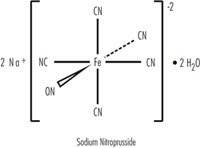
Sodium nitroprusside is disodium pentacyanonitrosylferrate (2-) dihydrate, a hypotensive agent whose structural formula is
whose molecular formula is Na2[Fe(CN)5NO] • 2H2O, and whose molecular weight is 297.95. Dry sodium nitroprusside is a reddish-brown powder, soluble in water. In an aqueous solution infused intravenously, sodium nitroprusside is a rapid-acting vasodilator, active on both arteries and veins.
Sodium nitroprusside solution is rapidly degraded by trace contaminants, often with resulting color changes. (See DOSAGE AND ADMINISTRATION section.) The solution is also sensitive to certain wavelengths of light, and it must be protected from light in clinical use.
Sodium nitroprusside injection is available as:
50 mg Fliptop Vial – Each 2 mL vial contains the equivalent of 50 mg sodium nitroprusside dihydrate in sterile water for injection.
Section 34072-9
General: Like other vasodilators, sodium nitroprusside can cause increases in intracranial pressure. In patients whose intracranial pressure is already elevated, sodium nitroprusside should be used only with extreme caution.
Section 34073-7
Drug Interactions: The hypotensive effect of sodium nitroprusside is augmented by that of most other hypotensive drugs, including ganglionic blocking agents, negative inotropic agents, and inhaled anesthetics.
Section 34075-2
Laboratory Tests: The cyanide-level assay is technically difficult, and cyanide levels in body fluids other than packed red blood cells are difficult to interpret. Cyanide toxicity will lead to lactic acidosis and venous hyperoxemia, but these findings may not be present until an hour or more after the cyanide capacity of the body's red-cell mass has been exhausted.
Section 34080-2
Nursing Mothers: It is not known whether sodium nitroprusside and its metabolites are excreted in human milk. Because many drugs are excreted in human milk and because of the potential for serious adverse reactions in nursing infants from sodium nitroprusside, a decision should be made whether to discontinue nursing or to discontinue the drug, taking into account the importance of the drug to the mother.
Section 34081-0
Pediatric Use: Efficacy in the pediatric population was established based on adult trials and supported by the dose-ranging trial (Study 1) and an open label trial of at least 12 hour infusion at a rate that achieved adequate MAP control (Study 2) with pediatric patients on sodium nitroprusside. No novel safety issues were seen in these studies in pediatric patients. See CLINICAL PHARMACOLOGY and DOSAGE AND ADMINISTRATION .
Section 34083-6
Carcinogenesis, Mutagenesis, Impairment of Fertility: Animal studies assessing sodium nitroprusside's carcinogenicity and mutagenicity have not been conducted. Similarly, sodium nitroprusside has not been tested for effects on fertility.
Section 42228-7
Pregnancy: Teratogenic effects: Pregnancy Category C.
There are no adequate, well-controlled studies of Sodium nitroprusside injection in either laboratory animals or pregnant women. It is not known whether Sodium nitroprusside injection can cause fetal harm when administered to a pregnant woman or can affect reproductive capacity. Sodium nitroprusside injection should be given to a pregnant woman only if clearly needed.
Nonteratogenic effects: In three studies in pregnant ewes, nitroprusside was shown to cross the placental barrier. Fetal cyanide levels were shown to be dose-related to maternal levels of nitroprusside. The metabolic transformation of sodium nitroprusside given to pregnant ewes led to fatal levels of cyanide in the fetuses. The infusion of 25 mcg/kg/min of sodium nitroprusside for one hour in pregnant ewes resulted in the death of all fetuses. Pregnant ewes infused with 1 mcg/kg/min of sodium nitroprusside for one hour delivered normal lambs.
According to one investigator, a pregnant woman at 24 weeks gestation was given sodium nitroprusside to control gestational hypertension secondary to mitral valve disease. Sodium nitroprusside was infused at 3.9 mcg/kg/min for a total of 3.5 mg/kg over 15 hours prior to delivery of a 478 gram stillborn infant without any obvious anomalies. Cyanide levels in the fetal liver were less than 10 mcg/mL. Toxic levels have been reported to be more than 30-40 mcg/mL. The mother demonstrated no cyanide toxicity.
The effects of administering sodium thiosulfate in pregnancy, either by itself or as a co-infusion with sodium nitroprusside, are completely unknown.
Section 42229-5
|
Sodium Nitroprusside Injection (For Intravenous Infusion Only) |
||
| meitheal® | Fliptop Vial | Rx only |
Section 43682-4
Pharmacokinetics and Metabolism: Infused sodium nitroprusside is rapidly distributed to a volume that is approximately coextensive with the extracellular space. The drug is cleared from this volume by intraerythrocytic reaction with hemoglobin (Hgb), and sodium nitroprusside's resulting circulatory half-life is about 2 minutes.
The products of the nitroprusside/hemoglobin reaction are cyanmethemoglobin (cyanmetHgb) and cyanide ion (CN¯). Safe use of sodium nitroprusside injection must be guided by knowledge of the further metabolism of these products.
As shown in the diagram below, the essential features of nitroprusside metabolism are
- One molecule of sodium nitroprusside is metabolized by combination with hemoglobin to produce one molecule of cyanmethemoglobin and four CN¯ ions;
- Methemoglobin, obtained from hemoglobin, can sequester cyanide as cyanmethemoglobin;
- Thiosulfate reacts with cyanide to produce thiocyanate;
- Thiocyanate is eliminated in the urine;
- Cyanide not otherwise removed binds to cytochromes; and
- Cyanide is much more toxic than methemoglobin or thiocyanate.
Cyanide ion is normally found in serum; it is derived from dietary substrates and from tobacco smoke.
Cyanide binds avidly (but reversibly) to ferric ion (Fe+++), most body stores of which are found in erythrocyte methemoglobin (metHgb) and in mitochondrial cytochromes. When CN¯ is infused or generated within the bloodstream, essentially all of it is bound to methemoglobin until intraerythrocytic methemoglobin has been saturated.
When the Fe+++ of cytochromes is bound to cyanide, the cytochromes are unable to participate in oxidative metabolism. In this situation, cells may be able to provide for their energy needs by utilizing anaerobic pathways, but they thereby generate an increasing body burden of lactic acid. Other cells may be unable to utilize these alternative pathways, and they may die hypoxic deaths.
CN¯ levels in packed erythrocytes are typically less than 1 μmol/L (less than 25 mcg/L); levels are roughly doubled in heavy smokers.
At healthy steady state, most people have less than 1% of their hemoglobin in the form of methemoglobin. Nitroprusside metabolism can lead to methemoglobin formation (a) through dissociation of cyanmethemoglobin formed in the original reaction of sodium nitroprusside with Hgb and (b) by direct oxidation of Hgb by the released nitroso group. Relatively large quantities of sodium nitroprusside, however, are required to produce significant methemoglobinemia.
At physiologic methemoglobin levels, the CN¯ binding capacity of packed red cells is a little less than 200 μmol/L (5 mg/L). Cytochrome toxicity is seen at levels only slightly higher, and death has been reported at levels from 300 to 3000 μmol/L (8–80 mg/L). Put another way, a patient with a normal red-cell mass (35 mL/kg) and normal methemoglobin levels can buffer about 175 mcg/kg of CN¯, corresponding to a little less than 500 mcg/kg of infused sodium nitroprusside.
Some cyanide is eliminated from the body as expired hydrogen cyanide, but most is enzymatically converted to thiocyanate (SCN¯) by thiosulfate-cyanide sulfur transferase (rhodanase, EC 2.8.1.1), a mitochondrial enzyme. The enzyme is normally present in great excess, so the reaction is rate-limited by the availability of sulfur donors, especially thiosulfate, cystine, and cysteine.
Thiosulfate is a normal constituent of serum, produced from cysteine by way of β-mercaptopyruvate. Physiological levels of thiosulfate are typically about 0.1 mmol/L (11 mg/L), but they are approximately twice this level in pediatric and adult patients who are not eating. Infused thiosulfate is cleared from the body (primarily by the kidneys) with a half-life of about 20 minutes.
When thiosulfate is being supplied only by normal physiologic mechanisms, conversion of CN¯ to SCN¯ generally proceeds at about 1 mcg/kg/min. This rate of CN¯ clearance corresponds to steady-state processing of a sodium nitroprusside infusion of slightly more than 2 mcg/kg/min. CN¯ begins to accumulate when sodium nitroprusside infusions exceed this rate.
Thiocyanate (SCN¯) is also a normal physiological constituent of serum, with normal levels typically in the range of 50-250 μmol/L (3-15 mg/L). Clearance of SCN¯ is primarily renal, with a half-life of about 3 days. In renal failure, the half-life can be doubled or tripled.
Section 44425-7
STORAGE: Store at 20 to 25°C (68 to 77°F). [See USP Controlled Room Temperature.]
To protect Sodium nitroprusside injection from light, it should be stored in its carton until it is used.
Discard unused portion.
Sterile, Nonpyrogenic, Preservative-free.
The container closure is not made with natural rubber latex.
meitheal®
Mfd. for Meitheal Pharmaceuticals
Chicago, IL 60631 (USA)
©2020 Meitheal Pharmaceuticals Inc.
January 2020
Code: TN/Drugs/TN00003457
Overdosage
Overdosage of nitroprusside can be manifested as excessive hypotension or cyanide toxicity (see WARNINGS ) or as thiocyanate toxicity (see ADVERSE REACTIONS ).
The acute intravenous mean lethal doses (LD50) of nitroprusside in rabbits, dogs, mice, and rats are 2.8, 5.0, 8.4, and 11.2 mg/kg, respectively.
Clinical Pharmacology
The principal pharmacological action of sodium nitroprusside is relaxation of vascular smooth muscle and consequent dilatation of peripheral arteries and veins. Other smooth muscle (e.g., uterus, duodenum) is not affected. Sodium nitroprusside is more active on veins than on arteries, but this selectivity is much less marked than that of nitroglycerin. Dilatation of the veins promotes peripheral pooling of blood and decreases venous return to the heart, thereby reducing left ventricular end diastolic pressure and pulmonary capillary wedge pressure (preload). Arteriolar relaxation reduces systemic vascular resistance, systolic arterial pressure, and mean arterial pressure (afterload). Dilatation of the coronary arteries also occurs.
In association with the decrease in blood pressure, sodium nitroprusside administered intravenously to hypertensive and normotensive patients produces slight increases in heart rate and a variable effect on cardiac output. In hypertensive patients, moderate doses induce renal vasodilatation roughly proportional to the decrease in systemic blood pressure, so there is no appreciable change in renal blood flow or glomerular filtration rate.
In normotensive subjects, acute reduction of mean arterial pressure to 60-75 mm Hg by infusion of sodium nitroprusside caused a significant increase in renin activity. In the same study, ten renovascular-hypertensive patients given sodium nitroprusside had significant increases in renin release from the involved kidney at mean arterial pressures of 90-137 mm Hg.
The hypotensive effect of sodium nitroprusside is seen within a minute or two after the start of an adequate infusion, and it dissipates almost as rapidly after an infusion is discontinued. The effect is augmented by ganglionic blocking agents and inhaled anesthetics.
Principal Display Panel – Sodium Nitroprusside Injection, 50 Mg Per 2 Ml Carton
NDC 71288-202-02
Rx Only
Sodium Nitroprusside Injection
50 mg per 2 mL
(25 mg per mL)
For Intravenous Infusion Only
Must be diluted.
Potent drug: Monitor blood pressure before and during administration.
2 mL Single Dose Vial
Principal Display Panel – Sodium Nitroprusside Injection, 50 Mg Per 2 Ml Vial Label
NDC 71288-202-02
Rx Only
Sodium Nitroprusside Injection
50 mg per 2 mL
(25 mg per mL)
For Intravenous Infusion Only
2 mL Single-Dose Vial
Structured Label Content
Recent Major Changes (34066-1)
Sodium nitroprusside injection is not suitable for direct injection. The solution must be further diluted in sterile 5% dextrose injection before infusion.
Sodium nitroprusside injection can cause precipitous decreases in blood pressure (see DOSAGE AND ADMINISTRATION ). In patients not properly monitored, these decreases can lead to irreversible ischemic injuries or death. Sodium nitroprusside should be used only when available equipment and personnel allow blood pressure to be continuously monitored.
Except when used briefly or at low (< 2 mcg/kg/min) infusion rates, sodium nitroprusside gives rise to important quantities of cyanide ion, which can reach toxic, potentially lethal levels (see WARNINGS ). The usual dose rate is 0.5-10 mcg/kg/min, but infusion at the maximum dose rate should never last more than 10 minutes. If blood pressure has not been adequately controlled after 10 minutes of infusion at the maximum rate, administration of sodium nitroprusside should be terminated immediately.
Although acid-base balance and venous oxygen concentration should be monitored and may indicate cyanide toxicity, these laboratory tests provide imperfect guidance.
Warnings (WARNINGS)
(See also the boxed warning at the beginning of this insert.)
The principal hazards of Sodium nitroprusside injection administration are excessive hypotension and excessive accumulation of cyanide (see also OVERDOSAGE and DOSAGE AND ADMINISTRATION ).
Indications and Usage (INDICATIONS AND USAGE)
Sodium nitroprusside is indicated for the immediate reduction of blood pressure of adult and pediatric patients in hypertensive crises. Concomitant longer-acting antihypertensive medication should be administered so that the duration of treatment with sodium nitroprusside can be minimized.
Sodium nitroprusside is also indicated for producing controlled hypotension in order to reduce bleeding during surgery.
Sodium nitroprusside is also indicated for the treatment of acute congestive heart failure.
Contraindications (CONTRAINDICATIONS)
Sodium nitroprusside should not be used in the treatment of compensatory hypertension, where the primary hemodynamic lesion is aortic coarctation or arteriovenous shunting.
Sodium nitroprusside should not be used to produce hypotension during surgery in patients with known inadequate cerebral circulation, or in moribund patients (A.S.A. Class 5E) coming to emergency surgery.
Patients with congenital (Leber's) optic atrophy or with tobacco amblyopia have unusually high cyanide/thiocyanate ratios. These rare conditions are probably associated with defective or absent rhodanase, and sodium nitroprusside should be avoided in these patients.
Sodium nitroprusside should not be used for the treatment of acute congestive heart failure associated with reduced peripheral vascular resistance such as high-output heart failure that may be seen in endotoxic sepsis.
Adverse Reactions (ADVERSE REACTIONS)
The most important adverse reactions to sodium nitroprusside are the avoidable ones of excessive hypotension and cyanide toxicity, described above under WARNINGS . The adverse reactions described in this section develop less rapidly and, as it happens, less commonly.
How Supplied (HOW SUPPLIED)
Sodium nitroprusside Injection is supplied as follows:
| NDC | Sodium Nitroprusside Injection (25 mg per mL) | Package Factor |
| 71288-202-02 | 50 mg per 2 mL in amber-colored, single-dose Fliptop Vials | 1 vial per carton |
Description (DESCRIPTION)
Sodium nitroprusside is disodium pentacyanonitrosylferrate (2-) dihydrate, a hypotensive agent whose structural formula is
whose molecular formula is Na2[Fe(CN)5NO] • 2H2O, and whose molecular weight is 297.95. Dry sodium nitroprusside is a reddish-brown powder, soluble in water. In an aqueous solution infused intravenously, sodium nitroprusside is a rapid-acting vasodilator, active on both arteries and veins.
Sodium nitroprusside solution is rapidly degraded by trace contaminants, often with resulting color changes. (See DOSAGE AND ADMINISTRATION section.) The solution is also sensitive to certain wavelengths of light, and it must be protected from light in clinical use.
Sodium nitroprusside injection is available as:
50 mg Fliptop Vial – Each 2 mL vial contains the equivalent of 50 mg sodium nitroprusside dihydrate in sterile water for injection.
Section 34072-9 (34072-9)
General: Like other vasodilators, sodium nitroprusside can cause increases in intracranial pressure. In patients whose intracranial pressure is already elevated, sodium nitroprusside should be used only with extreme caution.
Section 34073-7 (34073-7)
Drug Interactions: The hypotensive effect of sodium nitroprusside is augmented by that of most other hypotensive drugs, including ganglionic blocking agents, negative inotropic agents, and inhaled anesthetics.
Section 34075-2 (34075-2)
Laboratory Tests: The cyanide-level assay is technically difficult, and cyanide levels in body fluids other than packed red blood cells are difficult to interpret. Cyanide toxicity will lead to lactic acidosis and venous hyperoxemia, but these findings may not be present until an hour or more after the cyanide capacity of the body's red-cell mass has been exhausted.
Section 34080-2 (34080-2)
Nursing Mothers: It is not known whether sodium nitroprusside and its metabolites are excreted in human milk. Because many drugs are excreted in human milk and because of the potential for serious adverse reactions in nursing infants from sodium nitroprusside, a decision should be made whether to discontinue nursing or to discontinue the drug, taking into account the importance of the drug to the mother.
Section 34081-0 (34081-0)
Pediatric Use: Efficacy in the pediatric population was established based on adult trials and supported by the dose-ranging trial (Study 1) and an open label trial of at least 12 hour infusion at a rate that achieved adequate MAP control (Study 2) with pediatric patients on sodium nitroprusside. No novel safety issues were seen in these studies in pediatric patients. See CLINICAL PHARMACOLOGY and DOSAGE AND ADMINISTRATION .
Section 34083-6 (34083-6)
Carcinogenesis, Mutagenesis, Impairment of Fertility: Animal studies assessing sodium nitroprusside's carcinogenicity and mutagenicity have not been conducted. Similarly, sodium nitroprusside has not been tested for effects on fertility.
Section 42228-7 (42228-7)
Pregnancy: Teratogenic effects: Pregnancy Category C.
There are no adequate, well-controlled studies of Sodium nitroprusside injection in either laboratory animals or pregnant women. It is not known whether Sodium nitroprusside injection can cause fetal harm when administered to a pregnant woman or can affect reproductive capacity. Sodium nitroprusside injection should be given to a pregnant woman only if clearly needed.
Nonteratogenic effects: In three studies in pregnant ewes, nitroprusside was shown to cross the placental barrier. Fetal cyanide levels were shown to be dose-related to maternal levels of nitroprusside. The metabolic transformation of sodium nitroprusside given to pregnant ewes led to fatal levels of cyanide in the fetuses. The infusion of 25 mcg/kg/min of sodium nitroprusside for one hour in pregnant ewes resulted in the death of all fetuses. Pregnant ewes infused with 1 mcg/kg/min of sodium nitroprusside for one hour delivered normal lambs.
According to one investigator, a pregnant woman at 24 weeks gestation was given sodium nitroprusside to control gestational hypertension secondary to mitral valve disease. Sodium nitroprusside was infused at 3.9 mcg/kg/min for a total of 3.5 mg/kg over 15 hours prior to delivery of a 478 gram stillborn infant without any obvious anomalies. Cyanide levels in the fetal liver were less than 10 mcg/mL. Toxic levels have been reported to be more than 30-40 mcg/mL. The mother demonstrated no cyanide toxicity.
The effects of administering sodium thiosulfate in pregnancy, either by itself or as a co-infusion with sodium nitroprusside, are completely unknown.
Section 42229-5 (42229-5)
|
Sodium Nitroprusside Injection (For Intravenous Infusion Only) |
||
| meitheal® | Fliptop Vial | Rx only |
Section 43682-4 (43682-4)
Pharmacokinetics and Metabolism: Infused sodium nitroprusside is rapidly distributed to a volume that is approximately coextensive with the extracellular space. The drug is cleared from this volume by intraerythrocytic reaction with hemoglobin (Hgb), and sodium nitroprusside's resulting circulatory half-life is about 2 minutes.
The products of the nitroprusside/hemoglobin reaction are cyanmethemoglobin (cyanmetHgb) and cyanide ion (CN¯). Safe use of sodium nitroprusside injection must be guided by knowledge of the further metabolism of these products.
As shown in the diagram below, the essential features of nitroprusside metabolism are
- One molecule of sodium nitroprusside is metabolized by combination with hemoglobin to produce one molecule of cyanmethemoglobin and four CN¯ ions;
- Methemoglobin, obtained from hemoglobin, can sequester cyanide as cyanmethemoglobin;
- Thiosulfate reacts with cyanide to produce thiocyanate;
- Thiocyanate is eliminated in the urine;
- Cyanide not otherwise removed binds to cytochromes; and
- Cyanide is much more toxic than methemoglobin or thiocyanate.
Cyanide ion is normally found in serum; it is derived from dietary substrates and from tobacco smoke.
Cyanide binds avidly (but reversibly) to ferric ion (Fe+++), most body stores of which are found in erythrocyte methemoglobin (metHgb) and in mitochondrial cytochromes. When CN¯ is infused or generated within the bloodstream, essentially all of it is bound to methemoglobin until intraerythrocytic methemoglobin has been saturated.
When the Fe+++ of cytochromes is bound to cyanide, the cytochromes are unable to participate in oxidative metabolism. In this situation, cells may be able to provide for their energy needs by utilizing anaerobic pathways, but they thereby generate an increasing body burden of lactic acid. Other cells may be unable to utilize these alternative pathways, and they may die hypoxic deaths.
CN¯ levels in packed erythrocytes are typically less than 1 μmol/L (less than 25 mcg/L); levels are roughly doubled in heavy smokers.
At healthy steady state, most people have less than 1% of their hemoglobin in the form of methemoglobin. Nitroprusside metabolism can lead to methemoglobin formation (a) through dissociation of cyanmethemoglobin formed in the original reaction of sodium nitroprusside with Hgb and (b) by direct oxidation of Hgb by the released nitroso group. Relatively large quantities of sodium nitroprusside, however, are required to produce significant methemoglobinemia.
At physiologic methemoglobin levels, the CN¯ binding capacity of packed red cells is a little less than 200 μmol/L (5 mg/L). Cytochrome toxicity is seen at levels only slightly higher, and death has been reported at levels from 300 to 3000 μmol/L (8–80 mg/L). Put another way, a patient with a normal red-cell mass (35 mL/kg) and normal methemoglobin levels can buffer about 175 mcg/kg of CN¯, corresponding to a little less than 500 mcg/kg of infused sodium nitroprusside.
Some cyanide is eliminated from the body as expired hydrogen cyanide, but most is enzymatically converted to thiocyanate (SCN¯) by thiosulfate-cyanide sulfur transferase (rhodanase, EC 2.8.1.1), a mitochondrial enzyme. The enzyme is normally present in great excess, so the reaction is rate-limited by the availability of sulfur donors, especially thiosulfate, cystine, and cysteine.
Thiosulfate is a normal constituent of serum, produced from cysteine by way of β-mercaptopyruvate. Physiological levels of thiosulfate are typically about 0.1 mmol/L (11 mg/L), but they are approximately twice this level in pediatric and adult patients who are not eating. Infused thiosulfate is cleared from the body (primarily by the kidneys) with a half-life of about 20 minutes.
When thiosulfate is being supplied only by normal physiologic mechanisms, conversion of CN¯ to SCN¯ generally proceeds at about 1 mcg/kg/min. This rate of CN¯ clearance corresponds to steady-state processing of a sodium nitroprusside infusion of slightly more than 2 mcg/kg/min. CN¯ begins to accumulate when sodium nitroprusside infusions exceed this rate.
Thiocyanate (SCN¯) is also a normal physiological constituent of serum, with normal levels typically in the range of 50-250 μmol/L (3-15 mg/L). Clearance of SCN¯ is primarily renal, with a half-life of about 3 days. In renal failure, the half-life can be doubled or tripled.
Section 44425-7 (44425-7)
STORAGE: Store at 20 to 25°C (68 to 77°F). [See USP Controlled Room Temperature.]
To protect Sodium nitroprusside injection from light, it should be stored in its carton until it is used.
Discard unused portion.
Sterile, Nonpyrogenic, Preservative-free.
The container closure is not made with natural rubber latex.
meitheal®
Mfd. for Meitheal Pharmaceuticals
Chicago, IL 60631 (USA)
©2020 Meitheal Pharmaceuticals Inc.
January 2020
Code: TN/Drugs/TN00003457
Overdosage (OVERDOSAGE)
Overdosage of nitroprusside can be manifested as excessive hypotension or cyanide toxicity (see WARNINGS ) or as thiocyanate toxicity (see ADVERSE REACTIONS ).
The acute intravenous mean lethal doses (LD50) of nitroprusside in rabbits, dogs, mice, and rats are 2.8, 5.0, 8.4, and 11.2 mg/kg, respectively.
Clinical Pharmacology (CLINICAL PHARMACOLOGY)
The principal pharmacological action of sodium nitroprusside is relaxation of vascular smooth muscle and consequent dilatation of peripheral arteries and veins. Other smooth muscle (e.g., uterus, duodenum) is not affected. Sodium nitroprusside is more active on veins than on arteries, but this selectivity is much less marked than that of nitroglycerin. Dilatation of the veins promotes peripheral pooling of blood and decreases venous return to the heart, thereby reducing left ventricular end diastolic pressure and pulmonary capillary wedge pressure (preload). Arteriolar relaxation reduces systemic vascular resistance, systolic arterial pressure, and mean arterial pressure (afterload). Dilatation of the coronary arteries also occurs.
In association with the decrease in blood pressure, sodium nitroprusside administered intravenously to hypertensive and normotensive patients produces slight increases in heart rate and a variable effect on cardiac output. In hypertensive patients, moderate doses induce renal vasodilatation roughly proportional to the decrease in systemic blood pressure, so there is no appreciable change in renal blood flow or glomerular filtration rate.
In normotensive subjects, acute reduction of mean arterial pressure to 60-75 mm Hg by infusion of sodium nitroprusside caused a significant increase in renin activity. In the same study, ten renovascular-hypertensive patients given sodium nitroprusside had significant increases in renin release from the involved kidney at mean arterial pressures of 90-137 mm Hg.
The hypotensive effect of sodium nitroprusside is seen within a minute or two after the start of an adequate infusion, and it dissipates almost as rapidly after an infusion is discontinued. The effect is augmented by ganglionic blocking agents and inhaled anesthetics.
Principal Display Panel – Sodium Nitroprusside Injection, 50 Mg Per 2 Ml Carton (Principal Display Panel – Sodium Nitroprusside Injection, 50 mg per 2 mL Carton)
NDC 71288-202-02
Rx Only
Sodium Nitroprusside Injection
50 mg per 2 mL
(25 mg per mL)
For Intravenous Infusion Only
Must be diluted.
Potent drug: Monitor blood pressure before and during administration.
2 mL Single Dose Vial
Principal Display Panel – Sodium Nitroprusside Injection, 50 Mg Per 2 Ml Vial Label (Principal Display Panel – Sodium Nitroprusside Injection, 50 mg per 2 mL Vial Label)
NDC 71288-202-02
Rx Only
Sodium Nitroprusside Injection
50 mg per 2 mL
(25 mg per mL)
For Intravenous Infusion Only
2 mL Single-Dose Vial
Advanced Ingredient Data
Raw Label Data
All Sections (JSON)
Additional Information
Back to search View SPL set listing Open on DailyMed ↗
Source: dailymed · Ingested: 2026-02-15T11:44:01.868853 · Updated: 2026-03-14T22:18:26.158923