Zenpep
7f16f2d4-8df6-4bd7-ac10-56994fa257b0
34391-3
HUMAN PRESCRIPTION DRUG LABEL
Drug Facts
Composition & Product
Identifiers & Packaging
Indications and Usage
ZENPEP ® is indicated for the treatment of exocrine pancreatic insufficiency in adult and pediatric patients.
Dosage and Administration
Important Dosing Information ( 2.1 ) ZENPEP is a mixture of enzymes including lipases, proteases, and amylases and dosing is based on lipase units. Dosing scheme based on actual body weight or fat ingestion. Individualize the dosage based on clinical symptoms, the degree of steatorrhea present, and the fat content of the diet. Do not exceed 2,500 lipase units/kg/meal, 10,000 lipase units/kg/day, or 4,000 lipase units/g fat ingested/day in adult and pediatric patients greater than 12 months of age without further investigation. ( 5.1 ) The total daily dosage in adult and pediatric patients greater than 12 months of age should reflect approximately three meals plus two or three snacks per day. With each snack, administer approximately half the prescribed dose for a meal. Do not substitute other pancreatic enzyme products for ZENPEP. When switching from another pancreatic enzyme product to ZENPEP, monitor patients for clinical symptoms of exocrine pancreatic insufficiency and titrate the dosage as needed. Recommended Dosage ( 2.2 ) Adult and Pediatric Patients Greater than 12 Months : The recommended initial starting dosage is: 500 lipase units/kg/meal for adult and pediatric patients 4 years of age and older. 1,000 lipase units/kg/meal for pediatric patients greater than 12 months of age to less than 4 years of age. Titrate to either 2,500 lipase units/kg/meal, 10,000 lipase units/kg/day, or 4,000 lipase units/g fat ingested/day. Higher dosages may be administered if documented effective by fecal fat measures or improvement in malabsorption. Pediatric Patients Birth to 12 Months: The recommended dosage is 3,000 lipase units (one capsule) per 120 mL of formula or per breastfeeding. Preparation and Administration Instructions ( 2.3 ) Swallow capsules whole. For patients unable to swallow intact capsule(s), the capsule contents may be sprinkled on soft acidic food (e.g., applesauce, bananas, pears). Do not crush or chew ZENPEP capsules or capsule contents. Consume sufficient liquids to ensure complete swallowing of ZENPEP. ( 5.2 ) See the full prescribing information for additional information on administering to pediatric patients birth to 12 months. ( 2.3 )
Contraindications
None.
Warnings and Precautions
Fibrosing Colonopathy : Associated with high doses, usually over prolonged use and in pediatric patients with cystic fibrosis. Colonic stricture reported in pediatric patients less than 12 years of age with dosages exceeding 6,000 lipase units/kg/meal. Monitor during treatment for progression of preexisting disease. Do not exceed the recommended dosage, unless clinically indicated. ( 2.1 , 5.1 ) Irritation of the Oral Mucosa : May occur due to loss of protective enteric coating on the capsule contents. ( 2.3 , 5.2 ) Hyperuricemia : Reported with high dosages; consider monitoring blood uric acid levels in patients with gout, renal impairment, or hyperuricemia. ( 5.3 ) Risk of Viral Transmission : The presence of porcine viruses that might infect humans cannot be definitely excluded. ( 5.4 ) Hypersensitivity Reactions : Monitor patients with known reactions to proteins of porcine origin. If symptoms occur, initiate appropriate medical management; consider the risks and benefits of continued treatment. ( 5.5 )
Adverse Reactions
The following serious or otherwise important adverse reactions are described elsewhere in the labeling: Fibrosing Colonopathy [see Warnings and Precautions (5.1) ] Irritation of the Oral Mucosa [see Warnings and Precautions (5.2) ] Hyperuricemia [see Warnings and Precautions (5.3) ] Risk of Viral Transmission [see Warnings and Precautions (5.4) ] Hypersensitivity Reactions [see Warnings and Precautions (5.5) ]
How Supplied
ZENPEP (pancrelipase) delayed-release capsules containing light, brown-colored delayed-release pancrelipase are supplied as follows: Strength Description Supplied As NDC Number 3,000 USP units of lipase; 10,000 USP units of protease; 14,000 units of amylase two-piece hypromellose capsule with white opaque cap and white body with a red radial print and printed with "APTALIS 3" Bottles of 100 73562-113-01 5,000 USP units of lipase; 17,000 USP units of protease; 24,000 units of amylase two-piece hypromellose capsule with a white opaque cap and white body with a blue radial print and printed with "APTALIS 5" Bottles of 100 73562-115-01 10,000 USP units of lipase; 32,000 units of protease; 42,000 units of amylase two-piece hypromellose capsule with a yellow opaque cap and white body with a blue radial print and printed with "APTALIS 10" Bottles of 100 73562-110-01 15,000 USP units of lipase; 47,000 units of protease; 63,000 units of amylase two-piece hypromellose capsule with a red opaque cap and white body with a blue radial print and printed with "APTALIS 15" Bottles of 100 73562-111-01 20,000 USP units of lipase; 63,000 units of protease; 84,000 units of amylase two-piece hypromellose capsule with a green opaque cap and white body with a blue radial print and printed with "APTALIS 20" Bottles of 100 73562-112-01 25,000 USP units of lipase; 79,000 units of protease; 105,000 units of amylase two-piece hypromellose capsule with a blue opaque cap and white body with a blue radial print and printed with "APTALIS 25" Bottles of 100 73562-116-01 40,000 USP units of lipase; 126,000 units of protease; 168,000 units of amylase two-piece hypromellose capsule with an orange opaque cap and white body with a blue radial print and printed with "APTALIS 40" Bottles of 100 73562-114-01 60,000 USP units of lipase; 189,600 units of protease; 252,600 units of amylase two-piece hypromellose capsule with powder blue opaque cap with two black stripes and white body with a black radial print and printed with "APTALIS 60 " Bottles of 100 73562-117-01
Storage and Handling
ZENPEP (pancrelipase) delayed-release capsules containing light, brown-colored delayed-release pancrelipase are supplied as follows: Strength Description Supplied As NDC Number 3,000 USP units of lipase; 10,000 USP units of protease; 14,000 units of amylase two-piece hypromellose capsule with white opaque cap and white body with a red radial print and printed with "APTALIS 3" Bottles of 100 73562-113-01 5,000 USP units of lipase; 17,000 USP units of protease; 24,000 units of amylase two-piece hypromellose capsule with a white opaque cap and white body with a blue radial print and printed with "APTALIS 5" Bottles of 100 73562-115-01 10,000 USP units of lipase; 32,000 units of protease; 42,000 units of amylase two-piece hypromellose capsule with a yellow opaque cap and white body with a blue radial print and printed with "APTALIS 10" Bottles of 100 73562-110-01 15,000 USP units of lipase; 47,000 units of protease; 63,000 units of amylase two-piece hypromellose capsule with a red opaque cap and white body with a blue radial print and printed with "APTALIS 15" Bottles of 100 73562-111-01 20,000 USP units of lipase; 63,000 units of protease; 84,000 units of amylase two-piece hypromellose capsule with a green opaque cap and white body with a blue radial print and printed with "APTALIS 20" Bottles of 100 73562-112-01 25,000 USP units of lipase; 79,000 units of protease; 105,000 units of amylase two-piece hypromellose capsule with a blue opaque cap and white body with a blue radial print and printed with "APTALIS 25" Bottles of 100 73562-116-01 40,000 USP units of lipase; 126,000 units of protease; 168,000 units of amylase two-piece hypromellose capsule with an orange opaque cap and white body with a blue radial print and printed with "APTALIS 40" Bottles of 100 73562-114-01 60,000 USP units of lipase; 189,600 units of protease; 252,600 units of amylase two-piece hypromellose capsule with powder blue opaque cap with two black stripes and white body with a black radial print and printed with "APTALIS 60 " Bottles of 100 73562-117-01
Description
ZENPEP ® is indicated for the treatment of exocrine pancreatic insufficiency in adult and pediatric patients.
Medication Information
Warnings and Precautions
Fibrosing Colonopathy : Associated with high doses, usually over prolonged use and in pediatric patients with cystic fibrosis. Colonic stricture reported in pediatric patients less than 12 years of age with dosages exceeding 6,000 lipase units/kg/meal. Monitor during treatment for progression of preexisting disease. Do not exceed the recommended dosage, unless clinically indicated. ( 2.1 , 5.1 ) Irritation of the Oral Mucosa : May occur due to loss of protective enteric coating on the capsule contents. ( 2.3 , 5.2 ) Hyperuricemia : Reported with high dosages; consider monitoring blood uric acid levels in patients with gout, renal impairment, or hyperuricemia. ( 5.3 ) Risk of Viral Transmission : The presence of porcine viruses that might infect humans cannot be definitely excluded. ( 5.4 ) Hypersensitivity Reactions : Monitor patients with known reactions to proteins of porcine origin. If symptoms occur, initiate appropriate medical management; consider the risks and benefits of continued treatment. ( 5.5 )
Indications and Usage
ZENPEP ® is indicated for the treatment of exocrine pancreatic insufficiency in adult and pediatric patients.
Dosage and Administration
Important Dosing Information ( 2.1 ) ZENPEP is a mixture of enzymes including lipases, proteases, and amylases and dosing is based on lipase units. Dosing scheme based on actual body weight or fat ingestion. Individualize the dosage based on clinical symptoms, the degree of steatorrhea present, and the fat content of the diet. Do not exceed 2,500 lipase units/kg/meal, 10,000 lipase units/kg/day, or 4,000 lipase units/g fat ingested/day in adult and pediatric patients greater than 12 months of age without further investigation. ( 5.1 ) The total daily dosage in adult and pediatric patients greater than 12 months of age should reflect approximately three meals plus two or three snacks per day. With each snack, administer approximately half the prescribed dose for a meal. Do not substitute other pancreatic enzyme products for ZENPEP. When switching from another pancreatic enzyme product to ZENPEP, monitor patients for clinical symptoms of exocrine pancreatic insufficiency and titrate the dosage as needed. Recommended Dosage ( 2.2 ) Adult and Pediatric Patients Greater than 12 Months : The recommended initial starting dosage is: 500 lipase units/kg/meal for adult and pediatric patients 4 years of age and older. 1,000 lipase units/kg/meal for pediatric patients greater than 12 months of age to less than 4 years of age. Titrate to either 2,500 lipase units/kg/meal, 10,000 lipase units/kg/day, or 4,000 lipase units/g fat ingested/day. Higher dosages may be administered if documented effective by fecal fat measures or improvement in malabsorption. Pediatric Patients Birth to 12 Months: The recommended dosage is 3,000 lipase units (one capsule) per 120 mL of formula or per breastfeeding. Preparation and Administration Instructions ( 2.3 ) Swallow capsules whole. For patients unable to swallow intact capsule(s), the capsule contents may be sprinkled on soft acidic food (e.g., applesauce, bananas, pears). Do not crush or chew ZENPEP capsules or capsule contents. Consume sufficient liquids to ensure complete swallowing of ZENPEP. ( 5.2 ) See the full prescribing information for additional information on administering to pediatric patients birth to 12 months. ( 2.3 )
Contraindications
None.
Adverse Reactions
The following serious or otherwise important adverse reactions are described elsewhere in the labeling: Fibrosing Colonopathy [see Warnings and Precautions (5.1) ] Irritation of the Oral Mucosa [see Warnings and Precautions (5.2) ] Hyperuricemia [see Warnings and Precautions (5.3) ] Risk of Viral Transmission [see Warnings and Precautions (5.4) ] Hypersensitivity Reactions [see Warnings and Precautions (5.5) ]
Storage and Handling
ZENPEP (pancrelipase) delayed-release capsules containing light, brown-colored delayed-release pancrelipase are supplied as follows: Strength Description Supplied As NDC Number 3,000 USP units of lipase; 10,000 USP units of protease; 14,000 units of amylase two-piece hypromellose capsule with white opaque cap and white body with a red radial print and printed with "APTALIS 3" Bottles of 100 73562-113-01 5,000 USP units of lipase; 17,000 USP units of protease; 24,000 units of amylase two-piece hypromellose capsule with a white opaque cap and white body with a blue radial print and printed with "APTALIS 5" Bottles of 100 73562-115-01 10,000 USP units of lipase; 32,000 units of protease; 42,000 units of amylase two-piece hypromellose capsule with a yellow opaque cap and white body with a blue radial print and printed with "APTALIS 10" Bottles of 100 73562-110-01 15,000 USP units of lipase; 47,000 units of protease; 63,000 units of amylase two-piece hypromellose capsule with a red opaque cap and white body with a blue radial print and printed with "APTALIS 15" Bottles of 100 73562-111-01 20,000 USP units of lipase; 63,000 units of protease; 84,000 units of amylase two-piece hypromellose capsule with a green opaque cap and white body with a blue radial print and printed with "APTALIS 20" Bottles of 100 73562-112-01 25,000 USP units of lipase; 79,000 units of protease; 105,000 units of amylase two-piece hypromellose capsule with a blue opaque cap and white body with a blue radial print and printed with "APTALIS 25" Bottles of 100 73562-116-01 40,000 USP units of lipase; 126,000 units of protease; 168,000 units of amylase two-piece hypromellose capsule with an orange opaque cap and white body with a blue radial print and printed with "APTALIS 40" Bottles of 100 73562-114-01 60,000 USP units of lipase; 189,600 units of protease; 252,600 units of amylase two-piece hypromellose capsule with powder blue opaque cap with two black stripes and white body with a black radial print and printed with "APTALIS 60 " Bottles of 100 73562-117-01
How Supplied
ZENPEP (pancrelipase) delayed-release capsules containing light, brown-colored delayed-release pancrelipase are supplied as follows: Strength Description Supplied As NDC Number 3,000 USP units of lipase; 10,000 USP units of protease; 14,000 units of amylase two-piece hypromellose capsule with white opaque cap and white body with a red radial print and printed with "APTALIS 3" Bottles of 100 73562-113-01 5,000 USP units of lipase; 17,000 USP units of protease; 24,000 units of amylase two-piece hypromellose capsule with a white opaque cap and white body with a blue radial print and printed with "APTALIS 5" Bottles of 100 73562-115-01 10,000 USP units of lipase; 32,000 units of protease; 42,000 units of amylase two-piece hypromellose capsule with a yellow opaque cap and white body with a blue radial print and printed with "APTALIS 10" Bottles of 100 73562-110-01 15,000 USP units of lipase; 47,000 units of protease; 63,000 units of amylase two-piece hypromellose capsule with a red opaque cap and white body with a blue radial print and printed with "APTALIS 15" Bottles of 100 73562-111-01 20,000 USP units of lipase; 63,000 units of protease; 84,000 units of amylase two-piece hypromellose capsule with a green opaque cap and white body with a blue radial print and printed with "APTALIS 20" Bottles of 100 73562-112-01 25,000 USP units of lipase; 79,000 units of protease; 105,000 units of amylase two-piece hypromellose capsule with a blue opaque cap and white body with a blue radial print and printed with "APTALIS 25" Bottles of 100 73562-116-01 40,000 USP units of lipase; 126,000 units of protease; 168,000 units of amylase two-piece hypromellose capsule with an orange opaque cap and white body with a blue radial print and printed with "APTALIS 40" Bottles of 100 73562-114-01 60,000 USP units of lipase; 189,600 units of protease; 252,600 units of amylase two-piece hypromellose capsule with powder blue opaque cap with two black stripes and white body with a black radial print and printed with "APTALIS 60 " Bottles of 100 73562-117-01
Description
ZENPEP ® is indicated for the treatment of exocrine pancreatic insufficiency in adult and pediatric patients.
Section 42229-5
Adult and Pediatric Patients Greater than 12 Months of Age
The recommended oral initial starting dosage is:
- 500 lipase units/kg/meal for adult and pediatric patients 4 years of age and older.
- 1,000 lipase units/kg/meal for pediatric patients greater than 12 months of age to less than 4 years of age.
If signs and symptoms of malabsorption persist, increase the dosage. Titrate to either 2,500 lipase units/kg/meal, 10,000 lipase units/kg/day, or less than 4,000 lipase units/grams of fat ingested/day. Higher dosages may be administered if they are documented to be effective by fecal fat measures or an improvement in signs or symptoms of malabsorption including measures of nutritional status.
Section 42231-1
| This Medication Guide has been approved by the U.S. Food and Drug Administration. | Revised 07/2025 |
|
MEDICATION GUIDE ZENPEP® (ZEN-pep) (pancrelipase) delayed-release capsules, for oral use |
|
|
What is the most important information I should know about ZENPEP? ZENPEP may increase your chance of having a rare bowel disorder called fibrosing colonopathy especially if taken at a high dose for a long time in children with cystic fibrosis. This condition is serious and may require surgery. The risk of having this condition may be reduced by following the dosing instructions that your doctor gave you. Call your doctor right away if you have any unusual or severe:
|
|
What is ZENPEP?
|
|
Before taking ZENPEP, tell your doctor about all your medical conditions, including if you:
Know the medicines you take. Keep a list of them and show it to your doctor and pharmacist when you get a new medicine. |
|
How should I take ZENPEP?
The 2 ways to give ZENPEP to infants (children from birth to 12 months of age), which are described below: a) Giving with an Acidic Soft Food
|
|
|
What are possible side effects of ZENPEP?
ZENPEP may cause serious side effects, including:
ZENPEP and other pancreatic enzyme products are made from the pancreas of pigs, the same pigs people eat as pork. These pigs may carry viruses. Although it has never been reported, it may be possible for a person to get a viral infection from taking pancreatic enzyme products that come from pigs. Tell your doctor if you have any side effect that bothers you or does not go away. These are not all the possible side effects of ZENPEP. Call your doctor for medical advice about side effects. You may report side effects to FDA at 1-800-FDA-1088. You may also report side effects to Aimmune Therapeutics, Inc at 1-833-AIM2KNO (1-833-246-2566). |
|
How do I store ZENPEP?
|
|
|
General information about the safe and effective use of ZENPEP.
Medicines are sometimes prescribed for purposes other than those listed in a Medication Guide. Do not use ZENPEP for a condition for which it was not prescribed. Do not give ZENPEP to other people, even if they have the same symptoms you have. It may harm them. You can ask your pharmacist or doctor for information about ZENPEP that is written for health professionals. |
|
|
What are the ingredients in ZENPEP?
Active ingredients: lipase, protease, amylase Inactive ingredients: colloidal silicon dioxide, croscarmellose sodium, hydrogenated castor oil, hypromellose phthalate, magnesium stearate, microcrystalline cellulose, talc, and triethyl citrate in hypromellose capsules. The red radial imprinting on the 3,000 capsule strength contains red iron oxide as colorant. The blue radial imprinting on the 5,000, 10,000, 15,000, 20,000, 25,000, and 40,000 capsule strengths contains FD&C Blue #2 as colorant. The black radial imprinting on the 60,000 capsule strength contains black iron oxide as colorant. Capsule shell ingredients:
|
|
|
Manufactured by: Aimmune Therapeutics, Inc. 1007 US Highway 202/206, Bridgewater, NJ 08807, USA Product of Germany US License No. 2109 For further information, please go to www.ZENPEP.com or call Aimmune Therapeutics, Inc at 1-833-AIM2KNO (1-833-246-2566) ©2025 Nestlé All trademarks are owned by Société des Produits Nestlé S.A., Vevey, Switzerland or used with permission. |
Section 44425-7
Storage and Handling
Risk Summary
Published data from case reports with pancrelipase use in pregnant women have not identified a drug-associated risk of major birth defects, miscarriage or other adverse maternal or fetal outcomes. Pancrelipase is minimally absorbed systematically; therefore, maternal use is not expected to result in fetal exposure to the drug. Animal reproduction studies have not been conducted with pancrelipase.
The background risk of major birth defects and miscarriage for the indicated population is unknown. All pregnancies have a background risk of birth defect, loss, or other adverse outcomes. In the U.S. general population, the estimated background risk of major birth defects and miscarriage in clinically recognized pregnancies is 2 to 4% and 15 to 20%, respectively.
10 Overdosage
Chronic high dosages of pancreatic enzyme products have been associated with fibrosing colonopathy and colonic strictures [see Warnings and Precautions (5.1)]. High dosages of pancreatic enzyme products have been associated with hyperuricosuria and hyperuricemia [see Warnings and Precautions (5.3)].
11 Description
Pancrelipase is a pancreatic enzyme product consisting of a mixture of enzymes including lipases, proteases, and amylases, and is an extract derived from porcine pancreatic glands. The enteric-coated pellets in ZENPEP are formulated to release pancreatic enzymes at an approximate pH of 5.5 or greater.
ZENPEP (pancrelipase) delayed-release capsule for oral administration, include a two-piece shell containing light brown-colored enteric-coated pellets (1.8 to 1.9mm for 3,000 and 5,000 USP units of lipase, 2.2 to 2.5 mm for 10,000, 15,000, 20,000, 25,000, 40,000 and 60,000 USP units of lipase) and are available as follows:
3,000 USP units of lipase; 10,000 USP units of protease; and 14,000 USP units of amylase; delayed-release capsules have a white opaque cap and a white opaque body with imprint "APTALIS 3". The shells contain carnauba wax or talc, carrageenan, hypromellose, potassium chloride, titanium oxide, and water. The colorant of the printed ink is red iron oxide.
5,000 USP units of lipase; 17,000 USP units of protease; and 24,000 USP units of amylase; delayed-release capsules have a white opaque cap and a white opaque body with imprint "APTALIS 5". The shells contain carnauba wax or talc, carrageenan, hypromellose, potassium chloride, titanium oxide, and water. The colorant of the printed ink is FD&C Blue 2.
10,000 USP units of lipase; 32,000 USP units of protease; and 42,000 USP units of amylase; delayed-release capsules have a yellow opaque cap and a white opaque body with imprint "APTALIS 10". The shells contain carnauba wax or talc, carrageenan, hypromellose, potassium chloride, titanium oxide, water and yellow ferric oxide. The colorant of the printed ink is FD&C Blue 2.
15,000 USP units of lipase; 47,000 USP units of protease; and 63,000 USP units of amylase; delayed-release capsules have a red opaque cap and a white opaque body with imprint "APTALIS 15". The shells contain carnauba wax or talc, carrageenan, hypromellose, potassium chloride, red ferric oxide, titanium oxide, and water. The colorant of the printed ink is FD&C Blue 2.
20,000 USP units of lipase; 63,000 USP units of protease; and 84,000 USP units of amylase; delayed-release capsules have a green opaque cap and a white opaque body with imprint "APTALIS 20". The shells contain carnauba wax or talc, carrageenan, FD&C Blue #2, hypromellose, potassium chloride, titanium oxide, water, and yellow ferric oxide. The colorant of the printed ink is FD&C Blue 2.
25,000 USP units of lipase; 79,000 USP units of protease; and 105,000 USP units of amylase; delayed-release capsules have a blue opaque cap and a white opaque body with imprint "APTALIS 25". The shells contain carnauba wax or talc, carrageenan, FD&C Blue #2, hypromellose, potassium chloride, titanium oxide, and water. The colorant of the printed ink is FD&C Blue 2.
40,000 USP units of lipase; 126,000 USP units of protease; and 168,000 USP units of amylase; delayed-release capsules have an orange opaque cap and white opaque body, printed with "APTALIS 40". The shells contain FD&C Yellow #6, hypromellose, and titanium oxide. The colorant of the printed ink is FD&C Blue 2.
60,000 USP units of lipase; 189,600 USP units of protease; 252,600 USP units of amylase. Capsules have a powder blue opaque cap with two black stripes and white opaque body, printed with "APTALIS 60" The shells contain FD&C Blue #1, hypromellose, and titanium oxide. The colorant of the printed ink is black iron oxide.
ZENPEP (pancrelipase) delayed-release capsules include the following inactive ingredients: colloidal silicon dioxide, croscarmellose sodium, hydrogenated castor oil, hypromellose phthalate, magnesium stearate, microcrystalline cellulose, talc, and triethyl citrate.
5.3 Hyperuricemia
Pancreatic enzyme products contain purines that may increase blood uric acid levels. High dosages have been associated with hyperuricosuria and hyperuricemia [see Overdosage (10)]. Consider monitoring blood uric acid levels in patients with gout, renal impairment, or hyperuricemia during treatment with ZENPEP.
8.4 Pediatric Use
The safety and effectiveness of ZENPEP for the treatment of exocrine pancreatic insufficiency have been established in pediatric patients.
Use of ZENPEP for this indication is supported by an adequate and well-controlled trial in adult and pediatric patients 7 to 17 years of age (Study 1) along with supportive data from an open-label, single arm study in 19 pediatric patients 1 to 6 years of age (Study 2). Both study populations consisted of patients with exocrine pancreatic insufficiency due to cystic fibrosis. The safety in pediatric patients in Studies 1 and 2 were similar to that observed in adult patients [see Adverse Reactions (6.1) and Clinical Studies (14)].
Dosages exceeding 6,000 lipase units/kg/meal have been reported postmarketing to be associated with fibrosing colonopathy and colonic strictures in pediatric patients less than 12 years of age. If there is a history of fibrosing colonopathy, monitor patients during treatment with ZENPEP because some patients may be at risk of progressing to stricture formation. Do not exceed the recommended dosage of either 2,500 lipase units/kg/meal, 10,000 lipase units/kg/day, or 4,000 lipase units/g fat ingested/day in pediatric patients greater than 12 months of age without further investigation. [see Dosage and Administration (2.2) and Warnings and Precautions (5.1)].
Crushing or chewing ZENPEP capsules or mixing the capsule contents in foods having a pH greater than 4.5 can disrupt the protective enteric coating on the capsule contents and result in early release of enzymes, irritation of the oral mucosa, and/or loss of enzyme activity. Instruct the patient or caregiver of the following: consume sufficient liquids (juice, water, breast milk, or formula) to ensure complete swallowing, and visually inspect the mouth of pediatric patients less than 12 months of age to ensure that no drug is retained in the mouth and irritation of the oral mucosa has not occurred [see Dosage and Administration (2.3) and Warnings and Precautions (5.2)].
8.5 Geriatric Use
Clinical studies of ZENPEP did not include sufficient numbers of patients aged 65 years and over to determine whether they respond differently from younger patients. Other reported clinical experience has not identified differences in responses between patients aged 65 years and over and younger adult patients.
4 Contraindications
None.
6 Adverse Reactions
The following serious or otherwise important adverse reactions are described elsewhere in the labeling:
- Fibrosing Colonopathy [see Warnings and Precautions (5.1)]
- Irritation of the Oral Mucosa [see Warnings and Precautions (5.2)]
- Hyperuricemia [see Warnings and Precautions (5.3)]
- Risk of Viral Transmission [see Warnings and Precautions (5.4)]
- Hypersensitivity Reactions [see Warnings and Precautions (5.5)]
12.2 Pharmacodynamics
For patients consuming a high fat diet in the clinical trials, the coefficient of fat absorption (CFA) was higher in patients who received ZENPEP compared to the placebo treatment group, indicating improved fat absorption [see Clinical Studies (14)].
12.3 Pharmacokinetics
Following oral administration, the lipases, proteases, and amylases released from ZENPEP are not absorbed from the gastrointestinal tract in appreciable amounts.
1 Indications and Usage
ZENPEP® is indicated for the treatment of exocrine pancreatic insufficiency in adult and pediatric patients.
12.1 Mechanism of Action
Pancreatic enzyme products contain a mixture of lipases, proteases, and amylases that catalyze the hydrolysis of fats to monoglycerides, glycerol, and free fatty acids, protein into peptides and amino acids, and starch into dextrins and short chain sugars such as maltose and maltriose in the duodenum and proximal small intestine, thereby acting like digestive enzymes physiologically secreted by the pancreas.
5.1 Fibrosing Colonopathy
Fibrosing colonopathy has been reported following treatment with pancreatic enzyme products. Fibrosing colonopathy is a rare serious adverse reaction initially described in association with use of high-dose pancreatic enzyme products, usually with use over a prolonged period of time and most commonly reported in pediatric patients with cystic fibrosis. Pancreatic enzyme products exceeding 6,000 lipase units/kg/meal have been associated with colonic stricture, a complication of fibrosing colonopathy, in pediatric patients less than 12 years of age. The underlying mechanism of fibrosing colonopathy remains unknown.
If there is a history of fibrosing colonopathy, monitor patients during treatment with ZENPEP because some patients may be at risk of progressing to colonic stricture formation. It is uncertain whether regression of fibrosing colonopathy occurs. Do not exceed the recommended dosage of either 2,500 lipase units/kg/meal, 10,000 lipase units/kg/day, or 4,000 lipase units/g fat ingested/day in adult and pediatric patients greater than 12 months of age without further investigation. Higher dosages may be administered if they are documented to be effective by fecal fat measures or an improvement in signs or symptoms of malabsorption including measures of nutritional status. Patients receiving dosages higher than 6,000 lipase units/kg/meal should be frequently monitored for symptoms of fibrosing colonopathy and the dosage decreased or titrated downward to a lower range if clinically appropriate [see Dosage and Administration (2.1)].
5 Warnings and Precautions
- Fibrosing Colonopathy: Associated with high doses, usually over prolonged use and in pediatric patients with cystic fibrosis. Colonic stricture reported in pediatric patients less than 12 years of age with dosages exceeding 6,000 lipase units/kg/meal. Monitor during treatment for progression of preexisting disease. Do not exceed the recommended dosage, unless clinically indicated. (2.1, 5.1)
- Irritation of the Oral Mucosa: May occur due to loss of protective enteric coating on the capsule contents. (2.3, 5.2)
- Hyperuricemia: Reported with high dosages; consider monitoring blood uric acid levels in patients with gout, renal impairment, or hyperuricemia. (5.3)
- Risk of Viral Transmission: The presence of porcine viruses that might infect humans cannot be definitely excluded. (5.4)
- Hypersensitivity Reactions: Monitor patients with known reactions to proteins of porcine origin. If symptoms occur, initiate appropriate medical management; consider the risks and benefits of continued treatment. (5.5)
2 Dosage and Administration
Important Dosing Information (2.1)
- ZENPEP is a mixture of enzymes including lipases, proteases, and amylases and dosing is based on lipase units. Dosing scheme based on actual body weight or fat ingestion.
- Individualize the dosage based on clinical symptoms, the degree of steatorrhea present, and the fat content of the diet.
- Do not exceed 2,500 lipase units/kg/meal, 10,000 lipase units/kg/day, or 4,000 lipase units/g fat ingested/day in adult and pediatric patients greater than 12 months of age without further investigation. (5.1)
- The total daily dosage in adult and pediatric patients greater than 12 months of age should reflect approximately three meals plus two or three snacks per day. With each snack, administer approximately half the prescribed dose for a meal.
- Do not substitute other pancreatic enzyme products for ZENPEP. When switching from another pancreatic enzyme product to ZENPEP, monitor patients for clinical symptoms of exocrine pancreatic insufficiency and titrate the dosage as needed.
Recommended Dosage (2.2)
Adult and Pediatric Patients Greater than 12 Months: The recommended initial starting dosage is:
- 500 lipase units/kg/meal for adult and pediatric patients 4 years of age and older.
- 1,000 lipase units/kg/meal for pediatric patients greater than 12 months of age to less than 4 years of age.
- Titrate to either 2,500 lipase units/kg/meal, 10,000 lipase units/kg/day, or 4,000 lipase units/g fat ingested/day. Higher dosages may be administered if documented effective by fecal fat measures or improvement in malabsorption.
Pediatric Patients Birth to 12 Months: The recommended dosage is 3,000 lipase units (one capsule) per 120 mL of formula or per breastfeeding.
Preparation and Administration Instructions (2.3)
- Swallow capsules whole. For patients unable to swallow intact capsule(s), the capsule contents may be sprinkled on soft acidic food (e.g., applesauce, bananas, pears).
- Do not crush or chew ZENPEP capsules or capsule contents.
- Consume sufficient liquids to ensure complete swallowing of ZENPEP. (5.2)
- See the full prescribing information for additional information on administering to pediatric patients birth to 12 months. (2.3)
3 Dosage Forms and Strengths
Delayed-release capsules are available in the following strengths:
- 3,000 USP units of lipase; 10,000 USP units of protease; and 14,000 USP units of amylase in a two‑piece hypromellose capsule with a white opaque cap and white opaque body, and red imprint with "APTALIS 3"
- 5,000 USP units of lipase; 17,000 USP units of protease; and 24,000 USP units of amylase in a two‑piece hypromellose capsule with a white opaque cap and white opaque body, and blue imprint with "APTALIS 5"
- 10,000 USP units of lipase; 32,000 USP units of protease; and 42,000 USP units of amylase in a two-piece hypromellose capsule with a yellow opaque cap and white opaque body, and blue imprint with "APTALIS 10"
- 15,000 USP units of lipase; 47,000 USP units of protease; and 63,000 USP units of amylase in a two-piece hypromellose capsule with a red opaque cap and white opaque body, and blue imprint with "APTALIS 15"
- 20,000 USP units of lipase; 63,000 USP units of protease; and 84,000 USP units of amylase in a two-piece hypromellose capsule with a green opaque cap and white opaque body, and blue imprint with "APTALIS 20"
- 25,000 USP units of lipase; 79,000 USP units of protease; and 105,000 USP units of amylase in a two-piece hypromellose capsule with a blue opaque cap and white opaque body, and blue imprint with "APTALIS 25"
- 40,000 USP units of lipase; 126,000 USP units of protease; and 168,000 USP units of amylase in a two-piece hypromellose capsule with an orange opaque cap and white opaque body, and blue imprint with "APTALIS 40"
- 60,000 USP units of lipase; 189,600 USP units of protease; 252,600 USP units of amylase. Capsules have a powder blue opaque cap with two black stripes and white opaque body, black imprint with "APTALIS 60"
6.2 Postmarketing Experience
The following adverse reactions have been identified during post-approval use of ZENPEP or other pancreatic enzyme products. Because these reactions are reported voluntarily from a population of uncertain size, it is not always possible to reliably estimate their frequency or establish a causal relationship to drug exposure.
5.4 Risk of Viral Transmission
ZENPEP is sourced from pancreatic tissue from swine used for food consumption. Although the risk that ZENPEP will transmit an infectious agent to humans has been reduced by testing for certain viruses during manufacturing and by inactivating certain viruses during manufacturing, there is a theoretical risk for transmission of viral disease, including diseases caused by novel or unidentified viruses. Thus, the presence of porcine viruses that might infect humans cannot be definitely excluded. However, no cases of transmission of an infectious illness associated with the use of porcine pancreatic extracts have been reported.
5.5 Hypersensitivity Reactions
Severe hypersensitivity reactions including anaphylaxis, asthma, hives, and pruritus have been reported with pancreatic enzyme products [see Adverse Reactions (6.2)]. If symptoms occur, initiate appropriate medical management.
Monitor patients with a known hypersensitivity reaction to proteins of porcine origin for hypersensitivity reactions during treatment with ZENPEP. The risks and benefits of continued ZENPEP treatment in patients with severe hypersensitivity reactions should be taken into consideration with the overall clinical needs of the patient.
6.1 Clinical Trials Experience
Because clinical trials are conducted under widely varying conditions, adverse reaction rates observed in the clinical trials of a drug cannot be directly compared to the rates in the clinical trials of another drug and may not reflect the rates observed in clinical practice.
The data described below reflect exposure to ZENPEP in 53 adult and pediatric patients with exocrine pancreatic insufficiency due to cystic fibrosis in two clinical trials conducted [see Clinical Studies (14)]. In both trials, ZENPEP was administered at dosages of approximately 5,000 lipase units/kg/day for 19 to 42 days.
Study 1 was a randomized, double-blind, placebo-controlled, crossover study of 34 adult and pediatric patients, aged 7 to 23 years. Adverse reactions that were reported in at least 2 ZENPEP-treated patients (greater than or equal to 6%) and at a higher rate than in placebo-treated patients in Study 1 are shown in Table 1.
| Adverse Reaction | ZENPEP N=34 n (%) |
Placebo N=32 n (%) |
|---|---|---|
| Headache | 5 (15%) | 0 |
| Contusion | 2 (6%) | 0 |
| Cough | 2 (6%) | 0 |
| Early Satiety | 2 (6%) | 0 |
Study 2 was an open-label, uncontrolled study of ZENPEP in 19 pediatric patients aged 1 to 6 years. The most commonly reported adverse reactions were gastrointestinal, including abdominal pain and steatorrhea.
The type and incidence of adverse reactions in Studies 1 and 2 were similar between pediatric patients and adults.
2.1 Important Dosing Information
ZENPEP is a mixture of enzymes including lipases, proteases, and amylases. ZENPEP dosing is based on lipase units.
- Use either an actual body weight or fat ingestion-based dosing scheme.
- Start at the lowest recommended dosage and individualize the dosage based on clinical symptoms, the degree of steatorrhea present, and the fat content of the diet. Changes in dosage may require an adjustment period of several days.
- Do not exceed 2,500 lipase units/kg/meal, 10,000 lipase units/kg/day, or 4,000 lipase units/g fat ingested/day in adult and pediatric patients greater than 12 months of age without further investigation [see Warnings and Precautions (5.1)].
- The total daily dosage in adult and pediatric patients greater than 12 months of age should reflect approximately three meals plus two or three snacks per day. With each snack, administer approximately half the prescribed ZENPEP dose for a meal.
- Do not substitute other pancreatic enzyme products for ZENPEP. When switching from another pancreatic enzyme product to ZENPEP, monitor patients for clinical symptoms of exocrine pancreatic insufficiency and titrate the dosage as needed.
17 Patient Counseling Information
Advise the patient or caregiver to read the FDA-approved patient labeling (Medication Guide).
5.2 Irritation of the Oral Mucosa
Crushing or chewing ZENPEP capsules or mixing the capsule contents in foods having a pH greater than 4.5 can disrupt the protective enteric coating on the capsule contents and result in early release of enzymes, irritation of the oral mucosa, and/or loss of enzyme activity.
Instruct the patient or caregiver of the following:
- Swallow capsules whole. For patients who cannot swallow the capsules whole, the capsules can be opened, and the contents sprinkled on a small amount of acidic soft food with a pH of 4.5 or less (e.g., commercially available preparations of applesauce, bananas or pears).
- Do not crush or chew ZENPEP capsules or capsule contents.
- Consume sufficient liquids (juice, water, breast milk, or formula) immediately following administration of ZENPEP to ensure complete swallowing.
- Visually inspect the mouth of pediatric patients less than 12 months of age and of patients who are unable to swallow intact capsules to ensure no drug is retained in the mouth and irritation of the oral mucosa has not occurred [see Dosage and Administration (2.3)].
16 How Supplied/storage and Handling
ZENPEP (pancrelipase) delayed-release capsules containing light, brown-colored delayed-release pancrelipase are supplied as follows:
| Strength | Description | Supplied As | NDC Number |
|---|---|---|---|
| 3,000 USP units of lipase; 10,000 USP units of protease; 14,000 units of amylase | two-piece hypromellose capsule with white opaque cap and white body with a red radial print and printed with "APTALIS 3" | Bottles of 100 | 73562-113-01 |
| 5,000 USP units of lipase; 17,000 USP units of protease; 24,000 units of amylase | two-piece hypromellose capsule with a white opaque cap and white body with a blue radial print and printed with "APTALIS 5" | Bottles of 100 | 73562-115-01 |
| 10,000 USP units of lipase; 32,000 units of protease; 42,000 units of amylase | two-piece hypromellose capsule with a yellow opaque cap and white body with a blue radial print and printed with "APTALIS 10" | Bottles of 100 | 73562-110-01 |
| 15,000 USP units of lipase; 47,000 units of protease; 63,000 units of amylase | two-piece hypromellose capsule with a red opaque cap and white body with a blue radial print and printed with "APTALIS 15" | Bottles of 100 | 73562-111-01 |
| 20,000 USP units of lipase; 63,000 units of protease; 84,000 units of amylase | two-piece hypromellose capsule with a green opaque cap and white body with a blue radial print and printed with "APTALIS 20" | Bottles of 100 | 73562-112-01 |
| 25,000 USP units of lipase; 79,000 units of protease; 105,000 units of amylase | two-piece hypromellose capsule with a blue opaque cap and white body with a blue radial print and printed with "APTALIS 25" | Bottles of 100 | 73562-116-01 |
| 40,000 USP units of lipase; 126,000 units of protease; 168,000 units of amylase | two-piece hypromellose capsule with an orange opaque cap and white body with a blue radial print and printed with "APTALIS 40" | Bottles of 100 | 73562-114-01 |
| 60,000 USP units of lipase; 189,600 units of protease; 252,600 units of amylase | two-piece hypromellose capsule with powder blue opaque cap with two black stripes and white body with a black radial print and printed with "APTALIS 60" | Bottles of 100 | 73562-117-01 |
2.3 Preparation and Administration Instructions
Instruct adult and pediatric patients greater than 12 months of age, or their caregivers, of the following:
- Take ZENPEP during meals or snacks. If a dose is missed, take the next dose with the next meal or snack.
- Swallow capsules whole.
- For patients who are unable to swallow intact capsules, carefully open the capsules and sprinkle the entire contents on a small amount of acidic soft food with a pH of 4.5 or less (e.g., commercially available preparations of applesauce, bananas, or pears). Consume the entire mixture immediately.
- Do not crush or chew ZENPEP capsules or capsule contents.
- Consume sufficient liquids (water or juice) to ensure complete swallowing of ZENPEP [see Warnings and Precautions (5.2)].
Instruct caregivers of pediatric patients birth to 12 months of age of the following:
- Immediately prior to each breast-feeding session or each administration of 120 mL of formula, carefully open one ZENPEP capsule (containing 3,000 USP units of lipase) and administer the entire contents using one of the following two methods:
- Sprinkle on a small amount of acidic soft food with a pH of 4.5 or less (e.g., commercially available preparations of applesauce, bananas or pears) being careful not to crush the capsule contents. The entire mixture should be given to the infant immediately.
- Sprinkle the capsule contents directly into the infant's mouth.
- Immediately administer additional breast milk or formula after ZENPEP to ensure complete swallowing of the capsule contents.
- Do not mix the ZENPEP capsule contents directly into a bottle of breast milk or formula.
- Do not crush ZENPEP capsule contents, and visually inspect the infant's mouth to ensure that no drug is retained in the mouth [see Warnings and Precautions (5.2)].
- If a dose is missed, administer the next dose with the next feeding.
Principal Display Panel 100 Capsule Bottle Label Ndc 73562 110 01
NDC 73562-110-01
pancrelipase
Zenpep®
DELAYED-RELEASE CAPSULES
Rx only
DOSE BY
LIPASE
UNITS:
Lipase 10,000 USP units
Protease 32,000 USP units
Amylase 42,000 USP units
Dispense enclosed Medication Guide to each patient
100 Delayed-Release Capsules
Principal Display Panel 100 Capsule Bottle Label Ndc 73562 111 01
NDC 73562-111-01
pancrelipase
Zenpep®
DELAYED-RELEASE CAPSULES
Rx only
DOSE BY
LIPASE
UNITS:
Lipase 15,000 USP units
Protease 47,000 USP units
Amylase 63,000 USP units
Dispense enclosed Medication Guide to each patient
100 Delayed-Release Capsules
Principal Display Panel 100 Capsule Bottle Label Ndc 73562 112 01
NDC 73562-112-01
pancrelipase
Zenpep®
DELAYED-RELEASE CAPSULES
Rx only
DOSE BY
LIPASE
UNITS:
Lipase 20,000 USP units
Protease 63,000 USP units
Amylase 84,000 USP units
Dispense enclosed Medication Guide to each patient
100 Delayed-Release Capsules
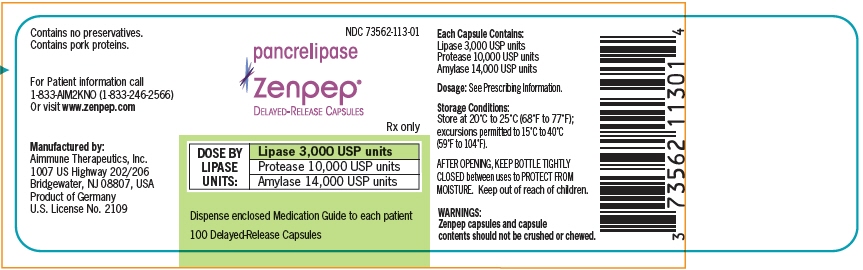
Principal Display Panel 100 Capsule Bottle Label Ndc 73562 113 01
NDC 73562-113-01
pancrelipase
Zenpep®
DELAYED-RELEASE CAPSULES
Rx only
DOSE BY
LIPASE
UNITS:
Lipase 3,000 USP units
Protease 10,000 USP units
Amylase 14,000 USP units
Dispense enclosed Medication Guide to each patient
100 Delayed-Release Capsules
Principal Display Panel 100 Capsule Bottle Label Ndc 73562 114 01
NDC 73562-114-01
pancrelipase
Zenpep®
DELAYED-RELEASE CAPSULES
Rx only
DOSE BY
LIPASE
UNITS:
Lipase 40,000 USP units
Protease 126,000 USP units
Amylase 168,000 USP units
Dispense enclosed Medication Guide to each patient
100 Delayed-Release Capsules
Principal Display Panel 100 Capsule Bottle Label Ndc 73562 115 01
NDC 73562-115-01
pancrelipase
Zenpep®
DELAYED-RELEASE CAPSULES
Rx only
DOSE BY
LIPASE
UNITS:
Lipase 5,000 USP units
Protease 17,000 USP units
Amylase 24,000 USP units
Dispense enclosed Medication Guide to each patient
100 Delayed-Release Capsules
Principal Display Panel 100 Capsule Bottle Label Ndc 73562 116 01
NDC 73562-116-01
pancrelipase
Zenpep®
DELAYED-RELEASE CAPSULES
Rx only
DOSE BY
LIPASE
UNITS:
Lipase 25,000 USP units
Protease 79,000 USP units
Amylase 105,000 USP units
Dispense enclosed Medication Guide to each patient
100 Delayed-Release Capsules
Principal Display Panel 100 Capsule Bottle Label Ndc 73562 117 01
NDC 73562-117-01
pancrelipase
Zenpep®
DELAYED-RELEASE CAPSULES
Rx only
DOSE BY
LIPASE
UNITS:
Lipase 60,000 USP units
Protease 189,600 USP units
Amylase 252,600 USP units
Dispense enclosed Medication Guide to each patient
100 Delayed-Release Capsules
Structured Label Content
Section 42229-5 (42229-5)
Adult and Pediatric Patients Greater than 12 Months of Age
The recommended oral initial starting dosage is:
- 500 lipase units/kg/meal for adult and pediatric patients 4 years of age and older.
- 1,000 lipase units/kg/meal for pediatric patients greater than 12 months of age to less than 4 years of age.
If signs and symptoms of malabsorption persist, increase the dosage. Titrate to either 2,500 lipase units/kg/meal, 10,000 lipase units/kg/day, or less than 4,000 lipase units/grams of fat ingested/day. Higher dosages may be administered if they are documented to be effective by fecal fat measures or an improvement in signs or symptoms of malabsorption including measures of nutritional status.
Section 42231-1 (42231-1)
| This Medication Guide has been approved by the U.S. Food and Drug Administration. | Revised 07/2025 |
|
MEDICATION GUIDE ZENPEP® (ZEN-pep) (pancrelipase) delayed-release capsules, for oral use |
|
|
What is the most important information I should know about ZENPEP? ZENPEP may increase your chance of having a rare bowel disorder called fibrosing colonopathy especially if taken at a high dose for a long time in children with cystic fibrosis. This condition is serious and may require surgery. The risk of having this condition may be reduced by following the dosing instructions that your doctor gave you. Call your doctor right away if you have any unusual or severe:
|
|
What is ZENPEP?
|
|
Before taking ZENPEP, tell your doctor about all your medical conditions, including if you:
Know the medicines you take. Keep a list of them and show it to your doctor and pharmacist when you get a new medicine. |
|
How should I take ZENPEP?
The 2 ways to give ZENPEP to infants (children from birth to 12 months of age), which are described below: a) Giving with an Acidic Soft Food
|
|
|
What are possible side effects of ZENPEP?
ZENPEP may cause serious side effects, including:
ZENPEP and other pancreatic enzyme products are made from the pancreas of pigs, the same pigs people eat as pork. These pigs may carry viruses. Although it has never been reported, it may be possible for a person to get a viral infection from taking pancreatic enzyme products that come from pigs. Tell your doctor if you have any side effect that bothers you or does not go away. These are not all the possible side effects of ZENPEP. Call your doctor for medical advice about side effects. You may report side effects to FDA at 1-800-FDA-1088. You may also report side effects to Aimmune Therapeutics, Inc at 1-833-AIM2KNO (1-833-246-2566). |
|
How do I store ZENPEP?
|
|
|
General information about the safe and effective use of ZENPEP.
Medicines are sometimes prescribed for purposes other than those listed in a Medication Guide. Do not use ZENPEP for a condition for which it was not prescribed. Do not give ZENPEP to other people, even if they have the same symptoms you have. It may harm them. You can ask your pharmacist or doctor for information about ZENPEP that is written for health professionals. |
|
|
What are the ingredients in ZENPEP?
Active ingredients: lipase, protease, amylase Inactive ingredients: colloidal silicon dioxide, croscarmellose sodium, hydrogenated castor oil, hypromellose phthalate, magnesium stearate, microcrystalline cellulose, talc, and triethyl citrate in hypromellose capsules. The red radial imprinting on the 3,000 capsule strength contains red iron oxide as colorant. The blue radial imprinting on the 5,000, 10,000, 15,000, 20,000, 25,000, and 40,000 capsule strengths contains FD&C Blue #2 as colorant. The black radial imprinting on the 60,000 capsule strength contains black iron oxide as colorant. Capsule shell ingredients:
|
|
|
Manufactured by: Aimmune Therapeutics, Inc. 1007 US Highway 202/206, Bridgewater, NJ 08807, USA Product of Germany US License No. 2109 For further information, please go to www.ZENPEP.com or call Aimmune Therapeutics, Inc at 1-833-AIM2KNO (1-833-246-2566) ©2025 Nestlé All trademarks are owned by Société des Produits Nestlé S.A., Vevey, Switzerland or used with permission. |
Section 44425-7 (44425-7)
Storage and Handling
Risk Summary
Published data from case reports with pancrelipase use in pregnant women have not identified a drug-associated risk of major birth defects, miscarriage or other adverse maternal or fetal outcomes. Pancrelipase is minimally absorbed systematically; therefore, maternal use is not expected to result in fetal exposure to the drug. Animal reproduction studies have not been conducted with pancrelipase.
The background risk of major birth defects and miscarriage for the indicated population is unknown. All pregnancies have a background risk of birth defect, loss, or other adverse outcomes. In the U.S. general population, the estimated background risk of major birth defects and miscarriage in clinically recognized pregnancies is 2 to 4% and 15 to 20%, respectively.
10 Overdosage (10 OVERDOSAGE)
Chronic high dosages of pancreatic enzyme products have been associated with fibrosing colonopathy and colonic strictures [see Warnings and Precautions (5.1)]. High dosages of pancreatic enzyme products have been associated with hyperuricosuria and hyperuricemia [see Warnings and Precautions (5.3)].
11 Description (11 DESCRIPTION)
Pancrelipase is a pancreatic enzyme product consisting of a mixture of enzymes including lipases, proteases, and amylases, and is an extract derived from porcine pancreatic glands. The enteric-coated pellets in ZENPEP are formulated to release pancreatic enzymes at an approximate pH of 5.5 or greater.
ZENPEP (pancrelipase) delayed-release capsule for oral administration, include a two-piece shell containing light brown-colored enteric-coated pellets (1.8 to 1.9mm for 3,000 and 5,000 USP units of lipase, 2.2 to 2.5 mm for 10,000, 15,000, 20,000, 25,000, 40,000 and 60,000 USP units of lipase) and are available as follows:
3,000 USP units of lipase; 10,000 USP units of protease; and 14,000 USP units of amylase; delayed-release capsules have a white opaque cap and a white opaque body with imprint "APTALIS 3". The shells contain carnauba wax or talc, carrageenan, hypromellose, potassium chloride, titanium oxide, and water. The colorant of the printed ink is red iron oxide.
5,000 USP units of lipase; 17,000 USP units of protease; and 24,000 USP units of amylase; delayed-release capsules have a white opaque cap and a white opaque body with imprint "APTALIS 5". The shells contain carnauba wax or talc, carrageenan, hypromellose, potassium chloride, titanium oxide, and water. The colorant of the printed ink is FD&C Blue 2.
10,000 USP units of lipase; 32,000 USP units of protease; and 42,000 USP units of amylase; delayed-release capsules have a yellow opaque cap and a white opaque body with imprint "APTALIS 10". The shells contain carnauba wax or talc, carrageenan, hypromellose, potassium chloride, titanium oxide, water and yellow ferric oxide. The colorant of the printed ink is FD&C Blue 2.
15,000 USP units of lipase; 47,000 USP units of protease; and 63,000 USP units of amylase; delayed-release capsules have a red opaque cap and a white opaque body with imprint "APTALIS 15". The shells contain carnauba wax or talc, carrageenan, hypromellose, potassium chloride, red ferric oxide, titanium oxide, and water. The colorant of the printed ink is FD&C Blue 2.
20,000 USP units of lipase; 63,000 USP units of protease; and 84,000 USP units of amylase; delayed-release capsules have a green opaque cap and a white opaque body with imprint "APTALIS 20". The shells contain carnauba wax or talc, carrageenan, FD&C Blue #2, hypromellose, potassium chloride, titanium oxide, water, and yellow ferric oxide. The colorant of the printed ink is FD&C Blue 2.
25,000 USP units of lipase; 79,000 USP units of protease; and 105,000 USP units of amylase; delayed-release capsules have a blue opaque cap and a white opaque body with imprint "APTALIS 25". The shells contain carnauba wax or talc, carrageenan, FD&C Blue #2, hypromellose, potassium chloride, titanium oxide, and water. The colorant of the printed ink is FD&C Blue 2.
40,000 USP units of lipase; 126,000 USP units of protease; and 168,000 USP units of amylase; delayed-release capsules have an orange opaque cap and white opaque body, printed with "APTALIS 40". The shells contain FD&C Yellow #6, hypromellose, and titanium oxide. The colorant of the printed ink is FD&C Blue 2.
60,000 USP units of lipase; 189,600 USP units of protease; 252,600 USP units of amylase. Capsules have a powder blue opaque cap with two black stripes and white opaque body, printed with "APTALIS 60" The shells contain FD&C Blue #1, hypromellose, and titanium oxide. The colorant of the printed ink is black iron oxide.
ZENPEP (pancrelipase) delayed-release capsules include the following inactive ingredients: colloidal silicon dioxide, croscarmellose sodium, hydrogenated castor oil, hypromellose phthalate, magnesium stearate, microcrystalline cellulose, talc, and triethyl citrate.
5.3 Hyperuricemia
Pancreatic enzyme products contain purines that may increase blood uric acid levels. High dosages have been associated with hyperuricosuria and hyperuricemia [see Overdosage (10)]. Consider monitoring blood uric acid levels in patients with gout, renal impairment, or hyperuricemia during treatment with ZENPEP.
8.4 Pediatric Use
The safety and effectiveness of ZENPEP for the treatment of exocrine pancreatic insufficiency have been established in pediatric patients.
Use of ZENPEP for this indication is supported by an adequate and well-controlled trial in adult and pediatric patients 7 to 17 years of age (Study 1) along with supportive data from an open-label, single arm study in 19 pediatric patients 1 to 6 years of age (Study 2). Both study populations consisted of patients with exocrine pancreatic insufficiency due to cystic fibrosis. The safety in pediatric patients in Studies 1 and 2 were similar to that observed in adult patients [see Adverse Reactions (6.1) and Clinical Studies (14)].
Dosages exceeding 6,000 lipase units/kg/meal have been reported postmarketing to be associated with fibrosing colonopathy and colonic strictures in pediatric patients less than 12 years of age. If there is a history of fibrosing colonopathy, monitor patients during treatment with ZENPEP because some patients may be at risk of progressing to stricture formation. Do not exceed the recommended dosage of either 2,500 lipase units/kg/meal, 10,000 lipase units/kg/day, or 4,000 lipase units/g fat ingested/day in pediatric patients greater than 12 months of age without further investigation. [see Dosage and Administration (2.2) and Warnings and Precautions (5.1)].
Crushing or chewing ZENPEP capsules or mixing the capsule contents in foods having a pH greater than 4.5 can disrupt the protective enteric coating on the capsule contents and result in early release of enzymes, irritation of the oral mucosa, and/or loss of enzyme activity. Instruct the patient or caregiver of the following: consume sufficient liquids (juice, water, breast milk, or formula) to ensure complete swallowing, and visually inspect the mouth of pediatric patients less than 12 months of age to ensure that no drug is retained in the mouth and irritation of the oral mucosa has not occurred [see Dosage and Administration (2.3) and Warnings and Precautions (5.2)].
8.5 Geriatric Use
Clinical studies of ZENPEP did not include sufficient numbers of patients aged 65 years and over to determine whether they respond differently from younger patients. Other reported clinical experience has not identified differences in responses between patients aged 65 years and over and younger adult patients.
4 Contraindications (4 CONTRAINDICATIONS)
None.
6 Adverse Reactions (6 ADVERSE REACTIONS)
The following serious or otherwise important adverse reactions are described elsewhere in the labeling:
- Fibrosing Colonopathy [see Warnings and Precautions (5.1)]
- Irritation of the Oral Mucosa [see Warnings and Precautions (5.2)]
- Hyperuricemia [see Warnings and Precautions (5.3)]
- Risk of Viral Transmission [see Warnings and Precautions (5.4)]
- Hypersensitivity Reactions [see Warnings and Precautions (5.5)]
12.2 Pharmacodynamics
For patients consuming a high fat diet in the clinical trials, the coefficient of fat absorption (CFA) was higher in patients who received ZENPEP compared to the placebo treatment group, indicating improved fat absorption [see Clinical Studies (14)].
12.3 Pharmacokinetics
Following oral administration, the lipases, proteases, and amylases released from ZENPEP are not absorbed from the gastrointestinal tract in appreciable amounts.
1 Indications and Usage (1 INDICATIONS AND USAGE)
ZENPEP® is indicated for the treatment of exocrine pancreatic insufficiency in adult and pediatric patients.
12.1 Mechanism of Action
Pancreatic enzyme products contain a mixture of lipases, proteases, and amylases that catalyze the hydrolysis of fats to monoglycerides, glycerol, and free fatty acids, protein into peptides and amino acids, and starch into dextrins and short chain sugars such as maltose and maltriose in the duodenum and proximal small intestine, thereby acting like digestive enzymes physiologically secreted by the pancreas.
5.1 Fibrosing Colonopathy
Fibrosing colonopathy has been reported following treatment with pancreatic enzyme products. Fibrosing colonopathy is a rare serious adverse reaction initially described in association with use of high-dose pancreatic enzyme products, usually with use over a prolonged period of time and most commonly reported in pediatric patients with cystic fibrosis. Pancreatic enzyme products exceeding 6,000 lipase units/kg/meal have been associated with colonic stricture, a complication of fibrosing colonopathy, in pediatric patients less than 12 years of age. The underlying mechanism of fibrosing colonopathy remains unknown.
If there is a history of fibrosing colonopathy, monitor patients during treatment with ZENPEP because some patients may be at risk of progressing to colonic stricture formation. It is uncertain whether regression of fibrosing colonopathy occurs. Do not exceed the recommended dosage of either 2,500 lipase units/kg/meal, 10,000 lipase units/kg/day, or 4,000 lipase units/g fat ingested/day in adult and pediatric patients greater than 12 months of age without further investigation. Higher dosages may be administered if they are documented to be effective by fecal fat measures or an improvement in signs or symptoms of malabsorption including measures of nutritional status. Patients receiving dosages higher than 6,000 lipase units/kg/meal should be frequently monitored for symptoms of fibrosing colonopathy and the dosage decreased or titrated downward to a lower range if clinically appropriate [see Dosage and Administration (2.1)].
5 Warnings and Precautions (5 WARNINGS AND PRECAUTIONS)
- Fibrosing Colonopathy: Associated with high doses, usually over prolonged use and in pediatric patients with cystic fibrosis. Colonic stricture reported in pediatric patients less than 12 years of age with dosages exceeding 6,000 lipase units/kg/meal. Monitor during treatment for progression of preexisting disease. Do not exceed the recommended dosage, unless clinically indicated. (2.1, 5.1)
- Irritation of the Oral Mucosa: May occur due to loss of protective enteric coating on the capsule contents. (2.3, 5.2)
- Hyperuricemia: Reported with high dosages; consider monitoring blood uric acid levels in patients with gout, renal impairment, or hyperuricemia. (5.3)
- Risk of Viral Transmission: The presence of porcine viruses that might infect humans cannot be definitely excluded. (5.4)
- Hypersensitivity Reactions: Monitor patients with known reactions to proteins of porcine origin. If symptoms occur, initiate appropriate medical management; consider the risks and benefits of continued treatment. (5.5)
2 Dosage and Administration (2 DOSAGE AND ADMINISTRATION)
Important Dosing Information (2.1)
- ZENPEP is a mixture of enzymes including lipases, proteases, and amylases and dosing is based on lipase units. Dosing scheme based on actual body weight or fat ingestion.
- Individualize the dosage based on clinical symptoms, the degree of steatorrhea present, and the fat content of the diet.
- Do not exceed 2,500 lipase units/kg/meal, 10,000 lipase units/kg/day, or 4,000 lipase units/g fat ingested/day in adult and pediatric patients greater than 12 months of age without further investigation. (5.1)
- The total daily dosage in adult and pediatric patients greater than 12 months of age should reflect approximately three meals plus two or three snacks per day. With each snack, administer approximately half the prescribed dose for a meal.
- Do not substitute other pancreatic enzyme products for ZENPEP. When switching from another pancreatic enzyme product to ZENPEP, monitor patients for clinical symptoms of exocrine pancreatic insufficiency and titrate the dosage as needed.
Recommended Dosage (2.2)
Adult and Pediatric Patients Greater than 12 Months: The recommended initial starting dosage is:
- 500 lipase units/kg/meal for adult and pediatric patients 4 years of age and older.
- 1,000 lipase units/kg/meal for pediatric patients greater than 12 months of age to less than 4 years of age.
- Titrate to either 2,500 lipase units/kg/meal, 10,000 lipase units/kg/day, or 4,000 lipase units/g fat ingested/day. Higher dosages may be administered if documented effective by fecal fat measures or improvement in malabsorption.
Pediatric Patients Birth to 12 Months: The recommended dosage is 3,000 lipase units (one capsule) per 120 mL of formula or per breastfeeding.
Preparation and Administration Instructions (2.3)
- Swallow capsules whole. For patients unable to swallow intact capsule(s), the capsule contents may be sprinkled on soft acidic food (e.g., applesauce, bananas, pears).
- Do not crush or chew ZENPEP capsules or capsule contents.
- Consume sufficient liquids to ensure complete swallowing of ZENPEP. (5.2)
- See the full prescribing information for additional information on administering to pediatric patients birth to 12 months. (2.3)
3 Dosage Forms and Strengths (3 DOSAGE FORMS AND STRENGTHS)
Delayed-release capsules are available in the following strengths:
- 3,000 USP units of lipase; 10,000 USP units of protease; and 14,000 USP units of amylase in a two‑piece hypromellose capsule with a white opaque cap and white opaque body, and red imprint with "APTALIS 3"
- 5,000 USP units of lipase; 17,000 USP units of protease; and 24,000 USP units of amylase in a two‑piece hypromellose capsule with a white opaque cap and white opaque body, and blue imprint with "APTALIS 5"
- 10,000 USP units of lipase; 32,000 USP units of protease; and 42,000 USP units of amylase in a two-piece hypromellose capsule with a yellow opaque cap and white opaque body, and blue imprint with "APTALIS 10"
- 15,000 USP units of lipase; 47,000 USP units of protease; and 63,000 USP units of amylase in a two-piece hypromellose capsule with a red opaque cap and white opaque body, and blue imprint with "APTALIS 15"
- 20,000 USP units of lipase; 63,000 USP units of protease; and 84,000 USP units of amylase in a two-piece hypromellose capsule with a green opaque cap and white opaque body, and blue imprint with "APTALIS 20"
- 25,000 USP units of lipase; 79,000 USP units of protease; and 105,000 USP units of amylase in a two-piece hypromellose capsule with a blue opaque cap and white opaque body, and blue imprint with "APTALIS 25"
- 40,000 USP units of lipase; 126,000 USP units of protease; and 168,000 USP units of amylase in a two-piece hypromellose capsule with an orange opaque cap and white opaque body, and blue imprint with "APTALIS 40"
- 60,000 USP units of lipase; 189,600 USP units of protease; 252,600 USP units of amylase. Capsules have a powder blue opaque cap with two black stripes and white opaque body, black imprint with "APTALIS 60"
6.2 Postmarketing Experience
The following adverse reactions have been identified during post-approval use of ZENPEP or other pancreatic enzyme products. Because these reactions are reported voluntarily from a population of uncertain size, it is not always possible to reliably estimate their frequency or establish a causal relationship to drug exposure.
5.4 Risk of Viral Transmission
ZENPEP is sourced from pancreatic tissue from swine used for food consumption. Although the risk that ZENPEP will transmit an infectious agent to humans has been reduced by testing for certain viruses during manufacturing and by inactivating certain viruses during manufacturing, there is a theoretical risk for transmission of viral disease, including diseases caused by novel or unidentified viruses. Thus, the presence of porcine viruses that might infect humans cannot be definitely excluded. However, no cases of transmission of an infectious illness associated with the use of porcine pancreatic extracts have been reported.
5.5 Hypersensitivity Reactions
Severe hypersensitivity reactions including anaphylaxis, asthma, hives, and pruritus have been reported with pancreatic enzyme products [see Adverse Reactions (6.2)]. If symptoms occur, initiate appropriate medical management.
Monitor patients with a known hypersensitivity reaction to proteins of porcine origin for hypersensitivity reactions during treatment with ZENPEP. The risks and benefits of continued ZENPEP treatment in patients with severe hypersensitivity reactions should be taken into consideration with the overall clinical needs of the patient.
6.1 Clinical Trials Experience
Because clinical trials are conducted under widely varying conditions, adverse reaction rates observed in the clinical trials of a drug cannot be directly compared to the rates in the clinical trials of another drug and may not reflect the rates observed in clinical practice.
The data described below reflect exposure to ZENPEP in 53 adult and pediatric patients with exocrine pancreatic insufficiency due to cystic fibrosis in two clinical trials conducted [see Clinical Studies (14)]. In both trials, ZENPEP was administered at dosages of approximately 5,000 lipase units/kg/day for 19 to 42 days.
Study 1 was a randomized, double-blind, placebo-controlled, crossover study of 34 adult and pediatric patients, aged 7 to 23 years. Adverse reactions that were reported in at least 2 ZENPEP-treated patients (greater than or equal to 6%) and at a higher rate than in placebo-treated patients in Study 1 are shown in Table 1.
| Adverse Reaction | ZENPEP N=34 n (%) |
Placebo N=32 n (%) |
|---|---|---|
| Headache | 5 (15%) | 0 |
| Contusion | 2 (6%) | 0 |
| Cough | 2 (6%) | 0 |
| Early Satiety | 2 (6%) | 0 |
Study 2 was an open-label, uncontrolled study of ZENPEP in 19 pediatric patients aged 1 to 6 years. The most commonly reported adverse reactions were gastrointestinal, including abdominal pain and steatorrhea.
The type and incidence of adverse reactions in Studies 1 and 2 were similar between pediatric patients and adults.
2.1 Important Dosing Information
ZENPEP is a mixture of enzymes including lipases, proteases, and amylases. ZENPEP dosing is based on lipase units.
- Use either an actual body weight or fat ingestion-based dosing scheme.
- Start at the lowest recommended dosage and individualize the dosage based on clinical symptoms, the degree of steatorrhea present, and the fat content of the diet. Changes in dosage may require an adjustment period of several days.
- Do not exceed 2,500 lipase units/kg/meal, 10,000 lipase units/kg/day, or 4,000 lipase units/g fat ingested/day in adult and pediatric patients greater than 12 months of age without further investigation [see Warnings and Precautions (5.1)].
- The total daily dosage in adult and pediatric patients greater than 12 months of age should reflect approximately three meals plus two or three snacks per day. With each snack, administer approximately half the prescribed ZENPEP dose for a meal.
- Do not substitute other pancreatic enzyme products for ZENPEP. When switching from another pancreatic enzyme product to ZENPEP, monitor patients for clinical symptoms of exocrine pancreatic insufficiency and titrate the dosage as needed.
17 Patient Counseling Information (17 PATIENT COUNSELING INFORMATION)
Advise the patient or caregiver to read the FDA-approved patient labeling (Medication Guide).
5.2 Irritation of the Oral Mucosa
Crushing or chewing ZENPEP capsules or mixing the capsule contents in foods having a pH greater than 4.5 can disrupt the protective enteric coating on the capsule contents and result in early release of enzymes, irritation of the oral mucosa, and/or loss of enzyme activity.
Instruct the patient or caregiver of the following:
- Swallow capsules whole. For patients who cannot swallow the capsules whole, the capsules can be opened, and the contents sprinkled on a small amount of acidic soft food with a pH of 4.5 or less (e.g., commercially available preparations of applesauce, bananas or pears).
- Do not crush or chew ZENPEP capsules or capsule contents.
- Consume sufficient liquids (juice, water, breast milk, or formula) immediately following administration of ZENPEP to ensure complete swallowing.
- Visually inspect the mouth of pediatric patients less than 12 months of age and of patients who are unable to swallow intact capsules to ensure no drug is retained in the mouth and irritation of the oral mucosa has not occurred [see Dosage and Administration (2.3)].
16 How Supplied/storage and Handling (16 HOW SUPPLIED/STORAGE AND HANDLING)
ZENPEP (pancrelipase) delayed-release capsules containing light, brown-colored delayed-release pancrelipase are supplied as follows:
| Strength | Description | Supplied As | NDC Number |
|---|---|---|---|
| 3,000 USP units of lipase; 10,000 USP units of protease; 14,000 units of amylase | two-piece hypromellose capsule with white opaque cap and white body with a red radial print and printed with "APTALIS 3" | Bottles of 100 | 73562-113-01 |
| 5,000 USP units of lipase; 17,000 USP units of protease; 24,000 units of amylase | two-piece hypromellose capsule with a white opaque cap and white body with a blue radial print and printed with "APTALIS 5" | Bottles of 100 | 73562-115-01 |
| 10,000 USP units of lipase; 32,000 units of protease; 42,000 units of amylase | two-piece hypromellose capsule with a yellow opaque cap and white body with a blue radial print and printed with "APTALIS 10" | Bottles of 100 | 73562-110-01 |
| 15,000 USP units of lipase; 47,000 units of protease; 63,000 units of amylase | two-piece hypromellose capsule with a red opaque cap and white body with a blue radial print and printed with "APTALIS 15" | Bottles of 100 | 73562-111-01 |
| 20,000 USP units of lipase; 63,000 units of protease; 84,000 units of amylase | two-piece hypromellose capsule with a green opaque cap and white body with a blue radial print and printed with "APTALIS 20" | Bottles of 100 | 73562-112-01 |
| 25,000 USP units of lipase; 79,000 units of protease; 105,000 units of amylase | two-piece hypromellose capsule with a blue opaque cap and white body with a blue radial print and printed with "APTALIS 25" | Bottles of 100 | 73562-116-01 |
| 40,000 USP units of lipase; 126,000 units of protease; 168,000 units of amylase | two-piece hypromellose capsule with an orange opaque cap and white body with a blue radial print and printed with "APTALIS 40" | Bottles of 100 | 73562-114-01 |
| 60,000 USP units of lipase; 189,600 units of protease; 252,600 units of amylase | two-piece hypromellose capsule with powder blue opaque cap with two black stripes and white body with a black radial print and printed with "APTALIS 60" | Bottles of 100 | 73562-117-01 |
2.3 Preparation and Administration Instructions
Instruct adult and pediatric patients greater than 12 months of age, or their caregivers, of the following:
- Take ZENPEP during meals or snacks. If a dose is missed, take the next dose with the next meal or snack.
- Swallow capsules whole.
- For patients who are unable to swallow intact capsules, carefully open the capsules and sprinkle the entire contents on a small amount of acidic soft food with a pH of 4.5 or less (e.g., commercially available preparations of applesauce, bananas, or pears). Consume the entire mixture immediately.
- Do not crush or chew ZENPEP capsules or capsule contents.
- Consume sufficient liquids (water or juice) to ensure complete swallowing of ZENPEP [see Warnings and Precautions (5.2)].
Instruct caregivers of pediatric patients birth to 12 months of age of the following:
- Immediately prior to each breast-feeding session or each administration of 120 mL of formula, carefully open one ZENPEP capsule (containing 3,000 USP units of lipase) and administer the entire contents using one of the following two methods:
- Sprinkle on a small amount of acidic soft food with a pH of 4.5 or less (e.g., commercially available preparations of applesauce, bananas or pears) being careful not to crush the capsule contents. The entire mixture should be given to the infant immediately.
- Sprinkle the capsule contents directly into the infant's mouth.
- Immediately administer additional breast milk or formula after ZENPEP to ensure complete swallowing of the capsule contents.
- Do not mix the ZENPEP capsule contents directly into a bottle of breast milk or formula.
- Do not crush ZENPEP capsule contents, and visually inspect the infant's mouth to ensure that no drug is retained in the mouth [see Warnings and Precautions (5.2)].
- If a dose is missed, administer the next dose with the next feeding.
Principal Display Panel 100 Capsule Bottle Label Ndc 73562 110 01 (PRINCIPAL DISPLAY PANEL - 100 Capsule Bottle Label - NDC 73562-110-01)
NDC 73562-110-01
pancrelipase
Zenpep®
DELAYED-RELEASE CAPSULES
Rx only
DOSE BY
LIPASE
UNITS:
Lipase 10,000 USP units
Protease 32,000 USP units
Amylase 42,000 USP units
Dispense enclosed Medication Guide to each patient
100 Delayed-Release Capsules
Principal Display Panel 100 Capsule Bottle Label Ndc 73562 111 01 (PRINCIPAL DISPLAY PANEL - 100 Capsule Bottle Label - NDC 73562-111-01)
NDC 73562-111-01
pancrelipase
Zenpep®
DELAYED-RELEASE CAPSULES
Rx only
DOSE BY
LIPASE
UNITS:
Lipase 15,000 USP units
Protease 47,000 USP units
Amylase 63,000 USP units
Dispense enclosed Medication Guide to each patient
100 Delayed-Release Capsules
Principal Display Panel 100 Capsule Bottle Label Ndc 73562 112 01 (PRINCIPAL DISPLAY PANEL - 100 Capsule Bottle Label - NDC 73562-112-01)
NDC 73562-112-01
pancrelipase
Zenpep®
DELAYED-RELEASE CAPSULES
Rx only
DOSE BY
LIPASE
UNITS:
Lipase 20,000 USP units
Protease 63,000 USP units
Amylase 84,000 USP units
Dispense enclosed Medication Guide to each patient
100 Delayed-Release Capsules
Principal Display Panel 100 Capsule Bottle Label Ndc 73562 113 01 (PRINCIPAL DISPLAY PANEL - 100 Capsule Bottle Label - NDC 73562-113-01)
NDC 73562-113-01
pancrelipase
Zenpep®
DELAYED-RELEASE CAPSULES
Rx only
DOSE BY
LIPASE
UNITS:
Lipase 3,000 USP units
Protease 10,000 USP units
Amylase 14,000 USP units
Dispense enclosed Medication Guide to each patient
100 Delayed-Release Capsules
Principal Display Panel 100 Capsule Bottle Label Ndc 73562 114 01 (PRINCIPAL DISPLAY PANEL - 100 Capsule Bottle Label - NDC 73562-114-01)
NDC 73562-114-01
pancrelipase
Zenpep®
DELAYED-RELEASE CAPSULES
Rx only
DOSE BY
LIPASE
UNITS:
Lipase 40,000 USP units
Protease 126,000 USP units
Amylase 168,000 USP units
Dispense enclosed Medication Guide to each patient
100 Delayed-Release Capsules
Principal Display Panel 100 Capsule Bottle Label Ndc 73562 115 01 (PRINCIPAL DISPLAY PANEL - 100 Capsule Bottle Label - NDC 73562-115-01)
NDC 73562-115-01
pancrelipase
Zenpep®
DELAYED-RELEASE CAPSULES
Rx only
DOSE BY
LIPASE
UNITS:
Lipase 5,000 USP units
Protease 17,000 USP units
Amylase 24,000 USP units
Dispense enclosed Medication Guide to each patient
100 Delayed-Release Capsules
Principal Display Panel 100 Capsule Bottle Label Ndc 73562 116 01 (PRINCIPAL DISPLAY PANEL - 100 Capsule Bottle Label - NDC 73562-116-01)
NDC 73562-116-01
pancrelipase
Zenpep®
DELAYED-RELEASE CAPSULES
Rx only
DOSE BY
LIPASE
UNITS:
Lipase 25,000 USP units
Protease 79,000 USP units
Amylase 105,000 USP units
Dispense enclosed Medication Guide to each patient
100 Delayed-Release Capsules
Principal Display Panel 100 Capsule Bottle Label Ndc 73562 117 01 (PRINCIPAL DISPLAY PANEL - 100 Capsule Bottle Label - NDC 73562-117-01)
NDC 73562-117-01
pancrelipase
Zenpep®
DELAYED-RELEASE CAPSULES
Rx only
DOSE BY
LIPASE
UNITS:
Lipase 60,000 USP units
Protease 189,600 USP units
Amylase 252,600 USP units
Dispense enclosed Medication Guide to each patient
100 Delayed-Release Capsules
Advanced Ingredient Data
Raw Label Data
All Sections (JSON)
Additional Information
Back to search View SPL set listing Open on DailyMed ↗
Source: dailymed · Ingested: 2026-02-15T11:50:19.802963 · Updated: 2026-03-14T22:37:11.582303