hydrocortisone 1% - iodoquinol 1% cream
785d903d-6a2c-12cf-e053-2a91aa0a7323
34391-3
HUMAN PRESCRIPTION DRUG LABEL
Drug Facts
Composition & Product
Identifiers & Packaging
Dosage and Administration
Apply to affected area 3 to 4 times daily in accordance with physician’s directions.
Contraindications
This product is contraindicated in persons with known or suspected hypersensitivity to any of the ingredients of the product.
Adverse Reactions
The following local adverse reactions are reported infrequently with topical corticosteroids. These reactions are listed in an approximate decreasing order of occurrence: burning, itching, irritation, dryness, folliculitis, hypertrichosis, acneiform eruptions, hypopigmentation, perioral dermatitis, allergic contact dermatitis, maceration of the skin, secondary infections, skin atrophy, striae and miliaria.
How Supplied
1 oz. tubes, NDC 52187-532-01 To report a serious adverse event or obtain product information, call 1-855-899-4237. Manufactured for: KMM Pharmaceuticals, LLC 1000 N. West Street Suite 1200, #1021 Wilmington, DE 19801 1800088 v1 Rev. 08/2018
Description
Rx Only
Medication Information
Dosage and Administration
Apply to affected area 3 to 4 times daily in accordance with physician’s directions.
Contraindications
This product is contraindicated in persons with known or suspected hypersensitivity to any of the ingredients of the product.
Adverse Reactions
The following local adverse reactions are reported infrequently with topical corticosteroids. These reactions are listed in an approximate decreasing order of occurrence: burning, itching, irritation, dryness, folliculitis, hypertrichosis, acneiform eruptions, hypopigmentation, perioral dermatitis, allergic contact dermatitis, maceration of the skin, secondary infections, skin atrophy, striae and miliaria.
How Supplied
1 oz. tubes, NDC 52187-532-01 To report a serious adverse event or obtain product information, call 1-855-899-4237. Manufactured for: KMM Pharmaceuticals, LLC 1000 N. West Street Suite 1200, #1021 Wilmington, DE 19801 1800088 v1 Rev. 08/2018
Description
Rx Only
Section 51945-4
Storage:
Store at 20°C to 25°C (68°F to 77°F), excursions permitted between 15°C to 30°C (between 59°F to 86°F). Brief exposure to temperatures up to 40°C (104°F) may be tolerated provided the mean kinetic temperature does not exceed 25°C (77°F); however, such exposure should be minimized. Keep container tightly closed.
NOTICE: Protect from freezing and excessive heat.
Warning:
FOR EXTERNAL USE ONLY.
Description:
Each gram contains 10 mg of hydrocortisone and 10 mg of iodoquinol in a vehicle consisting of: aloe vera powder, aminomethyl propanol 95%, benzyl alcohol, carbomer, citric acid anhydrous, D&C Yellow #10, FD&C Blue #1, glycerin, glyceryl polymethacrylate, magnesium aluminum silicate, palmitoyl oligopeptide, PPG-20 methyl glucose ether, propylene glycol, purified water and SD 40B alcohol.
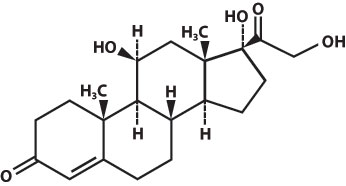
Chemically, hydrocortisone is [Pregn-4-ene-3, 20-dione, 11, 17, 21-trihydroxy-,(11ß)-] with the molecular formula (C 21H 30O 5) and is represented by the following structural formula:
and iodoquinol, 5,7-diiodo-8-quinolinol (C 9H 5I 2NO) is represented by the following structural formula:
Hydrocortisone is an anti-inflammatory and antipruritic agent, while iodoquinol is an antifungal and antibacterial agent.
Indications:
Based on a review of a related drug by the National Research Council and subsequent FDA classification for that drug, the indications are as follows: “Possibly” Effective: Contact or atopic dermatitis; impetiginized eczema; nummular eczema; endogenous chronic infectious dermatitis; stasis dermatitis; pyoderma; nuchal eczema and chronic eczematoid otitis externa; acne urticata; localized or disseminated neurodermatitis; lichen simplex chronicus; anogenital pruritus (vulvae, scroti, ani); folliculitis; bacterial dermatoses; mycotic dermatoses such as tinea (capitis, cruris, corporis, pedis); moniliasis; intertrigo. Final classification of the less-than-effective indications requires further investigation.
Precautions:
NOT FOR OPHTHALMIC USE. KEEP OUT OF REACH OF CHILDREN. Avoid contact with eyes, lips and mucous membranes.
Information for Patients: If irritation develops, the use of this product should be discontinued and appropriate therapy instituted. Staining of the skin, hair and fabrics may occur. Not intended for use on infants or under diapers or occlusive dressings. If extensive areas are treated or if the occlusive dressing technique is used, the possibility exists of increased systemic absorption of the corticosteroid, and suitable precautions should be taken. Children may absorb proportionally larger amounts of topical corticosteroids and thus be more susceptible to systemic toxicity.
Iodoquinol may be absorbed through the skin and interfere with thyroid function tests. If such tests are contemplated, wait at least one month after discontinuance of therapy to perform these tests. The ferric chloride test for phenylketonuria (PKU) can yield a false positive result if iodoquinol is present in the diaper or urine. Prolonged use may result in overgrowth of non-susceptible organisms requiring appropriate therapy.
Carcinogenesis, Mutagenesis and Impairment of Fertility: Long-term animal studies for carcinogenic potential have not been performed on this product to date. In vitro studies to determine mutagenicity with hydrocortisone have revealed negative results. Mutagenicity studies have not been performed with iodoquinol.
Pregnancy: Category C. Animal reproduction studies have not been conducted with this product. It is also not known whether this product can affect reproduction capacity or cause fetal harm when administered to a pregnant woman. This product should be used by a pregnant woman only if clearly needed or when potential benefits outweigh potential hazards to the fetus.
Nursing Mothers: It is not known whether this drug is excreted in human milk. Because many drugs are excreted in human milk, caution should be exercised when this product is administered to a nursing woman.
Pediatric Use: Safety and effectiveness in pediatric patients under the age of 12 have not been established.
How Supplied:
1 oz. tubes, NDC 52187-532-01
To report a serious adverse event or obtain product information, call 1-855-899-4237.
Manufactured for:
KMM Pharmaceuticals, LLC
1000 N. West Street
Suite 1200, #1021
Wilmington, DE 19801
1800088 v1 Rev. 08/2018
Adverse Reactions:
The following local adverse reactions are reported infrequently with topical corticosteroids. These reactions are listed in an approximate decreasing order of occurrence: burning, itching, irritation, dryness, folliculitis, hypertrichosis, acneiform eruptions, hypopigmentation, perioral dermatitis, allergic contact dermatitis, maceration of the skin, secondary infections, skin atrophy, striae and miliaria.
Contraindications:
This product is contraindicated in persons with known or suspected hypersensitivity to any of the ingredients of the product.
Clinical Pharmacology:
Hydrocortisone has anti-inflammatory, antipruritic and vasoconstrictive properties. While the mechanism of anti-inflammatory activity is unclear, there is evidence to suggest that a recognizable correlation exists between vasoconstrictor potency and therapeutic efficacy in humans. Iodoquinol has both antifungal and antibacterial properties.
Pharmacokinetics: The extent of percutaneous absorption of topical steroids is determined by many factors including the vehicle, the integrity of the epidermal barrier and the use of occlusive dressings. Hydrocortisone can be absorbed from normal intact skin. Inflammation and/or other inflammatory disease processes in the skin increase percutaneous absorption. Occlusive dressings substantially increase the percutaneous absorption of topical corticosteroids. Once absorbed through the skin, hydrocortisone is metabolized in the liver and most body tissue to hydrogenated and degraded forms such as tetrahydrocortisone and tetrahydrocortisol. These are excreted in the urine, mainly conjugated as glucuronides, together with a very small proportion of unchanged hydrocortisone. There are no data available regarding the percutaneous absorption of iodoquinol; however, following oral administration, 3-5% of the dose was recovered in the urine as a glucuronide.
Dosage and Administration:
Apply to affected area 3 to 4 times daily in accordance with physician’s directions.
Hydrocortisone 1% Iodoquinol 1% Cream
Rx Only
Structured Label Content
Section 51945-4 (51945-4)
Storage: (STORAGE:)
Store at 20°C to 25°C (68°F to 77°F), excursions permitted between 15°C to 30°C (between 59°F to 86°F). Brief exposure to temperatures up to 40°C (104°F) may be tolerated provided the mean kinetic temperature does not exceed 25°C (77°F); however, such exposure should be minimized. Keep container tightly closed.
NOTICE: Protect from freezing and excessive heat.
Warning: (WARNING:)
FOR EXTERNAL USE ONLY.
Description: (DESCRIPTION:)
Each gram contains 10 mg of hydrocortisone and 10 mg of iodoquinol in a vehicle consisting of: aloe vera powder, aminomethyl propanol 95%, benzyl alcohol, carbomer, citric acid anhydrous, D&C Yellow #10, FD&C Blue #1, glycerin, glyceryl polymethacrylate, magnesium aluminum silicate, palmitoyl oligopeptide, PPG-20 methyl glucose ether, propylene glycol, purified water and SD 40B alcohol.
Chemically, hydrocortisone is [Pregn-4-ene-3, 20-dione, 11, 17, 21-trihydroxy-,(11ß)-] with the molecular formula (C 21H 30O 5) and is represented by the following structural formula:
and iodoquinol, 5,7-diiodo-8-quinolinol (C 9H 5I 2NO) is represented by the following structural formula:
Hydrocortisone is an anti-inflammatory and antipruritic agent, while iodoquinol is an antifungal and antibacterial agent.
Indications: (INDICATIONS:)
Based on a review of a related drug by the National Research Council and subsequent FDA classification for that drug, the indications are as follows: “Possibly” Effective: Contact or atopic dermatitis; impetiginized eczema; nummular eczema; endogenous chronic infectious dermatitis; stasis dermatitis; pyoderma; nuchal eczema and chronic eczematoid otitis externa; acne urticata; localized or disseminated neurodermatitis; lichen simplex chronicus; anogenital pruritus (vulvae, scroti, ani); folliculitis; bacterial dermatoses; mycotic dermatoses such as tinea (capitis, cruris, corporis, pedis); moniliasis; intertrigo. Final classification of the less-than-effective indications requires further investigation.
Precautions: (PRECAUTIONS:)
NOT FOR OPHTHALMIC USE. KEEP OUT OF REACH OF CHILDREN. Avoid contact with eyes, lips and mucous membranes.
Information for Patients: If irritation develops, the use of this product should be discontinued and appropriate therapy instituted. Staining of the skin, hair and fabrics may occur. Not intended for use on infants or under diapers or occlusive dressings. If extensive areas are treated or if the occlusive dressing technique is used, the possibility exists of increased systemic absorption of the corticosteroid, and suitable precautions should be taken. Children may absorb proportionally larger amounts of topical corticosteroids and thus be more susceptible to systemic toxicity.
Iodoquinol may be absorbed through the skin and interfere with thyroid function tests. If such tests are contemplated, wait at least one month after discontinuance of therapy to perform these tests. The ferric chloride test for phenylketonuria (PKU) can yield a false positive result if iodoquinol is present in the diaper or urine. Prolonged use may result in overgrowth of non-susceptible organisms requiring appropriate therapy.
Carcinogenesis, Mutagenesis and Impairment of Fertility: Long-term animal studies for carcinogenic potential have not been performed on this product to date. In vitro studies to determine mutagenicity with hydrocortisone have revealed negative results. Mutagenicity studies have not been performed with iodoquinol.
Pregnancy: Category C. Animal reproduction studies have not been conducted with this product. It is also not known whether this product can affect reproduction capacity or cause fetal harm when administered to a pregnant woman. This product should be used by a pregnant woman only if clearly needed or when potential benefits outweigh potential hazards to the fetus.
Nursing Mothers: It is not known whether this drug is excreted in human milk. Because many drugs are excreted in human milk, caution should be exercised when this product is administered to a nursing woman.
Pediatric Use: Safety and effectiveness in pediatric patients under the age of 12 have not been established.
How Supplied: (HOW SUPPLIED:)
1 oz. tubes, NDC 52187-532-01
To report a serious adverse event or obtain product information, call 1-855-899-4237.
Manufactured for:
KMM Pharmaceuticals, LLC
1000 N. West Street
Suite 1200, #1021
Wilmington, DE 19801
1800088 v1 Rev. 08/2018
Adverse Reactions: (ADVERSE REACTIONS:)
The following local adverse reactions are reported infrequently with topical corticosteroids. These reactions are listed in an approximate decreasing order of occurrence: burning, itching, irritation, dryness, folliculitis, hypertrichosis, acneiform eruptions, hypopigmentation, perioral dermatitis, allergic contact dermatitis, maceration of the skin, secondary infections, skin atrophy, striae and miliaria.
Contraindications: (CONTRAINDICATIONS:)
This product is contraindicated in persons with known or suspected hypersensitivity to any of the ingredients of the product.
Clinical Pharmacology: (CLINICAL PHARMACOLOGY:)
Hydrocortisone has anti-inflammatory, antipruritic and vasoconstrictive properties. While the mechanism of anti-inflammatory activity is unclear, there is evidence to suggest that a recognizable correlation exists between vasoconstrictor potency and therapeutic efficacy in humans. Iodoquinol has both antifungal and antibacterial properties.
Pharmacokinetics: The extent of percutaneous absorption of topical steroids is determined by many factors including the vehicle, the integrity of the epidermal barrier and the use of occlusive dressings. Hydrocortisone can be absorbed from normal intact skin. Inflammation and/or other inflammatory disease processes in the skin increase percutaneous absorption. Occlusive dressings substantially increase the percutaneous absorption of topical corticosteroids. Once absorbed through the skin, hydrocortisone is metabolized in the liver and most body tissue to hydrogenated and degraded forms such as tetrahydrocortisone and tetrahydrocortisol. These are excreted in the urine, mainly conjugated as glucuronides, together with a very small proportion of unchanged hydrocortisone. There are no data available regarding the percutaneous absorption of iodoquinol; however, following oral administration, 3-5% of the dose was recovered in the urine as a glucuronide.
Dosage and Administration: (DOSAGE AND ADMINISTRATION:)
Apply to affected area 3 to 4 times daily in accordance with physician’s directions.
Hydrocortisone 1% Iodoquinol 1% Cream (Hydrocortisone 1% - Iodoquinol 1% Cream)
Rx Only
Advanced Ingredient Data
Raw Label Data
All Sections (JSON)
Additional Information
Back to search View SPL set listing Open on DailyMed ↗
Source: dailymed · Ingested: 2026-02-15T11:43:36.656806 · Updated: 2026-03-14T22:16:35.361266