cystografin®
7496d736-9f7d-4136-ad5d-b24c7803c21b
34391-3
HUMAN PRESCRIPTION DRUG LABEL
Drug Facts
Composition & Product
Identifiers & Packaging
Contraindications
This preparation is contraindicated in patients with a hypersensitivity to salts of diatrizoic acid.
Adverse Reactions
Retrograde genitourinary procedures may cause such complications as hematuria, perforation of the urethra or bladder, introduction of infection into the genitourinary tract, and oliguria or anuria. If intravasation of this drug occurs, the reactions which may be associated with intravenous administration may possibly be encountered. Hypersensitivity or anaphylactoid reactions may occur. Severe reactions may be manifested by edema of the face and glottis, respiratory distress, convulsions or shock; such reactions may prove fatal unless promptly controlled by such emergency measures as maintenance of a clear airway and immediate use of oxygen and resuscitative drugs. Endocrine: Thyroid function tests indicative of hypothyroidism or transient thyroid suppression have been uncommonly reported following iodinated contrast media administration to adult and pediatric patients, including infants. Some patients were treated for hypothyroidism.
How Supplied
Cystografin (Diatrizoate Meglumine Injection USP 30%) is available in 200 mL and 400 mL bottles containing 100 mL and 300 mL of Cystografin respectively with sufficient capacity for dilution up to 167 mL and 350 mL respectively.
Description
For retrograde cystourethrography Not intended for intravascular injection
Medication Information
Warnings
Severe sensitivity reactions are more likely to occur in patients with a personal or family history of bronchial asthma, significant allergies, or previous reactions to contrast agents.
A history of sensitivity to iodine per se or to other contrast agents is not an absolute contraindication to the use of diatrizoate meglumine, but calls for extreme caution in administration.
Contraindications
This preparation is contraindicated in patients with a hypersensitivity to salts of diatrizoic acid.
Adverse Reactions
Retrograde genitourinary procedures may cause such complications as hematuria, perforation of the urethra or bladder, introduction of infection into the genitourinary tract, and oliguria or anuria.
If intravasation of this drug occurs, the reactions which may be associated with intravenous administration may possibly be encountered. Hypersensitivity or anaphylactoid reactions may occur. Severe reactions may be manifested by edema of the face and glottis, respiratory distress, convulsions or shock; such reactions may prove fatal unless promptly controlled by such emergency measures as maintenance of a clear airway and immediate use of oxygen and resuscitative drugs.
Endocrine: Thyroid function tests indicative of hypothyroidism or transient thyroid suppression have been uncommonly reported following iodinated contrast media administration to adult and pediatric patients, including infants. Some patients were treated for hypothyroidism.
How Supplied
Cystografin (Diatrizoate Meglumine Injection USP 30%) is available in 200 mL and 400 mL bottles containing 100 mL and 300 mL of Cystografin respectively with sufficient capacity for dilution up to 167 mL and 350 mL respectively.
Description
Cystografin is a radiopaque contrast agent supplied as a sterile, clear, colorless to pale yellow, mobile or slightly viscous solution. Each mL provides 300 mg diatrizoate meglumine with 0.4 mg edetate disodium as a sequestering agent. Each mL of solution also contains approximately 141 mg organically bound iodine. At the time of manufacture, the air in the container is replaced by nitrogen. The preparation should be protected from strong light.
Section 42229-5
For retrograde cystourethrography
Not intended for intravascular injection
Section 51945-4
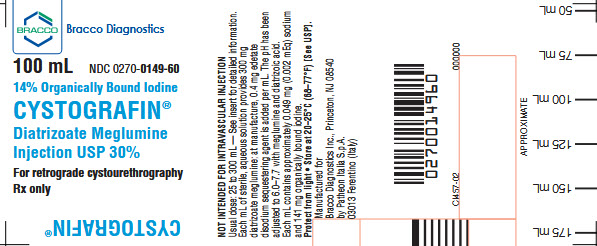
Cystografin 100 mL Label
NDC 0270-0149-60
Cystografin 1 Box 10 Bottles — 300 mL each
NDC 0270-0149-57
Storage
Store at 20-25°C (68-77°F) [See USP]. Protect from light.
Indication
Cystografin is indicated for retrograde cystourethrography.
Precautions
Safe and effective use of this preparation depends upon proper dosage, correct technique, adequate precautions, and readiness for emergencies.
Retrograde cystourethrography should be performed with caution in patients with a known active infectious process of the urinary tract.
Sterile technique should be employed in administration. During administration, care should be taken to avoid excessive pressure, rapid or acute distention of the bladder, and trauma.
Contrast agents may interfere with some chemical determinations made on urine specimens; therefore, urine should be collected before administration of the contrast medium or two or more days afterwards.
Also Available
Cystografin Dilute (Diatrizoate Meglumine Injection USP 18%) is also available, as a 300 mL fill in a 400 mL bottle.
Pregnancy—teratogenic Effects:
Animal reproduction studies have not been conducted with diatrizoate meglumine injection. It is also not known whether diatrizoate meglumine injection can cause fetal harm when administered to a pregnant woman or can affect reproduction capacity. Cystografin should be administered to a pregnant woman only if clearly needed.
Structured Label Content
Warnings (WARNINGS)
Severe sensitivity reactions are more likely to occur in patients with a personal or family history of bronchial asthma, significant allergies, or previous reactions to contrast agents.
A history of sensitivity to iodine per se or to other contrast agents is not an absolute contraindication to the use of diatrizoate meglumine, but calls for extreme caution in administration.
Contraindications (CONTRAINDICATIONS)
This preparation is contraindicated in patients with a hypersensitivity to salts of diatrizoic acid.
Adverse Reactions (ADVERSE REACTIONS)
Retrograde genitourinary procedures may cause such complications as hematuria, perforation of the urethra or bladder, introduction of infection into the genitourinary tract, and oliguria or anuria.
If intravasation of this drug occurs, the reactions which may be associated with intravenous administration may possibly be encountered. Hypersensitivity or anaphylactoid reactions may occur. Severe reactions may be manifested by edema of the face and glottis, respiratory distress, convulsions or shock; such reactions may prove fatal unless promptly controlled by such emergency measures as maintenance of a clear airway and immediate use of oxygen and resuscitative drugs.
Endocrine: Thyroid function tests indicative of hypothyroidism or transient thyroid suppression have been uncommonly reported following iodinated contrast media administration to adult and pediatric patients, including infants. Some patients were treated for hypothyroidism.
How Supplied (HOW SUPPLIED)
Cystografin (Diatrizoate Meglumine Injection USP 30%) is available in 200 mL and 400 mL bottles containing 100 mL and 300 mL of Cystografin respectively with sufficient capacity for dilution up to 167 mL and 350 mL respectively.
Description (DESCRIPTION)
Cystografin is a radiopaque contrast agent supplied as a sterile, clear, colorless to pale yellow, mobile or slightly viscous solution. Each mL provides 300 mg diatrizoate meglumine with 0.4 mg edetate disodium as a sequestering agent. Each mL of solution also contains approximately 141 mg organically bound iodine. At the time of manufacture, the air in the container is replaced by nitrogen. The preparation should be protected from strong light.
Section 42229-5 (42229-5)
For retrograde cystourethrography
Not intended for intravascular injection
Section 51945-4 (51945-4)
Cystografin 100 mL Label
NDC 0270-0149-60
Cystografin 1 Box 10 Bottles — 300 mL each
NDC 0270-0149-57
Storage
Store at 20-25°C (68-77°F) [See USP]. Protect from light.
Indication (INDICATION)
Cystografin is indicated for retrograde cystourethrography.
Precautions (PRECAUTIONS)
Safe and effective use of this preparation depends upon proper dosage, correct technique, adequate precautions, and readiness for emergencies.
Retrograde cystourethrography should be performed with caution in patients with a known active infectious process of the urinary tract.
Sterile technique should be employed in administration. During administration, care should be taken to avoid excessive pressure, rapid or acute distention of the bladder, and trauma.
Contrast agents may interfere with some chemical determinations made on urine specimens; therefore, urine should be collected before administration of the contrast medium or two or more days afterwards.
Also Available
Cystografin Dilute (Diatrizoate Meglumine Injection USP 18%) is also available, as a 300 mL fill in a 400 mL bottle.
Pregnancy—teratogenic Effects: (Pregnancy—Teratogenic Effects:)
Animal reproduction studies have not been conducted with diatrizoate meglumine injection. It is also not known whether diatrizoate meglumine injection can cause fetal harm when administered to a pregnant woman or can affect reproduction capacity. Cystografin should be administered to a pregnant woman only if clearly needed.
Advanced Ingredient Data
Raw Label Data
All Sections (JSON)
Additional Information
Back to search View SPL set listing Open on DailyMed ↗
Source: dailymed · Ingested: 2026-02-15T11:50:41.635993 · Updated: 2026-03-14T22:38:19.779982