Romidepsin For Injection
73a2028d-6735-4cd4-b63d-d072df9927a1
34391-3
HUMAN PRESCRIPTION DRUG LABEL
Drug Facts
Composition & Product
Identifiers & Packaging
Indications and Usage
Romidepsin for injection is indicated for the treatment of cutaneous T-cell lymphoma (CTCL) in adult patients who have received at least one prior systemic therapy.
Dosage and Administration
14 mg/m 2 administered intravenously over a 4-hour period on days 1, 8, and 15 of a 28-day cycle. Repeat cycles every 28 days provided that the patient continues to benefit from and tolerates the drug ( 2.1 ). Discontinue or interrupt treatment (with or without dose reduction to 10 mg/m 2 ) to manage drug toxicity ( 2.2 ). Reduce starting dose in patients with moderate and severe hepatic impairment ( 2.3 ).
Contraindications
None.
Warnings and Precautions
Myelosuppression: romidepsin can cause thrombocytopenia, leukopenia (neutropenia and lymphopenia), and anemia; monitor blood counts during treatment with romidepsin; interrupt and/or modify the dose as necessary ( 5.1 ). Infections: Fatal and serious infections. Reactivation of DNA viruses (Epstein Barr and hepatitis B). Consider monitoring and prophylaxis in patients with evidence of prior hepatitis B ( 5.2 ). Electrocardiographic (ECG) changes: Consider cardiovascular monitoring in patients with congenital long QT syndrome, a history of significant cardiovascular disease, and patients taking medicinal products that lead to significant QT prolongation. Ensure that potassium and magnesium are within the normal range before administration of romidepsin ( 5.3 ). Tumor lysis syndrome: Patients with advanced stage disease and/or high tumor burden are at greater risk and should be closely monitored and appropriate precautions taken ( 5.4 ). Embryo-fetal toxicity: Can cause fetal harm. Advise females of reproductive potential and males with female partners of reproductive potential of potential risk to a fetus and to use effective contraception ( 5.5 , 8.1 , 8.3 ).
Adverse Reactions
The following adverse reactions are described in more detail in other sections of the prescribing information. Myelosuppression [see Warnings and Precautions ( 5.1 )] Infections [see Warnings and Precautions ( 5.2 )] Electrocardiographic Changes [see Warnings and Precautions ( 5.3 )] Tumor Lysis Syndrome [see Warnings and Precautions ( 5.4 )]
Drug Interactions
Carefully monitor prothrombin time (PT) and International Normalized Ratio (INR) in patients concurrently administered romidepsin and warfarin or coumarin derivatives ( 7.1 ). Monitor for toxicities related to increased romidepsin exposure when co- administering romidepsin with strong CYP3A4 inhibitors ( 7.2 ). Avoid use with rifampin and strong CYP3A4 inducers ( 7.3 ).
Description
Romidepsin for injection is indicated for the treatment of cutaneous T-cell lymphoma (CTCL) in adult patients who have received at least one prior systemic therapy.
Medication Information
Warnings and Precautions
Myelosuppression: romidepsin can cause thrombocytopenia, leukopenia (neutropenia and lymphopenia), and anemia; monitor blood counts during treatment with romidepsin; interrupt and/or modify the dose as necessary ( 5.1 ). Infections: Fatal and serious infections. Reactivation of DNA viruses (Epstein Barr and hepatitis B). Consider monitoring and prophylaxis in patients with evidence of prior hepatitis B ( 5.2 ). Electrocardiographic (ECG) changes: Consider cardiovascular monitoring in patients with congenital long QT syndrome, a history of significant cardiovascular disease, and patients taking medicinal products that lead to significant QT prolongation. Ensure that potassium and magnesium are within the normal range before administration of romidepsin ( 5.3 ). Tumor lysis syndrome: Patients with advanced stage disease and/or high tumor burden are at greater risk and should be closely monitored and appropriate precautions taken ( 5.4 ). Embryo-fetal toxicity: Can cause fetal harm. Advise females of reproductive potential and males with female partners of reproductive potential of potential risk to a fetus and to use effective contraception ( 5.5 , 8.1 , 8.3 ).
Indications and Usage
Romidepsin for injection is indicated for the treatment of cutaneous T-cell lymphoma (CTCL) in adult patients who have received at least one prior systemic therapy.
Dosage and Administration
14 mg/m 2 administered intravenously over a 4-hour period on days 1, 8, and 15 of a 28-day cycle. Repeat cycles every 28 days provided that the patient continues to benefit from and tolerates the drug ( 2.1 ). Discontinue or interrupt treatment (with or without dose reduction to 10 mg/m 2 ) to manage drug toxicity ( 2.2 ). Reduce starting dose in patients with moderate and severe hepatic impairment ( 2.3 ).
Contraindications
None.
Adverse Reactions
The following adverse reactions are described in more detail in other sections of the prescribing information. Myelosuppression [see Warnings and Precautions ( 5.1 )] Infections [see Warnings and Precautions ( 5.2 )] Electrocardiographic Changes [see Warnings and Precautions ( 5.3 )] Tumor Lysis Syndrome [see Warnings and Precautions ( 5.4 )]
Drug Interactions
Carefully monitor prothrombin time (PT) and International Normalized Ratio (INR) in patients concurrently administered romidepsin and warfarin or coumarin derivatives ( 7.1 ). Monitor for toxicities related to increased romidepsin exposure when co- administering romidepsin with strong CYP3A4 inhibitors ( 7.2 ). Avoid use with rifampin and strong CYP3A4 inducers ( 7.3 ).
Description
Romidepsin for injection is indicated for the treatment of cutaneous T-cell lymphoma (CTCL) in adult patients who have received at least one prior systemic therapy.
Section 42229-5
Cutaneous T-Cell Lymphoma
The safety of romidepsin was evaluated in 185 patients with CTCL in 2 single arm clinical studies in which patients received a dosage of 14 mg/m2 on days 1, 8, and 15 of a 28-day cycle. Treatment continued as long as the patient benefitted from and tolerated the drug. The mean duration of treatment in these studies was 5.6 months (range: <1 to 83.4 months).
Section 42230-3
|
PATIENT INFORMATION
Romidepsin for Injection (ROE mi DEP sin) |
||
|
What is romidepsin for injection?
Romidepsin for injection is a prescription medicine used to treat people with a type of cancer called cutaneous T-cell lymphoma (CTCL) after at least one other type of medicine by mouth or injection has been tried. It is not known if romidepsin for injection is safe and effective in children under 18 years of age. |
||
Before receiving romidepsin for injection, tell your healthcare provider about all of your medical conditions, including if you:
|
||
|
Tell your healthcare provider about all of the medicines you take, including prescription and over-the-counter medicines, vitamins, and herbal supplements. Some medicines may affect how romidepsin for injection works, or romidepsin for injection may affect how other medicines work. Especially tell your healthcare provider if you take or use:
|
||
| Know the medicines you take. Keep a list of them and show it to your healthcare provider and pharmacist when you get a new medicine. | ||
How will I receive romidepsin for injection?
|
||
|
What are the possible side effects of romidepsin for injection?
Romidepsin for injection may cause serious side effects, including:
|
||
|
|
|
|
||
The most common side effects of romidepsin for injection include:
|
||
| These are not all the possible side effects of romidepsin for injection. Call your doctor for medical advice about side effects. You may report side effects to FDA at 1-800-FDA-1088. | ||
|
General information about the safe and effective use of romidepsin for injection
Medicines are sometimes prescribed for purposes other than those listed in a Patient Information leaflet. This Patient Information leaflet summarizes the most important information about romidepsin for injection. If you would like more information, talk with your healthcare provider. You can ask your pharmacist or healthcare provider for information about Romidepsin for injection that is written for health professionals. |
||
|
What are the ingredients in romidepsin for injection?
Lake Zurich, IL 60047 www.fresenius-kabi.com/us 451353C Revised: September 2021 |
Section 44425-7
Storage and Handling
Romidepsin for injection is supplied as a kit containing 2 vials in a single carton. The carton must be stored at 20° to 25°C (68° to 77°F) [see USP Controlled Room Temperature].
Romidepsin is a hazardous drug. Follow applicable special handling and disposal procedures.1
The container closure is not made with natural rubber latex.
10 Overdosage
No specific information is available on the treatment of overdosage of romidepsin.
Toxicities in a single-dose study in rats or dogs, at intravenous romidepsin doses up to 2.2-fold the recommended human dose based on the body surface area, included irregular respiration, irregular heartbeat, staggering gait, tremor, and tonic convulsions.
In the event of an overdose, it is reasonable to employ the usual supportive measures, e.g., clinical monitoring and supportive therapy, if required. There is no known antidote for romidepsin and it is not known if romidepsin is dialyzable.
15 References
- OSHA Hazardous Drugs. OSHA. [Accessed on 09/11/2018, from http://www.osha.gov/SLTC/hazardousdrugs/index.html]
11 Description
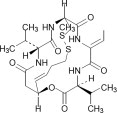
Romidepsin, a histone deacetylase (HDAC) inhibitor, is a bicyclic depsipeptide. At room temperature, romidepsin is a white powder and is described chemically as (1S,4S,7Z,10S,16E,21R)-7-ethylidene-4,21-bis(1-methylethyl)-2-oxa-12,13-dithia-5,8,20,23-tetraazabicyclo[8.7.6]tricos-16-ene-3,6,9,19,22-pentone.
The structural formula is:
C 24 H 36 N 4 O 6 S 2 M.W. 540.71
Romidepsin for injection is intended for intravenous infusion only after reconstitution with the supplied diluent and after further dilution with 0.9% Sodium Chloride, USP.
Romidepsin is supplied as a kit containing 2 vials.
Romidepsin for injection is a sterile lyophilized white powder and is supplied in a 10 mg single-dose vial containing 11 mg romidepsin, 22 mg povidone, USP, and hydrochloric acid, NF, as a pH adjuster.
Diluent for romidepsin is a sterile clear solution and is supplied in a single-dose vial with 2.2 mL deliverable volume. Diluent for romidepsin contains 80% (v/v) propylene glycol, USP and 20% (v/v) dehydrated alcohol, USP.
5.2 Infections
Fatal and serious infections have been reported in clinical trials of romidepsin, including pneumonia, sepsis, and viral reactivation, including reactivation of Epstein Barr and hepatitis B viruses. These infections can occur during and following treatment. The risk of life-threatening infections may be greater in patients with a history of prior treatment with monoclonal antibodies directed against lymphocyte antigens and in patients with disease involvement of the bone marrow [see Adverse Reactions (6.1)].
Reactivation of hepatitis B virus infection was reported in 1% of patients in clinical trials. In patients with evidence of prior hepatitis B infection, consider monitoring for reactivation, and consider antiviral prophylaxis.
Reactivation of Epstein Barr viral infection leading to liver failure has occurred in recipients of romidepsin including after ganciclovir prophylaxis.
8.4 Pediatric Use
The safety and effectiveness of romidepsin in pediatric patients have not been established.
8.5 Geriatric Use
Of the 186 patients with CTCL who received romidepsin in clinical studies, 51 (28%) were 65 years of age and older, while 16 (9%) were 75 years of age. No overall differences in safety or effectiveness were observed between patients 65 years of age and over and younger patients; however, greater sensitivity of some older individuals cannot be ruled out.
14 Clinical Studies
Romidepsin was evaluated in 2 multicenter, single-arm clinical studies in patients with CTCL (Study 1 [NCT00106431] and Study 2 [NCT00007345]). Overall, 167 patients with CTCL were treated in the US, Europe, and Australia. Study 1 included 96 patients with confirmed CTCL after failure of at least 1 prior systemic therapy. Study 2 included 71 patients with a primary diagnosis of CTCL who received at least 2 prior skin directed therapies or one or more systemic therapies. Patients were treated with romidepsin at a starting dose of 14 mg/m2 infused over 4 hours on days 1, 8, and 15 every 28 days.
In both studies, patients could be treated until disease progression at the discretion of the investigator and local regulators. Objective disease response was evaluated according to a composite endpoint that included assessments of skin involvement, lymph node and visceral involvement, and abnormal circulating T-cells (“Sézary cells”).
The primary efficacy endpoint for both studies was overall objective disease response rate (ORR) based on the investigator assessments, and was defined as the proportion of patients with confirmed complete response (CR) or partial response (PR). CR was defined as no evidence of disease and PR as ≥ 50% improvement in disease.
Secondary endpoints in both studies included duration of response and time to response.
4 Contraindications
None.
6 Adverse Reactions
The following adverse reactions are described in more detail in other sections of the prescribing information.
7 Drug Interactions
- Carefully monitor prothrombin time (PT) and International Normalized Ratio (INR) in patients concurrently administered romidepsin and warfarin or coumarin derivatives (7.1).
- Monitor for toxicities related to increased romidepsin exposure when co- administering romidepsin with strong CYP3A4 inhibitors (7.2).
- Avoid use with rifampin and strong CYP3A4 inducers (7.3).
5.1 Myelosuppression
12.3 Pharmacokinetics
In patients with T-cell lymphomas who received 14 mg/m2 of romidepsin intravenously over a 4-hour period on days 1, 8, and 15 of a 28-day cycle, geometric mean values of the maximum plasma concentration (Cmax) and the area under the plasma concentration versus time curve (AUC0-∞) were 377 ng/mL and 1549 ng*hr/mL, respectively. Romidepsin exhibited linear pharmacokinetics across doses ranging from 1.0 (0.07 times the recommended dose) to 24.9 (1.76 times the recommended dose) mg/m2 when administered intravenously over 4 hours in patients with advanced cancers.
2.1 Dosage Information
The recommended dosage of romidepsin is 14 mg/m2 administered intravenously over a 4-hour period on days 1, 8, and 15 of a 28-day cycle. Cycles should be repeated every 28 days provided that the patient continues to benefit from and tolerates the drug.
8.6 Hepatic Impairment
In a hepatic impairment study, romidepsin was evaluated in 19 patients with advanced cancer and mild (8), moderate (5), or severe (6) hepatic impairment. There were 4 deaths during the first cycle of treatment: 1 patient with mild hepatic impairment, 1 patient with moderate hepatic impairment, and 2 patients with severe hepatic impairment. No dose adjustments are recommended for patients with mild hepatic impairment. Reduce the romidepsin starting dose for patients with moderate and severe hepatic impairment [see Dosage and Administration (2.3) and Clinical Pharmacology (12.3)]. Monitor patients with hepatic impairment more frequently for toxicity, especially during the first cycle of therapy.
1 Indications and Usage
Romidepsin for injection is indicated for the treatment of cutaneous T-cell lymphoma (CTCL) in adult patients who have received at least one prior systemic therapy.
2.2 Dosage Modification
Nonhematologic toxicities except alopecia
- Grade 2 or 3 toxicity: Treatment with romidepsin should be delayed until toxicity returns to Grade 0-1 or baseline, then therapy may be restarted at 14 mg/m2. If Grade 3 toxicity recurs, treatment with romidepsin should be delayed until toxicity returns to Grade 0-1 or baseline and the dose should be permanently reduced to 10 mg/m2.
- Grade 4 toxicity: Treatment with romidepsin should be delayed until toxicity returns to Grade 0-1 or baseline, then the dose should be permanently reduced to 10 mg/m2.
- Romidepsin should be discontinued if Grade 3 or 4 toxicities recur after dose reduction.
Hematologic toxicities
- Grade 3 or 4 neutropenia or thrombocytopenia: Treatment with romidepsin should be delayed until the specific cytopenia returns to ANC greater than or equal to 1.5×10⁹/L and platelet count greater than or equal to 75×109/L or baseline, then therapy may be restarted at 14 mg/m2.
- Grade 4 febrile (greater than or equal to 38.5ºC) neutropenia or thrombocytopenia that requires platelet transfusion: Treatment with romidepsin should be delayed until the specific cytopenia returns to less than or equal to Grade 1 or baseline, and then the dose should be permanently reduced to 10 mg/m2.
12.1 Mechanism of Action
Romidepsin is a histone deacetylase (HDAC) inhibitor. HDACs catalyze the removal of acetyl groups from acetylated lysine residues in histones, resulting in the modulation of gene expression. HDACs also deacetylate non-histone proteins, such as transcription factors. In vitro, romidepsin causes the accumulation of acetylated histones, and induces cell cycle arrest and apoptosis of some cancer cell lines with IC50 values in the nanomolar range. The mechanism of the antineoplastic effect of romidepsin observed in nonclinical and clinical studies has not been fully characterized.
5.4 Tumor Lysis Syndrome
Tumor lysis syndrome (TLS) has been reported to occur in recipients of romidepsin, including in 1% of patients with tumor stage CTCL. Patients with advanced stage disease and/or high tumor burden are at greater risk, should be closely monitored, and managed as appropriate.
5.5 Embryo Fetal Toxicity
Based on its mechanism of action and findings from animal studies, romidepsin can cause fetal harm when administered to a pregnant woman. In an animal reproductive study, romidepsin was embryocidal and caused adverse developmental outcomes at exposures below those in patients at the recommended dose of 14 mg/m2. Advise females of reproductive potential to use effective contraception during treatment and for 1 month after the last dose. Advise males with female partners of reproductive potential to use effective contraception during treatment and for 1 month after the last dose [see Use in Specific Populations (8.1, 8.3) and Clinical Pharmacology (12.1)].
5 Warnings and Precautions
- Myelosuppression: romidepsin can cause thrombocytopenia, leukopenia (neutropenia and lymphopenia), and anemia; monitor blood counts during treatment with romidepsin; interrupt and/or modify the dose as necessary (5.1).
- Infections: Fatal and serious infections. Reactivation of DNA viruses (Epstein Barr and hepatitis B). Consider monitoring and prophylaxis in patients with evidence of prior hepatitis B (5.2).
- Electrocardiographic (ECG) changes: Consider cardiovascular monitoring in patients with congenital long QT syndrome, a history of significant cardiovascular disease, and patients taking medicinal products that lead to significant QT prolongation. Ensure that potassium and magnesium are within the normal range before administration of romidepsin (5.3).
- Tumor lysis syndrome: Patients with advanced stage disease and/or high tumor burden are at greater risk and should be closely monitored and appropriate precautions taken (5.4).
- Embryo-fetal toxicity: Can cause fetal harm. Advise females of reproductive potential and males with female partners of reproductive potential of potential risk to a fetus and to use effective contraception (5.5, 8.1, 8.3).
2 Dosage and Administration
- 14 mg/m2 administered intravenously over a 4-hour period on days 1, 8, and 15 of a 28-day cycle. Repeat cycles every 28 days provided that the patient continues to benefit from and tolerates the drug (2.1).
- Discontinue or interrupt treatment (with or without dose reduction to 10 mg/m2) to manage drug toxicity (2.2).
- Reduce starting dose in patients with moderate and severe hepatic impairment (2.3).
3 Dosage Forms and Strengths
For Injection: 10 mg of romidepsin as a lyophilized white powder in a single-dose vial for reconstitution and further dilution.
6.1 Clinical Trials Experience
Because clinical trials are conducted under widely varying conditions, adverse reaction rates observed in the clinical trials of a drug cannot be directly compared to rates in the clinical trials of another drug and may not reflect the rates observed in practice.
The data in the WARNINGS AND PRECAUTIONS reflect exposure to romidepsin in four clinical trials involving 363 patients with T-cell lymphoma, including 185 patients with CTCL. Romidepsin was administered as a single agent at a dosage of 14 mg/m2 on days 1, 8, and 15 of a 28-day cycle. Among 363 patients who received romidepsin, 21% were exposed for 6 months or longer and 13% were exposed for greater than one year.
5.3 Electrocardiographic Changes
Several treatment-emergent morphological changes in ECGs (including T-wave and ST-segment changes) have been reported in clinical studies. The clinical significance of these changes is unknown [see Adverse Reactions (6.1)].
In patients with congenital long QT syndrome, patients with a history of significant cardiovascular disease, and patients taking anti-arrhythmic medicines or medicinal products that lead to significant QT prolongation, consider cardiovascular monitoring of ECGs at baseline and periodically during treatment.
Confirm that potassium and magnesium levels are within normal range before administration of romidepsin [see Adverse Reactions (6.1)].
17 Patient Counseling Information
Advise the patient to read the FDA-approved patient labeling (Patient Information).
-
Low Blood Counts
Advise patients that treatment with romidepsin can cause low blood counts and that frequent monitoring of hematologic parameters is required. Patients should be instructed to report fever or other signs of infection, significant fatigue, shortness of breath, or bleeding [see Warnings and Precautions (5.1)]. -
Infections
Advise patients that infections may occur during treatment with romidepsin. Advise patients to report fever, cough, shortness of breath with or without chest pain, burning on urination, flu-like symptoms, muscle aches, or worsening skin problems. Advise patients to report any previous history of hepatitis B before starting romidepsin [see Warnings and Precautions (5.2)]. -
Tumor Lysis Syndrome
Advise patients of the risk of tumor lysis syndrome (especially those with advanced stage disease and/or high tumor burden) to maintain high fluid intake for at least 72 hours after each dose [see Warnings and Precautions (5.4)]. -
Nausea and Vomiting
Advise patients that nausea and vomiting are common following treatment with romidepsin. Prophylactic antiemetics are recommended for all patients. Advise patients to report these symptoms so that appropriate treatment can be instituted [see Adverse Reactions (6.1)]. -
Embryo-Fetal Toxicity
Advise patients that romidepsin can cause fetal harm when administered during pregnancy [see Warnings and Precautions (5.5) and Use in Specific Populations (8.1)]. -
Contraception
Advise females of reproductive potential to use effective contraception during treatment with romidepsin and for 1 month after the last dose. Advise males with female partners of reproductive potential to use effective contraception during treatment with romidepsin and for 1 month after the last dose [Use in Specific Populations (8.3)]. -
Lactation
Advise lactating women not to breastfeed during treatment with romidepsin and for 1 week after the last dose [see Use in Specific Populations (8.2)]. -
Infertility
Advise females and males of reproductive potential that romidepsin may cause infertility [see Nonclinical Toxicology (13.1)].
Lake Zurich, IL 60047
www.fresenius-kabi.com/us
451352E
7.1 Warfarin Or Coumarin Derivatives
Prolongation of PT and elevation of INR were observed in a patient receiving romidepsin concomitantly with warfarin. Monitor PT and INR more frequently in patients concurrently receiving romidepsin and warfarin [see Clinical Pharmacology (12.3)].
7.3 Drugs That Induce Cyp3a4 Enzymes
Rifampin (a potent CYP3A4 inducer) increased the concentrations of romidepsin [see Clinical Pharmacology (12.3)]. Avoid co-administration of romidepsin with rifampin. The use of other potent CYP3A4 inducers should be avoided when possible.
7.2 Drugs That Inhibit Cyp3a4 Enzymes
Strong CYP3A4 inhibitors increase concentrations of romidepsin [see Clinical Pharmacology (12.3)]. Monitor for toxicity related to increased romidepsin exposure and follow the dose modifications for toxicity [see Dosage and Administration (2.2)] when romidepsin is initially co-administered with strong CYP3A4 inhibitors.
2.3 Dosage in Patients With Hepatic Impairment
For patients with moderate or severe hepatic impairment, reduce the starting dose of Romidepsin for injection as shown in Table 1 and monitor for toxicities more frequently. Dosage adjustment is not required for patients with mild hepatic impairment.
|
ULN=Upper limit of normal. |
||
| Hepatic Impairment | Bilirubin Levels | Romidepsin for injection Dose |
|
Moderate |
greater than 1.5 x ULN to less than or equal to 3 x ULN |
7 mg/m2 |
|
Severe |
greater than 3 x ULN |
5 mg/m2 |
8.3 Females and Males of Reproductive Potential
Romidepsin can cause fetal harm when administered to a pregnant woman [see Use in Specific Populations (8.1)].
13.1 Carcinogenesis, Mutagenesis, Impairment of Fertility
Carcinogenicity studies have not been performed with romidepsin. Romidepsin was not mutagenic in vitro in the bacterial reverse mutation assay (Ames test) or the mouse lymphoma assay. Romidepsin was not clastogenic in an in vivo rat bone marrow micronucleus assay when tested to the maximum tolerated dose (MTD) of 1 mg/kg in males and 3 mg/kg in females (6 and 18 mg/m2 in males and females, respectively). These doses were up to 1.3-fold the recommended human dose, based on body surface area.
Based on nonclinical findings, male and female fertility may be compromised by treatment with romidepsin. In a 26-week toxicology study, romidepsin administration resulted in testicular degeneration in rats at 0.33 mg/kg/dose (2 mg/m2/dose) following the clinical dosing schedule. This dose resulted in AUC0-∞ values that were approximately 2% the exposure level in patients receiving the recommended dose of 14 mg/m2/dose. A similar effect was seen in mice after 4 weeks of drug administration at higher doses. Seminal vesicle and prostate organ weights were decreased in a separate study in rats after 4 weeks of daily drug administration at 0.1 mg/kg/day (0.6 mg/m2/day), approximately 30% the estimated human daily dose based on body surface area. Romidepsin showed high affinity for binding to estrogen receptors in pharmacology studies. In a 26-week toxicology study in rats, atrophy was seen in the ovary, uterus, vagina and mammary gland of females administered doses as low as 0.1 mg/kg/dose (0.6 mg/m2/dose) following the clinical dosing schedule. This dose resulted in AUC0-∞ values that were 0.3% of those in patients receiving the recommended dose of 14 mg/m2/dose. Maturation arrest of ovarian follicles and decreased weight of ovaries were observed in a separate study in rats after 4 weeks of daily drug administration at 0.1 mg/kg/day (0.6 mg/m2/day). This dose is approximately 30% the estimated human daily dose based on body surface area.
2.4 Instructions for Preparation and Intravenous Administration
Romidepsin for injection is a hazardous drug. Use appropriate handling procedures.1
Romidepsin for injection must be reconstituted with the supplied diluent and further diluted with 0.9% Sodium Chloride Injection, USP, before intravenous infusion. Romidepsin for injection and diluent vials contain an overfill to ensure the recommended volume can be withdrawn at a concentration of 5 mg/mL.
- Each 10 mg single-dose vial of Romidepsin for injection must be reconstituted with 2.2 mL of the supplied diluent.
- With a suitable syringe, aseptically withdraw 2.2 mL from the supplied diluent vial, and slowly inject it into the romidepsin for injection vial. Swirl the contents of the vial until there are no visible particles in the resulting solution. The reconstituted solution will contain romidepsin for injection 5 mg/mL. The reconstituted Romidepsin for injection vial will contain 2 mL of deliverable volume of drug product. The reconstituted Romidepsin for injection solution is chemically stable for up to 8 hours at room temperature.
- Extract the appropriate amount of Romidepsin for injection from the vials to deliver the desired dose, using proper aseptic technique. Before intravenous infusion, further dilute Romidepsin for injection in 500 mL 0.9% Sodium Chloride Injection, USP.
- Infuse over 4 hours.
The diluted solution is compatible with polyvinyl chloride (PVC), ethylene vinyl acetate (EVA), polyethylene (PE) infusion bags as well as glass bottles, and is chemically stable for up to 24 hours when stored at room temperature. However, it should be administered as soon after dilution as possible.
Parenteral drug products should be inspected visually for particulate matter and discoloration before administration, whenever solution and container permit.
Package Label Principal Display Romidepsin 10 Mg Vial Label
NDC 63323-925-17
Romidepsin
for Injection
10 mg/vial
For Intravenous Use Only
Product MUST be reconstituted with 2.2 mL of supplied Diluent for a concentration of
5 mg/mL and then further diluted in 500 mL of 0.9% sodium chloride injection, USP.
Single-Dose Vial Rx only
Discard unused portion.
Package Label Principal Display Romidepsin 10 Mg Vial Carton Panel
NDC 63323-926-88 704928
Romidepsin for Injection Kit
10 mg/vial
For Intravenous Use Only
Reconstituted and dilution required.
Each kit contains:
- One 10 mg single-dose vial of romidepsin
- One single-dose vial with 2.2 mL of diluent
Single-Dose Vial
Discard unused portion.
Rx only
Package Label Principal Display Romidepsin 2.2 Ml Diluent Vial Label
NDC 63323-922-03
Diluent for Romidepsin
Each vial contains: 80% propylene glycol and 20% dehydrated alcohol.
Usual dosage: Withdraw 2.2 mL of diluent to reconstitute 10 mg vial of romidepsin.
2.2 mL Single-Dose Vial
Rx only
Structured Label Content
Section 42229-5 (42229-5)
Cutaneous T-Cell Lymphoma
The safety of romidepsin was evaluated in 185 patients with CTCL in 2 single arm clinical studies in which patients received a dosage of 14 mg/m2 on days 1, 8, and 15 of a 28-day cycle. Treatment continued as long as the patient benefitted from and tolerated the drug. The mean duration of treatment in these studies was 5.6 months (range: <1 to 83.4 months).
Section 42230-3 (42230-3)
|
PATIENT INFORMATION
Romidepsin for Injection (ROE mi DEP sin) |
||
|
What is romidepsin for injection?
Romidepsin for injection is a prescription medicine used to treat people with a type of cancer called cutaneous T-cell lymphoma (CTCL) after at least one other type of medicine by mouth or injection has been tried. It is not known if romidepsin for injection is safe and effective in children under 18 years of age. |
||
Before receiving romidepsin for injection, tell your healthcare provider about all of your medical conditions, including if you:
|
||
|
Tell your healthcare provider about all of the medicines you take, including prescription and over-the-counter medicines, vitamins, and herbal supplements. Some medicines may affect how romidepsin for injection works, or romidepsin for injection may affect how other medicines work. Especially tell your healthcare provider if you take or use:
|
||
| Know the medicines you take. Keep a list of them and show it to your healthcare provider and pharmacist when you get a new medicine. | ||
How will I receive romidepsin for injection?
|
||
|
What are the possible side effects of romidepsin for injection?
Romidepsin for injection may cause serious side effects, including:
|
||
|
|
|
|
||
The most common side effects of romidepsin for injection include:
|
||
| These are not all the possible side effects of romidepsin for injection. Call your doctor for medical advice about side effects. You may report side effects to FDA at 1-800-FDA-1088. | ||
|
General information about the safe and effective use of romidepsin for injection
Medicines are sometimes prescribed for purposes other than those listed in a Patient Information leaflet. This Patient Information leaflet summarizes the most important information about romidepsin for injection. If you would like more information, talk with your healthcare provider. You can ask your pharmacist or healthcare provider for information about Romidepsin for injection that is written for health professionals. |
||
|
What are the ingredients in romidepsin for injection?
Lake Zurich, IL 60047 www.fresenius-kabi.com/us 451353C Revised: September 2021 |
Section 44425-7 (44425-7)
Storage and Handling
Romidepsin for injection is supplied as a kit containing 2 vials in a single carton. The carton must be stored at 20° to 25°C (68° to 77°F) [see USP Controlled Room Temperature].
Romidepsin is a hazardous drug. Follow applicable special handling and disposal procedures.1
The container closure is not made with natural rubber latex.
10 Overdosage (10 OVERDOSAGE)
No specific information is available on the treatment of overdosage of romidepsin.
Toxicities in a single-dose study in rats or dogs, at intravenous romidepsin doses up to 2.2-fold the recommended human dose based on the body surface area, included irregular respiration, irregular heartbeat, staggering gait, tremor, and tonic convulsions.
In the event of an overdose, it is reasonable to employ the usual supportive measures, e.g., clinical monitoring and supportive therapy, if required. There is no known antidote for romidepsin and it is not known if romidepsin is dialyzable.
15 References (15 REFERENCES)
- OSHA Hazardous Drugs. OSHA. [Accessed on 09/11/2018, from http://www.osha.gov/SLTC/hazardousdrugs/index.html]
11 Description (11 DESCRIPTION)
Romidepsin, a histone deacetylase (HDAC) inhibitor, is a bicyclic depsipeptide. At room temperature, romidepsin is a white powder and is described chemically as (1S,4S,7Z,10S,16E,21R)-7-ethylidene-4,21-bis(1-methylethyl)-2-oxa-12,13-dithia-5,8,20,23-tetraazabicyclo[8.7.6]tricos-16-ene-3,6,9,19,22-pentone.
The structural formula is:
C 24 H 36 N 4 O 6 S 2 M.W. 540.71
Romidepsin for injection is intended for intravenous infusion only after reconstitution with the supplied diluent and after further dilution with 0.9% Sodium Chloride, USP.
Romidepsin is supplied as a kit containing 2 vials.
Romidepsin for injection is a sterile lyophilized white powder and is supplied in a 10 mg single-dose vial containing 11 mg romidepsin, 22 mg povidone, USP, and hydrochloric acid, NF, as a pH adjuster.
Diluent for romidepsin is a sterile clear solution and is supplied in a single-dose vial with 2.2 mL deliverable volume. Diluent for romidepsin contains 80% (v/v) propylene glycol, USP and 20% (v/v) dehydrated alcohol, USP.
5.2 Infections
Fatal and serious infections have been reported in clinical trials of romidepsin, including pneumonia, sepsis, and viral reactivation, including reactivation of Epstein Barr and hepatitis B viruses. These infections can occur during and following treatment. The risk of life-threatening infections may be greater in patients with a history of prior treatment with monoclonal antibodies directed against lymphocyte antigens and in patients with disease involvement of the bone marrow [see Adverse Reactions (6.1)].
Reactivation of hepatitis B virus infection was reported in 1% of patients in clinical trials. In patients with evidence of prior hepatitis B infection, consider monitoring for reactivation, and consider antiviral prophylaxis.
Reactivation of Epstein Barr viral infection leading to liver failure has occurred in recipients of romidepsin including after ganciclovir prophylaxis.
8.4 Pediatric Use
The safety and effectiveness of romidepsin in pediatric patients have not been established.
8.5 Geriatric Use
Of the 186 patients with CTCL who received romidepsin in clinical studies, 51 (28%) were 65 years of age and older, while 16 (9%) were 75 years of age. No overall differences in safety or effectiveness were observed between patients 65 years of age and over and younger patients; however, greater sensitivity of some older individuals cannot be ruled out.
14 Clinical Studies (14 CLINICAL STUDIES)
Romidepsin was evaluated in 2 multicenter, single-arm clinical studies in patients with CTCL (Study 1 [NCT00106431] and Study 2 [NCT00007345]). Overall, 167 patients with CTCL were treated in the US, Europe, and Australia. Study 1 included 96 patients with confirmed CTCL after failure of at least 1 prior systemic therapy. Study 2 included 71 patients with a primary diagnosis of CTCL who received at least 2 prior skin directed therapies or one or more systemic therapies. Patients were treated with romidepsin at a starting dose of 14 mg/m2 infused over 4 hours on days 1, 8, and 15 every 28 days.
In both studies, patients could be treated until disease progression at the discretion of the investigator and local regulators. Objective disease response was evaluated according to a composite endpoint that included assessments of skin involvement, lymph node and visceral involvement, and abnormal circulating T-cells (“Sézary cells”).
The primary efficacy endpoint for both studies was overall objective disease response rate (ORR) based on the investigator assessments, and was defined as the proportion of patients with confirmed complete response (CR) or partial response (PR). CR was defined as no evidence of disease and PR as ≥ 50% improvement in disease.
Secondary endpoints in both studies included duration of response and time to response.
4 Contraindications (4 CONTRAINDICATIONS)
None.
6 Adverse Reactions (6 ADVERSE REACTIONS)
The following adverse reactions are described in more detail in other sections of the prescribing information.
7 Drug Interactions (7 DRUG INTERACTIONS)
- Carefully monitor prothrombin time (PT) and International Normalized Ratio (INR) in patients concurrently administered romidepsin and warfarin or coumarin derivatives (7.1).
- Monitor for toxicities related to increased romidepsin exposure when co- administering romidepsin with strong CYP3A4 inhibitors (7.2).
- Avoid use with rifampin and strong CYP3A4 inducers (7.3).
5.1 Myelosuppression
12.3 Pharmacokinetics
In patients with T-cell lymphomas who received 14 mg/m2 of romidepsin intravenously over a 4-hour period on days 1, 8, and 15 of a 28-day cycle, geometric mean values of the maximum plasma concentration (Cmax) and the area under the plasma concentration versus time curve (AUC0-∞) were 377 ng/mL and 1549 ng*hr/mL, respectively. Romidepsin exhibited linear pharmacokinetics across doses ranging from 1.0 (0.07 times the recommended dose) to 24.9 (1.76 times the recommended dose) mg/m2 when administered intravenously over 4 hours in patients with advanced cancers.
2.1 Dosage Information
The recommended dosage of romidepsin is 14 mg/m2 administered intravenously over a 4-hour period on days 1, 8, and 15 of a 28-day cycle. Cycles should be repeated every 28 days provided that the patient continues to benefit from and tolerates the drug.
8.6 Hepatic Impairment
In a hepatic impairment study, romidepsin was evaluated in 19 patients with advanced cancer and mild (8), moderate (5), or severe (6) hepatic impairment. There were 4 deaths during the first cycle of treatment: 1 patient with mild hepatic impairment, 1 patient with moderate hepatic impairment, and 2 patients with severe hepatic impairment. No dose adjustments are recommended for patients with mild hepatic impairment. Reduce the romidepsin starting dose for patients with moderate and severe hepatic impairment [see Dosage and Administration (2.3) and Clinical Pharmacology (12.3)]. Monitor patients with hepatic impairment more frequently for toxicity, especially during the first cycle of therapy.
1 Indications and Usage (1 INDICATIONS AND USAGE)
Romidepsin for injection is indicated for the treatment of cutaneous T-cell lymphoma (CTCL) in adult patients who have received at least one prior systemic therapy.
2.2 Dosage Modification
Nonhematologic toxicities except alopecia
- Grade 2 or 3 toxicity: Treatment with romidepsin should be delayed until toxicity returns to Grade 0-1 or baseline, then therapy may be restarted at 14 mg/m2. If Grade 3 toxicity recurs, treatment with romidepsin should be delayed until toxicity returns to Grade 0-1 or baseline and the dose should be permanently reduced to 10 mg/m2.
- Grade 4 toxicity: Treatment with romidepsin should be delayed until toxicity returns to Grade 0-1 or baseline, then the dose should be permanently reduced to 10 mg/m2.
- Romidepsin should be discontinued if Grade 3 or 4 toxicities recur after dose reduction.
Hematologic toxicities
- Grade 3 or 4 neutropenia or thrombocytopenia: Treatment with romidepsin should be delayed until the specific cytopenia returns to ANC greater than or equal to 1.5×10⁹/L and platelet count greater than or equal to 75×109/L or baseline, then therapy may be restarted at 14 mg/m2.
- Grade 4 febrile (greater than or equal to 38.5ºC) neutropenia or thrombocytopenia that requires platelet transfusion: Treatment with romidepsin should be delayed until the specific cytopenia returns to less than or equal to Grade 1 or baseline, and then the dose should be permanently reduced to 10 mg/m2.
12.1 Mechanism of Action
Romidepsin is a histone deacetylase (HDAC) inhibitor. HDACs catalyze the removal of acetyl groups from acetylated lysine residues in histones, resulting in the modulation of gene expression. HDACs also deacetylate non-histone proteins, such as transcription factors. In vitro, romidepsin causes the accumulation of acetylated histones, and induces cell cycle arrest and apoptosis of some cancer cell lines with IC50 values in the nanomolar range. The mechanism of the antineoplastic effect of romidepsin observed in nonclinical and clinical studies has not been fully characterized.
5.4 Tumor Lysis Syndrome
Tumor lysis syndrome (TLS) has been reported to occur in recipients of romidepsin, including in 1% of patients with tumor stage CTCL. Patients with advanced stage disease and/or high tumor burden are at greater risk, should be closely monitored, and managed as appropriate.
5.5 Embryo Fetal Toxicity (5.5 Embryo-Fetal Toxicity)
Based on its mechanism of action and findings from animal studies, romidepsin can cause fetal harm when administered to a pregnant woman. In an animal reproductive study, romidepsin was embryocidal and caused adverse developmental outcomes at exposures below those in patients at the recommended dose of 14 mg/m2. Advise females of reproductive potential to use effective contraception during treatment and for 1 month after the last dose. Advise males with female partners of reproductive potential to use effective contraception during treatment and for 1 month after the last dose [see Use in Specific Populations (8.1, 8.3) and Clinical Pharmacology (12.1)].
5 Warnings and Precautions (5 WARNINGS AND PRECAUTIONS)
- Myelosuppression: romidepsin can cause thrombocytopenia, leukopenia (neutropenia and lymphopenia), and anemia; monitor blood counts during treatment with romidepsin; interrupt and/or modify the dose as necessary (5.1).
- Infections: Fatal and serious infections. Reactivation of DNA viruses (Epstein Barr and hepatitis B). Consider monitoring and prophylaxis in patients with evidence of prior hepatitis B (5.2).
- Electrocardiographic (ECG) changes: Consider cardiovascular monitoring in patients with congenital long QT syndrome, a history of significant cardiovascular disease, and patients taking medicinal products that lead to significant QT prolongation. Ensure that potassium and magnesium are within the normal range before administration of romidepsin (5.3).
- Tumor lysis syndrome: Patients with advanced stage disease and/or high tumor burden are at greater risk and should be closely monitored and appropriate precautions taken (5.4).
- Embryo-fetal toxicity: Can cause fetal harm. Advise females of reproductive potential and males with female partners of reproductive potential of potential risk to a fetus and to use effective contraception (5.5, 8.1, 8.3).
2 Dosage and Administration (2 DOSAGE AND ADMINISTRATION)
- 14 mg/m2 administered intravenously over a 4-hour period on days 1, 8, and 15 of a 28-day cycle. Repeat cycles every 28 days provided that the patient continues to benefit from and tolerates the drug (2.1).
- Discontinue or interrupt treatment (with or without dose reduction to 10 mg/m2) to manage drug toxicity (2.2).
- Reduce starting dose in patients with moderate and severe hepatic impairment (2.3).
3 Dosage Forms and Strengths (3 DOSAGE FORMS AND STRENGTHS)
For Injection: 10 mg of romidepsin as a lyophilized white powder in a single-dose vial for reconstitution and further dilution.
6.1 Clinical Trials Experience
Because clinical trials are conducted under widely varying conditions, adverse reaction rates observed in the clinical trials of a drug cannot be directly compared to rates in the clinical trials of another drug and may not reflect the rates observed in practice.
The data in the WARNINGS AND PRECAUTIONS reflect exposure to romidepsin in four clinical trials involving 363 patients with T-cell lymphoma, including 185 patients with CTCL. Romidepsin was administered as a single agent at a dosage of 14 mg/m2 on days 1, 8, and 15 of a 28-day cycle. Among 363 patients who received romidepsin, 21% were exposed for 6 months or longer and 13% were exposed for greater than one year.
5.3 Electrocardiographic Changes
Several treatment-emergent morphological changes in ECGs (including T-wave and ST-segment changes) have been reported in clinical studies. The clinical significance of these changes is unknown [see Adverse Reactions (6.1)].
In patients with congenital long QT syndrome, patients with a history of significant cardiovascular disease, and patients taking anti-arrhythmic medicines or medicinal products that lead to significant QT prolongation, consider cardiovascular monitoring of ECGs at baseline and periodically during treatment.
Confirm that potassium and magnesium levels are within normal range before administration of romidepsin [see Adverse Reactions (6.1)].
17 Patient Counseling Information (17 PATIENT COUNSELING INFORMATION)
Advise the patient to read the FDA-approved patient labeling (Patient Information).
-
Low Blood Counts
Advise patients that treatment with romidepsin can cause low blood counts and that frequent monitoring of hematologic parameters is required. Patients should be instructed to report fever or other signs of infection, significant fatigue, shortness of breath, or bleeding [see Warnings and Precautions (5.1)]. -
Infections
Advise patients that infections may occur during treatment with romidepsin. Advise patients to report fever, cough, shortness of breath with or without chest pain, burning on urination, flu-like symptoms, muscle aches, or worsening skin problems. Advise patients to report any previous history of hepatitis B before starting romidepsin [see Warnings and Precautions (5.2)]. -
Tumor Lysis Syndrome
Advise patients of the risk of tumor lysis syndrome (especially those with advanced stage disease and/or high tumor burden) to maintain high fluid intake for at least 72 hours after each dose [see Warnings and Precautions (5.4)]. -
Nausea and Vomiting
Advise patients that nausea and vomiting are common following treatment with romidepsin. Prophylactic antiemetics are recommended for all patients. Advise patients to report these symptoms so that appropriate treatment can be instituted [see Adverse Reactions (6.1)]. -
Embryo-Fetal Toxicity
Advise patients that romidepsin can cause fetal harm when administered during pregnancy [see Warnings and Precautions (5.5) and Use in Specific Populations (8.1)]. -
Contraception
Advise females of reproductive potential to use effective contraception during treatment with romidepsin and for 1 month after the last dose. Advise males with female partners of reproductive potential to use effective contraception during treatment with romidepsin and for 1 month after the last dose [Use in Specific Populations (8.3)]. -
Lactation
Advise lactating women not to breastfeed during treatment with romidepsin and for 1 week after the last dose [see Use in Specific Populations (8.2)]. -
Infertility
Advise females and males of reproductive potential that romidepsin may cause infertility [see Nonclinical Toxicology (13.1)].
Lake Zurich, IL 60047
www.fresenius-kabi.com/us
451352E
7.1 Warfarin Or Coumarin Derivatives (7.1 Warfarin or Coumarin Derivatives)
Prolongation of PT and elevation of INR were observed in a patient receiving romidepsin concomitantly with warfarin. Monitor PT and INR more frequently in patients concurrently receiving romidepsin and warfarin [see Clinical Pharmacology (12.3)].
7.3 Drugs That Induce Cyp3a4 Enzymes (7.3 Drugs That Induce CYP3A4 Enzymes)
Rifampin (a potent CYP3A4 inducer) increased the concentrations of romidepsin [see Clinical Pharmacology (12.3)]. Avoid co-administration of romidepsin with rifampin. The use of other potent CYP3A4 inducers should be avoided when possible.
7.2 Drugs That Inhibit Cyp3a4 Enzymes (7.2 Drugs That Inhibit CYP3A4 Enzymes)
Strong CYP3A4 inhibitors increase concentrations of romidepsin [see Clinical Pharmacology (12.3)]. Monitor for toxicity related to increased romidepsin exposure and follow the dose modifications for toxicity [see Dosage and Administration (2.2)] when romidepsin is initially co-administered with strong CYP3A4 inhibitors.
2.3 Dosage in Patients With Hepatic Impairment (2.3 Dosage in Patients with Hepatic Impairment)
For patients with moderate or severe hepatic impairment, reduce the starting dose of Romidepsin for injection as shown in Table 1 and monitor for toxicities more frequently. Dosage adjustment is not required for patients with mild hepatic impairment.
|
ULN=Upper limit of normal. |
||
| Hepatic Impairment | Bilirubin Levels | Romidepsin for injection Dose |
|
Moderate |
greater than 1.5 x ULN to less than or equal to 3 x ULN |
7 mg/m2 |
|
Severe |
greater than 3 x ULN |
5 mg/m2 |
8.3 Females and Males of Reproductive Potential
Romidepsin can cause fetal harm when administered to a pregnant woman [see Use in Specific Populations (8.1)].
13.1 Carcinogenesis, Mutagenesis, Impairment of Fertility
Carcinogenicity studies have not been performed with romidepsin. Romidepsin was not mutagenic in vitro in the bacterial reverse mutation assay (Ames test) or the mouse lymphoma assay. Romidepsin was not clastogenic in an in vivo rat bone marrow micronucleus assay when tested to the maximum tolerated dose (MTD) of 1 mg/kg in males and 3 mg/kg in females (6 and 18 mg/m2 in males and females, respectively). These doses were up to 1.3-fold the recommended human dose, based on body surface area.
Based on nonclinical findings, male and female fertility may be compromised by treatment with romidepsin. In a 26-week toxicology study, romidepsin administration resulted in testicular degeneration in rats at 0.33 mg/kg/dose (2 mg/m2/dose) following the clinical dosing schedule. This dose resulted in AUC0-∞ values that were approximately 2% the exposure level in patients receiving the recommended dose of 14 mg/m2/dose. A similar effect was seen in mice after 4 weeks of drug administration at higher doses. Seminal vesicle and prostate organ weights were decreased in a separate study in rats after 4 weeks of daily drug administration at 0.1 mg/kg/day (0.6 mg/m2/day), approximately 30% the estimated human daily dose based on body surface area. Romidepsin showed high affinity for binding to estrogen receptors in pharmacology studies. In a 26-week toxicology study in rats, atrophy was seen in the ovary, uterus, vagina and mammary gland of females administered doses as low as 0.1 mg/kg/dose (0.6 mg/m2/dose) following the clinical dosing schedule. This dose resulted in AUC0-∞ values that were 0.3% of those in patients receiving the recommended dose of 14 mg/m2/dose. Maturation arrest of ovarian follicles and decreased weight of ovaries were observed in a separate study in rats after 4 weeks of daily drug administration at 0.1 mg/kg/day (0.6 mg/m2/day). This dose is approximately 30% the estimated human daily dose based on body surface area.
2.4 Instructions for Preparation and Intravenous Administration
Romidepsin for injection is a hazardous drug. Use appropriate handling procedures.1
Romidepsin for injection must be reconstituted with the supplied diluent and further diluted with 0.9% Sodium Chloride Injection, USP, before intravenous infusion. Romidepsin for injection and diluent vials contain an overfill to ensure the recommended volume can be withdrawn at a concentration of 5 mg/mL.
- Each 10 mg single-dose vial of Romidepsin for injection must be reconstituted with 2.2 mL of the supplied diluent.
- With a suitable syringe, aseptically withdraw 2.2 mL from the supplied diluent vial, and slowly inject it into the romidepsin for injection vial. Swirl the contents of the vial until there are no visible particles in the resulting solution. The reconstituted solution will contain romidepsin for injection 5 mg/mL. The reconstituted Romidepsin for injection vial will contain 2 mL of deliverable volume of drug product. The reconstituted Romidepsin for injection solution is chemically stable for up to 8 hours at room temperature.
- Extract the appropriate amount of Romidepsin for injection from the vials to deliver the desired dose, using proper aseptic technique. Before intravenous infusion, further dilute Romidepsin for injection in 500 mL 0.9% Sodium Chloride Injection, USP.
- Infuse over 4 hours.
The diluted solution is compatible with polyvinyl chloride (PVC), ethylene vinyl acetate (EVA), polyethylene (PE) infusion bags as well as glass bottles, and is chemically stable for up to 24 hours when stored at room temperature. However, it should be administered as soon after dilution as possible.
Parenteral drug products should be inspected visually for particulate matter and discoloration before administration, whenever solution and container permit.
Package Label Principal Display Romidepsin 10 Mg Vial Label (PACKAGE LABEL - PRINCIPAL DISPLAY - Romidepsin 10 mg Vial Label)
NDC 63323-925-17
Romidepsin
for Injection
10 mg/vial
For Intravenous Use Only
Product MUST be reconstituted with 2.2 mL of supplied Diluent for a concentration of
5 mg/mL and then further diluted in 500 mL of 0.9% sodium chloride injection, USP.
Single-Dose Vial Rx only
Discard unused portion.
Package Label Principal Display Romidepsin 10 Mg Vial Carton Panel (PACKAGE LABEL - PRINCIPAL DISPLAY - Romidepsin 10 mg Vial Carton Panel)
NDC 63323-926-88 704928
Romidepsin for Injection Kit
10 mg/vial
For Intravenous Use Only
Reconstituted and dilution required.
Each kit contains:
- One 10 mg single-dose vial of romidepsin
- One single-dose vial with 2.2 mL of diluent
Single-Dose Vial
Discard unused portion.
Rx only
Package Label Principal Display Romidepsin 2.2 Ml Diluent Vial Label (PACKAGE LABEL - PRINCIPAL DISPLAY - Romidepsin 2.2 mL Diluent Vial Label)
NDC 63323-922-03
Diluent for Romidepsin
Each vial contains: 80% propylene glycol and 20% dehydrated alcohol.
Usual dosage: Withdraw 2.2 mL of diluent to reconstitute 10 mg vial of romidepsin.
2.2 mL Single-Dose Vial
Rx only
Advanced Ingredient Data
Raw Label Data
All Sections (JSON)
Additional Information
Back to search View SPL set listing Open on DailyMed ↗
Source: dailymed · Ingested: 2026-02-15T11:36:24.491488 · Updated: 2026-03-14T21:46:11.622516