Sancuso
7379369a-03df-4ec3-8f2e-66645cc736d8
34391-3
HUMAN PRESCRIPTION DRUG LABEL
Drug Facts
Composition & Product
Identifiers & Packaging
Indications and Usage
SANCUSO ® is indicated for the prevention of nausea and vomiting in adults receiving moderately and/or highly emetogenic chemotherapy regimens of up to 5 consecutive days duration.
Dosage and Administration
The recommended dosage is a single transdermal system applied to the upper outer arm a minimum of 24 hours, up to a maximum of 48 hours, before chemotherapy. The transdermal system should be worn at minimum, 24 hours after chemotherapy is finished. The transdermal system can be worn for up to 7 days. Application and Removal Instructions Each transdermal system releases 3.1 mg of granisetron per 24 hours for up to 7 days. Each transdermal system is packed in a pouch and should be applied directly after the pouch has been opened. Only wear one transdermal system at any time. Do not cut the transdermal system. Open the pouch and apply the transdermal system to clean, dry, nearly hairless, intact healthy skin on the upper outer arm. Do not place SANCUSO transdermal system on skin that is red, irritated, or damaged. Do not apply a heat pad or heat lamp over or in vicinity of the transdermal system and avoid extended exposure to heat [see Warnings and Precautions ( 5.4 )] . Cover the application site of the transdermal system with clothing, if there is a risk of exposure to direct natural or artificial sunlight throughout the period of wear and for 10 days following its removal [see Warnings and Precautions ( 5.5 )] . After the transdermal system is applied, wash hands thoroughly. Remove the transdermal system by peeling off gently from the skin. Upon removal, fold the transdermal system in half with the sticky side together, and discard in the household trash in a manner that prevents accidental contact or ingestion by children, pets or others. SANCUSO contains granisetron. Do not use other granisetron-containing products with SANCUSO.
Contraindications
SANCUSO is contraindicated in patients with known hypersensitivity to granisetron or to any of the components of the transdermal system [see Description ( 11 )] .
Warnings and Precautions
Progressive Ileus and Gastric Distention : Granisetron may mask a progressive ileus and/or gastric distention; consider before use in patients with abdominal surgery. Monitor for decreased bowel activity, particularly in patients with risk factors for gastrointestinal obstruction. ( 5.1 ) Serotonin Syndrome : Serotonin syndrome has been reported with 5-HT 3 receptor antagonists alone but particularly with concomitant use of serotonergic drugs. If such symptoms occur, discontinue SANCUSO and initiate supportive treatment. If concomitant use of SANCUSO with other serotonergic drugs is clinically warranted, patients should be aware of a potential increased risk of serotonin syndrome. ( 5.2 , 7.1 ) Skin Reactions : Mild application site reactions have occurred; remove SANCUSO transdermal system if severe reactions or a generalized skin reaction occur. ( 5.3 ) Increased Drug Exposure with Use of External Heat Sources: Avoid exposing SANCUSO transdermal system and surrounding area to direct external heat sources, such as heating pads ( 5.4 ). Phototoxicity with Ultraviolet Light Exposure : Avoid direct exposure of application site to natural or artificial sunlight, including sunlamps, by covering with clothing throughout the period of wear and for 10 days after removal. ( 5.5 )
Adverse Reactions
The following are serious or otherwise clinically significant adverse reactions reported in other sections of labeling: Progressive ileus and gastric distention [see Warnings and Precautions ( 5.1 )] Serotonin syndrome [see Warnings and Precautions ( 5.2 )] Skin reactions [see Warnings and Precautions ( 5.3 )] Increased drug exposure with use of external heat sources [see Warnings and Precautions ( 5.4 )] Phototoxicity with ultraviolet light exposure [se Warnings and Precautions ( 5.5 )]
How Supplied
SANCUSO (granisetron transdermal system) is a 52 cm 2 thin, translucent, rectangular-shaped transdermal system with rounded corners imprinted on one side with "Granisetron 3.1 mg/24 hours". The transdermal system releases 3.1 mg of granisetron per 24 hours for up to 7 days. Each SANCUSO transdermal system is packaged in a separate sealed foil-lined plastic pouch supplied in packages of 1 (NDC 66220-637-31) transdermal system. Store at 20°-25°C (68°-77°F); excursions permitted between 15°-30°C (59°-86°F). [see USP Controlled Room Temperature]. SANCUSO should be stored in the original packaging.
Storage and Handling
SANCUSO (granisetron transdermal system) is a 52 cm 2 thin, translucent, rectangular-shaped transdermal system with rounded corners imprinted on one side with "Granisetron 3.1 mg/24 hours". The transdermal system releases 3.1 mg of granisetron per 24 hours for up to 7 days. Each SANCUSO transdermal system is packaged in a separate sealed foil-lined plastic pouch supplied in packages of 1 (NDC 66220-637-31) transdermal system. Store at 20°-25°C (68°-77°F); excursions permitted between 15°-30°C (59°-86°F). [see USP Controlled Room Temperature]. SANCUSO should be stored in the original packaging.
Description
SANCUSO ® is indicated for the prevention of nausea and vomiting in adults receiving moderately and/or highly emetogenic chemotherapy regimens of up to 5 consecutive days duration.
Medication Information
Warnings and Precautions
Progressive Ileus and Gastric Distention : Granisetron may mask a progressive ileus and/or gastric distention; consider before use in patients with abdominal surgery. Monitor for decreased bowel activity, particularly in patients with risk factors for gastrointestinal obstruction. ( 5.1 ) Serotonin Syndrome : Serotonin syndrome has been reported with 5-HT 3 receptor antagonists alone but particularly with concomitant use of serotonergic drugs. If such symptoms occur, discontinue SANCUSO and initiate supportive treatment. If concomitant use of SANCUSO with other serotonergic drugs is clinically warranted, patients should be aware of a potential increased risk of serotonin syndrome. ( 5.2 , 7.1 ) Skin Reactions : Mild application site reactions have occurred; remove SANCUSO transdermal system if severe reactions or a generalized skin reaction occur. ( 5.3 ) Increased Drug Exposure with Use of External Heat Sources: Avoid exposing SANCUSO transdermal system and surrounding area to direct external heat sources, such as heating pads ( 5.4 ). Phototoxicity with Ultraviolet Light Exposure : Avoid direct exposure of application site to natural or artificial sunlight, including sunlamps, by covering with clothing throughout the period of wear and for 10 days after removal. ( 5.5 )
Indications and Usage
SANCUSO ® is indicated for the prevention of nausea and vomiting in adults receiving moderately and/or highly emetogenic chemotherapy regimens of up to 5 consecutive days duration.
Dosage and Administration
The recommended dosage is a single transdermal system applied to the upper outer arm a minimum of 24 hours, up to a maximum of 48 hours, before chemotherapy. The transdermal system should be worn at minimum, 24 hours after chemotherapy is finished. The transdermal system can be worn for up to 7 days. Application and Removal Instructions Each transdermal system releases 3.1 mg of granisetron per 24 hours for up to 7 days. Each transdermal system is packed in a pouch and should be applied directly after the pouch has been opened. Only wear one transdermal system at any time. Do not cut the transdermal system. Open the pouch and apply the transdermal system to clean, dry, nearly hairless, intact healthy skin on the upper outer arm. Do not place SANCUSO transdermal system on skin that is red, irritated, or damaged. Do not apply a heat pad or heat lamp over or in vicinity of the transdermal system and avoid extended exposure to heat [see Warnings and Precautions ( 5.4 )] . Cover the application site of the transdermal system with clothing, if there is a risk of exposure to direct natural or artificial sunlight throughout the period of wear and for 10 days following its removal [see Warnings and Precautions ( 5.5 )] . After the transdermal system is applied, wash hands thoroughly. Remove the transdermal system by peeling off gently from the skin. Upon removal, fold the transdermal system in half with the sticky side together, and discard in the household trash in a manner that prevents accidental contact or ingestion by children, pets or others. SANCUSO contains granisetron. Do not use other granisetron-containing products with SANCUSO.
Contraindications
SANCUSO is contraindicated in patients with known hypersensitivity to granisetron or to any of the components of the transdermal system [see Description ( 11 )] .
Adverse Reactions
The following are serious or otherwise clinically significant adverse reactions reported in other sections of labeling: Progressive ileus and gastric distention [see Warnings and Precautions ( 5.1 )] Serotonin syndrome [see Warnings and Precautions ( 5.2 )] Skin reactions [see Warnings and Precautions ( 5.3 )] Increased drug exposure with use of external heat sources [see Warnings and Precautions ( 5.4 )] Phototoxicity with ultraviolet light exposure [se Warnings and Precautions ( 5.5 )]
Storage and Handling
SANCUSO (granisetron transdermal system) is a 52 cm 2 thin, translucent, rectangular-shaped transdermal system with rounded corners imprinted on one side with "Granisetron 3.1 mg/24 hours". The transdermal system releases 3.1 mg of granisetron per 24 hours for up to 7 days. Each SANCUSO transdermal system is packaged in a separate sealed foil-lined plastic pouch supplied in packages of 1 (NDC 66220-637-31) transdermal system. Store at 20°-25°C (68°-77°F); excursions permitted between 15°-30°C (59°-86°F). [see USP Controlled Room Temperature]. SANCUSO should be stored in the original packaging.
How Supplied
SANCUSO (granisetron transdermal system) is a 52 cm 2 thin, translucent, rectangular-shaped transdermal system with rounded corners imprinted on one side with "Granisetron 3.1 mg/24 hours". The transdermal system releases 3.1 mg of granisetron per 24 hours for up to 7 days. Each SANCUSO transdermal system is packaged in a separate sealed foil-lined plastic pouch supplied in packages of 1 (NDC 66220-637-31) transdermal system. Store at 20°-25°C (68°-77°F); excursions permitted between 15°-30°C (59°-86°F). [see USP Controlled Room Temperature]. SANCUSO should be stored in the original packaging.
Description
SANCUSO ® is indicated for the prevention of nausea and vomiting in adults receiving moderately and/or highly emetogenic chemotherapy regimens of up to 5 consecutive days duration.
Section 42229-5
Risk Summary
Available published data and postmarketing reports with granisetron use in pregnant women have not identified a drug-associated risk of major birth defects, miscarriage, or adverse maternal or fetal outcomes. In a published ex vivo human placental perfusion model, no transplacental passage of granisetron was detected at a concentration (5 ng/mL) that mimics the plasma concentration achieved following transdermal application of SANCUSO. In animal reproduction studies, no adverse developmental effects were observed in pregnant rats and rabbits administered granisetron hydrochloride during organogenesis at intravenous doses up to 24 times and 16 times, respectively, the maximum recommended human dose delivered by the SANCUSO transdermal system, based on body surface area (see Data).
The estimated background risk of major birth defects and miscarriage for the indicated population is unknown. All pregnancies have a background risk of birth defect, loss, or other adverse outcomes. In the U.S. general population, the estimated background risks of major birth defects and miscarriage in clinically recognized pregnancies are 2-4% and 15-20%, respectively.
In animal reproduction studies, no adverse developmental effects were observed in pregnant rats and rabbits administered granisetron hydrochloride at intravenous doses up to 24 times and 16 times, respectively, the maximum recommended human dose delivered by the SANCUSO transdermal system, based on body surface area (see Data ).
Section 42230-3
|
This Patient Information has been approved by the U.S. Food and Drug Administration |
Revised: 07/2024 |
|
|
Patient Information SANCUSO ® [san-KOO-so] (granisetron transdermal system) for transdermal use |
||
| Important: For skin use only. | ||
| Read the Patient Information that comes with SANCUSO before you start using it and each time you get a refill. There may be new information. This information does not take the place of talking to your healthcare provider about your medical condition or your treatment. If you have any questions about SANCUSO, ask your healthcare provider. | ||
|
What is SANCUSO?
SANCUSO is a prescription medicine used to prevent nausea and vomiting in adults receiving anti-cancer (chemotherapy) treatment that causes moderate or severe vomiting. SANCUSO is a skin patch (transdermal system) that slowly releases the medicine into your bloodstream while you wear the transdermal system. It is not known if SANCUSO is safe and effective in children. |
||
|
Who should not use SANCUSO?
Do not use SANCUSO if you are allergic to granisetron or any of the ingredients in SANCUSO. See the end of this leaflet for a list of ingredients in SANCUSO. |
||
What should I tell my healthcare provider before using SANCUSO? Before using SANCUSO, tell your healthcare provider about all of your medical conditions, including if you:
|
||
|
Tell your healthcare provider about all the medicines you take, including prescription and over-the-counter medicines, vitamins and herbal supplements. Other medicines may affect how SANCUSO works. SANCUSO may also affect how other medicines work. SANCUSO contains granisetron. Do not take other granisetron containing products with SANCUSO. Know the medicines you take. Keep a list of them to show your healthcare provider and pharmacist when you get a new medicine. |
||
How should I use SANCUSO?
|
||
|
What should I avoid while using SANCUSO?
Do not apply any heat source over or near the SANCUSO transdermal system.
|
||
|
What are the possible side effects of SANCUSO?
SANCUSO may cause serious side effects, including:
|
||
|
||
The most common side effects of SANCUSO include:
|
||
| Tell your healthcare provider if you have any side effect that bothers you or that does not go away. These are not all the possible side effects of SANCUSO. For more information, ask your healthcare provider or pharmacist. Call your doctor for medical advice about side effects. You may report side effects to FDA at 1-800-FDA-1088. |
||
How should I store SANCUSO?
|
||
| Keep SANCUSO out of the reach of children. | ||
|
General information about the safe and effective use of SANCUSO.
Medicines are sometimes prescribed for purposes other than those listed in a Patient Information leaflet. Do not use SANCUSO for a condition for which it was not prescribed. Do not give SANCUSO to other people, even if they have the same symptoms that you have. It may harm them. This Patient Information leaflet summarizes the most important information about SANCUSO. You can ask your pharmacist or healthcare provider for information about SANCUSO that is written for health professionals. |
||
| Manufactured by: Kindeva Drug Delivery L.P. Northridge, CA 91324 Manufactured for: Cumberland Pharmaceuticals Inc. Nashville, TN 37203 For more information, go to www.sancuso.com or call 1-877-683-6110. |
Section 51945-4
Principal Display Panel – 168 h Pouch Label
Sancuso ®
(Granisetron Transdermal System)
3.1 mg/24 hours
NDC 66220-637-31
7 day transdermal system
Each 52 cm2 transdermal system
contains 34.3 mg of granisetron.
For Transdermal Use Only.
Read patient information before use.
Do not cut the transdermal system.
Keep out of the reach of children.
Store at 20° to 25°C (68° to 77°F).
Keep pouch in outer carton.
Rx Only
Includes 1 transdermal system
Mfd. for:
Cumberland Pharmaceuticals Inc.
Nashville, TN 37203
CUMBERLAND®
PHARMACEUTICALS
Section 59845-8
Instructions for Use SANCUSO ® [san-KOO-so] (granisetron transdermal system) for transdermal use
Read this Instructions for Use before you start using SANCUSO transdermal system and each time you get a refill. There may be new information. This information does not take the place of talking to your healthcare provider about your medical condition or treatment.
Important Information:
- SANCUSO is for skin use only (transdermal system).
- Avoid exposing the SANCUSO transdermal system application site to direct heat sources such as a heating pad or heat lamp.
- Avoid exposing the SANCUSO transdermal system to direct sunlight or artificial light such as a sunlamp or tanning bed.
- Keep the SANCUSO transdermal system covered with clothing if you will be in sunlight or artificial sunlight.
- Keep the skin where the SANCUSO transdermal system was applied covered for another 10 days after the SANCUSO transdermal system is taken off, to protect from exposure to direct sunlight or artificial sunlight.
- Skin reactions can happen at the SANCUSO transdermal system application site or outside the SANCUSO transdermal system application site. Tell your healthcare provider if you get any redness, rashes, bumps, blisters or itching at the SANCUSO transdermal system application site, and especially if they spread outside the place where the SANCUSO transdermal system was applied or if they appear outside the SANCUSO transdermal system application site. You may need to stop using the SANCUSO transdermal system.
How should I store the SANCUSO transdermal system?
- Store the SANCUSO transdermal system at room temperature between 68°F to 77°F (20°C to 25°C).
- Keep the SANCUSO transdermal system in the original package it comes in.
- Do not open the package until you are ready to apply the SANCUSO transdermal system.
Supplies:
- SANCUSO transdermal system
- surgical or medical adhesive tape (not included)
When do I apply the SANCUSO transdermal system?
- Use the SANCUSO transdermal system exactly as your healthcare provider tells you to.
- Apply the SANCUSO transdermal system at least 1 day (24 hours) or up to 2 days (48 hours) before your scheduled anti-cancer (chemotherapy) treatment.
- Wear the SANCUSO transdermal system all the time during your chemotherapy treatment.
- Wait at least 1 day (24 hours) after your chemotherapy treatment is finished to remove the SANCUSO transdermal system.
- The SANCUSO transdermal system may be worn for up to 7 days.
Where do I apply the SANCUSO transdermal system?
- SANCUSO transdermal system should only be applied to the outside of the upper arm.
- Apply the SANCUSO transdermal system to a clean, dry, nearly hairless, healthy area of skin on the outside part of your upper arm. If there is hair, do not shave. Instead, clip hair as close to the skin as possible.
- The area you choose should not be oily or recently shaved. The SANCUSO transdermal system should not be placed on skin that is red, irritated, or damaged (cut or scraped).
- Do not apply the SANCUSO transdermal system to areas that have been treated with creams, oils, lotions, powders or other skin products that could keep the SANCUSO transdermal system from sticking well to your skin.
How do I apply the SANCUSO transdermal system?
The SANCUSO transdermal system comes inside a pouch which is inside the carton.
- Do not remove the SANCUSO transdermal system from the pouch until you are ready to use it.
- Do not cut the SANCUSO transdermal system into pieces.
- Remove the pouch from the carton.
- Tear the pouch open at the notch provided, and remove the SANCUSO transdermal system. Each pouch contains one SANCUSO transdermal system stuck onto a stiff (rigid) plastic film.
- The unprinted, sticky side of the SANCUSO transdermal system is covered by a 2-piece stiff (rigid) plastic film. Bend the transdermal system in the middle. Slowly peel 1-half of the stiff (rigid) plastic film. Be careful not to stick the SANCUSO transdermal system to itself. Do not touch the sticky side of the SANCUSO transdermal system.
- While holding the other half of the stiff (rigid) plastic film, apply the sticky half of the SANCUSO transdermal system to your skin. Remove the second half of the stiff (rigid) plastic film and press the whole SANCUSO transdermal system firmly in place and smooth it down with your fingers. Press firmly making sure the SANCUSO transdermal system sticks well to the skin, especially around the edges.
- Wash your hands with soap and water right away after applying the SANCUSO transdermal system to remove any medicine that may have stuck to your fingers.
- Keep the SANCUSO transdermal system in place for the whole time you are receiving your chemotherapy treatment. Remove the SANCUSO transdermal system at least 1 day (24 hours) after your chemotherapy treatment is finished. The SANCUSO transdermal system can be worn for up to 7 days, depending on the number of days your chemotherapy treatment lasts.
- Do not re-use the SANCUSO transdermal system after you remove it. See the instructions below on the right way to remove and throw away the SANCUSO transdermal system.
What do I do if the SANCUSO transdermal system does not stick well?
If the SANCUSO transdermal system does not stick well or the edges lift off the skin, you may apply pieces of surgical or medical adhesive tape on each lifted edge to keep the SANCUSO transdermal system in place. Only place pieces of the surgical or medical adhesive tape on the edges of the SANCUSO transdermal system. Do not completely cover the SANCUSO transdermal system with surgical or medical adhesive tape and do not wrap completely around your arm. If the SANCUSO transdermal system comes more than half off or it becomes damaged (e.g. rips), contact your healthcare provider.
Can I bathe or shower while wearing the SANCUSO transdermal system?
You can continue to shower and wash normally while wearing the SANCUSO transdermal system.
It is not known how other activities, for example swimming, strenuous exercise or using a sauna or whirlpool, may affect the SANCUSO transdermal system. Avoid these activities while wearing the SANCUSO transdermal system.
How do I remove and dispose of the SANCUSO transdermal system?
- When you remove the SANCUSO transdermal system, peel it off gently.
- The used SANCUSO transdermal system will still contain some of the medicine. After removing the used SANCUSO transdermal system, fold it in half so that the sticky side sticks to itself. Throw away the used SANCUSO transdermal system in the trash right away so that children and pets cannot reach it.
- If any adhesive (glue) remains on your skin after you remove the SANCUSO transdermal system, wash the area with soap and water to remove it. Do not use alcohol or other dissolving liquids, such as nail polish remover. These may cause skin irritation.
- Wash your hands with soap and water after handling the SANCUSO transdermal system.
- You may see mild redness on the skin where the SANCUSO transdermal system is removed. This redness should go away within 3 days. If redness continues, tell your healthcare provider.
What are the ingredients in the SANCUSO transdermal system?
Active ingredient: granisetron.
Inactive ingredients: acrylate-vinylacetate copolymer, polyester, titanium dioxide, polyamide resin and polyethylene wax. This Instructions for Use has been approved by the U.S. Food and Drug Administration.
Manufactured by:
Kindeva Drug Delivery L.P.
Northridge, CA 91324
Manufactured for:
Cumberland Pharmaceuticals Inc., Nashville, TN 37203
Revised: 07/2024
10 Overdosage
There is no specific antidote for granisetron overdosage. In the case of overdosage, symptomatic treatment should be given.
11 Description
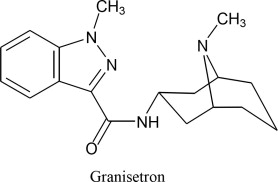
SANCUSO contains granisetron, which is a serotonin-3 (5-HT3) receptor antagonist. Chemically it is 1-methyl-N-[(1R,3r,5S)-9-methyl-9-azabicyclo[3.3.1]non-3-yl]-1H-indazole-3-carboxamide with a molecular weight of 312.4. Its empirical formula is C18H24N4O, while its chemical structure is:
Granisetron is a white to off-white solid that is insoluble in water. The inactive ingredients are acrylate-vinylacetate copolymer, polyester, titanium dioxide, polyamide resin and polyethylene wax. SANCUSO is a 52 cm2 thin, translucent, matrix-type transdermal system that is rectangular- shaped with rounded corners, consisting of a backing (polyester), the drug matrix (acrylate- vinylacetate copolymer) and a release liner (siliconized polyester).
8.4 Pediatric Use
Safety and effectiveness of SANCUSO have not been established in pediatric patients.
8.5 Geriatric Use
Clinical studies of SANCUSO did not include sufficient numbers of subjects aged 65 and over to determine whether they respond differently from younger subjects. Other reported clinical experience has not identified differences in responses between the elderly and younger patients. In general, cautious treatment selection for an elderly patient is prudent because of the greater frequency of decreased hepatic, renal, or cardiac function, and of concomitant disease or other drug therapy.
13.3 Phototoxicity
When tested for potential photogenotoxicity in vitro in a Chinese hamster ovary (CHO) cell line, at 200 and 300 mcg/mL, granisetron increased the percentage of cells with chromosomal aberration following photoirradiation [see Warnings and Precautions (5.5)].
Granisetron was not phototoxic when tested in vitro in a mouse fibroblast cell line. When tested in vivo in guinea-pigs, SANCUSO transdermal system did not show any potential for photoirritation or photosensitivity. No phototoxicity studies have been performed in humans.
5.3 Skin Reactions
In clinical trials with SANCUSO, application site reactions were reported that were generally mild in intensity and did not lead to discontinuation of use. The incidence of reactions was comparable with placebo.
If severe reactions, or a generalized skin reaction occur (e.g., allergic rash, including erythematous, macular, papular rash or pruritus), remove the SANCUSO transdermal system.
14 Clinical Studies
The effectiveness of SANCUSO in the prevention of chemotherapy-induced nausea and vomiting (CINV) was evaluated in a randomized, parallel group, double-blind, double-dummy study conducted in the U.S. and abroad. The study compared the efficacy, tolerability and safety of SANCUSO transdermal system with that of 2 mg oral granisetron once daily in the prevention of nausea and vomiting in a total of 641 patients receiving multi-day chemotherapy.
The population randomized into the trial included 48% males and 52% females aged 16 to 86 years receiving moderately emetogenic (ME) or highly emetogenic (HE) multi-day chemotherapy. Seventy-eight (78%) of patients were White, 12% Asian, 10% Hispanic/Latino and 0% Black.
SANCUSO was applied 24 to 48 hours before the first dose of chemotherapy and kept in place for 7 days. Oral granisetron was administered daily for the duration of the chemotherapy regimen, 1hour before each dose of chemotherapy. Efficacy was assessed from the first administration until 24 hours after the start of the last day's administration of the chemotherapy regimen.
The primary endpoint of the trial was the proportion of patients achieving no vomiting and/or retching, no more than mild nausea and no rescue medication from the first administration until 24 hours after the start of the last day's administration of multi-day chemotherapy. Using this definition, the effect of SANCUSO was established in 60.2% of patients in the SANCUSO arm and 64.8% of patients receiving oral granisetron (difference -4.89%; 95% confidence interval – 12.91% to +3.13%).
An assessment of transdermal system adhesion in 621 patients receiving either active or placebo transdermal system showed that less than 1% of transdermal systems became detached over the course of the 7 day period of transdermal system application.
4 Contraindications
SANCUSO is contraindicated in patients with known hypersensitivity to granisetron or to any of the components of the transdermal system [see Description (11)].
6 Adverse Reactions
The following are serious or otherwise clinically significant adverse reactions reported in other sections of labeling:
- Progressive ileus and gastric distention [see Warnings and Precautions (5.1)]
- Serotonin syndrome [see Warnings and Precautions (5.2)]
- Skin reactions [see Warnings and Precautions (5.3)]
- Increased drug exposure with use of external heat sources [see Warnings and Precautions (5.4)]
- Phototoxicity with ultraviolet light exposure [se Warnings and Precautions (5.5)]
12.2 Pharmacodynamics
The effect of granisetron on QTc prolongation was evaluated in a randomized, single-blind, positive (moxifloxacin 400 mg) - and placebo controlled parallel study in healthy subjects. A total of 120 subjects were administered SANCUSO transdermal system (n=60) or intravenous granisetron (10 mcg/kg over 30 seconds; n=60). In a study with demonstrated ability to detect small effects, the upper bound of the 90% confidence interval for the largest placebo adjusted, baseline corrected QTc based on Fridericia correction method (QTcF) for SANCUSO was below 10 ms. This study suggests that SANCUSO does not have significant effects on QT prolongation.
No evidence of an effect on plasma prolactin or aldosterone concentrations has been found in studies using granisetron.
The effect on oro-cecal transit time following application of SANCUSO has not been studied. Granisetron hydrochloride injection exhibited no effect on oro-cecal transit time in healthy subjects given a single intravenous infusion of 50 mcg/kg or 200 mcg/kg. Single and multiple oral doses of granisetron hydrochloride slowed colonic transit in healthy subjects.
5.2 Serotonin Syndrome
The development of serotonin syndrome has been reported with 5-HT3 receptor antagonists. Most reports have been associated with concomitant use of serotonergic drugs (e.g., selective serotonin reuptake inhibitors (SSRIs), serotonin and norepinephrine reuptake inhibitors (SNRIs), monoamine oxidase inhibitors, mirtazapine, fentanyl, lithium, tramadol, and intravenous methylene blue). Some of the reported cases were fatal. Serotonin syndrome occurring with overdose of another 5-HT3 receptor antagonist alone has also been reported. The majority of reports of serotonin syndrome related to 5-HT3 receptor antagonist use occurred in a post-anesthesia care unit or an infusion center.
Symptoms associated with serotonin syndrome may include the following combination of signs and symptoms: mental status changes (e.g., agitation, hallucinations, delirium, and coma), autonomic instability (e.g., tachycardia, labile blood pressure, dizziness, diaphoresis, flushing, hyperthermia), neuromuscular symptoms (e.g., tremor, rigidity, myoclonus, hyperreflexia, incoordination), seizures, with or without gastrointestinal symptoms (e.g., nausea, vomiting, diarrhea). Patients should be monitored for the emergence of serotonin syndrome, especially with concomitant use of SANCUSO and other serotonergic drugs. If symptoms of serotonin syndrome occur, discontinue SANCUSO and initiate supportive treatment. Patients should be informed of the increased risk of serotonin syndrome, especially if SANCUSO is used concomitantly with other serotonergic drugs. [see Drug Interactions (7)].
7.1 Serotonergic Drugs
Serotonin syndrome (including altered mental status, autonomic instability, and neuromuscular symptoms) has been described following the concomitant use of 5-HT3 receptor antagonists and other serotonergic drugs, including selective serotonin reuptake inhibitors (SSRIs) and serotonin and noradrenaline reuptake inhibitors (SNRIs). Monitor for the emergence of serotonin syndrome. If symptoms occur, discontinue SANCUSO and initiate supportive treatment [see Warnings and Precautions (5.4)].
1 Indications and Usage
SANCUSO® is indicated for the prevention of nausea and vomiting in adults receiving moderately and/or highly emetogenic chemotherapy regimens of up to 5 consecutive days duration.
12.1 Mechanism of Action
Granisetron is a selective 5-hydroxytryptamine3 (5-HT3) receptor antagonist with little or no affinity for other serotonin receptors, including 5-HT1, 5-HT1A, 5-HT1B/C, 5-HT2; for alpha1-, alpha2-, or beta-adrenoreceptors; for dopamine-D2; or for histamine-H1; benzodiazepine; picrotoxin or opioid receptors.
Serotonin receptors of the 5-HT3 type are located peripherally on vagal nerve terminals and centrally in the chemoreceptor trigger zone of the area postrema. During chemotherapy that induces vomiting, mucosal enterochromaffin cells release serotonin, which stimulates 5-HT3 receptors. This evokes vagal afferent discharge, inducing vomiting. Animal studies demonstrate that, in binding to 5-HT3 receptors, granisetron blocks serotonin stimulation and subsequent vomiting after emetogenic stimuli such as cisplatin. In the ferret animal model, a single granisetron injection prevented vomiting due to high-dose cisplatin or arrested vomiting within 5 to 30 seconds.
5 Warnings and Precautions
-
Progressive Ileus and Gastric Distention: Granisetron may mask a progressive ileus and/or gastric distention; consider before use in patients with abdominal surgery.
Monitor for decreased bowel activity, particularly in patients with risk factors for gastrointestinal obstruction. (5.1) - Serotonin Syndrome: Serotonin syndrome has been reported with 5-HT3 receptor antagonists alone but particularly with concomitant use of serotonergic drugs. If such symptoms occur, discontinue SANCUSO and initiate supportive treatment. If concomitant use of SANCUSO with other serotonergic drugs is clinically warranted, patients should be aware of a potential increased risk of serotonin syndrome. (5.2, 7.1)
- Skin Reactions: Mild application site reactions have occurred; remove SANCUSO transdermal system if severe reactions or a generalized skin reaction occur. (5.3)
- Increased Drug Exposure with Use of External Heat Sources: Avoid exposing SANCUSO transdermal system and surrounding area to direct external heat sources, such as heating pads (5.4).
- Phototoxicity with Ultraviolet Light Exposure: Avoid direct exposure of application site to natural or artificial sunlight, including sunlamps, by covering with clothing throughout the period of wear and for 10 days after removal. (5.5)
2 Dosage and Administration
The recommended dosage is a single transdermal system applied to the upper outer arm a minimum of 24 hours, up to a maximum of 48 hours, before chemotherapy. The transdermal system should be worn at minimum, 24 hours after chemotherapy is finished. The transdermal system can be worn for up to 7 days.
Application and Removal Instructions
- Each transdermal system releases 3.1 mg of granisetron per 24 hours for up to 7 days.
- Each transdermal system is packed in a pouch and should be applied directly after the pouch has been opened.
- Only wear one transdermal system at any time.
- Do not cut the transdermal system.
- Open the pouch and apply the transdermal system to clean, dry, nearly hairless, intact healthy skin on the upper outer arm.
- Do not place SANCUSO transdermal system on skin that is red, irritated, or damaged.
- Do not apply a heat pad or heat lamp over or in vicinity of the transdermal system and avoid extended exposure to heat [see Warnings and Precautions (5.4)].
- Cover the application site of the transdermal system with clothing, if there is a risk of exposure to direct natural or artificial sunlight throughout the period of wear and for 10 days following its removal [see Warnings and Precautions (5.5)].
- After the transdermal system is applied, wash hands thoroughly.
- Remove the transdermal system by peeling off gently from the skin.
- Upon removal, fold the transdermal system in half with the sticky side together, and discard in the household trash in a manner that prevents accidental contact or ingestion by children, pets or others.
- SANCUSO contains granisetron. Do not use other granisetron-containing products with SANCUSO.
3 Dosage Forms and Strengths
Transdermal System: a 52 cm2 thin, translucent, rectangular-shaped transdermal system with rounded corners imprinted on one side with "Granisetron 3.1 mg/24 hours". The transdermal system releases 3.1 mg of granisetron per 24 hours for up to 7 days.
6.2 Postmarketing Experience
The following adverse reactions have been identified during post approval use of SANCUSO. Because these reactions are reported voluntarily from a population of uncertain size, it is not always possible to reliably estimate their frequency or establish a causal relationship to drug exposure.
General Disorders and Administration Site Conditions: Application site reactions (pain, pruritus, erythema, rash, irritation, vesicles, burn, discoloration, urticaria) [see Warnings and Precautions (5.3)]; transdermal system non-adhesion.
Cardiac Disorders: bradycardia, chest pain, palpitations, sick sinus syndrome
6.1 Clinical Trials Experience
Because clinical trials are conducted under widely varying conditions, adverse reaction rates observed in the clinical trials of a drug cannot be directly compared to rates in the clinical trials of another drug and may not reflect the rates observed in clinical practice.
The safety of SANCUSO was evaluated in a total of 404 patients undergoing chemotherapy who participated in two double-blind, comparator studies with transdermal system treatment durations of up to 7 days. The control groups included a total of 406 patients who received a daily dose of 2 mg oral granisetron, for 1 to 5 days.
Adverse reactions occurred in 9% (35/404) of patients receiving SANCUSO and 7% (29/406) of patients receiving oral granisetron. The most common adverse reaction was constipation that occurred in 5% of patients in the SANCUSO group and 3% of patients in the oral granisetron group.
Table 1 lists the adverse reactions that occurred in at least 3% of patients treated with SANCUSO or oral granisetron.
| SANCUSO | ||
| Transdermal System | Oral granisetron | |
| Body System | N=404 | N=406 |
| Preferred Term | (%) | (%) |
| Gastrointestinal disorders | ||
| Constipation | 5 | 3 |
| Nervous system disorders | ||
| Headache | 1 | 3 |
5-HT3 receptor antagonists, such as granisetron, may be associated with arrhythmias or ECG abnormalities. Three ECGs were performed on 588 patients in a randomized, parallel group, double-blind, double-dummy study: at baseline before treatment, the first day of chemotherapy, and 5 to 7 days after starting chemotherapy. QTcF prolongation greater than 450 milliseconds was seen in a total of 11 (1.9%) patients after receiving granisetron, 8 (2.7%) on oral granisetron, and 3 (1.1%) on the transdermal system. No new QTcF prolongation greater than 480 milliseconds was observed in any patient in this study. No arrhythmias were detected in this study.
Adverse reactions reported in clinical trials with other formulations of granisetron include the following:
Gastrointestinal: abdominal pain, diarrhea, constipation, elevation of ALT and AST levels, nausea and vomiting
Cardiovascular: hypertension, hypotension, angina pectoris, atrial fibrillation and syncope have been observed rarely
Central Nervous System: dizziness, insomnia, headache, anxiety, somnolence and asthenia
Hypersensitivity: rare cases of hypersensitivity reactions, sometimes severe (e.g. anaphylaxis, shortness of breath, hypotension, urticaria) have been reported
Other: fever; events often associated with chemotherapy have also been reported: leucopenia, decreased appetite, anemia, alopecia, thrombocytopenia.
7.2 Concomitant Use Medications
There have been no definitive drug-drug interaction studies to examine pharmacokinetic or pharmacodynamic interaction with other drugs. However, in humans, granisetron hydrochloride injection has been safely administered with drugs representing benzodiazepines, neuroleptics and anti-ulcer medications commonly prescribed with antiemetic treatments. Granisetron hydrochloride injection also does not appear to interact with emetogenic cancer therapies. In agreement with these data, no clinically relevant drug interactions have been reported in clinical studies with SANCUSO.
17 Patient Counseling Information
Advise the patient to read the FDA-approved patient labeling (Patient Information).
16 How Supplied/storage and Handling
SANCUSO (granisetron transdermal system) is a 52 cm2 thin, translucent, rectangular-shaped transdermal system with rounded corners imprinted on one side with "Granisetron 3.1 mg/24 hours". The transdermal system releases 3.1 mg of granisetron per 24 hours for up to 7 days.
Each SANCUSO transdermal system is packaged in a separate sealed foil-lined plastic pouch supplied in packages of 1 (NDC 66220-637-31) transdermal system.
Store at 20°-25°C (68°-77°F); excursions permitted between 15°-30°C (59°-86°F). [see USP Controlled Room Temperature].
SANCUSO should be stored in the original packaging.
8.6 Renal Impairment Or Hepatic Impairment
Although no studies have been performed to investigate the pharmacokinetics of SANCUSO in patients with renal or hepatic impairment, pharmacokinetic information is available for intravenous granisetron [see Clinical Pharmacology (12.3)]. No dosage adjustment is recommended for renal or hepatic impairment.
5.1 Progressive Ileus and Gastric Distention
SANCUSO may mask a progressive ileus and/or gastric distention. This should be particularly considered before use of SANCUSO in patients who have had recent abdominal surgery. Monitor for decreased bowel activity, particularly in patients with risk factors for gastrointestinal obstruction.
5.5 Phototoxicity With Ultraviolet Light Exposure
Granisetron may be affected by direct natural or artificial sunlight, including sunlamps. An in vitro study using Chinese hamster ovary cells suggests that granisetron has the potential for photogenotoxicity [see Nonclinical Toxicology (13.3)]. To avoid a potential skin reaction, advise patients to cover the application site of the transdermal system with clothing if there is a risk of exposure to direct natural or artificial sunlight throughout the period of wear and for 10 days following its removal.
13.1 Carcinogenesis, Mutagenesis, Impairment of Fertility
In a 24-month carcinogenicity study, rats were treated orally with granisetron 1, 5 or 50 mg/kg/day (6, 30 or 300 mg/m2/day). The 50 mg/kg/day dose was reduced to 25 mg/kg/day (150 mg/m2/day) during week 59 due to toxicity. For a 50 kg person of average height (1.46 m2 body surface area), these doses represent about 2.6, 13, and 65 times the recommended clinical dose (3.1 mg/day, 2.3 mg/m2/day, delivered by the SANCUSO transdermal system, on a body surface area basis). There was a statistically significant increase in the incidence of hepatocellular carcinomas and adenomas in males treated with 5 mg/kg/day (30 mg/m2/day, about 13 times the recommended human dose with SANCUSO, on a body surface area basis) and above, and in females treated with 25 mg/kg/day (150 mg/m2/day, about 65 times the recommended human dose with SANCUSO, on a body surface area basis). No increase in liver tumors was observed at a dose of 1 mg/kg/day (6 mg/m2/day, about 2.6 times the recommended human dose with SANCUSO, on a body surface area basis) in males and 5 mg/kg/day (30 mg/m2/day, about 13 times the recommended human dose with SANCUSO, on a body surface area basis) in females.
In a 12-month oral toxicity study, treatment with granisetron 100 mg/kg/day (600 mg/m2/day, about 261 times the recommended human dose with SANCUSO, on a body surface area basis) produced hepatocellular adenomas in male and female rats while no such tumors were found in the control rats. A 24-month mouse carcinogenicity study of granisetron did not show a statistically significant increase in tumor incidence, but the study was not conclusive.
Because of the tumor findings in rat studies, SANCUSO should be prescribed only at the dose and for the indication recommended [see Indications and Usage (1), Dosage and Administration (2)].
Granisetron was not mutagenic in an in vitro Ames test and mouse lymphoma cell forward mutation assay, and in vivo mouse micronucleus test and in vitro and ex vivo rat hepatocyte UDS assays. It, however, produced a significant increase in UDS in HeLa cells in vitro and a significant increased incidence of cells with polyploidy in an in vitro human lymphocyte chromosomal aberration test.
Granisetron at subcutaneous doses up to 6 mg/kg/day (36 mg/m2/day, about 16 times the recommended human dose of SANCUSO, on a body surface area basis), and oral doses up to 100 mg/kg/day (600 mg/m2/day, about 261 times the recommended human dose of SANCUSO, on a body surface area basis) was found to have no effect on fertility and reproductive performance of male and female rats.
5.4 Increased Drug Exposure With Use of External Heat Sources
Prolonged exposure to heat results in increasing plasma concentrations of granisetron during the period of heat exposure [see Clinical Pharmacology (12.3)]. Do not apply a heat pad or heat lamp over or in the vicinity of the SANCUSO transdermal system and avoid extended exposure to heat [see Dosage and Administration (2)].
Structured Label Content
Section 42229-5 (42229-5)
Risk Summary
Available published data and postmarketing reports with granisetron use in pregnant women have not identified a drug-associated risk of major birth defects, miscarriage, or adverse maternal or fetal outcomes. In a published ex vivo human placental perfusion model, no transplacental passage of granisetron was detected at a concentration (5 ng/mL) that mimics the plasma concentration achieved following transdermal application of SANCUSO. In animal reproduction studies, no adverse developmental effects were observed in pregnant rats and rabbits administered granisetron hydrochloride during organogenesis at intravenous doses up to 24 times and 16 times, respectively, the maximum recommended human dose delivered by the SANCUSO transdermal system, based on body surface area (see Data).
The estimated background risk of major birth defects and miscarriage for the indicated population is unknown. All pregnancies have a background risk of birth defect, loss, or other adverse outcomes. In the U.S. general population, the estimated background risks of major birth defects and miscarriage in clinically recognized pregnancies are 2-4% and 15-20%, respectively.
In animal reproduction studies, no adverse developmental effects were observed in pregnant rats and rabbits administered granisetron hydrochloride at intravenous doses up to 24 times and 16 times, respectively, the maximum recommended human dose delivered by the SANCUSO transdermal system, based on body surface area (see Data ).
Section 42230-3 (42230-3)
|
This Patient Information has been approved by the U.S. Food and Drug Administration |
Revised: 07/2024 |
|
|
Patient Information SANCUSO ® [san-KOO-so] (granisetron transdermal system) for transdermal use |
||
| Important: For skin use only. | ||
| Read the Patient Information that comes with SANCUSO before you start using it and each time you get a refill. There may be new information. This information does not take the place of talking to your healthcare provider about your medical condition or your treatment. If you have any questions about SANCUSO, ask your healthcare provider. | ||
|
What is SANCUSO?
SANCUSO is a prescription medicine used to prevent nausea and vomiting in adults receiving anti-cancer (chemotherapy) treatment that causes moderate or severe vomiting. SANCUSO is a skin patch (transdermal system) that slowly releases the medicine into your bloodstream while you wear the transdermal system. It is not known if SANCUSO is safe and effective in children. |
||
|
Who should not use SANCUSO?
Do not use SANCUSO if you are allergic to granisetron or any of the ingredients in SANCUSO. See the end of this leaflet for a list of ingredients in SANCUSO. |
||
What should I tell my healthcare provider before using SANCUSO? Before using SANCUSO, tell your healthcare provider about all of your medical conditions, including if you:
|
||
|
Tell your healthcare provider about all the medicines you take, including prescription and over-the-counter medicines, vitamins and herbal supplements. Other medicines may affect how SANCUSO works. SANCUSO may also affect how other medicines work. SANCUSO contains granisetron. Do not take other granisetron containing products with SANCUSO. Know the medicines you take. Keep a list of them to show your healthcare provider and pharmacist when you get a new medicine. |
||
How should I use SANCUSO?
|
||
|
What should I avoid while using SANCUSO?
Do not apply any heat source over or near the SANCUSO transdermal system.
|
||
|
What are the possible side effects of SANCUSO?
SANCUSO may cause serious side effects, including:
|
||
|
||
The most common side effects of SANCUSO include:
|
||
| Tell your healthcare provider if you have any side effect that bothers you or that does not go away. These are not all the possible side effects of SANCUSO. For more information, ask your healthcare provider or pharmacist. Call your doctor for medical advice about side effects. You may report side effects to FDA at 1-800-FDA-1088. |
||
How should I store SANCUSO?
|
||
| Keep SANCUSO out of the reach of children. | ||
|
General information about the safe and effective use of SANCUSO.
Medicines are sometimes prescribed for purposes other than those listed in a Patient Information leaflet. Do not use SANCUSO for a condition for which it was not prescribed. Do not give SANCUSO to other people, even if they have the same symptoms that you have. It may harm them. This Patient Information leaflet summarizes the most important information about SANCUSO. You can ask your pharmacist or healthcare provider for information about SANCUSO that is written for health professionals. |
||
| Manufactured by: Kindeva Drug Delivery L.P. Northridge, CA 91324 Manufactured for: Cumberland Pharmaceuticals Inc. Nashville, TN 37203 For more information, go to www.sancuso.com or call 1-877-683-6110. |
Section 51945-4 (51945-4)
Principal Display Panel – 168 h Pouch Label
Sancuso ®
(Granisetron Transdermal System)
3.1 mg/24 hours
NDC 66220-637-31
7 day transdermal system
Each 52 cm2 transdermal system
contains 34.3 mg of granisetron.
For Transdermal Use Only.
Read patient information before use.
Do not cut the transdermal system.
Keep out of the reach of children.
Store at 20° to 25°C (68° to 77°F).
Keep pouch in outer carton.
Rx Only
Includes 1 transdermal system
Mfd. for:
Cumberland Pharmaceuticals Inc.
Nashville, TN 37203
CUMBERLAND®
PHARMACEUTICALS
Section 59845-8 (59845-8)
Instructions for Use SANCUSO ® [san-KOO-so] (granisetron transdermal system) for transdermal use
Read this Instructions for Use before you start using SANCUSO transdermal system and each time you get a refill. There may be new information. This information does not take the place of talking to your healthcare provider about your medical condition or treatment.
Important Information:
- SANCUSO is for skin use only (transdermal system).
- Avoid exposing the SANCUSO transdermal system application site to direct heat sources such as a heating pad or heat lamp.
- Avoid exposing the SANCUSO transdermal system to direct sunlight or artificial light such as a sunlamp or tanning bed.
- Keep the SANCUSO transdermal system covered with clothing if you will be in sunlight or artificial sunlight.
- Keep the skin where the SANCUSO transdermal system was applied covered for another 10 days after the SANCUSO transdermal system is taken off, to protect from exposure to direct sunlight or artificial sunlight.
- Skin reactions can happen at the SANCUSO transdermal system application site or outside the SANCUSO transdermal system application site. Tell your healthcare provider if you get any redness, rashes, bumps, blisters or itching at the SANCUSO transdermal system application site, and especially if they spread outside the place where the SANCUSO transdermal system was applied or if they appear outside the SANCUSO transdermal system application site. You may need to stop using the SANCUSO transdermal system.
How should I store the SANCUSO transdermal system?
- Store the SANCUSO transdermal system at room temperature between 68°F to 77°F (20°C to 25°C).
- Keep the SANCUSO transdermal system in the original package it comes in.
- Do not open the package until you are ready to apply the SANCUSO transdermal system.
Supplies:
- SANCUSO transdermal system
- surgical or medical adhesive tape (not included)
When do I apply the SANCUSO transdermal system?
- Use the SANCUSO transdermal system exactly as your healthcare provider tells you to.
- Apply the SANCUSO transdermal system at least 1 day (24 hours) or up to 2 days (48 hours) before your scheduled anti-cancer (chemotherapy) treatment.
- Wear the SANCUSO transdermal system all the time during your chemotherapy treatment.
- Wait at least 1 day (24 hours) after your chemotherapy treatment is finished to remove the SANCUSO transdermal system.
- The SANCUSO transdermal system may be worn for up to 7 days.
Where do I apply the SANCUSO transdermal system?
- SANCUSO transdermal system should only be applied to the outside of the upper arm.
- Apply the SANCUSO transdermal system to a clean, dry, nearly hairless, healthy area of skin on the outside part of your upper arm. If there is hair, do not shave. Instead, clip hair as close to the skin as possible.
- The area you choose should not be oily or recently shaved. The SANCUSO transdermal system should not be placed on skin that is red, irritated, or damaged (cut or scraped).
- Do not apply the SANCUSO transdermal system to areas that have been treated with creams, oils, lotions, powders or other skin products that could keep the SANCUSO transdermal system from sticking well to your skin.
How do I apply the SANCUSO transdermal system?
The SANCUSO transdermal system comes inside a pouch which is inside the carton.
- Do not remove the SANCUSO transdermal system from the pouch until you are ready to use it.
- Do not cut the SANCUSO transdermal system into pieces.
- Remove the pouch from the carton.
- Tear the pouch open at the notch provided, and remove the SANCUSO transdermal system. Each pouch contains one SANCUSO transdermal system stuck onto a stiff (rigid) plastic film.
- The unprinted, sticky side of the SANCUSO transdermal system is covered by a 2-piece stiff (rigid) plastic film. Bend the transdermal system in the middle. Slowly peel 1-half of the stiff (rigid) plastic film. Be careful not to stick the SANCUSO transdermal system to itself. Do not touch the sticky side of the SANCUSO transdermal system.
- While holding the other half of the stiff (rigid) plastic film, apply the sticky half of the SANCUSO transdermal system to your skin. Remove the second half of the stiff (rigid) plastic film and press the whole SANCUSO transdermal system firmly in place and smooth it down with your fingers. Press firmly making sure the SANCUSO transdermal system sticks well to the skin, especially around the edges.
- Wash your hands with soap and water right away after applying the SANCUSO transdermal system to remove any medicine that may have stuck to your fingers.
- Keep the SANCUSO transdermal system in place for the whole time you are receiving your chemotherapy treatment. Remove the SANCUSO transdermal system at least 1 day (24 hours) after your chemotherapy treatment is finished. The SANCUSO transdermal system can be worn for up to 7 days, depending on the number of days your chemotherapy treatment lasts.
- Do not re-use the SANCUSO transdermal system after you remove it. See the instructions below on the right way to remove and throw away the SANCUSO transdermal system.
What do I do if the SANCUSO transdermal system does not stick well?
If the SANCUSO transdermal system does not stick well or the edges lift off the skin, you may apply pieces of surgical or medical adhesive tape on each lifted edge to keep the SANCUSO transdermal system in place. Only place pieces of the surgical or medical adhesive tape on the edges of the SANCUSO transdermal system. Do not completely cover the SANCUSO transdermal system with surgical or medical adhesive tape and do not wrap completely around your arm. If the SANCUSO transdermal system comes more than half off or it becomes damaged (e.g. rips), contact your healthcare provider.
Can I bathe or shower while wearing the SANCUSO transdermal system?
You can continue to shower and wash normally while wearing the SANCUSO transdermal system.
It is not known how other activities, for example swimming, strenuous exercise or using a sauna or whirlpool, may affect the SANCUSO transdermal system. Avoid these activities while wearing the SANCUSO transdermal system.
How do I remove and dispose of the SANCUSO transdermal system?
- When you remove the SANCUSO transdermal system, peel it off gently.
- The used SANCUSO transdermal system will still contain some of the medicine. After removing the used SANCUSO transdermal system, fold it in half so that the sticky side sticks to itself. Throw away the used SANCUSO transdermal system in the trash right away so that children and pets cannot reach it.
- If any adhesive (glue) remains on your skin after you remove the SANCUSO transdermal system, wash the area with soap and water to remove it. Do not use alcohol or other dissolving liquids, such as nail polish remover. These may cause skin irritation.
- Wash your hands with soap and water after handling the SANCUSO transdermal system.
- You may see mild redness on the skin where the SANCUSO transdermal system is removed. This redness should go away within 3 days. If redness continues, tell your healthcare provider.
What are the ingredients in the SANCUSO transdermal system?
Active ingredient: granisetron.
Inactive ingredients: acrylate-vinylacetate copolymer, polyester, titanium dioxide, polyamide resin and polyethylene wax. This Instructions for Use has been approved by the U.S. Food and Drug Administration.
Manufactured by:
Kindeva Drug Delivery L.P.
Northridge, CA 91324
Manufactured for:
Cumberland Pharmaceuticals Inc., Nashville, TN 37203
Revised: 07/2024
10 Overdosage (10 OVERDOSAGE)
There is no specific antidote for granisetron overdosage. In the case of overdosage, symptomatic treatment should be given.
11 Description (11 DESCRIPTION)
SANCUSO contains granisetron, which is a serotonin-3 (5-HT3) receptor antagonist. Chemically it is 1-methyl-N-[(1R,3r,5S)-9-methyl-9-azabicyclo[3.3.1]non-3-yl]-1H-indazole-3-carboxamide with a molecular weight of 312.4. Its empirical formula is C18H24N4O, while its chemical structure is:
Granisetron is a white to off-white solid that is insoluble in water. The inactive ingredients are acrylate-vinylacetate copolymer, polyester, titanium dioxide, polyamide resin and polyethylene wax. SANCUSO is a 52 cm2 thin, translucent, matrix-type transdermal system that is rectangular- shaped with rounded corners, consisting of a backing (polyester), the drug matrix (acrylate- vinylacetate copolymer) and a release liner (siliconized polyester).
8.4 Pediatric Use
Safety and effectiveness of SANCUSO have not been established in pediatric patients.
8.5 Geriatric Use
Clinical studies of SANCUSO did not include sufficient numbers of subjects aged 65 and over to determine whether they respond differently from younger subjects. Other reported clinical experience has not identified differences in responses between the elderly and younger patients. In general, cautious treatment selection for an elderly patient is prudent because of the greater frequency of decreased hepatic, renal, or cardiac function, and of concomitant disease or other drug therapy.
13.3 Phototoxicity
When tested for potential photogenotoxicity in vitro in a Chinese hamster ovary (CHO) cell line, at 200 and 300 mcg/mL, granisetron increased the percentage of cells with chromosomal aberration following photoirradiation [see Warnings and Precautions (5.5)].
Granisetron was not phototoxic when tested in vitro in a mouse fibroblast cell line. When tested in vivo in guinea-pigs, SANCUSO transdermal system did not show any potential for photoirritation or photosensitivity. No phototoxicity studies have been performed in humans.
5.3 Skin Reactions
In clinical trials with SANCUSO, application site reactions were reported that were generally mild in intensity and did not lead to discontinuation of use. The incidence of reactions was comparable with placebo.
If severe reactions, or a generalized skin reaction occur (e.g., allergic rash, including erythematous, macular, papular rash or pruritus), remove the SANCUSO transdermal system.
14 Clinical Studies (14 CLINICAL STUDIES)
The effectiveness of SANCUSO in the prevention of chemotherapy-induced nausea and vomiting (CINV) was evaluated in a randomized, parallel group, double-blind, double-dummy study conducted in the U.S. and abroad. The study compared the efficacy, tolerability and safety of SANCUSO transdermal system with that of 2 mg oral granisetron once daily in the prevention of nausea and vomiting in a total of 641 patients receiving multi-day chemotherapy.
The population randomized into the trial included 48% males and 52% females aged 16 to 86 years receiving moderately emetogenic (ME) or highly emetogenic (HE) multi-day chemotherapy. Seventy-eight (78%) of patients were White, 12% Asian, 10% Hispanic/Latino and 0% Black.
SANCUSO was applied 24 to 48 hours before the first dose of chemotherapy and kept in place for 7 days. Oral granisetron was administered daily for the duration of the chemotherapy regimen, 1hour before each dose of chemotherapy. Efficacy was assessed from the first administration until 24 hours after the start of the last day's administration of the chemotherapy regimen.
The primary endpoint of the trial was the proportion of patients achieving no vomiting and/or retching, no more than mild nausea and no rescue medication from the first administration until 24 hours after the start of the last day's administration of multi-day chemotherapy. Using this definition, the effect of SANCUSO was established in 60.2% of patients in the SANCUSO arm and 64.8% of patients receiving oral granisetron (difference -4.89%; 95% confidence interval – 12.91% to +3.13%).
An assessment of transdermal system adhesion in 621 patients receiving either active or placebo transdermal system showed that less than 1% of transdermal systems became detached over the course of the 7 day period of transdermal system application.
4 Contraindications (4 CONTRAINDICATIONS)
SANCUSO is contraindicated in patients with known hypersensitivity to granisetron or to any of the components of the transdermal system [see Description (11)].
6 Adverse Reactions (6 ADVERSE REACTIONS)
The following are serious or otherwise clinically significant adverse reactions reported in other sections of labeling:
- Progressive ileus and gastric distention [see Warnings and Precautions (5.1)]
- Serotonin syndrome [see Warnings and Precautions (5.2)]
- Skin reactions [see Warnings and Precautions (5.3)]
- Increased drug exposure with use of external heat sources [see Warnings and Precautions (5.4)]
- Phototoxicity with ultraviolet light exposure [se Warnings and Precautions (5.5)]
12.2 Pharmacodynamics
The effect of granisetron on QTc prolongation was evaluated in a randomized, single-blind, positive (moxifloxacin 400 mg) - and placebo controlled parallel study in healthy subjects. A total of 120 subjects were administered SANCUSO transdermal system (n=60) or intravenous granisetron (10 mcg/kg over 30 seconds; n=60). In a study with demonstrated ability to detect small effects, the upper bound of the 90% confidence interval for the largest placebo adjusted, baseline corrected QTc based on Fridericia correction method (QTcF) for SANCUSO was below 10 ms. This study suggests that SANCUSO does not have significant effects on QT prolongation.
No evidence of an effect on plasma prolactin or aldosterone concentrations has been found in studies using granisetron.
The effect on oro-cecal transit time following application of SANCUSO has not been studied. Granisetron hydrochloride injection exhibited no effect on oro-cecal transit time in healthy subjects given a single intravenous infusion of 50 mcg/kg or 200 mcg/kg. Single and multiple oral doses of granisetron hydrochloride slowed colonic transit in healthy subjects.
5.2 Serotonin Syndrome
The development of serotonin syndrome has been reported with 5-HT3 receptor antagonists. Most reports have been associated with concomitant use of serotonergic drugs (e.g., selective serotonin reuptake inhibitors (SSRIs), serotonin and norepinephrine reuptake inhibitors (SNRIs), monoamine oxidase inhibitors, mirtazapine, fentanyl, lithium, tramadol, and intravenous methylene blue). Some of the reported cases were fatal. Serotonin syndrome occurring with overdose of another 5-HT3 receptor antagonist alone has also been reported. The majority of reports of serotonin syndrome related to 5-HT3 receptor antagonist use occurred in a post-anesthesia care unit or an infusion center.
Symptoms associated with serotonin syndrome may include the following combination of signs and symptoms: mental status changes (e.g., agitation, hallucinations, delirium, and coma), autonomic instability (e.g., tachycardia, labile blood pressure, dizziness, diaphoresis, flushing, hyperthermia), neuromuscular symptoms (e.g., tremor, rigidity, myoclonus, hyperreflexia, incoordination), seizures, with or without gastrointestinal symptoms (e.g., nausea, vomiting, diarrhea). Patients should be monitored for the emergence of serotonin syndrome, especially with concomitant use of SANCUSO and other serotonergic drugs. If symptoms of serotonin syndrome occur, discontinue SANCUSO and initiate supportive treatment. Patients should be informed of the increased risk of serotonin syndrome, especially if SANCUSO is used concomitantly with other serotonergic drugs. [see Drug Interactions (7)].
7.1 Serotonergic Drugs
Serotonin syndrome (including altered mental status, autonomic instability, and neuromuscular symptoms) has been described following the concomitant use of 5-HT3 receptor antagonists and other serotonergic drugs, including selective serotonin reuptake inhibitors (SSRIs) and serotonin and noradrenaline reuptake inhibitors (SNRIs). Monitor for the emergence of serotonin syndrome. If symptoms occur, discontinue SANCUSO and initiate supportive treatment [see Warnings and Precautions (5.4)].
1 Indications and Usage (1 INDICATIONS AND USAGE)
SANCUSO® is indicated for the prevention of nausea and vomiting in adults receiving moderately and/or highly emetogenic chemotherapy regimens of up to 5 consecutive days duration.
12.1 Mechanism of Action
Granisetron is a selective 5-hydroxytryptamine3 (5-HT3) receptor antagonist with little or no affinity for other serotonin receptors, including 5-HT1, 5-HT1A, 5-HT1B/C, 5-HT2; for alpha1-, alpha2-, or beta-adrenoreceptors; for dopamine-D2; or for histamine-H1; benzodiazepine; picrotoxin or opioid receptors.
Serotonin receptors of the 5-HT3 type are located peripherally on vagal nerve terminals and centrally in the chemoreceptor trigger zone of the area postrema. During chemotherapy that induces vomiting, mucosal enterochromaffin cells release serotonin, which stimulates 5-HT3 receptors. This evokes vagal afferent discharge, inducing vomiting. Animal studies demonstrate that, in binding to 5-HT3 receptors, granisetron blocks serotonin stimulation and subsequent vomiting after emetogenic stimuli such as cisplatin. In the ferret animal model, a single granisetron injection prevented vomiting due to high-dose cisplatin or arrested vomiting within 5 to 30 seconds.
5 Warnings and Precautions (5 WARNINGS AND PRECAUTIONS)
-
Progressive Ileus and Gastric Distention: Granisetron may mask a progressive ileus and/or gastric distention; consider before use in patients with abdominal surgery.
Monitor for decreased bowel activity, particularly in patients with risk factors for gastrointestinal obstruction. (5.1) - Serotonin Syndrome: Serotonin syndrome has been reported with 5-HT3 receptor antagonists alone but particularly with concomitant use of serotonergic drugs. If such symptoms occur, discontinue SANCUSO and initiate supportive treatment. If concomitant use of SANCUSO with other serotonergic drugs is clinically warranted, patients should be aware of a potential increased risk of serotonin syndrome. (5.2, 7.1)
- Skin Reactions: Mild application site reactions have occurred; remove SANCUSO transdermal system if severe reactions or a generalized skin reaction occur. (5.3)
- Increased Drug Exposure with Use of External Heat Sources: Avoid exposing SANCUSO transdermal system and surrounding area to direct external heat sources, such as heating pads (5.4).
- Phototoxicity with Ultraviolet Light Exposure: Avoid direct exposure of application site to natural or artificial sunlight, including sunlamps, by covering with clothing throughout the period of wear and for 10 days after removal. (5.5)
2 Dosage and Administration (2 DOSAGE AND ADMINISTRATION)
The recommended dosage is a single transdermal system applied to the upper outer arm a minimum of 24 hours, up to a maximum of 48 hours, before chemotherapy. The transdermal system should be worn at minimum, 24 hours after chemotherapy is finished. The transdermal system can be worn for up to 7 days.
Application and Removal Instructions
- Each transdermal system releases 3.1 mg of granisetron per 24 hours for up to 7 days.
- Each transdermal system is packed in a pouch and should be applied directly after the pouch has been opened.
- Only wear one transdermal system at any time.
- Do not cut the transdermal system.
- Open the pouch and apply the transdermal system to clean, dry, nearly hairless, intact healthy skin on the upper outer arm.
- Do not place SANCUSO transdermal system on skin that is red, irritated, or damaged.
- Do not apply a heat pad or heat lamp over or in vicinity of the transdermal system and avoid extended exposure to heat [see Warnings and Precautions (5.4)].
- Cover the application site of the transdermal system with clothing, if there is a risk of exposure to direct natural or artificial sunlight throughout the period of wear and for 10 days following its removal [see Warnings and Precautions (5.5)].
- After the transdermal system is applied, wash hands thoroughly.
- Remove the transdermal system by peeling off gently from the skin.
- Upon removal, fold the transdermal system in half with the sticky side together, and discard in the household trash in a manner that prevents accidental contact or ingestion by children, pets or others.
- SANCUSO contains granisetron. Do not use other granisetron-containing products with SANCUSO.
3 Dosage Forms and Strengths (3 DOSAGE FORMS AND STRENGTHS)
Transdermal System: a 52 cm2 thin, translucent, rectangular-shaped transdermal system with rounded corners imprinted on one side with "Granisetron 3.1 mg/24 hours". The transdermal system releases 3.1 mg of granisetron per 24 hours for up to 7 days.
6.2 Postmarketing Experience
The following adverse reactions have been identified during post approval use of SANCUSO. Because these reactions are reported voluntarily from a population of uncertain size, it is not always possible to reliably estimate their frequency or establish a causal relationship to drug exposure.
General Disorders and Administration Site Conditions: Application site reactions (pain, pruritus, erythema, rash, irritation, vesicles, burn, discoloration, urticaria) [see Warnings and Precautions (5.3)]; transdermal system non-adhesion.
Cardiac Disorders: bradycardia, chest pain, palpitations, sick sinus syndrome
6.1 Clinical Trials Experience
Because clinical trials are conducted under widely varying conditions, adverse reaction rates observed in the clinical trials of a drug cannot be directly compared to rates in the clinical trials of another drug and may not reflect the rates observed in clinical practice.
The safety of SANCUSO was evaluated in a total of 404 patients undergoing chemotherapy who participated in two double-blind, comparator studies with transdermal system treatment durations of up to 7 days. The control groups included a total of 406 patients who received a daily dose of 2 mg oral granisetron, for 1 to 5 days.
Adverse reactions occurred in 9% (35/404) of patients receiving SANCUSO and 7% (29/406) of patients receiving oral granisetron. The most common adverse reaction was constipation that occurred in 5% of patients in the SANCUSO group and 3% of patients in the oral granisetron group.
Table 1 lists the adverse reactions that occurred in at least 3% of patients treated with SANCUSO or oral granisetron.
| SANCUSO | ||
| Transdermal System | Oral granisetron | |
| Body System | N=404 | N=406 |
| Preferred Term | (%) | (%) |
| Gastrointestinal disorders | ||
| Constipation | 5 | 3 |
| Nervous system disorders | ||
| Headache | 1 | 3 |
5-HT3 receptor antagonists, such as granisetron, may be associated with arrhythmias or ECG abnormalities. Three ECGs were performed on 588 patients in a randomized, parallel group, double-blind, double-dummy study: at baseline before treatment, the first day of chemotherapy, and 5 to 7 days after starting chemotherapy. QTcF prolongation greater than 450 milliseconds was seen in a total of 11 (1.9%) patients after receiving granisetron, 8 (2.7%) on oral granisetron, and 3 (1.1%) on the transdermal system. No new QTcF prolongation greater than 480 milliseconds was observed in any patient in this study. No arrhythmias were detected in this study.
Adverse reactions reported in clinical trials with other formulations of granisetron include the following:
Gastrointestinal: abdominal pain, diarrhea, constipation, elevation of ALT and AST levels, nausea and vomiting
Cardiovascular: hypertension, hypotension, angina pectoris, atrial fibrillation and syncope have been observed rarely
Central Nervous System: dizziness, insomnia, headache, anxiety, somnolence and asthenia
Hypersensitivity: rare cases of hypersensitivity reactions, sometimes severe (e.g. anaphylaxis, shortness of breath, hypotension, urticaria) have been reported
Other: fever; events often associated with chemotherapy have also been reported: leucopenia, decreased appetite, anemia, alopecia, thrombocytopenia.
7.2 Concomitant Use Medications
There have been no definitive drug-drug interaction studies to examine pharmacokinetic or pharmacodynamic interaction with other drugs. However, in humans, granisetron hydrochloride injection has been safely administered with drugs representing benzodiazepines, neuroleptics and anti-ulcer medications commonly prescribed with antiemetic treatments. Granisetron hydrochloride injection also does not appear to interact with emetogenic cancer therapies. In agreement with these data, no clinically relevant drug interactions have been reported in clinical studies with SANCUSO.
17 Patient Counseling Information (17 PATIENT COUNSELING INFORMATION)
Advise the patient to read the FDA-approved patient labeling (Patient Information).
16 How Supplied/storage and Handling (16 HOW SUPPLIED/STORAGE AND HANDLING)
SANCUSO (granisetron transdermal system) is a 52 cm2 thin, translucent, rectangular-shaped transdermal system with rounded corners imprinted on one side with "Granisetron 3.1 mg/24 hours". The transdermal system releases 3.1 mg of granisetron per 24 hours for up to 7 days.
Each SANCUSO transdermal system is packaged in a separate sealed foil-lined plastic pouch supplied in packages of 1 (NDC 66220-637-31) transdermal system.
Store at 20°-25°C (68°-77°F); excursions permitted between 15°-30°C (59°-86°F). [see USP Controlled Room Temperature].
SANCUSO should be stored in the original packaging.
8.6 Renal Impairment Or Hepatic Impairment (8.6 Renal Impairment or Hepatic Impairment)
Although no studies have been performed to investigate the pharmacokinetics of SANCUSO in patients with renal or hepatic impairment, pharmacokinetic information is available for intravenous granisetron [see Clinical Pharmacology (12.3)]. No dosage adjustment is recommended for renal or hepatic impairment.
5.1 Progressive Ileus and Gastric Distention
SANCUSO may mask a progressive ileus and/or gastric distention. This should be particularly considered before use of SANCUSO in patients who have had recent abdominal surgery. Monitor for decreased bowel activity, particularly in patients with risk factors for gastrointestinal obstruction.
5.5 Phototoxicity With Ultraviolet Light Exposure (5.5 Phototoxicity with Ultraviolet Light Exposure)
Granisetron may be affected by direct natural or artificial sunlight, including sunlamps. An in vitro study using Chinese hamster ovary cells suggests that granisetron has the potential for photogenotoxicity [see Nonclinical Toxicology (13.3)]. To avoid a potential skin reaction, advise patients to cover the application site of the transdermal system with clothing if there is a risk of exposure to direct natural or artificial sunlight throughout the period of wear and for 10 days following its removal.
13.1 Carcinogenesis, Mutagenesis, Impairment of Fertility
In a 24-month carcinogenicity study, rats were treated orally with granisetron 1, 5 or 50 mg/kg/day (6, 30 or 300 mg/m2/day). The 50 mg/kg/day dose was reduced to 25 mg/kg/day (150 mg/m2/day) during week 59 due to toxicity. For a 50 kg person of average height (1.46 m2 body surface area), these doses represent about 2.6, 13, and 65 times the recommended clinical dose (3.1 mg/day, 2.3 mg/m2/day, delivered by the SANCUSO transdermal system, on a body surface area basis). There was a statistically significant increase in the incidence of hepatocellular carcinomas and adenomas in males treated with 5 mg/kg/day (30 mg/m2/day, about 13 times the recommended human dose with SANCUSO, on a body surface area basis) and above, and in females treated with 25 mg/kg/day (150 mg/m2/day, about 65 times the recommended human dose with SANCUSO, on a body surface area basis). No increase in liver tumors was observed at a dose of 1 mg/kg/day (6 mg/m2/day, about 2.6 times the recommended human dose with SANCUSO, on a body surface area basis) in males and 5 mg/kg/day (30 mg/m2/day, about 13 times the recommended human dose with SANCUSO, on a body surface area basis) in females.
In a 12-month oral toxicity study, treatment with granisetron 100 mg/kg/day (600 mg/m2/day, about 261 times the recommended human dose with SANCUSO, on a body surface area basis) produced hepatocellular adenomas in male and female rats while no such tumors were found in the control rats. A 24-month mouse carcinogenicity study of granisetron did not show a statistically significant increase in tumor incidence, but the study was not conclusive.
Because of the tumor findings in rat studies, SANCUSO should be prescribed only at the dose and for the indication recommended [see Indications and Usage (1), Dosage and Administration (2)].
Granisetron was not mutagenic in an in vitro Ames test and mouse lymphoma cell forward mutation assay, and in vivo mouse micronucleus test and in vitro and ex vivo rat hepatocyte UDS assays. It, however, produced a significant increase in UDS in HeLa cells in vitro and a significant increased incidence of cells with polyploidy in an in vitro human lymphocyte chromosomal aberration test.
Granisetron at subcutaneous doses up to 6 mg/kg/day (36 mg/m2/day, about 16 times the recommended human dose of SANCUSO, on a body surface area basis), and oral doses up to 100 mg/kg/day (600 mg/m2/day, about 261 times the recommended human dose of SANCUSO, on a body surface area basis) was found to have no effect on fertility and reproductive performance of male and female rats.
5.4 Increased Drug Exposure With Use of External Heat Sources (5.4 Increased Drug Exposure with Use of External Heat Sources)
Prolonged exposure to heat results in increasing plasma concentrations of granisetron during the period of heat exposure [see Clinical Pharmacology (12.3)]. Do not apply a heat pad or heat lamp over or in the vicinity of the SANCUSO transdermal system and avoid extended exposure to heat [see Dosage and Administration (2)].
Advanced Ingredient Data
Raw Label Data
All Sections (JSON)
Additional Information
Back to search View SPL set listing Open on DailyMed ↗
Source: dailymed · Ingested: 2026-02-15T11:43:36.645534 · Updated: 2026-03-14T22:16:35.361266