Tymlos
712143d9-e21e-4013-bb3b-3426a21060a8
34391-3
HUMAN PRESCRIPTION DRUG LABEL
Drug Facts
Composition & Product
Identifiers & Packaging
Indications and Usage
TYMLOS is a human parathyroid hormone related peptide [PTHrP(1-34)] analog indicated for the: Treatment of postmenopausal women with osteoporosis at high risk for fracture or patients who have failed or are intolerant to other available osteoporosis therapy. ( 1.1 ) Treatment to increase bone density in men with osteoporosis at high risk for fracture or patients who have failed or are intolerant to other available osteoporosis therapy. ( 1.2 )
Dosage and Administration
Recommended dosage is 80 mcg subcutaneously once daily; patients should receive supplemental calcium and vitamin D if dietary intake is inadequate. ( 2.1 ) Administer as a subcutaneous injection into periumbilical region of abdomen. ( 2.2 ) Administer initially where the patient can sit or lie down in case symptoms of orthostatic hypotension occur. ( 2.2 , 5.2 )
Contraindications
TYMLOS is contraindicated in patients with a history of systemic hypersensitivity to abaloparatide or to any component of the product formulation. Reactions have included anaphylaxis, dyspnea, and urticaria [see Adverse Reactions ( 6.2 )] .
Warnings and Precautions
Osteosarcoma: Avoid use in patients with increased risk of osteosarcoma including patients with open epiphyses, metabolic bone diseases including Paget's disease, bone metastases or history of skeletal malignancies, prior external beam or implant radiation therapy involving the skeleton, and hereditary disorders predisposing to osteosarcoma. ( 5.1 ) Orthostatic Hypotension: Instruct patients to sit or lie down if symptoms develop after dose administration. ( 5.2 ) Hypercalcemia: Avoid use in patients with pre-existing hypercalcemia and those known to have an underlying hypercalcemic disorder, such as primary hyperparathyroidism. ( 5.3 ) Hypercalciuria and Urolithiasis: Monitor urine calcium if pre-existing hypercalciuria or active urolithiasis are suspected. ( 5.4 )
Adverse Reactions
The following adverse reactions are described in greater detail in other sections: Orthostatic Hypotension [see Warnings and Precautions ( 5.2 )] Hypercalcemia [see Warnings and Precautions ( 5.3 )] Hypercalciuria and Urolithiasis [see Warnings and Precautions ( 5.4 )]
Drug Interactions
No specific drug-drug interaction studies have been performed [see Clinical Pharmacology ( 12.3 )] .
How Supplied
TYMLOS (abaloparatide) injection is a clear and colorless solution, available as a pre-assembled single-patient-use disposable pen (NDC 70539-001-01) packaged in a cardboard carton (NDC 70539-001-02) with the Instructions for Use and Medication Guide. Each disposable pen embodies a glass cartridge that contains 3120 mcg of abaloparatide in 1.56 mL (2000 mcg/mL). Each pen provides a 30-day supply for once daily injection of 80 mcg abaloparatide in 40 mcL. Sterile needles are not included.
Storage and Handling
Before first use, store TYMLOS under refrigeration between 2°C to 8°C (36°F to 46°F). After first use, store for up to 30 days at 20°C to 25°C (68°F to 77°F). Do not freeze or subject to heat.
Description
TYMLOS is a human parathyroid hormone related peptide [PTHrP(1-34)] analog indicated for the: Treatment of postmenopausal women with osteoporosis at high risk for fracture or patients who have failed or are intolerant to other available osteoporosis therapy. ( 1.1 ) Treatment to increase bone density in men with osteoporosis at high risk for fracture or patients who have failed or are intolerant to other available osteoporosis therapy. ( 1.2 )
Medication Information
Warnings and Precautions
Osteosarcoma: Avoid use in patients with increased risk of osteosarcoma including patients with open epiphyses, metabolic bone diseases including Paget's disease, bone metastases or history of skeletal malignancies, prior external beam or implant radiation therapy involving the skeleton, and hereditary disorders predisposing to osteosarcoma. ( 5.1 ) Orthostatic Hypotension: Instruct patients to sit or lie down if symptoms develop after dose administration. ( 5.2 ) Hypercalcemia: Avoid use in patients with pre-existing hypercalcemia and those known to have an underlying hypercalcemic disorder, such as primary hyperparathyroidism. ( 5.3 ) Hypercalciuria and Urolithiasis: Monitor urine calcium if pre-existing hypercalciuria or active urolithiasis are suspected. ( 5.4 )
Indications and Usage
TYMLOS is a human parathyroid hormone related peptide [PTHrP(1-34)] analog indicated for the: Treatment of postmenopausal women with osteoporosis at high risk for fracture or patients who have failed or are intolerant to other available osteoporosis therapy. ( 1.1 ) Treatment to increase bone density in men with osteoporosis at high risk for fracture or patients who have failed or are intolerant to other available osteoporosis therapy. ( 1.2 )
Dosage and Administration
Recommended dosage is 80 mcg subcutaneously once daily; patients should receive supplemental calcium and vitamin D if dietary intake is inadequate. ( 2.1 ) Administer as a subcutaneous injection into periumbilical region of abdomen. ( 2.2 ) Administer initially where the patient can sit or lie down in case symptoms of orthostatic hypotension occur. ( 2.2 , 5.2 )
Contraindications
TYMLOS is contraindicated in patients with a history of systemic hypersensitivity to abaloparatide or to any component of the product formulation. Reactions have included anaphylaxis, dyspnea, and urticaria [see Adverse Reactions ( 6.2 )] .
Adverse Reactions
The following adverse reactions are described in greater detail in other sections: Orthostatic Hypotension [see Warnings and Precautions ( 5.2 )] Hypercalcemia [see Warnings and Precautions ( 5.3 )] Hypercalciuria and Urolithiasis [see Warnings and Precautions ( 5.4 )]
Drug Interactions
No specific drug-drug interaction studies have been performed [see Clinical Pharmacology ( 12.3 )] .
Storage and Handling
Before first use, store TYMLOS under refrigeration between 2°C to 8°C (36°F to 46°F). After first use, store for up to 30 days at 20°C to 25°C (68°F to 77°F). Do not freeze or subject to heat.
How Supplied
TYMLOS (abaloparatide) injection is a clear and colorless solution, available as a pre-assembled single-patient-use disposable pen (NDC 70539-001-01) packaged in a cardboard carton (NDC 70539-001-02) with the Instructions for Use and Medication Guide. Each disposable pen embodies a glass cartridge that contains 3120 mcg of abaloparatide in 1.56 mL (2000 mcg/mL). Each pen provides a 30-day supply for once daily injection of 80 mcg abaloparatide in 40 mcL. Sterile needles are not included.
Description
TYMLOS is a human parathyroid hormone related peptide [PTHrP(1-34)] analog indicated for the: Treatment of postmenopausal women with osteoporosis at high risk for fracture or patients who have failed or are intolerant to other available osteoporosis therapy. ( 1.1 ) Treatment to increase bone density in men with osteoporosis at high risk for fracture or patients who have failed or are intolerant to other available osteoporosis therapy. ( 1.2 )
Section 42229-5
Adverse Reactions from Clinical Trial in Postmenopausal Women with Osteoporosis
The safety of TYMLOS was evaluated in a randomized, multicenter, double-blind, placebo-controlled clinical trial in postmenopausal women with osteoporosis aged 49 to 86 years (mean age 69 years) who were randomized to receive 80 mcg of TYMLOS (N = 824) or placebo (N = 821), given subcutaneously once daily for 18 months [see Clinical Studies (14.1)].
In this study, the incidence of all-cause mortality was 0.4% in the TYMLOS group and 0.6% in the placebo group. The incidence of serious adverse events was 10% in the TYMLOS group and 11% in the placebo group. The percentage of patients who discontinued study drug due to adverse events was 10% in the TYMLOS group and 6% in the placebo group. The most common adverse reactions leading to study drug discontinuation in the TYMLOS group were nausea (2%), dizziness (1%), headache (1%), and palpitations (1%).
Table 1 shows the most common adverse reactions in the trial. These adverse reactions were generally not present at baseline, occurred more commonly with TYMLOS than with placebo, and occurred in at least 2% of the patients treated with TYMLOS.
|
* Adverse reactions reported in ≥2% of TYMLOS-treated patients. |
||
| Preferred term |
TYMLOS (N=822) (%) |
Placebo (N=820) (%) |
| Hypercalciuria | 11 | 9 |
| Dizziness | 10 | 6 |
| Nausea | 8 | 3 |
| Headache | 8 | 6 |
| Palpitations | 5 | 0.4 |
| Fatigue | 3 | 2 |
| Abdominal pain upper | 3 | 2 |
| Vertigo | 2 | 2 |
Section 42231-1
|
MEDICATION GUIDE TYMLOS® (tim lows') (abaloparatide) injection, for subcutaneous use |
||
|
What is the most important information I should know about TYMLOS? TYMLOS may cause serious side effects including:
|
||
|
What is TYMLOS?
TYMLOS is a prescription medicine used to:
It is not known if TYMLOS is safe and effective for children 18 years and younger. TYMLOS should not be used in children and young adults whose bones are still growing. |
||
Do not take TYMLOS:
|
||
Before you take TYMLOS, tell your healthcare provider about all of your medical conditions, including if you:
Tell your healthcare provider about all the medicines you take, including prescription and over-the-counter medicines, vitamins, and herbal supplements. |
||
How should I use TYMLOS?
|
||
|
What are the possible side effects of TYMLOS?
TYMLOS may cause serious side effects including:
The most common side effects of TYMLOS in women with postmenopausal osteoporosis include: |
||
|
|
|
|
|
|
|
||
|
The most common side effects of TYMLOS in men with osteoporosis include: |
||
|
|
|
|
|
|
|
|
|
|
|
|
|
These are not all the possible side effects of TYMLOS. Call your doctor for medical advice about side effects. You may report side effects to FDA at 1-800-FDA-1088. |
||
How should I store TYMLOS?
Keep TYMLOS and all medicines out of the reach of children. |
||
|
General information about the safe and effective use of TYMLOS.
Medicines are sometimes prescribed for purposes other than those listed in a Medication Guide. Do not use TYMLOS for a condition for which it was not prescribed. Do not give TYMLOS to other people, even if they have the same condition you have. It may harm them. You can ask your pharmacist or healthcare provider for information about TYMLOS that is written for health professionals. |
||
|
What are the ingredients in TYMLOS?
Active ingredient: abaloparatide Inactive ingredients: acetic acid, phenol, sodium acetate trihydrate, and water for injection. |
||
|
Radius Health, Inc., 22 Boston Wharf Road, 7th Floor, Boston, MA 02210 TYMLOS is a registered trademark of Radius Health, Inc. US-MG-000001 v8.0 Copyright © 2023, Radius Health, Inc. All rights reserved. For more information about TYMLOS, visit our website at www.TYMLOS.com or call Radius Health, Inc., at 1-855-672-3487. |
||
| This Medication Guide has been approved by the U.S. Food and Drug Administration. | Revised: 12/2023 |
Section 59845-8
INSTRUCTIONS FOR USE
TYMLOS® (tim lows')
(abaloparatide)
injection, for subcutaneous use
Instructions for Use
Read and follow this Instructions for Use so that you inject TYMLOS pen the right way. Call your healthcare provider if you have any questions about the right way to inject the TYMLOS pen.
Important information about your TYMLOS pen
- Do not try to inject TYMLOS yourself until you or your caregiver receive training from a healthcare provider on the right way to use TYMLOS pen.
- Do not share your TYMLOS pen or pen needles with other people, even if the needle has been changed. You may give other people a serious infection, or get a serious infection from them.
- Each TYMLOS pen is a prefilled pen containing 30 doses of TYMLOS. Each dose will contain 80 mcg of TYMLOS. You do not have to measure your dose. The pen measures each dose of TYMLOS for you.
- Use a new pen needle for each injection. Keep the cap on the TYMLOS pen when not using the pen.
- Before using the pen always check the label to be sure it is your TYMLOS pen.
- Do not use your TYMLOS pen if it looks damaged. If you drop your TYMLOS pen or it becomes damaged, call your healthcare provider or pharmacist or call 1-855-672-3487.
- To clean your TYMLOS pen, wipe the outside of the pen with a clean, damp cloth, if needed.
- The TYMLOS pen is not recommended for use by the blind or visually impaired without the help of a person trained in the right way to use the pen.
Pen needles to use with your TYMLOS pen
- Pen needles are not included with your TYMLOS pen. You will need a prescription from your healthcare provider to get pen needles from your pharmacy.
- The correct needles to use with your TYMLOS pen are 5 to 8 mm, 31-gauge needles. Compatible needles include Clickfine®, BD Ultra-Fine™, MedtFine®, Easy Comfort, Clever Choice™ Comfort EZ™, and SureComfort™. If you are not sure what type of needle to use, ask your healthcare provider or pharmacist.
Supplies you will need for each injection using your TYMLOS pen
- 1 TYMLOS pen
- 1 pen needle
- 1 alcohol swab
- 1 cotton ball or gauze pad
- 1 sharps disposal container for pen needles and TYMLOS pens. See " How should I throw away (dispose) of the pen needles and TYMLOS pens? " in the far right column.
How should I store the TYMLOS pen?
- Before first use, store TYMLOS pens in the refrigerator between 36°F to 46°F (2°C to 8°C).
- Do not store pens with the needle attached.
- Do not freeze the TYMLOS pen or expose it to heat.
During 30 days of use:
- After first use, store the TYMLOS pen for up to 30 days at room temperature between 68°F to 77°F (20°C to 25°C).
- Keep the pen cap on your TYMLOS pen when storing. Do not store the TYMLOS pen with needle attached.
- Use your TYMLOS pen for only 30 days.
- Write down the date of your first use of TYMLOS here: _____/_____/_____. Throw away your TYMLOS pen 30 days after first opening it even if it still contains unused medicine.
Keep the TYMLOS pen, pen needles and all medicines out of the reach of children.
How should I throw away (dispose) of the pen needles and TYMLOS pens?
- Throw away (dispose of) your TYMLOS pen, in a FDA-cleared sharps disposal container or puncture resistant container, 30 days after first opening it even if it still contains unused medicine.
- Put your used pen needles in a FDA-cleared sharps disposal container right away after use. Do not throw away (dispose of) your used sharps disposal container in your household trash.
- If you do not have a FDA-cleared sharps disposal container, you may use a household container that is:
- made of a heavy-duty plastic,
- can be closed with a tight-fitting, puncture-resistant lid, without sharps being able to come out,
- upright and stable during use,
- leak-resistant, and properly labeled to warn of hazardous waste inside the container.
- When your sharps disposal container is almost full, you will need to follow your community guidelines for the right way to dispose of your sharps disposal container. There may be state or local laws about how you should throw away used needles, syringes, and prefilled syringes.
- For more information about safe sharps disposal, and for specific information about sharps disposal in the state that you live in, go to FDA's website at: https://www.fda.gov/safesharpsdisposal.
- Do not dispose of your used sharps disposal container in your household trash unless your community guidelines permit this. Do not recycle your used sharps disposal container.
For more information about the TYMLOS pen
For more information, go to www.TYMLOS.com or call 1-855-672-3487.
Manufactured for:
Radius
Radius Health, Inc.
22 Boston Wharf Road, 7th Floor
Boston, MA 02210
TYMLOS is a registered trademark of Radius Health, Inc.
US-IFU-000001-v8.0
Begin the injection.
Check the TYMLOS® pen
Step 1. Wash and dry your hands.
Step 2. Check the expiration date (Exp.) on the TYMLOS pen.
- Do not use the pen if the expiration date has passed.
- Call your healthcare provider or pharmacist if the expiration date has passed.
Attach pen needle to your TYMLOS pen
Step 3. Pull off the pen cap from your TYMLOS pen. (See Figure D.)
- Check the TYMLOS cartridge. The liquid should be clear, colorless, and free of particles; if not, do not use.
Step 4. Pull off the protective paper from the outer needle cap of your pen needle. (See Figure E.)
Step 5. Keep the needle straight and screw it onto the pen until fixed; a secure fit is ensured even if there is no noticeable stop. Do not over-tighten. (See Figure F.)
Step 6. Pull off the outer pen needle cap from the pen needle and keep it to use after your injection. (See Figure G.)
Step 7. Carefully pull off the inner pen needle cap and dispose of it. (See Figure H.)
Step 8. If you are using this pen for the first time, go to the "New pen setup - Day 1 Only" section to prime your pen.
- If you have already used this pen before, go to Step 13 for Days 2 through 30.
New pen setup – Day 1 Only (Priming your TYMLOS pen)
Do not repeat new pen setup on Days 2 through 30.
Step 9. The "New pen setup" removes air bubbles (primes your pen). You only need to prime your pen on Day 1 for each new pen. Otherwise, you will waste medicine.
- Skip Steps 10 through 12 on Days 2 through 30.
Step 10. Turn the dose knob on your TYMLOS pen away from you (clockwise) until it stops. (See Figure I.)
Note: You will see " • 80 " lined up in the dose display window.
Step 11. Hold the TYMLOS pen with the pen needle pointing up. Tap lightly with your finger on the cartridge holder to move any air bubbles in the cartridge to the top of the cartridge. (See Figure J.)
Note: Do Step 11 even if you do not see air bubbles.
Step 12. Press the green injection button until it will not go any further. (See Figure K).
Note: You should see liquid come out of the needle tip.
Note: You will see "•0" lined up in the dose display window.
What should I do if liquid does not come out of the needle tip?
- If you do not see a drop of TYMLOS, repeat Steps 10 through 12. A drop of liquid should come out of the needle tip.
- If you still do not see a drop of liquid call your healthcare provider or pharmacist and use a new TYMLOS pen.
- When you are ready to use your new TYMLOS pen for the first time, remember to repeat all Steps 9 through 12 to prime your new TYMLOS pen.
Set the dose on your TYMLOS pen
Do not push the green injection button while setting your dose.
Step 13. Turn the dose knob on your pen away from you (clockwise) until the dose knob stops and "•80" is lined up in the dose display window. (See Figure L.)
If you set the dose before you are ready to give your injection, turn the dose knob toward you (counter-clockwise) until "•0" is in the dose display window.
If you are not able to set the TYMLOS pen to "•80", dispose of the pen and use a new TYMLOS pen for your injection, repeating Steps 1 through 13.
- If the pen cannot be set to "•80", there is not enough medicine in the TYMLOS pen for your full dose. See " How should I throw away (dispose) of the pen needles and TYMLOS pens? " on the other side.
Choose and clean your injection site
Step 14. Injections should be given in the lower stomach area (abdomen). (See Figure M.) Avoid the 2-inch area around your belly button (navel).
For each injection, change (rotate) your injection site around your abdomen. Talk to your healthcare provider about how to change (rotate) your injection site for each injection. Do not use the same injection area for each injection. Do not inject into areas where the skin is tender, bruised, red, scaly, or hard. Avoid areas with scars or stretch marks.
Step 15. Wipe the injection site with an alcohol swab and allow it to dry. Do not touch, fan, or blow on the injection site after you have cleaned it.
Giving your TYMLOS pen injection
Read Step 16 and Step 17 before you give your injection.
Inject your TYMLOS pen the way your healthcare provider has shown you.
Step 16. (See Figure N.)
- Hold the pen so you can see the dose display window during the injection.
- Insert the pen needle straight into your skin.
Step 17. (See Figure O.)
- Press the green injection button until it cannot go any further and "•0" is in the dose display window. Do not move the TYMLOS pen after inserting the needle.
- Continue to press the green injection button while counting to 10. Counting to 10 will allow the full dose of TYMLOS to be given.
Step 18. After counting to 10, release your finger from the green injection button and slowly remove the TYMLOS pen from the injection site by pulling the pen needle straight out.
Remove the pen needle
Step 19. Carefully place the outer needle cap back on the pen needle. Press on the outer needle cap until it snaps into place and is secure. (See Figure P.)
Caution: To prevent needle stick injury, carefully follow Step 20.
Step 20. Unscrew the capped needle (like unscrewing a cap from a bottle). To unscrew the capped needle you may need to turn it 8 or more turns and then gently pull until the capped needle comes off. (See Figure Q.)
Note: Do not push on the outer needle cap while unscrewing the needle. You should see a gap widening between the outer needle cap and the pen as you unscrew the needle. (See Figure R.)
Replace pen cap
Step 21. Firmly replace the pen cap onto the TYMLOS pen. (See Figure S.)
Keep the pen cap on your TYMLOS pen between injections.
After your injection
Step 22. Press a cotton ball or gauze pad over the injection site and hold for 10 seconds. Do not rub the injection site. You may have slight bleeding. This is normal.
You may cover the injection site with a small adhesive bandage, if needed.
- Dispose of the pen needle. See "How should I throw away (dispose) of the pen needles and TYMLOS pens?" .
This Instructions for Use has been approved by the U.S. Food and Drug Administration.
Issued:04/2021
10 Overdosage
In a clinical study, accidental overdose was reported in a patient who received 400 mcg in one day (5 times the recommended clinical dose); dosing was temporarily interrupted. The patient experienced asthenia, headache, nausea, and vertigo. Serum calcium was not assessed on the day of the overdose, but on the following day the patient's serum calcium was within the normal range. The effects of overdose may include hypercalcemia, nausea, vomiting, dizziness, tachycardia, orthostatic hypotension, and headache.
11 Description
TYMLOS injection for subcutaneous administration contains abaloparatide, a synthetic 34 amino acid peptide. Abaloparatide is an analog of human parathyroid hormone related peptide, PTHrP(1-34). It has 41% homology to hPTH(1-34) (human parathyroid hormone 1-34) and 76% homology to hPTHrP(1-34) (human parathyroid hormone-related peptide 1-34).
Abaloparatide has a molecular formula of C174H300N56O49 and a molecular weight of 3961 daltons with the amino acid sequence shown below:
-
Ala-Val-Ser-Glu-His-Gln-Leu-Leu-His-Asp-Lys-Gly-Lys-Ser-Ile-Gln-Asp-Leu-Arg-Arg-Arg-Glu-Leu-Leu-Glu-Lys-Leu-Leu-Aib-Lys-Leu-His-Thr-Ala-NH2
TYMLOS injection is supplied as a sterile, colorless, clear solution in a glass cartridge which is pre-assembled into a disposable single-patient-use pen. The pen is intended to deliver 30 once daily abaloparatide doses of 80 mcg in 40 mcL. Each cartridge contains 1.56 mL of TYMLOS solution which contains 3.12 mg of abaloparatide, and the following inactive ingredients: 1.2 mg glacial acetic acid, 7.8 mg phenol, 7.92 mg sodium acetate trihydrate, and water for injection to a target pH range of 5.1 to 5.2.
16.1 How Supplied
TYMLOS (abaloparatide) injection is a clear and colorless solution, available as a pre-assembled single-patient-use disposable pen (NDC 70539-001-01) packaged in a cardboard carton (NDC 70539-001-02) with the Instructions for Use and Medication Guide. Each disposable pen embodies a glass cartridge that contains 3120 mcg of abaloparatide in 1.56 mL (2000 mcg/mL). Each pen provides a 30-day supply for once daily injection of 80 mcg abaloparatide in 40 mcL.
Sterile needles are not included.
5.3 Hypercalcemia
TYMLOS may cause hypercalcemia. TYMLOS is not recommended in patients with pre-existing hypercalcemia or in patients who have an underlying hypercalcemic disorder, such as primary hyperparathyroidism, because of the possibility of exacerbating hypercalcemia [see Adverse Reactions (6.1)].
8.4 Pediatric Use
Safety and effectiveness of TYMLOS have not been established in pediatric patients. TYMLOS is not recommended for use in pediatric patients with open epiphyses or hereditary disorders predisposing to osteosarcoma because of an increased baseline risk of osteosarcoma [see Warnings and Precautions (5.1)].
8.5 Geriatric Use
Of the total number of patients in the postmenopausal osteoporosis clinical studies of TYMLOS, 82% were age 65 years and over, and 19% were age 75 years and over. In the male osteoporosis study, 74% were age 65 years and over and 23% were age 75 years or over. No overall differences in safety or effectiveness were observed between these subjects and younger subjects, but greater sensitivity of some older individuals cannot be ruled out.
12.6 Immunogenicity
The observed incidence of anti-drug antibodies is highly dependent on the sensitivity and specificity of the assay. Differences in assay methods preclude meaningful comparisons of the incidence of anti-drug antibodies in the studies described below with the incidence of anti-drug antibodies in other studies, including those of abaloparatide or of other abaloparatide products.
4 Contraindications
TYMLOS is contraindicated in patients with a history of systemic hypersensitivity to abaloparatide or to any component of the product formulation. Reactions have included anaphylaxis, dyspnea, and urticaria [see Adverse Reactions (6.2)].
6 Adverse Reactions
7 Drug Interactions
No specific drug-drug interaction studies have been performed [see Clinical Pharmacology (12.3)].
8.6 Renal Impairment
No dosage adjustment is required for patients with mild, moderate, or severe renal impairment. A study of a single dose of TYMLOS 80 mcg given subcutaneously was conducted in subjects with normal renal function or mild, moderate, or severe renal impairment. The maximal concentration (Cmax) and area under the concentration-time curve (AUC) of abaloparatide increased 1.4- and 2.1-fold, respectively, in subjects with severe renal impairment, compared to subjects with normal renal function. Patients with severe renal impairment may have increased abaloparatide exposure that may increase the risk of adverse reactions; therefore, monitor for adverse reactions [see Clinical Pharmacology (12.3)].
12.3 Pharmacokinetics
Following seven days of subcutaneous administration of abaloparatide 80 mcg, the mean (SD) abaloparatide exposure was 812 (118) pg/mL for Cmax and 1622 (641) pg∙hr/mL for AUC0–24 in postmenopausal women with osteoporosis.
2.1 Recommended Dosage
- The recommended dosage of TYMLOS is 80 mcg administered subcutaneously once daily.
- Patients should receive supplemental calcium and vitamin D if dietary intake is inadequate.
2.3 Treatment Duration
The safety and efficacy of TYMLOS have not been evaluated beyond 2 years of treatment. Use of the drug for more than 2 years during a patient's lifetime is not recommended.
1 Indications and Usage
TYMLOS is a human parathyroid hormone related peptide [PTHrP(1-34)] analog indicated for the:
- Treatment of postmenopausal women with osteoporosis at high risk for fracture or patients who have failed or are intolerant to other available osteoporosis therapy. (1.1)
- Treatment to increase bone density in men with osteoporosis at high risk for fracture or patients who have failed or are intolerant to other available osteoporosis therapy. (1.2)
12.1 Mechanism of Action
Abaloparatide is a PTHrP(1-34) analog which acts as an agonist at the PTH1 receptor (PTH1R). This results in activation of the cAMP signaling pathway in target cells. Once-daily administration of abaloparatide stimulates new bone formation on trabecular and cortical bone surfaces by stimulation of osteoblastic activity. In rats and monkeys, abaloparatide had an anabolic effect on bone, demonstrated by increases in BMD and bone mineral content (BMC) that correlated with increases in bone strength at vertebral and/or nonvertebral sites [see Nonclinical Toxicology (13.2)].
5.1 Risk of Osteosarcoma
Abaloparatide caused a dose-dependent increase in the incidence of osteosarcoma in male and female rats after subcutaneous administration at exposures 4 to 28 times the human exposure at the clinical dose of 80 mcg [see Nonclinical Toxicology (13.1)]. It is unknown whether TYMLOS will cause osteosarcoma in humans.
Osteosarcoma has been reported in patients treated with a PTH-analog in the post marketing setting; however, an increased risk of osteosarcoma has not been observed in observational studies in humans. There are limited data assessing the risk of osteosarcoma beyond 2 years of TYMLOS and/or use of a PTH-analog [see Dosage and Administration (2.3) and Nonclinical Toxicology (13.1)].
Avoid TYMLOS use in patients with (these patients are at increased baseline risk of osteosarcoma):
- Open epiphyses (pediatric and young adult patients) (TYMLOS is not approved in pediatric patients) [see Use in Specific Populations (8.4)].
- Metabolic bone diseases other than osteoporosis, including Paget's disease of the bone.
- Bone metastases or a history of skeletal malignancies.
- Prior external beam or implant radiation therapy involving the skeleton.
- Hereditary disorders predisposing to osteosarcoma.
16.2 Storage and Handling
- Before first use, store TYMLOS under refrigeration between 2°C to 8°C (36°F to 46°F).
- After first use, store for up to 30 days at 20°C to 25°C (68°F to 77°F).
- Do not freeze or subject to heat.
14.2 Men With Osteoporosis
The efficacy of TYMLOS for the treatment of men with osteoporosis was evaluated in Study 019 (NCT 03512262), a 12-month, randomized, multicenter, double-blind, placebo-controlled clinical trial in men aged 42 to 85 years (mean age of 68) who were randomized to receive TYMLOS 80 mcg (N = 149) or placebo (N = 79) given subcutaneously once daily. Approximately 95% of patients were Caucasian, 4% were Asian, and <1% (0.4%) were Black; 16% were Hispanic. At baseline, the mean T-scores were -2.1 at the lumbar spine, -2.1 at the femoral neck, and -1.7 at the total hip. Patients took daily supplemental calcium (500 to 1000 mg) and vitamin D (400 to 800 IU).
5 Warnings and Precautions
- Osteosarcoma: Avoid use in patients with increased risk of osteosarcoma including patients with open epiphyses, metabolic bone diseases including Paget's disease, bone metastases or history of skeletal malignancies, prior external beam or implant radiation therapy involving the skeleton, and hereditary disorders predisposing to osteosarcoma. (5.1)
- Orthostatic Hypotension: Instruct patients to sit or lie down if symptoms develop after dose administration. (5.2)
- Hypercalcemia: Avoid use in patients with pre-existing hypercalcemia and those known to have an underlying hypercalcemic disorder, such as primary hyperparathyroidism. (5.3)
- Hypercalciuria and Urolithiasis: Monitor urine calcium if pre-existing hypercalciuria or active urolithiasis are suspected. (5.4)
2 Dosage and Administration
- Recommended dosage is 80 mcg subcutaneously once daily; patients should receive supplemental calcium and vitamin D if dietary intake is inadequate. (2.1)
- Administer as a subcutaneous injection into periumbilical region of abdomen. (2.2)
- Administer initially where the patient can sit or lie down in case symptoms of orthostatic hypotension occur. (2.2, 5.2)
5.2 Orthostatic Hypotension
Orthostatic hypotension may occur with TYMLOS, typically within 4 hours of injection. Associated symptoms may include dizziness, palpitations, tachycardia, or nausea, and may resolve by having the patient lie down. For the first several doses, TYMLOS should be administered where the patient can sit or lie down if necessary [see Adverse Reactions (6.1)].
3 Dosage Forms and Strengths
Injection: 3120 mcg/1.56 mL (2000 mcg/mL) of abaloparatide in clear, colorless solution in a single-patient-use prefilled pen. The prefilled pen delivers 30 doses of TYMLOS, each containing 80 mcg of abaloparatide in 40 mcL.
6.2 Postmarketing Experience
The following adverse reactions have been identified during the post-approval use of TYMLOS. Because these reactions are reported voluntarily from a population of uncertain size, it is not always possible to reliably estimate their frequency or establish a causal relationship to drug exposure.
- Abdominal distension, abdominal pain, abdominal discomfort
- Constipation, diarrhea, vomiting, decreased appetite
- Asthenia, lethargy, malaise, feeling abnormal, hot flush
- Insomnia
- Hypersensitivity and anaphylactic reactions, dyspnea (in the context of allergic reactions)
- Pruritus, rash
- Generalized pain and pain in bone, joint, back, and extremity
- Blood pressure increased
- Muscle spasms of the leg and back
- Injection site reactions including bruising, hemorrhage, pruritus, and rash
6.1 Clinical Trials Experience
Because clinical studies are conducted under widely varying conditions, adverse reaction rates observed in the clinical studies of a drug cannot be directly compared to rates in the clinical studies of another drug and may not reflect the rates observed in practice.
2.2 Administration Instructions
- Administer TYMLOS as a subcutaneous injection into the periumbilical region of the abdomen. Rotate the site of the injection every day and administer at approximately the same time every day. Do not administer intravenously or intramuscularly.
- Administer the first several doses where the patient can sit or lie down if necessary, in case symptoms of orthostatic hypotension occur [see Warnings and Precautions (5.2) and Adverse Reactions (6.1)].
- Visually inspect TYMLOS for particulate matter and discoloration prior to administration. TYMLOS is a clear and colorless solution. Do not use if solid particles appear or if the solution is cloudy or colored.
- Provide appropriate training and instruction to patients and caregivers on the proper use of the TYMLOS pen.
17 Patient Counseling Information
Advise the patient to read the FDA-approved patient labeling (Medication Guide and Instructions for Use).
5.4 Hypercalciuria and Urolithiasis
TYMLOS may cause hypercalciuria. It is unknown whether TYMLOS may exacerbate urolithiasis in patients with active or a history of urolithiasis. If active urolithiasis or pre-existing hypercalciuria is suspected, measurement of urinary calcium excretion should be considered [see Adverse Reactions (6.1)].
13.2 Animal Toxicology and Pharmacology
In toxicity studies in rats and monkeys of up to 26-week and 39-week duration, respectively, findings included vasodilation, increases in serum calcium, decreases in serum phosphorus, and soft tissue mineralization at doses ≥10 mcg/kg/day. The 10 mcg/kg/day dose resulted in systemic exposures to abaloparatide in rats and monkeys that were 2 and 3 times, respectively, the exposure in humans at daily subcutaneous doses of 80 mcg.
Pharmacologic effects of abaloparatide on the skeleton were assessed in 12- and 16-month studies in ovariectomized (OVX) rats and monkeys, at doses up to 11- and 1-times human exposure at the recommended subcutaneous dose of 80 mcg, respectively (based on AUC comparisons). In these animal models of postmenopausal osteoporosis, treatment with abaloparatide resulted in dose-dependent increases in bone mass at vertebral and/or nonvertebral sites, correlating with increases in bone strength. The anabolic effect of abaloparatide was due to the predominant increase in osteoblastic bone formation and was evidenced by increases in trabecular thickness and/or cortical thickness due to endosteal bone apposition. Abaloparatide maintained or improved bone quality at all skeletal sites evaluated and did not cause any mineralization defects.
In an 8-week study in androgen-deficient orchiectomized (ORX) male rats, a male osteoporosis model, the effects of 5 and 25 mcg/kg/day abaloparatide (≥47-fold clinical exposures by AUC) were examined on bone formation, bone mass, and bone strength. Abaloparatide induced bone formation and improved cortical and trabecular BMD, geometry, and architecture without increasing parameters of bone resorption.
Principal Display Panel 80 Mcg Prefilled Pen Box
NDC 70539-001-02
TYMLOS®
(abaloparatide) injection
80 mcg per dose
3120 mcg/1.56 mL (2000 mcg/mL)
For subcutaneous use
For Single Patient Use Only
Rx only
Sterile
1 prefilled pen
Needles not included
Each prefilled pen will deliver
30 subcutaneous doses.
Dispense the enclosed
Medication Guide
and Instructions for Use
to each patient.
Principal Display Panel 80 Mcg Prefilled Pen Label
NDC 70539-001-01
Rx only
Read Instructions for Use BEFORE injecting.
Date of first use ________/________/________.
Discard unused portion 30 days after first opening.
TYMLOS®
(abaloparatide) injection
80 mcg per dose
3120 mcg/1.56 mL (2000 mcg/mL)
For subcutaneous use
For Single Patient Use Only
Each prefilled pen will deliver 30 subcutaneous doses.
Before first use, keep in refrigerator at 2°C – 8°C (36°F – 46°F).
After first use, store for up to 30 days at 20°C – 25°C
(68°F – 77°F). Do not freeze or subject to heat.
Mfg. for: Radius Health, Inc.
Boston, MA 02210 USA
10006074-04
Lot:
Exp.:
Principal Display Panel 80 Mcg Prefilled Pen Box Sample
NDC 70539-001-98
TYMLOS®
(abaloparatide) injection
80 mcg per dose
3120 mcg/1.56 mL (2000 mcg/mL)
For subcutaneous use
For Single Patient Use Only
Sterile
Rx only
SAMPLE—NOT FOR SALE
1 prefilled pen
Needles not included
Each prefilled pen will deliver
30 subcutaneous doses.
Dispense the enclosed
Medication Guide
and Instructions for Use
to each patient.
Principal Display Panel Sample 80 Mcg Prefilled Pen Label
NDC 70539-001-99
Rx only
Read Instructions for Use BEFORE injecting.
Date of first use ________/________/________.
Discard unused portion 30 days after first opening.
TYMLOS®
(abaloparatide) injection
SAMPLE—NOT FOR SALE
80 mcg per dose
3120 mcg/1.56 mL (2000 mcg/mL)
For subcutaneous use
For Single Patient Use Only
Each prefilled pen will deliver 30 subcutaneous doses.
Before first use, keep in refrigerator at 2°C – 8°C (36°F – 46°F).
After first use, store for up to 30 days at 20°C – 25°C
(68°F – 77°F). Do not freeze or subject to heat.
Mfg. for: Radius Health, Inc.
Boston, MA 02210 USA
10006645-04
Lot:
Exp.:
14.1 Efficacy Study in Women With Postmenopausal Osteoporosis
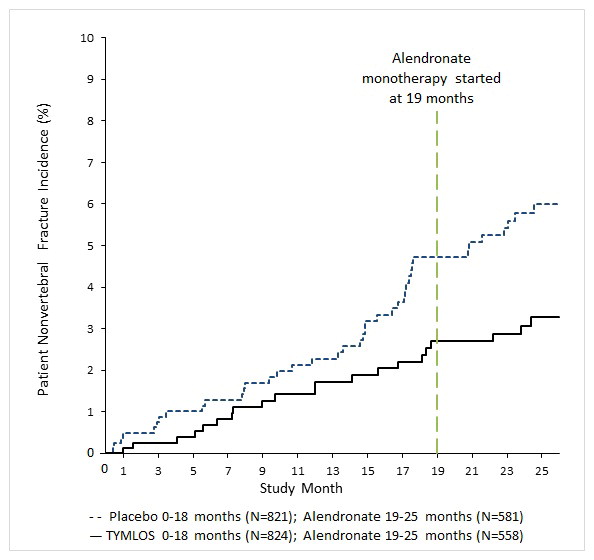
The efficacy of TYMLOS for the treatment of postmenopausal osteoporosis was evaluated in Study 003 (NCT 01343004), an 18-month, randomized, multicenter, double-blind, placebo-controlled clinical trial in postmenopausal women aged 49 to 86 years (mean age of 69) who were randomized to receive TYMLOS 80 mcg (N = 824) or placebo (N = 821) given subcutaneously once daily. Approximately 80% of patients were Caucasian, 16% were Asian, and 3% were Black; 24% were Hispanic. At baseline, the mean T-scores were -2.9 at the lumbar spine, -2.1 at the femoral neck, and -1.9 at the total hip. At baseline, 24% of patients had at least one prevalent vertebral fracture and 48% had at least one prior nonvertebral fracture. Patients took daily supplemental calcium (500 to 1000 mg) and vitamin D (400 to 800 IU).
The efficacy study was extended as Study 005 (NCT 01657162), an open-label study where patients were no longer receiving TYMLOS or placebo but were maintained in their original randomized treatment group and received 70 mg alendronate weekly, with calcium and vitamin D supplements for 6 months. Study 005 enrolled 1139 patients, representing 92% of patients who completed Study 003. This included 558 patients who had previously received TYMLOS and 581 patients who had previously received placebo. The cumulative 25-month efficacy dataset included 18 months of exposure to TYMLOS or placebo in Study 003, 1 month of no treatment, followed by 6 months of alendronate therapy in Study 005. Study 005 was then continued to complete 18 months of additional alendronate exposure during which time patients were no longer blinded to their original Study 003 treatment group.
1.1 Treatment of Postmenopausal Women With Osteoporosis At High Risk for Fracture
TYMLOS is indicated for the treatment of postmenopausal women with osteoporosis at high risk for fracture (defined as a history of osteoporotic fracture or multiple risk factors for fracture), or patients who have failed or are intolerant to other available osteoporosis therapy. In postmenopausal women with osteoporosis, TYMLOS reduces the risk of vertebral fractures and nonvertebral fractures.
1.2 Treatment to Increase Bone Density in Men With Osteoporosis At High Risk for Fracture
TYMLOS is indicated to increase bone density in men with osteoporosis at high risk for fracture (defined as a history of osteoporotic fracture or multiple risk factors for fracture), or patients who have failed or are intolerant to other available osteoporosis therapy.
Structured Label Content
Section 42229-5 (42229-5)
Adverse Reactions from Clinical Trial in Postmenopausal Women with Osteoporosis
The safety of TYMLOS was evaluated in a randomized, multicenter, double-blind, placebo-controlled clinical trial in postmenopausal women with osteoporosis aged 49 to 86 years (mean age 69 years) who were randomized to receive 80 mcg of TYMLOS (N = 824) or placebo (N = 821), given subcutaneously once daily for 18 months [see Clinical Studies (14.1)].
In this study, the incidence of all-cause mortality was 0.4% in the TYMLOS group and 0.6% in the placebo group. The incidence of serious adverse events was 10% in the TYMLOS group and 11% in the placebo group. The percentage of patients who discontinued study drug due to adverse events was 10% in the TYMLOS group and 6% in the placebo group. The most common adverse reactions leading to study drug discontinuation in the TYMLOS group were nausea (2%), dizziness (1%), headache (1%), and palpitations (1%).
Table 1 shows the most common adverse reactions in the trial. These adverse reactions were generally not present at baseline, occurred more commonly with TYMLOS than with placebo, and occurred in at least 2% of the patients treated with TYMLOS.
|
* Adverse reactions reported in ≥2% of TYMLOS-treated patients. |
||
| Preferred term |
TYMLOS (N=822) (%) |
Placebo (N=820) (%) |
| Hypercalciuria | 11 | 9 |
| Dizziness | 10 | 6 |
| Nausea | 8 | 3 |
| Headache | 8 | 6 |
| Palpitations | 5 | 0.4 |
| Fatigue | 3 | 2 |
| Abdominal pain upper | 3 | 2 |
| Vertigo | 2 | 2 |
Section 42231-1 (42231-1)
|
MEDICATION GUIDE TYMLOS® (tim lows') (abaloparatide) injection, for subcutaneous use |
||
|
What is the most important information I should know about TYMLOS? TYMLOS may cause serious side effects including:
|
||
|
What is TYMLOS?
TYMLOS is a prescription medicine used to:
It is not known if TYMLOS is safe and effective for children 18 years and younger. TYMLOS should not be used in children and young adults whose bones are still growing. |
||
Do not take TYMLOS:
|
||
Before you take TYMLOS, tell your healthcare provider about all of your medical conditions, including if you:
Tell your healthcare provider about all the medicines you take, including prescription and over-the-counter medicines, vitamins, and herbal supplements. |
||
How should I use TYMLOS?
|
||
|
What are the possible side effects of TYMLOS?
TYMLOS may cause serious side effects including:
The most common side effects of TYMLOS in women with postmenopausal osteoporosis include: |
||
|
|
|
|
|
|
|
||
|
The most common side effects of TYMLOS in men with osteoporosis include: |
||
|
|
|
|
|
|
|
|
|
|
|
|
|
These are not all the possible side effects of TYMLOS. Call your doctor for medical advice about side effects. You may report side effects to FDA at 1-800-FDA-1088. |
||
How should I store TYMLOS?
Keep TYMLOS and all medicines out of the reach of children. |
||
|
General information about the safe and effective use of TYMLOS.
Medicines are sometimes prescribed for purposes other than those listed in a Medication Guide. Do not use TYMLOS for a condition for which it was not prescribed. Do not give TYMLOS to other people, even if they have the same condition you have. It may harm them. You can ask your pharmacist or healthcare provider for information about TYMLOS that is written for health professionals. |
||
|
What are the ingredients in TYMLOS?
Active ingredient: abaloparatide Inactive ingredients: acetic acid, phenol, sodium acetate trihydrate, and water for injection. |
||
|
Radius Health, Inc., 22 Boston Wharf Road, 7th Floor, Boston, MA 02210 TYMLOS is a registered trademark of Radius Health, Inc. US-MG-000001 v8.0 Copyright © 2023, Radius Health, Inc. All rights reserved. For more information about TYMLOS, visit our website at www.TYMLOS.com or call Radius Health, Inc., at 1-855-672-3487. |
||
| This Medication Guide has been approved by the U.S. Food and Drug Administration. | Revised: 12/2023 |
Section 59845-8 (59845-8)
INSTRUCTIONS FOR USE
TYMLOS® (tim lows')
(abaloparatide)
injection, for subcutaneous use
Instructions for Use
Read and follow this Instructions for Use so that you inject TYMLOS pen the right way. Call your healthcare provider if you have any questions about the right way to inject the TYMLOS pen.
Important information about your TYMLOS pen
- Do not try to inject TYMLOS yourself until you or your caregiver receive training from a healthcare provider on the right way to use TYMLOS pen.
- Do not share your TYMLOS pen or pen needles with other people, even if the needle has been changed. You may give other people a serious infection, or get a serious infection from them.
- Each TYMLOS pen is a prefilled pen containing 30 doses of TYMLOS. Each dose will contain 80 mcg of TYMLOS. You do not have to measure your dose. The pen measures each dose of TYMLOS for you.
- Use a new pen needle for each injection. Keep the cap on the TYMLOS pen when not using the pen.
- Before using the pen always check the label to be sure it is your TYMLOS pen.
- Do not use your TYMLOS pen if it looks damaged. If you drop your TYMLOS pen or it becomes damaged, call your healthcare provider or pharmacist or call 1-855-672-3487.
- To clean your TYMLOS pen, wipe the outside of the pen with a clean, damp cloth, if needed.
- The TYMLOS pen is not recommended for use by the blind or visually impaired without the help of a person trained in the right way to use the pen.
Pen needles to use with your TYMLOS pen
- Pen needles are not included with your TYMLOS pen. You will need a prescription from your healthcare provider to get pen needles from your pharmacy.
- The correct needles to use with your TYMLOS pen are 5 to 8 mm, 31-gauge needles. Compatible needles include Clickfine®, BD Ultra-Fine™, MedtFine®, Easy Comfort, Clever Choice™ Comfort EZ™, and SureComfort™. If you are not sure what type of needle to use, ask your healthcare provider or pharmacist.
Supplies you will need for each injection using your TYMLOS pen
- 1 TYMLOS pen
- 1 pen needle
- 1 alcohol swab
- 1 cotton ball or gauze pad
- 1 sharps disposal container for pen needles and TYMLOS pens. See " How should I throw away (dispose) of the pen needles and TYMLOS pens? " in the far right column.
How should I store the TYMLOS pen?
- Before first use, store TYMLOS pens in the refrigerator between 36°F to 46°F (2°C to 8°C).
- Do not store pens with the needle attached.
- Do not freeze the TYMLOS pen or expose it to heat.
During 30 days of use:
- After first use, store the TYMLOS pen for up to 30 days at room temperature between 68°F to 77°F (20°C to 25°C).
- Keep the pen cap on your TYMLOS pen when storing. Do not store the TYMLOS pen with needle attached.
- Use your TYMLOS pen for only 30 days.
- Write down the date of your first use of TYMLOS here: _____/_____/_____. Throw away your TYMLOS pen 30 days after first opening it even if it still contains unused medicine.
Keep the TYMLOS pen, pen needles and all medicines out of the reach of children.
How should I throw away (dispose) of the pen needles and TYMLOS pens?
- Throw away (dispose of) your TYMLOS pen, in a FDA-cleared sharps disposal container or puncture resistant container, 30 days after first opening it even if it still contains unused medicine.
- Put your used pen needles in a FDA-cleared sharps disposal container right away after use. Do not throw away (dispose of) your used sharps disposal container in your household trash.
- If you do not have a FDA-cleared sharps disposal container, you may use a household container that is:
- made of a heavy-duty plastic,
- can be closed with a tight-fitting, puncture-resistant lid, without sharps being able to come out,
- upright and stable during use,
- leak-resistant, and properly labeled to warn of hazardous waste inside the container.
- When your sharps disposal container is almost full, you will need to follow your community guidelines for the right way to dispose of your sharps disposal container. There may be state or local laws about how you should throw away used needles, syringes, and prefilled syringes.
- For more information about safe sharps disposal, and for specific information about sharps disposal in the state that you live in, go to FDA's website at: https://www.fda.gov/safesharpsdisposal.
- Do not dispose of your used sharps disposal container in your household trash unless your community guidelines permit this. Do not recycle your used sharps disposal container.
For more information about the TYMLOS pen
For more information, go to www.TYMLOS.com or call 1-855-672-3487.
Manufactured for:
Radius
Radius Health, Inc.
22 Boston Wharf Road, 7th Floor
Boston, MA 02210
TYMLOS is a registered trademark of Radius Health, Inc.
US-IFU-000001-v8.0
Begin the injection.
Check the TYMLOS® pen
Step 1. Wash and dry your hands.
Step 2. Check the expiration date (Exp.) on the TYMLOS pen.
- Do not use the pen if the expiration date has passed.
- Call your healthcare provider or pharmacist if the expiration date has passed.
Attach pen needle to your TYMLOS pen
Step 3. Pull off the pen cap from your TYMLOS pen. (See Figure D.)
- Check the TYMLOS cartridge. The liquid should be clear, colorless, and free of particles; if not, do not use.
Step 4. Pull off the protective paper from the outer needle cap of your pen needle. (See Figure E.)
Step 5. Keep the needle straight and screw it onto the pen until fixed; a secure fit is ensured even if there is no noticeable stop. Do not over-tighten. (See Figure F.)
Step 6. Pull off the outer pen needle cap from the pen needle and keep it to use after your injection. (See Figure G.)
Step 7. Carefully pull off the inner pen needle cap and dispose of it. (See Figure H.)
Step 8. If you are using this pen for the first time, go to the "New pen setup - Day 1 Only" section to prime your pen.
- If you have already used this pen before, go to Step 13 for Days 2 through 30.
New pen setup – Day 1 Only (Priming your TYMLOS pen)
Do not repeat new pen setup on Days 2 through 30.
Step 9. The "New pen setup" removes air bubbles (primes your pen). You only need to prime your pen on Day 1 for each new pen. Otherwise, you will waste medicine.
- Skip Steps 10 through 12 on Days 2 through 30.
Step 10. Turn the dose knob on your TYMLOS pen away from you (clockwise) until it stops. (See Figure I.)
Note: You will see " • 80 " lined up in the dose display window.
Step 11. Hold the TYMLOS pen with the pen needle pointing up. Tap lightly with your finger on the cartridge holder to move any air bubbles in the cartridge to the top of the cartridge. (See Figure J.)
Note: Do Step 11 even if you do not see air bubbles.
Step 12. Press the green injection button until it will not go any further. (See Figure K).
Note: You should see liquid come out of the needle tip.
Note: You will see "•0" lined up in the dose display window.
What should I do if liquid does not come out of the needle tip?
- If you do not see a drop of TYMLOS, repeat Steps 10 through 12. A drop of liquid should come out of the needle tip.
- If you still do not see a drop of liquid call your healthcare provider or pharmacist and use a new TYMLOS pen.
- When you are ready to use your new TYMLOS pen for the first time, remember to repeat all Steps 9 through 12 to prime your new TYMLOS pen.
Set the dose on your TYMLOS pen
Do not push the green injection button while setting your dose.
Step 13. Turn the dose knob on your pen away from you (clockwise) until the dose knob stops and "•80" is lined up in the dose display window. (See Figure L.)
If you set the dose before you are ready to give your injection, turn the dose knob toward you (counter-clockwise) until "•0" is in the dose display window.
If you are not able to set the TYMLOS pen to "•80", dispose of the pen and use a new TYMLOS pen for your injection, repeating Steps 1 through 13.
- If the pen cannot be set to "•80", there is not enough medicine in the TYMLOS pen for your full dose. See " How should I throw away (dispose) of the pen needles and TYMLOS pens? " on the other side.
Choose and clean your injection site
Step 14. Injections should be given in the lower stomach area (abdomen). (See Figure M.) Avoid the 2-inch area around your belly button (navel).
For each injection, change (rotate) your injection site around your abdomen. Talk to your healthcare provider about how to change (rotate) your injection site for each injection. Do not use the same injection area for each injection. Do not inject into areas where the skin is tender, bruised, red, scaly, or hard. Avoid areas with scars or stretch marks.
Step 15. Wipe the injection site with an alcohol swab and allow it to dry. Do not touch, fan, or blow on the injection site after you have cleaned it.
Giving your TYMLOS pen injection
Read Step 16 and Step 17 before you give your injection.
Inject your TYMLOS pen the way your healthcare provider has shown you.
Step 16. (See Figure N.)
- Hold the pen so you can see the dose display window during the injection.
- Insert the pen needle straight into your skin.
Step 17. (See Figure O.)
- Press the green injection button until it cannot go any further and "•0" is in the dose display window. Do not move the TYMLOS pen after inserting the needle.
- Continue to press the green injection button while counting to 10. Counting to 10 will allow the full dose of TYMLOS to be given.
Step 18. After counting to 10, release your finger from the green injection button and slowly remove the TYMLOS pen from the injection site by pulling the pen needle straight out.
Remove the pen needle
Step 19. Carefully place the outer needle cap back on the pen needle. Press on the outer needle cap until it snaps into place and is secure. (See Figure P.)
Caution: To prevent needle stick injury, carefully follow Step 20.
Step 20. Unscrew the capped needle (like unscrewing a cap from a bottle). To unscrew the capped needle you may need to turn it 8 or more turns and then gently pull until the capped needle comes off. (See Figure Q.)
Note: Do not push on the outer needle cap while unscrewing the needle. You should see a gap widening between the outer needle cap and the pen as you unscrew the needle. (See Figure R.)
Replace pen cap
Step 21. Firmly replace the pen cap onto the TYMLOS pen. (See Figure S.)
Keep the pen cap on your TYMLOS pen between injections.
After your injection
Step 22. Press a cotton ball or gauze pad over the injection site and hold for 10 seconds. Do not rub the injection site. You may have slight bleeding. This is normal.
You may cover the injection site with a small adhesive bandage, if needed.
- Dispose of the pen needle. See "How should I throw away (dispose) of the pen needles and TYMLOS pens?" .
This Instructions for Use has been approved by the U.S. Food and Drug Administration.
Issued:04/2021
10 Overdosage (10 OVERDOSAGE)
In a clinical study, accidental overdose was reported in a patient who received 400 mcg in one day (5 times the recommended clinical dose); dosing was temporarily interrupted. The patient experienced asthenia, headache, nausea, and vertigo. Serum calcium was not assessed on the day of the overdose, but on the following day the patient's serum calcium was within the normal range. The effects of overdose may include hypercalcemia, nausea, vomiting, dizziness, tachycardia, orthostatic hypotension, and headache.
11 Description (11 DESCRIPTION)
TYMLOS injection for subcutaneous administration contains abaloparatide, a synthetic 34 amino acid peptide. Abaloparatide is an analog of human parathyroid hormone related peptide, PTHrP(1-34). It has 41% homology to hPTH(1-34) (human parathyroid hormone 1-34) and 76% homology to hPTHrP(1-34) (human parathyroid hormone-related peptide 1-34).
Abaloparatide has a molecular formula of C174H300N56O49 and a molecular weight of 3961 daltons with the amino acid sequence shown below:
-
Ala-Val-Ser-Glu-His-Gln-Leu-Leu-His-Asp-Lys-Gly-Lys-Ser-Ile-Gln-Asp-Leu-Arg-Arg-Arg-Glu-Leu-Leu-Glu-Lys-Leu-Leu-Aib-Lys-Leu-His-Thr-Ala-NH2
TYMLOS injection is supplied as a sterile, colorless, clear solution in a glass cartridge which is pre-assembled into a disposable single-patient-use pen. The pen is intended to deliver 30 once daily abaloparatide doses of 80 mcg in 40 mcL. Each cartridge contains 1.56 mL of TYMLOS solution which contains 3.12 mg of abaloparatide, and the following inactive ingredients: 1.2 mg glacial acetic acid, 7.8 mg phenol, 7.92 mg sodium acetate trihydrate, and water for injection to a target pH range of 5.1 to 5.2.
16.1 How Supplied
TYMLOS (abaloparatide) injection is a clear and colorless solution, available as a pre-assembled single-patient-use disposable pen (NDC 70539-001-01) packaged in a cardboard carton (NDC 70539-001-02) with the Instructions for Use and Medication Guide. Each disposable pen embodies a glass cartridge that contains 3120 mcg of abaloparatide in 1.56 mL (2000 mcg/mL). Each pen provides a 30-day supply for once daily injection of 80 mcg abaloparatide in 40 mcL.
Sterile needles are not included.
5.3 Hypercalcemia
TYMLOS may cause hypercalcemia. TYMLOS is not recommended in patients with pre-existing hypercalcemia or in patients who have an underlying hypercalcemic disorder, such as primary hyperparathyroidism, because of the possibility of exacerbating hypercalcemia [see Adverse Reactions (6.1)].
8.4 Pediatric Use
Safety and effectiveness of TYMLOS have not been established in pediatric patients. TYMLOS is not recommended for use in pediatric patients with open epiphyses or hereditary disorders predisposing to osteosarcoma because of an increased baseline risk of osteosarcoma [see Warnings and Precautions (5.1)].
8.5 Geriatric Use
Of the total number of patients in the postmenopausal osteoporosis clinical studies of TYMLOS, 82% were age 65 years and over, and 19% were age 75 years and over. In the male osteoporosis study, 74% were age 65 years and over and 23% were age 75 years or over. No overall differences in safety or effectiveness were observed between these subjects and younger subjects, but greater sensitivity of some older individuals cannot be ruled out.
12.6 Immunogenicity
The observed incidence of anti-drug antibodies is highly dependent on the sensitivity and specificity of the assay. Differences in assay methods preclude meaningful comparisons of the incidence of anti-drug antibodies in the studies described below with the incidence of anti-drug antibodies in other studies, including those of abaloparatide or of other abaloparatide products.
4 Contraindications (4 CONTRAINDICATIONS)
TYMLOS is contraindicated in patients with a history of systemic hypersensitivity to abaloparatide or to any component of the product formulation. Reactions have included anaphylaxis, dyspnea, and urticaria [see Adverse Reactions (6.2)].
6 Adverse Reactions (6 ADVERSE REACTIONS)
7 Drug Interactions (7 DRUG INTERACTIONS)
No specific drug-drug interaction studies have been performed [see Clinical Pharmacology (12.3)].
8.6 Renal Impairment
No dosage adjustment is required for patients with mild, moderate, or severe renal impairment. A study of a single dose of TYMLOS 80 mcg given subcutaneously was conducted in subjects with normal renal function or mild, moderate, or severe renal impairment. The maximal concentration (Cmax) and area under the concentration-time curve (AUC) of abaloparatide increased 1.4- and 2.1-fold, respectively, in subjects with severe renal impairment, compared to subjects with normal renal function. Patients with severe renal impairment may have increased abaloparatide exposure that may increase the risk of adverse reactions; therefore, monitor for adverse reactions [see Clinical Pharmacology (12.3)].
12.3 Pharmacokinetics
Following seven days of subcutaneous administration of abaloparatide 80 mcg, the mean (SD) abaloparatide exposure was 812 (118) pg/mL for Cmax and 1622 (641) pg∙hr/mL for AUC0–24 in postmenopausal women with osteoporosis.
2.1 Recommended Dosage
- The recommended dosage of TYMLOS is 80 mcg administered subcutaneously once daily.
- Patients should receive supplemental calcium and vitamin D if dietary intake is inadequate.
2.3 Treatment Duration
The safety and efficacy of TYMLOS have not been evaluated beyond 2 years of treatment. Use of the drug for more than 2 years during a patient's lifetime is not recommended.
1 Indications and Usage (1 INDICATIONS AND USAGE)
TYMLOS is a human parathyroid hormone related peptide [PTHrP(1-34)] analog indicated for the:
- Treatment of postmenopausal women with osteoporosis at high risk for fracture or patients who have failed or are intolerant to other available osteoporosis therapy. (1.1)
- Treatment to increase bone density in men with osteoporosis at high risk for fracture or patients who have failed or are intolerant to other available osteoporosis therapy. (1.2)
12.1 Mechanism of Action
Abaloparatide is a PTHrP(1-34) analog which acts as an agonist at the PTH1 receptor (PTH1R). This results in activation of the cAMP signaling pathway in target cells. Once-daily administration of abaloparatide stimulates new bone formation on trabecular and cortical bone surfaces by stimulation of osteoblastic activity. In rats and monkeys, abaloparatide had an anabolic effect on bone, demonstrated by increases in BMD and bone mineral content (BMC) that correlated with increases in bone strength at vertebral and/or nonvertebral sites [see Nonclinical Toxicology (13.2)].
5.1 Risk of Osteosarcoma
Abaloparatide caused a dose-dependent increase in the incidence of osteosarcoma in male and female rats after subcutaneous administration at exposures 4 to 28 times the human exposure at the clinical dose of 80 mcg [see Nonclinical Toxicology (13.1)]. It is unknown whether TYMLOS will cause osteosarcoma in humans.
Osteosarcoma has been reported in patients treated with a PTH-analog in the post marketing setting; however, an increased risk of osteosarcoma has not been observed in observational studies in humans. There are limited data assessing the risk of osteosarcoma beyond 2 years of TYMLOS and/or use of a PTH-analog [see Dosage and Administration (2.3) and Nonclinical Toxicology (13.1)].
Avoid TYMLOS use in patients with (these patients are at increased baseline risk of osteosarcoma):
- Open epiphyses (pediatric and young adult patients) (TYMLOS is not approved in pediatric patients) [see Use in Specific Populations (8.4)].
- Metabolic bone diseases other than osteoporosis, including Paget's disease of the bone.
- Bone metastases or a history of skeletal malignancies.
- Prior external beam or implant radiation therapy involving the skeleton.
- Hereditary disorders predisposing to osteosarcoma.
16.2 Storage and Handling
- Before first use, store TYMLOS under refrigeration between 2°C to 8°C (36°F to 46°F).
- After first use, store for up to 30 days at 20°C to 25°C (68°F to 77°F).
- Do not freeze or subject to heat.
14.2 Men With Osteoporosis (14.2 Men with Osteoporosis)
The efficacy of TYMLOS for the treatment of men with osteoporosis was evaluated in Study 019 (NCT 03512262), a 12-month, randomized, multicenter, double-blind, placebo-controlled clinical trial in men aged 42 to 85 years (mean age of 68) who were randomized to receive TYMLOS 80 mcg (N = 149) or placebo (N = 79) given subcutaneously once daily. Approximately 95% of patients were Caucasian, 4% were Asian, and <1% (0.4%) were Black; 16% were Hispanic. At baseline, the mean T-scores were -2.1 at the lumbar spine, -2.1 at the femoral neck, and -1.7 at the total hip. Patients took daily supplemental calcium (500 to 1000 mg) and vitamin D (400 to 800 IU).
5 Warnings and Precautions (5 WARNINGS AND PRECAUTIONS)
- Osteosarcoma: Avoid use in patients with increased risk of osteosarcoma including patients with open epiphyses, metabolic bone diseases including Paget's disease, bone metastases or history of skeletal malignancies, prior external beam or implant radiation therapy involving the skeleton, and hereditary disorders predisposing to osteosarcoma. (5.1)
- Orthostatic Hypotension: Instruct patients to sit or lie down if symptoms develop after dose administration. (5.2)
- Hypercalcemia: Avoid use in patients with pre-existing hypercalcemia and those known to have an underlying hypercalcemic disorder, such as primary hyperparathyroidism. (5.3)
- Hypercalciuria and Urolithiasis: Monitor urine calcium if pre-existing hypercalciuria or active urolithiasis are suspected. (5.4)
2 Dosage and Administration (2 DOSAGE AND ADMINISTRATION)
- Recommended dosage is 80 mcg subcutaneously once daily; patients should receive supplemental calcium and vitamin D if dietary intake is inadequate. (2.1)
- Administer as a subcutaneous injection into periumbilical region of abdomen. (2.2)
- Administer initially where the patient can sit or lie down in case symptoms of orthostatic hypotension occur. (2.2, 5.2)
5.2 Orthostatic Hypotension
Orthostatic hypotension may occur with TYMLOS, typically within 4 hours of injection. Associated symptoms may include dizziness, palpitations, tachycardia, or nausea, and may resolve by having the patient lie down. For the first several doses, TYMLOS should be administered where the patient can sit or lie down if necessary [see Adverse Reactions (6.1)].
3 Dosage Forms and Strengths (3 DOSAGE FORMS AND STRENGTHS)
Injection: 3120 mcg/1.56 mL (2000 mcg/mL) of abaloparatide in clear, colorless solution in a single-patient-use prefilled pen. The prefilled pen delivers 30 doses of TYMLOS, each containing 80 mcg of abaloparatide in 40 mcL.
6.2 Postmarketing Experience
The following adverse reactions have been identified during the post-approval use of TYMLOS. Because these reactions are reported voluntarily from a population of uncertain size, it is not always possible to reliably estimate their frequency or establish a causal relationship to drug exposure.
- Abdominal distension, abdominal pain, abdominal discomfort
- Constipation, diarrhea, vomiting, decreased appetite
- Asthenia, lethargy, malaise, feeling abnormal, hot flush
- Insomnia
- Hypersensitivity and anaphylactic reactions, dyspnea (in the context of allergic reactions)
- Pruritus, rash
- Generalized pain and pain in bone, joint, back, and extremity
- Blood pressure increased
- Muscle spasms of the leg and back
- Injection site reactions including bruising, hemorrhage, pruritus, and rash
6.1 Clinical Trials Experience
Because clinical studies are conducted under widely varying conditions, adverse reaction rates observed in the clinical studies of a drug cannot be directly compared to rates in the clinical studies of another drug and may not reflect the rates observed in practice.
2.2 Administration Instructions
- Administer TYMLOS as a subcutaneous injection into the periumbilical region of the abdomen. Rotate the site of the injection every day and administer at approximately the same time every day. Do not administer intravenously or intramuscularly.
- Administer the first several doses where the patient can sit or lie down if necessary, in case symptoms of orthostatic hypotension occur [see Warnings and Precautions (5.2) and Adverse Reactions (6.1)].
- Visually inspect TYMLOS for particulate matter and discoloration prior to administration. TYMLOS is a clear and colorless solution. Do not use if solid particles appear or if the solution is cloudy or colored.
- Provide appropriate training and instruction to patients and caregivers on the proper use of the TYMLOS pen.
17 Patient Counseling Information (17 PATIENT COUNSELING INFORMATION)
Advise the patient to read the FDA-approved patient labeling (Medication Guide and Instructions for Use).
5.4 Hypercalciuria and Urolithiasis
TYMLOS may cause hypercalciuria. It is unknown whether TYMLOS may exacerbate urolithiasis in patients with active or a history of urolithiasis. If active urolithiasis or pre-existing hypercalciuria is suspected, measurement of urinary calcium excretion should be considered [see Adverse Reactions (6.1)].
13.2 Animal Toxicology and Pharmacology
In toxicity studies in rats and monkeys of up to 26-week and 39-week duration, respectively, findings included vasodilation, increases in serum calcium, decreases in serum phosphorus, and soft tissue mineralization at doses ≥10 mcg/kg/day. The 10 mcg/kg/day dose resulted in systemic exposures to abaloparatide in rats and monkeys that were 2 and 3 times, respectively, the exposure in humans at daily subcutaneous doses of 80 mcg.
Pharmacologic effects of abaloparatide on the skeleton were assessed in 12- and 16-month studies in ovariectomized (OVX) rats and monkeys, at doses up to 11- and 1-times human exposure at the recommended subcutaneous dose of 80 mcg, respectively (based on AUC comparisons). In these animal models of postmenopausal osteoporosis, treatment with abaloparatide resulted in dose-dependent increases in bone mass at vertebral and/or nonvertebral sites, correlating with increases in bone strength. The anabolic effect of abaloparatide was due to the predominant increase in osteoblastic bone formation and was evidenced by increases in trabecular thickness and/or cortical thickness due to endosteal bone apposition. Abaloparatide maintained or improved bone quality at all skeletal sites evaluated and did not cause any mineralization defects.
In an 8-week study in androgen-deficient orchiectomized (ORX) male rats, a male osteoporosis model, the effects of 5 and 25 mcg/kg/day abaloparatide (≥47-fold clinical exposures by AUC) were examined on bone formation, bone mass, and bone strength. Abaloparatide induced bone formation and improved cortical and trabecular BMD, geometry, and architecture without increasing parameters of bone resorption.
Principal Display Panel 80 Mcg Prefilled Pen Box (PRINCIPAL DISPLAY PANEL - 80 mcg Prefilled Pen Box)
NDC 70539-001-02
TYMLOS®
(abaloparatide) injection
80 mcg per dose
3120 mcg/1.56 mL (2000 mcg/mL)
For subcutaneous use
For Single Patient Use Only
Rx only
Sterile
1 prefilled pen
Needles not included
Each prefilled pen will deliver
30 subcutaneous doses.
Dispense the enclosed
Medication Guide
and Instructions for Use
to each patient.
Principal Display Panel 80 Mcg Prefilled Pen Label (PRINCIPAL DISPLAY PANEL - 80 mcg Prefilled Pen Label)
NDC 70539-001-01
Rx only
Read Instructions for Use BEFORE injecting.
Date of first use ________/________/________.
Discard unused portion 30 days after first opening.
TYMLOS®
(abaloparatide) injection
80 mcg per dose
3120 mcg/1.56 mL (2000 mcg/mL)
For subcutaneous use
For Single Patient Use Only
Each prefilled pen will deliver 30 subcutaneous doses.
Before first use, keep in refrigerator at 2°C – 8°C (36°F – 46°F).
After first use, store for up to 30 days at 20°C – 25°C
(68°F – 77°F). Do not freeze or subject to heat.
Mfg. for: Radius Health, Inc.
Boston, MA 02210 USA
10006074-04
Lot:
Exp.:
Principal Display Panel 80 Mcg Prefilled Pen Box Sample (PRINCIPAL DISPLAY PANEL - 80 mcg Prefilled Pen Box - Sample)
NDC 70539-001-98
TYMLOS®
(abaloparatide) injection
80 mcg per dose
3120 mcg/1.56 mL (2000 mcg/mL)
For subcutaneous use
For Single Patient Use Only
Sterile
Rx only
SAMPLE—NOT FOR SALE
1 prefilled pen
Needles not included
Each prefilled pen will deliver
30 subcutaneous doses.
Dispense the enclosed
Medication Guide
and Instructions for Use
to each patient.
Principal Display Panel Sample 80 Mcg Prefilled Pen Label (PRINCIPAL DISPLAY PANEL - Sample 80 mcg Prefilled Pen Label)
NDC 70539-001-99
Rx only
Read Instructions for Use BEFORE injecting.
Date of first use ________/________/________.
Discard unused portion 30 days after first opening.
TYMLOS®
(abaloparatide) injection
SAMPLE—NOT FOR SALE
80 mcg per dose
3120 mcg/1.56 mL (2000 mcg/mL)
For subcutaneous use
For Single Patient Use Only
Each prefilled pen will deliver 30 subcutaneous doses.
Before first use, keep in refrigerator at 2°C – 8°C (36°F – 46°F).
After first use, store for up to 30 days at 20°C – 25°C
(68°F – 77°F). Do not freeze or subject to heat.
Mfg. for: Radius Health, Inc.
Boston, MA 02210 USA
10006645-04
Lot:
Exp.:
14.1 Efficacy Study in Women With Postmenopausal Osteoporosis (14.1 Efficacy Study in Women with Postmenopausal Osteoporosis)
The efficacy of TYMLOS for the treatment of postmenopausal osteoporosis was evaluated in Study 003 (NCT 01343004), an 18-month, randomized, multicenter, double-blind, placebo-controlled clinical trial in postmenopausal women aged 49 to 86 years (mean age of 69) who were randomized to receive TYMLOS 80 mcg (N = 824) or placebo (N = 821) given subcutaneously once daily. Approximately 80% of patients were Caucasian, 16% were Asian, and 3% were Black; 24% were Hispanic. At baseline, the mean T-scores were -2.9 at the lumbar spine, -2.1 at the femoral neck, and -1.9 at the total hip. At baseline, 24% of patients had at least one prevalent vertebral fracture and 48% had at least one prior nonvertebral fracture. Patients took daily supplemental calcium (500 to 1000 mg) and vitamin D (400 to 800 IU).
The efficacy study was extended as Study 005 (NCT 01657162), an open-label study where patients were no longer receiving TYMLOS or placebo but were maintained in their original randomized treatment group and received 70 mg alendronate weekly, with calcium and vitamin D supplements for 6 months. Study 005 enrolled 1139 patients, representing 92% of patients who completed Study 003. This included 558 patients who had previously received TYMLOS and 581 patients who had previously received placebo. The cumulative 25-month efficacy dataset included 18 months of exposure to TYMLOS or placebo in Study 003, 1 month of no treatment, followed by 6 months of alendronate therapy in Study 005. Study 005 was then continued to complete 18 months of additional alendronate exposure during which time patients were no longer blinded to their original Study 003 treatment group.
1.1 Treatment of Postmenopausal Women With Osteoporosis At High Risk for Fracture (1.1 Treatment of Postmenopausal Women with Osteoporosis at High Risk for Fracture)
TYMLOS is indicated for the treatment of postmenopausal women with osteoporosis at high risk for fracture (defined as a history of osteoporotic fracture or multiple risk factors for fracture), or patients who have failed or are intolerant to other available osteoporosis therapy. In postmenopausal women with osteoporosis, TYMLOS reduces the risk of vertebral fractures and nonvertebral fractures.
1.2 Treatment to Increase Bone Density in Men With Osteoporosis At High Risk for Fracture (1.2 Treatment to Increase Bone Density in Men with Osteoporosis at High Risk for Fracture)
TYMLOS is indicated to increase bone density in men with osteoporosis at high risk for fracture (defined as a history of osteoporotic fracture or multiple risk factors for fracture), or patients who have failed or are intolerant to other available osteoporosis therapy.
Advanced Ingredient Data
Raw Label Data
All Sections (JSON)
Additional Information
Back to search View SPL set listing Open on DailyMed ↗
Source: dailymed · Ingested: 2026-02-15T11:46:37.259599 · Updated: 2026-03-14T22:25:11.616622