6fc2e41e-a1bf-4e0f-924a-88be0372d4af
6fc2e41e-a1bf-4e0f-924a-88be0372d4af
34391-3
HUMAN PRESCRIPTION DRUG LABEL
Drug Facts
Composition & Product
Identifiers & Packaging
Indications and Usage
Technescan HDP, after radiolabeling with sodium pertechnetate Tc 99m, is indicated for skeletal imaging to demonstrate areas of altered osteogenesis in adult and pediatric patients.
Contraindications
None known.
Adverse Reactions
The following adverse reactions associated with the use of Technescan HDP have been reported: hypersensitivity reactions, including life-threatening reactions, as well as nausea, vomiting, and injection site reactions.
Drug Interactions
The biodistribution of technetium Tc 99m oxidronate may be altered in the presence of high levels of certain cations (iron, calcium, and aluminum). This may result in reduced uptake of radionuclide in the skeleton and increased extraosseal uptake, which may potentially degrade imaging quality. In patients with high levels of these cations caused by concomitant medications, particularly patients receiving iron infusions, consider performing an imaging study with technetium Tc 99m oxidronate injection once the cation levels have normalized (e.g., after 3 to 5 half-lives of the cation). (See WARNINGS .)
How Supplied
Technescan HDP (kit for the preparation of technetium Tc 99m oxidronate injection) contains 3.15 mg oxidronate sodium as a white lyophilized powder in a multiple-dose vial. Technescan HDP is available as: • 5 vials per carton (NDC 69945-091-20) • 30 vials per carton (NDC 69945-091-40) Before radiolabeling, store at 20°C to 25°C (68°F to 77°F) [see USP Controlled Room Temperature]. After radiolabeling, store vial upright in appropriate shielding at 20°C to 25°C (68°F to 77°F) [see USP Controlled Room Temperature]. Use within 8 hours of radiolabeling. Dispose of unused products in accordance with appropriate regulations. This reagent kit is for distribution to persons licensed by the U.S. Nuclear Regulatory Commission or the relevant regulatory authority of an Agreement State. Manufactured by: Curium US LLC 2703 Wagner Place Maryland Heights, MO 63043 Made in USA ©2025 Curium US LLC. Technescan™, Curium™, and the Curium logo are trademarks of a Curium company. A091I0 Revised: 11/2025
Description
T echne s can ™ HDP ( K it for the P reparation of T echnetium Tc 99m O xidronate I njection) For Intravenous Use
Medication Information
Warnings
Technetium Tc 99m oxidronate may cause life-threatening hypersensitivity reactions. Have cardiopulmonary resuscitation equipment and personnel available and monitor all patients for hypersensitivity reactions. (See ADVERSE REACTION S.)
Technetium Tc 99m oxidronate is known to complex cations such as calcium. Particular caution should be used with patients who have or who may be predisposed to hypocalcemia.
The biodistribution of technetium Tc 99m oxidronate may be altered in the presence of high levels of certain cations (iron, calcium, and aluminum). This may result in reduced uptake of radionuclide in the skeleton and increased extraosseal uptake, which may potentially degrade imaging quality. High levels of these cations may be caused by concomitant medications or medical conditions (e.g., iron overload, hypercalcemia, etc.). Most cases were observed after iron infusion. (See PRECAUTIONS, Drug Interactions.)
Indications and Usage
Technescan HDP, after radiolabeling with sodium pertechnetate Tc 99m, is indicated for skeletal imaging to demonstrate areas of altered osteogenesis in adult and pediatric patients.
Contraindications
None known.
Adverse Reactions
The following adverse reactions associated with the use of Technescan HDP have been reported: hypersensitivity reactions, including life-threatening reactions, as well as nausea, vomiting, and injection site reactions.
Drug Interactions
The biodistribution of technetium Tc 99m oxidronate may be altered in the presence of high levels of certain cations (iron, calcium, and aluminum). This may result in reduced uptake of radionuclide in the skeleton and increased extraosseal uptake, which may potentially degrade imaging quality. In patients with high levels of these cations caused by concomitant medications, particularly patients receiving iron infusions, consider performing an imaging study with technetium Tc 99m oxidronate injection once the cation levels have normalized (e.g., after 3 to 5 half-lives of the cation). (See WARNINGS.)
How Supplied
Technescan HDP (kit for the preparation of technetium Tc 99m oxidronate injection) contains 3.15 mg oxidronate sodium as a white lyophilized powder in a multiple-dose vial.
Technescan HDP is available as:
• 5 vials per carton (NDC 69945-091-20)
• 30 vials per carton (NDC 69945-091-40)
Before radiolabeling, store at 20°C to 25°C (68°F to 77°F) [see USP Controlled Room Temperature].
After radiolabeling, store vial upright in appropriate shielding at 20°C to 25°C (68°F to 77°F) [see USP Controlled Room Temperature]. Use within 8 hours of radiolabeling.
Dispose of unused products in accordance with appropriate regulations.
This reagent kit is for distribution to persons licensed by the U.S. Nuclear Regulatory Commission or the relevant regulatory authority of an Agreement State.
Manufactured by: Curium US LLC
2703 Wagner Place
Maryland Heights, MO 63043
Made in USA
©2025 Curium US LLC. Technescan™, Curium™, and the Curium logo are trademarks of a Curium company.
A091I0
Revised: 11/2025
Description
Drug Characteristics
Technescan™ HDP (kit for the preparation of technetium Tc 99m oxidronate injection) is a radioactive diagnostic drug for intravenous use after radiolabeling with sodium pertechnetate Tc 99m injection.
Each vial contains 3.15 mg oxidronate sodium and 0.258 mg, minimum, stannous chloride (SnCl 2•2H 2O), 0.297 mg, theoretical, stannous chloride (SnCl 2•2H 2O) with 0.343 mg, maximum, tin chloride [stannous and stannic] dihydrate as SnCl 2•2H 2O, and the following inactive ingredients: 0.84 mg gentisic acid as a stabilizer and 30 mg sodium chloride. The pH is adjusted with hydrochloric acid and/or sodium hydroxide. The pH of the radiolabeled drug is between 4.0 and 5.5. The vial contains a sterile, non-pyrogenic, lyophilized powder packaged under nitrogen.
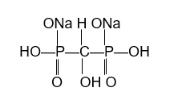
The chemical structure of oxidronate sodium is:
The structure of the technetium Tc 99m oxidronate complex is unknown.
Principal Display Panel
Technescan™ HDP NDC 69945-091-01
(kit for the preparation of technetium Tc 99m oxidronate injection)
3.15 mg oxidronate per vial
Multiple-dose vial. For intravenous use only after radiolabeling with Sodium Pertechnetate Tc 99m.
Sterile, Non-pyrogenic
Each vial contains 3.15 mg oxidronate sodium and 0.258 mg, minimum, stannous chloride (SnCl 2 ● 2H 2O), 0.297 mg, theoretical, stannous chloride (SnCl 2 ● 2H 2O), with 0.343 mg, maximum, tin chloride [stannous and stannic] dihydrate as SnCl 2 ● 2H 2O. In addition, each vial contains 0.84 mg gentisic acid (stabilizer) and 30 mg sodium chloride. The pH is adjusted with HCl and/or NaOH. Contents are lyophilized and sealed under nitrogen. Use within 8 hours of radiolabeling.
Store at 20° to 25°C (68° to 77°F) [see USP Controlled Room Temperature].
Recommended Dosage: See Package Insert. Rx only
Manufactured by: Curium US LLC, Maryland Heights, MO 63043
Made in USA
CURIUM™
A091V0
R07/2025
Section 42229-5
T echne s can ™ HDP
( K it for the P reparation of T echnetium Tc 99m O xidronate I njection)
For Intravenous Use
General
Technetium Tc 99m oxidronate contributes to a patient’s overall long-term cumulative radiation exposure. Long-term cumulative radiation exposure is associated with an increased risk of cancer. Ensure safe drug handling to protect patients and healthcare providers from unintentional radiation exposure. (See DOSAGE AND ADMINISTRATION, Radiation Safety-Drug Handling.) To minimize radiation dose to the bladder, encourage patients to drink fluids before and after administration and to void immediately before the examination and as often thereafter as possible for the next 4 to 6 hours.
Pregnancy
Animal reproduction studies have not been conducted with technetium Tc 99m oxidronate. It is also not known whether technetium Tc 99m oxidronate can cause fetal harm when administered to a pregnant woman or can affect reproduction capacity.
All radiopharmaceuticals, including Tehnescan HDP, have the potential to cause fetal harm depending on the fetal stage of development and the magnitude of the radiation dose. If considering Technescan HDP administration to a pregnant woman, inform the patient about the potential for adverse pregnancy outcomes based on the radiation dose from technetium Tc 99m oxidronate and the gestational timing of exposure.
Overdosage
In the event of the administration of an overdose of Technetium Tc 99m Oxidronate Injection, encourage patients to drink fluids and void frequently to reduce the radiation dose to the patient.
Geriatric Use
This drug is known to be substantially excreted by the kidney, and the risk of toxic reactions to this drug may be greater in patients with impaired renal function. Because elderly patients are more likely to have decreased renal function, care should be taken in dose selection, and it may be useful to monitor renal function.
Pediatric Use
Technescan HDP, after radiolabeling with sodium pertechnetate Tc 99m, is indicated for skeletal imaging to demonstrate areas of altered osteogenesis in pediatric patients.
The relatively higher effective dose and radiation exposure of the epiphyses in growing bone should be considered in pediatric patients. (See DOSAGE AND ADMINISTRATION, Radiation Dosimetry).
Nursing Mothers
Technetium-99m is excreted in human milk during lactation, therefore formula feedings should be substituted for breast feedings.
Recommended Dosage
Adults
The recommended amount of radioactivity of Technetium Tc 99m Oxidronate Injection in adults is 555 MBq (15 mCi) with a range of 370 MBq to 740 MBq (10 mCi to 20 mCi).
The maximum dose of oxidronate sodium in adults is 2 mg.
Pediatric Patients
The recommended amount of radioactivity of Technetium Tc 99m Oxidronate Injection in pediatric patients is 7.4 MBq/kg to 13 MBq/kg (0.20 mCi/kg to 0.35 mCi/kg).
The recommended minimum and maximum activity in pediatric patients are 37 MBq (1 mCi) and 740 MBq (20 mCi), respectively. The maximum dose of oxidronate sodium in pediatric patients is 2 mg.
Radiation Dosimetry
Estimated absorbed radiation doses from an intravenous injection of Technetium Tc 99m Oxidronate Injection are shown in Table 4.
| Organ/Tissue | Absorbed Dose* per Unit Activity Administered
(mGy/MBq) |
||||
| Adults | 15 years | 10 years | 5 years | 1 year | |
| Adrenals | 0.0021 | 0.0026 | 0.0038 | 0.0058 | 0.0110 |
| Bone surfaces | 0.0340 | 0.0150 | 0.0230 | 0.0380 | 0.0820 |
| Brain | 0.0017 | 0.0020 | 0.0028 | 0.0042 | 0.0059 |
| Breast | 0.0007 | 0.0009 | 0.0013 | 0.0021 | 0.0040 |
| Gallbladder wall | 0.0014 | 0.0018 | 0.0033 | 0.0043 | 0.0065 |
| GI tract | |||||
| Stomach | 0.0012 | 0.0014 | 0.0024 | 0.0036 | 0.0064 |
| Small intestine wall | 0.0022 | 0.0028 | 0.0043 | 0.0061 | 0.0093 |
| Colon wall | 0.0027 | 0.0034 | 0.0052 | 0.0072 | 0.0100 |
| Upper large intestine wall | 0.0019 | 0.0024 | 0.0038 | 0.0057 | 0.0087 |
| Lower large intestine wall | 0.0038 | 0.0047 | 0.0071 | 0.0092 | 0.0130 |
| Heart | 0.0012 | 0.0015 | 0.0022 | 0.0033 | 0.0059 |
| Kidneys | 0.0072 | 0.0087 | 0.0120 | 0.0180 | 0.0310 |
| Liver | 0.0012 | 0.0016 | 0.0024 | 0.0036 | 0.0064 |
| Lungs | 0.0012 | 0.0016 | 0.0023 | 0.0035 | 0.0067 |
| Muscles | 0.0018 | 0.0022 | 0.0033 | 0.0047 | 0.0077 |
| Esophagus | 0.0010 | 0.0013 | 0.0019 | 0.0029 | 0.0051 |
| Ovaries | 0.0036 | 0.0045 | 0.0065 | 0.0086 | 0.0120 |
| Pancreas | 0.0016 | 0.0020 | 0.0030 | 0.0045 | 0.0079 |
| Red marrow | 0.0059 | 0.0054 | 0.0088 | 0.0170 | 0.0360 |
| Skin | 0.0010 | 0.0013 | 0.0019 | 0.0030 | 0.0053 |
| Spleen | 0.0014 | 0.0018 | 0.0027 | 0.0044 | 0.0077 |
| Testes | 0.0024 | 0.0033 | 0.0054 | 0.0085 | 0.0100 |
| Thymus | 0.0010 | 0.0013 | 0.0019 | 0.0029 | 0.0051 |
| Thyroid | 0.0013 | 0.0015 | 0.0022 | 0.0034 | 0.0054 |
| Urinary bladder wall | 0.0470 | 0.0590 | 0.0870 | 0.1100 | 0.1300 |
| Uterus | 0.0062 | 0.0075 | 0.0110 | 0.0140 | 0.0180 |
| Remaining organs | 0.0019 | 0.0023 | 0.0034 | 0.0050 | 0.0077 |
| Effective Dose (mSv/MBq) | 0.0049 | 0.0057 | 0.0086 | 0.0120 | 0.0180 |
| *For normal skeletal uptake and kidney function |
Clinical Pharmacology
During the 24 hours following injection, technetium Tc 99m oxidronate is cleared from blood and other non-osseous tissues and accumulates in the skeleton and urine in humans. Blood levels are about 10% of the injected dose at one hour post-injection and continue to fall to about 6%, 4% and 3% at 2, 3, and 4 hours, respectively. When measured at 24 hours following its administration, skeletal retention is approximately 50% of the injected dose. Technetium Tc 99m oxidronate exhibits its greatest affinity for areas of altered osteogenesis and actively metabolizing bone.
Administration Instructions
- Measure the patient dose with a dose calibrator just prior to administration.
- Administer the dose intravenously by slow injection 1 hour to 4 hours before imaging.
- To minimize radiation dose to the bladder, encourage the patients to drink fluids before and after administration of Technetium Tc 99m Oxidronate Injection and to void immediately before the examination and as often thereafter as possible for the next 6 hours. (See PRECAUTIONS, General.)
Directions for Drug Preparation
Procedural Precautions
- The contents of the vial are intended only for use in the preparation of Technetium Tc 99m Oxidronate Injection and are NOT to be administered directly to the patient.
- The components of the kit are sterile and non-pyrogenic. Follow the directions carefully and adhere to strict aseptic procedures during preparation.
- Sodium pertechnetate Tc 99m injection that contains an oxidizing agent or 0.9% sodium chloride injection containing preservatives is not suitable for use in the preparation of Technetium Tc 99m Oxidronate Injection.
- Wear waterproof gloves during the entire preparation procedure and during subsequent patient dose withdrawals from the reaction vial.
- Make all transfers of sodium pertechnetate Tc 99m injection using an adequately shielded syringe.
- Keep the prepared Technetium Tc 99m Oxidronate Injection in the lead vial shield with fitted lead cover in place during the useful life of the radioactive preparation. Make all withdrawals and injection of the Technetium Tc 99m Oxidronate Injection with an adequately shielded syringe.
- If the dose is for a single adult patient or for pediatric patients, see Directions for the Preparation of a Single Adult Dose or Pediatric Dose(s).
Directions for the Preparation of Adult Doses
- Remove the plastic disc from the Technescan HDP vial and swab the rubber septum with an alcohol swab or a suitable bacteriostatic agent to disinfect the surface.
- Place the vial in a lead vial shield. Add 3 mL to 6 mL of sodium pertechnetate Tc 99m injection and secure with a fitted lead cover. In choosing the amount of sodium pertechnetate Tc 99m injection radioactivity to be used, the number of doses desired, the activity of each dose, and radioactive decay must be taken into account. The recommended maximum activity of sodium pertechnetate Tc 99m injection to be added to the vial is 11,100 MBq (300 mCi).
- Shake the vial gently, for approximately 30 seconds, to ensure complete dissolution.
- Using proper shielding, visually inspect the reaction vial. The resulting solution should be clear and free of particulate matter. If not, do not use the product.
- Assay the product in a suitable dose calibrator and record the time, date of preparation, and the activity of the Technetium Tc 99m Oxidronate Injection on the radioassay information label and affix it to the vial.
- Determine the radiochemical purity prior to administration.
- Store the reaction vial upright in the lead vial shield with fitted lead cover in place at room temperature, 20°C to 25°C (68° to 77°F). Use within 8 hours of radiolabeling.
- Dispose of unused material in a safe manner in accordance with applicable regulations.
Directions for the Preparation of a Single Adult Dose or Pediatric Dose(s)
a. Remove the plastic cap from the Technescan HDP vial and swab the rubber septum with an alcohol swab or a suitable bacteriostatic agent to disinfect the surface.
b. Add 3 mL to 6 mL of 0.9% sodium chloride injection. Shake the vial gently for approximately 30 seconds to assure complete dissolution.
c. Withdraw and discard all but approximately 1 mL of the solution.
d. Place the vial in a lead vial shield. Add an appropriate amount of sodium pertechnetate Tc 99m injection for a single adult dose or for one or more pediatric doses and shake gently. No more than 1,480 MBq (40 mCi) should be added to the vial when preparing multiple pediatric doses.
e. Proceed with steps 4 through 8 above.
Nuclear Physical Characteristics
Technetium-99m decays by isomeric transition with a physical half-life of 6.02 hours. The principal photon that is useful for detection and imaging is listed in Table 1.
| Radiation | Mean % per
Disintegration |
Energy
(keV) |
| Gamma-2 | 89.07 | 140.5 |
The specific gamma ray constant for technetium-99m is 0.795 R/hr-mCi at 1 cm. The first half-value layer is 0.023 cm of lead (Pb). A range of values for the relative attenuation of the radiation emitted by this radionuclide that results from interposition of various thicknesses of Pb is shown in Table 2. For example, the use of 0.27 cm of Pb will attenuate the external radiation emitted by a factor of about 1,000.
| Shield
Thickness (Pb) cm |
Coefficient
of Attenuation |
| 0.023 | 0.5 |
| 0.09 | 10 -1 |
| 0.18 | 10 -2 |
| 0.27 | 10 -3 |
To correct for physical decay of this radionuclide, the fractions that remain at selected time intervals after the time of calibration are shown in Table 3.
| Table 3. Physical Decay Chart: Technetium-99m, Half-Life 6.02 Hours | |||
| Hours | Fraction
Remaining |
Hours | Fraction
Remaining |
| 0* | 1 | 7 | 0.447 |
| 1 | 0.891 | 8 | 0.398 |
| 2 | 0.794 | 9 | 0.355 |
| 3 | 0.708 | 10 | 0.316 |
| 4 | 0.631 | 11 | 0.282 |
| 5 | 0.562 | 12 | 0.251 |
| 6 | 0.501 | ||
| * Calibration time |
Radiation Safety – Drug Handling
After radiolabeling of Technescan HDP, the reaction vial contains Technetium Tc 99m Oxidronate Injection. Handle Technetium Tc 99m Oxidronate Injection with appropriate safety measures to minimize radiation exposure. (See PRECAUTIONS, General.) Use waterproof gloves, effective radiation shielding, and other appropriate safety measures when preparing and handling Technetium Tc 99m Oxidronate Injection.
Radiopharmaceuticals should be used by or under the control of healthcare providers who are qualified by specific training and experience in the safe use and handling of radionuclides, and whose experience and training have been approved by the appropriate governmental agency authorized to license the use of radionuclides.
Carcinogenesis, Mutagenesis, Impairment of Fertility
No long-term animal studies have been performed to evaluate carcinogenic or mutagenic potential or whether technetium Tc 99m oxidronate affects fertility in males and females.
Structured Label Content
Warnings (WARNINGS)
Technetium Tc 99m oxidronate may cause life-threatening hypersensitivity reactions. Have cardiopulmonary resuscitation equipment and personnel available and monitor all patients for hypersensitivity reactions. (See ADVERSE REACTION S.)
Technetium Tc 99m oxidronate is known to complex cations such as calcium. Particular caution should be used with patients who have or who may be predisposed to hypocalcemia.
The biodistribution of technetium Tc 99m oxidronate may be altered in the presence of high levels of certain cations (iron, calcium, and aluminum). This may result in reduced uptake of radionuclide in the skeleton and increased extraosseal uptake, which may potentially degrade imaging quality. High levels of these cations may be caused by concomitant medications or medical conditions (e.g., iron overload, hypercalcemia, etc.). Most cases were observed after iron infusion. (See PRECAUTIONS, Drug Interactions.)
Indications and Usage (INDICATIONS AND USAGE)
Technescan HDP, after radiolabeling with sodium pertechnetate Tc 99m, is indicated for skeletal imaging to demonstrate areas of altered osteogenesis in adult and pediatric patients.
Contraindications (CONTRAINDICATIONS)
None known.
Adverse Reactions (ADVERSE REACTIONS)
The following adverse reactions associated with the use of Technescan HDP have been reported: hypersensitivity reactions, including life-threatening reactions, as well as nausea, vomiting, and injection site reactions.
Drug Interactions
The biodistribution of technetium Tc 99m oxidronate may be altered in the presence of high levels of certain cations (iron, calcium, and aluminum). This may result in reduced uptake of radionuclide in the skeleton and increased extraosseal uptake, which may potentially degrade imaging quality. In patients with high levels of these cations caused by concomitant medications, particularly patients receiving iron infusions, consider performing an imaging study with technetium Tc 99m oxidronate injection once the cation levels have normalized (e.g., after 3 to 5 half-lives of the cation). (See WARNINGS.)
How Supplied (HOW SUPPLIED)
Technescan HDP (kit for the preparation of technetium Tc 99m oxidronate injection) contains 3.15 mg oxidronate sodium as a white lyophilized powder in a multiple-dose vial.
Technescan HDP is available as:
• 5 vials per carton (NDC 69945-091-20)
• 30 vials per carton (NDC 69945-091-40)
Before radiolabeling, store at 20°C to 25°C (68°F to 77°F) [see USP Controlled Room Temperature].
After radiolabeling, store vial upright in appropriate shielding at 20°C to 25°C (68°F to 77°F) [see USP Controlled Room Temperature]. Use within 8 hours of radiolabeling.
Dispose of unused products in accordance with appropriate regulations.
This reagent kit is for distribution to persons licensed by the U.S. Nuclear Regulatory Commission or the relevant regulatory authority of an Agreement State.
Manufactured by: Curium US LLC
2703 Wagner Place
Maryland Heights, MO 63043
Made in USA
©2025 Curium US LLC. Technescan™, Curium™, and the Curium logo are trademarks of a Curium company.
A091I0
Revised: 11/2025
Description (DESCRIPTION)
Drug Characteristics
Technescan™ HDP (kit for the preparation of technetium Tc 99m oxidronate injection) is a radioactive diagnostic drug for intravenous use after radiolabeling with sodium pertechnetate Tc 99m injection.
Each vial contains 3.15 mg oxidronate sodium and 0.258 mg, minimum, stannous chloride (SnCl 2•2H 2O), 0.297 mg, theoretical, stannous chloride (SnCl 2•2H 2O) with 0.343 mg, maximum, tin chloride [stannous and stannic] dihydrate as SnCl 2•2H 2O, and the following inactive ingredients: 0.84 mg gentisic acid as a stabilizer and 30 mg sodium chloride. The pH is adjusted with hydrochloric acid and/or sodium hydroxide. The pH of the radiolabeled drug is between 4.0 and 5.5. The vial contains a sterile, non-pyrogenic, lyophilized powder packaged under nitrogen.
The chemical structure of oxidronate sodium is:
The structure of the technetium Tc 99m oxidronate complex is unknown.
Principal Display Panel (PRINCIPAL DISPLAY PANEL)
Technescan™ HDP NDC 69945-091-01
(kit for the preparation of technetium Tc 99m oxidronate injection)
3.15 mg oxidronate per vial
Multiple-dose vial. For intravenous use only after radiolabeling with Sodium Pertechnetate Tc 99m.
Sterile, Non-pyrogenic
Each vial contains 3.15 mg oxidronate sodium and 0.258 mg, minimum, stannous chloride (SnCl 2 ● 2H 2O), 0.297 mg, theoretical, stannous chloride (SnCl 2 ● 2H 2O), with 0.343 mg, maximum, tin chloride [stannous and stannic] dihydrate as SnCl 2 ● 2H 2O. In addition, each vial contains 0.84 mg gentisic acid (stabilizer) and 30 mg sodium chloride. The pH is adjusted with HCl and/or NaOH. Contents are lyophilized and sealed under nitrogen. Use within 8 hours of radiolabeling.
Store at 20° to 25°C (68° to 77°F) [see USP Controlled Room Temperature].
Recommended Dosage: See Package Insert. Rx only
Manufactured by: Curium US LLC, Maryland Heights, MO 63043
Made in USA
CURIUM™
A091V0
R07/2025
Section 42229-5 (42229-5)
T echne s can ™ HDP
( K it for the P reparation of T echnetium Tc 99m O xidronate I njection)
For Intravenous Use
General
Technetium Tc 99m oxidronate contributes to a patient’s overall long-term cumulative radiation exposure. Long-term cumulative radiation exposure is associated with an increased risk of cancer. Ensure safe drug handling to protect patients and healthcare providers from unintentional radiation exposure. (See DOSAGE AND ADMINISTRATION, Radiation Safety-Drug Handling.) To minimize radiation dose to the bladder, encourage patients to drink fluids before and after administration and to void immediately before the examination and as often thereafter as possible for the next 4 to 6 hours.
Pregnancy
Animal reproduction studies have not been conducted with technetium Tc 99m oxidronate. It is also not known whether technetium Tc 99m oxidronate can cause fetal harm when administered to a pregnant woman or can affect reproduction capacity.
All radiopharmaceuticals, including Tehnescan HDP, have the potential to cause fetal harm depending on the fetal stage of development and the magnitude of the radiation dose. If considering Technescan HDP administration to a pregnant woman, inform the patient about the potential for adverse pregnancy outcomes based on the radiation dose from technetium Tc 99m oxidronate and the gestational timing of exposure.
Overdosage (OVERDOSAGE)
In the event of the administration of an overdose of Technetium Tc 99m Oxidronate Injection, encourage patients to drink fluids and void frequently to reduce the radiation dose to the patient.
Geriatric Use
This drug is known to be substantially excreted by the kidney, and the risk of toxic reactions to this drug may be greater in patients with impaired renal function. Because elderly patients are more likely to have decreased renal function, care should be taken in dose selection, and it may be useful to monitor renal function.
Pediatric Use
Technescan HDP, after radiolabeling with sodium pertechnetate Tc 99m, is indicated for skeletal imaging to demonstrate areas of altered osteogenesis in pediatric patients.
The relatively higher effective dose and radiation exposure of the epiphyses in growing bone should be considered in pediatric patients. (See DOSAGE AND ADMINISTRATION, Radiation Dosimetry).
Nursing Mothers
Technetium-99m is excreted in human milk during lactation, therefore formula feedings should be substituted for breast feedings.
Recommended Dosage
Adults
The recommended amount of radioactivity of Technetium Tc 99m Oxidronate Injection in adults is 555 MBq (15 mCi) with a range of 370 MBq to 740 MBq (10 mCi to 20 mCi).
The maximum dose of oxidronate sodium in adults is 2 mg.
Pediatric Patients
The recommended amount of radioactivity of Technetium Tc 99m Oxidronate Injection in pediatric patients is 7.4 MBq/kg to 13 MBq/kg (0.20 mCi/kg to 0.35 mCi/kg).
The recommended minimum and maximum activity in pediatric patients are 37 MBq (1 mCi) and 740 MBq (20 mCi), respectively. The maximum dose of oxidronate sodium in pediatric patients is 2 mg.
Radiation Dosimetry
Estimated absorbed radiation doses from an intravenous injection of Technetium Tc 99m Oxidronate Injection are shown in Table 4.
| Organ/Tissue | Absorbed Dose* per Unit Activity Administered
(mGy/MBq) |
||||
| Adults | 15 years | 10 years | 5 years | 1 year | |
| Adrenals | 0.0021 | 0.0026 | 0.0038 | 0.0058 | 0.0110 |
| Bone surfaces | 0.0340 | 0.0150 | 0.0230 | 0.0380 | 0.0820 |
| Brain | 0.0017 | 0.0020 | 0.0028 | 0.0042 | 0.0059 |
| Breast | 0.0007 | 0.0009 | 0.0013 | 0.0021 | 0.0040 |
| Gallbladder wall | 0.0014 | 0.0018 | 0.0033 | 0.0043 | 0.0065 |
| GI tract | |||||
| Stomach | 0.0012 | 0.0014 | 0.0024 | 0.0036 | 0.0064 |
| Small intestine wall | 0.0022 | 0.0028 | 0.0043 | 0.0061 | 0.0093 |
| Colon wall | 0.0027 | 0.0034 | 0.0052 | 0.0072 | 0.0100 |
| Upper large intestine wall | 0.0019 | 0.0024 | 0.0038 | 0.0057 | 0.0087 |
| Lower large intestine wall | 0.0038 | 0.0047 | 0.0071 | 0.0092 | 0.0130 |
| Heart | 0.0012 | 0.0015 | 0.0022 | 0.0033 | 0.0059 |
| Kidneys | 0.0072 | 0.0087 | 0.0120 | 0.0180 | 0.0310 |
| Liver | 0.0012 | 0.0016 | 0.0024 | 0.0036 | 0.0064 |
| Lungs | 0.0012 | 0.0016 | 0.0023 | 0.0035 | 0.0067 |
| Muscles | 0.0018 | 0.0022 | 0.0033 | 0.0047 | 0.0077 |
| Esophagus | 0.0010 | 0.0013 | 0.0019 | 0.0029 | 0.0051 |
| Ovaries | 0.0036 | 0.0045 | 0.0065 | 0.0086 | 0.0120 |
| Pancreas | 0.0016 | 0.0020 | 0.0030 | 0.0045 | 0.0079 |
| Red marrow | 0.0059 | 0.0054 | 0.0088 | 0.0170 | 0.0360 |
| Skin | 0.0010 | 0.0013 | 0.0019 | 0.0030 | 0.0053 |
| Spleen | 0.0014 | 0.0018 | 0.0027 | 0.0044 | 0.0077 |
| Testes | 0.0024 | 0.0033 | 0.0054 | 0.0085 | 0.0100 |
| Thymus | 0.0010 | 0.0013 | 0.0019 | 0.0029 | 0.0051 |
| Thyroid | 0.0013 | 0.0015 | 0.0022 | 0.0034 | 0.0054 |
| Urinary bladder wall | 0.0470 | 0.0590 | 0.0870 | 0.1100 | 0.1300 |
| Uterus | 0.0062 | 0.0075 | 0.0110 | 0.0140 | 0.0180 |
| Remaining organs | 0.0019 | 0.0023 | 0.0034 | 0.0050 | 0.0077 |
| Effective Dose (mSv/MBq) | 0.0049 | 0.0057 | 0.0086 | 0.0120 | 0.0180 |
| *For normal skeletal uptake and kidney function |
Clinical Pharmacology (CLINICAL PHARMACOLOGY)
During the 24 hours following injection, technetium Tc 99m oxidronate is cleared from blood and other non-osseous tissues and accumulates in the skeleton and urine in humans. Blood levels are about 10% of the injected dose at one hour post-injection and continue to fall to about 6%, 4% and 3% at 2, 3, and 4 hours, respectively. When measured at 24 hours following its administration, skeletal retention is approximately 50% of the injected dose. Technetium Tc 99m oxidronate exhibits its greatest affinity for areas of altered osteogenesis and actively metabolizing bone.
Administration Instructions
- Measure the patient dose with a dose calibrator just prior to administration.
- Administer the dose intravenously by slow injection 1 hour to 4 hours before imaging.
- To minimize radiation dose to the bladder, encourage the patients to drink fluids before and after administration of Technetium Tc 99m Oxidronate Injection and to void immediately before the examination and as often thereafter as possible for the next 6 hours. (See PRECAUTIONS, General.)
Directions for Drug Preparation
Procedural Precautions
- The contents of the vial are intended only for use in the preparation of Technetium Tc 99m Oxidronate Injection and are NOT to be administered directly to the patient.
- The components of the kit are sterile and non-pyrogenic. Follow the directions carefully and adhere to strict aseptic procedures during preparation.
- Sodium pertechnetate Tc 99m injection that contains an oxidizing agent or 0.9% sodium chloride injection containing preservatives is not suitable for use in the preparation of Technetium Tc 99m Oxidronate Injection.
- Wear waterproof gloves during the entire preparation procedure and during subsequent patient dose withdrawals from the reaction vial.
- Make all transfers of sodium pertechnetate Tc 99m injection using an adequately shielded syringe.
- Keep the prepared Technetium Tc 99m Oxidronate Injection in the lead vial shield with fitted lead cover in place during the useful life of the radioactive preparation. Make all withdrawals and injection of the Technetium Tc 99m Oxidronate Injection with an adequately shielded syringe.
- If the dose is for a single adult patient or for pediatric patients, see Directions for the Preparation of a Single Adult Dose or Pediatric Dose(s).
Directions for the Preparation of Adult Doses
- Remove the plastic disc from the Technescan HDP vial and swab the rubber septum with an alcohol swab or a suitable bacteriostatic agent to disinfect the surface.
- Place the vial in a lead vial shield. Add 3 mL to 6 mL of sodium pertechnetate Tc 99m injection and secure with a fitted lead cover. In choosing the amount of sodium pertechnetate Tc 99m injection radioactivity to be used, the number of doses desired, the activity of each dose, and radioactive decay must be taken into account. The recommended maximum activity of sodium pertechnetate Tc 99m injection to be added to the vial is 11,100 MBq (300 mCi).
- Shake the vial gently, for approximately 30 seconds, to ensure complete dissolution.
- Using proper shielding, visually inspect the reaction vial. The resulting solution should be clear and free of particulate matter. If not, do not use the product.
- Assay the product in a suitable dose calibrator and record the time, date of preparation, and the activity of the Technetium Tc 99m Oxidronate Injection on the radioassay information label and affix it to the vial.
- Determine the radiochemical purity prior to administration.
- Store the reaction vial upright in the lead vial shield with fitted lead cover in place at room temperature, 20°C to 25°C (68° to 77°F). Use within 8 hours of radiolabeling.
- Dispose of unused material in a safe manner in accordance with applicable regulations.
Directions for the Preparation of a Single Adult Dose or Pediatric Dose(s)
a. Remove the plastic cap from the Technescan HDP vial and swab the rubber septum with an alcohol swab or a suitable bacteriostatic agent to disinfect the surface.
b. Add 3 mL to 6 mL of 0.9% sodium chloride injection. Shake the vial gently for approximately 30 seconds to assure complete dissolution.
c. Withdraw and discard all but approximately 1 mL of the solution.
d. Place the vial in a lead vial shield. Add an appropriate amount of sodium pertechnetate Tc 99m injection for a single adult dose or for one or more pediatric doses and shake gently. No more than 1,480 MBq (40 mCi) should be added to the vial when preparing multiple pediatric doses.
e. Proceed with steps 4 through 8 above.
Nuclear Physical Characteristics
Technetium-99m decays by isomeric transition with a physical half-life of 6.02 hours. The principal photon that is useful for detection and imaging is listed in Table 1.
| Radiation | Mean % per
Disintegration |
Energy
(keV) |
| Gamma-2 | 89.07 | 140.5 |
The specific gamma ray constant for technetium-99m is 0.795 R/hr-mCi at 1 cm. The first half-value layer is 0.023 cm of lead (Pb). A range of values for the relative attenuation of the radiation emitted by this radionuclide that results from interposition of various thicknesses of Pb is shown in Table 2. For example, the use of 0.27 cm of Pb will attenuate the external radiation emitted by a factor of about 1,000.
| Shield
Thickness (Pb) cm |
Coefficient
of Attenuation |
| 0.023 | 0.5 |
| 0.09 | 10 -1 |
| 0.18 | 10 -2 |
| 0.27 | 10 -3 |
To correct for physical decay of this radionuclide, the fractions that remain at selected time intervals after the time of calibration are shown in Table 3.
| Table 3. Physical Decay Chart: Technetium-99m, Half-Life 6.02 Hours | |||
| Hours | Fraction
Remaining |
Hours | Fraction
Remaining |
| 0* | 1 | 7 | 0.447 |
| 1 | 0.891 | 8 | 0.398 |
| 2 | 0.794 | 9 | 0.355 |
| 3 | 0.708 | 10 | 0.316 |
| 4 | 0.631 | 11 | 0.282 |
| 5 | 0.562 | 12 | 0.251 |
| 6 | 0.501 | ||
| * Calibration time |
Radiation Safety – Drug Handling
After radiolabeling of Technescan HDP, the reaction vial contains Technetium Tc 99m Oxidronate Injection. Handle Technetium Tc 99m Oxidronate Injection with appropriate safety measures to minimize radiation exposure. (See PRECAUTIONS, General.) Use waterproof gloves, effective radiation shielding, and other appropriate safety measures when preparing and handling Technetium Tc 99m Oxidronate Injection.
Radiopharmaceuticals should be used by or under the control of healthcare providers who are qualified by specific training and experience in the safe use and handling of radionuclides, and whose experience and training have been approved by the appropriate governmental agency authorized to license the use of radionuclides.
Carcinogenesis, Mutagenesis, Impairment of Fertility
No long-term animal studies have been performed to evaluate carcinogenic or mutagenic potential or whether technetium Tc 99m oxidronate affects fertility in males and females.
Advanced Ingredient Data
Raw Label Data
All Sections (JSON)
Additional Information
Back to search View SPL set listing Open on DailyMed ↗
Source: dailymed · Ingested: 2026-02-15T11:50:52.679626 · Updated: 2026-03-14T22:38:43.060348