Krystexxa
6e566303-d93a-4130-b764-25749829aa95
34391-3
HUMAN PRESCRIPTION DRUG LABEL
Drug Facts
Composition & Product
Identifiers & Packaging
Indications and Usage
KRYSTEXXA ® (pegloticase) is indicated, for the treatment of chronic gout in adult patients refractory to conventional therapy. Gout refractory to conventional therapy occurs in patients who have failed to normalize serum uric acid and whose signs and symptoms are inadequately controlled with xanthine oxidase inhibitors at the maximum medically appropriate dose or for whom these drugs are contraindicated.
Dosage and Administration
The recommended dosage is KRYSTEXXA 8 mg given as an intravenous infusion every two weeks, co-administered with weekly oral methotrexate 15 mg and folic acid or folinic acid supplementation. KRYSTEXXA alone may be used in patients for whom methotrexate is contraindicated or not clinically appropriate. If co-administering with methotrexate, start weekly methotrexate and folic acid or folinic acid supplementation at least 4 weeks prior to initiating, and throughout treatment with KRYSTEXXA [see Clinical Studies (14) ] . Refer to the Full Prescribing Information for methotrexate. The optimal treatment duration with KRYSTEXXA has not been established.
Contraindications
KRYSTEXXA is contraindicated in: Patients with glucose-6-phosphate dehydrogenase (G6PD) deficiency [see Warnings and Precautions (5.3) ]. Patients with history of serious hypersensitivity reactions, including anaphylaxis, to KRYSTEXXA or any of its components.
Warnings and Precautions
Anaphylaxis : Anaphylaxis may occur with any KRYSTEXXA infusion. Pre-medicate and monitor patients. ( 5.1 ) Infusion Reactions : Infusion reactions occurred in patients treated with KRYSTEXXA. Pre-medicate and monitor patients. ( 5.2 ) G6PD Deficiency Associated Hemolysis and Methemoglobinemia : Screen patients at risk for G6PD deficiency. Do not administer KRYSTEXXA to patients with G6PD deficiency. ( 5.3 ) Gout Flares : Gout flare prophylaxis is recommended for at least the first 6 months of KRYSTEXXA therapy. ( 5.4 ) Congestive Heart Failure : Congestive heart failure exacerbation may occur. Monitor patients closely following infusion. ( 5.5 )
Adverse Reactions
The following serious adverse reactions are discussed in greater detail in other sections of the label: Anaphylaxis [see Warnings and Precautions (5.1) ] Infusion Reactions [see Warnings and Precautions (5.2) ] G6PD Deficiency Associated Hemolysis and Methemoglobinemia [see Warnings and Precautions (5.3) ] Gout Flares [see Warnings and Precautions (5.4) ] Congestive Heart Failure [see Warnings and Precautions (5.5) ]
Description
Anaphylaxis and infusion reactions have been reported to occur during and after administration of KRYSTEXXA. ( 5.1 , 5.2 ) Anaphylaxis may occur with any infusion, and generally manifests within 2 hours of the infusion. However, delayed hypersensitivity reactions have also been reported. ( 5.1 ) KRYSTEXXA should be administered in healthcare settings and by healthcare providers prepared to manage anaphylaxis and infusion reactions. ( 5.1 , 5.2 ) Premedicate with antihistamines and corticosteroids and closely monitor for anaphylaxis for an appropriate period of time after administration of KRYSTEXXA. ( 5.1 , 5.2 ) Monitor serum uric acid levels prior to each infusion and discontinue treatment if levels increase to above 6 mg/dL, particularly when 2 consecutive levels above 6 mg/dL are observed. ( 5.2 ) Screen patients at risk for G6PD deficiency prior to starting KRYSTEXXA. Hemolysis and methemoglobinemia have been reported with KRYSTEXXA in patients with G6PD deficiency. KRYSTEXXA is contraindicated in patients with G6PD deficiency. ( 4 , 5.3 )
Medication Information
Warnings and Precautions
Anaphylaxis : Anaphylaxis may occur with any KRYSTEXXA infusion. Pre-medicate and monitor patients. ( 5.1 ) Infusion Reactions : Infusion reactions occurred in patients treated with KRYSTEXXA. Pre-medicate and monitor patients. ( 5.2 ) G6PD Deficiency Associated Hemolysis and Methemoglobinemia : Screen patients at risk for G6PD deficiency. Do not administer KRYSTEXXA to patients with G6PD deficiency. ( 5.3 ) Gout Flares : Gout flare prophylaxis is recommended for at least the first 6 months of KRYSTEXXA therapy. ( 5.4 ) Congestive Heart Failure : Congestive heart failure exacerbation may occur. Monitor patients closely following infusion. ( 5.5 )
Indications and Usage
KRYSTEXXA ® (pegloticase) is indicated, for the treatment of chronic gout in adult patients refractory to conventional therapy. Gout refractory to conventional therapy occurs in patients who have failed to normalize serum uric acid and whose signs and symptoms are inadequately controlled with xanthine oxidase inhibitors at the maximum medically appropriate dose or for whom these drugs are contraindicated.
Dosage and Administration
The recommended dosage is KRYSTEXXA 8 mg given as an intravenous infusion every two weeks, co-administered with weekly oral methotrexate 15 mg and folic acid or folinic acid supplementation. KRYSTEXXA alone may be used in patients for whom methotrexate is contraindicated or not clinically appropriate. If co-administering with methotrexate, start weekly methotrexate and folic acid or folinic acid supplementation at least 4 weeks prior to initiating, and throughout treatment with KRYSTEXXA [see Clinical Studies (14) ] . Refer to the Full Prescribing Information for methotrexate. The optimal treatment duration with KRYSTEXXA has not been established.
Contraindications
KRYSTEXXA is contraindicated in: Patients with glucose-6-phosphate dehydrogenase (G6PD) deficiency [see Warnings and Precautions (5.3) ]. Patients with history of serious hypersensitivity reactions, including anaphylaxis, to KRYSTEXXA or any of its components.
Adverse Reactions
The following serious adverse reactions are discussed in greater detail in other sections of the label: Anaphylaxis [see Warnings and Precautions (5.1) ] Infusion Reactions [see Warnings and Precautions (5.2) ] G6PD Deficiency Associated Hemolysis and Methemoglobinemia [see Warnings and Precautions (5.3) ] Gout Flares [see Warnings and Precautions (5.4) ] Congestive Heart Failure [see Warnings and Precautions (5.5) ]
Description
Anaphylaxis and infusion reactions have been reported to occur during and after administration of KRYSTEXXA. ( 5.1 , 5.2 ) Anaphylaxis may occur with any infusion, and generally manifests within 2 hours of the infusion. However, delayed hypersensitivity reactions have also been reported. ( 5.1 ) KRYSTEXXA should be administered in healthcare settings and by healthcare providers prepared to manage anaphylaxis and infusion reactions. ( 5.1 , 5.2 ) Premedicate with antihistamines and corticosteroids and closely monitor for anaphylaxis for an appropriate period of time after administration of KRYSTEXXA. ( 5.1 , 5.2 ) Monitor serum uric acid levels prior to each infusion and discontinue treatment if levels increase to above 6 mg/dL, particularly when 2 consecutive levels above 6 mg/dL are observed. ( 5.2 ) Screen patients at risk for G6PD deficiency prior to starting KRYSTEXXA. Hemolysis and methemoglobinemia have been reported with KRYSTEXXA in patients with G6PD deficiency. KRYSTEXXA is contraindicated in patients with G6PD deficiency. ( 4 , 5.3 )
Section 42229-5
Limitations of Use:
KRYSTEXXA is not recommended for the treatment of asymptomatic hyperuricemia.
Section 42231-1
| This Medication Guide has been approved by the U.S. Food and Drug Administration. | Revised: 8/2025 |
|
Medication Guide KRYSTEXXA® (kris-TEX-a) (pegloticase) injection, for intravenous use |
|
| Read this Medication Guide before you start receiving KRYSTEXXA and before each treatment. There may be new information. This Medication Guide does not take the place of talking with your doctor about your medical condition or treatment. Talk to your doctor if you have any questions about your treatment with KRYSTEXXA. | |
|
What is the most important information I should know about KRYSTEXXA?
Serious allergic reactions may happen in some people who receive KRYSTEXXA. These allergic reactions can be life threatening and usually happen within 2 hours of the infusion. KRYSTEXXA should be given to you by a doctor or nurse in a healthcare setting where serious allergic reactions can be treated. Your doctor or nurse should watch you for any signs of a serious allergic reaction during and after your treatment with KRYSTEXXA. Tell your doctor or nurse right away if you have any of these symptoms during or after your treatment with KRYSTEXXA:
|
|
What is KRYSTEXXA?
|
|
|
Who should not receive KRYSTEXXA?
Do not receive KRYSTEXXA if you:
|
|
|
What should I tell my doctor before receiving treatment with KRYSTEXXA?
Before you receive KRYSTEXXA, tell your doctor about all of your medical conditions, including if you:
Know the medicines you take. Keep a list of your medicines and show them to your doctor and pharmacist when you get a new medicine. |
|
How will I receive KRYSTEXXA?
|
|
|
What are the possible side effects of KRYSTEXXA?
KRYSTEXXA may cause serious side effects. See "What is the most important information I should know about KRYSTEXXA?" The most common side effects of KRYSTEXXA when given together with methotrexate include:
These are not all of the side effects of KRYSTEXXA. For more information, ask your doctor or pharmacist. Call your doctor for medical advice about side effects. You may report side effects to FDA at 1-800-FDA-1088. You may also report side effects to Amgen Inc. at 1-800-77-AMGEN (1-800-772-6436). |
|
|
General information about the safe and effective use of KRYSTEXXA.
Medicines are sometimes prescribed for purposes other than those listed in a Medication Guide. This Medication Guide summarizes the most important information about KRYSTEXXA. If you would like more information, talk with your doctor. You can ask your pharmacist or doctor for information about KRYSTEXXA that is written for health professionals. For more information, go to www.KRYSTEXXA.com or call 1-866-479-6742. |
|
|
What are the ingredients in KRYSTEXXA?
Active ingredient: pegloticase Inactive ingredients: Ready-to-Use KRYSTEXXA 8 mg/50 mL (0.16 mg/mL) single-dose vial: disodium hydrogen phosphate heptahydrate, sodium chloride, sodium dihydrogen phosphate monohydrate, and water for injection. To-be-Diluted KRYSTEXXA 8 mg/mL single-dose vial: disodium hydrogen phosphate dihydrate, sodium chloride, sodium dihydrogen phosphate dihydrate, and water for injection. AMGEN Manufactured by: Horizon Therapeutics Ireland DAC Dublin, Ireland U.S. License Number 2022 © 2025 Amgen Inc. All rights reserved. V7 |
Section 44425-7
Storage and Handling
Before the preparation for use, KRYSTEXXA must be stored in the carton and maintained at all times under refrigeration between 2°C to 8°C (36°F to 46°F). Protect from light. Do not shake or freeze.
Do not use beyond the expiration date stamped.
10 Overdosage
No reports of overdosage with KRYSTEXXA have been reported. The maximum dose that has been administered as a single intravenous dose is 12 mg as uricase protein.
Patients suspected of receiving an overdose should be monitored, and general supportive measures should be initiated as no specific antidote has been identified.
11 Description
Pegloticase is a uric acid specific enzyme which is a PEGylated product that consists of recombinant modified mammalian urate oxidase (uricase) produced by a genetically modified strain of Escherichia coli. Uricase is covalently conjugated to monomethoxypoly (ethylene glycol) [mPEG] (10 kDa molecular weight). The cDNA coding for uricase is based on mammalian sequences. Each uricase subunit has a molecular weight of approximately 34 kDa per subunit. The average molecular weight of pegloticase (tetrameric enzyme conjugated to mPEG) is approximately 540 kDa.
Ready-to-Use KRYSTEXXA (pegloticase) injection 8 mg/50 mL (0.16 mg/mL) single-dose vial is supplied as a sterile, preservative-free, clear and colorless solution intended for intravenous infusion and does not require further dilution. Each 8 mg/50 mL (0.16 mg/mL) single-dose vial contains 50 mL of deliverable volume including 8 mg of uricase protein (conjugated to 24 mg of 10 kDa mPEG), Disodium Hydrogen Phosphate Heptahydrate (109 mg), Sodium Chloride (438.5 mg), Sodium Dihydrogen Phosphate Monohydrate (13mg), and Water for Injection to deliver 8 mg of pegloticase (as uricase protein).
To-be-Diluted KRYSTEXXA (pegloticase) injection 8 mg/mL single-dose vial is supplied as a sterile, preservative-free, clear and colorless solution intended for intravenous infusion after dilution. KRYSTEXXA (pegloticase) concentrations are expressed as concentrations of uricase protein. Each 8 mg/mL single-dose vial contains 1 mL of deliverable volume including 8 mg of uricase protein (conjugated to 24 mg of 10 kDa mPEG), Disodium Hydrogen Phosphate Dihydrate (2.18 mg), Sodium Chloride (8.77 mg), Sodium Dihydrogen Phosphate Dihydrate (0.43 mg), and Water for Injection to deliver 8 mg of pegloticase (as uricase protein).
5.1 Anaphylaxis
In a 52-week controlled trial, which evaluated KRYSTEXXA co-administered with methotrexate compared to KRYSTEXXA alone, subjects were pre-treated with standardized infusion reaction prophylaxis and were discontinued from treatment with KRYSTEXXA if serum uric acid levels increased to above 6 mg/dL at 2 consecutive visits after the initiation of KRYSTEXXA therapy to reduce the risk of anaphylaxis. One subject randomized to the group treated with KRYSTEXXA co-administered with methotrexate (1%) experienced anaphylaxis during the first infusion and no subjects experienced anaphylaxis in the group treated with KRYSTEXXA alone [see Adverse Reactions (6.1), Clinical Studies (14)].
During pre-marketing clinical trials with KRYSTEXXA alone, KRYSTEXXA was not discontinued following 2 consecutive serum uric acid levels above 6 mg/dL. Anaphylaxis was reported with a frequency of 6.5% (8/123) of subjects treated with KRYSTEXXA every 2 weeks and 4.8% (6/126) for the every 4-week dosing regimen. There were no cases of anaphylaxis in subjects receiving placebo. Anaphylaxis generally occurred within 2 hours after treatment.
Diagnostic criteria of anaphylaxis were skin or mucosal tissue involvement, and, either airway compromise, and/or reduced blood pressure with or without associated symptoms, and a temporal relationship to KRYSTEXXA or placebo injection with no other identifiable cause. Manifestations included wheezing, peri-oral or lingual edema, or hemodynamic instability, with or without rash or urticaria, nausea or vomiting. Cases occurred in patients being pre-treated with one or more doses of an oral antihistamine, an intravenous corticosteroid and/or acetaminophen. This pre-treatment may have blunted or obscured symptoms or signs of anaphylaxis and therefore the reported frequency may be an underestimate.
KRYSTEXXA should be administered in a healthcare setting by healthcare providers prepared to manage anaphylaxis. Patients should be pre-treated with antihistamines and corticosteroids. Anaphylaxis may occur with any infusion, including a first infusion, and generally manifests within 2 hours of the infusion. However, delayed type hypersensitivity reactions have also been reported. Patients should be closely monitored for an appropriate period of time for anaphylaxis after administration of KRYSTEXXA. Patients should be informed of the symptoms and signs of anaphylaxis and instructed to seek immediate medical care should anaphylaxis occur after discharge from the healthcare setting.
The risk of anaphylaxis is higher in patients whose uric acid level increases to above 6 mg/dL, particularly when 2 consecutive levels above 6 mg/dL are observed. Monitor serum uric acid levels prior to infusions and discontinue treatment if levels increase to above 6 mg/dL. Because of the possibility that concomitant use of oral urate-lowering therapy and KRYSTEXXA may potentially blunt the rise of serum uric acid levels, it is recommended that before starting KRYSTEXXA patients discontinue oral urate-lowering medications and not institute therapy with oral urate-lowering agents while taking KRYSTEXXA.
5.4 Gout Flares
In a 52-week, randomized, double-blind trial which evaluated KRYSTEXXA co-administered with methotrexate compared to KRYSTEXXA alone, subjects were administered gout flare prophylaxis similar to that in the pre-marketing, placebo-controlled trials. The percentages of subjects with any flare for the first 3 months were 66% and 69% for the group treated with KRYSTEXXA co-administered with methotrexate and the group treated with KRYSTEXXA alone, respectively. In the group treated with KRYSTEXXA co-administered with methotrexate, the percentages of subjects with any flare for the subsequent 3-month increments of treatment were 27% during Month 6, 8% during Month 9 and 9% during Month 12. In the group treated with KRYSTEXXA alone, the percentages of patients with any flare were 14% during Month 6, 9% during Month 9 and 21% during Month 12.
During pre-marketing, 24-week controlled clinical trials with KRYSTEXXA alone, the frequencies of gout flares were high in all treatment groups, but more so with KRYSTEXXA treatment during the first 3 months of treatment, and decreased in the subsequent 3 months of treatment. The percentages of subjects with any flare for the first 3 months were 74%, 81%, and 51%, for KRYSTEXXA 8 mg every 2 weeks, KRYSTEXXA 8 mg every 4 weeks, and placebo, respectively. The percentages of subjects with any flare for the subsequent 3 months were 41%, 57%, and 67%, for KRYSTEXXA 8 mg every 2 weeks, KRYSTEXXA 8 mg every 4 weeks, and placebo, respectively. Subjects received gout flare prophylaxis with colchicine and/or nonsteroidal anti-inflammatory drugs (NSAIDs) starting at least one week before receiving KRYSTEXXA.
Gout flares may occur after initiation of KRYSTEXXA. An increase in gout flares is frequently observed upon initiation of anti-hyperuricemic therapy, due to changing serum uric acid levels resulting in mobilization of urate from tissue deposits. Gout flare prophylaxis with a non-steroidal anti-inflammatory drug (NSAID) or colchicine is recommended starting at least 1 week before initiation of KRYSTEXXA therapy and lasting at least 6 months, unless medically contraindicated or not tolerated. KRYSTEXXA does not need to be discontinued because of a gout flare. The gout flare should be managed concurrently as appropriate for the individual patient [see Dosage and Administration (2)].
7.1 Methotrexate
KRYSTEXXA 8 mg every 2 weeks has been studied in patients with chronic gout refractory to conventional therapy taking concomitant oral methotrexate 15 mg weekly [see Clinical Studies (14)]. Co-administration of methotrexate with KRYSTEXXA may increase pegloticase concentration compared to KRYSTEXXA alone [see Clinical Pharmacology (12.3)].
8.4 Pediatric Use
The safety and effectiveness of KRYSTEXXA in pediatric patients less than 18 years of age have not been established.
8.5 Geriatric Use
Of the total number of patients treated with KRYSTEXXA 8 mg every 2 weeks in the controlled studies, 34% (29 of 85) were 65 years of age and older and 12% (10 of 85) were 75 years of age and older. No overall differences in safety or effectiveness were observed between older and younger patients, but greater sensitivity of some older individuals cannot be ruled out. No dose adjustment is needed for patients 65 years of age and older.
12.6 Immunogenicity
As with all therapeutic proteins, there is a potential for immunogenicity. The observed incidence of antibody positivity in an assay is highly dependent on several factors including assay sensitivity and specificity and assay methodology, sample handling, timing of sample collection, concomitant medications, and underlying disease. For these reasons, the comparison of the incidence of antibodies to pegloticase with the incidence of antibodies to other products may be misleading.
In a 52-week, randomized, double-blind trial which evaluated KRYSTEXXA co-administered with methotrexate compared to KRYSTEXXA alone, approximately 26% of patients had pre-existing antibodies to pegloticase. Patients with an increase in titer from baseline or who were negative at baseline and developed an anti-pegloticase response at one or more post dose time points was 30% and 51%, for the KRYSTEXXA co-administered with methotrexate and KRYSTEXXA alone treatment groups, respectively. Patients with higher antibody titers were more likely to have faster clearance and lower efficacy.
During pre-marketing 24-week controlled clinical trials with KRYSTEXXA alone, anti-pegloticase antibodies developed in 92% of patients treated with KRYSTEXXA every 2 weeks, and 28% for placebo. Anti-PEG antibodies were also detected in 42% of patients treated with KRYSTEXXA. High anti-pegloticase antibody titer was associated with a failure to maintain pegloticase-induced normalization of uric acid. The impact of anti-PEG antibodies on patients' responses to other PEG-containing therapeutics is unknown.
There was a higher incidence of infusion reactions in patients with high anti-pegloticase antibody titer: 53% (16 of 30) in the KRYSTEXXA every 2 weeks group compared to 6% in patients who had undetectable or low antibody titers.
4 Contraindications
KRYSTEXXA is contraindicated in:
- Patients with glucose-6-phosphate dehydrogenase (G6PD) deficiency [see Warnings and Precautions (5.3)].
- Patients with history of serious hypersensitivity reactions, including anaphylaxis, to KRYSTEXXA or any of its components.
6 Adverse Reactions
The following serious adverse reactions are discussed in greater detail in other sections of the label:
- Anaphylaxis [see Warnings and Precautions (5.1)]
- Infusion Reactions [see Warnings and Precautions (5.2)]
- G6PD Deficiency Associated Hemolysis and Methemoglobinemia [see Warnings and Precautions (5.3)]
- Gout Flares [see Warnings and Precautions (5.4)]
- Congestive Heart Failure [see Warnings and Precautions (5.5)]
8.6 Renal Impairment
No dose adjustment is required for patients with renal impairment. In a 52-week, randomized, double-blind trial which evaluated KRYSTEXXA co-administered with methotrexate compared to KRYSTEXXA alone, 85% of patients had chronic kidney disease based on estimated glomerular filtration rate (eGFR) of ≥ 40 to < 90 mL/min/1.73m2 at baseline. In the pre-marketing 24-week controlled clinical trials with KRYSTEXXA alone, a total of 32% (27 of 85) of subjects treated with KRYSTEXXA 8 mg every 2 weeks had a creatinine clearance of ≤62.5 mL/min. No overall differences in efficacy were observed.
12.2 Pharmacodynamics
Approximately 24 hours following the first dose of KRYSTEXXA, mean plasma uric acid levels for subjects in the KRYSTEXXA groups were 0.7 mg/dL for the KRYSTEXXA 8 mg every 2 weeks group. In comparison, the mean plasma uric acid level for the placebo group was 8.2 mg/dL.
In a single-dose, dose-ranging trial, following 1-hour intravenous infusions of 0.5, 1, 2, 4, 8 or 12 mg of pegloticase in 24 patients with symptomatic gout (n = 4 subjects/dose group), plasma uric acid decreased with increasing pegloticase dose or concentrations. The duration of suppression of plasma uric acid appeared to be positively associated with pegloticase dose. Sustained decrease in plasma uric acid below the solubility concentration of 6 mg/dL for more than 300 hours was observed with doses of 8 mg and 12 mg.
12.3 Pharmacokinetics
Pegloticase levels were determined in serum based on measurements of uricase enzyme activity.
Following single intravenous infusions of 0.5 mg to 12 mg pegloticase in 23 patients with symptomatic gout, maximum serum concentrations of pegloticase increased in proportion to the dose administered.
The population pharmacokinetic analysis showed that age, sex, weight, and creatinine clearance did not influence the pharmacokinetics of pegloticase. Significant covariates impacting pegloticase pharmacokinetics were body surface area and anti-pegloticase antibodies.
5.2 Infusion Reactions
In a 52-week, controlled trial which evaluated KRYSTEXXA co-administered with methotrexate compared to KRYSTEXXA alone [see Adverse Reactions (6.1), Clinical Studies (14)], subjects were pre-treated with standardized infusion reaction prophylaxis and were discontinued from treatment with KRYSTEXXA if serum uric acid levels increased to above 6 mg/dL at 2 consecutive visits after the initiation of KRYSTEXXA therapy to reduce the risk of infusion reactions. Infusion reactions were reported in 4% of subjects in the KRYSTEXXA co-administered with methotrexate group compared to 31% of subjects treated with KRYSTEXXA alone experienced infusion reactions [see Adverse Reactions (6.1), Clinical Studies (14)]. In both treatment groups, the majority of infusion reactions occurred at the first or second KRYSTEXXA infusion and during the time of infusion. Manifestations of these infusion reactions were similar to that observed in the pre-marketing trials.
During pre-marketing 24-week controlled clinical trials with KRYSTEXXA alone, KRYSTEXXA was not discontinued following 2 consecutive serum uric acid levels above 6 mg/dL. Infusion reactions were reported in 26% of subjects treated with KRYSTEXXA 8 mg every 2 weeks, and 41% of subjects treated with KRYSTEXXA 8 mg every 4 weeks, compared to 5% of subjects treated with placebo. These infusion reactions occurred in subjects being pre-treated with an oral antihistamine, intravenous corticosteroid and/or acetaminophen. This pre-treatment may have blunted or obscured symptoms or signs of infusion reactions and therefore the reported frequency may be an underestimate.
Manifestations of these reactions included urticaria (frequency of 10.6%), dyspnea (frequency of 7.1%), chest discomfort (frequency of 9.5%), chest pain (frequency of 9.5%), erythema (frequency of 9.5%), and pruritus (frequency of 9.5%). These manifestations overlap with the symptoms of anaphylaxis, but in a given patient did not occur together to satisfy the clinical criteria for diagnosing anaphylaxis. Infusion reactions are thought to result from release of various mediators, such as cytokines. Infusion reactions occurred at any time during a course of treatment with approximately 3% occurring with the first infusion, and approximately 91% occurred during the time of infusion.
KRYSTEXXA should be administered in a healthcare setting by healthcare providers prepared to manage infusion reactions. Patients should be pre-treated with antihistamines and corticosteroids. KRYSTEXXA should be infused slowly over no less than 120 minutes. In the event of an infusion reaction, the infusion should be slowed, or stopped and restarted at a slower rate.
The risk of infusion reaction is higher in patients whose uric acid level increases to above 6 mg/dL, particularly when 2 consecutive levels above 6 mg/dL are observed. Monitor serum uric acid levels prior to infusions and discontinue treatment if levels increase to above 6 mg/dL. Because of the possibility that concomitant use of oral urate-lowering therapy and KRYSTEXXA may potentially blunt the rise of serum uric acid levels, it is recommended that before starting KRYSTEXXA patients discontinue oral urate-lowering medications and not institute therapy with oral urate-lowering agents while taking KRYSTEXXA.
7.2 Pegylated Products
Because anti-pegloticase antibodies appear to bind to the PEG portion of the drug, there may be potential for binding with other PEGylated products. The impact of anti-PEG antibodies on patients' responses to other PEG-containing therapeutics is unknown.
1 Indications and Usage
KRYSTEXXA® (pegloticase) is indicated, for the treatment of chronic gout in adult patients refractory to conventional therapy.
Gout refractory to conventional therapy occurs in patients who have failed to normalize serum uric acid and whose signs and symptoms are inadequately controlled with xanthine oxidase inhibitors at the maximum medically appropriate dose or for whom these drugs are contraindicated.
12.1 Mechanism of Action
KRYSTEXXA is a uric acid specific enzyme which is a recombinant uricase and achieves its therapeutic effect by catalyzing the oxidation of uric acid to allantoin, thereby lowering serum uric acid. Allantoin is an inert and water-soluble purine metabolite; it is readily eliminated, primarily by renal excretion.
5 Warnings and Precautions
- Anaphylaxis: Anaphylaxis may occur with any KRYSTEXXA infusion. Pre-medicate and monitor patients. (5.1)
- Infusion Reactions: Infusion reactions occurred in patients treated with KRYSTEXXA. Pre-medicate and monitor patients. (5.2)
- G6PD Deficiency Associated Hemolysis and Methemoglobinemia: Screen patients at risk for G6PD deficiency. Do not administer KRYSTEXXA to patients with G6PD deficiency. (5.3)
- Gout Flares: Gout flare prophylaxis is recommended for at least the first 6 months of KRYSTEXXA therapy. (5.4)
- Congestive Heart Failure: Congestive heart failure exacerbation may occur. Monitor patients closely following infusion. (5.5)
2 Dosage and Administration
Recommended Dosage
- The recommended dosage is KRYSTEXXA 8 mg every two weeks given as an intravenous infusion, co-administered with weekly methotrexate 15 mg orally. KRYSTEXXA alone may be used in patients for whom methotrexate is contraindicated or not clinically appropriate. (2.2)
- Methotrexate with folic acid or folinic acid supplementation should be initiated at least 4 weeks prior to initiating, and throughout treatment with KRYSTEXXA. (2.2)
- Discontinue oral urate-lowering agents before starting KRYSTEXXA. (2.1)
- Monitor serum uric acid levels before each infusion. (2.1)
- Pre-medicate patients with antihistamines and corticosteroids. (2.1, 5.1, 5.2)
Preparation and Administration
- Do not administer as an intravenous push or bolus. (2.1)
- KRYSTEXXA injection is supplied as a Ready-to-Use (with hanger label) single-dose vial or a To-be-Diluted single-dose vial. (2.3)
- See full prescribing information for information on preparation and administration for each vial presentation. (2.1, 2.2, 2.3)
3 Dosage Forms and Strengths
KRYSTEXXA is a clear and colorless solution, containing 8 mg of pegloticase expressed as concentrations of uricase protein available as:
- Injection: Ready-to-Use 8 mg/50 mL (0.16 mg/mL) in a single-dose vial (with hanger label) [see Dosage and Administration (2.3)].
- Injection: To-be-Diluted 8 mg/mL in a single-dose vial [see Dosage and Administration (2.3)].
5.5 Congestive Heart Failure
KRYSTEXXA has not been formally studied in patients with congestive heart failure, but some subjects in the pre-marketing, 24-week controlled clinical trials experienced exacerbation of congestive heart failure. Two cases of congestive heart failure exacerbation occurred during the trials in subjects receiving treatment with KRYSTEXXA 8 mg every 2 weeks. No cases were reported in placebo-treated subjects. Four subjects had exacerbations of pre-existing congestive heart failure while receiving KRYSTEXXA 8 mg every 2 weeks during the open-label extension study.
Exercise caution when using KRYSTEXXA in patients who have congestive heart failure and monitor patients closely following infusion.
6.2 Postmarketing Experience
The following adverse reactions have been identified during postapproval use of KRYSTEXXA. Because these reactions are reported voluntarily from a population of uncertain size, it is not always possible to reliably estimate their frequency or establish a causal relationship.
General disorders and administration site conditions: asthenia, malaise, peripheral swelling
6.1 Clinical Trials Experience
Because clinical studies are conducted under widely varying and controlled conditions, adverse reaction rates observed in clinical studies of a drug cannot be directly compared to rates in the clinical studies of another drug, and may not predict the rates observed in a broader patient population in clinical practice.
5.6 Re Treatment With Krystexxa
No controlled trial data are available on the safety and efficacy of re-treatment with KRYSTEXXA after stopping treatment for longer than 4 weeks. Due to the immunogenicity of KRYSTEXXA, patients receiving re-treatment may be at increased risk of anaphylaxis and infusion reactions. Therefore, patients receiving re-treatment after a drug-free interval should be monitored carefully [see Adverse Reactions (6.2)].
17 Patient Counseling Information
Advise patients to read the FDA-approved patient labeling (Medication Guide).
2.2 Recommended Dosage and Administration
The recommended dosage is KRYSTEXXA 8 mg given as an intravenous infusion every two weeks, co-administered with weekly oral methotrexate 15 mg and folic acid or folinic acid supplementation. KRYSTEXXA alone may be used in patients for whom methotrexate is contraindicated or not clinically appropriate.
If co-administering with methotrexate, start weekly methotrexate and folic acid or folinic acid supplementation at least 4 weeks prior to initiating, and throughout treatment with KRYSTEXXA [see Clinical Studies (14)]. Refer to the Full Prescribing Information for methotrexate.
The optimal treatment duration with KRYSTEXXA has not been established.
13.2 Animal Toxicology And/or Pharmacology
Pegloticase at similar to and higher than the maximum recommended human dose (MRHD) on a plasma Area Under Curve (AUC) basis [at intravenous (IV) doses of ≥ 0.4 mg/kg in dogs] caused cytoplasmic vacuoles in multiple organs, and edema and histiocyte infiltration in the aortic outflow tract in dogs. Organs with cytoplasmic vacuoles included the spleen, adrenal gland, liver, heart, duodenum, and jejunum. Vacuoles in the spleen, adrenal glands, and heart persisted after a 1-year recovery period at pegloticase doses (≥ 1.5 mg/kg in dogs) approximately 5 times the MRHD, but were absent at a dose similar to the MRHD. Vacuoles in the liver, duodenum, and jejunum persisted after a 3-month recovery period at a pegloticase dose (10 mg/kg in dogs) approximately 30 times the MRHD, but were absent at doses (≤ 1.5 mg/kg) approximately 5 times and similar to the MRHD. The edema and histiocyte infiltration in the aortic outflow tract was absent after recovery periods of 6 and 12 months, respectively.
Vacuoles in the spleen, liver, duodenum, and jejunum were within macrophages and most likely represented phagocytic removal of pegloticase from the circulation. However, the vacuolated cells in the heart and adrenal gland did not stain as macrophages. In the aortic outflow tract of the heart, vacuoles were in the cytoplasm of endothelial cells in the intimal lining of the aorta. In the adrenal gland, vacuoles were located within cortical cells in the zona reticularis and zona fasciculata. The clinical significance of these findings and the functional consequences are unknown.
Principal Display Panel 50 Ml Vial Carton
NDC-75987-058-01
KRYSTEXXA®
pegloticase
Injection
8 mg per 50 mL (0.16 mg/mL)
For Intravenous Infusion
Ready-to-Use Presentation and
does NOT require further dilution.
Contains 1 Single-dose vial. Discard unused portion.
Dispense the enclosed
Medication Guide
to each patient.
Rx Only
AMGEN
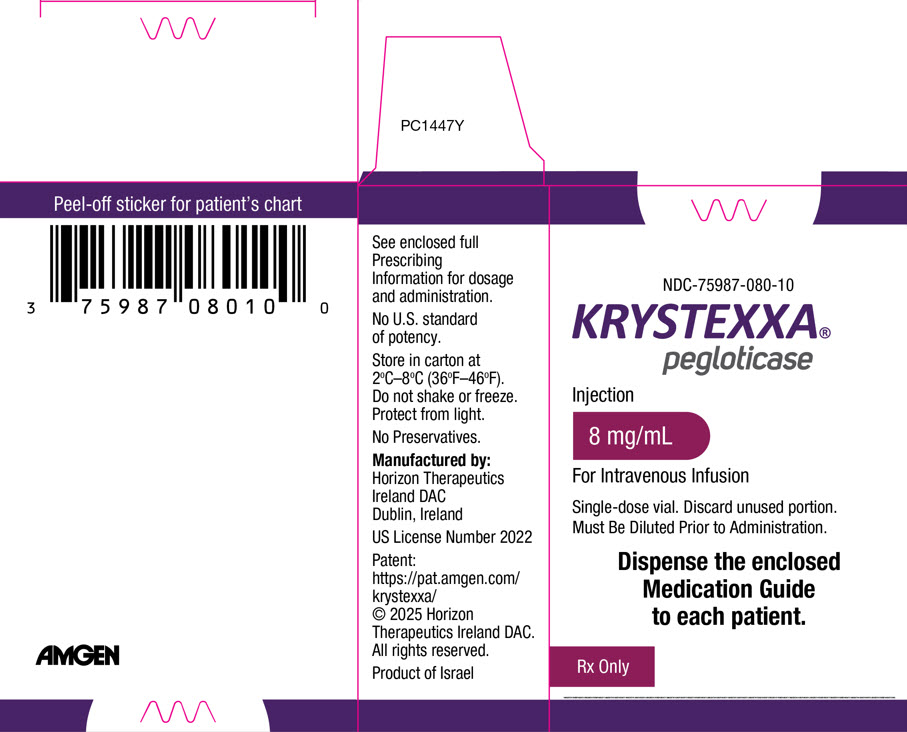
Principal Display Panel 8 Mg/ml Vial Carton
NDC-75987-080-10
KRYSTEXXA®
pegloticase
Injection
8 mg/mL
For Intravenous Infusion
Single-dose vial. Discard unused portion.
Must Be Diluted Prior to Administration.
Dispense the enclosed
Medication Guide
to each patient.
Rx Only
2.3 Preparation and Administration Instructions
KRYSTEXXA injection is supplied as either a Ready-to-Use single-dose vial (with hanger label) or a To-be-Diluted single-dose vial.
Ready-to-Use KRYSTEXXA 8 mg/50 mL (0.16 mg/mL) single-dose vial (with hanger label)
Step 1: Parenteral drug products should be inspected visually for particulate matter and discoloration prior to administration, whenever solution and container permit. Do not use vial if either is present.
Step 2: Allow the Ready-to-Use vial to reach room temperature at 20°C to 25°C (68°F to 77°F). KRYSTEXXA in a vial should never be subjected to artificial heating (e.g., hot water, microwave). Unopened vial may be stored for up to 4 hours at room temperature.
Step 3: Use appropriate aseptic technique. Insert a vented intravenous set through the septum of the vial. Once the stopper is punctured, use immediately.
Step 4: To administer, invert and hang the vial utilizing the built-in hanger label affixed to the bottom of the vial.
Step 5: Administer as an intravenous infusion over a period of no less than 120 minutes using an infusion pump. After the entire contents of the vial have been administered, flush the injection line with Sodium Chloride Injection to ensure delivery of the required dose.
To-be-Diluted KRYSTEXXA 8 mg/mL single-dose vial
Step 1: Parenteral drug products should be inspected visually for particulate matter and discoloration prior to administration, whenever solution and container permit. Do not use vial if either is present.
Step 2: Use appropriate aseptic technique. Withdraw 1 mL of KRYSTEXXA (To-be-Diluted) from the vial into a sterile syringe. Discard any unused portion of product remaining in the vial. Inject into a single 250 mL bag of 0.9% Sodium Chloride Injection, USP or 0.45% Sodium Chloride Injection, USP for intravenous infusion. Do not mix or dilute with other drugs.
Step 3: Gently invert the infusion bag containing the dilute KRYSTEXXA solution a number of times to ensure thorough mixing. Do not shake.
Step 4: Before administration, allow the diluted solution of KRYSTEXXA to reach room temperature. KRYSTEXXA in a vial or in an intravenous infusion fluid should never be subjected to artificial heating (e.g., hot water, microwave).
KRYSTEXXA diluted in infusion bags is stable for 4 hours at 2°C to 8°C (36°F to 46°F) and at room temperature at 20°C to 25°C (68°F to 77°F). However, it is recommended that diluted solutions be stored under refrigeration, not frozen, protected from light, and used within 4 hours of dilution [see How Supplied/Storage and Handling (16)].
Step 5: Administer as an intravenous infusion over 120 minutes using gravity feed, syringe-type pump, or infusion pump.
13.1 Carcinogenesis, Mutagenesis, Impairment of Fertility
Long-term animal studies have not been performed to evaluate the carcinogenic potential of pegloticase.
The genotoxic potential of pegloticase has not been evaluated.
There was no evidence of impairment on fertility at pegloticase doses up to 40 mg/kg (approximately 50 times the MRHD on mg/m2 basis) every other day in rats.
5.3 G6pd Deficiency Associated Hemolysis and Methemoglobinemia
Life threatening hemolytic reactions and methemoglobinemia have been reported with KRYSTEXXA in patients with glucose-6-phosphate dehydrogenase (G6PD) deficiency. Because of the risk of hemolysis and methemoglobinemia, do not administer KRYSTEXXA to patients with G6PD deficiency [see Contraindications (4)]. Screen patients at risk for G6PD deficiency prior to starting KRYSTEXXA. For example, patients of African, Mediterranean (including Southern European and Middle Eastern), and Southern Asian ancestry are at increased risk for G6PD deficiency.
Warning: Anaphylaxis and Infusion Reactions, G6pd Deficiency Associated Hemolysis and Methemoglobinemia
- Anaphylaxis and infusion reactions have been reported to occur during and after administration of KRYSTEXXA. (5.1, 5.2)
- Anaphylaxis may occur with any infusion, and generally manifests within 2 hours of the infusion. However, delayed hypersensitivity reactions have also been reported. (5.1)
- KRYSTEXXA should be administered in healthcare settings and by healthcare providers prepared to manage anaphylaxis and infusion reactions. (5.1, 5.2)
- Premedicate with antihistamines and corticosteroids and closely monitor for anaphylaxis for an appropriate period of time after administration of KRYSTEXXA. (5.1, 5.2)
- Monitor serum uric acid levels prior to each infusion and discontinue treatment if levels increase to above 6 mg/dL, particularly when 2 consecutive levels above 6 mg/dL are observed. (5.2)
- Screen patients at risk for G6PD deficiency prior to starting KRYSTEXXA. Hemolysis and methemoglobinemia have been reported with KRYSTEXXA in patients with G6PD deficiency. KRYSTEXXA is contraindicated in patients with G6PD deficiency. (4, 5.3)
Structured Label Content
Section 42229-5 (42229-5)
Limitations of Use:
KRYSTEXXA is not recommended for the treatment of asymptomatic hyperuricemia.
Section 42231-1 (42231-1)
| This Medication Guide has been approved by the U.S. Food and Drug Administration. | Revised: 8/2025 |
|
Medication Guide KRYSTEXXA® (kris-TEX-a) (pegloticase) injection, for intravenous use |
|
| Read this Medication Guide before you start receiving KRYSTEXXA and before each treatment. There may be new information. This Medication Guide does not take the place of talking with your doctor about your medical condition or treatment. Talk to your doctor if you have any questions about your treatment with KRYSTEXXA. | |
|
What is the most important information I should know about KRYSTEXXA?
Serious allergic reactions may happen in some people who receive KRYSTEXXA. These allergic reactions can be life threatening and usually happen within 2 hours of the infusion. KRYSTEXXA should be given to you by a doctor or nurse in a healthcare setting where serious allergic reactions can be treated. Your doctor or nurse should watch you for any signs of a serious allergic reaction during and after your treatment with KRYSTEXXA. Tell your doctor or nurse right away if you have any of these symptoms during or after your treatment with KRYSTEXXA:
|
|
What is KRYSTEXXA?
|
|
|
Who should not receive KRYSTEXXA?
Do not receive KRYSTEXXA if you:
|
|
|
What should I tell my doctor before receiving treatment with KRYSTEXXA?
Before you receive KRYSTEXXA, tell your doctor about all of your medical conditions, including if you:
Know the medicines you take. Keep a list of your medicines and show them to your doctor and pharmacist when you get a new medicine. |
|
How will I receive KRYSTEXXA?
|
|
|
What are the possible side effects of KRYSTEXXA?
KRYSTEXXA may cause serious side effects. See "What is the most important information I should know about KRYSTEXXA?" The most common side effects of KRYSTEXXA when given together with methotrexate include:
These are not all of the side effects of KRYSTEXXA. For more information, ask your doctor or pharmacist. Call your doctor for medical advice about side effects. You may report side effects to FDA at 1-800-FDA-1088. You may also report side effects to Amgen Inc. at 1-800-77-AMGEN (1-800-772-6436). |
|
|
General information about the safe and effective use of KRYSTEXXA.
Medicines are sometimes prescribed for purposes other than those listed in a Medication Guide. This Medication Guide summarizes the most important information about KRYSTEXXA. If you would like more information, talk with your doctor. You can ask your pharmacist or doctor for information about KRYSTEXXA that is written for health professionals. For more information, go to www.KRYSTEXXA.com or call 1-866-479-6742. |
|
|
What are the ingredients in KRYSTEXXA?
Active ingredient: pegloticase Inactive ingredients: Ready-to-Use KRYSTEXXA 8 mg/50 mL (0.16 mg/mL) single-dose vial: disodium hydrogen phosphate heptahydrate, sodium chloride, sodium dihydrogen phosphate monohydrate, and water for injection. To-be-Diluted KRYSTEXXA 8 mg/mL single-dose vial: disodium hydrogen phosphate dihydrate, sodium chloride, sodium dihydrogen phosphate dihydrate, and water for injection. AMGEN Manufactured by: Horizon Therapeutics Ireland DAC Dublin, Ireland U.S. License Number 2022 © 2025 Amgen Inc. All rights reserved. V7 |
Section 44425-7 (44425-7)
Storage and Handling
Before the preparation for use, KRYSTEXXA must be stored in the carton and maintained at all times under refrigeration between 2°C to 8°C (36°F to 46°F). Protect from light. Do not shake or freeze.
Do not use beyond the expiration date stamped.
10 Overdosage (10 OVERDOSAGE)
No reports of overdosage with KRYSTEXXA have been reported. The maximum dose that has been administered as a single intravenous dose is 12 mg as uricase protein.
Patients suspected of receiving an overdose should be monitored, and general supportive measures should be initiated as no specific antidote has been identified.
11 Description (11 DESCRIPTION)
Pegloticase is a uric acid specific enzyme which is a PEGylated product that consists of recombinant modified mammalian urate oxidase (uricase) produced by a genetically modified strain of Escherichia coli. Uricase is covalently conjugated to monomethoxypoly (ethylene glycol) [mPEG] (10 kDa molecular weight). The cDNA coding for uricase is based on mammalian sequences. Each uricase subunit has a molecular weight of approximately 34 kDa per subunit. The average molecular weight of pegloticase (tetrameric enzyme conjugated to mPEG) is approximately 540 kDa.
Ready-to-Use KRYSTEXXA (pegloticase) injection 8 mg/50 mL (0.16 mg/mL) single-dose vial is supplied as a sterile, preservative-free, clear and colorless solution intended for intravenous infusion and does not require further dilution. Each 8 mg/50 mL (0.16 mg/mL) single-dose vial contains 50 mL of deliverable volume including 8 mg of uricase protein (conjugated to 24 mg of 10 kDa mPEG), Disodium Hydrogen Phosphate Heptahydrate (109 mg), Sodium Chloride (438.5 mg), Sodium Dihydrogen Phosphate Monohydrate (13mg), and Water for Injection to deliver 8 mg of pegloticase (as uricase protein).
To-be-Diluted KRYSTEXXA (pegloticase) injection 8 mg/mL single-dose vial is supplied as a sterile, preservative-free, clear and colorless solution intended for intravenous infusion after dilution. KRYSTEXXA (pegloticase) concentrations are expressed as concentrations of uricase protein. Each 8 mg/mL single-dose vial contains 1 mL of deliverable volume including 8 mg of uricase protein (conjugated to 24 mg of 10 kDa mPEG), Disodium Hydrogen Phosphate Dihydrate (2.18 mg), Sodium Chloride (8.77 mg), Sodium Dihydrogen Phosphate Dihydrate (0.43 mg), and Water for Injection to deliver 8 mg of pegloticase (as uricase protein).
5.1 Anaphylaxis
In a 52-week controlled trial, which evaluated KRYSTEXXA co-administered with methotrexate compared to KRYSTEXXA alone, subjects were pre-treated with standardized infusion reaction prophylaxis and were discontinued from treatment with KRYSTEXXA if serum uric acid levels increased to above 6 mg/dL at 2 consecutive visits after the initiation of KRYSTEXXA therapy to reduce the risk of anaphylaxis. One subject randomized to the group treated with KRYSTEXXA co-administered with methotrexate (1%) experienced anaphylaxis during the first infusion and no subjects experienced anaphylaxis in the group treated with KRYSTEXXA alone [see Adverse Reactions (6.1), Clinical Studies (14)].
During pre-marketing clinical trials with KRYSTEXXA alone, KRYSTEXXA was not discontinued following 2 consecutive serum uric acid levels above 6 mg/dL. Anaphylaxis was reported with a frequency of 6.5% (8/123) of subjects treated with KRYSTEXXA every 2 weeks and 4.8% (6/126) for the every 4-week dosing regimen. There were no cases of anaphylaxis in subjects receiving placebo. Anaphylaxis generally occurred within 2 hours after treatment.
Diagnostic criteria of anaphylaxis were skin or mucosal tissue involvement, and, either airway compromise, and/or reduced blood pressure with or without associated symptoms, and a temporal relationship to KRYSTEXXA or placebo injection with no other identifiable cause. Manifestations included wheezing, peri-oral or lingual edema, or hemodynamic instability, with or without rash or urticaria, nausea or vomiting. Cases occurred in patients being pre-treated with one or more doses of an oral antihistamine, an intravenous corticosteroid and/or acetaminophen. This pre-treatment may have blunted or obscured symptoms or signs of anaphylaxis and therefore the reported frequency may be an underestimate.
KRYSTEXXA should be administered in a healthcare setting by healthcare providers prepared to manage anaphylaxis. Patients should be pre-treated with antihistamines and corticosteroids. Anaphylaxis may occur with any infusion, including a first infusion, and generally manifests within 2 hours of the infusion. However, delayed type hypersensitivity reactions have also been reported. Patients should be closely monitored for an appropriate period of time for anaphylaxis after administration of KRYSTEXXA. Patients should be informed of the symptoms and signs of anaphylaxis and instructed to seek immediate medical care should anaphylaxis occur after discharge from the healthcare setting.
The risk of anaphylaxis is higher in patients whose uric acid level increases to above 6 mg/dL, particularly when 2 consecutive levels above 6 mg/dL are observed. Monitor serum uric acid levels prior to infusions and discontinue treatment if levels increase to above 6 mg/dL. Because of the possibility that concomitant use of oral urate-lowering therapy and KRYSTEXXA may potentially blunt the rise of serum uric acid levels, it is recommended that before starting KRYSTEXXA patients discontinue oral urate-lowering medications and not institute therapy with oral urate-lowering agents while taking KRYSTEXXA.
5.4 Gout Flares
In a 52-week, randomized, double-blind trial which evaluated KRYSTEXXA co-administered with methotrexate compared to KRYSTEXXA alone, subjects were administered gout flare prophylaxis similar to that in the pre-marketing, placebo-controlled trials. The percentages of subjects with any flare for the first 3 months were 66% and 69% for the group treated with KRYSTEXXA co-administered with methotrexate and the group treated with KRYSTEXXA alone, respectively. In the group treated with KRYSTEXXA co-administered with methotrexate, the percentages of subjects with any flare for the subsequent 3-month increments of treatment were 27% during Month 6, 8% during Month 9 and 9% during Month 12. In the group treated with KRYSTEXXA alone, the percentages of patients with any flare were 14% during Month 6, 9% during Month 9 and 21% during Month 12.
During pre-marketing, 24-week controlled clinical trials with KRYSTEXXA alone, the frequencies of gout flares were high in all treatment groups, but more so with KRYSTEXXA treatment during the first 3 months of treatment, and decreased in the subsequent 3 months of treatment. The percentages of subjects with any flare for the first 3 months were 74%, 81%, and 51%, for KRYSTEXXA 8 mg every 2 weeks, KRYSTEXXA 8 mg every 4 weeks, and placebo, respectively. The percentages of subjects with any flare for the subsequent 3 months were 41%, 57%, and 67%, for KRYSTEXXA 8 mg every 2 weeks, KRYSTEXXA 8 mg every 4 weeks, and placebo, respectively. Subjects received gout flare prophylaxis with colchicine and/or nonsteroidal anti-inflammatory drugs (NSAIDs) starting at least one week before receiving KRYSTEXXA.
Gout flares may occur after initiation of KRYSTEXXA. An increase in gout flares is frequently observed upon initiation of anti-hyperuricemic therapy, due to changing serum uric acid levels resulting in mobilization of urate from tissue deposits. Gout flare prophylaxis with a non-steroidal anti-inflammatory drug (NSAID) or colchicine is recommended starting at least 1 week before initiation of KRYSTEXXA therapy and lasting at least 6 months, unless medically contraindicated or not tolerated. KRYSTEXXA does not need to be discontinued because of a gout flare. The gout flare should be managed concurrently as appropriate for the individual patient [see Dosage and Administration (2)].
7.1 Methotrexate
KRYSTEXXA 8 mg every 2 weeks has been studied in patients with chronic gout refractory to conventional therapy taking concomitant oral methotrexate 15 mg weekly [see Clinical Studies (14)]. Co-administration of methotrexate with KRYSTEXXA may increase pegloticase concentration compared to KRYSTEXXA alone [see Clinical Pharmacology (12.3)].
8.4 Pediatric Use
The safety and effectiveness of KRYSTEXXA in pediatric patients less than 18 years of age have not been established.
8.5 Geriatric Use
Of the total number of patients treated with KRYSTEXXA 8 mg every 2 weeks in the controlled studies, 34% (29 of 85) were 65 years of age and older and 12% (10 of 85) were 75 years of age and older. No overall differences in safety or effectiveness were observed between older and younger patients, but greater sensitivity of some older individuals cannot be ruled out. No dose adjustment is needed for patients 65 years of age and older.
12.6 Immunogenicity
As with all therapeutic proteins, there is a potential for immunogenicity. The observed incidence of antibody positivity in an assay is highly dependent on several factors including assay sensitivity and specificity and assay methodology, sample handling, timing of sample collection, concomitant medications, and underlying disease. For these reasons, the comparison of the incidence of antibodies to pegloticase with the incidence of antibodies to other products may be misleading.
In a 52-week, randomized, double-blind trial which evaluated KRYSTEXXA co-administered with methotrexate compared to KRYSTEXXA alone, approximately 26% of patients had pre-existing antibodies to pegloticase. Patients with an increase in titer from baseline or who were negative at baseline and developed an anti-pegloticase response at one or more post dose time points was 30% and 51%, for the KRYSTEXXA co-administered with methotrexate and KRYSTEXXA alone treatment groups, respectively. Patients with higher antibody titers were more likely to have faster clearance and lower efficacy.
During pre-marketing 24-week controlled clinical trials with KRYSTEXXA alone, anti-pegloticase antibodies developed in 92% of patients treated with KRYSTEXXA every 2 weeks, and 28% for placebo. Anti-PEG antibodies were also detected in 42% of patients treated with KRYSTEXXA. High anti-pegloticase antibody titer was associated with a failure to maintain pegloticase-induced normalization of uric acid. The impact of anti-PEG antibodies on patients' responses to other PEG-containing therapeutics is unknown.
There was a higher incidence of infusion reactions in patients with high anti-pegloticase antibody titer: 53% (16 of 30) in the KRYSTEXXA every 2 weeks group compared to 6% in patients who had undetectable or low antibody titers.
4 Contraindications (4 CONTRAINDICATIONS)
KRYSTEXXA is contraindicated in:
- Patients with glucose-6-phosphate dehydrogenase (G6PD) deficiency [see Warnings and Precautions (5.3)].
- Patients with history of serious hypersensitivity reactions, including anaphylaxis, to KRYSTEXXA or any of its components.
6 Adverse Reactions (6 ADVERSE REACTIONS)
The following serious adverse reactions are discussed in greater detail in other sections of the label:
- Anaphylaxis [see Warnings and Precautions (5.1)]
- Infusion Reactions [see Warnings and Precautions (5.2)]
- G6PD Deficiency Associated Hemolysis and Methemoglobinemia [see Warnings and Precautions (5.3)]
- Gout Flares [see Warnings and Precautions (5.4)]
- Congestive Heart Failure [see Warnings and Precautions (5.5)]
8.6 Renal Impairment
No dose adjustment is required for patients with renal impairment. In a 52-week, randomized, double-blind trial which evaluated KRYSTEXXA co-administered with methotrexate compared to KRYSTEXXA alone, 85% of patients had chronic kidney disease based on estimated glomerular filtration rate (eGFR) of ≥ 40 to < 90 mL/min/1.73m2 at baseline. In the pre-marketing 24-week controlled clinical trials with KRYSTEXXA alone, a total of 32% (27 of 85) of subjects treated with KRYSTEXXA 8 mg every 2 weeks had a creatinine clearance of ≤62.5 mL/min. No overall differences in efficacy were observed.
12.2 Pharmacodynamics
Approximately 24 hours following the first dose of KRYSTEXXA, mean plasma uric acid levels for subjects in the KRYSTEXXA groups were 0.7 mg/dL for the KRYSTEXXA 8 mg every 2 weeks group. In comparison, the mean plasma uric acid level for the placebo group was 8.2 mg/dL.
In a single-dose, dose-ranging trial, following 1-hour intravenous infusions of 0.5, 1, 2, 4, 8 or 12 mg of pegloticase in 24 patients with symptomatic gout (n = 4 subjects/dose group), plasma uric acid decreased with increasing pegloticase dose or concentrations. The duration of suppression of plasma uric acid appeared to be positively associated with pegloticase dose. Sustained decrease in plasma uric acid below the solubility concentration of 6 mg/dL for more than 300 hours was observed with doses of 8 mg and 12 mg.
12.3 Pharmacokinetics
Pegloticase levels were determined in serum based on measurements of uricase enzyme activity.
Following single intravenous infusions of 0.5 mg to 12 mg pegloticase in 23 patients with symptomatic gout, maximum serum concentrations of pegloticase increased in proportion to the dose administered.
The population pharmacokinetic analysis showed that age, sex, weight, and creatinine clearance did not influence the pharmacokinetics of pegloticase. Significant covariates impacting pegloticase pharmacokinetics were body surface area and anti-pegloticase antibodies.
5.2 Infusion Reactions
In a 52-week, controlled trial which evaluated KRYSTEXXA co-administered with methotrexate compared to KRYSTEXXA alone [see Adverse Reactions (6.1), Clinical Studies (14)], subjects were pre-treated with standardized infusion reaction prophylaxis and were discontinued from treatment with KRYSTEXXA if serum uric acid levels increased to above 6 mg/dL at 2 consecutive visits after the initiation of KRYSTEXXA therapy to reduce the risk of infusion reactions. Infusion reactions were reported in 4% of subjects in the KRYSTEXXA co-administered with methotrexate group compared to 31% of subjects treated with KRYSTEXXA alone experienced infusion reactions [see Adverse Reactions (6.1), Clinical Studies (14)]. In both treatment groups, the majority of infusion reactions occurred at the first or second KRYSTEXXA infusion and during the time of infusion. Manifestations of these infusion reactions were similar to that observed in the pre-marketing trials.
During pre-marketing 24-week controlled clinical trials with KRYSTEXXA alone, KRYSTEXXA was not discontinued following 2 consecutive serum uric acid levels above 6 mg/dL. Infusion reactions were reported in 26% of subjects treated with KRYSTEXXA 8 mg every 2 weeks, and 41% of subjects treated with KRYSTEXXA 8 mg every 4 weeks, compared to 5% of subjects treated with placebo. These infusion reactions occurred in subjects being pre-treated with an oral antihistamine, intravenous corticosteroid and/or acetaminophen. This pre-treatment may have blunted or obscured symptoms or signs of infusion reactions and therefore the reported frequency may be an underestimate.
Manifestations of these reactions included urticaria (frequency of 10.6%), dyspnea (frequency of 7.1%), chest discomfort (frequency of 9.5%), chest pain (frequency of 9.5%), erythema (frequency of 9.5%), and pruritus (frequency of 9.5%). These manifestations overlap with the symptoms of anaphylaxis, but in a given patient did not occur together to satisfy the clinical criteria for diagnosing anaphylaxis. Infusion reactions are thought to result from release of various mediators, such as cytokines. Infusion reactions occurred at any time during a course of treatment with approximately 3% occurring with the first infusion, and approximately 91% occurred during the time of infusion.
KRYSTEXXA should be administered in a healthcare setting by healthcare providers prepared to manage infusion reactions. Patients should be pre-treated with antihistamines and corticosteroids. KRYSTEXXA should be infused slowly over no less than 120 minutes. In the event of an infusion reaction, the infusion should be slowed, or stopped and restarted at a slower rate.
The risk of infusion reaction is higher in patients whose uric acid level increases to above 6 mg/dL, particularly when 2 consecutive levels above 6 mg/dL are observed. Monitor serum uric acid levels prior to infusions and discontinue treatment if levels increase to above 6 mg/dL. Because of the possibility that concomitant use of oral urate-lowering therapy and KRYSTEXXA may potentially blunt the rise of serum uric acid levels, it is recommended that before starting KRYSTEXXA patients discontinue oral urate-lowering medications and not institute therapy with oral urate-lowering agents while taking KRYSTEXXA.
7.2 Pegylated Products (7.2 PEGylated products)
Because anti-pegloticase antibodies appear to bind to the PEG portion of the drug, there may be potential for binding with other PEGylated products. The impact of anti-PEG antibodies on patients' responses to other PEG-containing therapeutics is unknown.
1 Indications and Usage (1 INDICATIONS AND USAGE)
KRYSTEXXA® (pegloticase) is indicated, for the treatment of chronic gout in adult patients refractory to conventional therapy.
Gout refractory to conventional therapy occurs in patients who have failed to normalize serum uric acid and whose signs and symptoms are inadequately controlled with xanthine oxidase inhibitors at the maximum medically appropriate dose or for whom these drugs are contraindicated.
12.1 Mechanism of Action
KRYSTEXXA is a uric acid specific enzyme which is a recombinant uricase and achieves its therapeutic effect by catalyzing the oxidation of uric acid to allantoin, thereby lowering serum uric acid. Allantoin is an inert and water-soluble purine metabolite; it is readily eliminated, primarily by renal excretion.
5 Warnings and Precautions (5 WARNINGS AND PRECAUTIONS)
- Anaphylaxis: Anaphylaxis may occur with any KRYSTEXXA infusion. Pre-medicate and monitor patients. (5.1)
- Infusion Reactions: Infusion reactions occurred in patients treated with KRYSTEXXA. Pre-medicate and monitor patients. (5.2)
- G6PD Deficiency Associated Hemolysis and Methemoglobinemia: Screen patients at risk for G6PD deficiency. Do not administer KRYSTEXXA to patients with G6PD deficiency. (5.3)
- Gout Flares: Gout flare prophylaxis is recommended for at least the first 6 months of KRYSTEXXA therapy. (5.4)
- Congestive Heart Failure: Congestive heart failure exacerbation may occur. Monitor patients closely following infusion. (5.5)
2 Dosage and Administration (2 DOSAGE AND ADMINISTRATION)
Recommended Dosage
- The recommended dosage is KRYSTEXXA 8 mg every two weeks given as an intravenous infusion, co-administered with weekly methotrexate 15 mg orally. KRYSTEXXA alone may be used in patients for whom methotrexate is contraindicated or not clinically appropriate. (2.2)
- Methotrexate with folic acid or folinic acid supplementation should be initiated at least 4 weeks prior to initiating, and throughout treatment with KRYSTEXXA. (2.2)
- Discontinue oral urate-lowering agents before starting KRYSTEXXA. (2.1)
- Monitor serum uric acid levels before each infusion. (2.1)
- Pre-medicate patients with antihistamines and corticosteroids. (2.1, 5.1, 5.2)
Preparation and Administration
- Do not administer as an intravenous push or bolus. (2.1)
- KRYSTEXXA injection is supplied as a Ready-to-Use (with hanger label) single-dose vial or a To-be-Diluted single-dose vial. (2.3)
- See full prescribing information for information on preparation and administration for each vial presentation. (2.1, 2.2, 2.3)
3 Dosage Forms and Strengths (3 DOSAGE FORMS AND STRENGTHS)
KRYSTEXXA is a clear and colorless solution, containing 8 mg of pegloticase expressed as concentrations of uricase protein available as:
- Injection: Ready-to-Use 8 mg/50 mL (0.16 mg/mL) in a single-dose vial (with hanger label) [see Dosage and Administration (2.3)].
- Injection: To-be-Diluted 8 mg/mL in a single-dose vial [see Dosage and Administration (2.3)].
5.5 Congestive Heart Failure
KRYSTEXXA has not been formally studied in patients with congestive heart failure, but some subjects in the pre-marketing, 24-week controlled clinical trials experienced exacerbation of congestive heart failure. Two cases of congestive heart failure exacerbation occurred during the trials in subjects receiving treatment with KRYSTEXXA 8 mg every 2 weeks. No cases were reported in placebo-treated subjects. Four subjects had exacerbations of pre-existing congestive heart failure while receiving KRYSTEXXA 8 mg every 2 weeks during the open-label extension study.
Exercise caution when using KRYSTEXXA in patients who have congestive heart failure and monitor patients closely following infusion.
6.2 Postmarketing Experience
The following adverse reactions have been identified during postapproval use of KRYSTEXXA. Because these reactions are reported voluntarily from a population of uncertain size, it is not always possible to reliably estimate their frequency or establish a causal relationship.
General disorders and administration site conditions: asthenia, malaise, peripheral swelling
6.1 Clinical Trials Experience
Because clinical studies are conducted under widely varying and controlled conditions, adverse reaction rates observed in clinical studies of a drug cannot be directly compared to rates in the clinical studies of another drug, and may not predict the rates observed in a broader patient population in clinical practice.
5.6 Re Treatment With Krystexxa (5.6 Re-treatment with KRYSTEXXA)
No controlled trial data are available on the safety and efficacy of re-treatment with KRYSTEXXA after stopping treatment for longer than 4 weeks. Due to the immunogenicity of KRYSTEXXA, patients receiving re-treatment may be at increased risk of anaphylaxis and infusion reactions. Therefore, patients receiving re-treatment after a drug-free interval should be monitored carefully [see Adverse Reactions (6.2)].
17 Patient Counseling Information (17 PATIENT COUNSELING INFORMATION)
Advise patients to read the FDA-approved patient labeling (Medication Guide).
2.2 Recommended Dosage and Administration
The recommended dosage is KRYSTEXXA 8 mg given as an intravenous infusion every two weeks, co-administered with weekly oral methotrexate 15 mg and folic acid or folinic acid supplementation. KRYSTEXXA alone may be used in patients for whom methotrexate is contraindicated or not clinically appropriate.
If co-administering with methotrexate, start weekly methotrexate and folic acid or folinic acid supplementation at least 4 weeks prior to initiating, and throughout treatment with KRYSTEXXA [see Clinical Studies (14)]. Refer to the Full Prescribing Information for methotrexate.
The optimal treatment duration with KRYSTEXXA has not been established.
13.2 Animal Toxicology And/or Pharmacology (13.2 Animal Toxicology and/or Pharmacology)
Pegloticase at similar to and higher than the maximum recommended human dose (MRHD) on a plasma Area Under Curve (AUC) basis [at intravenous (IV) doses of ≥ 0.4 mg/kg in dogs] caused cytoplasmic vacuoles in multiple organs, and edema and histiocyte infiltration in the aortic outflow tract in dogs. Organs with cytoplasmic vacuoles included the spleen, adrenal gland, liver, heart, duodenum, and jejunum. Vacuoles in the spleen, adrenal glands, and heart persisted after a 1-year recovery period at pegloticase doses (≥ 1.5 mg/kg in dogs) approximately 5 times the MRHD, but were absent at a dose similar to the MRHD. Vacuoles in the liver, duodenum, and jejunum persisted after a 3-month recovery period at a pegloticase dose (10 mg/kg in dogs) approximately 30 times the MRHD, but were absent at doses (≤ 1.5 mg/kg) approximately 5 times and similar to the MRHD. The edema and histiocyte infiltration in the aortic outflow tract was absent after recovery periods of 6 and 12 months, respectively.
Vacuoles in the spleen, liver, duodenum, and jejunum were within macrophages and most likely represented phagocytic removal of pegloticase from the circulation. However, the vacuolated cells in the heart and adrenal gland did not stain as macrophages. In the aortic outflow tract of the heart, vacuoles were in the cytoplasm of endothelial cells in the intimal lining of the aorta. In the adrenal gland, vacuoles were located within cortical cells in the zona reticularis and zona fasciculata. The clinical significance of these findings and the functional consequences are unknown.
Principal Display Panel 50 Ml Vial Carton (PRINCIPAL DISPLAY PANEL - 50 mL Vial Carton)
NDC-75987-058-01
KRYSTEXXA®
pegloticase
Injection
8 mg per 50 mL (0.16 mg/mL)
For Intravenous Infusion
Ready-to-Use Presentation and
does NOT require further dilution.
Contains 1 Single-dose vial. Discard unused portion.
Dispense the enclosed
Medication Guide
to each patient.
Rx Only
AMGEN
Principal Display Panel 8 Mg/ml Vial Carton (PRINCIPAL DISPLAY PANEL - 8 mg/mL Vial Carton)
NDC-75987-080-10
KRYSTEXXA®
pegloticase
Injection
8 mg/mL
For Intravenous Infusion
Single-dose vial. Discard unused portion.
Must Be Diluted Prior to Administration.
Dispense the enclosed
Medication Guide
to each patient.
Rx Only
2.3 Preparation and Administration Instructions
KRYSTEXXA injection is supplied as either a Ready-to-Use single-dose vial (with hanger label) or a To-be-Diluted single-dose vial.
Ready-to-Use KRYSTEXXA 8 mg/50 mL (0.16 mg/mL) single-dose vial (with hanger label)
Step 1: Parenteral drug products should be inspected visually for particulate matter and discoloration prior to administration, whenever solution and container permit. Do not use vial if either is present.
Step 2: Allow the Ready-to-Use vial to reach room temperature at 20°C to 25°C (68°F to 77°F). KRYSTEXXA in a vial should never be subjected to artificial heating (e.g., hot water, microwave). Unopened vial may be stored for up to 4 hours at room temperature.
Step 3: Use appropriate aseptic technique. Insert a vented intravenous set through the septum of the vial. Once the stopper is punctured, use immediately.
Step 4: To administer, invert and hang the vial utilizing the built-in hanger label affixed to the bottom of the vial.
Step 5: Administer as an intravenous infusion over a period of no less than 120 minutes using an infusion pump. After the entire contents of the vial have been administered, flush the injection line with Sodium Chloride Injection to ensure delivery of the required dose.
To-be-Diluted KRYSTEXXA 8 mg/mL single-dose vial
Step 1: Parenteral drug products should be inspected visually for particulate matter and discoloration prior to administration, whenever solution and container permit. Do not use vial if either is present.
Step 2: Use appropriate aseptic technique. Withdraw 1 mL of KRYSTEXXA (To-be-Diluted) from the vial into a sterile syringe. Discard any unused portion of product remaining in the vial. Inject into a single 250 mL bag of 0.9% Sodium Chloride Injection, USP or 0.45% Sodium Chloride Injection, USP for intravenous infusion. Do not mix or dilute with other drugs.
Step 3: Gently invert the infusion bag containing the dilute KRYSTEXXA solution a number of times to ensure thorough mixing. Do not shake.
Step 4: Before administration, allow the diluted solution of KRYSTEXXA to reach room temperature. KRYSTEXXA in a vial or in an intravenous infusion fluid should never be subjected to artificial heating (e.g., hot water, microwave).
KRYSTEXXA diluted in infusion bags is stable for 4 hours at 2°C to 8°C (36°F to 46°F) and at room temperature at 20°C to 25°C (68°F to 77°F). However, it is recommended that diluted solutions be stored under refrigeration, not frozen, protected from light, and used within 4 hours of dilution [see How Supplied/Storage and Handling (16)].
Step 5: Administer as an intravenous infusion over 120 minutes using gravity feed, syringe-type pump, or infusion pump.
13.1 Carcinogenesis, Mutagenesis, Impairment of Fertility
Long-term animal studies have not been performed to evaluate the carcinogenic potential of pegloticase.
The genotoxic potential of pegloticase has not been evaluated.
There was no evidence of impairment on fertility at pegloticase doses up to 40 mg/kg (approximately 50 times the MRHD on mg/m2 basis) every other day in rats.
5.3 G6pd Deficiency Associated Hemolysis and Methemoglobinemia (5.3 G6PD Deficiency Associated Hemolysis and Methemoglobinemia)
Life threatening hemolytic reactions and methemoglobinemia have been reported with KRYSTEXXA in patients with glucose-6-phosphate dehydrogenase (G6PD) deficiency. Because of the risk of hemolysis and methemoglobinemia, do not administer KRYSTEXXA to patients with G6PD deficiency [see Contraindications (4)]. Screen patients at risk for G6PD deficiency prior to starting KRYSTEXXA. For example, patients of African, Mediterranean (including Southern European and Middle Eastern), and Southern Asian ancestry are at increased risk for G6PD deficiency.
Warning: Anaphylaxis and Infusion Reactions, G6pd Deficiency Associated Hemolysis and Methemoglobinemia (WARNING: ANAPHYLAXIS and INFUSION REACTIONS, G6PD DEFICIENCY ASSOCIATED HEMOLYSIS and METHEMOGLOBINEMIA)
- Anaphylaxis and infusion reactions have been reported to occur during and after administration of KRYSTEXXA. (5.1, 5.2)
- Anaphylaxis may occur with any infusion, and generally manifests within 2 hours of the infusion. However, delayed hypersensitivity reactions have also been reported. (5.1)
- KRYSTEXXA should be administered in healthcare settings and by healthcare providers prepared to manage anaphylaxis and infusion reactions. (5.1, 5.2)
- Premedicate with antihistamines and corticosteroids and closely monitor for anaphylaxis for an appropriate period of time after administration of KRYSTEXXA. (5.1, 5.2)
- Monitor serum uric acid levels prior to each infusion and discontinue treatment if levels increase to above 6 mg/dL, particularly when 2 consecutive levels above 6 mg/dL are observed. (5.2)
- Screen patients at risk for G6PD deficiency prior to starting KRYSTEXXA. Hemolysis and methemoglobinemia have been reported with KRYSTEXXA in patients with G6PD deficiency. KRYSTEXXA is contraindicated in patients with G6PD deficiency. (4, 5.3)
Advanced Ingredient Data
Raw Label Data
All Sections (JSON)
Additional Information
Back to search View SPL set listing Open on DailyMed ↗
Source: dailymed · Ingested: 2026-02-15T11:49:29.905414 · Updated: 2026-03-14T22:33:18.370731