Iwilfin®
6716d8cc-66e6-4cee-935c-ccb85ed984f5
34391-3
HUMAN PRESCRIPTION DRUG LABEL
Drug Facts
Composition & Product
Identifiers & Packaging
Indications and Usage
IWILFIN (eflornithine) is indicated to reduce the risk of relapse in adult and pediatric patients with high-risk neuroblastoma (HRNB) who have demonstrated at least a partial response to prior multiagent, multimodality therapy including anti-GD2 immunotherapy.
Dosage and Administration
Prior to initiation of IWILFIN, perform baseline audiogram, complete blood count, and liver function tests. ( 2.1 , 5.3 ) Recommended dosage of IWILFIN is based on body surface area (see Table 1 ). ( 2.2 ) IWILFIN is taken orally twice daily with or without food until disease progression, unacceptable toxicity, or for a maximum of two years. ( 2.2 ) IWILFIN tablets may be swallowed whole, chewed, or crushed and mixed with soft food or liquid. ( 2.5 )
Contraindications
None.
Warnings and Precautions
Myelosuppression: Monitor blood counts before and during treatment with IWILFIN. Withhold, reduce dose, or permanently discontinue based on severity. ( 5.1 ) Hepatotoxicity: Monitor liver function tests before and during treatment with IWILFIN. Withhold, reduce dose, or permanently discontinue based on severity. ( 5.2 ) Hearing Loss: Monitor hearing before and during treatment with IWILFIN. Withhold, reduce dose, or permanently discontinue based on severity. ( 5.3 ) Embryo-Fetal Toxicity: Can cause fetal harm. Advise females of reproductive potential of the potential risk to a fetus and to use effective contraception. ( 5.4 , 8.1 , 8.3 )
Adverse Reactions
The recommended dose reductions for adverse reactions are provided in Table 3. Table 3: Recommended IWILFIN Dose Reductions for Toxicity Management Current Dose Reduced Dose 768 mg (four tablets) orally twice a day 576 mg (three tablets) orally twice a day 576 mg (three tablets) orally twice a day 384 mg (two tablets) orally twice a day 384 mg (two tablets) orally twice a day 192 mg (one tablet) orally twice a day 192 mg (one tablet) orally twice a day 192 mg (one tablet) orally once daily If subsequent adverse reactions occur, continue dose reduction until reaching the minimum dose of one 192 mg tablet once per day. Permanently discontinue IWILFIN if the patient is unable to tolerate the minimum dose of 192 mg once daily. The recommended dosage modifications of IWILFIN for the management of adverse reactions are provided in Table 4. Table 4: Recommended IWILFIN Dosage Modifications for Adverse Reactions Adverse Reaction Severity Severity as defined by National Cancer Institute Common Terminology Criteria for Adverse Events (NCI CTCAE) version 4.03 Dosage Modification Myelosuppression [see Warnings and Precautions (5.1) ] Neutrophil count decreased <500/mm 3 Withhold IWILFIN until recovery to ≥500/mm 3 . If recovered within 7 days, resume IWILFIN at the same dose. If recovered after 7 days, resume IWILFIN at the next reduced dose level. Platelet count decreased <25,000/mm 3 Withhold IWILFIN until recovery to ≥25,000/mm 3 . If recovered within 7 days, resume IWILFIN at the same dose. If recovered between 7 and 14 days, resume IWILFIN at the next reduced dose level. If not recovered within 14 days, permanently discontinue IWILFIN. Anemia <8g/dL Withhold IWILFIN until recovery to ≥8g/dL. Resume IWILFIN at the same dose. If anemia recurs (<8g/dL) Withhold IWILFIN until recovery to ≥8g/dL. Resume IWILFIN at the next reduced dose level. Hepatotoxicity [see Warnings and Precautions (5.2) ] Aspartate aminotransferase increased or Alanine aminotransferase increased AST or ALT ≥10 × ULN Withhold IWILFIN until recovery to <10 × ULN. If recovered within 7 days, resume IWILFIN at the same dose. If recovered after 7 days, resume IWILFIN at the next reduced dose level. Hearing Loss [see Warnings and Precautions (5.3) ] Hearing loss Clinically concerning new or worsening hearing loss compared to IWILFIN baseline audiogram Continue dosing with IWILFIN and repeat audiogram in 3 weeks. If improved, continue IWILFIN at the same dose. If clinically concerning changes persist, hold IWILFIN for up to 30 days and repeat audiogram. If stable or improved, resume IWILFIN at the next reduced dose level. Other Adverse Reactions [see Adverse Reactions (6.1) ] Nausea, vomiting, or diarrhea Grade 3 If symptoms respond to supportive treatment (e.g., anti-emetic, anti-diarrheal), continue dosing with IWILFIN at the same dose. If symptoms do not respond to treatment, Withhold IWILFIN until recovery to ≤ Grade 2. Resume IWILFIN at the next reduced dose level. Other adverse reactions Grade 3 or 4 Withhold IWILFIN until recovery to ≤ Grade 2. Resume IWILFIN at the next reduced dose level. Recurrent Grade 4 Permanently discontinue IWILFIN.
How Supplied
IWILFIN (eflornithine) is available as 192 mg round, white to off-white tablets imprinted with EFL on one side and 192 on the other side; approximately 11 mm in diameter and supplied as follows: Bottle of 100 tablets containing desiccant, NDC 78670-150-01
Storage and Handling
IWILFIN (eflornithine) is available as 192 mg round, white to off-white tablets imprinted with EFL on one side and 192 on the other side; approximately 11 mm in diameter and supplied as follows: Bottle of 100 tablets containing desiccant, NDC 78670-150-01
Description
Dosage and Administration ( 2.3 ) 11/2024
Medication Information
Warnings and Precautions
Myelosuppression: Monitor blood counts before and during treatment with IWILFIN. Withhold, reduce dose, or permanently discontinue based on severity. ( 5.1 ) Hepatotoxicity: Monitor liver function tests before and during treatment with IWILFIN. Withhold, reduce dose, or permanently discontinue based on severity. ( 5.2 ) Hearing Loss: Monitor hearing before and during treatment with IWILFIN. Withhold, reduce dose, or permanently discontinue based on severity. ( 5.3 ) Embryo-Fetal Toxicity: Can cause fetal harm. Advise females of reproductive potential of the potential risk to a fetus and to use effective contraception. ( 5.4 , 8.1 , 8.3 )
Indications and Usage
IWILFIN (eflornithine) is indicated to reduce the risk of relapse in adult and pediatric patients with high-risk neuroblastoma (HRNB) who have demonstrated at least a partial response to prior multiagent, multimodality therapy including anti-GD2 immunotherapy.
Dosage and Administration
Prior to initiation of IWILFIN, perform baseline audiogram, complete blood count, and liver function tests. ( 2.1 , 5.3 ) Recommended dosage of IWILFIN is based on body surface area (see Table 1 ). ( 2.2 ) IWILFIN is taken orally twice daily with or without food until disease progression, unacceptable toxicity, or for a maximum of two years. ( 2.2 ) IWILFIN tablets may be swallowed whole, chewed, or crushed and mixed with soft food or liquid. ( 2.5 )
Contraindications
None.
Adverse Reactions
The recommended dose reductions for adverse reactions are provided in Table 3. Table 3: Recommended IWILFIN Dose Reductions for Toxicity Management Current Dose Reduced Dose 768 mg (four tablets) orally twice a day 576 mg (three tablets) orally twice a day 576 mg (three tablets) orally twice a day 384 mg (two tablets) orally twice a day 384 mg (two tablets) orally twice a day 192 mg (one tablet) orally twice a day 192 mg (one tablet) orally twice a day 192 mg (one tablet) orally once daily If subsequent adverse reactions occur, continue dose reduction until reaching the minimum dose of one 192 mg tablet once per day. Permanently discontinue IWILFIN if the patient is unable to tolerate the minimum dose of 192 mg once daily. The recommended dosage modifications of IWILFIN for the management of adverse reactions are provided in Table 4. Table 4: Recommended IWILFIN Dosage Modifications for Adverse Reactions Adverse Reaction Severity Severity as defined by National Cancer Institute Common Terminology Criteria for Adverse Events (NCI CTCAE) version 4.03 Dosage Modification Myelosuppression [see Warnings and Precautions (5.1) ] Neutrophil count decreased <500/mm 3 Withhold IWILFIN until recovery to ≥500/mm 3 . If recovered within 7 days, resume IWILFIN at the same dose. If recovered after 7 days, resume IWILFIN at the next reduced dose level. Platelet count decreased <25,000/mm 3 Withhold IWILFIN until recovery to ≥25,000/mm 3 . If recovered within 7 days, resume IWILFIN at the same dose. If recovered between 7 and 14 days, resume IWILFIN at the next reduced dose level. If not recovered within 14 days, permanently discontinue IWILFIN. Anemia <8g/dL Withhold IWILFIN until recovery to ≥8g/dL. Resume IWILFIN at the same dose. If anemia recurs (<8g/dL) Withhold IWILFIN until recovery to ≥8g/dL. Resume IWILFIN at the next reduced dose level. Hepatotoxicity [see Warnings and Precautions (5.2) ] Aspartate aminotransferase increased or Alanine aminotransferase increased AST or ALT ≥10 × ULN Withhold IWILFIN until recovery to <10 × ULN. If recovered within 7 days, resume IWILFIN at the same dose. If recovered after 7 days, resume IWILFIN at the next reduced dose level. Hearing Loss [see Warnings and Precautions (5.3) ] Hearing loss Clinically concerning new or worsening hearing loss compared to IWILFIN baseline audiogram Continue dosing with IWILFIN and repeat audiogram in 3 weeks. If improved, continue IWILFIN at the same dose. If clinically concerning changes persist, hold IWILFIN for up to 30 days and repeat audiogram. If stable or improved, resume IWILFIN at the next reduced dose level. Other Adverse Reactions [see Adverse Reactions (6.1) ] Nausea, vomiting, or diarrhea Grade 3 If symptoms respond to supportive treatment (e.g., anti-emetic, anti-diarrheal), continue dosing with IWILFIN at the same dose. If symptoms do not respond to treatment, Withhold IWILFIN until recovery to ≤ Grade 2. Resume IWILFIN at the next reduced dose level. Other adverse reactions Grade 3 or 4 Withhold IWILFIN until recovery to ≤ Grade 2. Resume IWILFIN at the next reduced dose level. Recurrent Grade 4 Permanently discontinue IWILFIN.
Storage and Handling
IWILFIN (eflornithine) is available as 192 mg round, white to off-white tablets imprinted with EFL on one side and 192 on the other side; approximately 11 mm in diameter and supplied as follows: Bottle of 100 tablets containing desiccant, NDC 78670-150-01
How Supplied
IWILFIN (eflornithine) is available as 192 mg round, white to off-white tablets imprinted with EFL on one side and 192 on the other side; approximately 11 mm in diameter and supplied as follows: Bottle of 100 tablets containing desiccant, NDC 78670-150-01
Description
Dosage and Administration ( 2.3 ) 11/2024
Section 42229-5
Administration
- Administer IWILFIN orally twice daily, with or without food, for two years or until recurrence of disease or unacceptable toxicity [see Clinical Pharmacology (12.3)].
- IWILFIN tablets can be swallowed whole, chewed, or crushed.
Section 42230-3
| This Patient Information has been approved by the U.S. Food and Drug Administration | Issued: 12/2023 | |
|
Patient Information IWILFIN® (I-WILL-fin) (eflornithine) tablets |
||
|
What is IWILFIN?
IWILFIN is a prescription medicine used to reduce the risk of relapse in adults and children with high-risk neuroblastoma (HRNB) who have had at least a partial response to certain prior therapies. |
||
Before you take IWILFIN, tell your healthcare provider about all of your medical conditions, including if you:
|
||
How should I take IWILFIN?
|
||
|
What are the possible side effects of IWILFIN? IWILFIN may cause serious side effects, including:
|
||
|
|
|
|
||
|
|
|
|
||
| The most common side effects of IWILFIN include: | ||
|
|
|
| These are not all the possible side effects of IWILFIN. Call your doctor for medical advice about side effects. You may report side effects to FDA at 1-800-FDA-1088. |
||
How should I store IWILFIN?
|
||
|
General information about the safe and effective use of IWILFIN:
Medicines are sometimes prescribed for purposes other than those listed in the Patient Information leaflet. Do not use IWILFIN for a condition for which it was not prescribed. Do not give IWILFIN to other people, even if they have the same symptoms you have. It may harm them. You can ask your healthcare provider or pharmacist for information about IWILFIN that is written for health professionals. |
||
|
What are the ingredients in IWILFIN? Active ingredient: eflornithine Inactive ingredients: silicified microcrystalline cellulose, partially pregelatinized maize starch, colloidal silicon dioxide, and vegetable source magnesium stearate. Distributed by: USWM, LLC 4441 Springdale Road Louisville, KY 40241 ©2025. IWILFIN® is a registered trademark of USWM, LLC. For more information, go to www.IWILFIN.com or call 1-877-IWILFIN. |
Section 43683-2
| Dosage and Administration (2.3) | 11/2024 |
Section 44425-7
Store at room temperature, 20°C to 25°C (68°F to77°F), excursions permitted between 15°C to 30°C (59°F to 86°F) [see USP Controlled Room Temperature].
11 Description
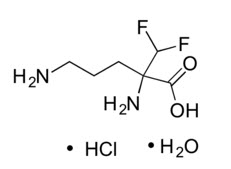
IWILFIN is an ornithine decarboxylase inhibitor. The chemical name of eflornithine hydrochloride is 2,5-diamino-2-(difluoromethyl) pentanoic acid hydrochloride hydrate with a molecular formula of C6H12F2N2O2∙HCl∙H2O. Its molecular weight is 236.65g/mol for the salt and hydrate form and 182.17 g/mol for the anhydrous free base form. Eflornithine hydrochloride is a white to off-white powder, freely soluble in water and sparingly soluble in ethanol. The chemical structure of eflornithine hydrochloride is:
IWILFIN is available as a round, white to off-white tablet for oral administration. Each tablet contains 192 mg eflornithine, equivalent to 250 mg of eflornithine hydrochloride, and the following inactive ingredients: 220 mg silicified microcrystalline cellulose, 25 mg partially pregelatinized maize starch, 2.5 mg colloidal silicon dioxide, and 2.5 mg vegetable source magnesium stearate.
5.3 Hearing Loss
IWILFIN can cause hearing loss. In the pooled safety population [see Adverse Reactions (6.1)], 81% of patients had an abnormal audiogram at baseline. New or worsening hearing loss occurred in 13% of patients who received IWILFIN; hearing loss worsened from baseline to Grade 3 or 4 in 12% of patients. Tinnitus occurred in 1 patient. Hearing loss leading to dose interruption or reduction occurred in 4% of patients. New or worsening hearing loss requiring new use of hearing aids occurred in 7% of patients. IWILFIN was discontinued due to hearing loss in 1.4% of patients. Among all patients with new or worsening hearing loss during IWILFIN treatment, the hearing loss resolved to baseline in 9% of patients. Among 18 patients who experienced new or worsening hearing loss and had dose modifications, 67% (N=12) improved or resolved to baseline.
Perform audiogram prior to initiation of therapy and at 6 month intervals, or as clinically indicated, to monitor for potential hearing loss. Withhold and reduce the dose or permanently discontinue IWILFIN based on severity [see Dosage and Administration (2.1, 2.4)].
8.4 Pediatric Use
The safety and effectiveness of IWILFIN have been established to reduce the risk of relapse in pediatric patients with high-risk neuroblastoma (HRNB) who have demonstrated at least a partial response to prior multiagent, multimodality therapy including anti-GD2 immunotherapy. Use of IWILFIN for this indication is supported by evidence from adequate and well-controlled studies in pediatric patients with a median age of 4 years (range: 1 to 17) [see Adverse Reactions (6.1), Clinical Pharmacology (12.3), Clinical Studies (14.1)].
The safety and effectiveness of IWILFIN have not been established in pediatric patients for other indications [see Indications and Usage (1)].
5.2 Hepatotoxicity
IWILFIN can cause hepatotoxicity. In the pooled safety population [see Adverse Reactions (6.1)], Grade 3 or 4 events of increased alanine aminotransferase (ALT) occurred in 11% of patients. Grade 3 or 4 events of increased aspartate aminotransferase (AST) occurred in 6% of patients. Grade 3 or 4 events of increased bilirubin occurred in 0.3% of patients. Increased ALT/AST leading to dose interruption or reduction occurred in 2.5% of patients. IWILFIN was discontinued due to increased ALT/AST in 0.6% of patients.
Perform liver function tests (ALT, AST, and total bilirubin) prior to the start of IWILFIN, every month for the first six months of treatment, then once every 3 months or as clinically indicated, with more frequent testing in patients who develop transaminase or bilirubin elevations. Withhold and reduce the dose or permanently discontinue IWILFIN based on severity [see Dosage and Administration (2.4) and Adverse Reactions (6.1)].
14 Clinical Studies
The efficacy of IWILFIN is based on an externally controlled trial comparison of Study 3b (investigational arm) and Study ANBL0032 (clinical trial-derived external control arm).
4 Contraindications
None.
6 Adverse Reactions
The following clinically significant adverse reactions are described elsewhere in the labeling:
- Myelosuppression [see Warnings and Precautions (5.1)]
- Hepatotoxicity [see Warnings and Precautions (5.2)]
- Hearing Loss [see Warnings and Precautions (5.3)]
5.1 Myelosuppression
IWILFIN can cause myelosuppression. In the pooled safety population [see Adverse Reactions (6.1)], Grade 3 or 4 neutropenia occurred in 4.2% of patients. Febrile neutropenia occurred in 0.6% of patients. Bone marrow failure occurred in 1 patient. Grade 3 or 4 thrombocytopenia occurred in 1.4% of patients. Grade 3 anemia occurred in 3.3% of patients.
Monitor blood counts including neutrophil count, platelet count, and hemoglobin level prior to administration of IWILFIN and periodically during treatment. Withhold, reduce the dose, or permanently discontinue IWILFIN based on severity [see Dosage and Administration (2.4)].
8.5 Renal Impairment
Patients with moderate (eGFR <60 mL/min) and severe (eGFR <30 mL/min) renal impairment have a higher exposure to eflornithine than patients with normal renal function which can increase the risk for toxicity [see Clinical Pharmacology (12.3)]. Reduce the dose in patients with severe renal impairment [see Dosage and Administration (2.3)]. Monitor patients with moderate renal impairment closely for increased adverse reactions including hepatotoxicity, myelosuppression, and hearing loss [see Dosage and Administration (2.4)].
12.2 Pharmacodynamics
Eflornithine exposure-response relationships and the time course of pharmacodynamic responses are unknown.
1 Indications and Usage
IWILFIN (eflornithine) is indicated to reduce the risk of relapse in adult and pediatric patients with high-risk neuroblastoma (HRNB) who have demonstrated at least a partial response to prior multiagent, multimodality therapy including anti-GD2 immunotherapy.
12.1 Mechanism of Action
Eflornithine is an irreversible inhibitor of the enzyme ornithine decarboxylase (ODC), the first and rate-limiting enzyme in the biosynthesis of polyamines and a transcriptional target of MYCN. Polyamines are involved in differentiation and proliferation of mammalian cells and are important for neoplastic transformation. Inhibition of polyamine synthesis by eflornithine restored the balance of the LIN28/Let-7 metabolic pathway, which is involved in regulation of cancer stem cells and glycolytic metabolism, by decreasing expression of the oncogenic drivers MYCN and LIN28B in MYCN-amplified neuroblastoma. In vitro, eflornithine induced senescence and suppressed neurosphere formation in MYCN-amplified and MYCN non-amplified neuroblastoma cells, indicating a cytostatic effect. Treatment with eflornithine prevented or delayed tumor formation in mice injected with limiting dilutions of MYCN-amplified neuroblastoma cells.
5.4 Embryo Fetal Toxicity
Based on findings from animal studies and its mechanism of action, IWILFIN can cause fetal harm when administered to a pregnant woman. In animal reproduction studies, oral administration of eflornithine to pregnant rats and rabbits during the period of organogenesis resulted in embryolethality at doses equivalent to the recommended human dose.
Advise pregnant women and females of reproductive potential of the potential risk to a fetus. Advise females of reproductive potential to use effective contraception during treatment with IWILFIN and for 1 week after the last dose. Advise males with female partners of reproductive potential to use effective contraception during treatment with IWILFIN and for 1 week after the last dose [see Use in Specific Populations (8.1, 8.3)].
5 Warnings and Precautions
- Myelosuppression: Monitor blood counts before and during treatment with IWILFIN. Withhold, reduce dose, or permanently discontinue based on severity. (5.1)
- Hepatotoxicity: Monitor liver function tests before and during treatment with IWILFIN. Withhold, reduce dose, or permanently discontinue based on severity. (5.2)
- Hearing Loss: Monitor hearing before and during treatment with IWILFIN. Withhold, reduce dose, or permanently discontinue based on severity. (5.3)
- Embryo-Fetal Toxicity: Can cause fetal harm. Advise females of reproductive potential of the potential risk to a fetus and to use effective contraception. (5.4, 8.1, 8.3)
2 Dosage and Administration
- Prior to initiation of IWILFIN, perform baseline audiogram, complete blood count, and liver function tests. (2.1, 5.3)
- Recommended dosage of IWILFIN is based on body surface area (see Table 1). (2.2)
- IWILFIN is taken orally twice daily with or without food until disease progression, unacceptable toxicity, or for a maximum of two years. (2.2)
- IWILFIN tablets may be swallowed whole, chewed, or crushed and mixed with soft food or liquid. (2.5)
3 Dosage Forms and Strengths
Tablets: 192 mg eflornithine, white to off-white, round, imprinted with "EFL" on one side and "192" on the other side.
8 Use in Specific Populations
6.1 Clinical Trials Experience
Because clinical trials are conducted under widely varying conditions, adverse reaction rates observed in the clinical trials of a drug cannot be directly compared to rates in the clinical trials of another drug and may not reflect rates observed in clinical practice.
The pooled safety population described in the WARNINGS AND PRECAUTIONS reflect exposure to IWILFIN as a single agent, taken orally at doses ranging from 192 - 768 mg twice daily, based on body surface area (BSA), until disease progression, unacceptable toxicity, or for a maximum of 2 years in patients who demonstrated at least a partial response to prior multiagent, multimodality therapy for newly diagnosed or relapsed/refractory high-risk neuroblastoma in Study 3b (n=101; NCT02395666) and Study 14 (n=259; NCT02679144). Among 360 patients who received IWILFIN, 84% were exposed for 6 months or longer and 73% were exposed for greater than one year. In this pooled safety population, the most common (≥5%) adverse reactions were hearing loss (11%), otitis media (10%), pyrexia (7%), pneumonia (5%), and diarrhea (5%). The most common (≥2%) Grade 3 or 4 laboratory abnormalities were increased ALT (11%), increased AST (6%), decreased neutrophils (4.2%), and decreased hemoglobin (3.3%).
17 Patient Counseling Information
Advise the patient to read the FDA-approved patient labeling (Patient Information).
2.2 Recommended Dosage of Iwilfin
The recommended IWILFIN dosage, based on body surface area (BSA), is provided in Table 1.
Administer IWILFIN orally twice daily for two years or until recurrence of disease or unacceptable toxicity.
Recalculate the BSA dosage every 3 months during treatment with IWILFIN.
| Body Surface Area (m2) | Dosage |
|---|---|
| >1.5 | 768 mg (four tablets) orally twice a day |
| 0.75 to 1.5 | 576 mg (three tablets) orally twice a day |
| 0.5 to < 0.75 | 384 mg (two tablets) orally twice a day |
| 0.25 to < 0.5 | 192 mg (one tablet) orally twice a day |
16 How Supplied/storage and Handling
IWILFIN (eflornithine) is available as 192 mg round, white to off-white tablets imprinted with EFL on one side and 192 on the other side; approximately 11 mm in diameter and supplied as follows:
- Bottle of 100 tablets containing desiccant, NDC 78670-150-01
2.4 Dosage Modifications for Adverse Reactions
The recommended dose reductions for adverse reactions are provided in Table 3.
| Current Dose | Reduced Dose |
|---|---|
| 768 mg (four tablets) orally twice a day | 576 mg (three tablets) orally twice a day |
| 576 mg (three tablets) orally twice a day | 384 mg (two tablets) orally twice a day |
| 384 mg (two tablets) orally twice a day | 192 mg (one tablet) orally twice a day |
| 192 mg (one tablet) orally twice a day | 192 mg (one tablet) orally once daily |
If subsequent adverse reactions occur, continue dose reduction until reaching the minimum dose of one 192 mg tablet once per day. Permanently discontinue IWILFIN if the patient is unable to tolerate the minimum dose of 192 mg once daily.
The recommended dosage modifications of IWILFIN for the management of adverse reactions are provided in Table 4.
| Adverse Reaction | Severity Severity as defined by National Cancer Institute Common Terminology Criteria for Adverse Events (NCI CTCAE) version 4.03
|
Dosage Modification |
|---|---|---|
| Myelosuppression [see Warnings and Precautions (5.1)] | ||
| Neutrophil count decreased | <500/mm3 | Withhold IWILFIN until recovery to ≥500/mm3.
|
| Platelet count decreased | <25,000/mm3 | Withhold IWILFIN until recovery to ≥25,000/mm3.
|
| Anemia | <8g/dL | Withhold IWILFIN until recovery to ≥8g/dL.
|
| Hepatotoxicity [see Warnings and Precautions (5.2)] | ||
| Aspartate aminotransferase increased or Alanine aminotransferase increased |
AST or ALT ≥10 × ULN | Withhold IWILFIN until recovery to <10 × ULN.
|
| Hearing Loss [see Warnings and Precautions (5.3)] | ||
| Hearing loss | Clinically concerning new or worsening hearing loss compared to IWILFIN baseline audiogram | Continue dosing with IWILFIN and repeat audiogram in 3 weeks.
|
| Other Adverse Reactions [see Adverse Reactions (6.1)] | ||
| Nausea, vomiting, or diarrhea | Grade 3 | If symptoms respond to supportive treatment (e.g., anti-emetic, anti-diarrheal), continue dosing with IWILFIN at the same dose. If symptoms do not respond to treatment,
|
| Other adverse reactions | Grade 3 or 4 | Withhold IWILFIN until recovery to ≤ Grade 2.
|
| Recurrent Grade 4 | Permanently discontinue IWILFIN. |
Principal Display Panel 192 Mg Bottle Carton
Rx only
NDC 78670-150-01
iwilfin™
(eflornithine) tablets
192 mg
Keep the bottle tightly closed.
100 tablets
US WorldMeds®
2.3 Dosage Recommendations for Renal Impairment
For the treatment of patients with severe renal impairment (eGFR <30 mL/min), reduce the recommended dose of IWILFIN by 50% as described in Table 2 [see Use in Specific Populations (8.5), Clinical Pharmacology (12.3) ].
| Body Surface Area (m2) | Recommended Dosage for Patients with Severe Renal Impairment (eGFR <30 mL/min) |
|---|---|
| >1.5 | 384 mg (two tablets) orally twice a day |
| 0.75 to 1.5 | 384 mg (two tablets) in the morning and 192 mg (one tablet) in the evening |
| 0.5 to < 0.75 | 192 mg (one tablet) orally twice a day |
| 0.25 to < 0.5 | 192 mg (one tablet) once a day |
8.3 Females and Males of Reproductive Potential
Based on animal data and its mechanism of action, IWILFIN can cause fetal harm when administered to a pregnant woman [see Use in Specific Populations (8.1)].
2.1 Recommended Testing Before Initiating Iwilfin
Prior to initiating IWILFIN, perform complete blood count, liver function tests, and baseline audiogram [see Warnings and Precautions (5.1-5.3)].
13.1 Carcinogenesis, Mutagenesis, Impairment of Fertility
In a 2-year carcinogenicity study, once daily oral administration of eflornithine to female rats did not result in drug-related neoplasms at doses up to 600 mg/kg/day (10.5 times the human Cmax at the recommended clinical dose of 1152 ± 384 mg/m2).
Eflornithine was not mutagenic in the in vitro bacterial reverse mutation (Ames) assay.
Dedicated fertility studies were not conducted with eflornithine.
Structured Label Content
Section 42229-5 (42229-5)
Administration
- Administer IWILFIN orally twice daily, with or without food, for two years or until recurrence of disease or unacceptable toxicity [see Clinical Pharmacology (12.3)].
- IWILFIN tablets can be swallowed whole, chewed, or crushed.
Section 42230-3 (42230-3)
| This Patient Information has been approved by the U.S. Food and Drug Administration | Issued: 12/2023 | |
|
Patient Information IWILFIN® (I-WILL-fin) (eflornithine) tablets |
||
|
What is IWILFIN?
IWILFIN is a prescription medicine used to reduce the risk of relapse in adults and children with high-risk neuroblastoma (HRNB) who have had at least a partial response to certain prior therapies. |
||
Before you take IWILFIN, tell your healthcare provider about all of your medical conditions, including if you:
|
||
How should I take IWILFIN?
|
||
|
What are the possible side effects of IWILFIN? IWILFIN may cause serious side effects, including:
|
||
|
|
|
|
||
|
|
|
|
||
| The most common side effects of IWILFIN include: | ||
|
|
|
| These are not all the possible side effects of IWILFIN. Call your doctor for medical advice about side effects. You may report side effects to FDA at 1-800-FDA-1088. |
||
How should I store IWILFIN?
|
||
|
General information about the safe and effective use of IWILFIN:
Medicines are sometimes prescribed for purposes other than those listed in the Patient Information leaflet. Do not use IWILFIN for a condition for which it was not prescribed. Do not give IWILFIN to other people, even if they have the same symptoms you have. It may harm them. You can ask your healthcare provider or pharmacist for information about IWILFIN that is written for health professionals. |
||
|
What are the ingredients in IWILFIN? Active ingredient: eflornithine Inactive ingredients: silicified microcrystalline cellulose, partially pregelatinized maize starch, colloidal silicon dioxide, and vegetable source magnesium stearate. Distributed by: USWM, LLC 4441 Springdale Road Louisville, KY 40241 ©2025. IWILFIN® is a registered trademark of USWM, LLC. For more information, go to www.IWILFIN.com or call 1-877-IWILFIN. |
Section 43683-2 (43683-2)
| Dosage and Administration (2.3) | 11/2024 |
Section 44425-7 (44425-7)
Store at room temperature, 20°C to 25°C (68°F to77°F), excursions permitted between 15°C to 30°C (59°F to 86°F) [see USP Controlled Room Temperature].
11 Description (11 DESCRIPTION)
IWILFIN is an ornithine decarboxylase inhibitor. The chemical name of eflornithine hydrochloride is 2,5-diamino-2-(difluoromethyl) pentanoic acid hydrochloride hydrate with a molecular formula of C6H12F2N2O2∙HCl∙H2O. Its molecular weight is 236.65g/mol for the salt and hydrate form and 182.17 g/mol for the anhydrous free base form. Eflornithine hydrochloride is a white to off-white powder, freely soluble in water and sparingly soluble in ethanol. The chemical structure of eflornithine hydrochloride is:
IWILFIN is available as a round, white to off-white tablet for oral administration. Each tablet contains 192 mg eflornithine, equivalent to 250 mg of eflornithine hydrochloride, and the following inactive ingredients: 220 mg silicified microcrystalline cellulose, 25 mg partially pregelatinized maize starch, 2.5 mg colloidal silicon dioxide, and 2.5 mg vegetable source magnesium stearate.
5.3 Hearing Loss
IWILFIN can cause hearing loss. In the pooled safety population [see Adverse Reactions (6.1)], 81% of patients had an abnormal audiogram at baseline. New or worsening hearing loss occurred in 13% of patients who received IWILFIN; hearing loss worsened from baseline to Grade 3 or 4 in 12% of patients. Tinnitus occurred in 1 patient. Hearing loss leading to dose interruption or reduction occurred in 4% of patients. New or worsening hearing loss requiring new use of hearing aids occurred in 7% of patients. IWILFIN was discontinued due to hearing loss in 1.4% of patients. Among all patients with new or worsening hearing loss during IWILFIN treatment, the hearing loss resolved to baseline in 9% of patients. Among 18 patients who experienced new or worsening hearing loss and had dose modifications, 67% (N=12) improved or resolved to baseline.
Perform audiogram prior to initiation of therapy and at 6 month intervals, or as clinically indicated, to monitor for potential hearing loss. Withhold and reduce the dose or permanently discontinue IWILFIN based on severity [see Dosage and Administration (2.1, 2.4)].
8.4 Pediatric Use
The safety and effectiveness of IWILFIN have been established to reduce the risk of relapse in pediatric patients with high-risk neuroblastoma (HRNB) who have demonstrated at least a partial response to prior multiagent, multimodality therapy including anti-GD2 immunotherapy. Use of IWILFIN for this indication is supported by evidence from adequate and well-controlled studies in pediatric patients with a median age of 4 years (range: 1 to 17) [see Adverse Reactions (6.1), Clinical Pharmacology (12.3), Clinical Studies (14.1)].
The safety and effectiveness of IWILFIN have not been established in pediatric patients for other indications [see Indications and Usage (1)].
5.2 Hepatotoxicity
IWILFIN can cause hepatotoxicity. In the pooled safety population [see Adverse Reactions (6.1)], Grade 3 or 4 events of increased alanine aminotransferase (ALT) occurred in 11% of patients. Grade 3 or 4 events of increased aspartate aminotransferase (AST) occurred in 6% of patients. Grade 3 or 4 events of increased bilirubin occurred in 0.3% of patients. Increased ALT/AST leading to dose interruption or reduction occurred in 2.5% of patients. IWILFIN was discontinued due to increased ALT/AST in 0.6% of patients.
Perform liver function tests (ALT, AST, and total bilirubin) prior to the start of IWILFIN, every month for the first six months of treatment, then once every 3 months or as clinically indicated, with more frequent testing in patients who develop transaminase or bilirubin elevations. Withhold and reduce the dose or permanently discontinue IWILFIN based on severity [see Dosage and Administration (2.4) and Adverse Reactions (6.1)].
14 Clinical Studies (14 CLINICAL STUDIES)
The efficacy of IWILFIN is based on an externally controlled trial comparison of Study 3b (investigational arm) and Study ANBL0032 (clinical trial-derived external control arm).
4 Contraindications (4 CONTRAINDICATIONS)
None.
6 Adverse Reactions (6 ADVERSE REACTIONS)
The following clinically significant adverse reactions are described elsewhere in the labeling:
- Myelosuppression [see Warnings and Precautions (5.1)]
- Hepatotoxicity [see Warnings and Precautions (5.2)]
- Hearing Loss [see Warnings and Precautions (5.3)]
5.1 Myelosuppression
IWILFIN can cause myelosuppression. In the pooled safety population [see Adverse Reactions (6.1)], Grade 3 or 4 neutropenia occurred in 4.2% of patients. Febrile neutropenia occurred in 0.6% of patients. Bone marrow failure occurred in 1 patient. Grade 3 or 4 thrombocytopenia occurred in 1.4% of patients. Grade 3 anemia occurred in 3.3% of patients.
Monitor blood counts including neutrophil count, platelet count, and hemoglobin level prior to administration of IWILFIN and periodically during treatment. Withhold, reduce the dose, or permanently discontinue IWILFIN based on severity [see Dosage and Administration (2.4)].
8.5 Renal Impairment
Patients with moderate (eGFR <60 mL/min) and severe (eGFR <30 mL/min) renal impairment have a higher exposure to eflornithine than patients with normal renal function which can increase the risk for toxicity [see Clinical Pharmacology (12.3)]. Reduce the dose in patients with severe renal impairment [see Dosage and Administration (2.3)]. Monitor patients with moderate renal impairment closely for increased adverse reactions including hepatotoxicity, myelosuppression, and hearing loss [see Dosage and Administration (2.4)].
12.2 Pharmacodynamics
Eflornithine exposure-response relationships and the time course of pharmacodynamic responses are unknown.
1 Indications and Usage (1 INDICATIONS AND USAGE)
IWILFIN (eflornithine) is indicated to reduce the risk of relapse in adult and pediatric patients with high-risk neuroblastoma (HRNB) who have demonstrated at least a partial response to prior multiagent, multimodality therapy including anti-GD2 immunotherapy.
12.1 Mechanism of Action
Eflornithine is an irreversible inhibitor of the enzyme ornithine decarboxylase (ODC), the first and rate-limiting enzyme in the biosynthesis of polyamines and a transcriptional target of MYCN. Polyamines are involved in differentiation and proliferation of mammalian cells and are important for neoplastic transformation. Inhibition of polyamine synthesis by eflornithine restored the balance of the LIN28/Let-7 metabolic pathway, which is involved in regulation of cancer stem cells and glycolytic metabolism, by decreasing expression of the oncogenic drivers MYCN and LIN28B in MYCN-amplified neuroblastoma. In vitro, eflornithine induced senescence and suppressed neurosphere formation in MYCN-amplified and MYCN non-amplified neuroblastoma cells, indicating a cytostatic effect. Treatment with eflornithine prevented or delayed tumor formation in mice injected with limiting dilutions of MYCN-amplified neuroblastoma cells.
5.4 Embryo Fetal Toxicity (5.4 Embryo-Fetal Toxicity)
Based on findings from animal studies and its mechanism of action, IWILFIN can cause fetal harm when administered to a pregnant woman. In animal reproduction studies, oral administration of eflornithine to pregnant rats and rabbits during the period of organogenesis resulted in embryolethality at doses equivalent to the recommended human dose.
Advise pregnant women and females of reproductive potential of the potential risk to a fetus. Advise females of reproductive potential to use effective contraception during treatment with IWILFIN and for 1 week after the last dose. Advise males with female partners of reproductive potential to use effective contraception during treatment with IWILFIN and for 1 week after the last dose [see Use in Specific Populations (8.1, 8.3)].
5 Warnings and Precautions (5 WARNINGS AND PRECAUTIONS)
- Myelosuppression: Monitor blood counts before and during treatment with IWILFIN. Withhold, reduce dose, or permanently discontinue based on severity. (5.1)
- Hepatotoxicity: Monitor liver function tests before and during treatment with IWILFIN. Withhold, reduce dose, or permanently discontinue based on severity. (5.2)
- Hearing Loss: Monitor hearing before and during treatment with IWILFIN. Withhold, reduce dose, or permanently discontinue based on severity. (5.3)
- Embryo-Fetal Toxicity: Can cause fetal harm. Advise females of reproductive potential of the potential risk to a fetus and to use effective contraception. (5.4, 8.1, 8.3)
2 Dosage and Administration (2 DOSAGE AND ADMINISTRATION)
- Prior to initiation of IWILFIN, perform baseline audiogram, complete blood count, and liver function tests. (2.1, 5.3)
- Recommended dosage of IWILFIN is based on body surface area (see Table 1). (2.2)
- IWILFIN is taken orally twice daily with or without food until disease progression, unacceptable toxicity, or for a maximum of two years. (2.2)
- IWILFIN tablets may be swallowed whole, chewed, or crushed and mixed with soft food or liquid. (2.5)
3 Dosage Forms and Strengths (3 DOSAGE FORMS AND STRENGTHS)
Tablets: 192 mg eflornithine, white to off-white, round, imprinted with "EFL" on one side and "192" on the other side.
8 Use in Specific Populations (8 USE IN SPECIFIC POPULATIONS)
6.1 Clinical Trials Experience
Because clinical trials are conducted under widely varying conditions, adverse reaction rates observed in the clinical trials of a drug cannot be directly compared to rates in the clinical trials of another drug and may not reflect rates observed in clinical practice.
The pooled safety population described in the WARNINGS AND PRECAUTIONS reflect exposure to IWILFIN as a single agent, taken orally at doses ranging from 192 - 768 mg twice daily, based on body surface area (BSA), until disease progression, unacceptable toxicity, or for a maximum of 2 years in patients who demonstrated at least a partial response to prior multiagent, multimodality therapy for newly diagnosed or relapsed/refractory high-risk neuroblastoma in Study 3b (n=101; NCT02395666) and Study 14 (n=259; NCT02679144). Among 360 patients who received IWILFIN, 84% were exposed for 6 months or longer and 73% were exposed for greater than one year. In this pooled safety population, the most common (≥5%) adverse reactions were hearing loss (11%), otitis media (10%), pyrexia (7%), pneumonia (5%), and diarrhea (5%). The most common (≥2%) Grade 3 or 4 laboratory abnormalities were increased ALT (11%), increased AST (6%), decreased neutrophils (4.2%), and decreased hemoglobin (3.3%).
17 Patient Counseling Information (17 PATIENT COUNSELING INFORMATION)
Advise the patient to read the FDA-approved patient labeling (Patient Information).
2.2 Recommended Dosage of Iwilfin (2.2 Recommended Dosage of IWILFIN)
The recommended IWILFIN dosage, based on body surface area (BSA), is provided in Table 1.
Administer IWILFIN orally twice daily for two years or until recurrence of disease or unacceptable toxicity.
Recalculate the BSA dosage every 3 months during treatment with IWILFIN.
| Body Surface Area (m2) | Dosage |
|---|---|
| >1.5 | 768 mg (four tablets) orally twice a day |
| 0.75 to 1.5 | 576 mg (three tablets) orally twice a day |
| 0.5 to < 0.75 | 384 mg (two tablets) orally twice a day |
| 0.25 to < 0.5 | 192 mg (one tablet) orally twice a day |
16 How Supplied/storage and Handling (16 HOW SUPPLIED/STORAGE AND HANDLING)
IWILFIN (eflornithine) is available as 192 mg round, white to off-white tablets imprinted with EFL on one side and 192 on the other side; approximately 11 mm in diameter and supplied as follows:
- Bottle of 100 tablets containing desiccant, NDC 78670-150-01
2.4 Dosage Modifications for Adverse Reactions
The recommended dose reductions for adverse reactions are provided in Table 3.
| Current Dose | Reduced Dose |
|---|---|
| 768 mg (four tablets) orally twice a day | 576 mg (three tablets) orally twice a day |
| 576 mg (three tablets) orally twice a day | 384 mg (two tablets) orally twice a day |
| 384 mg (two tablets) orally twice a day | 192 mg (one tablet) orally twice a day |
| 192 mg (one tablet) orally twice a day | 192 mg (one tablet) orally once daily |
If subsequent adverse reactions occur, continue dose reduction until reaching the minimum dose of one 192 mg tablet once per day. Permanently discontinue IWILFIN if the patient is unable to tolerate the minimum dose of 192 mg once daily.
The recommended dosage modifications of IWILFIN for the management of adverse reactions are provided in Table 4.
| Adverse Reaction | Severity Severity as defined by National Cancer Institute Common Terminology Criteria for Adverse Events (NCI CTCAE) version 4.03
|
Dosage Modification |
|---|---|---|
| Myelosuppression [see Warnings and Precautions (5.1)] | ||
| Neutrophil count decreased | <500/mm3 | Withhold IWILFIN until recovery to ≥500/mm3.
|
| Platelet count decreased | <25,000/mm3 | Withhold IWILFIN until recovery to ≥25,000/mm3.
|
| Anemia | <8g/dL | Withhold IWILFIN until recovery to ≥8g/dL.
|
| Hepatotoxicity [see Warnings and Precautions (5.2)] | ||
| Aspartate aminotransferase increased or Alanine aminotransferase increased |
AST or ALT ≥10 × ULN | Withhold IWILFIN until recovery to <10 × ULN.
|
| Hearing Loss [see Warnings and Precautions (5.3)] | ||
| Hearing loss | Clinically concerning new or worsening hearing loss compared to IWILFIN baseline audiogram | Continue dosing with IWILFIN and repeat audiogram in 3 weeks.
|
| Other Adverse Reactions [see Adverse Reactions (6.1)] | ||
| Nausea, vomiting, or diarrhea | Grade 3 | If symptoms respond to supportive treatment (e.g., anti-emetic, anti-diarrheal), continue dosing with IWILFIN at the same dose. If symptoms do not respond to treatment,
|
| Other adverse reactions | Grade 3 or 4 | Withhold IWILFIN until recovery to ≤ Grade 2.
|
| Recurrent Grade 4 | Permanently discontinue IWILFIN. |
Principal Display Panel 192 Mg Bottle Carton (PRINCIPAL DISPLAY PANEL - 192 mg Bottle Carton)
Rx only
NDC 78670-150-01
iwilfin™
(eflornithine) tablets
192 mg
Keep the bottle tightly closed.
100 tablets
US WorldMeds®
2.3 Dosage Recommendations for Renal Impairment
For the treatment of patients with severe renal impairment (eGFR <30 mL/min), reduce the recommended dose of IWILFIN by 50% as described in Table 2 [see Use in Specific Populations (8.5), Clinical Pharmacology (12.3) ].
| Body Surface Area (m2) | Recommended Dosage for Patients with Severe Renal Impairment (eGFR <30 mL/min) |
|---|---|
| >1.5 | 384 mg (two tablets) orally twice a day |
| 0.75 to 1.5 | 384 mg (two tablets) in the morning and 192 mg (one tablet) in the evening |
| 0.5 to < 0.75 | 192 mg (one tablet) orally twice a day |
| 0.25 to < 0.5 | 192 mg (one tablet) once a day |
8.3 Females and Males of Reproductive Potential
Based on animal data and its mechanism of action, IWILFIN can cause fetal harm when administered to a pregnant woman [see Use in Specific Populations (8.1)].
2.1 Recommended Testing Before Initiating Iwilfin (2.1 Recommended Testing Before Initiating IWILFIN)
Prior to initiating IWILFIN, perform complete blood count, liver function tests, and baseline audiogram [see Warnings and Precautions (5.1-5.3)].
13.1 Carcinogenesis, Mutagenesis, Impairment of Fertility
In a 2-year carcinogenicity study, once daily oral administration of eflornithine to female rats did not result in drug-related neoplasms at doses up to 600 mg/kg/day (10.5 times the human Cmax at the recommended clinical dose of 1152 ± 384 mg/m2).
Eflornithine was not mutagenic in the in vitro bacterial reverse mutation (Ames) assay.
Dedicated fertility studies were not conducted with eflornithine.
Advanced Ingredient Data
Raw Label Data
All Sections (JSON)
Additional Information
Back to search View SPL set listing Open on DailyMed ↗
Source: dailymed · Ingested: 2026-02-15T11:46:17.574874 · Updated: 2026-03-14T22:24:28.166164