Plerixafor
5d670cb4-163e-498c-b5fa-c193ea9d55c0
34391-3
HUMAN PRESCRIPTION DRUG LABEL
Drug Facts
Composition & Product
Identifiers & Packaging
Indications and Usage
Plerixafor is indicated in combination with filgrastim to mobilize hematopoietic stem cells (HSCs) to the peripheral blood for collection and subsequent autologous transplantation in patients with non-Hodgkin's lymphoma (NHL) or multiple myeloma (MM).
Dosage and Administration
Begin treatment with plerixafor after the patient has received filgrastim once daily for 4 days [see Dosage and Administration (2.2) ] . Administer plerixafor approximately 11 hours prior to initiation of each apheresis for up to 4 consecutive days. The recommended dose of plerixafor by subcutaneous injection is based on body weight: 20 mg fixed dose or 0.24 mg/kg of body weight for patients weighing less than or equal to 83 kg. [see Clinical Pharmacology (12.3) ] 0.24 mg/kg of body weight for patients weighing greater than 83 kg Use the patient's actual body weight to calculate the volume of plerixafor to be administered. Each vial delivers 1.2 mL of 20 mg/mL solution, and the volume to be administered to patients should be calculated from the following equation: 0.012 × patient's actual body weight (in kg) = volume to be administered (in mL) In clinical studies, plerixafor dose has been calculated based on actual body weight in patients up to 175% of ideal body weight. Plerixafor dose and treatment of patients weighing more than 175% of ideal body weight have not been investigated. Based on increasing exposure with increasing body weight, the plerixafor dose should not exceed 40 mg/day [see Clinical Pharmacology (12.3) ] . Vials should be inspected visually for particulate matter and discoloration prior to administration and should not be used if there is particulate matter or if the solution is discolored. Discard unused portion.
Contraindications
Plerixafor is contraindicated in patients with a history of hypersensitivity to plerixafor [see Warnings and Precautions (5.1) ] . Anaphylactic shock has occurred with use of plerixafor.
Warnings and Precautions
Anaphylactic Shock and Serious Hypersensitivity Reactions have occurred. Monitor patients during and after completion of plerixafor administration. ( 5.1 ) Tumor Cell Mobilization in Leukemia Patients: Plerixafor may mobilize leukemic cells and should not be used in leukemia patients. ( 5.2 ) Hematologic Effects: Increased circulating leukocytes and decreased platelet counts have been observed. Monitor blood cell counts and platelet counts during plerixafor use. ( 5.3 ) Potential for Tumor Cell Mobilization: Tumor cells may be released from marrow during HSC mobilization with plerixafor and filgrastim. Effect of reinfusion of tumor cells is unknown. ( 5.4 ) Splenic Rupture: Evaluate patients who report left upper abdominal and/or scapular or shoulder pain. ( 5.5 ) Embryo-Fetal Toxicity: Can cause fetal harm. Advise women not to become pregnant when taking plerixafor. ( 5.6 , 8.1 )
Adverse Reactions
The following clinically significant adverse reactions are discussed elsewhere in the labeling: Anaphylactic shock and hypersensitivity reactions [see Warnings and Precautions (5.1) ] Potential for tumor cell mobilization in leukemia patients [see Warnings and Precautions (5.2) ] Increased circulating leukocytes and decreased platelet counts [see Warnings and Precautions (5.3) ] Potential for tumor cell mobilization [see Warnings and Precautions (5.4) ] Splenic enlargement [see Warnings and Precautions (5.5) ]
How Supplied
Plerixafor injection 24 mg/1.2 mL (20 mg/mL) is a sterile, preservative-free, clear, colorless to pale-yellow solution supplied in a 2 mL clear glass single-dose vial. NDC Number: 65219-284-12
Storage and Handling
Plerixafor injection 24 mg/1.2 mL (20 mg/mL) is a sterile, preservative-free, clear, colorless to pale-yellow solution supplied in a 2 mL clear glass single-dose vial. NDC Number: 65219-284-12
Description
Plerixafor is indicated in combination with filgrastim to mobilize hematopoietic stem cells (HSCs) to the peripheral blood for collection and subsequent autologous transplantation in patients with non-Hodgkin's lymphoma (NHL) or multiple myeloma (MM).
Medication Information
Warnings and Precautions
Anaphylactic Shock and Serious Hypersensitivity Reactions have occurred. Monitor patients during and after completion of plerixafor administration. ( 5.1 ) Tumor Cell Mobilization in Leukemia Patients: Plerixafor may mobilize leukemic cells and should not be used in leukemia patients. ( 5.2 ) Hematologic Effects: Increased circulating leukocytes and decreased platelet counts have been observed. Monitor blood cell counts and platelet counts during plerixafor use. ( 5.3 ) Potential for Tumor Cell Mobilization: Tumor cells may be released from marrow during HSC mobilization with plerixafor and filgrastim. Effect of reinfusion of tumor cells is unknown. ( 5.4 ) Splenic Rupture: Evaluate patients who report left upper abdominal and/or scapular or shoulder pain. ( 5.5 ) Embryo-Fetal Toxicity: Can cause fetal harm. Advise women not to become pregnant when taking plerixafor. ( 5.6 , 8.1 )
Indications and Usage
Plerixafor is indicated in combination with filgrastim to mobilize hematopoietic stem cells (HSCs) to the peripheral blood for collection and subsequent autologous transplantation in patients with non-Hodgkin's lymphoma (NHL) or multiple myeloma (MM).
Dosage and Administration
Begin treatment with plerixafor after the patient has received filgrastim once daily for 4 days [see Dosage and Administration (2.2) ] . Administer plerixafor approximately 11 hours prior to initiation of each apheresis for up to 4 consecutive days. The recommended dose of plerixafor by subcutaneous injection is based on body weight: 20 mg fixed dose or 0.24 mg/kg of body weight for patients weighing less than or equal to 83 kg. [see Clinical Pharmacology (12.3) ] 0.24 mg/kg of body weight for patients weighing greater than 83 kg Use the patient's actual body weight to calculate the volume of plerixafor to be administered. Each vial delivers 1.2 mL of 20 mg/mL solution, and the volume to be administered to patients should be calculated from the following equation: 0.012 × patient's actual body weight (in kg) = volume to be administered (in mL) In clinical studies, plerixafor dose has been calculated based on actual body weight in patients up to 175% of ideal body weight. Plerixafor dose and treatment of patients weighing more than 175% of ideal body weight have not been investigated. Based on increasing exposure with increasing body weight, the plerixafor dose should not exceed 40 mg/day [see Clinical Pharmacology (12.3) ] . Vials should be inspected visually for particulate matter and discoloration prior to administration and should not be used if there is particulate matter or if the solution is discolored. Discard unused portion.
Contraindications
Plerixafor is contraindicated in patients with a history of hypersensitivity to plerixafor [see Warnings and Precautions (5.1) ] . Anaphylactic shock has occurred with use of plerixafor.
Adverse Reactions
The following clinically significant adverse reactions are discussed elsewhere in the labeling: Anaphylactic shock and hypersensitivity reactions [see Warnings and Precautions (5.1) ] Potential for tumor cell mobilization in leukemia patients [see Warnings and Precautions (5.2) ] Increased circulating leukocytes and decreased platelet counts [see Warnings and Precautions (5.3) ] Potential for tumor cell mobilization [see Warnings and Precautions (5.4) ] Splenic enlargement [see Warnings and Precautions (5.5) ]
Storage and Handling
Plerixafor injection 24 mg/1.2 mL (20 mg/mL) is a sterile, preservative-free, clear, colorless to pale-yellow solution supplied in a 2 mL clear glass single-dose vial. NDC Number: 65219-284-12
How Supplied
Plerixafor injection 24 mg/1.2 mL (20 mg/mL) is a sterile, preservative-free, clear, colorless to pale-yellow solution supplied in a 2 mL clear glass single-dose vial. NDC Number: 65219-284-12
Description
Plerixafor is indicated in combination with filgrastim to mobilize hematopoietic stem cells (HSCs) to the peripheral blood for collection and subsequent autologous transplantation in patients with non-Hodgkin's lymphoma (NHL) or multiple myeloma (MM).
Section 42229-5
Leukocytosis
Administration of plerixafor in conjunction with filgrastim increases circulating leukocytes as well as HSC populations. Monitor white blood cell counts during plerixafor use [see Adverse Reactions (6.1)].
Section 44425-7
Store at 25°C (77°F); excursions permitted to 15°C–30°C (59°F–86°F). [see USP Controlled Room Temperature]
10 Overdosage
Based on limited data at doses above the recommended dose of 0.24 mg/kg SC, the frequency of gastrointestinal disorders, vasovagal reactions, orthostatic hypotension, and/or syncope may be higher.
11 Description
Plerixafor injection is a sterile, preservative-free, clear, colorless to pale-yellow, isotonic solution for subcutaneous injection. Each mL of the sterile solution contains 20 mg of plerixafor. Each single-dose vial is filled to deliver 1.2 mL of the sterile solution that contains 24 mg of plerixafor and 5.9 mg of sodium chloride in Water for Injection adjusted to a pH of 6.0 to 7.5 with hydrochloric acid and with sodium hydroxide, if required.
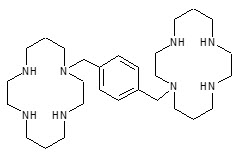
Plerixafor is a hematopoietic stem cell mobilizer with a chemical name 1,4-Bis((1,4,8,11-tetraazacyclotetradecan-1-yl)methyl)benzene. It has the molecular formula C28H54N8. The molecular weight of plerixafor is 502.79 g/mol. The structural formula is provided in Figure 1.
Figure 1: Structural Formula
Plerixafor is a white to off-white crystalline solid. It is hygroscopic. Plerixafor has a typical melting point of 131.5°C. The partition coefficient of plerixafor between 1-octanol and pH 7 aqueous buffer is <0.1.
8.4 Pediatric Use
The safety and effectiveness of plerixafor have not been established in pediatric patients. Effectiveness was not demonstrated in a single phase 1/2 randomized, open-label, comparative study of plerixafor plus standard regimens for mobilization of hematopoietic stem cells to the peripheral blood for collection and subsequent autologous transplantation. Forty-five pediatric patients ages 1 to <17 years with solid tumors or lymphoma were randomized 2:1 to plerixafor in addition to standard mobilization regimens (N=30) or standard mobilization regimens alone (N=15) (comparator arm). No new safety signals were observed in pediatric patients in this trial.
The day prior to the first apheresis, median peripheral blood CD34+ counts were 35 × 106 cells/L in the comparator arm and 15 × 106 cells/L in the plerixafor arm. On the day of the first apheresis, median peripheral blood CD34+ counts were 64 × 106 cells/L in the comparator arm and 77 × 106 cells/L in the plerixafor arm.
Plerixafor exposure, shown as AUC, in pediatric patients aged 12 to 18 years was within the range of values previously observed in adults, while the AUC of plerixafor in pediatric patients aged 2 to 12 years was 67% to 87% of that observed in adults, given the same adult dose (0.24 mg/kg).
8.5 Geriatric Use
Of the total number of subjects in controlled clinical studies of plerixafor, 24% were 65 and over, while 0.8% were 75 and over. No overall differences in safety or effectiveness were observed between these subjects and younger subjects, and other reported clinical experience has not identified differences in responses between the elderly and younger patients, but greater sensitivity of some older individuals cannot be ruled out.
Since plerixafor is mainly excreted by the kidney, no dose modifications are necessary in elderly individuals with normal renal function. In general, care should be taken in dose selection for elderly patients due to the greater frequency of decreased renal function with advanced age. Dosage adjustment in elderly patients with CLCR less than or equal to 50 mL/min is recommended [see Dosage and Administration (2.3) and Clinical Pharmacology (12.3)].
14 Clinical Studies
The efficacy and safety of plerixafor in conjunction with filgrastim in non-Hodgkin's lymphoma (NHL) Study AMD 3100-3101 (referred to as study 1) (NCT00103610) and multiple myeloma (MM) Study AMD 3100-3102 (referred to as study 2) (NCT00103662) were evaluated in two placebo-controlled studies (Studies 1 and 2). Patients were randomized to receive either plerixafor 0.24 mg/kg or placebo on each evening prior to apheresis. Patients received daily morning doses of filgrastim 10 micrograms/kg for 4 days prior to the first dose of plerixafor or placebo and on each morning prior to apheresis. Two hundred and ninety-eight (298) NHL patients were included in the primary efficacy analyses for Study 1. The mean age was 55 years (range 29–75) and 58 years (range 22–75) in the plerixafor and placebo groups, respectively, and 93% of subjects were Caucasian. In study 2, 302 patients with MM were included in the primary efficacy analyses. The mean age (58 years) and age range (28–75) were similar in the plerixafor and placebo groups, and 81% of subjects were Caucasian.
In Study 1, 59% of NHL patients who were mobilized with plerixafor and filgrastim collected ≥5 × 10⁶ CD34+ cells/kg from the peripheral blood in four or fewer apheresis sessions, compared with 20% of patients who were mobilized with placebo and filgrastim (p <0.001). Other CD34+ cell mobilization outcomes showed similar findings (Table 5).
| Efficacy Endpoint | Plerixafor and Filgrastim (n=150) |
Placebo and Filgrastim (n=148) |
p-value p-value calculated using Pearson's Chi-Squared test |
|---|---|---|---|
| Patients achieving ≥5 × 10⁶ cells/kg in ≤4 apheresis days | 89 (59%) | 29 (20%) | <0.001 |
| Patients achieving ≥2 × 10⁶ cells/kg in ≤4 apheresis days | 130 (87%) | 70 (47%) | <0.001 |
The median number of days to reach ≥5 × 10⁶ CD34+ cells/kg was 3 days for the plerixafor group and not evaluable for the placebo group. Table 6 presents the proportion of patients who achieved ≥5 × 10⁶ CD34+ cells/kg by apheresis day.
| Days | Proportion Percents determined by Kaplan Meier method in Plerixafor and Filgrastim(n=147 n includes all patients who received at least one day of apheresis ) |
Proportion in Placebo and Filgrastim (n=142) |
|---|---|---|
| 1 | 27.9% | 4.2% |
| 2 | 49.1% | 14.2% |
| 3 | 57.7% | 21.6% |
| 4 | 65.6% | 24.2% |
In Study 2, 72% of MM patients who were mobilized with plerixafor and filgrastim collected ≥6 × 10⁶ CD34+ cells/kg from the peripheral blood in two or fewer apheresis sessions, compared with 34% of patients who were mobilized with placebo and filgrastim (p <0.001). Other CD34+ cell mobilization outcomes showed similar findings (Table 7).
| Efficacy Endpoint | Plerixafor and Filgrastim (n=148) |
Placebo and Filgrastim (n=154) |
p-value p-value calculated using Pearson's Chi-Squared test |
|---|---|---|---|
| Patients achieving ≥6 × 10⁶ cells/kg in ≤2 apheresis days | 106 (72%) | 53 (34%) | <0.001 |
| Patients achieving ≥6 × 10⁶ cells/kg in ≤4 apheresis days | 112 (76%) | 79 (51%) | <0.001 |
| Patients achieving ≥2 × 10⁶ cells/kg in ≤4 apheresis days | 141 (95%) | 136 (88%) | 0.028 |
The median number of days to reach ≥6 × 10⁶ CD34+ cells/kg was 1 day for the plerixafor group and 4 days for the placebo group. Table 8 presents the proportion of patients who achieved ≥6 × 10⁶ CD34+ cells/kg by apheresis day.
| Days | Proportion Percents determined by Kaplan Meier method in Plerixafor and Filgrastim(n=144 n includes all patients who received at least one day of apheresis ) |
Proportion in Placebo and Filgrastim (n=150) |
|---|---|---|
| 1 | 54.2% | 17.3% |
| 2 | 77.9% | 35.3% |
| 3 | 86.8% | 48.9% |
| 4 | 86.8% | 55.9% |
Multiple factors can influence time to engraftment and graft durability following stem cell transplantation. For transplanted patients in the Phase 3 studies, time to neutrophil and platelet engraftment and graft durability were similar across the treatment groups.
4 Contraindications
Plerixafor is contraindicated in patients with a history of hypersensitivity to plerixafor [see Warnings and Precautions (5.1)]. Anaphylactic shock has occurred with use of plerixafor.
6 Adverse Reactions
The following clinically significant adverse reactions are discussed elsewhere in the labeling:
- Anaphylactic shock and hypersensitivity reactions [see Warnings and Precautions (5.1)]
- Potential for tumor cell mobilization in leukemia patients [see Warnings and Precautions (5.2)]
- Increased circulating leukocytes and decreased platelet counts [see Warnings and Precautions (5.3)]
- Potential for tumor cell mobilization [see Warnings and Precautions (5.4)]
- Splenic enlargement [see Warnings and Precautions (5.5)]
8.6 Renal Impairment
In patients with moderate and severe renal impairment (CLCR less than or equal to 50 mL/min), reduce the dose of plerixafor by one-third to 0.16 mg/kg [see Dosage and Administration (2.3) and Clinical Pharmacology (12.3)].
12.2 Pharmacodynamics
Data on the fold increase in peripheral blood CD34+ cell count (cells/mcL) by apheresis day were evaluated in two placebo-controlled clinical studies in patients with NHL and MM (Study 1 and Study 2, respectively). The fold increase in CD34+ cell count (cells/mcL) over the 24-hour period starting from the day prior to the first apheresis and ending the next morning just before the first apheresis is summarized in Table 3. During this 24-hour period, a single dose of plerixafor or placebo was administered 10 to 11 hours prior to apheresis.
| Study | Plerixafor and Filgrastim | Placebo and Filgrastim | ||
|---|---|---|---|---|
| Median | Mean (SD) | Median | Mean (SD) | |
| Study 1 | 5.0 | 6.1 (5.4) | 1.4 | 1.9 (1.5) |
| Study 2 | 4.8 | 6.4 (6.8) | 1.7 | 2.4 (7.3) |
In pharmacodynamic studies of plerixafor in healthy volunteers, peak mobilization of CD34+ cells was observed between 6 and 9 hours after administration. In pharmacodynamic studies of Plerixafor in conjunction with filgrastim in healthy volunteers, a sustained elevation in the peripheral blood CD34+ count was observed from 4 to 18 hours after plerixafor administration with a peak CD34+ count between 10 and 14 hours.
12.3 Pharmacokinetics
The single-dose pharmacokinetics of plerixafor 0.24 mg/kg were evaluated in patients with NHL and MM following pretreatment with filgrastim (10 micrograms/kg once daily for 4 consecutive days). Plerixafor exhibits linear kinetics between the 0.04 mg/kg to 0.24 mg/kg dose range. The pharmacokinetics of plerixafor was similar across clinical studies in healthy subjects who received plerixafor alone and NHL and MM patients who received plerixafor in combination with filgrastim.
A population pharmacokinetic analysis incorporated plerixafor data from 63 subjects (NHL patients, MM patients, subjects with varying degrees of renal impairment, and healthy subjects) who received a single SC dose (0.04 mg/kg to 0.24 mg/kg) of plerixafor. A two-compartment disposition model with first order absorption and elimination was found to adequately describe the plerixafor concentration-time profile. Significant relationships between clearance and creatinine clearance (CLCR), as well as between central volume of distribution and body weight were observed. The distribution half-life (t1/2α) was estimated to be 0.3 hours and the terminal population half-life (t1/2β) was 5.3 hours in patients with normal renal function.
The population pharmacokinetic analysis showed that the mg/kg-based dosage results in an increased plerixafor exposure (AUC0–24h) with increasing body weight. In order to compare the pharmacokinetics and pharmacodynamics of plerixafor following 0.24 mg/kg-based and fixed (20 mg) doses, a follow-up trial was conducted in patients with NHL (N=61) who were treated with 0.24 mg/kg or 20 mg of plerixafor. The trial was conducted in patients weighing 70 kg or less. The fixed 20 mg dose showed 1.43-fold higher exposure (AUC0–10h) than the 0.24 mg/kg dose (Table 4). The fixed 20 mg dose also showed numerically higher response rate (5.2% [60.0% vs 54.8%] based on the local lab data and 11.7% [63.3% vs 51.6%] based on the central lab data) in attaining the target of ≥5 × 10⁶ CD34+ cells/kg than the mg/kg-based dose. However, the median time to reach ≥5 × 10⁶ CD34+ cells/kg was 3 days for both treatment groups, and the safety profile between the groups was similar. Based on these results, further analysis was conducted by FDA reviewers and a body weight of 83 kg was selected as an appropriate cut-off point to transition patients from fixed to weight based dosing.
| Regimen | Geometric Mean AUC |
|---|---|
| Fixed 20 mg (n=30) | 3991.2 |
| 0.24 mg/kg (n=31) | 2792.7 |
| Ratio (90% CI) | 1.43 (1.32,1.54) |
There is limited experience with the 0.24 mg/kg dose of plerixafor in patients weighing above 160 kg. Therefore, the dose should not exceed that of a 160 kg patient (i.e., 40 mg/day if CLCR is greater than 50 mL/min and 27 mg/day if CLCR is less than or equal to 50 mL/min) [see Dosage and Administration (2.1, 2.3)].
1 Indications and Usage
Plerixafor is indicated in combination with filgrastim to mobilize hematopoietic stem cells (HSCs) to the peripheral blood for collection and subsequent autologous transplantation in patients with non-Hodgkin's lymphoma (NHL) or multiple myeloma (MM).
12.1 Mechanism of Action
Plerixafor is an inhibitor of the CXCR4 chemokine receptor and blocks binding of its cognate ligand, stromal cell-derived factor-1α (SDF-1α). SDF-1α and CXCR4 are recognized to play a role in the trafficking and homing of human hematopoietic stem cells (HSCs) to the marrow compartment. Once in the marrow, stem cell CXCR4 can act to help anchor these cells to the marrow matrix, either directly via SDF-1α or through the induction of other adhesion molecules. Treatment with plerixafor resulted in leukocytosis and elevations in circulating hematopoietic progenitor cells in mice, dogs and humans. CD34+ cells mobilized by plerixafor were capable of engraftment with long-term repopulating capacity up to one year in canine transplantation models.
5.6 Embryo Fetal Toxicity
Based on findings from animal reproduction studies, plerixafor can cause fetal harm when administered to a pregnant woman. Plerixafor administration to pregnant rats during organogenesis resulted in embryo-fetal mortality, structural abnormalities, and alterations to growth at exposures approximately 10 times the exposure at the recommended human dose.
Advise pregnant women of the potential risk to the fetus. Advise females of reproductive potential to use an effective form of contraception during treatment with plerixafor and for one week after the final dose [see Use in Specific Populations (8.1)].
5 Warnings and Precautions
- Anaphylactic Shock and Serious Hypersensitivity Reactions have occurred. Monitor patients during and after completion of plerixafor administration. (5.1)
- Tumor Cell Mobilization in Leukemia Patients: Plerixafor may mobilize leukemic cells and should not be used in leukemia patients. (5.2)
- Hematologic Effects: Increased circulating leukocytes and decreased platelet counts have been observed. Monitor blood cell counts and platelet counts during plerixafor use. (5.3)
- Potential for Tumor Cell Mobilization: Tumor cells may be released from marrow during HSC mobilization with plerixafor and filgrastim. Effect of reinfusion of tumor cells is unknown. (5.4)
- Splenic Rupture: Evaluate patients who report left upper abdominal and/or scapular or shoulder pain. (5.5)
- Embryo-Fetal Toxicity: Can cause fetal harm. Advise women not to become pregnant when taking plerixafor. (5.6, 8.1)
2 Dosage and Administration
- Initiate plerixafor treatment after the patient has received filgrastim once daily for 4 days. (2.1)
- Repeat plerixafor dose up to 4 consecutive days. (2.1)
- Dose based on patient weight
- Administer by subcutaneous injection approximately 11 hours prior to initiation of apheresis. (2.1)
- Renal impairment: If creatinine clearance is ≤50 mL/min, decrease dose by one-third to 0.16 mg/kg. (2.3)
3 Dosage Forms and Strengths
Injection: 24 mg/1.2 mL (20 mg/mL) sterile, clear, colorless to pale-yellow solution in a single-dose vial.
6.2 Postmarketing Experience
In addition to adverse reactions reported from clinical trials, the following adverse reactions have been reported from postmarketing experience with plerixafor. Because these reactions are reported voluntarily from a population of uncertain size, it is not always possible to reliably estimate their frequency or establish a causal relationship to drug exposure.
8 Use in Specific Populations
Lactation: Advise not to breastfeed. (8.2)
6.1 Clinical Trials Experience
Because clinical trials are conducted under widely varying conditions, adverse reaction rates observed in the clinical trials of a drug cannot be directly compared to rates in the clinical trials of another drug and may not reflect the rates observed in practice.
The most common adverse reactions (≥10%) reported in patients who received plerixafor in conjunction with filgrastim regardless of causality and more frequent with plerixafor than placebo during HSC mobilization and apheresis were diarrhea, nausea, fatigue, injection site reactions, headache, arthralgia, dizziness, and vomiting.
Safety data for plerixafor in combination with filgrastim were obtained from two randomized placebo-controlled studies (301 patients) and 10 uncontrolled studies (242 patients). Patients were primarily treated with plerixafor at daily doses of 0.24 mg/kg SC. Median exposure to plerixafor in these studies was 2 days (range 1 to 7 days).
In the two randomized studies in patients with NHL and MM, a total of 301 patients were treated in the plerixafor and filgrastim group and 292 patients were treated in the placebo and filgrastim group. Patients received daily morning doses of filgrastim 10 micrograms/kg for 4 days prior to the first dose of plerixafor 0.24 mg/kg SC or placebo and on each morning prior to apheresis. The adverse reactions that occurred in ≥5% of the patients who received plerixafor regardless of causality and were more frequent with plerixafor than placebo during HSC mobilization and apheresis are shown in Table 2.
| Percent of Patients (%) | ||||||
|---|---|---|---|---|---|---|
| Plerixafor and Filgrastim (n=301) |
Placebo and Filgrastim (n=292) |
|||||
| All Grades Grades based on criteria from the World Health Organization (WHO) |
Grade 3 | Grade 4 | All Grades | Grade 3 | Grade 4 | |
| Gastrointestinal disorders | ||||||
| Diarrhea | 37 | <1 | 0 | 17 | 0 | 0 |
| Nausea | 34 | 1 | 0 | 22 | 0 | 0 |
| Vomiting | 10 | <1 | 0 | 6 | 0 | 0 |
| Flatulence | 7 | 0 | 0 | 3 | 0 | 0 |
| General disorders and administration site conditions | ||||||
| Injection site reactions | 34 | 0 | 0 | 10 | 0 | 0 |
| Fatigue | 27 | 0 | 0 | 25 | 0 | 0 |
| Musculoskeletal and connective tissue disorders | ||||||
| Arthralgia | 13 | 0 | 0 | 12 | 0 | 0 |
| Nervous system disorders | ||||||
| Headache | 22 | <1 | 0 | 21 | 1 | 0 |
| Dizziness | 11 | 0 | 0 | 6 | 0 | 0 |
| Psychiatric disorders | ||||||
| Insomnia | 7 | 0 | 0 | 5 | 0 | 0 |
In the randomized studies, 34% of patients with NHL or MM had mild to moderate injection site reactions at the site of subcutaneous administration of plerixafor. These included erythema, hematoma, hemorrhage, induration, inflammation, irritation, pain, paresthesia, pruritus, rash, swelling, and urticaria.
Mild to moderate allergic reactions were observed in less than 1% of patients within approximately 30 min after plerixafor administration, including one or more of the following: urticaria (n=2), periorbital swelling (n=2), dyspnea (n=1) or hypoxia (n=1). Symptoms generally responded to treatments (e.g., antihistamines, corticosteroids, hydration or supplemental oxygen) or resolved spontaneously.
Vasovagal reactions, orthostatic hypotension, and/or syncope can occur following subcutaneous injections. In plerixafor oncology and healthy volunteer clinical studies, less than 1% of subjects experienced vasovagal reactions following subcutaneous administration of plerixafor doses ≤0.24 mg/kg. The majority of these events occurred within 1 hour of plerixafor administration. Because of the potential for these reactions, appropriate precautions should be taken.
Other adverse reactions in the randomized studies that occurred in <5% of patients but were reported as related to plerixafor during HSC mobilization and apheresis included abdominal pain, hyperhidrosis, abdominal distention, dry mouth, erythema, stomach discomfort, malaise, hypoesthesia oral, constipation, dyspepsia, and musculoskeletal pain.
Hyperleukocytosis: In clinical trials, white blood cell counts of 100,000/mcL or greater were observed, on the day prior to or any day of apheresis, in 7% of patients receiving plerixafor and in 1% of patients receiving placebo. No complications or clinical symptoms of leukostasis were observed.
17 Patient Counseling Information
Advise patients of the potential for anaphylactic reactions, including signs and symptoms such as urticaria, periorbital swelling, dyspnea, or hypoxia during and following plerixafor injection and to report these symptoms immediately to a healthcare professional [see Adverse Reactions (6.1, 6.2)].
Advise patients to contact healthcare professional immediately if they experience left upper abdominal pain and/or scapular or shoulder pain [see Adverse Reactions (6.1, 6.2)].
Advise patients to inform a healthcare professional immediately if symptoms of vasovagal reactions such as orthostatic hypotension or syncope occur during or shortly after their plerixafor injection [see Adverse Reactions (6.1)].
Advise patients who experience itching, rash, or reaction at the site of injection to notify a healthcare professional, as these symptoms have been treated with over-the-counter medications during clinical trials [see Adverse Reactions (6.1)].
Advise patients that plerixafor may cause gastrointestinal disorders, including diarrhea, nausea, vomiting, flatulence, and abdominal pain. Patients should be told how to manage specific gastrointestinal disorders and to inform their healthcare professional if severe events occur following plerixafor injection [see Adverse Reactions (6.1)].
Advise females of reproductive potential of the potential risk to a fetus. Advise females to contact their healthcare provider if they become pregnant, or if pregnancy is suspected, during treatment with plerixafor [see Warnings and Precautions (5.6), Use in Specific Populations (8.1)].
Advise females and males of reproductive potential to use effective contraceptive methods during plerixafor use and for 1 week following cessation of treatment [see Warnings and Precautions (5.6), Use in Specific Populations (8.1)].
Advise women not to breastfeed during treatment with plerixafor and for 1 week following the last dose [Use in Specific Populations (8.2)].
5.5 Splenic Enlargement and Rupture
Higher absolute and relative spleen weights associated with extramedullary hematopoiesis were observed following prolonged (2 to 4 weeks) daily plerixafor SC administration in rats at doses approximately 4-fold higher than the recommended human dose based on body surface area. The effect of plerixafor on spleen size in patients was not specifically evaluated in clinical studies. Cases of splenic enlargement and/or rupture have been reported following the administration of plerixafor in conjunction with growth factor filgrastim. Evaluate individuals receiving plerixafor in combination with filgrastim who report left upper abdominal pain and/or scapular or shoulder pain for splenic integrity.
16 How Supplied/storage and Handling
Plerixafor injection 24 mg/1.2 mL (20 mg/mL) is a sterile, preservative-free, clear, colorless to pale-yellow solution supplied in a 2 mL clear glass single-dose vial.
NDC Number: 65219-284-12
2.2 Recommended Concomitant Medications
Administer daily morning doses of filgrastim 10 micrograms/kg for 4 days prior to the first evening dose of plerixafor and on each day prior to apheresis [see Clinical Studies (14)].
2.1 Recommended Dosage and Administration
Begin treatment with plerixafor after the patient has received filgrastim once daily for 4 days [see Dosage and Administration (2.2)]. Administer plerixafor approximately 11 hours prior to initiation of each apheresis for up to 4 consecutive days.
The recommended dose of plerixafor by subcutaneous injection is based on body weight:
- 20 mg fixed dose or 0.24 mg/kg of body weight for patients weighing less than or equal to 83 kg. [see Clinical Pharmacology (12.3)]
- 0.24 mg/kg of body weight for patients weighing greater than 83 kg
Use the patient's actual body weight to calculate the volume of plerixafor to be administered. Each vial delivers 1.2 mL of 20 mg/mL solution, and the volume to be administered to patients should be calculated from the following equation:
-
0.012 × patient's actual body weight (in kg) = volume to be administered (in mL)
In clinical studies, plerixafor dose has been calculated based on actual body weight in patients up to 175% of ideal body weight. Plerixafor dose and treatment of patients weighing more than 175% of ideal body weight have not been investigated.
Based on increasing exposure with increasing body weight, the plerixafor dose should not exceed 40 mg/day [see Clinical Pharmacology (12.3)].
Vials should be inspected visually for particulate matter and discoloration prior to administration and should not be used if there is particulate matter or if the solution is discolored.
Discard unused portion.
5.4 Potential for Tumor Cell Mobilization
When plerixafor is used in combination with filgrastim for HSC mobilization‚ tumor cells may be released from the marrow and subsequently collected in the leukapheresis product. The effect of potential reinfusion of tumor cells has not been well-studied.
2.3 Dose Modifications in Renal impairment
In patients with moderate and severe renal impairment (estimated creatinine clearance (CLCR) less than or equal to 50 mL/min), reduce the dose of plerixafor by one-third based on body weight category as shown in Table 1. If CLCR is less than or equal to 50 mL/min the dose should not exceed 27 mg/day, as the mg/kg-based dosage results in increased plerixafor exposure with increasing body weight [see Clinical Pharmacology (12.3)]. Similar systemic exposure is predicted if the dose is reduced by one-third in patients with moderate and severe renal impairment compared with subjects with normal renal function [see Clinical Pharmacology (12.3)].
| Estimated Creatinine Clearance (mL/min) |
Dose | |
|---|---|---|
| Body Weight less than or equal to 83 kg | Body Weight greater than 83 kg and less than 160 kg | |
| greater than 50 | 20 mg or 0.24 mg/kg once daily | 0.24 mg/kg once daily (not to exceed 40 mg/day) |
| less than or equal to 50 | 13 mg or 0.16 mg/kg once daily | 0.16 mg/kg once daily (not to exceed 27 mg/day) |
The following (Cockcroft-Gault) formula may be used to estimate CLCR:
Males:
Creatinine clearance (mL/min) =
weight (kg) × (140 – age in years)
72 × serum creatinine (mg/dL)
Females:
Creatinine clearance (mL/min) = 0.85 × value calculated for males
There is insufficient information to make dosage recommendations in patients on hemodialysis.
5.2 Tumor Cell Mobilization in Leukemia Patients
For the purpose of HSC mobilization, plerixafor may cause mobilization of leukemic cells and subsequent contamination of the apheresis product. Therefore, plerixafor is not intended for HSC mobilization and harvest in patients with leukemia.
Principal Display Panel 24 Mg/1.2 Ml Vial Label
Plerixafor
injection
24 mg/1.2 mL
(20 mg/mL)
Rx only
For subcutaneous
injection only
Manufactured for:
Fresenius Kabi USA, LLC
Lake Zurich, IL 60047
NDC 6521-9284-12
Lot.
Exp.
XXXXXX
403963
Principal Display Panel 24 Mg/1.2 Ml Vial Carton
NDC 6521-9284-12
621878
Plerixafor
injection
24 mg/1.2 mL
(20 mg/mL)
For subcutaneous
injection only
One single-dose vial.
Discard unused portion.
Rx only
FRESENIUS
KABI
5.1 Anaphylactic Shock and Hypersensitivity Reactions
Serious hypersensitivity reactions, including anaphylactic-type reactions, some of which have been life-threatening with clinically significant hypotension and shock have occurred in patients receiving plerixafor [see Adverse Reactions (6.2)]. Observe patients for signs and symptoms of hypersensitivity during and after plerixafor administration for at least 30 minutes and until clinically stable following completion of each administration. Only administer Plerixafor when personnel and therapies are immediately available for the treatment of anaphylaxis and other hypersensitivity reactions.
In clinical studies, mild or moderate allergic reactions occurred within approximately 30 minutes after plerixafor administration in less than 1% of patients [see Adverse Reactions (6.1)].
13.1 Carcinogenesis, Mutagenesis, Impairment of Fertility
Carcinogenicity studies with plerixafor have not been conducted.
Plerixafor was not genotoxic in an in vitro bacterial mutation assay (Ames test in Salmonella ), an in vitro chromosomal aberration test using V79 Chinese hamster cells, or an in vivo bone marrow micronucleus test in rats after subcutaneous doses up to 25 mg/kg (150 mg/m2).
The effect of plerixafor on human fertility is unknown. The effect of plerixafor on male fertility was not studied in designated reproductive toxicology studies. The staging of spermatogenesis measured in a 28-day repeated dose toxicity study in rats revealed no abnormalities considered to be related to plerixafor. No histopathological evidence of toxicity to male or female reproductive organs was observed in 28-day repeated dose toxicity studies.
No adverse effects on estrus or reproductive indices were observed in an investigative fertility study in female rats administered plerixafor at doses up to 90mg/m2 (15mg/kg/day) or approximately 10 times the recommended human dose of 0.24 mg/kg when compared on a mg/m2 basis.
Structured Label Content
Section 42229-5 (42229-5)
Leukocytosis
Administration of plerixafor in conjunction with filgrastim increases circulating leukocytes as well as HSC populations. Monitor white blood cell counts during plerixafor use [see Adverse Reactions (6.1)].
Section 44425-7 (44425-7)
Store at 25°C (77°F); excursions permitted to 15°C–30°C (59°F–86°F). [see USP Controlled Room Temperature]
10 Overdosage (10 OVERDOSAGE)
Based on limited data at doses above the recommended dose of 0.24 mg/kg SC, the frequency of gastrointestinal disorders, vasovagal reactions, orthostatic hypotension, and/or syncope may be higher.
11 Description (11 DESCRIPTION)
Plerixafor injection is a sterile, preservative-free, clear, colorless to pale-yellow, isotonic solution for subcutaneous injection. Each mL of the sterile solution contains 20 mg of plerixafor. Each single-dose vial is filled to deliver 1.2 mL of the sterile solution that contains 24 mg of plerixafor and 5.9 mg of sodium chloride in Water for Injection adjusted to a pH of 6.0 to 7.5 with hydrochloric acid and with sodium hydroxide, if required.
Plerixafor is a hematopoietic stem cell mobilizer with a chemical name 1,4-Bis((1,4,8,11-tetraazacyclotetradecan-1-yl)methyl)benzene. It has the molecular formula C28H54N8. The molecular weight of plerixafor is 502.79 g/mol. The structural formula is provided in Figure 1.
Figure 1: Structural Formula
Plerixafor is a white to off-white crystalline solid. It is hygroscopic. Plerixafor has a typical melting point of 131.5°C. The partition coefficient of plerixafor between 1-octanol and pH 7 aqueous buffer is <0.1.
8.4 Pediatric Use
The safety and effectiveness of plerixafor have not been established in pediatric patients. Effectiveness was not demonstrated in a single phase 1/2 randomized, open-label, comparative study of plerixafor plus standard regimens for mobilization of hematopoietic stem cells to the peripheral blood for collection and subsequent autologous transplantation. Forty-five pediatric patients ages 1 to <17 years with solid tumors or lymphoma were randomized 2:1 to plerixafor in addition to standard mobilization regimens (N=30) or standard mobilization regimens alone (N=15) (comparator arm). No new safety signals were observed in pediatric patients in this trial.
The day prior to the first apheresis, median peripheral blood CD34+ counts were 35 × 106 cells/L in the comparator arm and 15 × 106 cells/L in the plerixafor arm. On the day of the first apheresis, median peripheral blood CD34+ counts were 64 × 106 cells/L in the comparator arm and 77 × 106 cells/L in the plerixafor arm.
Plerixafor exposure, shown as AUC, in pediatric patients aged 12 to 18 years was within the range of values previously observed in adults, while the AUC of plerixafor in pediatric patients aged 2 to 12 years was 67% to 87% of that observed in adults, given the same adult dose (0.24 mg/kg).
8.5 Geriatric Use
Of the total number of subjects in controlled clinical studies of plerixafor, 24% were 65 and over, while 0.8% were 75 and over. No overall differences in safety or effectiveness were observed between these subjects and younger subjects, and other reported clinical experience has not identified differences in responses between the elderly and younger patients, but greater sensitivity of some older individuals cannot be ruled out.
Since plerixafor is mainly excreted by the kidney, no dose modifications are necessary in elderly individuals with normal renal function. In general, care should be taken in dose selection for elderly patients due to the greater frequency of decreased renal function with advanced age. Dosage adjustment in elderly patients with CLCR less than or equal to 50 mL/min is recommended [see Dosage and Administration (2.3) and Clinical Pharmacology (12.3)].
14 Clinical Studies (14 CLINICAL STUDIES)
The efficacy and safety of plerixafor in conjunction with filgrastim in non-Hodgkin's lymphoma (NHL) Study AMD 3100-3101 (referred to as study 1) (NCT00103610) and multiple myeloma (MM) Study AMD 3100-3102 (referred to as study 2) (NCT00103662) were evaluated in two placebo-controlled studies (Studies 1 and 2). Patients were randomized to receive either plerixafor 0.24 mg/kg or placebo on each evening prior to apheresis. Patients received daily morning doses of filgrastim 10 micrograms/kg for 4 days prior to the first dose of plerixafor or placebo and on each morning prior to apheresis. Two hundred and ninety-eight (298) NHL patients were included in the primary efficacy analyses for Study 1. The mean age was 55 years (range 29–75) and 58 years (range 22–75) in the plerixafor and placebo groups, respectively, and 93% of subjects were Caucasian. In study 2, 302 patients with MM were included in the primary efficacy analyses. The mean age (58 years) and age range (28–75) were similar in the plerixafor and placebo groups, and 81% of subjects were Caucasian.
In Study 1, 59% of NHL patients who were mobilized with plerixafor and filgrastim collected ≥5 × 10⁶ CD34+ cells/kg from the peripheral blood in four or fewer apheresis sessions, compared with 20% of patients who were mobilized with placebo and filgrastim (p <0.001). Other CD34+ cell mobilization outcomes showed similar findings (Table 5).
| Efficacy Endpoint | Plerixafor and Filgrastim (n=150) |
Placebo and Filgrastim (n=148) |
p-value p-value calculated using Pearson's Chi-Squared test |
|---|---|---|---|
| Patients achieving ≥5 × 10⁶ cells/kg in ≤4 apheresis days | 89 (59%) | 29 (20%) | <0.001 |
| Patients achieving ≥2 × 10⁶ cells/kg in ≤4 apheresis days | 130 (87%) | 70 (47%) | <0.001 |
The median number of days to reach ≥5 × 10⁶ CD34+ cells/kg was 3 days for the plerixafor group and not evaluable for the placebo group. Table 6 presents the proportion of patients who achieved ≥5 × 10⁶ CD34+ cells/kg by apheresis day.
| Days | Proportion Percents determined by Kaplan Meier method in Plerixafor and Filgrastim(n=147 n includes all patients who received at least one day of apheresis ) |
Proportion in Placebo and Filgrastim (n=142) |
|---|---|---|
| 1 | 27.9% | 4.2% |
| 2 | 49.1% | 14.2% |
| 3 | 57.7% | 21.6% |
| 4 | 65.6% | 24.2% |
In Study 2, 72% of MM patients who were mobilized with plerixafor and filgrastim collected ≥6 × 10⁶ CD34+ cells/kg from the peripheral blood in two or fewer apheresis sessions, compared with 34% of patients who were mobilized with placebo and filgrastim (p <0.001). Other CD34+ cell mobilization outcomes showed similar findings (Table 7).
| Efficacy Endpoint | Plerixafor and Filgrastim (n=148) |
Placebo and Filgrastim (n=154) |
p-value p-value calculated using Pearson's Chi-Squared test |
|---|---|---|---|
| Patients achieving ≥6 × 10⁶ cells/kg in ≤2 apheresis days | 106 (72%) | 53 (34%) | <0.001 |
| Patients achieving ≥6 × 10⁶ cells/kg in ≤4 apheresis days | 112 (76%) | 79 (51%) | <0.001 |
| Patients achieving ≥2 × 10⁶ cells/kg in ≤4 apheresis days | 141 (95%) | 136 (88%) | 0.028 |
The median number of days to reach ≥6 × 10⁶ CD34+ cells/kg was 1 day for the plerixafor group and 4 days for the placebo group. Table 8 presents the proportion of patients who achieved ≥6 × 10⁶ CD34+ cells/kg by apheresis day.
| Days | Proportion Percents determined by Kaplan Meier method in Plerixafor and Filgrastim(n=144 n includes all patients who received at least one day of apheresis ) |
Proportion in Placebo and Filgrastim (n=150) |
|---|---|---|
| 1 | 54.2% | 17.3% |
| 2 | 77.9% | 35.3% |
| 3 | 86.8% | 48.9% |
| 4 | 86.8% | 55.9% |
Multiple factors can influence time to engraftment and graft durability following stem cell transplantation. For transplanted patients in the Phase 3 studies, time to neutrophil and platelet engraftment and graft durability were similar across the treatment groups.
4 Contraindications (4 CONTRAINDICATIONS)
Plerixafor is contraindicated in patients with a history of hypersensitivity to plerixafor [see Warnings and Precautions (5.1)]. Anaphylactic shock has occurred with use of plerixafor.
6 Adverse Reactions (6 ADVERSE REACTIONS)
The following clinically significant adverse reactions are discussed elsewhere in the labeling:
- Anaphylactic shock and hypersensitivity reactions [see Warnings and Precautions (5.1)]
- Potential for tumor cell mobilization in leukemia patients [see Warnings and Precautions (5.2)]
- Increased circulating leukocytes and decreased platelet counts [see Warnings and Precautions (5.3)]
- Potential for tumor cell mobilization [see Warnings and Precautions (5.4)]
- Splenic enlargement [see Warnings and Precautions (5.5)]
8.6 Renal Impairment
In patients with moderate and severe renal impairment (CLCR less than or equal to 50 mL/min), reduce the dose of plerixafor by one-third to 0.16 mg/kg [see Dosage and Administration (2.3) and Clinical Pharmacology (12.3)].
12.2 Pharmacodynamics
Data on the fold increase in peripheral blood CD34+ cell count (cells/mcL) by apheresis day were evaluated in two placebo-controlled clinical studies in patients with NHL and MM (Study 1 and Study 2, respectively). The fold increase in CD34+ cell count (cells/mcL) over the 24-hour period starting from the day prior to the first apheresis and ending the next morning just before the first apheresis is summarized in Table 3. During this 24-hour period, a single dose of plerixafor or placebo was administered 10 to 11 hours prior to apheresis.
| Study | Plerixafor and Filgrastim | Placebo and Filgrastim | ||
|---|---|---|---|---|
| Median | Mean (SD) | Median | Mean (SD) | |
| Study 1 | 5.0 | 6.1 (5.4) | 1.4 | 1.9 (1.5) |
| Study 2 | 4.8 | 6.4 (6.8) | 1.7 | 2.4 (7.3) |
In pharmacodynamic studies of plerixafor in healthy volunteers, peak mobilization of CD34+ cells was observed between 6 and 9 hours after administration. In pharmacodynamic studies of Plerixafor in conjunction with filgrastim in healthy volunteers, a sustained elevation in the peripheral blood CD34+ count was observed from 4 to 18 hours after plerixafor administration with a peak CD34+ count between 10 and 14 hours.
12.3 Pharmacokinetics
The single-dose pharmacokinetics of plerixafor 0.24 mg/kg were evaluated in patients with NHL and MM following pretreatment with filgrastim (10 micrograms/kg once daily for 4 consecutive days). Plerixafor exhibits linear kinetics between the 0.04 mg/kg to 0.24 mg/kg dose range. The pharmacokinetics of plerixafor was similar across clinical studies in healthy subjects who received plerixafor alone and NHL and MM patients who received plerixafor in combination with filgrastim.
A population pharmacokinetic analysis incorporated plerixafor data from 63 subjects (NHL patients, MM patients, subjects with varying degrees of renal impairment, and healthy subjects) who received a single SC dose (0.04 mg/kg to 0.24 mg/kg) of plerixafor. A two-compartment disposition model with first order absorption and elimination was found to adequately describe the plerixafor concentration-time profile. Significant relationships between clearance and creatinine clearance (CLCR), as well as between central volume of distribution and body weight were observed. The distribution half-life (t1/2α) was estimated to be 0.3 hours and the terminal population half-life (t1/2β) was 5.3 hours in patients with normal renal function.
The population pharmacokinetic analysis showed that the mg/kg-based dosage results in an increased plerixafor exposure (AUC0–24h) with increasing body weight. In order to compare the pharmacokinetics and pharmacodynamics of plerixafor following 0.24 mg/kg-based and fixed (20 mg) doses, a follow-up trial was conducted in patients with NHL (N=61) who were treated with 0.24 mg/kg or 20 mg of plerixafor. The trial was conducted in patients weighing 70 kg or less. The fixed 20 mg dose showed 1.43-fold higher exposure (AUC0–10h) than the 0.24 mg/kg dose (Table 4). The fixed 20 mg dose also showed numerically higher response rate (5.2% [60.0% vs 54.8%] based on the local lab data and 11.7% [63.3% vs 51.6%] based on the central lab data) in attaining the target of ≥5 × 10⁶ CD34+ cells/kg than the mg/kg-based dose. However, the median time to reach ≥5 × 10⁶ CD34+ cells/kg was 3 days for both treatment groups, and the safety profile between the groups was similar. Based on these results, further analysis was conducted by FDA reviewers and a body weight of 83 kg was selected as an appropriate cut-off point to transition patients from fixed to weight based dosing.
| Regimen | Geometric Mean AUC |
|---|---|
| Fixed 20 mg (n=30) | 3991.2 |
| 0.24 mg/kg (n=31) | 2792.7 |
| Ratio (90% CI) | 1.43 (1.32,1.54) |
There is limited experience with the 0.24 mg/kg dose of plerixafor in patients weighing above 160 kg. Therefore, the dose should not exceed that of a 160 kg patient (i.e., 40 mg/day if CLCR is greater than 50 mL/min and 27 mg/day if CLCR is less than or equal to 50 mL/min) [see Dosage and Administration (2.1, 2.3)].
1 Indications and Usage (1 INDICATIONS AND USAGE)
Plerixafor is indicated in combination with filgrastim to mobilize hematopoietic stem cells (HSCs) to the peripheral blood for collection and subsequent autologous transplantation in patients with non-Hodgkin's lymphoma (NHL) or multiple myeloma (MM).
12.1 Mechanism of Action
Plerixafor is an inhibitor of the CXCR4 chemokine receptor and blocks binding of its cognate ligand, stromal cell-derived factor-1α (SDF-1α). SDF-1α and CXCR4 are recognized to play a role in the trafficking and homing of human hematopoietic stem cells (HSCs) to the marrow compartment. Once in the marrow, stem cell CXCR4 can act to help anchor these cells to the marrow matrix, either directly via SDF-1α or through the induction of other adhesion molecules. Treatment with plerixafor resulted in leukocytosis and elevations in circulating hematopoietic progenitor cells in mice, dogs and humans. CD34+ cells mobilized by plerixafor were capable of engraftment with long-term repopulating capacity up to one year in canine transplantation models.
5.6 Embryo Fetal Toxicity (5.6 Embryo-Fetal Toxicity)
Based on findings from animal reproduction studies, plerixafor can cause fetal harm when administered to a pregnant woman. Plerixafor administration to pregnant rats during organogenesis resulted in embryo-fetal mortality, structural abnormalities, and alterations to growth at exposures approximately 10 times the exposure at the recommended human dose.
Advise pregnant women of the potential risk to the fetus. Advise females of reproductive potential to use an effective form of contraception during treatment with plerixafor and for one week after the final dose [see Use in Specific Populations (8.1)].
5 Warnings and Precautions (5 WARNINGS AND PRECAUTIONS)
- Anaphylactic Shock and Serious Hypersensitivity Reactions have occurred. Monitor patients during and after completion of plerixafor administration. (5.1)
- Tumor Cell Mobilization in Leukemia Patients: Plerixafor may mobilize leukemic cells and should not be used in leukemia patients. (5.2)
- Hematologic Effects: Increased circulating leukocytes and decreased platelet counts have been observed. Monitor blood cell counts and platelet counts during plerixafor use. (5.3)
- Potential for Tumor Cell Mobilization: Tumor cells may be released from marrow during HSC mobilization with plerixafor and filgrastim. Effect of reinfusion of tumor cells is unknown. (5.4)
- Splenic Rupture: Evaluate patients who report left upper abdominal and/or scapular or shoulder pain. (5.5)
- Embryo-Fetal Toxicity: Can cause fetal harm. Advise women not to become pregnant when taking plerixafor. (5.6, 8.1)
2 Dosage and Administration (2 DOSAGE AND ADMINISTRATION)
- Initiate plerixafor treatment after the patient has received filgrastim once daily for 4 days. (2.1)
- Repeat plerixafor dose up to 4 consecutive days. (2.1)
- Dose based on patient weight
- Administer by subcutaneous injection approximately 11 hours prior to initiation of apheresis. (2.1)
- Renal impairment: If creatinine clearance is ≤50 mL/min, decrease dose by one-third to 0.16 mg/kg. (2.3)
3 Dosage Forms and Strengths (3 DOSAGE FORMS AND STRENGTHS)
Injection: 24 mg/1.2 mL (20 mg/mL) sterile, clear, colorless to pale-yellow solution in a single-dose vial.
6.2 Postmarketing Experience
In addition to adverse reactions reported from clinical trials, the following adverse reactions have been reported from postmarketing experience with plerixafor. Because these reactions are reported voluntarily from a population of uncertain size, it is not always possible to reliably estimate their frequency or establish a causal relationship to drug exposure.
8 Use in Specific Populations (8 USE IN SPECIFIC POPULATIONS)
Lactation: Advise not to breastfeed. (8.2)
6.1 Clinical Trials Experience
Because clinical trials are conducted under widely varying conditions, adverse reaction rates observed in the clinical trials of a drug cannot be directly compared to rates in the clinical trials of another drug and may not reflect the rates observed in practice.
The most common adverse reactions (≥10%) reported in patients who received plerixafor in conjunction with filgrastim regardless of causality and more frequent with plerixafor than placebo during HSC mobilization and apheresis were diarrhea, nausea, fatigue, injection site reactions, headache, arthralgia, dizziness, and vomiting.
Safety data for plerixafor in combination with filgrastim were obtained from two randomized placebo-controlled studies (301 patients) and 10 uncontrolled studies (242 patients). Patients were primarily treated with plerixafor at daily doses of 0.24 mg/kg SC. Median exposure to plerixafor in these studies was 2 days (range 1 to 7 days).
In the two randomized studies in patients with NHL and MM, a total of 301 patients were treated in the plerixafor and filgrastim group and 292 patients were treated in the placebo and filgrastim group. Patients received daily morning doses of filgrastim 10 micrograms/kg for 4 days prior to the first dose of plerixafor 0.24 mg/kg SC or placebo and on each morning prior to apheresis. The adverse reactions that occurred in ≥5% of the patients who received plerixafor regardless of causality and were more frequent with plerixafor than placebo during HSC mobilization and apheresis are shown in Table 2.
| Percent of Patients (%) | ||||||
|---|---|---|---|---|---|---|
| Plerixafor and Filgrastim (n=301) |
Placebo and Filgrastim (n=292) |
|||||
| All Grades Grades based on criteria from the World Health Organization (WHO) |
Grade 3 | Grade 4 | All Grades | Grade 3 | Grade 4 | |
| Gastrointestinal disorders | ||||||
| Diarrhea | 37 | <1 | 0 | 17 | 0 | 0 |
| Nausea | 34 | 1 | 0 | 22 | 0 | 0 |
| Vomiting | 10 | <1 | 0 | 6 | 0 | 0 |
| Flatulence | 7 | 0 | 0 | 3 | 0 | 0 |
| General disorders and administration site conditions | ||||||
| Injection site reactions | 34 | 0 | 0 | 10 | 0 | 0 |
| Fatigue | 27 | 0 | 0 | 25 | 0 | 0 |
| Musculoskeletal and connective tissue disorders | ||||||
| Arthralgia | 13 | 0 | 0 | 12 | 0 | 0 |
| Nervous system disorders | ||||||
| Headache | 22 | <1 | 0 | 21 | 1 | 0 |
| Dizziness | 11 | 0 | 0 | 6 | 0 | 0 |
| Psychiatric disorders | ||||||
| Insomnia | 7 | 0 | 0 | 5 | 0 | 0 |
In the randomized studies, 34% of patients with NHL or MM had mild to moderate injection site reactions at the site of subcutaneous administration of plerixafor. These included erythema, hematoma, hemorrhage, induration, inflammation, irritation, pain, paresthesia, pruritus, rash, swelling, and urticaria.
Mild to moderate allergic reactions were observed in less than 1% of patients within approximately 30 min after plerixafor administration, including one or more of the following: urticaria (n=2), periorbital swelling (n=2), dyspnea (n=1) or hypoxia (n=1). Symptoms generally responded to treatments (e.g., antihistamines, corticosteroids, hydration or supplemental oxygen) or resolved spontaneously.
Vasovagal reactions, orthostatic hypotension, and/or syncope can occur following subcutaneous injections. In plerixafor oncology and healthy volunteer clinical studies, less than 1% of subjects experienced vasovagal reactions following subcutaneous administration of plerixafor doses ≤0.24 mg/kg. The majority of these events occurred within 1 hour of plerixafor administration. Because of the potential for these reactions, appropriate precautions should be taken.
Other adverse reactions in the randomized studies that occurred in <5% of patients but were reported as related to plerixafor during HSC mobilization and apheresis included abdominal pain, hyperhidrosis, abdominal distention, dry mouth, erythema, stomach discomfort, malaise, hypoesthesia oral, constipation, dyspepsia, and musculoskeletal pain.
Hyperleukocytosis: In clinical trials, white blood cell counts of 100,000/mcL or greater were observed, on the day prior to or any day of apheresis, in 7% of patients receiving plerixafor and in 1% of patients receiving placebo. No complications or clinical symptoms of leukostasis were observed.
17 Patient Counseling Information (17 PATIENT COUNSELING INFORMATION)
Advise patients of the potential for anaphylactic reactions, including signs and symptoms such as urticaria, periorbital swelling, dyspnea, or hypoxia during and following plerixafor injection and to report these symptoms immediately to a healthcare professional [see Adverse Reactions (6.1, 6.2)].
Advise patients to contact healthcare professional immediately if they experience left upper abdominal pain and/or scapular or shoulder pain [see Adverse Reactions (6.1, 6.2)].
Advise patients to inform a healthcare professional immediately if symptoms of vasovagal reactions such as orthostatic hypotension or syncope occur during or shortly after their plerixafor injection [see Adverse Reactions (6.1)].
Advise patients who experience itching, rash, or reaction at the site of injection to notify a healthcare professional, as these symptoms have been treated with over-the-counter medications during clinical trials [see Adverse Reactions (6.1)].
Advise patients that plerixafor may cause gastrointestinal disorders, including diarrhea, nausea, vomiting, flatulence, and abdominal pain. Patients should be told how to manage specific gastrointestinal disorders and to inform their healthcare professional if severe events occur following plerixafor injection [see Adverse Reactions (6.1)].
Advise females of reproductive potential of the potential risk to a fetus. Advise females to contact their healthcare provider if they become pregnant, or if pregnancy is suspected, during treatment with plerixafor [see Warnings and Precautions (5.6), Use in Specific Populations (8.1)].
Advise females and males of reproductive potential to use effective contraceptive methods during plerixafor use and for 1 week following cessation of treatment [see Warnings and Precautions (5.6), Use in Specific Populations (8.1)].
Advise women not to breastfeed during treatment with plerixafor and for 1 week following the last dose [Use in Specific Populations (8.2)].
5.5 Splenic Enlargement and Rupture
Higher absolute and relative spleen weights associated with extramedullary hematopoiesis were observed following prolonged (2 to 4 weeks) daily plerixafor SC administration in rats at doses approximately 4-fold higher than the recommended human dose based on body surface area. The effect of plerixafor on spleen size in patients was not specifically evaluated in clinical studies. Cases of splenic enlargement and/or rupture have been reported following the administration of plerixafor in conjunction with growth factor filgrastim. Evaluate individuals receiving plerixafor in combination with filgrastim who report left upper abdominal pain and/or scapular or shoulder pain for splenic integrity.
16 How Supplied/storage and Handling (16 HOW SUPPLIED/STORAGE AND HANDLING)
Plerixafor injection 24 mg/1.2 mL (20 mg/mL) is a sterile, preservative-free, clear, colorless to pale-yellow solution supplied in a 2 mL clear glass single-dose vial.
NDC Number: 65219-284-12
2.2 Recommended Concomitant Medications
Administer daily morning doses of filgrastim 10 micrograms/kg for 4 days prior to the first evening dose of plerixafor and on each day prior to apheresis [see Clinical Studies (14)].
2.1 Recommended Dosage and Administration
Begin treatment with plerixafor after the patient has received filgrastim once daily for 4 days [see Dosage and Administration (2.2)]. Administer plerixafor approximately 11 hours prior to initiation of each apheresis for up to 4 consecutive days.
The recommended dose of plerixafor by subcutaneous injection is based on body weight:
- 20 mg fixed dose or 0.24 mg/kg of body weight for patients weighing less than or equal to 83 kg. [see Clinical Pharmacology (12.3)]
- 0.24 mg/kg of body weight for patients weighing greater than 83 kg
Use the patient's actual body weight to calculate the volume of plerixafor to be administered. Each vial delivers 1.2 mL of 20 mg/mL solution, and the volume to be administered to patients should be calculated from the following equation:
-
0.012 × patient's actual body weight (in kg) = volume to be administered (in mL)
In clinical studies, plerixafor dose has been calculated based on actual body weight in patients up to 175% of ideal body weight. Plerixafor dose and treatment of patients weighing more than 175% of ideal body weight have not been investigated.
Based on increasing exposure with increasing body weight, the plerixafor dose should not exceed 40 mg/day [see Clinical Pharmacology (12.3)].
Vials should be inspected visually for particulate matter and discoloration prior to administration and should not be used if there is particulate matter or if the solution is discolored.
Discard unused portion.
5.4 Potential for Tumor Cell Mobilization
When plerixafor is used in combination with filgrastim for HSC mobilization‚ tumor cells may be released from the marrow and subsequently collected in the leukapheresis product. The effect of potential reinfusion of tumor cells has not been well-studied.
2.3 Dose Modifications in Renal impairment (2.3 Dose Modifications in Renal Impairment)
In patients with moderate and severe renal impairment (estimated creatinine clearance (CLCR) less than or equal to 50 mL/min), reduce the dose of plerixafor by one-third based on body weight category as shown in Table 1. If CLCR is less than or equal to 50 mL/min the dose should not exceed 27 mg/day, as the mg/kg-based dosage results in increased plerixafor exposure with increasing body weight [see Clinical Pharmacology (12.3)]. Similar systemic exposure is predicted if the dose is reduced by one-third in patients with moderate and severe renal impairment compared with subjects with normal renal function [see Clinical Pharmacology (12.3)].
| Estimated Creatinine Clearance (mL/min) |
Dose | |
|---|---|---|
| Body Weight less than or equal to 83 kg | Body Weight greater than 83 kg and less than 160 kg | |
| greater than 50 | 20 mg or 0.24 mg/kg once daily | 0.24 mg/kg once daily (not to exceed 40 mg/day) |
| less than or equal to 50 | 13 mg or 0.16 mg/kg once daily | 0.16 mg/kg once daily (not to exceed 27 mg/day) |
The following (Cockcroft-Gault) formula may be used to estimate CLCR:
Males:
Creatinine clearance (mL/min) =
weight (kg) × (140 – age in years)
72 × serum creatinine (mg/dL)
Females:
Creatinine clearance (mL/min) = 0.85 × value calculated for males
There is insufficient information to make dosage recommendations in patients on hemodialysis.
5.2 Tumor Cell Mobilization in Leukemia Patients
For the purpose of HSC mobilization, plerixafor may cause mobilization of leukemic cells and subsequent contamination of the apheresis product. Therefore, plerixafor is not intended for HSC mobilization and harvest in patients with leukemia.
Principal Display Panel 24 Mg/1.2 Ml Vial Label (PRINCIPAL DISPLAY PANEL - 24 mg/1.2 mL Vial Label)
Plerixafor
injection
24 mg/1.2 mL
(20 mg/mL)
Rx only
For subcutaneous
injection only
Manufactured for:
Fresenius Kabi USA, LLC
Lake Zurich, IL 60047
NDC 6521-9284-12
Lot.
Exp.
XXXXXX
403963
Principal Display Panel 24 Mg/1.2 Ml Vial Carton (PRINCIPAL DISPLAY PANEL - 24 mg/1.2 mL Vial Carton)
NDC 6521-9284-12
621878
Plerixafor
injection
24 mg/1.2 mL
(20 mg/mL)
For subcutaneous
injection only
One single-dose vial.
Discard unused portion.
Rx only
FRESENIUS
KABI
5.1 Anaphylactic Shock and Hypersensitivity Reactions
Serious hypersensitivity reactions, including anaphylactic-type reactions, some of which have been life-threatening with clinically significant hypotension and shock have occurred in patients receiving plerixafor [see Adverse Reactions (6.2)]. Observe patients for signs and symptoms of hypersensitivity during and after plerixafor administration for at least 30 minutes and until clinically stable following completion of each administration. Only administer Plerixafor when personnel and therapies are immediately available for the treatment of anaphylaxis and other hypersensitivity reactions.
In clinical studies, mild or moderate allergic reactions occurred within approximately 30 minutes after plerixafor administration in less than 1% of patients [see Adverse Reactions (6.1)].
13.1 Carcinogenesis, Mutagenesis, Impairment of Fertility
Carcinogenicity studies with plerixafor have not been conducted.
Plerixafor was not genotoxic in an in vitro bacterial mutation assay (Ames test in Salmonella ), an in vitro chromosomal aberration test using V79 Chinese hamster cells, or an in vivo bone marrow micronucleus test in rats after subcutaneous doses up to 25 mg/kg (150 mg/m2).
The effect of plerixafor on human fertility is unknown. The effect of plerixafor on male fertility was not studied in designated reproductive toxicology studies. The staging of spermatogenesis measured in a 28-day repeated dose toxicity study in rats revealed no abnormalities considered to be related to plerixafor. No histopathological evidence of toxicity to male or female reproductive organs was observed in 28-day repeated dose toxicity studies.
No adverse effects on estrus or reproductive indices were observed in an investigative fertility study in female rats administered plerixafor at doses up to 90mg/m2 (15mg/kg/day) or approximately 10 times the recommended human dose of 0.24 mg/kg when compared on a mg/m2 basis.
Advanced Ingredient Data
Raw Label Data
All Sections (JSON)
Additional Information
Back to search View SPL set listing Open on DailyMed ↗
Source: dailymed · Ingested: 2026-02-15T11:50:25.540322 · Updated: 2026-03-14T22:37:20.090322